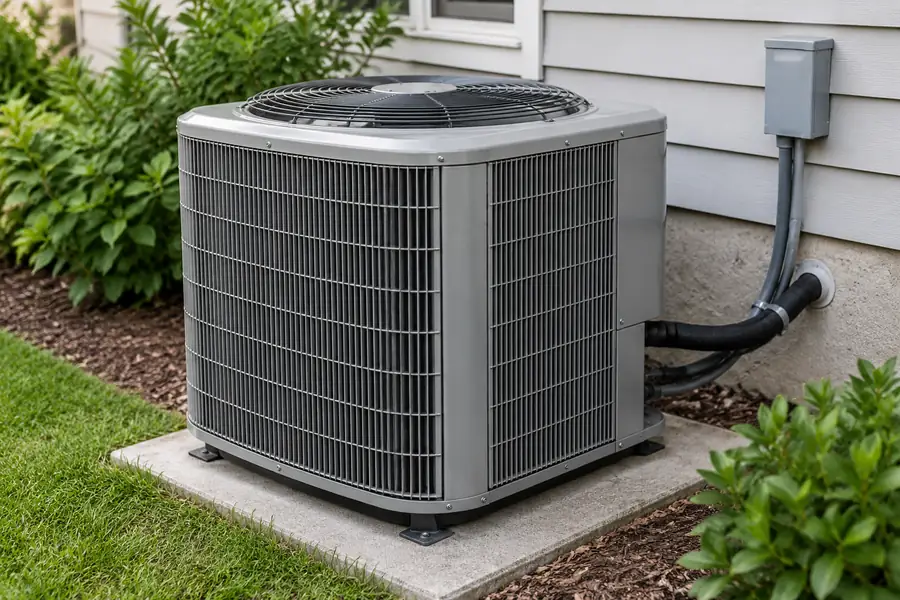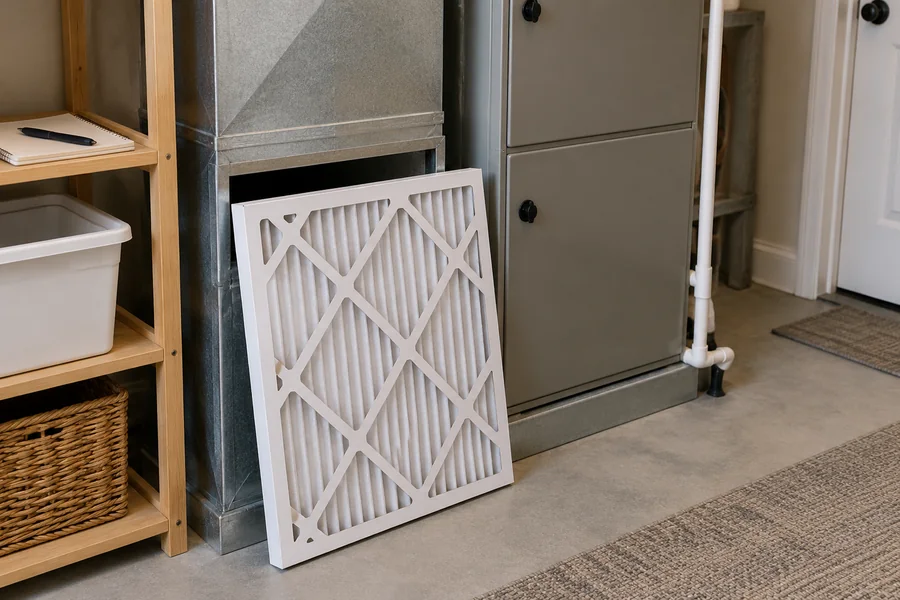
Why does an AC freeze up? Ice forms when the indoor cooling coil (called the evaporator coil) gets cold enough to freeze moisture from the air. This usually happens because too little warm room air reaches the coil or a problem with refrigerant flow makes the coil too cold. A dirty filter, blocked air opening, weak indoor fan, incorrect refrigerant charge, restricted refrigerant flow, or a fan or sensor control problem may be involved. Ice alone cannot identify the fault or justify adding refrigerant.
If you see ice while the AC is cooling, turn cooling off. Check for leaking water or electrical hazards from a safe position. Let the ice melt, then check the accessible filter and air openings before considering a restart. Do not scrape the coil or add refrigerant on the basis of ice alone.
AC System Frozen? What to Do First
If your AC is frozen, stop cooling using the normal controls, check for water or electrical hazards from a safe position, and let the ice thaw naturally. Do not keep restarting the compressor or try to remove ice by force. After thawing, check only user-accessible filters and visible air openings. If icing returns, airflow remains abnormal, or a safety hazard is present, stop and arrange qualified service. The table below summarizes these five first steps; the detailed instructions explain the conditions and safety limits for each action.
| Step | First action | Important safety limit |
|---|---|---|
| 1. Stop cooling | Turn off cooling using the normal controls. | Do not keep restarting the compressor to test it. |
| 2. Check for hazards | Look from a safe position for water near electrical parts, burning smells, breaker trips or abnormal fan behavior. | Do not touch wet electrical equipment. Arrange qualified service if hazards are present. |
| 3. Let ice thaw | Leave the unit off to thaw naturally; fan-only may help if the model permits it and it is safe. | Never chip ice, apply heat or use water to speed thawing. |
| 4. Check accessible airflow | When safe, inspect the user-serviceable filter and visible air openings. | Do not open internal service panels or run without a required filter. |
| 5. Decide on restart | Confirm complete thawing and that the cause has been addressed. | If unsure, airflow is abnormal or icing returns, stop and arrange service. |
How to Follow These Steps Safely
- Stop cooling using the normal controls. Keeping the compressor running with an iced evaporator can worsen ice buildup and may damage the equipment. Do not keep switching it back on to see whether it is better.
- Check for hazards without opening panels. If melting water can reach electrical parts or outlets, you notice a burning smell, a breaker repeatedly trips, or the blower sounds abnormal, stop normal operation if safe and arrange qualified service. Do not touch wet electrical equipment.
- Allow safe thawing. Fan-only mode may help on a system that permits it, but only if cooling is definitely off, the indoor fan works normally, and no water or electrical hazard is present. Otherwise leave the equipment off to thaw naturally. Never chip ice or use a hairdryer, space heater, hot water, or hose.
- Check accessible airflow items. Once it is safe, inspect the user-serviceable filter and visible return and supply openings according to the unit’s instructions. Replace a disposable filter with the correct type; clean a washable filter as specified and let it dry as instructed. Never run a system without a required filter.
- Do not restart until thawing is complete and the cause has been addressed. If you cannot confirm this, the fan does not operate normally, or ice returns, stop and arrange service. Even if the visible refrigerant pipe is no longer icy, the indoor coil may still be frozen. Waiting a set number of hours does not prove it has fully thawed.
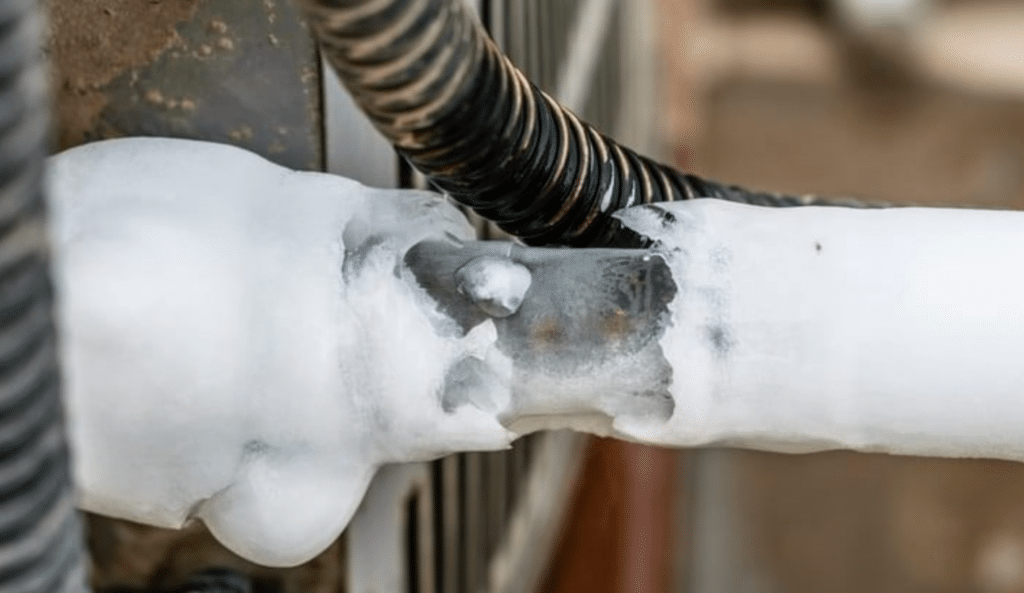
Do not force the thaw. Scraping or heating an evaporator can damage fragile fins, tubing, insulation or nearby components. There is no reliable universal thaw time: a light frost and a heavily iced, enclosed coil need different amounts of time. If water cannot drain safely, arrange service before restarting.
What Can Frozen-AC Symptoms Tell You?
Short answer: Frozen-AC symptoms can show you what to check next, but they cannot identify a failed part on their own. Weak airflow with a dirty filter points to an accessible airflow check. Ice that keeps returning after the unit has thawed and basic checks are complete needs professional diagnosis. Ice alone does not prove low refrigerant charge.
Timing matters: Did the airflow become weak before you noticed ice, or only afterward? Ice itself can block airflow, so weak air noticed after freezing does not prove that a dirty filter or failed fan started the problem. The table below shows what each symptom can suggest and what to do safely.
| What you notice | What might be happening | What this does not prove | What to do next |
|---|---|---|---|
| Ice on an indoor coil or insulated refrigerant line during cooling | Low airflow or a refrigerant/operating-condition issue | That the charge is low | Stop cooling and thaw safely before any diagnosis. |
| Ice behind the front grille of a window AC | Reduced room-side airflow, a fan/control fault, or a refrigerant-side problem | That the unit only needs a filter cleaning | Stop cooling, thaw safely, check the accessible filter and front openings, and seek service if icing returns. |
| Weak supply air and a dirty filter | Restricted airflow | That the filter is the only problem | Follow the filter instructions; get service if airflow stays weak. |
| Ice returns after a clean filter and clear vents | The filter may not have been the only cause. | That refrigerant simply needs topping up | Stop restarting the AC. Ask the technician to check airflow and, where needed, refrigerant operation and controls. |
| The coil freezes mainly during cool-night operation | Cooling outside the model’s approved outdoor range or a fan/control problem | That changing the thermostat setting will repair the system | Stop cooling, check the model’s permitted conditions, and report the timing to a technician if the problem returns. |
| Icing began after installation or service | Installation, fan setting, charge or refrigerant feed deserves review | That the installer caused a leak | Give the technician dates, model details and service history. |
| Water under the unit but no observed ice | Drainage or another cooling problem | That an evaporator froze | Check for electrical exposure and request drainage diagnosis. |
| Frost on the outdoor heat-pump coil during heating | Possibly normal heating/defrost operation | That the indoor AC coil is frozen | Check model-specific defrost behavior; seek service if ice persists abnormally. |
Key distinction: ice on the indoor cooling coil is different from temporary frost on an outdoor heat-pump coil during heating. If you never saw ice, a general cooling or drainage fault is still possible; our air conditioner not cooling guide covers that broader symptom.
What Actually Makes an Air Conditioner Freeze?
Direct answer: An air conditioner freezes when its indoor cooling coil becomes cold enough for condensed moisture to turn into ice. This can happen when too little warm air passes over the coil, refrigerant charge or flow is abnormal, or fan, sensor, or operating-condition problems keep the coil too cold. Ice alone cannot tell you which problem is responsible. The table below summarizes these possible causes and the next safe checks; the detailed explanations after it show how each problem develops and what needs to be verified.
| Possible cause | Why the indoor coil may freeze | What to check next |
|---|---|---|
| Not enough airflow (dirty filter, blocked opening, weak fan or restricted duct) | Too little warm room air passes over the coil, so moisture on it may freeze. | After stopping cooling and thawing safely, check only the user-accessible filter and visible air openings. Recurring ice calls for an airflow check. |
| Low refrigerant charge | Under some conditions, too little refrigerant can lower the pressure and temperature at which refrigerant boils inside the indoor coil. | A qualified technician must check airflow first, then follow the model’s refrigerant diagnostic and charging instructions. Ice alone does not prove low charge or a leak. |
| Restricted refrigerant feed | A restriction can reduce refrigerant flow through part of the coil even if the system’s total charge is not low. | Have a technician distinguish a flow restriction from low charge. Simply adding refrigerant can make the charge incorrect. |
| Controls or operating conditions | Fan or sensor faults, or cooling outside the model’s approved outdoor-temperature range, can allow icing. | Note the mode, outdoor conditions, fan behavior and any visible error code. Do not keep restarting a frozen unit; arrange service if icing returns. |
Inside the AC, the indoor cooling coil (the evaporator) absorbs heat from room air and transfers it to the refrigerant. Water vapor in the air normally condenses on the cold coil and drains away. If the coil falls below freezing, some of that water can turn to frost and build into ice. More humid air can provide more moisture for ice buildup once the coil is too cold; humidity alone does not tell you why the coil became that cold. The ice is frozen water, not frozen refrigerant.
For a visual explanation of how the evaporator, compressor, condenser, and expansion device work together, see our air conditioner refrigeration cycle diagram.
The coil needs enough warm air passing over it to keep absorbing heat. It also needs refrigerant to flow and boil at the temperatures the system was designed for. If too little heat reaches the coil—or the refrigerant boils at an unusually low temperature—water on the coil can freeze. The growing ice blocks more air, making the problem worse. Fan controls and cooling outside the model’s approved conditions can add to the problem.
1. Not Enough Airflow: Dirty Filter, Coil, Fan, or Ducts
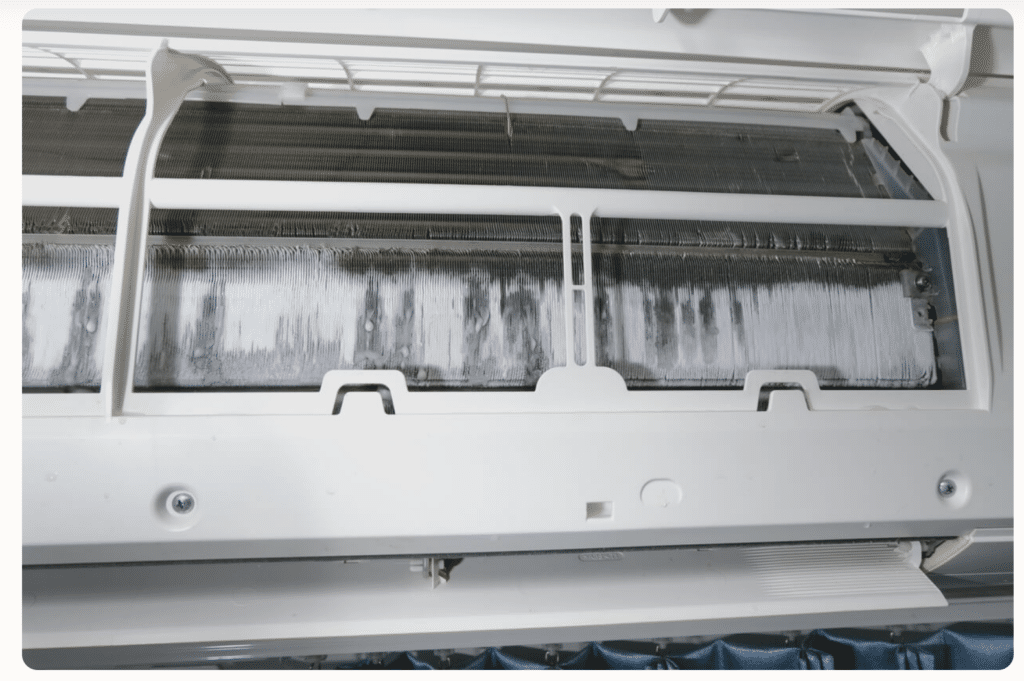
Why it happens: a clogged filter, blocked return, dirty evaporator, poorly moving blower or restricted duct can reduce the warm air passing over the evaporator. The refrigerant then receives less heat from the room air; the coil can run cold enough for condensate to freeze. Once ice forms, supply airflow can become even weaker.
What you can check: if the accessible filter is full of dust, clean or replace it as the manual directs. Clear anything blocking visible air openings. If the AC freezes again, the filter was probably not the only problem. A clean filter also cannot rule out a dirty internal coil, blower-speed error, blocked duct, closed damper or a separate refrigerant-side fault.
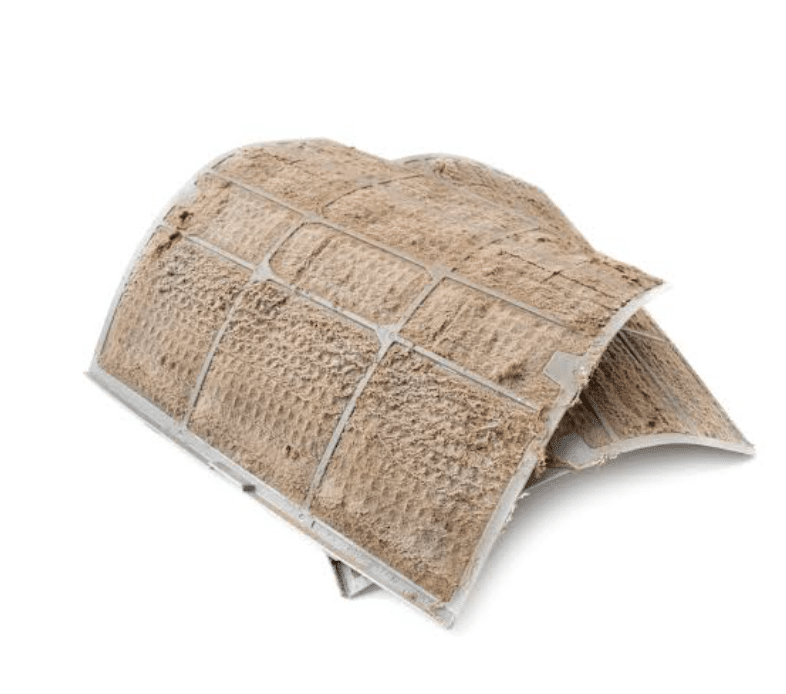
How to confirm an airflow problem: you can check and photograph the accessible filter and visible air openings. A technician can inspect the indoor coil and fan, then measure airflow or duct static pressure (the resistance the fan must overcome in the ducts) when needed. In a ducted system, excessive duct resistance may reduce airflow even when the filter looks clean; the readings must be judged against the equipment and blower settings. A clean-looking filter alone does not prove that enough air is moving.
2. Low Refrigerant Charge or Restricted Refrigerant Feed
Low refrigerant charge means the system has less refrigerant than the equipment and installation require. In some operating conditions, this can lower the pressure inside the indoor coil. The refrigerant can then boil at a lower temperature, allowing water on the coil to freeze. A leak can reduce charge over time; an incorrect initial or service charge is another possibility. Ice does not prove a leak.
A refrigerant-flow restriction is different from having too little refrigerant in the entire system. An expansion valve (the part that controls refrigerant entering the coil), a filter drier (a component that helps remove moisture and debris), or another blockage can limit flow to part of the coil even when the total charge is not low. The repair is different, so adding more refrigerant before identifying the problem can create an incorrect charge without solving the fault.
How a technician tells the difference: first establish satisfactory airflow and allowed operating conditions after the coil has thawed. The technician then compares pressures and temperatures with the refrigerant type, metering device, installation details, and the manufacturer’s charging instructions. Two measurements may help: superheat (how much warmer the refrigerant vapor is than its boiling temperature at the measured pressure) and subcooling (how much cooler the liquid is than its condensing temperature at the measured pressure). A single low suction-pressure reading or a generic superheat/subcooling target cannot identify the fault. Ice and poor airflow can also affect those readings.
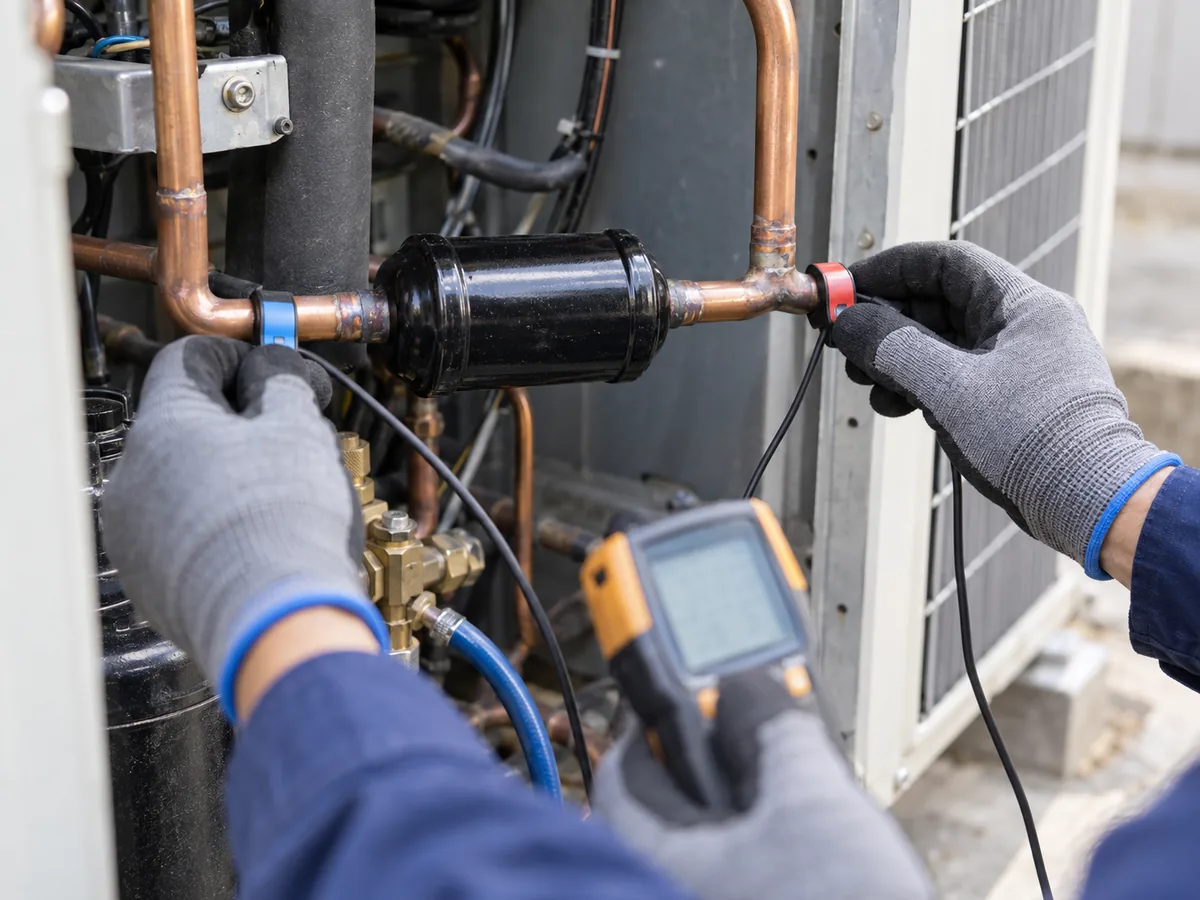
Our low-refrigerant signs guide, filter-drier guide and metering-device guide explain these parts in more detail. But these guides cannot diagnose your particular AC from symptoms alone. Refrigerant-circuit work belongs to appropriately qualified service personnel.
3. Controls, Cooling Load and Operating Conditions
Controls and weather can also cause freezing. Some AC units may ice up if cooling runs outside the outdoor-temperature range allowed for the model, if the sensor that checks coil temperature is faulty or misplaced, or if the indoor fan does not run when it should. Cool outdoor conditions can change refrigerant pressures and flow during cooling; suitable low-ambient controls may be required to keep operation within the model’s intended limits. Some units are designed for low-ambient cooling, but many are not. There is no single outdoor-temperature cutoff that applies to every AC.
A room thermostat senses room temperature, not the surface temperature of the indoor cooling coil. A very low setpoint can keep the system asking for cooling for longer, but it does not by itself prove a failed thermostat, wrong unit size, or the cause of icing. The model’s rated cooling capacity describes performance under specified conditions, not whether the installed airflow, refrigerant circuit or coil controls are working correctly. Check the permitted cooling range and any fault code. Record whether icing follows a particular mode, time of day or recent control change. If the indoor fan unexpectedly stops or slows during a cooling call, note the timing and any visible fault code without opening the unit. A fan that works during one short check does not rule out an intermittent fault; a technician must compare the behavior with the model’s normal control sequence.
Variable-speed compressor operation is not, by itself, a sign of a fault. Our inverter air conditioner guide explains how compressor-speed control works, but recurring ice still requires cause-based diagnosis.

4. Two Problems Can Exist at Once
Example A — The filter and indoor coil are both dirty. Changing the filter helps, but dust on the hidden coil can still reduce heat transfer. Example B — Airflow is back to normal, but ice returns. The technician may also need to check the refrigerant circuit or controls. A low-airflow problem and a refrigerant-flow fault can also exist at the same time, so fixing one does not prove the other is absent. Example C — Ice starts after installation. Ask for a review of the fan settings, air path, refrigerant lines and charging procedure. This timing alone does not prove a leak.
The useful rule is to observe what changed after a safe correction, then stop if the fault remains. Repeatedly thawing and restarting obscures the original symptoms and is not a diagnostic method.
How to Fix a Frozen Central Air Conditioner Safely
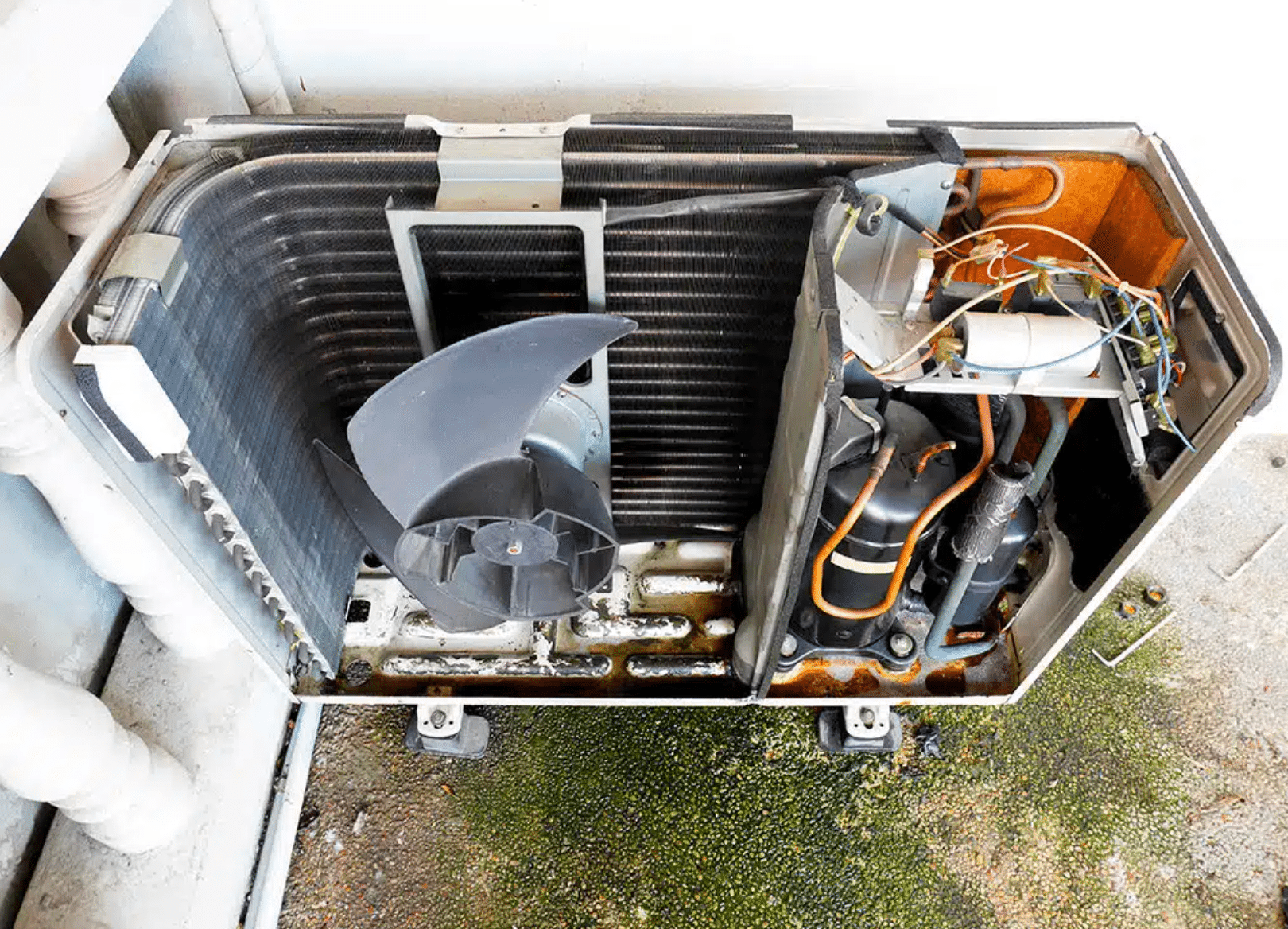
In a central AC system, the indoor cooling coil may sit inside an air handler (the indoor cabinet that moves air through the system), above a furnace, or in its own coil cabinet. Ice may instead be visible on the larger insulated refrigerant line near the outdoor unit. You cannot assume the indoor coil is fully thawed just because the outside line looks clear.
- At the thermostat, switch cooling OFF. If the thermostat has a separate FAN ON control, use it for thawing only if the indoor blower is operating normally and the equipment supports that procedure. If there is water near wiring or an unusual fan problem, leave the system off and call for service.
- Look at the filter and accessible registers. Check the actual filter location described in the manual, which may be at a return grille or near the air handler. Keep supply and return openings unobstructed; do not remove a coil cover or open the air-handler cabinet to look for ice.
- Watch for thaw water and wait for full thawing. Heavy ice may take many hours; no fixed countdown is reliable. If the drain overflows, water can contact electrical parts, or you cannot determine whether the hidden coil is clear, get help before further operation.
- Decide whether a restart is safe. Use the conditions in the decision box below before attempting a restart.
How to Unfreeze a Window Air Conditioner—and Stop It Freezing Again
A window unit puts the evaporator, fan and refrigerant circuit in one cabinet. It may ice around the indoor-facing cooling coil behind the room-air intake, even while the rear section rejects heat outdoors. Unlike central AC, a window unit normally pulls room air straight through its front intake and filter. It does not rely on the home’s return-air ducts, so the first things to check are different. Check both the room-side intake and the outdoor-facing clearance specified in the model’s instructions. Blocking the rear airflow can interfere with heat rejection and cooling, but this observation alone does not identify why the indoor coil froze.
- Turn cooling OFF. If the unit’s instructions provide a fan-only setting and it works normally without any water/electrical concern, you may use that mode to move room air across the thawing coil. Otherwise keep the unit off. Do not reach through a grille to remove ice.
- Check the removable room-air filter only as the manual permits. A washable filter needs the specified cleaning and drying process. Also make sure curtains, furniture and other objects are not blocking the front intake or discharge.
- Let it drain normally. Keep the appliance installed and supported as required by its manufacturer; do not tip, drill, spray or move a plugged-in window AC to rush the melting process. If meltwater goes somewhere unsafe, discontinue operation and arrange service.
- Verify the operating range and control setting. Cooling in cool weather or a malfunctioning fan or sensor can keep an indoor coil too cold. An unusually low setpoint alone is not a proven fault. Check whether the model supports the conditions in which the freeze-up occurred. If the model offers user-adjustable fan speed, also check whether the fan actually moves air normally at the selected setting; do not use a generic speed or temperature setting as proof of a repair.
- After full thaw and correction, assess the result. If the unit ices again despite a clean, dry filter and clear intake, stop running it; a dirty internal coil, failed fan, thermostat/sensor problem or refrigerant circuit fault may need professional evaluation. A diagnosis should distinguish a serviceable filter, fan or control problem from a sealed refrigerant-circuit fault. Repair cost and parts availability differ by model. Compare a written repair estimate with the cost of a correctly sized replacement before deciding; ice alone is not a reason to replace the unit.
Window, central, or ductless AC: for a window unit, start with the model’s washable intake filter, unobstructed front airflow and approved fan-only operation. For central AC, check the correct duct-system filter, returns and blower behavior. For a ductless mini-split, follow the indoor unit’s manual to locate the user-accessible filter. Use fan-only mode only if the model permits it and no water or electrical hazard is present. Open only the user-maintenance panel described in the manual; do not remove service covers or touch the internal coil, electrical parts or refrigerant lines. If icing returns, stop cooling and arrange qualified service. None of these checks make refrigerant charging or internal electrical repair a DIY task.
When to Call a Technician—and What Should Be Checked
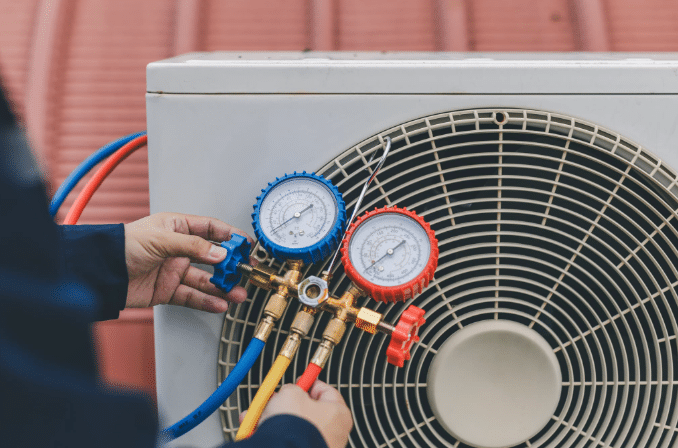
Call for service if ice returns after thawing, airflow stays weak, a blower or control does not operate normally, water threatens electrical equipment, or a safe cause cannot be established. In the United States, regulated refrigerant-circuit service—including attaching pressure gauges and adding or removing refrigerant—generally requires the appropriate EPA Section 608 technician certification. EPA allows an exception for registered apprentices working under the close and continuous supervision of an appropriately certified technician. This is not a homeowner DIY task. Do not open the sealed circuit or electrical compartments yourself.
Give the technician these observations: whether the unit is central, ductless or window type; where the ice formed; cooling/fan settings; whether airflow weakened before or after ice appeared; the approximate room and outdoor conditions when icing began; filter condition; any fault code; and whether installation or refrigerant work was recent. Photos taken from a safe position can help.
| What needs checking | What the technician checks | Why it matters |
|---|---|---|
| Is enough air moving over the indoor cooling coil? | Inspect filter, coil, blower and ducts; measure airflow or pressure when appropriate. | Low airflow can mimic refrigerant trouble and distort further readings. |
| Was refrigerant charge correct? | Compare model/installation charging requirements with relevant pressure and temperature data after thawing. | Undercharge and overcharge require different corrections; ice alone proves neither. |
| Was refrigerant feeding the coil normally? | Evaluate the metering device, filter drier and temperature/pressure pattern as required. | A restriction may need component repair, not an added refrigerant charge. |
| Were controls and the operating range appropriate? | Check fan sequence, sensors, fault codes and manufacturer-permitted cooling conditions. | Bad control behavior can cause repeat icing after the coil thaws. |
| Did the correction actually work? | Verify operating airflow, stable cooling, drainage and no recurrent frost under suitable test conditions. | A short spell of cold air after restart is not proof of a permanent repair. |
Why One Pressure, Temperature or Thaw Time Cannot Fit Every AC
One universal service number will not work for every air conditioner. Use the model’s instructions and actual cooling conditions when interpreting a test or deciding whether it is safe to restart.
| Item | Why the answer is model-specific |
|---|---|
| Thaw time and fan-only operation | Ice amount, enclosure, drainage, fan function and safe operating instructions differ. |
| Refrigerant pressure | Refrigerant type, air load, temperatures and airflow change operating pressure. |
| Return-to-supply air temperature difference | The difference between air entering and leaving the indoor cooling unit depends on airflow, room temperature and humidity, coil condition, and when and where it is measured. It can help a technician investigate cooling performance, but by itself it does not confirm refrigerant charge, actual cooling capacity, or that the freeze-up cause has been fixed. |
| Superheat and subcooling | Interpretation depends on the metering device and manufacturer’s charging procedure. |
| Low-ambient cooling limit | Some models support lower outdoor temperatures with special controls; others do not. |
| Required refrigerant charge | Equipment, refrigerant line length and the installation’s service specifications may affect it. |
| Fan and airflow targets | Blower design, duct resistance and the manufacturer-approved operating point differ. |
A thermostatic expansion valve (TXV) adjusts how much refrigerant enters the indoor coil to help control superheat. Even if the superheat reading looks normal, that alone does not prove the indoor airflow—or the rest of the AC—is working properly. Model-specific service instructions and a fully thawed coil are essential before interpreting measurements. The DOE air-conditioner diagnostic guide explains useful testing methods. However, older example numbers in that guide must not replace the current specifications for your exact AC model.
How Do You Know the Freeze-Up Is Really Fixed?
Melting the ice does not fix what caused it. The problem is only fixed when the cause has been corrected and the AC can run normally without ice forming again under suitable test conditions.
- The coil has completely thawed before diagnostic testing or restarting, not just the visible outdoor line.
- Normal airflow is established. A newly cleaned filter does not rule out an internally dirty coil, weak fan or restrictive duct.
- The identified cause has been corrected. A verified leak is repaired and charged according to the unit procedure; an airflow or feed restriction is addressed at the correct component; controls are corrected if they caused the fault.
- The unit runs normally under permitted test conditions. The technician or operator checks cooling, airflow and drainage and watches for renewed icing. If the original freeze-up occurred during cool-weather cooling but the repair was tested on a warmer day, that test does not confirm low-ambient operation. Do not deliberately operate outside the model’s allowed cooling range to recreate the failure. Record the limits of the test and what to monitor if comparable, permitted conditions return.
After service, ask for the confirmed cause, the parts repaired or settings corrected, and the checks used to verify the result. If the technician used airflow, pressure or temperature readings, ask whether they were interpreted against the model’s instructions and test conditions. Record any conditions that could not be reproduced. “Needed gas” is not a complete diagnosis unless low charge and the reason for it were verified.
How to Keep an Air Conditioner From Freezing Again
Prevention starts after the underlying fault has been corrected. Basic filter maintenance will not repair a refrigerant restriction, failed sensor or weak blower.
- Inspect the correct filter regularly. Follow the equipment’s check, cleaning and replacement instructions. ENERGY STAR’s maintenance checklist suggests monthly filter inspection; that is not a rule to replace every filter monthly.
- Keep accessible airflow paths open. Clear blocked room-unit intakes, duct returns and supply grilles without modifying the air system.
- Schedule appropriate service. Professional checks of indoor coil condition, blower performance, drainage, refrigerant operation and controls can find problems an owner cannot reach safely.
- Use cooling only in conditions your AC is designed for. Check the outdoor-temperature limits in your model’s instructions instead of assuming one thermostat setting is safe for every unit.
- Act on the first recurrence. Stop cooling and keep notes. Repeatedly melting the ice without correcting the cause can let another fault become more severe.
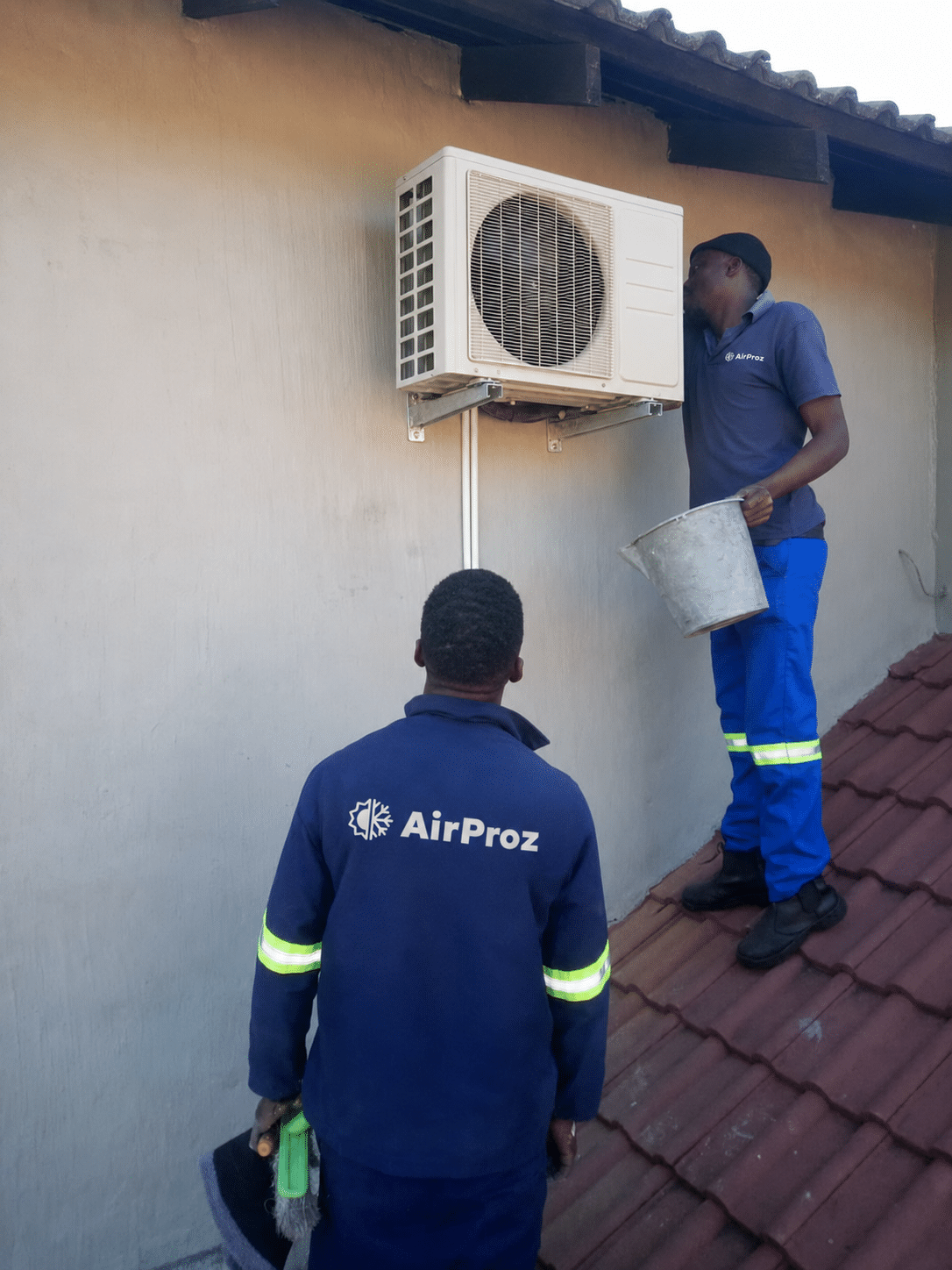
If a replacement eventually becomes justified, diagnose the current fault first. Then compare repair cost and serviceability with a properly designed replacement, including cooling load, electrical supply, installation constraints, supported refrigerant and market requirements. If replacement may involve changing from a window or ducted unit to a ductless layout, compare the types of AC systems and their installation requirements before selecting equipment. A freeze-up alone is not enough to choose a larger unit. The Airproz air conditioner sizing guide explains the load and selection checks.
Frequently Asked Questions
Can I run my AC if the coil is frozen?
No—stop cooling. Continued compressor operation can worsen the freeze-up. Allow safe thawing and correct the cause before a restart.
How long does an iced-up AC take to thaw?
There is no dependable universal time. Thawing depends on how much ice has formed, how warm the surrounding air is, whether the coil is enclosed, and whether safe fan-only operation is allowed. Wait for complete thawing and resolve any drainage or electrical hazard; elapsed time alone cannot confirm it.
How do I unfreeze a window air conditioner?
Turn cooling off, use fan-only mode only if the manual permits and the fan is safe, and let the ice melt without scraping or external heat. Check the washable or replaceable front filter and clear the intake. Keep the unit supported and do not tip it. If ice returns, stop and seek service.
How do I fix a frozen central air conditioner?
Turn cooling off at the thermostat. Use indoor fan-only operation only when safe and manufacturer-permitted. Check the user-accessible filter and duct grilles, let the hidden evaporator thaw completely, and request professional checks if airflow stays weak or the ice returns.
Does low refrigerant always cause freezing?
No. In some conditions, too little refrigerant can make the indoor coil colder. But a clogged air filter, blocked air return, weak fan, restricted refrigerant flow, or a control problem can also cause ice. A technician has to verify airflow and refrigerant operation before charging.
Can an air conditioner freeze up when it is hot outside?
Yes. The indoor cooling coil can freeze even in hot weather if it receives too little warm air or a refrigerant-flow or control problem makes it unusually cold. Hot weather alone does not rule out icing. Stop cooling, let the coil thaw safely, and arrange qualified diagnosis if ice returns. Do not add refrigerant based on the weather or ice alone.
Why does the AC freeze after I changed the filter?
The filter may have been one of several restrictions. Internal coil dirt, weak blower or duct problems may remain, and refrigerant-side or control faults can coexist. Stop repeated restarts and ask for cause-based testing after full thawing.
The Bottom Line: Why AC Coils Freeze
An AC coil freezes when it becomes cold enough for moisture on its surface to turn to ice. Low airflow, refrigerant-flow problems, incorrect charge, or unsuitable operating conditions may be involved; ice alone cannot identify the fault. Stop cooling, allow safe thawing, and check only filters and air openings that the manual lets you access. If icing returns, airflow remains weak, or water creates an electrical risk, stop and arrange qualified service. A frozen coil alone is not a reason to add refrigerant or replace the AC.
Considering Replacement After an AC Diagnosis?
If a qualified diagnosis shows that repair is no longer practical, compare any replacement with the cooling load, electrical supply, installation conditions, and applicable requirements. You can explore the air-conditioner products currently listed by Airproz and check their published specifications before deciding whether an option fits your project.
If replacement has been justified and a ductless inverter split system fits the project, you can review the Airproz R32 inverter air conditioner SA series and verify its exact model specifications against your cooling load, power supply, climate, and installation requirements.
Explore Airproz air conditioner options. If the AC is currently frozen, follow the safe shutdown steps above. If water threatens electrical equipment or the unit has another safety hazard, stop using it and seek qualified local service.