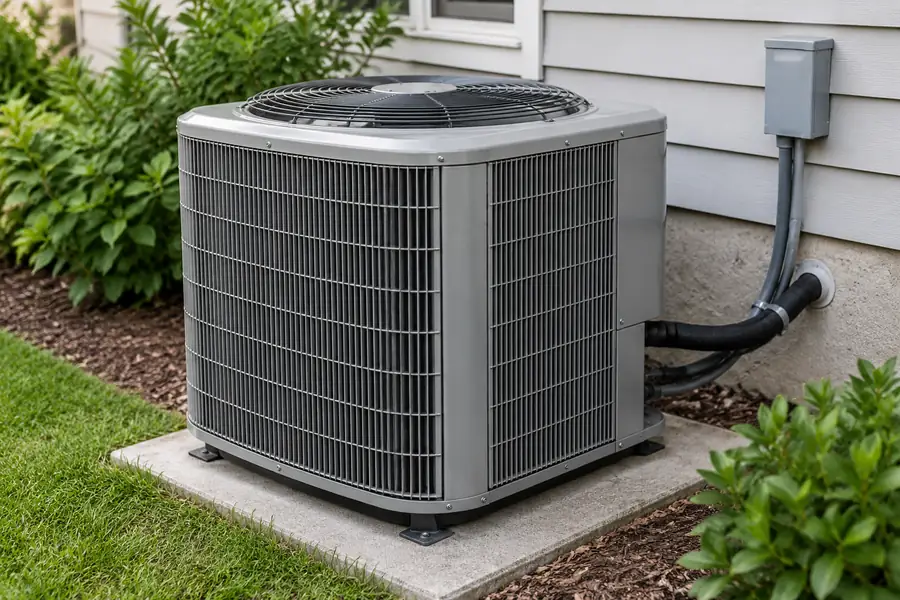
An air conditioner may be low on refrigerant if it cools poorly, freezes around the indoor coil or refrigerant pipe, makes an unusual hissing sound, runs much longer than usual, or uses more electricity. People often say “Freon” when they mean AC refrigerant, but the correct refrigerant type is the one specified for your unit. These signs do not prove low refrigerant: blocked airflow, control faults, and other problems can look similar. Check the cooling setting and any filter you can safely access. If the problem continues—or you see ice—stop cooling as appropriate and ask a qualified HVAC technician to find the cause before adding refrigerant.
Refrigerant is the fluid that carries heat through your air conditioner. It travels inside a sealed system, so it should not need regular refilling. If there is too little refrigerant—called low charge—the system may have a leak or may not have been filled correctly during installation or repair. The exact type must be checked against your equipment label and model service instructions.
What Are the Main Signs of Low Refrigerant in an Air Conditioner?
Look for five changes: the AC stops cooling well, ice forms, you hear an unusual hiss, the unit runs longer than before, or your electricity use rises. These are reasons to check the system, not proof of a refrigerant leak. Filters, airflow, controls, and hot weather can cause similar problems.
| What you see or hear | What else could cause it | What to do next |
|---|---|---|
| Warm or weakly cooled supply air | Incorrect cooling setting, blocked airflow, dirty coils, outdoor unit not running, or more room heat than the AC can remove | Check that Cooling is selected, lower the temperature setting, and inspect a user-accessible filter. Call for service if cooling stays weak. |
| Ice on evaporator or refrigerant pipe | Not enough air passing over the indoor coil, restricted refrigerant flow, or too little refrigerant | Stop cooling; have the cause diagnosed after safe thawing |
| Hissing or bubbling near refrigerant piping | Normal pressure equalization or refrigerant flow can make some sounds; persistent localized sound can indicate leakage | Record where and when it occurs; do not touch piping |
| Runs for a long time without reaching setpoint | Heat load, sizing, dirty coils, airflow, controls, low refrigerant | Note the weather, thermostat setting, and whether the AC could reach that setting before. |
| Unexpected electricity use | Weather, operating hours, rate changes, occupancy and other loads | Compare similar weather and usage periods; arrange service if cooling also declines |

Look at the combination of symptoms, not just one sign. Changes under similar weather, settings and use help a technician narrow down the cause. The table does not measure refrigerant charge. If the thermostat is set low but the room stays warm, compare outdoor conditions, room use, accessible filter condition, and whether the outdoor unit seems to run. The thermostat reading alone cannot show whether refrigerant is low. If the AC is running but not cooling, see why an air conditioner is not cooling for other possible causes.
- Warm air but normal airflow: Check the Cooling setting and observe whether the outdoor unit appears to be running, without opening electrical panels.
- Weak airflow or visible ice: Stop cooling if ice is present; have airflow checked before anyone judges refrigerant charge.
- Long inverter-AC operation with stable room temperature: Run time alone may be normal.
- New AC that has never cooled properly: Have installation, controls and commissioning checked as well as possible leaks.
Jump to: Signs and causes · Safe checks · Professional diagnosis · Repair cost · Repair or replace
1. Warm Air or Poor Cooling
When refrigerant is low, your AC may remove less heat, so the air feels warmer or the room takes longer to cool. But warm air does not automatically mean a refrigerant problem. Check the cooling setting and airflow first; a compressor or outdoor-unit fault can also stop cooling.
The evaporator is the indoor coil that removes heat from the air. With too little refrigerant, it may not absorb enough heat to cool the room properly. The effect is not the same for every AC: it depends on the refrigerant, the device controlling its flow, indoor airflow, humidity, and outdoor temperature. A given percentage of refrigerant loss does not mean a fixed percentage drop in cooling.

First, set the AC to Cooling and choose a temperature below the current room temperature. Allow the normal startup delay, then check only the filter and vents you can safely reach. During service, a technician may compare air entering the system (return air) with air leaving it (supply air). That temperature difference is useful, but no single reading—including a value below 10°C—proves low refrigerant.
On a humid day, some cooling removes moisture instead of lowering air temperature as much. Airflow and where the temperatures are measured also affect the result. That is why a supply-to-return temperature difference is only one clue, not a universal refrigerant-charge test. A technician checks it alongside airflow, humidity and the unit’s operating conditions. If the home feels more humid than usual, record that change alongside weak cooling. Outdoor humidity, air leaks, short run times and other system faults can also make a room feel damp; humidity alone does not confirm low charge.
Weak airflow and warm airflow point to different checks. If only a little air reaches the vents, the fan, filter, coil or ductwork may be restricting airflow. If airflow seems normal but the air is not cool, the Cooling setting, outdoor unit, controls or refrigerant circuit may need checking. If supply air is cool but the room remains hot, the room’s heat gain, duct losses or system capacity may have changed. These observations help direct a service visit; none measures refrigerant charge.
If the AC has never cooled properly since installation, the technician should check the initial setup, refrigerant-pipe length and any additional charge required by the manufacturer. That is different from a unit that worked well and later developed a fault.
2. Frost or Ice on the Evaporator Coil or Suction Line
Yes, low refrigerant can help cause ice on the indoor coil or refrigerant pipe. But a dirty filter, weak indoor fan, or blocked refrigerant flow can also freeze a coil. If you see ice, stop cooling and find the cause before restarting. Do not assume the system just needs a refill.
The indoor coil normally takes heat from room air. In some low-refrigerant conditions, its temperature can fall below freezing. Water from humid indoor air then freezes on the coil. The same thing can happen when too little warm room air passes over it—for example, because a filter is blocked or the indoor fan is not working correctly. That is why frost alone cannot tell you how much refrigerant remains.

See ice? Turn off cooling. Do not scrape or chip it away, heat the coil, open refrigerant pipes, or repeatedly restart the AC. Use fan-only mode to thaw it only if the manual allows it, the fan is working, and there is no water or electrical danger. If the ice comes back, arrange qualified service.
Where ice first appears does not tell you the cause. Some people assume frost near the outdoor refrigerant pipe always means low charge, while frost on the indoor coil means low airflow. That shortcut is unreliable. Different faults can freeze either area, and pipe insulation may hide the ice.
Cooling and heating modes have different frost patterns. The ice warning above mainly concerns an AC operating in cooling mode. When a reversible heat pump is heating, some frost on its outdoor coil can be normal and may clear during a defrost cycle. Ice that persists, obstructs airflow, or comes with repeated heating problems needs qualified inspection. Outdoor frost during heating does not, by itself, prove low refrigerant.
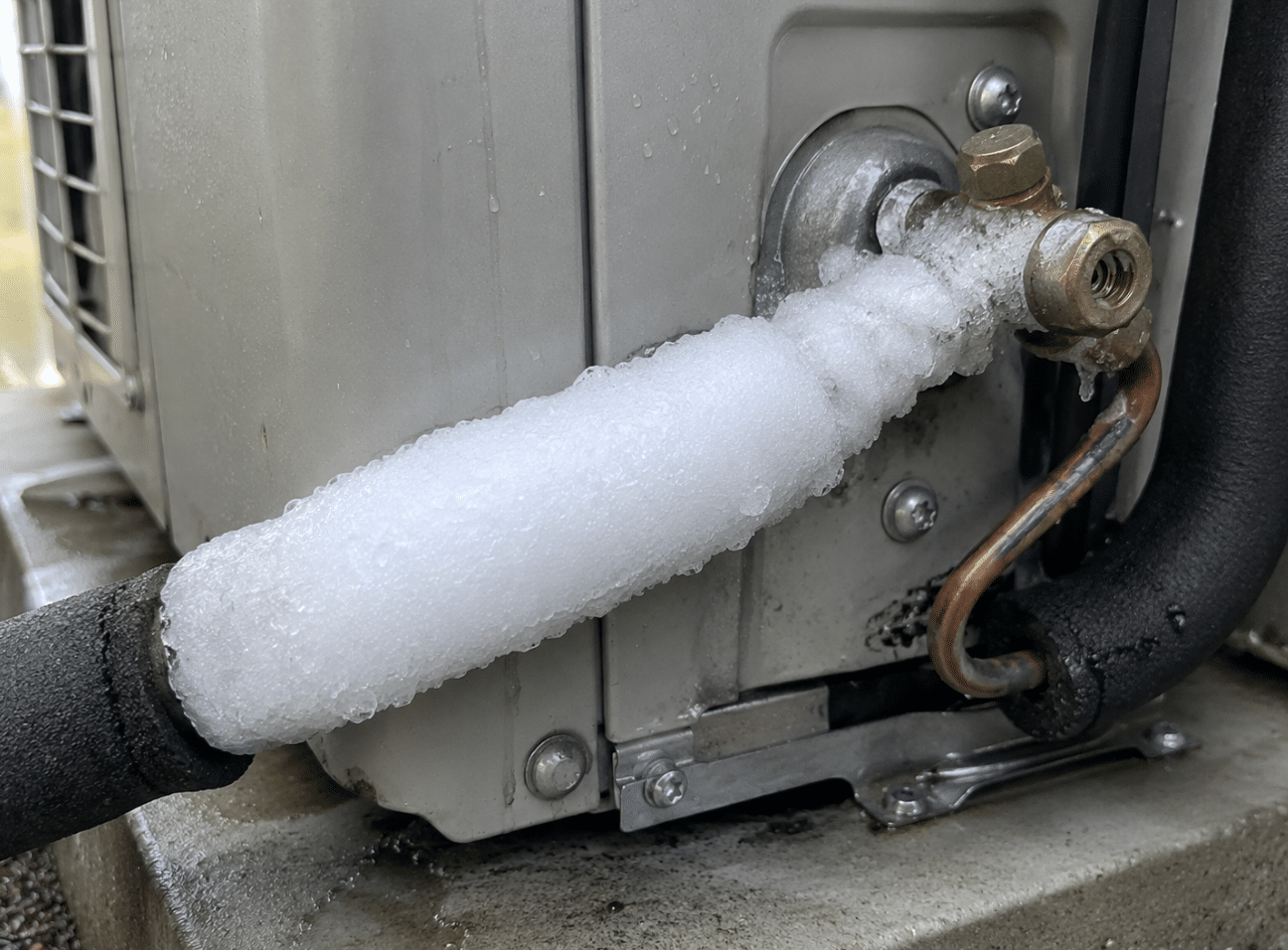
A dirty filter and low refrigerant can occur together. When the coil is iced over, airflow and refrigerant measurements may not represent normal operation. Stop cooling, let the ice thaw safely, and have the fan, filter and coil checked first. Once normal airflow and the manufacturer’s required test conditions are restored, a technician can assess the refrigerant circuit. If freezing returns, do not keep restarting or add refrigerant based on ice alone. For safe shutdown and thawing, see our AC freeze-up guide.
3. Hissing or Bubbling Sounds Near the Refrigerant Circuit
A steady hiss coming from one pipe joint or damaged area may mean refrigerant is escaping. But a short hiss just after the AC stops can also be normal as pressure inside the system balances out. Noise alone cannot confirm a leak. Tell the technician where you hear it and when it happens.
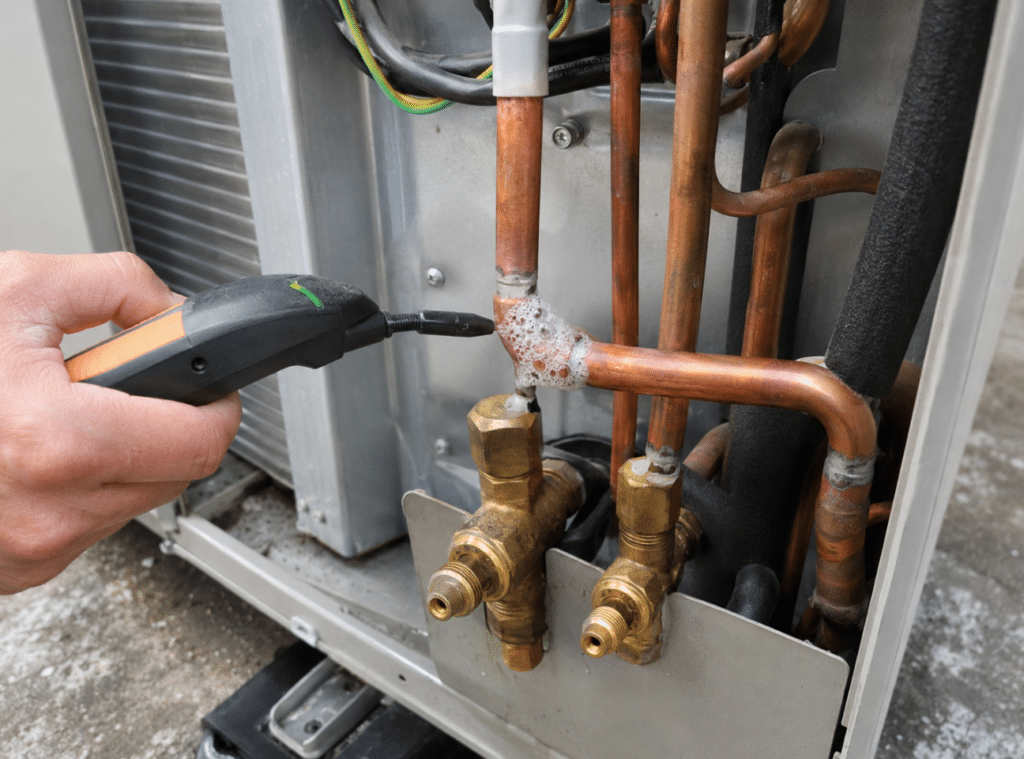
Refrigerant may leak from pipe connections, service valves, welded or brazed joints, or tubing damaged by corrosion. On many mini-split systems, the technician will also check the flare connections—the threaded pipe joints made during installation. The likely location depends on how the unit was installed, its age, and the environment. You cannot know the leak location from the sound alone.
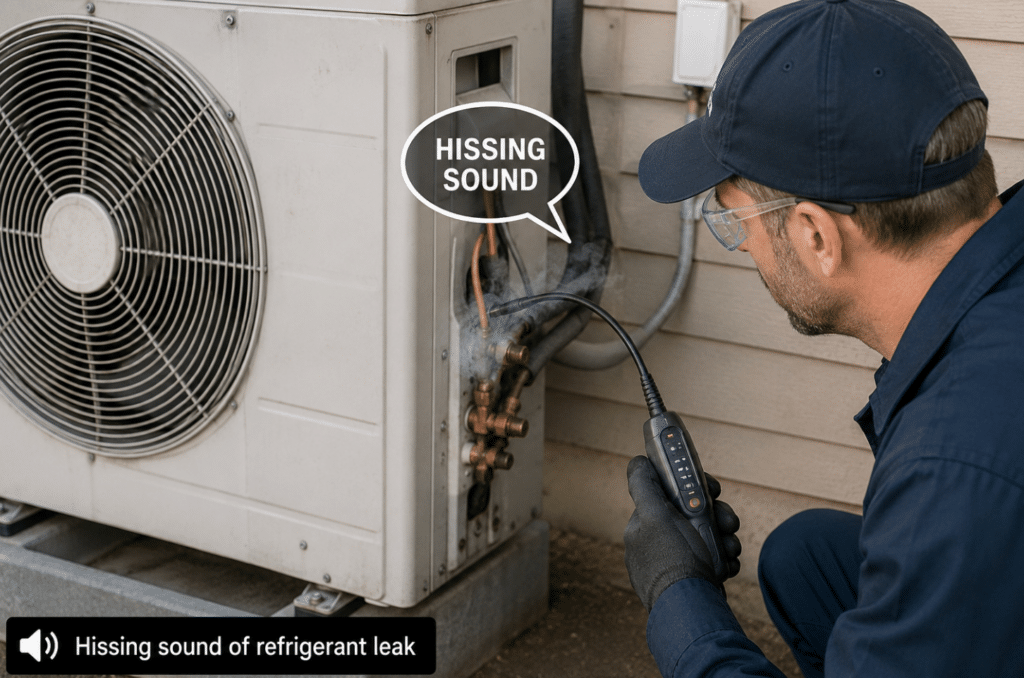
An oily stain visible near an accessible refrigerant connection may be worth reporting, since some leaks also carry compressor oil. Do not touch the joint or remove a panel to inspect it. Oil, dirt and condensation can have other causes, so an oily mark alone does not prove a leak.
- Notice when the sound happens. Record the unit, where the noise seems to come from, whether it starts or stops with the compressor, and whether cooling has become weaker.
- Leave the refrigerant pipes alone. Do not loosen joints, remove service caps, add refrigerant, or use a flame to search for a leak.
- Ask for a proper leak test. A qualified technician can choose a suitable electronic detector, bubble test, or manufacturer-approved pressure test for the refrigerant and equipment.
A leak test must use the pressure, test gas, and test time specified for the actual equipment; a 24-hour nitrogen test is not a universal guarantee. Some refrigerants can burn under certain conditions, so service work may require extra ventilation, control of sparks and flames, and approved tools. A brief hiss alone does not prove a hazardous leak. If a refrigerant alarm activates, you suspect a substantial release inside an occupied space, or anyone may be at risk, stop using the equipment if it is safe to do so, leave the affected area, and follow the manufacturer’s emergency instructions. Seek qualified assistance.
4. The AC Runs Longer and Electricity Use Goes Up
If an AC delivers less cooling, it may need more time to reach the temperature you set. That can increase electricity use. But longer running and higher bills do not prove low refrigerant—hot weather, dirty coils, controls, or an AC that is too small for the space can cause the same problem.
On a very hot day, even a correctly charged AC may run longer because the room gains more heat. An inverter air conditioner may also run continuously at a lower speed while keeping the room comfortable. If the room still reaches the set temperature, run time alone is not a refrigerant warning. If the same AC now struggles to cool under similar weather, settings and occupancy, check airflow and controls before asking for a refrigerant diagnosis. Very brief, repeated cooling cycles are called short cycling. Controls, airflow, sizing, electrical faults or the refrigerant circuit can cause it. Cycling behavior alone cannot identify low charge.

If you manage a hotel or several AC units, compare units serving similar rooms in similar weather, with similar thermostat settings and filter condition. A larger building electricity bill does not tell you how much refrigerant has been lost. Energy rates, occupancy, weather, and other equipment also affect the bill. Cooling capacity does not fall by a fixed percentage for every percentage of refrigerant lost.

Before the service visit, note the date, outdoor weather, thermostat setting, any error code, whether the room feels comfortable, any ice, and how the AC’s running time has changed. These details help the technician find the problem faster; they do not replace system measurements.
What Can You Check Safely Before Calling a Technician?
Before calling for service, you can check the cooling setting, a filter the manual allows you to reach, and blocked air vents. Write down what you notice. Do not open service panels, connect gauges, handle refrigerant, or keep running an iced-up AC. Stop cooling if there is a burning smell or an electrical hazard. If a refrigerant alarm activates or a substantial release is suspected, leave the area and follow the equipment’s emergency instructions; a noise or odor alone cannot establish how much refrigerant has escaped.
- Stop if something looks unsafe. Visible ice, burning smell, repeated breaker trips or water at electrical equipment means stop using cooling and arrange service.
- Make sure the AC is set to Cooling. Confirm mode and setpoint; allow any controller delay the manual specifies.
- Check the filter and vents you can safely reach. Inspect a user-serviceable filter, supply/return openings or an unobstructed mini-split inlet. Follow the manufacturer’s filter instructions.
- Note what changed. Record the thermostat setting and room temperature, when cooling weakened, warm air versus weak airflow, ice, unusual noise, error codes, outdoor-unit behavior and whether the AC cooled normally before.
- Call a qualified technician if cooling stays weak. If poor cooling persists after permitted checks, request a qualified HVAC evaluation instead of a blind refrigerant top-up.
Air coming from a vent does not always mean the AC is cooling. On a central system, a fan set to ON may keep blowing room-temperature air even when cooling has stopped. On a ductless mini-split, fan and compressor operation depend on the model. Check the operating mode before assuming refrigerant is low.
How Does a Technician Check If the AC Is Low on Refrigerant?
A technician first checks how the AC is running and whether enough air is moving through it. They then measure refrigerant pressures and pipe temperatures and compare the results with the instructions for that model. No single pressure reading, noise, ice pattern, or air-temperature reading proves low charge.
| What the technician checks | Why it matters | What it can tell you |
|---|---|---|
| Read the equipment label and refrigerant type | Refrigerant type, correct charge method, line-set and operating limits matter | Makes sure the technician uses the correct refrigerant and charging procedure |
| Verify operating mode, load, airflow and coils | Frozen coils or insufficient airflow change pressures and temperatures; check airflow, coil condition and model-required test mode first | Separates air-side faults from refrigerant-side suspicion |
| Measure pressures and pipe temperatures under stable conditions | Only stable, model-specified conditions make pressure/temperature interpretation meaningful | Values need metering-device, model and manufacturer targets |
| Check leak evidence and service history | A leak, previous repair or incorrect initial charge have different remedies | Leak detector and approved testing can establish leakage; sound cannot |
| Confirm corrected charge and operation | Manufacturer procedure may specify weighed charge and/or operating verification | Documents correction without relying on one generic pressure target |
After a service visit, ask what fault was confirmed, which measurements or leak tests support the diagnosis, and how operation was checked after the repair.
A leak test that finds no leak is useful evidence only for the areas and conditions checked. It cannot rule out every small or intermittent leak. If service records show repeated, verified loss of charge, ask which parts were tested and whether further model-appropriate checks are needed. If low charge has not been confirmed, check airflow, controls, and refrigerant-flow restrictions rather than assuming a hidden leak or adding refrigerant.
The order matters. A frozen coil, poor airflow or the wrong test mode can change refrigerant pressures and temperatures enough to mislead diagnosis. Restore the model’s required operating conditions before deciding whether charge is low. If those conditions cannot be achieved, record the result as inconclusive—not as a reason to add refrigerant.
A technician may check two refrigerant temperatures to understand how the system is operating. Superheat is how much warmer refrigerant vapor is than its boiling (saturation) temperature. Subcooling is how much cooler liquid refrigerant is than its condensing (saturation) temperature. For many fixed-orifice systems, superheat is an important charge check. For many systems with a thermostatic expansion valve, subcooling is commonly used to assess charge, while superheat also helps assess valve operation. Some inverter systems need a manufacturer-specified test mode or different procedure. There is no universal target: the method and values must come from the exact unit’s service instructions.
A restriction—such as a restricted filter drier on a system equipped with one—or a faulty expansion device can keep refrigerant from reaching the indoor coil even when the system contains enough charge. That can resemble undercharge in some readings. Adding refrigerant before checking the restriction may leave the real fault in place and create an incorrect charge. Dirty outdoor coils, poor airflow, faulty sensors and controls can also change readings. A qualified technician compares pressures, temperatures and airflow with the model’s service data and tests the suspected part before deciding what to repair. A gauge reading alone is not enough.
What a useful service report contains: model and refrigerant ID, observed indoor/outdoor conditions, airflow or coil findings, relevant measured values with OEM targets, leak-test result if applicable, repair performed, final charging method and post-repair cooling verification. A pressure reading without context is not a complete charge diagnosis. Cooler air just after a refill does not prove a leak was repaired or the correct charge was confirmed; ask how the technician verified the repair under suitable operating conditions.
Why Does an Air Conditioner Become Low on Refrigerant?
An AC should not use up refrigerant during normal cooling. If the amount is truly low, refrigerant may have leaked out, or the unit may have been filled incorrectly when installed or serviced. A restriction is different: the refrigerant may still be inside, but it is not flowing where it should. The technician needs to tell these problems apart before choosing a repair.
- It used to cool well, but now it does not: investigate leakage along with airflow, controls and other developing faults; performance history alone does not prove a leak.
- It has never cooled properly since installation: check commissioning records, line-set length, required additional charge and the manufacturer’s installation procedure.
- The problem started after a repair or relocation: check whether the circuit was serviced, evacuated and recharged correctly; verify joint integrity and charge records.
- The refrigerant checks look normal, but cooling is still poor: investigate air delivery, electrical/control faults and room heat load rather than adding refrigerant.
A technician may inspect pipe joints made during installation, service-port seals, brazed joints, and damaged copper or aluminum coil tubing. Many compressors are hermetically sealed, meaning their shell is sealed rather than using an exposed rotating shaft. So a claim that every older AC develops a compressor shaft-seal leak is not reliable.
Should You Add Refrigerant or Repair a Leak First?
Do not refill an AC just because it blows warm air or has ice. A technician should first confirm that the charge is low and find out why. If there is a leak, a lasting repair generally means fixing the leak rather than repeatedly adding refrigerant. The exact legal repair requirements vary by equipment, refrigerant, charge size, and location.
A leaking AC can lose refrigerant again after a refill, leading to more service calls and refrigerant releases. When repair is practical, the technician should locate the leak, repair the faulty joint or part, check that the system is sealed, and restore the correct charge using the manufacturer’s instructions. A refill alone does not fix a leaking pipe connection or coil.
In the United States, refrigerant service is regulated. Technicians doing work that can release refrigerant generally need EPA Section 608 certification. This includes attaching service gauges or adding and removing refrigerant. Leak-repair rules are a separate question: the federal requirements depend on the equipment, refrigerant, and charge amount, and state or local rules may also apply. Ask the technician to follow the current EPA rules and the unit’s service instructions.
Some refrigerants can catch fire under certain conditions. If a leak may involve one of them, do not try a DIY leak test or use improvised tools or substitute refrigerants. Follow the equipment safety instructions and have a qualified technician handle the problem.
How Often Does an AC Need Freon or Refrigerant Refilling?
A properly sealed AC does not need refrigerant refills on a schedule. It should not need annual top-ups, and being 20 years old does not by itself mean it needs more ‘Freon.’ A technician should check the refrigerant charge when symptoms or the manufacturer’s service procedure give a reason—not add refrigerant at every maintenance visit.
ENERGY STAR recommends seasonal professional checks of home heating and cooling equipment, including refrigerant and airflow checks when appropriate.
Look for the refrigerant designation on the outdoor unit’s user-visible nameplate or in the owner’s manual, such as R-22, R-410A, R-32 or R-454B. The installation year is only a clue; the model label and manufacturer’s service instructions determine which refrigerant belongs in the unit. These refrigerants are not interchangeable. Never open a service panel or refrigerant connection to find a label. Any service or refrigerant change must follow the equipment’s approvals and safety requirements.
What Determines Refrigerant Leak Repair Cost?
Refrigerant leak repair cost depends on where the leak is and what needs replacing. A loose connection is usually a different job from replacing a damaged coil. The total also depends on access, refrigerant type and amount, required recovery and leak testing, local labor, and parts availability. Get a diagnosis before relying on a price estimate.
| Where the problem is | What changes the cost | What to ask before approving the repair |
|---|---|---|
| Leak at an accessible joint or service valve | Access, replacement parts, testing, recovery/recharge procedure | Is the repair durable and verified? |
| Evaporator or condenser coil leak | Coil cost, availability, labor, surrounding component condition | Is coil replacement practical versus replacing equipment? |
| Repeated slow or inaccessible leak | Diagnostic time, recurring refrigerant and return visits | Has the actual leak been found and fixed, or is refrigerant only being added again? |
| Older unit using R-22 | Suitable refrigerant availability, age, other faults, efficiency of replacement | Is repair still worth the cost for a unit of this age and condition? |
Compare written estimates for the same work: diagnosis, leak location, repair or replacement parts, required refrigerant recovery and charging, and post-repair testing. Ask whether the repair includes checking for further leaks and what happens if the same fault returns. A low price for adding refrigerant alone is not directly comparable with a price for fixing and verifying a confirmed leak. Check what the estimate excludes, whether the completed repair is covered by a repair warranty, and whether your equipment warranty or service contract actually covers this fault. Confirm coverage in the applicable terms rather than assuming it from another company’s prices.
When Is Replacing the Air Conditioner Better Than Repairing It?
Repair often makes sense when the leak is easy to reach, the rest of the AC works well, and parts are available. Consider replacement when leaks keep returning, a coil or compressor needs an expensive repair, parts are no longer available, or the unit has several other problems.
There is no single age or repair-cost percentage that tells you when to replace every AC. Compare the written repair estimate with the unit’s age, condition, remaining useful life, refrigerant availability, comfort and suitable replacement options. A new AC’s rated cooling capacity is measured under specified test conditions; the cooling your rooms actually receive also depends on outdoor weather, indoor airflow, ducts, controls and installation. Have the building’s cooling load and air-delivery problems checked before choosing replacement capacity. A larger nameplate capacity cannot fix an unresolved duct or control fault.
In the United States, production and import of new R-22 for servicing existing equipment ended in 2020. That does not mean you must replace an older R-22 air conditioner. Existing units can still be serviced when legally available refrigerant and qualified service are available. Compare actual repair cost, parts availability, safety, and the unit’s condition before deciding.
If you are unsure whether to keep the unit, read our four signs it may be time to replace an AC. If you decide to replace it, check the actual cooling load and installation conditions before choosing capacity by tonnage alone. Our commercial AC sizing guide explains why.
What Should Property Managers and Contractors Record?
If you manage several air conditioners, keep a record for each unit. This helps you see whether several units share the same installation problem or have separate faults. A higher building electricity bill alone cannot tell you which unit, if any, has low refrigerant.
- Which unit: location, unit number, model, refrigerant type and installation date (if known).
- Date of complaint; settings, indoor/outdoor conditions, occupancy and exact symptoms.
- What was checked: filter and coil condition, any ice or unusual noise, plus the technician’s measurements and findings.
- What was repaired: leak location, replaced parts, refrigerant handled and how the technician confirmed the charge was correct.
- Whether the unit meets the setpoint and maintains normal operation after repair.
If several units start cooling poorly together, check shared schedules, electrical supply, weather and recent maintenance first. If only one unit is affected, compare its filter, fan, installation and repair history before suspecting refrigerant loss. Record symptoms and service results for each unit; similar complaints alone do not prove multiple leaks.

If you are replacing several units, check the installer’s workmanship, service support and spare-parts plan—not just the refrigerant type. No refrigerant choice by itself guarantees fewer leaks. You can compare refrigerant properties in our R290 versus R32 heat-pump refrigerant guide, but a good installation still matters.
Frequently Asked Questions
How can I tell if my air conditioner is low on refrigerant?
Check that Cooling is selected and inspect any filter the manual allows you to access. If cooling is still poor, have a qualified technician check airflow, refrigerant pressures and pipe temperatures using the instructions for your AC model. You cannot tell the refrigerant level from ice or warm air alone.
Does a hissing sound when the AC is off mean a Freon leak?
Not always. Some ACs make a brief hissing sound after switching off as refrigerant pressure settles. A steady hiss from one location, especially with poorer cooling, deserves a professional leak check. Sound alone cannot prove that refrigerant is escaping.
Can I check or refill air conditioner refrigerant myself?
Do not try to refill it yourself. Connecting gauges, opening the refrigerant circuit, and adding refrigerant are service tasks for properly qualified technicians; in the United States, EPA Section 608 certification requirements apply. You can safely check the controls, user-accessible filter, and symptoms allowed by the equipment manual.
Do air conditioners need Freon refilled after 20 years?
No—not just because the AC is 20 years old. Refrigerant should stay in a sealed system. If the charge is low, a technician needs to find out why. On an older unit, also consider leaks, equipment condition, parts availability and whether repair is worth the cost.
How often should commercial AC refrigerant levels be checked?
There is no one check interval for every commercial AC. Follow the equipment maintenance instructions, look at its operating history and any signs of leakage, and meet any inspection rules that apply. Regular maintenance can include a refrigerant-system check, but that does not mean attaching gauges or topping up refrigerant every three months.
Sources
Key references and what they support:
- U.S. EPA — Section 608 Technician Certification: Explains certification requirements for technicians who perform covered refrigerant-service work. Technician certification is distinct from the specific leak-repair requirements that apply to different equipment.
- U.S. EPA — Purchasing and Repairing Home Air-Conditioners or Heat Pumps: Explains the phaseout of newly produced and imported R-22 for servicing and why that phaseout does not automatically require owners to replace an existing R-22 air conditioner.
- ENERGY STAR — Maintenance Checklist: Covers airflow, coil condition, and refrigerant-charge checks as part of HVAC maintenance. These checks do not mean an air conditioner should receive refrigerant on a fixed schedule.
- Manufacturer’s service instructions for the actual model (to be consulted during service): Specify the refrigerant type, required operating conditions, charging procedure, and model-specific test targets. This article does not establish a universal charging pressure or temperature difference.
For additional HVAC technical publications, see ASHRAE.
About This Guide
We wrote this guide to explain possible low-refrigerant signs, safe checks, and what a qualified technician should verify. It is general guidance—not an inspection or diagnosis of your air conditioner by Airproz. For repair decisions, follow the actual unit’s service instructions, the technician’s findings, and applicable local rules.
What Should You Do If You Suspect Low Refrigerant?
Poor cooling, ice, an unusual hiss, longer run time, and rising electricity use are warning signs—not a refrigerant diagnosis. First check only the cooling setting, accessible filter, and vents that your equipment manual allows you to inspect. If you see ice, stop cooling safely; if performance remains poor, have a qualified technician check airflow, operating conditions, the refrigerant circuit, and possible leaks.
If the charge is confirmed low, establish why before adding refrigerant. Repairing a proven leak is generally better than repeated refills when a durable repair is practical. Compare repair with replacement after confirming the fault, full repair scope and cost, parts availability, equipment condition, and installation requirements for any new system. Fix the cause rather than assuming every warm-air complaint needs more refrigerant or a new AC.
Considering an AC Replacement After a Refrigerant Diagnosis?
If your technician recommends replacing the AC, check the cooling load, existing system type, power supply and refrigerant-pipe layout before comparing new units. A more efficient model or different refrigerant will not fix poor airflow or an installation problem that has not been solved.
Considering replacement after a confirmed diagnosis? Tell us where the system will be installed and what type of AC you have. If available, share the cooling-load calculation, electrical supply, refrigerant-pipe layout, and technician’s report; these help compare the actual requirements without assuming a model is suitable.
You can review our R32 inverter air conditioner product page as an example of published specifications. The listed SA-series power supply is 220–240 V, 50 Hz, and its description refers to European-home applications; this does not establish suitability for a U.S. 60 Hz installation. Before considering any replacement model, verify the exact unit’s voltage and frequency, destination-market approvals, cooling load, refrigerant requirements, and installation limits. For broader background, see our heat-pump manufacturer buying guide. You may contact us to discuss the product information relevant to your project; no specific U.S.-compliant model is implied.