Air conditioner short cycling means the cooling compressor keeps starting and stopping before it can provide a stable cooling period. First check whether the compressor is really stopping, whether the thermostat has reached its setting, and whether the pattern repeats. A dirty filter or a thermostat problem may be easy to correct. Ice, repeated protective shutdowns, refrigerant faults, and electrical problems need qualified service. If the system has been too large since installation, it needs a proper sizing review rather than another quick repair.
Short runs can be normal when the room reaches its setting under light cooling load. Weather, equipment type, and controls affect each run. First decide whether it is safe to observe another cycle.
Stop and arrange service if a breaker trips again, you notice smoke or a burning smell, or water is leaking near electrical equipment. Do not keep restarting the AC. Otherwise, check the thermostat and accessible filter, then record when the outdoor compressor starts and stops while the room temperature changes.
What Does Air Conditioner Short Cycling Mean?
Short cycling is repeated early compressor shutdown, not simply hearing the indoor fan turn on and off. The indoor blower moves air through your rooms. The compressor provides active cooling. A fixed-speed AC normally stops cooling when the thermostat reaches its set temperature (the setpoint), while an inverter AC can adjust compressor output as the load falls. If the thermostat is set to Fan On, the blower may continue moving air when the compressor is off. Check the outdoor compressor’s behavior and room temperature to see whether active cooling repeatedly ends too soon for the room’s demand.
Short cycling matters because a unit may never cool the room evenly or remove enough moisture. Frequent starting also puts additional demands on contactors (electrically controlled power switches), motors, and other electrical components. ENERGY STAR notes that oversized cooling equipment can cycle too often, reducing comfort and service life. ENERGY STAR’s HVAC installation guidance also calls for correct system airflow and refrigerant charge.
Observe three complete cycles before deciding
If it is safe to keep the system running, use your phone clock to record three consecutive cooling or outdoor-unit cycles that you can actually observe. Note room temperature, thermostat setting, alerts, and whether the indoor fan continues after outdoor cooling appears to stop. Indoor fan noise alone does not confirm that the compressor is running.
| Observation | Example log | Why it helps |
|---|---|---|
| Compressor run time | 4, 3, 4 minutes | Shows whether short runs repeat |
| Compressor off time | 6, 6, 5 minutes | Shows how often it restarts |
| Thermostat and room | Set to 72°F; room still 78°F | Shows whether cooling ended before reaching the target |
| Other signs | Water at indoor unit, ice, error code, click | Helps separate control, drainage, and protection faults |
For example, a repeated 4-minute on / 6-minute off pattern produces about 6 starts per hour (60 ÷ 10). The repeated pattern shows how often the compressor starts. Compare the log with the installed model’s start limits, control sequence, and room temperature.
Is It Short Cycling or Normal On-Off Operation?
An AC that reaches its set temperature and stops may be running normally; repeated stops while the room remains warm need checking. Start with what actually stopped, not the part you think is faulty. The same on-off sound can come from a satisfied thermostat, a protective switch, or a failed compressor start. Use the part of the system that stopped to choose the first check. Compare the thermostat display, room temperature, and any warning message.
| What stops or changes | What it may suggest | First safe action |
|---|---|---|
| Room reaches setpoint; compressor stops and temperature stays steady | Often normal thermostat cycling | Observe under similar weather and cooling load |
| Outdoor cooling stops but indoor blower continues | Fan On setting, normal control sequence, or compressor-side interruption | Check thermostat Fan/Auto setting and whether the room reached its setpoint |
| Cooling stops with a visible water warning or full drain pan | Condensate overflow safety may have opened the cooling request | Turn off cooling; note water or warning and arrange drain/switch service |
| Thermostat screen resets or goes blank | Possible control-power or supply interruption | Record the display change; avoid opening equipment and arrange service |
| Outdoor unit briefly hums or clicks but does not keep running | Possible starting, electrical, or protection fault | Stop repeated start attempts and report the sound and timing |
| “Cool On” or “Wait” appears after a stop | A documented compressor restart delay may be active | Let the specified delay finish without repeatedly pressing On/Off |
| Compressor repeatedly stops while room remains warm | Lost cooling request, safety trip, or equipment fault | Record temperature, run/off times, and error messages |
| Breaker trips again, smoke or burning smell appears | Possible electrical hazard | Turn cooling off and arrange qualified service |
A restart timer is not itself short cycling. Some thermostats wait several minutes after a compressor stops to prevent an immediate restart. Our 3-minute AC restart-rule guide explains why a normal delay can be confused with a fault.
Why Does My Air Conditioner Keep Turning On and Off?
The main possibilities are control errors, restricted airflow, protective shutdowns, and capacity that is too large for the actual load. If it stops within seconds, record clicks, humming, or alerts and have a technician check the start circuit, supply power, and controls. After several-minute runs, check accessible airflow and visible drainage signs, then share the timing with a technician.
1. Thermostat settings, location, or a faulty sensor
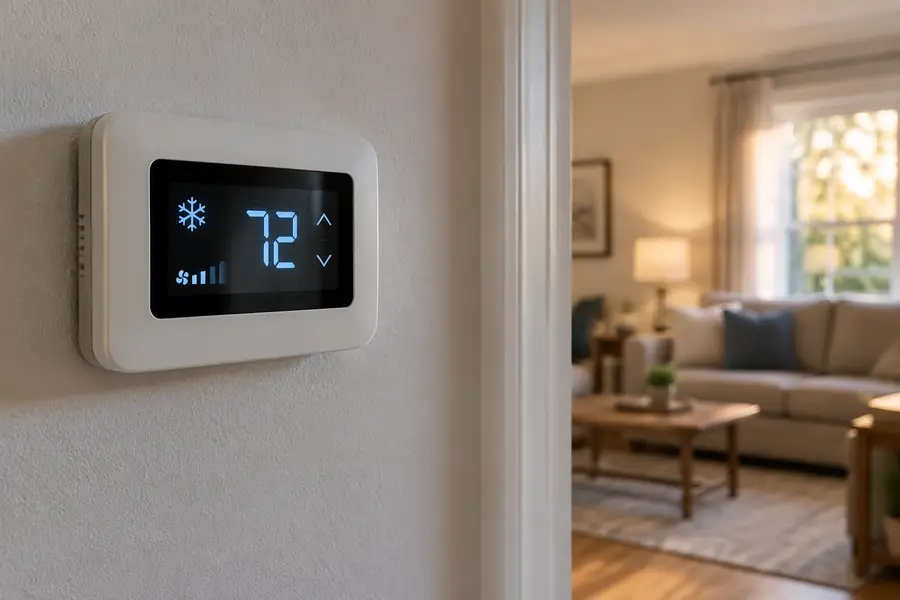
A thermostat that senses the wrong room temperature or loses its cooling-control signal can end cooling too early. A supply vent, direct sunlight, or a nearby heat source can distort its reading; a loose signal, failing thermostat, or unsuitable setting can also interrupt a cooling request. First check Cool mode, actual room temperature, the setpoint, and any displayed message. Replace user-serviceable batteries if the manual calls for it. If cooling stops while the room is still uncomfortable, have a technician check sensor location, wiring, and setup rather than changing hidden installer settings yourself.
2. Dirty filter, blocked returns, or weak indoor airflow
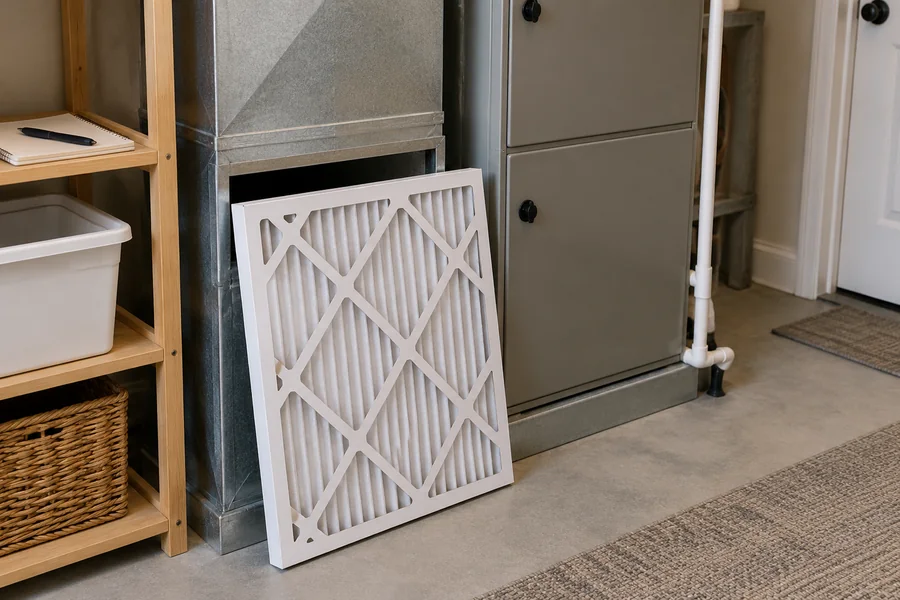
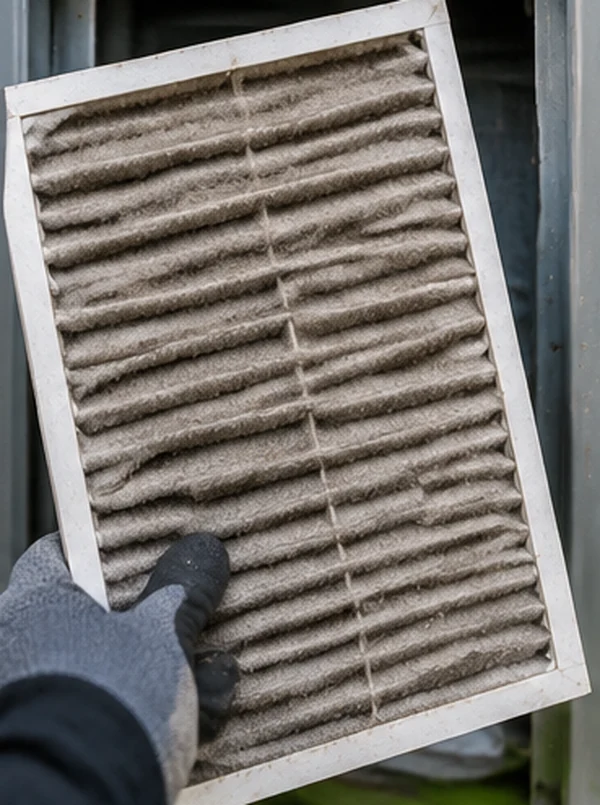
A clogged filter or blocked return reduces the warm air flowing across the indoor evaporator coil. The coil can become too cold and ice may form. Depending on the equipment, that can lead to poor cooling or a protective stop. Check the accessible filter and make sure return and supply openings are clear. Replace or clean the filter only as the manual directs. If ice is visible, stop cooling and arrange a cause check: melting ice is not the same as repairing the restriction. The Airproz frozen AC guide explains how airflow and refrigerant problems can produce similar symptoms.
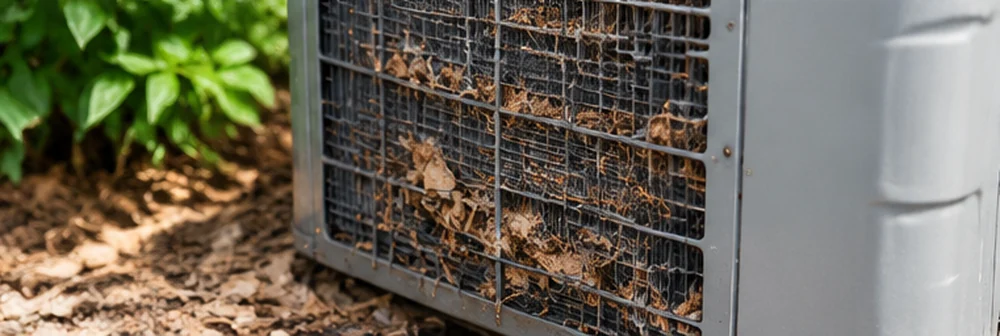
3. Dirty outdoor condenser coil or a failing condenser fan
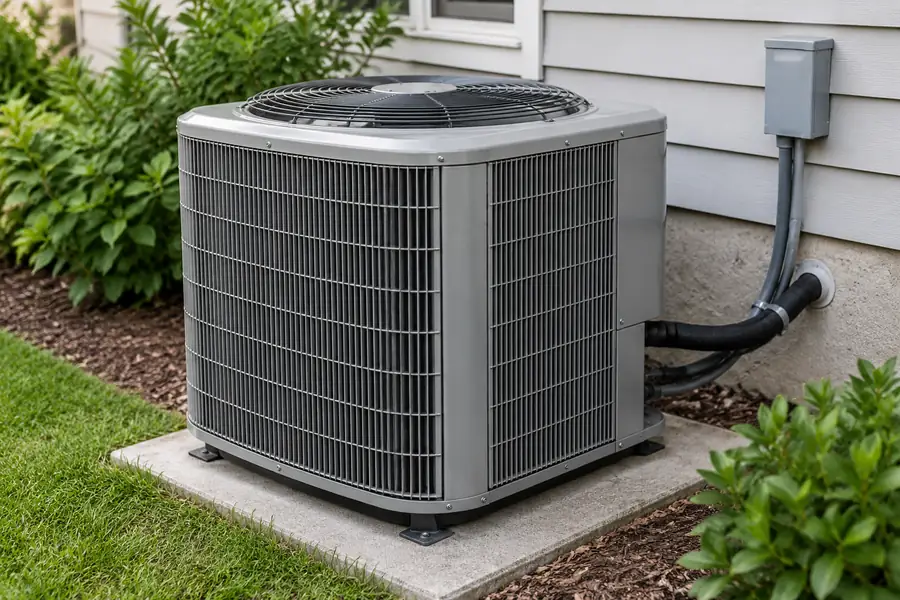
A dirty outdoor condenser coil, blocked clearance, or a failing condenser fan can stop the AC from releasing heat properly. This can raise temperatures and refrigerant pressure; on equipment with suitable protection, abnormal operating conditions may shut the compressor down early. Look for leaves, outdoor obstructions, or a stationary fan without removing guards or opening the cabinet. Clear ordinary loose debris only when safe and allowed by the manual. A fault may first appear on very hot afternoons because the outdoor unit has more heat to release. Check outdoor airflow and visible fan operation before assuming the equipment size is wrong. Repeated shutdowns need a technician to check the fan, coil, electrical operation, and actual operating pressures.
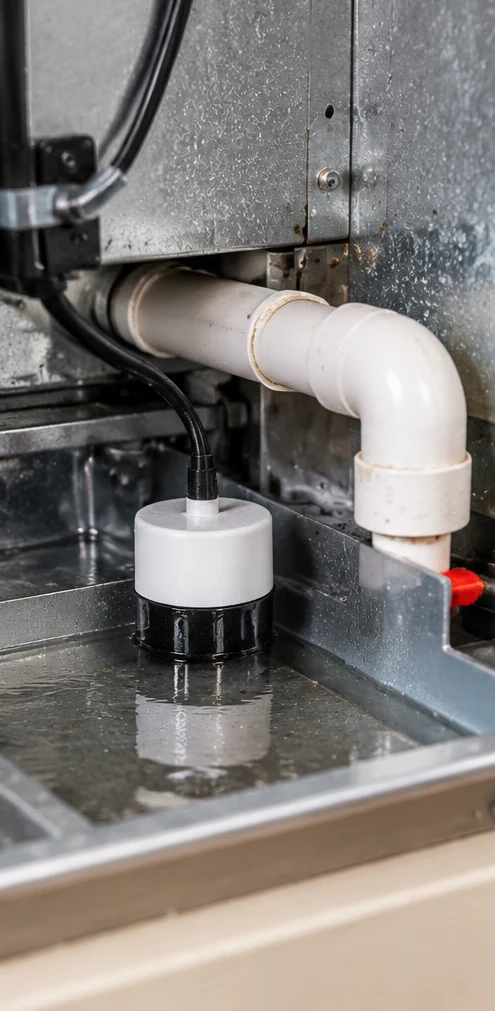
4. Condensate drain or overflow safety switch
On systems fitted with a condensate float switch (a water-level safety control), a blocked drain can raise water high enough to interrupt the cooling request. An AC removes moisture from indoor air, and the collected water must drain away. When water rises in the pan or switch chamber, the float can open the cooling-control circuit to help prevent overflow. Depending on wiring, the compressor or a larger part of the system may stop; changing water levels can make this appear intermittent. Never bypass the switch. If water is leaking, turn cooling off and have the drain cleared, the cause corrected, and the switch tested.
5. Refrigerant leakage or a pressure-related fault
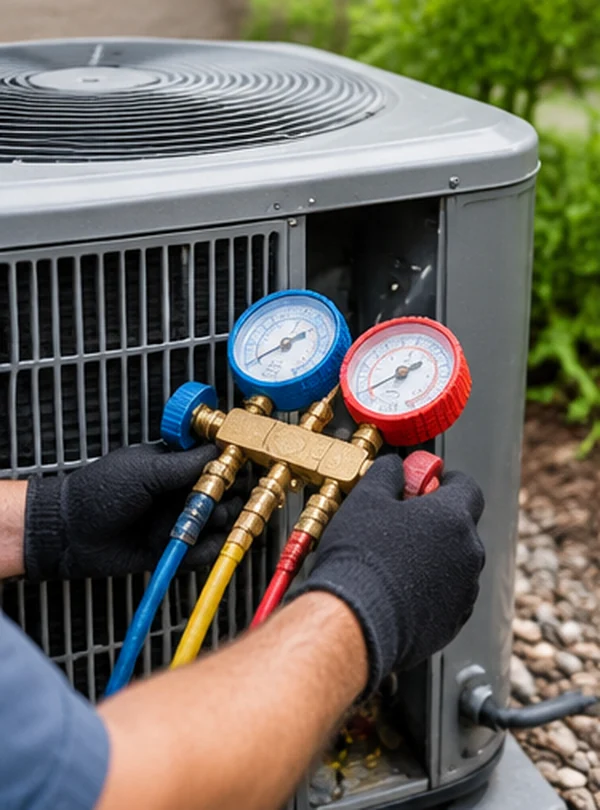
Low or otherwise incorrect refrigerant charge, a restriction, or poor heat transfer can push operating conditions outside the model’s allowed range. Some systems use refrigerant pressure protection—a control that stops the compressor if monitored pressure leaves an allowed range. Weak cooling, ice, and short cycling can occur together, but none of those signs alone proves a refrigerant leak. A technician should check airflow first where relevant, then use the manufacturer’s refrigerant and metering-device procedure to diagnose the fault. In the United States, service work that opens or measures the refrigerant circuit falls under EPA Section 608 certification requirements. Outside the United States, follow the local refrigerant-handling requirements. Adding refrigerant without finding the cause can leave the original problem unresolved.
6. Capacitor, contactor, control board, or supply-power fault
An outdoor fan or compressor may try to start, click, stop, and try again when an electrical component or control circuit has a problem. A compressor’s internal protection can also interrupt operation. Clicking or humming calls for checks of the start circuit and cooling-control signal. A technician can test the contactor, capacitor where fitted, and compressor before deciding which part needs repair or replacement. Leave cabinet covers closed and have a qualified technician check the supply, control signal, start components, fault history, and manufacturer limits. Do not keep resetting a tripping breaker.
7. An air conditioner that is too large for the space
An oversized fixed-speed AC may satisfy the thermostat so quickly that cooling stops before other rooms and indoor humidity are comfortable. If short runs have occurred since installation, review the cooling load, equipment capacity, staging, zoning, and thermostat placement. If the same system cooled normally for years but recently began stopping early, first check for a new control, airflow, drain, refrigerant, or electrical fault. Major changes in insulation or occupancy can also reduce cooling load over time. ENERGY STAR warns that oversized HVAC equipment can cycle too often; the U.S. Department of Energy’s room AC guidance also explains how excess room AC capacity can affect cycling and moisture removal.
A thermostat replacement or filter change will not correct a serious capacity mismatch. For a home, request a residential cooling-load calculation using ACCA Manual J, then select equipment from its actual performance data using the applicable equipment-selection method. For more detail on the sizing trade-off, see our oversized vs. undersized AC guide.
8. Zone controls, programming, or a changed cooling load
A fixed-speed AC may cycle frequently when only a small zone requests cooling and the system cannot reduce its output enough for that load. Multiple thermostats, closing dampers, or schedule changes can change how much air each zone receives. A variable-speed system may lower its capacity, but the control sequence and minimum airflow still need to suit the equipment. Note which zones called for cooling, whether dampers and fans appeared to respond, and whether the problem followed a thermostat or programming change. A technician should check the intended sequence and available airflow before changing the equipment size.
How to Fix Short Cycling Safely
To fix short cycling safely, first stop using the AC if a breaker trips again, you smell burning, see smoke, or water reaches electrical parts. Otherwise, confirm Cool mode and the thermostat setting, check the accessible filter and blocked vents, then record repeated run/off times and any fault messages. Leave electrical, refrigerant, and safety-control testing to a qualified technician.
- Stop for a clear hazard. If the breaker trips again, you smell burning, see smoke, notice a serious water leak, or hear a harsh new mechanical noise, turn the AC off using its normal controls and get qualified help. Do not repeatedly reset the system.
- Confirm there is a real cooling request. Select Cool. Compare room temperature with the setpoint. Look for “Wait,” a fault code, an active schedule, or fan-only mode. Let the documented restart timer complete without repeatedly pressing On/Off.
- Check easy airflow items. Check the accessible filter and clear blocked return or supply openings. Look for safe, visible outdoor clearance. Never reach into moving equipment or expose electrical parts.
- Record the repeating pattern. Time at least three starts and stops if operation is safe. Note whether the indoor blower, outdoor fan, and actual cooling stop together. Watch the room temperature and any visible water or frost.
- Make one supported correction, then observe again. For example, replace a dirty user-serviceable filter with the correct type, let the equipment run normally, and see whether the short cycling returns. If short cycling continues after the filter is corrected, share the timing and temperature notes with the service technician for the next check.
| What you found | Safe next step | Who needs to investigate if it continues |
|---|---|---|
| Dirty accessible filter, no ice or safety warning | Clean or replace by manual; observe operation | Technician if repeated stops remain |
| Thermostat in wrong mode or active schedule | Correct user-level setting; allow normal delay | Controls technician if request stays unstable |
| Ice on coil or line, or water leak | Stop cooling; document visible symptom | Qualified HVAC technician |
| Outdoor fan not moving while compressor tries to run | Do not open the unit or force restarts | Qualified HVAC technician |
| Repeated breaker trip, electrical smell, fault lockout | Stop using the AC | Qualified electrician / HVAC technician as appropriate |
What If the AC Turns Off After Seconds or a Few Minutes?
If the AC stops within seconds and cannot keep running, stop repeated restart attempts and have the starting circuit, control signal, power supply, and protective devices checked. If it runs for a few minutes, first check the setpoint, accessible airflow, and visible water or ice; record the run and off times to guide the next check.
Stops within seconds: Note whether the outdoor unit clicks, hums, or displays a fault, and whether the fan starts. If it cannot keep running, stop repeated start attempts and arrange diagnosis of the start circuit, control signal, and protection devices.
Stops after a few minutes: Record room temperature, setpoint, visible water or ice, each run/off interval, and the next restart delay. Repeated early stops while the room stays warm point toward an unresolved control, airflow, drain, refrigerant, or electrical problem.
Indoor fan runs but outdoor cooling stops: Check whether the thermostat has satisfied its setting and whether the indoor fan is set to On. Airflow alone does not tell you whether the compressor should still be cooling.
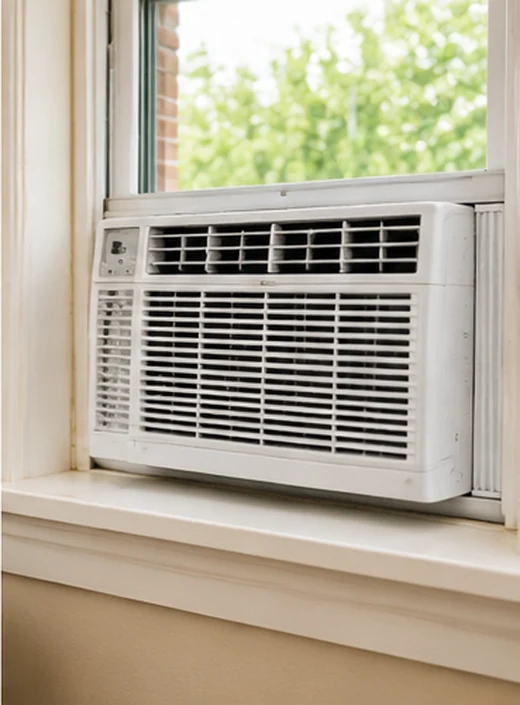
A portable or window AC may have a temperature sensor close to its own air outlet. Cold discharge air that returns quickly to the sensor can end the compressor run before the whole room cools. Haier’s portable AC guidance describes this behavior for its portable units. For a central system, compare the wall thermostat’s cooling request with the outdoor compressor’s operation.
How Often Should an Air Conditioner Cycle On and Off?
There is no one healthy cycle time for every air conditioner. Some manufacturer guides mention roughly 15–20-minute runs as a common illustration, but Trane explains that a properly working unit may run only 3–5 minutes in mild weather and much longer in strong heat. The model, control settings, load, and outdoor conditions matter. A variable-speed compressor can stay at reduced output rather than switch off like a fixed-speed compressor.
Check whether the unit reaches and holds the target temperature, removes moisture as expected, and runs without recurring faults. The example shows how to count starts per hour:
| Repeated example pattern | Approximate starts/hour | What the number tells you |
|---|---|---|
| 4 minutes on + 6 minutes off | 6 | The observed start frequency |
| 12 minutes on + 8 minutes off | 3 | Longer observed cycle under these assumptions |
| Variable speed, continuous low output | Not directly comparable | The compressor may modulate instead of stop |
For a stable repeating pattern, calculate 60 ÷ (run minutes + off minutes) to estimate starts per hour. Compare the result with the actual model’s published start and restart limits, room temperature, and any fault alerts before changing controller settings.
A 10-minute run can be normal under light load when the room has reached its setpoint and cooling remains stable. Repeated stops while the room stays warm—especially with an error, ice, water, or a tripped breaker—need investigation. Compare runs under similar loads and follow the installed model’s minimum on/off times and start limits.
What Should an HVAC Technician Check?
A useful service visit should find which device is ending the cooling call and what physical condition caused it. Replacing a capacitor, topping up refrigerant, or changing the thermostat without checking the sequence can miss the fault.
Trace the cooling sequence: First, did the thermostat still call for cooling when operation stopped? Next, did a water/pressure safety device or the control board interrupt that call, did power disappear, or did the compressor fail to keep running? Finally, test the physical cause and observe the repaired system under comparable conditions. The service result should identify what stopped cooling and why, not just which part was changed.
| Check | What ended cooling or prevented it? | What confirms the cause is fixed? |
|---|---|---|
| Thermostat call, sensor, board status, fault log | Thermostat ended call vs equipment rejected it | Call stays stable through normal cooling |
| Filter, blower, airflow and duct restrictions | Weak indoor airflow and icing risk | Airflow meets equipment requirements |
| Drain pan, float switch and condensate line | Water safety shutdown vs temperature shutdown | Drain works and switch functions normally |
| Condenser coil, fan and operating conditions | Poor outdoor heat rejection or fan fault | Stable operation without recurring protective trips |
| Refrigerant/pressure measurements using the model procedure | Charge, restriction, or protective pressure event | Corrected root cause and model-specified readings |
| Electrical supply, contactor, start circuit and compressor checks | Failed start or interrupted power/control | Safe start and run behavior within component limits |
| Equipment size and controls | Oversizing, minimum output, zone misconfiguration | Performance matches actual building load |
For example, suppose the outdoor compressor stops after about four minutes while the room is still warmer than the setpoint. Testing shows an open condensate safety switch and a blocked drain. After the technician clears the blockage and tests the switch, the drain flows and several observed cooling periods end without the same safety alert. Those results support the repair better than one successful restart.
For a replacement project, calculate the building’s current cooling load and select equipment from its actual capacity data. Keep the old unit’s nameplate as background information. ACCA identifies Manual J as a residential load method and Manual S as the related equipment-selection standard; both use building details and proposed equipment data. For commercial buildings, use the appropriate commercial load and system-design process.
Should You Repair the AC or Replace It?
Repair the demonstrated fault when the equipment is otherwise suitable. Review replacement when the compressor/control package is badly damaged or the system is fundamentally oversized. Start with the confirmed fault, repair cost, expected reliability, and the building’s cooling load.
| Confirmed cause | Usually better starting action | When a larger change may be justified |
|---|---|---|
| Dirty filter or blocked return | Restore specified airflow | Rework ducts or design if airflow cannot meet requirements |
| Thermostat fault or poor placement | Correct location, wiring, or compatible control | Replace incompatible controls when supported |
| Drain switch trip | Clear cause of overflow and test drainage | Redesign drainage where recurring installation faults exist |
| Refrigerant or electrical fault | Repair confirmed defect and test fully | Consider replacement if the repair cannot restore reliable, supported operation |
| Oversized cooling equipment | Check load, controls, zoning and modulation | Select right-sized equipment if mismatch cannot be corrected |
Choose based on the result: If the confirmed repair restores stable operation and the existing equipment still suits the building load, keeping it may be the better choice. If the same fault returns, a major component cannot be repaired reliably, or a load and minimum-capacity review shows a serious mismatch, compare replacement options using the verified fault, expected reliability, and current building needs.
An inverter compressor can vary its cooling output at low load, unlike a fixed-speed compressor that mainly switches between on and off. This can reduce some start-stop behavior, but it does not repair a blocked drain, restricted airflow, or an electrical fault. Its minimum stable output, controls, and building load still matter. For a new installation or planned replacement project, compare suitable categories in our air conditioner product range only after the diagnosis and load requirements are clear.
How to Prevent Short Cycling From Coming Back
To help prevent short cycling from returning, maintain the correct filter and keep indoor returns, supply vents, and outdoor airflow paths clear. Make sure the original fault is corrected. After service, record several cooling cycles and check that the same alarm, water, or ice does not return.
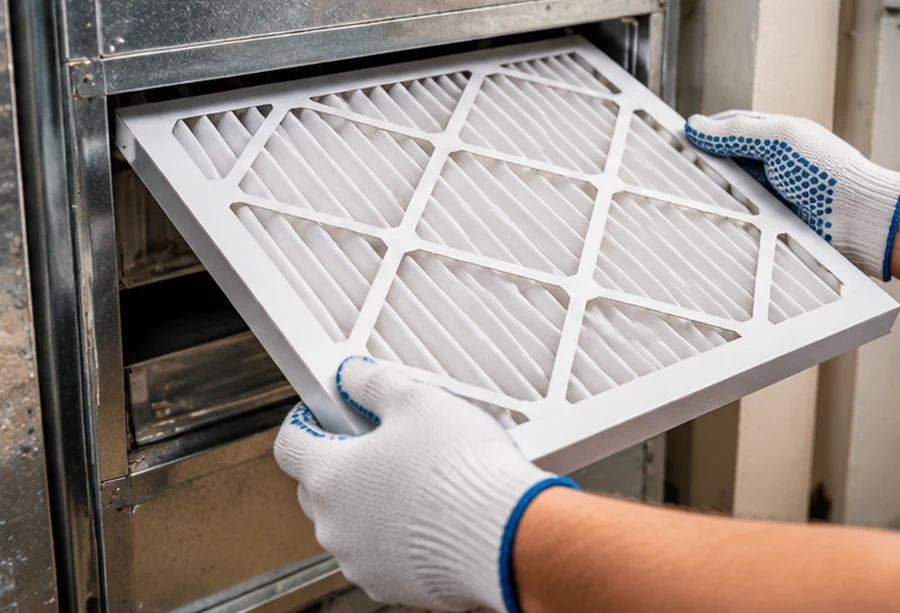
- Check filters as the manufacturer directs and sooner when dust or heavy use demands it. Keep returns, supply vents, and outdoor airflow paths clear.
- Have qualified service inspect dirty coils, condensate drains, electrical controls, fan operation, and refrigerant conditions as the system requires. Do not use refrigerant top-ups as routine preventive maintenance for a sealed system.
- Keep a simple record after repair: outdoor conditions, setpoint, indoor temperature, several run/off intervals, alerts, cooling performance, and whether water or ice returns.
- For multi-zone or multi-unit buildings, confirm each zone’s calls, airflow and restart sequence. Power restoration and compressor minimum-off settings should follow the installed controller’s documentation.
The Airproz guide to AC problems and safe cooling checks can help distinguish short cycling from poor cooling without repeated shutdowns.
Frequently Asked Questions
Why does my air conditioner keep turning off while the fan stays on?
The thermostat may be set to Fan On, which moves air without keeping the compressor running. Check whether the room reached its setpoint and whether outdoor cooling actually stopped. If cooling stops repeatedly while the room is still warm, record the timing and request diagnosis.
Is the 3-minute AC restart delay the same as short cycling?
No. A restart delay is a controller’s planned waiting period after a stop. Short cycling is repeated, abnormally brief cooling operation. Let the normal timer finish; if the compressor repeatedly starts and stops without cooling the room, investigate the cause.
Can a dirty air filter make an AC turn on and off repeatedly?
Yes. A badly clogged filter can reduce airflow enough to contribute to icing or a protective shutdown. Clean or replace a user-serviceable filter as directed, but if ice or repeated shutdowns remain, arrange service rather than forcing more starts.
Why does my air conditioner shut off after just a few seconds?
A failed start, interrupted control signal, electrical problem, or protective shutdown is possible. A click or hum alone cannot identify the part. Stop repeated attempts, note any fault code, and ask a qualified technician to check the system.
Why does my window or portable air conditioner keep switching off?
It may have reached the sensed temperature, be oversized for the room, have recirculated cold air into its sensor, or have a control or airflow problem. Check the model’s Cool mode, cleanable filter, and required clearance. The room may still be warm even when the unit’s own sensor feels cold.
Does low refrigerant always cause short cycling?
No. Low refrigerant can contribute to abnormal operating conditions, but icing and early shutdown can also result from poor airflow, controls, or other faults. A qualified technician should use the model’s service procedure to identify the cause before charging or repairing the circuit.
Can short cycling damage the compressor?
Yes. Persistent abnormal short cycling can increase wear on the compressor and electrical starting components. Short runs can also reduce comfort and moisture removal. One brief run in mild weather does not mean the compressor is damaged. If early shutdowns keep repeating, have the cause checked.
Should I keep resetting the breaker when my AC short cycles?
No. A breaker that trips again can indicate an electrical fault. Stop operating the unit and have the electrical and HVAC system checked by qualified personnel.
Is it normal for my AC to turn on and off every 10 minutes?
It can be normal under light load if the room reaches its setting and the system reports no fault. Repeated shutdowns while the room stays warm call for investigation. Follow the installed model’s timing and start limits.
Why did my AC start short cycling after years of normal operation?
A new airflow, control, drain, electrical, or refrigerant problem deserves attention before assuming the unit is oversized. Record when the change began, recent thermostat or building changes, and what else happens when cooling stops.
The Bottom Line on Air Conditioner Short Cycling
Air conditioner short cycling is repeated early compressor shutdown—not every normal on-off cycle or restart delay. Check the setpoint, user-accessible filter, airflow obstructions, and actual compressor timing first. If the pattern repeats while the room is still warm, or ice, water, fault codes or electrical warnings appear, have the equipment diagnosed. A correct fix addresses the cause and is followed by stable cooling, normal airflow and no recurring protection events.
Planning a new Airproz AC installation or replacement project? Share the building use, climate, estimated cooling load, proposed system type, zone plan, available power, and any existing short-cycling notes through our contact page. If you know the current unit size, control type, or minimum output, include those details too. We can help compare relevant equipment categories and capacity-control options before a final model is selected.