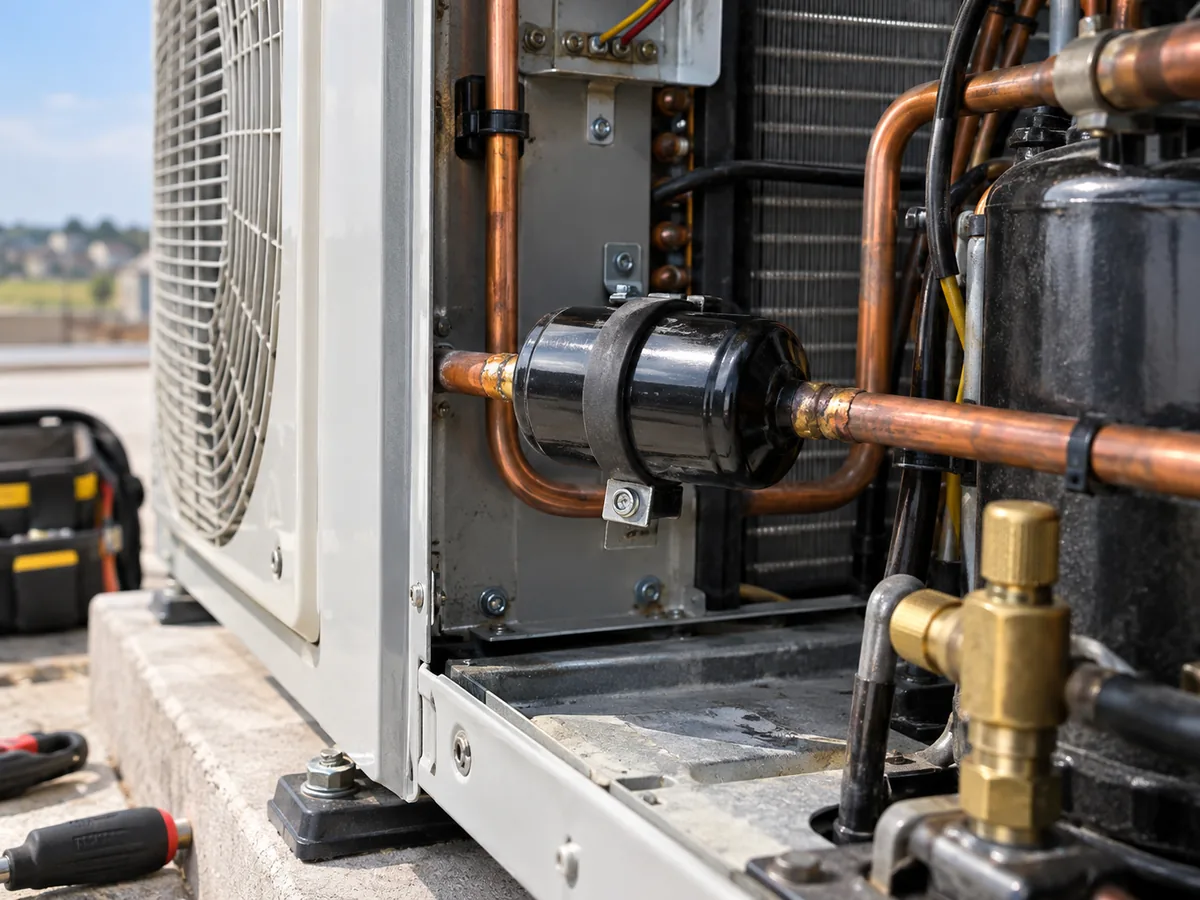
Simple answer: a filter drier protects the sealed refrigerant circuit. It removes moisture and catches solid dirt. Some designs also help remove acids. Most air-conditioning and refrigeration systems place it in the liquid line.
A filter drier is not the same as an air filter. It works inside the pressurized refrigerant circuit. To choose the right one, you need to know the refrigerant, where the drier sits, refrigerant flow direction, system capacity, allowed pressure drop, pressure rating, and contamination level. Replacing one also means opening the refrigerant circuit, so this is qualified service work.
What Is a Filter Drier in HVAC?
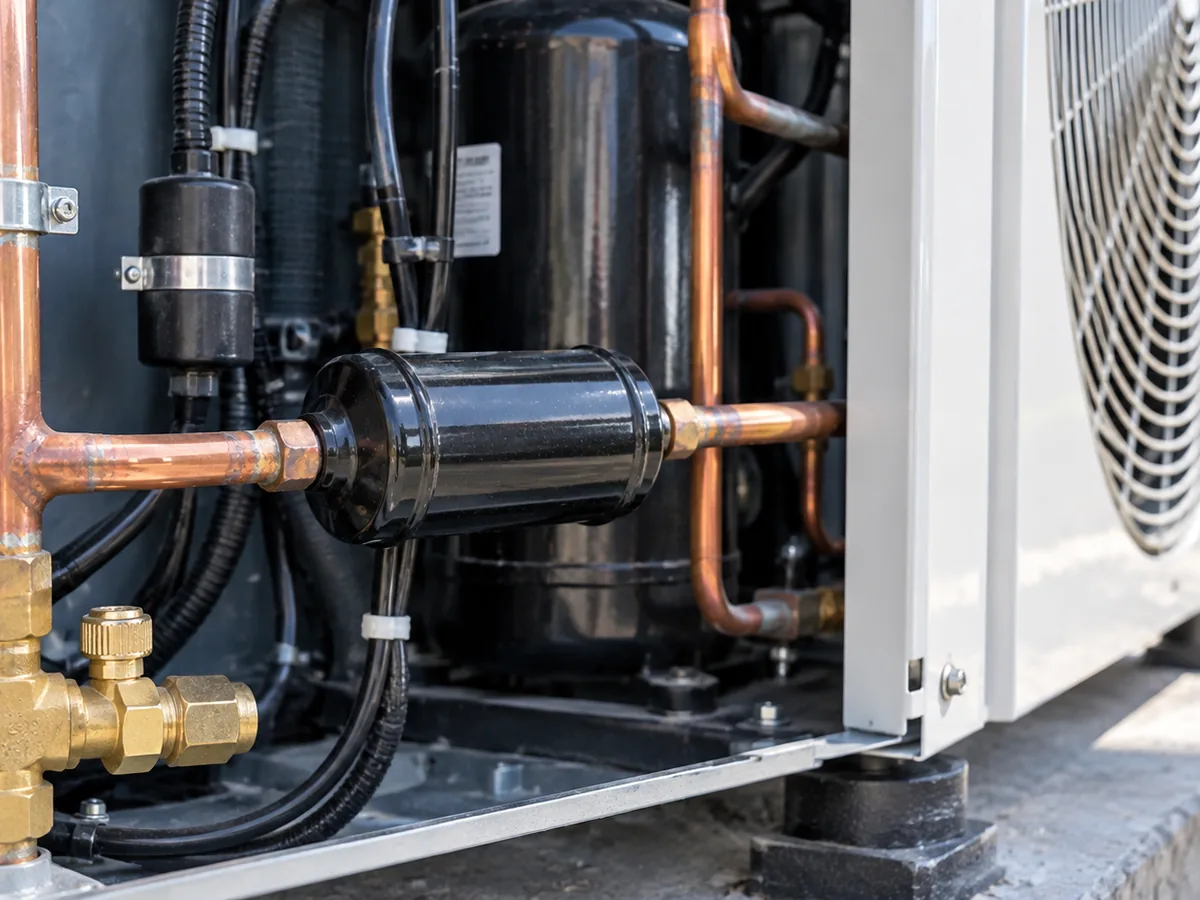
A filter drier does two main jobs. First, it catches solid dirt such as metal particles, copper oxide, and brazing residue. Second, it removes water from the refrigerant and oil. The material that removes water is called a desiccant. Some desiccant blends can also help remove acids.
ASHRAE Handbook Chapter 7 lists filter driers as important moisture and contamination controls in refrigeration systems. It also makes an important point: a filter drier does not replace clean installation, proper evacuation, or good service practice.
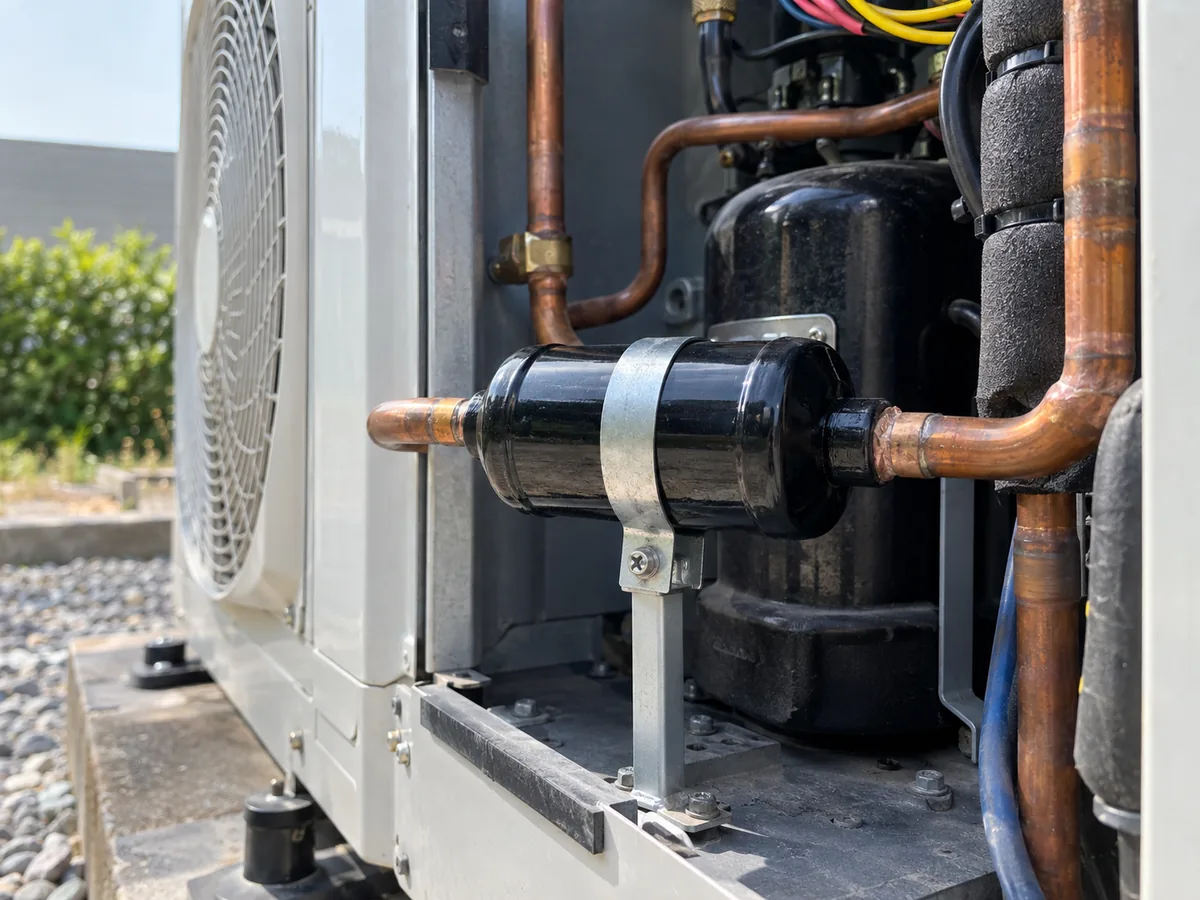
In many normal cooling systems, the filter drier sits in the high-pressure liquid line before the metering device. A suction-line filter drier has a different job. It is mainly used for cleanup when the system has severe contamination or a compressor burnout.
Airproz engineering takeaway: for a normal one-way AC liquid line, we start with an approved liquid-line filter drier. For a reversible heat pump, we check refrigerant flow in both heating and cooling. After a compressor burnout, we treat the job as system cleanup, not a simple drier change.
Filter drier vs. other HVAC parts
| Part | What it does | Where you normally find it | What it cannot replace |
|---|---|---|---|
| Filter drier | Removes moisture and catches debris; some types also help remove acid | Usually the liquid line; suction-line types also exist | Evacuation, leak repair, or correct charging |
| Sight glass / moisture indicator | Shows liquid condition or moisture status, depending on the design | Liquid line | Contamination removal |
| Suction accumulator | Helps stop liquid refrigerant from reaching the compressor | Suction line | Drying and filtration |
| Receiver | Stores liquid refrigerant and helps keep liquid available | High-pressure liquid side | A filter drier |
| Return-air filter | Removes dust from building air | Air side | Cleaning the sealed refrigerant circuit |
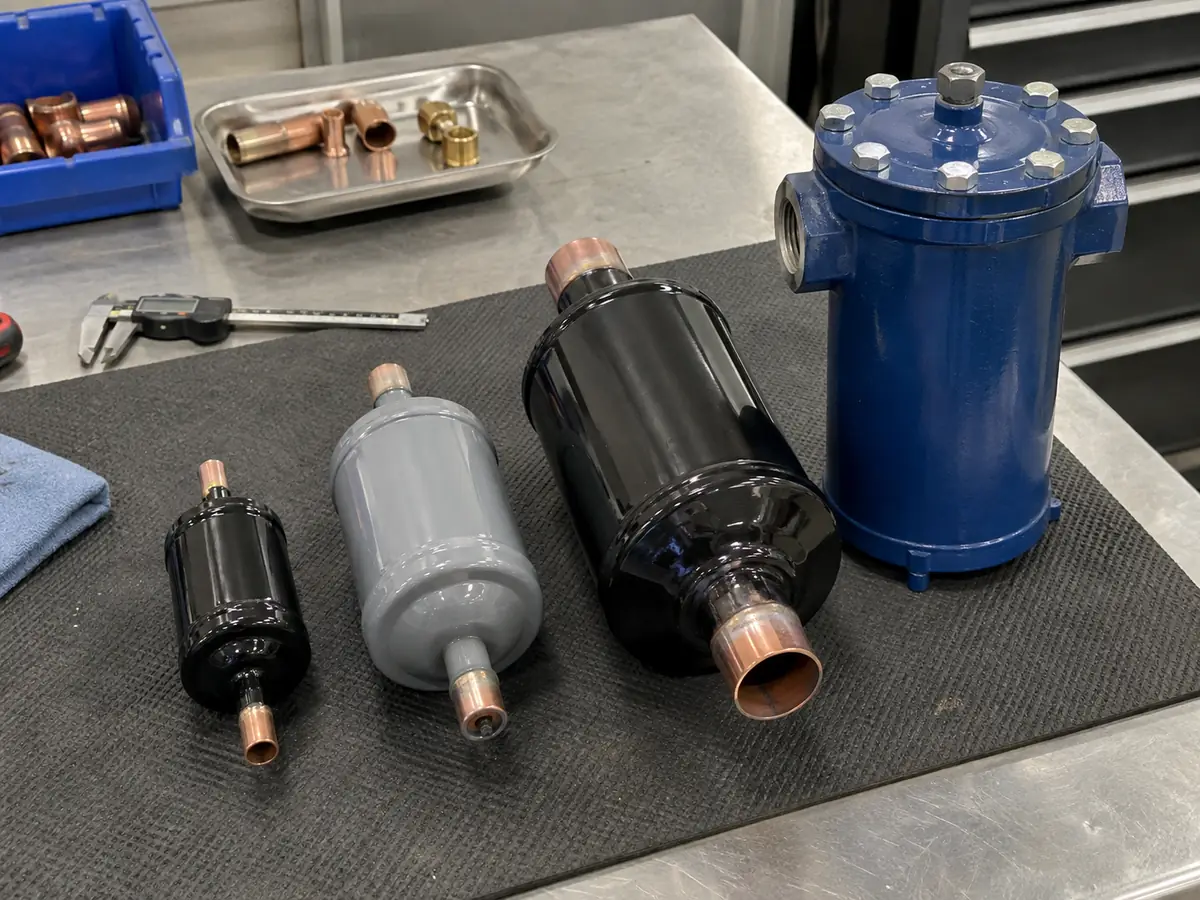
For a wider system view, see our guide to the heat pump schematic and refrigerant circuit.
Which Filter Drier Type Do You Need?
Start with the job the drier must do. Then check refrigerant flow. Do not start with copper tube size alone.
| Your application | What to check | Main risk | Usual direction |
|---|---|---|---|
| Standard split AC or one-way DX system | Flow stays one way at the drier location | Too much liquid-line pressure drop | Approved liquid-line filter drier |
| Reversible heat pump | Flow may reverse between heating and cooling | Using a one-way drier in a reversing line | Check for a bi-flow drier or another approved heat-pump arrangement |
| Compressor-burnout cleanup | Acid, oil damage, moisture, and debris may be present | Contamination can damage the replacement compressor | Cleanup protection in the liquid line, plus suction-line protection when required |
| Large commercial refrigeration system | Flow rate, contamination load, and service access | Too much pressure drop or too little contaminant capacity | A replaceable-core shell may make sense |
This table helps you narrow the type. It does not select an exact part number. Exact selection still needs the actual refrigerant, system duty, flow, pressure, and manufacturer data.
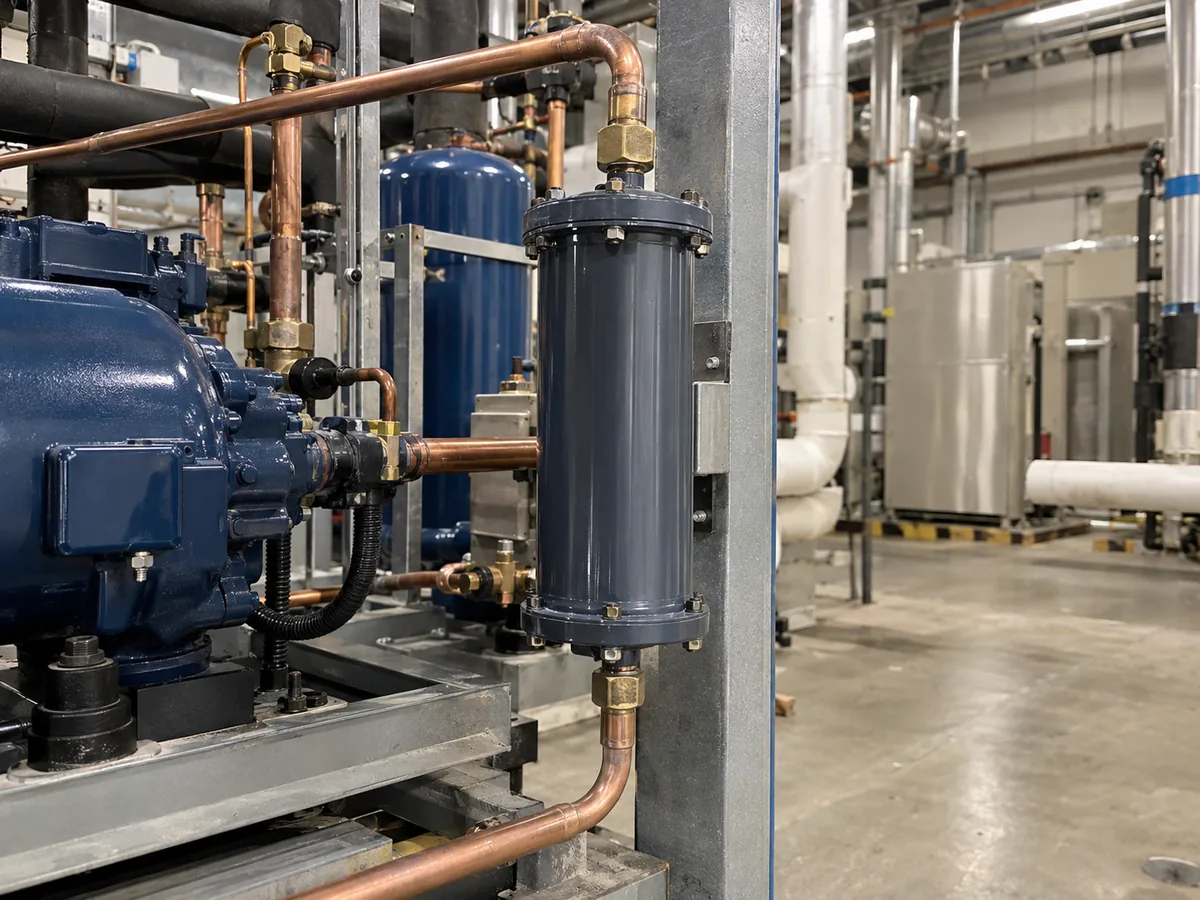
Liquid-Line, Bi-Flow, Suction-Line, and Replaceable-Core Filter Driers
Liquid-line filter drier
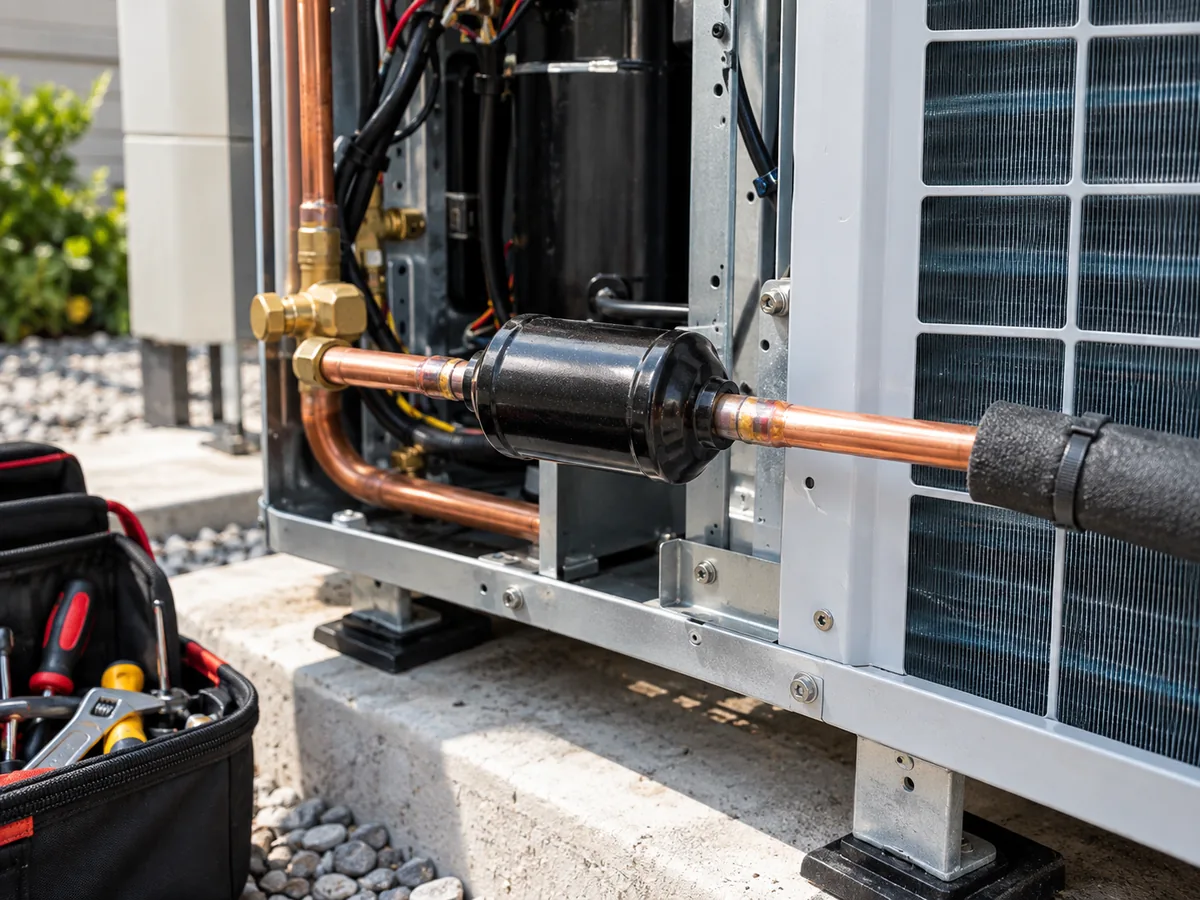
This is the common choice in many direct-expansion, or DX, air-conditioning and refrigeration systems. It removes moisture and debris before the refrigerant reaches the metering device. A one-way model has a flow arrow. Install it in the correct direction.
Bi-flow filter drier for heat pumps
A reversible heat pump changes refrigerant direction when its reversing valve changes mode. That means a one-way drier can be wrong if it sits in a section where flow reverses.
A bi-flow filter drier is built for this situation. Its internal design lets refrigerant move in either circuit direction while still passing through the filter core as intended. Danfoss DMB/DCB bi-flow filter driers, for example, are made for heat-pump liquid lines.
At Airproz, we do not look at cooling mode only. We trace the drier location in both heating and cooling before choosing a one-way or bi-flow setup.
For heat pumps, check both modes: first trace refrigerant flow through the planned drier location in cooling mode. Then trace the same point in heating mode. If flow reverses there, verify an approved bi-flow or other reversible arrangement. If flow does not reverse at that location, do not assume a bi-flow drier is required just because the equipment is a heat pump.
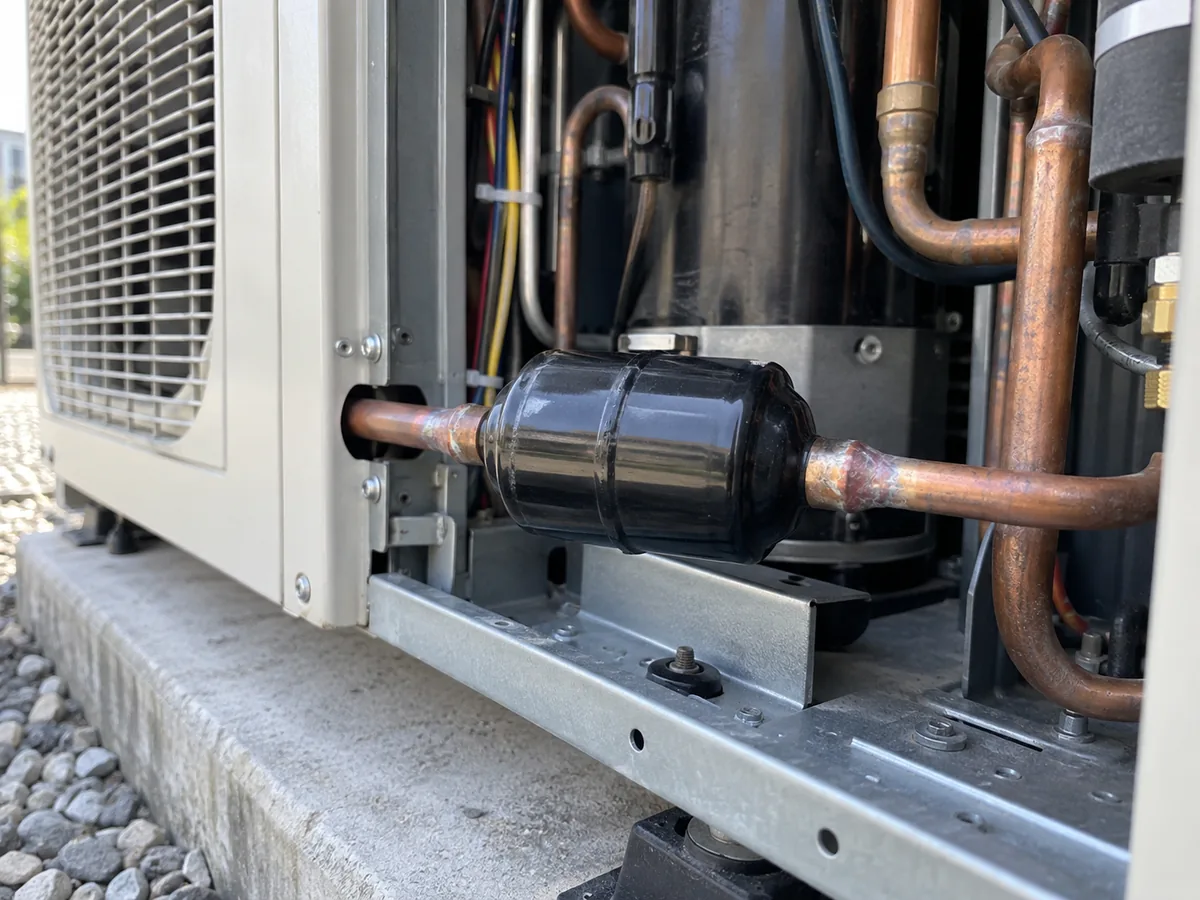
Suction-line filter drier
A suction-line drier is mainly a cleanup part. It is often used after severe contamination or compressor burnout. Pressure drop matters a lot here because the compressor is pulling refrigerant through this line. Too much suction pressure drop can reduce capacity and change compressor operating conditions.
Parker Sporlan cleanup guidance therefore focuses on both contaminant removal and suction-line pressure drop.
Replaceable-core filter drier
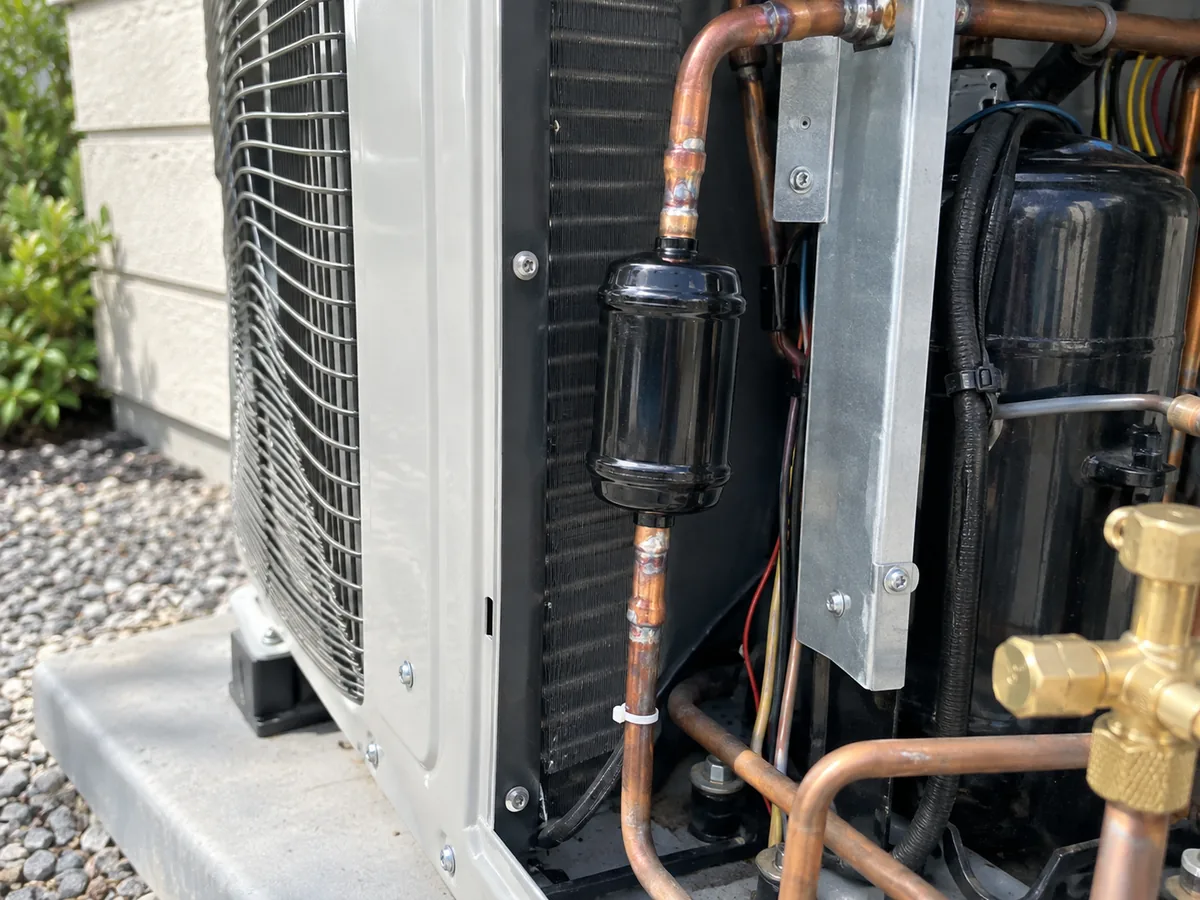
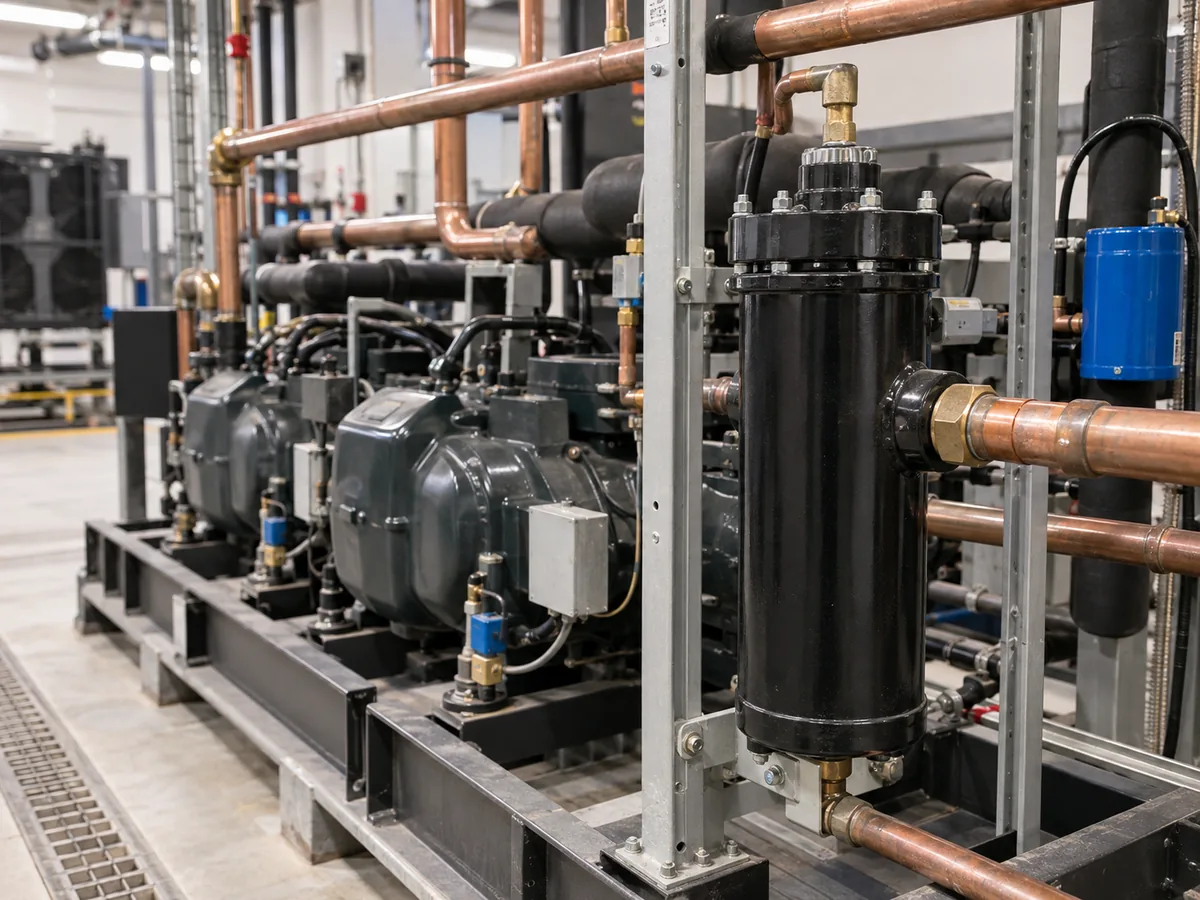
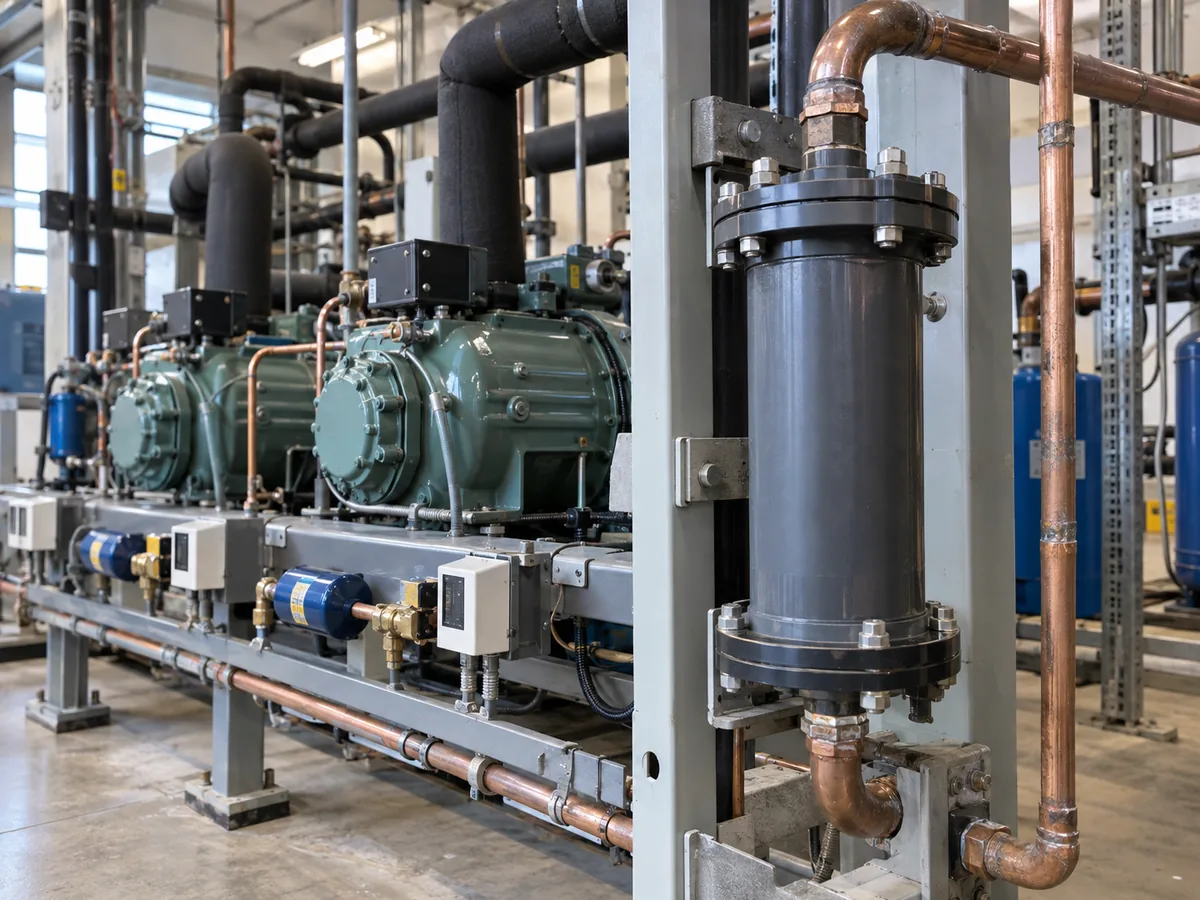
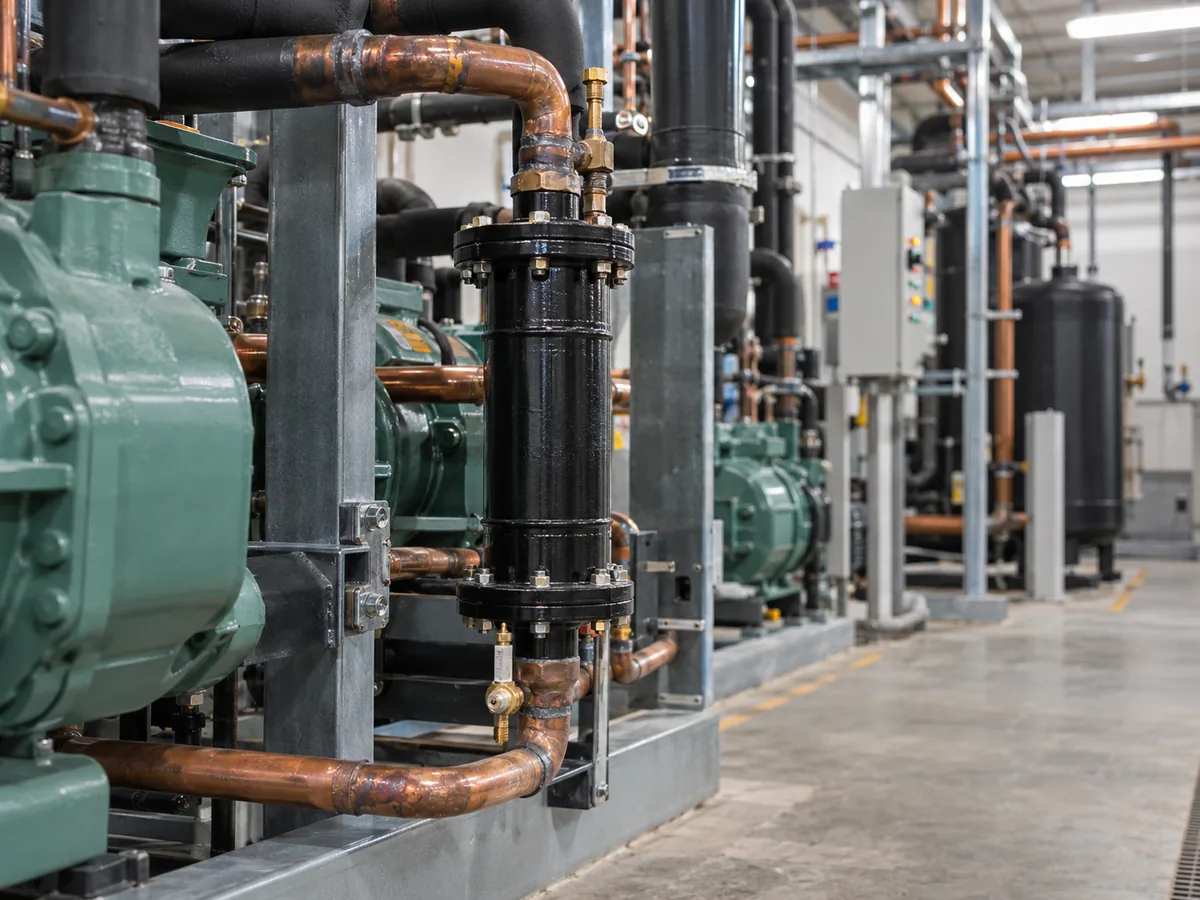
Larger systems may use a shell with replaceable cores. You can change the core without replacing the full shell. This can make repeated cleanup or maintenance easier. You still need to check shell pressure rating, core type, refrigerant compatibility, flow capacity, and line duty.
Solid-core and bead designs
Filter driers can use molded cores, compacted beads, loose material, or other internal designs. These designs can change moisture capacity, acid capacity, filtration, vibration resistance, internal volume, and pressure drop. We compare published data instead of assuming one design is always better.
Inside a filter drier: what the main parts do
The shell holds the internal filter and drying material. The desiccant removes moisture. Screens, pads, cores, or other filter parts catch solid debris and keep the drying material in place. The exact internal layout differs by manufacturer, but the system goal is the same: remove harmful contamination while keeping refrigerant flow within the allowed pressure drop.
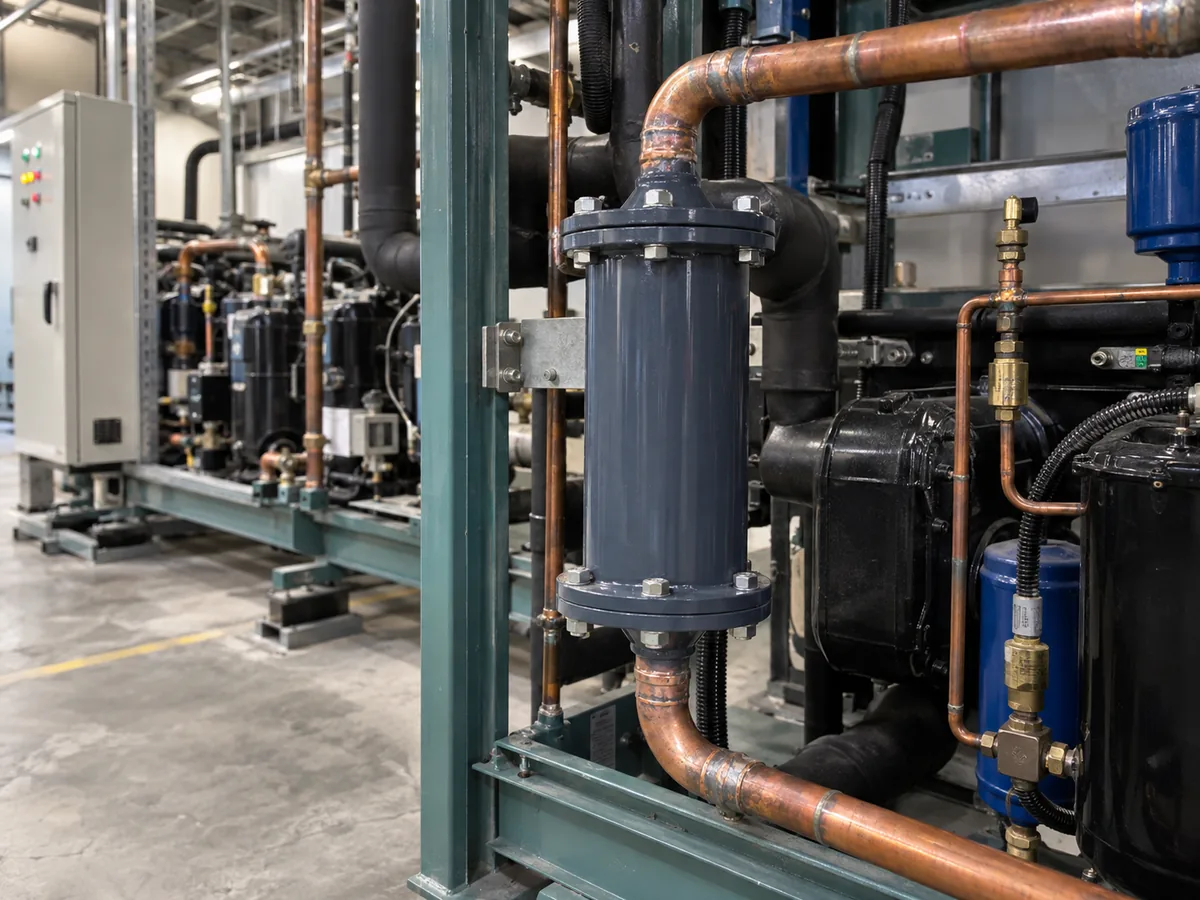
How Does a Filter Drier Work?
The water-removing material inside the drier is called a desiccant. It removes water by adsorption. In simple terms, water molecules stick to surfaces inside the desiccant. They are not only trapped like dirt in a screen.
Molecular sieve is widely used because its tiny pores are very good at catching water molecules. Some products also use activated alumina or blended core materials when more acid removal is needed.
The filter section catches solid debris at the same time. The drier needs enough drying and filtering capacity without becoming a restriction to refrigerant flow.
One more point matters: the drier is only part of moisture control. You still need dry piping, proper brazing, good storage, leak-free assembly, and deep evacuation. A filter drier should protect a clean system. It should not be used to cover up poor evacuation or uncontrolled moisture entry.
Why Moisture, Acid, and Debris Matter
| Contaminant | What can go wrong | What we check |
|---|---|---|
| Moisture | Ice at small passages, chemical breakdown, and acid formation | Service history, time open to air, evacuation, and moisture indication when available |
| Acid or damaged oil | Corrosion, oil breakdown, motor-insulation damage, and repeat compressor failure | Burnout severity, oil/acid condition, and the cleanup procedure |
| Solid debris | Blocked metering devices, drier restriction, and component wear | Where the debris came from, pressure-drop behavior, and service history |
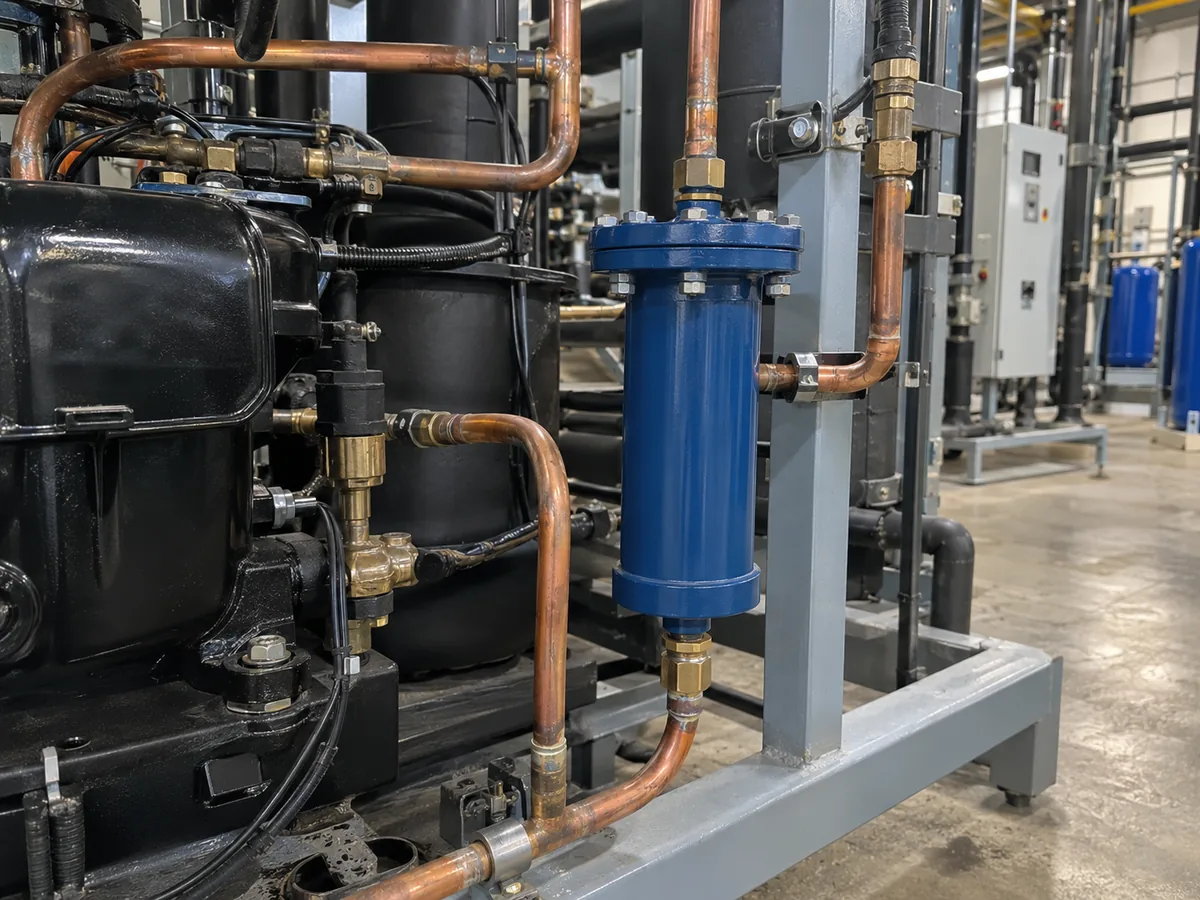
Important: a drier can be full of moisture without being badly restricted. It can also become restricted by debris before the desiccant is fully used. That is why we do not use one temperature reading to judge how much drying capacity is left.
Why Filtration and Pressure Drop Must Be Balanced
A filter drier has to catch harmful dirt, but refrigerant still needs to move through it. Very fine filtration is not automatically better if the drier clogs too quickly or creates too much pressure drop.
Danfoss explains the same trade-off in terms of filter efficiency, dirt capacity, and pressure drop. We use the principle, not one universal micron number: the correct balance must come from approved data for the actual refrigerant, flow, and application.
Airproz rule: better filtration does not mean better system performance if the drier becomes a refrigerant-flow restriction. We check filtration, dirt-holding capacity, and pressure drop together.
How We Select a Filter Drier for an AC or Heat Pump
At Airproz, we do not choose a filter drier from copper tube size alone. The connection must fit the pipe, but that tells us only the physical connection. It does not prove the drier has enough flow capacity, drying capacity, contaminant capacity, or pressure rating.
We check these items in order:
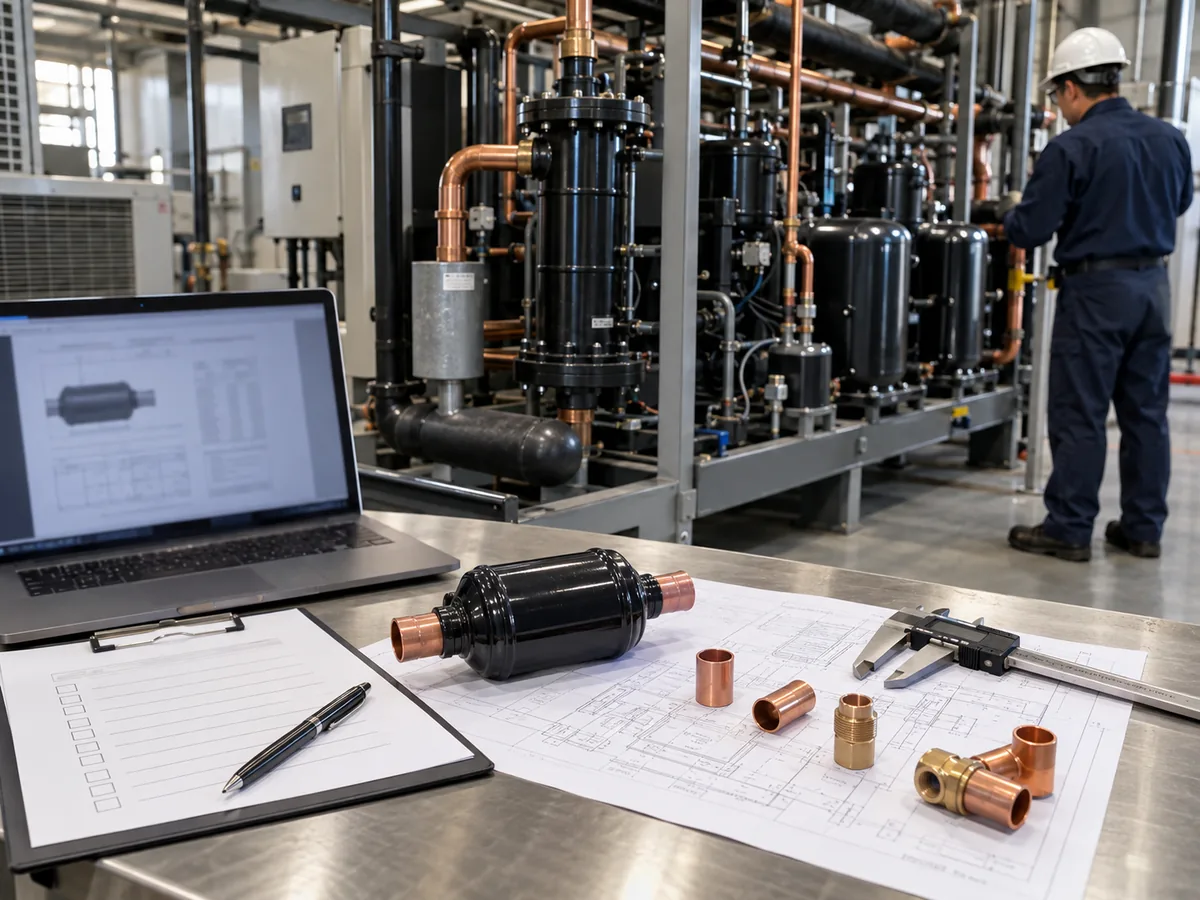
- Refrigerant and oil. The drier materials and desiccant must be approved for the actual refrigerant and lubricant.
- Where the drier works. We confirm liquid-line, suction-line, bi-flow, or cleanup duty before comparing sizes.
- Refrigerant flow direction. On a heat pump, we check both heating and cooling flow paths.
- System capacity and operating condition. Published flow ratings are based on stated test conditions, so the real system duty matters.
- Allowed pressure drop. The drier must not become the restriction that starves the system.
- Moisture, acid, and debris load. Normal protection and burnout cleanup are different jobs.
- Working pressure and refrigerant approval. The component must be approved for the pressure and refrigerant in the system.
- Connection size, connection type, and installation space. We check the tube size, whether the fitting is brazed/sweat, flare, or another approved connection, plus brazing access and service space.
- Target market. The component documents and the finished HVAC product must fit the destination market.
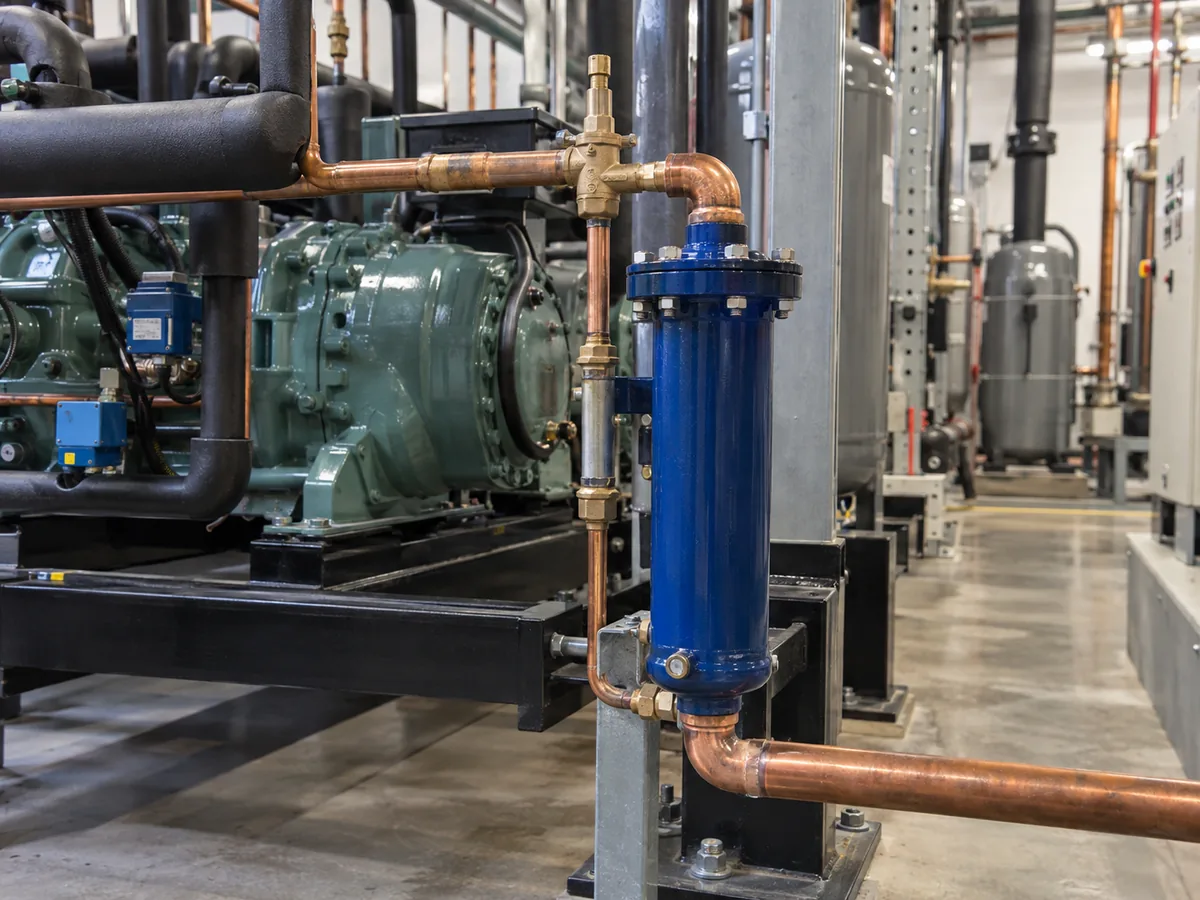
Parker Sporlan filter-drier guidance also checks moisture load, temperature, foreign matter, pressure drop, contaminant retention, and shell strength. ASHRAE likewise points engineers to current manufacturer data for flow and drying limits.
What we check on a filter-drier datasheet
| Datasheet item | Why it matters |
|---|---|
| Approved refrigerants and oils | Confirms chemical and pressure compatibility with the actual circuit |
| Liquid-line, suction-line, or bi-flow duty | Shows where the drier is designed to work |
| Rated flow or capacity | Checks whether enough refrigerant can pass through at the stated conditions |
| Pressure-drop data | Helps prevent the drier from becoming a bottleneck |
| Moisture capacity | Shows how much water the drier can hold under the stated rating method |
| Acid or cleanup data, when provided | Helps judge severe contamination or burnout-cleanup duty |
| Maximum working pressure | Must suit the refrigerant circuit and operating pressure |
| Flow direction | Critical for one-way driers and reversible heat-pump locations |
| Connection size and type | Must match the piping design and approved installation method |
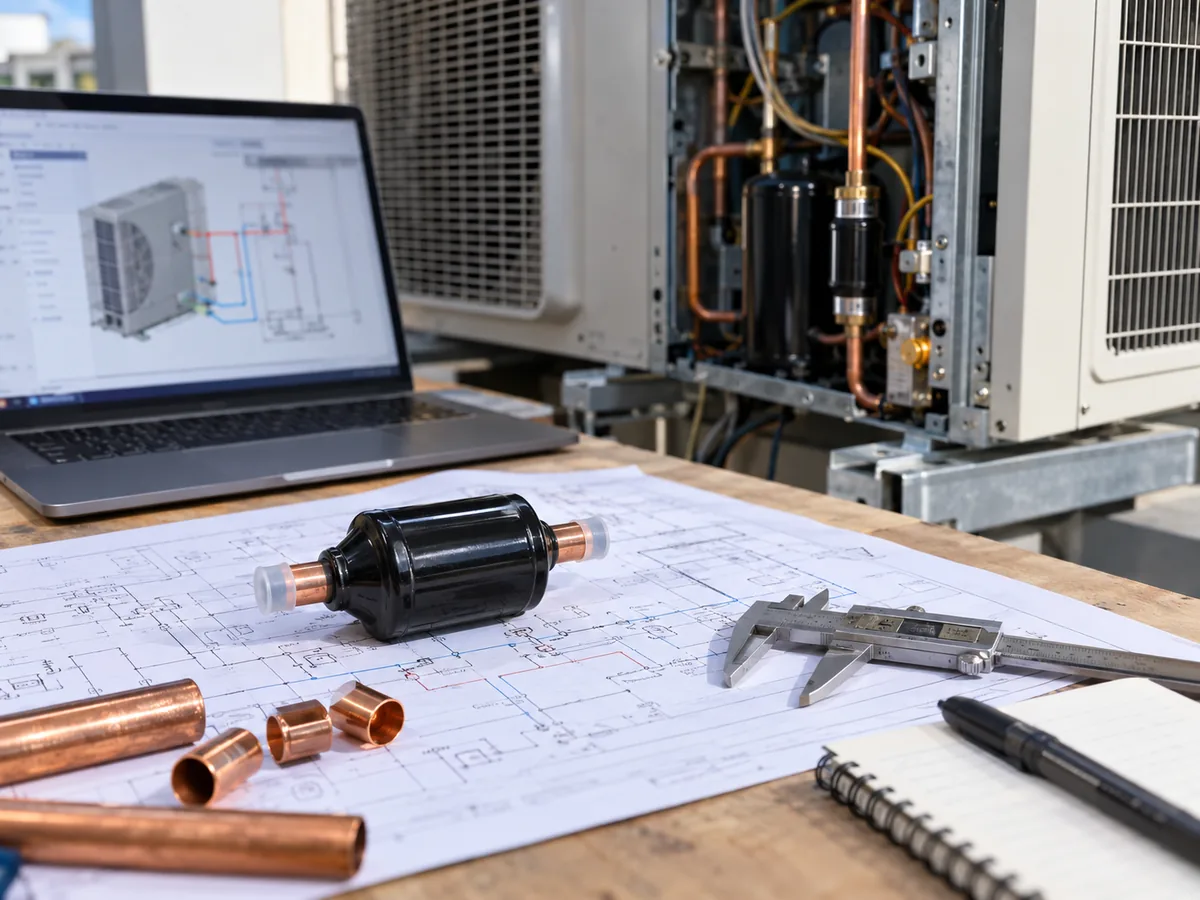
Our rule: if we do not know the refrigerant, drier location, flow direction, capacity, allowed pressure drop, or contamination level, we do not lock an exact filter-drier model. We first check the refrigeration drawing, operating conditions, and current component data.
Example: How We Review a Filter Drier for a Reversible Heat Pump
Illustrative engineering example — not a customer case.
Assume a reversible heat-pump platform uses R32 and the planned drier location carries refrigerant in opposite directions between cooling and heating. The system capacity and piping drawing are already known.
| Input | Example condition | What we check |
|---|---|---|
| Refrigerant | R32 | Is the drier approved for this refrigerant, oil, pressure, and safety scope? |
| System type | Reversible heat pump | Does refrigerant reverse through the planned drier location? |
| System capacity | Known from the equipment design | Does the drier have enough rated flow at the applicable conditions? |
| Pressure drop | Must stay within the circuit design limit | Will the drier protect the system without becoming a restriction? |
| Connection | Known from the refrigeration drawing | Do connection size and type match the approved piping design? |
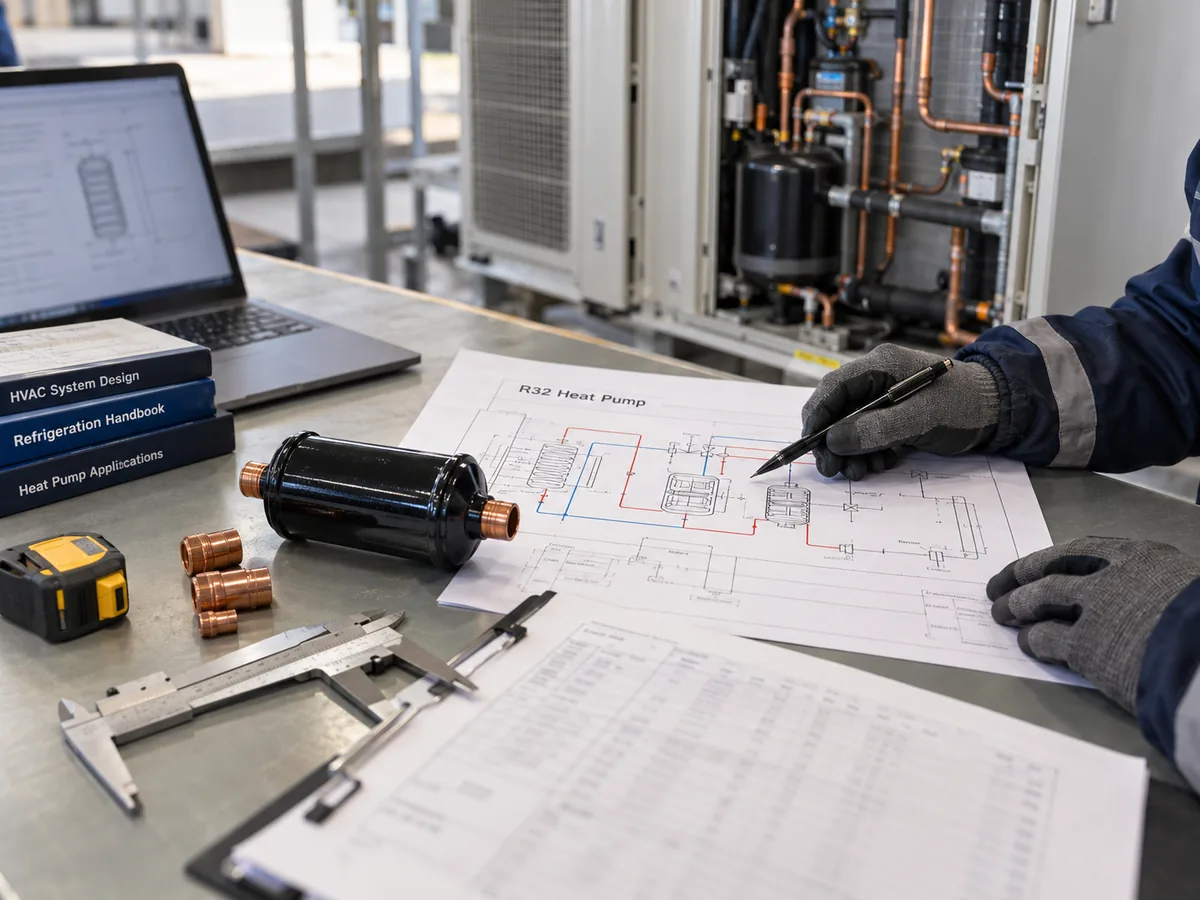
From these inputs, we can define the required drier type and specification direction. We still do not choose an exact part number until the final refrigeration drawing and current component data are checked. If the same location does not reverse flow in the final circuit, the drier direction may change.
What this example shows: the words “R32 heat pump” are not enough to select a filter drier. We still need the real flow path, system duty, pressure limits, and connection details.
Need help with an AC or heat-pump specification? Send us the refrigerant, required capacity, target market, circuit requirements, and any available drawing. We can review the system direction through our OEM/ODM heat-pump engineering support.
Where Should a Filter Drier Be Installed?
In a normal cooling circuit, the liquid-line filter drier is usually installed between the condenser or receiver and the metering device. The exact position still comes from the equipment piping diagram.
ASHRAE notes that putting a liquid-line drier close to the expansion device can help keep moisture away from a point where it may freeze. Very hot locations should also be avoided.
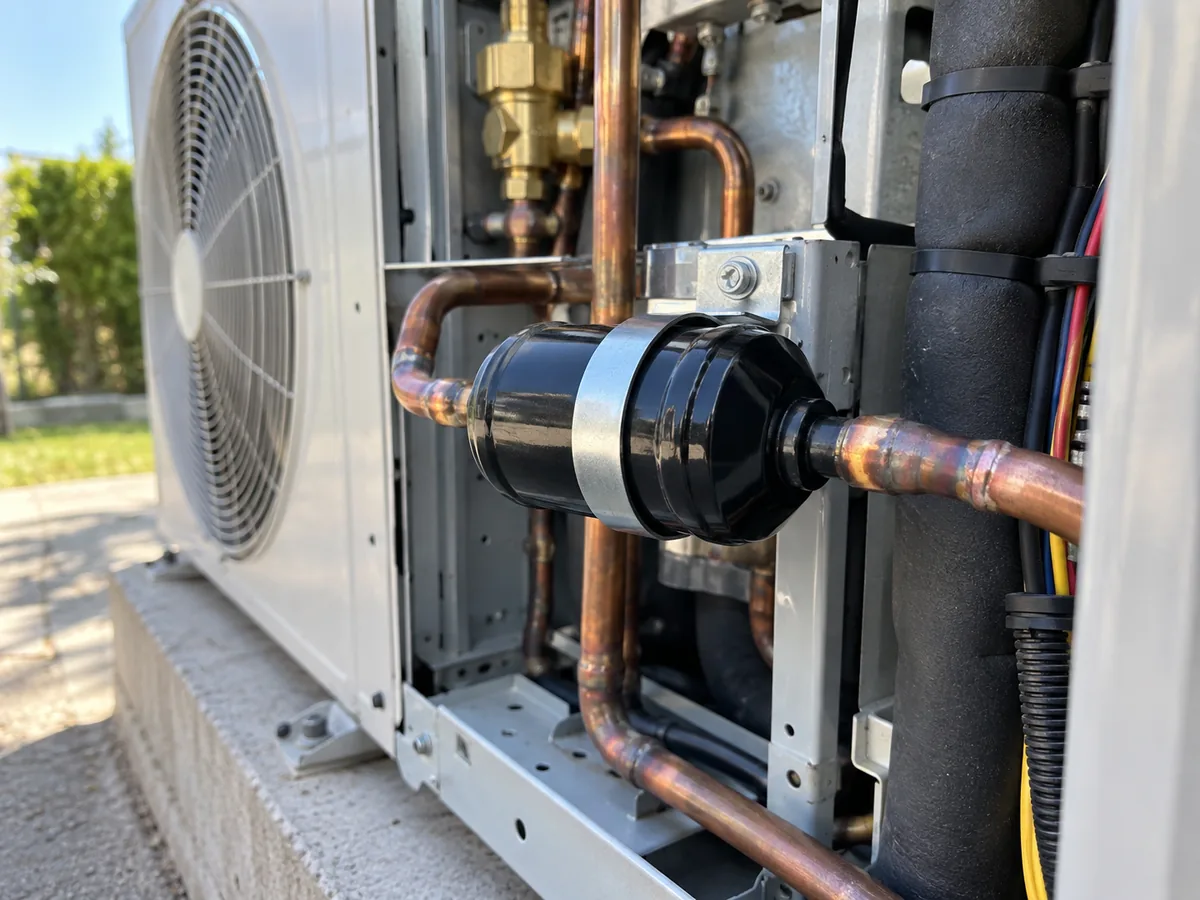
A one-way drier has a flow arrow. That arrow must match refrigerant flow. On a heat pump, do not assume the arrow direction from cooling mode only. Check the same line in heating mode too.
Keep a new filter drier sealed until installation is ready. The desiccant starts taking in moisture as soon as it is exposed to air. During brazing, also avoid overheating the shell or adding scale and dirt to the line. Follow the drier and equipment instructions for brazing, purging, pressure testing, evacuation, and leak checks.
When Should an HVAC Filter Drier Be Replaced?
Quick answer: replace a filter drier when the service procedure requires it, when a restriction is confirmed, or when contamination cleanup needs fresh drying and filtering capacity. Do not replace it only because the equipment is old.
A filter drier is not a yearly maintenance item. Opening a healthy sealed circuit can create new leak and moisture risks, so we want a clear service reason before replacement.
| Situation | What to do | Why | Check first |
|---|---|---|---|
| Major refrigerant-side repair opened the circuit | Follow the equipment service procedure; replacement is often required | Air and moisture may have entered | Equipment instructions and how long the circuit was open |
| Too much pressure drop is confirmed across the drier | Replace it after confirming the drier is the restriction | Low downstream pressure can starve the circuit | System load, pressure/temperature readings, and component limits |
| Moisture or acid is confirmed | Fix the cause and replace or evaluate the drier as required | The remaining protection capacity may be low | Moisture/acid condition and cleanup plan |
| Compressor burnout | Follow the compressor and drier cleanup procedure | Acid, damaged oil, carbon, and debris may remain | Burnout severity, oil/acid condition, pressure drop, and follow-up checks |
| A new drier was left open to humid air | Do not assume it still has full drying capacity | The desiccant starts taking in room moisture | Exposure time and manufacturer guidance |
| The unit is simply old | Do not replace the drier for age alone | Age does not prove a restriction or exhausted desiccant | System condition and equipment instructions |
| No temperature difference is found | Do not assume the drier is still chemically fresh | A drier can hold moisture without causing a strong restriction | Service history and moisture condition |
After replacement, the real job is not finished until the circuit is leak-tested, evacuated, charged, and recommissioned according to the equipment procedure.
How Do We Check for a Restricted Filter Drier?
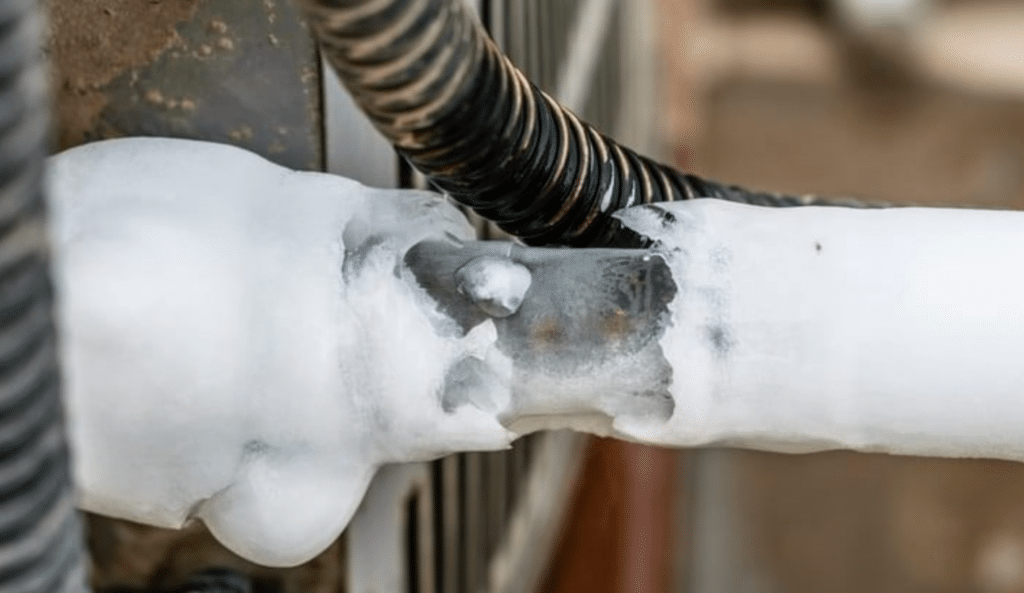
A restricted drier creates unwanted pressure drop. In a liquid line, that can reduce liquid supply to the metering device and starve the evaporator. A severe restriction may also make part of the drier cold or frosty. Those signs help, but they do not prove the drier is the cause.
Before blaming the filter drier: check the refrigerant charge, liquid supply, airflow or load, metering device, and other liquid-line restrictions. Then compare the drier temperature and pressure behavior with approved component data. This reduces the risk of replacing a good drier or adding refrigerant to a restricted system.
| What you see | What it may mean | What to check | What to do next |
|---|---|---|---|
| Temperature drop across the drier | A restriction may be causing pressure drop | Refrigerant state, system load, instrument accuracy, subcooling, pressure behavior, and the component limit | Confirm the restriction before opening the circuit |
| Frost or sweating near part of the drier | Refrigerant may be flashing because of a strong restriction | Liquid condition and other possible liquid-line restrictions | Find the actual restriction first |
| Low suction pressure and high superheat | The evaporator may be starved | Charge, airflow, load, metering device, liquid line, and drier pressure drop | Do not add refrigerant without finding the cause |
| Moisture indicator shows wet | Moisture is present at that location | Indicator condition, temperature, leak history, and recent service | Fix the moisture source and drying process |
| No clear temperature difference | No obvious restriction at that moment | Moisture history and other evidence | Do not assume unused desiccant capacity |
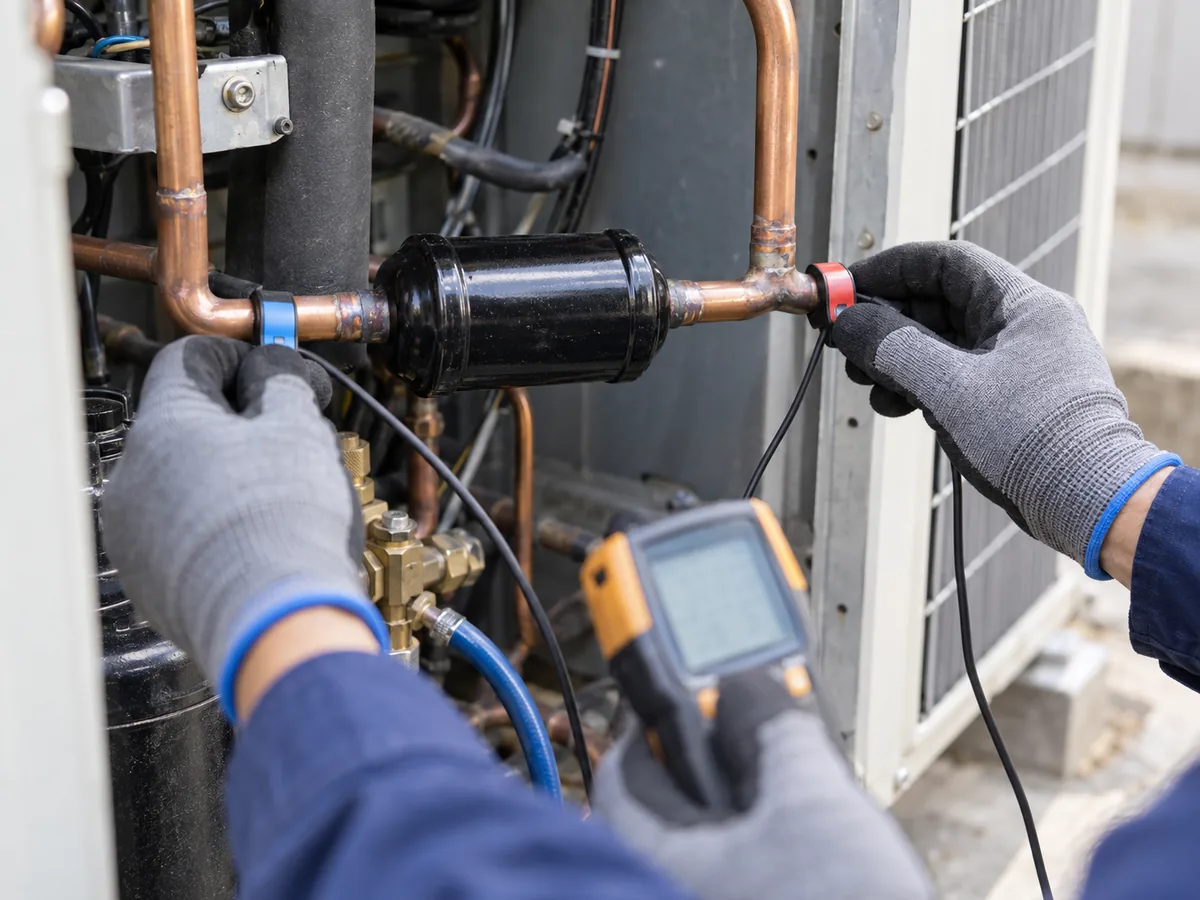
Airproz diagnostic rule: we do not reject a filter drier because it feels cold, has frost, or shows one unusual temperature. We compare that sign with pressure, subcooling, refrigerant condition, system load, the metering device, and the component data.
A restricted drier can look like a low-charge problem. Adding refrigerant without proving the cause can make the charge too high while the restriction remains. For more on charging checks, see our heat-pump refrigerant charging guide.
Filter Driers After Compressor Burnout
A compressor motor burnout can spread acid, carbon, damaged oil, and solid debris through the refrigerant circuit. If you replace only the compressor, the new compressor may be exposed to the same contamination.
Copeland suction-line filter-drier cleanup guidance includes suction-line drying, leak testing, evacuation, and follow-up checks after burnout. ASHRAE also describes replacing the liquid-line drier and using suction-line cleanup protection before the replacement compressor.
The exact drier size, pressure-drop limit, check interval, and removal timing must come from the actual compressor and drier instructions. The answer is not simply “use a bigger drier.” We first check how serious the contamination is. Then we choose enough cleanup capacity without creating too much pressure drop.
For more compressor background, see our guide to HVAC compressor types.
Common Filter Drier Selection and Service Mistakes
Choosing by line size only
Problem: the connection fits, but the drier may still have the wrong flow, drying capacity, pressure rating, or refrigerant approval. Better approach: use current selection data for the actual refrigerant and system duty.
Using a one-way drier in a reversing heat-pump line
Problem: the line may reverse in heating mode. Better approach: trace refrigerant flow in both modes before choosing the drier.
Using the drier instead of proper evacuation
Problem: desiccant capacity is limited. Better approach: dry and evacuate the system correctly, then let the drier protect that clean circuit.
Diagnosing a restriction by touch only
Problem: load, refrigerant state, another restriction, or measurement error can produce similar signs. Better approach: check the full refrigeration condition first.
Leaving a new drier open to air
Problem: the desiccant starts taking in room moisture before installation. Better approach: keep the drier sealed until you are ready to install it.
Ignoring refrigerant and pressure compatibility
Problem: a drier approved for one refrigerant system may not be approved for another. Better approach: check the exact refrigerant, pressure rating, material, and safety scope.
4 Common Filter Drier Application Scenarios
1. Straight-cool split air conditioner
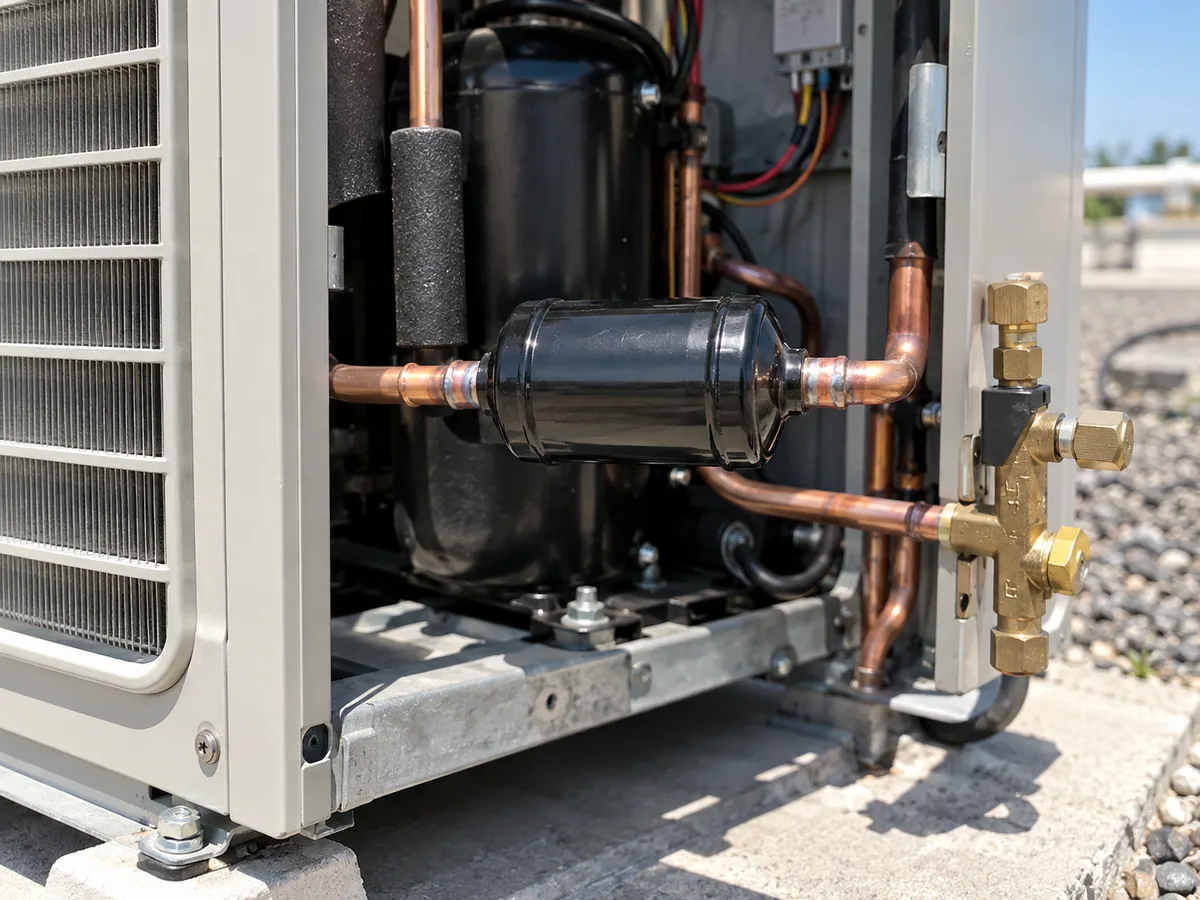
Your setup: one-way liquid flow, known refrigerant, and known system capacity. Main risk: choosing by connection size only or installing the arrow backward. What we do: use a liquid-line drier approved for the refrigerant, capacity, pressure, and flow direction. If there was a burnout or heavy contamination, we move to a cleanup approach. For review, send the refrigerant, capacity, line size, target market, and equipment model if available.
2. Reversible heat pump
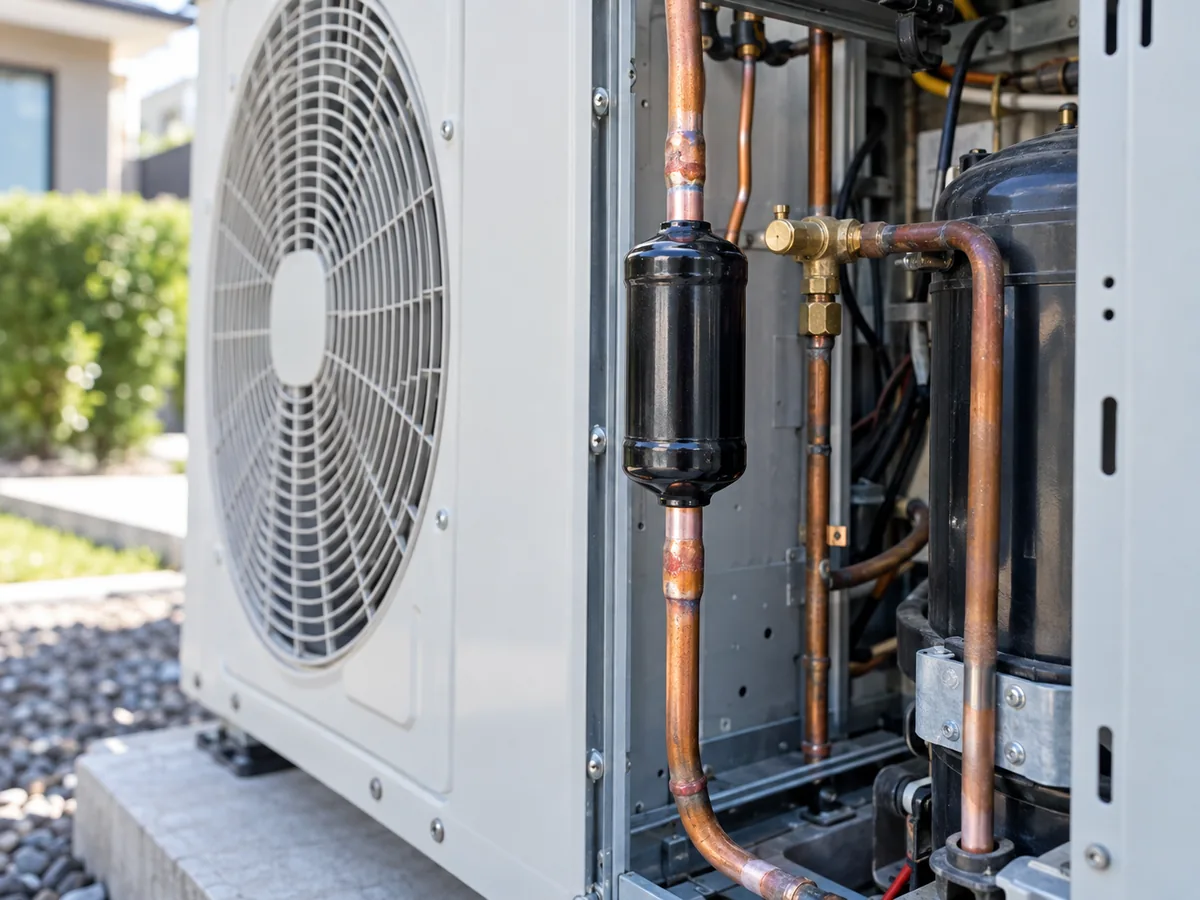
Your setup: refrigerant may reverse through part of the circuit. Main risk: placing a one-way drier in that reversing path. What we do: check the same location in heating and cooling. If flow reverses there, we use an approved bi-flow or other heat-pump arrangement. For review, send the refrigerant, capacity, circuit drawing, line size, target market, and operating modes.
3. Compressor-burnout cleanup
Your setup: acid, carbon, damaged oil, moisture, and debris may remain in the circuit. Main risk: damaging the new compressor or creating too much suction pressure drop. What we do: follow the compressor and drier cleanup procedure. We also monitor pressure drop and contamination condition during cleanup. For review, send the compressor/system information, refrigerant, contamination history, line data, and service documents.
4. Large commercial refrigeration system
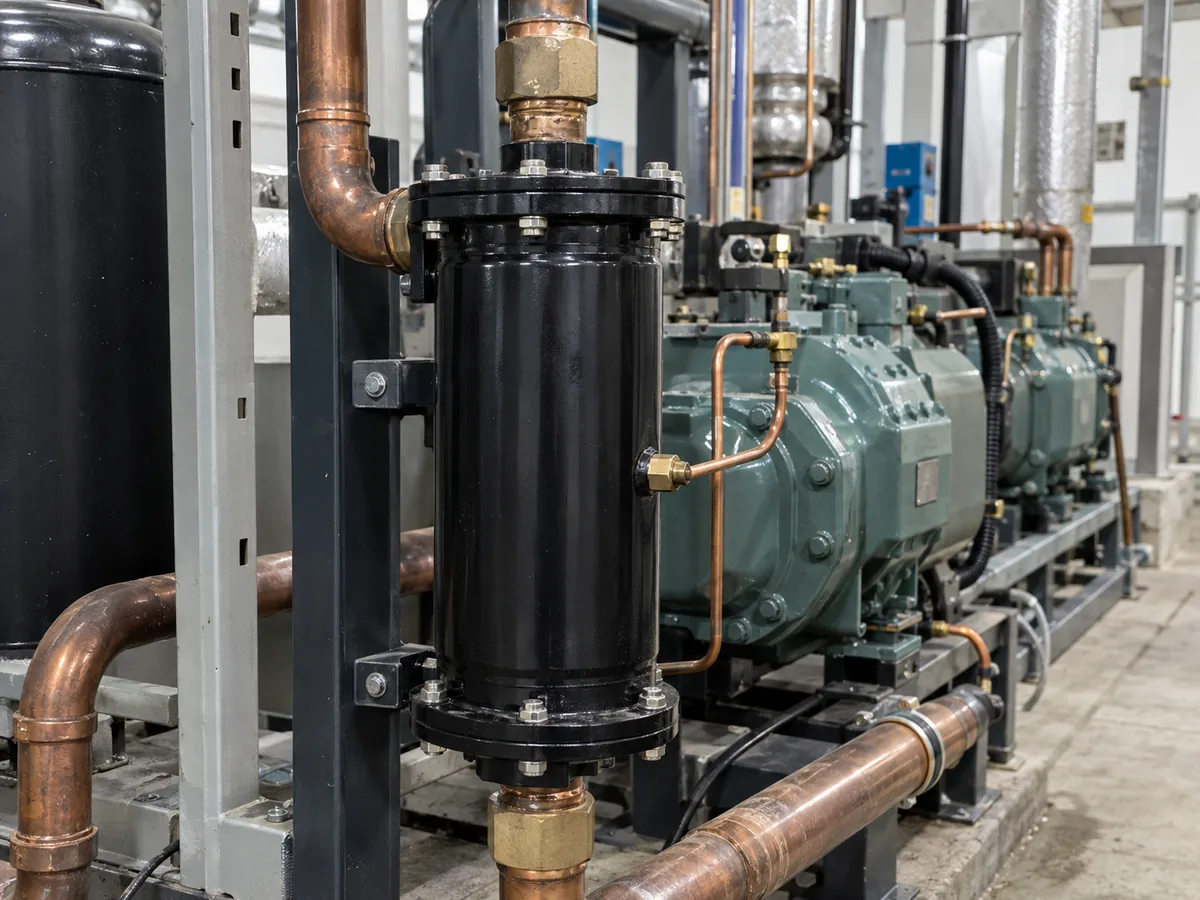
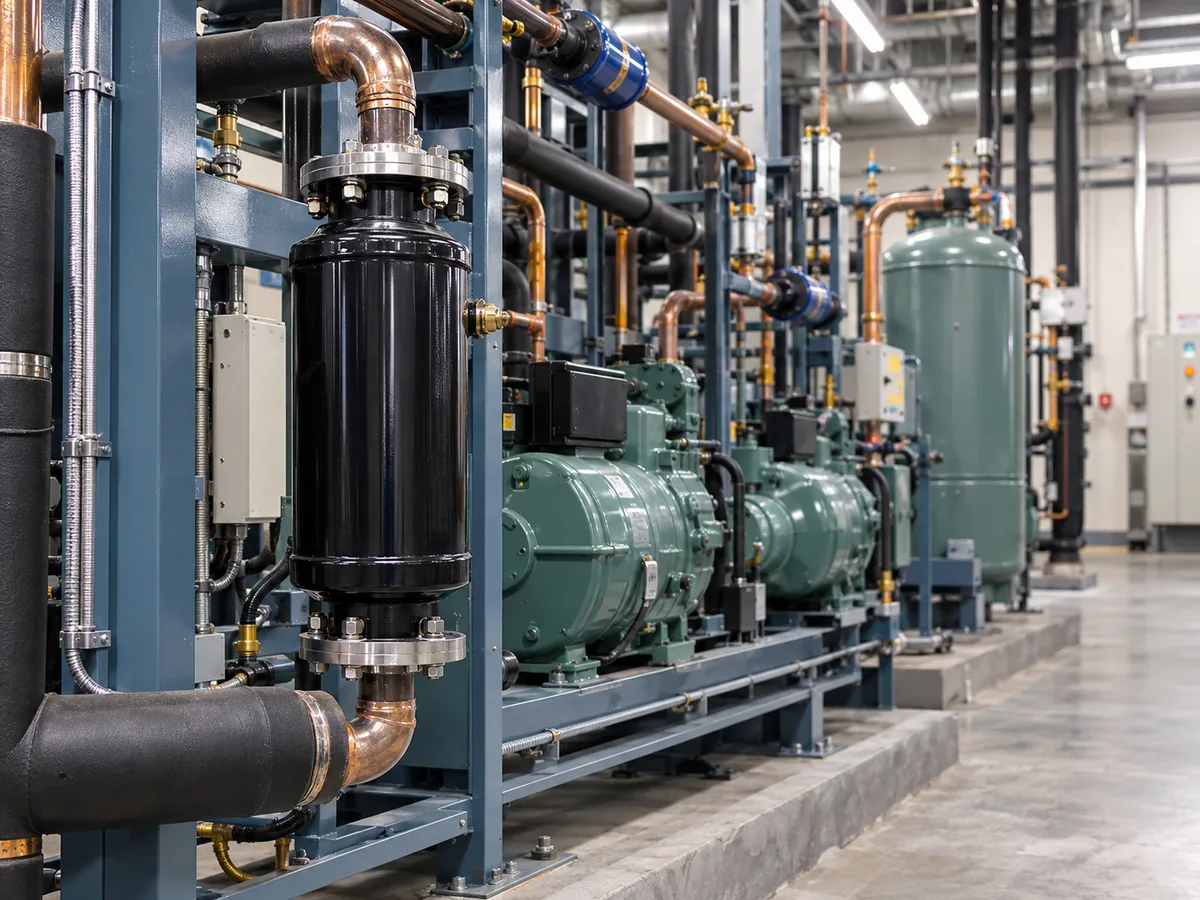
Your setup: higher refrigerant flow, larger lines, and possibly more contamination. Main risk: not enough filtering capacity, too much pressure drop, or poor service access. What we do: check whether an approved replaceable-core shell makes service easier. We still verify pressure rating, core type, refrigerant approval, flow capacity, and service space.
What to Send Airproz for HVAC Specification Review
A filter drier is only one part of the refrigeration circuit and the equipment bill of materials, or BOM. At Airproz, we review it as part of the complete AC or heat-pump system, not as an isolated pipe-size decision. If you want us to review a project, send enough system information for us to understand the full job.
| What to send | Why we need it |
|---|---|
| Application and equipment type | Shows what the system must do |
| Destination country / target market | Shows which market and compliance requirements apply |
| Required cooling and heating capacity | Gives us the system duty and refrigerant-flow basis |
| Refrigerant and oil | Sets compatibility, pressure, and safety requirements |
| Cooling and heating operating modes | Shows whether refrigerant flow can reverse |
| Line duty, line size, and connection type | Defines the physical interface after we know the job |
| Outdoor design temperature / operating conditions | Shows the real conditions used for sizing |
| Allowed pressure drop | Helps stop the protection component becoming a restriction |
| Normal protection or burnout cleanup | Shows how much drying and contamination capacity is needed |
| Voltage and frequency | Completes the equipment-platform specification |
| Certification requirements | Shows what documents and product configuration the market needs |
| Quantity and available drawings | Helps us review the project and prepare an RFQ |
Our HVAC FAQ already asks for destination country, application, capacity, climate, voltage, frequency, certification requirements, and estimated volume. You can also start from our air conditioner product family or use our OEM/ODM support for project-specific specifications, refrigerant selection, and engineering review.
We can narrow the component direction from these inputs. We do not lock an exact filter-drier make or model until the refrigeration drawing, component data, and equipment BOM are confirmed.
Planning an AC or heat-pump project? Send us your application, capacity, refrigerant, voltage and frequency, target market, certification needs, quantity, and available drawings. Use the Airproz contact/RFQ page for technical and commercial review.
Safety: Filter Drier Replacement Opens the Refrigerant Circuit
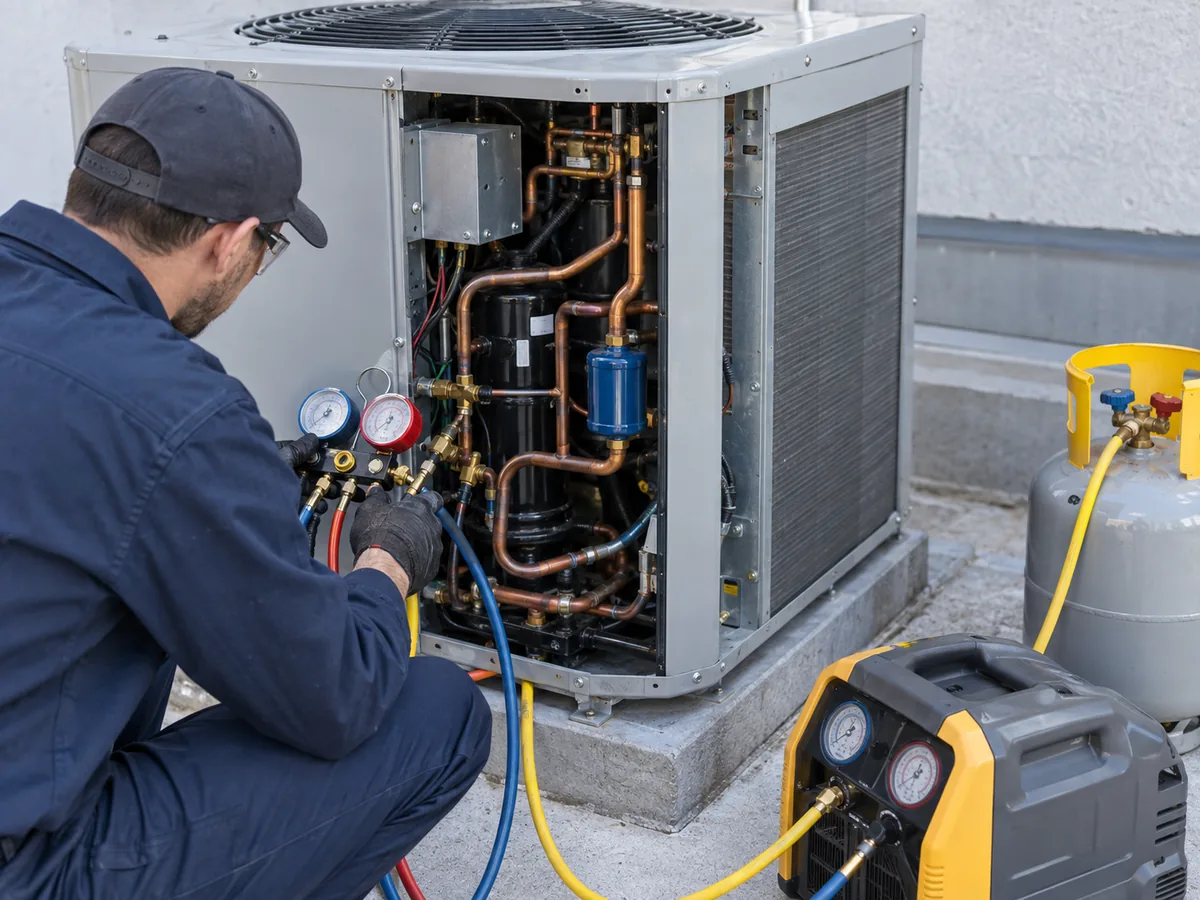
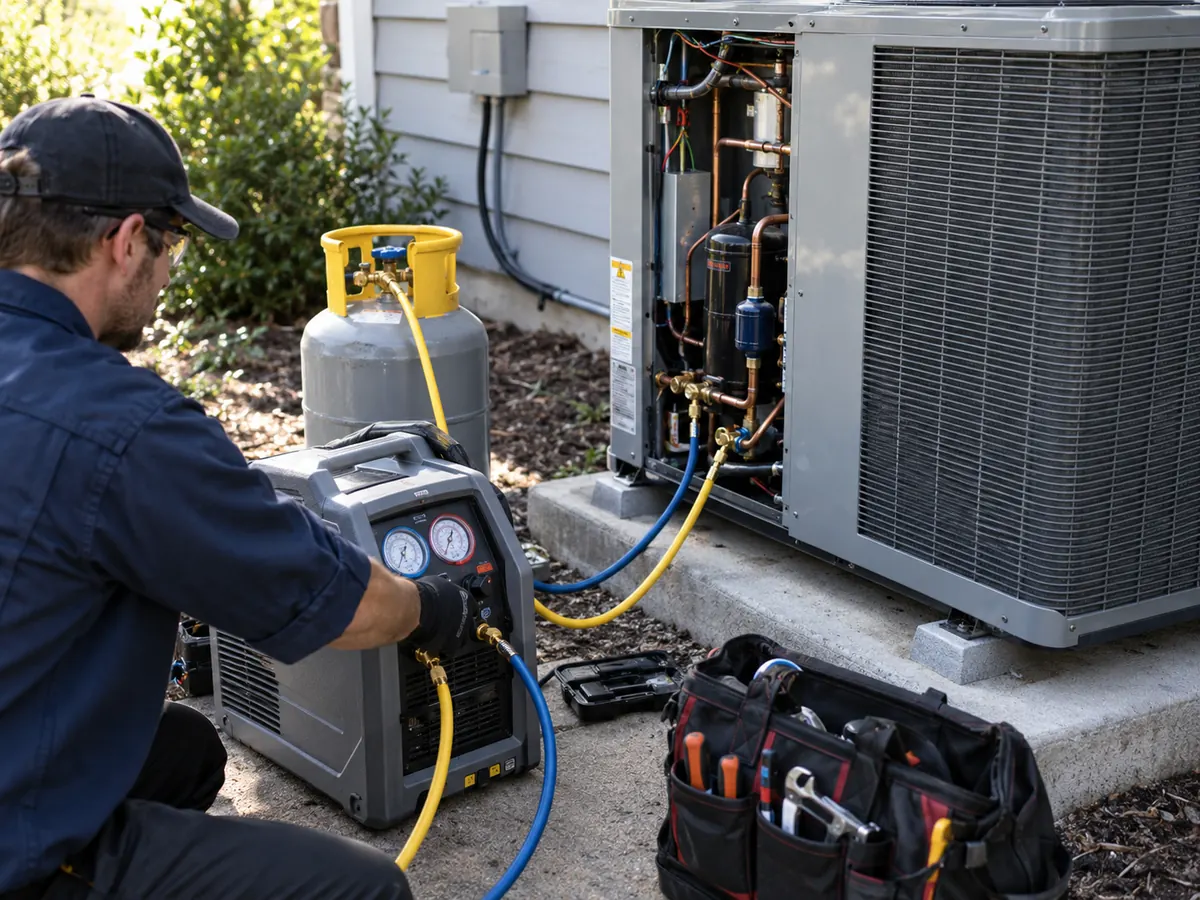
Replacing a filter drier is not like changing a return-air filter. It normally means opening a pressurized refrigerant circuit. The work may include refrigerant recovery, brazing, leak testing, evacuation, and recommissioning.
This work needs the right training, tools, refrigerant procedure, and local approval. In the United States, EPA Section 608 service-practice rules apply to refrigerant recovery and service on stationary air-conditioning and refrigeration equipment. Other markets have their own rules.
The practical rule is simple: do not cut, braze, open, or replace a filter drier unless the work follows the equipment procedure and local refrigerant-handling requirements.
Frequently Asked Questions
Is it “filter drier” or “filter dryer”?
Both spellings appear online. In HVAC and refrigeration, filter drier and filter-drier are common technical spellings. “Filter dryer” can also mean other industrial drying equipment, so adding HVAC, AC, refrigeration, or refrigerant makes the search clearer.
Does every air conditioner need a filter drier?
Many direct-expansion air-conditioning and refrigeration systems use a liquid-line filter drier. The exact design and location still depend on the equipment. Always follow the unit’s refrigeration drawing and manufacturer instructions.
How often should an HVAC filter drier be replaced?
There is no universal yearly replacement interval. Replacement usually follows a major service event, confirmed restriction, contamination, compressor burnout, long exposure to air, or a manufacturer requirement.
Can a clogged filter drier look like low refrigerant?
Yes. A restricted liquid-line drier can starve the evaporator. You may then see low suction pressure and high superheat, which can look like undercharge. Confirm the restriction before adding refrigerant.
Does a heat pump need a bi-flow filter drier?
It depends on where the drier is installed. If refrigerant reverses through that location, a bi-flow design or another approved heat-pump arrangement may be needed. Check the circuit in both heating and cooling.
Can a filter drier be too large?
A larger connection or shell does not automatically mean a better match. The drier still needs the correct refrigerant approval, line duty, flow rating, pressure drop, drying capacity, working pressure, and connection type. Choose from approved selection data instead of sizing up by appearance alone.
Can a filter drier remove all moisture from a badly wet system?
No. A filter drier can hold only a limited amount of moisture. It cannot replace proper evacuation and moisture-control work. A badly contaminated system may need a defined cleanup process and more than one drier or core change.
Can a homeowner replace an AC filter drier?
This is not normal homeowner maintenance. Replacement opens the refrigerant circuit and can involve pressurized refrigerant, recovery, brazing, leak testing, evacuation, and recommissioning. Use qualified service personnel and follow local refrigerant rules.
Airproz Filter Drier Selection Rule
For a normal AC or refrigeration circuit, we want enough moisture and debris capacity without creating too much pressure drop. For a reversible heat pump, we also check refrigerant flow in both heating and cooling. After a compressor burnout, cleanup capacity and pressure-drop monitoring become more important.
If we still do not know the refrigerant, drier location, flow direction, capacity, pressure limit, contamination level, or connection requirement, we do not choose an exact filter-drier model yet. We first confirm those project details. A connection that looks right is not the same as a complete engineering match. For an Airproz AC or heat-pump project, we lock the drier only after it fits the complete refrigeration circuit and approved equipment BOM.