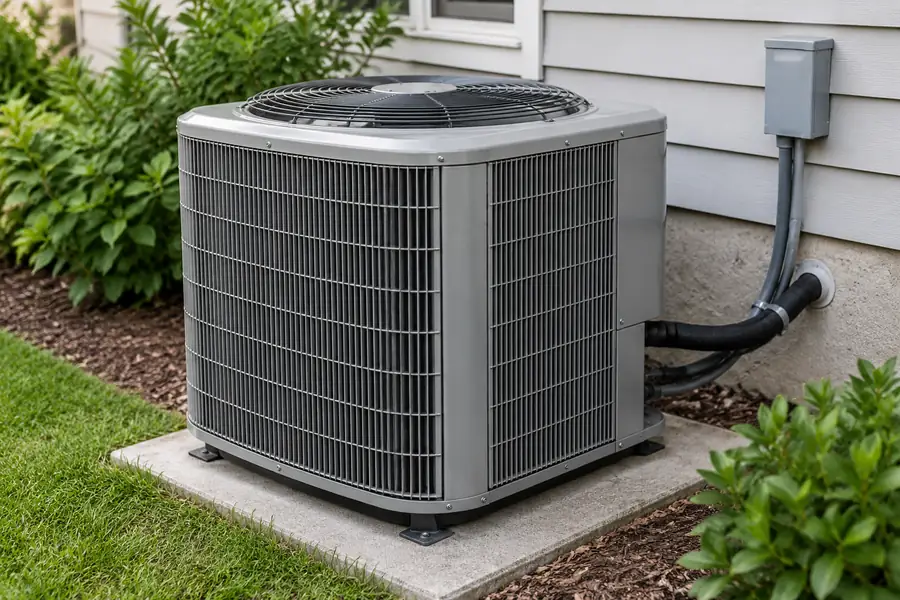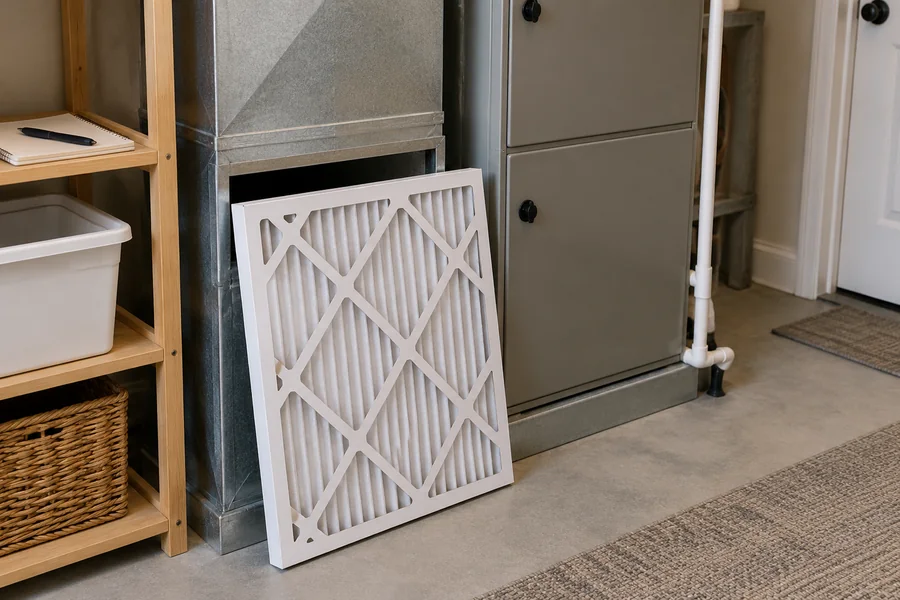
Your air conditioner can be running without actually removing enough heat from your home. Common causes include the wrong setting, blocked airflow, dirty coils, a problem in the sealed refrigerant system, or an electrical or control fault. Sometimes the AC is working, but your home is gaining heat faster than it can remove it. Start with safe observations, not a refrigerant refill or an equipment replacement.
Quick answer: An AC can run without cooling because cooling has not started, airflow is restricted, or the equipment cannot remove enough heat. First check for ice, smoke, burning smells, electrical hazards or unsafe water. If it is safe to continue, confirm COOL mode, a setpoint below room temperature, the normal startup delay, and accessible filters or vents. Then use the symptom guide below to decide what to check next or when to call for service. A symptom alone cannot prove a refrigerant leak or justify replacing the AC.
What to Check First: 5 Safe Steps
Use this checklist before attempting any repair. Stop if a safety warning appears; the detailed steps below explain each check.
Swipe the table sideways to see all four columns.
| Step | What to check | What to do safely | When to get help |
|---|---|---|---|
| 1. Warning signs | Ice, smoke, burning odor, repeat breaker trips, unsafe water or dangerous heat. | Stop cooling for ice. For smoke or suspected fire, move away and call emergency services. Avoid electrical hazards; move somewhere cooler if needed. | Get qualified help for icing or unsafe conditions. |
| 2. Cooling command | COOL mode, setpoint, error code and startup delay. | Request cooling, record faults and wait the manual’s normal delay. Do not force restarts. | Cooling is still needed but fails to start, or a fault remains. |
| 3. Airflow | Approved filter, open vents, visible obstructions; portable AC exhaust. | Perform only manual-approved filter care and safe external checks. | Airflow stays weak or cooling fails to improve; stop for ice. |
| 4. Symptoms | Weak air, warm air, inactive outdoor unit or warm room despite cool air. | Match the symptom to Step 4 below; record what you see safely. | The symptom persists or needs internal equipment testing. |
| 5. Cooling trend | Room temperature, setpoint, time and conditions. | After a safe correction, record whether the room moves toward the setpoint. | Cooling remains inadequate. Arrange diagnosis rather than repeated resets. |
Step 1 — Look for signs that mean stop
Ice on a coil or refrigerant pipe: Switch off cooling and arrange qualified service. Ice can form when too little air passes over the indoor coil or when something is wrong with the refrigerant system. Continuing in cooling mode can make the ice worse and may damage equipment. Do not chip ice off, apply heat, or assume that the unit simply needs more refrigerant.
For equipment-appropriate thawing precautions and what recurring ice may mean, see the Airproz AC freeze-up guide. Do not treat disappearing ice alone as proof that the cause is fixed.
Smoke, flames, or suspected fire: Move away from the equipment and contact local emergency services. Do not touch the unit, wiring, or electrical panel when doing so is unsafe. Burning smell or repeated breaker trips without an active emergency: Stop using the AC only when it is safe to do so and arrange qualified electrical or HVAC service. Never keep resetting a tripped breaker, touch exposed wiring, remove panels, or bypass a safety switch. Water near electrical equipment: Avoid contact and request service.
Dangerously high indoor temperatures: Move to a safer, cooler place rather than waiting for the AC to recover. Check local heat warnings, and prioritize children, older adults, people with health risks, and pets.
Step 2 — Confirm the Cooling Command
Check the controller in this order. A fan blowing air does not necessarily mean the cooling cycle is running.
- Choose COOL mode. HEAT, DRY and FAN-only do not mean the same thing. On many central systems, FAN ON can run the indoor fan even when cooling is off; controller behavior varies by model.
- Check the setpoint. Select a cooling temperature below the room temperature shown on the controller. If the room is already at or below that setting, the outdoor unit may correctly remain off.
- Check for holds and faults. Look for a schedule or hold and record any displayed error code exactly. If the thermostat display is blank, check only user-accessible batteries or settings identified in its manual; do not touch thermostat wiring.
- Allow the normal startup delay. Follow the model’s manual after a mode change or power outage. Compressor restart protection may delay cooling. Do not repeatedly cycle power or reset a tripping breaker.
Displayed room temperature seems wrong? If available, compare it with a room thermometer placed away from direct sunlight and supply-air streams. A thermostat near heat or cold airflow may give a misleading reading; that difference does not prove the AC is undersized.
Cooling is still requested after the specified delay, but the room stays warm? Continue to the symptom guide. Stop and arrange qualified service if a protective breaker trips again or an unresolved fault requires electrical work. Do not open electrical panels.
Step 3 — Check Filters and Vents You Can Safely Reach
Inside: Inspect only a filter the manufacturer identifies as user-serviceable. Clean or replace it according to the manual, and make sure visible supply and return openings are not blocked. Do not reach into a moving fan or open electrical or refrigerant compartments. A clean filter does not rule out a dirty indoor coil, obstructed duct or fan fault.
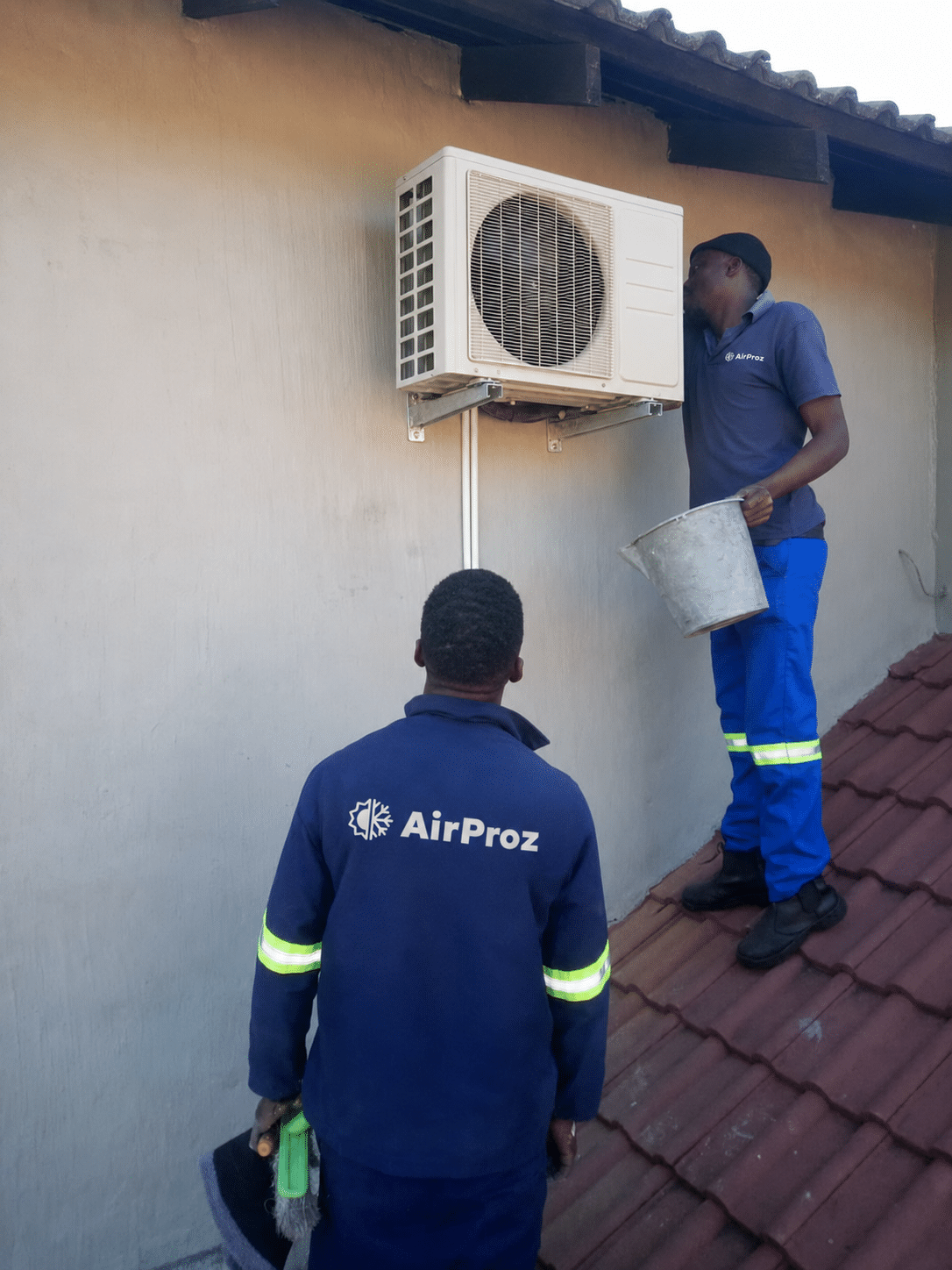
Outside: From a safe, level position, note any obvious obstruction at an accessible outdoor air intake or discharge. Do not use ladders or approach unsafe roofs, touch fans or electrical enclosures, or wash a running unit. Manufacturer-specified clearances vary by model.
Which checks apply to your AC type?
Choose the equipment type first. Not all systems have ducts, a separate outdoor unit, or the same drainage arrangement.
Swipe the table sideways to see both columns.
| AC type | Safe first checks |
|---|---|
| Central AC | Thermostat, approved filter, supply and return vents; outdoor equipment only from a safe viewing point. |
| Ductless mini-split | Remote/controller mode, permitted indoor filter, visible air openings and any displayed fault. |
| Window AC | Mode, user-serviceable filter, indoor air openings and outdoor-side obstructions visible without unsafe access. |
| Portable AC | Mode, approved filter, exhaust-hose connection, window-kit seal and any drainage alert described in its manual. |
Portable AC with an exhaust hose: Confirm the hose is connected and not crushed, using the instructions for that model. A loose or obstructed hose may allow unwanted heat to remain in or return to the room. Poor window-kit sealing can let outdoor heat enter. A single-hose design can also draw replacement air into the room, so central-AC outdoor-unit and duct checks do not apply. Never bypass condensate protection or modify a window kit contrary to its instructions.
Step 4 — Find the Symptom That Matches Your AC
Choose the description closest to what you notice. These are clues to the next check, not diagnoses of a particular part.
Swipe the table sideways to view all symptom guidance.
| What you notice | What it could mean | Start here |
|---|---|---|
| Ice, smoke, burning smell, breaker trips or unsafe water | A safety condition that needs priority over troubleshooting. | Stop and follow Step 1. Move away and call emergency services for suspected fire; arrange qualified help for other hazards. |
| Very little air comes from vents | Restricted airflow or an indoor fan/duct issue. | Check the approved filter and clear openings. Read why airflow matters. Arrange service if airflow stays weak. |
| Air blows, but it is warm | No active cooling request, reduced heat removal, or an equipment fault. | Check Step 2 and the normal delay. If cooling remains absent, review cooling-circuit causes and arrange diagnosis. |
| Central AC outdoor unit appears off | Normal setpoint/delay behavior, protective shutdown or an equipment fault. | Confirm a valid cooling call first. Read the outdoor-unit checks. Do not open covers or test live power. |
| Outlet air is cool, but a room stays warm | Low delivered airflow, high room heat gain or insufficient effective cooling. | Record affected rooms, sun exposure and temperature trends. Compare room and whole-home causes. |
Step 5 — See If Cooling Improves or Call for Service
After a safe settings change or manual-approved filter care, note the room temperature and cooling setpoint, then observe whether the room moves toward the setpoint during normal, uninterrupted operation. Use the same thermometer position and record large changes in sunlight, outdoor weather, open doors or occupancy.
Use this simple record: You can fill it in before calling a technician. Leave anything you cannot safely check blank.
| Record | Your observation |
|---|---|
| AC mode and setpoint | COOL / Other: ___ Setpoint: ___ °C / °F |
| Start of observation | Time: ___ Room temperature: ___ °C / °F |
| After normal operation | Time: ___ Room temperature: ___ °C / °F |
| Airflow and location | Normal / Weak: ___ Rooms affected: ___ |
| Conditions or warning signs | Weather, direct sun, error code, ice or water (only if safely observed): ___ |
How to interpret the result:
- Safety warning appears: Stop the applicable checks and follow Step 1. Do not wait for a temperature trend.
- Temperature begins moving toward the setpoint: The simple correction may have helped. Continue normal observation; a short-term improvement does not rule out a recurring fault.
- Cooling does not begin after the specified delay, or the room remains too warm: Keep the record and arrange qualified diagnosis rather than repeatedly cycling power.
There is no single safe testing time or universal temperature-drop target for every AC. Equipment, humidity, room load and weather affect the result. The trend supports your service description; it cannot by itself identify the faulty component.
Why Is My AC Running but Not Blowing Cool Air?
Moving air and removing heat are different jobs. An indoor fan may run while the cooling cycle is off or underperforming. After identifying your symptom in Step 4, use the table below to understand why several different problems can produce similar results—and what a technician may need to distinguish them.
| Possible cause | Why cooling may fail | What diagnosis should distinguish |
|---|---|---|
| Cooling command or control behavior | FAN-only mode, a satisfied setpoint or a normal protection delay can leave the indoor fan running without active cooling. | Check whether the control actually requests cooling before treating the compressor as faulty. |
| Restricted indoor airflow | Less room air crosses the evaporator, reducing delivered cooling and sometimes allowing coil ice. | Verify blower/duct airflow and coil condition if basic filter and vent checks do not help. |
| Restricted outdoor heat rejection | A dirty condenser, blocked air path or outdoor fan fault can make releasing heat more difficult. | Check outdoor coil and fan operation safely by model-specific service procedures. |
| Sealed refrigerant-circuit problem | Incorrect charge, a leak or a flow restriction can reduce heat transfer. | Evaluate refrigerant-side data together with airflow and operating conditions; symptoms alone do not establish a low charge. |
| Compressor, power or safety-control problem | Cooling components may remain off even though the indoor fan operates. | Test the cooling request, safety devices, electrical supply and components; homeowners should not open panels. |
1. The indoor fan is running, but cooling has not started
Fan operation and active cooling are not the same command on many AC systems. FAN-only mode, a thermostat that has reached its setpoint, or a protective startup delay can leave the indoor fan running without compressor cooling. Confirm the cooling request using the safe checks in Step 2. A room that remains warm after the normal delay, with cooling still requested, needs further diagnosis rather than repeated power resets.
2. Restricted indoor airflow reduces cooling
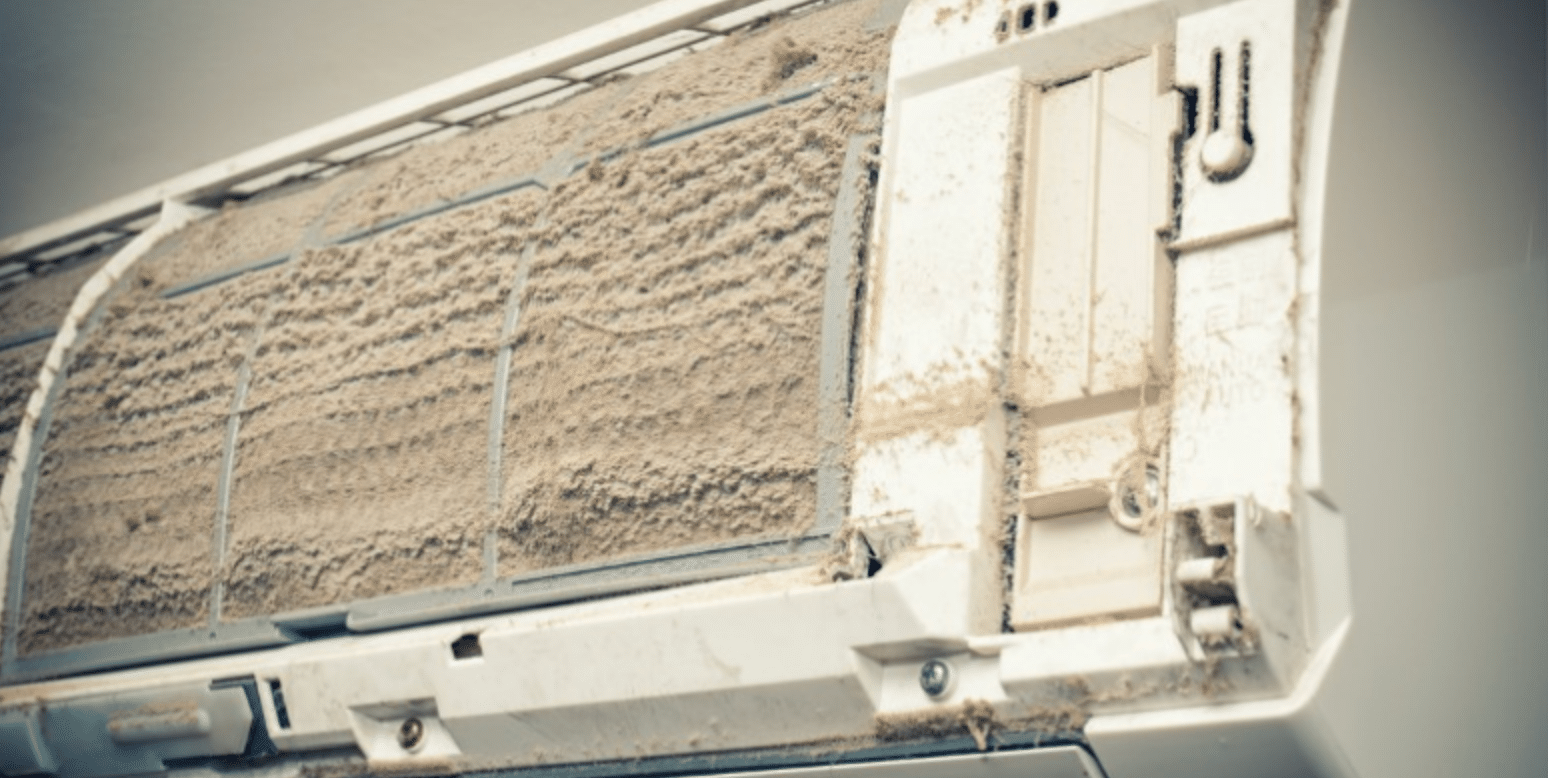
A clogged filter, dirty indoor coil, fan fault, or blocked duct can reduce the air flowing over the cold indoor coil (the evaporator). Less conditioned air reaches the rooms. When too little warm room air passes over the evaporator, the coil may receive too little heat and become cold enough for moisture to freeze on it. Refrigerant-system faults can also produce icing, so ice alone does not tell you which problem occurred. Visible ice calls for stopping cooling as described in Step 1. Checking the filter is useful, but a technician may still need to evaluate the blower and duct pressures or airflow.
3. The outdoor unit cannot release heat effectively
The cooling cycle needs outdoor airflow to carry away heat collected indoors. A dirty outdoor coil, blocked airflow, or a faulty outdoor fan can interfere with that process, especially in hot weather. A visible obstruction is a clue, not proof of the fault. Observe from a safe location and leave fan or electrical checks to a qualified technician. The next section explains the different roles of the indoor and outdoor coils.
4. The cooling circuit or outdoor equipment is not working correctly
Normal airflow with warm supply air: First confirm that cooling is actually being requested. During a valid cooling request, a compressor, outdoor fan, electrical or control fault, or a problem in the sealed refrigerant circuit can interfere with heat removal. Different faults can produce the same symptom, and more than one condition may be present. Neither warm supply air nor an apparently stopped outdoor fan identifies a failed component; qualified checks are needed.
Is a Dirty Filter or Coil Causing the Problem?
Possibly—but the filter is only one part of the air path. The indoor evaporator absorbs heat from moving room air; the outdoor condenser releases heat outside. Dust on the indoor coil can reduce airflow and heat transfer, while dirt or obstruction at the outdoor coil can interfere with heat rejection. The effect may be more noticeable when the building needs more cooling in hot weather.
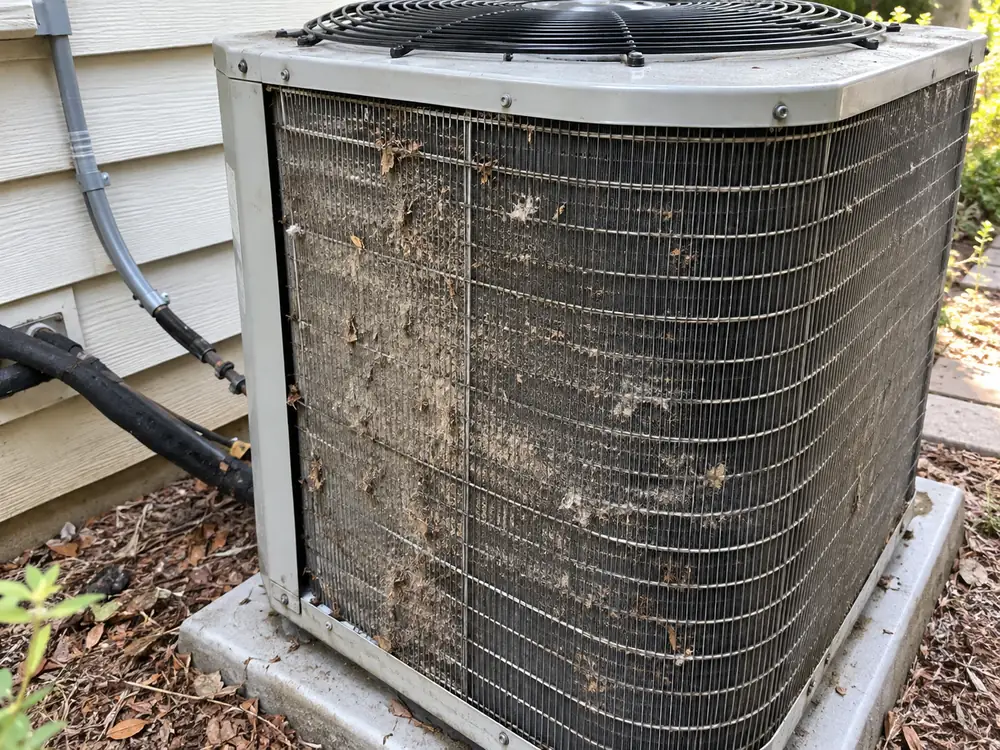
If cooling improves after approved filter care: That supports a maintenance-related airflow problem, but check that the improvement continues under comparable conditions. Follow the model’s filter-care instructions. If airflow remains weak or cooling stays poor: Ask qualified service to check the indoor coil, blower, ducts and delivered airflow, not simply replace the filter again. If ice is visible: Stop cooling and follow Step 1; do not try to clean a frozen coil.
A hot afternoon can expose both poor airflow and high building heat gain. These may occur together, so poor cooling on a hot day does not prove the equipment is too small. From a safe position, note visible outdoor obstructions and request a model-specific coil and airflow assessment before considering a larger AC. ENERGY STAR’s maintenance checklist distinguishes homeowner filter care from professional coil, blower, control and refrigerant checks. For the evaporator, compressor and condenser roles, see the Airproz air-conditioner operating principle guide.
Could Low Refrigerant or a Leak Be Responsible?
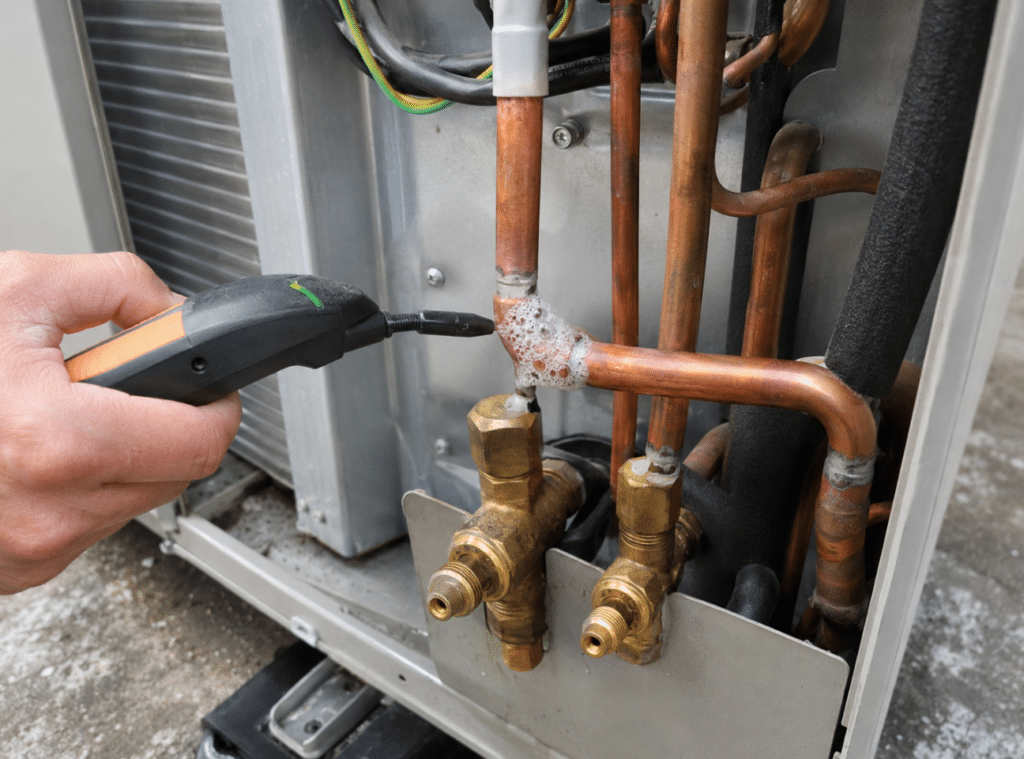
Yes—but a refrigerant top-up is not a safe first response. An incorrect refrigerant charge, a leak or a restriction in the sealed circuit can reduce available cooling. The refrigerant is the fluid that carries heat through the sealed cooling system. It takes up heat inside and releases it outdoors as it changes between liquid and vapor. A charge or flow fault can interfere with that heat transfer, but so can inadequate airflow. Ice and weak cooling therefore cannot be used as a do-it-yourself refrigerant diagnosis.
What changed matters. Previously cooled well, then worsened under similar weather and use: Check for a newly developed airflow, coil, control, or refrigerant problem. Also review changes in the space: more occupants or equipment, different ventilation or door use, or new sun exposure can increase the cooling load even when the AC itself has not failed. Never cooled well after installation: Ask a technician to verify installation and testing, indoor/outdoor equipment matching, room air delivery, the correctness of the original refrigerant charge, and AC sizing against the building load. Neither history proves a leak.
What to request from service: an airflow assessment first or alongside refrigerant checks, then checks of refrigerant pressures and temperatures using that model’s service procedure. If the readings suggest a refrigerant problem, the technician should look for leaks where appropriate and verify the refrigerant amount using the specified method. The correct method also depends on how that system controls refrigerant flow (its metering device). Pressure alone or a single supply-to-return air temperature difference cannot establish correct charge without airflow, humidity and operating conditions. Do not add refrigerant by guesswork. If the diagnosis confirms insufficient charge, the cause must be investigated and addressed according to the applicable procedure before accepting a refill as a remedy.
In the United States, work on stationary AC systems that may release refrigerant—such as connecting gauges or adding or removing refrigerant—is subject to the EPA Section 608 certification requirements. Other countries have their own rules. The existing Airproz low-refrigerant symptom guide explains why common warning signs are not conclusive on their own.
Why Is My Central AC Not Cooling When the Outdoor Unit Seems Off?
The indoor fan may run while the outdoor unit is waiting through a normal delay, has been shut off by a safety control, has lost power, or has a failed part such as a motor. On some systems, a condensate overflow safety device can also interrupt cooling. First verify COOL mode, a temperature request and the specified startup delay. Then note any fault indication, unusual water, or whether the outdoor unit appears inactive from a safe viewing point.
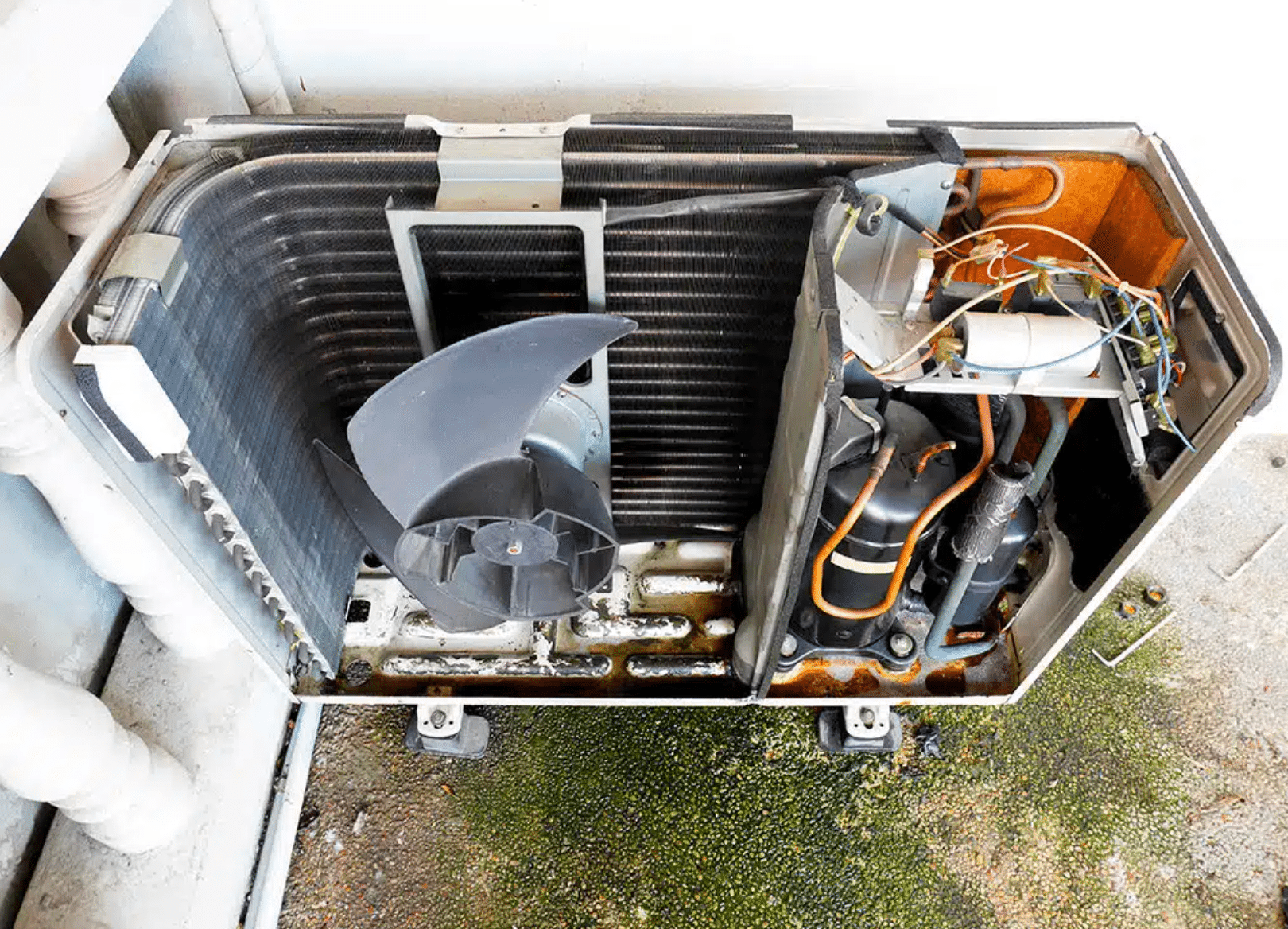
A technician should determine whether the control is calling for cooling and whether safeties, power supply and component operation match the manufacturer’s procedure. A humming noise by itself does not prove a bad capacitor or compressor. Do not open a condenser cabinet, touch a capacitor, or test live circuits yourself. The Airproz compressor-type guide explains component families, but component selection is not a substitute for testing the installed system.
Water near the indoor unit or a condensate warning: Note the location and stop operation whenever there is an electrical or overflow risk. The water that drains from the indoor cooling coil is called condensate. A blocked drain can activate a safety switch on some systems and stop cooling to prevent overflow. During humid weather, more moisture may condense on the indoor coil, making a partly blocked drain more noticeable. Cooling stops with a water warning: Record when the warning appeared and ask a technician to check the drain and its safety control. Never bridge a float switch to force the equipment on. For a portable or window AC, use its manual for permitted drainage and filter tasks; central-system drain and electrical advice must not be transferred blindly to those designs.
Why Won’t the AC Cool My House to the Set Temperature?
An AC may produce cold outlet air yet fail to lower the indoor temperature because too little conditioned air reaches the occupied space or because the building gains heat as quickly as, or faster than, the system removes it. Your home’s cooling load is the amount of heat the AC needs to remove. It changes with outdoor heat, sun through windows, insulation, air leaks, ventilation, people, appliances, and the indoor temperature you want. Cold air at one vent is not proof that enough cool air reaches every room. In ducted systems, leakage or poor balancing can leave distant rooms warm; in ductless systems, room layout and indoor-unit air distribution also affect comfort.

If one room stays warm: Compare its airflow with other rooms and note strong afternoon sun. Higher room heat gain and weak cool-air delivery may occur together. Record whether the room improves after sunset and whether airflow seems weaker than elsewhere. Note closed doors, blocked return-air openings, possible duct leaks or separate zoning settings. Request a room-airflow and heat-gain review before assuming a larger condenser will solve it.
If every room stays warm: Check whether cooling was requested and how the whole system behaves under similar outdoor conditions. A control, airflow or refrigeration fault and high building load can occur together. Ask for whole-system operation and building-load checks before deciding it needs more capacity.
Compare similar days, not just one hot afternoon. A system that holds temperature on mild days but struggles in extreme heat may be approaching its available cooling output under that operating condition. A system that suddenly struggles on weather and occupancy conditions it previously handled is more suspicious for a newly developed defect or building change. This distinction does not replace measured load and capacity checks. A cooling-capacity number on a rating label applies to defined test conditions; it is not proof of how much cooling the installed system delivers on your hottest afternoon. The model’s available capacity can change with outdoor temperature, indoor conditions and airflow. Ask the technician to compare the manufacturer’s applicable capacity information and measured system operation with the building load for the conditions that cause the complaint.
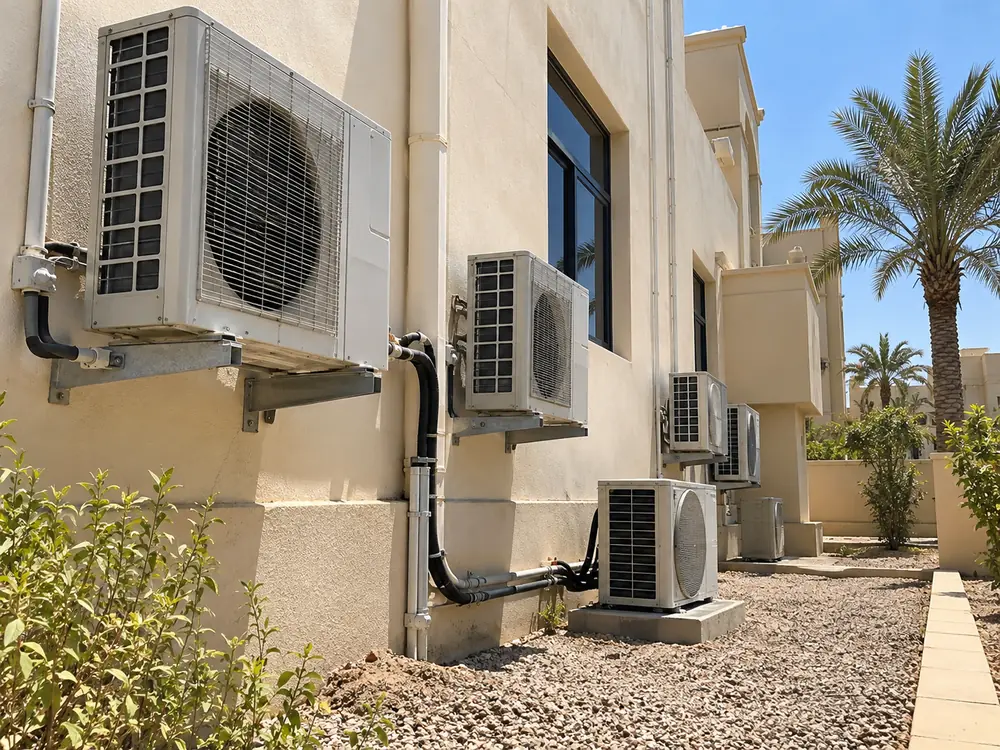
Does running all day mean the unit is undersized?
Not necessarily. An AC with a variable-speed compressor can slow down rather than switching fully off. It may run for many hours while keeping the room at the set temperature. Long runtime plus an indoor temperature that continues rising is a different symptom. Ask a technician to verify the delivered airflow (the cooled air actually reaching the rooms), controls and refrigeration system before comparing the building’s design cooling load with the specific model’s available capacity at the relevant indoor and outdoor temperatures. Floor area alone, an equipment nameplate, or a high-ambient marketing label is not enough to diagnose undersizing.
Too little cooling capacity can leave rooms above the set temperature in demanding weather. An oversized fixed-speed unit may start and stop frequently and control humidity poorly, although the outcome depends on controls, load and installation. A variable-speed unit may avoid much of that cycling, but only while the cooling demand is within its operating range; if the load is below its minimum stable output, cycling and poor humidity control may still occur. Model-specific modulation data and a load assessment matter more than the label “inverter” alone. Have the building load and the available cooling capacity of the proposed unit under relevant operating conditions checked before choosing a different size.
What if it is cooling but not cooling enough?
Track whether the indoor temperature moves downward, remains stable above the setpoint, or rises while cooling is requested. Record weather, sunlight exposure, occupied rooms and which indoor outlets feel weak. If the room temperature stays above your setting without rising or falling, the AC may be removing heat about as fast as the room gains it. This does not tell you whether the cause is high heat gain or reduced AC performance. In humid conditions, some of the cooling also removes moisture from the air at the indoor coil, so the room-temperature reading alone does not describe the entire cooling job. If a normal room humidity display is available, record that value with the temperature and weather. It provides context, not proof that the AC is operating correctly. A rising temperature could reflect more heat gain, restricted delivery or equipment malfunction; the service checks must distinguish them.
What Should an AC Technician Check?
Tell the technician what you noticed. Ask them to test the cause before recommending a repair. The tests will depend on your AC model and the conditions when it is running:
A technician may compare return-air and supply-air temperatures during a valid cooling call, but those readings must be interpreted with airflow, humidity, operating mode, and the model’s service data. A single vent temperature or a universal temperature-drop number cannot prove correct refrigerant charge or adequate cooling capacity.
| Observation | What the technician should check | Why it matters |
|---|---|---|
| Low airflow, possible ice | Check the filter, coils, indoor fan, ducts, and actual airflow against the model’s specifications. | Resolve airflow before treating a refrigerant symptom as a charge problem. |
| Airflow seems normal, but supply air is warm | Confirm that the controller is asking for cooling, then test the controls and heat-transfer operation using the model’s service procedure. | Test the controls and sealed cooling system. Warm air by itself cannot identify the faulty part. |
| Outdoor equipment inactive | Check whether the startup delay is over, a safety control has stopped the unit, and the required control signals and power are present. | Separate normal control behavior from a service fault. |
| Water or overflow indication | Check whether the indoor drain is blocked or an overflow safety switch has stopped cooling. | Correct the cause; do not bypass the protection. |
| Only some rooms are warm | Check how much cooled air reaches each room and whether sunlight or other heat sources are making some rooms harder to cool. | Repair distribution or evaluate room loads before changing capacity. |
| All rooms fail in similar weather | Check whether cooling output has declined or the building now gains more heat than before. | Use the findings to decide whether the AC needs repair or the cooling system needs a properly sized redesign. |
Before authorizing repair, ask for a written diagnosis stating the installed model (and serial number if available), the symptom and fault codes, operating and weather conditions, tests and readings that support the finding, recommended work and its cost. Refrigerant and electrical measurements belong to qualified technicians. A compressor replacement, refrigerant charge correction or capacity change needs supporting evidence; one symptom is not enough.
Before accepting the repair: Ask the technician to record whether the original symptom was reproduced and resolved, the operating conditions of the final cooling check, and whether relevant safety and condensate protections functioned correctly. If the complaint occurs only in hotter or more humid weather, agree on the follow-up conditions; one visit cannot verify conditions that were not tested.
What Should You Tell the HVAC Technician?
You can copy this short service note into a message or use it during a call. Include only observations that are safe to make; unknown items can be left blank.
AC cooling service request
- System: AC type and model (if known): ___; rooms or zones affected: ___.
- Settings and symptoms: Mode: ___; setpoint: ___; room temperature: ___; airflow normal or weak: ___; air warm or cool: ___.
- When and under what conditions: Problem started: ___; outdoor weather and sunlight: ___; changes in occupants, doors or equipment: ___; did it cool better under similar conditions before? ___.
- Warnings and checks: Error codes: ___; visible ice, water, unusual noise or repeat breaker trips: ___; controller, filter and vent checks already completed: ___.
Use an existing record or accessible label for the model; do not remove equipment covers to find it. You do not need refrigerant gauges, live electrical readings or internal-coil access. If there is smoke, a suspected fire or other immediate danger, prioritize safety rather than collecting notes.
Should You Repair, Improve the Installation, or Replace the AC?
Choose the next step from the diagnosed cause, not the age of the AC or a single warm-room complaint.
Repair when a fault has been confirmed
Resolve a documented airflow restriction, failed part, control problem or refrigerant leak before considering a larger system. A larger replacement unit will not correct a leaky duct, blocked return opening or broken control. Verification: Request the identified fault, the repair performed and a check showing that the original symptom has been resolved.
Improve air delivery or installation when the system cannot serve the rooms properly
An AC that works correctly while one room stays hot calls for checks of duct layout, zoning controls, indoor-unit position and heat coming into that room before choosing a different unit. A load assessment must reflect actual building characteristics and design conditions—the demanding weather expected when sizing the system. Verification: Compare room-by-room cooling needs and measured delivery, then confirm the corrective work. For ductless replacement planning, the existing mini-split AC guide explains indoor and outdoor unit arrangements.
Consider replacement only when testing supports it
Replacement becomes a candidate when testing shows that the AC cannot meet the building’s cooling needs as a properly operating, appropriately installed system, or when a documented repair-versus-replacement comparison makes replacement preferable. Compare a calculated cooling load with the manufacturer’s available capacity at the relevant indoor and outdoor temperatures. Keep three figures separate: the building’s design cooling load, the proposed model’s available cooling capacity at the relevant conditions, and the cooling the installed air-distribution system can actually deliver to occupied rooms. Matching the first two on paper does not fix leaking ducts or poor airflow.
Also check electrical supply and whether cool air reaches the rooms. For US homes, a Manual J calculation estimates heating and cooling demand at design conditions; combine the result with appropriate equipment-selection methods rather than sizing from floor area alone. The University of Florida cooling-load explanation explains the role of building features and occupancy. Age or runtime alone does not prove replacement is necessary. See the Airproz sizing guide, undersizing and oversizing analysis and AC lifespan guide when comparing system sizes or replacement options.
If your project also includes replacing or adding heating, a reversible air-source heat pump may be another option. Compare the pros and cons of air-source heat pumps, including available heating capacity in your climate, installation requirements and project cost, before choosing an equipment type.
Check the proposed system as a whole: Confirm that any indoor and outdoor units are an approved match for the selected system. Where relevant, compare the model’s required airflow and duct resistance with the installed air distribution, and check electrical voltage, phase and frequency, refrigerant piping limits, condensate drainage, placement and service clearances against the selected installation documents. A portable or window unit needs its own applicable checks rather than central-system duct or piping requirements.
Compare repair and replacement costs: Put the confirmed repair quotation alongside the full installed cost of a properly matched new system. Consider any duct, drainage, electrical or refrigerant-line work, the availability of parts, warranty terms and expected operating costs. Do not assume a fixed payback period or energy saving without model and operating evidence.
For the operating-cost part of that comparison, our AC running cost guide explains how energy use, operating hours and local electricity rates affect the estimate. Use applicable model data and your own usage assumptions rather than a fixed savings claim.
How Can You Reduce Repeat Cooling Problems?
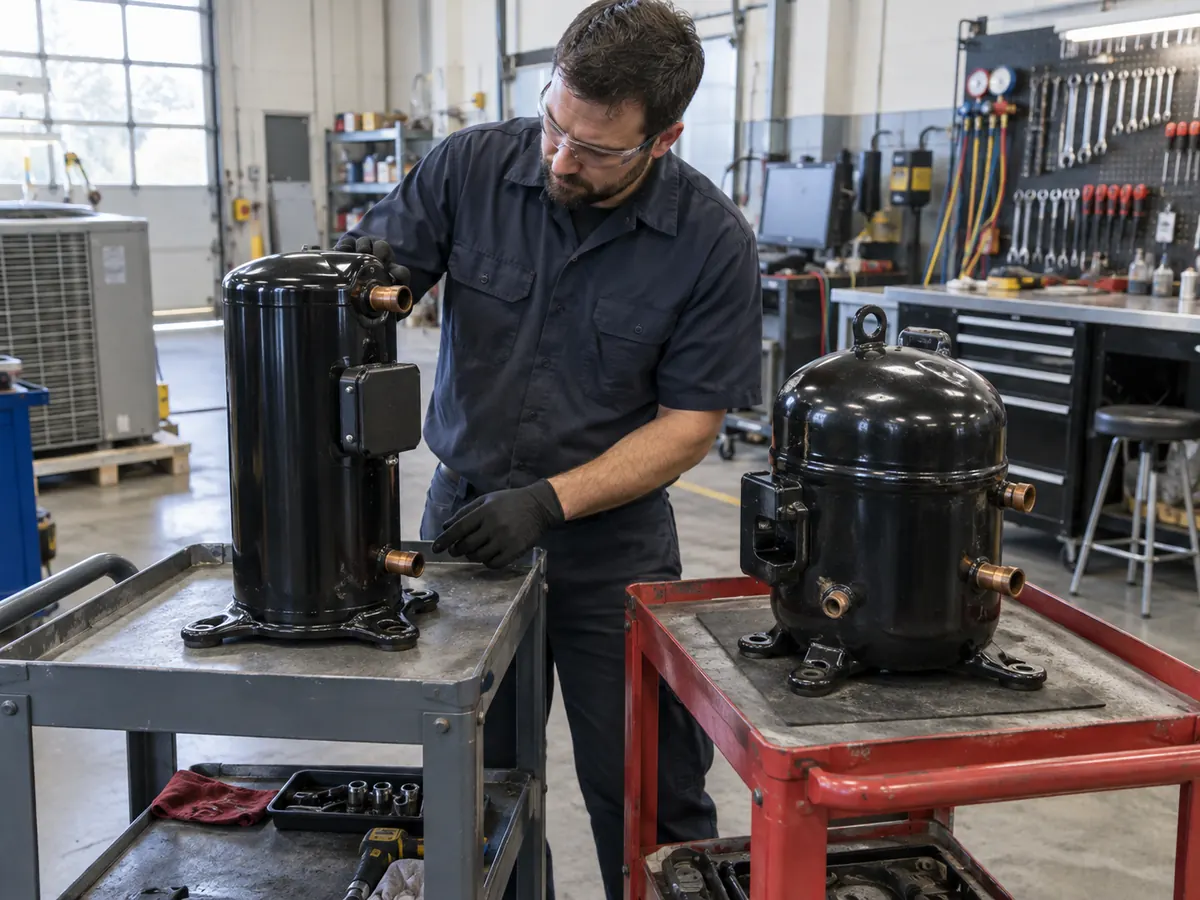
Follow the filter inspection and replacement guidance for the installed unit; keep the user-accessible airflow paths unobstructed; and schedule maintenance appropriate to the operating environment. Ask service personnel to check coils, blower/duct airflow, drains, controls and refrigerant charge only using model-appropriate procedures. If the same symptom returns, compare notes from similar outdoor conditions instead of repeatedly resetting the AC or asking for refrigerant without a confirmed reason.
Frequently Asked Questions
Why is my air conditioner running but not cooling?
The indoor fan may be running even when the sealed cooling system is not removing enough heat. Confirm COOL mode and any startup delay, check allowed filters and openings, then check whether the airflow is weak or the air coming from the vents stays warm. If the cause persists, qualified measurements are needed; the fan running does not identify the failed component.
Why is my air conditioner not blowing cool air even with a clean filter?
Even with a clean filter, the coils, indoor fan, ducts, controls, or refrigerant system may still have a problem. If airflow feels normal but the air remains warm after a valid cooling call, arrange service rather than assuming a refrigerant refill is required.
Why is my central air conditioner not cooling some rooms?
Some rooms may get too little cool air because of blocked vents, leaky ducts, or zoning controls. Strong sunlight or other heat sources can also make one room warmer than the others. Record affected rooms and the weather pattern. Have airflow and room-by-room demand assessed before choosing a larger unit.
Can I keep using an AC that has ice on it?
Stop cooling and arrange qualified service. Ice may result from inadequate airflow or refrigerant-system conditions, and forcing continued cooling can worsen the problem. Do not chip off the ice or interpret it as proof of a leak.
Should I add refrigerant if my AC is not cooling?
No, not from symptoms alone. Incorrect charge, a leak, airflow restriction or another fault may be involved. Have a qualified technician diagnose and handle the refrigerant system under the rules that apply in your location.
Does an AC that cannot reach the thermostat setting need replacement?
Not automatically. First determine whether equipment performance has declined, cooling is not reaching the rooms, or the building load exceeds available capacity under the actual conditions. You may need a repair, better air delivery to the rooms, or a correctly sized replacement—but only after the cause is checked.
Why does my AC cool briefly and then stop?
First check for a normal stop at the set temperature or a mode change. Repeated stops while the room remains warm deserve a short symptom log: time, room temperature, setpoint, whether the indoor fan keeps running, and any controller indication that cooling is still requested, when that indication is available. Do not open covers or approach unsafe equipment to collect these details.
Record displayed error codes or condensate warnings. Only note ice or water that is visible from a safe location, including whether it appeared before or after cooling stopped. These observations help a qualified technician distinguish normal cycling from a possible protective shutdown or another fault; they do not identify a failed part. A safety control, airflow problem, or component fault may be involved. Never bypass a safety switch or force repeated restarts; arrange qualified service.
Planning a Replacement or New AC Project?
For a fault in an existing AC: Arrange diagnosis with a qualified local HVAC service provider. This information helps you describe the symptom safely; it does not replace an on-site diagnosis.
For a replacement supported by diagnosis, or a planned new AC installation: Share the project details already available so appropriate equipment types can be discussed:
- Location and project scope: Destination market and site location, building use, number of rooms or zones, and project quantity or phase.
- Cooling requirements: Required indoor temperature, important humidity or noise limits, local outdoor design conditions, and any available cooling-load calculations.
- Existing system: Existing ductwork (if any), the current system, and the completed fault report where applicable.
- Power and installation: Electrical voltage, phase and frequency, plus site and installation constraints.
Mark unknown items as to be confirmed. These details are for equipment planning, not for a homeowner checking a filter. Floor area alone cannot identify an exact AC model. If you are considering a different system, read inverter AC basics and types of AC systems. For a diagnosis-supported replacement or a planned new installation, you can review the Airproz air conditioner product range before requesting model-specific details. When a new system is relevant, use Contact Airproz with the information you have.
Before placing an equipment order: Ask the prospective supplier for the exact proposed model’s datasheet, approved equipment-matching details where applicable, installation and electrical requirements, relevant compliance documents for the destination market, warranty terms, spare-parts arrangements and the commissioning checks used to accept the installation. Check that the documents and written terms apply to the exact model and destination market before accepting a quotation.