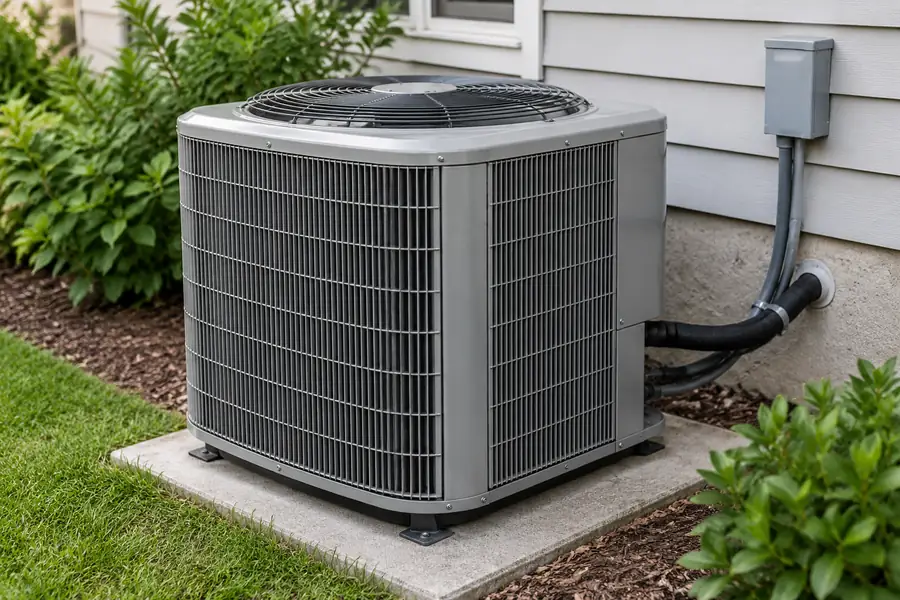
Air conditioner maintenance keeps air moving through the system, prevents dirt and blocked drains from causing avoidable problems, and helps you spot faults before cooling stops. Check the filter every month, keep supply and return vents open, keep the outdoor unit free of loose debris, and arrange a professional cooling-season service about once a year. The exact tasks and frequency depend on your AC type, manual, location, and use.
Start with the filter, supply and return vents, visible drainage, and outdoor clearance. This guide gives you a practical air conditioner maintenance checklist and repeatable schedule. Leave internal electrical and refrigerant checks to a qualified technician. For U.S. homes, a basic residential AC tune-up often costs about $75–$200; deep cleaning and repairs may cost extra.
Air Conditioner Maintenance Checklist: What to Check and When
Use a short monthly check for airflow and visible problems, then book a full inspection before heavy cooling use. A dusty home, pets, long daily operating hours, or nearby construction may call for more frequent checks. Use your model’s instructions to confirm the approved filter type, accessible panels, drain maintenance steps, and cleaning method.
| When to check | What to do | Who should do it |
|---|---|---|
| Every month during use | Inspect the filter; clean reusable filters or replace disposable filters when needed; check return and supply vents | Owner, if the filter is user-accessible |
| Every month during use | Look for new leaks, unusual sounds, frost, or persistent odors; note any change in cooling | Owner, visual and listening check |
| Every 1–3 months, or as needed | Address dirty filters based on the product instructions and actual conditions; clear loose leaves around the outdoor unit | Owner, within accessible areas |
| Before the main cooling season | Arrange an AC tune-up covering coils, blower, condensate drainage, controls, electrical condition, and system operation | Qualified HVAC technician |
| After storms, heavy dust, or extended shutdown | Check outdoor clearance, drainage signs, and airflow before returning to normal use | Owner for visual checks; technician for damage or faults |
The U.S. ENERGY STAR maintenance checklist recommends checking filters every month and arranging a professional service before each cooling season. A monthly filter check is not a rule to replace every filter each month. Many disposable filters last longer in light use, while some get dirty sooner. Watch the actual filter condition and follow its stated service interval.
A quick routine you can use today
- Set the system to off and let the fan stop before touching a user-accessible filter or grille.
- Check whether the filter is loaded with dust. Follow the label to clean or replace it.
- Make sure return grilles and supply registers are not covered by furniture, curtains, or stored items.
- Look around the outdoor unit for loose leaves and blocked air paths. Keep the clearances specified in its manual.
- Start the system again, listen for unusual noise, and note whether airflow and cooling feel normal.
- Record the date, observations, and any next action. Stop and request service if there is ice, a burning smell, repeated breaker trips, or water near electrical parts.
How to Clean AC Filters Without Damaging Them
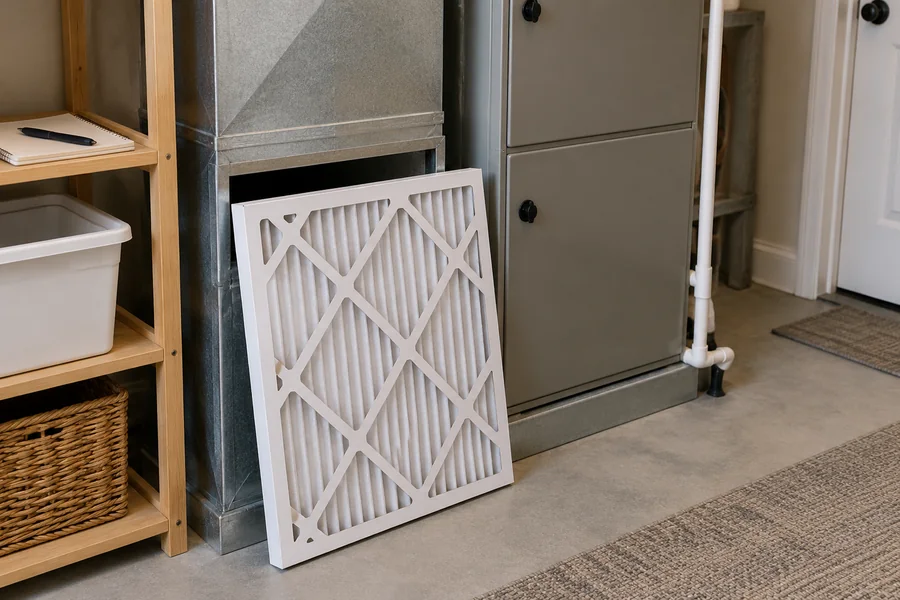
Turn off the system, remove the user-accessible filter, and check its type. Replace disposable filters with the correct size; clean washable filters only as the model instructions allow, then let them dry fully before reinstalling. A blocked filter reduces airflow. That can make rooms harder to cool, increase energy use, and contribute to coil icing. If cleaning the filter does not restore normal airflow or cooling, check the visible vents and thermostat setting, then arrange diagnosis of the fan, coil, controls, or refrigeration system.
For central ducted air conditioners
First, turn the thermostat or system off. Locate the filter at the return grille or indoor air-handler filter slot. Note the airflow arrow and the installed size before removing it. For a disposable filter, use the correct replacement type and dimensions; do not wash a disposable pleated or paper filter. Insert the new filter in the correct airflow direction and close the access grille completely.
Some systems use a washable filter rather than a disposable one. Only wash it when the equipment instructions permit that method, and allow it to dry fully before reinstalling. Never operate a system without the required filter while waiting for it to dry. If the filter is difficult to remove, the cabinet needs tools, or the filter slot is damaged, ask a technician to handle it.
For ductless mini-split wall units
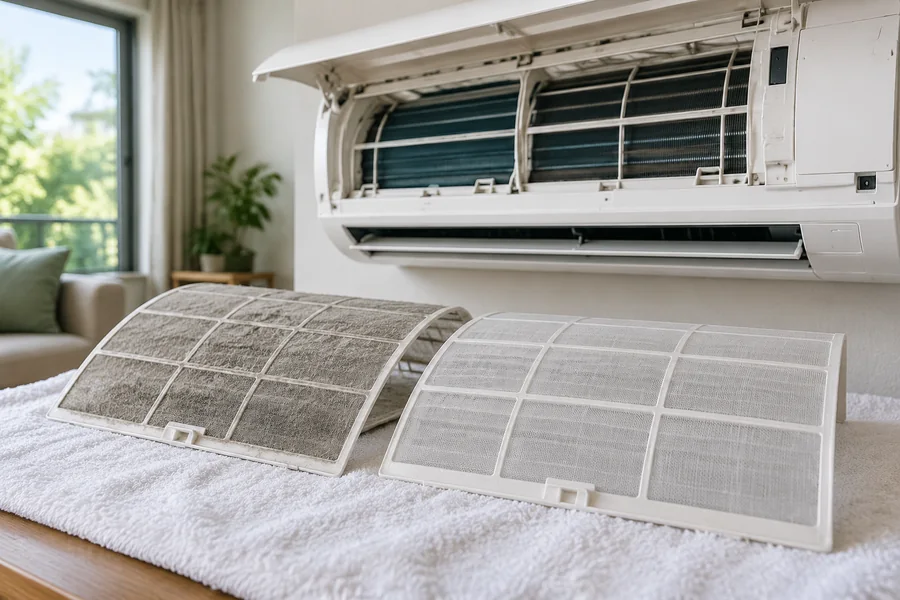
Turn the unit off and follow the wall-unit manual to open the front cover and remove the user-cleanable mesh filters. Use a vacuum brush for loose dust; if the manual allows rinsing, use clean water and let the filter air-dry completely. Refit the dry filter and close the cover securely. Do not spray water into the electronics, blower wheel, or coil, and do not remove electrical panels.
If a mini-split smells musty again soon after its filter has been cleaned, or airflow stays weak, the problem may be deeper in the blower wheel, indoor coil, or drain pan. Cleaning the mesh filter is not the same as cleaning those internal parts. Ask a qualified technician whether deeper cleaning or a drain check is needed; do not spray perfume or disinfectant into the unit. After service, check for normal airflow and drainage, and note whether the odor returns during ordinary use.
What if the filter looks clean but cooling is poor?
Check whether return and supply grilles are open and whether the thermostat is set to cooling. If airflow remains weak, the indoor coil is frozen, or the unit runs for a long time without normal cooling, stop treating it as a filter problem. You may need a technician to check fan operation, coil condition, controls, or refrigerant-system performance. Our separate air conditioner not cooling guide explains the main symptom checks.
Outdoor Condenser Coil Cleaning and Airflow
Keep the outdoor condenser clear of loose debris and maintain the manufacturer’s required airflow space. The outdoor coil releases heat in cooling mode. A mat of leaves, lint, or dust can restrict that heat exchange. Before cleaning, identify your unit’s coil guard, fan location, and manufacturer-approved method.
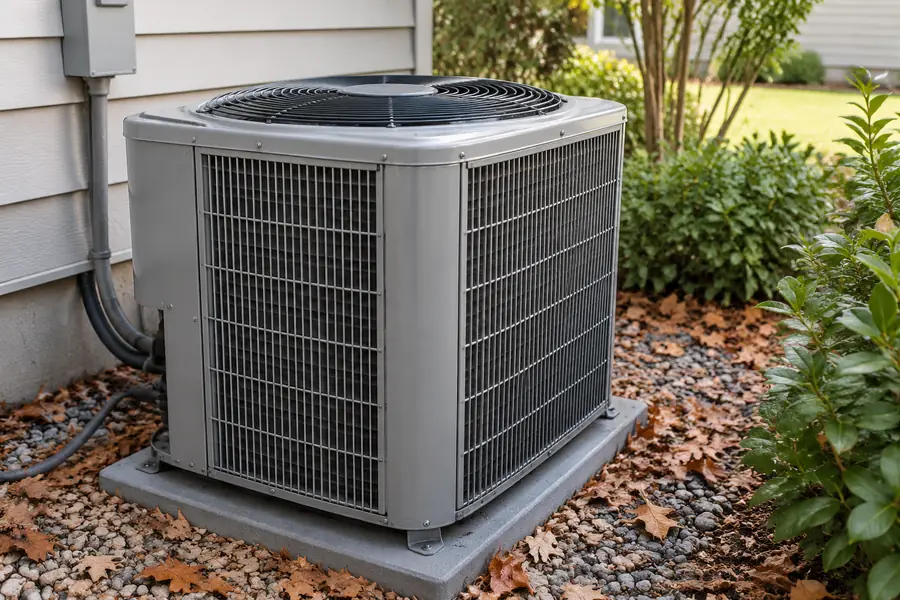
Walk around the unit with the system turned off. Remove leaves or rubbish lying on the ground near it. Trim vegetation that crowds the cabinet, using the actual clearance stated in the installation manual. Look through the protective grille for debris, bent fins, a loose cover, corrosion, or physical damage. Do not reach through a fan guard or remove a panel to clean the inside.
Should you wash an AC condenser coil yourself?
Only rinse an outdoor AC coil yourself if your model’s instructions allow that method and the unit has been safely shut down. Otherwise, clear loose exterior debris and leave coil washing to a qualified technician. Never use a pressure washer, unapproved acid or alkaline cleaner, generic degreaser, or forceful jet. These can bend fins, damage coatings, drive water into electrical components, or create chemical exposure. Ask a technician to handle heavy dirt, embedded cottonwood, blocked fins, or any cleaning that needs a cabinet opened.
If the outdoor coil remains dirty after normal surface cleanup, the unit’s cooling may still be reduced. After approved cleaning, the outdoor coil should have a clear airflow path. Restart and verify normal operation using the model’s service procedure.
Condensate Drain Maintenance and Water Leaks
Check the visible condensate drain outlet and the area around the indoor unit for normal discharge, damp patches, or overflow. If water is near wiring or other electrical parts, stop the unit safely and arrange service. In humid weather, moisture condenses on the cold indoor cooling coil and collects in a drain pan. If a drain line or pump becomes blocked, water may back up into ceilings, walls, flooring, or the equipment cabinet.
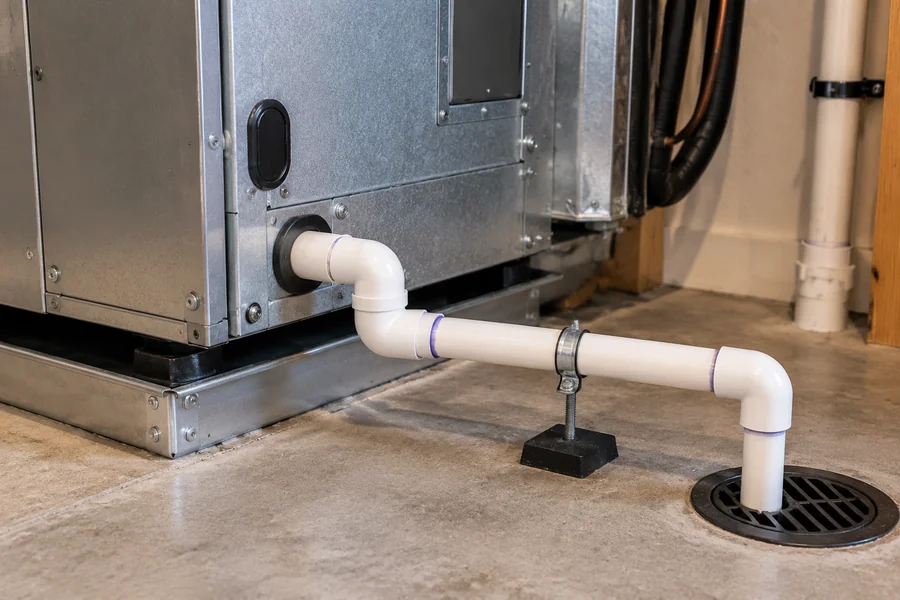
For a manufacturer-provided user-serviceable tray, follow the model’s specific cleaning instructions. Do not disconnect a glued drain line, open a concealed ceiling cassette, or pour strong chemicals into the drain to guess at the blockage.
A technician can inspect the pan, drain trap, slope, pump, float switch, and line blockage. After clearing the problem, they should verify that water flows to the intended outlet and the overflow control operates where fitted. The follow-up matters because wiping up a puddle does not fix its cause.
What Happens During a Professional AC Tune-Up?
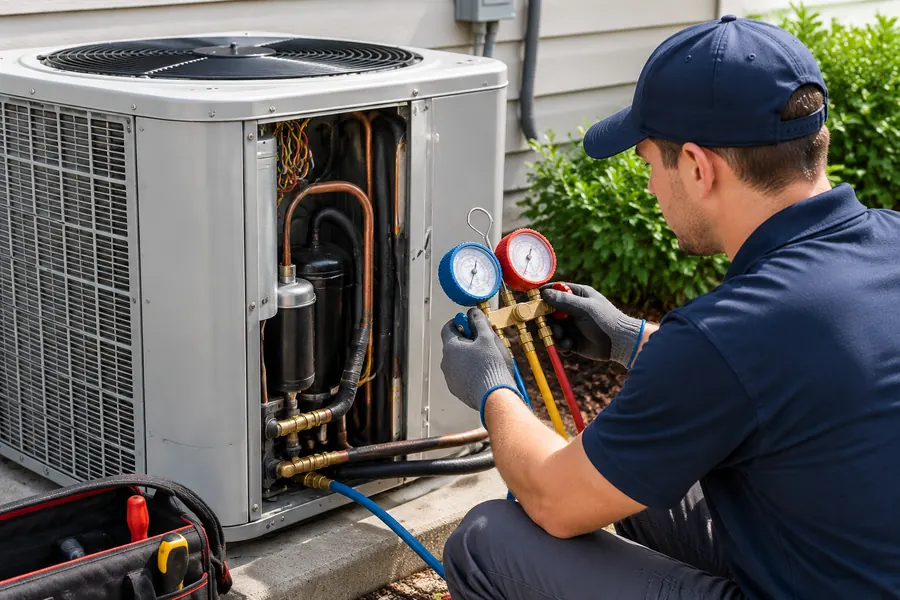
A professional AC tune-up checks airflow, coil condition, drainage, controls, electrical condition, and operation with the tools and access needed for your system. The technician should also record the equipment’s condition and operating response. The exact checklist changes with a central split system, ductless mini-split, rooftop unit, or heat pump.
| Service item | What the technician checks | Why it matters |
|---|---|---|
| Airflow and indoor blower | Filter fit, fan condition, visible restrictions, and suitable airflow measurements | Poor airflow can mimic other cooling faults and contribute to icing |
| Indoor and outdoor coils | Dirt, damage, and access for approved cleaning | Heat transfer depends on clean, unobstructed surfaces |
| Condensate management | Pan, trap, line, pump if fitted, and overflow protection | Confirms water can leave the system safely |
| Electrical and controls | Connections, contactors, capacitors, wiring condition, thermostat response, and safety switches as appropriate | Finds overheating, loose connections, and control faults before failure |
| Refrigeration performance | Operating conditions, temperature/pressure measurements when warranted, and evidence of leakage | Helps identify an actual cooling-system fault; routine refrigerant top-offs are not normal maintenance |
| Full operating test | Starts, stops, abnormal noise, drainage, and performance under the conditions present | Shows whether the unit behaves normally after service |
The ENERGY STAR professional checklist covers coils, refrigerant charge checks, electrical connections, airflow, drains, controls, and thermostat settings. An inspection does not mean every system needs refrigerant added. A sealed AC circuit should not need routine recharging. Low charge may signal leakage or an earlier service error; the underlying problem needs diagnosis.
For U.S. equipment, work involving access to the refrigerant circuit is subject to applicable EPA Section 608 technician-certification requirements. See the EPA guidance. Local licensing and safety rules outside the U.S. differ. Leave refrigerant handling and energized electrical testing to appropriately qualified professionals.
How to check whether the tune-up is complete: Ask for a dated result that separates work performed from faults that still need repair. A useful service summary should show:
- Checked: which indoor and outdoor components were inspected, cleaned, or tested, with relevant readings where taken.
- Finding: what was normal, what was abnormal, and which problems remain unresolved.
- Action and retest: what the technician corrected, whether startup, cooling, and drainage were checked afterward, and the next step for any remaining fault.
A routine tune-up is not the same as a completed repair. If a fault remains, the record should identify the follow-up rather than mark the system as fully resolved.
Questions to ask when booking service
Ask which indoor and outdoor components, airflow tests, and drain checks are included in the quoted visit. For multi-zone equipment, confirm the number of indoor heads covered and any extra charge per head. Ask whether the technician will provide the dated findings and post-service operating results described above, with photos of defects where useful.
Maintenance Differences by AC Type
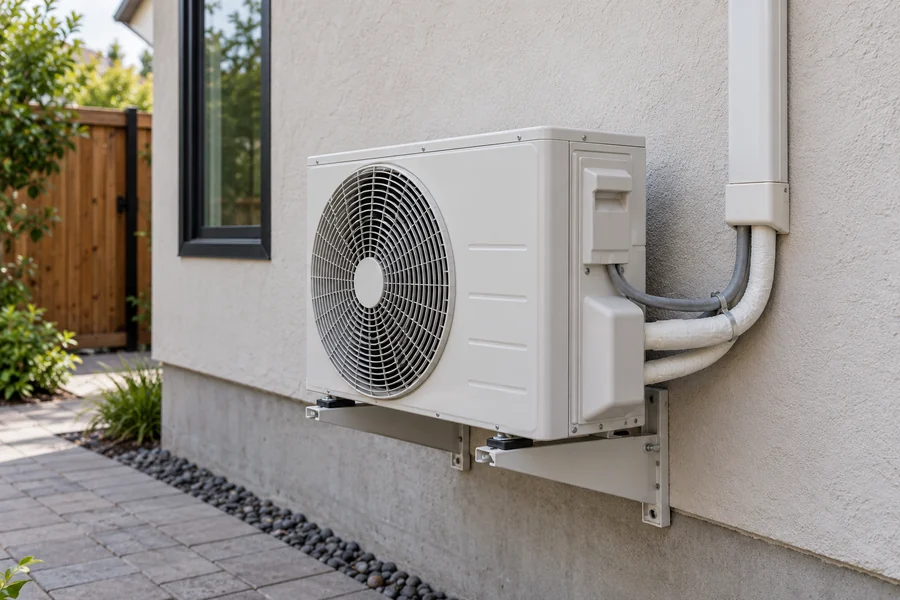
For central ducted AC, start with the return-air filter and outdoor clearance. For a multi-zone mini-split, check each indoor head and its drainage signs separately. For window or portable units, follow the model’s filter, condensate, and seasonal-storage instructions. Maintenance access and approved cleaning methods differ across AC types.
| AC system | Owner’s main task | What usually needs specialist attention |
|---|---|---|
| Central ducted split AC | Check filter and room vents; keep outdoor clearance open | Indoor coil, blower, duct airflow issues, electrical and refrigeration checks |
| Ductless mini-split | Clean approved mesh filters on each indoor head; look for drainage signs | Deep blower/coil cleaning, condensate line work, multi-head diagnostics |
| Window AC | Inspect removable filter and keep intake/exhaust openings clear as directed | Internal drainage faults, damaged cord, refrigeration or electrical issues |
| Portable AC | Maintain user-accessible filter, exhaust-hose connection, and condensate tray if specified | Fan, compressor, refrigerant, and electrical faults |
| Commercial cassette or rooftop AC | Record odors, airflow and leaks; keep access routes clear | Ceiling access, rooftop safety, drain pumps, controls, maintenance under a site plan |
For a multi-zone mini-split, list each indoor head by room or unit ID. Check its accessible filter, airflow, visible drainage signs, and any recurring odor separately. When arranging paid maintenance, confirm that all heads requiring service are included, not only the outdoor unit. Keep the results against each room or ID in your maintenance log.
For a heat pump that also heats your building, the inspection should cover heating controls, seasonal operation, and any defrost-related behavior as applicable. A service company may suggest separate checks before both major heating and cooling seasons in regions with year-round use. Follow the model and service contract rather than assuming a single interval fits every duty cycle.
Warning Signs That Need More Than Routine Maintenance
Stop using the AC if you notice a burning smell, repeated breaker trips, ice on the indoor coil, or water close to electrical parts. For weak airflow without these warning signs, check the filter and open vents once; if the problem remains, arrange diagnosis. Routine cleaning helps prevent faults, but persistent symptoms need a specific diagnosis.
| What you notice | Safe first action | Next step if it continues |
|---|---|---|
| Weak airflow | Check the user filter and unobstructed vents | Technician checks blower, coil and airflow |
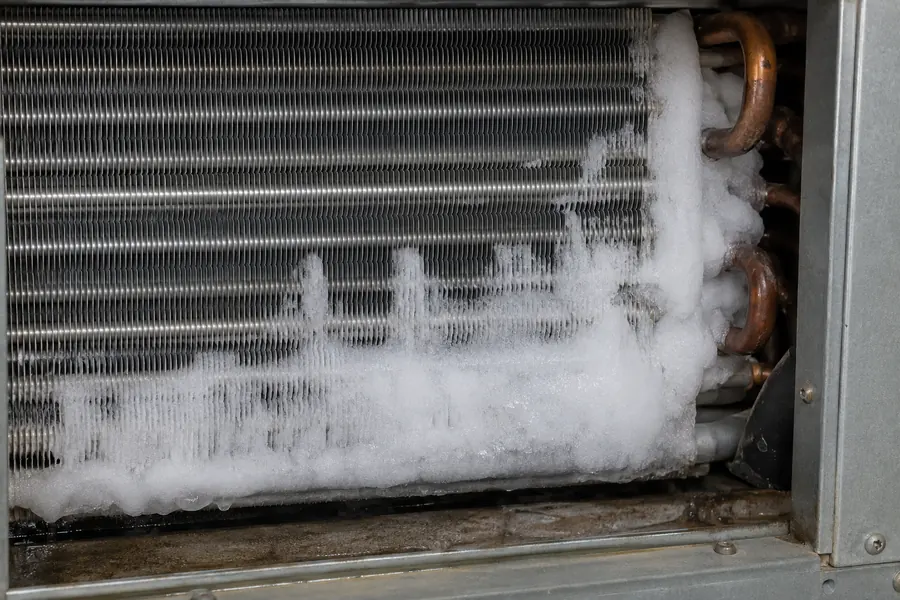
| Ice or frost on refrigerant tubing or indoor coil | Turn cooling off; do not chip or heat the ice | Diagnose airflow and refrigeration causes before normal operation |
| Water dripping where it should not | Stop the unit if needed and protect the area from water | Inspect drainage and electrical exposure |
| Repeated tripped breaker or burning odor | Stop using the equipment; do not keep resetting the breaker | Qualified electrical/HVAC assessment promptly |
| Loud new rattling or grinding | Switch off and note where the noise occurs | Check for loose or failing mechanical parts |
| Rooms no longer reach normal temperature | Check settings and the filter once | Record weather and operating symptoms for technician review |
For visible icing, the dedicated AC freezing guide explains why frozen coils and airflow restrictions are related. Never run a unit through repeated freeze-and-thaw cycles without addressing the cause. For a unit with a serious electrical smell or water near live components, avoid touching wet equipment and call a professional.
After the cause is corrected, confirm the result in normal operation. Drainage should reach the intended outlet without another overflow. A previously frozen indoor coil should run without recurring ice. Weak airflow should improve after the actual restriction or fan fault is corrected. Record the test and conditions. If a symptom repeats, share the record and arrange follow-up diagnosis instead of repeating the same cleaning step.
How Much Does Air Conditioner Maintenance Cost?
In the United States, a basic residential AC tune-up commonly costs $75–$200, according to Angi’s July 2026 AC tune-up guide. System type, service depth, travel, local labor rates, and whether repairs are needed affect the final price. Deep coil cleaning, extra indoor units, difficult access, parts, and repairs may cost more. Request a written local quote for your specific equipment. Angi’s broader HVAC maintenance cost guide covers other equipment and service scopes, so compare the work included rather than price alone.
A low advertised tune-up price may cover only a short inspection. Two quotes are comparable only when they cover the same equipment and work. Ask for the written scope, whether any of the items below are separate charges, and whether a return visit is included. If a technician recommends adding refrigerant, request the diagnostic reason and a plan to address any leak rather than paying for repeated top-ups.
| Item to compare | What to ask before booking | Possible extra charge |
|---|---|---|
| Indoor and outdoor inspection | Are both units and the full operating test included? | A second system or inaccessible unit |
| Filters and drain | Are the filter and visible condensate path checked? Are replacements or clearing a clog included? | New filters, drain repair, or pump work |
| Coil cleaning | Does the quote include light surface cleaning, deep cleaning, or inspection only? | Internal coil, blower-wheel, or heavily fouled coil cleaning |
| Additional indoor heads | Does the price cover every mini-split head or only one? | Additional heads, access work, or return visits |
| Fault diagnosis and repair | Does the visit include troubleshooting and repair, or only routine maintenance? | Parts, leak finding, refrigerant work, emergency labor |
Is an annual AC maintenance plan worth it?
A plan may be useful when you have several units, need scheduled visits, or value a documented maintenance history. Compare included visits, covered equipment, cleaning, repairs, extra-unit charges, and scheduling benefits. Choose a plan when its included work and terms match your actual use. For a lightly used single AC, paying for an annual visit may be simpler than a contract. Commercial systems should also consider access and business interruption costs.
Keep a Simple Preventive Maintenance Log
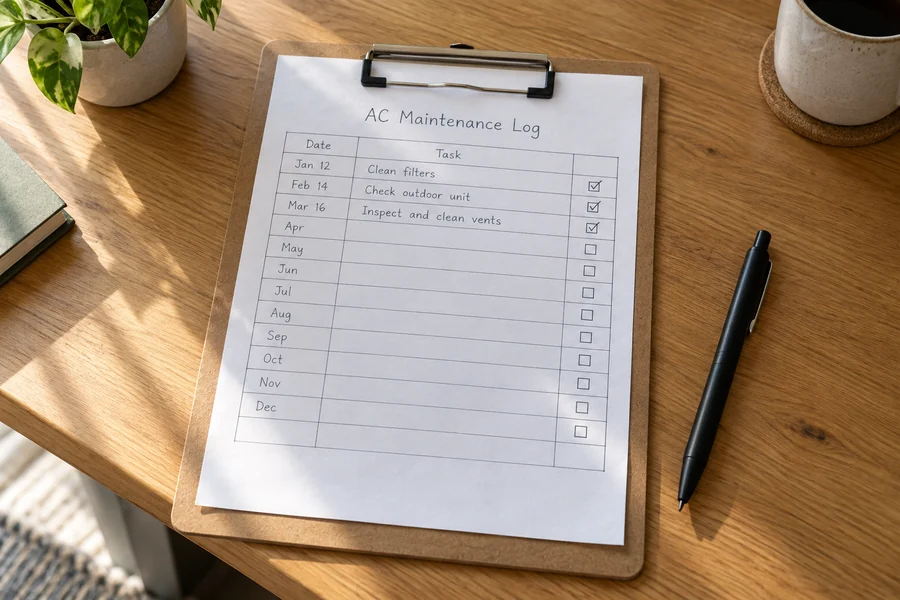
After each check, record the date, unit or room, problem or task, action taken, result after restarting, and next check date. Keep a separate record for each indoor head or AC unit when you manage more than one. A dated log helps you spot recurring problems and share useful history with a technician.
| Date | Unit / room | Check or symptom | Action taken | Result after action | Next check / follow-up |
|---|---|---|---|---|---|
| Example: Oct. 28 | Living-room mini-split | Dusty mesh filter | Cleaned and dried filter | Airflow normal when restarted | Inspect next month |
| Your date | Model or room ID | What you noticed | What you did | Normal / still faulty / not yet tested | Next date or technician |
Use the sample row as a format. Add a serial number or model ID to your private maintenance record if you manage several units. Record what changed after an action, not just what you cleaned. If the equipment still leaks, ices up, smells, or has poor airflow, write “follow-up needed” rather than marking it fixed. Save a technician’s measured findings when available, and compare repeat checks under similar weather and thermostat settings.
When the maintenance log repeatedly shows the same drain blockage or filter loading, adjust the inspection frequency to match the real condition and ask a technician whether the source needs correction. Where several systems share a building, assign one person to record each unit rather than relying on memory.
Frequently Asked Questions About Air Conditioner Maintenance
How often should I have my air conditioner serviced if I only use it in summer?
Arrange a professional check before the main cooling season, even if you only run the system for a few months. Inspect its filter monthly while it is in use. If the system has been idle for a long time, also check for blocked outdoor airflow, new leaks, or damage before regular operation.
Can I run the AC for a few days without its filter while it dries?
No. If the unit requires a filter, wait until the approved washable filter is completely dry and properly reinstalled. Running without it can allow dust to collect on the indoor coil and blower. For a disposable filter, fit a correctly sized replacement instead of washing the old one.
Why does my AC smell musty after the filter has been cleaned?
The smell may come from a wet drain pan, internal blower, or other damp parts that ordinary filter cleaning cannot reach. Check for visible leaks and arrange an inspection if the odor keeps returning. Do not spray chemicals into electrical or refrigerant components.
Does an air conditioner need more refrigerant at every tune-up?
No. Refrigerant is not a consumable that should be topped up on a normal schedule. If testing shows low charge, a qualified technician should investigate the cause, check for leaks as appropriate, repair the fault, and confirm normal operation.
Does an AC tune-up price include deep coil cleaning or repairs?
Not always. A basic tune-up usually covers the inspection and routine work listed in the quote. Deep coil or blower cleaning, replacement parts, extra indoor units, and fault repairs may be charged separately. Ask for the written service scope and any additional charges before approving the visit.
Should I service a mini-split more often than a central AC system?
Not automatically. Both need regular filter checks and professional service based on actual use. A mini-split with several indoor heads may need more filter cleaning points and more work per visit. High dust, long run hours, or repeated drainage issues can shorten the inspection interval for either type.
When should I stop DIY maintenance and call a technician?
Stop when a task requires opening electrical or refrigerant panels, handling refrigerant, working on a roof, or entering unsafe access areas. Also stop if you find ice, leaking water near electricity, a burning smell, repeated breaker trips, or unusual mechanical noise. A professional should diagnose the cause before the unit returns to normal use.
Make Maintenance Part of Normal AC Operation
Good air conditioner maintenance combines regular filter and airflow checks, clear drainage, and professional service when needed. Record changes in normal performance over time. If conditions change, adjust your maintenance routine. If normal cooling does not return, arrange diagnosis rather than repeating the same cleaning step.
If you manage Airproz air conditioning equipment or are planning an AC project, contact us with the model, installation location, usage pattern, and current issue. We can help review relevant Airproz product documentation and configuration questions. For onsite diagnosis or repair, book a qualified HVAC technician in your area.