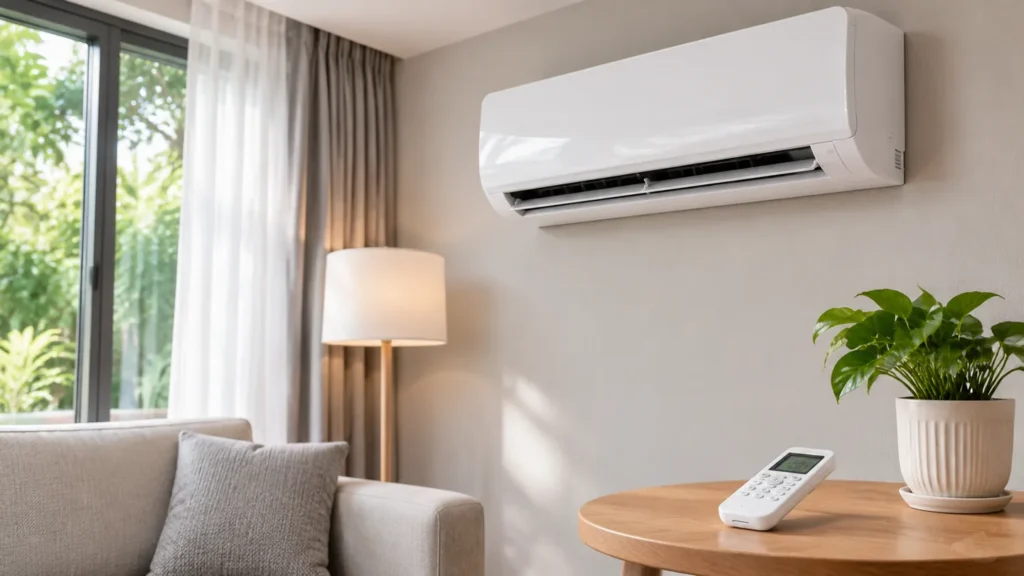
Air conditioning works by transferring heat between indoor and outdoor environments through a refrigeration cycle. In cooling mode, the system absorbs heat from indoor air and releases it outdoors. In heating mode, a reversible heat pump changes the direction of heat transfer, absorbing heat from outdoor air and releasing it indoors. The compressor, refrigerant, heat exchangers, and expansion device work together to move heat, while fans circulate conditioned air throughout the space.
When cooling mode starts, the indoor fan draws room air into the unit. As the air passes through the filter and across the cold evaporator coil, it transfers heat to the refrigerant. The refrigerant then travels through a sealed circuit, passes through the compressor, and releases that heat through the outdoor condenser. The cooled air returns to the room, and repeated circulation gradually brings the indoor temperature closer to the thermostat setting.
In humid conditions, some of the water vapor in the air also condenses on the evaporator coil. This condensate collects in a drain pan and flows out through a drain line, allowing the system to cool and dehumidify at the same time. The evaporator, compressor, condenser, expansion device, indoor and outdoor fans, and controls work together to make this possible. This guide first follows the heat-transfer process, then explains the components, electricity use, condensate drainage, differences among AC types, heating-mode operation, and common operating problems.
What Are the Four Steps of the Air Conditioning Refrigeration Cycle?
Most residential split systems, window air conditioners, and direct-expansion central AC systems use a vapor-compression refrigeration cycle. Refrigerant absorbs indoor heat as it evaporates on the low-pressure side and releases that heat as it condenses on the high-pressure side. The cycle has four stages: the indoor evaporator absorbs heat, the compressor raises refrigerant pressure and temperature, the outdoor condenser rejects heat, and the expansion device reduces pressure. Meanwhile, the indoor fan moves room air across the evaporator, and the outdoor fan carries heat away from the condenser. As the cycle continues, the room temperature moves toward the thermostat setpoint.
Think of the system as a closed-loop heat-moving process. The indoor unit collects heat, the refrigerant carries it, the compressor creates the conditions needed to reject that heat outdoors, and the outdoor unit releases it. To evaluate whether an air conditioner is operating correctly, consider the refrigerant circuit, airflow across both coils, temperature controls, and the actual operating condition of each component.
The Four-Step Cooling Cycle: From Evaporator Back to Evaporator
The easiest way to follow the refrigeration cycle is to trace the refrigerant. Cold, low-pressure refrigerant enters the indoor evaporator, absorbs heat, and vaporizes. The resulting low-pressure vapor enters the compressor, which raises its pressure and temperature. The hot vapor then passes through the outdoor condenser, where it releases heat and becomes liquid. Finally, the high-pressure liquid passes through an expansion device, forming a colder, low-pressure mixture of liquid and vapor. This sequence repeats inside the sealed circuit while the indoor and outdoor air streams exchange heat with their respective coils. The table connects each stage to its main component, refrigerant condition, and heat-transfer function.
| Refrigeration stage | Main component | Refrigerant condition and heat-transfer function |
|---|---|---|
| 1. Evaporation and heat absorption | Indoor evaporator coil | Cold, low-pressure refrigerant absorbs heat from indoor air and gradually evaporates into vapor. Air cools as it passes over the coil. |
| 2. Compression and temperature rise | Compressor | The compressor draws in low-pressure refrigerant vapor and compresses it into hot, high-pressure vapor so it can release heat outdoors. |
| 3. Condensation and heat rejection | Outdoor condenser coil | The outdoor fan carries away heat released by the refrigerant, which condenses from hot, high-pressure vapor into high-pressure liquid. |
| 4. Expansion and pressure reduction | Expansion valve or capillary tube | High-pressure liquid drops in pressure across the metering device, producing a colder, low-pressure liquid-vapor mixture that returns to the evaporator. |
Following the refrigerant piping, the sequence is: evaporator → compressor → condenser → expansion device → evaporator. Equipment placement and control methods vary by AC type, but the underlying refrigeration principle is the same.
A separate air-circulation loop operates at the same time. The indoor fan draws warmer room air through a filter and across the evaporator, then returns the cooled air through the supply outlet. Refrigerant transports heat; fans move air. Together, these two flows produce the cool air you feel.
What Are the Main Components of an Air Conditioning System?
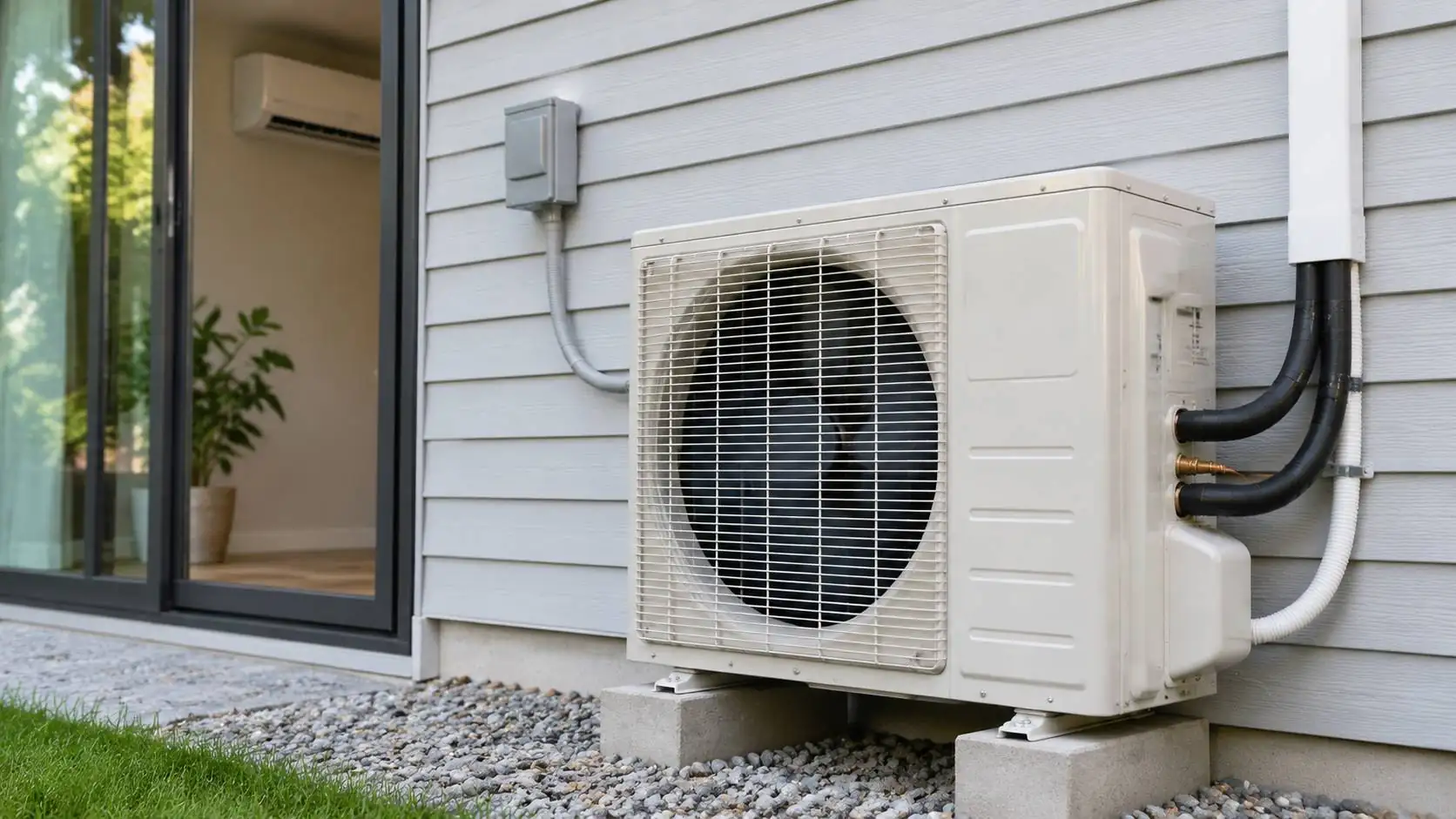
A typical residential direct-expansion air conditioner uses four primary refrigeration components: an evaporator, compressor, condenser, and expansion device. It also includes indoor and outdoor fans, filters, temperature sensors, controls, refrigerant piping, and condensate drainage components. The indoor side primarily cools and dehumidifies return air; the outdoor side compresses the refrigerant and rejects heat; and the control system coordinates both sides. Exact component locations depend on the equipment design. For example, the expansion device may be located in the outdoor unit or elsewhere in the circuit.
The table below uses a common ductless mini-split as an example. It shows what each component does and what you might observe if it develops a problem. Use these symptoms to choose which component to inspect and which operating condition to verify.
| Main component | Typical location | What it does | Possible signs of a problem |
|---|---|---|---|
| Evaporator (indoor coil) | Indoor unit | Absorbs heat from room air and condenses moisture when the coil is below the dew point. | Warm supply air, ice buildup, or abnormal dripping |
| Indoor fan / air filter | Indoor unit | Moves return air through the filter and coil, then sends it back into the room. | Weak airflow, uneven room temperatures, or coil icing |
| Drain pan / drain line | Indoor unit and drain route | Collects condensate from the evaporator and carries it away. | Indoor water leaks or interrupted drainage |
| Compressor | Outdoor unit (typical split system) | Raises refrigerant-vapor pressure and temperature and maintains the pressure difference. | Refrigeration cycle fails to operate properly |
| Condenser (outdoor coil) | Outdoor unit | Transfers heat carried by the refrigerant to outdoor air. | Poor heat rejection, high-pressure shutdown, or reduced cooling |
| Outdoor fan | Outdoor unit | Moves outdoor air across the condenser. | Insufficient heat rejection or protective shutdown |
| Expansion device | Varies by model | Reduces pressure and meters refrigerant entering the evaporator. | Improper evaporator feed or insufficient cooling |
| Refrigerant lines | Between indoor and outdoor units | Circulate refrigerant through the sealed circuit. | Performance drops if refrigerant leaks |
| Temperature sensors / control board | Indoor and outdoor units and piping | Sense operating conditions and coordinate compressor, fans, and protective functions. | Erratic control, temperature regulation, or fault indications |
What Is Inside the Indoor AC Unit, and What Does Each Part Do?
The indoor unit of a typical wall-mounted mini-split contains an air filter, evaporator coil, cross-flow fan, adjustable louvers, condensate drain pan, and temperature sensors. Air passes through the filter and across the evaporator, where it transfers heat to the refrigerant inside the coil. If the coil surface is below the air’s dew point, moisture condenses and collects in the drain pan. The fan and louvers then distribute the conditioned air throughout the room.
Useful observations on the indoor side include whether the return-air inlet is clear, airflow is steady, the coil is icing, and condensate drains properly. Follow the equipment manual for filter removal, fan access, and drainage arrangements because these vary by model.
What Is Inside the Outdoor AC Unit, and What Does Each Part Do?
A typical split-system outdoor unit contains a compressor, condenser coil, condenser fan, electrical controls, and valves connected to the refrigerant lines. The compressor turns low-pressure vapor into high-pressure, high-temperature vapor. The condenser and outdoor fan then reject the heat absorbed indoors, along with the heat associated with compressor input, to the surrounding air. Some units also house an expansion device, four-way reversing valve, or inverter drive module outdoors.
Insufficient clearance, heavily fouled condenser fins, or a stopped outdoor fan can restrict heat rejection and reduce cooling capacity. Observe the outdoor unit without removing protective panels or touching moving parts or electrical terminals.
How Do the Refrigerant Lines, Thermostat, and Drainage System Work Together?
Refrigerant lines connect the indoor and outdoor heat exchangers. The thermostat and control board use room temperature, coil temperature, and protective controls to determine when the compressor and fans operate. Separately, the drainage system removes the water extracted from indoor air. Each carries something different: the piping carries refrigerant, the controls send operating commands, and the drain line carries liquid water.
Some systems with single-phase, fixed-speed motors also use run capacitors or start capacitors. Inverter-driven compressors typically use dedicated electronic drive circuitry. Capacitors and electrical components should be serviced by qualified technicians.
For more on motor start and run capacitors, see Air Conditioner Capacitor: Types, Symptoms, Testing, and Cost, and compare the explanation with the motor wiring of your particular system.
How Do an Air Conditioner’s Components Work Together After Startup?
When cooling starts, the thermostat compares room temperature with the setpoint. The control system then coordinates the compressor, indoor fan, outdoor fan, and expansion device to match cooling output to the room’s cooling load. The cycle continues as the evaporator absorbs heat, the compressor increases pressure, the condenser rejects heat, and the expansion device reduces pressure. Sensors also monitor coil temperature, discharge conditions, and other operating parameters, reducing output or initiating a protective shutdown when necessary.
For example, a rise in return-air temperature may prompt the controls to increase compressor output. A colder evaporator can then cool the air passing over it more effectively, provided the outdoor condenser has enough airflow to keep rejecting heat. A significant restriction at any stage can reduce the system’s overall cooling capacity.
Warm Indoor Air Passes Across the Evaporator Coil
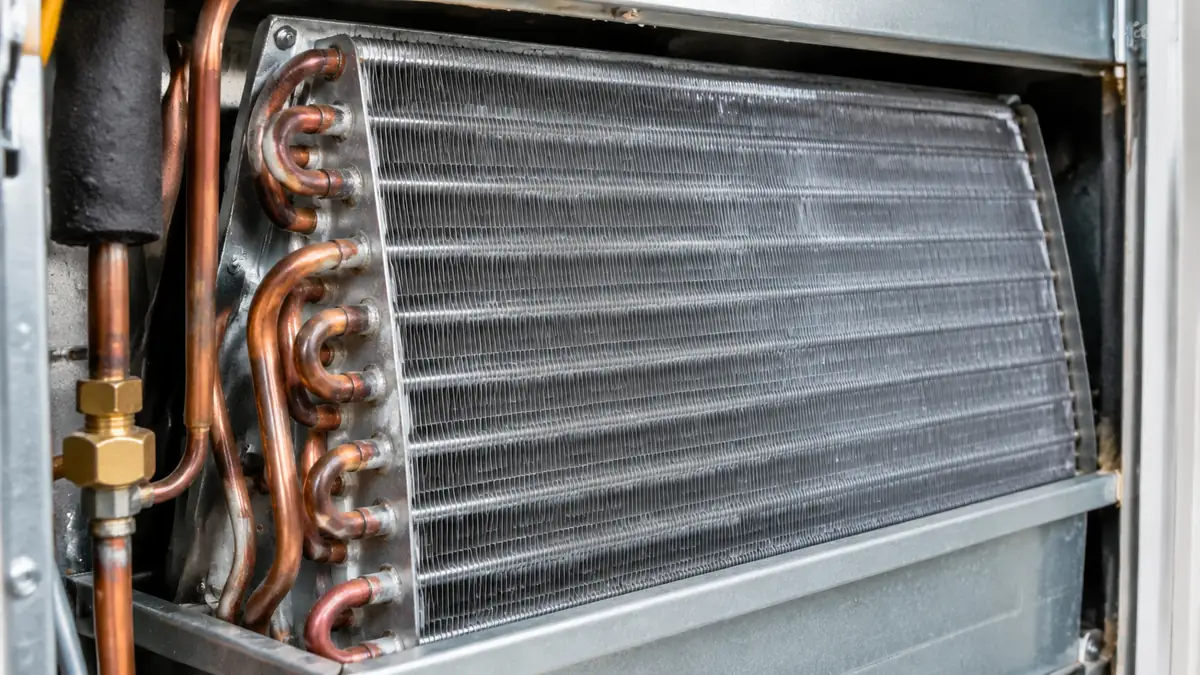
When room temperature rises above the setpoint, the indoor fan draws return air through the filter and across the evaporator’s metal fins. The refrigerant inside the tubing is at a pressure that allows it to evaporate at a low temperature, so the coil surface is cooler than the incoming air. Heat passes from the air to the fins, through the tubing walls, and into the refrigerant. As the refrigerant absorbs heat, it vaporizes, and cooler air leaves the supply outlet. If the coil surface is also below the air’s dew point, water vapor condenses on the fins and drains through the pan and drain line. This stage therefore provides cooling and some dehumidification.
For example, furniture blocking a return-air inlet can reduce airflow across the evaporator. The air coming out of the unit may still feel cold in one spot, while the room takes longer to cool. Actual evaporating temperature and indoor humidity also affect performance.
Refrigerant Enters the AC Compressor
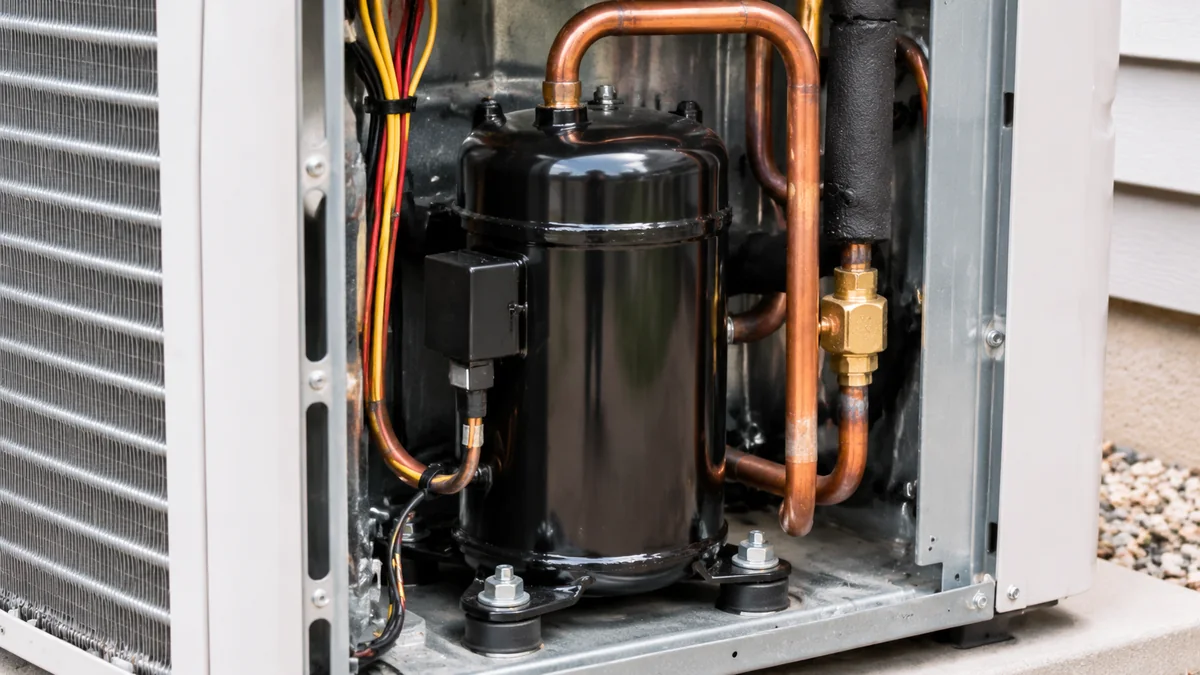
Refrigerant usually reaches the compressor suction port as low-pressure vapor leaving the evaporator. The compressor does work on that vapor, raising its pressure and temperature before sending it to the outdoor condenser. The pressure increase is essential: it makes the refrigerant’s condensing temperature higher than the outdoor air temperature, allowing heat to flow from the condenser to the surroundings. The compressor also maintains the pressure difference between the high- and low-pressure sides of the circuit. Fixed-speed systems mainly control cooling through compressor cycling, while inverter systems can change motor speed to adjust refrigerant flow and cooling output.
The work supplied to the compressor also contributes to the system’s heat balance, so the outdoor unit generally rejects more heat than the evaporator removes from the room. The controls monitor startup protection, discharge temperature, and permitted operating conditions.
Hot Refrigerant Releases Heat Through the Outdoor Condenser
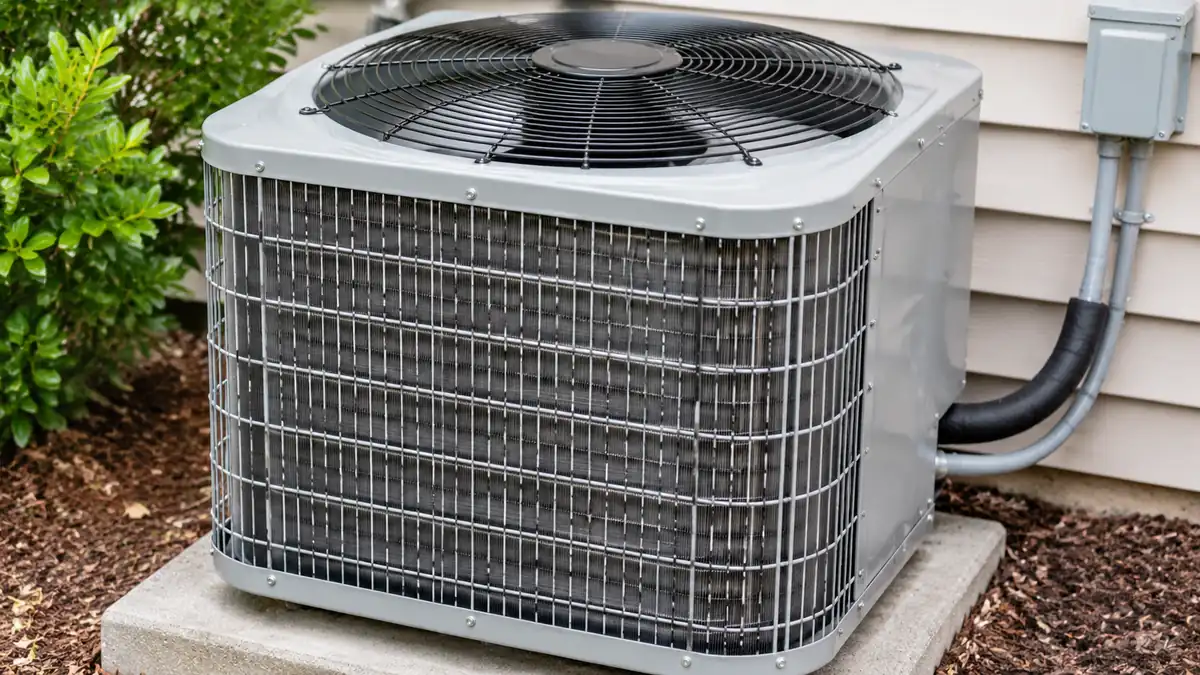
Hot, high-pressure refrigerant leaving the compressor enters the outdoor condenser at a temperature above that of the air flowing across it. Heat travels through the tubing and fins into the outside air and is carried away by the condenser fan. The refrigerant first cools, then changes from vapor to liquid at its condensing pressure; some systems provide additional liquid subcooling. The heat rejected outdoors includes the heat absorbed at the indoor evaporator and the energy added to the cycle by the equipment. Warm air blowing from the outdoor unit is a normal result of this process. Dirty fins or restricted airflow can raise condensing pressure and temperature, increasing compressor load.
For example, an enclosure that leaves too little space around the condenser can cause hot discharge air to recirculate. Cooling performance may fall even when the indoor fan operates normally. Follow the installation manual for clearance requirements around the unit and in the discharge-air direction.
Liquid Refrigerant Passes Through the Expansion Valve
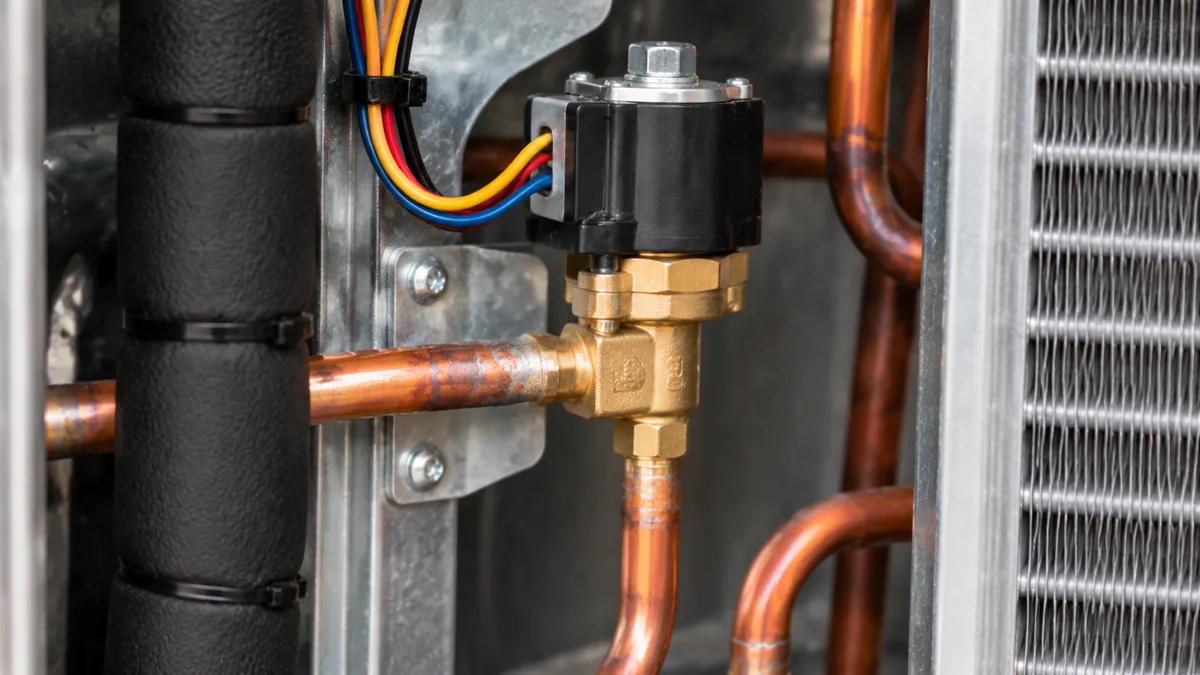
High-pressure liquid refrigerant leaving the condenser enters an expansion valve, fixed orifice, or capillary tube. The device restricts flow and creates a substantial pressure drop, reducing the refrigerant’s saturation temperature. Some of the liquid flashes into vapor during this pressure reduction, producing a colder, low-pressure liquid-vapor mixture that enters the evaporator to absorb heat. Electronic and thermostatic expansion valves can also modulate refrigerant feed based on operating conditions to maintain an appropriate flow rate and evaporator outlet superheat. By lowering pressure between the condenser and evaporator, the expansion device prepares the refrigerant for another heat-absorption stage.
For example, an electronic expansion valve changes its opening to regulate refrigerant flow. Working with temperature and pressure sensors, it helps maintain stable evaporator operation across changing loads. Valve location and control targets vary by system design.
What Happens When the Room Reaches the Thermostat Setting?
As room temperature approaches or reaches the setpoint, the controls reduce cooling output. A fixed-speed system generally shuts off the compressor within a temperature-control deadband and restarts it after the room warms again. An inverter system will typically slow the compressor first, supplying just enough cooling to offset the heat still entering the room. Depending on the unit and fan setting, the indoor fan may keep running at low speed, stop after a short delay, or shut off with the compressor in Auto mode. Some units also impose a restart delay to prevent rapid compressor cycling. This is normal temperature-maintenance operation under a smaller cooling load.
Whether the indoor fan keeps turning depends on the model and selected fan mode. Some systems continue blowing air briefly after the compressor stops, while others stop the fan at the same time. The controller uses room and evaporator temperatures, protective delays, and the operating mode to determine what happens next.
Why Does an Air Conditioner Blow Cold Air?
An air conditioner blows cool air because its indoor fan moves warm room air across an evaporator coil that is colder than the air. Heat transfers into the refrigerant inside the coil, lowering the discharge-air temperature. After absorbing heat, the refrigerant moves through the compressor and outdoor condenser, where the heat is released outside. The room air returns indoors to repeat the process. Actual supply-air temperature depends on indoor temperature, relative humidity, airflow, refrigerant evaporating temperature, and system load. The thermostat setting determines the target room temperature, while supply-air temperature changes with operating conditions.
In humid weather, more cooling capacity may be used to condense water vapor, leaving a smaller share for lowering air temperature alone. At reduced airflow, discharge air may feel colder even though less air is circulating through the room. Evaluate cooling performance by tracking room temperature changes alongside supply airflow and indoor humidity.
How Does an Air Conditioner Absorb Heat From Indoor Air?
The air conditioner absorbs heat because warm room air is in contact with a colder evaporator coil. The fan moves air across the coil’s metal tubing and fins. Heat transfers to the metal surface, passes through the tube walls, and reaches the colder refrigerant inside. At low pressure, the refrigerant boils and absorbs substantial latent heat of vaporization, allowing the coil to remove heat continuously. Heat transfer depends on coil surface area, airflow, coil cleanliness, and refrigerant evaporating temperature. Low airflow, clogged filters, or an iced coil reduce effective heat transfer and can eventually trigger a protective shutdown.
Copper or aluminum tubes and fins increase the coil’s heat-transfer area, while the indoor fan continually moves more air across it. As long as the refrigerant is colder than the air passing over the coil, heat continues to move into the refrigerant. Airflow, cleanliness, and refrigerant operating conditions all affect discharge-air temperature.
How Does Refrigerant Transfer Indoor Heat Outdoors?
Refrigerant carries heat between the indoor and outdoor heat exchangers through a sealed circuit. In the indoor evaporator, it is cold enough to absorb heat from room air and turn into vapor. The compressor raises the vapor’s pressure and temperature so it can release heat through the outdoor condenser even when the outdoor air is warmer than the room. After condensation, the high-pressure liquid passes through the expansion device and returns to conditions that allow low-temperature evaporation. By repeatedly absorbing heat indoors and rejecting it outdoors, the system cools the room until it reaches the desired temperature. In a properly sealed system, the refrigerant charge recirculates throughout normal operation.
Inside, the low-pressure refrigerant boils as it absorbs heat. After compression, the hot refrigerant enters the outdoor coil, transfers heat to outdoor air, and condenses back into liquid.
How Can an Air Conditioner Still Cool When It’s Hot Outside?
Air conditioning can still work on hot days because the compressor raises the refrigerant’s condensing temperature above the outdoor air temperature, allowing heat to flow outward. For example, at an outdoor temperature of 95°F (35°C), the system may operate at a higher condensing temperature while the refrigerant entering the indoor evaporator remains cold enough to absorb heat. As outdoor temperatures climb, rejecting heat becomes harder. The compressor may require a higher pressure ratio and more input power, reducing efficiency. Whether a unit can maintain its rated cooling capacity at a particular outdoor temperature depends on its published performance data.
For example, when outdoor air is at 95°F (35°C), the refrigerant in the condenser can still be hotter than that air and release heat. At higher outdoor temperatures, systems commonly need higher condensing pressures, and both efficiency and available cooling capacity may decrease. Extreme heat may also approach the unit’s operating limits and activate protective controls.
How Do Air, Refrigerant, and Condensate Move Through an Air Conditioner?
Three distinct flow paths operate during cooling. Indoor air circulates between the room and the indoor unit. Refrigerant travels through a sealed circuit connecting the evaporator, compressor, condenser, and expansion device. Condensate flows from the evaporator surface into a drain pan and then to a drain outlet. The air carries room heat to the evaporator, the refrigerant transfers that heat outdoors, and the drain removes water condensed from the air.
The flow-path table below shows the main direction of each stream. Each stream follows a separate path through the system.
| Flow path | Simplified direction of flow | Effect on the room |
|---|---|---|
| Indoor air circulation | Room return air → filter → evaporator → indoor fan / supply outlet → room | Cools the air and may also reduce moisture content in humid conditions |
| Refrigerant circuit | Evaporator → compressor → condenser → expansion device → evaporator | Absorbs heat indoors and releases it outdoors in a sealed circuit |
| Condensate drainage | Evaporator fins → drain pan → drain line / condensate pump → discharge point | Removes water condensed from indoor air |
What Path Does Indoor Air Follow Through an AC System?
In a split system, the indoor fan draws return air from the room, moves it through the filter and evaporator, and supplies it back to the space. The air cools as it crosses the coil and can lose moisture when the coil surface is cold enough for condensation. Most conventional mini-splits mainly recirculate indoor air. A building that needs a continuous supply of outdoor air requires a dedicated fresh-air feature or separate ventilation equipment.
Ducted systems add supply ducts, return ducts, and registers or grilles in different rooms. A single-hose portable AC may instead use some indoor air to cool its condenser and exhaust that air outdoors, affecting room pressure and the need for replacement air.
How Does Refrigerant Travel Between the Indoor and Outdoor Units?
Low-pressure refrigerant vapor leaves the evaporator and enters the compressor. After its pressure and temperature increase, it flows to the condenser, releases heat, and becomes liquid. The refrigerant then passes through the expansion device, drops in pressure, and returns to the evaporator to absorb indoor heat again. Indoor and outdoor air flow across separate heat exchangers, while the metal coils and refrigerant circuit transfer heat between them.
In a reversible heat pump, a four-way reversing valve changes the circuit connections so the indoor and outdoor coils exchange their heat-absorbing and heat-rejecting roles between cooling and heating modes.
How Does Condensate Drain From the Evaporator?
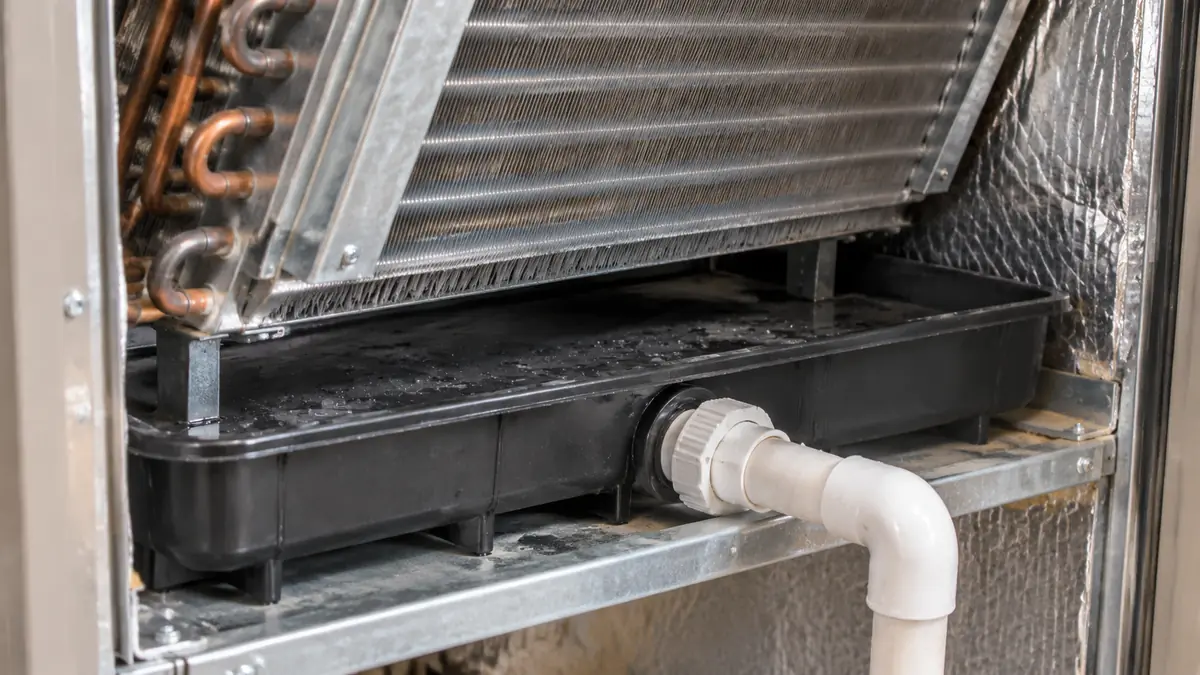
When the evaporator surface is colder than the dew point of the incoming air, water vapor condenses on the fins and drips into a drain pan. Gravity-drain systems discharge the water through a properly sloped drain line. Ceiling-mounted equipment or installations with limited gravity drainage may use a condensate pump. Under normal operation, the condensate drain and refrigerant piping are two separate systems.
An overflowing drain pan, a blocked line, or ice that melts off the evaporator can cause water to leak indoors. Stop any operation that could worsen the leak and inspect only accessible drainage components as permitted by the equipment manual.
Why Do Air Conditioners Use Electricity, Remove Humidity, and Produce Condensate?
Electricity use, dehumidification, and water drainage involve three different processes. Electricity powers the compressor, which maintains the pressure difference across the refrigerant circuit, as well as the fans and controls. When humid return air passes over an evaporator colder than the air’s dew point, some water vapor condenses into liquid, reducing the air’s moisture content. The condensate then drains away through the pan and piping. Reducing air temperature removes sensible heat; condensing moisture removes latent heat. Both contribute to the total cooling load. Hotter and more humid conditions change the balance of sensible and latent cooling the equipment must handle.
For example, when an AC starts in a hot, humid room, the evaporator must cool the air and condense a substantial amount of moisture. The total cooling load can remain high until indoor temperature and humidity become comfortable. As that load drops, an inverter-driven unit may reduce its output. Condensate is a normal byproduct of dehumidification, and its volume varies with humidity and operating conditions.
Why Does an Air Conditioner Need Electricity?
Moving heat from a cooler indoor space to hotter outdoor air requires the compressor to use electricity to create the refrigerant pressure and temperature differences between the evaporator and condenser. The indoor fan moves air across the evaporator, the outdoor fan helps the condenser reject heat, and the control board, electronic drive, and any condensate pump also draw power. Electricity use depends on actual input power and running time. For example, a unit averaging 1.2 kW of input over eight hours uses about 9.6 kWh. Actual consumption changes with outdoor temperature, the room’s cooling load, compressor control strategy, and thermostat and fan settings.
To estimate operating cost, multiply energy use by the local electricity rate. An average input of 1.2 kW over eight hours equals 9.6 kWh; 9.6 times the price per kWh gives the cost for that period. For variable-speed systems, use the average input during that interval or a measured energy-meter reading.
How Does an Air Conditioner Remove Moisture While Cooling?
An air conditioner dehumidifies by cooling air until water vapor condenses on the evaporator coil. When humid indoor air crosses a coil below its dew-point temperature, the air near the coil reaches saturation and excess moisture forms droplets. These droplets drain into a pan and leave the system, so the air returned to the room contains less water vapor. Moisture removal uses latent cooling capacity, and the rate depends on indoor humidity, coil temperature, airflow, and the duration of compressor operation. In very humid conditions, the coil can remove considerable moisture even when room temperature falls slowly.
Removing moisture is called latent cooling; lowering air temperature is called sensible cooling. Both occur together. More humid air generally produces more condensate, while overall dehumidification performance depends on evaporator temperature, airflow, cooling runtime, and how well equipment capacity matches the load.
Where Does AC Condensate Come From, and How Is It Drained?
Condensate comes from water vapor already present in indoor air. As humid return air passes over the cold evaporator, some vapor condenses on the tubing and fins. Droplets collect and flow into the drain pan below. The drainage system routes the water outdoors or to an approved building drain using the proper slope; a condensate pump lifts the water when gravity drainage is not possible. Condensate volume depends on indoor humidity, airflow, and operating time. A properly draining unit should not drip water indoors. If it does, check for a blocked drain, damaged pan, incorrect slope, or ice melting off the evaporator.
In a split system, a drain line commonly carries water from the indoor unit to a designated discharge point. In central systems, the drain pan of the air handler or fan coil unit connects to the building’s drainage system. Blockages, improper slope, or buildup in the pan can cause overflow and indoor leaks. Turn off affected equipment if water continues to leak, then inspect the accessible drainage route.
How Does Air Conditioning Work in Heating Mode?
A reversible air-source heat pump heats a room by collecting heat from outdoor air and releasing it indoors. In Heat mode, a four-way reversing valve directs the refrigerant so the outdoor coil absorbs heat and the indoor coil delivers it to the room. Cooling-only air conditioners provide cooling; a model must have a heat-pump heating cycle or a separate heating element to produce heat. Check the operating modes and heating specifications for the exact model.
The same basic compressor, refrigerant, coils, and fans used for cooling also support heat-pump heating. What changes is where the refrigerant absorbs and releases heat. The thermostat and control board then adjust compressor output and fan operation to match the heating demand.
| Operating mode | Indoor coil | Outdoor coil | Direction of useful heat transfer |
|---|---|---|---|
| Cooling | Evaporator: absorbs heat from room air | Condenser: releases heat outdoors | Room → outdoor air |
| Heat-pump heating | Condenser: releases heat into room air | Evaporator: absorbs heat from outdoor air | Outdoor air → room |
What Happens to the Refrigerant During Heating?
In heating mode, low-pressure refrigerant absorbs heat at the outdoor evaporator, the compressor raises its pressure and temperature, and the hot refrigerant releases heat at the indoor condenser. The refrigerant then passes through the system’s heating-mode expansion path, drops to a lower pressure, and returns to the outdoor coil to absorb more heat.
The four-way reversing valve changes which coil is connected to the compressor discharge and suction. The compressor still compresses refrigerant vapor in its normal direction. The control system selects the appropriate metering path for the refrigerant and may delay the indoor fan until the indoor coil is warm enough to deliver comfortable supply air.
Outdoor air still contains usable thermal energy when it feels cold. The refrigerant in the outdoor evaporator operates at a temperature below the surrounding outdoor air, so heat moves into the coil. Indoors, the compressed refrigerant is warmer than room air, allowing the indoor coil to transfer heat into the supply airstream. In normal heating mode, the indoor coil is warm and typically does not produce the cooling-mode condensate described earlier in this article.
Why Does a Heat Pump Defrost Its Outdoor Coil?
Cold, humid outdoor air can leave frost on the outdoor evaporator, and the heat pump periodically removes it to restore airflow and heat transfer. Frost forms when the coil surface is cold enough for moisture to freeze. As frost builds up, less outdoor air contacts the fins and the unit has a harder time collecting heat.
Many air-source heat pumps temporarily redirect hot refrigerant toward the outdoor coil to melt the frost. During this defrost cycle, the outdoor fan may stop and the indoor fan may slow or pause; a system with auxiliary heat may use it to maintain indoor comfort. After the coil clears, the controls return the system to normal heating. The exact sequence and timing depend on the model.
Water dripping beneath the outdoor unit during or after defrost is expected. Keep the air path and the designed drainage area clear, and watch for refreezing near walkways. Light, temporary frost can be part of normal operation. A coil that stays heavily iced, a fan that cannot turn, or a home that no longer warms as expected calls for service. Avoid removing ice with sharp tools or opening energized equipment.
How Do Outdoor Temperature, Heating Capacity, and Efficiency Affect Performance?
Select and evaluate heat-pump heating capacity at the local winter design temperature, then compare that output with the building’s heat loss. Heating capacity and efficiency change with outdoor temperature, indoor setpoint, compressor speed, and defrost operation. Cold-climate models may maintain more heating output at low ambient temperatures than conventional designs, so the actual manufacturer performance table is decisive.
For a U.S. installation, compare the model’s heating output and electrical input at relevant outdoor conditions, such as 47°F (8°C), 17°F (−8°C), and 5°F (−15°C) if the manufacturer publishes those points. A useful check is: available heating capacity at the design temperature versus the home’s calculated heating load. If the load exceeds available output, a properly designed system may need supplemental heating or a different capacity configuration.
Heating COP is the heat delivered indoors divided by the electrical power used under the same operating conditions. As an illustrative calculation, a heat pump delivering 9 kW of heat at a COP of 3.0 uses about 3 kW of electrical power at that point. An electric-resistance heater delivering 3 kW of heat uses about 3 kW of electricity. Actual equipment performance changes with weather and controls; the example is a calculation, not a claim about a specific Airproz model. HSPF2 describes seasonal heating efficiency under a defined U.S. test method, while temperature-specific heating capacity and COP help check cold-weather operation.
In milder weather, the compressor can often cover the heating demand on its own. In colder conditions, the available heat-pump capacity and the building load may move in opposite directions, making auxiliary heat more important for some systems. Short defrost periods and any auxiliary electric-resistance operation can also raise electricity use. Record the outdoor temperature, actual system mode, thermostat settings, and any auxiliary-heat indicator when investigating high winter bills.
Do Different Types of Air Conditioners Work the Same Way?
Most residential split systems, window units, portable units, and direct-expansion central systems use the same basic vapor-compression refrigeration cycle. What changes is the equipment layout, airflow arrangement, and method of rejecting heat outdoors. A split system places the evaporator and condenser in separate indoor and outdoor units. A window unit combines them in one cabinet. A portable AC exhausts condenser heat through a hose, while a ducted central system distributes cooled air to multiple rooms through ducts. Fixed-speed and inverter systems differ in compressor control; reversible heat pumps use a valve to switch the coils’ heating and cooling roles. Large chiller plants add a chilled-water loop to carry cooling to air handlers and terminal units.
| Classification | AC type / system | How it works | Air delivery and controls |
|---|---|---|---|
| Layout and cooling distribution | Ductless mini-split | An indoor evaporator directly cools return air; refrigerant transfers heat between the indoor and outdoor units. | Delivers air to the zone served by the indoor unit; usually no distribution ducts. |
| Layout and cooling distribution | Ducted central AC | A central indoor coil cools return air, and ducts deliver conditioned air to multiple rooms. | Requires supply and return design, airflow balancing, and possibly zone controls. |
| Layout and cooling distribution | Chiller-based central AC | A chiller produces chilled water, which pumps carry to air handlers or fan coils. | Cooling travels through water piping; the chiller can be air-cooled or water-cooled. |
| Layout and cooling distribution | Window air conditioner | An evaporator and condenser share one cabinet, absorbing heat indoors and releasing it outdoors. | Usually serves one room; hot-side and cold-side air streams remain separated. |
| Layout and cooling distribution | Portable air conditioner | A hose carries condenser heat to the outdoors. | Single-hose units may depressurize the room; dual-hose designs reduce that effect. |
| Layout and cooling distribution | VRF system | Multiple indoor units share an outdoor refrigerant system, with flow distributed according to each zone’s load. | Independent zone control; some systems offer heat recovery. |
| Compressor control | Fixed-speed AC | The compressor runs mainly at a fixed speed and cycles on and off to match the average load. | A control method that can be used with different equipment layouts. |
| Compressor control | Inverter AC | An inverter drive adjusts compressor speed and refrigerant circulation. | Modulates capacity continuously; actual efficiency and load match still matter. |
| Cooling / heating function | Reversible heat-pump AC | A reversing valve switches the coils’ roles: rejects heat outdoors in cooling and indoors in heating. | Available in split, ducted, and other configurations; may defrost in cold weather. |
These nine entries cover different classification criteria. Window, split, ducted, and VRF systems describe equipment layout and cooling distribution. Fixed-speed and inverter describe compressor control. Heat pump describes a system’s ability to reverse the cycle for heating. One unit can therefore be a split system, an inverter system, and a heat pump at the same time. The sections below compare common layouts, heat-rejection methods, and ways to adjust cooling capacity.
For a deeper comparison of installation layouts, applications, and suitable spaces, see Types of Air Conditioners: How to Choose the Right One.
How Do Split-System and Central Air Conditioners Work Differently?
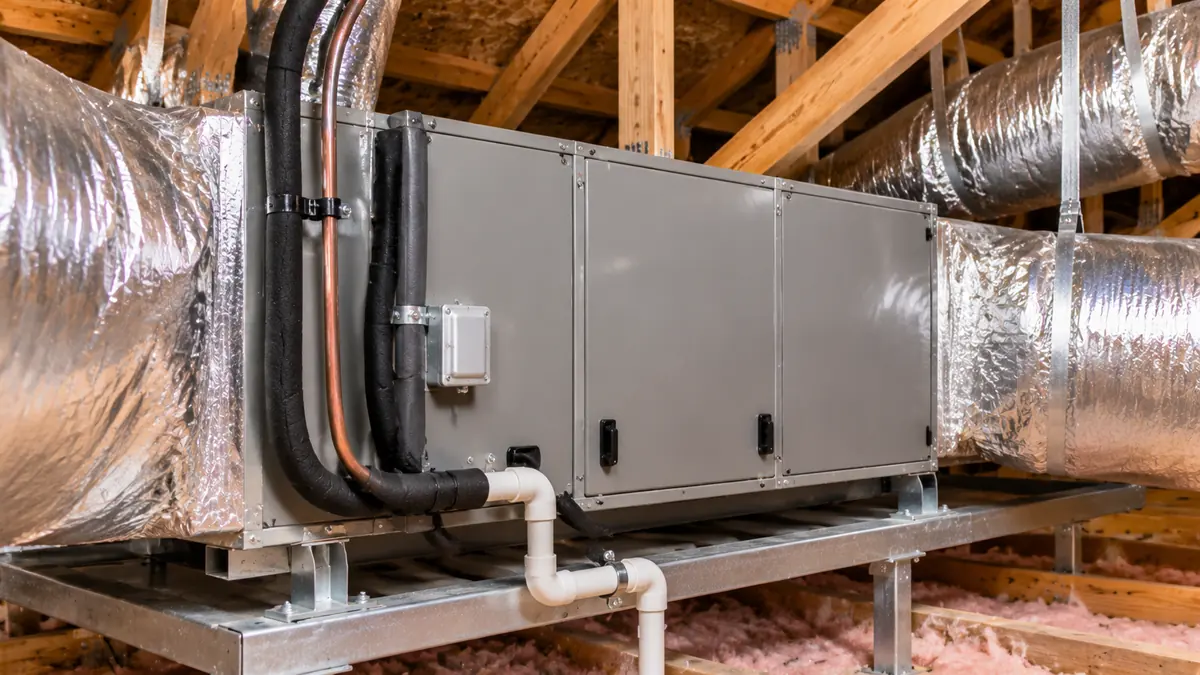
A conventional ductless mini-split draws return air directly into its indoor unit, cools it across the evaporator, and sends it back to the same zone. Its outdoor unit contains the equipment that compresses refrigerant and rejects heat through the connecting lines. Ducted central air conditioning cools air at a central indoor coil and distributes it to multiple rooms through supply ducts and registers, with return ducts completing the airflow path. Both may use the same refrigerant cycle, but they differ in air-distribution distance, duct resistance, zoning, and service access. In a large commercial building, a chiller-based central system first produces chilled water, which pumps deliver to air-handling units or fan coils, adding a separate water-side distribution circuit.
Both system types can use an evaporator, compressor, condenser, and expansion device. Ductless systems make individual-zone control straightforward, while ducted systems depend more heavily on duct layout, airflow balancing, and return-air design. A large chilled-water system first cools water and then uses fan coils or air handlers to cool occupied spaces, adding more stages to the heat-transfer path.
How Do Window and Portable Air Conditioners Exhaust Indoor Heat?
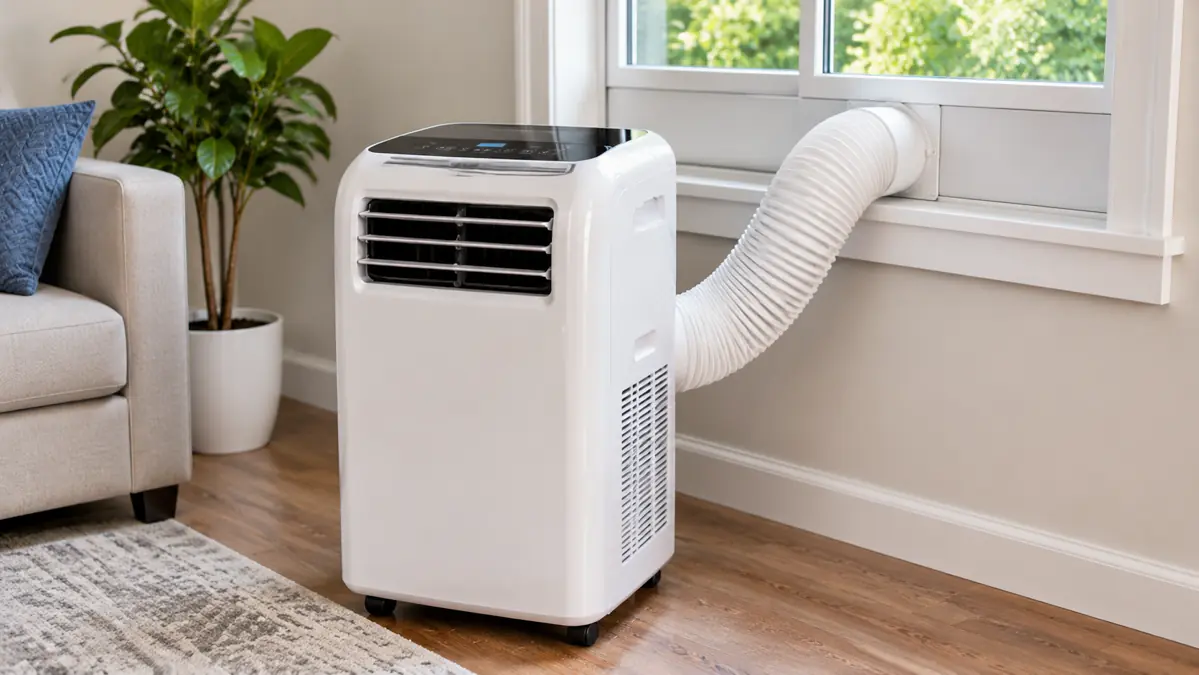
A window air conditioner houses the evaporator, compressor, and condenser in one cabinet. The condenser side faces outdoors, so indoor air cools across the cold section while outdoor air removes heat from the hot section. The two air streams remain separated in normal operation. A portable AC stays inside the room and uses an exhaust hose to discharge condenser heat through a window. Most single-hose models draw some room air across the condenser, creating negative indoor pressure and drawing in replacement air. Dual-hose models typically take condenser air from outdoors and exhaust it back outside, reducing this effect. Both require an unobstructed exhaust path and well-sealed installation openings.
A single-hose portable AC removes room air to cool its condenser and exhausts it, which can create negative pressure and draw untreated outdoor air into the space. A dual-hose model typically uses separate outdoor-air intake and exhaust hoses, reducing that pressure effect. In both cases, keep the exhaust path clear and seal the window opening and hose connections.
How Do Fixed-Speed and Inverter Air Conditioners Control Cooling Capacity?
A fixed-speed air conditioner generally runs its compressor at one speed, shutting it off when the room reaches the control temperature and restarting it after the temperature rises. It adjusts average cooling output by varying the proportion of time the compressor runs. An inverter air conditioner uses a variable-frequency drive to change compressor speed and refrigerant circulation within its permitted operating range, allowing continuous capacity modulation. It may run faster during initial cooldown and slower near the setpoint, reducing temperature swings and rapid cycling. Actual energy consumption depends on the model’s rated efficiency, minimum operating capacity, outdoor conditions, and how closely its cooling output matches the room’s load.
When a room starts out hot, an inverter system can speed up the compressor to cool it more quickly, then slow down as the setpoint approaches. A fixed-speed unit cycles off when the thermostat is satisfied and restarts when temperature rises. Comfort and electricity use also depend on the control algorithm, minimum operating capacity, proper equipment sizing, and conditions in the space.
How Does a Heat Pump Switch Between Cooling and Heating?
A reversible heat pump uses a four-way reversing valve to change which heat exchanger connects to the compressor discharge and suction lines. This switches the heat-absorbing and heat-rejecting roles of the indoor and outdoor coils. In cooling mode, the indoor coil is the evaporator that absorbs room heat, while the outdoor coil is the condenser that rejects heat outside. In heating mode, the indoor coil becomes the condenser and releases heat into the room; the outdoor coil becomes the evaporator and absorbs heat from outdoor air. The control system also adjusts the appropriate expansion path, indoor fan operation, and cold-weather defrost functions. Evaluate low-temperature heating performance using the model’s rated capacity and permitted operating range at the relevant outdoor temperature.
In cooling mode, the indoor coil acts as the evaporator and the outdoor coil as the condenser. In heating mode, their roles reverse so the unit can collect heat outdoors and release it indoors. Frost may form on the outdoor coil in cold weather, prompting the controls to initiate a defrost cycle. Check the specific model’s data for available heating capacity at low outdoor temperatures.
For more on how the reversing valve interacts with the indoor and outdoor coils in heating mode, read Components of a Heat Pump.
How Are Cooling Capacity, Input Power, and Energy Efficiency Related?
Cooling capacity is the rate at which an air conditioner removes heat from indoors. Input power is the electrical power the unit consumes while running. Energy efficiency describes how much cooling that electrical input produces. For example, an air conditioner rated at 12,000 Btu/h has a nominal cooling capacity of approximately 3.52 kW. If its cooling coefficient of performance (COP) is 3.2 at a specified operating condition, using a consistent power-measurement boundary, its electrical input is about 1.10 kW. That is why the numerical value of cooling capacity can be several times larger than electrical input power.
Compare energy efficiency using the same testing conditions and the same metric. COP and EER-type measures describe performance at a specified operating point; SEER2 describes seasonal cooling performance under a prescribed test procedure.
| Metric | What it measures | Typical units / use |
|---|---|---|
| Cooling capacity | Rate of heat removal from the indoor space | Btu/h or kW (cooling output) |
| Electrical input power | Power drawn from the electrical supply while operating | W or kW (electrical input) |
| Cooling COP | Cooling capacity ÷ electrical input at the same conditions | Dimensionless when both quantities are expressed in kW |
| EER2 | Cooling-efficiency rating at prescribed U.S. test conditions | Btu/Wh; confirm the applicable equipment type and rating |
| SEER2 | Seasonal cooling-efficiency rating under standardized U.S. testing | Btu/Wh; cannot be determined from a single operating point |
| CEER | Combined efficiency rating used for certain room air conditioners | Btu/Wh; follow the prescribed test method |
What Do Btu/h and kW Mean for AC Cooling Capacity?
Btu/h and kW are both units of cooling capacity: how much heat an air conditioner can remove per unit of time. One kW of cooling capacity is about 3,412 Btu/h, so 12,000 Btu/h is approximately 3.52 kW and 18,000 Btu/h is approximately 5.28 kW. These are capacity ratings. For the cooling output actually available in hot weather or other specific operating conditions, consult the model’s performance tables.
When selecting equipment, first estimate the building’s cooling load. Then compare each model’s available capacity at the design indoor and outdoor temperatures. That load calculation should account for solar heat gain, insulation and envelope conditions, occupancy, ventilation, and latent loads.
Why Can Cooling Capacity Exceed Electrical Input Power?
A compressor uses electricity to circulate refrigerant and move heat already present inside the room to the outdoors. Consequently, under a specified condition, a system may deliver 3.52 kW of cooling while drawing only about 1.10 kW of electricity. With an illustrative cooling COP of 3.2, the calculation is 3.52 ÷ 3.2 ≈ 1.10 kW. If that input remained steady for eight hours, energy consumption would be about 8.8 kWh.
These values are hypothetical and illustrate the relationship between capacity and input power. Actual consumption also depends on outdoor temperature, compressor speed, room load, dehumidification needs, fan power, and operating time.
How Do COP, EER2, and SEER2 Describe Cooling Efficiency?
Cooling COP is the ratio of cooling capacity to electrical input, measured at the same operating condition and within the same power-accounting boundary. EER2 and SEER2 are efficiency ratings expressed in Btu/Wh under U.S. regulatory test procedures; they describe performance at specified rating conditions and over a standardized cooling season, respectively. Before comparing equipment, identify whether it is central air conditioning, a heat pump, or a room air conditioner, and use the appropriate official metric. Window units often use CEER, while heat pumps may also carry an HSPF2 heating-efficiency rating.
The calculation 12,000 Btu/h ÷ 1,000 W = 12 Btu/Wh gives a simplified efficiency ratio at one operating condition. An official EER2 or SEER2 rating requires the applicable standardized test method and certified performance data.
For more information on SEER2 and U.S. central air-conditioning test requirements, see the U.S. Department of Energy’s FEMP guidance, Residential Central Air Conditioners.
How Can You Troubleshoot an Air Conditioner Using Its Operating Principles?
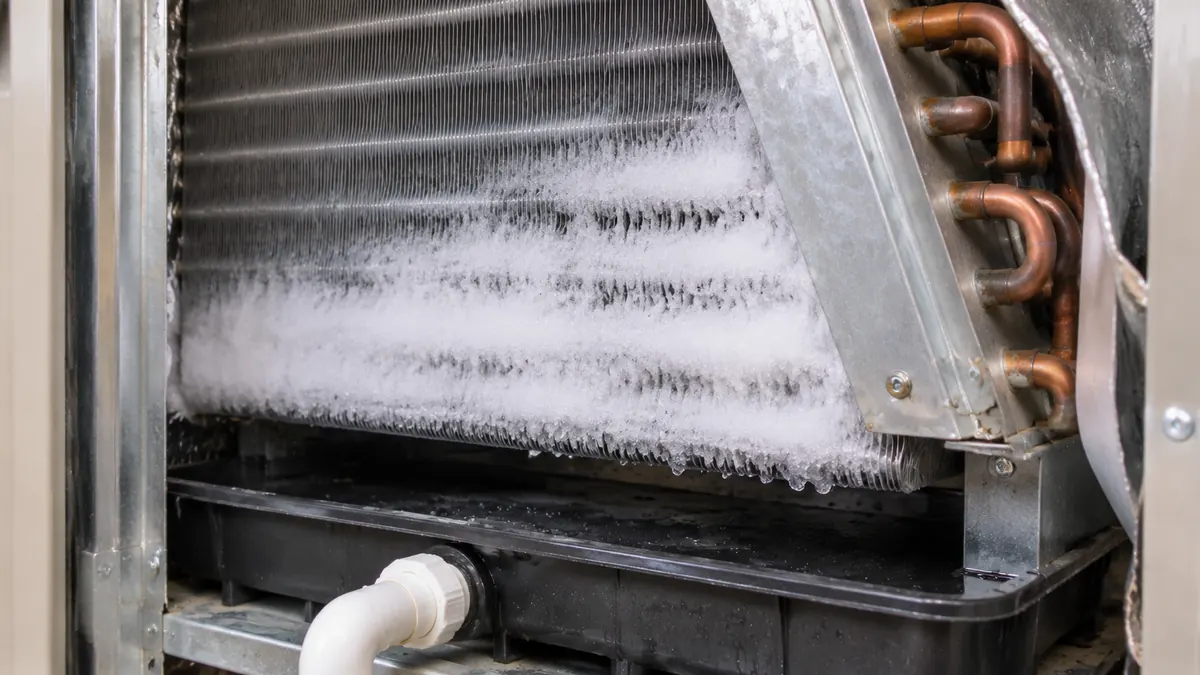
A practical AC diagnosis follows four paths: indoor airflow, the refrigerant cycle, outdoor heat rejection, and control operation. If air blows but is not cool, the indoor fan is running, so check the cooling command, compressor operation, refrigerant circuit, and heat-transfer conditions. If the outdoor unit runs but the room remains warm, determine whether the compressor is actually cooling and whether indoor airflow is adequate. If electricity consumption suddenly rises, compare cooling load, runtime, and heat-exchanger performance. Start with observable items such as settings, filters, ventilation clearances, and error codes. Leave live electrical testing, refrigerant-pressure measurements, and opening the refrigerant circuit to qualified HVAC technicians.
A useful troubleshooting sequence is to confirm that the thermostat is calling for cooling, check that indoor air is moving across the evaporator, and observe whether the outdoor unit can reject heat. A qualified technician can then test the compressor, electrical controls, and refrigerant operating conditions. This approach helps separate installation or usage problems from equipment faults and reduces unnecessary parts replacement.
How Can You Tell Whether the AC Refrigeration Cycle Is Working Correctly?
Without opening the equipment, confirm Cooling mode, the thermostat setting, and any startup delay. Then observe indoor airflow, outdoor heat rejection, the room’s temperature trend, visible ice, and condensate drainage. A working system cools continuously or intermittently according to demand, and the room temperature generally moves toward the setpoint. Fan and compressor cycling patterns vary by model. If you notice icing, a burning smell, repeated breaker trips, or significant water leakage, stop using the affected equipment and arrange professional service.
The table links observable symptoms to the parts of the process that may be affected, helping you record information and choose the next step. For unresolved cooling problems, a qualified technician can verify airflow, electrical operation, and refrigerant conditions through appropriate measurements.
| What you observe | Likely area to investigate | What you can safely check | Next step |
|---|---|---|---|
| Air blows but is not cool | Cooling demand, compressor, refrigerant circuit | Cool mode, setpoint, displayed error codes | Schedule service if cooling does not return |
| Airflow is noticeably weak | Filter, indoor fan, evaporator | Filter and supply outlets accessible under the manual | Clean serviceable filters; seek service if unchanged |
| Ice on indoor coil or lines | Airflow or refrigerant-side issue | Record visible ice without opening the unit | Stop cooling and arrange professional inspection |
| Outdoor fan abnormal or unit shuts down in heat | Condenser airflow, fan, protection | Obvious debris and outdoor clearance | Turn off and request service; leave covers in place |
| Supply air is cold, room stays warm | Air distribution, room cooling load | Windows, doors, sun exposure, affected areas | Evaluate air delivery and cooling load |
| Condensate overflows indoors | Drain pan, line, condensate pump | Water leaks visible from a safe location | Stop operation that worsens the leak and address drainage |
For a more detailed look at symptoms involving airflow, the compressor, and refrigerant problems, see Why Is My Air Conditioner Not Cooling?
Why Is My Air Conditioner Blowing Air but Not Cooling?
If an AC blows air without cooling, the indoor fan is turning, but refrigeration may not have started or the coil may not be transferring enough heat. First check for Fan Only mode, a thermostat setting above room temperature, or a thermostat that has not called for cooling. If the settings are correct, possible causes include a compressor that fails to start, a failed start circuit or inverter drive, a severely dirty outdoor condenser, low indoor airflow that causes evaporator icing, a refrigerant leak, or a malfunctioning expansion device. Check the operating mode, airflow, filter, outdoor unit, and error display before having a technician assess the compressor and refrigeration circuit.
Confirm that the system is set to Cool and that the setpoint is below room temperature. Look for blocked filters, return-air openings, and outdoor-unit ventilation. A compressor that will not start, persistent ice buildup, or signs of refrigerant leakage calls for a qualified technician to inspect electrical components, operating pressures, and the refrigerant system.
Why Is the Outdoor Unit Running but the Indoor Unit Not Cooling?
When the outdoor unit runs but the room stays warm, check compressor operation, indoor airflow, and refrigerant heat transfer. The outdoor fan may operate even when the compressor or refrigerant circuit has a fault. If the compressor does not run, the evaporator cannot receive a sustained supply of cold refrigerant. Even with a running compressor, abnormal refrigerant flow, inadequate outdoor heat rejection, clogged indoor filters, or an iced evaporator can reduce cooling. Check indoor airflow, the outdoor fan, visible ice, and any displayed fault codes. If the system trips a breaker, makes unusual noises, or repeatedly shuts down on protection, turn it off and arrange professional service.
Begin by checking whether indoor airflow has dropped, the filter is obstructed, or ice is visible, then review the thermostat settings and fault display. If the outdoor unit cycles abnormally, makes unusual noise, or the supply air stays warm, have a technician check the compressor, sensors, expansion device, and refrigerant circuit.
Why Has My Air Conditioner Suddenly Started Using More Electricity?
If an air conditioner uses noticeably more electricity despite similar outdoor temperatures, occupancy, and usage schedules, investigate two possibilities: it is running for more hours, or it is drawing more power while running. Dust on the filter or evaporator restricts indoor heat transfer, while a dirty condenser or inadequate outdoor clearance adds compressor load. Frequent door or window opening, stronger sunlight, new internal heat sources, or a lower thermostat setting can extend runtime. A system that runs continuously, cools poorly, or cycles unusually may also have a sensor or refrigerant-circuit problem. Compare meter readings, operating hours, and airflow or supply-air performance under similar weather conditions to narrow down the cause.
For example, a clogged filter reduces airflow and a dirty outdoor condenser makes heat rejection harder. Air leaks, direct sun, and a lower temperature setting also raise cooling demand. Review input power, runtime, indoor and outdoor temperatures, and maintenance records together before attributing a higher electric bill to one component.
Frequently Asked Questions (FAQ)
These FAQs address airflow, refrigerant, thermostats, drainage, filters, cooling problems, and heating-mode questions such as winter defrost, outdoor condensate, and cold-weather heat-pump capacity. Each answer starts with the observable outcome, then explains the cause and what you can check.
How Can an AC Remove Indoor Heat Without Bringing In Outdoor Air?
Most split systems remove indoor heat through a closed refrigerant circuit connecting the indoor evaporator to the outdoor condenser. Indoor air cools as it crosses the evaporator and then returns to the room. The refrigerant absorbs that heat and travels through connecting tubing to the outdoor unit, where the condenser transfers the heat to outside air. Indoor and outdoor air remain in separate airflow paths; heat is exchanged through the refrigeration system.
That is why a split system can cool a room with the windows and doors closed. Cooling and bringing in fresh outdoor air are different functions. Use equipment with a dedicated fresh-air feature or a separate ventilation system when outdoor-air ventilation is required.
Where Does the Heat Removed From a Room Actually Go?
The heat an air conditioner removes from a room is ultimately released to the air outside the building, mainly through the outdoor condenser. The indoor evaporator transfers room heat to the refrigerant. The compressor brings the refrigerant to the hotter outdoor condenser, and the outdoor fan carries the heat into the surroundings. Because much of the electricity consumed by the compressor and other components also ends up as heat, the total heat released outdoors is generally greater than the cooling capacity at the indoor evaporator.
This explains why warm air blows from the outdoor unit on a summer day. If a portable AC’s exhaust hose discharges back into the room, that heat returns indoors and seriously undermines cooling performance.
Why Does Refrigerant Change Between Liquid and Vapor?
Refrigerant changes phase because evaporation and condensation can absorb or release large amounts of latent heat near a relatively steady temperature. Indoors, liquid refrigerant evaporates as it absorbs heat. Outdoors, refrigerant vapor condenses as it releases heat. The compressor and expansion device establish the high-pressure condensing and low-pressure evaporating conditions that allow these processes to occur at the right locations and temperatures.
Phase change lets a relatively small amount of circulating refrigerant transport a substantial amount of heat. Its exact evaporating and condensing temperatures depend on the refrigerant’s properties, system pressures, operating conditions, and heat-exchanger design.
What Is the Difference Between the Indoor Fan and Outdoor Condenser Fan?
The indoor fan moves room air through the filter and evaporator and sends the conditioned air back into the space. It directly affects airflow and temperature distribution indoors. The outdoor condenser fan moves outside air across the condenser to carry away heat released by the hot refrigerant, helping maintain appropriate condensing temperature and pressure. Both fans move air, but one supports indoor heat absorption while the other supports outdoor heat rejection.
If the indoor fan is malfunctioning, you may notice weak airflow, coil icing, or slower room cooling. A stopped outdoor fan can restrict condenser heat rejection, reduce cooling capacity, or trigger high-pressure protection.
Why Does a Split Air Conditioner Have Both Indoor and Outdoor Units?
A split system separates indoor heat absorption from outdoor heat rejection. The indoor unit conditions room air, while the outdoor unit handles compression and releases heat outside. Refrigerant tubing and control wiring connect the two. Placing the compressor outdoors also reduces indoor noise and prevents condenser heat from being discharged into the room.
This layout keeps much of the compressor noise and unwanted heat outside while allowing the indoor unit to be positioned for effective room coverage. Depending on the design, the expansion device may be in the outdoor unit or another specified location in the system.
How Does the Thermostat Control the Compressor and Indoor Fan?
The thermostat or built-in temperature sensor continuously measures room temperature and compares it with the selected setpoint. When the room is warmer than the cooling-control range, the controller calls for cooling, starting the compressor or raising its output and coordinating the indoor and outdoor fans. As the room approaches the target, a fixed-speed compressor may shut off, while an inverter compressor may slow down to maintain temperature. The controller also monitors coil temperatures, equipment-protection signals, and operating mode to determine when a restart is permitted.
Indoor-fan behavior differs between Auto Fan and continuous-fan settings. If air continues to flow from the outlet after the compressor stops, check the selected fan mode and the unit’s control sequence to determine whether this is expected.
How Does Air Conditioning Lower Humidity While Cooling a Room?
When humid indoor air crosses an evaporator coil that is colder than its dew point, some of the water vapor condenses into liquid on the coil and drains away through the pan and drain line. The air supplied back to the room therefore contains less moisture than the air entering the coil. Cooling the air removes sensible heat, while condensing the vapor handles latent heat. Together, these processes make up the system’s total cooling load.
If the compressor runs in very short cycles, less condensate may drain from the coil and humidity control can suffer. In humid climates, pay particular attention to proper capacity sizing, airflow settings, and the ability to sustain cooling operation.
Where Does the Water Removed From Indoor Air Go?
Water removed during dehumidification collects on the evaporator fins and flows down into the condensate pan. From there, a drain line carries it outdoors, into the building drainage system, or to another approved discharge location. Wall-mounted mini-splits commonly rely on gravity drainage. Ceiling units, central-system terminal units, and installations that must lift water may use condensate pumps. The entire drainage path must be clear and have adequate slope or pumping capacity.
A blocked drain, overflowing pan, or failed condensate pump can cause water to leak from the indoor unit. In commercial buildings, traps and backflow-prevention measures should also follow the actual drainage design.
How Does an Air Filter Affect Airflow Inside an AC System?
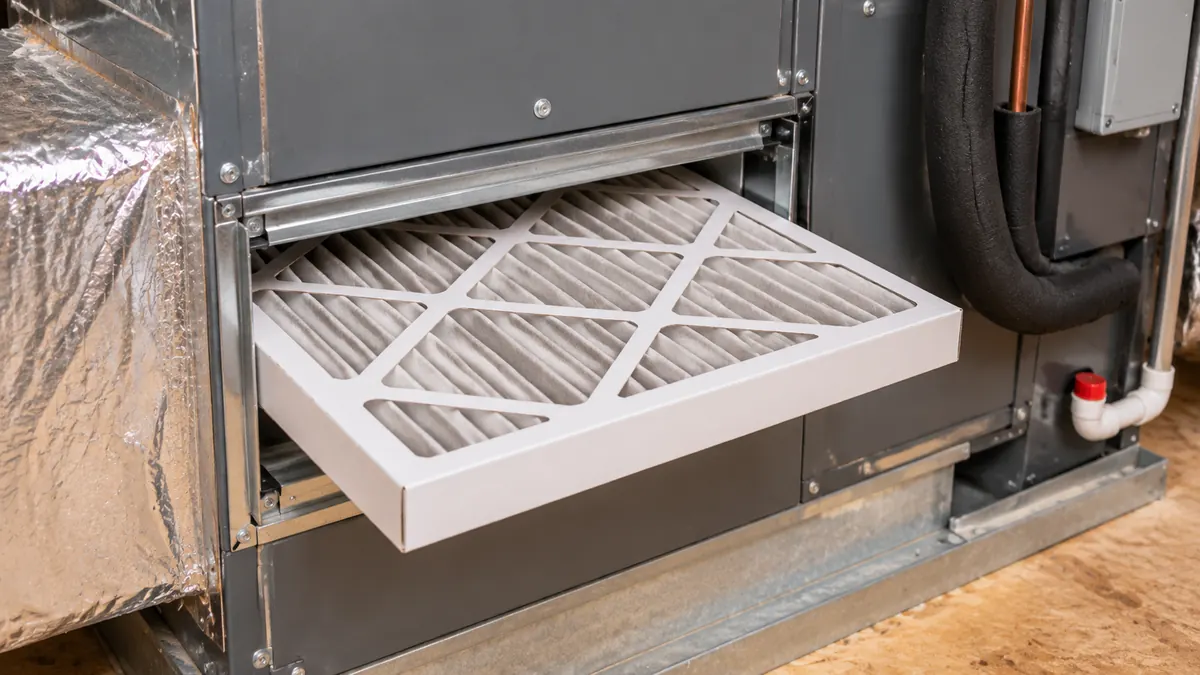
An air filter sits in the return-air path and captures dust, fibers, and other particles. A clean, properly specified filter protects the evaporator surface and helps maintain design airflow. When the filter becomes heavily loaded with dust, or when high-resistance media exceed the fan’s capabilities, static-pressure resistance increases and less air crosses the evaporator. Reduced airflow lowers heat-transfer performance and, in severe cases, can lead to coil icing, noise, comfort problems, and lower operating efficiency.
Clean reusable filters or replace disposable media according to the equipment manual and actual dust buildup. When replacing a filter, verify its dimensions, fit and seal, and airflow direction.
For filter, evaporator, and condensate maintenance intervals, see Air Conditioner Maintenance.
Why Does the Indoor Fan Keep Running After the Compressor Stops?
The indoor fan may keep running after the compressor stops because of the selected fan mode and the unit’s control program. In continuous-fan mode, it keeps circulating room air while the compressor is off. In Auto mode, some units run the fan for a short delay after the compressor shuts down to distribute temperature more evenly or complete a control sequence. Inverter systems may also manage fan speed separately based on coil temperature and comfort settings.
Continued airflow can cause some moisture remaining on the coil to evaporate back into the room, affecting indoor humidity. Systems with humidity controls may adjust fan operation to limit this effect. Consult the model’s documentation for its specific fan sequence.
How Does an AC Maintain Room Temperature When the Compressor Cycles Off?
The room air, walls, and furnishings have thermal mass, so indoor temperature usually rises gradually after the compressor shuts off. The thermostat keeps monitoring the room. When the temperature reaches the restart threshold, a fixed-speed unit turns the compressor back on to remove new heat. It stops again at the cutout threshold. The range between these thresholds is called the control differential, or deadband, and helps prevent rapid cycling in response to small temperature changes.
An inverter system may instead run continuously at a lower speed, providing cooling close to the room’s heat gain and reducing temperature swings and starts. Results also depend on building air leakage, sun exposure, occupancy, and equipment sizing.
Why Doesn’t Setting the AC to 61°F (16°C) Cool the Room Immediately?
A thermostat setting of 61°F (16°C) is a target room temperature. Supply-air temperature and maximum cooling output are determined by the system’s operating conditions and controls. A fixed-speed compressor that is already running generally continues at its available capacity. An inverter system may speed up in response to a larger gap between room temperature and setpoint, but it is still limited by maximum equipment capacity and its control logic. The actual cooldown rate depends on cooling capacity, indoor heat load, starting temperature, and air circulation.
For example, a sun-exposed room may take a long time to cool even with a very low setting if heat is entering through windows and other surfaces at a high rate. Choose a setpoint based on comfort needs and the equipment instructions.
Why Does Low Refrigerant Charge Reduce AC Cooling Performance?
An insufficient refrigerant charge changes refrigerant feed to the evaporator and the compressor’s operating conditions. It can reduce effective heat-transfer area and cooling capacity, and may cause coil icing or protective operation. Refrigerant in a sealed circuit is not routinely consumed. If a system that previously worked well gradually loses charge, a qualified technician should check for leaks and verify whether the original charge was correct.
Warm supply air, coil icing, and unusual refrigerant-line temperatures are useful symptoms to record before service. A qualified technician can check for leaks, measure operating pressures and temperatures, and correct refrigerant charge according to the manufacturer’s procedure.
What Operating Problems Commonly Cause the Indoor Evaporator to Freeze?
When an indoor evaporator freezes, check two broad areas. On the air side, clogged filters, fan malfunctions, or blocked return airflow can limit heat transfer. On the refrigerant side, charge level, expansion-device performance, or abnormal operating pressure can lower coil temperature. If the coil surface falls below freezing, moisture condensing from the air can form frost and progressively block airflow.
If ice is visible from a safe location, stop cooling and follow the equipment instructions or a service technician’s guidance. Do not chip ice from the coil or repeatedly restart the compressor.
How Much Electricity Does a 12,000 Btu/h Air Conditioner Use in One Hour?
A 12,000 Btu/h rating equals approximately 3.52 kW of cooling capacity; electrical input must be determined separately. If we assume a cooling COP of 3.2 at the operating condition in question, input power would be approximately 3.52 ÷ 3.2 = 1.10 kW. At that steady input for one hour, energy use would be about 1.10 kWh.
To calculate actual energy use, check the model’s rated input, its performance table for the operating conditions, or an electricity meter. Hourly consumption will change when the compressor stops or an inverter system slows down.
Why Is the Air From My Vents Cold, but the Room Still Won’t Cool Down?
A room can stay warm despite cold supply air when airflow volume, air distribution, or sustained cooling capacity cannot offset heat entering through walls and windows or generated by occupants and equipment. If filter resistance is high, circulation is blocked, or cooled air cannot reach distant areas, the supply air may feel very cold while room temperature drops slowly.
First check accessible return and supply openings, windows and doors, and obvious direct sunlight. Then compare room-temperature trends under similar outdoor conditions. If the room consistently fails to reach the setpoint, have a qualified technician check airflow, available equipment capacity, and the building cooling load.
Can a Cooling-Only Air Conditioner Heat a Room?
A cooling-only air conditioner cannot run a reversible heat-pump heating cycle. To provide heat, the equipment needs a heat-pump mode or a separate heating component, such as electric-resistance heat in a compatible unit. A fan-only setting simply circulates room air.
Check the product’s operating modes and heating-capacity data. A remote-control Heat symbol is useful only when the connected model actually supports that mode.
Why Does the Outdoor Unit Blow Cold Air When the Heat Pump Is Heating?
The outdoor coil absorbs heat from the air in heating mode, so the air leaving the outdoor unit can be colder than the air entering it. The refrigerant evaporates at a temperature below outdoor ambient air and carries the collected heat indoors.
A cool exhaust airstream outside is normal during active heating. Judge indoor heating by room-temperature change, supply airflow, operating mode, and the model’s performance at the current outdoor temperature.
Why Is Water Dripping From the Outdoor Heat Pump in Winter?
Water under the outdoor unit often comes from frost melting during a normal defrost cycle. Moisture from outdoor air freezes on the cold coil; when the system warms the coil during defrost, meltwater drains out of the unit.
Keep the designed drainage route open and watch for ice forming on nearby walkways. Heavy ice that remains after repeated defrost cycles, restricted fan movement, or loss of heating calls for a service inspection.
Can a Heat Pump Heat My Home at 5°F (−15°C)?
Some cold-climate heat pumps can provide useful heating at 5°F (−15°C), provided the model is rated to operate at that temperature and its available output meets the building’s heat load. Other models may require auxiliary heat or may have a higher minimum operating temperature.
Compare the manufacturer’s heating-capacity table at 5°F with the building’s calculated heat loss at the local winter design condition. Check electrical input, permitted operating range, and the backup-heating strategy before selecting a system.
Why Does Warm Air Stop Briefly During Heat-Pump Heating?
A brief pause in warm airflow can occur during compressor startup, indoor-coil warm-up, or an outdoor-coil defrost cycle. Many systems slow or stop the indoor fan to avoid blowing cool air while the refrigerant circuit changes operating conditions.
If the system returns to normal heating and the room continues approaching the setpoint, the pause may be part of normal control. Frequent extended interruptions, persistent ice, or steadily falling room temperature require an inspection of the controls, airflow, defrost operation, and available heating capacity.