Quick answer: Multiply the electricity your AC uses by the price you pay per kWh. For example, an AC averaging 1 kW for one hour costs $0.15 at $0.15/kWh. Actual cost depends on electrical power, running time and your electricity price.
Example over a month: At an average 1.5 kW and a flat $0.15/kWh, eight hours a day would cost $1.80 a day, or $54 across 30 days. These are assumed inputs, not a typical or guaranteed AC cost.
You can estimate one hour, eight hours, or a month. An AC switched on for 24 hours does not necessarily use its full rated power for all 24 hours.
Use the same calculator for one hour, all day, or a month. Only use 24 hours for an all-day estimate if the AC actually draws the assumed input for that long.
If you know the AC input power, use:
Estimated running cost = input power (kW) × cooling hours × electricity rate
If you already have measured kilowatt-hours (kWh), use that instead. First check what the meter actually covers so you do not compare a whole AC system with only one component.
For a commercial building, this simple calculation may not equal the full electricity bill. Demand charges based on peak kW, time-of-use rates, fixed charges, taxes, or surcharges may also apply.
AC running cost formula at a glance
- Energy used (kWh) = electrical input (kW) × active cooling hours.
- Energy cost = energy used (kWh) × electricity rate.
- If measured kWh is available from a normal operating period and covers the same equipment you want to compare, use it instead of estimating from rated input.
- Do not use cooling capacity in BTU/h or tons as if it were electrical input.
Check your AC’s electrical power, time spent cooling and electricity rate. If you have reliable measured kWh for the same equipment and period, use it. For business accounts, other tariff charges may still apply.
How Much Does It Cost to Run Your AC?
Your AC’s energy cost depends on the electricity it uses and the price you pay per kWh. For example, an average 1.5 kW input over one hour costs about $0.23 at $0.15/kWh. For a business, check whether running the AC also changes peak-demand or time-of-use charges before estimating the full increase in the electricity bill.
AC Running Cost Calculator
Enter your AC’s average electrical power and the hours that average applies to. Add your electricity price, number of units, and operating days. If you have measured kWh for the same period, use the measured-energy method instead.
Which hours should you enter? If the power figure describes the AC while it is actively cooling, use the hours it operates at that average power. If you measured average power across the entire switched-on period, use those same switched-on hours. Do not reduce the hours again to account for cycling that is already included in your average power.
For a practical estimate, use these inputs:
| Input | What to enter |
|---|---|
| AC electrical power (W or kW) | Enter the AC’s average electrical power use in watts or kilowatts. Rated power from the product label can help with an early estimate, but actual use may differ. |
| Hours of cooling per day | Enter realistic hours of cooling at the stated average power, not automatically all hours the AC is switched on. |
| Electricity price per kWh | Use the rate for the time when your AC operates. |
| Number of AC units | Enter how many comparable units run under the stated conditions. |
| Days you want to calculate | Enter the number of operating days in your estimate. |
AC Running Cost Calculator
Your estimated electricity cost: Results use the same currency as the electricity rate you enter. They reflect the cooling hours and days you enter, not all possible bill charges.
Estimated Energy Cost
Enter the project inputs above to calculate per-hour, daily, monthly, or other selected-period energy-cost estimates.
Measured-period energy cost
Use measured kWh only after checking what equipment the meter covers.
What this calculator covers: It estimates the energy-use part of the bill. It does not automatically include demand, time-of-use, tiered, fixed, tax, or surcharge charges. If you use rated input instead of typical average input, treat the result as a planning estimate.
How to use the result: This calculator estimates electricity energy charges, not the entire utility bill. If AC power changes during operation, representative measured kWh generally gives a better estimate than applying one rated power value to every switched-on hour. Check the applicable tariff before using the result as a commercial electricity budget.
What Does This AC Cost Calculator Include?
This calculator estimates the price of electricity your AC uses. It cannot tell you whether the unit is correctly sized or predict your complete future bill. Business electricity plans may include demand charges and other fees.
| This calculator can help you estimate | It cannot confirm by itself |
|---|---|
| Energy-use cost from measured kWh and your electricity rate | Your complete commercial electricity bill |
| Cost per hour, day, month, or another period using stated assumptions | Guaranteed future electricity cost |
| A like-for-like running-cost comparison between two AC options | Whether either AC is correctly sized for the building |
| How runtime, quantity, or electricity rate changes the estimate | Actual field efficiency without representative operating data |
| The cost of energy measured during a known operating period | Guaranteed inverter savings, lifecycle savings, or payback |
If you have not chosen the system layout yet, compare the main types of AC systems first. A running-cost estimate is most useful after the candidate systems can actually serve the project.
If the specification lists power in watts:
Electrical input in kW = watts ÷ 1,000
Then calculate:
Daily energy use = input kW × cooling runtime per day × quantity
Daily energy cost = daily kWh × electricity rate
For a longer period:
Period cost = daily energy cost × operating days
Per hour, all day, or per month: Use the same formula each time. For one hour, calculate one hour of energy use. For an all-day estimate, use 24 hours only if you really expect the AC to run for 24 hours. For a monthly estimate, use the expected daily runtime and the number of operating days in that month.
If you only know how long the AC is switched on, treat those hours as an early assumption, not verified full-power runtime. A cycling or variable-speed AC can draw different power during those hours. Use average electrical input for that operating period, equivalent full-power hours, or representative measured kWh; do not multiply rated input by switched-on hours and label the result actual consumption.
If you have measured kWh from a submeter, building management system, energy meter, or reliable monitoring system, use it when the data comes from a typical operating period. First check exactly what the meter includes. Engineers call this equipment coverage the measurement boundary. A whole-system meter may include the outdoor unit, indoor fan, pumps, controls, or other auxiliaries, while another meter may cover only one circuit. Do not compare those two numbers directly. When comparing options, make sure both meters cover the same equipment.
Which AC Cost Calculation Method Should You Use?
For an AC already in use, start with its measured electricity use on a normal day or week. Check which parts of the system the meter covers. For a new AC, use its electrical power data and expected cooling hours.
| Your situation | Start with | What to watch |
|---|---|---|
| Existing AC already running | Measured kWh from a normal operating period | Check exactly what equipment the meter includes |
| New AC project | Verified electrical input plus expected cooling hours | Treat rated input as a planning estimate, not actual consumption |
| Replacing an old AC | Compare the old and new systems under similar conditions | Keep cooling demand, schedule, tariff, and what the meter includes as consistent as possible |

For an existing system, measured energy is normally the strongest starting point when the operating period is representative. For a new project, you usually have to start with equipment electrical data and a realistic operating schedule. For a replacement project, the comparison is only useful when the old and new numbers describe a similar cooling job. Do not compare an old AC’s electricity bill from one season directly with a new AC estimate from another season unless the weather, cooling load, operating hours, thermostat settings, tariff, and what the meter includes are reasonably comparable. If those conditions changed, part of the cost difference may come from the conditions rather than the AC itself.
The Basic AC Running-Cost Formula
First find how many kWh your AC uses. Multiply that number by your electricity price per kWh. If you know only the average electrical power in kW, multiply it by the hours it operates at that average power.
The calculation is simple once you are using the right inputs:
Energy used (kWh) = average electrical input (kW) × cooling runtime (hours)
Estimated energy cost = energy used (kWh) × electricity rate
If you use rated input instead of measured or typical average input, treat the result as a planning estimate, not as actual measured consumption.
A Simple Worked Example
Suppose one AC draws an average of 2.4 kW while cooling for six hours a day. At an assumed $0.15/kWh, it uses 14.4 kWh and costs $2.16 per day. Over 30 operating days, that is $64.80 for one unit; these are example inputs, not rated product figures.
- 2.4 kW electrical input for the calculation;
- 6 hours of cooling runtime per day;
- an electricity energy rate of $0.15/kWh.
At a steady 2.4 kW input and $0.15/kWh, the energy-cost estimate is:
2.4 kW × $0.15/kWh = $0.36 per hour at that input
The estimated daily energy use is:
2.4 kW × 6 hours = 14.4 kWh/day
The estimated daily energy cost is:
14.4 kWh × $0.15 = $2.16/day
Over 30 operating days:
$2.16 × 30 = $64.80
If a project has 20 identical units and they all run under the same load and schedule:
$64.80 × 20 = $1,296 for 30 operating days
This is only an example, not a performance guarantee. If the units have different loads, schedules, controls, what the meter includes, or operating conditions, calculate them separately or use measured energy from a typical operating period.
For variable-speed equipment, one fixed power number can overestimate or underestimate actual use because compressor power changes as the cooling load changes.
| Cooling hours per day | Daily electricity use | 30-day energy cost |
|---|---|---|
| 4 hours | 9.6 kWh | $43.20 |
| 6 hours | 14.4 kWh | $64.80 |
| 8 hours | 19.2 kWh | $86.40 |
| 12 hours | 28.8 kWh | $129.60 |
Assumptions for this table: One AC averaging 2.4 kW during the stated cooling hours, a flat electricity price of $0.15/kWh, and 30 operating days. These are illustrative energy charges, not measured or model-specific costs.
Which AC Power Number Should You Use?
Use measured kWh when you have a typical reading and know what the meter covers. If you do not have measured kWh, use the AC’s input power in W or kW and a realistic estimate of how long it is actually cooling. Do not use BTU/h, tons of cooling, or SEER2 as if they were electrical power.
kW and kWh Are Not the Same
kW shows how much electrical power the AC is using. kWh shows how much energy it uses over time. For example, a steady 2 kW input over three hours consumes 6 kWh.
A kilowatt-hour (kWh) tells you how much electricity the AC used over time.
2 kW × 3 hours = 6 kWh
Utilities usually charge for the kWh you use, not simply the kW number printed on the equipment specification.
Cooling Capacity Is Not Electrical Input
A 12,000 BTU/h AC delivers a rated amount of cooling under stated conditions. The number does not show how much electricity it uses. To estimate cost, find that model’s electrical input in watts or kilowatts, or measure its kWh.
Do not enter cooling capacity directly as electrical power.
Values such as:
- 12,000 BTU/h;
- 24,000 BTU/h;
- 36,000 BTU/h;
- 3 tons of cooling;
- 5 kW of cooling capacity;
describe cooling output. They do not directly state how much electrical power the AC draws.
Two air conditioners can provide similar cooling capacity but use different amounts of electricity because their efficiency, compressor control, heat exchangers, and operating conditions are different.
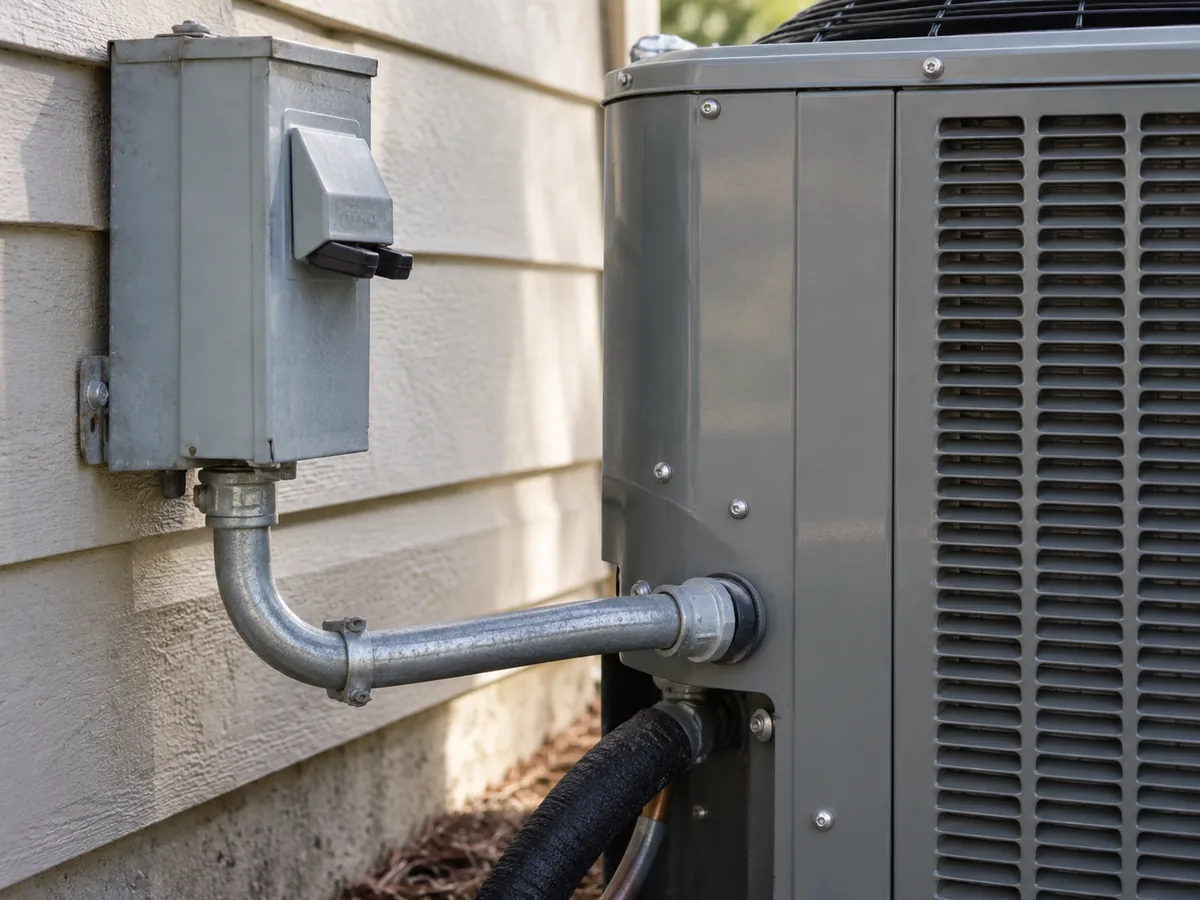
For a running-cost estimate, look for electrical information such as rated input power, measured kWh from a normal operating period, certified energy-consumption data, or manufacturer electrical-performance data that matches the condition you are evaluating.
Use the Best Input Available
Use electricity readings from normal AC operation when available, after checking what the meter covers. Otherwise use verified electrical power data and realistic running hours. The rated input printed on a label can help with planning, but it is not a record of actual energy use.
Use this order of preference:
1. Measured kWh from a typical period — first check what equipment the meter covers
Before using measured kWh, check which equipment the meter includes. A compressor-only reading may leave out indoor fans, outdoor fans, pumps, or other electrical components used by the cooling system. If the meter covers only part of the system, do not present that reading as total AC electricity use.
For an example of how power figures are separated, see the R410A T1 SP-Series AC specifications. The specification table lists cooling input power and compressor input power separately. Confirm the relevant model and rating conditions before using either figure in a running-cost estimate.
2. Verified average input power plus realistic runtime
Use this when you do not have measured kWh but you do have reliable power and operating data.
3. Rated input power plus a realistic runtime estimate
This can give you a planning estimate, but rated input is not the same as the actual power draw at every moment.
4. Cooling capacity plus efficiency data from a known test method
Use this only when you understand the rating, test method, equipment covered, and operating condition. It is still an estimate, not measured project consumption.
Do not calculate real hourly cost from BTU/h alone, tonnage alone, or SEER2 alone.
How Reliable Is Your Cost Estimate?
Your estimate is usually stronger when it uses measured electricity use from normal operation. Check what equipment the meter covers. Rated-power calculations help with planning but may not match actual use; BTU/h alone is not enough.
The number is only as reliable as the data you put into it. Use this table to judge whether you have a strong comparison or only an early budget estimate.
| What information you have | How reliable it is | What to do next |
|---|---|---|
| Measured kWh from a normal operating period | More reliable when the meter coverage is known | Use it directly when you know what equipment the meter covers |
| Verified average electrical input plus realistic runtime | Useful when conditions match | Suitable for a like-for-like project comparison |
| Rated input plus estimated runtime | Useful for early planning | Useful for early budgeting, but not actual measured consumption |
| BTU/h, tonnage, or an efficiency rating only | Not enough information | Get electrical-use data before using the result for a budget |

Common AC Running-Cost Mistakes
Estimates often go wrong when people use cooling capacity instead of electrical power, assume full power all day or leave out electricity-bill charges. Check these common mistakes before using your result.
| Common mistake | Why it gives the wrong result |
|---|---|
| Using BTU/h, tons, or cooling kW as electrical input | Cooling capacity tells you how much cooling the AC delivers. It does not tell you how much electrical power the unit uses. |
| Multiplying rated input by every hour the AC is switched on | The compressor may cycle or reduce output instead of operating continuously at rated input. |
| Treating SEER2 as electrical power | SEER2 is an efficiency rating, not the AC’s instantaneous electrical input in kW. |
| Treating kWh energy cost as the whole commercial electricity bill | Demand, time-of-use, fixed, tax, or other tariff charges may also apply. |
How Much Does It Cost to Run AC by BTU Size?
BTU/h alone cannot tell you an air conditioner’s running cost. A 5,000, 12,000 or 18,000 BTU/h rating describes cooling capacity, not electrical power. Two models with the same cooling capacity may use different amounts of electricity. Find the exact model’s electrical input or measured kWh, then calculate the cost using the relevant operating hours and electricity rate. Check the operating condition used for the power figure before comparing models.
Have only the BTU/h rating? Find the exact model number and check its electrical input in watts or kilowatts, including the operating condition used for that figure. For example, a 12,000 BTU/h window unit and a 12,000 BTU/h mini-split can use different amounts of electricity even when their rated cooling capacities are similar.
| AC cooling capacity | Electrical power to check | How to calculate the cost | Important note |
|---|---|---|---|
| 5,000 BTU/h | Find model input W or measured kWh | Input kW × cooling hours × electricity rate | Cooling capacity alone cannot give monthly cost |
| 6,000 BTU/h | Check the exact model wattage | Use power, hours and days to find monthly cost | Compare the same equipment and operating conditions |
| 10,000 BTU/h | Use measured kWh or the specified electrical input | Divide W by 1,000; multiply by hours and rate | 10,000 BTU/h is not 10,000 electrical watts |
| 12,000 BTU/h | Check average input power for the model | Hourly energy cost = input kW × rate per kWh | Use actual kWh for a better monthly estimate |
| 18,000 BTU/h | Check electrical use at part load | Add energy used across different operating conditions | Rated input may differ from actual running input |
| 3 tons (36,000 BTU/h) | Check outdoor unit, indoor fan and auxiliaries | Sum the same equipment loads or meter whole system | Tonnage describes cooling output, not kW input |
Example for a named capacity, not a typical model rating: Suppose a particular 12,000 BTU/h AC uses an average electrical input of 1,000 W (1 kW) during the period being estimated. At $0.15/kWh, that equals $0.15 for one hour at that input, or $0.75 over five hours. The 1,000 W assumption is illustrative; a 12,000 BTU/h label alone cannot confirm this model’s actual electrical input or running cost.
Why Your AC May Cost More or Less to Run
Your AC usually costs more when it uses more electricity or the electricity price rises. Hot weather, sunlight, more people and lower thermostat settings may add cooling demand. The AC may draw more power, run longer or both.
HVAC engineers call the amount of cooling the building needs the cooling load. When that load changes, the AC’s power use or runtime can change too.
Hours Switched On Are Not Always Cooling Hours
An AC can be switched on for eight hours without drawing full power the whole time. A fixed-speed compressor may stop and restart. An inverter AC may slow down when less cooling is needed. This is part-load operation, and measured kWh best captures its effect.
Suppose an AC is switched on for eight hours. That does not necessarily mean the compressor operates for eight hours at one fixed electrical input.
A fixed-speed system may switch on and off as the room approaches the target temperature. A variable-speed system may slow the compressor and run longer below full cooling output. Engineers call this part-load operation. What actually happens depends on the cooling load and how the system is controlled.
For ductless projects, a mini split air conditioner can serve rooms or zones separately, so actual operating hours may differ from one zone to another.
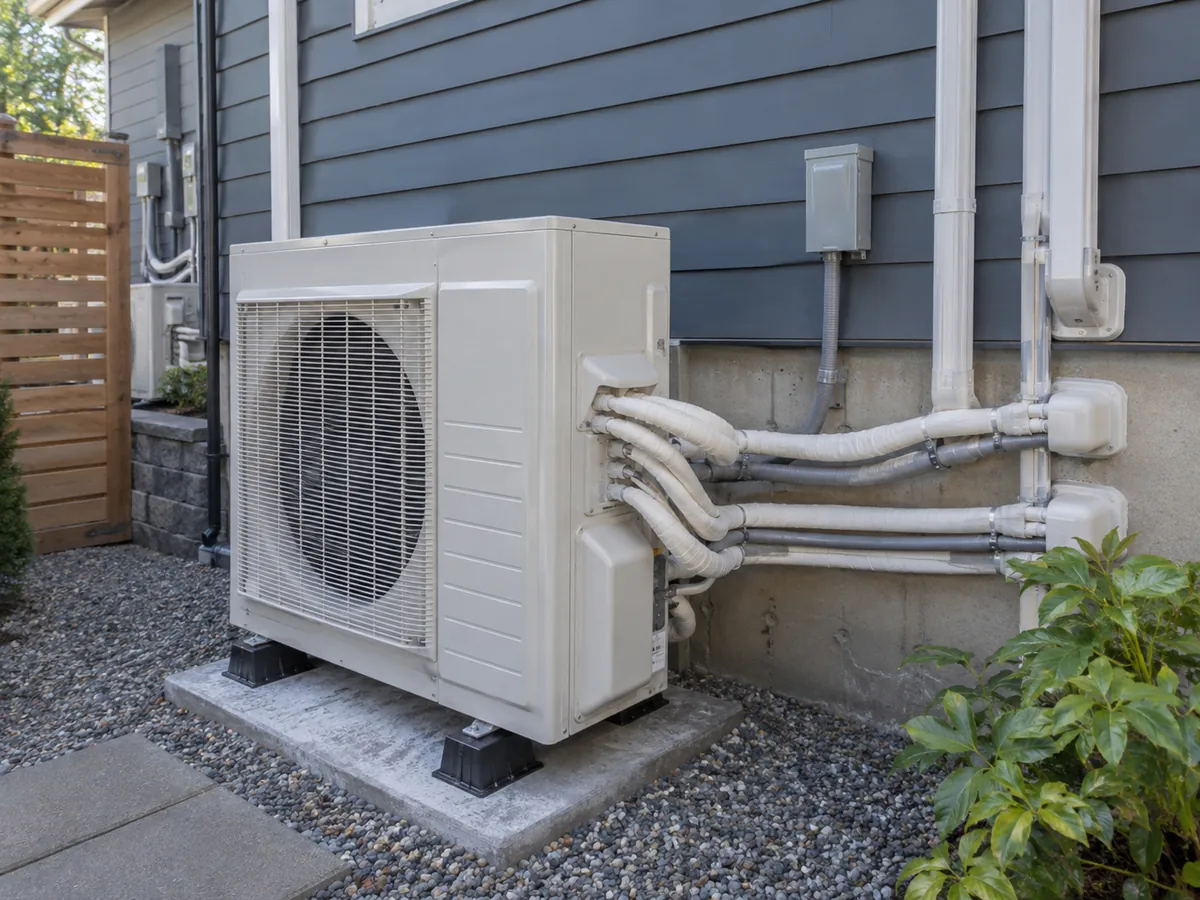
For an early budget estimate, scheduled hours can be useful. For a better comparison, use measured kWh from a typical period or realistic runtime data.
Hot Weather and Building Load Can Increase Energy Use
On hot days, your AC may use more electricity because it must remove more heat from the building. Sunlight, occupants, appliances, outside air entering through doors and lower temperature settings can all add to the cooling load.
Your AC usually uses more energy when the building needs more cooling. Common reasons include:
- higher outdoor temperature;
- sunlight heating windows or the roof;
- more occupants;
- lighting and equipment loads;
- doors frequently opening;
- poor insulation or air leakage;
- a lower indoor temperature target.
The cost of running an air conditioner in extreme summer heat can increase because the system may use more power, run longer, or both. Do not apply one fixed percentage to every project. Use power and runtime assumptions that match the actual conditions, or use measured kWh when you have it.
What If Hot Weather, Longer Runtime, and Higher Electricity Rates Happen Together?
Your AC bill can rise for several reasons at once. Hot weather may increase cooling demand just when peak-hour electricity rates are higher. Compare energy use and prices separately before deciding what caused the increase.
Real projects rarely change one condition at a time. The most useful comparisons look at the combinations that actually change power, runtime, or the electricity rate.
Extreme heat + high building load + long runtime: When all three increase together, AC energy use can rise much faster than it would from electricity price alone. Check outdoor temperature, thermostat setting, occupancy, operating hours, and measured kWh before blaming one factor.
Variable-speed AC + low cooling load: A variable-speed AC may spend much of the day at partial load. In that case, multiplying rated input by every switched-on hour can overestimate actual energy use. Measured kWh from a typical period is more useful when available.
High cooling load + peak electricity period: The same cooling demand can cost more when the AC operates during a more expensive time-of-use period. On some commercial tariffs, several AC units reaching high load at the same time can also affect peak demand charges.
How to check the difference: First compare kWh used during similar weather and cooling schedules. Then check the rates charged during those hours. If both kWh and price have increased, work out the energy-use change and the rate change separately before deciding how much came from AC operation.

Poor Airflow or Dirty Components Can Change Energy Use
A dirty filter or restricted airflow can make cooling harder. Dirty coils may also reduce heat transfer. Depending on the equipment, these problems can change power use or running time, so first check weather, schedules and electricity readings too.
Restricted airflow, dirty filters, dirty coils, or other system problems can reduce cooling performance and change the power or runtime needed to cool the building. The exact effect depends on the system and operating conditions.
A high electricity bill by itself does not prove that maintenance is the cause. Weather, occupancy, thermostat settings, operating hours, tariff changes, and building load can produce similar cost changes. Compare the operating conditions and inspect the system before deciding what caused the higher bill. First compare outdoor conditions, operating hours, thermostat settings, measured kWh, and the electricity tariff with the previous period. If those are similar but energy use has increased, then check airflow, filters, heat exchangers, and other system conditions.
Start with checks you can perform safely: inspect the accessible air filter and make sure supply and return air openings are clear. Follow the manufacturer’s instructions for cleaning or replacing the filter. If cooling remains poor or energy use stays unusually high under comparable conditions, arrange a qualified HVAC inspection. Do not open electrical enclosures or refrigerant lines to investigate the electricity bill.
If your AC also stops cooling properly, follow these safe checks for an air conditioner that is not cooling. They can help you distinguish basic settings and airflow problems from faults that need qualified service.
Fixed-Speed and Inverter ACs Use Power Differently
A fixed-speed AC usually cycles its compressor on and off. An inverter AC can slow its compressor when the building needs less cooling. This may improve efficiency in suitable conditions, but the label alone does not prove a fixed saving.
A fixed-speed compressor usually turns on and off as cooling demand changes.
An inverter or variable-speed system can change compressor speed instead of only switching between full output and off. This can improve efficiency when the building needs less than full cooling, but the word “inverter” does not guarantee a fixed percentage of energy savings.
The actual difference depends on the specific systems being compared, the cooling load, operating hours, climate, control strategy, installation, and efficiency at relevant operating conditions.
When comparing projects, use data from the same test method and the same operating conditions. Do not assign one universal savings percentage to inverter technology.
If Your Actual AC Cost Is Higher Than Expected, Check These First
Start with your bill: did the electricity price change, or did total kWh increase? If kWh increased, compare outdoor weather, operating hours, thermostat settings and building use for similar periods. If these are similar but AC energy use is still higher, check accessible filters and airflow before seeking qualified service for electrical or refrigerant-system faults. The bill alone does not prove the AC is defective.
A higher bill does not automatically mean the AC has become less efficient. Compare what changed before you decide where the problem is.
| Where to check | What may have changed | What to verify |
|---|---|---|
| Building load | Hotter weather, more occupants, more equipment heat, or more door opening | Outdoor temperature, occupancy, and operating hours |
| Controls | Lower thermostat setting, longer schedule, or zoning changes | Setpoint, timers, thermostat settings, and BMS schedule if available |
| AC operation | Longer runtime or different behavior while running below full cooling output (part-load operation) | Measured kWh and runtime data |
| System condition | Airflow or heat-transfer performance changed | Filter condition, airflow, coil condition, and service inspection |
| Electricity tariff | Energy rate, time-of-use period, or demand charge changed | Current utility bill and tariff |
| Original estimate | Rated input, estimated runtime, or the wrong meter scope was used | Recheck the calculation inputs and what the meter covers |
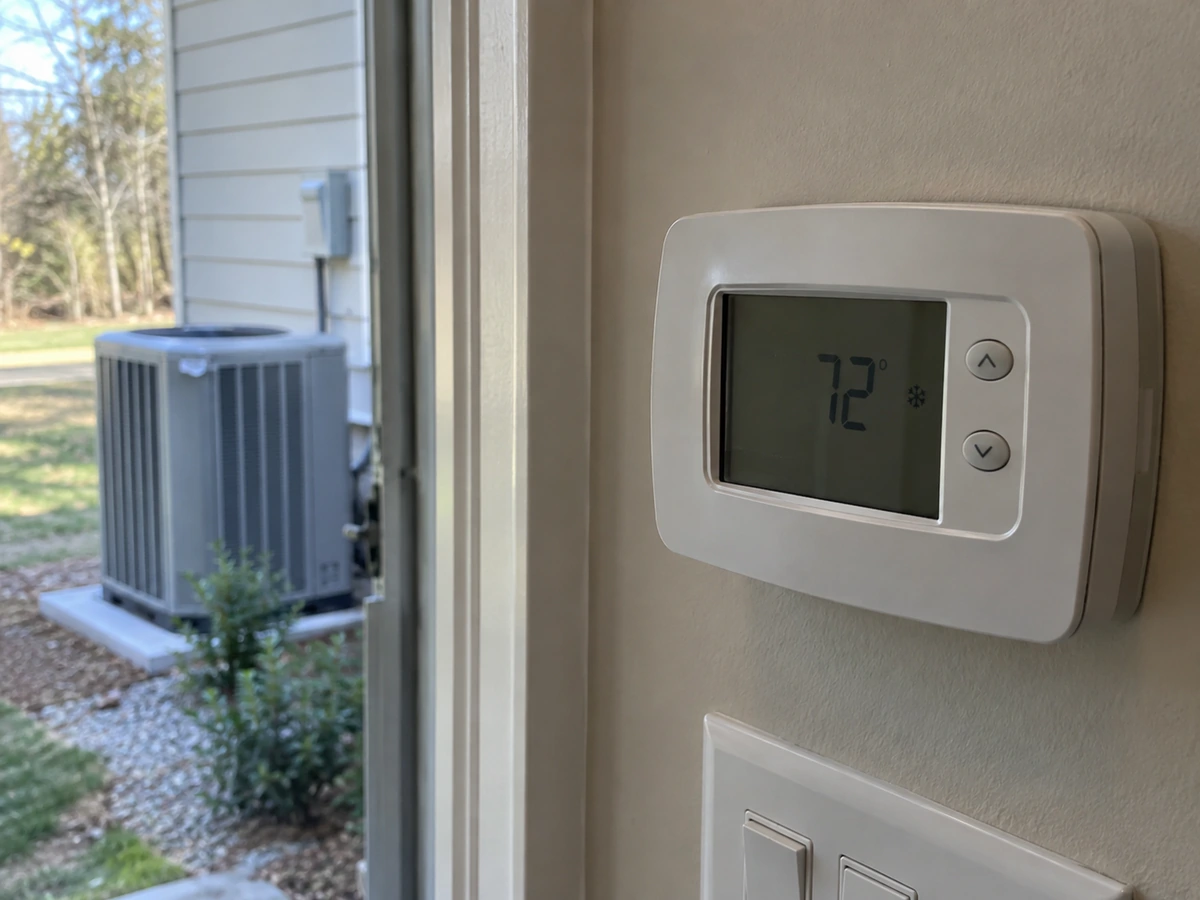
If weather, schedule, setpoint, tariff, and what the meter includes are all similar but measured kWh has increased, then the AC or the system condition deserves a closer technical check.
If you also notice ice on the indoor cooling coil or refrigerant line, follow the safe first steps in our AC system freezing guide. Ice alone does not identify the cause, so do not add refrigerant or continue cooling without checking the problem.
Engineering takeaway: A higher AC electricity bill does not automatically mean the AC has become less efficient. First compare outdoor temperature, cooling load, operating hours, thermostat settings, measured kWh, and the electricity tariff. If those conditions are reasonably similar but measured energy use has still increased, then investigate the AC and system condition.
Why the Calculator May Not Match Your Commercial Electricity Bill
For a business, the electricity your AC uses is only part of the bill. Your utility may also charge for the highest power demand, electricity used at peak-price times, and other account fees. The calculator estimates energy charges, not necessarily your whole business bill.
For a commercial building or business account, kWh × electricity rate shows only the energy-use part of the bill. Your full electricity bill may also include demand charges, time-of-use pricing, fixed charges, taxes, or surcharges. Check the actual tariff before using the calculator result as the total project electricity budget.
If you are asking “how much does AC increase the electric bill?”, first calculate the extra kWh used by the AC at the rate you pay. Then check whether the added load also changes demand, time-of-use, tiered, or other charges.
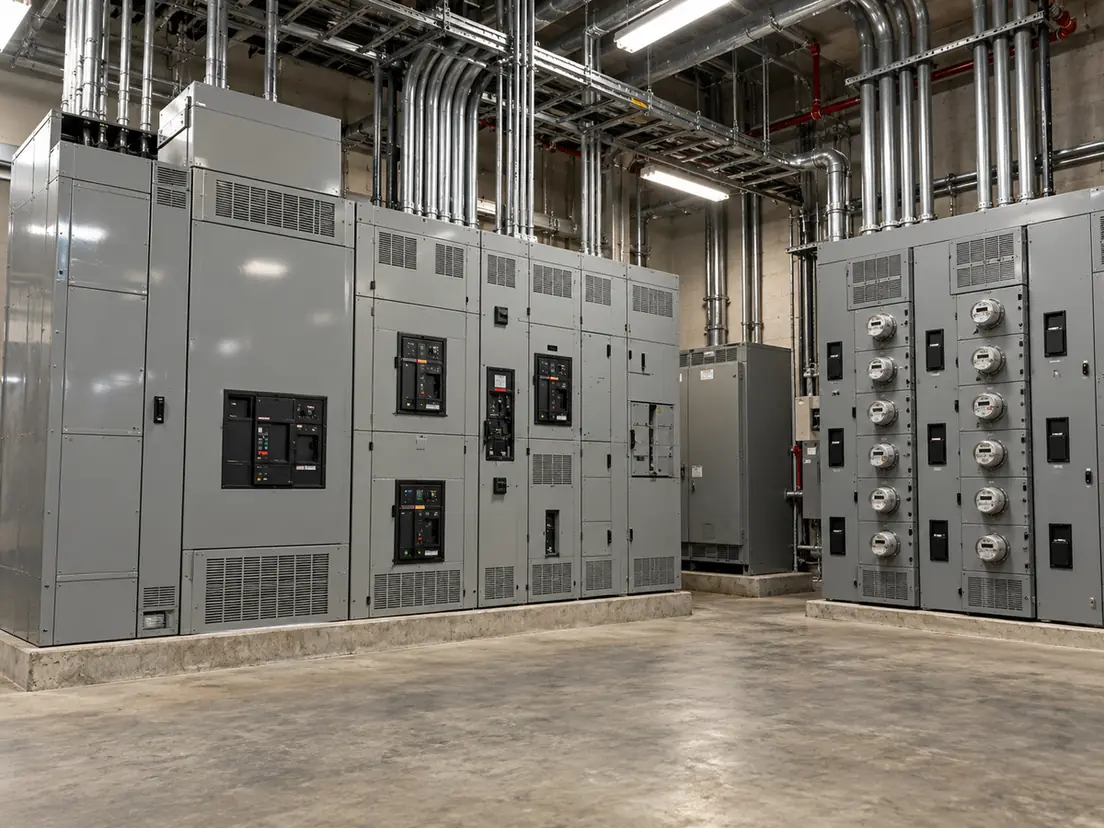
Energy Charges
Your energy charge is the electricity you use, measured in kWh, multiplied by the price per kWh. If your rate changes by hour or season, calculate the charge for each pricing period separately.
This is the component handled by the basic calculation:
Energy charge = kWh used × electricity rate
If you pay one flat energy rate, the calculation is simple. If the rate changes by time of day, season, or usage level, use the rate that applies when the AC actually operates instead of relying on a national or regional average.
Demand Charges
Some businesses pay an extra charge based on their highest electricity demand during a billing interval. This is a demand charge. Running several AC units together may add to this peak, but only if it changes the demand used for billing under the tariff.
Some commercial electricity bills include a charge based on the highest electrical load reached during the utility’s billing interval. This is called a demand charge.
Energy use is measured in kWh. Demand is measured in kW.
Adding a large group of air conditioners can therefore affect a commercial bill through both additional energy consumption and contribution to billed peak demand.
A simple running-cost calculator can estimate the energy-use part of the bill. It cannot predict demand charges unless you also know the tariff rules, the building load, how many AC units reach high load at the same time, and the utility’s demand measurement interval.
Multi-unit example: Adding 20 AC units does not automatically increase billed demand by the sum of their rated kW values. The effect depends on how many operate together, their actual power draw, whether their use coincides with the building’s existing peak, and how the utility measures and bills peak demand.
Time-of-Use, Tiered, and Fixed Charges
Check your electricity plan before estimating costs. Some utilities charge more at certain times or seasons. Some change prices after usage reaches a tier. Fixed account charges may stay the same even when AC energy use falls.
Commercial tariffs may also include:
- different energy prices at different times of day;
- seasonal pricing;
- tiered or slab rates;
- fixed monthly charges;
- taxes or surcharges.
This is why a country-average electricity price should not be treated as the final project tariff. For a commercial calculation, use the customer’s actual utility bill or tariff schedule when available. If you have to assume a rate, say so clearly and test another rate when the difference could change the decision.
Can SEER2, EER2, or Inverter AC Tell You the Running Cost?
Efficiency ratings help compare how much cooling different ACs deliver for the electricity they use. But a rating alone does not tell you your bill. You also need the cooling demand, operating hours and electricity rate. SEER2 and EER2 apply to particular product categories and test methods.
For an hourly cost estimate: Seasonal efficiency ratings summarize standardized tests; they do not show the electrical kW your AC draws in a particular hour. Use suitable electrical-input data at the relevant operating condition or measured kWh rather than treating a seasonal rating as instantaneous power.
Efficiency ratings can help you compare ACs, but only when the numbers come from the same or a clearly comparable test method. SEER2 and EER2 are standardized efficiency ratings used in specific test systems; other markets and equipment types may use different ratings. For a global project, do not compare two efficiency numbers until you know they describe the same type of test and equipment.
What SEER2 Can Tell You
SEER2 describes how efficiently an eligible AC performs over a standard cooling season. A higher SEER2 generally means better rated seasonal efficiency when similar products use the same test method. It does not guarantee a matching reduction in your bill.
SEER2 tells you how efficiently an AC performs over a standardized cooling season. Use it to compare products only when the ratings were measured using the same or a clearly comparable test method and product category.
SEER2 is not instantaneous electrical input. Do not treat a SEER2 number by itself as the unit’s actual kW draw at every operating condition.
What EER2 Can Tell You
EER2 shows cooling efficiency at a specified test condition for eligible products. It helps compare similar ACs, but real electricity use can change with outdoor temperature, cooling demand and compressor operation.
EER2 tells you cooling efficiency at a specified test condition. It is one test point, not every condition the AC will see in the field. Compare EER2 values only when the test method is the same or clearly comparable.
Outdoor temperature, indoor conditions, load, compressor speed, and installation conditions can change actual electrical consumption away from a rating point.
What These Ratings Cannot Tell You
SEER2 and EER2 alone cannot establish a particular home or business electricity bill, guarantee savings, or establish payback without system load, operating hours and tariff.
A higher efficiency rating does not by itself guarantee a specific project electricity bill, fixed savings percentage, or payback period.
Actual cost still depends on the cooling load, runtime, controls, climate, system setup, electricity tariff, and the quality of the data you use.
What “Inverter” Does—and Does Not—Tell You
An inverter AC can adjust compressor speed rather than only switching between full output and off. This may save energy when less cooling is needed. The inverter label by itself does not say how much money you will save.
When comparing two AC systems, first make sure both can perform the same cooling job. Use comparable operating hours, electricity rates, rating methods, and measurement boundaries before comparing running cost.
How to Compare the Running Cost of Two AC Options
First make sure both systems can cool the same space to the required comfort level. Then compare electricity use under similar weather and running hours. At the same energy rate, fewer kWh means a lower electricity energy charge, assuming the same equipment is included.
Key decision rule: If two AC systems provide the required cooling under comparable weather, operating schedules, electricity rates, and measurement conditions, the system that uses fewer verified kWh will have the lower energy-use cost.
Do not claim one system is cheaper to run when the two energy figures were measured or calculated under different conditions.
| What to compare | Keep this the same |
|---|---|
| Cooling needed by the building | Same required cooling load |
| How the efficiency was rated | Same or clearly comparable rating and test method |
| Operating hours | Same cooling demand and schedule |
| Electricity rate | Same rate or tariff |
| Quantity | Same number of required units |
| Outdoor conditions | Same climate and design conditions |
| What the meter includes | Same equipment on both options |
| Annual estimate | Same number of operating days |
Do not compare the published annual consumption of one product with a rough full-load calculation for another and call the difference an energy saving. The two numbers were calculated in different ways.
A smaller unit with lower electrical input is not automatically cheaper to run if it cannot meet the building’s cooling demand. Even two models with similar rated BTU/h may provide different cooling output under the indoor and outdoor conditions relevant to the building. Check each model’s available cooling capacity at those conditions before comparing energy use. Include indoor fans and other relevant electrical components on the same basis for both systems. A larger unit is not automatically more efficient either. To check this, compare the cooling each option can provide and the energy needed to maintain the same indoor conditions over the same period.
Replacing an old AC? Do not compare an old system’s electricity bill from one season with a new-system estimate from different weather, occupancy, thermostat settings, or operating hours and call the difference equipment savings. Compare similar periods, or adjust the assumptions so the cooling demand, schedule, tariff, and what the meter includes are as close as possible.
A lower rated electrical input alone does not mean lower annual electricity cost. Confirm that the systems can deliver the same cooling, and include indoor fans and other relevant auxiliaries in both system boundaries before comparing measured or estimated kWh.
What if you only have rated input power? You can compare estimated energy charges at those stated input conditions, but you cannot yet conclude which AC will cost less over a whole season. First check that both systems can meet the same cooling demand. Then use compatible performance data, the same equipment boundary and realistic operating conditions.
How to Decide Which Option Costs Less to Run
Before deciding which AC costs less to run, check that both energy estimates cover the same cooling task, operating conditions, equipment, and electricity tariff. If those assumptions differ, correct the comparison before claiming a saving.
If two options:
- meet the same required cooling load;
- use performance or rating data from the same or clearly comparable test method;
- use kWh measurements that cover the same equipment;
- use the same load, runtime, quantity, climate, and tariff assumptions;
then the option with lower verified energy consumption will normally cost less for the electricity it uses.
How Can You Reduce Your AC Electricity Bill?
Start by reducing cooling you do not need. Use sensible thermostat settings and schedules, keep filters clear and reduce unnecessary heat from sunlight. When comparing AC models, check energy use for the same cooling job; keep needed ventilation and comfort.
Keep required conditions: Do not reduce required fresh-air ventilation or switch off humidity control just to cut electricity cost. Spaces with equipment that needs cooling may also need a continuous cooling schedule. Check indoor air quality, comfort and equipment temperature requirements before changing the controls.
- Check whether the AC is cooling rooms that do not need it, but maintain required humidity and ventilation.
- Check thermostat settings and schedules before changing equipment.
- Clean or replace filters as specified and keep indoor and outdoor airflow unobstructed.
- Reduce direct solar gain using suitable shades or window treatments.
- Look at your tariff before moving cooling to other hours; comfort, humidity, and peak-demand charges still matter.
- If the system uses unexpectedly high kWh under comparable conditions, arrange a qualified technical inspection rather than guessing from the bill alone.
AC Running Cost FAQs
How much does it cost to run an AC for one hour?
If your AC averages 1 kW for one hour and electricity costs $0.15/kWh, the energy charge is $0.15. Use the actual power and local rate for your own estimate; this example is not a typical cost for every unit.
How much does it cost to run an AC for eight hours or overnight?
Multiply the electricity used in eight hours by your electricity rate. For example, an average 0.8 kW input over eight hours at $0.15/kWh costs $0.96. Actual use can differ as the compressor cycles or slows down.
How much does a 12,000 BTU air conditioner cost to run?
A 12,000 BTU/h air conditioner does not have one fixed running cost. Find the exact model’s electrical input in watts or its measured energy use. Divide watts by 1,000 to get kW, then multiply by the relevant operating hours and electricity price. If you already have measured kWh, multiply that directly by your electricity price. The BTU/h rating alone is not enough.
Is a window AC cheaper to run than central AC?
A window AC may cost less overall if you only need to cool one room. Central AC usually serves more rooms, so its total electricity use is not a fair one-room comparison. Compare the area cooled, required cooling capacity, operating hours and measured or comparable energy use before deciding which is cheaper for the same task.
What to Check Before Using the Cost Estimate
If the AC is already installed, start with electricity readings from a normal operating period and check what equipment the meter covers. For a new system, start with the manufacturer’s electrical-performance information and expected cooling hours. Record your electricity price, number of units and assumptions so you can update the estimate when better data are available.
If the project also needs heating, use a separate air conditioner vs heat pump comparison. A cooling-only AC running-cost estimate does not capture the energy used for winter heating.
| What to send or check | How it is used |
|---|---|
| Candidate AC model or specification | Checks the rated electrical input, efficiency data, and the conditions attached to those ratings |
| Required cooling duty | Confirms that the options being compared are expected to do the same cooling job |
| Measured kWh, if available | Replaces part of the planning estimate with real operating data from a known period |
| What the meter covers | Prevents whole-system and component-only energy figures from being compared as if they were equivalent |
| Expected or measured cooling hours | Sets the runtime assumption, one of the largest cost multipliers |
| Number of units | Scales the estimate for multi-unit projects |
| Electricity rate and tariff structure | Calculates the energy charge and identifies whether demand or time-of-use charges need separate treatment |
| Outdoor temperature during the measured period | Shows whether weather may have changed the cooling load and runtime |
| Thermostat setting | Helps explain changes in cooling demand |
| Occupancy and building schedule | Shows whether the real load or operating hours changed |
| Rating or test method used for efficiency data | Prevents efficiency figures from different test methods from being treated as directly comparable |
For an existing installation, measured energy from a typical period is usually more useful than a theoretical calculation when you know what the meter covers and what the operating conditions were.
For a new project, keep the assumptions with the estimate so you can update the calculation when the equipment data, operating hours, cooling load, or electricity tariff becomes clearer.
Continue Your AC Cost Review
For more information about AC electricity use, system sizing, inverter technology or efficiency, choose the related guide below.
| Next task | Related guide | What it helps you check |
|---|---|---|
| Electricity use | How Much Electricity Does an AC Use? | Understand watts and kWh before converting electricity use into cost |
| Technology | What Is an Inverter Air Conditioner? | Understand how variable-speed operation can change power use and runtime |
| Sizing | What Size Air Conditioner Do I Need? | Check how cooling load and capacity affect operation before comparing costs |
| Efficiency | Energy-Efficient Air Conditioner Guide | Compare efficiency information before choosing equipment |
Where Do These AC Cost Calculations and Ratings Come From?
These sources explain electricity units, AC efficiency ratings and utility charges. They help you understand the calculation but cannot tell you how much electricity your exact AC uses. That requires information from your equipment and operating conditions.

| Source or data type | What it supports | What it does not prove |
|---|---|---|
| U.S. Energy Information Administration (EIA) | The difference between electrical power in kW and energy use in kWh | The actual energy consumption of a specific AC system |
| U.S. Department of Energy FEMP | Commercial tariff structures, including energy, demand, and time-based charges | The exact tariff or total bill for a specific building |
| U.S. DOE central AC and heat pump test procedures | How SEER2 and EER2 are defined and used as standardized efficiency ratings | Actual project kWh, electrical input at every moment, or guaranteed running cost |
| Measured site energy data | Energy used during the measured operating period when the meter scope is known | Energy use under different weather, loads, schedules, controls, or meter coverage |
| Manufacturer model data | Rated electrical and performance information for the stated model and test conditions | Guaranteed field consumption under every project condition |
| Airproz calculator + your project inputs | A transparent estimate using electrical input or measured kWh, runtime, quantity, and electricity rate | Performance certification, guaranteed savings, exact commercial billing, or guaranteed payback |
Fair comparison: Keep the cooling requirement, operating conditions, electricity tariff, efficiency-rating basis, and equipment included in the measurement consistent. An early estimate is not the same as verified energy consumption.
What Is the Best Way to Estimate Your AC Running Cost?
Start with your AC’s measured electricity use during normal operation when possible. If you do not have measured kWh, estimate cost from electrical power, running hours and your rate. Recheck the assumptions before using the number in a monthly budget or equipment comparison.
For variable-speed or cycling ACs: Electrical input can change throughout the day. A fixed kW figure may not represent all the hours the AC is switched on. Use measured kWh for the period, or average input power over that same period, for a better estimate. Include indoor fans and other system components when you want the cost for the whole AC system.
Questions About AC Running Costs?
Have questions about AC running costs? Send us your AC specifications, expected operating hours, electricity rate and number of units. If you have measured energy data, include the measurement period and the equipment covered. These details provide a starting point for discussing your AC project.