Airproz B2B Manufacturer Guides · Updated July 2026
By the Airproz Team — heat pump manufacturers and OEM/ODM partners for distributors, installers, and brand owners.
Most “top heat pump” lists are written for homeowners. They rank by app rating and noise level.
That’s useful if you’re buying one unit for your house. It’s not much help if you’re sourcing air source heat pump manufacturers for a distribution network or an OEM product line.
This guide ranks the 10 best-known global manufacturers on what actually matters for a B2B buyer: certifications, product range, and after-sales support. We also cover a path most brand-focused lists skip — building your own product line through an OEM partner.
What to Look for in an Air Source Heat Pump Manufacturer
Before comparing brands, it helps to know what “good” looks like from a procurement seat. A few basics — starting with heat pump manufacturer certifications — separate a solid partner from a risky one.
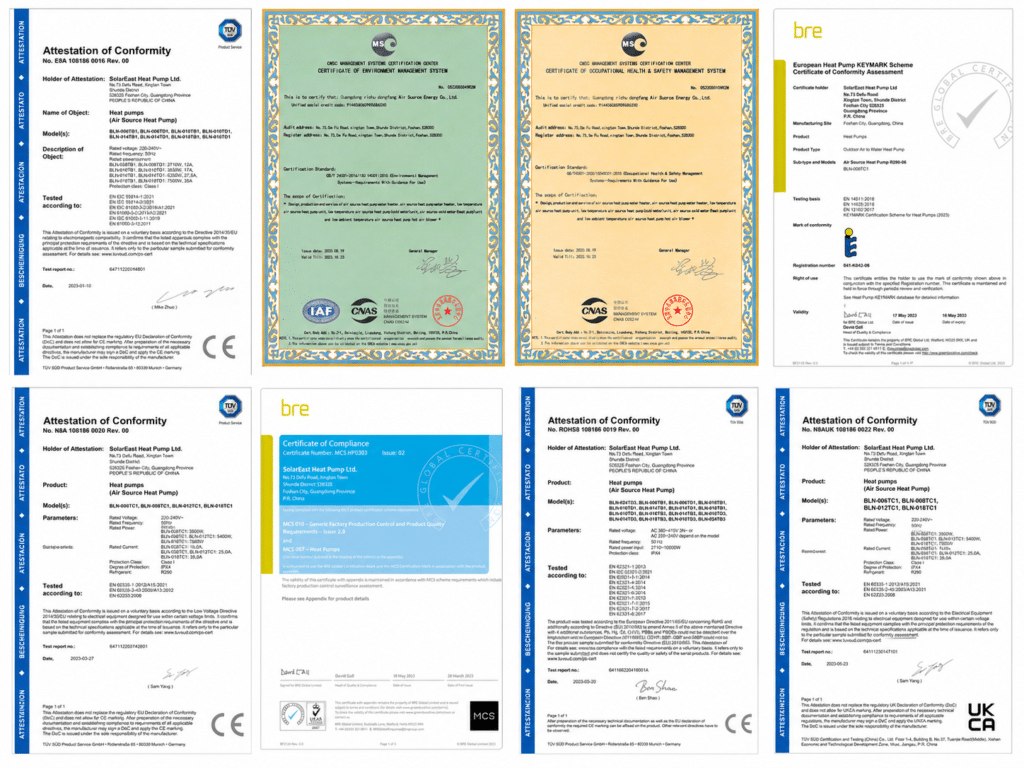
- Certification coverage. Does the manufacturer hold the certifications your target market requires — CE and ErP for Europe, or Heat Pump Keymark, the quality mark maintained by the European Heat Pump Association, for higher-scrutiny buyers?
- Product range. Can one factory cover air-to-water, air-to-air, and hot water units, or will you need three suppliers?
- Production consistency. Does unit 50 in a batch perform the same as unit 1?
- After-sales support. How fast can a replacement part reach your warehouse when something fails in year three?
- Flexibility. Some manufacturers only sell their own brand. Others also offer OEM and private-label programs — more on that below.
For a broader look at sourcing a full heat pump lineup, see our guide to sourcing a complete heat pump product range from a single B2B manufacturing partner.
Top 10 Air Source Heat Pump Manufacturers at a Glance
These 10 brands are the most recognized names in the air source heat pump space. Each sells primarily under its own brand.
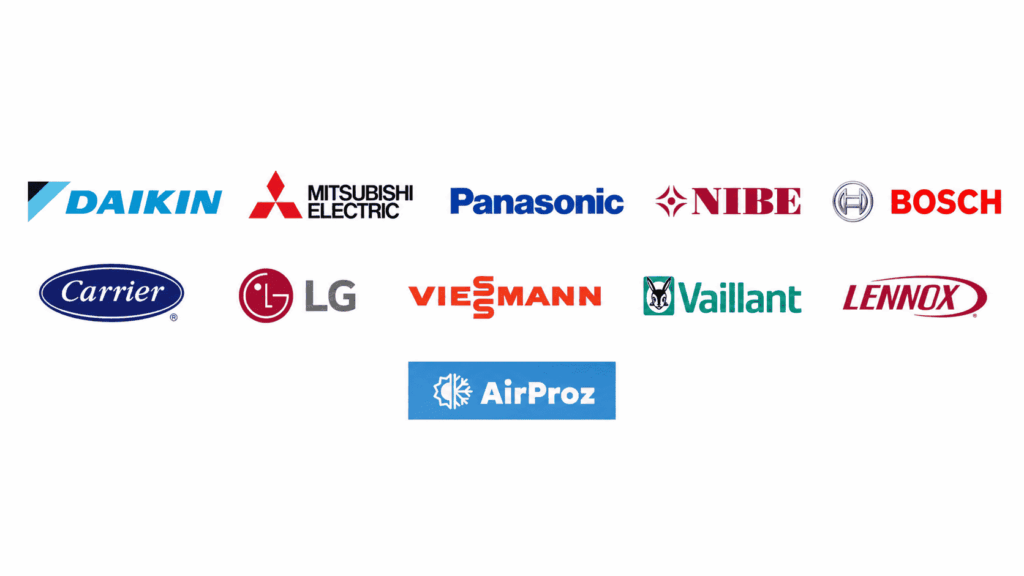
That means distributing them means distributing someone else’s name and margin structure. Worth knowing before you compare it to the OEM route in the next section.

Daikin — Japan
Broadest air-to-water range; strong European manufacturing footprint
Mitsubishi Electric — Japan
Cold-climate performance, especially the Ecodan line.


Panasonic — Japan
Aquarea T-CAP line, built for retrofit projects.
NIBE — Sweden
Scandinavian design, built for harsh winters.

Bosch — Germany
Wide product range and a large European service network.
Carrier — USA
Strong commercial and specification-driven projects.


LG — South Korea
Competitive pricing with smart-home integration.
Viessmann — Germany
Premium positioning, quiet operation.


Vaillant — Germany
Long heritage in European heating systems.
Lennox — USA
Established air-to-air base, growing air-to-water range.
All 10 are large, publicly recognized brands with global service networks. That scale is exactly why they mainly sell under their own name rather than offering private-label manufacturing.
If you distribute one of them, you’re distributing their brand equity, their pricing structure, and their warranty terms — not your own.
Compressor technology is one of the bigger differentiators between these brands, worth understanding before you commit. See our breakdown of scroll, rotary, and inverter-driven compressor technologies in modern heat pumps.
Beyond the Top 10: When to Consider an OEM Manufacturing Partner
The 10 brands above are a good fit if you want a name your customers already trust. But there’s a second path worth knowing about: working with an OEM heat pump manufacturer that builds units under your brand instead of theirs.
This is what OEM and private-label heat pump manufacturer partnerships mean in practice. Instead of buying “Brand X” units and reselling them, you specify the product — casing, controls, refrigerant, packaging — and the factory builds it for you.
Your margin isn’t capped by someone else’s list price. Your customers see your name on the unit, not a subcontracted one.

Airproz works this way. We manufacture air-to-water heat pumps for space heating and domestic hot water, with both R32 and R290 refrigerant options depending on your target market.
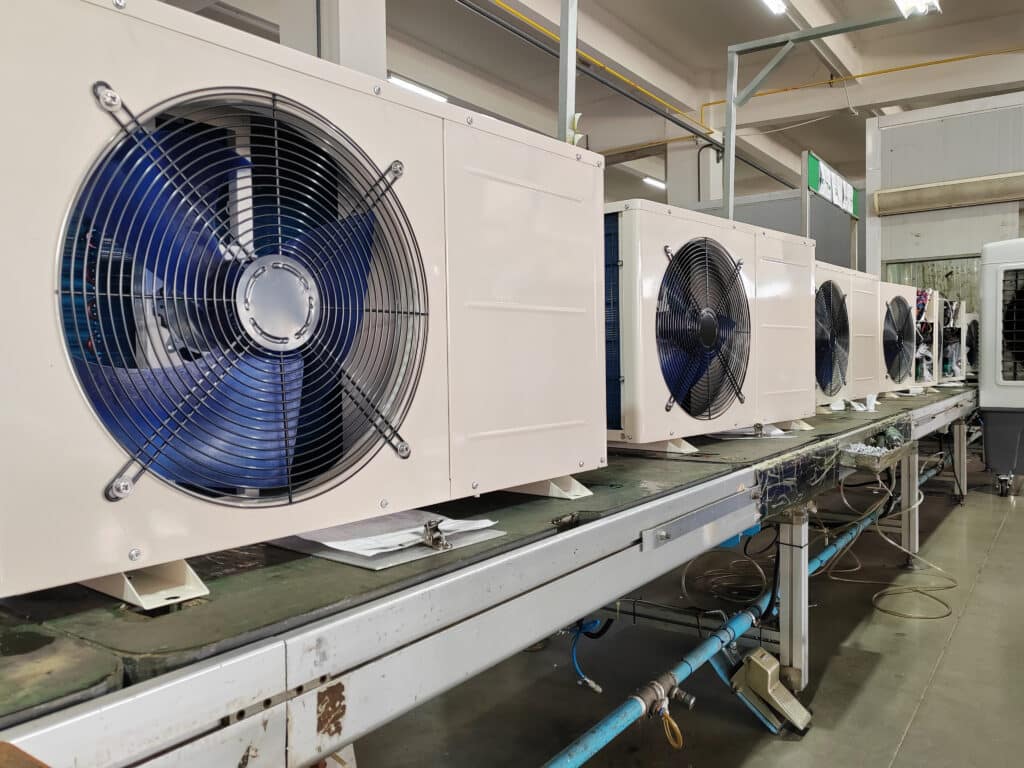
Our units carry CE and ErP certification, and we handle the private-label side directly — your branding, your packaging, factory-direct pricing, without the layers a big-name distributor deal usually comes with.
How this plays out in practice
We’ve worked with distributors who started out reselling a well-known brand. Over time, they added a private-label line alongside it.
The branded product kept the volume moving because customers already recognized the name. The private-label line grew slower at first, but it carried a better margin.
It also gave the distributor something a competitor selling the same brand next door couldn’t undercut. Most distributors we talk to aren’t choosing one path over the other — they’re building both at once.
Explore Airproz OEM & private-label heat pump manufacturing →
Refrigerants and Efficiency, in Brief
You’ll see two numbers on every spec sheet: COP and SCOP. COP is efficiency at one test condition. SCOP is the average across a full heating season — the more honest number for comparing units in real-world use.
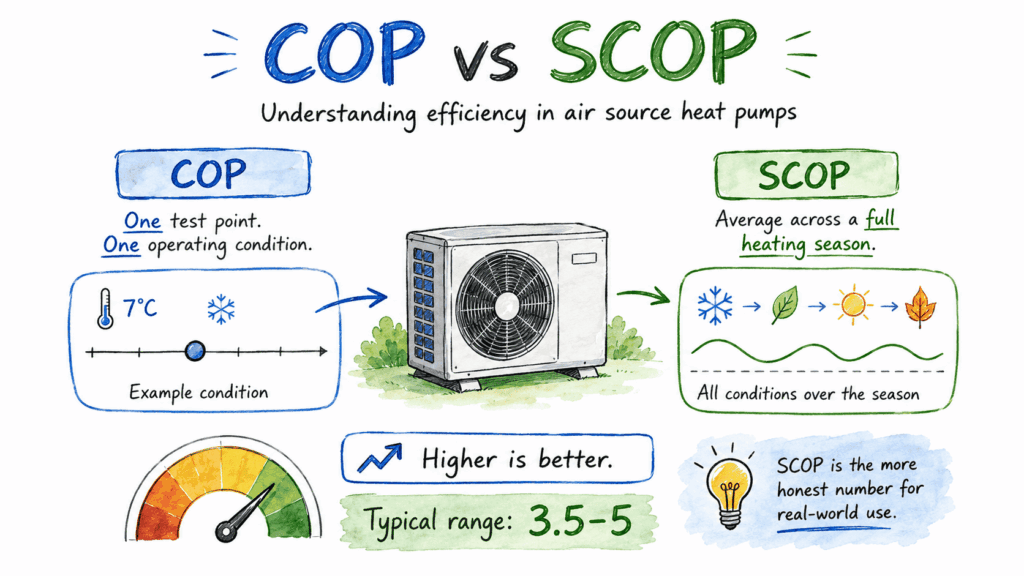
Higher is better. Most modern air source heat pumps sit somewhere between 3.5 and 5.
Refrigerant matters too. R32 is the current standard for most markets and a safe default choice.
R290 (propane) is a natural refrigerant with a much lower environmental impact, and Europe in particular is moving toward it. Many R32 and R290 heat pump manufacturers now offer both platforms side by side.
Our overview of the shift to natural refrigerants and what it means for procurement timelines covers this in more depth, as does our guide to choosing between R32 and R290 refrigerant platforms for your product lineup.
The EU’s F-Gas Regulation is tightening quotas on high-GWP refrigerants in stages through 2030, with new restrictions reaching heat pump equipment from 2027 onward, according to the International Energy Agency’s Heat Pumping Technologies programme.
The exact rules affecting your product category are still being finalized in places. Confirm the current schedule with your compliance team before setting a sourcing timeline around it.
How to Choose the Right Manufacturer for Your Business
Whether you’re picking a known brand or an OEM partner, the same short list of questions applies:

- Do they hold certifications valid in every market you sell into?
- Can they supply your full product range — space heating, hot water, or both — from one factory?
- What’s their minimum order quantity, and does it match your volume?
- How do they handle warranty claims and spare parts once a unit is in the field?
- If you want your own brand on the unit, do they actually offer that, or only their own label?
These same questions apply beyond heat pumps. See our guide to specifying energy-efficient HVAC equipment for B2B procurement if you’re sourcing air conditioning alongside your heat pump line.
Ready to talk specifics? Get in touch with Airproz about OEM heat pump manufacturing, or keep reading below for answers to the questions we hear most often.
Frequently Asked Questions
Which air source heat pump manufacturer is best for OEM and private-label partnerships?
The 10 global brands above mainly sell under their own name. If private-label manufacturing is what you need, look for an OEM heat pump manufacturer whose business model is built around it — Airproz is one example, offering CE/ErP-certified R32 and R290 units under your brand.
What certifications should a heat pump manufacturer hold for European market access?
CE marking and ErP compliance are the baseline for the EU market. Heat Pump Keymark certification, maintained by EHPA, adds a further layer of independent quality verification that many European buyers look for.
How do I verify a manufacturer’s claimed COP and SCOP ratings?
Ask for test reports from an accredited lab using the EN 14825 standard. A manufacturer confident in its numbers will have this documentation ready.
Can one manufacturer supply air-to-water, air-to-air, and hot water heat pumps?
Airproz can, some specialize in one category. If simplifying your supply chain matters, ask directly during your first conversation rather than assuming.
What’s a typical minimum order quantity when sourcing directly from a factory?
This varies widely by manufacturer and product complexity. Confirm current MOQs directly, since they shift with material costs and factory capacity.
Some figures in this guide, particularly around EU refrigerant regulations, are subject to change. Confirm current requirements with your compliance team before finalizing a sourcing decision.