Quick answer: Heat pump air conditioner cost depends mainly on the heating and cooling capacity your building needs, whether the system uses ducts, the number of indoor units, efficiency and cold-weather performance, and the work needed to install it. A straightforward replacement often costs less than a new installation that needs electrical upgrades, new ducts, or several indoor units. Compare the full installed price, not just the outdoor unit’s price. Then consider the electricity bill over the years you expect to own it.
This guide covers air-to-air heat pumps that cool and heat indoor air, including ductless mini-splits and ducted systems. It does not use air-to-water heat pump or heat pump water heater prices as substitutes.
How Much Does a Heat Pump Air Conditioner Cost?
There is no single installed price for every heat pump air conditioner. Published U.S. prices depend on which rooms the system serves and what the contractor includes. A one-room ductless project, a multi-zone retrofit and a ducted replacement are not equivalent jobs. Read each price with its equipment type and installation scope.
| Published U.S. price reference | Published range | Coverage and limits |
|---|---|---|
| Carrier mini-split installation guide (2026) | $2,500–$15,000+ | Broad installed ductless guidance, from one zone to multi-zone work; may include cooling-only mini-splits. Confirm the quoted model can also heat. |
| Trane heat pump replacement guide (2026) | $7,369–$15,608 | Nationwide advertised ranges across standard and low-profile heat pump lines, generally including unit, basic labor and services; required site work and accessories may add cost. |
Compare published ranges only after matching the system type, served area and installation scope. The Carrier and Trane examples cover different products, brands and building work. For wider U.S. market context, EnergySage reported a $15,393 average installed price in 2026 across its ducted, ductless and hybrid marketplace projects. That mixed-project figure describes a broader set of installations rather than one comparable heat pump system. In other countries, labor, electrical requirements, taxes and local product approvals can change the total.
For a price you can act on, first choose the same building load and service area. Then compare exact matched equipment, pipe runs, indoor units, electrical and duct work, labor, testing, permits and removal on each written offer. Ask what is excluded before judging which quote is cheaper.
What Is Included in the Total Installed Price?
The complete price is the sum of equipment, installation, site changes and required handover work. An advertised equipment-only price may leave out several items you cannot avoid when the system is installed.
Equipment price is not the same as installed cost. An equipment offer should specify the indoor and outdoor units, approved combination, controls and included materials. A qualified local HVAC contractor needs to price the actual site’s labor, line routing, electrical and building changes, permits and commissioning. Some tasks may need a separate electrician or inspection authority. Confirm responsibility in writing rather than assuming every seller includes the same work.
| Cost item | What you are paying for | What to confirm | Who to confirm with |
|---|---|---|---|
| Matched indoor and outdoor equipment | Outdoor heat pump, indoor heads or air handler, required controls | What are the exact model numbers and approved combinations? | Equipment supplier: model and supply list; local installer: compatibility |
| Refrigerant and drainage materials | Line sets, insulation, line covers, fittings, drains and any specified condensate pump | What pipe length and drain route are included? | Installer: pipe route, materials, refrigerant and drains |
| Mounting and building work | Pad or stand, brackets, wall openings, sealing, access and weather protection | Who pays for repairs after routing the pipes? | Installer and relevant building trades: site and finishing work |
| Electrical and duct work | Dedicated circuit, disconnect, possible panel work, duct sealing or alterations | What is included, excluded or priced as an allowance? | Qualified electrician and HVAC installer: supply, circuits and ducts |
| Professional installation | Qualified labor, testing, startup and system setup | Are commissioning records and training included? | Installing contractor: startup tests and handover |
| Local requirements | Permits, inspections, taxes and removal of old equipment where applicable | Who arranges them and is the fee in the total? | Local contractor, permitting authority and relevant tax rules |
An Example of How to Build a Complete Budget
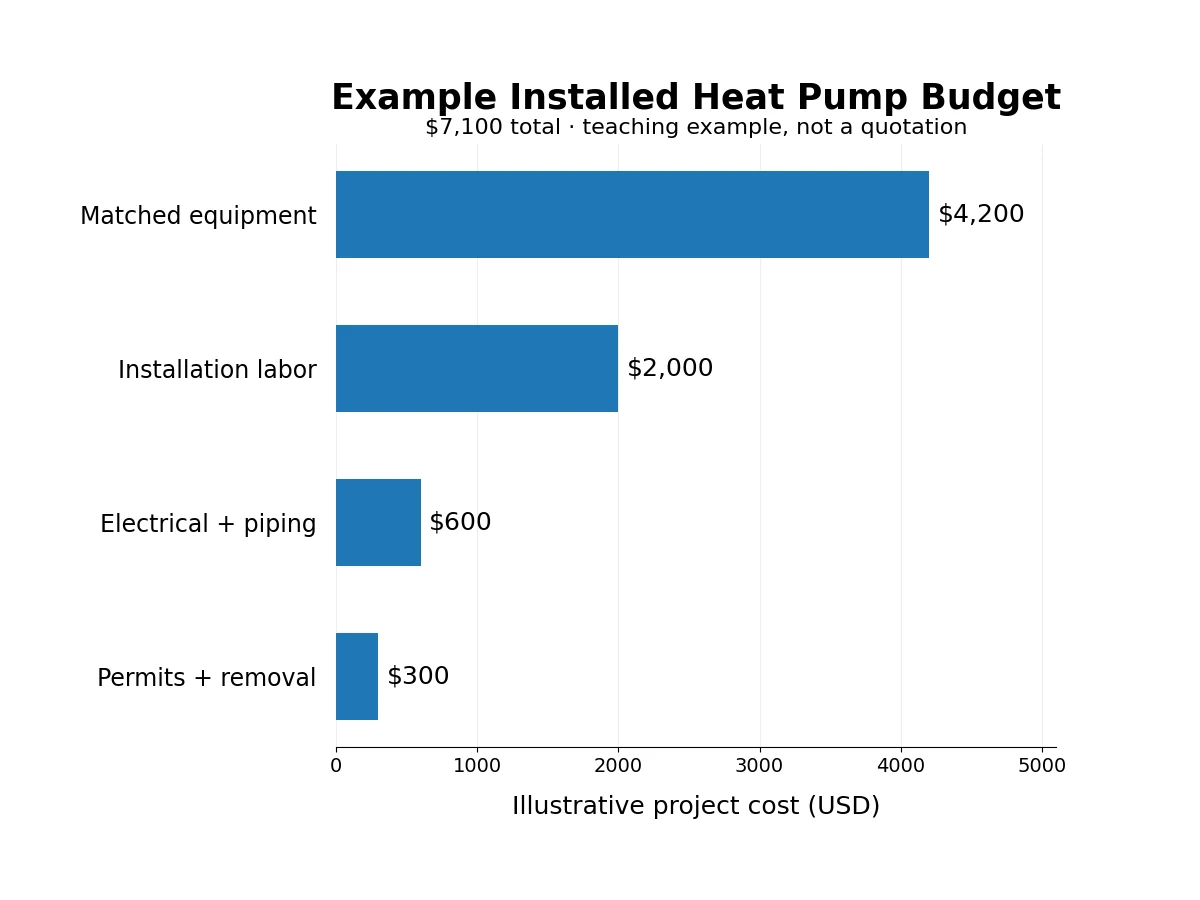
For example, a sample project budget could include matched equipment at $4,200, installation labor at $2,000, required electrical and piping materials at $600, and permits and removal at $300. The installed total is $7,100. If an electrician identifies a panel upgrade, include its price unless the contract already covers that work.
Use the same line items for a second quote. A price of $6,600 that excludes $900 of required electrical work is not actually lower than an all-inclusive $7,100 quote.
Which Factors Change the Equipment Price Most?
Start with the building’s real load and the system design. Capacity, indoor unit count and heating performance often matter more than choosing a well-known brand name. The equipment details then explain why two apparently similar systems carry different prices.
1. Heating and Cooling Capacity
Larger loads normally require more heating or cooling output, which can mean a larger compressor, heat exchangers and fans. But floor area by itself is not an equipment size calculation. Insulation, air leaks, windows, sun exposure, ceiling height, local weather and how rooms are used can change the requirement. Ask for a heating and cooling load calculation, such as ACCA Manual J for a suitable U.S. home, before selecting capacity.
For an initial explanation of room size, building conditions and cooling-load estimates, see our air conditioner sizing guide. Final heat-pump selection must also match the building’s heating load at the winter design temperature.
Oversizing to be safe can waste money and create operating problems, especially if the heat pump’s minimum output is too high for mild-weather needs. Undersizing can leave rooms uncomfortable on design days. The right capacity is the one that matches the project loads at the conditions that matter.
2. Single-Zone or Multi-Zone Design
One indoor head serving one open room usually needs fewer parts than several heads serving closed bedrooms. A multi-zone installation may add indoor units, branch connections, longer lines, extra drains and more installation hours. Check the approved indoor/outdoor combination and the capacity available when several indoor units call for heating or cooling at the same time. This gives a more useful sizing comparison than adding every indoor unit’s nominal capacity.
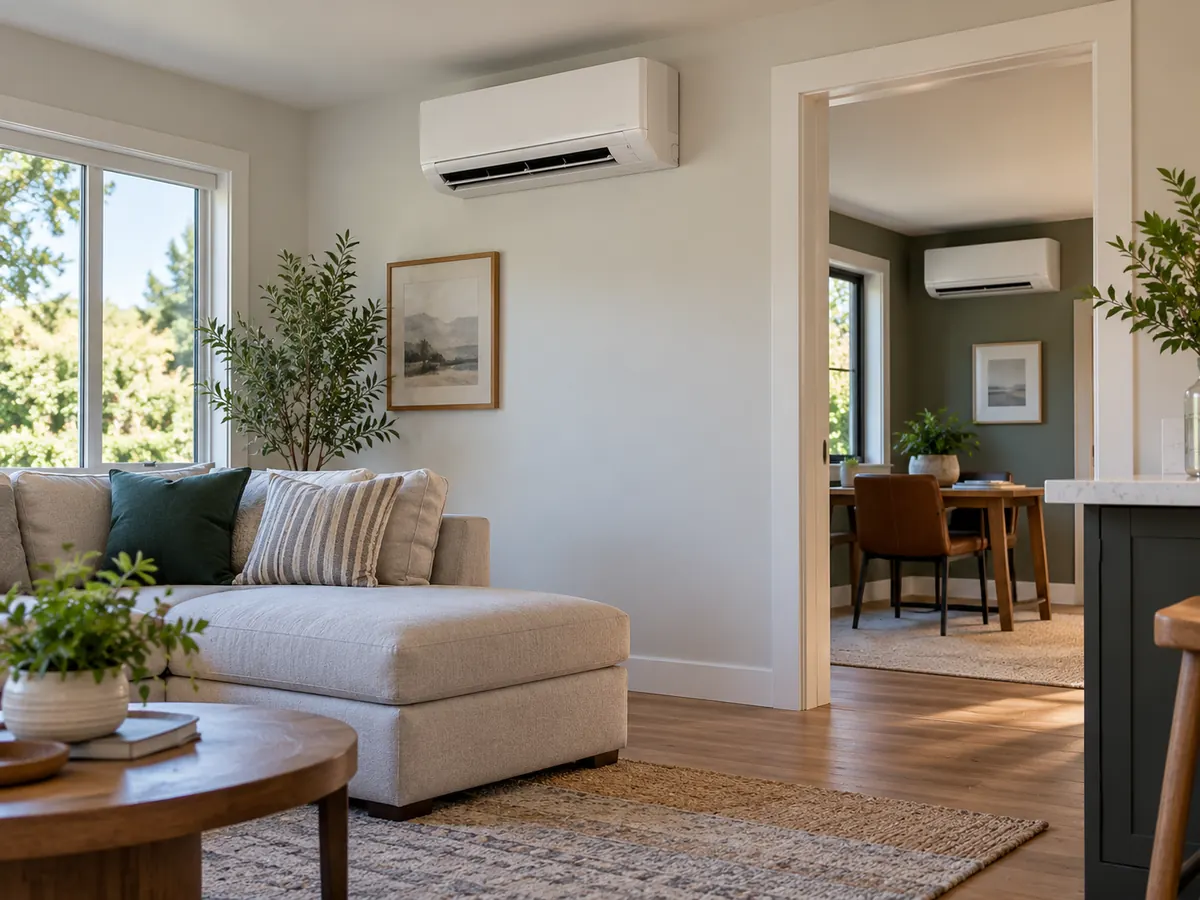
3. Standard or Cold-Climate Heating Performance
For cold regions, compare the heat pump’s actual heating capacity at the winter design temperature with the building’s heating load at that same temperature. Use the model’s heating-output data at that temperature to judge whether the building needs a cold-climate model, a different size or controlled backup heat. These choices can increase upfront or ongoing cost.
4. Compressor Control, Noise and Other Features
Variable-speed or inverter systems can adjust their output instead of running at one fixed level. They may cost more than a basic single-speed unit, but can improve comfort and seasonal use when properly sized. Extra sound control, premium indoor finishes, Wi-Fi features and compatible zoning controls can also affect price. Compare features you will actually use rather than paying for every optional extra.
If you are comparing a fixed-speed unit with a variable-speed model, our guide to how an inverter air conditioner adjusts compressor speed explains what changes at part load. Compare the complete system’s published ratings before paying a price premium.
Compare the feature with the problem it solves. A more expensive model is useful only if its verified performance fits your building and operating hours.
| Feature that may increase price | When it may be worth it | What to compare on actual models |
|---|---|---|
| Variable or multi-stage compressor output | Rooms often need less than the full rated capacity, or steadier comfort matters | Minimum and maximum output, compatible controls and seasonal efficiency |
| Stronger cold-weather heating | Heating demand stays high at the local winter design temperature | Available heating capacity at that temperature and backup heat requirements |
| Lower operating noise | Outdoor placement is close to occupied rooms or neighboring buildings | Comparable sound ratings, test basis and planned installation location |
| Extra control, zoning or backup functions | The building needs independent zones or a defined secondary heating source | Approved controller, compatibility, wiring and total accessory price |
5. Refrigerant, Market Version and Documents
The refrigerant, electrical configuration, safety design and destination-market requirements affect which exact models may be offered. Request equipment prices and supporting documents for the voltage, frequency and market version your project needs. For example, check 50 Hz and 60 Hz versions separately where applicable. Confirm the refrigerant specification and compare each certification or compliance document with the exact model number on the offer.
Is a Ductless Mini-Split Cheaper Than a Ducted Heat Pump?
The lower-cost choice depends on how much of the building needs heating and cooling and what you can reuse. One ductless head may be a sensible one-room solution; a whole-home job must be compared against another whole-home design. Use the same room-by-room loads and indoor comfort requirements in all quotes.
| Building situation | System worth pricing first | What changes the result |
|---|---|---|
| One room or extension without ducts | Price one matched single-zone heating-and-cooling mini-split first | Room load, indoor head location, protected line route, drainage, electrical circuit and winter heating output |
| Several rooms without ducts | Get two full-system quotes: approved multi-zone and several matched single-zone systems | All heads and outdoor units, simultaneous loads, pipe/drain runs, controls, electrical work and mounting space |
| Whole home with sound existing ducts | Price a matched ducted heat-pump replacement using serviceable ducts | Duct pressure/leakage and airflow, indoor coil or air-handler match, electrical capacity and repairs |
| Whole home with unusable or absent ducts | Price both a ducted retrofit and a ductless design | New duct construction versus additional indoor heads and lines |
| Cold climate with an existing furnace | Heat pump alone or a compatible dual-fuel option | Winter output, controls, retained equipment and future fuel cost |
A ductless air conditioner may be cooling-only. When comparing ductless air conditioner cost or mini split air conditioner cost, check that the quoted model is actually a reversible heat pump. Otherwise the prices describe different services. Our mini split air conditioner guide explains the equipment layout; our mini split heat pump installation guide covers the installation steps in more detail.
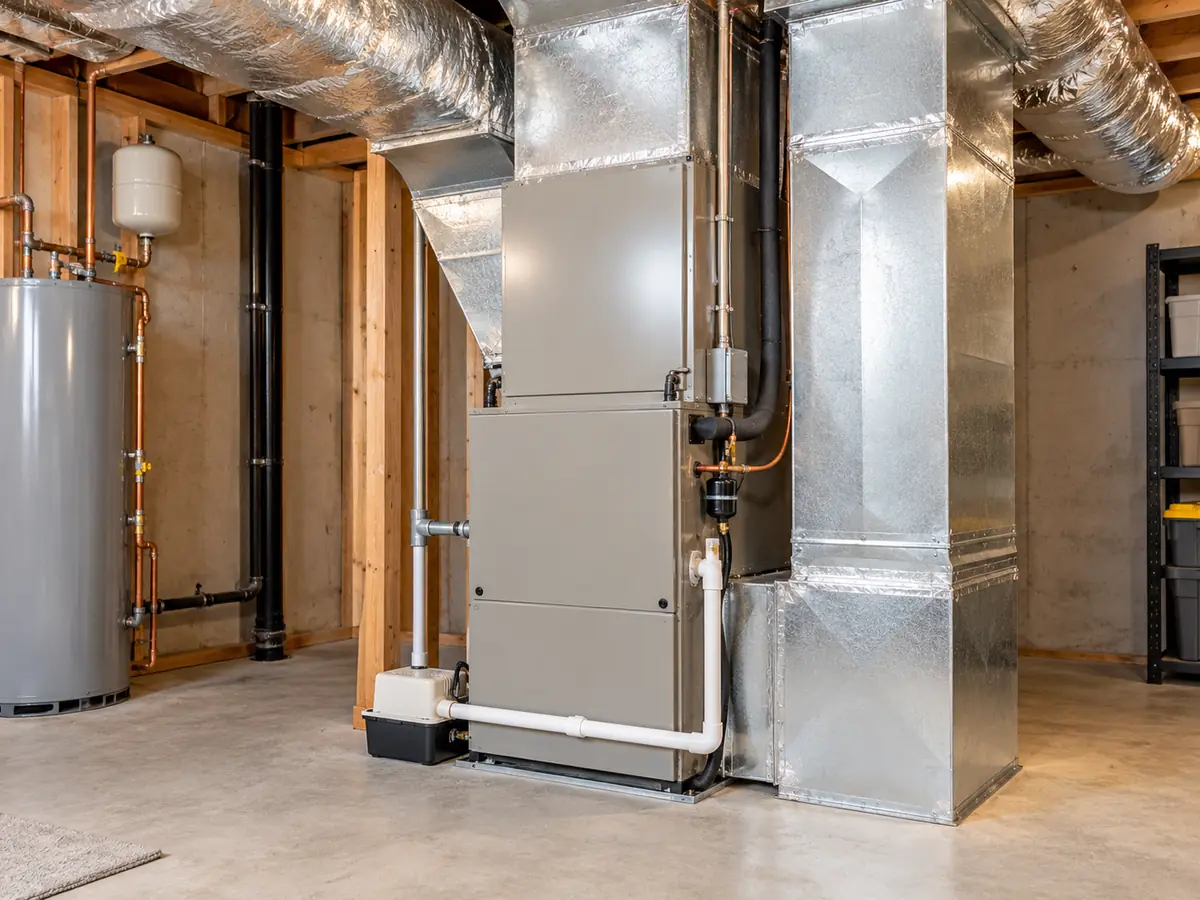
Why Can Heat Pump Air Conditioner Installation Cost So Much?
Most unexpected price increases come from work around the equipment, not simply from the unit being expensive. A long pipe route, inadequate electrical supply, difficult outdoor mounting or damaged ducts can change the quote before the system is switched on.
Pipe Routes, Drains and Outdoor Placement
A simple back-to-back indoor and outdoor placement usually needs less routing than a head on the other side of a building. Longer or more complex routes can add insulation, protective covers, wall penetrations, access equipment and refrigerant charge where the manufacturer requires it. Cooling condensate needs a reliable outlet. A condensate pump may be necessary where gravity drainage is not possible.
A wall-mounted indoor head may use a short, accessible wall opening. A ceiling cassette or concealed indoor unit can need ceiling access, support framing and a way to service the unit later. These details change material, finishing and labor costs even when the rated cooling capacity is similar.
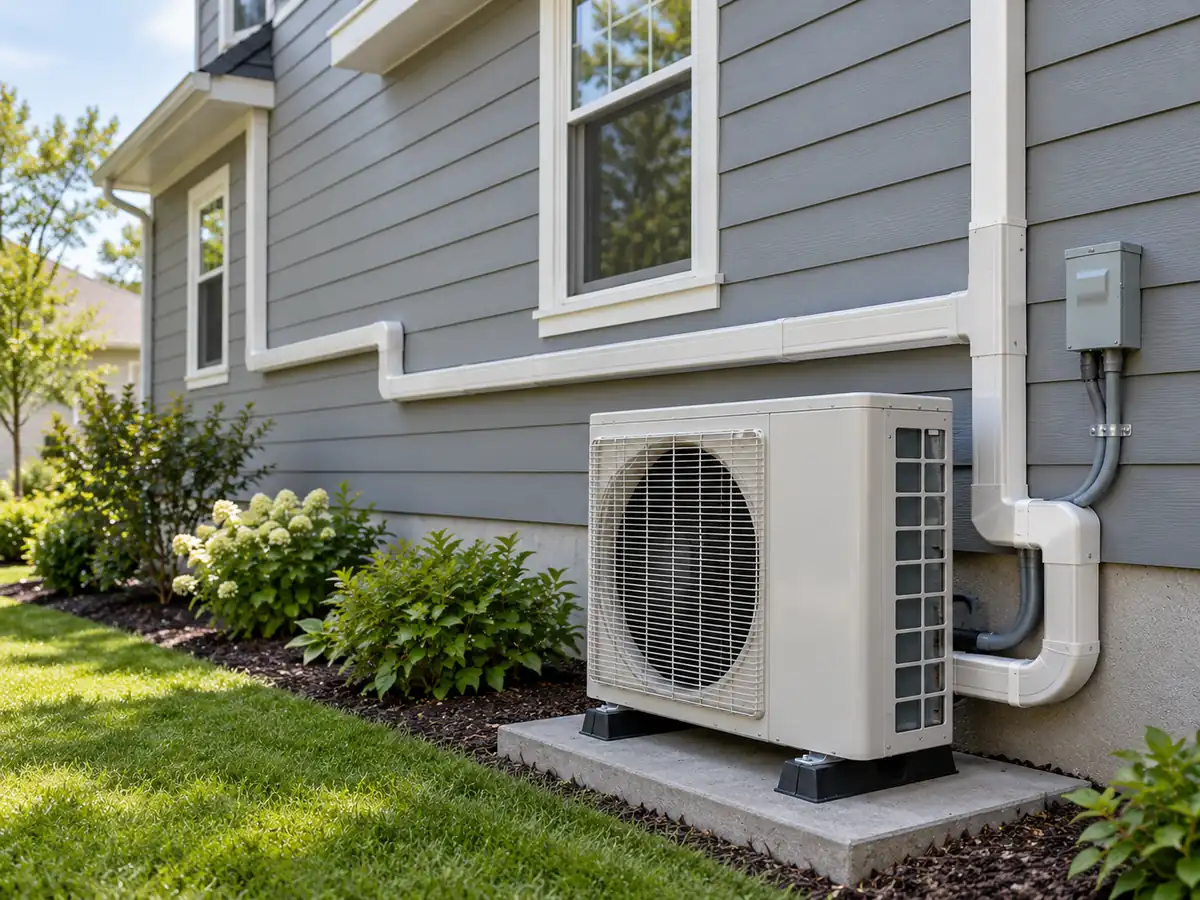
The outdoor unit also needs airflow, mounting strength and access for service. In snow regions, plan safe drainage for defrost water and protect clearances. These are design items, not optional finishing details.
Existing Ducts, Air Handler and Electrical Supply
If replacing a ducted split system, the installer must check whether the existing indoor equipment and ducts suit the new outdoor unit. A new heat pump may require a compatible air handler or coil. Leaky ducts, poor airflow or duct insulation can increase work and operating cost. For ductless work, dedicated circuits or electrical panel modifications can still be needed.
What Professional Installation Pays For
Installation is more than hanging the equipment. The scope may include pressure or leakage checks where specified, evacuation and refrigerant work, correct electrical connections, condensate checks, airflow and temperature checks, controls, safety testing and written startup records. Follow the exact installation manual and local requirements; qualified workers must carry out regulated tasks. A cheaper price that leaves these out can lead to expensive faults later.
| Site finding | Why the installed price can rise | Request in the written quote |
|---|---|---|
| Long or difficult refrigerant line route | More approved tubing, insulation, supports, access and labor | Included line length, routing method and extra-length rate |
| Concealed or ceiling-mounted indoor unit | Ceiling work, mounting, drain access and finishing repairs | Mounting, access panel, condensate solution and restoration scope |
| Electrical service or panel shortfall | New circuit, disconnect, electrical upgrade or separate trade | Electrician assessment, included work and priced exclusions |
| Leaky ducts or incompatible indoor equipment | Airflow corrections, duct sealing, indoor coil or air-handler replacement | Airflow/duct evaluation and retained-component compatibility |
| Condensate cannot drain by gravity | Additional pump, wiring, drain routing and maintenance access | Drain diagram, condensate pump if needed, and testing |
A higher quote can be reasonable if it includes necessary site work that a lower quote excludes. Ask each contractor to mark the work as included, excluded or a priced allowance, and to include startup testing and handover records.
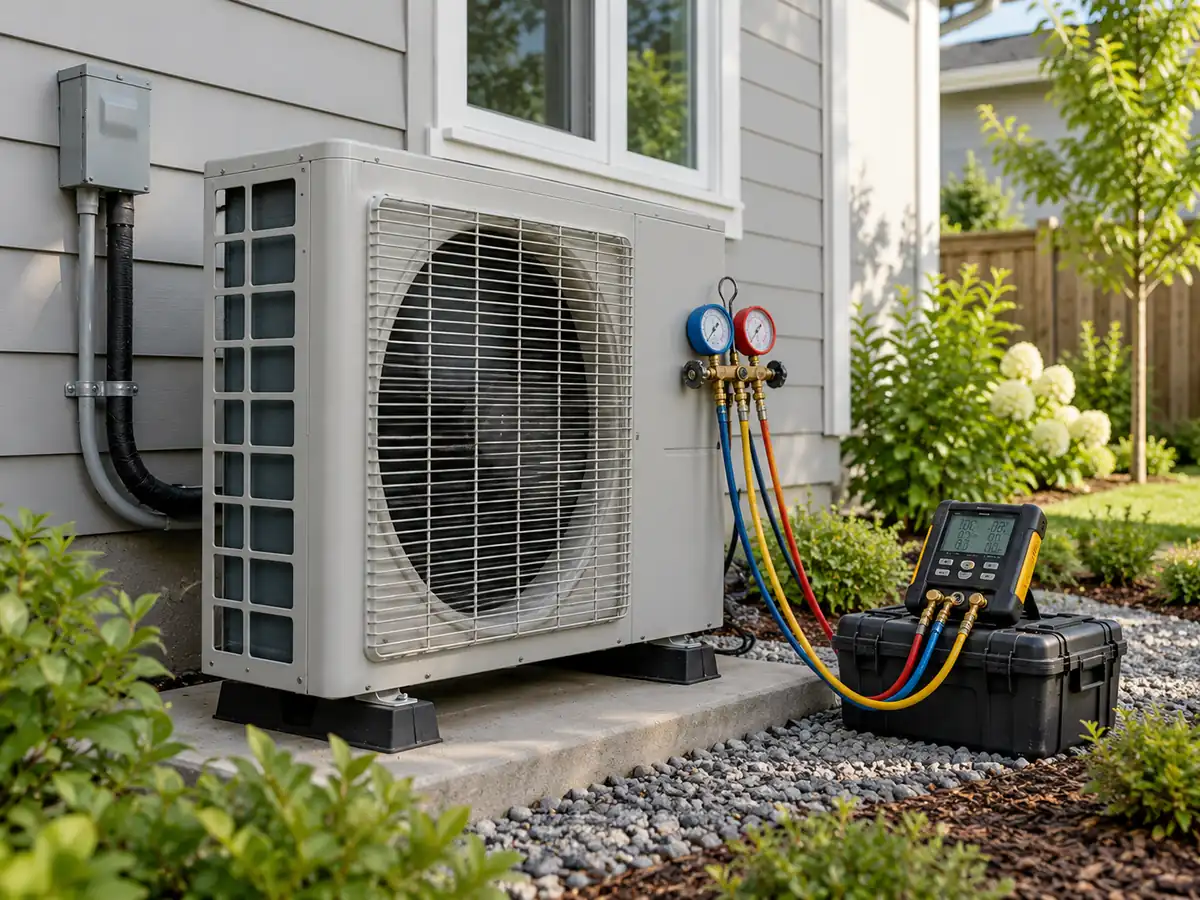
For ductless air conditioner installation cost or mini split air conditioner installation cost, compare the actual indoor unit style, number of zones and line routes—not only the advertised equipment price.
How Do SEER2 and HSPF2 Affect Price and Value?
The value of a higher efficiency rating depends on annual electricity savings and the extra installed price. In U.S. ratings, Seasonal Energy Efficiency Ratio 2 (SEER2) measures seasonal cooling performance, while Heating Seasonal Performance Factor 2 (HSPF2) measures seasonal heating efficiency. Compare both for a reversible heat pump.
The older SEER rating and newer SEER2 rating use different testing procedures. Compare SEER2 with SEER2 for cooling and check HSPF2 separately for heating. Also check cold-weather heating capacity and the actual matched indoor/outdoor combination. The ENERGY STAR heat pump criteria define the U.S. cooling and heating metrics; AHRI explains how to verify a matched split-system rating.
When Is a Higher-Efficiency Model Worth the Extra Money?
Compare the extra installed cost with likely annual energy savings under the same comfort needs, energy prices and operating schedule. For example, if one acceptable model costs $1,000 more and a project-specific estimate suggests $100 less electricity per year, the simple payback is ten years before maintenance, repairs, financing or changing tariffs. Use the estimated savings for your own building and local electricity tariff to decide whether the $1,000 premium is worth paying.
If the rooms are used only occasionally or electricity is cheap, the price premium may take longer to recover. If the building operates many hours, a verified efficiency improvement may matter more. Also check the cost of winter backup heat and any controls needed to realize the rated performance.
Simple payback is only one check. A short payback needs a credible estimate of total annual savings, not a higher SEER2 number alone. Winter heating demand, defrost, backup heat, hours of use and local electricity prices can change the result.
How Much Does It Cost to Run a Heat Pump Air Conditioner?
Operating cost depends on how much electricity the complete system uses and the price per kilowatt-hour you pay. A higher SEER2 does not by itself state the monthly bill. Weather, the building load, run time, defrost, backup heat and thermostat settings all affect consumption.
Use Your Metered or Estimated Electricity Input
For a simple operating example, use Cost = input power (kW) × equivalent hours × electricity rate ($/kWh). Suppose the system averages 1.2 kW of electrical input across the hours counted, works for an equivalent 5 hours a day on 30 days, and electricity costs $0.20/kWh. The illustrative result is 1.2 × 5 × 30 = 180 kWh, or $36 for that month.
The 1.2 kW is electrical input, not the heating or cooling capacity on the nameplate. A variable-speed heat pump’s actual input changes as the load changes; the assumed hours are equivalent at the stated average power. Metered monthly kWh is better than guessing from a maximum input rating. For winter heating, include any electric backup heat and other system electricity.
Use SEER2 Only for a Like-for-Like Cooling Estimate
If you know an illustrative season needs 12,000,000 Btu of delivered cooling, a rough rated-condition comparison gives 12,000,000 ÷ 16 SEER2 ÷ 1,000 = 750 kWh. At $0.20/kWh, that is $150 for the cooling energy in this simplified example. A 14 SEER2 unit under the same simplified demand would use about 857 kWh and cost about $171—a difference of roughly $21 over that example season.
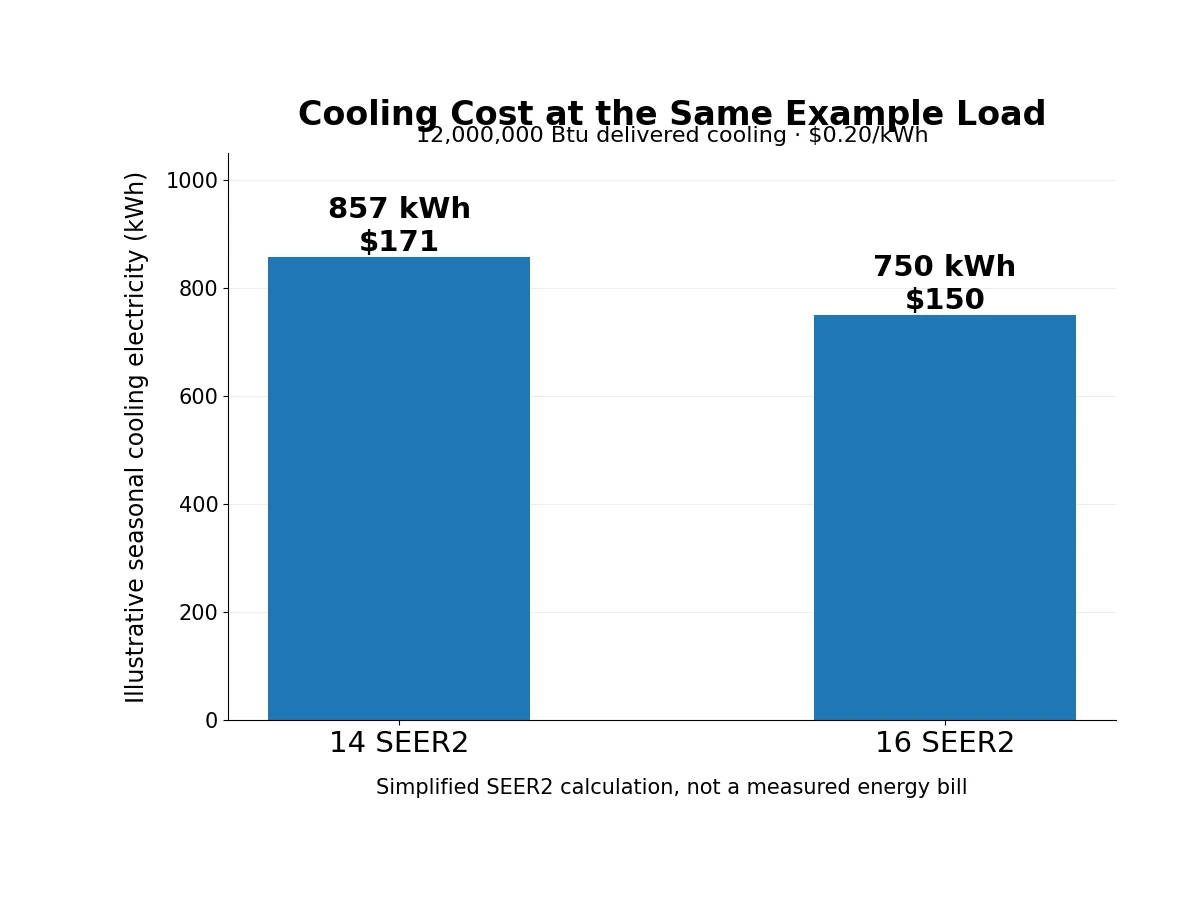
These examples use illustrative inputs. Replace them with projected or metered kWh for your building to estimate your electricity cost. Climate, part-load operation, ducts, controls and the matched equipment combination affect actual use. For winter, use HSPF2 or appropriately modeled heating performance. When comparing a heat pump with another heater, compare full-year energy costs for both options.
Estimate a Full Year, Not Just a Cooling Month
- Estimate annual electricity use. Obtain projected cooling kWh and heating kWh for each matched system in the same climate and building. Include fans, defrost and any electric backup heat rather than using SEER2 alone.
- Apply your actual tariffs. Multiply each block of electricity use by the price you pay at the time it is used. Include fixed charges only if they change between the options. Annual variable energy cost = sum of each period’s kWh × rate.
- Compare the total difference. Subtract the lower annual cost from the higher annual cost; then compare the annual savings with the extra complete installed price. Record assumptions and ask what happens if operating hours or energy rates change.
For instance, if a matched option is estimated to use 500 fewer kWh over a full year and the relevant rate is $0.20/kWh, the illustrative energy difference is $100 a year. This annual comparison uses a separate set of assumptions from the $36/month and SEER2 cooling examples above. Use the annual kWh difference for the actual systems and operating conditions you are comparing.
For a closer look at cooling electricity costs and how tariffs vary by market, read our air conditioner running cost guide. For a reversible heat pump, include winter heating and any backup-heat electricity in the annual comparison.
How Can You Compare Two Heat Pump Installation Quotes Fairly?
Ask every contractor to quote the same heating and cooling job, then compare differences in scope line by line. The lowest total only matters when the system and the included work are genuinely comparable.
- Agree on the required loads. Provide room-by-room heating and cooling requirements, location and design temperatures. Check the proposed capacity at those conditions.
- Match the system design. List whether it is ducted or ductless, the indoor heads and zones, retained equipment and any backup heating.
- Check exact models and efficiency. Ask for indoor and outdoor model numbers, heating/cooling specifications and matched ratings where applicable.
- Define the installed scope. Compare line lengths, duct and electrical work, drains, pads, removals, permits and wall repairs. Mark every cost as included, excluded or an allowance.
- Confirm tests and support. Check commissioning records, warranty terms, who will perform service and who handles follow-up work.
- Price the years after installation. Review realistic electricity use, likely maintenance needs and incentives your specific project actually qualifies for.
The ENERGY STAR contractor guidance recommends a home evaluation, proper sizing and written itemized estimates. You can also use our ductless heat pump installation guide to see which site and startup checks should appear in the planned work.
Check incentives before subtracting them from the budget. The U.S. IRS states that the federal Section 25C Energy Efficient Home Improvement Credit is not available for property placed in service after December 31, 2025. Other local or utility programs may still apply, but eligibility depends on the location, applicant, exact system and program dates. Outside the U.S., check the relevant local program rather than applying U.S. figures.
When Is Paying More for a Heat Pump Worth It?
Pay more when the extra cost solves a real building requirement or is supported by credible operating savings. Choose a higher rating, greater capacity or additional features when they meet a verified heating load, comfort need or running-cost goal. Compare that benefit with the extra installed price.
When the choice is between keeping a separate heater and switching to one reversible system, review the heat pump air conditioner pros and cons alongside the complete installed and annual energy costs.
| If your project has… | Spend first on… | Do not assume… |
|---|---|---|
| Cold winters and high heating demand | Verified heating output at your design temperature and an appropriate backup plan | A very low operating-temperature claim proves enough heat |
| One occupied room without ducts | Correctly sized single-zone reversible system and a short, serviceable installation route | More indoor heads automatically mean better comfort |
| Existing ducts in good shape | Load matching, airflow, airtight ducts and a compatible indoor/outdoor pair | Ductless is always cheaper |
| Long daily operation | Verified seasonal efficiency, suitable minimum output and sound installation | The highest SEER2 has the shortest payback |
| Several competing contractor bids | Complete scope and usable records of equipment, testing and warranties | The smallest quoted total includes the same work |
What Details Help Us Check Your Heat Pump Air Conditioner Options?
Send us your building requirements, destination market and electrical supply. We can use these details to narrow relevant equipment options and identify the model specifications to confirm. For a system that heats and cools, check the exact model and market version for reverse-cycle heating. A local qualified installer evaluates and prices the site work separately.
What to Send for an Equipment Enquiry
- Location and purpose: destination country, building type, intended heating and cooling use, and winter design temperature if relevant.
- Building and layout: room-by-room loads when available, number of zones, existing ducts, proposed indoor and outdoor positions, and route or space limits.
- Electrical and order needs: voltage, frequency (Hz), phase, destination-market document requirements, estimated quantity and preferred product configuration.
What to Check Before Accepting an Equipment Offer
- Exact equipment: heating-capable model numbers, permitted indoor/outdoor unit combinations, capacity at required conditions, refrigerant and controller compatibility.
- Rating and supply: applicable efficiency data and test basis, electrical specification, components included, spare accessories if quoted and any documented warranty terms.
- Separate installation scope: ask a local contractor to itemize pipe runs, drains, electrical work, permits, testing, commissioning, service access and labor in the installed-cost estimate.
Explore our air conditioner product categories to identify relevant starting options, then send us your requirements for a model-specific discussion. For heating-and-cooling projects, compare exact models with confirmed reverse-cycle heating and destination-market specifications.
What Matters Most When Budgeting for a Heat Pump Air Conditioner?
The biggest drivers of heat pump air conditioner cost are the load and system you actually need, the number of zones, equipment efficiency and cold-weather capability, and the work needed to install and test it. A cheaper outdoor unit does not necessarily produce a cheaper finished project. Get comparable written installation scopes, confirm the indoor/outdoor equipment combination and assess running cost at your local electricity rate. That gives you a budget you can explain and a system better matched to the building.
Frequently Asked Questions
Does a heat pump air conditioner cost more than a cooling-only AC?
It can cost more upfront because it also needs heating capability, but the fair comparison depends on what it replaces. If you need new cooling and heating, compare the complete heat pump against the cost of both alternative systems. If your existing heater will remain, compare only the work you actually plan to change.
Is a mini split air conditioner the same as a mini split heat pump?
No. A mini split describes the indoor and outdoor arrangement. Some mini splits only cool, while reversible mini split heat pumps provide heating and cooling. Verify the exact model’s heating function and winter capacity before comparing prices.
Does one outdoor unit with several indoor heads always save money?
No. A multi-zone outdoor unit can reduce the number of outdoor units, but extra indoor heads, long lines and controls still cost money. Several single-zone systems may be worth comparing when the room loads, allowed configurations or pipe routes make them practical.
Can I compare heat pump quotes using SEER instead of SEER2?
Do not compare an old SEER number directly with a SEER2 number. They use different test procedures. For U.S. equipment, compare the same rating method on the actual matched system, and check HSPF2 separately for heating efficiency.
What if a quote does not include an electrical panel upgrade?
Ask the installer or qualified electrician whether the existing service can support the specified system. If extra work is required, obtain a separate itemized price and add it to the installed total. Do not compare that incomplete figure with a quote that already includes the upgrade.
Will a high-efficiency heat pump always have lower running costs?
Not always. Higher seasonal ratings can help under comparable conditions, but the bill also depends on your building load, climate, electricity tariff, controls, ducts and backup heat. Compare realistic yearly energy use and the extra installed cost before deciding whether a premium unit pays back.
Why can two heat pump quotes with the same BTU rating cost different amounts?
The BTU rating tells you only part of the capacity story. Cold-weather heating output, indoor/outdoor pairing, compressor control, noise features, electrical needs and installation scope may differ. Compare the same building loads and the itemized work before deciding which quote offers better value.
Does a heat pump air conditioner unit price include installation?
Not necessarily. An equipment-only quote covers the stated products and included parts. A complete installed quote should separately identify pipe runs, mounting, electrical work, permits, labor, testing and any site upgrades, with clear exclusions. Ask which party is responsible for each item.