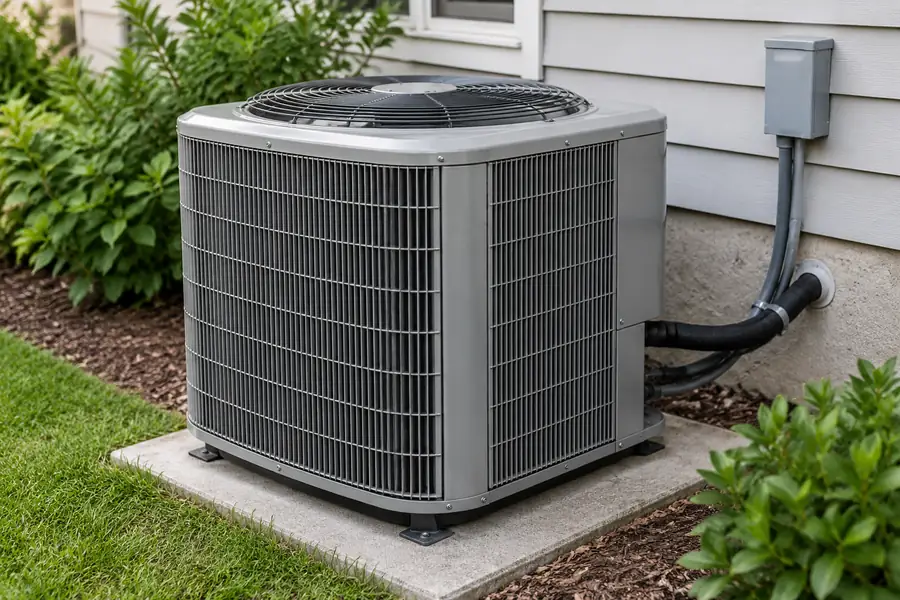
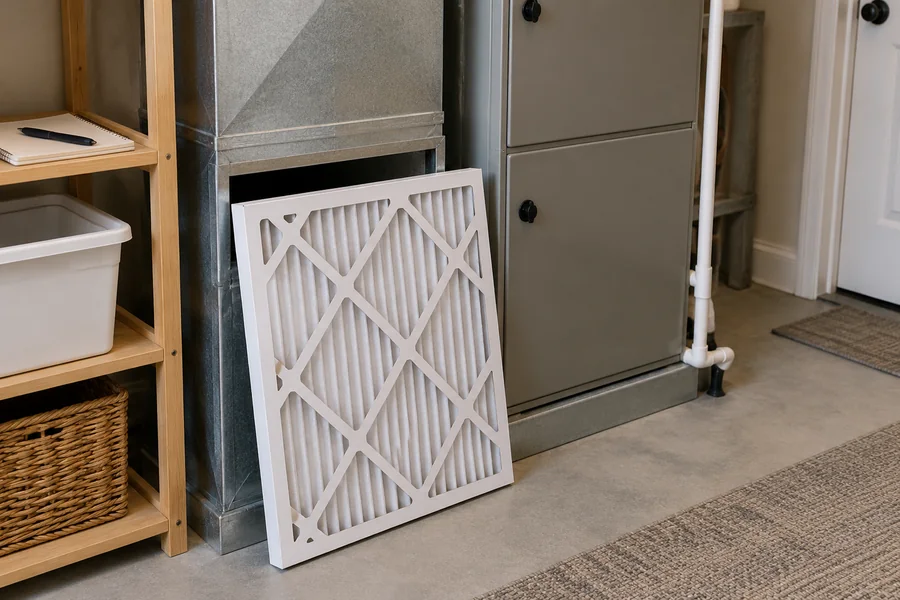
Quick answer: A solar air conditioner uses electricity generated by solar panels to run an AC or heat pump. For a grid-connected home, ordinary efficient AC plus rooftop PV is usually the flexible starting point. A solar hybrid mini-split can use compatible panels directly for daytime cooling with grid backup. A fully off-grid installation needs an electrical system sized for low-sun periods and usually batteries for night use.
The correct choice depends on actual AC electrical demand, sunlight by hour, power availability and budget—not just the air conditioner’s BTU rating. The guide below explains the layouts, a real calculation method, cost components and installation checks.
What Is a Solar Air Conditioner and How Does It Work?
A solar air conditioner is a cooling system that uses electricity from solar photovoltaic (PV) panels for some or all of its power. In most homes, it still cools the same way as a conventional air conditioner: refrigerant absorbs heat indoors and releases it outside. Solar power changes where the electricity comes from, not how the cooling cycle moves heat.
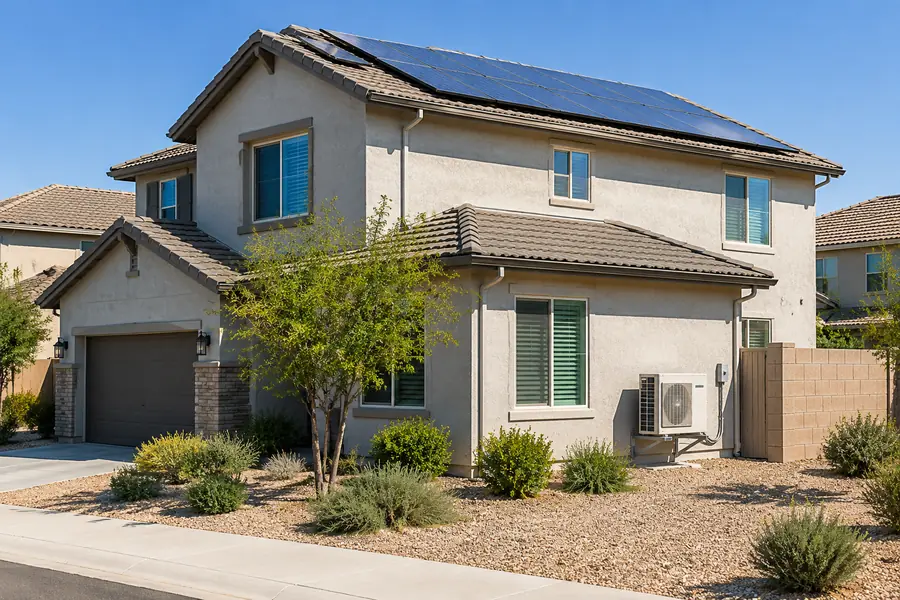
PV modules create direct-current (DC) electricity in sunlight. That electricity may pass through a solar inverter and the building switchboard before reaching a normal AC, or it may feed a specially designed DC-input outdoor unit. The U.S. Department of Energy’s PV system guide explains how inverters and storage work together with a solar array.
A solar inverter converts PV electricity for a building’s AC supply. An inverter air conditioner uses electronic controls to adjust compressor speed as cooling demand changes. These are different jobs; our inverter air conditioner guide explains the compressor-control side.
Where does the solar electricity enter? The connection depends on the equipment:
- Standard AC: PV panels → approved grid-connected inverter → building electricity supply → standard air conditioner.
- Direct-PV hybrid AC: compatible PV array → the model’s dedicated solar DC input. A separate grid connection may provide backup where that model supports it.
- Off-grid AC: PV array → approved charging, storage and inverter equipment → air conditioner. The exact path changes with the approved design; batteries are needed if stored solar energy must run cooling after sunset.
These paths show how each system supplies power to the air conditioner. Use the selected equipment’s approved connection diagram, with installation carried out by a qualified professional.
The important distinction is cooling capacity versus electrical input. A 12,000 BTU/h air conditioner is rated to remove 12,000 BTU of heat per hour under a specified test condition. That is not a 12,000-watt electrical load. Read the unit’s rated and operating input in watts or kilowatts when planning PV capacity.
Solar PV cooling versus solar thermal cooling
Solar PV cooling turns sunlight into electricity for a compressor-driven air conditioner. Solar thermal cooling uses collected heat to drive an absorption or adsorption cooling cycle, generally in more specialized systems. This guide covers the PV option used for homes, mini-splits and most small building projects. GIZ’s 2025 Solar PV-powered Room Air Conditioning study describes these distinct technologies and the main hybrid and off-grid layouts.
Which Solar Air Conditioner Type Should You Choose?
Choose the power arrangement before choosing the air-conditioner model. A grid-connected home with existing rooftop solar often needs a standard efficient AC. A single room with strong daytime sun may suit a compatible AC/DC hybrid mini-split. An isolated property needs a complete off-grid electrical design, normally including storage if cooling must continue after sunset.
| System | Where solar power goes | Best situation | Night power source |
|---|---|---|---|
| Grid-tied PV + standard AC | Inverter supplies the building; AC uses that electricity | Existing solar home, central AC or window unit | Grid or approved home battery |
| Direct-PV AC/DC hybrid mini-split | Compatible panels connect to a solar-ready outdoor unit | One zone, daytime cooling, reliable grid backup | Typically switches to grid |
| Off-grid PV + inverter + storage | PV powers or charges a standalone electrical system | Remote house or no utility connection | Battery supplies load until depleted |
| PV + portable or window AC | PV feeds suitable AC power through a rated system | Small room where permanent split AC is not suitable | Grid or battery, if provided |
What supplies cooling when conditions change?
Solar power does not automatically mean blackout backup. Check the approved equipment’s operating mode for each situation:
Grid-connected PV + standard AC
- Sunny daytime: building PV may cover some or all AC electricity; the grid makes up any gap.
- Cloudy daytime: PV output falls, so grid import may rise.
- Night: utility electricity, or an approved home battery system if installed.
- Grid outage: ordinary grid-tied PV stops supplying loads; cooling needs a properly designed backup or islanding system.
Direct-PV hybrid mini-split
- Sunny daytime: compatible panels supply DC power to the dedicated solar input within its approved limits.
- Cloudy daytime: the unit may reduce solar use or draw from the grid, depending on its controls and available power.
- Night: grid supply if the model supports it; battery operation is not automatic.
- Grid outage: daytime solar-only operation is possible only on models that explicitly support it.
Purpose-built off-grid system
- Sunny daytime: solar generation supplies cooling and may charge storage.
- Cloudy daytime: batteries or a planned backup source cover a shortfall, within equipment ratings.
- Night: usable stored energy supplies the AC until the battery reaches its permitted discharge limit.
- Grid outage: grid loss does not stop an independent system, but cooling still depends on solar, storage and power capacity.
Grid-tied solar panels with an ordinary air conditioner
This is often the simplest choice when the building already has a compliant photovoltaic system. Solar electricity flows through the approved inverter and electrical system; a normal high-efficiency central AC, split AC or window unit uses it like any other building load. The solar array can serve lighting and other appliances when cooling demand is low. A basic grid-tied inverter is not a backup supply during a blackout.
For this grid-supplied option, explore the AirProz split air conditioner range as conventional cooling equipment. The approved solar inverter and building electrical system provide the AC power. A dedicated direct-PV input is a separate equipment feature.
Hybrid solar air conditioner or solar mini-split
Some specially built solar powered mini split air conditioners accept PV DC directly and supplement it with mains electricity as sunlight changes. This may avoid a separate dedicated solar inverter for the air conditioner, but only where the manufacturer provides a supported solar input. Check the PV string’s operating voltage, cold-weather open-circuit voltage, current, connector type, protection and the unit’s real operating limits. Solar-ready does not mean any panel can be plugged in.
If your project needs one cooling zone or several, our mini-split system guide explains single-zone and multi-zone layouts. Select the room layout first, then check whether the proposed solar-ready model has an approved direct-PV input.
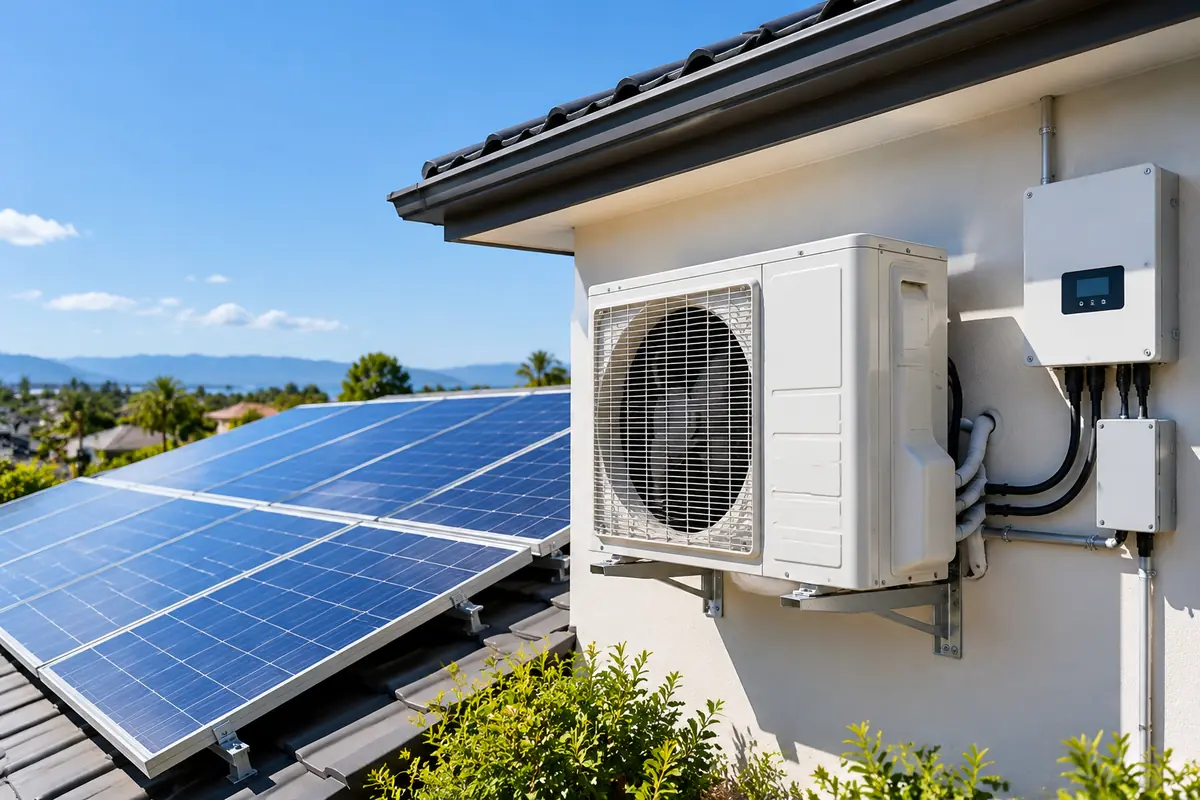
Off-grid solar air conditioner
An off grid solar air conditioner must cover cooling even when solar production falls. A battery may be needed for evening demand, cloud cover and compressor operation. Size the inverter for continuous load and any startup demand, then size battery energy separately. If cooling is only required in full sun, a model approved for solar-only daytime operation may use less equipment, but the room will not necessarily stay cool after sunset.
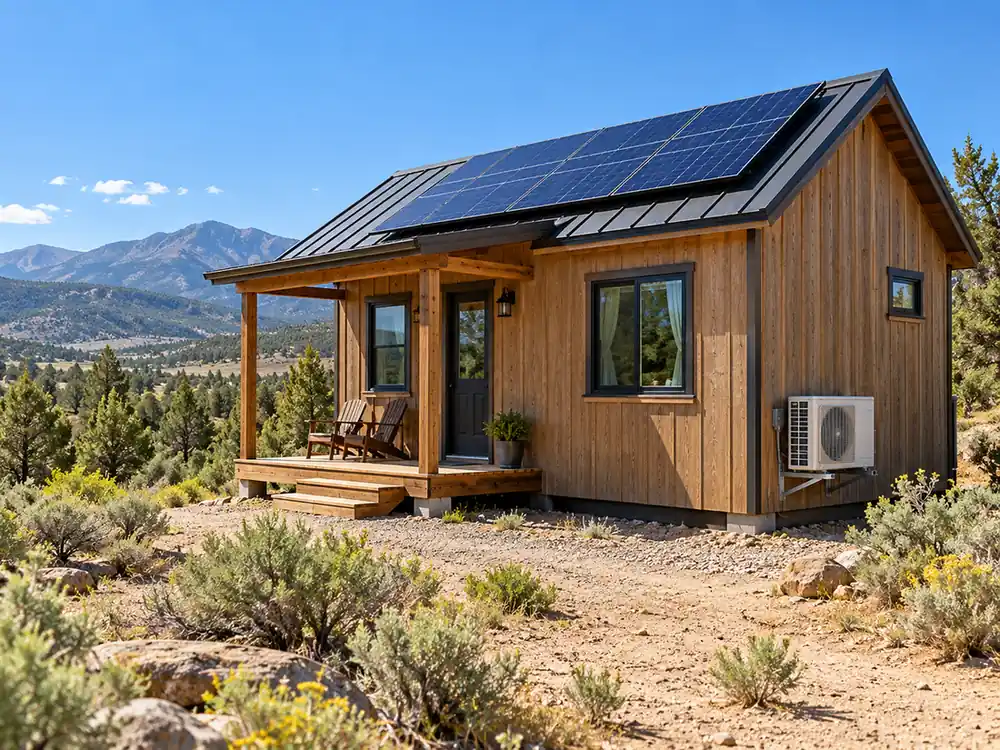
Portable, window and direct-current models
A solar powered window air conditioner or portable AC can operate from an appropriately sized solar-backed AC supply; it usually cannot accept raw PV DC. Portable compressor ACs still need their heat exhaust routed outdoors. Small evaporative coolers marketed as “solar air conditioners” are a different technology and can perform poorly in humid conditions. Check the cooling mechanism before comparing prices.
How Many Solar Panels Do You Need to Run an Air Conditioner?
Start with the air conditioner’s electrical use in kWh, not its BTU/h cooling rating. For an initial panel estimate, divide the daily cooling electricity by the site’s effective daily solar production per kilowatt of panels. Then check hourly power supply, seasonal changes, inverter capacity and the exact PV input limits of a direct-DC model.
First confirm that the AC can meet the room’s cooling load. Our air conditioner sizing guide explains how insulation, windows, climate and room use affect required cooling capacity. Use the selected unit’s electrical input—not its BTU/h rating—to estimate the solar array.
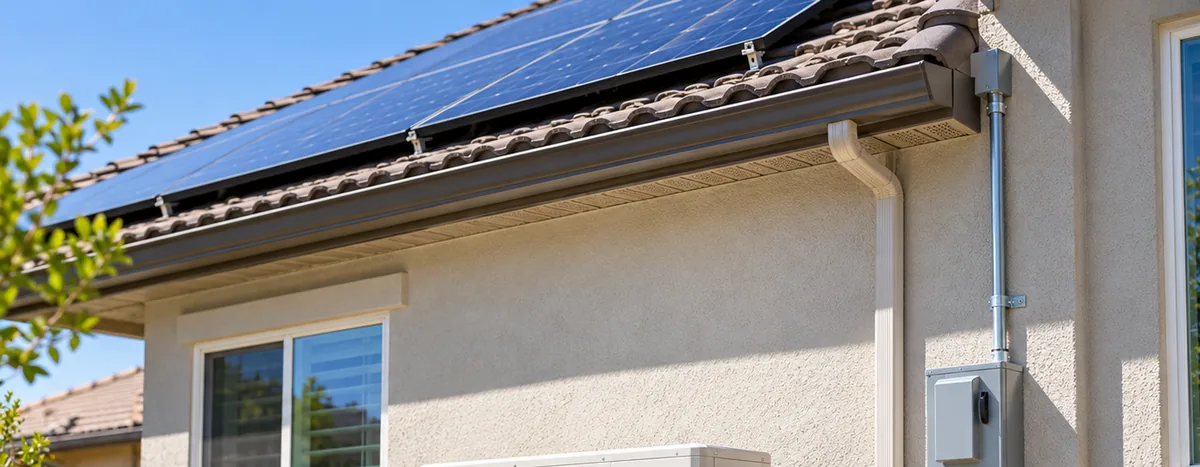
- Find actual electrical input. Use measured electricity if available or the model’s rated input and an explained duty-cycle assumption.
- Estimate daily energy: average input (kW) × operating hours = kWh/day.
- Estimate PV array: daily energy ÷ (equivalent full-sun hours × planning performance factor) = kW of PV panels.
- Convert to panels: array W ÷ panel rating W, rounded up, then review string-voltage design.
- Verify the result with an hourly or monthly yield model and the system’s grid/battery operating logic.
Worked example: a single room with eight hours of cooling
For this worked example, assume an efficient mini-split averages 0.9 kW of electrical input for eight hours, with 4.5 equivalent full-sun hours and a 0.75 planning performance factor. For your project, use the selected AC model’s electrical input and local solar conditions.
0.9 kW × 8 hours = 7.2 kWh per day.
7.2 kWh ÷ (4.5 hours × 0.75) = 2.13 kW of panels.
2,130 W ÷ 400 W per panel = 5.33, so a preliminary allowance is six 400 W panels (2.4 kW DC).
The six-panel result covers the example’s estimated daily energy. Next, compare hourly solar production with the AC’s electrical demand and check the chosen model’s DC input limits. Clouds, warm panels, shading and late-day cooling can lower available solar power. In a grid-tied system, household use and electricity exports affect bill savings. In a direct-PV system, the unit’s voltage and current limits determine the permitted panel connections.
Use PVWatts to estimate location-based production. It models weather, array orientation and losses. Compare the resulting monthly or hourly production pattern with the hours when cooling is needed.
Quick solar panel estimate
Enter the expected average AC input, operating hours, local sun hours, planning factor and panel rating. The result gives daily cooling energy and a starting PV size; then use the compatibility checks below to select the final panel arrangement.
Before connecting PV panels directly: three checks
After the energy estimate, check the actual PV connection. The six-panel example gives a starting array size. Match the selected panels and air conditioner using these three checks:
- Daily and hourly power: compare the expected AC electricity use with site-specific production through the actual cooling hours, not just the day’s kWh total.
- Exact model and module limits: get the manufacturer’s permitted PV operating-voltage range, maximum DC input voltage and current limits. Compare these with the selected modules’ series-string operating voltage, temperature-adjusted cold-weather open-circuit voltage and current ratings. Confirm series/parallel layout with the designer.
- Approved connection and protection: match the manufacturer’s wiring diagram, disconnects, DC-rated protective devices, cable and connector requirements, grounding/earthing and local electrical rules.
If any model input specification is missing, request the data sheet before fixing the panel-string design. More panel watts cannot fix an incompatible voltage or current arrangement.
Do Solar Air Conditioners Need Batteries for Night Cooling?
They need another power source after dark: the grid or a correctly sized battery. A solar hybrid air conditioner connected to the grid can usually run at night without its own battery. Off-grid cooling needs stored energy because the PV array is no longer producing electricity.
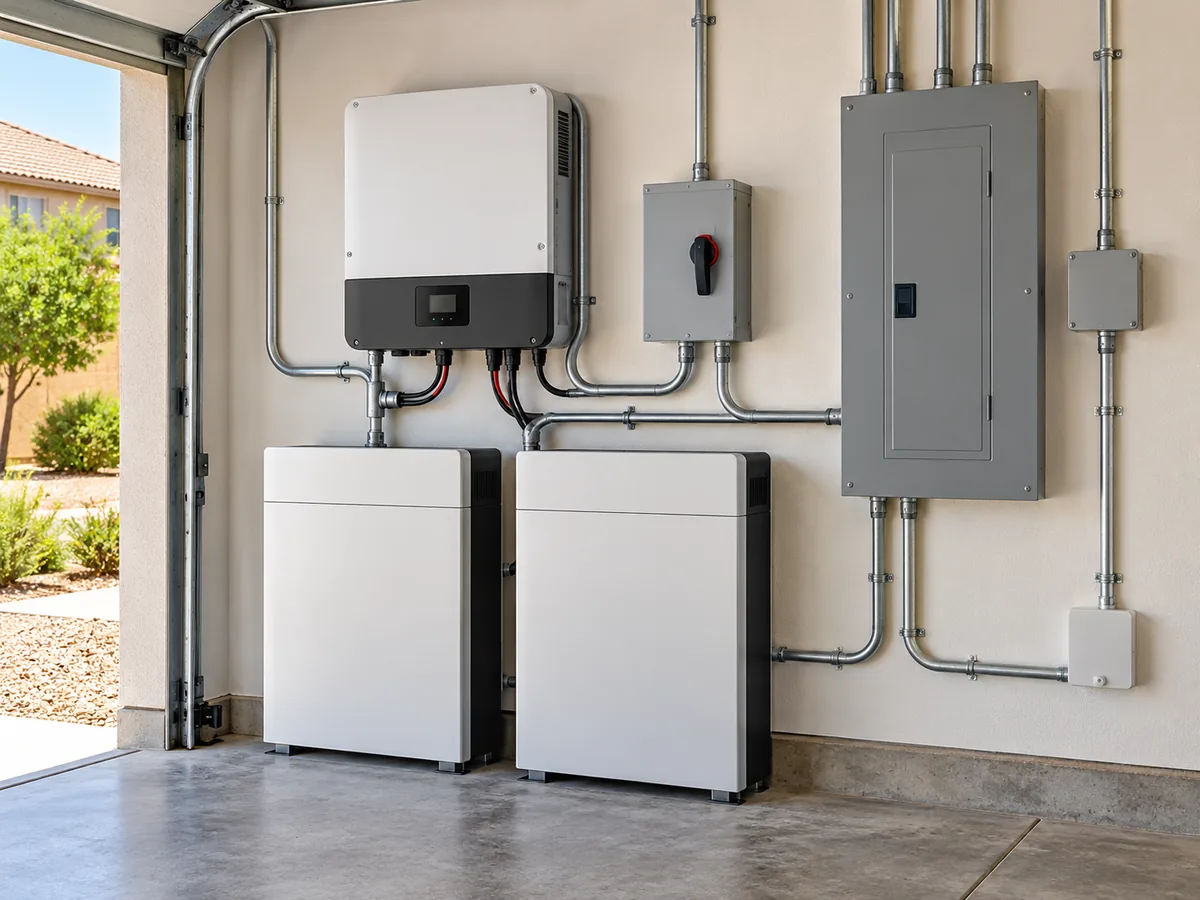
For a simple battery illustration, suppose the same AC averages 0.9 kW for four nighttime hours. It needs 3.6 kWh at the AC connection. If inverter efficiency is assumed to be 90%, the battery needs to supply about 4.0 kWh. If the system is designed to use 80% of nominal battery capacity, the minimum illustrative nameplate capacity becomes 5.0 kWh (3.6 ÷ 0.90 ÷ 0.80). Actual sizing also needs peak power, battery discharge limits, other loads, battery aging and reserve autonomy.
Battery energy (kWh) helps determine how long cooling can run. Inverter output (kW) determines the power available at one time, including compressor starting demand. For the 5.0 kWh example, check the battery and inverter’s continuous and short-duration power ratings, permitted depth of discharge, other connected loads and which circuits receive backup power.
Solar Air Conditioner Price: What Changes the Total Cost?
Solar AC price depends more on the complete system than on the indoor and outdoor units alone. A quote for only a hybrid mini-split is not comparable with a price that includes solar panels, mounting, electrical work, permits and a battery.
For a U.S. consumer reference, a 2026 PickHVAC price guide reports around $5,000–$12,000 installed for some one-zone hybrid mini-split projects with panels and no battery, while adding storage can push complete systems above $10,000–$20,000. These third-party U.S. installed-cost ranges give context for comparing projects. Request local itemized proposals that separate cooling equipment, PV components, storage, installation and permits.
| Cost component | What to check in the quote | Why it changes |
|---|---|---|
| Air conditioner | Cooling capacity, input power, efficiency, controls | Larger or more capable models can cost more |
| PV modules and structure | DC kW, panel count, roof/ground mount, roof work | Sun exposure, available area and mounting complexity |
| Electrical conversion | Grid-tie inverter, direct-PV input or hybrid inverter | Different architectures need different hardware |
| Battery and backup | kWh usable, inverter kW, protected circuits | Backup duration and resilience requirements |
| Labor and approvals | Solar, HVAC, electrical, permits and commissioning | Site access, wiring runs and local rules |
Compare quotations with the same scope. Price these alternatives separately rather than treating them as identical equipment:
- Keep the current AC + use general-purpose PV: include only the PV and electrical changes still needed; do not pay for replacement cooling equipment unless the load or efficiency justifies it.
- Install a dedicated hybrid solar AC: include the matched indoor/outdoor units, compatible panels, approved wiring and any grid-side equipment.
- Build off-grid cooling: add the required storage, power conversion, protected circuits, controls and backup arrangements.
For each option, separate equipment-only, installed and installed with backup storage prices. Check taxes, shipping, permits, service scope and exclusions before comparing totals.
How to Calculate Solar AC Electricity Savings and Payback
Estimate how many grid kWh the project will avoid or offset, then multiply by the actual value of each kWh under the local tariff. Power used directly during the day can have a different value from power exported to the utility. Include financing, maintenance, equipment replacement and storage losses when comparing options. A claim such as “100% solar” usually describes particular sunny operating conditions, not 24-hour performance or a zero annual electricity bill.
Solar bill savings and AC efficiency are different measurements. A solar-powered unit can reduce electricity bought from the utility without removing more heat for each kilowatt-hour it consumes. Compare cooling output and electrical input under the same published test conditions; compare solar self-use separately. Value electricity used on site at the avoided import rate, and exported electricity at the actual export credit, where applicable. Calculate payback using the extra installed cost, maintenance, expected component replacements and the applicable tariff.
Solar Air Conditioner Installation: A Practical Planning Sequence
Install the cooling equipment and the solar supply as one coordinated design. Start with the room’s cooling load and desired operating hours. The AC installer should verify refrigeration, airflow and condensate requirements while the solar/electrical designer verifies PV, inverter, battery, protection and local grid rules.
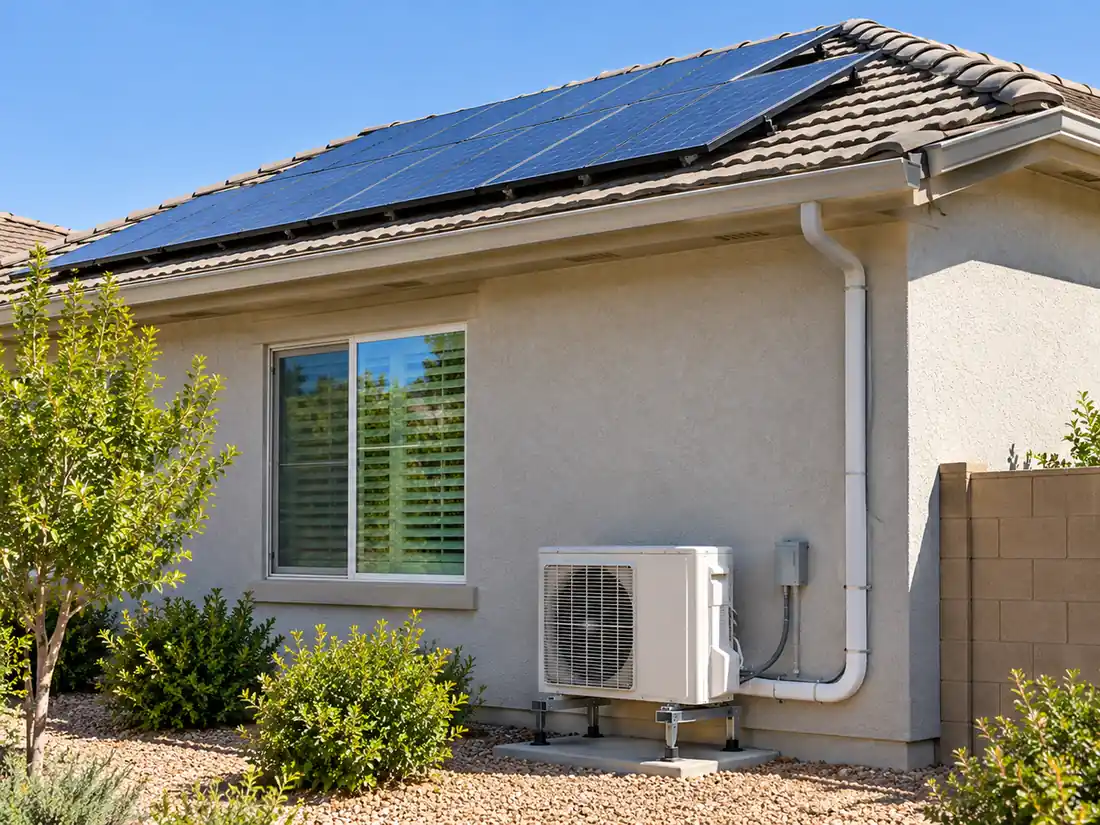
- Calculate cooling load. Record climate, room sizes, insulation, glazing, humidity, occupancy and ventilation. In U.S. homes, a recognized method is ACCA Manual J; square footage alone is not a full load calculation. See the U.S. DOE HVAC sizing guidance.
- Choose cooling configuration. Select mini-split, central, window or other appropriate AC type. Verify efficient operation at the site’s outdoor conditions and any heating requirement.
- Measure or estimate the electrical demand. Confirm rated input, load profile, wiring, supply voltage/frequency, inverter or compressor-start behavior and other loads sharing the system.
- Survey the solar location. Confirm usable roof/ground area, orientation, shade, structure, wind exposure, access and local irradiance. Model monthly and hourly solar production.
- Choose grid, hybrid or off-grid topology. Document the exact PV-to-AC path, whether batteries are used, what happens if the grid fails, and where unused solar electricity goes.
- Complete engineered installation. Qualified trades handle permitted electrical protection, isolators, grounding/earthing, refrigerant and condensate work, and inspection requirements.
- Commission and verify. Check cooling performance, airflow, refrigerant circuit as required by the model, PV output, AC/DC source changeover, monitoring, and any intended backup mode. Record a sunny-day operating sample and a lower-sun changeover when the system supports both modes. Use a meter or monitoring system when available to distinguish PV generation, grid imports and AC electrical input.
For mini-split projects, our mini-split installation guide covers indoor and outdoor unit locations, refrigerant lines, drainage and commissioning. Review PV electrical connections, power protection and utility requirements in the separate solar design.
What should the handover readings prove? Verify that the AC cools at the specified conditions, the electrical system operates within its limits, and the expected supply changeover works. Where separate measurements are available, note PV output, power imported from the grid and actual AC input. Recheck lower-than-expected solar contribution under comparable sunlight and cooling demand; shading, panel soiling, controls or equipment issues may need different remedies. Routine AC filter care and manufacturer-recommended PV inspection remain separate maintenance tasks.
What can go wrong when PV modules are connected directly?
Panel voltage changes with temperature and the number of panels connected in series. A DC input that is safe at one temperature may exceed a unit’s allowed open-circuit voltage on a colder morning. Wrong polarity, connectors, isolation or overcurrent protection can damage equipment or create serious hazards. Never wire ordinary solar panels straight to an AC input or improvise a PV connection. Follow the selected system’s electrical drawings and local rules.
Is a Solar Air Conditioner Right for Your Home or Project?
For most grid-connected homes, first compare high-efficiency air conditioning plus a well-designed general-purpose solar array. It can cover cooling and other loads without tying the PV investment to one appliance. Choose a direct-PV hybrid mini-split when one cooling zone and high daytime use make its dedicated arrangement useful. Choose a battery-backed off-grid system only when the site lacks reliable mains power or backup is an important requirement.
Make three decisions before buying a dedicated unit: If you already have approved rooftop PV and efficient cooling, check hourly self-use before replacing the AC. If you need one zone cooled mainly in strong sun, compare a direct-PV hybrid only after confirming model compatibility. If you need cooling during outages or after sunset without the grid, plan storage and power backup first.
For a conventional grid-supplied split-system example, see the R32 SA-series inverter split air conditioner. Its published variants use single-phase 220–240 V, 50 Hz AC power and offer different cooling capacities. Match the electrical supply and required approvals to the destination market; direct-PV operation calls for a separately documented compatible model.

- House with existing rooftop PV: check remaining solar generation, cooling energy use and utility export rules before replacing the AC.
- Garage, workshop or small office: a single-zone solar mini-split can fit if outdoor placement, electrical service and the room load are suitable.
- Remote cabin or unreliable grid: prioritize evening autonomy, battery capacity, inverter limits and a backup plan, rather than just midday panel watts.
- Apartment or rented property: review roof rights, structural permissions and installation restrictions before choosing dedicated PV hardware.
- Commercial distributor or OEM program: first confirm specific solar-input architecture, model test data, voltage/frequency and destination-market compliance. Do not assume a standard inverter air conditioner has DC PV terminals.
For a very hot climate, check performance at the actual design temperature. A model’s headline BTU/h rating may have been measured at different indoor and outdoor conditions. Compare the project’s calculated cooling load with that exact model’s available cooling capacity and electrical input at the selected outdoor design condition. Use the maker’s expanded performance data and an appropriate load calculation before sizing the PV supply. ACCA Manual S describes how designers use equipment performance data and design conditions for residential equipment selection.
If you are still choosing the cooling hardware itself, compare room ACs, mini-splits and central systems in AirProz’s types of air conditioners guide.
What Information Do You Need Before Requesting a Solar AC Quote?
Give the supplier the cooling job and the power conditions together. Those details help a supplier assess solar operation, panel capacity and backup requirements against the proposed equipment. For an OEM or project discussion, share the following:
What to send the supplier
- Destination country, local electrical supply (voltage, frequency and phase) and required approvals.
- Building use, cooling-load calculation or room drawings, outside design conditions and preferred system type.
- Operating hours, daytime versus night use and whether blackout operation is required.
- Existing PV equipment, roof area and shade conditions; proposed module ratings if already selected.
- Whether you want standard grid-tied AC, direct-PV hybrid AC/DC or full off-grid storage.
- Project quantity, timeline, branding needs and which technical documents you need for approval.
What to request in the supplier’s reply
- Exact model and layout: the offered AC model, whether it has a dedicated PV DC input, and the applicable indoor/outdoor combination.
- Electrical compatibility: the allowed DC voltage and current range, normal supply voltage/frequency, operating modes, wiring diagram and protection requirements.
- Cooling performance: capacity and actual electrical input with stated test temperatures, plus data for the project’s hot-weather design condition if relevant.
- What is included: panels, inverter or controller, mounting, cabling, protective devices, batteries and commissioning—identify anything excluded.
- Project and market documents: applicable compliance evidence for the destination country, installation guidance, terms, available technical support and delivery conditions for the quoted scope.
AirProz lists air-conditioning products and OEM services on its product range page. For a solar-specific project, share your cooling load, operating hours and electrical conditions with our team. We can review available model options and their supported input conditions and identify the product documents needed for your project.
Need a solar air-conditioning proposal for your project? Send the cooling load, operating hours, site electricity conditions and desired backup mode through the AirProz contact page. Ask for a model-specific reply covering cooling performance, electrical compatibility, included components and the next installation-planning steps.
Frequently Asked Questions About Solar Air Conditioners
Can a solar air conditioner work without a battery?
Yes. A grid-connected air conditioner can use solar electricity while the grid supplies any shortfall. A compatible direct-PV hybrid mini-split can also use panel power by day without a battery. For cooling during a grid outage, select equipment with a stated solar-only or backup operating mode and match its power capacity to the AC load.
Can solar panels run an air conditioner all night?
Not by themselves. Solar panels produce no electricity after dark. Night cooling needs utility power or a battery system sized for the air conditioner’s energy use, power demand and required hours of backup.
How many 400 W solar panels are needed for one air conditioner?
There is no fixed number based on BTU alone. In the worked example on this page, a 0.9 kW average electrical load running eight hours uses 7.2 kWh. At 4.5 equivalent sun hours and a 0.75 planning factor, six 400 W panels make a 2.4 kW preliminary array. Verify the location, hourly production and equipment limits before specifying panels.
Can I connect solar panels directly to my existing window or split air conditioner?
Usually not. A standard AC expects its specified AC electrical supply, not a raw solar-panel string. Use a correctly designed grid-tied or battery-inverter system, or a solar-ready model that explicitly supports direct PV input and lists its DC voltage and current limits.
Will a solar-powered mini-split cool the whole house?
A single-zone mini-split cools the area it is designed to serve, not every room automatically. Use a room-by-room cooling-load calculation for multi-room coverage, then choose suitable indoor zones and solar capacity for the combined electrical demand.
Does solar air conditioning keep working during a blackout?
Only if the design supports it. Most basic grid-tied solar installations stop supplying loads during an outage. A properly designed battery-backed or approved off-grid system can maintain selected cooling loads within its inverter and storage limits. Some direct-PV units can operate in sunlight without grid power, subject to their model instructions.
What should I send a supplier before requesting a solar AC quote?
Send the destination country, climate and site, required cooling area or load, desired hours of operation, grid availability, existing solar equipment, panel roof area, voltage/frequency, battery or outage goals, model documentation and compliance needs. Ask for a complete system scope rather than an air-conditioner price alone.
Can I add more solar panels to a solar air conditioner later?
Sometimes, but only within the selected system’s limits. An expanded array must stay within the approved PV voltage and current range, inverter or solar-input capacity and protection design. Adding panels does not automatically improve cooling when a grid limit, DC input limit or shading already controls production. Ask the installer to check the updated string design first.
Conclusion: The Best Way to Use Solar Power for Air Conditioning
A solar air conditioner is worth considering when the cooling demand, solar production and power backup method match. A conventional AC with rooftop PV is often the flexible choice for a grid-connected home. A dedicated AC/DC hybrid solar mini-split may suit one sunny daytime zone. A true off-grid system needs more careful design, especially when cooling must continue at night.
Start with the actual air conditioner’s electrical consumption, then check location-based PV yield, hourly operation, battery requirements and a complete installed quote. Those steps make solar panel counts and running-cost claims meaningful.