At Airproz, we keep three numbers separate when we compare split ACs. Cooling capacity tells you how much cooling the unit can provide. Electrical input tells you how much power it draws at a stated condition. Energy use tells you how much electricity it uses over time.
A 1-ton rating describes cooling capacity. It does not mean the AC always uses 1 kW of electrical power. One refrigeration ton equals 12,000 Btu/h, or about 3.517 kW of cooling capacity.
If you want to turn kWh into money, use your local electricity price. We explain that step in our AC running-cost guide. This page stays focused on watts, kW, kWh, inverter behavior, specification data, and real power checks.

How Much Electricity Does a Split AC Use per Hour?
Electricity used in one hour depends on the AC’s average electrical input during that hour. If the average input is 0.9 kW, the AC uses 0.9 kWh. If the average input is 1.4 kW, it uses 1.4 kWh.
The difficult part is that the average input is not fixed. It changes with compressor speed, outdoor weather, indoor temperature, humidity, room load, airflow, and system condition.
You can still make a useful estimate. If cooling capacity and efficiency are given for the same test condition, we can use them together. The table below uses a cooling COP of 3.0–4.0 only as an example. These are not Airproz product ratings and not guaranteed hourly averages.
| AC Size | Cooling Capacity | Example Input at COP 3.0 | Example Input at COP 4.0 | Example Energy for 1 Hour |
|---|---|---|---|---|
| 9,000 Btu/h | 2.64 kW cooling | 0.88 kW | 0.66 kW | 0.66–0.88 kWh |
| 12,000 Btu/h / 1 ton | 3.52 kW cooling | 1.17 kW | 0.88 kW | 0.88–1.17 kWh |
| 18,000 Btu/h / 1.5 ton | 5.28 kW cooling | 1.76 kW | 1.32 kW | 1.32–1.76 kWh |
| 24,000 Btu/h / 2 ton | 7.03 kW cooling | 2.34 kW | 1.76 kW | 1.76–2.34 kWh |
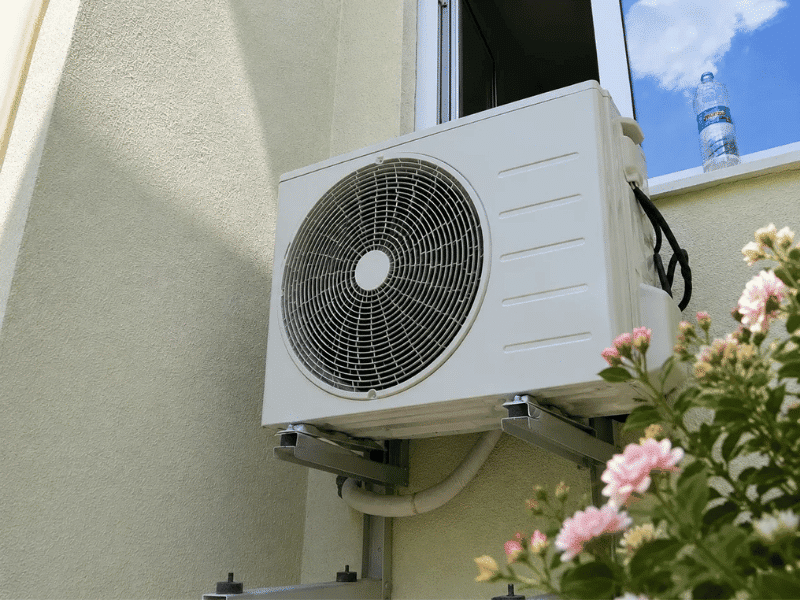
1-Ton, 1.5-Ton and 2-Ton AC Electricity Consumption
You may see charts that give one wattage for each AC size. They are easy to read, but they can be misleading. Two 1-ton ACs can use different amounts of electricity.
The reason is simple. The compressor, heat exchangers, fans, controls, refrigerant circuit, and efficiency can all differ. Even the same AC can draw more power on a very hot day than on a mild day.
Tonnage tells you cooling capacity, not electricity use. The American Society of Heating, Refrigerating and Air-Conditioning Engineers (ASHRAE) defines 1 refrigeration ton as 12,000 Btu/h, or about 3.517 kW of cooling. To check one real model, we use its electrical data and the matching test condition.
If you only know “1.5 ton” or “18,000 Btu/h,” that is not enough for an electrical check. We still need rated input, maximum input or current, voltage, frequency, and the test condition.
How Much Electricity Does a Split AC Use in 8 Hours?
To estimate eight-hour electricity use, multiply the AC’s average electrical input in kW by 8 hours. The key word is average. An inverter AC normally changes its power as the room load changes.
| Average Electrical Input | 1 Hour | 8 Hours | 30 Days at 8 h/day |
|---|---|---|---|
| 0.5 kW | 0.5 kWh | 4 kWh | 120 kWh |
| 0.8 kW | 0.8 kWh | 6.4 kWh | 192 kWh |
| 1.0 kW | 1.0 kWh | 8 kWh | 240 kWh |
| 1.5 kW | 1.5 kWh | 12 kWh | 360 kWh |
| 2.0 kW | 2.0 kWh | 16 kWh | 480 kWh |

How to Calculate Your Split AC Electricity Consumption
Use the simplest method that matches the information you have. We normally work through three steps. Start with the model’s rated input, cross-check it with efficiency data, and measure real kWh when needed.
Method 1: Start with Rated Electrical Input
Rated input is the electrical power the AC draws at a stated rating condition. If the technical sheet lists rated cooling input = 1.05 kW, an eight-hour planning calculation is:
1.05 kW × 8 h = 8.4 kWh
For 30 identical days, that would be 252 kWh. This is only a planning example. An inverter AC will not normally stay at 1.05 kW for every hour.
After the room cools down, the compressor may slow down and use less power. On a very hot day, or during fast pull-down, it may use more.
Rated input is also not the same as maximum input. For electrical design, we check maximum input power and maximum current separately. Those numbers can affect cable, breaker, and supply requirements.

Method 2: Use Cooling Capacity and Same-Condition Efficiency
If rated input is missing, you can make an engineering estimate from cooling capacity. But the efficiency number must describe the same operating condition.
Cooling COP tells you how much cooling output the system provides for each unit of electrical input. When COP is shown as W/W, the basic formula is:
Electrical input (kW) ≈ cooling capacity (kW) ÷ cooling COP
Example: 3.517 kW of cooling ÷ COP 3.5 ≈ 1.00 kW of electrical input.
Another point-efficiency value is the energy efficiency ratio (EER). COP and EER can help with a point check when their units and test conditions match.
Some labels use seasonal efficiency ratings. Common examples include SEER, SEER2, ISEER, and CSPF. These ratings compare performance over defined seasonal test conditions. Do not use them as if they were instant watt readings.

Method 3: Measure Actual kWh
If you need to know what an installed AC really uses, measure its energy over time. A suitable energy meter or submeter records the real kWh used by the system.
This method captures compressor speed changes, fan power, cycling, standby time, weather, and real room load. Measure a useful period rather than one short moment.
Some split systems are wired directly into the building circuit. This is often called a hardwired connection. A qualified person should carry out electrical measurement on these systems. A clamp meter reading of current alone is not always true electrical power.
True power can also depend on voltage, phase, inverter electronics, and power factor. Power factor describes how effectively the AC current is being converted into useful real power.

Watts, kW, kWh, BTU and Tons: What Do They Mean?
AC specifications show several numbers that can look similar. They do not mean the same thing.
Watts (W) and kilowatts (kW) measure power. They tell you how quickly electricity is being used at a moment in time.
Kilowatt-hours (kWh) measure energy over time. This is the unit your electricity meter and bill normally use.
Btu/h, kW cooling, and tons measure cooling capacity. They tell you how quickly the AC can remove heat under a stated condition. They do not tell you the electrical input.
A simple way to remember it is this: kW input is electrical power, kWh is electrical energy used over time, and kW cooling or Btu/h is cooling output.
Why Inverter AC Power Consumption Changes During the Day
An inverter compressor can speed up and slow down. It does not need to run only at full power or switch completely off.
Engineers call this changing output modulation. When the room is very hot, the compressor may run faster and use more power. As the room reaches the set temperature, it can slow down and use less.
This is why an inverter AC does not have one fixed “watts per hour” value. Two identical units can use different daily kWh in different rooms or climates.
Setpoint also matters. A lower indoor temperature usually gives the AC more work to do. For more detail, see our inverter air conditioner guide.
What Makes a Split AC Use More Electricity?
Outdoor Temperature and Indoor Setpoint
A split AC works harder when it must move more heat outside. Hot outdoor air usually increases that work. A very low indoor setpoint can also keep the compressor running harder or longer.
Temperature is not the only part of the load. Air also carries heat through its moisture content. Engineers use a property called enthalpy to describe the total heat condition of the air.
You do not need to calculate enthalpy for normal AC use. The practical point is simple: hotter or more humid outdoor conditions can increase cooling work and electricity use.
Humidity and Moisture Removal
An AC must often remove water from the air as well as lower the temperature. Engineers call this moisture-removal demand the latent load.
A humid room can therefore need more cooling work than a dry room at the same temperature. This can increase runtime and total kWh.

Room and Building Load
Windows, direct sun, insulation, air leaks, people, lighting, equipment, ceiling height, and open doors all change the cooling load. Floor area alone cannot give an exact AC size.
Our AC sizing guide explains the main load inputs to check before choosing capacity.
Sizing and Installation Quality
An AC that is too small may run near high output for long periods. It may still struggle to reach the set temperature.
An AC that is much too large can cycle poorly in some applications. Poor airflow, dirty filters, dirty heat exchangers, wrong refrigerant charge, sensor problems, or installation errors can also increase energy use.

Which AC Number Should You Use to Calculate Electricity Use?
This table shows what the common numbers on an AC specification actually tell you.
| Number You See | Can You Use It to Estimate Electricity Use? | What It Really Tells You |
|---|---|---|
| 12,000 Btu/h | No | Cooling capacity |
| 3.52 kW cooling | No | Cooling output |
| Rated input: 1.05 kW | Yes, for a rated-condition estimate | Electrical input at the stated rating point |
| Maximum input: 1.60 kW | Not as average use | Upper electrical demand for design checks |
| SEER / SEER2 / ISEER / CSPF | Not as instant watts | Seasonal efficiency under a defined test method |
| Annual energy use on a regulated label | Yes, within the label assumptions | Seasonal energy comparison |
| Measured kWh | Yes | Actual energy used during the measured period |
If a number does not say whether it is cooling output or electrical input, do not guess. Ask for the exact model sheet and test condition first.

Can You Calculate AC Watts from Amps?
Not accurately from amps alone. Current tells you how much electrical current is flowing, but real AC power can also depend on voltage, phase, power factor, and inverter electronics.
For a simple single-phase AC load, real power is often described as watts ≈ volts × amps × power factor. That still does not make an amp reading a reliable energy figure for every inverter air conditioner. The current and power factor can change as the compressor changes speed.
For model comparison, we use the manufacturer’s stated input-power data at the relevant condition. For an installed system, use a meter that measures true power or kWh when you need a real result.

How to Read a Split AC Specification or Energy Label
When we compare split ACs, we read several fields together. One headline number is not enough.
- Rated cooling capacity — how much cooling the AC provides at a stated test condition.
- Rated cooling input power — how much electrical power it draws at that same rated condition.
- Maximum input power or current — useful for electrical supply and protection checks. It is not average energy use.
- Cooling COP or EER — point-efficiency values. Use them only when units and operating conditions match.
- SEER, SEER2, ISEER, or CSPF — seasonal efficiency ratings. Each follows its own test method.
- Annual electricity use on an energy label — useful for seasonal comparison within the label’s stated assumptions.
- Voltage, frequency, and phase — basic electrical compatibility information.

For EU-market products, the European Commission explains the information shown on air-conditioner energy labels. This includes cooling efficiency, design load, and annual electricity use. More model data can also be available through the European Product Registry for Energy Labelling (EPREL).
In the United States, the Department of Energy (DOE) and the Air-Conditioning, Heating, and Refrigeration Institute (AHRI) use SEER2 and EER2 methods for applicable equipment. We keep these rating systems separate because numbers from different test methods should not be mixed.

Is My Split AC Electricity Use Normal?
A higher electricity reading does not automatically mean the AC is faulty. First compare the weather, runtime, thermostat setting, humidity, and room load with the conditions you normally see.
| What Changed? | What You May See | What Airproz Checks |
|---|---|---|
| Hotter outdoor weather | Longer runtime or higher input | Outdoor design condition and condenser heat rejection |
| Lower thermostat setting | Longer compressor operation | Setpoint, room load, and operating time |
| Higher humidity | More cooling work | Moisture load and airflow |
| Dirty filter or coil | Poorer heat transfer and longer runtime | Airflow, filter condition, and heat-exchanger surfaces |
| Open doors, solar gain, or more people/equipment | Higher room load | Actual building load, not floor area alone |
| System or installation problem | Poor cooling, abnormal runtime, or unusual input | Cooling delivery, refrigerant-side performance, controls, voltage, and installation |
High kWh is a symptom, not a diagnosis. We compare energy input with cooling performance and operating conditions before deciding what is wrong. Low input can also be misleading if the AC is not delivering enough cooling.

How Airproz Compares Split AC Models
For distributors, contractors, developers, hotels, and original equipment manufacturer (OEM) projects, wattage is only one part of the decision. We match the electrical data with the cooling requirement, climate, power supply, test conditions, and destination-market requirements.

If low electricity use is a priority, we do not start with the highest headline seasonal rating. We first confirm the cooling load and outdoor design temperature. Then we compare efficiency, electrical input, maximum demand, and delivered cooling at useful conditions.
Correct sizing and installation still matter. Poor airflow, bad installation, or the wrong climate match can reduce the benefit of a strong laboratory rating. Our energy-efficient air conditioner guide explains the wider efficiency checks.
- required cooling capacity or calculated cooling load;
- outdoor design temperature and indoor condition;
- voltage, frequency, and phase;
- destination market and certification needs;
- installation limits and operating conditions;
- quantity; and
- model sheets you are already comparing, if available.

Technical References
We use public technical sources to keep the calculation boundaries clear. These references support the definitions and rating concepts used above; they do not replace the exact model sheet for a project.
- ASHRAE SI Guide — used for the refrigeration-ton conversion.
- U.S. Department of Energy — used for current U.S. central AC and heat-pump efficiency context, including SEER2.
- AHRI 210/240 — used for performance-rating context for applicable unitary air-conditioning equipment.
- European Commission air-conditioner energy-label information — used for EU seasonal-efficiency and annual-energy-label context.

Frequently Asked Questions
Electricity use for one hour depends on the AC’s average electrical input during that hour. If it averages 0.9 kW, it uses 0.9 kWh in one hour. If it averages 1.4 kW, it uses 1.4 kWh. The exact number changes with the model, outdoor weather, room load, setpoint, and inverter speed. For a real unit, check the model’s rated input or measure actual kWh.
One ton means 12,000 Btu/h, or about 3.517 kW of cooling capacity. It does not mean 1 kW of electrical input. As a calculation example, a 1-ton AC with a cooling COP of 3.0–4.0 would need about 1.17–0.88 kW at that same operating point. For a real product, check its rated input and performance data.
A 1.5-ton AC has about 18,000 Btu/h, or 5.275 kW of cooling capacity. At a same-condition cooling COP of 3.0–4.0, the calculated input is about 1.76–1.32 kW. This is only an example. We use the actual model sheet before applying a number to a project.

Multiply the AC’s average electrical input in kW by 8 hours. For example, a 1.0 kW average input for eight hours uses 8 kWh. If 1.0 kW is only the rated input of an inverter AC, real use can be higher or lower. Compressor speed and room load change during the day.
No. An inverter AC can reduce power when the room needs less cooling, which can save energy. But the result still depends on sizing, climate, setpoint, room load, installation, and the model’s efficiency. We treat inverter control as a useful technology, not as a guaranteed savings percentage.
Usually, yes. A lower setpoint gives the AC more cooling work, especially in hot weather. The compressor may run longer or at a higher speed. There is no single percentage that applies to every room. If you need a real answer for your site, compare measured kWh under similar weather and occupancy.
Not accurately from current alone in many AC systems. True electrical power can also depend on voltage, phase, power factor, and inverter electronics. Power factor describes how effectively AC current is converted into useful real power. For project work, use the manufacturer’s input-power data or a meter that measures true power.

No. 12,000 Btu/h is about 1 ton of cooling capacity. It tells you how much cooling the AC can provide under a stated condition. It does not tell you how much electrical power the unit draws. A 12,000 Btu/h model can use much less than 3.517 kW of electrical input.
Not as an exact instant power value. SEER and SEER2 are seasonal efficiency ratings based on defined test methods. They are useful for comparing seasonal performance, not for reading one moment of electrical input. For point power, we use rated input or same-point COP/EER data. For real installed use, measure kWh.
High electricity use can come from hot weather, a low setpoint, humidity, long runtime, high room load, restricted airflow, dirty heat exchangers, installation problems, or electrical and refrigerant faults. High kWh is a symptom, not a diagnosis. Check the load, airflow, delivered cooling, runtime, and system condition before blaming the AC itself.
Send us your required cooling capacity or load, outdoor design temperature, indoor condition, power supply, destination market, certification needs, installation limits, and quantity. We will compare suitable options using verified model data, electrical requirements, and the conditions your project actually needs—not tonnage alone.