The five main mechanical HVAC compressor families are rotary, scroll, reciprocating, screw, and centrifugal. Rotary, scroll, reciprocating, and screw are positive-displacement compressors: they trap refrigerant vapor and reduce its volume to raise pressure. Centrifugal compressors use a high-speed impeller to raise pressure dynamically. Inverter or variable-speed control is not a sixth compressor family; it describes how compressor speed or capacity is controlled.
Start with the system you are designing: compact split AC, heat pump, or central chiller. Rotary and scroll are common candidates for compact AC systems, while screw and centrifugal may suit some larger plants. That is only a starting point. Cold-weather heating, high required water temperatures, or long periods at low load can change the choice. Confirm the exact model using performance data at your project conditions.
What this guide can and cannot tell you: This guide explains the main compressor types and helps you narrow your options. It cannot tell you which exact model to use or guarantee the capacity, efficiency, noise level, or operating range of a complete system. Final selection must use model-specific manufacturer data at the actual project operating conditions.
Terminology note: Compressor family tells you how refrigerant is mechanically compressed. Inverter or variable-speed tells you how the speed or output of a compatible compressor is controlled. Hermetic, semi-hermetic, and open describe how the compressor and its drive are enclosed or connected. These are different classification layers and should not be compared as equivalent choices.
HVAC compressor types at a glance
Different air conditioners use different compressors. Start with the equipment type and the temperatures it needs to handle. This table helps you compare the type of compressor in an air conditioner that may suit your project. Check the exact model data before choosing one.
If you are still deciding how the cooling system itself should be arranged, compare the main types of AC systems before narrowing the compressor family.
| Compressor type | Typical applications | Main advantages | Possible limitations | What to check before choosing |
|---|---|---|---|---|
| Rotary | Compact split AC, ductless systems, smaller HVAC equipment | Compact packaging; can be paired with variable-speed control | Low outdoor temperature, required capacity range, noise target, refrigerant, electrical limits, or the allowed operating range may make another design more suitable | Refrigerant, speed/capacity range, design temperatures, power supply, the manufacturer’s approved operating range, and full-system performance |
| Scroll | Residential and light-commercial AC, heat pumps, packaged systems, some chillers | Smooth compression with trapped refrigerant pockets; several capacity-control options are available depending on the design | A large pressure rise, low outdoor temperature, high leaving-water temperature, refrigerant choice, or model-specific pressure limits can change the choice | Capacity and power at the actual design point, refrigerant, control method, voltage, and the manufacturer’s approved operating range |
| Reciprocating | Selected HVAC and refrigeration systems | Mature piston design; serviceable constructions are available for some duties | Vibration, valve loading, lubrication, liquid return, service strategy and pressure range can affect fit | Refrigerant, pressure range, oil, capacity control, construction and service requirements |
| Screw | Commercial/industrial chillers, refrigeration and selected heat-pump systems | Continuous compression with practical ways to reduce capacity as demand falls | Performance can change when the system spends long periods below full load, operates across a large pressure rise, or needs more complex oil and control systems | How demand changes through the year, pressure rise at design conditions, lowest expected load, capacity-control method, oil management, and the manufacturer’s performance map |
| Centrifugal | Central chilled-water plants and other high-flow applications | Dynamic compression can suit high refrigerant flow in large plants | Low demand combined with a large pressure rise can reduce stable operating margin; staging and condenser conditions matter | Full- and low-load performance map, lowest stable operating point, required pressure rise, staging, controls, condenser conditions, and backup-capacity needs |
Which compressor should you compare first?
| Your system | Compare these first | What might change the choice | What to check |
|---|---|---|---|
| Compact split or ductless AC | Rotary and scroll | Capacity range, refrigerant, noise target, modulation, outdoor design temperature, or the approved operating range | Design cooling/heating load, outdoor design temperatures, power supply, sound target, refrigerant, and model-level operating data |
| Residential or light-commercial AC / air-to-water heat pump | Scroll is common; compare the compressor/system designs available for the required refrigerant, heating temperatures, load range and controls. | Low outdoor temperature, higher required supply-air or leaving-water temperature, refrigerant, and capacity control | Winter design temperature, required supply-air or leaving-water temperature, and heating capacity and power at that same operating point |
| Application where piston design or serviceability is useful | Reciprocating | Pressure range, refrigerant, vibration, lubrication, below-full-load operation, and service strategy | Approved refrigerant and pressure range, service plan, vibration and oil requirements, and exact compressor data |
| Larger commercial or industrial system with changing load | Screw | Time spent below full load, required pressure rise, oil system, controls, power supply, and service needs | Design and minimum load, design/off-design pressure rise, capacity-control method, oil requirements, and the manufacturer’s performance map |
| High-flow central chilled-water plant | Centrifugal | Minimum load, required pressure rise, staging, condenser conditions, and the stable operating range | Peak and minimum plant load, condenser conditions, staging plan, required lift, and the manufacturer’s stable operating map |
Use these tables to narrow the technology, not to approve a model. Take peak and lowest expected heating or cooling loads from project calculations or operating records. Match them with the relevant outdoor, evaporating/condensing, or water temperatures. Then check the manufacturer’s capacity, power, operating-envelope and part-load data at those same points.
What can go wrong if the compressor choice is wrong?
- The system may not deliver enough cooling or heating at the real design condition, even if nominal capacity looks correct.
- It may spend too much time operating inefficiently or unstably when the load falls below peak demand.
- The compressor may be pushed outside the manufacturer’s approved operating range at difficult temperatures or pressure conditions.
- The project may end up with unnecessary control, oil-management, service, or staging complexity.
- Refrigerant, electrical, control, or system-connection mismatches can delay commissioning or force a redesign.
Every compressor has a safe range of temperatures, pressures, and speeds. This is called its operating envelope. A useful rule is: use capacity to describe the duty, not to select the compressor family by itself. Manufacturer portfolios overlap, and two projects with the same peak cooling load can need different compressor types because their demand changes differently through the day and year, or because their design temperatures, refrigerants, controls, or service requirements are different.
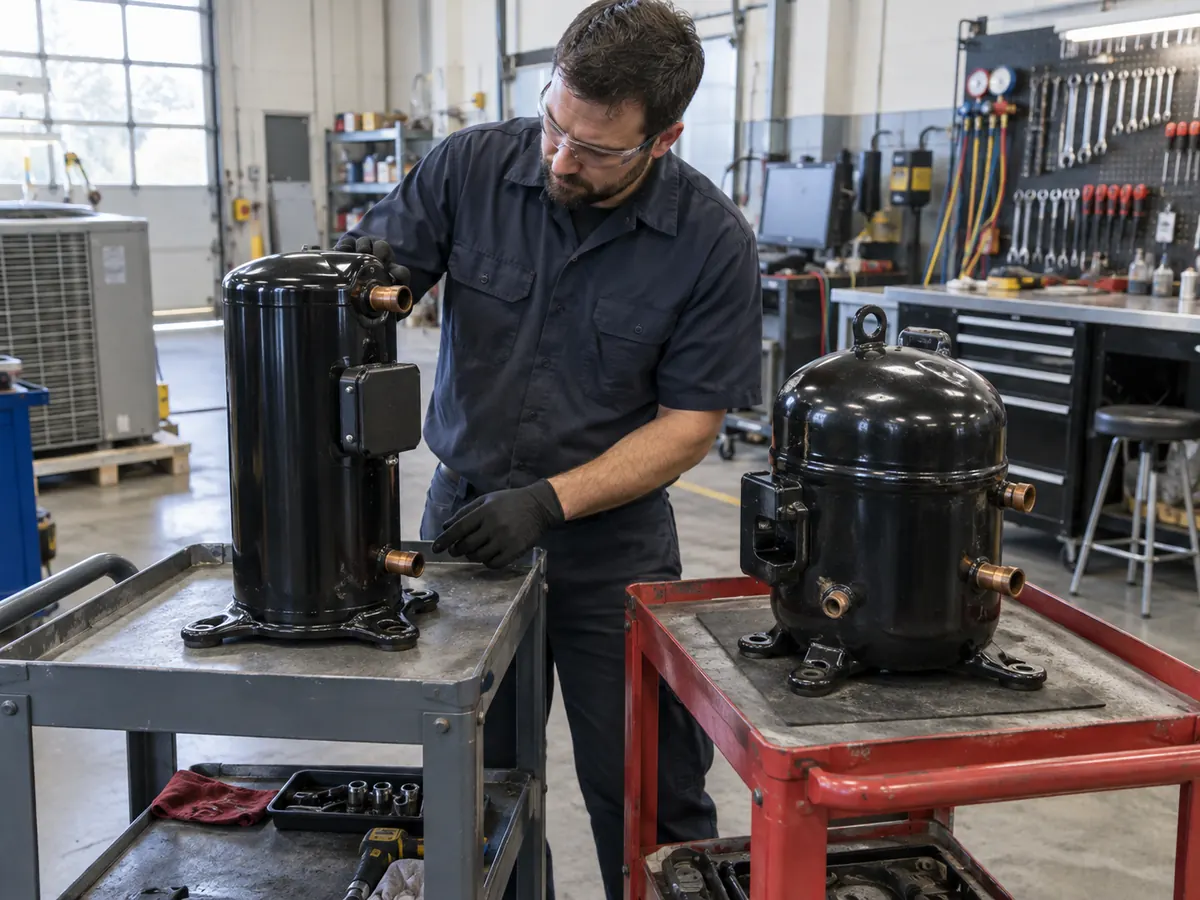
How to choose an HVAC compressor type
First identify whether you are choosing for a split air conditioner, a heat pump, or a chiller. Then check the temperatures it must work at, how much the load changes, and the refrigerant and power supply available. Also check the required compressor pressure rise (compressor lift), controls, and service needs. Use those checks to build a shortlist, then compare the manufacturer’s data for the final compressor or complete HVAC system at the project conditions.
1. Start with the application
If the project is a compact split AC, start by comparing rotary and scroll compressors that match the required refrigerant, capacity range, and controls. If it is an air-to-water heat pump, start with the heating conditions the system must handle rather than the label “heat pump.” If it is a central chilled-water plant, compare the relevant positive-displacement and dynamic compressors using how the plant load changes and how much pressure rise the compressor must create.
If the project is still deciding between cooling-only equipment and a system that must also provide heating, use the air conditioner vs heat pump comparison to settle that application question before narrowing compressor families.
2. Check the conditions the compressor will actually run in
A compressor can have one capacity and power input at a catalog test point and different values at the project’s hottest or coldest design condition. Compare the same refrigerant, evaporating and condensing conditions, speed, and stated measurement basis when comparing compressor models. To judge a complete AC or heat pump, use whole-unit capacity and input power at the required outdoor and supply-air or water conditions; a compressor rating alone is not delivered system capacity.
For heat-pump projects, this becomes especially important at low outdoor temperature and high required water temperature. That combination increases the pressure rise the compressor must produce and can tighten the usable operating envelope.

3. Check how the load changes, not just peak load
Most HVAC systems do not run at full capacity all the time. How much cooling or heating is needed changes throughout the day and year. This pattern is called the load profile. If the system spends much of the year below peak load, part-load behavior can matter as much as the design-day requirement. That may change whether the project favors variable-speed control, staged compressors, unloading, a slide-valve arrangement, or another capacity-control method.
For larger chillers, the minimum expected load is also important. A compressor and plant that work well at full load still need a stable and efficient way to operate when demand falls.
Look at how often the plant runs well below its peak load and how low demand becomes. Compare that pattern with each candidate’s minimum usable capacity, staging or speed-control range, and manufacturer operating limits. If minimum system demand is lower than one unit can handle steadily, consider a different control arrangement or a staged multi-unit configuration, subject to the actual plant design.
4. Check how hard the compressor has to work
The compressor raises refrigerant pressure so the system can move heat. A larger required pressure increase generally makes that job more demanding. Engineers call this pressure increase compressor lift. Higher lift changes compressor power, discharge conditions, available capacity, and, in some compressor types, the stable operating range.
Compressor lift refers to the pressure increase between suction and discharge, not simply the difference between outdoor and indoor air temperatures. Evaporating and condensing temperatures, refrigerant properties and system conditions affect the required lift. Check the actual points on the manufacturer’s performance map rather than using peak tonnage or weather temperature alone as a shortcut.
5. Check the refrigerant and how capacity is controlled
The same mechanical compressor family can exist in different refrigerant, motor, speed, staging and control configurations. Do not assume that a scroll, rotary, or screw compressor automatically supports the refrigerant or modulation strategy your project requires.
Start with the refrigerant approved for the exact compressor model and complete equipment, not just its mechanical family. Check the permitted speed or unloading range, drive/controller pairing, oil requirements and operating envelope. If equipment and compressor approvals or controls do not match, rule out that combination even if rated capacity looks suitable.
6. Check power supply, controls, and service needs
First rule out electrical and control mismatches: confirm available voltage and frequency, the required drive and controller compatibility with qualified electrical personnel. Then check installation clearance, oil-system and service needs. Finally compare site sound limits, redundancy and maintenance preferences. A compressor requiring unavailable electrical supply or unsupported controls is not a workable choice, regardless of capacity.

7. Check the final compressor or system data
Choosing a compressor family should end with a shortlist, not an automatic model approval. Before the final choice, check the manufacturer’s data for the compressor or HVAC system: its allowed operating range, capacity and power at the required conditions, approved refrigerant, electrical data, control method, and relevant manufacturer guidance.
First match the refrigerant, evaporating and condensing conditions, and compressor speed to the manufacturer’s selection data. At the same operating point, compare available capacity, electrical input, discharge-temperature limits, and the approved operating envelope. Repeat this check at the most demanding heating or cooling condition and at a representative low-load condition. If a required operating point falls outside the published limits, exclude that model.
Manufacturer selection data show predicted or rated performance under stated operating conditions; they do not prove how the installed HVAC system will perform. After installation, qualified technicians should compare relevant measured temperatures, flow rates, electrical input, control records, and—where required and safe to measure—refrigerant-side conditions with the equipment manufacturer’s commissioning instructions.
The five main HVAC compressor types
HVAC compressors are commonly grouped into five mechanical families: rotary, scroll, reciprocating, screw, and centrifugal. When comparing types of AC compressors, keep the mechanical family separate from the control method and construction. ASHRAE groups refrigerant compressors into two broad categories. Four of the five families below are positive-displacement compressors: they raise refrigerant pressure by trapping vapor and reducing its volume. Centrifugal compressors are dynamic compressors: they add velocity to the refrigerant and then convert that velocity into pressure. This difference helps explain why their control and stability considerations are not identical.
Rotary compressors
Rotary compressors are common in compact air-conditioning equipment because they can package a positive-displacement compression mechanism in a relatively small shell. Rolling-piston and rotary-vane designs are examples within the wider rotary family.
- Best fit: compact split or ductless systems where small physical size, variable-speed operation, and an appropriate capacity range matter. Rotary designs can pair with inverter-driven motors, but the rotary label alone does not prove seasonal efficiency, sound level, cold-climate heating capability, or refrigerant compatibility.
- Check before choosing: compare the design load and temperatures with the approved refrigerant, power supply, sound target, speed range, and operating range. If the project sits near a published limit, compare another compressor or system option rather than relying on the family name.
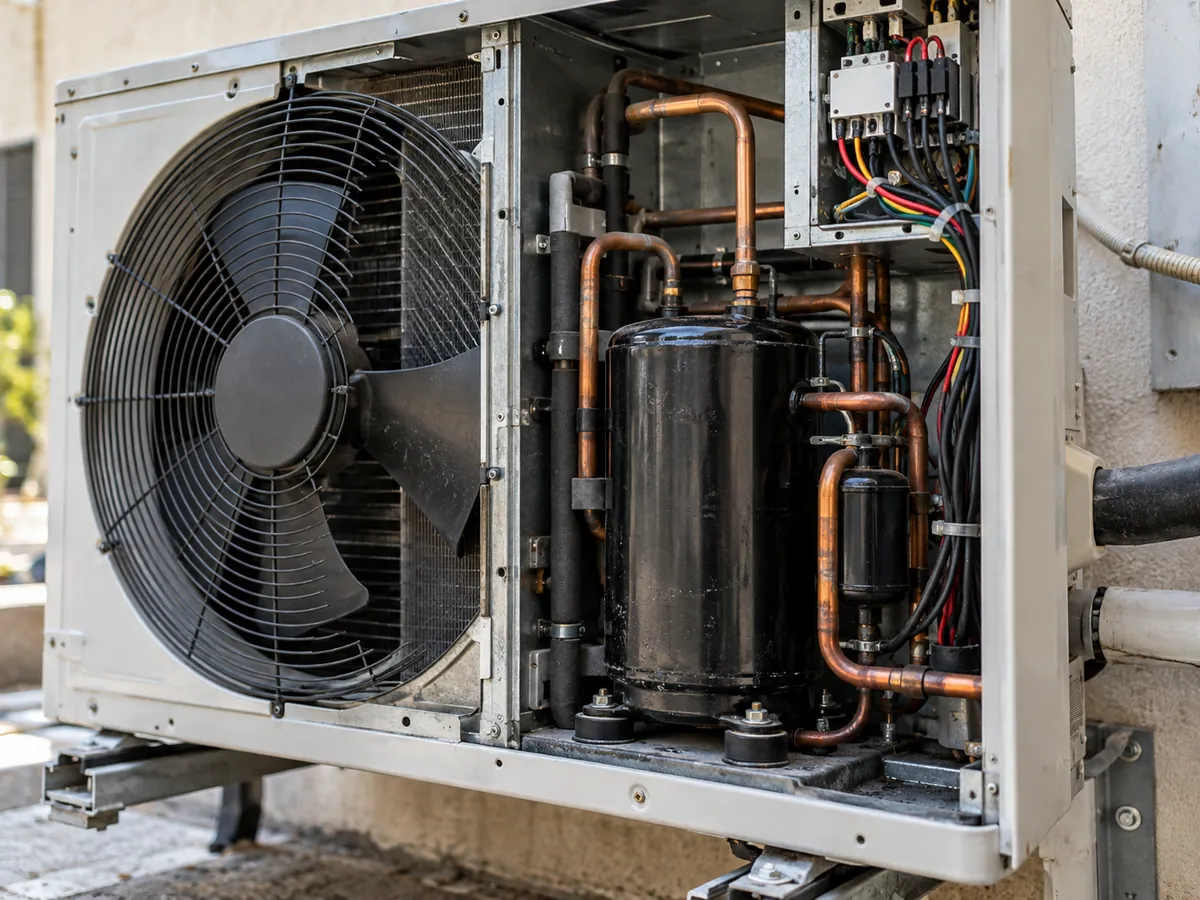
Scroll compressors
A scroll compressor uses two spiral-shaped elements. One remains fixed while the other orbits, moving pockets of refrigerant inward and reducing their volume until the vapor is discharged at higher pressure.
- Best fit: many residential and light-commercial air conditioners, heat pumps, packaged systems, and some chiller applications. Scroll products can use fixed-speed, staged, digital, multiple-compressor, or variable-speed capacity control depending on the exact design.
- What changes the answer: Enhanced vapor injection, wide-speed modulation and extended low-ambient operation are model-specific features. For cold-weather air-to-water heating, do not infer high-temperature heating performance from the word “scroll”; compare complete heat-pump capacity and power at the required winter outdoor and leaving-water temperatures, as explained in the application section below.
- Check before choosing: compare the outdoor design temperature, required supply-air or leaving-water temperature, load variation, refrigerant, control method, voltage, and capacity/power at that design point. ASHRAE compressor guidance describes scroll compressors as positive-displacement machines used across air-conditioning, refrigeration, and heat-pump applications; final operating limits still need to come from the selected model’s manufacturer data.
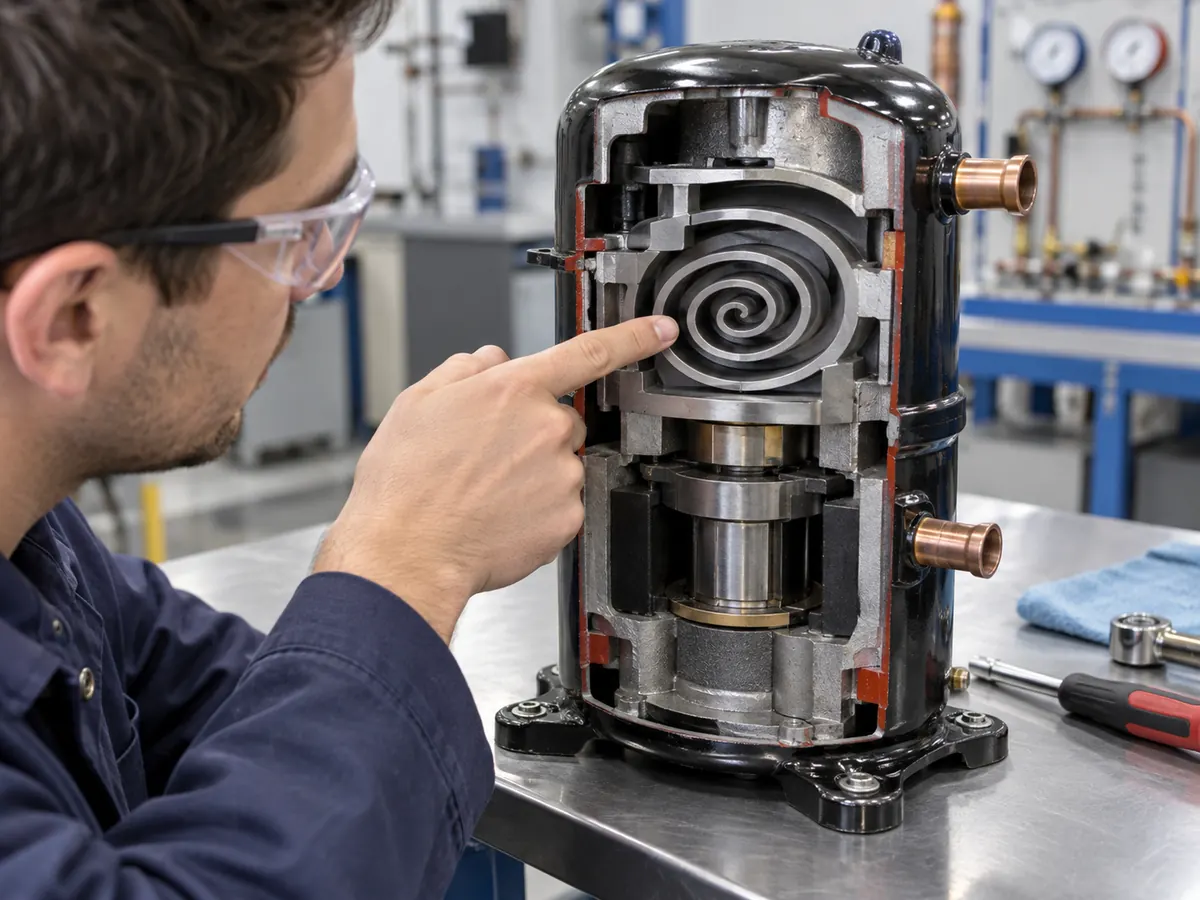
Reciprocating compressors
A reciprocating HVAC compressor uses pistons, cylinders, a crankshaft, and suction/discharge valves to compress refrigerant vapor. Reciprocating compressors have been used for many years and are still suitable for some HVAC and refrigeration duties.
- Best fit: selected HVAC and refrigeration duties where piston technology, pressure range, refrigerant compatibility, construction, or serviceability fits the project. Semi-hermetic or open constructions can be useful where service access matters.
- Check before choosing: confirm pressure range, refrigerant, lubrication, capacity control, vibration limits, service strategy, and behavior below full load. Give extra attention to liquid return, oil management, and other protection limits where they affect reliability.
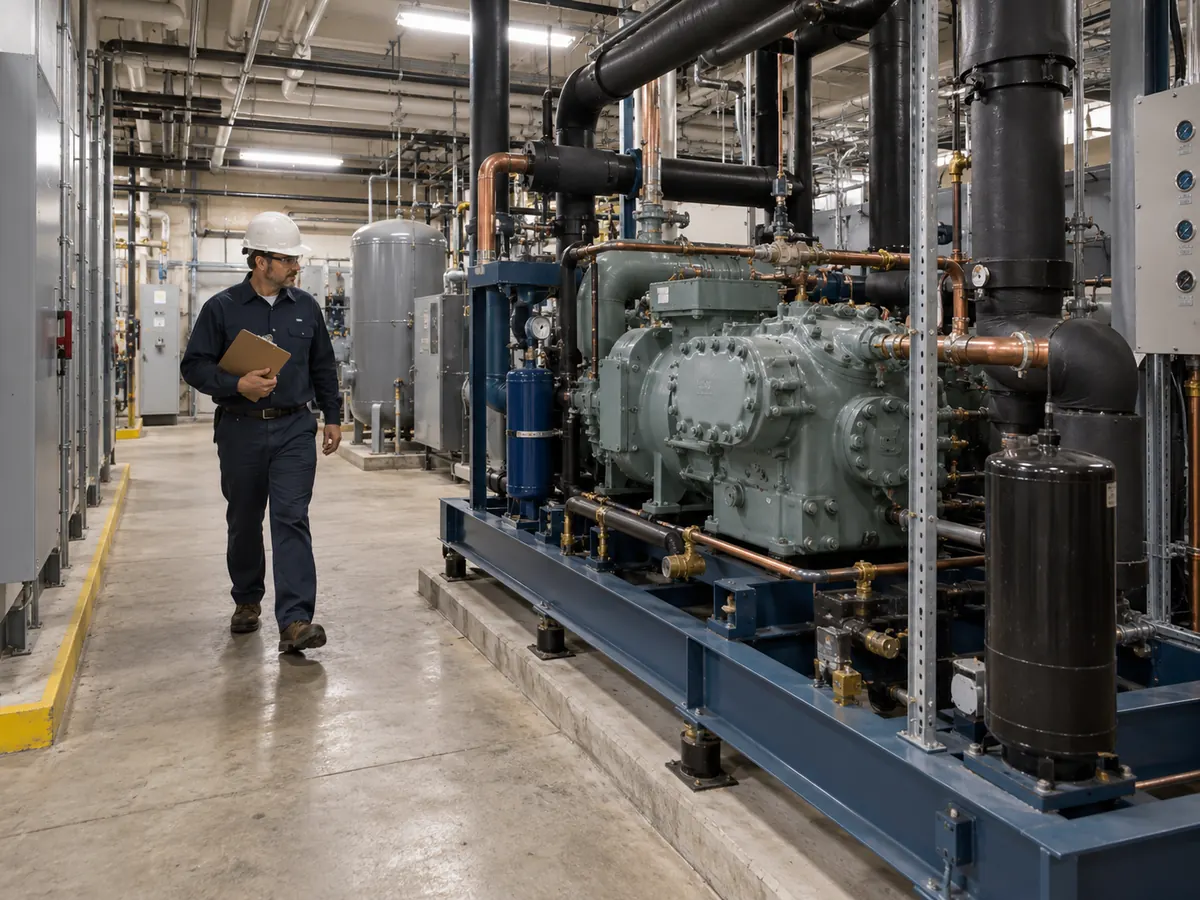
Screw compressors
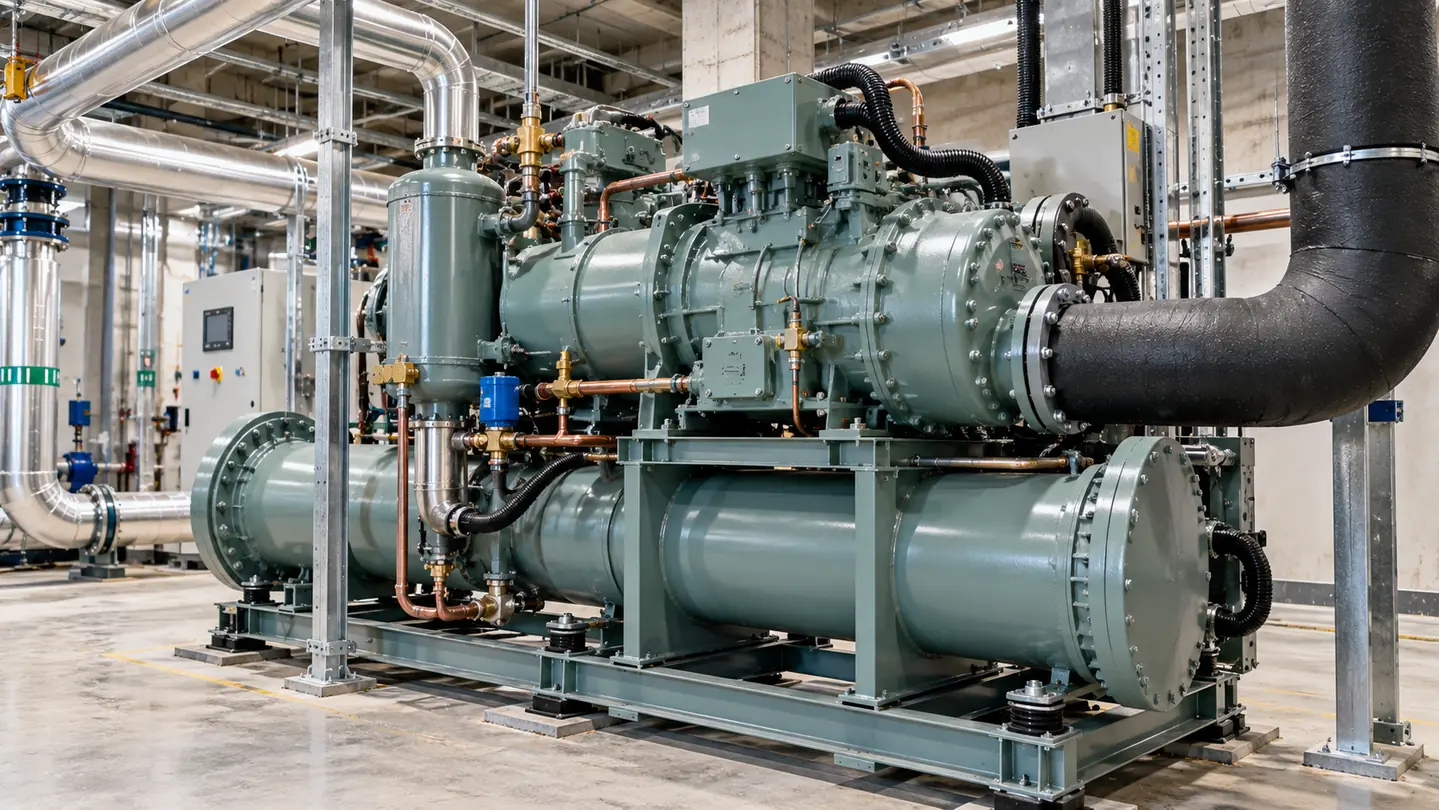
Screw compressors are positive-displacement machines that use rotating screw-shaped rotors to trap and compress refrigerant vapor. They are widely considered for commercial and industrial chillers, refrigeration systems, and selected heat-pump applications.
- Best fit: larger commercial or industrial systems where the expected load range, pressure conditions, service strategy, and available capacity-control methods suit a screw design. Depending on the product, capacity can be managed by unloading, slide-valve control, variable speed, or a combination of methods.
- What changes the answer: there is no universal tonnage at which screw automatically becomes correct. Full-load capacity also does not show how the selected compressor will behave when system demand falls.
- Check before choosing: compare the design load with the lowest expected load, then check pressure rise at both conditions. Review the performance map, capacity-control method, oil system, refrigerant, electrical/control requirements, and service access for the selected product.
Centrifugal compressors
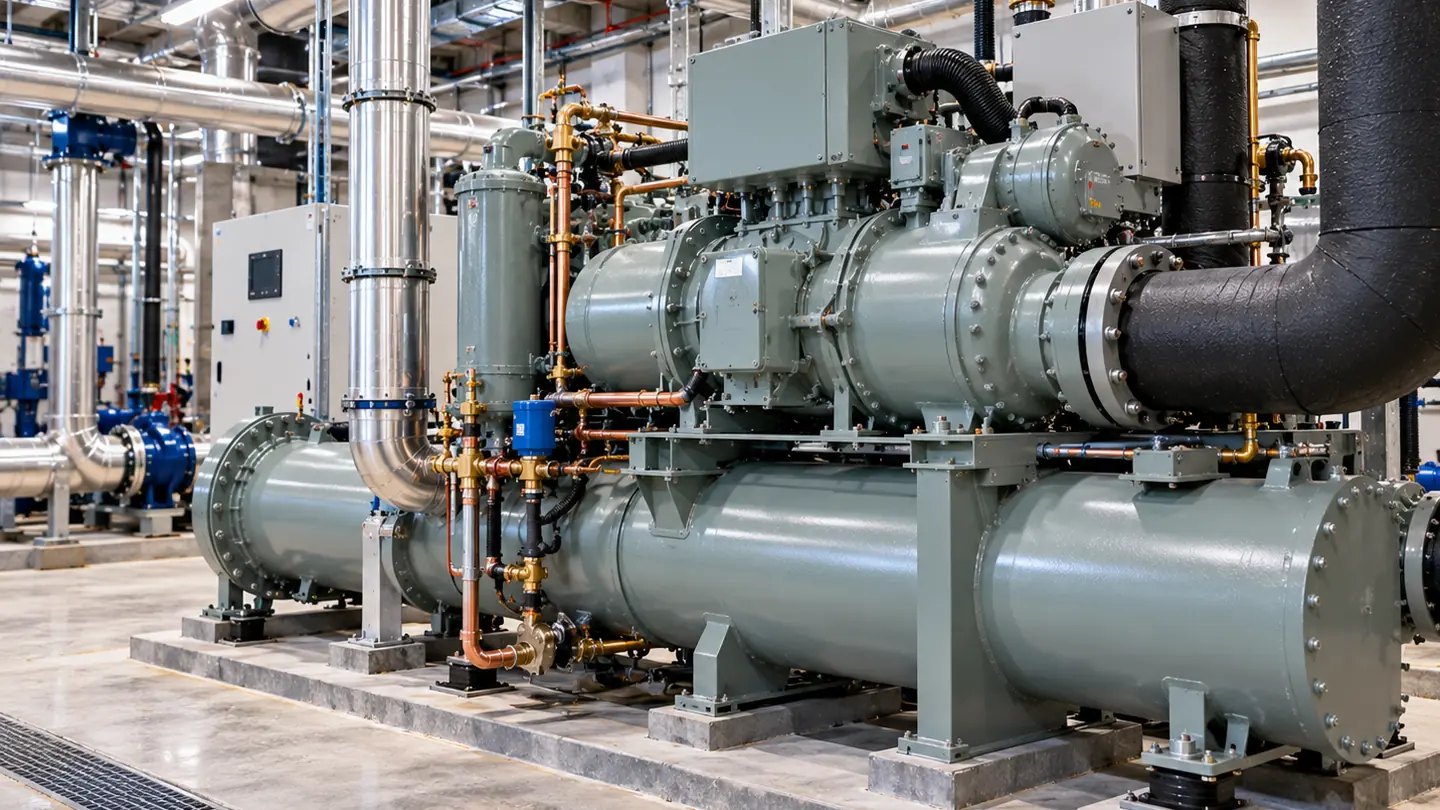
Centrifugal compressors use a fast-spinning impeller to add kinetic energy to refrigerant vapor. A diffuser then converts much of that velocity into a pressure rise. Unlike the other four families in this guide, centrifugal is a dynamic compression method.
- Best fit: high-flow central chilled-water plants where the load pattern and required pressure rise suit the selected centrifugal chiller technology.
- What changes the answer: a large peak load does not automatically make centrifugal the best choice. A more difficult condition can be low load combined with high lift. As flow falls while the required pressure rise remains high, the stable operating margin can narrow. At some low-flow and high-pressure conditions, a centrifugal compressor can become unstable. This is called surge: refrigerant flow and pressure may swing instead of staying steady.
- Check before choosing: compare peak and minimum load, required pressure rise at those conditions, staging, condenser conditions, controls, backup-capacity needs, and the stable operating map. ASHRAE liquid-chilling guidance explains why part-load stability, lift, and surge risk must be checked when selecting a centrifugal chiller.
Three mistakes to avoid when comparing compressors
To avoid a wrong selection, distinguish mechanical type from capacity control, do not use tonnage as a universal cutoff, and verify capacity and power at the actual operating point. Each rule addresses a different source of selection error.
Compressor type is not the same as inverter control
No. An inverter adjusts the speed of a compatible compressor motor; it is not another mechanical compressor family. A complete specification should distinguish the compressor family, the capacity-control method, and the construction/drive arrangement.
Three separate questions are often mixed together in HVAC specifications:
| Question | Examples | What it tells you |
|---|---|---|
| How is refrigerant mechanically compressed? | Rotary, scroll, reciprocating, screw, centrifugal | Compressor family/mechanism |
| How is capacity controlled? | Fixed speed, inverter/variable speed, staging, unloading, slide valve, multiple compressors | How output can follow load |
| How is the compressor built or driven? | Hermetic, semi-hermetic, open drive | Enclosure, drive and service construction |
An inverter compressor is therefore not a complete compressor classification. “Inverter” normally tells you that motor speed can be varied by an electronic drive. A rotary compressor can use inverter control. A scroll compressor can use variable speed. Other compressor technologies may also use variable-speed drives when the product is designed for it.
The same caution applies to hermetic, semi-hermetic and open-drive descriptions. They tell you how the compressor is constructed, not whether the compression mechanism is scroll, reciprocating, screw, or another family.
For project selection, record all three separately: mechanical family, capacity-control method, and construction/drive type.
Which compressor type fits common HVAC applications?
For compact split or ductless AC, start by comparing rotary and suitable scroll compressors. For air-to-water heat pumps, choose around the actual heating conditions, especially when low outdoor temperature combines with high leaving-water temperature. For central chilled-water plants, compare screw and centrifugal compressors using how the load changes, compressor lift, minimum load, staging, and stability—not peak tonnage alone.
Compact split or ductless air conditioning
If the project is a compact inverter split or ductless AC, start by evaluating rotary and suitable scroll solutions rather than selecting from capacity alone.
Rotary is common where compact packaging is important. Scroll may become relevant as system architecture, capacity, refrigerant, sound, or operating-range requirements change. In either case, inverter control describes how capacity is modulated; it does not decide the mechanical family.
Check the design temperatures, required cooling and heating capacity, refrigerant, voltage and frequency, modulation range, sound target, and approved operating range before making the final choice.
Air-to-water heat pumps
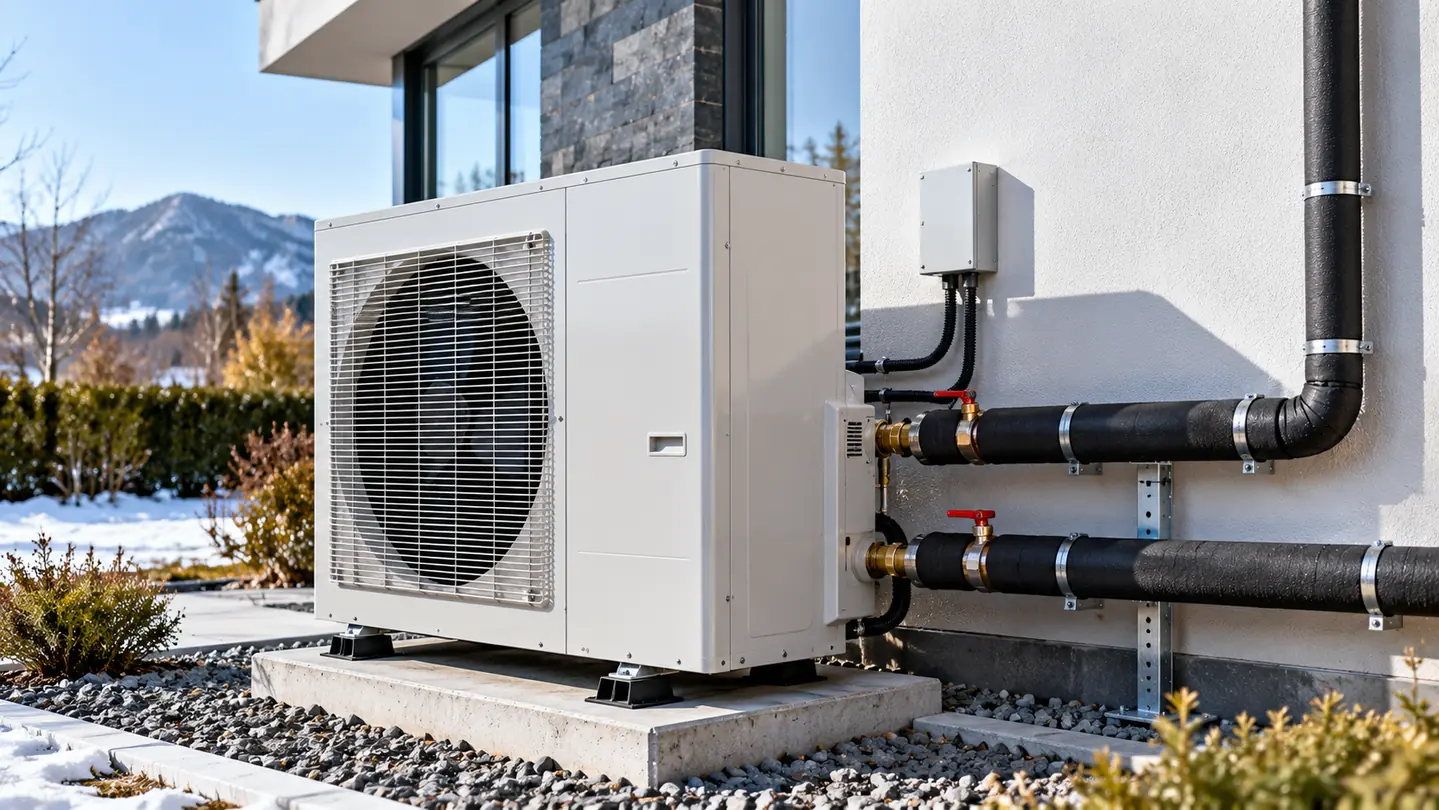
For an air-to-water heat pump, first check how cold it gets outside and how hot the heating water must be. If the heat pump operates at mild outdoor temperature and moderate water temperature, several compressor/system designs may fit. If the project combines low outdoor temperature with high required leaving-water temperature, the selection becomes more demanding because compressor lift increases.
That condition can change available heating capacity, power input, discharge temperature and the usable operating range. Specialized compressor or system features may be needed, but they must be verified on the final product—not inferred from the word “scroll,” “rotary,” or “inverter.”
For this application, provide the winter design temperature, required leaving-water temperature, design heating load, electrical supply, refrigerant/market constraints and expected operating pattern. Then compare heating capacity and power at the actual design condition.
The heat emitters help determine the water temperature the system needs: existing radiators may require a different supply temperature from underfloor heating or fan coils, depending on their sizing and the building heat loss. Also check the planned heating controls and design flow. If required water temperature rises, recheck available whole-unit capacity and input power at the colder design point; neither nominal compressor capacity nor its maximum temperature alone guarantees comfort.
To see how the compressor, refrigerant circuit, heat exchangers, and hydronic connections fit together, use our heat pump schematic diagram guide.
Example: A heat pump on a cold day that must deliver hot water
This is an engineering example, not a customer project case.
Central chilled-water plants
For a central chiller plant, compare screw and centrifugal compressors using how the load changes and how much pressure rise is required, not a single tonnage threshold.
Screw may be attractive where the selected machine, capacity-control strategy and operating range fit the project. Centrifugal may be attractive for high-flow central plants, but minimum load and high-lift operation need careful stability verification.
At peak load and the lowest sustained plant load, compare screw and centrifugal options at the same leaving-chilled-water and entering-condenser-water temperatures. Identify the corresponding evaporating and condensing conditions, including a difficult high-lift condenser condition. Check both points on each proposed chiller’s performance and stability map, and confirm planned staging keeps each operating unit within its approved range. Also check controls, backup capacity, power supply, service needs, and available space.
For factory-built water-chilling packages covered by its scope, the AHRI 550/590 and 551/591 package-rating standards provide a whole-package performance-rating framework. This is separate from compressor-only ratings and does not prove how a specific installed plant performs.
If the plant uses multiple chillers, compare the operating load on each running unit after staging, not only total building load. Confirm sequencing and condenser conditions against each machine’s stable operating map; even if the preferred compressor family remains the same, the staging plan may need to change.
What to Check Before You Choose a Compressor or HVAC System
Before choosing the final model, check the allowed operating range, capacity and power at the real design condition, refrigerant, electrical and control compatibility, part-load behavior, and matched rating conditions. If those checks do not match the project, choose a different compressor or system even if the nominal capacity looks correct.
Check the allowed operating range
Confirm that the selected compressor or system is approved for the expected evaporating/condensing conditions, outdoor temperatures, leaving-water or supply-air temperatures, refrigerant and speed range. Do not assume that two compressors from the same family share the same limits.
For a variable-speed compressor, check the approved operating envelope at the intended speed, not only the stated minimum and maximum speeds. A speed the drive can command is not necessarily approved at every evaporating or condensing condition.
Check capacity and power at your actual conditions
There are three different performance questions. Compressor rating: what capacity and input power are reported at stated compressor test conditions? Design-point system performance: what can the complete AC, heat pump or chiller deliver at the required outdoor, air or water conditions? Real operation: how will part load, controls, defrost where relevant, and installation conditions affect performance over time? AHRI 540 addresses performance ratings for positive-displacement refrigerant compressors, while AHRI 1520 addresses centrifugal refrigerant compressors; neither substitutes for complete-system or model-specific data.
Rated data is not the same as your project condition
- Rated capacity describes performance at the test or catalog conditions stated with the rating.
- Project capacity can change when outdoor temperature, evaporating/condensing conditions, water temperature, load, or compressor speed changes.
- What to do: compare capacity and power at the same operating point whenever the manufacturer’s data allow. Do not treat nominal capacity as a guaranteed result at a different condition.
Check refrigerant and electrical compatibility
Confirm the approved refrigerant, voltage, frequency, motor/drive arrangement and controller requirements. These are exact-product checks, not family-level assumptions.
If a model is not expressly approved for the system refrigerant, available electrical supply, required drive, or protection controls, exclude it even when nominal capacity appears to match. For replacement work, follow the equipment manufacturer’s approved compressor and oil specifications.
Check how the compressor handles part load
Check how the selected design follows the expected load: variable speed, staging, multiple compressors, unloading, slide valve, or another method. For large plants, also check the minimum stable operating condition and how staging changes across the load range.
When several compressors switch on and off in stages, also check the manufacturer’s minimum running and stopping times, allowed cycling, and how the controller maintains the required air or water temperature between stages. A low minimum capacity on paper does not guarantee stable temperatures if controls cause frequent cycling.
Check oil, service, and installation needs
Where relevant, check oil management, service access, installation orientation, piping requirements, vibration control and manufacturer protection requirements. These factors can affect reliability even when the compressor family appears suitable.
For refrigerant-circuit moisture, debris, and post-compressor-service cleanup, see how an HVAC filter drier protects the sealed circuit.

Check the efficiency of the complete HVAC system
Do not treat SEER2, EER2, HSPF2, SCOP or whole-system COP as compressor-family properties. The compressor affects system efficiency, but heat exchangers, airflow or water flow, expansion control, fans, pumps, refrigerant circuit design, controls and test conditions also matter.
For air-conditioning projects, compare whole-unit ratings and performance at the conditions that matter to the building; our energy-efficient air conditioner guide explains why equipment and operating conditions matter beyond the compressor alone.
If operating cost is part of the comparison, use the complete AC system’s electrical input or representative measured energy use, operating hours and the applicable electricity tariff—not compressor nominal capacity alone. The AC running-cost calculation guide shows how to estimate that cost and where the estimate has limits.
If the system performs poorly, do not blame the compressor first
A correctly selected compressor can still be part of an HVAC system that underperforms. Before concluding that the compressor family is wrong, check whether the problem comes from:
- incorrect system sizing or a higher-than-expected building load;
- insufficient airflow or water flow;
- dirty, blocked, or undersized heat exchangers;
- piping, installation, or commissioning conditions;
- control settings, sensors, or operating schedules.
If the air conditioner is not cooling, diagnose airflow, refrigerant-side conditions, controls, and heat-exchanger performance before treating the compressor as the root cause.
Compressor selection and system troubleshooting are different tasks.
Where to find the data you need
- Compressor or HVAC system model: equipment nameplate and manufacturer documentation.
- Approved refrigerant: nameplate and technical datasheet.
- Rated capacity and power: manufacturer performance table or selection data.
- Actual project design temperatures: project design conditions, load calculation, or mechanical schedule.
- Allowed operating conditions: manufacturer operating-range or performance documentation.
- Electrical supply: nameplate, electrical schedule, and product electrical data.
- Below-full-load control: technical manual, controller documentation, or compressor/chiller performance map.
Technical references used in this guide
| Source | What you can learn | Useful for | What it cannot confirm |
|---|---|---|---|
| ASHRAE | What compressor mechanisms and families exist? | Compressor-family classification and refrigeration fundamentals. | Which exact compressor model is right for a specific project. |
| AHRI 540 | How can positive-displacement compressor performance be rated and compared? | Matched-condition performance rating and comparison. | Whole-system SEER2/HSPF2 or universal compressor suitability. |
| ENERGY STAR | How are complete AC and heat-pump efficiency metrics represented? | Whole-system efficiency context. | That one compressor family is automatically more efficient in every system. |
| ASHRAE – Applied Heat Pump and Heat Recovery Systems | How can compressor selection change in heat-pump applications? | Heat-pump compressor application, low-temperature operation, and capacity-control context. | That one compressor family or one model is automatically correct for every heat-pump project. |
| ASHRAE – Liquid-Chilling Systems | What should be checked for centrifugal chiller selection and part-load stability? | Selection inputs, part-load stability, lift, and surge considerations. | A universal tonnage threshold or operating limit for all centrifugal chillers. |
| AHRI 1520 | How is centrifugal refrigerant compressor performance rated? | Comparing published centrifugal compressor ratings at stated conditions. | It does not confirm whole-chiller efficiency, stable operation throughout a project’s load range, or suitability of a particular model. |
HVAC compressor types FAQ
Which compressor type is best for air conditioning?
There is no single compressor type that is best for every air conditioner. Among common air conditioning compressor types, rotary is a common choice for compact split and ductless AC, while scroll is widely used in residential and light-commercial systems. Larger chilled-water systems may use multiple-scroll, screw, or centrifugal compressors. Choose based on the system type, design temperatures, how demand changes at full and part load, the refrigerant, controls, and verified product data rather than compressor name alone.
What is the difference between rotary and scroll compressors?
Both are positive-displacement compressors, which means they trap refrigerant vapor and reduce its volume to raise pressure. Rotary designs use a rotating mechanism inside a compression chamber, while scroll compressors use two spiral-shaped elements that create shrinking refrigerant pockets. The better fit depends on the application, allowed operating range, refrigerant, control method, packaging, and system design.
Are reciprocating compressors obsolete in HVAC?
No. Reciprocating technology remains in HVAC and refrigeration applications. Whether it is the right choice depends on pressure range, refrigerant, service strategy, capacity control, vibration, lubrication and the selected product—not its age as a technology.
Can I identify a replacement compressor from a photo?
No. A photo may help you recognize the compressor family, but it cannot tell you whether a replacement is compatible. Compare the exact model, refrigerant, power supply, capacity or displacement, operating range, oil, connections and manufacturer’s replacement instructions. Do not approve a replacement from appearance alone. Refrigerant-circuit work, electrical testing, and compressor replacement require appropriately qualified personnel following the equipment manufacturer’s procedures. In the United States, refrigerant-circuit service activities covered by federal rules are subject to EPA Section 608 technician-certification requirements; check the applicable rules in other markets separately.
When should I compare scroll and reciprocating compressors?
Compare scroll and reciprocating compressors when both are approved for your refrigerant, load, and operating conditions. A scroll may suit a compact, integrated system, while a reciprocating option may be worth considering when its pressure range, capacity-control method, or service requirements better fit the application. Neither family is automatically more efficient. Use the detailed scroll-versus-reciprocating guide for a closer comparison, then verify the exact model against your operating conditions.
Related HVAC Guides
- What Is an Inverter Air Conditioner? – understand how variable-speed control differs from compressor family.
- How Does an Air-to-Water Heat Pump Work? – see how the compressor fits into a complete heat-pump system.
- Scroll Compressor vs Reciprocating Compressor – compare two positive-displacement families in more depth.
The Bottom Line on HVAC Compressor Types
Rotary, scroll, reciprocating and screw compressors raise pressure by reducing a trapped volume of refrigerant vapor; centrifugal compressors use an impeller and diffuser. The right family depends on the HVAC system, design temperatures, pressure conditions, refrigerant and load range—not a universal tonnage cutoff.
For a real project, compare the approved operating envelope, capacity and power at the same operating points, control method and complete-system performance before choosing a model. Before comparing final models, write down the application, peak and minimum load, relevant design temperatures, required water or supply-air temperature, refrigerant, available power supply and planned control method. Use these to compare <strong>matched-condition performance and operating limits</strong>. If the available data do not cover the design point, the model is not yet confirmed.
Need help choosing an air conditioner or heat pump?
Airproz supplies complete air-conditioning and heat-pump systems. Compressor information is one input into system selection; this page is not a catalog of standalone compressors. Tell us what your project needs. We can help you compare suitable Airproz systems using the applicable product data and identify which model details still need confirmation.
What we use to check a system selection
- the project cooling or heating load and actual design temperatures;
- capacity and power data at the required operating condition;
- the approved operating range, refrigerant, and destination-market requirements;
- power supply, drive, controller, and capacity-control requirements;
- installation, sound, service, and backup-capacity constraints where they matter;
- the exact model datasheet, performance data, and other applicable technical documents before final approval.
Examples from Airproz product pages
These pages illustrate compressor and control features in complete HVAC equipment. A product-page description is not approval of another model or proof of destination-market compliance.
- R32 T1 Inverter Air Conditioner – SA Series: the product data identifies a rotary compressor and inverter operation. This is a practical example of why compressor family and control method should be recorded separately.
- R32 Monobloc Space Heating Heat Pump: the product page identifies a full-DC inverter compressor with enhanced vapor injection (EVI). This is a model-specific feature, not something that should be assumed from a broad compressor-family label.
If you are comparing complete air-conditioning or heat-pump systems, share your application, design load, outdoor and required air/water temperatures, refrigerant or destination-market constraints, and power supply. Where relevant, add minimum-load, noise and installation requirements. We can use these details to discuss suitable options and identify the model information that still needs checking.
| Your project details | What we can compare | Next information to confirm |
|---|---|---|
| Building/application and required cooling or heating load | Which Airproz AC or heat-pump system types are worth comparing first | A practical system shortlist |
| Outdoor design temperature and required supply-air or leaving-water temperature | Whether the required duty stays within the suitable operating range and how demanding the design point is | The main performance data that still need to be checked |
| Project country/market and refrigerant requirements | Product-platform compatibility and which model-specific documents may be needed | Compatible options plus any remaining compliance checks |
| Power supply | Voltage, frequency, drive, and electrical compatibility | Viable electrical configurations |
| How demand changes through the day or year, including the lowest expected load when relevant | Whether variable speed, staging, or another capacity-control method matters | The control approach that needs to be confirmed |
| Space, noise, control, service, installation, or backup-capacity requirements | Which system configurations remain practical for the site | A shorter list of workable options and the remaining confirmation points |
What you get: a narrower system shortlist and a clear list of the remaining data needed before the final model is selected. Final selection still requires published performance data for the actual operating point, plus the exact refrigerant, electrical, control, and installation requirements.
For the exact model and destination market, ask which technical and compliance documents are available, including the datasheet, installation manual, wiring diagram, performance data, and any applicable test or conformity documents. Their availability and scope must be confirmed model by model.