Quick Answer
For B2B buyers, there is no single best AC brand in India. Use the ten brands below as a starting shortlist, then narrow the choice by buying route, exact product requirements, regional service and India compliance.
Residential distributors should compare current product range, channel support and service. Commercial project buyers should move from brand reputation to exact-model performance once load, design temperature, airflow or controls matter. OEM/private-label buyers should qualify the manufacturer separately.
Treat the Top 10 as an early comparison tool, not final model approval.
What This Guide Helps You Decide
How We Chose and Verified These 10 Brands
We included brands with a current presence in the Indian AC market and product ranges that are useful to compare for residential distribution, commercial HVAC, or both. The purpose is to give B2B buyers a practical starting shortlist.
This is not a sales-volume or market-share ranking, and the order does not mean one brand is always better than another. Product ranges, service coverage and channel conditions can change, so confirm the current offer before making a supplier decision.
We checked current India-facing manufacturer information, official BEE and BIS requirements, and current market evidence relevant to Indian AC buyers.
- Product range: check current India-facing manufacturer information.
- India compliance: use official BEE and BIS sources where the requirement applies.
- Market context: keep the source, date and scope attached to any market statistic.
- Final selection: move from brand-level comparison to exact-model and supplier data before approval.
A source can confirm that a brand or product family exists in the market. It does not prove that a specific model fits your project, is available now, or carries every document your purchase requires.
What we did not assume: brand popularity does not prove model-level performance, current certification, service coverage, or project suitability. Where the evidence supports only a brand-level statement, we do not turn it into an exact-model claim.
Top 10 Air Conditioner Brands in India: Quick Comparison
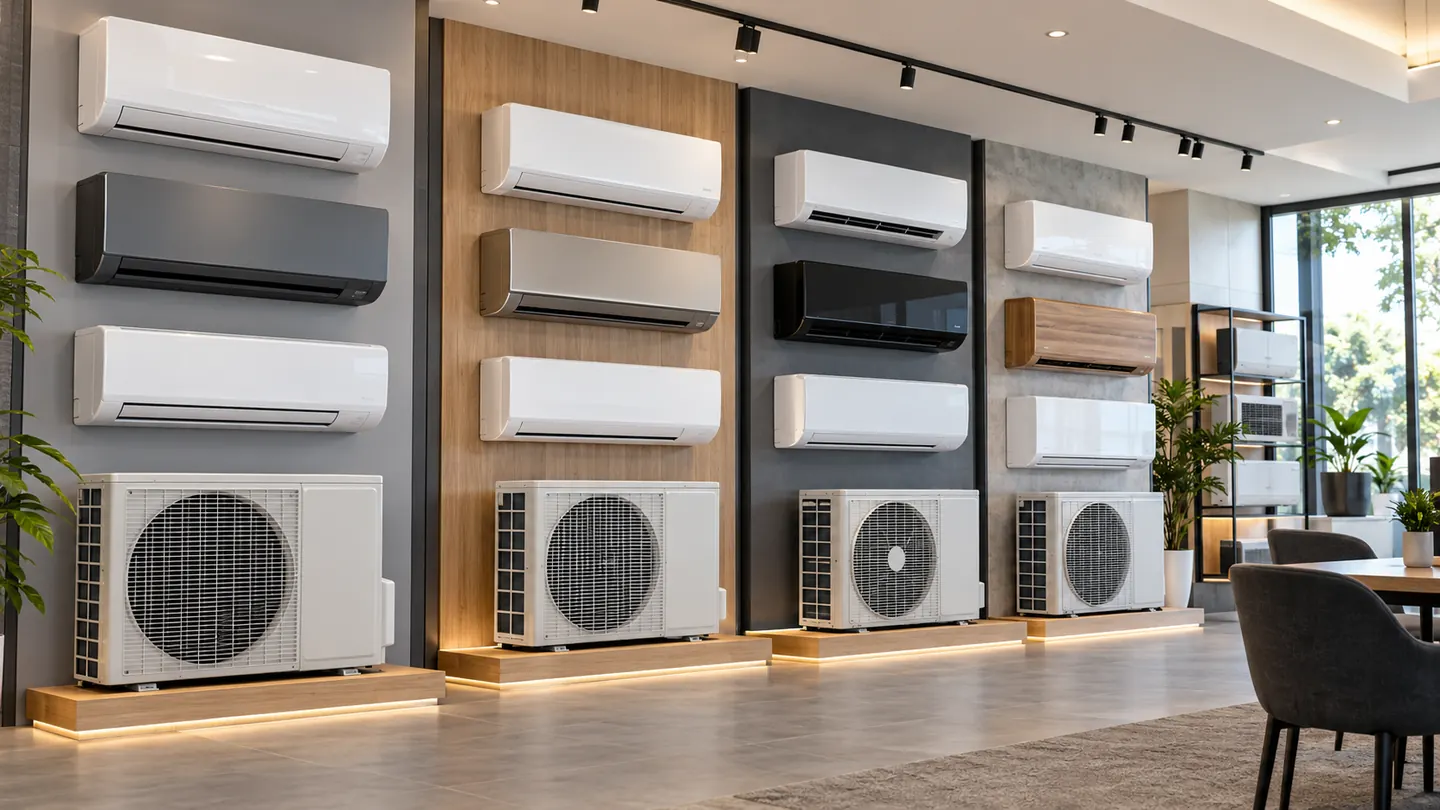
For buyers comparing air conditioner brands in India, the table below shows what each brand currently offers, where it may fit, and what you should check before adding it to your final list.
| Brand | What They Offer in India | Useful When | What to Watch and Verify |
|---|---|---|---|
| Voltas | Split and window room ACs, including inverter and fixed-speed options | Mainstream residential AC distribution and branded retail | Watch: regional channel and service differences. Verify: current model, BEE information, service responsibility and spare-parts support |
| LG | 2026 residential AC range with a strong focus on inverter, efficiency and connected controls | Premium residential distribution and technology-led room ACs | Watch: model and dealer availability can vary by region. Verify: exact 2026 model, current BEE information, dealer conditions and service |
| Daikin | Residential split ACs plus cassette, ducted, floor-standing, VRV and chiller systems | Residential, light-commercial and larger HVAC projects | Watch: residential reputation does not prove project suitability. Verify: system type, design conditions, controls, project support and exact-model performance data |
| Blue Star | Room ACs plus commercial and central HVAC products | Residential distribution, commercial projects and institutional applications | Watch: room-AC and project-HVAC requirements are different. Verify: product type, project requirement, current model documents, engineering support and service coverage |
| Samsung | Residential inverter ACs and cassette products | Premium residential, connected-home and selected light-commercial applications | Watch: connected features do not replace model-level fit. Verify: exact India model, capacity, current BEE information, availability, channel terms and service |
| Panasonic | Residential room ACs plus commercial AC and VRF solutions | Residential distribution and project-oriented HVAC | Watch: residential and project ranges need separate checks. Verify: exact product family, current India model, project requirement, documents and support |
| Hitachi | Hitachi-branded AC products remain relevant in India, but the current sales/service structure has changed | Buyers considering Hitachi-branded cooling equipment | Watch: the current India sales/service entity structure has changed. Verify: seller/manufacturer entity, exact model, documents, service route and applicable regulatory records |
| Godrej | Split, window, cassette and tower AC formats | Residential distribution and selected larger-room or light-commercial applications | Watch: format and capacity needs may narrow the useful range. Verify: product type, capacity, current BEE information, model availability and service |
| Haier | 2026 split ACs and tower products | Residential distribution, premium room ACs and larger-space formats | Watch: larger-space formats still need operating-condition checks. Verify: exact model, capacity, BEE information, operating conditions, availability and support |
| Lloyd | Residential AC products within the Havells consumer-durables platform | Mainstream residential distribution and branded retail | Watch: channel fit can differ by region and series. Verify: current series, model availability, BEE information, channel terms and after-sales support |
Product ranges change. Use this table to decide which brands are worth checking in more detail, then confirm the current model, service conditions, and supplier documents before you buy.
Compare Every Brand on the Same Points
Use the same checks for every brand so that a famous name does not hide a weak fit for your project:
- Current product range: Does the brand currently offer the AC or HVAC system you actually need?
- Exact model availability: Can the required model be supplied now, not just shown in an old catalogue?
- India documents: Where applicable, can the supplier provide current BEE information and, where applicable, BIS certification / Quality Control Order (QCO) information for the exact product?
- Local service: Who supports the equipment in the city or region where it will be used?
- Spare parts: Are common service parts, controllers and electronic boards reasonably available?
- Warranty responsibility: Who handles the claim if the unit fails—the brand, distributor, importer or supplier?
- Channel or project support: Does the supplier support your route, whether that is retail distribution, project HVAC or OEM/private label?
- Technical documents: For project work, can you get the datasheet, performance data, drawings and control information needed to evaluate the product?
A well-known brand can still be the wrong choice if the required model, local service, technical documents or commercial terms do not fit your project.
A famous logo is not enough on its own. Our air conditioner brands to avoid guide shows how to screen model-level risk, warranty, local service, parts support and commissioning instead of relying on a simple brand blacklist.

When to Move From Brand Comparison to Exact-Model Verification
| Your Situation | What to Do Next | How Important Is the Brand Name? | What to Verify |
|---|---|---|---|
| Residential distribution shortlist | Compare current RAC range and regional support | Still important | Models, BEE information, service and channel terms |
| Commercial project with a defined load | Move to exact-model comparison | Less important | Capacity at design conditions, airflow/ESP, electrical supply and controls |
| High-ambient project | Check model-specific performance | Less important | Cooling capacity and power input at the project design temperature |
| OEM / private label | Qualify the manufacturer separately | Much less important | Product configuration, factory/manufacturer, documents and customization scope |
| India compliance decision | Verify the exact product and responsible entity | Brand alone is not enough | BEE, BIS/QCO, FMCS and AIR where applicable |
India AC Market Context
Inverter room ACs now make up most new RAC sales in the cited AEEE 2025 market stocktake.
The Alliance for an Energy Efficient Economy’s India Room Air Conditioner Market Annual Stocktake 2025 reports that inverter models account for about 77% of new room-air-conditioner (RAC) sales in that report scope.
This is market context, not proof that every buyer should choose the same inverter AC. Project conditions, service, price, controls and exact-model performance still matter.
How to Choose the Right AC Brand for Your Business
There is no single best AC brand in India for every buyer. Start with how you plan to sell or use the AC, then compare the brands that fit that job.
If you sell residential room ACs, focus on product range, inverter coverage, dealer conditions and service. If you are buying for a commercial project, start with the HVAC system and design conditions. If you want your own brand, use the major India brands to understand the market, then check the actual manufacturer separately.
Which Route Fits You?
| Your Goal | Start Here |
|---|---|
| Sell residential room ACs | Compare current model range, BEE energy-label information, service coverage and channel support. |
| Buy for a commercial project | Start with cooling load, indoor/outdoor design conditions and the required HVAC system. |
| Launch your own AC brand | Qualify the actual manufacturer, product configuration, India requirements and OEM/private-label responsibilities. |

If You Sell Residential Room ACs
If your business sells split or window room air conditioners through dealers, retail stores, e-commerce, or regional distribution, compare the product range and channel support before comparing brand names.
Buyers comparing the best AC brands in India for inverter split ACs should check current inverter coverage, BEE energy-label information, service support, and exact-model availability rather than relying on brand popularity alone.
Start with the AC types and capacities your customers actually need. Then check current BEE-labelled models, price position, warranty and service, spare-parts access, dealer conditions, and availability in the regions you serve.
A well-known national brand may be easier to sell because customers already recognise it. The trade-off can be less control over product positioning or commercial terms. A less dominant brand may offer a different opportunity, but only if product continuity, documents, service and supply are strong enough.
If your strength is an established dealer or retail network, start by comparing branded distribution programs. If you want more control over your own brand, product positioning or channel, compare OEM/private-label options instead.
For residential distribution, check these first:
- inverter model range
- current BEE information
- exact-model availability
- local service coverage
- spare-parts availability
- dealer or distributor conditions
A brand with strong national recognition is not automatically the best choice for a regional distributor. If service coverage or spare-parts access is weak in your target state or city, that can outweigh the advantage of stronger brand recognition. Before signing a distributor agreement, check who actually handles service in your sales area and how common replacement parts are supplied.
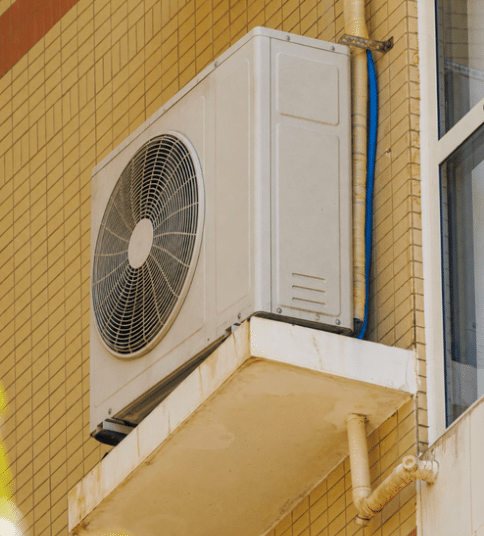
If You Are Buying ACs for a Commercial Project
If you need cassette ACs, ducted equipment, VRF/VRV, packaged systems, chillers, or another project HVAC system, a residential Top-10 list is only a starting point.
Start with the project itself: how much cooling is needed, the outdoor and indoor design conditions, the system type, required controls, installation limits, and service needs. Then narrow the manufacturers and models.
If the project cooling load has not been defined yet, use our air conditioner sizing guide before comparing exact models.
Before You Shortlist an Exact Unit
Confirm the engineering inputs that can change the final model:
- Cooling load: the amount of cooling the project actually needs.
- Indoor design temperature: the indoor condition the system must maintain.
- Outdoor design temperature: the outdoor condition the equipment must handle.
- Required airflow: the amount of air the indoor unit needs to deliver.
- External static pressure (ESP), if ducted: ESP tells you how much resistance the indoor fan can overcome in the duct system. Longer ducts, tighter filters, more bends and restrictive grilles can increase this resistance. If the required ESP is higher than the fan can handle, actual airflow can fall even when the unit’s nominal cooling capacity looks adequate.
- Electrical supply: voltage, frequency, phase and available electrical capacity.
- Pipe length and elevation difference, where relevant: split and VRF systems can have model-specific limits.
- Noise requirement: especially important for hotels, offices, bedrooms and noise-sensitive areas.
- Building controls or BMS requirement: confirm whether the project needs thermostats or a central building-control connection. A building management system (BMS) may use interfaces such as Modbus or BACnet.
Example: High Ambient + Duct Resistance A commercial AC can look large enough from its nominal capacity and still fall short when two conditions happen together: outdoor temperature is high and the indoor fan must overcome high duct resistance. Higher outdoor temperature can reduce available cooling capacity, while higher external static pressure can reduce the airflow available at the outlets. Check the manufacturer’s cooling-capacity data at the project design temperature and confirm that the required airflow is available at the actual ESP.

If the required load sits close to a model boundary, review the risks of an undersize or oversize AC before finalizing the capacity.
Do not select a commercial AC by nominal tonnage alone. A “5-ton” rating does not prove the unit will deliver the same cooling under every set of conditions.
Ask for manufacturer performance data at the temperatures and system conditions your project will actually see. This combination is often called the operating point. Depending on the system, you may need to check airflow, external static pressure, electrical conditions, system configuration, and other factors that change the available output.
A maximum operating temperature does not prove full cooling capacity at that temperature.
Also check what a published maximum outdoor temperature really means. An operating range tells you where the equipment can operate; it does not prove that rated capacity or efficiency is maintained across that whole range. If high-ambient performance matters, ask for cooling-capacity and power-input data at your actual design condition instead of relying only on a statement such as “operates up to 52°C.”
Noise data also needs the right label. Sound pressure level and sound power level are different measurements even though both are shown in decibels. If noise matters to the project, check which value the supplier is quoting and the test conditions behind it. Sound-pressure readings can also change with distance and the surrounding environment.
You are ready to shortlist an exact unit when:
- the cooling requirement is defined;
- the indoor and outdoor design conditions are known;
- airflow and ESP, or other system-side conditions, are known where they matter;
- the supplier can provide model-specific performance data at those conditions.
If the supplier can only show catalogue tonnage or a maximum operating temperature, the selection is not finished.
Let the engineering requirement narrow the brand list, not the other way around.
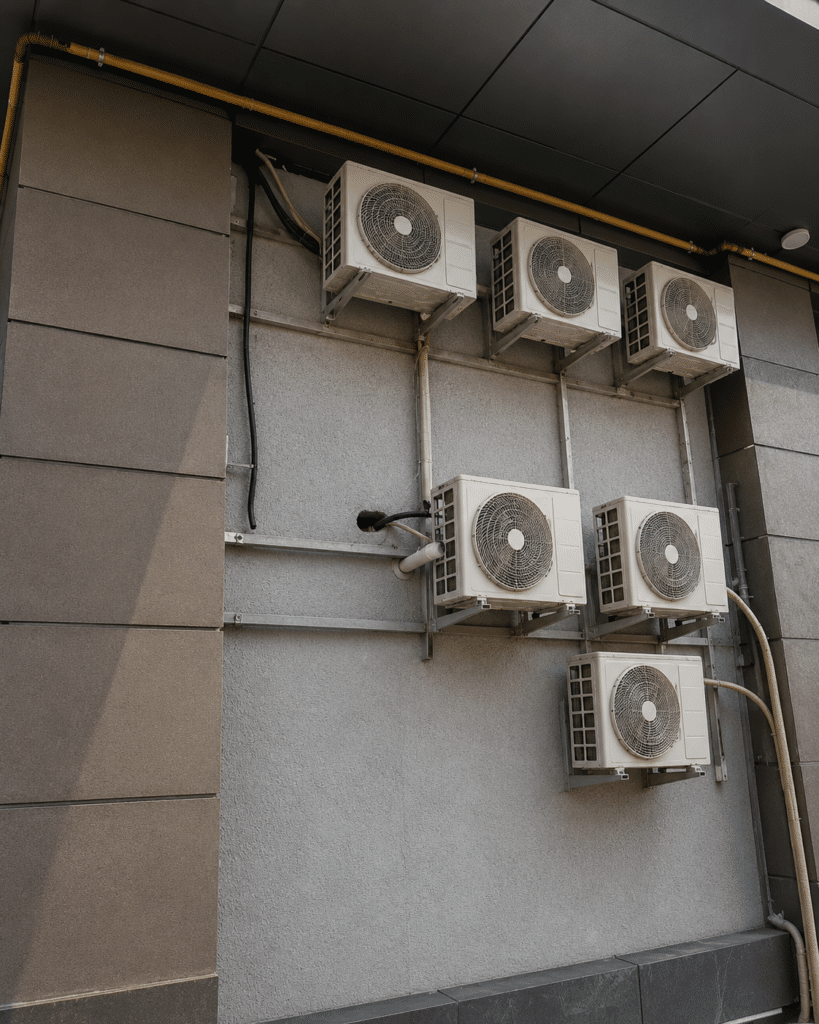
If You Want to Sell ACs Under Your Own Brand
If you want to sell air conditioners under your own brand, use the ten brands above to understand what customers already see in the Indian market. Your next job is different: you need to find a manufacturer that can supply the product, documents and configuration your brand requires.
A well-known consumer brand is not automatically an OEM supplier. Check the manufacturer separately before you treat it as a sourcing option.
Before you contact manufacturers, define the points that actually change the product or quote:
- AC type and required capacities;
- electrical configuration;
- efficiency target;
- destination climate and design conditions;
- controls and connectivity;
- refrigerant and required product documents;
- cabinet, packaging and branding requirements;
- quality-control expectations;
- India compliance responsibilities;
- expected volume and delivery requirements.
The more you change the electrical specification, controls, packaging, cabinet, efficiency target, or India compliance requirements, the less useful a generic catalogue model becomes. At that point, confirm which changes the manufacturer can actually support and which drawings, tests, or documents need to be updated.
Do not assume a company offers private-label or contract manufacturing just because its consumer brand is prominent.
Likewise, “India-ready” or “BEE-ready” is not enough by itself. Check the exact model and the documents that apply to that product before you place an order.
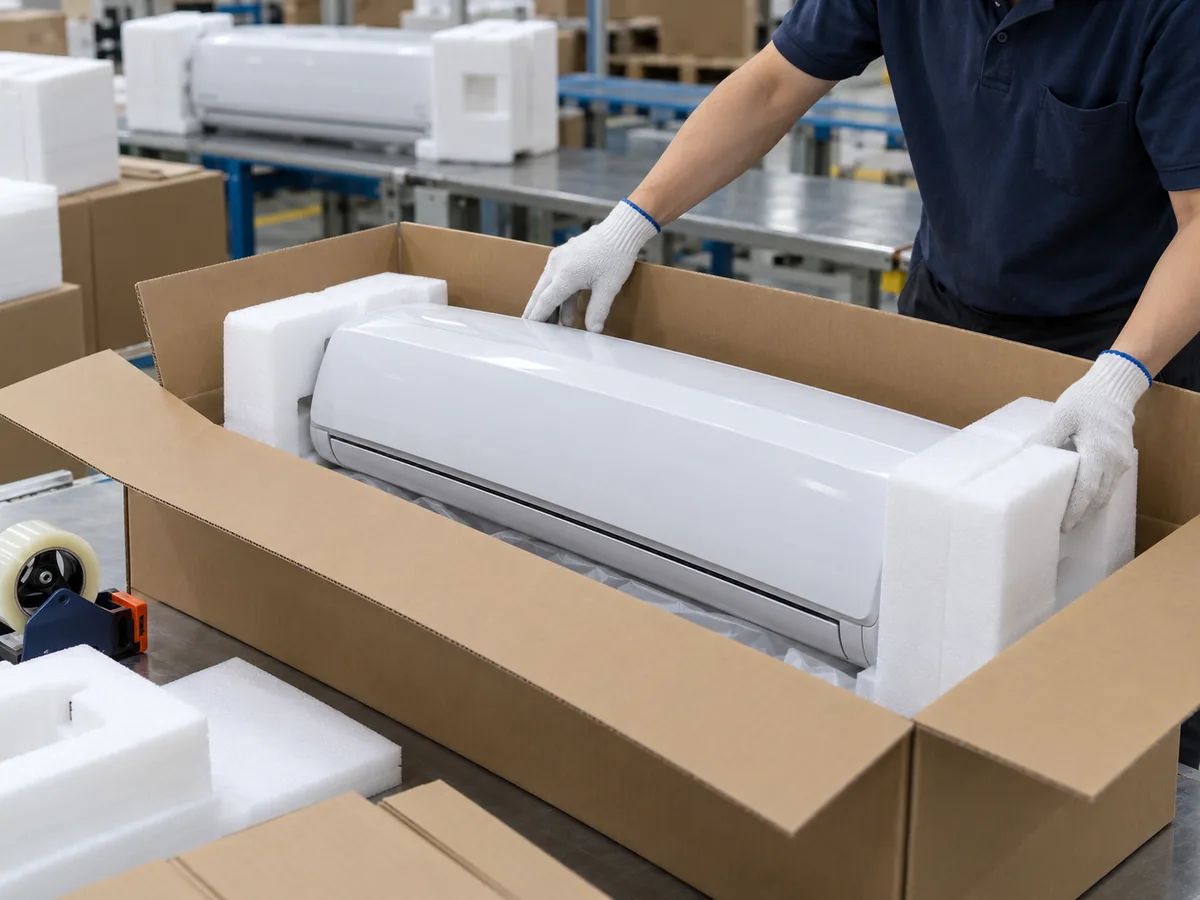
What to Check Before You Order ACs for India
For an India-bound room air conditioner, there are three separate questions to check. First, check the energy-efficiency label for the exact model. This is managed by the Bureau of Energy Efficiency (BEE), and the seasonal efficiency number used for room ACs is called the Indian Seasonal Energy Efficiency Ratio (ISEER).
Next, check whether the product falls under a Bureau of Indian Standards (BIS) certification requirement or an applicable Quality Control Order (QCO). If the AC is made outside India and the relevant BIS licensing route applies, also check the Foreign Manufacturers Certification Scheme (FMCS) and the required Authorized Indian Representative (AIR) structure.
These are separate checks. Passing one does not automatically prove that the others are satisfied.
Which India Check Applies to What?
Start with the exact AC model, manufacturer and responsible entity. Then check each India requirement separately.
| Check | Main Question |
|---|---|
| BEE / ISEER | Is the applicable energy-efficiency label and model information in place for the exact room AC? |
| BIS / QCO | Does the exact product require mandatory product certification, and does the licence scope cover it? |
| FMCS | Is the manufacturer outside India and using the applicable foreign-manufacturer certification route? |
| AIR | Who is the Authorized Indian Representative where that route requires one? |
Check the BEE Label and ISEER
BEE currently includes variable-speed and fixed-speed room air conditioners among mandatory appliances under India’s Standards & Labelling programme, together with specified RAC formats such as cassette, floor-standing/tower, ceiling and corner ACs.
For a product covered by these rules, do not look only at the number of stars. Check the:
- exact model;
- manufacturer or responsible entity;
- ISEER;
- star level;
- applicable label period;
- model/year information;
- current registration or label information.
The label period matters because efficiency thresholds can change. A 5 Star AC from one label period should not automatically be treated as equivalent to a 5 Star AC from another period.
If two suppliers both quote a “5 Star AC,” ask for the current model information and ISEER instead of comparing only the star graphic.
For a broader view of efficiency beyond the India label itself, our energy efficient air conditioner guide explains how efficiency ratings, sizing and real operating conditions work together.
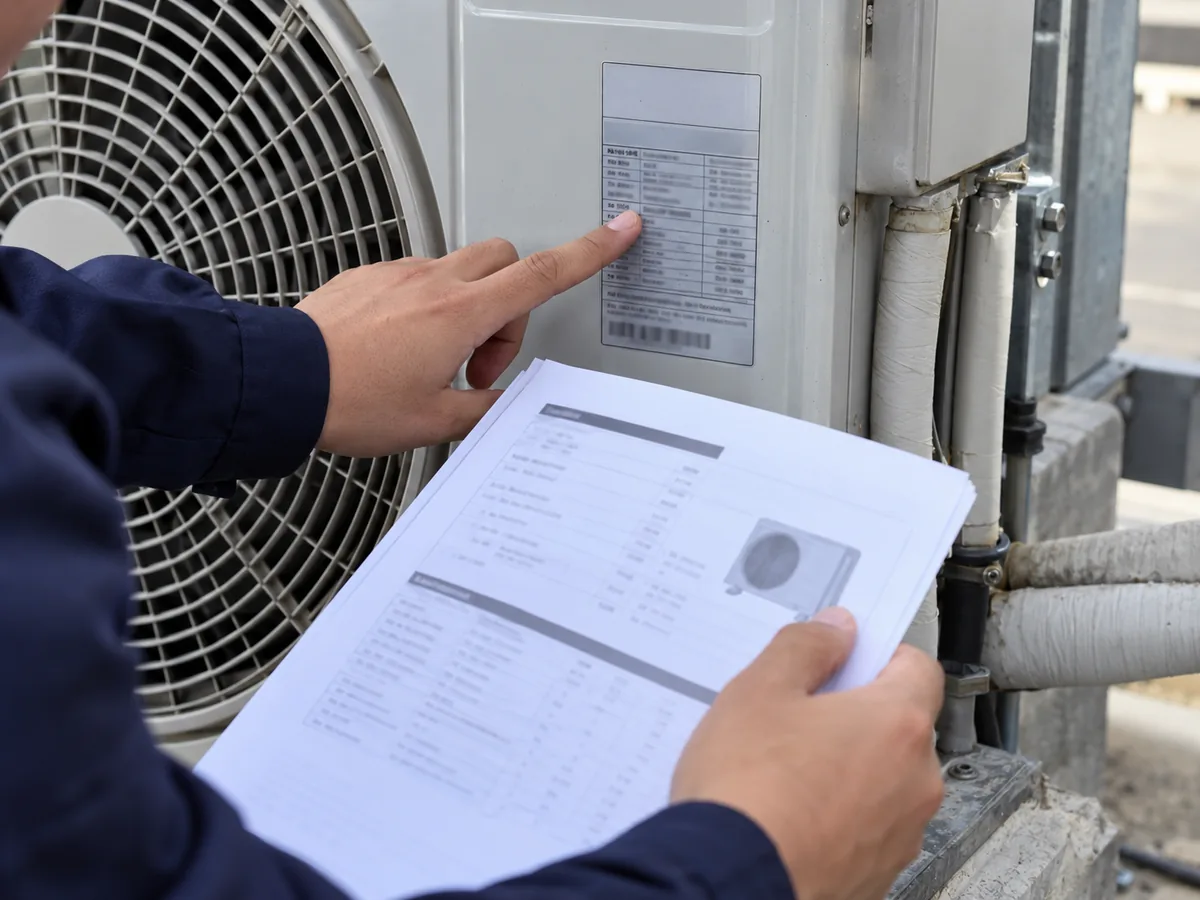
Check Whether BIS Certification Applies
BEE energy labelling and BIS product certification are different checks.
BIS currently lists split room air conditioners under IS 1391 (Part 2):2018 within its Scheme-I compulsory-certification framework, alongside other air-conditioning equipment covered by applicable standards and Quality Control Orders.
In simple terms: a BEE label does not automatically mean the BIS requirement is satisfied.
Identify the exact product type first, then check the current BIS/QCO requirement and the licence scope that applies to the AC you are buying.
If the AC Is Made Outside India
If the manufacturer is outside India and the product falls within a BIS licensing requirement, check the foreign-manufacturer route as well.
Under BIS’s Foreign Manufacturers Certification Scheme (FMCS), the foreign manufacturer applying for the relevant licence must nominate an Authorized Indian Representative (AIR).
For an applicable foreign-made AC, ask:
- Who is the actual manufacturer?
- Which factory is covered?
- Which licence applies?
- Who is the AIR where required?
- Does the exact quoted product fall within the relevant licence scope?
Do not assume every imported AC follows exactly the same certification path. First confirm the exact product and which requirement applies.
Why “India-Ready” Is Not Enough
Imagine you are evaluating a foreign-made split room AC for a new private-label brand in India. The supplier says:
“This model is India-ready and can meet BEE requirements.”
That is a useful starting point, but it is not enough to approve the order.
Before you commit, check the exact model and manufacturer, the current BEE information, the relevant BIS/QCO requirement and licence scope, and the foreign-manufacturer/AIR structure where applicable.
Also make sure the physical AC being quoted is the same configuration covered by the documents. If a required item cannot be verified, leave it open and ask for the missing proof rather than assuming it is covered.
What to Check for Long-Term Service and Maintenance
A good purchase decision does not end when the AC is delivered. Before you choose a brand or supplier, check what happens after installation:
- Who provides local service and who is responsible for warranty claims?
- Are common spare parts, controllers and electronic boards available?
- What is the replacement path if a critical part fails and the system cannot run?
- Can filters, coils and service components be reached without major dismantling?
- Does the selected model still meet the required capacity and efficiency at the conditions your project will actually see?
A low purchase price can become expensive if a critical control board, fan motor, or compressor is difficult to obtain while the system is down. Compare purchase price with service responsibility, parts availability and likely downtime risk instead of treating unit price as lifecycle cost.
For replacement planning and longer-term ownership decisions, see our air conditioner lifespan guide.
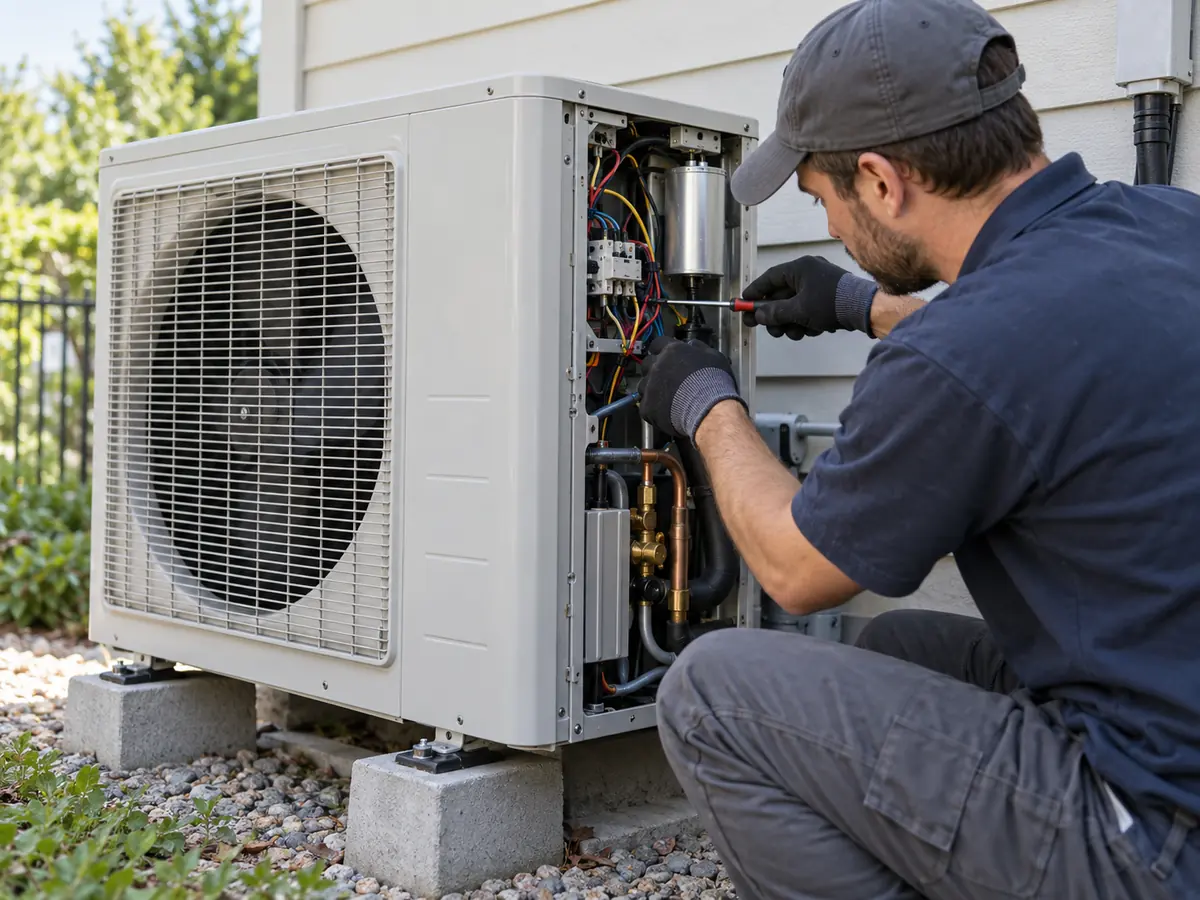
Should You Distribute a Brand, Use OEM, or Manufacture Locally?
Choose established-brand distribution when an existing name and channel network matter most. Choose OEM/private label when you want your own brand and more control over product positioning. Consider local manufacturing only when the expected scale can justify much greater factory, engineering, quality and compliance responsibility.
| Route | Brand Control | Product Control | Dependence on Existing Brand/Channel | Who Handles Documents and Compliance | What You Need to Check | Best Fit |
|---|---|---|---|---|---|---|
| Established-brand distribution | Low | Low to moderate | High | The brand or licence holder normally controls core product documents, but you still need to check that they apply to the product you are buying | Moderate — confirm model, documents, service and channel terms | You want an established name and an existing product/channel system |
| OEM / private label | High | Moderate to high within the available platform | Lower | Responsibilities must be clear between the manufacturer, brand owner/importer and other parties | High — confirm manufacturer, configuration, documents, quality controls and responsibilities | You want your own brand and product position without building a factory |
| Local manufacturing | High | High | Low | Your manufacturing business takes on much more factory, product, engineering and regulatory responsibility | Very high — manage factory, engineering, quality, compliance, service and parts support | Long-term volume can justify manufacturing infrastructure and operations |
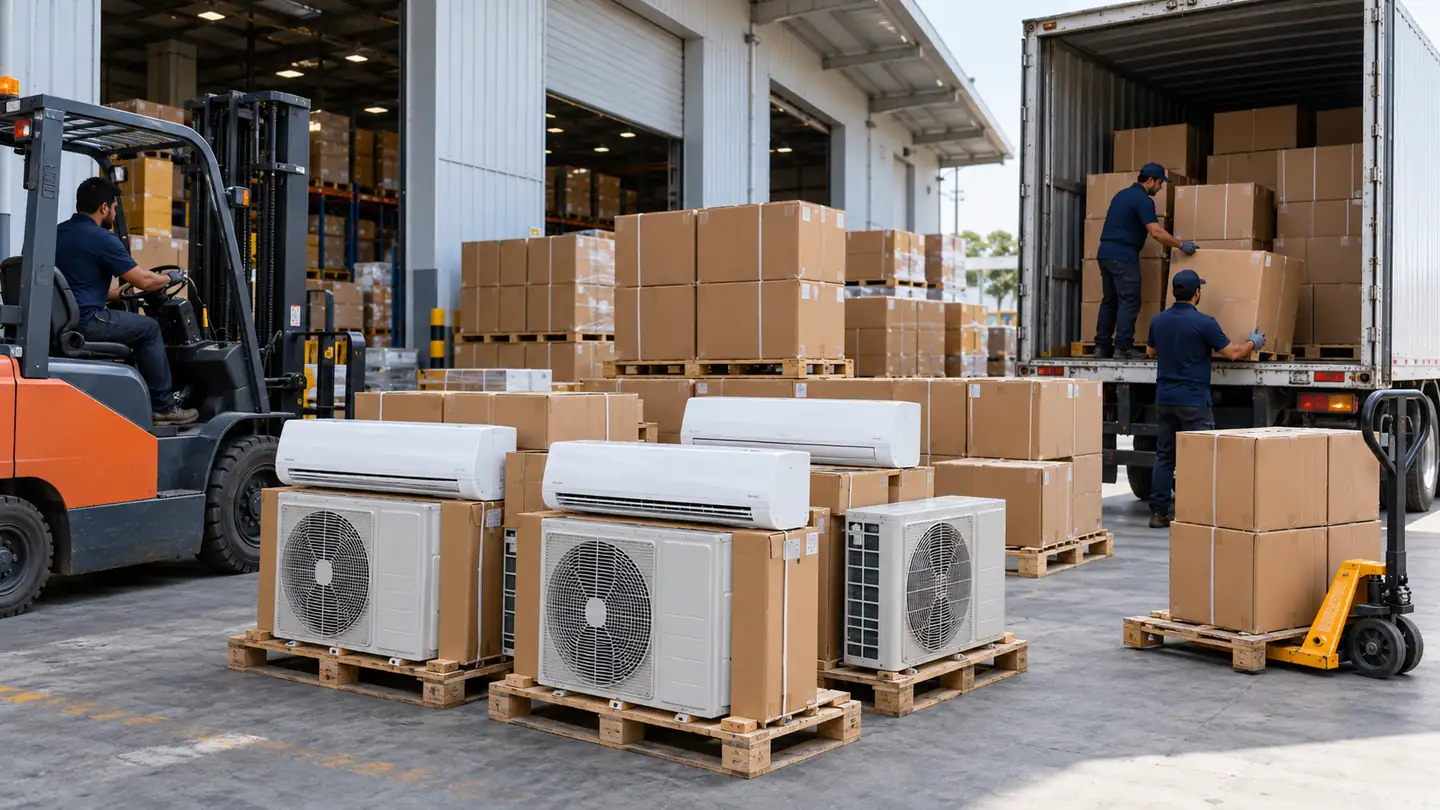
Do not compare these three routes by unit price alone.
A branded-distribution quote, an OEM quote and a locally manufactured product can include very different responsibilities for product configuration, documents, warranty, compliance and after-sales service.
Before you compare prices, ask a simpler question: Am I receiving the same type of product, the same level of documentation, the same service responsibility and the same compliance support?
What to Check Before Asking for a Quote
5 Steps Before You Approve an AC Supplier or Model
| Step | What to Do |
|---|---|
| 1. Define the application | Confirm where the AC will be used and the design conditions it must handle. |
| 2. Identify the exact product | Get the exact model, manufacturer and configuration. |
| 3. Check actual performance | Verify capacity, power input and airflow at the operating conditions that matter to the project. |
| 4. Check India requirements | Verify BEE, BIS/QCO and foreign-manufacturer requirements where applicable. |
| 5. Normalize the quotation | Compare price only after product scope, documents, quantity and responsibilities match. |
Before comparing prices, make sure every supplier is quoting the same AC configuration, quantity, required documents, delivery basis and service responsibilities. Otherwise, the cheapest quote may simply include less.

Tell the Supplier What You Actually Need
Give the supplier the basic information that changes the product choice:
- destination market: India;
- residential distribution, commercial project or private-label use;
- required AC or system type;
- cooling requirement or project load basis;
- relevant design conditions;
- inverter/fixed-speed requirement where applicable;
- electrical supply;
- installation limits;
- required controls or connectivity;
- service expectations.
Ask for the Exact Model and Performance Data
Ask for the exact model or configuration instead of accepting only a general product-family brochure.
Check the rated capacity, rating conditions, electrical information, dimensions, refrigerant, operating limits, controls and the other performance data that matter to your project.
For commercial or high-ambient projects, ask for performance at the temperatures and system conditions the equipment will actually face. That is the operating point.
Do not assume that nominal capacity is the same as the capacity available at your design condition. Do not assume that a maximum operating temperature proves full-capacity performance at that temperature.
If noise matters, ask whether the figure is sound pressure or sound power and request the test basis. Do not compare the two measurements as if they were the same.
Check the Documents for the Exact AC You Are Buying
Where applicable, ask for and check:
- current BEE model/label information;
- ISEER and label period;
- applicable BIS/QCO documents;
- BIS licence scope;
- manufacturer and factory identity;
- FMCS/AIR information for the relevant foreign-manufacturer route.
A certificate or label for a similar model, another factory or another configuration should not automatically be treated as proof for the AC you are buying.
Compare Quotes on the Same Basis
Once the technical and compliance information is clear, compare:
- requested quantity;
- production or supply lead time;
- delivery terms;
- packaging requirements;
- private-label branding requirements where applicable;
- warranty structure;
- spare-parts support;
- after-sales responsibility;
- inspection requirements;
- required technical documents;
- payment terms.
This is the simplest way to avoid a common B2B purchasing mistake: choosing the lowest unit price before checking whether the suppliers are actually offering the same product and responsibilities.
Must Confirm vs Useful to Compare
| Must Confirm Before Approval | Useful to Compare |
|---|---|
| Exact model and manufacturer | Brand recognition |
| Capacity at required design conditions | Additional feature packages |
| Applicable India documents | Packaging options |
| Electrical and system compatibility | Optional customization |
| Service and warranty responsibility | Marketing or channel extras |
| Quotation scope and exclusions | Other commercial extras |
What a Useful Supplier Reply Should Contain
A useful technical reply should give you enough information to compare the product, not just the price.
- the exact model, manufacturer and product configuration;
- performance information for the operating conditions that matter to the project;
- applicable India compliance documents or a clear confirmation path;
- service and warranty responsibility;
- the commercial scope, exclusions and assumptions behind the quotation.
If the supplier reply contains only a model name and price, it is not enough for a technical B2B comparison.
Five AC Buying Rules to Remember
Sources Used for India Market and Compliance Review
| Source | What We Used It For |
|---|---|
| AEEE India Room Air Conditioner Market Annual Stocktake 2025 | India RAC and inverter market context |
| Bureau of Energy Efficiency | BEE scope, label and model-level efficiency checks |
| Bureau of Indian Standards — Scheme I | BIS certification and applicable QCO checks |
| BIS Foreign Manufacturers Certification Scheme | Foreign-manufacturer certification route |
| BIS Authorized Indian Representative guidance | AIR requirement where applicable |
Related Air Conditioner and Sourcing Guides
Use these Airproz guides when you need to move from brand comparison into a more specific selection or sourcing task:
- BEE Star Rated Air Conditioner India Guide — Check model-level BEE and ISEER requirements for India.
- China Air Conditioner Manufacturer Sourcing Guide — Continue from brand comparison to OEM manufacturer, QC and supplier qualification.
- Types of AC Systems — Compare split, ducted, VRF and other system families before exact-model selection.
- Air Conditioner Product Range — Review Airproz AC product families after the project and sourcing route are clear.
Which Route Should You Choose?
There is no single best air conditioner brand in India for every B2B buyer. Residential distributors should start with product range, channel fit and regional service; commercial buyers should start with load, design conditions and exact-model performance; private-label buyers should qualify the actual manufacturer and product separately.
Before approval, verify the exact product, the India requirements that apply to it, service responsibility and a quotation scope that is truly comparable. That is safer than choosing from a Top-10 list first and trying to solve the engineering and compliance questions later.
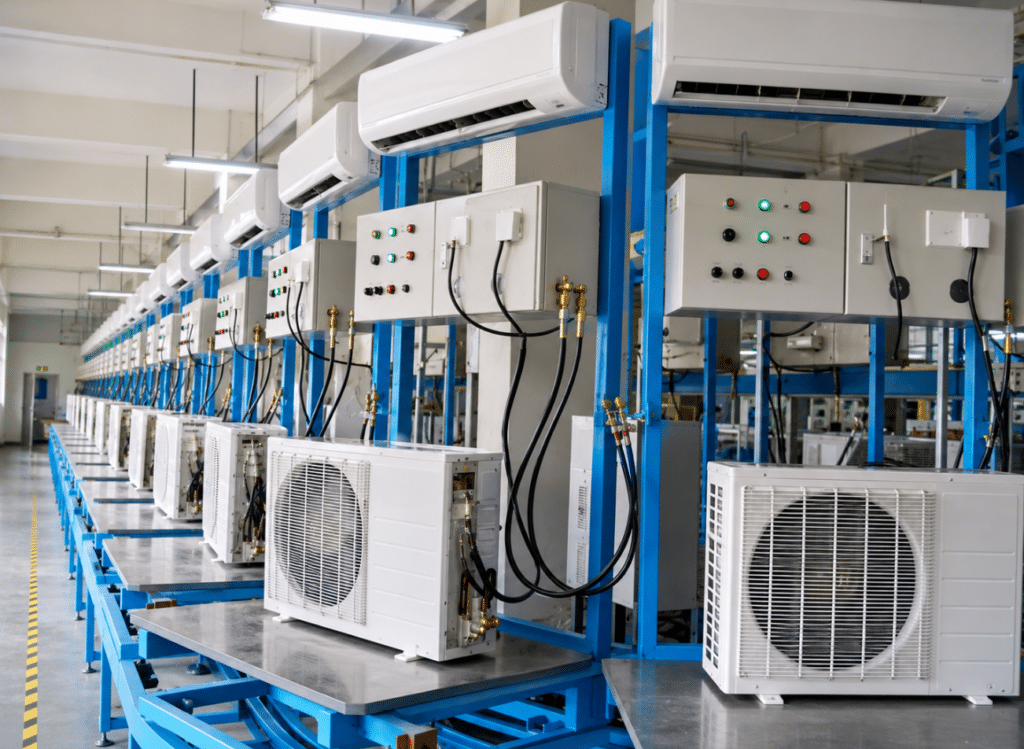
Need an OEM or Supply Option? Send Us Your AC Requirements
Airproz is not one of the ten India-market brands listed above. If you are looking for an independent supply or OEM/private-label option, send us your requirements and we can check whether one of our current AC platforms is worth evaluating.
Our current air-conditioner range includes split-air-conditioner model families and OEM/private-label options. This does not mean every Airproz model is automatically suitable or compliant for India. We still need to check the exact product against your design conditions, current BEE requirements, applicable BIS/QCO scope, and the foreign-manufacturer structure where relevant.
To start, send us the information that actually changes the product choice or quote:
- How you plan to buy or sell: branded distribution, project supply, or OEM/private label.
- Where and how the AC will be used: India plus residential room AC, commercial/project use, or another defined application.
- Cooling requirement: required capacity or project load and the design conditions that matter.
- Climate: relevant outdoor design temperature and any high-ambient requirement.
- Power supply: voltage, frequency, phase and any important electrical constraint.
- India documents: BEE/ISEER and applicable BIS/QCO requirements already defined for the project, plus any documents you need before approval.
- Product or branding requirements: inverter/fixed-speed direction, controls, connectivity, noise, dimensions, refrigerant, packaging or branding where these change the product.
- Order details: expected quantity, delivery destination, timing, packaging/private-label scope and documents required before purchase approval.
What We Can Check for You
After reviewing your project information, we can help check:
- whether one of our current AC model families is worth evaluating;
- which engineering inputs are still missing;
- what capacity or performance data still needs to be confirmed;
- which India-market documents need to be checked for the proposed product;
- whether the requested configuration is practical enough to continue evaluating;
- what information should be fixed before suppliers or models are compared on price.
This first review is meant to reduce uncertainty before a final model or quotation is prepared. It does not replace exact-model engineering or India compliance verification.
We do not treat a catalogue model as a final selection when the main project conditions are still unknown. If the cooling load, design ambient, required system type, electrical supply, or India compliance basis is still unclear, we first identify the missing information before confirming a final model. This helps avoid choosing too early and later finding that capacity, installation, controls, or documents do not match the project.
Technical Information We Can Review With You
Before a final model or quotation, we can review the information that has to be confirmed for the proposed product. Depending on the project, this may include the exact configuration, rating conditions, design-point capacity and power needs, electrical requirements, controls, installation limits and the India documents that must match the exact product.
Any datasheet, drawing, test record or certificate still has to be confirmed for the exact model being discussed. We do not treat a generic family brochure or a document from a different configuration as proof for the final product.
What Must Still Be Verified
- final model performance at the required operating conditions;
- the exact product configuration and responsible manufacturer/factory;
- current BEE, BIS/QCO or foreign-manufacturer documents where applicable;
- installation, controls and electrical limits that apply to the quoted model;
- the final commercial scope before an order is approved.
A preliminary Airproz review can narrow the direction, but final model performance, certification status and supporting documents still have to match the exact product before an order is finalized.
A price list is much less useful when suppliers are not quoting the same requirement.