A factory can build an air conditioner and still be the wrong fit for your project. The exact unit must work in your climate, use the right electrical setup, meet the rules for your market, and come with the documents you need. Quality control and the commercial terms also need to match the order.
What Airproz Can Supply for Your AC Project
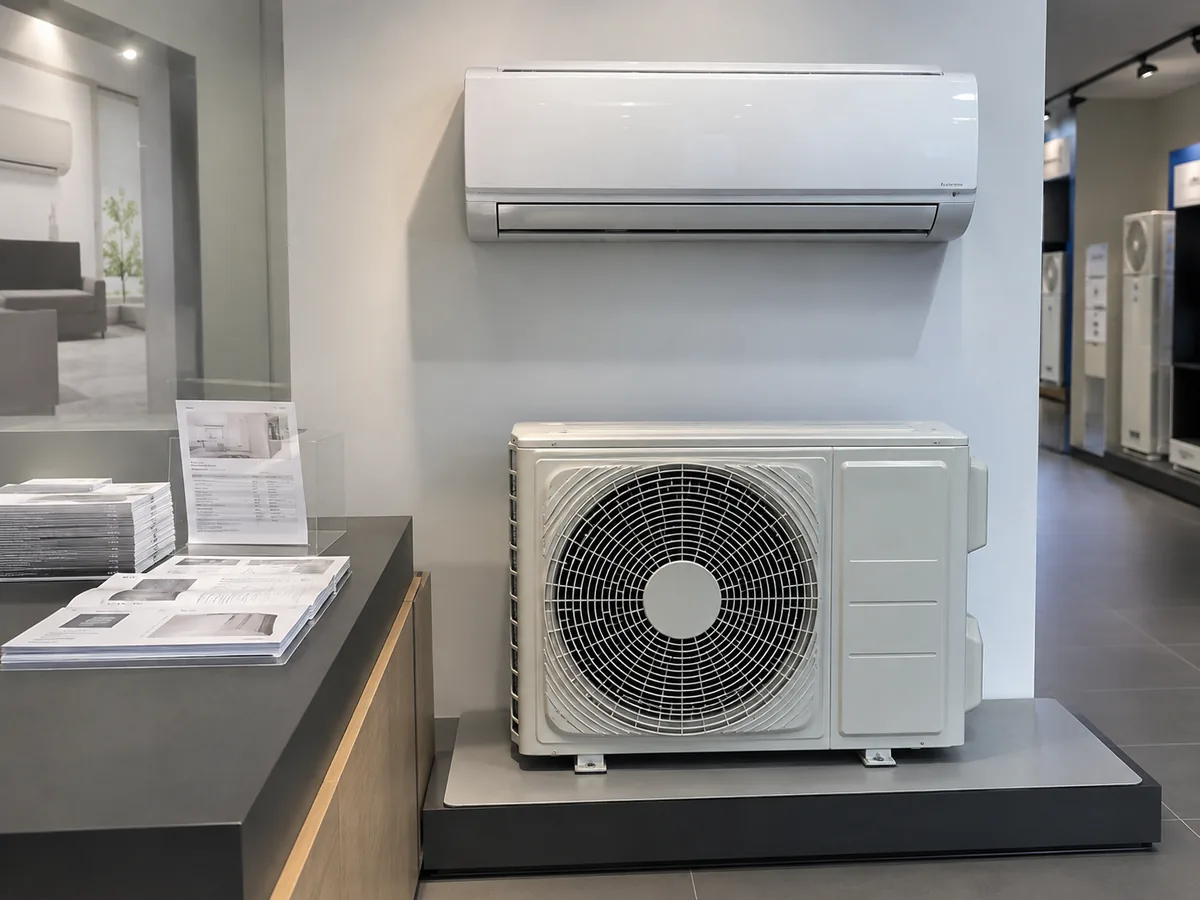
If your project fits our current air-conditioner range, we can move from a general China AC inquiry to a clear product direction and a request for quotation, or RFQ. The table below shows our current public AC and OEM/private-label capabilities. Final availability still depends on the exact series, destination market, and order.
| What you need | Airproz current direction |
|---|---|
| Product type | Wall-mounted split air conditioners |
| Refrigerant | R32 or R410A, depending on the series and market |
| Capacity range | Public family coverage from 9,000 to 36,000 BTU/h. These are nominal capacity classes, not a promise of the same output at every outdoor temperature. |
| Compressor control | Inverter and fixed-speed series |
| Order type | Wholesale, project orders, OEM, and private label |
| Branding | Unit, remote or controller, packaging, labels, manuals, and documents, depending on the project |
| Power supply | Checked against the current product platform and your market requirements |
| Compliance documents | Checked against the quoted model or family and the destination market |
| Inspection | Factory visits, third-party factory audits, and pre-shipment inspection can be arranged for suitable projects |
Not every option is available on every series. We confirm the exact product, documents, and OEM work before the final quotation or production approval. You can first review the current Airproz air-conditioner range.
Practical Ordering Information: MOQ, Samples, Lead Time, and Shipping
You should be able to understand the basic order conditions before spending time on a full technical review. Airproz publishes the following starting points for standard HVAC orders. The final quotation still controls the exact terms for your AC model and order.
| Question | Airproz current starting point |
|---|---|
| Standard-product MOQ | Starts from 5 units. The exact minimum order quantity, or MOQ, can change by model, OEM work, and packaging. |
| Sample order | One sample may be available for selected models, subject to stock and production availability. |
| Standard production | Usually about 15–30 days after product details, payment terms, branding artwork, and order details are confirmed. |
| Existing-model OEM | Standard branding on an existing model typically uses a 15–45 day lead-time reference after order confirmation. Larger engineering changes take longer. |
| Trade terms | EXW, FOB, CIF, and DDP are supported. The quotation states which costs and transport responsibilities are included. |
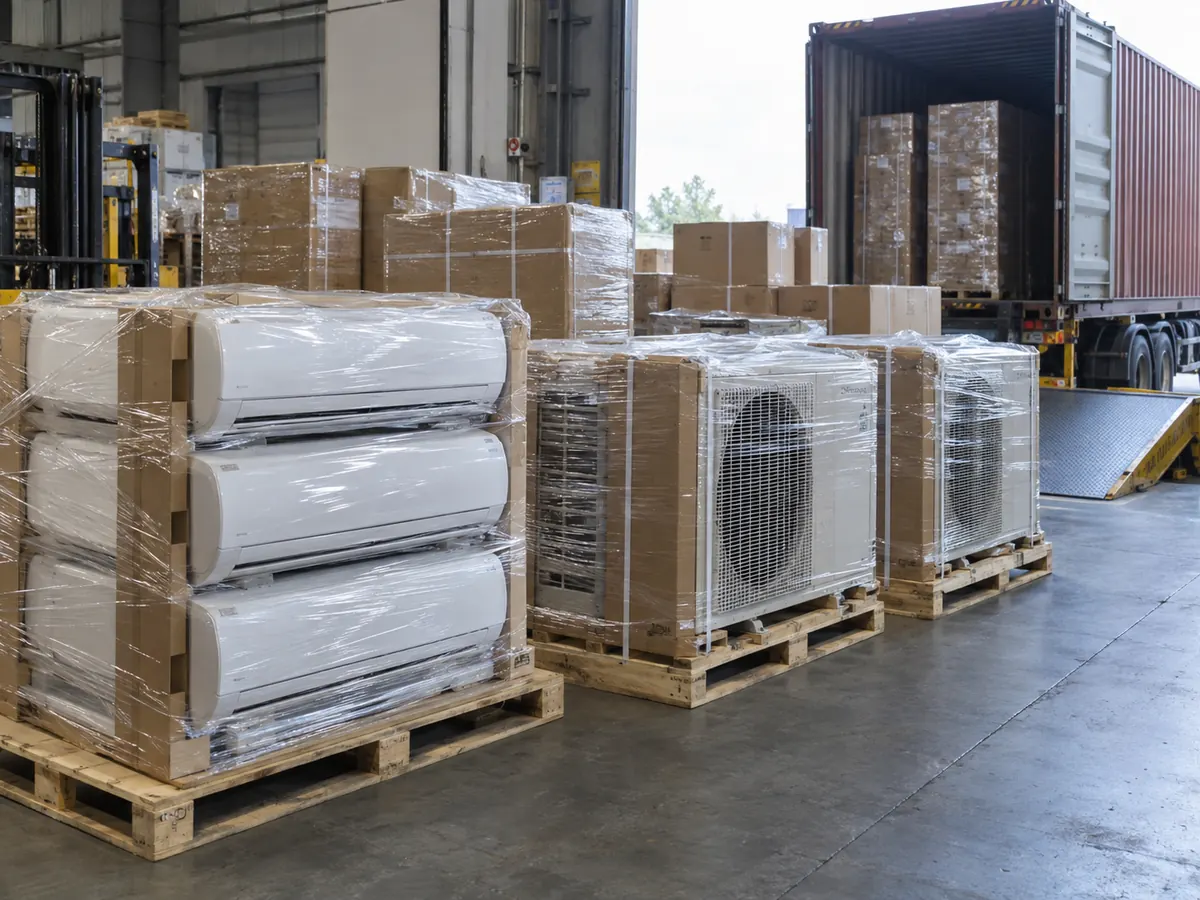
| Shipping | Bulk orders normally move by sea. Samples and urgent spare parts can use air or express shipment. |
| Inspection | Factory visits, third-party factory audits, and agreed pre-shipment inspection can be arranged. |
Which China AC Is Right for Your Market? Start With the Destination Country
“China AC” only tells you where the product comes from. It does not tell you whether that unit is ready for your market.
The same-looking air conditioner may need a different voltage, frequency, refrigerant, efficiency rating, safety document, or installation setup in another country. It may also need different proof of performance.
Before we recommend a product platform, we ask where the unit will be sold or installed. We also ask about the application, outdoor temperature used for sizing, cooling-only or heating-and-cooling use, required capacity, voltage, frequency, refrigerant, and required certification or registration.
This helps prevent a common mistake: comparing two quotations for products that look similar but are not actually built or documented for the same market.
Are You Buying From a Manufacturer, Supplier, or Trading Company?
A manufacturer, export supplier, and trading company can play different roles. The important question is simple: who controls the product specification and who is responsible when something changes?
For an Airproz project, we define which platform is being quoted. We also separate standard features, selectable options, and custom work. This matters because changing a component, voltage, refrigerant, or private-label requirement can affect testing, documents, cost, and delivery time.
If you compare us with another supplier, ask the same practical questions. Who approves the final specification? Who can approve a component change? Where is final testing done? Which documents apply to the quoted model? Who takes responsibility if production does not match the approved setup?
A clear answer to these questions tells you more than the word “factory” by itself.
How We Choose the Right AC Platform for Your Project
We start with what the air conditioner needs to do. We do not start with the logo on the cabinet.
For a wall-mounted split AC, we first check the control type and operating mode. We also check the climate, indoor and outdoor unit combination, and correct power supply.
An inverter air conditioner can change compressor speed as the load changes. This can improve comfort and part-load efficiency. However, the real result still depends on the controls, operating conditions, and test method.
For very hot climates, we also check performance at the outdoor temperature that matters for your project. A “T3” label alone does not prove how much cooling the unit will provide at that condition.
Power supply also matters. A 220–240 V / 50 Hz unit is not automatically the same as a 60 Hz version. We check the nameplate electrical data, protection needs, connection method, and market documents.
Nominal capacity is only the starting point. A room size or a 9,000, 12,000, 18,000, or 24,000 BTU/h label does not tell you the exact size by itself. The real cooling load, climate, room conditions, use pattern, and outdoor design temperature still matter. See our AC sizing guide and inverter AC guide for more detail.
How We Check AC Capacity and Efficiency
A capacity or efficiency number only makes sense when you know the test conditions behind it.
ISO 5151 is an international standard used to test and rate many non-ducted air-cooled air conditioners and air-to-air heat pumps. In the United States, the Air-Conditioning, Heating, and Refrigeration Institute, or AHRI, also runs certification programs for applicable products and certified combinations.
When we review a model for an RFQ, we separate the catalog rating from the conditions in your project. We check the model, indoor and outdoor test temperatures, rated cooling capacity, power input, and efficiency value.
If your project is in a very hot climate, standard-condition data may not be enough. We need model-specific data that covers the outdoor temperature you actually expect.
If efficiency is important for your project, compare products using the same rating method and test conditions. Our energy-efficient air conditioner guide explains why one headline efficiency number is not enough.
How We Match Refrigerant to Your Market
We do not choose refrigerant from price or factory availability alone. We first check where the unit will be sold, what type of product it is, which rules apply, how it will be serviced, and which Airproz platforms are available.
Refrigerants also have a climate measure called global warming potential, or GWP. A lower GWP can matter for regulation, but GWP alone does not decide which refrigerant is correct for every product or country.
In the United States, the U.S. Environmental Protection Agency Technology Transitions rules restrict certain hydrofluorocarbon, or HFC, uses by product sector. In the European Union, fluorinated greenhouse gases are controlled under Regulation (EU) 2024/573. The exact rule depends on the product, market, and date.
Our current AC range includes R32 and R410A platforms. That does not mean both refrigerants are suitable or available for every market, capacity, or series. Tell us the destination market first. We can then check the right platform and the documents needed for that version.
A major refrigerant change can affect the compressor, heat exchangers, controls, labels, service instructions, safety requirements, and product documents. It is an engineering change, not just a different name on the quotation.
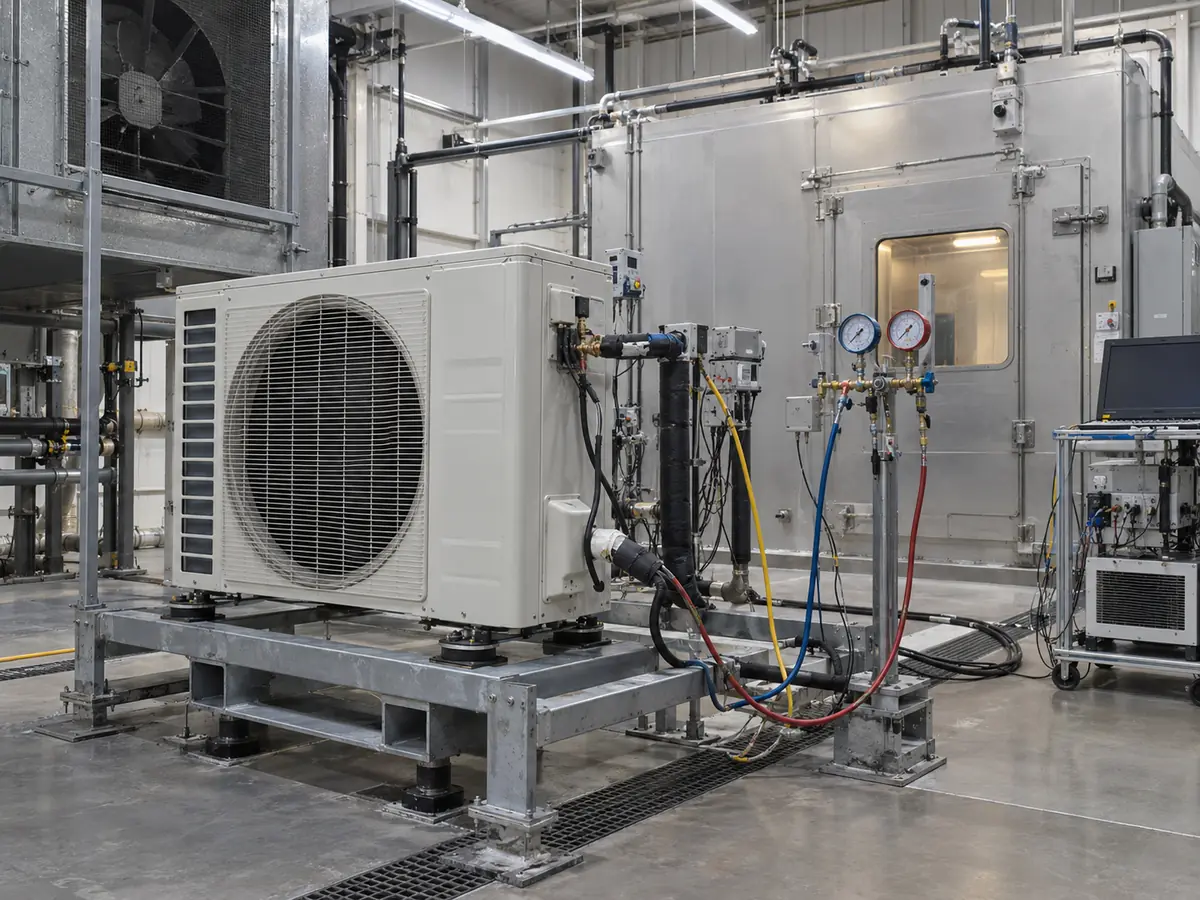
Which Certificates and Documents Should Match Your AC Model?
A factory management certificate and a product certificate do not prove the same thing. A management certificate can show how a company manages its processes. It does not prove the performance or legal fit of every air conditioner model.
Before we use a document as proof for your project, we check what product, model family, version, and market it actually covers. The exact document list changes by market, but these checks are useful in most projects:
| Document or data | What should match |
|---|---|
| Performance report | Model or family, test condition, capacity, power input, and test method |
| Product certificate or conformity document | Product scope, model or family, market, and electrical/refrigerant version where required |
| Refrigerant information | The refrigerant in the quoted product |
| Electrical data | Voltage, frequency, rated input, protection needs, and the correct version |
| Labels and markings | The quoted product and destination-market requirements |
| OEM documents | The approved private-label version and its technical setup |
A private-label unit can look almost the same as the standard version but still use a different controller, compressor, refrigerant, or electrical setup. A simple logo change may not affect the engineering. A safety-related or technical change can. We check this before branded artwork or mass production is approved.
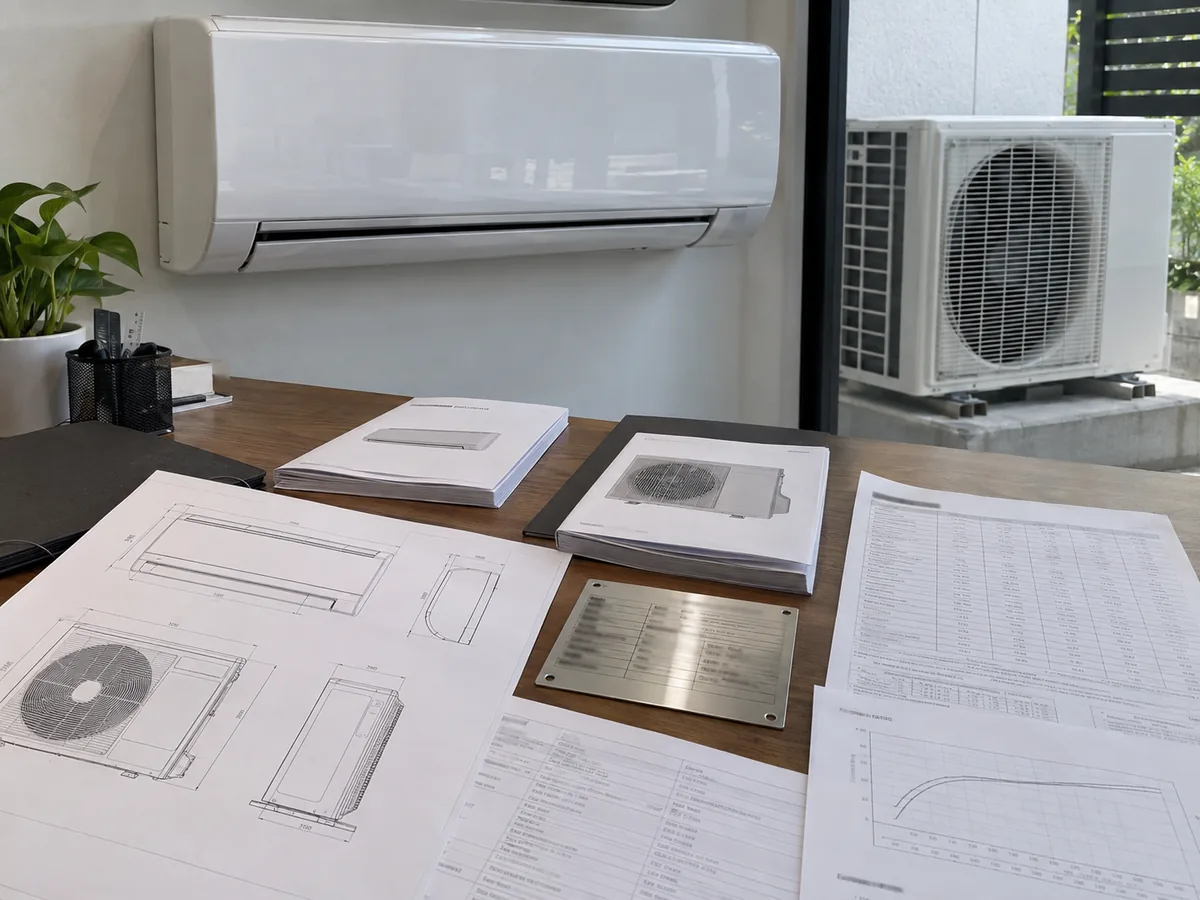
How Airproz Checks AC Quality—and What You Can Verify
A good sample only proves that one unit can be built correctly. It does not prove that every unit in a larger order will be the same.
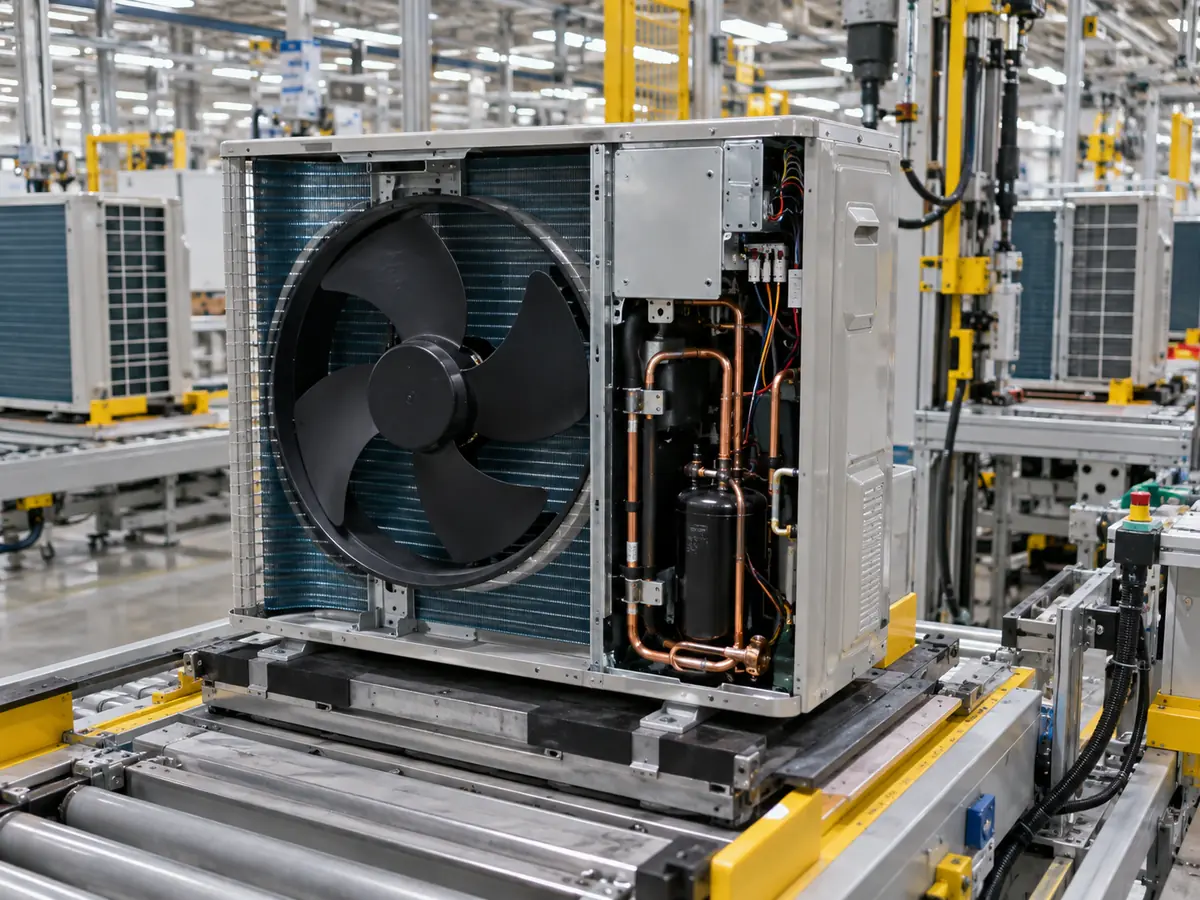
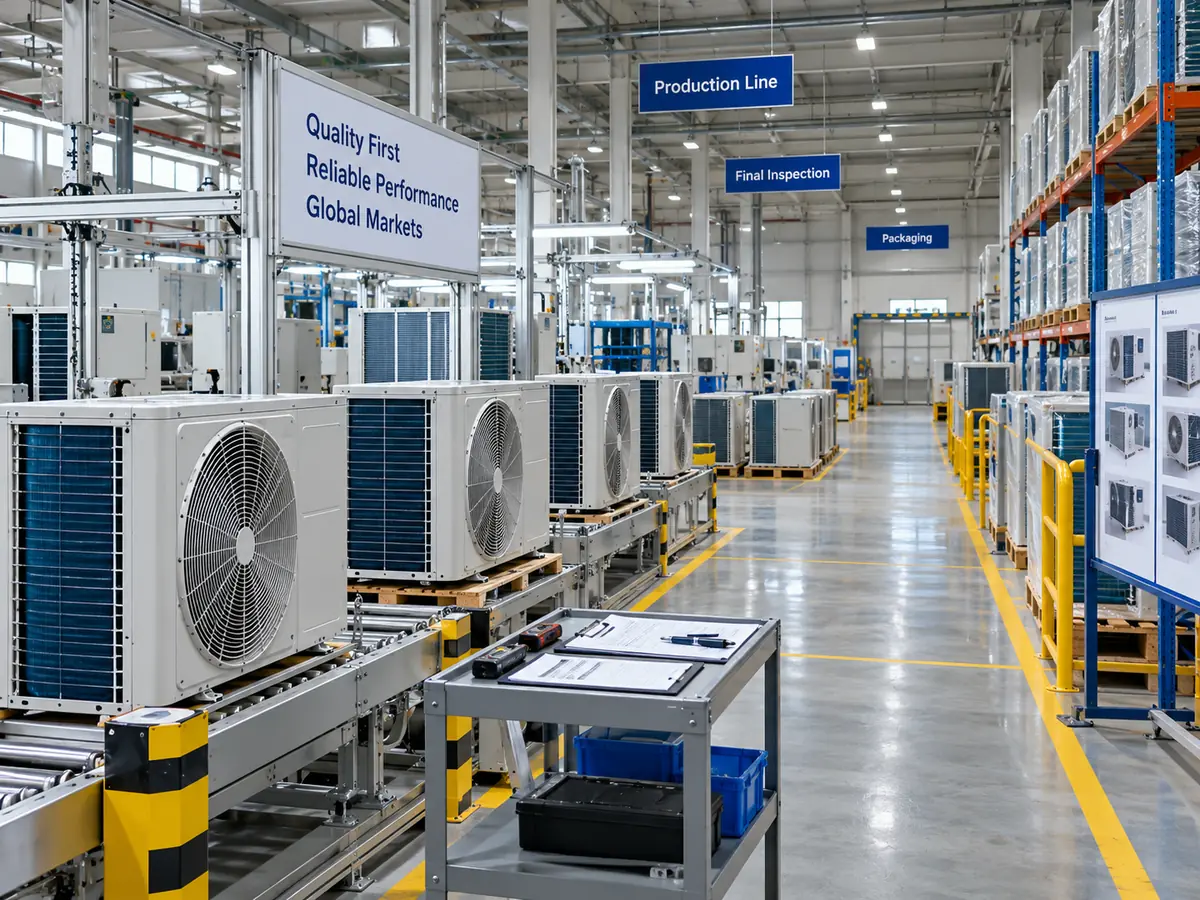
That is why we look at the production controls behind the finished product. Depending on the model and order, checks can include incoming components, refrigerant-circuit work and brazing, pressure or leak testing, electrical safety, operating checks, appearance, packaging, and final records.
The exact test sequence and pass/fail limits depend on the product. We confirm those details for the selected model and order.
For a new platform, first order, or private-label program, we can agree inspection points before production starts. Airproz supports scheduled factory visits, third-party factory audits, and pre-shipment inspection. Tell us what you want checked in advance so we can prepare the right production line, products, laboratory areas, and documents. See the Airproz HVAC FAQ for current inspection and OEM information.
The goal is simple: find important problems before the units are packed and before the same defect is repeated across a large shipment.
| Quality check | What you can confirm for the order |
|---|---|
| Incoming and assembly checks | Which production checkpoints apply to the selected model and order. |
| Refrigerant circuit | Whether pressure or leakage testing is part of the agreed quality-control scope. |
| Electrical safety | Which electrical safety checks apply to the selected configuration. |
| Operating check | Which functional or performance checks apply before shipment. |
| Appearance and packaging | The approved appearance, OEM artwork, labels, and packaging standard. |
| Pre-shipment inspection | The agreed checklist or third-party inspection scope before goods are released. |
Ask us to define the inspection scope before production if your company has its own checklist. This is more useful than approving a finished-product photo after the order is already complete.
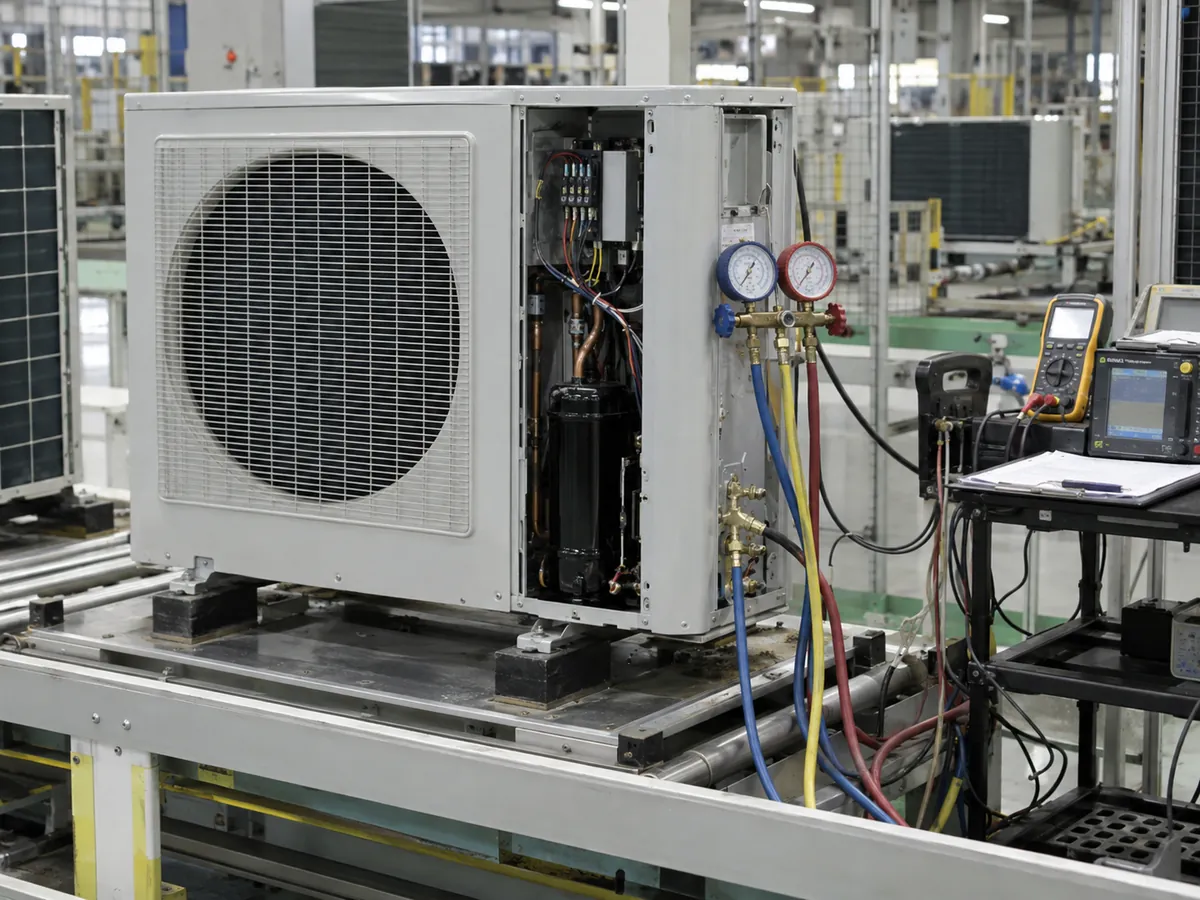
Airproz OEM and Private-Label AC Options
OEM/private-label work can be as simple as changing a logo and carton. It can also become a much larger engineering project. We separate these requests so you can see what is simple and what needs more review.
We do not promise that every change is available on every AC series. We first check whether the change is technically possible, how it affects production, whether new compliance work is needed, and whether the order size supports it. Our OEM & ODM manufacturing page explains the broader customization process.
What Should Be Included in a China AC Factory Quotation?
A low unit price is not useful if you do not know exactly what is included.
For an AC project, the quotation should clearly identify the product and commercial scope. It should show the model or family, capacity, refrigerant, electrical version, quantity, OEM work, packaging, trade term, required documents, inspection needs, warranty, spare parts, and lead-time basis where these apply.
A trade term is often called an Incoterm. For example, EXW and CIF do not include the same transport responsibilities and costs.
Two 12,000 BTU/h quotations are also not automatically equal. One may use a different refrigerant, test condition, OEM package, document set, or shipping term. One quotation may cover a standard unit. Another may include private-label cartons, manuals, labels, inspection, or extra compliance work.
Final minimum order quantity, or MOQ, lead time, warranty, spare-parts supply, and other commercial terms therefore belong in the actual project quotation. We do not use one generic number for every order.
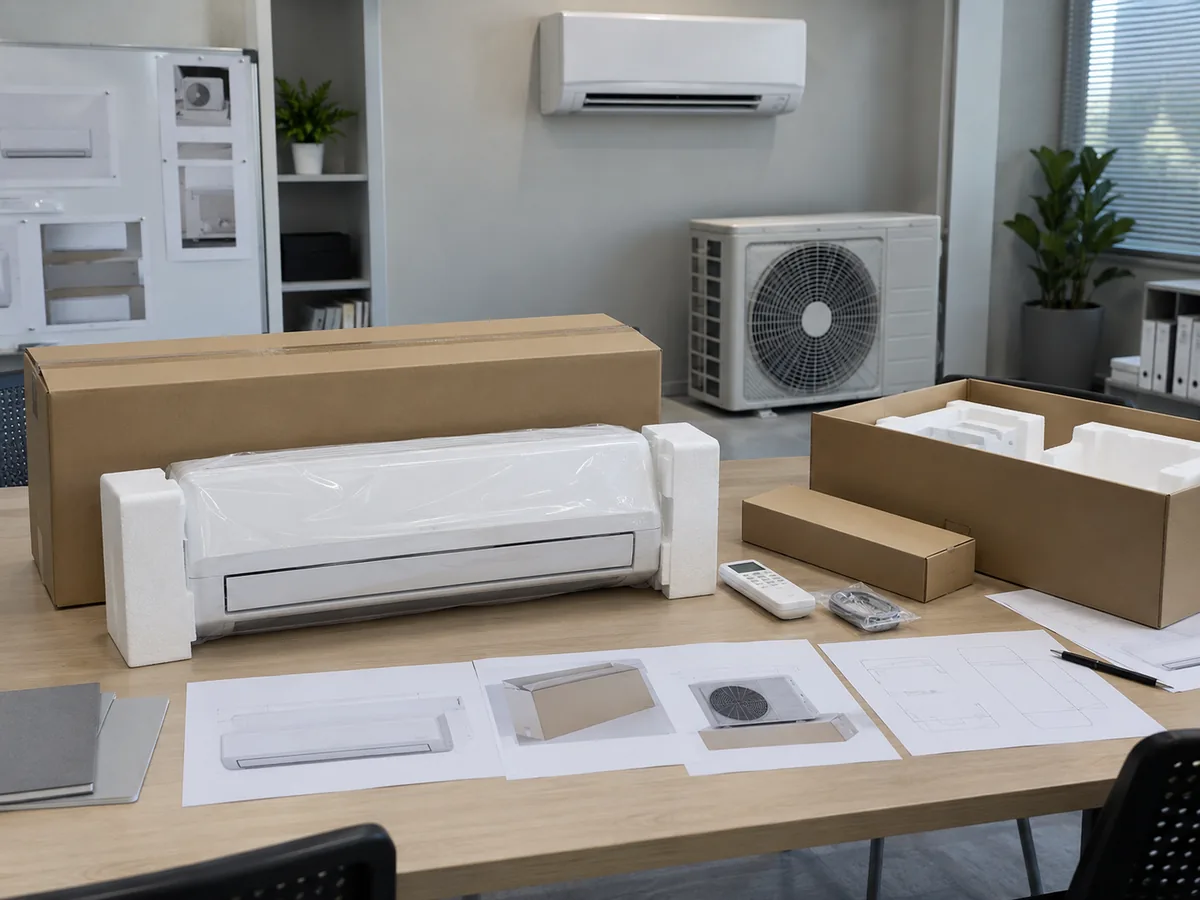
From Sample to Bulk Order
A first order does not have to jump directly from a website inquiry to mass production. For selected models, you can use a sample to check the product before a larger order.
- Send your requirements. Tell us the destination market, capacity, power supply, refrigerant needs, quantity, and any OEM work.
- Confirm the product family. We check which current platform fits and list any technical or document questions still open.
- Order a sample if needed. Selected models may be available for sample evaluation, subject to stock and production availability.
- Approve the setup. Confirm the model, OEM artwork, documents, inspection scope, and commercial terms.
- Start production. Mass production follows the approved order and agreed product setup.
- Inspect and ship. Complete the agreed final checks, shipping documents, and freight arrangement.
Three Common Project Examples
EU Private-Label AC Program
Main risk: branding or production starts before the exact platform, refrigerant, electrical version, and required documents are confirmed.
How we handle it: we first confirm the target market, AC family, refrigerant, electrical version, OEM changes, and required evidence. A new brand name does not automatically make every technical document valid for a changed product.
What to send us: target country, capacity mix, voltage and frequency, refrigerant needs, OEM work, required documents, and quantity.
What you get back: product-family direction, missing document or test items, OEM feasibility, and a clear quotation scope.
High-Temperature Climate Project
Main risk: the unit is chosen from normal test data but cannot provide enough cooling at the real outdoor design temperature.
How we handle it: we ask for the outdoor temperature used for sizing and the required cooling load. We then check the approved operating range and any model-specific high-temperature performance data. A “T3” label by itself is not enough.
What to send us: outdoor design temperature, capacity or load, operating mode, voltage and frequency, installation limits, and quantity.
What you get back: platform direction, the performance data still needed, installation questions, and the commercial scope.
U.S. Mini-Split or Light-Commercial Project
Main risk: a general export model is assumed to be ready for the U.S. market without checking the exact version.
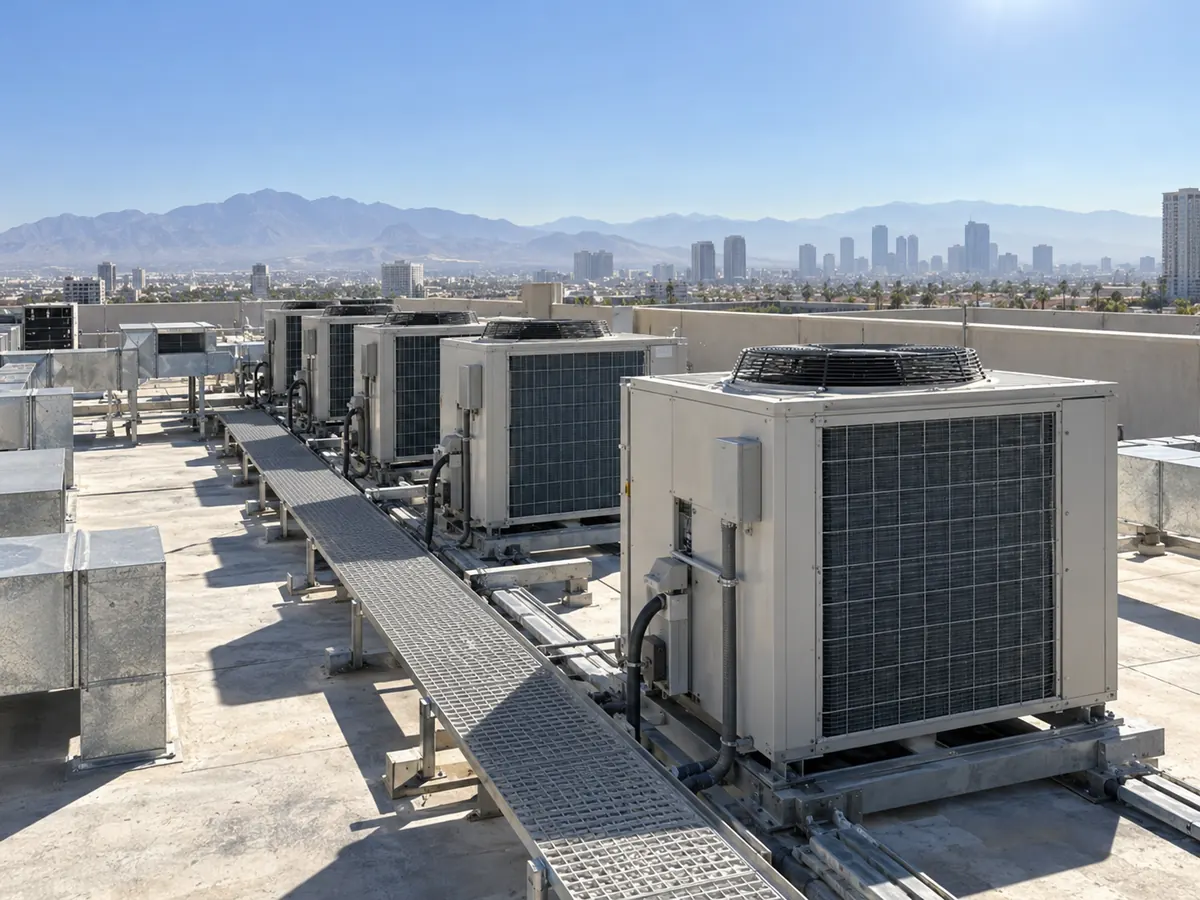
How we handle it: we check the current refrigerant path, 60 Hz electrical version, model combination, rating route, and required safety or listing documents. Where AHRI certification applies, the certified combination and rating need to match the quoted product.
What to send us: destination market or state when relevant, capacity, application, power supply, refrigerant needs, required certification or listing, quantity, and schedule.
What you get back: product-family direction, U.S.-specific document gaps, and the checks still needed before final model approval. See our U.S. mini-split sourcing guide for more detail.
China AC Supplier Check: What to Compare
If you compare Airproz with another China air conditioner manufacturer or supplier, use the same questions for every quotation. This helps you compare real product scope instead of marketing claims.
| What to check | Confirm this | Warning sign | How Airproz handles it | Evidence to request |
|---|---|---|---|---|
| Market fit | Country, climate, power, product type | Final model chosen before market is known | We confirm the market and use first | Destination-market requirements and quoted electrical/refrigerant version |
| Product setup | Family/model, control type, operating mode | Only a generic catalog page | We confirm the exact version from your project details | Model code, datasheet, and approved configuration |
| Performance | Test condition, capacity, input, efficiency | Headline number with no test condition | We compare rated data with your real operating conditions | Datasheet or performance table with stated test conditions |
| Refrigerant | Refrigerant and market fit | Generic “global refrigerant” claim | We check the market, product type, and available platform together | Datasheet and product/nameplate information for the quoted version |
| What to check | Confirm this | Warning sign | How Airproz handles it | Evidence to request |
|---|---|---|---|---|
| Documents | Covered models, versions, and markets | Certificate is for another version | We match documents to the quoted setup | Certificate, test report, or conformity document tied to the quoted scope |
| Quality control | Production checks and final testing | Only finished-product photos | We define checks for the model/order and support agreed inspection points | Agreed inspection checklist or third-party inspection scope |
| OEM work | Branding, existing options, engineering changes | “Everything is customizable” with no review | We separate simple branding from real engineering changes | Evidence that matches the quoted model and order scope |
| Commercial terms | Trade term, quantity, packaging, warranty, spares, inspection | Price has no clear product scope | We tie the price to the defined product and order | Evidence that matches the quoted model and order scope |
| OEM | Exact branding or technical change | “Everything is customizable” with no review | We separate logo and packaging work from engineering changes | Approved artwork plus the final technical specification |
| Commercial scope | Same quantity, trade term, OEM scope, documents, and inspection basis | Only the unit price is compared | We define the setup and quotation basis before comparison | Formal quotation with quantity, trade term, lead-time basis, and included documents |
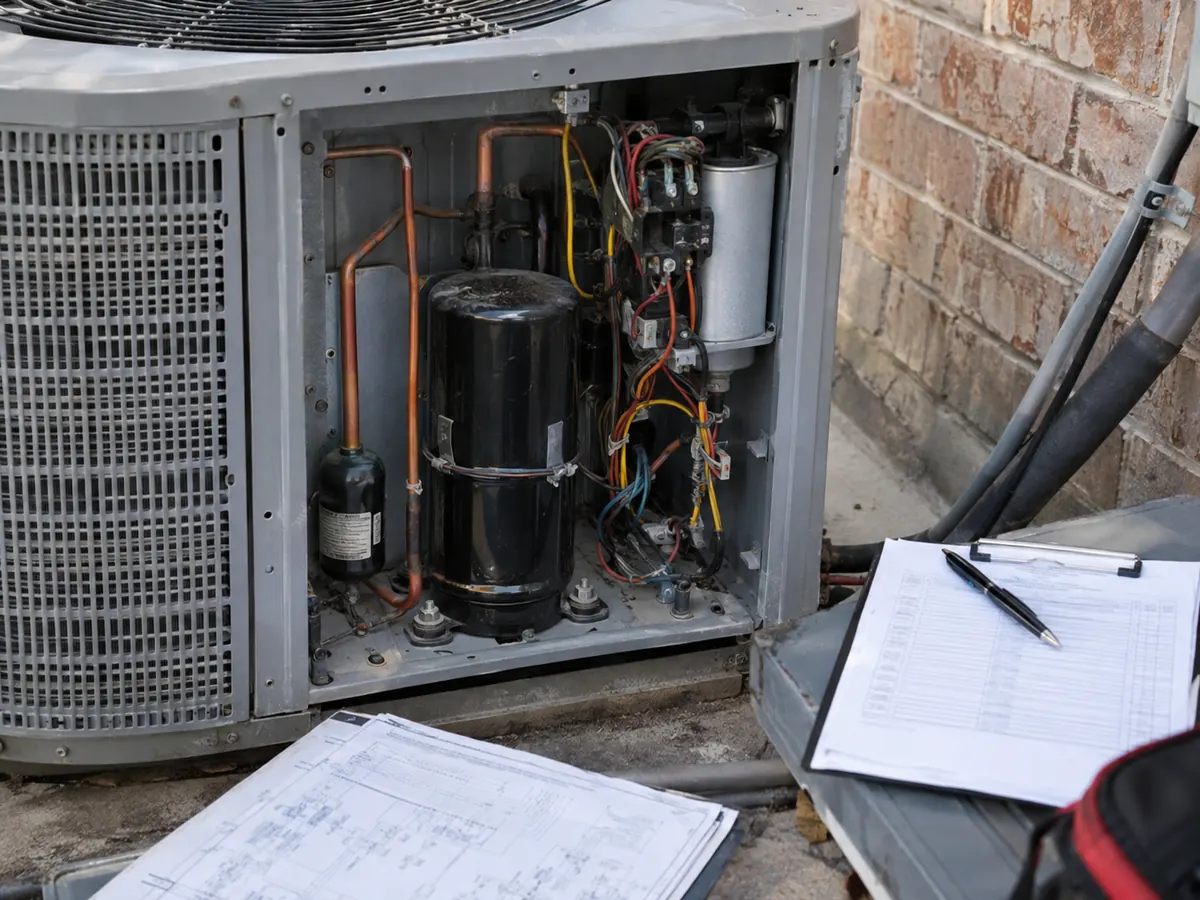
You can move forward when the open questions are clear and there is a practical way to close them. We do not approve an exact model when an important claim still cannot be tied to the model, test condition, document, or agreed production process.
What We Can Prepare Before You Approve an AC Order
A company profile is useful, but it does not prove the exact product you plan to order. Before approval, the more useful question is: what product-level information can be tied to the selected model and market?
| Document or evidence | What it helps you check |
|---|---|
| Product datasheet | Capacity, power input, refrigerant, electrical setup, and other model data. |
| Performance data | What the model does under the stated test conditions. |
| Test report | Which performance or safety claim has supporting test evidence, where applicable. |
| Certificate or conformity document | Whether the document covers the required product or market scope. |
| Wiring diagram | Electrical connection and control details. |
| User or installation manual | Installation, operation, and service requirements for the selected product. |
| Label or nameplate information | Model, refrigerant, and electrical information for the quoted version. |
| OEM artwork | Logo, carton, manual, and label approval before production. |
| Commercial and shipping documents | Invoice, packing list, and agreed shipping documents for the order. |
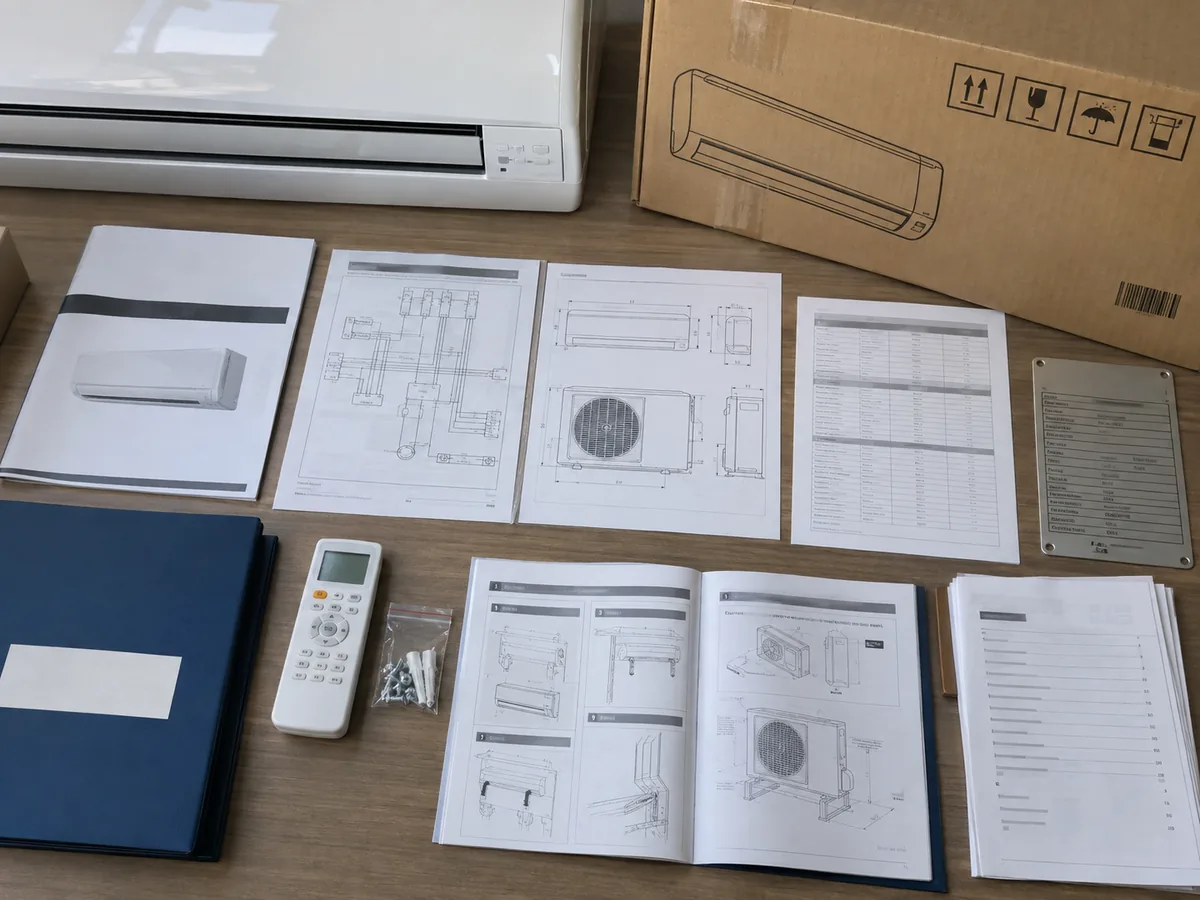
The exact document package depends on the model, market, and order. Airproz states that available order documents may include datasheets, manuals, installation manuals, wiring diagrams, performance data, test reports, and applicable declarations of conformity. Confirm the final list before production.
Why Companies Work With Airproz for AC Supply
Airproz is a China-based HVAC manufacturer. Our current company information states more than 20 years of manufacturing experience, supply to 100+ countries, and more than 6 million units delivered across five product lines.
| Airproz capability | What it means for your AC project |
|---|---|
| 20+ years manufacturing | Long-term HVAC manufacturing experience across air conditioners and heat-pump products. |
| 100+ countries supplied | Experience handling different market, electrical, documentation, and shipping requirements. |
| 6M+ units delivered | Company-level production and delivery scale across Airproz product lines. |
| OEM and private label | Branding, packaging, manuals, labels, and selected product options can be reviewed for the project. |
| Factory verification | Scheduled factory visits, third-party audits, and agreed pre-shipment inspection are supported. |
| Project review | We check market, climate, electrical supply, refrigerant, documents, OEM work, and order details before exact model approval. |
You can review our company and manufacturing background, full product range, HVAC FAQ, and current air-conditioner category before sending your RFQ.
Send Your AC RFQ to Airproz
You do not need a long form to start. Send the details that can change the product, documents, installation, order terms, or price.
| You send | We return |
|---|---|
| Destination country or market | Market-fit questions and suitable product-family direction |
| Application and required capacity or load | Capacity class and remaining sizing questions |
| Outdoor design temperature or high-temperature requirement | Operating-condition data we still need to verify |
| Voltage and frequency | Electrical-version check |
| Refrigerant requirement or preference | Available market-suitable platform options |
| Certification, listing, or document requirements | Available document list and any gaps to close |
| OEM branding, packaging, controls, or connectivity | OEM feasibility and whether the request is branding or an engineering change |
| Estimated quantity and schedule | Sample option, MOQ basis, lead-time basis, and commercial quotation scope |
We confirm the exact model only when the current datasheet, project conditions, required evidence, and order setup agree. This prevents a fast quotation from becoming the wrong product later.
Use the Airproz contact and RFQ page to send the project details above. You can also view the current Airproz air-conditioner range first.

Frequently Asked Questions
Is Airproz a China air conditioner manufacturer?
Yes. Airproz manufactures air conditioners and other HVAC and heat-pump products for distributors, contractors, project customers, and OEM/private-label programs. For an AC project, we confirm the destination market and exact product setup before we make model-level performance or compliance claims.
What air conditioners does Airproz manufacture?
Our current public AC range includes wall-mounted split air conditioners, R32 and R410A platforms, inverter and fixed-speed series, and nominal capacity classes from 9,000 to 36,000 BTU/h. The exact refrigerant, capacity, electrical version, and documents depend on the series and destination market.
What is the MOQ for Airproz air conditioners?
For standard Airproz products, the minimum order quantity starts from 5 units. The exact MOQ can change by model, OEM work, and packaging requirements, so the final quantity is confirmed in the quotation.
Can I order one AC sample before a bulk order?
Yes. A sample can be available for selected models, subject to stock and production availability. We confirm the sample cost, branding options, freight method, and preparation time before the sample order is placed.
How long does AC production take?
For standard products, Airproz states a typical production lead time of about 15–30 days after product details, payment terms, branding artwork, and order details are confirmed. Existing-model OEM orders with standard branding typically use a 15–45 day lead-time reference. The final schedule depends on quantity, customization, materials, and the factory production plan.
Does Airproz offer OEM and private-label air conditioners?
Yes. Depending on the model and order, OEM work can include branding on the unit, controller or remote, packaging, labels, manuals, documents, and selected platform options. Major changes to the refrigerant, electrical system, performance, controls, or structure need separate engineering and compliance review.
Can I visit the Airproz factory or arrange a third-party inspection?
Yes. Airproz supports scheduled factory visits, third-party factory audits, and pre-shipment inspection. Tell us the timing and what you want inspected in advance so we can prepare the right production line, products, laboratory areas, and documents.
Which refrigerant should I request for a China AC project?
Start with the destination market and product type, not only the refrigerant name. Rules, safety needs, service practices, and available products differ by market. We check the refrigerant together with the exact product family and the documents required for that market.
How do I check an air conditioner performance claim?
Check the data for the exact model and read the test conditions. Compare rated capacity, power input, and efficiency at the conditions that matter for your project. If an independent certification program or official product directory applies, check the actual model or certified combination instead of relying only on a supplier spreadsheet.
What information should I send Airproz for an AC quotation?
Send the destination market, application, required capacity or load, outdoor design temperature, voltage and frequency, refrigerant needs, required documents, installation limits, OEM work, quantity, and schedule. That is usually enough for us to suggest a product family and start an RFQ. Final model approval still depends on current product data and your real project conditions.