Heat pump vs gas boiler: A heat pump usually needs less purchased energy to provide the same amount of heating, but it is not always cheaper to run. A gas boiler can be simpler to replace in a home already set up for gas. Compare your local energy prices, winter heating needs and radiator temperatures before choosing. Installation work can change the total cost.
This article compares an air-to-water heat pump with a condensing gas boiler. Both send heated water through radiators, underfloor heating or fan coils. A heat pump that blows warm air directly into rooms, and a gas furnace that heats air, are different systems. Their costs are not the focus here. Use your local tariffs and complete installation quotes to compare the two water-heating options.
Heat Pump vs Gas Boiler: Quick Comparison
An air-to-water heat pump uses electricity to move heat from outdoor air into the heating-water circuit; a condensing gas boiler burns fuel to heat that water. Both can serve suitable radiators, but they differ in seasonal efficiency, winter output, installation work and cooling options. The table shows what to compare before choosing.
| Question | Air-to-water heat pump | Condensing gas boiler |
|---|---|---|
| How it makes heat | Takes heat from outdoor air and moves it into water for radiators or floor heating | Burns gas to heat water for radiators or floor heating |
| Efficiency | Coefficient of performance (COP) shows heat delivered per unit of electricity at one test point. Seasonal coefficient of performance (SCOP) covers a defined season; actual system use may differ. | Annual fuel utilization efficiency (AFUE) estimates useful heat from gas over a standard U.S. heating season; larger boilers may use other specified ratings. |
| Installation work | Needs an outdoor unit, electrical and water connections, and sometimes changes to radiators, tanks or controls | Needs safe gas supply, flue, combustion air, condensate drainage and controls; existing pipework may be reusable if suitable |
| Will it heat the home on very cold days? | Check heating output at the local winter design temperature and the water temperature your system requires | Check output against the winter heating load and confirm that the gas and venting arrangement is safe |
| Existing radiators | Can work when each radiator still produces enough room heat at an achievable water temperature | Can supply higher-temperature water if needed; best condensing efficiency depends on cooler return water |
| Cooling | Only cooling-capable models can cool. They need compatible chilled-water equipment (such as fan coils), suitable controls and protection against surface condensation. | Cannot provide cooling; a separate cooling system is needed |
| Running cost | Depends on electricity price divided by achieved seasonal system COP | Depends on gas fuel price divided by achieved seasonal boiler efficiency, with matching units |
| Often a good fit for | New buildings and retrofits where the load, electrical supply and water temperatures suit a heat pump | A compatible existing gas-heating system where a safe replacement needs fewer changes |
- Compare running costs — Use local electricity and gas prices with realistic seasonal system performance.
- Check winter heat — Use the post-insulation design load; check radiator output, model capacity at the required winter water temperature and backup heat.
- Compare full installations — Match space-heating and hot-water service; include wiring, piping, controls, backup, cooling if needed, safety requirements and maintenance.
How Does a Heat Pump Differ From a Gas Boiler?
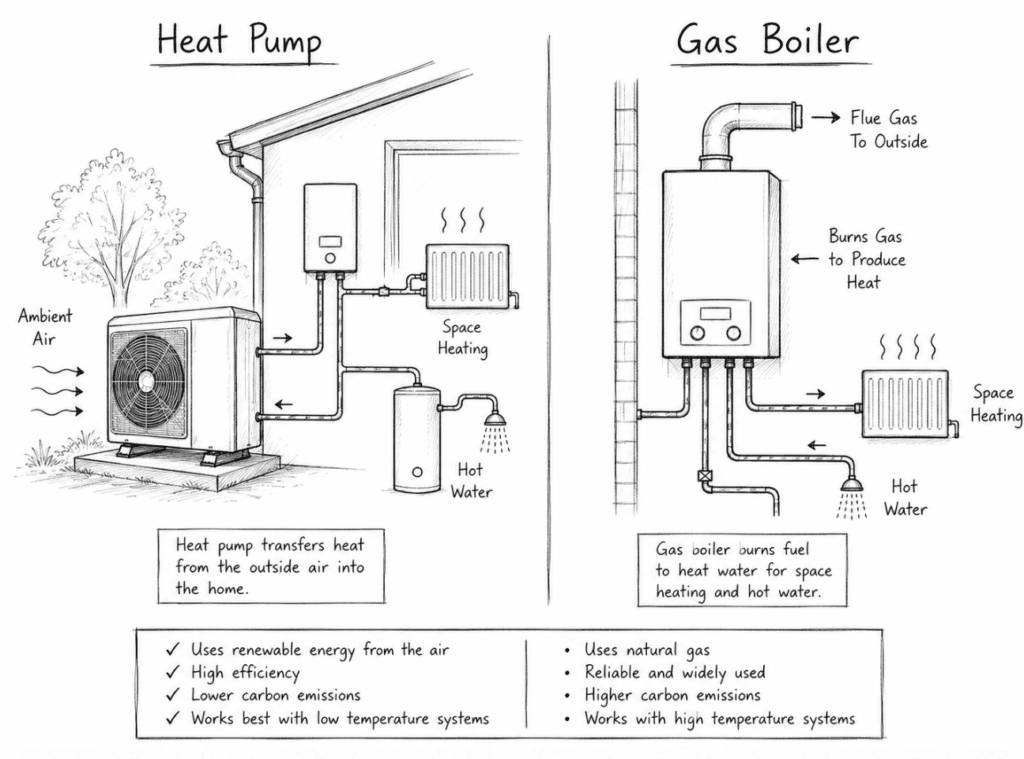
A heat pump takes heat from outdoor air and moves it into your heating water. A gas boiler burns fuel to make that heat. Because a heat pump moves heat rather than creating it all from electricity, it can supply several units of heat for one unit of electrical energy.

What Is an Air-to-Water Heat Pump?
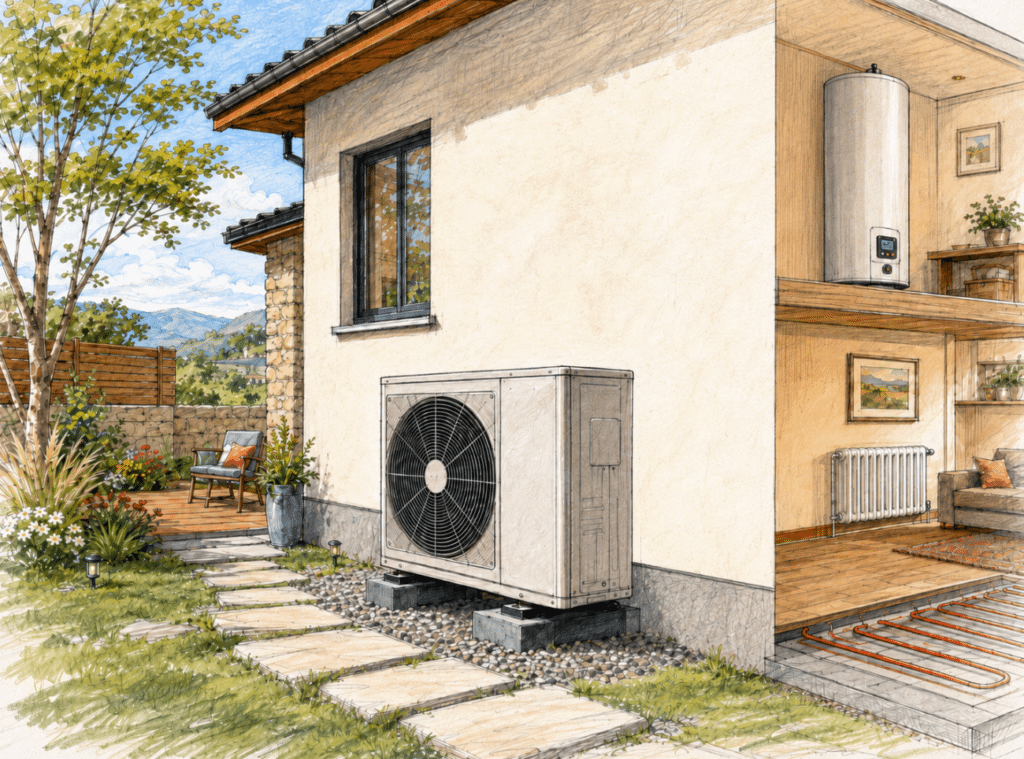
An air-to-water heat pump takes heat from outside air and passes it to the water that feeds your radiators or floor heating. A special fluid called refrigerant carries the heat inside the unit. The compressor helps make that heat warm enough for the heating water, while heat exchangers transfer it between the air, refrigerant and water. Electricity runs the compressor, fans and controls.
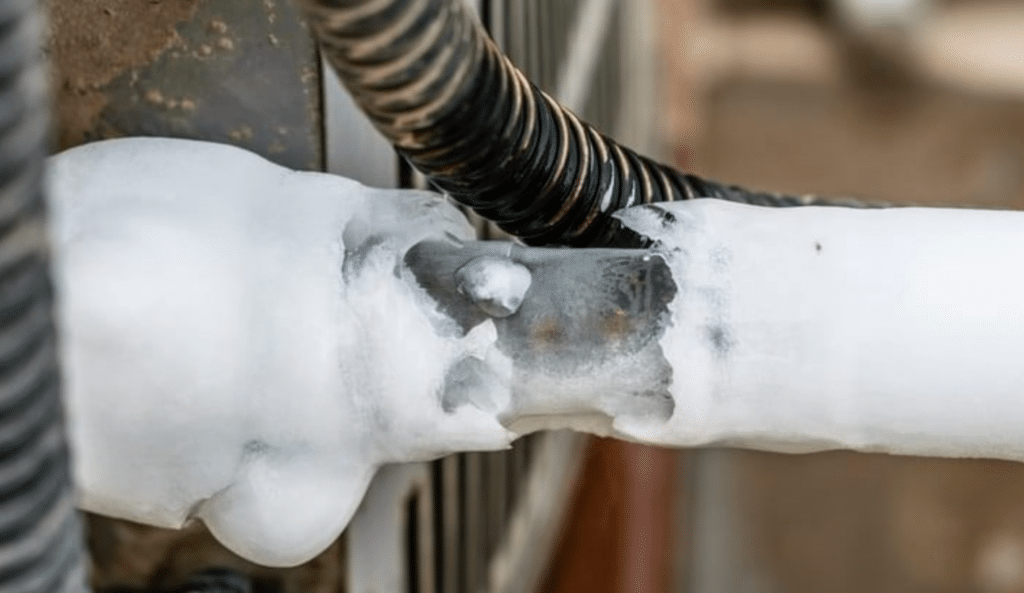
A heat pump can still heat a home when it is below freezing outside. But colder air and hotter heating water make the unit work harder. Its heat output and efficiency may fall. In cold, damp weather, it may also pause to remove ice from the outdoor coil; this is called defrost. Water pumps and backup heaters can use extra electricity, while a buffer tank can help manage water volume or system operation when the design requires one. Check the model’s output and electricity use at your local winter design temperature and the water temperature your radiators need—not just a rating from milder weather.
What Is a Condensing Gas Boiler?
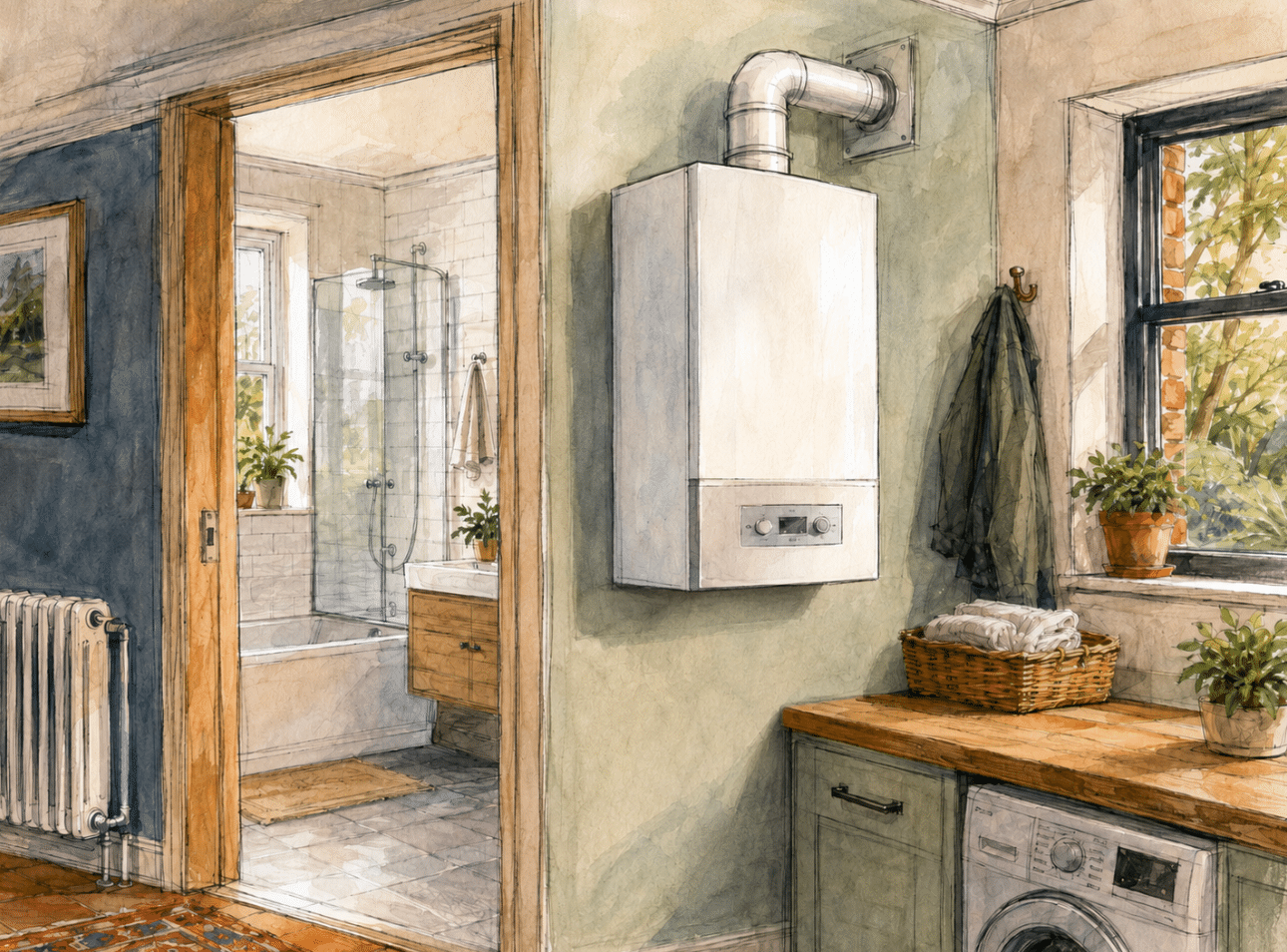
A gas boiler burns natural gas or liquefied petroleum gas (LPG) to heat water. A condensing boiler can also capture extra heat from the hot exhaust leaving the burner. It works best when the water returning from the radiators is cool enough for that recovery to happen.

For U.S. residential boilers, annual fuel utilization efficiency (AFUE) estimates the share of fuel used to provide heat across a standard heating season. Your actual result can be lower if the burner turns on and off frequently, return water stays too hot for good condensing operation, or heat is lost through the pipes. AFUE and a heat pump’s COP are different measures, so compare the cost of delivering the same amount of room heat instead. Any replacement also needs safe venting, enough air for combustion, condensate drainage and protection against carbon monoxide.
Heat Pump vs Gas Boiler Efficiency: What the Numbers Mean
In this example, the heat pump supplies more useful heat per unit of energy bought. At the stated test condition, a coefficient of performance (COP) of 3 means 1 kWh of electricity produces about 3 kWh of delivered heat. A boiler at 92% efficiency delivers about 0.92 kWh of useful heat from 1 kWh of gas fuel energy. That does not guarantee a lower heat-pump bill because electricity and gas prices differ.
A single COP tells you how a heat pump performs at one specified outdoor temperature and heating-water temperature. A seasonal figure shows how it performs across a range of conditions. One published version is the seasonal coefficient of performance (SCOP), calculated using a defined test method. Ask whether the figure includes water pumps, defrost and backup heating, because those can add to the electricity bill. For a gas boiler, check which seasonal fuel-efficiency rating is being used and whether pump power is included.
For winter sizing, ask for the model’s heating output at two conditions together: your local winter design outdoor temperature and the supply-water temperature the radiators need. Then compare that output with the building’s design heat loss. For yearly bills, use a whole-system seasonal estimate that accounts for how often the unit runs in different conditions and any pumps, defrost or backup heat included in the boundary. The design-day capacity check and the annual cost estimate answer different questions.
The 92% boiler efficiency used here is an illustrative seasonal assumption, not a rating for a specific model. If return water stays too warm for effective condensing, a boiler may recover less heat from its exhaust and achieve a different seasonal efficiency. Compare both systems for the same useful heating demand, with a stated boundary for pump electricity, backup heat and distribution losses where relevant. Replace example inputs with supported seasonal figures for the proposed installations; do not compare a single heat-pump test-point COP with an all-in boiler result.
Check the water temperature your radiators need before comparing the systems. A heat pump generally uses more electricity when it must make hotter water, because the compressor has to raise the refrigerant temperature further. A condensing boiler also benefits from cooler water returning from the radiators: it can recover more heat from the exhaust. Do not assume old radiators need replacing until you check whether they can heat each room with lower-temperature water.
Which Is Cheaper to Run: a Heat Pump or a Gas Boiler?
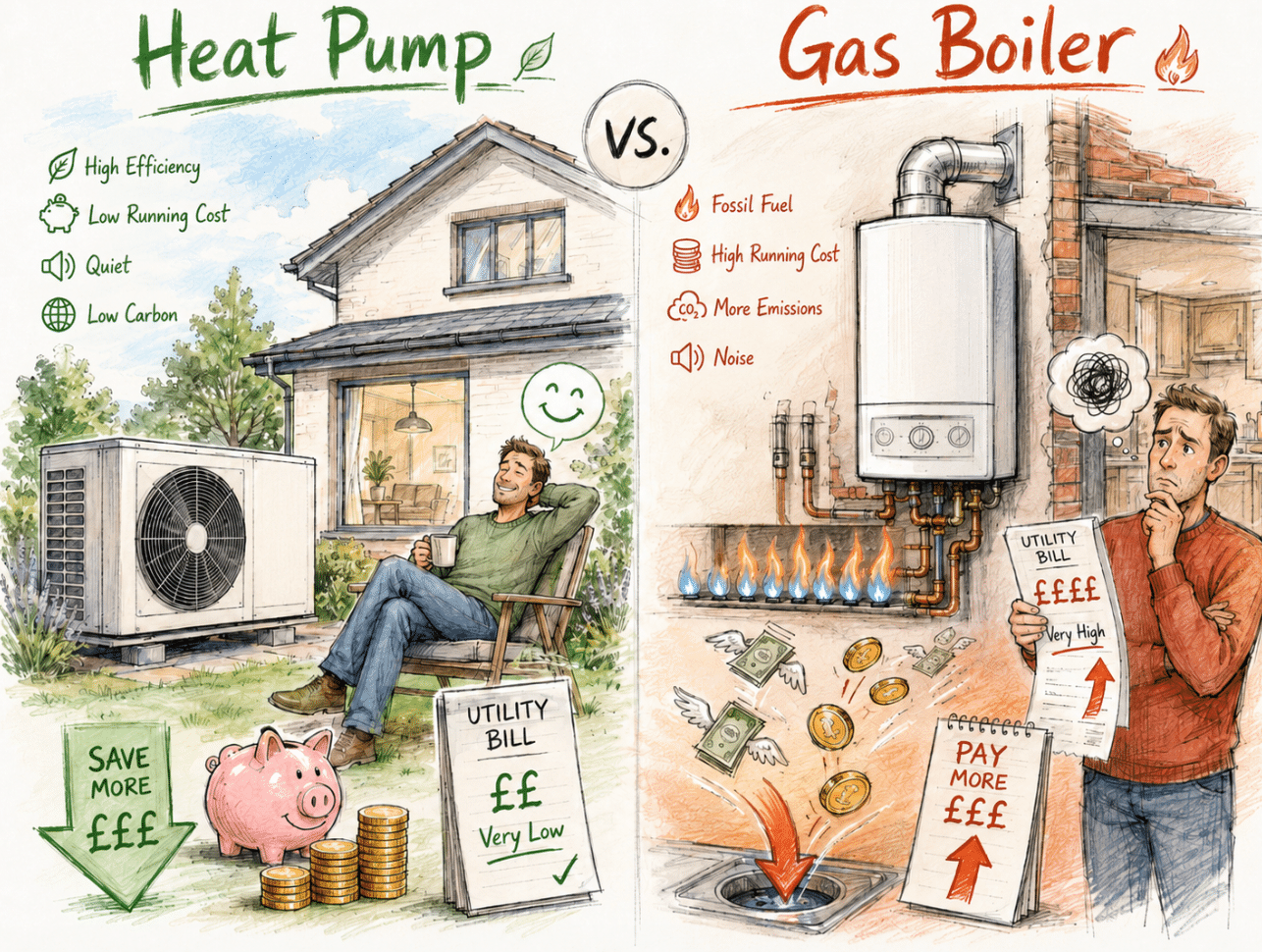
A heat pump costs less to run when its electricity price per unit of useful heat is lower than the boiler’s gas cost per unit of useful heat. A higher efficiency rating by itself cannot tell you the winner. Use the same heating demand, local energy prices and realistic seasonal performance for both systems.
| What you want to calculate | Heat pump | Gas boiler |
|---|---|---|
| Purchased energy for annual heating | Annual useful heat ÷ seasonal system COP = electricity input | Annual useful heat ÷ seasonal boiler efficiency = gas fuel energy input |
| Variable energy cost for one year | Electricity input × electricity price per kWh | Gas fuel energy input × gas price per kWh of fuel energy |
| Which option has the lower cost per unit of useful heat? | A heat pump costs less when electricity price ÷ system COP is lower than gas price ÷ boiler seasonal efficiency | Gas costs less when the comparison is reversed; use the same energy unit for both fuel prices |
| What else belongs in the total | Backup heat, pumps, time-of-use/demand charges and any cooling savings | Fixed gas connection charges when applicable, pumps, servicing and gas-safety requirements |

Use your own bills: Record your electricity rate for the hours the heat pump will operate, your variable gas rate in the same fuel-energy unit, and whether you will keep paying a fixed gas connection charge. Apply a realistic whole-system seasonal heat-pump COP—including relevant pumps and backup electricity—and a suitable seasonal boiler efficiency to the same annual useful heating demand. Compare fixed charges separately; they disappear only if the gas account can actually be closed.
Example: A home needs 15,000 kWh of useful space heating per year. Assume electricity costs $0.22/kWh and gas costs $0.08/kWh of fuel energy. With a seasonal system COP of 3.2, the heat pump uses about 4,688 kWh of electricity and costs about $1,031 per year. At 92% seasonal efficiency, the boiler uses about 16,304 kWh of gas fuel energy and costs about $1,304 per year.
Now change only the electricity price to $0.32/kWh. The heat-pump cost rises to about $1,500 per year, while the gas estimate stays at about $1,304. These are calculation examples, not local quotes or promised savings.
These figures cover space-heating energy only, not domestic hot water or complete utility bills. To compare heating-and-hot-water systems, use the same usable hot-water demand for both options and account separately for the relevant hot-water efficiency, storage and backup energy. Do not treat the space-heating example as a whole-home savings or payback forecast.
With these example assumptions, the break-even electricity price for variable space-heating energy is about $0.278/kWh ($0.08 ÷ 0.92 × 3.2): the heat pump costs less below that rate and the boiler above it. This threshold excludes installation and fixed account charges and changes with actual seasonal efficiency and fuel prices. A cold spell that requires hotter radiator water, higher-priced electricity and substantial backup heat can reduce the heat pump’s advantage at the same time. Recalculate those periods using the achieved system performance, backup energy and time-specific tariff; off-peak heating only helps when demand can shift without losing comfort.
In the U.S., gas bills often show therms instead of kWh. One therm is about 29.3 kWh of fuel energy, so convert the gas rate before comparing it with electricity. If your bill lists a variable gas rate in dollars per therm, divide that rate by approximately 29.3 to obtain dollars per kWh of gas fuel energy for this calculation. Keep fixed account charges, taxes and other billing items separate, so they are not silently counted twice. The example above counts only variable heating energy. For a full cost comparison, also include fixed utility charges, circulation pumps, backup heat, servicing, cooling equipment, financing, taxes and any change in how much heat the building needs.

The International Energy Agency reported in its June 2026 EU analysis that heat pumps were cheaper to operate than gas boilers in almost all EU countries under the study assumptions, with annual savings reaching €800 in some cases. Over the equipment lifetime, heat pumps were economically competitive in 16 of 27 EU countries. The study uses the heat-pump technology common in each country and can include cooling benefits where relevant. Its results depend on national prices, modeled systems and cost boundaries; they do not predict the cost or payback of a particular air-to-water heat pump in a U.S. home.
Heat Pump vs Gas Boiler Installation Cost: What Affects the Price?
A gas boiler is often cheaper to replace if your existing gas line, pipes and venting can be reused safely. A heat pump may need electrical work, different radiators, changes to the water pipes or new controls. Those extra jobs can matter more than the price of the unit itself.
- Heat pump installation — Check outdoor-unit space and noise, drainage when the unit defrosts, electrical supply, water-side freeze protection, needed tank or water volume, radiator balancing and start-up tests.
- Gas-boiler replacement — Check the gas supply, safe exhaust vent and air supply for combustion. Include condensate drainage, pipe cleaning, controls and inspections.
- Both systems — Check heating needed in each room, domestic hot-water demand, condition of pipes, heating zones and permits.
- Long-term cost — Include fuel or electricity, pumps, backup heat, servicing, future replacement, financing and any separate cooling system you can avoid.

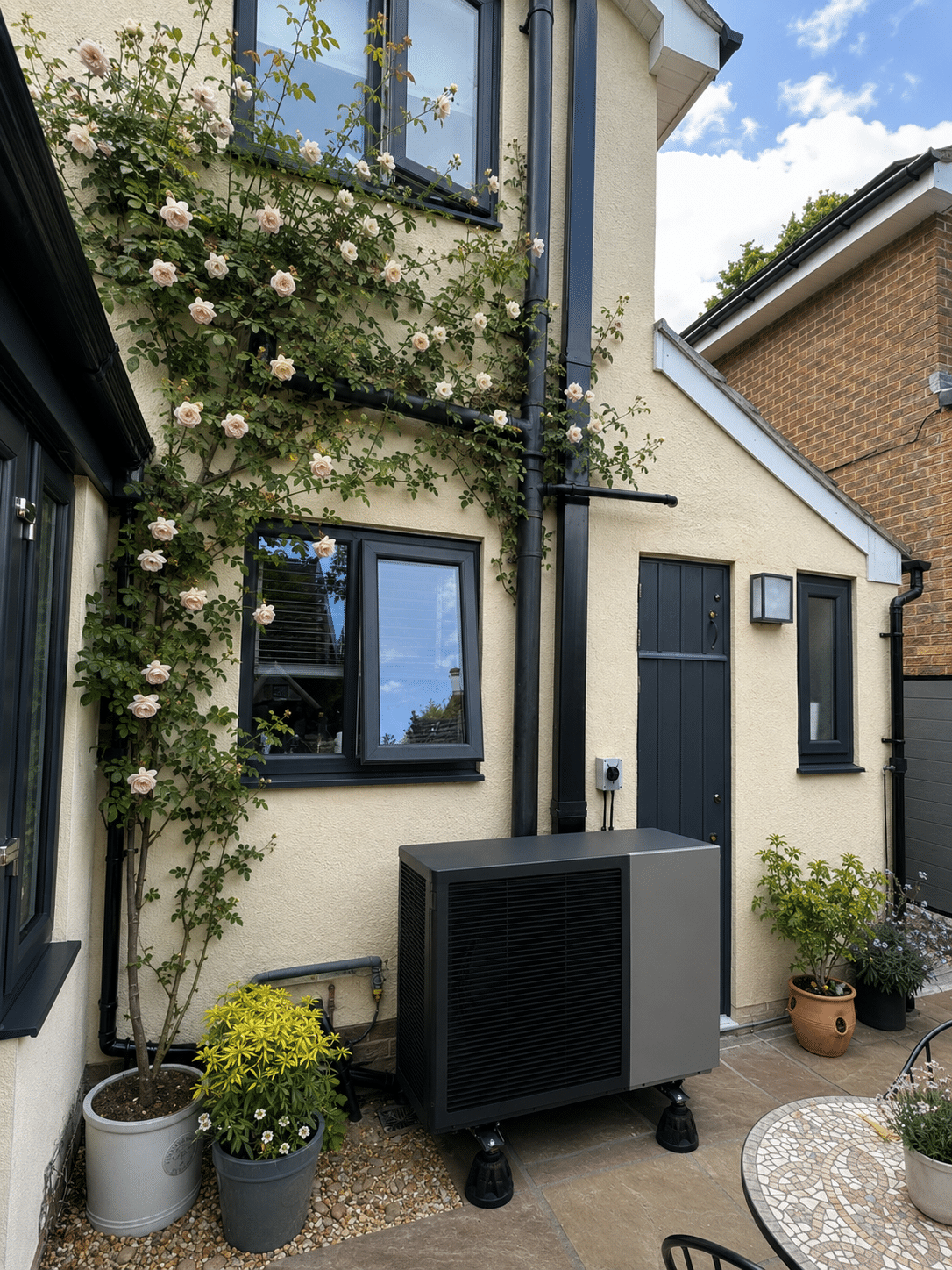
Check the outdoor-unit position before agreeing to the design. Sound near a bedroom window or a neighbour depends on the model, mounting, distance and operating mode. Sound power and sound pressure are different measures; use manufacturer data suitable for the proposed position and applicable local limits rather than assuming one universal quietness rating. Allow for airflow and service access, and route defrost water away from paths and entrances where it could freeze.
Heat-pump and boiler installation prices vary widely by country, home and the work included. For example, replacing a boiler without changing the pipes is different from adding a heat pump that also needs new radiators or electrical upgrades. Ask for two itemized quotes covering the same heating requirement and check any local incentives you can actually use. For more cost factors, see our heat pump installation cost guide. Keep the comparison like-for-like: state whether each quote includes space heating, domestic hot water, required backup heating, controls and any cooling equipment that the project actually needs. A cheaper equipment price is not necessarily a cheaper complete system.
Installed price is not the same as long-term cost. For a lifetime comparison, use the same analysis period for both options. Include the complete installed work, expected energy use at the stated tariffs, servicing, likely major repairs or replacements and financing where relevant. Count only incentives that the project qualifies for. If a heat pump also replaces a separate cooling system, include avoided cooling-equipment costs only if that replacement is actually in scope. A lower annual heating bill alone does not prove that a higher upfront cost will be recovered during your ownership period.
If the existing gas boiler also supplies showers and taps, compare complete heating-and-hot-water systems, not space-heating equipment alone. Depending on the chosen design, a heat pump replacement may need a suitable hot-water cylinder, controls and additional installation work. Confirm hot-water temperature, recovery capacity and simultaneous space-heating demand before judging the totals.
Hot-water service may feel different. A gas combi boiler can make hot water on demand without a large storage cylinder, provided its rated flow can supply the taps being used. An air-to-water heat-pump system may instead heat a storage cylinder. Confirm usable storage, recovery time, simultaneous showers, cylinder space and any required storage-water temperature or hygiene controls. Compare the actual service required, not only the space-heating output.

If one proposed heat pump serves both space heating and domestic hot water, check how the controls share its capacity. Some designs give hot-water production priority, temporarily reducing space heating while a cylinder is reheated. Confirm storage volume, hot-water recovery, the required water temperature and the building’s heat demand during that period. If hot water will use a separate appliance, compare that added equipment and its energy cost too.

Neither system is maintenance-free. A gas boiler needs appropriate checks of combustion safety, flues and condensate arrangements. An air-to-water heat pump needs model-specific checks of outdoor airflow paths, water filters or strainers, pumps, system pressure, frost protection and controls. Compare the service requirements, qualified labour and local costs for both; do not assume either one always has a lower annual maintenance bill.
Can You Replace a Gas Boiler With a Heat Pump in an Older Home?
Yes, a heat pump can replace a gas boiler in some older homes. First check how much heat every room needs on the coldest expected day. Then check whether the existing radiators can supply that heat with water the heat pump can produce efficiently. A radiator upgrade is not always necessary.
Will Your Existing Radiators Work With a Heat Pump?
Start by checking how much heat each room needs on a cold day. Then find out how much heat the existing radiator can give off when the water is cooler. Compare those two figures before deciding whether to keep or replace it.
A radiator releases less heat when the heating water is cooler. Some older homes already have large enough radiators, but others may need larger panels, fan coils or better insulation. Check the radiator’s stated output at your planned water temperature going into it (supply) and coming back (return). Do not size a heat pump from the label on the old boiler. The old unit may be oversized or may also have been sized for a short burst of domestic hot-water heating.
A useful first survey records the supply-water temperature, return-water temperature and room temperature while the existing system heats the home. The installer then checks each radiator’s output at the proposed new water temperatures against that room’s calculated design heat loss. Measurements taken in mild weather help describe the existing system, but they do not replace a cold-day sizing calculation.
If you want to see how radiator and underfloor-heating water temperatures affect the choice, read our air-to-water heat pump vs boiler guide for radiant and hydronic systems.
Will It Keep Your Home Warm on the Coldest Days?
Yes, if the chosen model can deliver enough heat when your area reaches its winter design temperature—the cold outdoor temperature used for sizing heating equipment. Its output also depends on how hot the radiator water must be. If that output falls short of your home’s calculated heating need, plan a suitable source of backup heat.
A heat pump may provide less heat on the coldest day than its brochure rating in mild weather. If it cannot meet the calculated demand, an electric heater or existing boiler may supply the difference when properly designed. A buffer or thermal-storage tank can help with system operation or short periods of demand, but it is not a substitute for enough heat-producing capacity during a long cold spell. A heat pump and boiler sharing duties is called a hybrid, or bivalent, system. Count backup fuel or electricity in the running-cost comparison.
Do not solve a cold-day capacity gap simply by choosing the largest model. The same system also runs through milder weather, when heating demand is much lower. Compare its minimum controllable heating output with the expected part-load demand and zoning arrangement; a unit that cannot reduce its output enough may cycle more often. A properly designed backup source can sometimes cover a short peak without oversizing the main heat pump.
Compare the selected model’s heating capacity at your local winter design temperature and required supply-water temperature with the building’s calculated heat loss. If there is a gap, establish the needed backup capacity, when it must operate and what its fuel or electricity use will add to the bill. Check the effect of defrost where relevant and confirm that the electric supply can serve the proposed system.
Also check damp, near-freezing conditions where outdoor-coil frost can require defrost cycles. Those hours may not be the coldest design hours, yet defrost and any support heat can affect delivered room heat and electricity use. Confirm how the proposed controls, water volume and backup heat maintain comfort in both conditions rather than checking minimum outdoor temperature alone.

The U.S. Department of Energy explains heat-pump operation and cold-weather considerations. Heat pumps can heat homes in cold regions, but not every model performs the same way. Do not assume a unit will provide a COP above 2 at −15°C or operate down to −25°C just because another heat pump does. Check the selected model’s performance table at that outdoor temperature and at the water temperature your heating system needs. Better insulation may also reduce the heat required.
Which System Fits a New Build, Renovation or Boiler Replacement?
A heat pump is often a good starting point for a new building with suitable lower-temperature heating and enough electrical supply. A gas boiler may be simpler to replace when the existing gas system is safe, compatible and permitted under local rules. For renovations, compare insulation, radiator output, local energy prices and full installed cost before choosing.
| Your situation | Possible choice | What to confirm |
|---|---|---|
| Building a well-insulated new home | A heat pump can work well with underfloor heating or radiators designed for lower-temperature water | Winter heat loss, seasonal system COP, electrical supply and any plans for summer cooling |
| Older home with large radiators | A heat pump may work without replacing every radiator | Room-by-room heat loss and radiator output at the proposed lower supply and return water temperatures |
| Older home that needs very hot radiator water | First check insulation or larger radiators; also compare gas or hybrid heating if changes are impractical | Heat-pump output and efficiency at the water temperature required on the coldest design day, plus upgrade costs |
| Need a quick replacement for a failed boiler | A gas boiler may involve fewer changes where a replacement is permitted and the existing system is suitable | Safe flue and gas supply, local rules, total installed cost, expected service life and future upgrade plans |
| Renovating insulation and windows | Recalculate the smaller heat load before choosing heat-pump capacity or radiator changes | Each room’s heat loss after renovation; do not size equipment from the old load alone |
| Want both heating and cooling | A reversible heat pump may be useful with cooling-suitable terminals | Chilled-water distribution, dew-point controls, humidity, condensate drainage and cooling capacity |

New Construction and Low-Temperature Heating
New construction makes it easier to design underfloor heating or radiators that can warm the rooms with lower-temperature water. That gives an air-to-water heat pump a better chance of running efficiently, provided its capacity matches the building’s winter heating load.
Before installing a heat pump, check winter heating demand, domestic hot-water needs, pipework, controls and available electrical supply. A reversible air-to-water unit may also make chilled water in summer. But standard radiators and floor loops are not automatically safe for cooling. You need equipment designed to remove heat from rooms and controls that stop moisture in the air from forming water on cold surfaces. Otherwise, condensation can damage the building and cause discomfort.
Renovations and Older Radiator Buildings
If you add insulation or replace windows, recalculate each room’s design heating load before selecting equipment. For U.S. residential projects, the ACCA Manual J residential load calculation is a recognized method; follow the applicable local requirements in other markets. Compare the existing radiators’ output at the proposed supply and return water temperatures with those new room loads; better insulation may allow cooler water and a smaller heat pump, but the old boiler rating is not a sizing target. Also check the heat pump’s minimum controllable output when only one or two zones need heat, because a unit that cannot turn down far enough may cycle unnecessarily.
A hybrid heat pump and gas boiler may be worth comparing if a fully electric retrofit is difficult. First confirm that the selected heat pump and a properly sized second source can meet the building’s winter heating demand; when heat-pump output falls short, the controls must provide enough backup heat regardless of which fuel is cheaper. Only when either source can meet the load should a tariff-based controller choose by cost per unit of useful heat at the actual water and outdoor temperatures. Verify changeover or permitted simultaneous operation, hydraulic separation where needed and safety interlocks. Account for the retained gas connection, two systems’ servicing and local energy prices; no fixed annual heat-pump coverage percentage applies to every home.
Commercial-Building Example: How Might a Hotel Retrofit Differ From a Home Replacement?
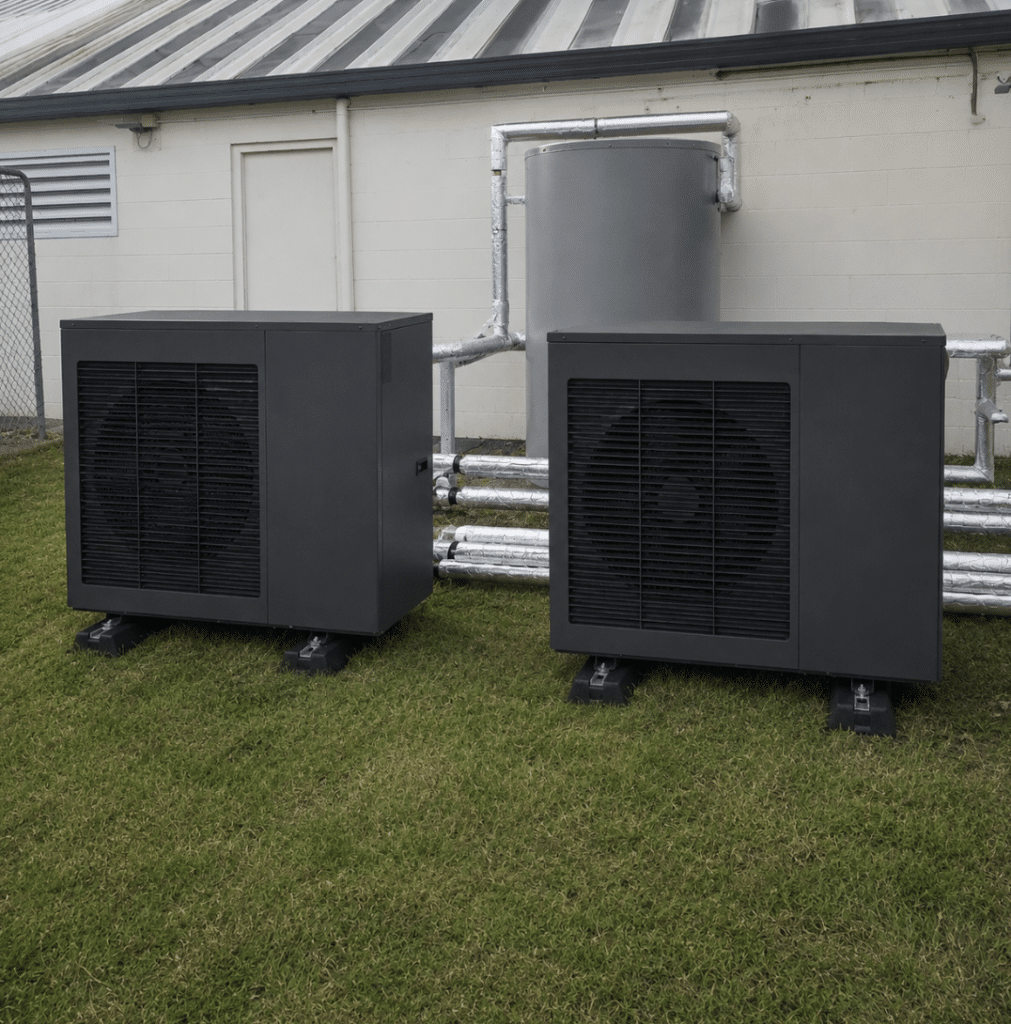
A hotel heat-pump retrofit may be feasible even when its existing radiators were designed for hotter boiler water, but the choice needs a building-specific assessment. Check heating demand on cold days, radiator water temperature, hot water for showers and kitchens, and the hours when both services are needed. This illustrative scenario explains the design questions; it is not evidence of a completed Airproz installation.
Hotels can have a short period when guests need hot water and rooms still need space heating. If the same heat source serves both loads, check whether the equipment can serve them together or must prioritize one. The design may need hot-water storage, a different recovery schedule or a separate source. Size and compare those services using the hotel’s actual demand profile, not the number of guestrooms alone.
Do not judge a hotel retrofit from two heating bills alone. A colder winter or higher guest occupancy may increase energy use even if the system performs better. Compare bills only after accounting for weather and occupancy. Also record winter water temperatures going out to and returning from the radiators, measured heat-pump output, domestic hot-water demand, operating hours, servicing costs and tariffs. Estimate payback from the complete installed cost, verified incentives and savings supported by measured data.
What Should You Check Before Choosing a Heat Pump or Gas Boiler?
Before choosing, make sure both options are being compared for the same building and heating requirement. A high efficiency rating or low equipment price does not show whether the system will heat every room or how much installation will cost.
Have these details ready:
- Building — Note your location and the outdoor temperature used for winter system sizing. Include how much heating the home and each room need.
- Existing heating — Record radiator or floor-loop sizes, the water temperature going in and coming back, pipework and heating zones.
- Hot water and bills — Note annual heating use, domestic hot-water demand, electricity and gas tariffs, including time-of-use or demand charges where relevant.
- Equipment and site — Ask for heat-pump heating output and COP at the required winter temperature, available electrical power, outdoor noise, defrost drainage, freeze protection and any needed backup. For gas, check fuel supply and exhaust venting.
- Water circuit — Have the installer match the required water flow, available pump head, circuit resistance, zoning controls and any minimum system-water volume against the exact heat-pump instructions. A buffer tank may solve a defined water-volume or control problem, but a larger tank is not automatically better and does not replace correct pump and pipe sizing. Even a heat pump with adequate rated capacity may deliver too little heat or trip a flow-related protection if excessive pipe resistance, a blocked strainer or closed zone valves restrict water flow. Check the proposed pump against the exact model’s required flow and the circuit resistance in the most restrictive permitted zone configuration. Record actual flow and supply/return temperatures during commissioning; a larger buffer tank does not correct inadequate pump head or restrictive piping. To select the right drawing, see our heat pump schematic guide, then request the exact model’s current hydraulic drawing for installation checks.
- Installation and ownership — Check controls, warranty, routine servicing and commissioning tests.

After commissioning, keep the room-by-room heat-loss summary, the selected model’s winter design-point output, measured water flow, control settings and backup-heating sequence. During a suitable cold period, record outdoor and room temperatures, supply and return water temperatures, comfort and relevant electricity or gas use; investigate any shortfall with the installer. A measured system COP requires useful heat delivered and electricity consumed over the same time interval and a stated boundary, using appropriate heat and electricity metering. State whether pumps and electric backup are included; household electricity bills alone cannot isolate heat-pump use. A single mild-day or cold-day test does not establish annual seasonal performance. Without suitable metering, do not claim a measured COP or verified annual savings.
Ask both installers to quote for the same winter heating demand and radiator water temperature. Check that each price clearly includes any controls, pumps, electrical work, tanks, pipe connections, installation, backup heating and start-up testing. That makes the offers easier to compare. If you are comparing manufacturers as well as heating systems, the manufacturer buying guide explains how to compare product documents and technical claims. The equipment still needs to meet your building’s heating requirements.

Installation and safety: Do not attempt refrigerant work, fixed electrical wiring, gas piping or flue changes yourself. Incorrect freeze protection can damage water-side equipment, and unsuitable cooling controls can cause condensation. For water pipes exposed to freezing conditions, confirm that the protection works during a power outage or equipment fault—not only while the heat pump is operating. The appropriate measures depend on the actual equipment, water circuit and climate; follow the manufacturer’s instructions and local code. Use qualified local installers and never bypass safety devices.
Electrical supply — Check the peak demand of the heat pump, circulation pumps and any electric backup that may operate at the same time. The installer or electrician must verify the panel, circuit protection and supply against the exact equipment requirements and local rules; the outdoor unit’s nominal electrical rating alone may not cover the complete system.
Frequently Asked Questions
How much does it cost to replace a gas boiler with a heat pump?
There is no single reliable installed price for replacing a gas boiler with a heat pump. The cost changes with the heat pump, electrical supply, piping, controls, hot-water tank and any radiator upgrades. Ask for a complete local quote and compare it with a safe boiler replacement covering the same heating need. Check the incentives you actually qualify for before calculating the difference.
Is a heat pump an air conditioner?
A heat pump uses the same basic refrigeration cycle as an air conditioner. A reversible heat pump can both heat and cool, but a heating-only model cannot cool. An air-to-water heat pump also needs suitable fan coils or other chilled-water equipment and moisture controls before it can cool rooms safely.
Does a heat pump always pay back the extra installation cost?
No. Lower annual heating bills do not guarantee that the extra installation cost will be recovered within your ownership period. Compare the net installed-cost difference with realistic operating and maintenance savings for the same heating and hot-water services. Allow for changing tariffs, major repairs or replacements, financing and incentives you actually qualify for. Simple payback is only a screening estimate, not a promised project return.
Which Is Better: a Heat Pump or a Gas Boiler?
An air-to-water heat pump is often the stronger fit when the building can be heated with moderate water temperatures, the chosen model meets winter heating demand, and local electricity prices make its delivered heat competitive. A gas boiler may be simpler to replace where the existing system is safe and a replacement is permitted. A hybrid system is worth comparing when the winter load, retrofit work or local tariffs make a fully electric change difficult.
Make the final decision using the same calculated heating load, domestic hot-water needs, complete installation scope and expected operating conditions. Check actual model performance at the local winter design temperature, required radiator water temperature, backup controls, available electricity, approvals and incentives. Verify capacity, efficiency, warranty and any project-performance claims against current technical documents and measured evidence where relevant. None of the choices is automatically cheapest or most suitable for every building.
What about carbon emissions? A heat pump does not burn fuel at the building, but its electricity has an emissions footprint that depends on the power supply. A gas boiler creates emissions from on-site combustion, with possible additional upstream fuel emissions. Compare the same annual useful heating demand using justified seasonal system efficiencies and documented local electricity and gas emissions factors for the same accounting boundary and period. For U.S. estimates, the EPA GHG Emission Factors Hub provides reference factors and sources of grid-region electricity data; these are not site-specific measurements. A countrywide reduction percentage is not evidence of the result for a particular home or model.
- Calculate each room’s heating need after any planned insulation work.
- Confirm the heating-water temperature and output of the existing radiators.
- Compare the proposed heat pump’s winter design-day capacity, part-load operation and needed backup with a safe boiler option.
- Compare complete installation quotes and expected bills for the same space-heating and hot-water services. Before acceptance, agree on commissioning records for heat output, temperatures and safety controls.

Sources and Calculation Assumptions
The European cost comparisons come from the cited public reports. Our dollar calculations use stated example energy prices and efficiencies to show how the result changes; they are not quotations or performance promises for a particular home or product.
- International Energy Agency (June 2026) — EU residential heat-pump and gas-boiler operating and lifetime costs. Results depend on national energy prices, prevalent heat-pump technology and the services included in the comparison; see the original analysis and its lifetime-cost chart.
- U.S. Department of Energy — Heat Pump Systems — Explains heat transfer, equipment types and cold-climate considerations. It is not a performance guarantee for the air-to-water system described here.
- For your building — Use a room-by-room heating-load calculation, model performance tables, utility rates and itemized local installation quotes.
Exploring a Heat Pump for a Boiler Replacement?
Start with your building location and current heating setup. If available, also note your estimated winter heating load and the water temperature your radiators need. Explore the Airproz heating products below; the final equipment choice depends on verified model data and local installation requirements.
Space Heating Heat Pumps · R32 Monobloc Heat Pump · Cold-Climate Heat Pump Guide