R32 vs R454B: What Is the Main Difference?
The main difference is easy to understand. R454B has the lower GWP of these two refrigerants. R32 is a single-component refrigerant, while R454B is a blend.
Those facts are useful, but they do not tell you which complete HVAC system will work better for your project. You still need to check the equipment, operating conditions, certification, service support, and local rules.
| What to Compare | R32 | R454B | What This Means for Your Project |
|---|---|---|---|
| Refrigerant type | Single-component refrigerant | Blend of R32 and R1234yf | They behave differently in design and service |
| Composition | R32 | About 68.9% R32 / 31.1% R1234yf | They are different refrigerants and must not be cross-charged |
| Safety class | A2L | A2L | Both need equipment and service practices made for mildly flammable refrigerants |
| Global warming potential (GWP), U.S. EPA reference | 675 | 465 | R454B has the lower GWP on this reference basis |
| Temperature glide | None because it is a single component | Small temperature glide because it is a blend | Service calculations must use the correct refrigerant data |
| Drop-in replacement for R410A? | No | No | Do not convert an old R410A system by simply changing refrigerant |
| Main reason to consider it | Single-component refrigerant and established R32 equipment platforms | Lower GWP of the two and properties that can support new R410A-replacement designs | The final choice still depends on the complete system |
R32 is also called difluoromethane. R454B is a blend made from R32 and R1234yf. The two parts of the blend boil at slightly different temperatures. Engineers call this small difference temperature glide. R454B has only a small glide, so it is often described as a near-azeotropic blend. Arkema and Honeywell publish the blend composition and glide data for R454B.
Both refrigerants are A2L. Their properties affect compressor choice, heat-exchanger design, controls, refrigerant charge, safety measures, service work, labels, and certification. This is why a lower GWP number does not automatically mean better cooling, heating, noise, cold-weather performance, or total cost.
R32 or R454B: Which One Should You Choose?
Start with your actual project. There is no single winner for every system.
| Your Situation | What to Do First | Why | What We Check |
|---|---|---|---|
| You already have R32 equipment | Use the specified R32 refrigerant | The system was designed and certified for R32 | Nameplate, model documents, compatible parts, service instructions |
| You already have R454B equipment | Use the specified R454B refrigerant | R32 and R454B are not interchangeable | Manufacturer documents and approved service procedure |
| You want the lower GWP of these two for a new project | Compare R454B systems first | Its EPA-reference GWP is lower | Available equipment, performance, service support, and local rules |
| You prefer a single-component refrigerant | Compare R32 systems first | R32 is a single component | System performance, certification, service support, and local rules |
| U.S. residential or light-commercial project | Compare complete compliant systems | Both EPA-reference GWP values are below 700 | Equipment category, dates, certification, installation rules, and rated performance |
| Export, distributor, or OEM project | Confirm the destination market first | Rules, voltage, climate, certification, and service support vary by country | Country, application, climate, power supply, certification, and refrigerant availability |
| You are asking Airproz for equipment | Start with our documented product families | Refrigerant availability depends on the exact product family and model | Product family, model, market, and refrigerant option before quotation |
Four Shortcuts That Can Lead to the Wrong Choice
- Do not choose R454B only because its GWP is lower. The complete system still has to meet the project load, climate, rules, and service needs.
- Do not choose R32 only because it is a single-component refrigerant. The exact equipment still has to be approved for the market and operating condition.
- Do not size from nominal capacity alone. Check output at the outdoor temperature your project must handle.
- Do not copy another brand’s refrigerant choice. Refrigerant selection is tied to the complete certified system.
Can R32 or R454B Replace R410A in an Existing System?
No. R32 and R454B are not universal drop-in replacements for R410A. The U.S. EPA states that mildly flammable refrigerants such as HFC-32 and R454B must not be used in systems that were not designed for them.
Changing refrigerant can affect components, controls, charge limits, safety features, labels, certification, installation, and service work. That means an old R410A system should not be converted simply by removing R410A and charging R32 or R454B.
If you are replacing an R410A system, choose a complete new system designed for its listed refrigerant. Send us the existing capacity, application, market, outdoor design condition, power supply, and installation limits. We can use those details to find a current Airproz product family that fits the new project.
U.S. Rules: Where R32 and R454B Fit
For the applicable U.S. residential and light-commercial air-conditioning and heat-pump product category, the EPA Technology Transitions table uses a GWP limit of 700. The manufacture and import compliance date is January 1, 2025.
The rules for installing field-assembled systems have their own transition details. The EPA table also explains how systems using specified components made or imported before January 1, 2025 are treated. This is why the date and system type matter when you check a U.S. project.
On the EPA GWP reference table, R32 is 675 and R454B is 465. Both are below 700 on that reference basis. But that does not mean every R32 or R454B product is automatically allowed in every U.S. application. You still need to check the product category, whether the equipment is factory-built or field-assembled, certification, dates, installation rules, and other requirements.
For projects outside the United States, we check the rules for the actual destination market. Refrigerant policy, safety standards, certification, charge limits, and transition dates can be very different from one country or equipment category to another.
A2L Safety and Service: What Changes?
R32 and R454B are both in the A2L safety class. A2L means the refrigerant is mildly flammable. This does not make the refrigerant unsafe when it is used in equipment designed for it, but it does change how the equipment must be designed, installed, and serviced.
UL 60335-2-40 is an important U.S. product-safety standard for air conditioners, heat pumps, and dehumidifiers. UL reports that the fourth edition was revised on October 31, 2025. The exact safety features for a product still come from its certification and manufacturer instructions.
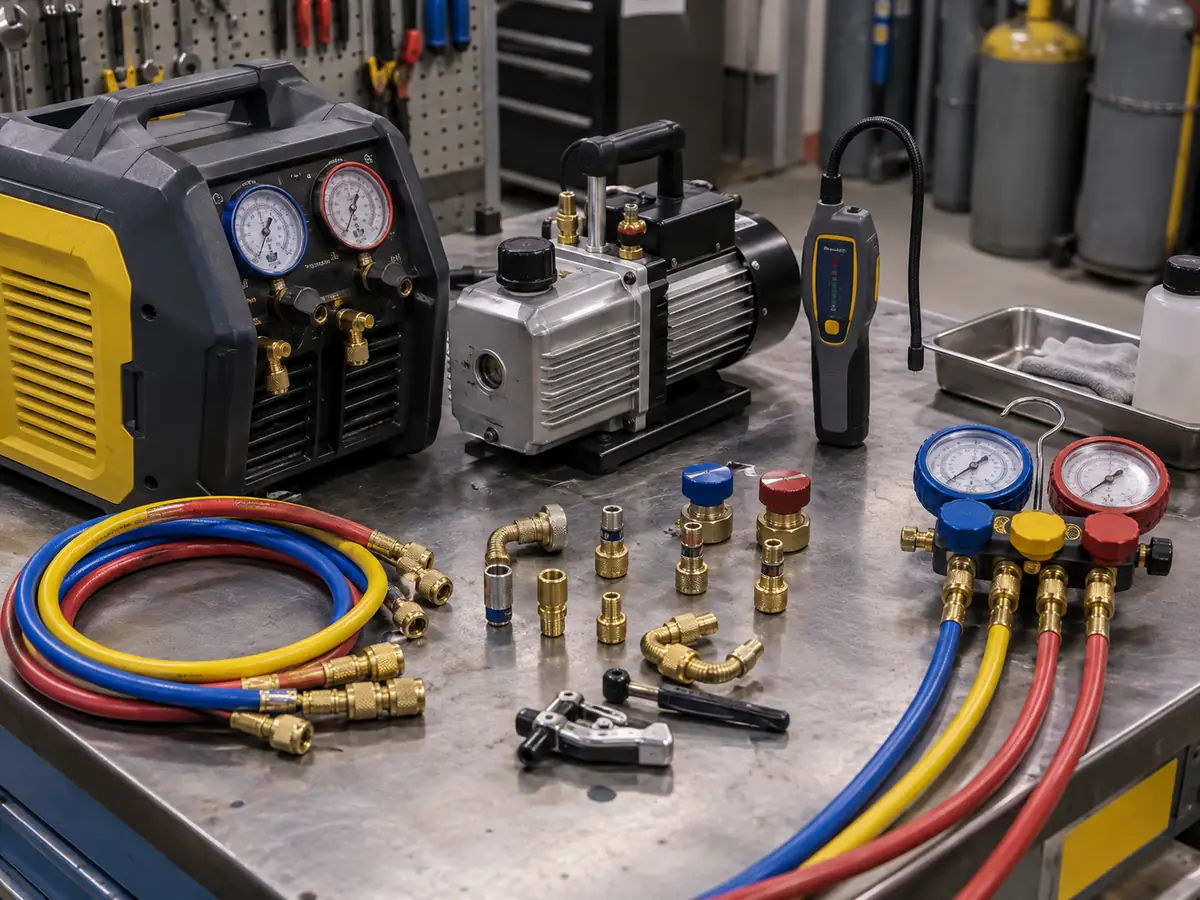
Charging, recovery, leak checks, and repair should be handled by qualified people using refrigerant-specific instructions and approved A2L-capable tools. Local code and the equipment manual still apply. Our heat-pump refrigerant charging guide explains the safety and diagnostic limits, but it does not replace the service manual for the exact model.
Does R32 or R454B Perform Better?
There is no reliable refrigerant-only answer. At Airproz, we compare the actual air conditioner or heat pump at the conditions your project needs.
The refrigerant affects system design, but it is only one part of the system. Performance also depends on the compressor, heat exchangers, expansion device, refrigerant charge, controls, fan or pump power, and the operating condition.
For air-conditioning projects, we check cooling capacity and the correct efficiency rating at the stated test condition. For heat pumps, we also check heating capacity and coefficient of performance (COP), which shows how much heat the unit delivers compared with the electricity it uses at a specific test point. Seasonal ratings can also be useful, but they still need to match the market and test method.
The outdoor temperature used to size the system is often called the design outdoor temperature. Capacity at this point can matter more than the nominal catalogue size, especially in cold or very hot climates.
| What We Check | Why It Matters |
|---|---|
| Required cooling or heating capacity | Shows how much output the project actually needs |
| Outdoor design temperature | Shows the weather condition the unit must handle |
| Capacity at that outdoor temperature | Confirms whether the unit can carry the load when conditions are difficult |
| Efficiency at the stated test condition | Helps avoid comparing ratings measured under different conditions |
| Required leaving-air or water temperature | Can change heat-pump load, output, and efficiency |
| Power supply | Limits the electrical setup that can be used |
| Noise requirement | Matters for homes, hotels, offices, and other sensitive sites |
| Certification market | Shows which documented product version can be supplied |
Check the Edge of the Operating Range
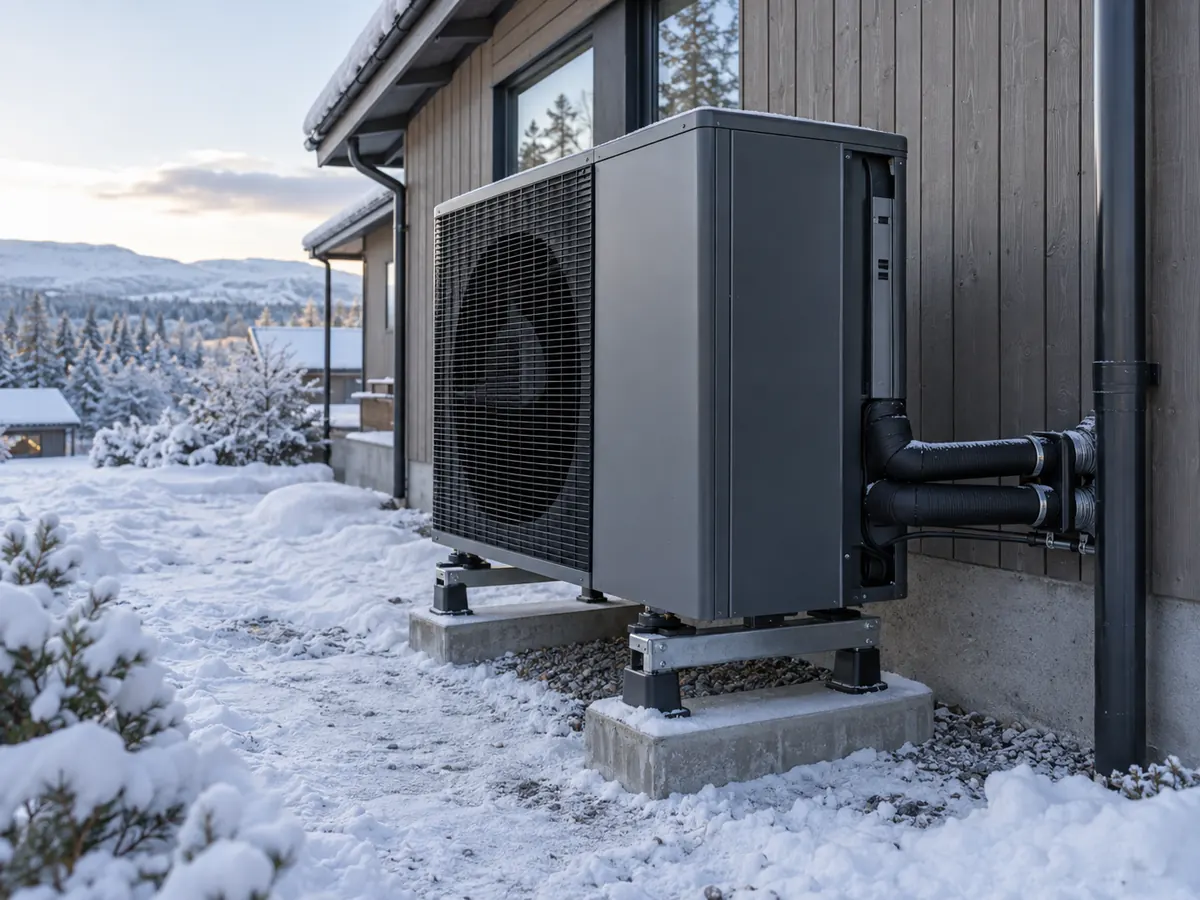
Two systems can look similar at mild test conditions and behave differently when the weather or water temperature becomes more demanding. The safe working range of the compressor and system is called the operating envelope.
| Project Condition | What We Check | Why It Matters |
|---|---|---|
| Very hot outdoor cooling | Capacity, compressor limits, and the temperature of the gas leaving the compressor | High heat can reduce output or push the compressor toward its limit |
| Low outdoor heating | Available heating capacity and operating range | Nominal capacity may not show what the unit can deliver in cold weather |
| High leaving-water temperature | Capacity, COP, and compressor limits | Higher water temperature can increase compressor load and reduce efficiency |
For these projects, we check the exact model at the required operating point before we recommend it.
Example: How We Compare Two Refrigerant Platforms
This is a selection-method example, not a published Airproz customer case. Suppose a project can use either an R32 or an R454B system. We first confirm that both options fit the destination market and certification path. Next, we compare capacity at the real summer and winter design temperatures, not just the nominal size.
We then check the operating envelope, efficiency at the stated test condition, electrical setup, installation limits, local refrigerant supply, technician support, and parts availability. If one platform cannot meet the required operating point or certification rule, we remove it before comparing small differences in refrigerant GWP or purchase price.
How We Verify R32 and R454B Product Availability
We currently document R32 in selected Airproz air-conditioning and heat-pump families. Examples include our R32 inverter air conditioner and R32 monobloc space-heating heat pump. These pages confirm that R32 is available in those product families.
We do not assume that the same models also have an R454B version. Our currently verified public Airproz materials show R32, R290, and R410A across different product families. If your project needs R454B, we check the exact application, market, certification, and order before we confirm availability.
This is important because refrigerant choice is model-specific. We prefer to confirm the actual product before quotation instead of promising a refrigerant version that is not documented.
You can start with our air-conditioner range or space-heating heat-pump range. Then send us the project details so we can check the exact model.
R32 vs R454B Cost: What Should You Actually Compare?
There is no fixed global price winner. Refrigerant prices change by country, cylinder size, supplier, order volume, availability, tax, recovery rules, and market timing.
For a commercial project, it is more useful to compare the total project cost than a temporary online price per kilogram or pound.
| Cost Item | What to Compare |
|---|---|
| Equipment | Compare the same required capacity, efficiency level, setup, and certification |
| Factory refrigerant charge | Check how much refrigerant is already included in each unit |
| Extra field charge | Check whether longer piping needs more refrigerant |
| Local refrigerant supply | Use a current quote from the destination market |
| Installation tools | Check whether approved A2L service and leak-detection tools are needed |
| Labor | Check whether local technicians already know the refrigerant and equipment |
| Spare parts | Check compressor, controls, refrigerant-specific parts, and lead time |
| Logistics | Check cylinder, recovery, storage, and transport requirements |
| Long-term service | Check parts support, warranty process, and service availability |
| Downtime risk | Check service response, sensor/control availability, parts lead time, and how long the system could remain offline |
We can quote the Airproz equipment setup and the documented factory refrigerant platform. Local cylinder price, field labor, and service cost should be checked in the destination market. For existing equipment, a cheaper refrigerant is not useful if it is not the refrigerant listed for that system. For commercial projects, a low refrigerant price can be outweighed by long parts delays or difficult service.
| What We Check | Why It Matters |
|---|---|
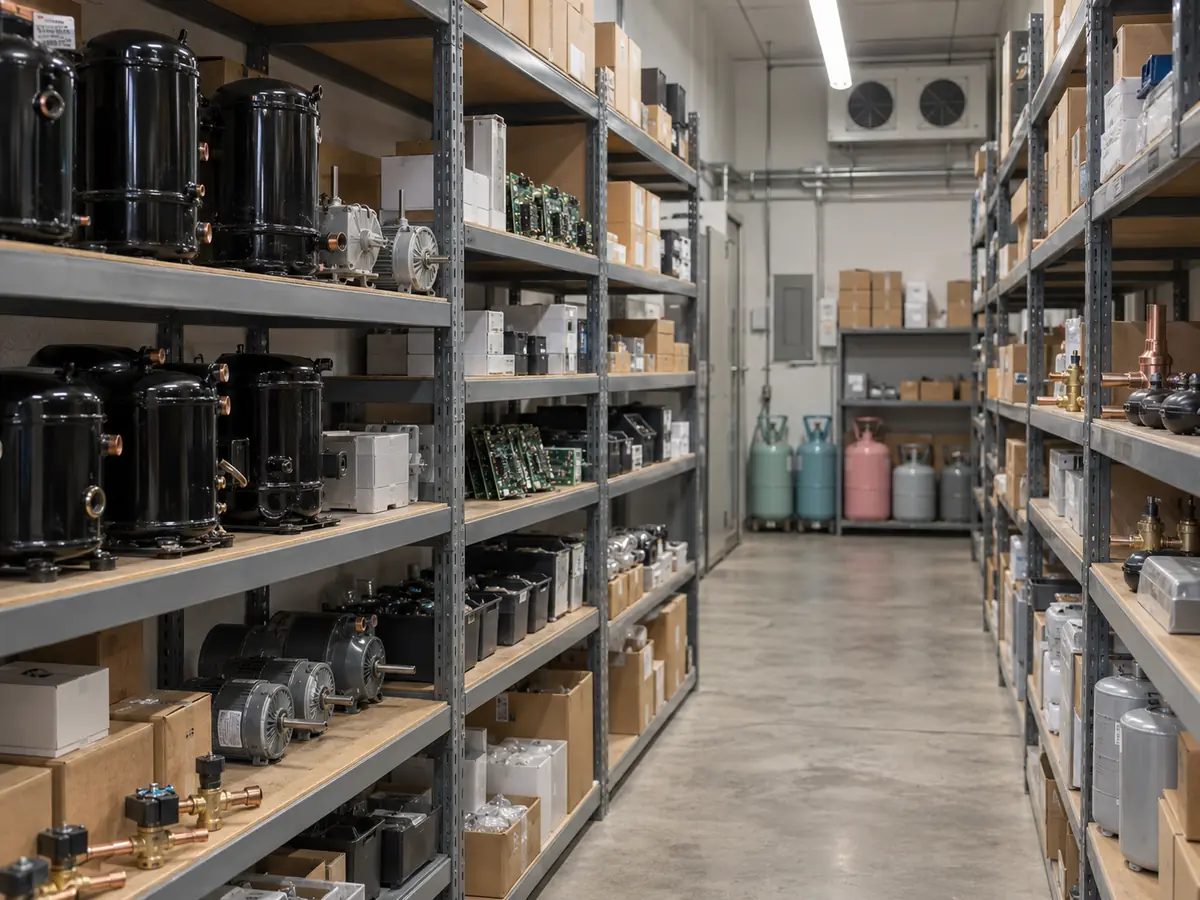
| Refrigerant supply | Local service companies need practical access to the correct refrigerant |
| Technician familiarity | Trained service support can reduce diagnosis and repair delays |
| Leak sensors and controls | A2L systems may use refrigerant-specific safety or control parts that must remain available |
| Compressor and control-board supply | Major parts can determine how quickly a failed unit returns to service |
| Approved A2L tools | Local contractors need the correct recovery, leak-check, and service equipment |
| Parts lead time and warranty path | For commercial projects, downtime can cost more than a small difference in refrigerant price |
The refrigerant used on day one is only part of the decision. For equipment that may run for many years, we also check whether the system can be repaired without long delays in the destination market.
Check Long-Term Service and Parts Support
Installation and Service Differences to Check
R32 is a single-component refrigerant. R454B is a blend. That difference can affect service work, but it is not the only thing you need to check.
The service connection, pressure-temperature data, charging method, tools, leak-detection method, recovery equipment, and repair procedure must match the refrigerant and the equipment.
Some A2L cylinders and tool systems use left-hand, also called reverse-thread, connections. But one “A2L reverse-thread adapter” is not automatically correct for every R32 or R454B cylinder. The right connection depends on the actual cylinder valve, package, market, hose or manifold, and approved tool set.
An adapter only connects parts. It does not make one refrigerant suitable for equipment designed for another refrigerant.
For distributor and OEM projects, we also apply the long-term service checks above before we confirm the refrigerant platform.
What We Need to Check Your HVAC Project
You do not need to solve every technical detail before contacting us. A few clear project inputs are usually enough for us to start checking the right Airproz product family and refrigerant option.
| You Send Airproz | We Check | You Receive |
|---|---|---|
| Destination country or market | Local rules and certification needs | Market and compliance direction |
| Application and equipment type | Which Airproz product family fits the job | Suitable system direction |
| Required cooling or heating capacity | Which product sizes are worth comparing | Initial capacity range |
| Outdoor design condition | Capacity and operating range at the real project condition | Climate-suitability check |
| Required indoor, air, or water temperatures | Whether the system can operate at the temperatures you need | Operating-point direction |
| Power supply | Available electrical setup | Compatible configuration |
| Refrigerant requirement, if fixed | Whether a documented product platform matches it | Refrigerant availability check |
| Installation limits | Layout, piping, clearance, charge, and service access | Installation-risk check |
| Certification requirement | Available product evidence and market path | Compliance items still to verify |
| Quantity | Commercial and configuration needs | RFQ-ready project direction |

These details let us move from a refrigerant question to a practical product-family direction for your request for quotation (RFQ). Exact model selection and final configuration still depend on verified product data and final project conditions. For private-label or engineering projects, our Airproz OEM & ODM heat-pump service provides the next step.
Frequently Asked Questions
Is R454B better than R32?
Not in every case. R454B has the lower EPA-reference GWP. R32 is a single-component refrigerant. The better choice still depends on the complete equipment, local rules, service support, installation needs, and project cost.
Is R32 more efficient than R454B?
You cannot answer this reliably from the refrigerant name alone. Actual HVAC efficiency depends on the complete system and the test condition. Compare the exact model at the operating conditions your project needs.
Can R454B replace R410A?
Not as a drop-in refrigerant in existing R410A equipment. R454B should be used only in equipment designed and certified for it. For replacement work, choose a complete compatible system.
Can R32 replace R410A?
Not as a universal drop-in replacement. R32 needs equipment designed, certified, installed, and serviced for R32.
Are R32 and R454B interchangeable?
No. Do not put R454B into R32 equipment or R32 into R454B equipment. Follow the equipment nameplate and manufacturer instructions.
Which has lower GWP, R32 or R454B?
On the U.S. EPA Technology Transitions reference table, R32 is 675 and R454B is 465. R454B has the lower GWP of these two on that basis.
Is R32 cheaper than R454B?
There is no universal price winner. Compare current local refrigerant prices together with equipment cost, factory charge, tools, labor, parts, logistics, and long-term service.
Do R32 and R454B use the same A2L reverse-thread adapter?
Not always. Some tool systems can support both refrigerants, but the required connection depends on the actual cylinder, valve, market, and approved tool set. Check the physical connection and service documents before use.
Related Airproz Refrigerant and HVAC Guides
If you are also comparing other lower-GWP refrigerants, read our R290 vs R32 heat-pump refrigerant guide. For safe service limits and diagnosis, see our heat-pump refrigerant charging guide. These guides can help you understand the options, but the final product still needs to match your exact project and verified product data.