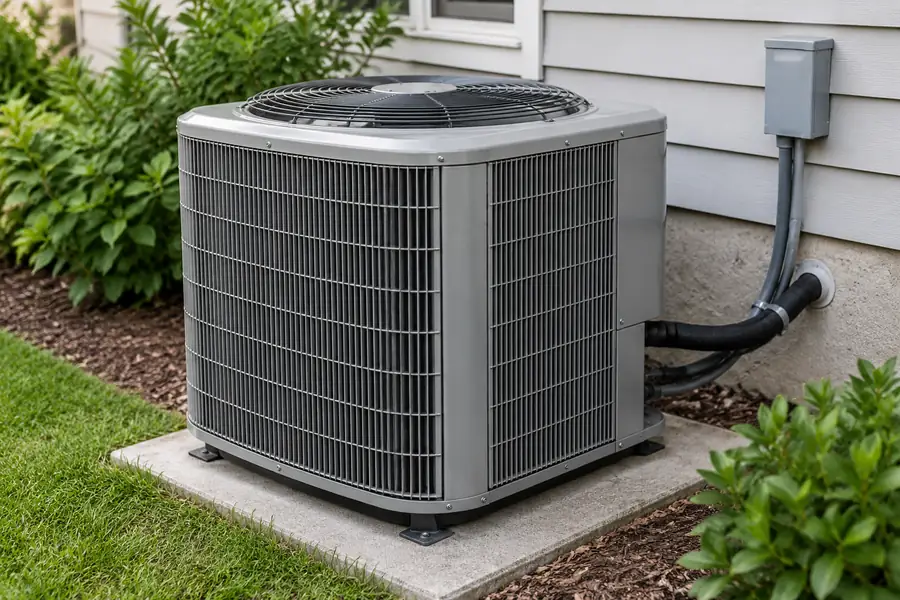
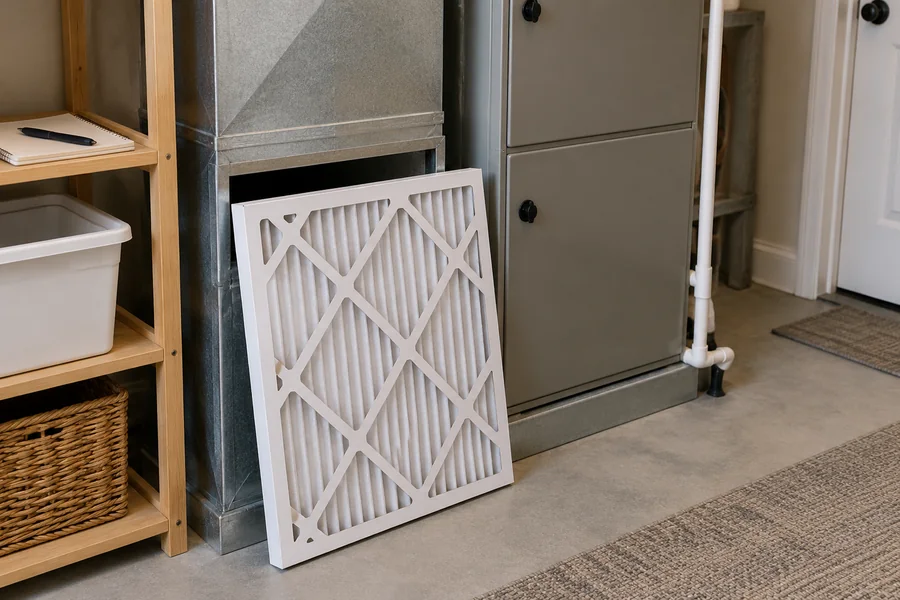
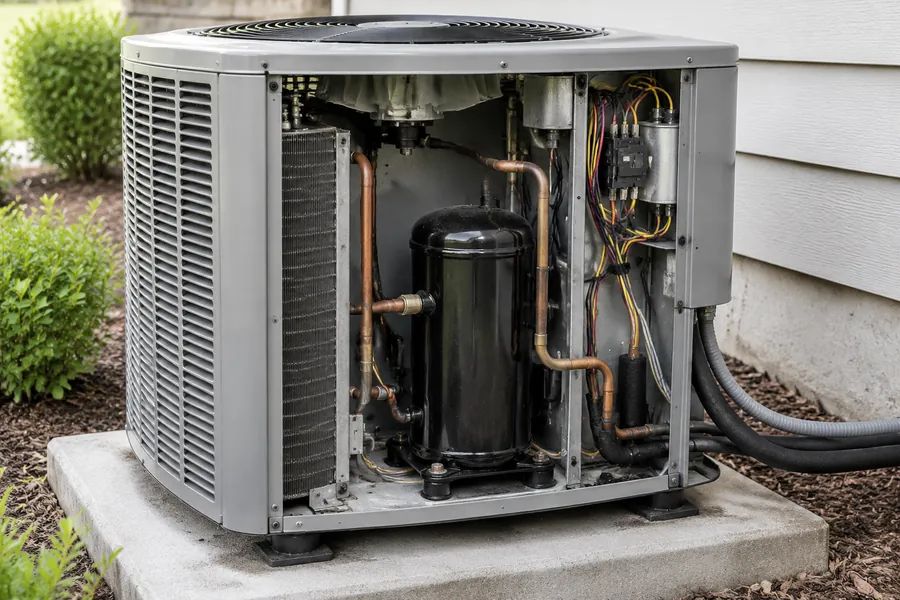
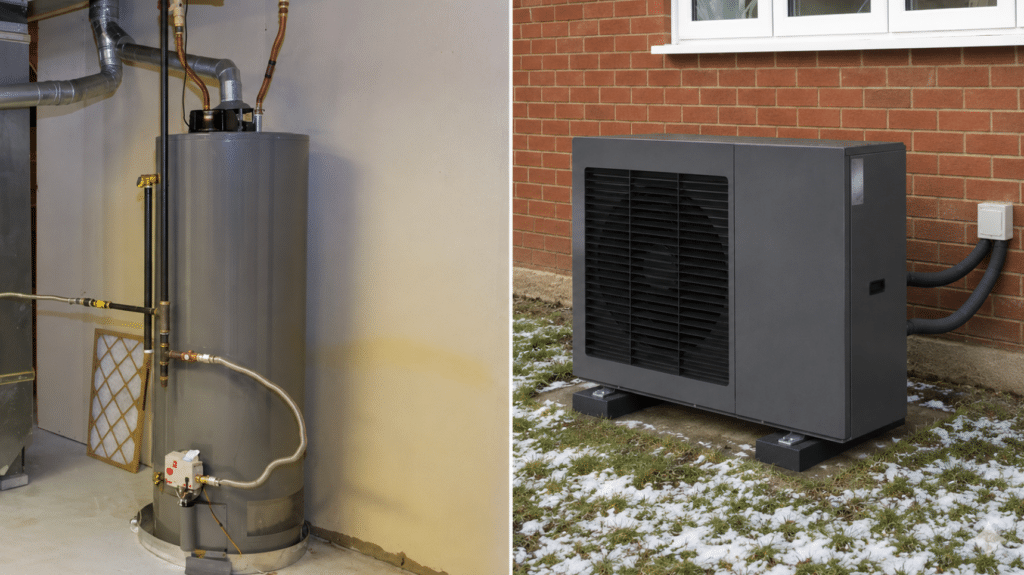
Air-to-water heat pump vs boiler: An air-to-water heat pump is often the better choice for a building that can stay warm with low-temperature water, especially one with underfloor heating. A boiler may be easier to keep when radiators need hotter water, electricity is expensive, or the electrical supply needs major work. Before choosing, compare how much heat each system can deliver on the coldest design day and what that heat will cost where you live.
| Your heating setup | What may work best | What to check first |
|---|---|---|
| Existing floor heating that runs at low water temperatures | Heat pump is often worth comparing first | Check each room’s heat loss and the water temperature needed in winter |
| Existing large radiators that can heat at lower water temperatures | Heat pump may work without emitter replacement | Room-by-room output at proposed supply/return temperatures |
| Small high-temperature radiators and difficult retrofit | Boiler, radiator upgrades, or staged/hybrid design | Emitter deficit, installation cost, controls and design-day performance |
| Low-cost electricity or expensive oil/LPG | Heat pump often improves running-cost case | Seasonal system SPF and actual delivered fuel prices |
| Cheap gas with expensive electricity | Boiler may cost less to operate | Tariff ratio and verified seasonal efficiencies |
| Weak electrical supply or winter outage risk | Site-specific solution with backup assessment | Electrical capacity, freeze protection, permitted backup and resilience |
| Replacing a combi boiler without a hot-water cylinder | Heat pump may work with a suitable domestic-hot-water solution | Peak hot-water use, cylinder or approved storage space, recovery time and installation changes |
How Does an Air-to-Water Heat Pump Differ from a Boiler?
A heat pump collects heat from outside air and moves it into the water used by your floor heating or radiators. A gas or oil boiler heats that water by burning fuel; an electric boiler heats it using electricity directly. A heat pump’s electricity use changes with outdoor temperature and the temperature of the heating water.
The heat pump or boiler is the heat source. Radiators and underfloor pipes are the parts that release that heat into rooms. You can use either heat source with suitable water-based emitters, but the water temperature they need changes efficiency and equipment choices.
A heat pump uses a compressor and refrigerant circuit to move heat into heating water. Its coefficient of performance (COP) shows how much heat it delivers per unit of electricity at one stated test condition. Seasonal coefficient of performance (SCOP) is a rating calculated under standardized seasonal conditions. Seasonal performance factor (SPF) compares useful heating with electricity use across a stated system boundary and may be measured in operation. A boiler’s efficiency compares useful heat with fuel input under a stated fuel-energy convention. These ratings alone cannot tell you which option will cost less: compare energy prices and make sure each figure covers the same equipment and energy inputs.
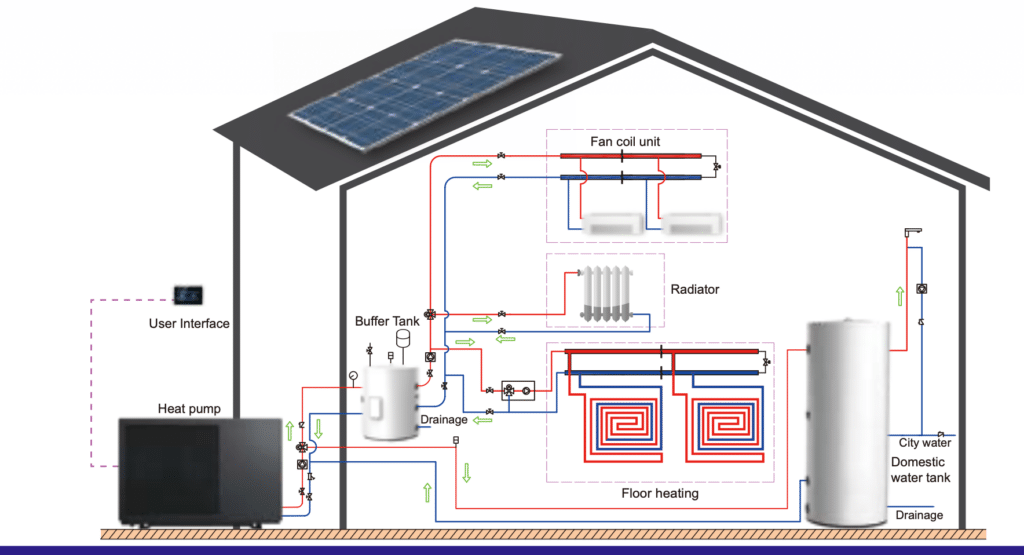
The diagram above shows how a heat pump can connect to a water-based heating system. Your actual pipework, pumps and controls may differ. For a closer look at the components, see our air-to-water heat pump system diagram guide. The U.S. Department of Energy also explains how heat pumps move heat rather than produce it by combustion.
| Parameter | Air-to-water heat pump | Gas / oil boiler | Electric resistance boiler |
|---|---|---|---|
| Primary energy process | Moves ambient heat through refrigeration | Burns fuel | Converts electrical input into heat |
| Heat delivered per energy purchased | Depends on COP/SPF and water/outdoor conditions | Depends on seasonal combustion/plant efficiency | Approximately one unit of heat per electrical unit at the appliance |
| Emitter interface | Hydronic floors, compatible radiators, some fan coils | Hydronic floors and radiators | Hydronic floors and radiators |
| Key system risks | Defrost, low-temperature capacity, hydronic freeze protection, noise | Flue/combustion, fuel supply, return temperature, service | High electrical demand and operating cost |
| Potential cooling | Only for equipment and distribution designed for cooling | Not an inherent capability | Not an inherent capability |
Why Does Water Temperature Change the Heat Pump vs Boiler Decision?
A heat pump usually uses less electricity when the heating water does not need to be very hot. This is one reason underfloor heating often works well with heat pumps. The system still needs enough floor or radiator area to keep every room warm on the coldest days.
Underfloor heating spreads warmth across a large area, so it can often run with cooler water than small radiators. But 35°C is not a temperature every floor system can use. The water temperature you need depends on the room’s heat loss, pipe spacing, insulation, floor covering, flow and the outdoor design temperature. Some older floor systems need hotter water.
If the radiators are small or the building loses a lot of heat, the heating water may need to be hotter. That can reduce heat-pump efficiency, while larger radiators or better insulation may allow a lower water temperature. A rating such as A7/W35 means the unit was tested with 7°C outdoor air and 35°C leaving water. It does not tell you how much heat the same unit will deliver on your coldest design day or with hotter radiators. Check its heating capacity, electrical input and COP at both the local winter design temperature and the water temperature your rooms need.
Heat Pump vs Gas, Oil, and Electric Boiler: Which Is More Efficient?
A heat pump often delivers more heat from each unit of electricity than an electric boiler does. Gas and oil boilers use fuel instead. But a high efficiency figure measured in mild weather does not prove a heat pump will be cheaper for your building all winter.
| Comparison | Typical technical distinction | Condition that changes the result |
|---|---|---|
| Heat pump vs gas boiler | Heat pump has higher delivered-heat/input-energy ratio at many conditions | Electricity-to-gas price ratio, water temperature, defrost and auxiliary energy |
| Heat pump vs oil boiler | Efficiency advantage is often attractive when replacing oil | Actual oil price per usable kWh, fuel delivery, climate and emitter retrofit |
| Heat pump vs electric boiler | Heat pump usually consumes substantially less electricity for the same heat load | Low-ambient output, seasonal SPF, special service requirements and first cost |
| Gas vs oil boiler | Both depend on combustion and plant losses | Fuel quality/cost, condensing operation, maintenance and flue requirements |
Check the comparison boundary: the heat pump’s seasonal electricity use may include circulation pumps, controls, defrost and backup heat. For a boiler, use a consistent fuel-energy basis—higher heating value (HHV) or lower heating value (LHV)—and realistic seasonal losses. Do not compare unmatched test figures as though they were installed-system results.
Compressor design and refrigerant choice can affect which products suit a project, but neither one guarantees the highest efficiency. Our guides to heat pump compressor types and R290 refrigerant explain what to check. Always compare the actual model’s test data and safety requirements.
How Do You Compare Heat Pump vs Boiler Running Costs?
To compare running costs, start with the price of electricity, gas or oil where the building is located. Then work out how much of each energy source the system uses to deliver one kilowatt-hour of useful heat. For a heat pump, divide the electricity price by its expected seasonal system performance (SPF). For a boiler, divide the fuel price per input kWh by the boiler’s seasonal efficiency. Add standing charges and backup heating separately.
An electric resistance boiler needs roughly one kWh of electricity to deliver one kWh of heat at the appliance. Oil is often priced per litre or gallon, so first convert that price to a cost per kWh of fuel input using the appropriate heating value. Then apply seasonal boiler efficiency. Compare all the options on the same basis: cost per useful kWh of heat. Check additional system electricity and fixed charges separately.
| Transparent example: 15,000 kWh annual useful space heat | Air-to-water heat pump | Gas boiler |
|---|---|---|
| Assumed system efficiency | SPF 3.0 | 90% seasonal efficiency (consistent fuel basis) |
| Assumed purchased energy price | $0.25/kWh electricity | $0.08/kWh gas input |
| Annual purchased energy | 5,000 kWh electricity | 16,667 kWh gas |
| Illustrative annual space-heating energy bill | $1,250 | $1,333 |
| Not included | DHW, fixed fees, servicing, backup, cooling, tariffs changing | DHW, fixed fees, servicing, flue checks, tariffs changing |
With the prices in this example, the heat pump costs about $83 less per year for space-heating energy. That is a result of these assumptions, not a promise of 40–55% savings. The SPF 3.0 is a hypothetical seasonal system value, not a tested figure for an Airproz model; verify whether it includes circulation pumps, defrost and auxiliary or backup electricity. The boiler’s 90% efficiency and the gas price must use a consistent fuel-energy basis. Both bills cover space-heating energy only—not domestic hot water, fixed charges, servicing or future tariff changes. If the electricity price rises to $0.32/kWh and other inputs stay the same, the heat pump costs $1,600/year and the gas boiler is cheaper. A bigger heating demand changes the total dollar difference, even when the break-even price ratio stays the same.
To verify an installed system’s seasonal performance factor, compare metered useful heat delivered for space heating with electricity consumed over the same period. Record whether the measured electricity includes circulation pumps, controls, defrost and backup heating, and keep domestic hot water separate when the comparison covers space heating only. If the heat and electricity meters cover different periods or components, report the result as an estimate with a stated boundary—not as a measured project SPF.
For a gas boiler comparison, the space-heating energy-cost break-even SPF equals the electricity price multiplied by boiler seasonal efficiency, divided by the gas price per kWh of fuel input. With the stated example assumptions, $0.25 × 0.90 ÷ $0.08 ≈ 2.81. At an SPF above 2.81, the heat pump has a lower modelled space-heating energy cost under these prices. Include any electricity used for defrost, pumps and backup in the same SPF boundary, and account for hot water, fixed charges and other costs separately.
If the building still uses gas for cooking or another appliance, changing the space heating to a heat pump may not remove the gas standing charge. Include that fee as a saving only if the gas connection can actually be closed. Check local billing terms before counting any connection-fee saving.
International comparisons can help show broad trends, but they cannot predict the bill for an individual building. A 2026 industry report discussing IEA analysis offers regional context; use your own tariffs, equipment performance, financing and installation needs to estimate local costs.
How Do Heat Pump and Boiler Installation Costs Compare Over 20 Years?
Compare the full installed price of systems that can heat the same building, not just the equipment prices. Then add expected energy bills, maintenance, future replacements and any confirmed grants. A heat pump may cost more to install and less to run, but you need local figures before deciding which is cheaper over 20 years.
A heat-pump installation price may need to cover the outdoor unit, controller, pumps, electrical upgrades, pipework, domestic hot water, radiator or floor changes, freeze protection and commissioning. A boiler quote should include the boiler, flue, fuel connections, controls, distribution changes, inspections and commissioning. Also check any oil tank or fuel-delivery work. The size of the home—or a 12 kW equipment label by itself—does not tell you the final installed cost.
Before comparing installed prices, check space and airflow for the outdoor unit, local noise and planning requirements, electrical supply, hot-water cylinder or storage space, and any changes to pipework. One of these constraints may add cost or make a proposed heat-pump location unsuitable.
A unit’s declared sound power describes its source emission under stated conditions; sound pressure at a nearby home or window also depends on distance, nearby walls, reflective corners and operating mode. Check the proposed installation drawing, the model’s declared sound data and the applicable local assessment method before selecting the outdoor location. Do not treat one brochure dB value as a universal site noise limit.
| Cost to include | Heat pump: check | Boiler: check |
|---|---|---|
| Equipment and installation | Unit, hydraulic kit, mounting, electrical work, pipework, emitters, DHW and commissioning | Boiler, flue, gas/oil connections, emitters, DHW and commissioning |
| Annual energy bills | Useful heat demand ÷ verified system SPF × tariff | Useful heat demand ÷ seasonal efficiency × fuel price |
| Service and inspections | Service scope, water treatment, controls, refrigerant rules as applicable | Annual servicing, combustion/flue inspection, fuel storage as applicable |
| Repairs and replacement | Backup, major component and end-of-life allowances based on evidence | Boiler replacement/major service and fuel infrastructure based on evidence |
| Grants and finance | Discount rate, expected tariff changes, eligible grants | Same discount rate, tariff horizon and tax treatment |
For a 20-year comparison, use the same useful heating demand, currency, installed scope and tax treatment for both systems. Include annual energy bills, servicing, evidence-based repair and replacement allowances, and only grants the project can confirm. If you include financing or discounted future costs, apply one consistent method without counting the same borrowing cost twice. Test at least lower and higher local energy-price scenarios, and show the assumptions next to the result so the comparison can be checked.
Will an Air-to-Water Heat Pump Work with Existing Radiators?
Often, yes. An air-to-water heat pump can work with existing radiators if they give each room enough heat at the proposed water temperature, even on the coldest design day. Check both the radiators’ heat output and the heat pump’s heating capacity at those winter conditions.
A radiator that works well with hot boiler water may give out much less heat when connected to a lower-temperature heat pump. Large radiators or better-insulated rooms may still work. Others may need larger radiators, additional emitters or fan coils. Use each radiator’s published output correction data at the planned supply, return and room temperatures—not its length alone.
- First: obtain room-by-room design heat loss and identify cold rooms, any insulation upgrades, and the size and type of the existing radiators.
- Next: calculate existing radiator output at the proposed water temperatures, allowing for flow/return differences and room setpoints.
- If output is short: compare bigger emitters, insulation measures, a different water-temperature strategy or retaining a boiler temporarily.
- Finally: compare actual heat-pump capacity and electrical draw at the design ambient temperature and required leaving-water temperature.
Is Underfloor Heating Better with a Heat Pump or Boiler?
Underfloor heating often works very well with a heat pump because the large floor area can keep rooms warm using cooler water. A boiler can also heat the same floor. The better choice depends on energy prices, the water temperatures the floor needs and the cost of any changes to the system.
If you already have underfloor heating, first check whether the manifold, pipe loops and room controls can be reused. A building with both radiators and floor heating may need two different water-temperature circuits: the floor must not receive water hotter than its design allows, while the radiators may need a higher temperature. A mixing circuit can protect the floor, but it does not make a heat pump that produces hotter water operate as efficiently as one supplying cooler water directly. When thermostats close most zones, verify that the heat pump still has enough circulation and active water volume for stable operation and defrost. Use a buffer tank or hydraulic separation only when the selected unit’s requirements and circuit calculations justify it.
During commissioning, have the installer record circuit flow and the pump differential pressure with the normal zones open and with the smallest normal zone demand. Check those readings and the available pump head against the selected heat pump’s minimum-flow requirement and calculated losses through the pipework, valves and strainer. Confirm that the manufacturer’s required circulation and active water volume are maintained for heating and defrost, following its approved test procedure. If not, correct the hydraulic design or control arrangement; a larger buffer tank alone is not proof that the flow problem is solved.
Do not assume an older underfloor heating system designed for 45–50°C will heat the rooms properly at 35°C just because you lower the thermostat setting. Check loop lengths, floor insulation, screed, finishes, pipe spacing, water flow and room heat loss first. Our underfloor heating compatibility guide explains these checks in more detail.
Can an Air-to-Water Heat Pump Replace a Boiler in a Cold Climate?
Yes, a suitable cold-climate air-to-water heat pump can replace a boiler if it can heat the building on the coldest design day. Check its actual heat output at that outdoor temperature and the water temperature the heating system needs. Also plan for defrost, backup heat and freeze protection where required.
In colder weather, the heat pump has less usable heat available from the outdoor air and may need more energy to deliver it. Frost can also trigger defrost cycles. Asking it to produce hotter heating water adds another demand. Check the manufacturer’s heating capacity, power input and COP at several outdoor and water temperatures, not only the nominal kW rating or the lowest claimed operating temperature.
In a monobloc system, water can run through pipework outside. If circulation stops during a winter power cut, that water may freeze even though the unit normally heats well. Check the selected model’s approved freeze-protection arrangement, outdoor pipe insulation, loss-of-power behavior and maintenance requirements. Do not rely only on a pump controlled by the mains-powered unit or add antifreeze without confirming compatibility with the system materials and model. Split systems have different refrigerant-pipe installation requirements. Where a boiler or another source is retained for backup, set the switchover using the building load, available heat-pump output and operating-cost data rather than a guessed temperature.
Can a Hydronic Heat Pump Provide Domestic Hot Water and Cooling?
Many air-to-water heat pumps can heat domestic hot water (DHW) when paired with suitable storage and controls. Some models can also make chilled water for cooling. Check these capabilities for the actual model: a heat pump that heats radiators or floors is not automatically a complete air-conditioning system.
Domestic hot water (DHW) often needs hotter water than the radiators or floor. A suitable system may need a storage tank, a timed temperature boost or auxiliary heating; confirm local hot-water hygiene requirements. If the tank reheats while the building is close to its winter peak load, DHW priority may pause space heating and hotter tank water may reduce efficiency. Check peak hot-water demand, tank recovery time, room-temperature tolerance, permitted heating and DHW operating modes, and the maximum electrical load with any backup. A maximum advertised water temperature does not prove that a tank can meet the household’s daily hot-water demand.
A gas combi boiler may heat tap water on demand without a separate cylinder. Many air-to-water heat-pump systems store hot water instead. Check peak hot-water use, cylinder space and the time needed to reheat stored water, especially when hot-water demand and winter space heating peak together. The suitable arrangement depends on the actual system and its controls.
A reversible heat pump may be able to chill water, but an ordinary underfloor heating system may not be able to cool a room enough or safely. A cooled floor mainly lowers air and surface temperature; it does not remove much moisture from humid air. If the floor or pipework becomes colder than the air’s dew point, water can condense. Check surface temperatures, humidity, dew-point controls and safety interlocks, and use ventilation, dehumidification or suitable fan coils when needed. Compressor-driven cooling is not automatically “free cooling”.
Which Subsidies Matter for Heat Pump vs Boiler Projects in 2026?
Heat-pump grants can reduce the upfront cost, but you can only include a grant in your cost comparison if your project qualifies. Check the exact location, owner, building type, equipment, installer and application dates before counting any subsidy. A household grant does not automatically apply to a commercial or multi-apartment building.
| Country / program | What the 2026 rules say | What to check for your project |
|---|---|---|
| England and Wales: Boiler Upgrade Scheme | Generally £7,500 for eligible air-to-water units; £9,000 in specified off-gas-grid replacement cases involving oil or LPG | Check applicant/property, technology and installer eligibility, permitted system capacity and live government scheme rules |
| Germany: KfW heating support | Eligible percentage and bonuses differ by property, owner and application; program changed in July 2026 | Use the official current KfW rules and check residential versus non-residential project eligibility |
| France: MaPrimeRénov’ | Aid can apply to air-to-water heat pumps with amounts depending on eligibility and household circumstances | Verify the current France Rénov’ category and income criteria rather than assuming a fixed grant |
| United States: federal 25C | The federal Energy Efficient Home Improvement Credit does not apply to property placed in service after December 31, 2025 | Do not deduct the former 30% / $2,000 credit from a 2026 installation; separately check state and utility programs |
Policy information checked in October 2026 for planning purposes, not an eligibility determination. Grant rules and budgets can change. Confirm whether the property and owner qualify, when installation must finish, what installer or equipment approval is required, and whether an award has been confirmed. The UK grant categories, Germany’s July 2026 KfW changes, France’s eligibility conditions and the US 25C end date must all be checked against current official rules before being included in a project budget. Show costs both with and without the grant until eligibility is confirmed.
How Does the Choice Change Outside Europe?
Outside Europe, heat-pump and boiler principles are the same, but climate, tariffs, power reliability, service access and local rules can change the better choice. In warm or humid regions, cooling and moisture control may outweigh winter heating. Do not apply European grant, fuel-price, safety or installation assumptions to another country; verify local conditions before comparing costs.
- UK and Europe: Check winter heating demand, floor or radiator water temperatures, electricity and fuel tariffs, hydraulic changes and grants verified for your project.
- Australia and mixed climates: Compare winter heating, domestic hot water, room cooling, electrical capacity and locally available installers.
- Hot and humid Gulf projects: Check high-ambient performance and whether chilled-water fan coils, ventilation and dehumidification are needed instead of relying on floor cooling alone.
- Areas with unreliable power or limited service: Plan for freeze and outage risks, backup heating, replacement parts, and qualified local maintenance.
A heating-efficiency rating measured at A7/W35—7°C outdoor air and 35°C heating water—does not tell you how the unit handles very hot or humid cooling conditions. A high-temperature cooling rating, in turn, does not prove good winter heating capacity. Compare data for the operating mode and weather your building actually needs, including moisture removal where cooling is important.
Munich Apartment Retrofit Example: What Must Be Checked Before Replacing a Boiler?
An apartment building may use several air-to-water heat pumps in a cascade if the selected equipment can meet its heating and hot-water needs at the required outdoor and water temperatures. This Munich example is a decision exercise, not a documented Airproz installation: the building’s heat loss, water flow, electrical supply, unit configuration, any grants and cost savings have not been verified. Compare a single unit, a cascade and a replacement boiler only after checking those project inputs.
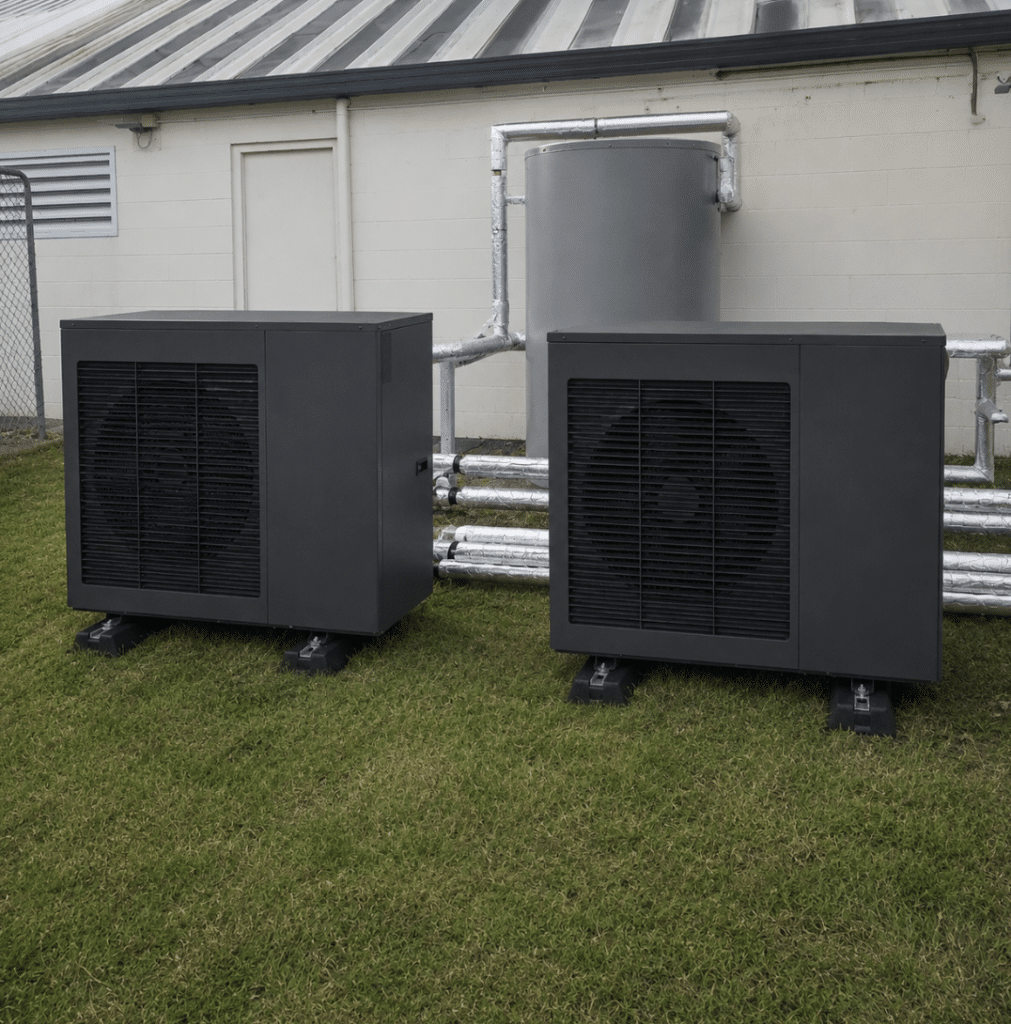
Consider an eight-apartment building in Munich with an aging gas boiler and existing underfloor heating. The owner is thinking about replacing the boiler with several heat pumps working together (a cascade). Before choosing equipment, check the building’s winter heat loss, how much heat the floor loops can deliver, available electrical power, installation space and domestic hot-water demand. Then check each heat-pump module’s output at the local design temperature.
Using several smaller heat-pump modules is not automatically better than using one larger unit or retaining a boiler. Compare each option at the building’s design heating load and at milder partial loads. Check the modules’ minimum stable output, how the controller stages them, how defrost is coordinated, and what heating remains if one module stops. The module count, total capacity, buffer volume and water-temperature target must come from the building’s calculated load and the chosen equipment data. If R290 equipment is proposed, check the exact unit’s placement and servicing restrictions. Grant eligibility must be checked separately.
Use the building’s past heating bills to estimate how much useful heat it needs, allowing for the old boiler’s actual efficiency. Then estimate heat-pump electricity use at the expected outdoor and water temperatures. Add current energy prices, installation work and any confirmed grants to compare costs. If the bills or heating data are incomplete, show a range and say what still needs measuring. Do not promise a payback period from the address or floor area alone.
What Should You Check Before Requesting a Heat Pump or Boiler Quote?
Give each supplier the same building heat load, winter temperature, radiator or floor details and installation requirements. Ask for performance at those conditions, the full equipment and installation scope, and the documents required in your market. That way, you can compare offers that will actually heat the same building.
What Information Should You Send When Asking for a Quote?
Send the building location and winter design load, radiator or floor temperatures, existing pipework and controls, electrical supply, and hot-water needs. The checklist below separates these core design inputs from additional distributor or OEM terms.
- Building and winter design: location, heated area, indoor temperature settings, local winter design temperature and room-by-room peak heating loads.
- Existing floors or radiators: heat output, design flow and return water temperatures, water quality, required water flow, zoning, system fill pressure, and calculated circuit pressure loss or required pump head at that flow.
- Heat-pump performance: heating capacity, COP and electrical input at matching outdoor and water temperatures, plus defrost and backup-heater operation.
- Hot water and cooling: domestic hot water demand, storage-tank size and recovery, hygiene control, simultaneous operation, and any cooling or moisture-removal needs.
- Pipework and controls: show pumps, valves, expansion and pressure relief, air removal, minimum water flow and active volume, buffer if needed and monobloc freeze protection.
- Electrical power, noise and access: voltage and power supply, maximum input and current, breaker sizing, controller and communication details, sound data, clearances and maintenance access.
- Safety and market documents: refrigerant and installation limits, and proven market-specific documentation for the exact model; do not assume CE/ErP, MCS or ISO certification without evidence.
- Commercial or distributor / OEM projects only: what is included or excluded, warranty, service and spare parts, lead time, packing and OEM requirements, and return procedures.
How Can You Compare Heat Pump and Boiler Quotes Fairly?
Compare quotes for the same winter heat load, weather assumptions, water temperatures and installed work. Include space heating and hot water, backup energy, servicing, future replacements, confirmed grants and consistent tariffs. State the discount-rate or financing method for long-term costs and test how the comparison changes when prices or seasonal performance shift. A quote that excludes radiator work is not directly comparable with one that includes it.
Compare heating capacity, electrical input, water-temperature range, included hydraulic components and market documentation at the same design conditions. For further neutral questions about manufacturer documentation and scope, the heat pump manufacturer buying guide explains what to check. The equipment list alone cannot establish whether a system will cover the building’s winter heat load.
FAQ: Air-to-Water Heat Pump vs Gas, Oil and Electric Boilers
These questions address documentation, buffer tanks, hybrid systems and replacing oil boilers—points that need specific checks beyond the main comparison.
What certifications should I look for when sourcing a heat pump for a UFH project?
Ask for the documents required in the country where the system will be installed, plus efficiency and safety test data for the exact model. In Europe, CE/ErP requirements differ from UK MCS-related installer and grant rules. A company-wide ISO certificate does not prove how a particular heat pump performs.
Do air-to-water heat pumps need a buffer tank for radiant floor systems?
Not always. A buffer tank is needed only when the heat pump and heating circuits need one to maintain minimum water flow, enough active water volume, suitable defrost operation or stable zone control. Its size must follow the specific unit’s requirements; a fixed number of litres per kW is not reliable. An unnecessary tank can add heat and pumping losses.
Can an air-to-water heat pump work alongside an existing boiler?
Yes. An air-to-water heat pump can sometimes work with an existing boiler in a hybrid hydronic system. The controls must decide when each heat source runs, and the pipework must maintain the required water flow and temperature. Check the heat pump’s available output on cold days, radiator needs, electricity and fuel costs, backup operation, installation cost and applicable regulations. Keeping both heat sources is not automatically cheaper or simpler.
Can I replace an oil boiler with an air-to-water heat pump?
Often, yes, if the heat pump can cover the home or building’s winter heat load, the emitters provide enough heat and the electrical supply is suitable. To compare bills, convert the price of oil into cost per kWh of fuel energy and use the old boiler’s realistic seasonal efficiency. Include oil-tank removal and any backup or freeze-protection work in the installed cost.
What Should You Check Before Choosing a Heat Pump or Boiler?
Start by checking how much heating the building needs in winter and what water temperature its radiators or floor require. Then compare heat pumps and boilers that can meet that need under the same weather and operating conditions. Use local energy prices and full installation costs before deciding which option is better.
- Work out the building’s peak winter heating demand, room-by-room heat loss and local design temperature.
- Check floor or radiator heating output and the highest water temperature the system needs.
- Request heat-pump cold-weather capacity, COP and seasonal-performance assumptions, plus boiler seasonal efficiency, backup and domestic hot water requirements.
- Compare the complete installed scope, energy tariffs, verified grants, maintenance and likely replacement costs.
- Confirm market compliance and safety documents, freeze protection, cooling condensation control where relevant, local service and backup arrangements.
If the heat pump cannot meet the winter heating load at the water temperature your radiators or floors require, check insulation, emitter upgrades or a verified backup option before deciding on a unit. If it can meet the load but costs more to run under your tariffs, compare a retained boiler or another operating strategy rather than assuming that higher COP means lower bills. If zone flow, defrost or freeze protection is unresolved, finish the hydraulic and control design before installation. Use actual building measurements and model documentation to confirm the final choice.

Make the final choice using verified winter capacity, emitter temperatures, practical installation constraints and total costs. The examples above illustrate the method; they are not a measured Airproz project, a completed building design, or a promise of savings or payback.
Have a heat pump or boiler project to compare? To see published equipment options, review our space-heating heat pump range, monobloc product information and OEM/ODM information. Product fit and performance depend on the exact model and project conditions.
If you would like to discuss a particular building, share its location, winter heating load and the water temperature needed by its floors or radiators. Contact Airproz to discuss available information; final equipment performance and system suitability must be checked for the proposed model.