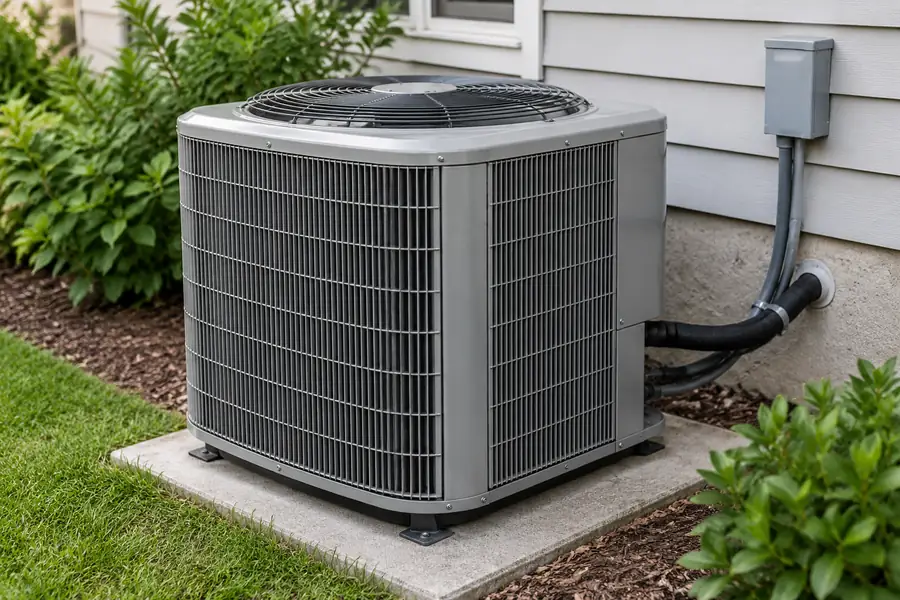
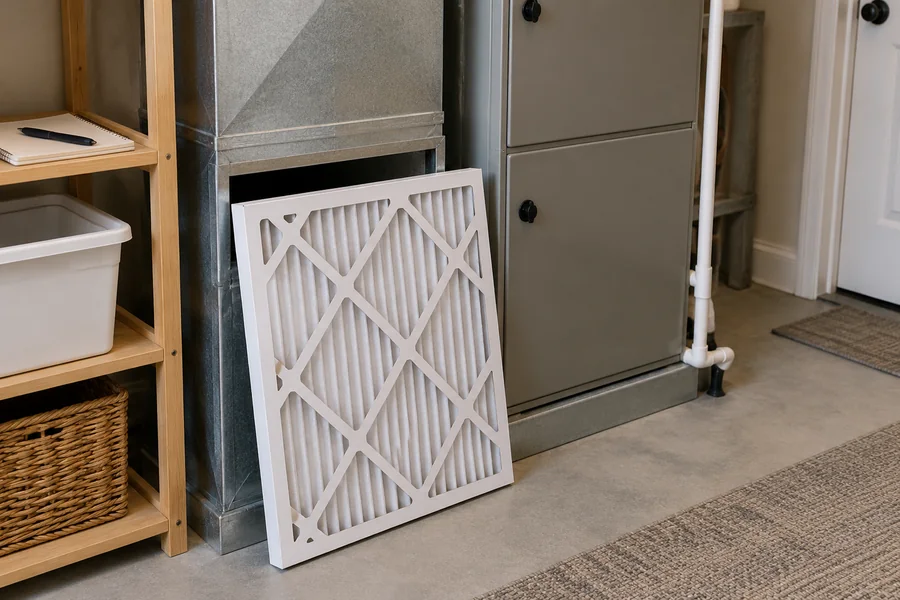
For a U.S. residential central AC system, HomeGuide lists $1,800–$2,800 for compressor replacement including parts and labor. The installed price changes with the compressor model, system access, variable-speed controls, refrigerant work, and any damage found during diagnosis. Heat-pump compressor repair estimates vary more widely across published sources, so compare the job scope before using a number.
“Compressor cost” can mean three different things: the replacement part alone, the entire installed repair, or the amount you pay after an approved warranty credit. The ranges below describe published U.S. contractor service costs. For a complete Airproz equipment project, request a separate equipment quotation.
Before approving a replacement, get a written diagnosis and an itemized quote. A unit that will not start may have a bad capacitor, contactor, control board, or power supply rather than a failed compressor. When the compressor itself has failed, compare the full repair bill with a properly matched replacement system, including any warranty coverage.
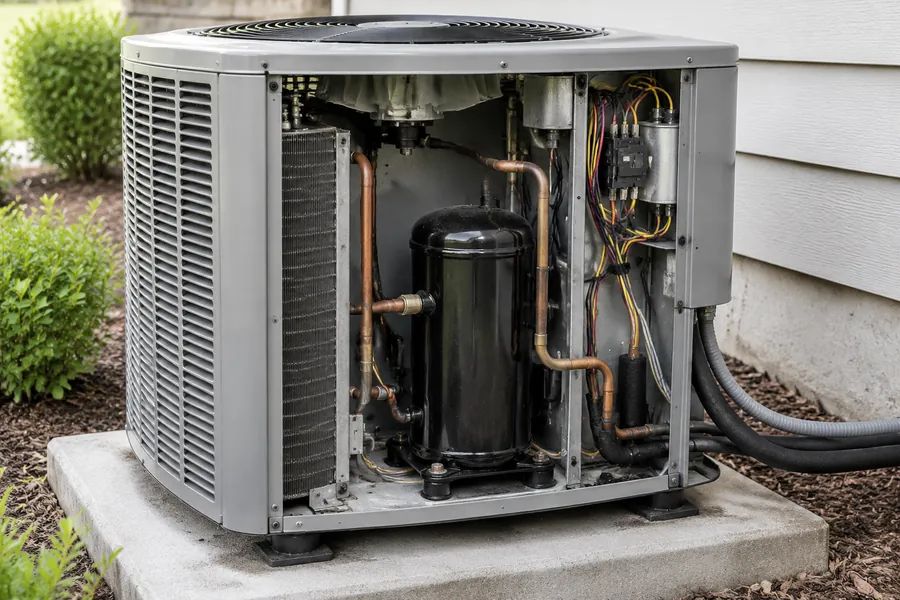
How Much Does It Cost to Replace an AC Compressor?
Use $1,800–$2,800 as an initial U.S. residential central AC installed-cost reference. HomeGuide states that this range includes parts and labor. Trane’s general AC repair table and Angi’s 2026 compressor guide publish different ranges for other models and job conditions. Compare what each estimate includes: parts, labor, refrigerant work, and any required cleanup.
| Equipment and source | Published U.S. range | What the range includes | Source date |
|---|---|---|---|
| Residential central AC compressor — HomeGuide | $1,800–$2,800 | Installed replacement; parts and labor explicitly included | Aug. 4, 2025 |
| AC compressor line — Trane HVAC repair guide | $900–$2,900 | Broad repair-price table; line-item labor and refrigerant scope not specified for every job | Publication date not stated on the page reviewed |
| Home AC compressor — Angi | $800–$2,300 | General compressor replacement estimate; varies by model and job | July 2026 |
All three are published U.S. residential service estimates in USD. Compare the included work before choosing a repair quote: a parts-only figure and a complete installed price cover different work. Ask whether the contractor includes diagnosis, refrigerant recovery, filter-drier work, leak testing, evacuation, charging and startup checks. A failed capacitor, contactor or control may cost much less to fix than a sealed compressor, so confirm the diagnosis first.
What Makes Up the Total Compressor Replacement Cost?
The total compressor replacement cost includes the approved compressor part, diagnosis and labor, refrigerant work, required system parts, and any cleanup or commissioning work. Ask for these items in one installed quote so you can compare the full cost of each repair.
| Cost item | What it covers | What to ask |
|---|---|---|
| Replacement compressor | OEM-approved or otherwise manufacturer-approved model and correct electrical configuration | What exact part number, refrigerant, and warranty apply? |
| Diagnosis and labor | Confirming the failure, access, removal, installation, and electrical checks | Is the diagnostic visit credited to the job? Is labor a flat fee? |
| Refrigerant handling | Recovery as applicable, leak test, evacuation, and correct recharge | Are refrigerant and recovery work included? How is charge verified? |
| Other system parts | Filter drier, start components, failed contactor, and any approved cleanup parts | Which parts are required by the equipment maker, and why? |
| Damage and rework | Burnout contamination, difficult access, damaged piping, or other faults | Did testing find contamination or a cause that could harm the new compressor? |
| Warranty and taxes | Part coverage, labor exclusions, shipping, permits, and local taxes where applicable | Which line items remain payable even if the compressor part is covered? |
A Worked Example: A Complete Quote vs. a Parts-Only Price
Suppose a service company quotes a 3-ton central AC repair using these illustrative line items: $900 for the approved replacement compressor, $700 for labor, $250 for refrigerant-related work, and $200 for a filter drier and checks. The total is $2,050.
$900 + $700 + $250 + $200 = $2,050
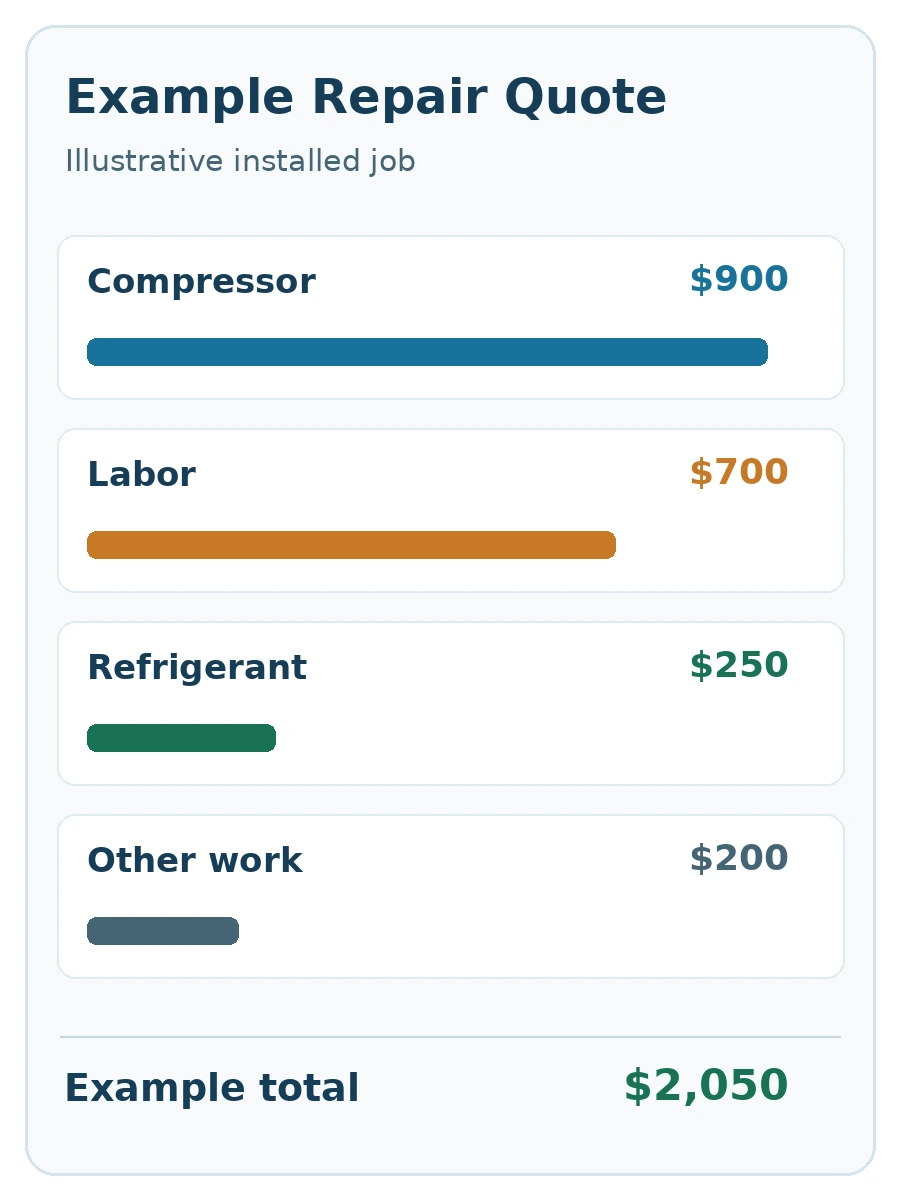
Now suppose a second quote says “compressor $1,100,” but leaves out labor, refrigerant, and cleanup. That is not yet the cheaper choice. Ask for those amounts and compare the same scope. If the first quote includes a warranty on the installed work and the second excludes it, compare those terms as well.
What would you actually pay after warranty? Using the same illustrative $2,050 installed quote: if a valid compressor-parts warranty approves a $900 credit for the compressor line, the remaining quoted amount would be $2,050 − $900 = $1,150. Without that credit, the job would remain $2,050. The $900 deduction applies if the warranty administrator approves that compressor-part credit for your unit. Confirm which labor, refrigerant, shipping or diagnostic charges remain payable.
How Much Is Compressor Replacement Labor?
HomeAdvisor estimates about $300–$900 in labor and roughly four to six hours for many central AC compressor replacements. Carrier lists four to eight or more hours for a heat-pump compressor job. Actual labor hours depend on access, compressor type, refrigerant handling, electrical repairs and startup testing. Ask whether the quoted hours cover troubleshooting, refrigerant recovery, installation, leak testing, evacuation, charging and startup checks. The initial diagnostic visit and any cleanup or return trip may be listed separately. If a service quote already includes labor, do not add a published labor estimate again. See HomeAdvisor’s labor guide and Carrier’s heat-pump repair table.
Does a 3-Ton or 5-Ton Air Conditioner Cost More to Repair?
For U.S. residential central AC, HomeGuide lists about $2,000–$2,600 installed for 3–3.5 tons and $2,500–$3,500+ for 5 tons and above. The larger class usually costs more to replace, but the actual quote depends on the compressor and repair scope. A ton of cooling is a capacity rating equal to 12,000 Btu/h, not the weight of the compressor. A 3-ton unit is nominally 36,000 Btu/h; a 5-ton unit is nominally 60,000 Btu/h.
| AC capacity | Nominal cooling class | HomeGuide installed replacement reference |
|---|---|---|
| 1.5 tons | 18,000 Btu/h | $1,500–$2,000 |
| 2–2.5 tons | 24,000–30,000 Btu/h | $1,800–$2,200 |
| 3–3.5 tons | 36,000–42,000 Btu/h | $2,000–$2,600 |
| 4–4.5 tons | 48,000–54,000 Btu/h | $2,200–$2,800 |
| 5 tons and above | 60,000 Btu/h and above | $2,500–$3,500+ |
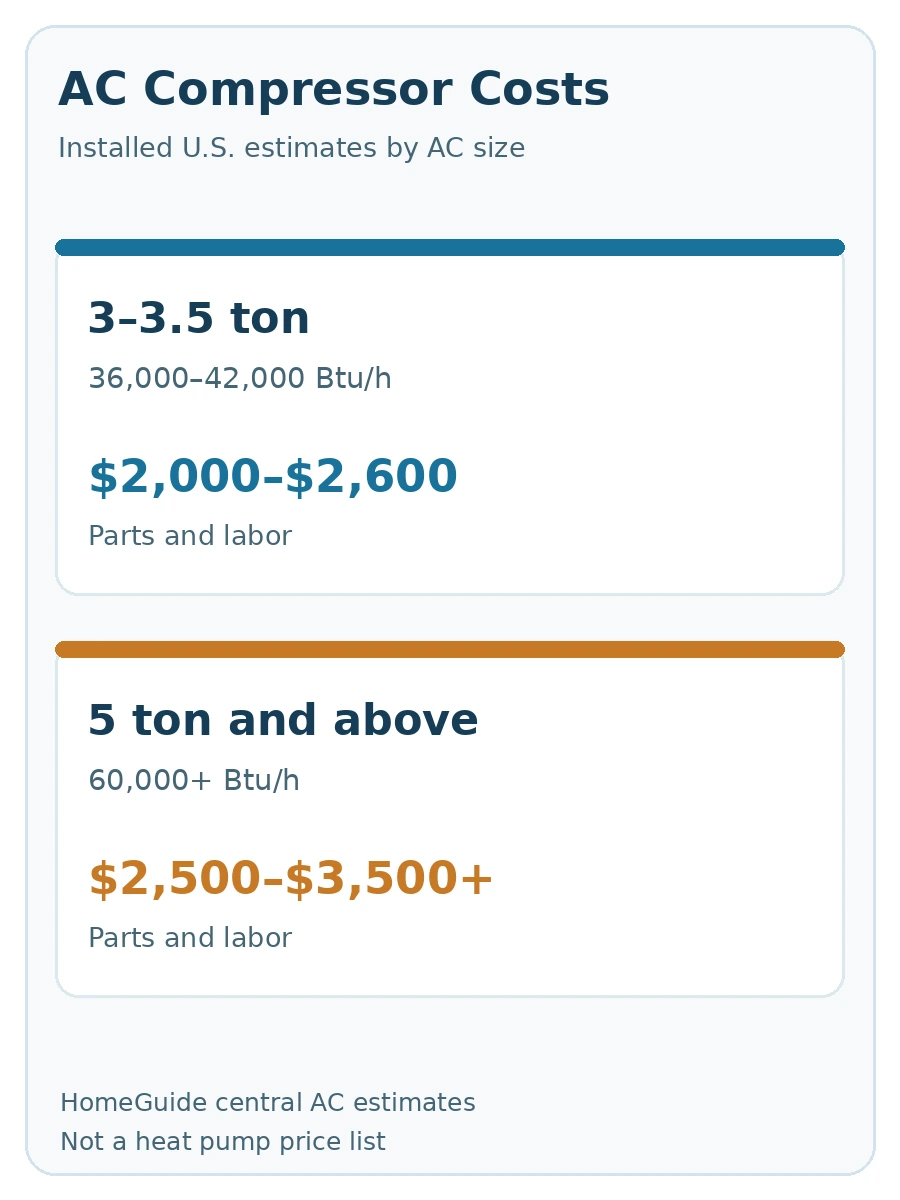
The ranges come from HomeGuide’s size table and refer to AC service replacement, including parts and labor. This table covers residential central AC compressor replacement. Commercial systems and variable-speed heat pumps need model-specific estimates.
Why the Compressor Type Changes the Price
Compressor design and speed controls change the cost because the replacement part must match the approved drive, electrical system, refrigerant, and controls. Variable-speed systems can require extra matching and testing work.
A compressor can be rotary or scroll, among other designs. It may also be fixed-speed, staged, or driven at variable speed by an inverter. These terms describe different things: compressor mechanism and how its capacity is controlled. When comparing replacement parts, match the compressor design and its speed-control system to the manufacturer-approved part.
A variable-speed compressor may need a matching inverter, controls, electrical setup, and approved operating range. A fixed-speed compressor may be incompatible with the original inverter and controls, causing electrical faults or reduced heating and cooling performance. Confirm the exact outdoor-unit model and manufacturer-approved replacement part before ordering. For a fuller technology comparison, see our HVAC compressor types guide.
Before ordering any replacement part, check all four: the outdoor-unit model and approved compressor part number; the specified refrigerant and compatible oil; the supply voltage and starting circuit or inverter drive; and compatibility with the controls, remaining system and equipment warranty. Matching nominal tonnage or a low online part price alone does not make a compressor interchangeable.
How Much Does a Heat Pump Compressor Replacement Cost?
Published U.S. heat-pump compressor estimates include $2,500–$5,000 in Trane’s guide, $800–$3,500 in Carrier’s guide, and $800–$2,500 in Fixr’s guide. These sources describe different equipment and repair conditions. Compare the included labor, refrigerant work, cleanup and warranty credit, then request a complete installed quote for your exact heat-pump model.
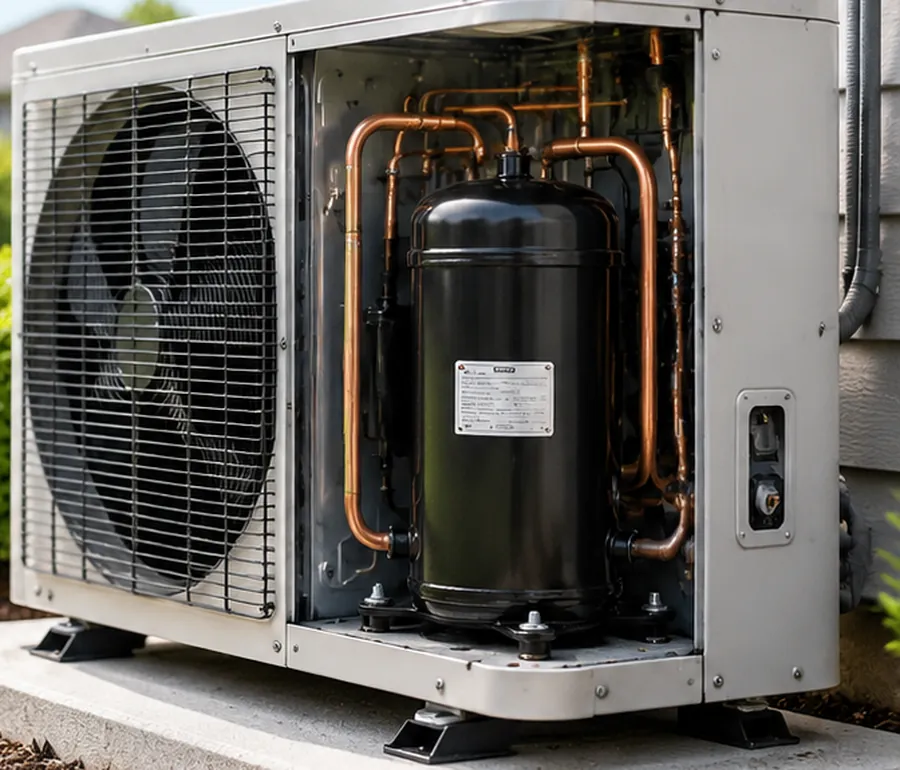
| Published source | Heat-pump compressor range | What to know before comparing |
|---|---|---|
| Trane heat-pump repair guide | $2,500–$5,000 | Compressor row in a residential heat-pump repair cost table; actual labor, warranty and repair conditions vary |
| Carrier heat-pump repair guide | $800–$3,500 | Compressor repair/replacement reference; accompanying 4–8+ hours varies with the repair work |
| Fixr 2026 heat-pump repair guide | $800–$2,500 | Cost-guide range for compressor replacement; model and repair assumptions may differ from Trane and Carrier |
How to use these numbers: identify the failed part, exact heat-pump model, valid warranty credit, refrigerant work and complete installation scope. Use the published low end as background, then request an approved compressor part and a fully itemized installed quote for your model.
Air-source heat pumps use a refrigeration cycle for both heating and cooling. Their reversing valve, sensors and defrost controls add other possible fault paths. Poor heating can also result from defrost controls, electrical supply, airflow or refrigerant-circuit faults. A technician should check these causes before recommending compressor replacement.
How Should You Price a 3-Ton or 5-Ton Heat Pump Compressor Replacement?
Price a 3-ton or 5-ton heat-pump compressor by the exact outdoor-unit model and the complete installed work, rather than tonnage alone. The earlier size table covers central AC; heat-pump replacements require their own model-specific pricing. Photograph the outdoor unit’s nameplate and give the service company the manufacturer, model and serial number, nominal capacity, refrigerant, voltage and inverter or starting-control details. Ask for the manufacturer-approved compressor part number and a complete installed quote.
If testing confirms the compressor has failed, request a compressor-only installed repair price with any warranty credit shown. If other major parts are also failing or the system is near the end of its useful life, also request a correctly matched outdoor-unit or complete-system replacement price. Compare both only after the scopes are clear.
If you have a cold-climate or inverter heat pump, confirm that the replacement compressor is supported by the original controls and can operate over the required outdoor temperatures. Choosing an incompatible part can create a second failure or reduce usable heating output.
What Are the Signs of a Failed AC or Heat Pump Compressor?
Warm air, repeated breaker trips, loud noises, or a unit that will not start call for electrical, control, airflow and refrigerant checks. These tests help a technician confirm an internal compressor fault. Observe symptoms from a safe distance and leave electrical panels and sealed refrigerant pipes closed.
| What you notice | Other possible causes | Useful technician check |
|---|---|---|
| Outdoor unit hums but will not start | Failed capacitor, contactor, low voltage, or seized compressor | Power, start components, winding and current tests as specified by the manufacturer |
| Indoor fan runs but air is warm | Refrigerant leak, dirty heat exchanger, outdoor-fan fault, controls, or compressor | Airflow, operating pressures/temperatures, charge and control sequence |
| Breaker trips again after reset | Electrical short, fan or compressor fault, supply problem | Leave it off; test insulation, wiring and motor before another start attempt |
| Sharp metallic noise or heavy vibration | Mechanical damage or liquid refrigerant entering the compressor | Stop operation and investigate mechanical and refrigerant conditions |
| Heat pump heats poorly in cold weather | Defrost problem, backup-heat setup, airflow, low charge, or compressor | Heating-cycle checks at the actual outdoor temperature |
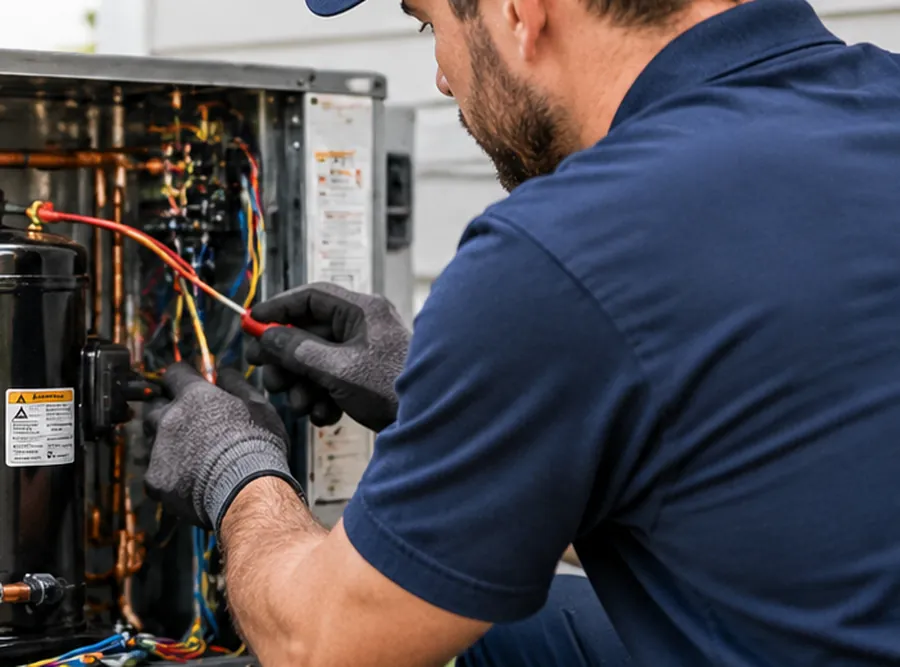
If the unit makes a violent knocking sound, repeatedly trips the breaker, or shows signs of damaged wiring, switch it off and arrange professional service. Repeated restarts may worsen mechanical or electrical damage. Copeland explains that liquid refrigerant slugging may cause a loud metallic clatter and severe vibration.
During normal defrost, an outdoor heat pump may briefly change sound, pause heating and release visible steam while clearing frost. Normal heating should resume after the cycle. If thick ice remains, heating fails to recover or the system repeatedly trips, ask a qualified technician to check the defrost control, sensors, airflow, refrigerant circuit and compressor. See Trane’s explanation of normal defrost behavior.
| What the system does | What a technician verifies | How the result changes the decision |
|---|---|---|
| Outdoor unit does not respond | Thermostat demand, control signal and power supply | If a call or power is missing, correct that cause before considering compressor replacement. |
| Compressor receives a start command but will not run | Model-specific starting circuit or inverter, voltage, winding and protection tests | Replace a faulty external component when that resolves the fault; replace the compressor only when approved tests support internal failure. |
| Unit runs but transfers little heat | Airflow, fans, refrigerant conditions, reversing operation and compressor performance | Repair a verified leak, airflow or valve fault first; warm air alone cannot condemn the compressor. |
| Breaker or protection trips repeatedly | Safe electrical inspection, insulation and motor/drive condition | Keep the equipment off until the failure is found; do not keep resetting it to test the compressor. |
What Should Be Checked Before the Compressor Is Condemned?
Start with thermostat settings and visible airflow restrictions. A qualified technician should then isolate the actual fault using manufacturer-specified electrical, control and refrigerant tests. Ask which measured result showed an internal compressor failure and whether a less expensive external fault was ruled out. Correcting a capacitor, contactor, fan, drive or control problem can avoid an unnecessary sealed-system replacement.
The same visit should look for the cause of any real compressor failure. Copeland’s technical guidance identifies refrigerant floodback, oil trapping, and liquid slugging as possible lubrication problems. Installing a new compressor without correcting the underlying fault can lead to another failure. See Copeland’s lubrication-failure guidance.
Should You Repair the Compressor or Replace the Whole AC Unit?
Choose a smaller repair when testing finds a separate replaceable fault; consider a compressor swap when the system is otherwise in good condition and the total repair cost is reasonable. Compare a full equipment replacement when the compressor has failed inside an older unit, parts are hard to obtain, or other major faults are also present.
When a Repair May Be the Better Choice
- The compressor passes electrical and operating checks, but a contactor, capacitor, fan, sensor, or control has failed.
- The failed compressor is covered under a useful parts warranty, with acceptable remaining labor and refrigerant costs.
- The system is relatively recent, properly sized, supported with spare parts, and has no wider coil or refrigerant problems.
When to Price a New Outdoor Unit or Complete System
- The compressor is badly damaged, and cleanup plus labor costs are high.
- The refrigerant circuit has repeated leaks, contamination, or further major components needing replacement.
- The equipment is old, difficult to service, uses a costly legacy refrigerant, or no approved replacement compressor is available.
- The existing system has the wrong capacity or poor performance at the building’s actual heating or cooling load.
Use a Same-Scope Repair-versus-Replacement Comparison
Compare a compressor repair and an equipment replacement only after both quotes include the work needed for the same building and a compatible heating or cooling system.
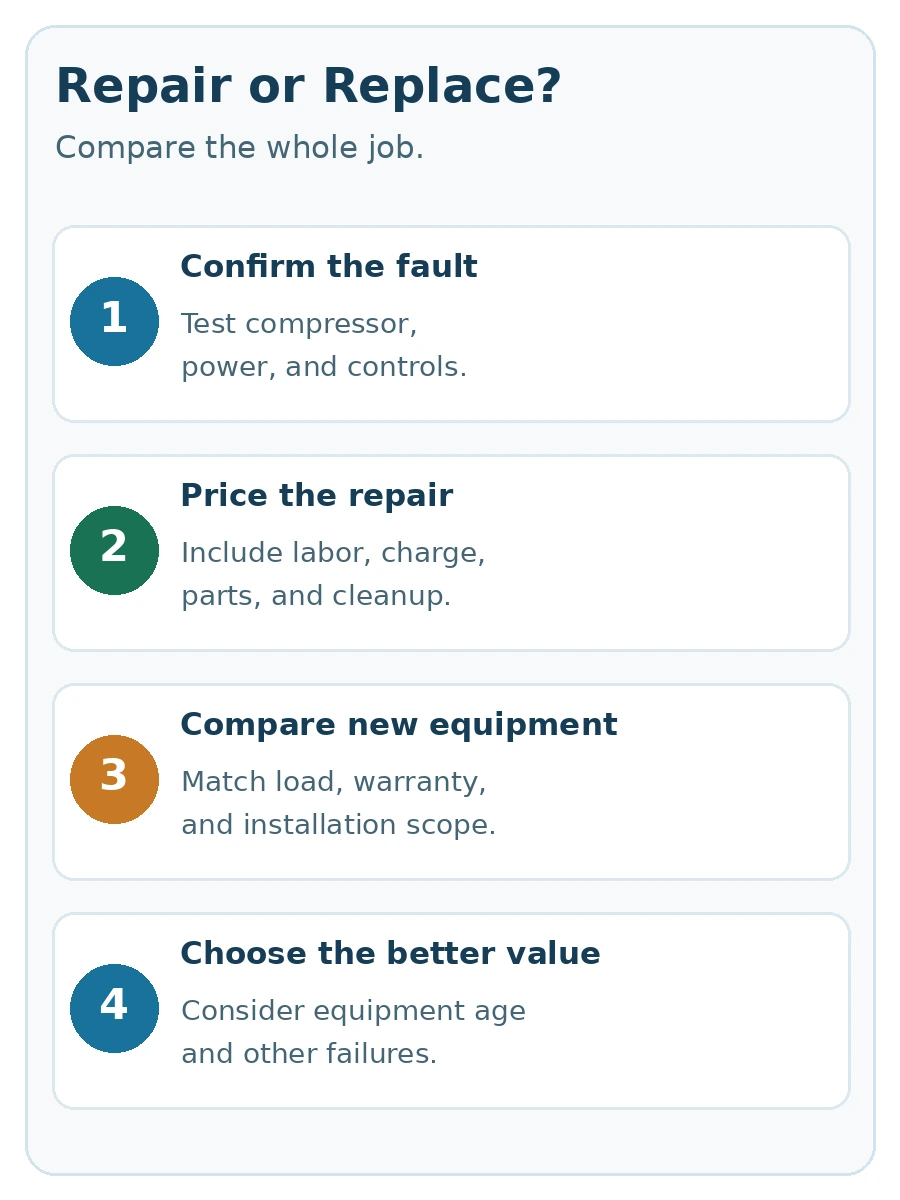
Illustrative comparison: suppose a full compressor repair costs $2,600 and a correctly matched, fully installed outdoor-unit replacement costs $4,800 for the same building. The arithmetic is 2,600 ÷ 4,800 = 54.2%. The comparison works when both quotes cover the installation work required by the system and its cooling or heating load.
If the outdoor-unit option also requires an indoor coil, new controls, electrical updates or additional commissioning, add them before comparing prices. Use the commonly cited 50% comparison as a first check, then weigh warranty credits, equipment age, parts availability, recurring faults and expected remaining service life to choose the better option.
| Option | When to consider it | What must be included in the comparison |
|---|---|---|
| Repair another component or the existing compressor | The actual fault is isolated; the rest of the system remains usable | Model-approved part, labor, refrigerant work, warranty and correction of the failure cause |
| Replace the outdoor unit | The compressor or outdoor equipment is costly to repair, and the existing indoor equipment can be matched | Verified indoor/outdoor compatibility, controls, refrigerant, electrical work and commissioning |
| Replace the complete matched system | Major components are worn or mismatched, repeated failures persist, or capacity is unsuitable | Equipment, indoor components, installation, actual building load, efficiency and new warranty terms |
For a broader age-based decision, see our air conditioner lifespan guide. Its age and maintenance discussion is a separate task from this page’s compressor cost calculation.
What Happens During AC Compressor Replacement?
A proper replacement includes diagnosing the failure, matching the new compressor, making the sealed system safe, installing and testing the part, then proving that the original cause has been fixed. The work is more than unbolting a motor.
- Confirm the failure. Record the equipment model, electrical readings, operating behavior and other causes already excluded.
- Match the replacement. Check the manufacturer’s approved compressor, refrigerant, oil, voltage, inverter or starting controls, and any required service parts.
- Recover refrigerant and isolate power. Certified personnel follow the equipment and local rules before opening the sealed circuit.
- Remove and install the compressor. Follow the manufacturer’s brazing, contamination-control, electrical and tubing instructions.
- Correct the failure cause. Clean or replace affected driers and other parts after a burnout where the manufacturer’s guidance calls for it; fix liquid-return, airflow, electrical or control faults.
- Leak-test, evacuate, recharge and run. Verify the correct charge, operating conditions, current, temperatures, control sequence, and stable heating/cooling performance.
Copeland’s filter-drier cleanup procedure gives a clear reason for post-burnout cleanup: contaminated oil or debris left in the circuit can damage the new compressor. The exact cleanup parts and timing depend on the model’s approved service instructions.
In the United States, EPA Section 608 requires certification for technicians handling covered stationary refrigeration and AC systems where service could release refrigerant. Do not open refrigerant lines, bypass electrical protection, or vent refrigerant as a DIY cost-saving measure.
What Should You Ask Before Accepting a Compressor Replacement Quote?
Before accepting a compressor replacement quote, ask: Which test confirms the failure? Which approved compressor will be installed? What work is included in the total price? What will the warranty actually cover? Get the answers in writing so you can compare both the work and the price.
- Failure evidence: Which electrical and refrigerant tests show the compressor failed? What else was checked?
- Exact equipment: Outdoor model, serial number, original compressor part, replacement part and approved refrigerant.
- Full scope: Labor, refrigerant recovery/charge, driers, electrical parts, leak testing, cleanup, taxes and access charges.
- Warranty: Is only the compressor part covered, or are labor, shipping, refrigerant and related parts included?
- After-repair checks: What measurements will be recorded to confirm stable heating or cooling and correct operation?
- Alternative price: What would a matched outdoor-unit or complete-system replacement cost for the same building needs?
If you manage several AC units, ask for a separate line for downtime, expected parts lead time, and which similar units share the same compressor. One expensive emergency repair can be handled differently from a planned replacement across a building.
How Does Airproz Fit a Replacement or New-System Project?
For a planned replacement of complete equipment, Airproz supplies air conditioners and space-heating heat pumps for suitable project and OEM requirements. Share the destination market, building use, heating or cooling load, outdoor design temperatures, electrical supply, refrigerant preferences and expected project quantity. These details help us discuss a suitable equipment category and what specifications are still needed for a project quote.
Need a compressor repaired in an existing third-party unit? Contact its manufacturer or a qualified local HVAC technician for model-specific diagnosis, part approval and repair pricing. Planning to replace complete AC or heat-pump equipment? Share your project requirements with Airproz using our inquiry route.
Air Conditioner Compressor Cost: What Is the Right Next Step?
The practical next step is a written diagnosis, a model-matched parts list, and a quote that includes labor, refrigerant handling, needed cleanup and warranty terms. That will tell you whether replacing the compressor makes sense or whether new equipment offers better value for the building.
Expect roughly $1,800–$2,800 for a typical U.S. central AC compressor replacement as an initial guide, with larger and complex jobs costing more. Heat pump quotes can be higher, especially for special compressor controls or serious internal damage. Check the fault first, then compare complete repair and replacement prices using the same scope.
Planning a Complete Air Conditioner or Heat Pump Replacement?
For a complete AC or heat-pump replacement project, send us your destination country, building application, required heating or cooling load, design outdoor temperatures, electrical supply, refrigerant preference and project quantity. If available, include the existing outdoor-unit nameplate and system type. We can discuss appropriate Airproz equipment options and the details needed for a project quote.
Frequently Asked Questions
Can an AC compressor be repaired instead of replaced?
Sometimes. A separate capacitor, contactor, wiring or control fault can be repaired without changing the sealed compressor. Serious internal motor or mechanical damage usually requires replacing the compressor rather than repairing its sealed internals in the field.
How much does a 3-ton air conditioner compressor replacement cost?
HomeGuide lists about $2,000–$2,600 installed for 3–3.5-ton central AC compressor replacement in the United States. A model-specific quote can differ because of warranty coverage, refrigerant, access and the compressor design.
How much does a 5-ton heat pump compressor cost?
A 5-ton heat-pump compressor needs a model-specific installed quote. The 5-ton central AC range in this article covers a different equipment category. Give the service company the outdoor-unit model and serial number, refrigerant, electrical rating, and inverter or starter details. Ask for an approved compressor part number, the full repair scope, and any confirmed warranty credit.
Does a compressor warranty pay for labor and refrigerant?
A compressor parts warranty covers the approved replacement part when a claim is accepted; labor and refrigerant are covered only if the warranty terms include them. For example, if a $2,050 installed repair quote receives a valid $900 compressor-parts credit, the amount remaining is $1,150. Confirm the approved credit and any uncovered charges before proceeding.
How long should an AC or heat pump compressor last?
For an air conditioner compressor, Carrier gives a typical service life of 10–15 years. A heat-pump compressor’s service life depends on its model, year-round runtime, installation, and maintenance, so the AC reference is not a fixed heat-pump limit. Compare the system age, measured test results, and repair history before deciding whether to replace it.
Can I keep using an AC with a noisy compressor?
If it has sharp metallic knocking, severe vibration, repeated trips or signs of electrical damage, stop running it and have a qualified technician diagnose it. Continued use may worsen compressor damage and make the repair more expensive.