Published 2025 · Updated July 2026 · 12 min read · B2B Global Sourcing Guide — For Importers, Dealers, Distributors & OEM Brands
Picking the right mini split AC manufacturers to partner with is the single biggest business decision a dealer or importer makes. The wrong choice means compliance headaches, warranty issues, and margins that disappear overnight.
In 2026, the global mini split market has continued expanding, with Chinese manufacturers accounting for a growing share of global output, yet the differences between brands — in compressor technology, refrigerant strategy, certification coverage, and pricing tiers — are wider than ever. This guide ranks the top 10 manufacturers globally, with a focus on what B2B buyers need to know: OEM capabilities, market-specific certifications (CE, AHRI, SAA, SASO), bulk order terms, and which manufacturers serve which regions best.
Key Takeaways for B2B Buyers
- The global mini split market has grown significantly in recent years, with Asia-Pacific accounting for a large share of production
- Chinese manufacturers have gained meaningful global market share over the past five years, offering competitive OEM pricing
- Japanese brands (Daikin, Mitsubishi) lead in premium SEER ratings and reliability but cost more than Chinese equivalents
- Mini splits now represent a substantial share of new residential HVAC installations across North America and Europe
The Global Mini Split Landscape in 2026 — Market Overview for B2B Buyers
The mini split market has expanded steadily in recent years, driven by urbanization, stricter energy codes like ASHRAE 90.1 energy efficiency standards for HVAC systems, and retrofitting initiatives in older buildings. For B2B buyers, understanding this landscape is the first step to making smart sourcing decisions.
| Region | Market Share | Key Trend for B2B Buyers |
|---|---|---|
| Asia-Pacific | Largest | China leads global production with growing export volumes |
| North America | Major | Retrofitting demand; IRA tax credits driving adoption |
| Europe | Significant | ErP eco-design mandates SEER > 8.5; F-Gas phase-down favoring R290 |
For a comparison of system types, see what B2B buyers should know when sourcing air conditioners — covering mini splits vs central AC vs packaged units from a procurement perspective.
Top 10 Mini Split AC Manufacturers Ranked for B2B Buyers
We’ve grouped the top 10 manufacturers into three tiers based on their relevance to B2B sourcing decisions: premium Japanese engineering, global diversified players, and high-volume value manufacturers. Whether you’re comparing a premium Japanese brand or a value-focused Chinese air conditioner manufacturer, the tier breakdown below should make the trade-offs clear.
Tier 1: Japanese Premium
- Daikin — Best for premium global HVAC channels. A pioneer of VRF technology with top-tier SEER ratings. Their AI-driven climate prediction platform is a differentiator for large commercial projects. Ideal for high-end commercial and residential projects where brand recognition drives specifications.
- Mitsubishi Electric — Best for cold-climate and premium residential projects. Their Hyper-Heating INVERTER® technology delivers full capacity at low outdoor temperatures — unmatched for cold-climate projects. Their kumo cloud® remote diagnostics platform adds value for multi-unit installations.
- Fujitsu General — Best for coastal and tropical climate installations. Their corrosion-resistant components and Nanoe™ X air purification are strong advantages in humid environments, particularly across Southeast Asia.

For a direct mini split vs heat pump comparison for commercial buyers, see our dedicated guide covering technology differences and application fit.
Tier 2: Global Diversified
- LG Electronics — Best for smart home integration and design-forward projects. Their ThinQ AI platform and Dual Inverter Compressor™ offer strong smart home compatibility. Growing presence in the European smart home ecosystem. Their Art Cool series appeals to design-conscious applications.
- Carrier — Best for North American commercial retrofit projects. Their Hybrid Heat® technology and Greenskies® eco-friendly refrigerant line (GWP < 150) complement the Infinity® control system with granular humidity management — a strong selling point for commercial comfort applications.
- Lennox — Best for solar-ready and net-zero energy projects. Their SunSource® systems offer precision temperature control relevant for off-grid and sustainable building applications.
- Panasonic — Best for air quality and energy storage integration. Their Econavi™ occupancy-sensing airflow and nanoe-G™ odor removal add value for hospitality and healthcare projects, with growing energy storage pairing options.
Tier 3: High-Volume Value & OEM Specialists
- Gree — Best for value-driven bulk orders and R290 projects. A leader in Chinese OEM production with aggressive R290 development for the EU market. Their inverter mini splits offer meaningful cost advantage over Japanese equivalents.
- Midea — Best for broad R32 product range and low MOQ OEM. Offers one of the widest R32 product selections globally with strong OEM capabilities. Midea’s smart-enabled systems compete well at lower price points.
- Haier — Best for emerging markets and smart connectivity. Has expanded rapidly into the commercial segment with competitive inverter technology, particularly strong in Southeast Asia and the Middle East.
- Airproz — Best for low-MOQ OEM/ODM and private label programs. A China-based OEM/ODM mini split manufacturer focused on B2B private label programs for importers and distributors. Trial and sample orders start from just 5 units — notably lower than the 200+ unit minimums typical among Chinese OEM factories — making it easier for buyers to validate product quality before committing to bulk volume. The current product line runs on R32, R410A, and R22 refrigerants (R290 is not yet offered). With installations across 100+ countries and regions to date, Airproz holds certification coverage across CE, ErP, SAA, SASO, and other major markets, and offers factory-direct pricing, fast shipping turnaround, and flexible OEM/ODM customization on branding and packaging.

| Manufacturer | Country | Key Strength | OEM Ready | Best For Region |
|---|---|---|---|---|
| Daikin | Japan | VRF technology, high SEER | No | Global premium |
| Mitsubishi Electric | Japan | Low-temp heating, quiet operation | No | North America, cold climate |
| Fujitsu General | Japan | Corrosion resistance | No | Southeast Asia, coastal |
| LG | South Korea | Smart home integration, ThinQ AI | Limited | Europe, South Korea |
| Carrier | USA | Greenskies R290, Hybrid Heat | No | North America |
| Lennox | USA | Solar-ready SunSource | No | North America |
| Panasonic | Japan | nanoe-G, Tesla Powerwall | No | Europe, Asia |
| Gree | China | R290, OEM flexibility | Yes | EU, Global value |
| Midea | China | Broad R32 range, flexible MOQ | Yes | Global value |
| Haier | China | Smart connectivity | Yes | Southeast Asia, Middle East |
| Airproz | China | Low-MOQ OEM/ODM, fast turnaround | Yes | Global OEM/ODM |
How to Choose the Right Mini Split AC Manufacturer for Your Market
Your target market determines which air conditioner supplier to prioritize. Here’s a quick reference based on the certifications and standards each region requires.
| Target Market | Required Certifications | Recommended Manufacturer Tiers |
|---|---|---|
| European Union | CE, ErP Lot 1&2, F-Gas (R290 preferred) | Daikin, Gree (R290), Midea |
| United States / Canada | AHRI, Energy Star, DOE | Mitsubishi, Carrier, Lennox |
| Australia / New Zealand | SAA, MEPS, GEMS | Daikin, Mitsubishi, Midea |
| GCC / Middle East | SASO, ESMA, T3 high ambient | Fujitsu, Gree, Haier |
| Southeast Asia | R32 compliance, tropical rating | Fujitsu, Midea, Daikin |
| Africa | CE (for imported), tropical climate | Gree, Midea, Haier |
Verify manufacturer performance claims using the AHRI certified product directory for verifying manufacturer performance claims — an independent third-party source for checking SEER, EER, and heating capacity ratings across brands and models.
Airproz sourcing insight: When evaluating manufacturers for a new market, always request three things: (1) the specific model’s certification files for your target country, (2) a factory audit report from the last 12 months, and (3) references from distributors in similar markets. A manufacturer that hesitates on any of these is likely not the right partner.
For AHRI and Energy Star certified mini splits for the US market, see our dedicated US market guide covering DOE compliance, cold climate considerations, and distributor partnerships.
What a Real Procurement Case Looks Like — Three Market Scenarios
To give these selection criteria concrete shape, here are three common sourcing scenarios that procurement teams encounter. These reflect general patterns observed across distributor RFQs, not specific named projects.
Scenario 1: UAE / GCC market — T3 high-ambient requirement. When reviewing a distributor RFQ for a hotel project in Dubai, the first check is whether the proposed unit carries T3 certification for operation at 52°C ambient temperature. A standard T1-rated mini split will throttle or shut down in Gulf summer conditions. The second check is SASO compliance for Saudi customs clearance. Manufacturers that hold both T3 and SASO certification — typically Fujitsu, Gree, or Haier — are automatically shortlisted; those without are excluded regardless of price.
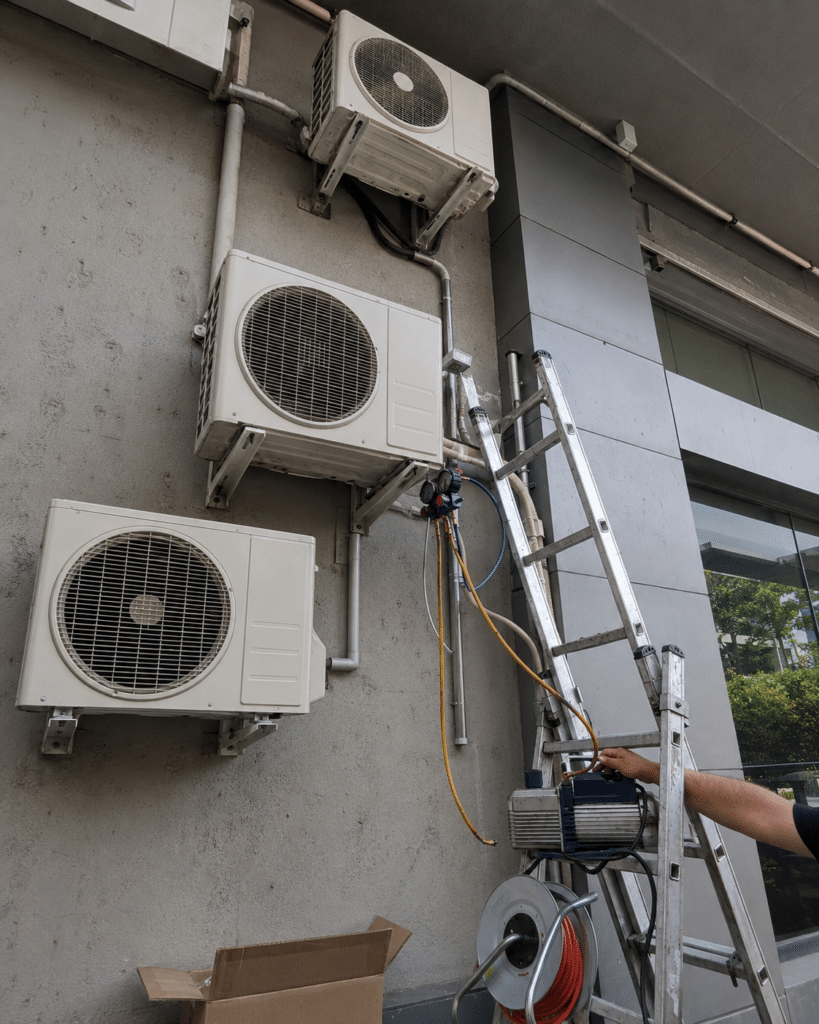
Scenario 2: Australia — reverse cycle with SAA certification. For an Australian residential project, the unit must be SAA-approved and MEPS-registered for legal import. Reverse-cycle (heating + cooling) capability is non-negotiable. Japanese brands like Daikin and Mitsubishi dominate this segment, but Midea has gained ground with SAA-certified R32 inverter models at competitive pricing. The lead time from order to Australian warehouse — typically 8–12 weeks from Chinese OEMs — becomes a deciding factor for time-sensitive builds.
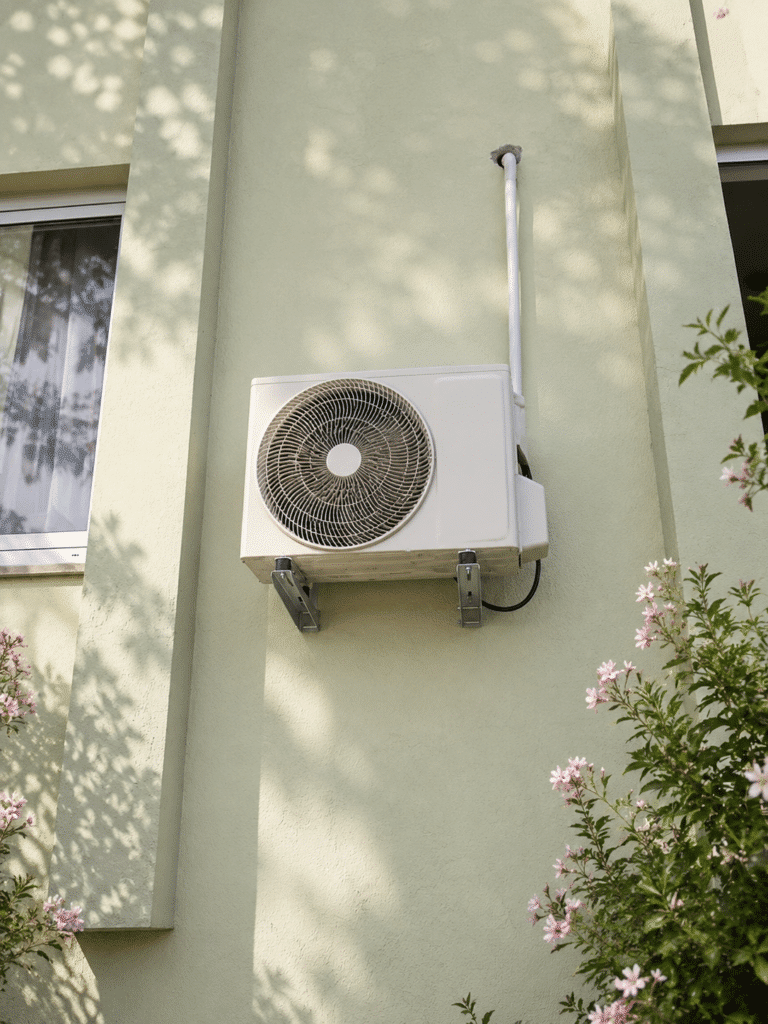
Scenario 3: European Union — F-Gas phase-down and ErP compliance. For EU projects, the refrigerant choice is the most consequential decision. R410A units (GWP 2,088) face ongoing supply restrictions under the F-Gas phasedown. R32 (GWP 675) is currently acceptable but faces future limitations. R290 (GWP 3) is exempt from phasedown but requires ATEX-compliant installation.
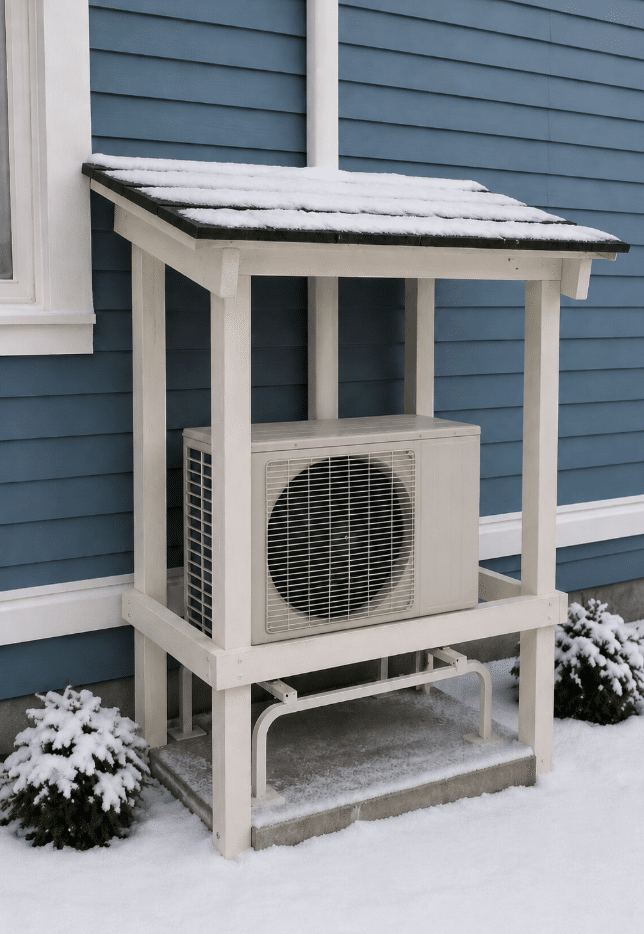
A buyer importing a container of mini splits for distribution across Germany and Poland needs to verify not just CE marking, but also that each model’s SCOP values meet ErP Lot 1 thresholds and that the product is registered in the EPREL database. A model that meets all three criteria — R290 refrigerant, full CE/ErP documentation, and EPREL registration — clears customs without delays and qualifies for end-user subsidies like the German BEG grant.
OEM/ODM Sourcing: Why Some B2B Buyers Choose Airproz Over Brand-Name Manufacturers
Big brands like Daikin and Mitsubishi carry instant name recognition, but for distributors and importers building their own brand, that recognition comes at a cost: thinner margins, longer MOQ commitments, and limited flexibility on private labeling. Diversified OEM factories like Gree and Midea solve the pricing problem but split their attention across dozens of brand accounts and their own retail lines.
Airproz takes a narrower approach: OEM/ODM only, with advantages that matter most to first-time or smaller-volume B2B buyers. Trial orders start from just 5 units, letting buyers validate quality and fit before scaling to bulk volume — most OEM factories require 200+ units even for samples. Shipping turnaround is notably faster than industry norms, reducing the cash-flow gap between order and inventory. Custom OEM/ODM support — branding, packaging, remote controller customization — is handled with more flexibility than factories juggling dozens of house-brand and OEM accounts simultaneously. These factors have supported installations across 100+ countries and regions to date, from residential retrofits to small commercial projects.
Quick comparison: If brand recognition drives your sales (retail, big-box), prioritize Daikin/Mitsubishi/LG. If margin and private-label flexibility matter more (distributor, e-commerce, regional brand-building), OEM specialists like Gree, Midea, or Airproz are the better fit — with Airproz specifically suited to buyers who want low-MOQ trial orders and a single dedicated OEM partner rather than juggling multiple factory relationships.
Beyond the Big Brands — OEM/ODM Sourcing as an Alternative
For importers and brand owners who want better margins, an OEM air conditioner factory China option offers a compelling alternative to distributing big-brand mini splits. The trade-off is clear: you take on more responsibility for certification, quality control, and after-sales support — but your unit cost drops significantly compared to branded equivalents.
| Factor | Big Brand Distribution | OEM/ODM Sourcing |
|---|---|---|
| Unit cost | Premium (brand markup) | 30–50% lower |
| Minimum order | High (1,000+ units) | Lower (200–500 units standard) |
| Custom branding | Not available | Full private label option |
| Certification control | Handled by brand | Buyer must verify |
| Lead time | Stock available | 30–60 days from order |
For a full selection of mini split air conditioner wholesale product range, review our product catalog covering R32, R410A, and R22 models across capacity ranges from 9,000 BTU to 48,000 BTU with details on certification packages and packaging options.
For buyers exploring OEM/ODM: Airproz offers private label mini split manufacturing with flexible MOQ, full certification support (CE, ErP, SAA, SASO, AHRI depending on model), and factory-direct pricing. Contact our B2B team to discuss your specific requirements.
FAQ: Mini Split AC Manufacturer Sourcing for B2B Buyers
Which mini split manufacturer offers the best value for B2B buyers?
For premium quality, Daikin and Mitsubishi Electric lead with top-tier SEER ratings and proven reliability. For value-focused bulk sourcing, Gree and Midea offer OEM pricing with a meaningful cost advantage over Japanese brands, backed by R32 inverter technology and Wi-Fi connectivity. The best choice depends on your target market’s quality expectations and price sensitivity.
What certifications should I look for when sourcing mini splits?
Required certifications vary by target market: CE and ErP for EU, AHRI and Energy Star for US, SAA and MEPS for Australia, SASO for GCC, SIRIM for Malaysia, BEE Star for India. Always verify the specific model is registered in the relevant certification database — a manufacturer claiming “CE compliant” without a registered EU Declaration of Conformity may cause customs delays.
Can I get custom-branded mini splits from OEM manufacturers?
Yes, most Chinese OEM manufacturers offer private label and OEM services with MOQs of 500–1,000 units. Custom branding includes logo on indoor and outdoor units, custom packaging, and customized remote controllers. Lead time is typically 30–60 days from order confirmation. (Verified as of July 2026.)
What’s the minimum order quantity for bulk mini split purchases?
MOQs vary: Japanese brands typically require 1,000+ units per model. Chinese manufacturers like Gree and Midea accept 200–500 units for standard models and 500–1,000 units for custom OEM. Smaller specialized factories may accept 50–100 units for trial orders.
Which manufacturers produce R290 (propane) mini splits?
Gree, Midea, and Haier produce R290 models for the European market. Daikin and Carrier have introduced limited R290 lines. R290 (GWP 3) is exempt from the F-Gas phasedown, making it the future-proof choice for EU projects. Verify ATEX-compliant components for enclosed spaces.
Is Airproz a manufacturer or a trading company?
Airproz operates as an OEM/ODM manufacturer specializing in private-label mini split and heat pump production for B2B buyers. Trial orders start from as low as 5 units, with certification support across CE, ErP, SAA, SASO and other major markets, and installations across 100+ countries and regions to date.
Looking for a reliable private label air conditioner manufacturing partner? Tell us your target region, volume requirements, and certification needs. Our B2B team at Airproz provides free OEM/ODM consultation and factory-direct pricing for mini split AC manufacturing. Request OEM Consultation →
Ready to Source Mini Splits for Your Next Project?
Choosing the right mini split manufacturer comes down to four steps:
- Match certifications to your market. CE/ErP for EU, AHRI for US, SAA for Australia, SASO for GCC. Don’t accept a blanket “CE compliant” claim — request the specific model’s Declaration of Conformity.
- Decide brand vs OEM. Big brands (Daikin, Mitsubishi) carry instant recognition but thin margins. OEM/ODM (Gree, Midea, Airproz) offers higher margins with more responsibility for certification and service.
- Verify refrigerant compatibility. Confirm exactly which refrigerants your chosen manufacturer stocks before specifying a model — R32 is the current EU/US/AU standard, R290 is offered only by a subset of Chinese OEMs, and R410A/R22 remain available from some factories but face phase-down pressure in regulated markets. Airproz’s current lineup covers R32, R410A, and R22.
- Negotiate MOQ and lead time. Trial orders (50–100 units) are ideal for testing a new partnership before committing to full container loads.
For a complete walkthrough of the supplier qualification process, see our complete B2B heat pump and AC sourcing guide (Core Pillar Link) — covering factory audits, certification verification, payment terms, and logistics.
B2B sales: Get OEM pricing & certification support. Contact our B2B team for competitive OEM pricing on mini split AC units, with full certification packages tailored to your target market. Contact B2B Sales →