Quick answer: An air-source heat pump transfers heat between the outdoor air and your home. A reversible air-to-air model can cool your home in summer and heat it in winter. Its main advantages are year-round comfort, efficient heat transfer and potentially steadier temperatures with variable-speed control. Its drawbacks include reduced or changing heating performance in cold weather, outdoor-unit noise, installation limitations and the need for correct sizing and controls. How much these advantages matter depends on your climate, home and existing heating system.
Air-Source Heat Pump Pros and Cons at a Glance
| Aspect | Main advantage | Main drawback or limitation |
|---|---|---|
| Heating and cooling | A reversible air-to-air heat pump can provide both functions. | Cold-day heating output and room-by-room heat delivery still need to meet the home’s needs. |
| Heating efficiency | Moving heat can use less electricity than electric resistance heating for the same useful heat. | Efficiency changes with operating conditions; costs compared with other fuels depend on prices and backup heat. |
| Indoor comfort | A properly matched variable-speed system can keep temperatures steadier. | Oversizing, high minimum output, poor airflow or controls can cause cycling or humidity problems. |
| Cold-weather operation | Suitable cold-climate models can continue to provide heat in winter. | Heating capacity, defrost and any backup heating must be considered at local winter conditions. |
| Outdoor noise and placement | The heat-moving equipment can be located outdoors, with indoor air delivery through ducts or room units. | Sound, clearances, drainage, snow and available outdoor space can limit placement. |
| On-site emissions | An electric heat pump does not burn gas or oil to make heat at the home. | Electricity generation can still create emissions, and the system needs power to operate. |
| Installation | Ductless designs can serve rooms without new central ducts. | Electrical, airflow, refrigerant-line and installation requirements differ by system and building. |
How Does an Air-Source Heat Pump Work?
An air-source heat pump moves heat rather than creating all its heat from electricity. In winter, it takes heat from outdoor air and releases that heat inside your home. In summer, a reversible air-to-air model takes heat out of your rooms and releases it outdoors. Inside the sealed system, a fluid called refrigerant carries heat between coils. A compressor drives the refrigeration cycle, while a reversing valve changes which coil absorbs heat and which releases it. Because electricity powers the heat-moving process, the heat delivered to the home can exceed the electricity used at a given operating condition. If you want to see which parts are connected and how heat moves through the cycle, our heat pump schematic diagram guide explains the refrigeration drawing and how it differs from installation or wiring diagrams.
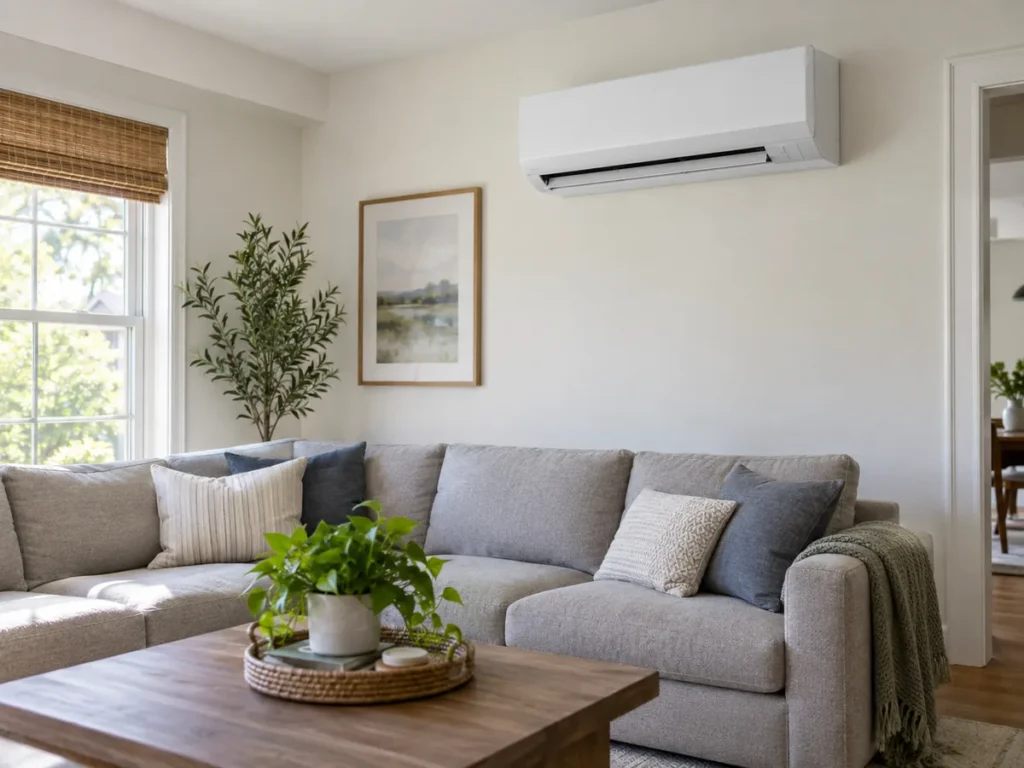
Air conditioner vs. heat pump: A cooling-only air conditioner moves heat out of the room to provide cooling. A reversible air-to-air heat pump can also reverse the cycle to provide heating in winter. That extra function does not automatically make it the lowest-cost or best-fitting choice for every home. For a more detailed comparison of air conditioners and heat pumps, see our air conditioner vs heat pump guide.
There are two main ways these systems deliver heat. An air-to-air heat pump warms or cools room air. A ducted system uses an indoor air handler (the unit that moves air into the ducts); a ductless mini-split has indoor units that serve selected rooms. This is the main type covered in this article when we say “air conditioner heat pump.” An air-to-water heat pump warms water for radiators or underfloor heating. Some complete systems can also provide cooling or household hot water, but those functions must be confirmed for the exact design. An air-to-water system has different equipment and design requirements from an air-to-air system. The required radiator water temperatures and heating capacity checks are explained in the radiator FAQ below.
Moving heat can reduce electricity use for heating compared with electric resistance equipment under suitable conditions. However, it does not guarantee lower annual energy bills than other heating methods. Actual costs depend on weather, electricity and fuel prices, system performance, and any backup heating.
Heating or cooling indoor air is not the same as bringing fresh air into your home. A standard ductless mini-split usually recirculates room air; it does not replace the outdoor-air ventilation your home needs. Check your ventilation arrangement separately, especially in a tightly sealed home. Filters can help with particles, but they do not by themselves supply outdoor air.
System functions and ratings are model-specific. Not every air-source heat pump provides cooling or domestic hot water, and a product-family brochure does not show that every model supports every function. Heating and efficiency figures also depend on the stated operating conditions and, for split systems, the matched indoor and outdoor equipment. Results for one combination cannot automatically be applied to another.
Advantages of Air-Source Heat Pumps
One system can provide both heating and cooling
A reversible air-to-air heat pump can cool your home like an AC and also heat it in winter. In a suitable home, one system can provide both functions. However, this does not mean a single indoor unit can keep every room comfortable or that the outdoor unit will provide enough heat in the coldest weather. Room layout, airflow and available winter heating output still matter.
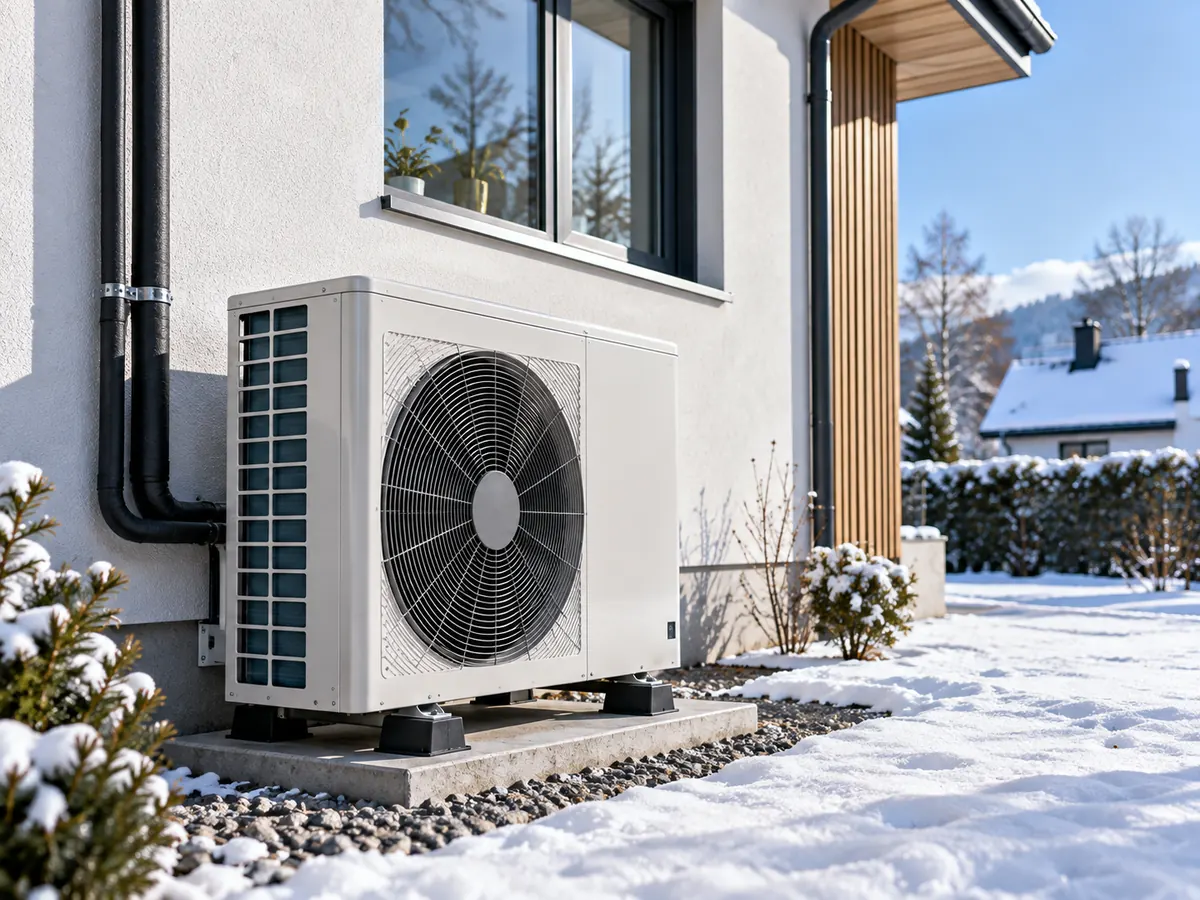
Ductless mini-split indoor units can heat or cool rooms without installing central ducts. They work well when the room layout lets warm or cool air reach the spaces people use. But one wall-mounted unit may not keep bedrooms comfortable when their doors are closed. Check how much heating and cooling each room needs and how the air will reach it. Do not choose a system only by counting the indoor units.
Heat transfer can reduce heating energy use
An air-source heat pump can deliver more useful heat than the electricity it uses because it moves heat from outside. Engineers describe this with the coefficient of performance, or COP: useful heating output divided by electrical input at one set of conditions. By comparison, an electric resistance heater gives roughly one unit of heat at the point of use for each unit of electricity. COP is not a guaranteed savings figure. It changes with outdoor and indoor temperature, compressor operation and defrost, when the unit briefly melts frost from the outdoor coil. Your total winter bill also depends on home heat loss, controls and any auxiliary (backup) heater.
The comparison changes if you now heat your home with gas, oil, district heating or another efficient heat pump. Even an efficient heat pump may cost more to run when local electricity is expensive compared with your existing fuel. Ask for an estimate of heating use across a full winter using local weather and energy prices. Do not turn one laboratory COP figure into a promised yearly saving.
Inverter Heat Pumps Can Keep Room Temperatures Steadier
Some heat pumps use inverter control, which lets the compressor slow down instead of switching fully on and off whenever heating or cooling demand changes. This can help keep rooms at a steadier temperature. Every inverter model still has a lowest steady heating or cooling output, called its minimum output. If just one small room needs conditioning and its demand is lower than that minimum, the system may turn on and off repeatedly. Ask whether the chosen system can run steadily when only your smallest regularly used room or zone needs heating or cooling. The word “inverter” alone does not prove it is the right size.
An Electric Heat Pump Does Not Burn Gas or Oil to Produce Heat
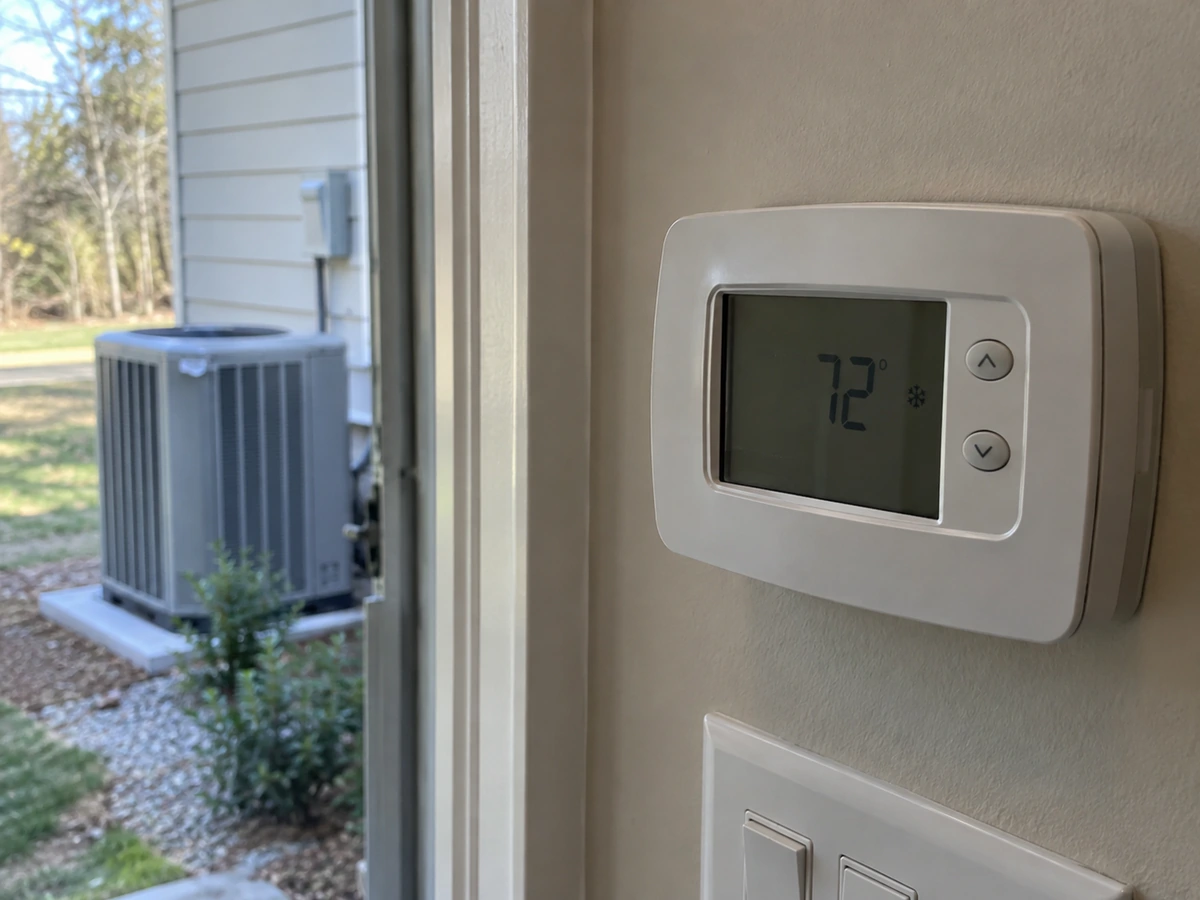
An electric air-source heat pump does not burn gas or oil to heat your rooms. That means the heat pump itself does not produce combustion exhaust at your home. However, producing the electricity it uses may still create emissions. Whether switching reduces your total emissions depends on your local electricity supply and the heating system you replace. Do not assume the same emissions saving for every home.
You May Be Able to Keep Your Existing Furnace
If your existing furnace is suitable, you may be able to keep it and add a heat pump. This is called a dual-fuel system: the heat pump provides heat under some conditions, and the furnace takes over when the controls call for it. It can be an option when you do not want to remove a working furnace. Whether it saves money depends on local electricity and fuel prices, each heater’s efficiency, the heat your home needs, and the control settings. The furnace and heat pump must be designed to work together; an ordinary thermostat setting does not make two systems compatible.
Ask the installer to confirm compatible airflow, equipment and controls, then set the conditions when heating changes from the heat pump to the furnace. There is no single outdoor switch-over temperature that is correct for every home. As outdoor air gets colder, the heat pump’s available heating output and the home’s heating demand can move in opposite directions. At the same time, high electricity prices relative to fuel prices can change which heater costs less for the same useful heat. The control strategy must protect comfort and account for both equipment limits and operating cost, not simply copy a temperature from another installation. Have the changeover tested during installation checks (commissioning) rather than guessing a temperature from a brochure. For a closer look at backup-heat control signals, see the heat pump thermostat wiring guide. The installer must still follow the selected equipment’s approved wiring and control instructions.
Disadvantages of Air-Source Heat Pumps—and When They Matter
Installation Costs Can Be Higher Than You Expect
A heat pump may cost more than a cooling-only AC. An older home may also need electrical upgrades, duct repairs or resizing, more indoor units, refrigerant lines, drainage work or a suitable outdoor base. The electrical supply may be adequate for the existing AC but not for the proposed heat pump and any electric backup heater. The largest electrical demand depends on which heat-pump components and backup heaters the proposed controls allow to run at the same time; some systems stage or interlock these loads. Ask a qualified installer or electrician to check those operating combinations against the exact equipment’s electrical data, your existing service and circuits, and local electrical requirements before treating the installed price as final. If upgrades are needed, include them when comparing the heat pump with keeping your existing heater. Ask for the full installed price, not just the equipment price. It should show the equipment, labor, duct or room-unit work, electrical changes, controls, removal of old equipment, any backup heater and commissioning—the checks made after installation to confirm the system works as intended. If your current heater is reliable, compare the cost of keeping it too. For a separate contractor and distributor budgeting reference, see the heat pump installation cost guide. Its B2B cost examples are not a quotation for an individual home.
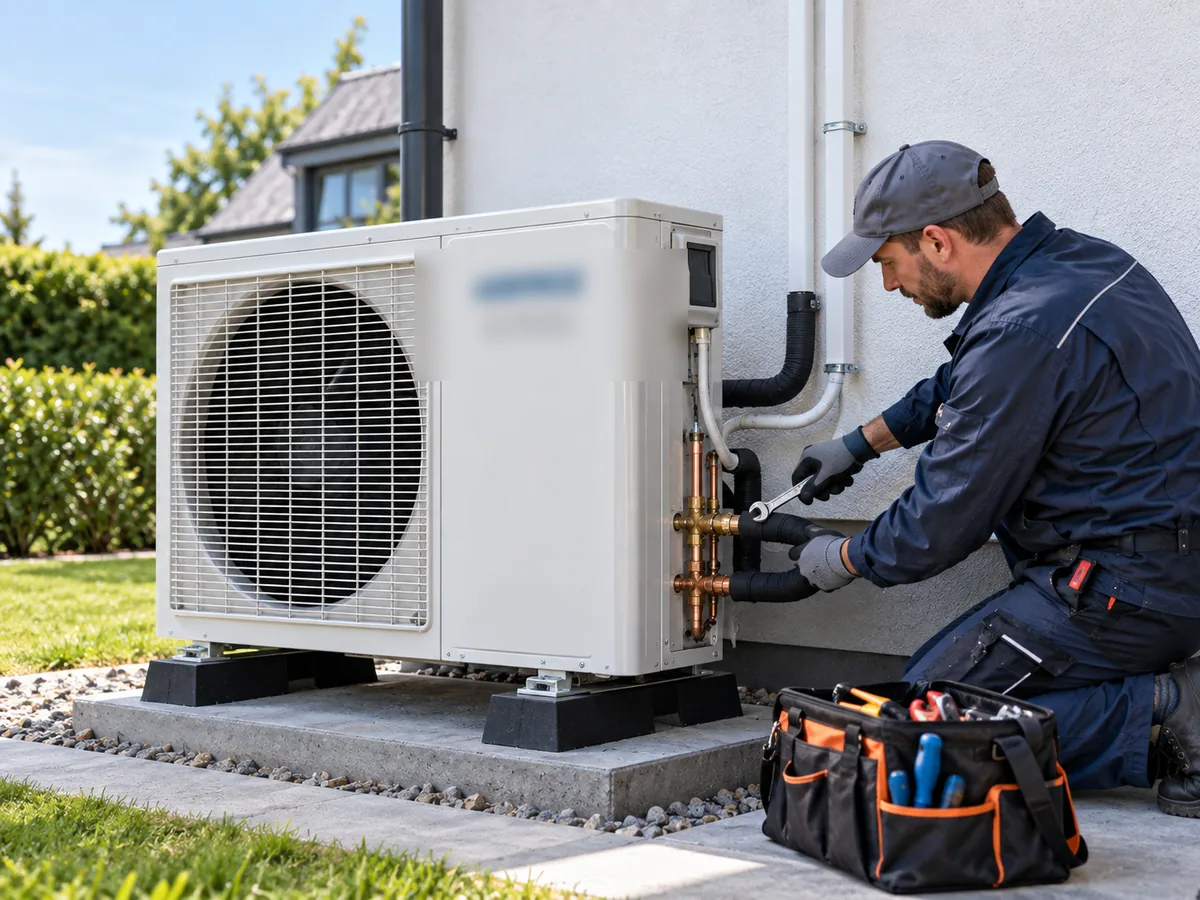
Compare options that keep your home at the same indoor temperatures and provide the same amount of heating and cooling over a year. Estimate electricity, fuel and backup-heating use; add local energy prices and expected maintenance costs. Then compare the difference in upfront installation cost. If the heat pump has a higher upfront price but a lower estimated yearly running cost, simple payback is that extra upfront cost divided by the estimated yearly saving. If the heat pump does not lower yearly running costs, there is no positive energy-bill payback under those assumptions. Weather, tariffs, timing of replacement and future repairs can change the result, so do not rely on a universal payback promise.
A Heat Pump May Need Backup Heating in Very Cold Weather
Yes, air-source heat pumps can heat homes in winter, including in cold climates when you choose a suitable model. But as outdoor air gets colder, your home often needs more heat and the heat pump has to work with a colder heat source. The heat it can deliver and its efficiency (COP) can change.
Can It Deliver Enough Heat at Your Winter Design Temperature?
The key question is not “How cold can this model keep running?” It is “Can it deliver enough heat on the cold day used to size my home’s heating system?” This outdoor temperature is the winter design temperature. Ask for the home’s calculated heating load—the heat it needs at that temperature—and the exact matched indoor/outdoor system’s documented heating output at the same outdoor temperature, using the stated indoor test conditions. Request the capacity data for the actual outdoor and indoor unit combination, including the indoor temperature or airflow assumptions. Check whether the published capacity includes defrost effects and whether auxiliary heat is included or excluded, so you do not count backup heat as heat-pump-only output.
First sizing check: the calculated home heating load at the winter design temperature should be no greater than the matched heat pump’s available heating output at the same design condition if the heat pump alone is expected to cover that load. Also verify defrost effects, any excluded auxiliary heat, airflow and room-by-room heat delivery. This comparison is a screening step, not proof of a complete system design.
Three numbers answer different questions. Rated heating capacity is measured under the conditions stated in product data. Heating output at your winter design temperature shows what the matched system is expected to supply at the outdoor condition used to size the home. Useful heat reaching the rooms also depends on the installed ducts or heat-delivery system and its controls. A large rated number cannot make up for poor air delivery. Compare the calculated home load with the matched system’s capacity at relevant conditions, then check how the installed system will deliver that heat.
How Can Frost and Defrost Affect Heating?
Frost can build up when the outdoor coil is cold enough and the surrounding air contains moisture. A damp day near freezing can create considerable frost, even if it is not the coldest day of winter. During defrost, the system temporarily changes operation to clear the coil, which can briefly reduce heat delivered indoors. The effect depends on the model and conditions; do not assume every winter day has the same defrost demand. When comparing cold-climate models, ask how heating performance is stated for the relevant outdoor conditions, whether defrost is included in the reported result, and how comfort is maintained when extra heat is needed.
A heating-capacity figure measured at one stated condition does not, by itself, show how room comfort will be maintained through repeated defrost periods in damp weather. Ask the installer how the proposed controls and any separately identified backup heat will cover temporary heat shortfalls, using the selected equipment’s available test information and the home’s heating load.
When Is Backup Heat Needed?
If the home needs more heat than the pump can provide, the plan must cover the gap with suitable backup heat, another heat source, better insulation or a different model. Never disable required backup heating just to make the electricity bill look smaller. A low minimum operating temperature does not prove the whole house will stay warm.
For example, the same heat pump could need backup heating in a poorly insulated home that loses a lot of heat. In a better-insulated home with a lower heating load, it might cover the cold-day demand on its own. If the poorly insulated home also needs frequent electric-resistance backup during cold spells, its winter electricity bill can rise. This does not mean backup heat is unnecessary or should be disabled. Compare the expected operation and energy use of each heat source in the local climate before relying on a savings estimate; floor area or an advertised operating limit cannot replace the heating-load calculation.
What Happens During a Power Outage?
A heat pump and most electric backup heaters need power to run. A gas or oil furnace may also need electricity for its fan, controls and ignition, so keeping a furnace does not automatically give you heat during a blackout. If outages are common where you live, ask your installer how the whole heating system would operate without grid power. Check which circuits, fans, pumps and controls must run before choosing any generator or battery arrangement.
Outdoor-Unit Noise Depends on Where You Install It
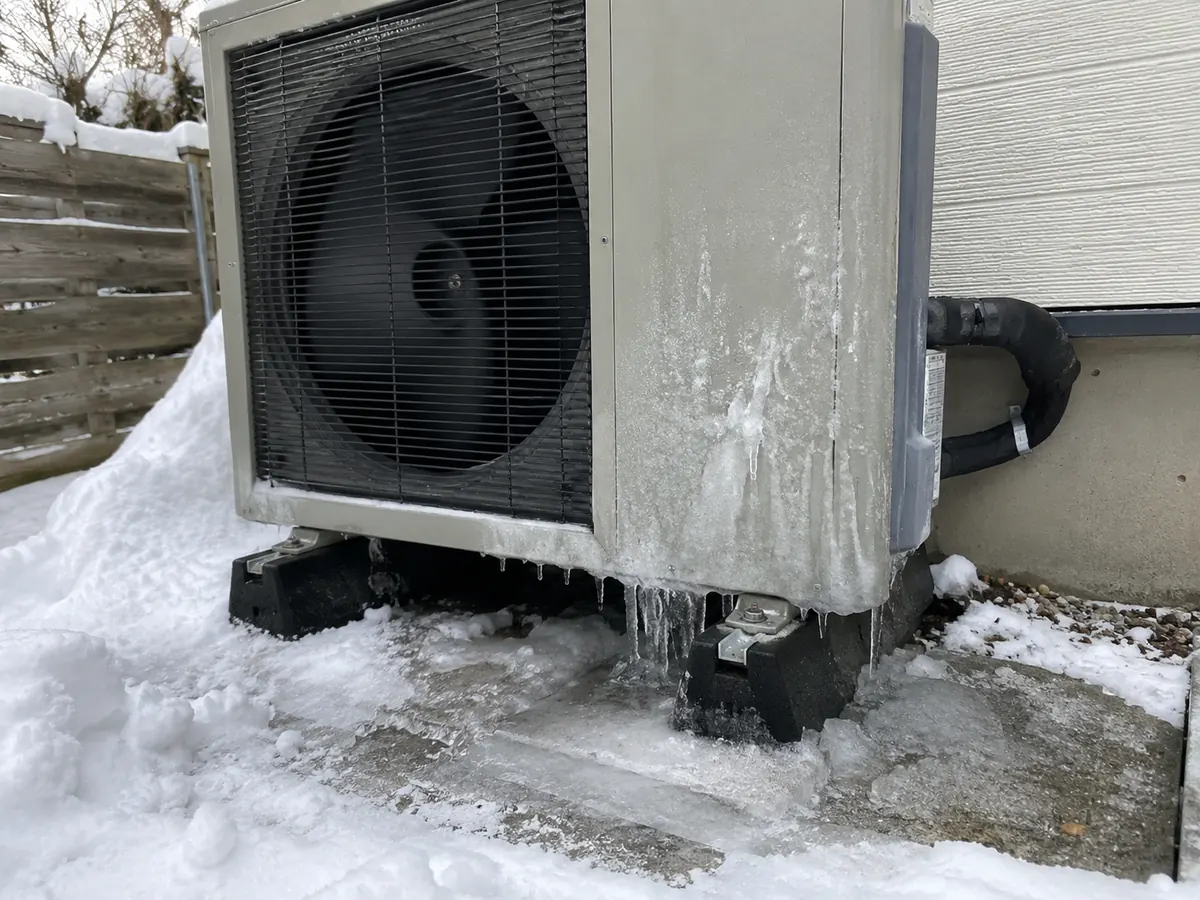
You may hear the outdoor fan, compressor or changes in operation during defrost. A published noise rating is measured under particular test conditions. What you hear at a bedroom window or a neighbor’s property can be different because of distance, walls that reflect sound, mounting vibration and fan speed. A unit that seems quiet in a showroom may still be disruptive outside a bedroom or in a narrow space between walls.
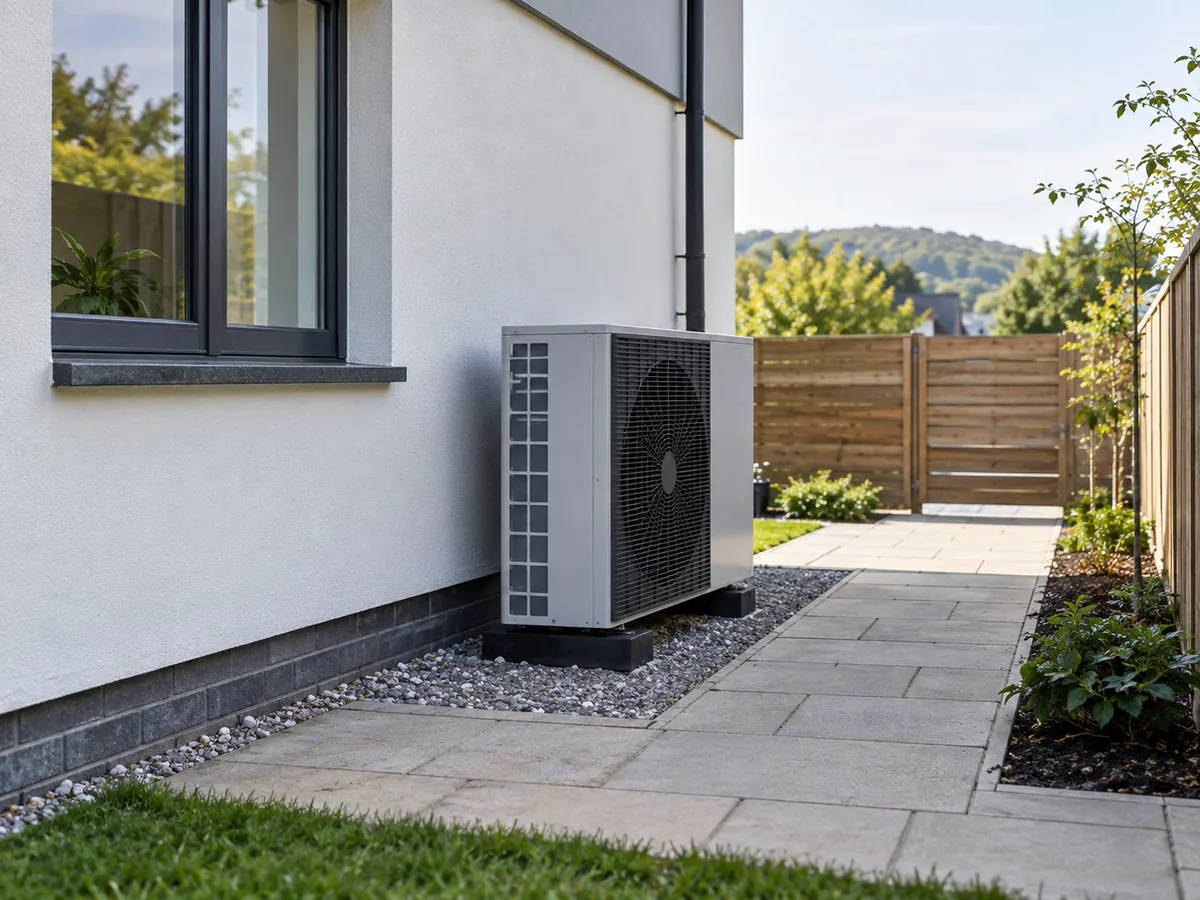
Ask for the exact model’s published sound information. Check whether the figure is sound power, which describes the sound energy emitted by the unit, or sound pressure, which describes the sound measured at a stated location. These figures are not interchangeable.
Ask for the test distance and operating condition, including available night-mode information if noise rules apply after dark. On some models, a quieter operating mode can also limit fan or compressor operation. If the unit must heat bedrooms on a cold night, ask whether the selected noise setting changes its available heating output, and confirm that the night-time heating load can still be met. Before buying, have an installer assess sound at the relevant bedroom or property boundary against local daytime and nighttime limits, using the exact model’s declared data and proposed location. Also check the manufacturer’s airflow and service clearances. Leave room for snow, condensate and meltwater from defrost to drain safely, and check whether vibration isolation is needed. Do not box in the outdoor unit just to block noise, because restricting airflow can reduce performance. A model that supplies enough heat may still be unsuitable if it cannot meet the site’s sound or placement limits.
Poor Ducts and Controls Can Leave Rooms Uncomfortable
If you replace a furnace with a ducted heat pump, the existing ducts may not carry the airflow the new system requires. Ducts that are too narrow, leaky or poorly insulated can leave rooms too warm or cold, make extra noise or waste energy. Even when the outdoor unit has enough rated heating or cooling capacity, restrictive ducts can reduce the airflow that actually reaches the rooms. For a ducted design, the installer should check the indoor fan’s required airflow against duct and filter resistance (often assessed through external static pressure), then verify airflow during commissioning. Choosing a larger outdoor unit alone will not repair restrictive ducts. Ductless systems have a different challenge: when only a few rooms need heating or cooling, the shared outdoor unit must be able to reduce its output enough for those rooms. Do not close ordinary supply vents to create your own zones. Zoning must follow the equipment and airflow design.
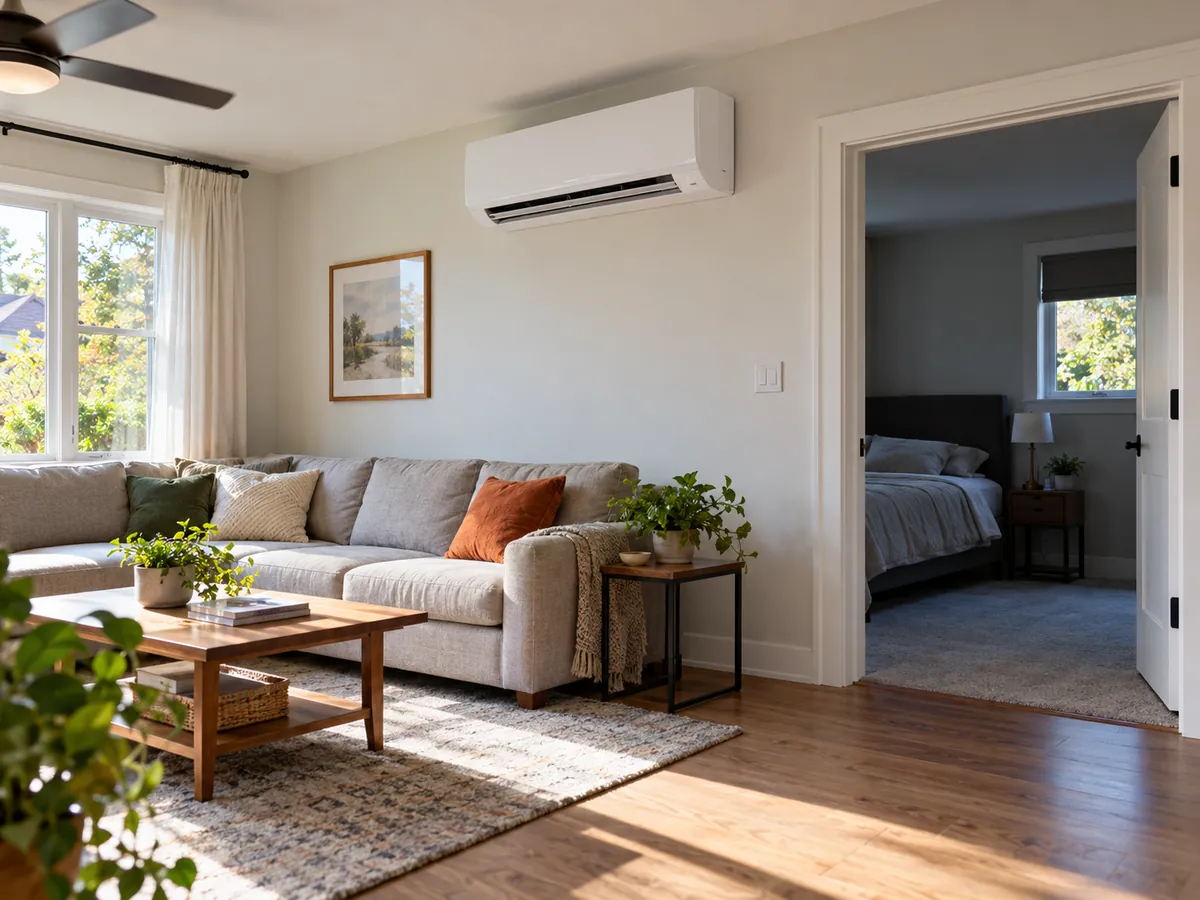
In hot, humid weather, cooling is not only about room temperature. A heat pump also needs suitable airflow and operating time to remove moisture from indoor air. If its lowest cooling output remains too high for the rooms in use, it may reach the temperature setting and stop before removing enough moisture. An inverter label does not remove this risk. Ask for a cooling-load assessment that includes moisture removal, check the exact system’s minimum cooling output and supported dehumidification controls, and compare indoor temperature and humidity during operation. Humidity can also come from outdoor air leaks or ventilation, so moisture alone does not prove the unit is oversized.
Before you order, check how much heating and cooling each room needs. For ducted systems, have the required airflow and duct condition checked; for ductless systems, confirm where each indoor unit will go. Make sure the thermostat and room controls are approved for the selected equipment. Check when they turn on auxiliary (backup) heat and what happens when you raise the thermostat after setting it lower for several hours. This return to the normal temperature is called recovery. The wrong controls or a large recovery demand can bring on costly electric resistance heat. If warm air cannot reach the rooms that need it, fixing distribution may matter more than choosing a larger outdoor unit.
Maintenance remains necessary
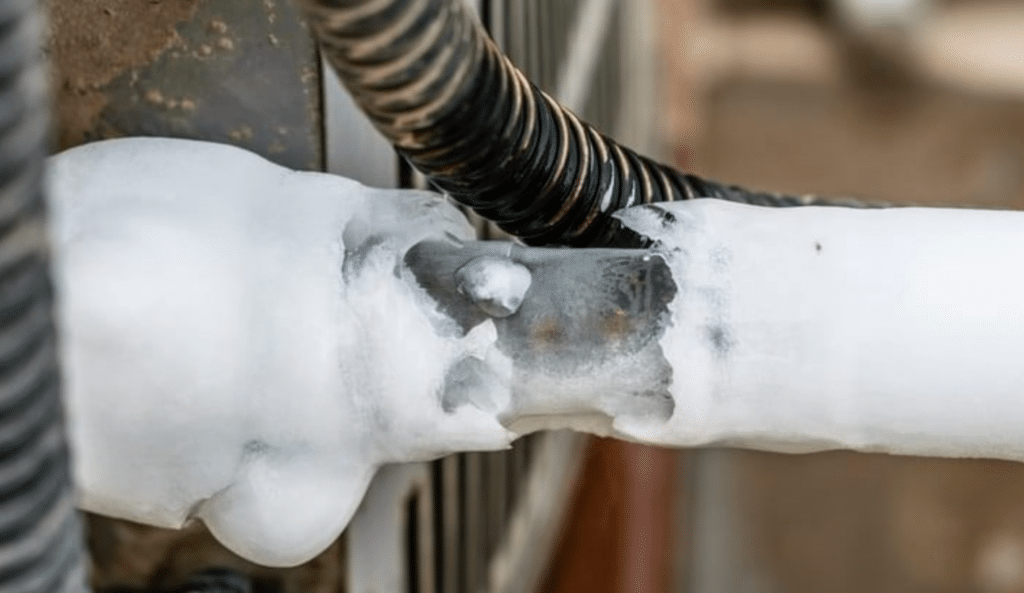
Follow the product manual for filter care, outdoor airflow clearance and draining away water. Some frost on the outdoor coil can be normal in winter because the unit periodically defrosts. But heavy ice that does not clear, repeated loss of heating, unusual noise, error codes or water collecting in the wrong place deserve attention. If a problem repeats, note the weather, when it happens and any displayed error code to share with a qualified service technician.
Keep the equipment accessible for safe service. Homeowners can handle approved filter care and clear accessible airflow paths as the manual allows; refrigerant, electrical, controls and service-only coil checks belong with qualified personnel. Before ordering, ask for the model’s maintenance schedule and confirm who can provide future service and replacement parts, who pays for them, and what the written warranty does or does not cover. Do not open the refrigerant system or electrical panels yourself.
When Might a Heat Pump Be Less Suitable?
- You need cooling only and have a reliable heater: a reversible system’s extra heating function may bring little immediate value. Compare cooling-only AC and heat-pump options while keeping the existing heater in the cost assumptions.
- Outdoor space, noise limits or electrical capacity are restrictive: the preferred unit may require costly changes or may not fit safely. Verify the exact installation clearances, noise data and electrical demand with a site assessment.
- Cold-day heating output falls below the home’s heating load: rooms may not stay warm without additional measures. Check the load, available capacity and heat delivery at matching conditions, then assess suitable backup, insulation improvements or another system configuration.
- Radiators require high heating-water temperatures: an air-to-water unit’s efficiency and output may fall at those conditions. Check both the required water temperature and model performance at the design outdoor temperature.
These are reasons to investigate, not automatic reasons to reject a heat pump. A different configuration or an improved building may change the conclusion.
Are Air-Source Heat Pumps Worth It for Your Home?
If your heater and AC both need replacement, compare a reversible air-to-air heat pump with the full cost of replacing both systems, and confirm that winter heating needs and any backup heat are covered. If your furnace still works well, compare the added cost and expected running bills of a heat pump with replacing the AC alone while keeping the furnace.
| Your situation | What it means | What to check |
|---|---|---|
| Your heater and AC both need replacement | Compare one reversible heat pump with a new heater plus a new AC. One system may cover both functions, but cold-weather output and necessary installation changes still matter. | Room heating and cooling loads, output at the winter design temperature, complete installed prices and annual energy estimates. |
| Your AC needs replacement but your furnace still works well | Compare a cooling-only AC, a heat pump while keeping the furnace, and a compatible dual-fuel design. Count only the added value of heat-pump heating, not a furnace replacement you did not need. | Extra installation costs, furnace and control compatibility, and local electricity and fuel prices. |
| Your winters are cold or your house loses a lot of heat | A cold-climate model, insulation work or backup heating may be needed because the home can require more heat than the pump supplies on a cold design day. | Room-by-room heating load, exact-model output at the matching outdoor temperature and an explicit backup-heating plan. |
| You have ductless rooms, radiators or little outdoor space | Air delivery and site access come first: several room units may be necessary, radiators need a water-side study and placement limits may exclude some units. | Room loads, radiator water temperature where relevant, outdoor clearances, sound limits and service access. |
If you already have a modern heat pump that works well, compare a replacement with its actual age, condition and running cost—not with electric resistance heating. If you have a boiler and radiators, remember that a standard ductless air-to-air heat pump cannot heat water for those radiators. Check an air-to-water design separately, including the water temperature your radiators need, how much heat they can release at that temperature, and how you will heat domestic hot water.
Pause before ordering: If the heat pump’s output at your winter design temperature is unknown, if nobody has checked how heat will reach your rooms, or if the electrical supply and outdoor location are unconfirmed, do not settle on a final model or installed price yet. These gaps do not mean a heat pump is unsuitable; they mean the choice still needs evidence.
How to Compare Yearly Heating Costs
Numbers to Gather Before You Compare Energy Bills
- Annual useful heating demand: estimate the heat that must reach the home over a heating season, using the same comfort assumptions for all options.
- Heat-pump performance: obtain a climate-appropriate seasonal COP or an equivalent modeled seasonal electricity-use estimate, including defrost consistently. If backup heating supplies some of the load, identify that part separately.
- Local energy prices: collect electricity price per kWh and the actual billed fuel price per therm, cubic metre or other unit. Convert fuel energy into matching units before comparing.
- Existing heater efficiency and other costs: use a suitable seasonal fuel efficiency estimate and account for differences in duct/distribution losses, backup energy, cooling, maintenance and only the fixed charges that change.
Heat-pump heating electricity (kWh) ≈ useful heat supplied by the heat pump (kWh) ÷ estimated seasonal COP. Multiply by the applicable electricity price and add separately calculated backup-heating cost, if not already included.
Fuel-heater energy input (kWh equivalent) ≈ useful heat supplied by that heater (kWh) ÷ seasonal fuel efficiency. Convert the result to the fuel billing unit and multiply by its price. For dual-fuel systems, divide the useful heating demand between the two heat sources rather than counting it twice.
Boundary: these formulas are for comparing assumptions, not predicting a specific Airproz model’s savings. Use seasonal data with compatible system boundaries; a US HSPF2 value in Btu/Wh is not a unitless COP, and defrost or backup energy already included in an estimate must not be added again.
Start with how much useful heat your rooms need over a full year. For a heat pump, estimate electricity use with a whole-season COP: the useful heat delivered divided by the electricity used over the season, with both amounts expressed in compatible energy units (such as kWh). Use a seasonal COP estimate suited to the local weather and system, not the COP from one test point. A US HSPF2 rating is measured in Btu per watt-hour, so do not divide kWh of heat by the HSPF2 number as though it were a unitless COP. Convert units correctly or use a suitable whole-season energy estimate.
For a furnace, estimate fuel input from the useful heat required and the furnace’s seasonal fuel efficiency, then convert that input to the units on your fuel bill (such as therms, where applicable). Apply the price for each fuel’s billing unit. Include any duct or distribution losses and electric backup heat not already covered by the estimates; account for defrost without counting it twice if the seasonal estimate already includes it. Compare summer cooling separately using matching cooling ratings or a weather-based estimate. Keep the same indoor comfort assumptions for every option. These are estimates, not guaranteed bills. For homes with water-based gas heating, our heat pump vs gas boiler comparison explores that different system arrangement; check all cost claims against local conditions.
How to interpret the comparison: If the calculated cost per unit of useful heat is lower for the heat pump under your assumptions, that supports a lower estimated running cost for the heating demand actually served by the heat pump. If the comparison reverses, your current fuel heater may be cheaper to run at those conditions. Neither result alone proves which completed installation costs less over its life. For a dual-fuel system, the cost advantage can change with outdoor conditions and utility tariffs, but the controls must still satisfy heating demand and equipment limits. Include cooling, maintenance and fixed charges that actually change before drawing a full-year conclusion.
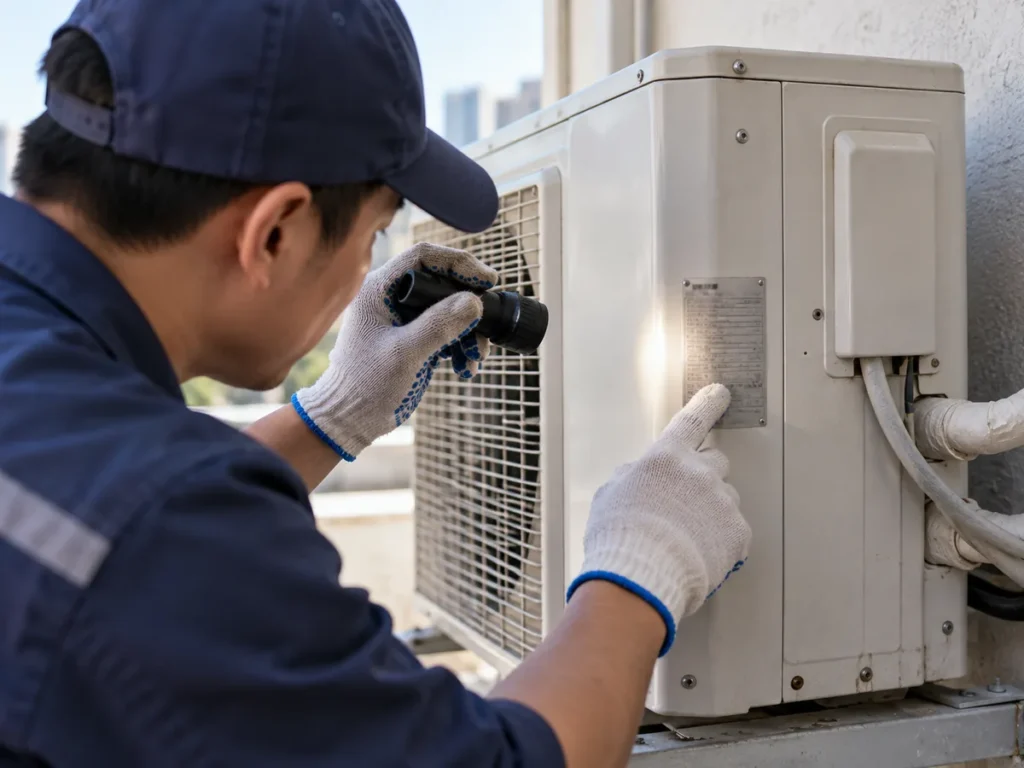
If these options are practical for your home, compare all three: keep your heater and replace the AC, replace both with a heat pump, or use a properly designed dual-fuel system. If both the heater and AC are due for replacement and the heat pump can meet the home’s heating needs, replacing them together may compare well with buying two new systems. But if the furnace still works, electricity is costly compared with its fuel, and the project needs major duct or electrical changes, the added heat-pump cost may be harder to recover through lower bills. Compare the extra cost of the work you would actually do, not the price of replacing equipment you planned to keep. Include equipment and installation costs, check rebate eligibility under local rules, and test how the result changes with energy prices and expected backup-heat use rather than assuming a fixed payback. Comfort or lower on-site emissions may still justify a heat pump even when the financial payback is weak; make that reason clear in your decision.
How to Verify Heat Pump Specifications and Installation Requirements
- Check the system type and matched equipment. Is it air-to-air or air-to-water, ducted or ductless? Does the exact model provide heating, cooling or both? Confirm the indoor and outdoor units that come together.
- Get a room-by-room heating and cooling load. Give the installer your location, the winter and summer temperatures used for sizing, the condition of your insulation and air sealing, and your existing heater. Ask for a room-by-room load calculation. In the United States, ACCA Manual J residential load calculation is an established method for determining residential design heating and cooling loads; use the appropriate local method elsewhere.
- Check the heating output on your cold design day. Compare the home’s calculated heat loss with the exact matched system’s output at your winter design temperature. Check cooling output at the summer design condition and minimum output when only a few rooms need conditioning. Ask for the indoor/outdoor combination’s capacity table and its stated test conditions. Check whether defrost and auxiliary heat are included in each figure. If the unit cannot cover the winter load alone, confirm how much extra heat is needed and when backup heat starts.
- Compare ratings measured on the same basis. In the United States, Seasonal Energy Efficiency Ratio 2 (SEER2) rates seasonal cooling efficiency, while Heating Seasonal Performance Factor 2 (HSPF2) rates seasonal heating efficiency. Coefficient of performance (COP) describes heat output divided by electrical input at one operating condition. Other markets use their own test methods. For U.S. rating criteria, see the existing ENERGY STAR heat-pump product criteria in the Sources Used in This Guide table below. Check that the ratings apply to the exact indoor/outdoor equipment combination being quoted. Where a U.S. split-system combination is AHRI certified, ask for its AHRI Certified Reference Number to verify that specific matched pair. None of these ratings alone proves cold-day capacity or predicts your yearly bill.
- Check the site, electrical supply and how heat reaches each room. For ducted equipment, check supply and return airflow and leaky ducts. For ductless equipment, check which rooms each indoor unit can serve. Use the exact installation manual to check outdoor clearances, sound near neighbors, service access, condensate drainage and a safe route for winter defrost water. Have the installer confirm the model’s supply voltage, phase, maximum electrical demand and required circuit protection, as well as any local permits. For a split system, check the permitted refrigerant-line length and height difference before ordering; for an air-to-water design, review its separate water-side and freeze-protection requirements.
- Check compatible controls and commissioning. Ask whether the thermostat, room controls and backup or dual-fuel heating will work together, including who sets any heat-source switchover point. Ask which commissioning results will be recorded and what design or manufacturer limits they will be checked against. For a ducted system, this may include measured airflow and external static pressure; also check thermostat operation, backup-heat changeover and safe drainage where applicable. Water-based systems require their own relevant flow, temperature and freeze-protection checks. Have out-of-range results corrected and rechecked before sign-off; one temperature reading alone cannot prove the system’s rated heating capacity.
- Compare the complete price and after-installation terms. Request an itemized price with equipment and installation inclusions and exclusions, an exact-model data sheet, the applicable installation and control manuals, and matched-system rating or test evidence when relevant. Ask for written warranty terms, service and spare-parts responsibilities and a reasonable yearly energy-use estimate based on local weather and energy prices. Confirm responsibilities and costs before paying a deposit. Use the same indoor comfort targets and the same included work when comparing offers.
Compare quotes for the same job. For air-to-air systems, check any ductwork or refrigerant-pipe changes; for air-to-water designs, check whether radiator, water-system or hot-water work is needed. For either type, identify electrical upgrades, backup heating, drainage, controls, permits, commissioning and old-equipment removal as included, excluded or not yet priced. A cheaper equipment quote with missing work may not be the cheaper finished system.
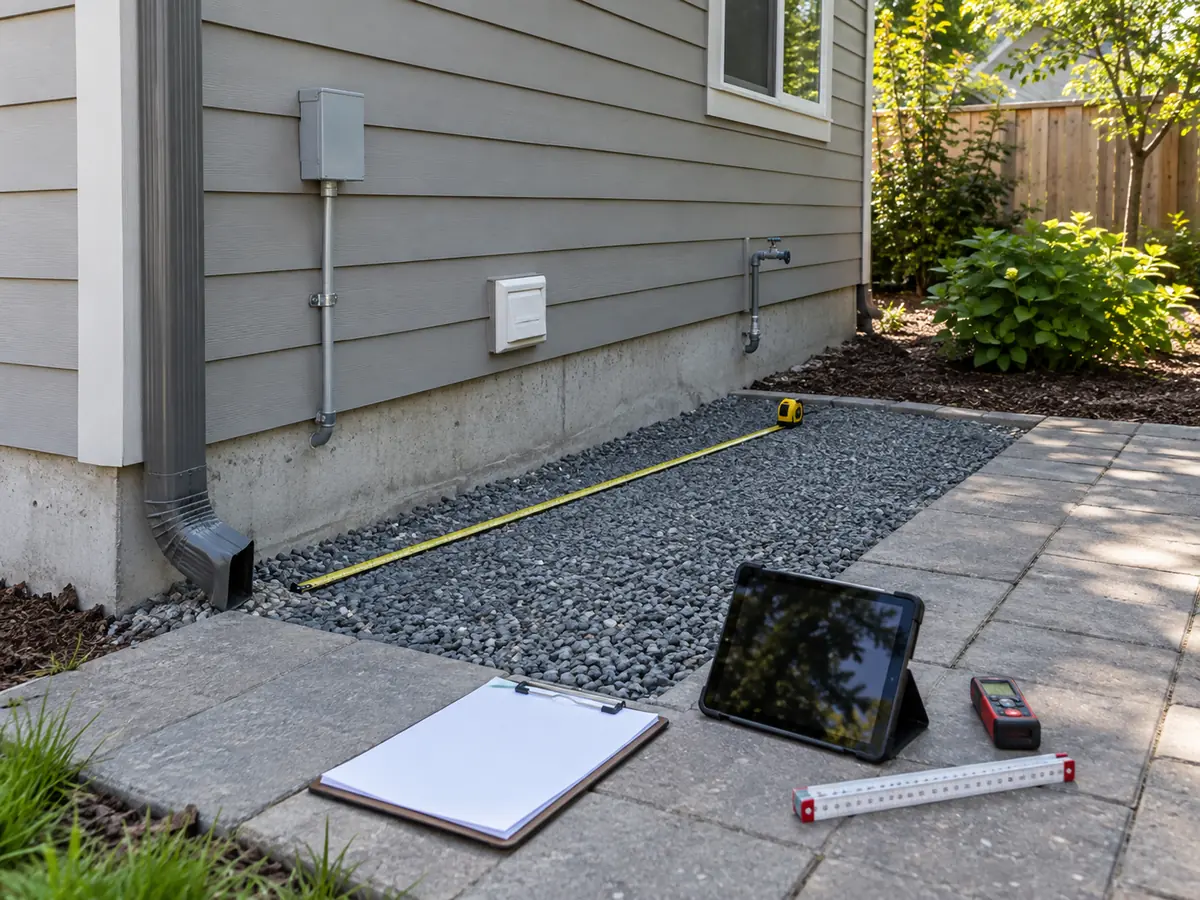
Before you commit to a model or pay an equipment deposit: Check the room-by-room loads, cold-day output and any backup plan, the exact indoor/outdoor combination, electrical and installation fit, applicable local compliance documents and written quotation, warranty and service terms. If you do not have a room-by-room load calculation, start with a local HVAC load assessment. If a quote gives only nominal heating capacity, request the exact matched system’s output at the outdoor and indoor conditions used for your design. If electrical service, ducts, drainage or noise limits are uncertain, check the site before treating a model or installation price as final. Do not finalize a model or deposit while required evidence remains missing.
Seven Ways to Reduce Heat Pump Running Costs Without Creating New Problems
Before Installation: Check the Design
| What you can do | Why it may help | What to check first |
|---|---|---|
| Choose inverter output that fits your home | The unit can slow down when less heating or cooling is needed | Even inverter models have a lowest output; compare it with your lighter room loads |
| Compare heating and cooling ratings separately | Good summer efficiency does not automatically mean low winter bills | Use the same test method and exact equipment pair; compare SEER2 and HSPF2 where applicable |
| Size the system for the home’s calculated load | Helps avoid too little heating and frequent on/off cycling from a poor size match | Floor area alone is not enough; check both winter and summer needs |
After Installation: Use the System Correctly
| What you can do | Why it may help | What to check first |
|---|---|---|
| Use approved room controls | Can avoid heating or cooling unused rooms when the system supports separate zones | Confirm allowed airflow and minimum output; do not just shut duct vents |
| Keep filters and outdoor airflow clear | Helps air and heat move through the system as designed | Follow the manual; cleaning an already clean system has no guaranteed extra saving |
| Check cheaper and more expensive electricity hours | Shifting some use may reduce costs under certain plans | Include the energy needed to restore comfort later and any backup heat |
| Avoid thermostat changes that trigger expensive backup heat | Large temperature setbacks may call for extra electric-resistance heating when the house warms up again | Check controller settings and backup-heat behavior before changing schedules or thermostats |
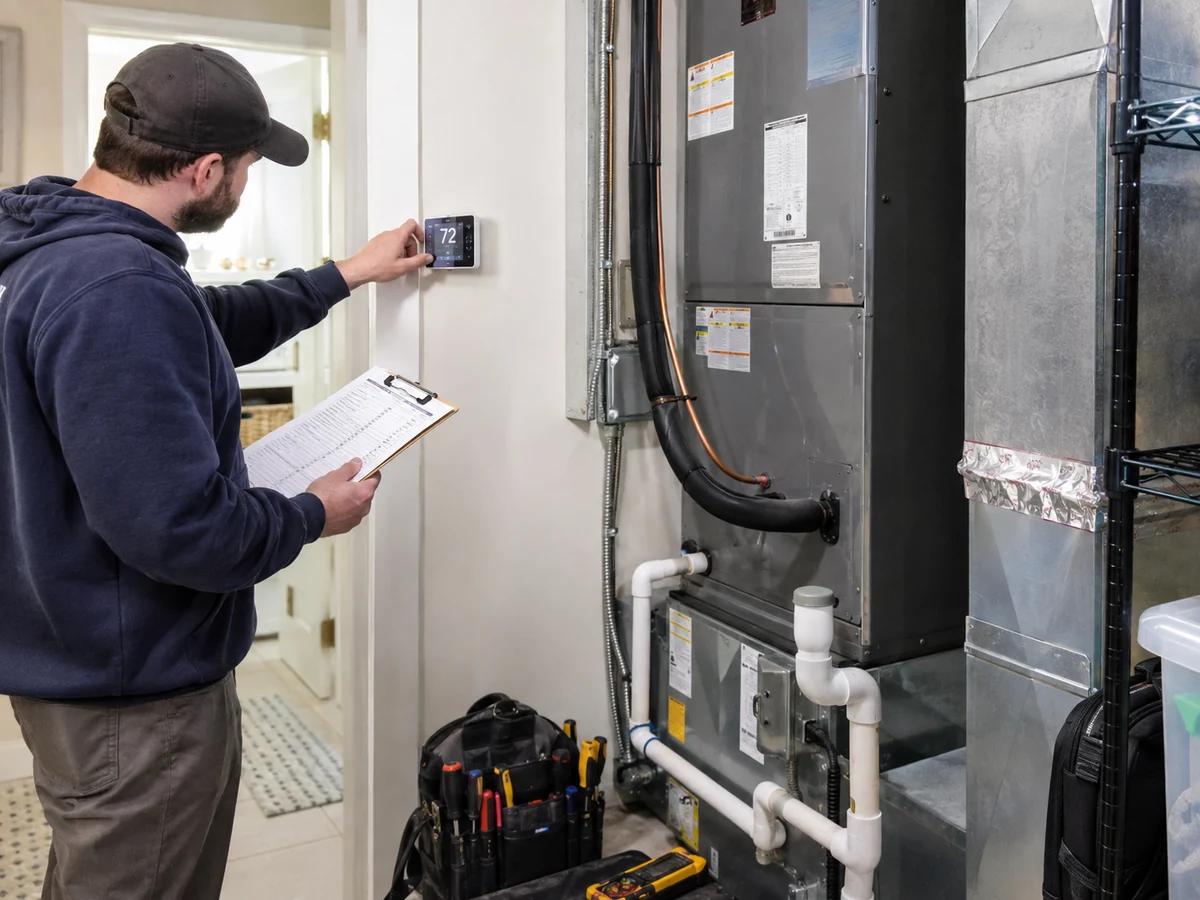
A heat pump can run for a long time at a low setting without anything being wrong. If it is gradually adjusting its output and the room stays comfortable, that can be normal. But if it repeatedly starts and stops after short periods (short cycling), cannot keep rooms warm, builds up unusual ice or uses backup heat unexpectedly, ask for a full system check. Running time alone is not enough to diagnose a fault.
Frequently Asked Questions
Is a Heat Pump the Same as an Air Conditioner?
Not exactly. A cooling-only air conditioner removes heat from a room to cool it. A reversible air-to-air heat pump can do the same cooling job and reverse its refrigeration cycle to heat the room. The two can have similar cooling performance under comparable conditions, but their heating functions and installation requirements differ. An air-to-water heat pump is another type that transfers heat to a water system rather than directly to room air.
What are the main pros and cons of air-source heat pumps?
The biggest benefit is that a reversible air-source heat pump can heat and cool your home. It can also use less electricity for heating than electric resistance equipment under suitable conditions. The main drawbacks are higher installation costs, possible need for backup heat in very cold weather, outdoor noise, and the need for correct sizing and controls. Whether it is worth the money depends on your current heater and local energy prices.
Do air-source heat pumps work in winter?
Yes. A suitable air-source heat pump can heat a home in winter. But the fact that a model can run below freezing does not mean it can keep your whole house warm. Compare the heat your home needs on a very cold design day with the exact model’s heating output at that same outdoor temperature. If the model cannot supply enough heat, plan suitable backup heating or choose a different system. Also ask how defrost during damp winter weather and any backup heating affect comfort and energy use; an operating-temperature limit alone cannot answer these questions.
Are air-source heat pumps noisy?
They make sound from the outdoor fan, compressor and some operating changes. Whether you will notice it depends on the exact model and where it is placed—especially near bedrooms or neighboring homes. Ask for its published noise data and test conditions, then check the proposed location against local noise rules before ordering.
Is an air-source heat pump cheaper to run than an air conditioner and furnace?
Not always. For cooling, an AC and a heat pump with similar cooling efficiency can have similar electricity use under the same conditions. For heating, compare the cost of useful heat using local electricity and fuel prices, the furnace’s seasonal efficiency, the heat pump’s estimated seasonal performance and any backup heat. Compare total annual heating and cooling bills as well as the extra installation cost. A smaller gas bill alone does not prove lower total energy costs.
How do SEER2, HSPF2 and COP differ?
SEER2 tells you how efficiently a system cools over a defined test season in the United States. HSPF2 is the corresponding US seasonal heating-efficiency measure. COP compares useful heat with electricity used at one stated operating condition, not over the whole season. Compare ratings from the same test method for the exact equipment combination. You still need cold-weather heating output and a local energy-use estimate to judge your home.
Can I use a heat pump with my existing radiators?
A normal air-to-air mini-split heats and cools room air. It does not send hot water through your radiators. An air-to-water heat pump may work with a suitable radiator or underfloor heating system, but it needs a separate design. First find out the supply-water temperature your radiators need on a cold design day. When the outdoor air is colder while the radiators require hotter water, the heat pump must move heat across a larger temperature difference. This can reduce efficiency and affect available heating output. A unit’s maximum water-temperature rating does not prove it can meet the room heating load efficiently at that temperature. Compare each room’s radiator heat output with the exact heat pump’s heating capacity and efficiency at both the relevant outdoor temperature and required heating-water temperature. Confirm that existing radiators, pumps and pipes can deliver sufficient heat to each room. Some systems adjust water temperature as the weather changes; this is called weather compensation. Check domestic hot-water needs separately, since the complete system may need additional components or settings. For a separate underfloor-heating comparison, see our air-to-water heat pump vs boiler for radiant floor heating guide. That comparison does not replace the radiator checks above.
What documents should I request before buying a heat pump?
Ask for the exact model’s data sheet, the ratings for the indoor/outdoor combination you would receive, and the installation and control instructions. Also check the written warranty and who will handle future service or parts. For your location, request any applicable product approvals or registrations. These documents help you check the quoted system; they do not replace a room-by-room heating and cooling load calculation.
Sources Used in This Guide
We use the following technical sources to explain general heat pump ratings, sizing and controls. They help you understand what to check, but they do not prove how a specific Airproz model will perform in your home or that it holds any certification. Before ordering for your destination market, find out which product safety approvals, efficiency registrations and installer permits are required, then ask for the relevant documents for the exact model and configuration. General guidance or a product-family claim is not a substitute for model-specific evidence.
| Source | What it explains | What it cannot confirm for your home |
|---|---|---|
| ENERGY STAR guidance on air-source heat pumps | How air-source heat pumps work, common configurations, sizing and dual-fuel choices | It is general US guidance, not a test result for an Airproz model |
| ENERGY STAR heat-pump product criteria | US SEER2/HSPF2 and COP rating information and the need to compare the correct indoor/outdoor equipment | A rating alone cannot predict your household’s annual energy costs |
| ENERGY STAR smart thermostat guidance | Why your thermostat must be compatible with the heat pump and its controls | It cannot confirm that any particular thermostat and heat pump will work together |
| U.S. Department of Energy guidance for efficient residential heat-pump purchasing | How energy efficiency and product selection are treated in US purchasing guidance | Purchasing guidance, including federal context, does not replace a load calculation or local home design |
Need Help Matching a Heat Pump to Your Project?
If this guide has helped you narrow the options, Airproz can review the application information and identify product details that still need verification. The most useful starting details depend on whether you are comparing equipment for your home or preparing a project specification.
Homeowners: share your location, whether you need heating, cooling or both, your current heater or AC and what you plan to keep, plus your preferred ducted, ductless or water-based arrangement. Include any known room-by-room loads, winter/summer design temperatures, outdoor-space or noise restrictions and electrical supply details. If these are unknown, a local installer can assess them before final equipment selection.
Installers and distributors: include the destination market, building or project application, calculated room-by-room loads, design outdoor conditions, proposed indoor/outdoor configuration, available electrical supply, control and backup-heating needs, and the exact ratings or model documents you need to check. For radiators or underfloor heating, provide the required supply-water temperature and domestic hot-water requirements if applicable; have the existing system assessed if the temperature is unknown. For trade inquiries, an approximate project quantity can also help clarify the request. Commercial terms, lead times and branding requests require separate confirmation.
Final equipment sizing, installation and local compliance must be verified against the actual project design and applicable requirements. An initial product discussion does not replace those checks.
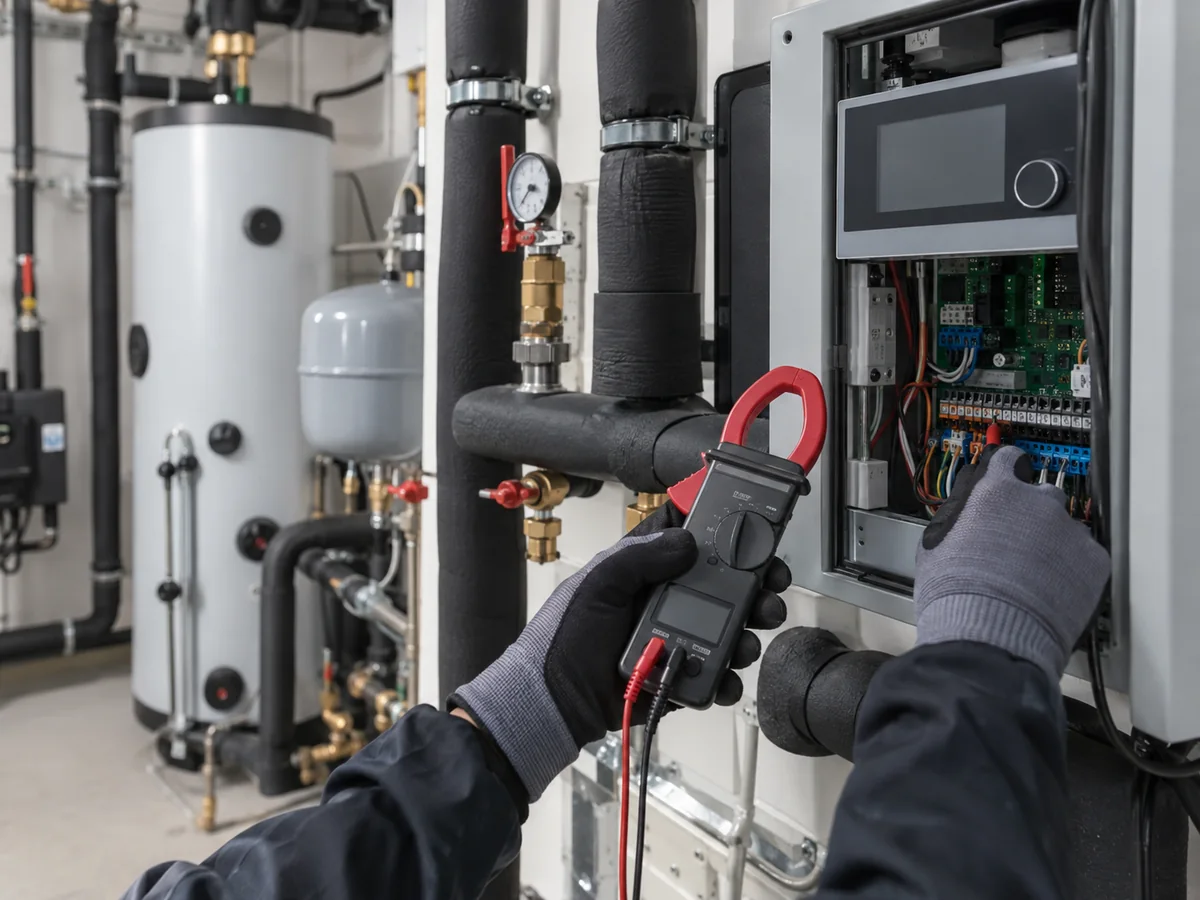
For a water-based heating application, you can also review the R32 monobloc space-heating heat pump as a product example. Its suitability depends on the required water temperature, cold-day heating load and complete system design; do not treat the product page as a sizing confirmation.
If you would like to see different residential equipment layouts, browse the residential heat pump project gallery. These images illustrate installation arrangements; they do not establish model-specific heating performance or suitability for your home.
Ready to compare heat pump options? Contact Us to share your home or project details. Say whether you need an initial system comparison or exact-model documents for an installer-led quote.
For a closer look at the site requirements discussed above, read our air-source heat pump installation guide.