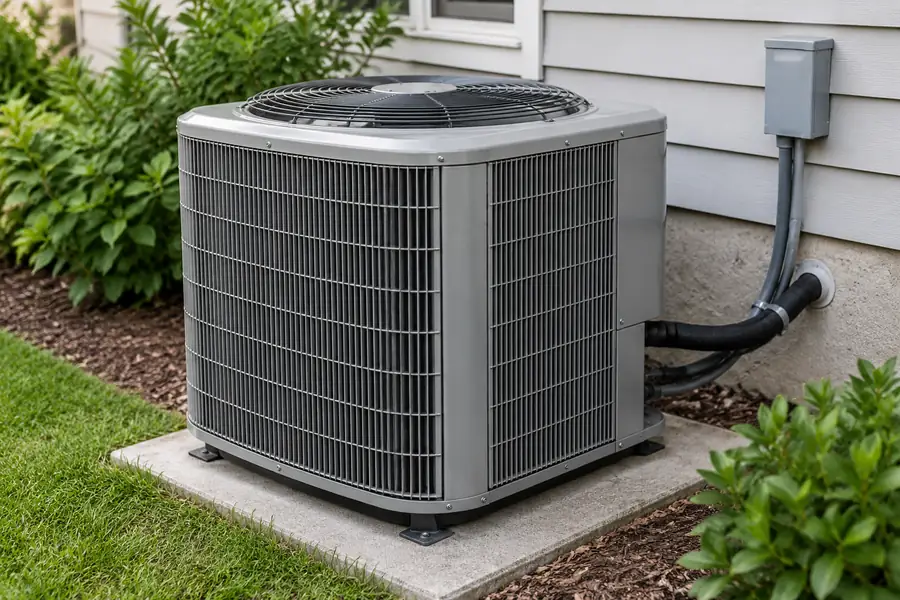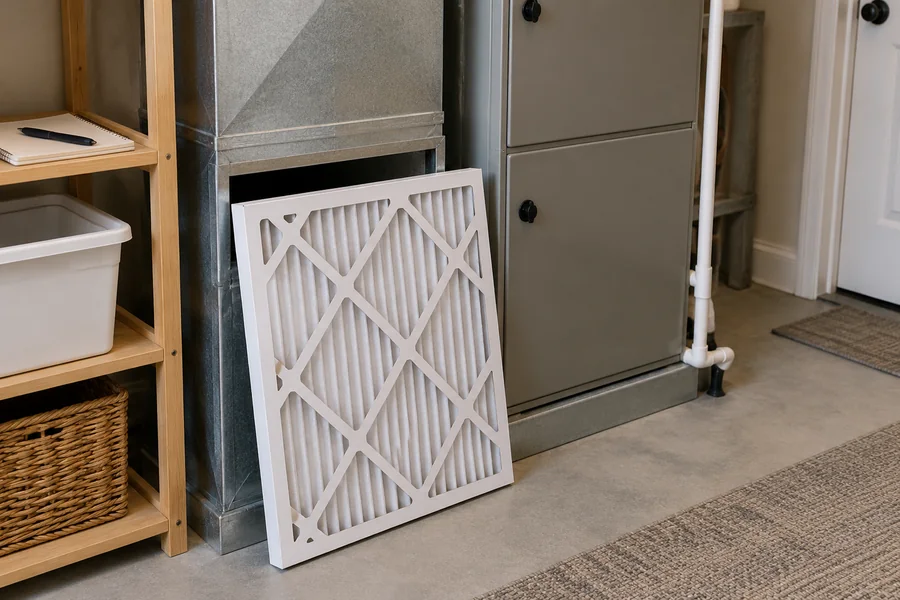
For a small, urgent split AC installation in Indonesia, start with a local authorized distributor that can confirm stock, installation and warranty service. For repeat wholesale or private-label orders, an overseas OEM supplier can be a better route once your Indonesian importer, model-approval path and local service plan are clear. Compare total delivered cost, service coverage and supplier responsibility alongside the factory unit price. Then check the exact indoor/outdoor model combination, cooling performance, power supply and applicable Indonesian documents.
Split AC requirements vary across Indonesia. A Jakarta bedroom, a coastal hotel in Bali and a busy shop may need different cooling capacity, corrosion protection and service plans. This guide shows what to compare, which Indonesian rules affect the order, and what information to send us before we recommend a split AC configuration.
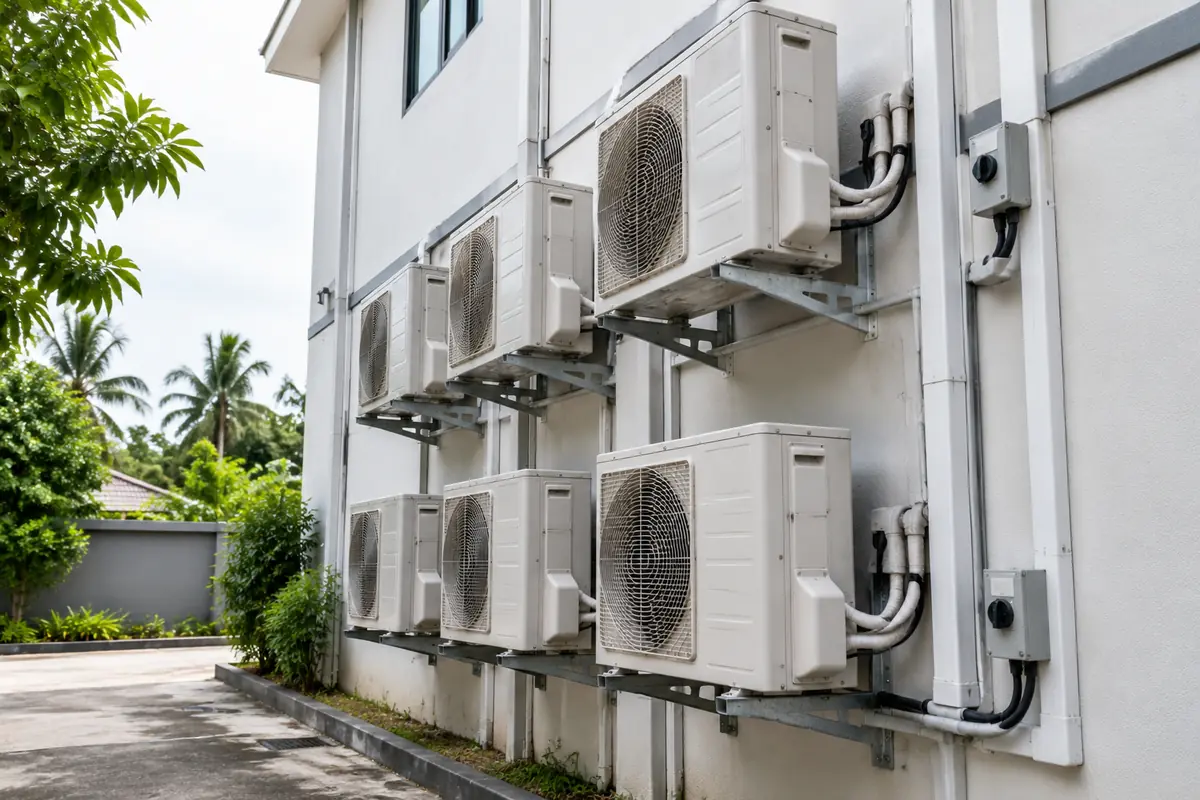
Quick answer: Choose the supply channel first, then confirm the exact split AC models, SNI safety scope, relevant CSPF and energy labels, landed cost, and who handles local installation and after-sales support. For a public tender, ask your Indonesian bidding partner to check the applicable TKDN rules before choosing a brand or model.
| Buyer need | Better starting route | Who must take responsibility | Next check |
|---|---|---|---|
| A few units needed quickly | Local authorized distributor | Local stock, installation, service and warranty | Ask for the exact in-stock model and installed price |
| Repeat distributor stock or own-label range | Manufacturer/OEM plus Indonesian importer | Model documents, import approvals, production changes and spare parts | Identify the importer and approval plan before choosing the model mix |
| Hotel or multi-site building project | Project supplier with a local installation contractor | Room loads, installation, commissioning and on-site support | Match room types to capacity and service coverage |
| Mixed-brand replacement order | Established local dealer or trading company | Brand authenticity, model compatibility, returns and local service | Match indoor/outdoor codes and compare installed cost |
| Public-sector tender | Qualified Indonesian bidding partner | Tender eligibility, public-procurement rules and TKDN where applicable | Check tender requirements before proposing an imported model |
What Type of Split AC Supplier Works Best in Indonesia?
Short-notice installation usually favors a local dealer; repeat-volume or private-label purchasing may favor direct OEM supply with an Indonesian importer. Compare quotes only after confirming who will deliver, install, approve and service each model.
Local distributor or authorized dealer
A local supplier is often the easiest route when your project needs a small number of units, short delivery time, an installation team and local warranty support. Ask whether the business is an authorized dealer for the named model, who holds inventory, and who accepts a service claim. A quotation that includes installation may cost more than an equipment-only quote because the work and responsibility are different.
Direct manufacturer, importer or OEM supplier
Direct manufacturer supply may suit an established distributor, installer network or property developer ordering multiple units. You need a named Indonesian importer or official representative, a model-specific compliance plan and a parts route. Confirm which party applies for approvals, who pays for any required testing and whether your private-label change affects the approved product family. Before placing an OEM order, name the Indonesian importing party, confirm the approval route for each model, and agree on spare-parts and warranty responsibilities. Ask the supplier to record these points in the quotation or supply agreement.
For factory audits, OEM scope, sample checks and pre-shipment inspection, use our China air conditioner manufacturer sourcing guide alongside the Indonesia-specific checks above.
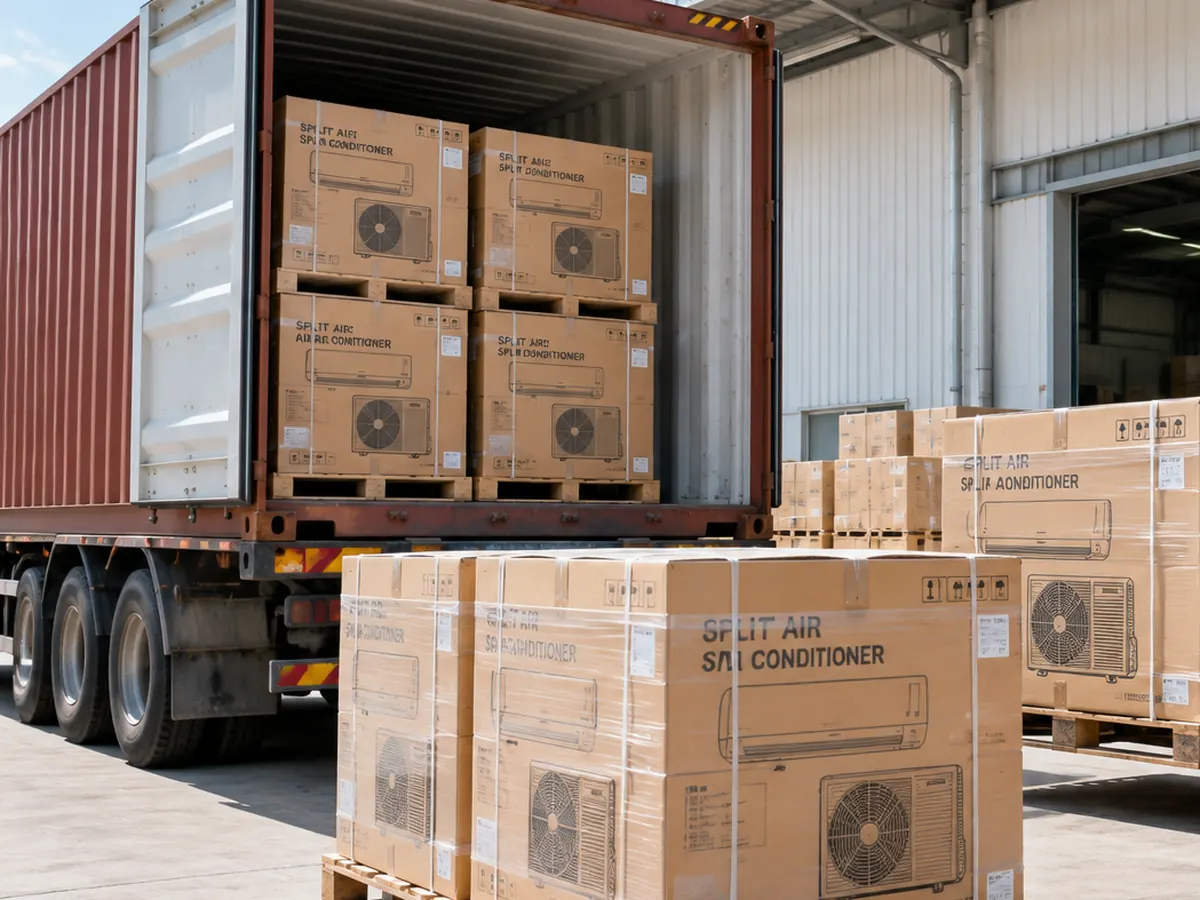
General trading company
A trading company can combine brands and ship mixed equipment. This is useful for mixed projects, but ask for the actual manufacturer, exact model code, certificate holder, spare-parts route and the party that handles defective units. Treat a quoted brand name and a test report for a different model as two separate pieces of information.
A local B2B supplier directory can help identify sales channels in Jakarta, Bandung or Surabaya. A marketplace listing is a starting point, not evidence of product approval or service quality.
Which Split AC Specifications Matter for Indonesia’s Climate?
For hot and humid rooms, compare cooling capacity, part-load control and moisture removal at the actual operating conditions. A larger nominal BTU number will not correct poor room-load data, badly located equipment or uncontrolled outdoor-air infiltration.
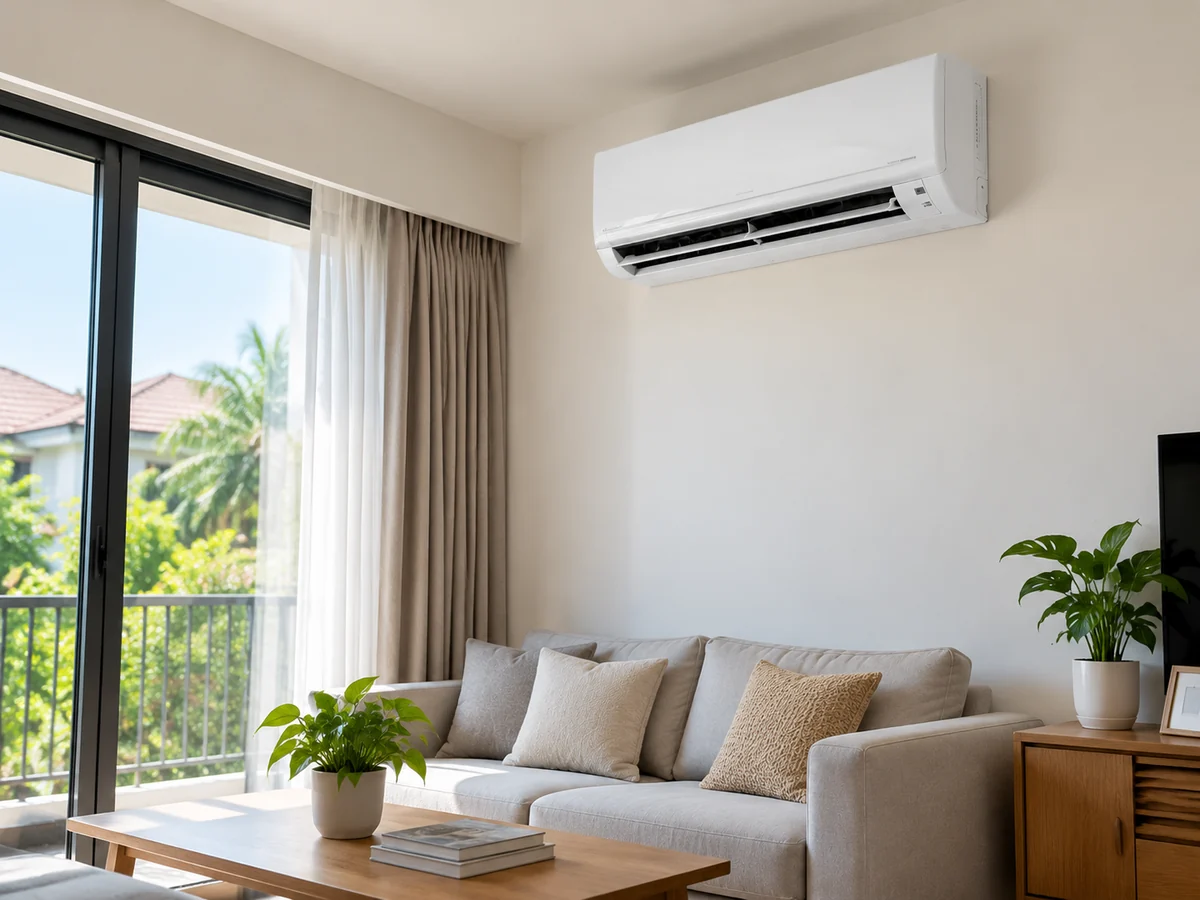
Start with how the room will be used. These conditions help you decide what capacity, test data and installation details to request before choosing a model.
| Application | Check first | Why it matters | Order decision |
|---|---|---|---|
| Coastal hotel room | Room load, noise, drainage and corrosion protection | Salt air, humidity and overnight use affect upkeep | Compare quiet models and planned coil/drain service at the design conditions |
| Office running all day | Cooling load and like-for-like seasonal efficiency | Part-load performance affects long operating hours | Compare CSPF and capacity data under the same test basis |
| Residential dealer stock | Local sizes demanded, power version and spare-parts compatibility | Multiple versions complicate service and repeat supply | Choose a manageable model mix with matching documents |
| Busy shop or crowded room | People, doors, sun, ventilation and latent load | Floor area alone misses major heat and moisture gains | Get a cooling-load estimate before selecting BTU/h class |
Cooling load and capacity, not floor area alone
Start with each room’s dimensions, people, windows, direct sun, lighting, appliances, ventilation and hours of use. Also consider wall and roof construction and the required indoor temperature. A trained designer or contractor should turn these into a sensible cooling-load estimate. For a restaurant or a top-floor room, calculate the extra load from people, ventilation, sunlight and roof heat before choosing the unit size.
A 12,000 BTU/h capacity class equals about 3.52 kW as a unit conversion (12,000 ÷ 3,412). Actual model cooling output changes with test and outdoor conditions, so compare the manufacturer’s published capacity table at the temperature your project needs. Indonesian retail labels may use PK classes; confirm the accompanying rated cooling capacity instead of treating PK as one universal thermal-unit conversion.
For the room-load inputs and sizing process, see our air conditioner sizing guide. Compare the selected model’s published capacity at the outdoor conditions that matter in Indonesia.
Inverter versus fixed-speed
An inverter compressor can reduce output when the load falls, which can improve seasonal energy use and temperature control in many applications. For long daily running hours, compare tested CSPF and the minimum-to-maximum cooling output at the stated rating conditions. Humidity control also depends on unit sizing, airflow, run time and the building’s outdoor-air load.
Our guide on how inverter air conditioners work explains compressor speed control when you compare long-hour cooling and part-load performance.
A fixed-speed model may still suit a limited-hour application with a constrained initial budget, provided it meets the applicable requirements and the buyer accepts the running-cost trade-off. For a hotel, bedroom or continuously used office, an appropriately sized inverter is often the stronger starting choice.
R32 refrigerant and high outdoor temperatures
R32 split systems are available for this market. Compare the quoted model’s refrigerant charge, installation instructions, allowable pipe length, pressure ratings and service arrangements. R32 is an A2L lower-flammability refrigerant; the installer must follow the model instructions, applicable safety requirements and local practices, using equipment suitable for that refrigerant. Do not use an R410A service procedure as a generic R32 procedure.
A T1 classification describes a rated climate or test category. For your project, check the manufacturer’s cooling-capacity and input-power data at the expected outdoor temperature, along with the declared operating range. A coastal installation also needs suitable corrosion protection and planned maintenance.
Electrical supply and installation interfaces
Many residential split AC variants are designed for 220–240 V, 50 Hz, single-phase service, but verify the rating plate for the actual Indonesian model. Confirm supply tolerance, circuit protection, earthing, isolator location, cable sizing and the installing electrician’s requirements. Also check the indoor/outdoor pair, pipe size, maximum vertical separation, refrigerant charge adjustment, drain fall and outdoor airflow clearance.
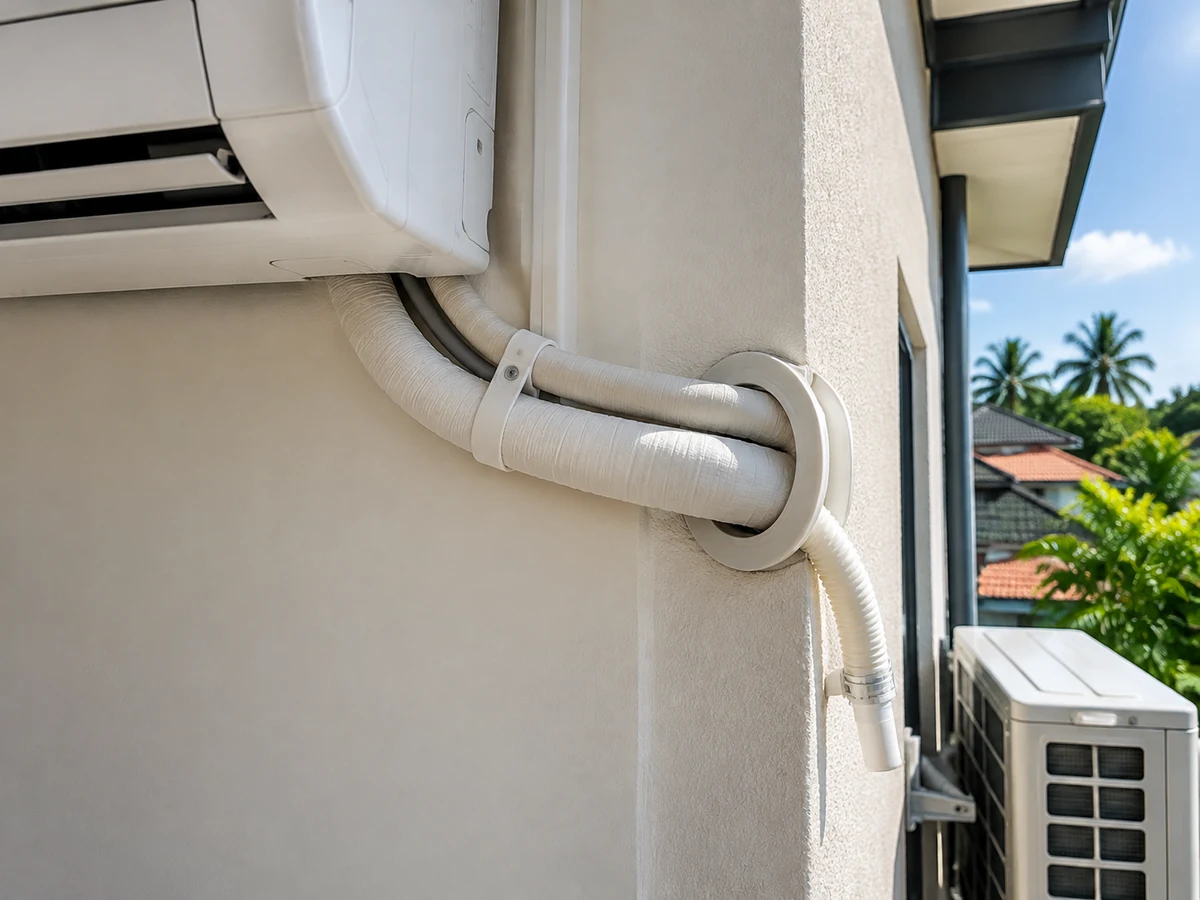
For the relationship between the indoor unit, outdoor unit, refrigerant line set and condensate drain, see our guide to mini split indoor and outdoor unit connections.
Which SNI, CSPF and Energy-Label Rules Apply in Indonesia?
Indonesia’s SNI safety approval, cooling-season efficiency rules and public-tender local-content rules answer three different questions. SNI (Standar Nasional Indonesia) concerns national standards and mandatory safety conformity for covered products. CSPF (Cooling Seasonal Performance Factor) is an energy-use rating under a defined test method. TKDN (Tingkat Komponen Dalam Negeri) concerns domestic content in relevant procurement. Check the exact model, buyer and legal scope before assigning a document to an order.
| Requirement | When it applies | Model-level evidence to ask for | Confirm responsibility with | Check before |
|---|---|---|---|---|
| SNI safety / marking | Specified covered AC types under the applicable mandatory rule | Approval certificate, covered models/brand and label or mark authorization | Manufacturer, Indonesian representative/importer and certification partner | Final model choice and production commitment |
| CSPF / energy label | AC categories covered by the applicable efficiency and labelling rules | Matching model/family energy document, test basis, CSPF and approved label | Importer and supplier, with the market compliance partner | Artwork approval and shipment |
| TKDN / BMP and tender | Public procurement or an expressly applicable tender condition | Tender eligibility and valid local-content/other required bidder documents | Indonesian bidder or procurement partner | Tender submission and product nomination |
SNI safety: the 2025 regulation matters
Indonesia’s Ministry of Industry Regulation No. 7 of 2025, effective 24 July 2025, made specified household electrical-equipment SNI requirements mandatory and repealed the older 2013 air-conditioner regulation. For the listed air conditioners, it names SNI IEC 60335-1:2020 and SNI IEC 60335-2-40:2009. The relevant AC scope covers split and multi-split, window and portable equipment up to 27,000 BTU/h (7,913 W), no more than 250 V, while excluding floor-standing, cassette, ducted, suspended and VRF equipment under that clause. It uses the stated tariff classification ex. 8415.10.20. Check the current classification and any exceptions for the exact product rather than applying the household rule to every commercial system.
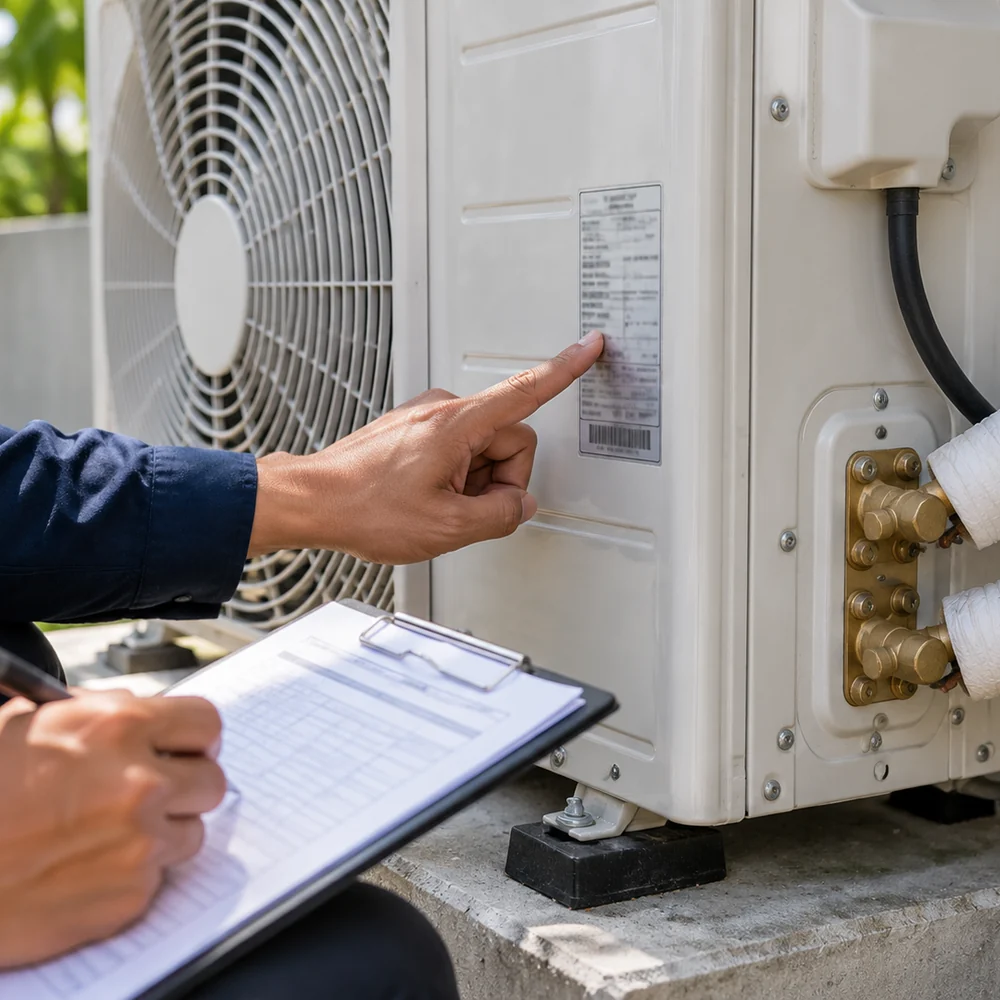
Before shipment, ask your local compliance partner for the SNI certificate and SNI-mark authorization process relevant to the manufacturer, model and brand. For an imported private-label model, establish the official representative and applicant responsibilities early. A CE or CB document can be useful supporting material, but it does not automatically replace Indonesian approval. Read the Ministry of Industry’s 2025 SNI regulation and its annex for the scope and procedure.
Energy efficiency: understand the CSPF figure
CSPF means Cooling Seasonal Performance Factor. It compares seasonal cooling delivered with the electricity used across the defined test and calculation conditions. Higher CSPF indicates greater rated seasonal efficiency under the same test method. Your electricity bill also depends on daily operating hours, the room load, climate and electricity price.
Indonesia’s energy framework includes MEMR Regulation No. 14 of 2021 and the air-conditioner decisions 103.K/EK.07/DJE/2021 and 134.K/EK.07/DJE/2023. For the specified wall-mounted single-split category up to 27,000 BTU/h, the 2023 amendment moved the new minimum from CSPF 3.10 to 3.40 Wh/Wh after a 12-month transition from 23 October 2023. A CSPF of 3.40 starts the new two-star band. The amended decision provides transition provisions for certain existing certificates and eligible stock under the previous decision. For a shipment involving earlier labels, check the certificate issue and expiry dates, documented stock history, and the transition clause that applies to those units.
For imported covered models, the amended decision provides for energy labels to be placed in the country of origin, on the product and packaging. Agree the artwork, model references and checking responsibility before mass production. The original framework is available in MEMR Regulation No. 14/2021.
TKDN: check whether the project uses public funds
TKDN is a domestic-content measure, not a universal import approval certificate for private AC orders. Indonesia’s Presidential Regulation No. 46 of 2025 changed public-procurement rules and domestic-product priorities. A government-funded tender may require the buyer to follow specific local-product priority and domestic-content criteria. The Ministry of Industry procurement platform sets out a priority order involving TKDN and the additional BMP preference component. Ministry of Industry Regulation No. 35 of 2025 also governs the TKDN/BMP certification procedure; the tender partner should confirm the current certificate and listing rather than reusing outdated paperwork. For a public tender, ask your Indonesian bidding partner to check the applicable domestic-product priority, TKDN/BMP documents and product listing for that procurement. Confirm the project funding, eligibility and evidence requested before quoting.
These documents are not interchangeable: an SNI certificate does not supply a CSPF rating; a CSPF label does not prove local-content eligibility; and a TKDN document does not replace model safety or electrical checks. Match each document to the exact product and the actual buyer’s tender requirements.
How Do You Verify a Supplier’s Model Before a Bulk Order?
Ask for documents that identify the exact indoor and outdoor units, not only a brochure for the series. A practical review has five parts.
- Match model codes. Confirm the indoor and outdoor code, nominal capacity, power version, refrigerant, controller and optional functions on the quotation, drawings and labels.
- Check performance conditions. Read rated cooling capacity and input power, CSPF test basis, part-load information and the declared outdoor-temperature range. Check how each capacity option differs.
- Check Indonesia-specific approvals. Confirm who holds or applies for SNI and energy documentation, the covered family, validity dates, labeling artwork and the role of the Indonesian importer or representative.
- Check manufacturing and inspection. Ask what production tests apply, how serial numbers and batches are tracked, and whether an agreed independent pre-shipment inspection is possible.
- Check service continuity. Identify replacement parts, controller compatibility, warranty claim steps and service support in the cities where the units will be sold.
For example, a manufacturer may offer the same wall-mounted cabinet with different compressors, capacities or refrigerant versions. The common cabinet does not make those versions one certified model. If a proposed change affects an approval scope, settle the testing and certification plan before confirming packaging or accepting a production date.
Three approval points before the shipment
- Before confirming the model: match the indoor and outdoor codes, rating plate, power version, performance data and Indonesia-specific document scope. If a certificate names a different model or brand, request the correct evidence before putting the model on the purchase order.
- Before approving production: if you use a sample, record its version, controls, labels, refrigerant and any approved changes. Match the production specification and packaging artwork to that record. Resolve differences before the supplier begins the agreed production run.
- Before authorizing shipment: review the agreed batch/serial records, inspection results, packaging and labels, shipping documents, spare-parts list and warranty-claim route. If anything differs from the purchase order, agree the correction and recheck it before dispatch.
What to check on a sample
Choose a sample that represents the intended commercial specification. Review the received nameplate, installation manual and remote-control functions. Ask the installer to test cooling performance, noise, drainage, vibration, communication and restart behavior in an appropriate installation setting. Record outdoor conditions and measurement methods so an abnormal result can be investigated rather than guessed. Use the sample to check installation and operation, alongside the required type testing and the agreed final-shipment inspection.
What Does a Wholesale Split AC Order Really Cost?
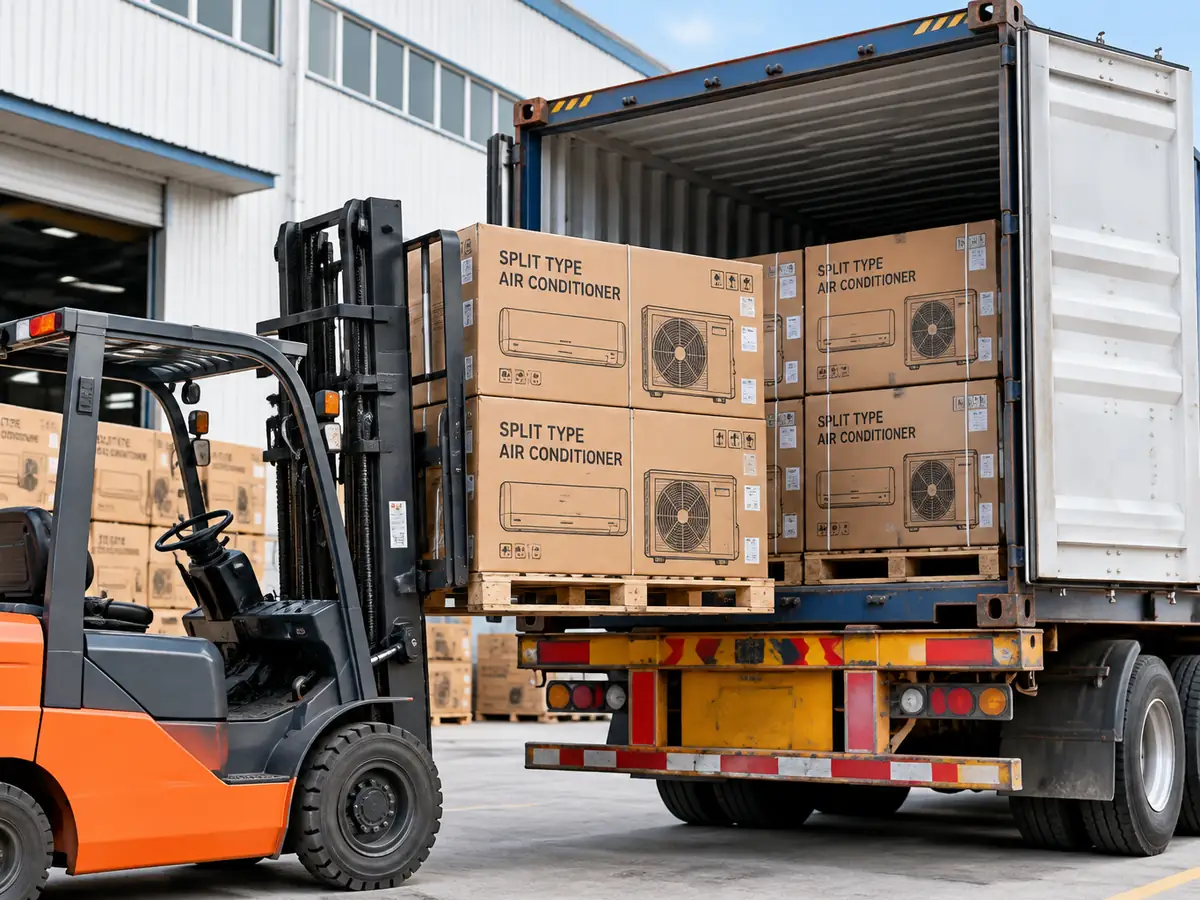
Compare delivered, serviceable units—not just a factory unit price. Two quotations can differ because one includes import services and project delivery while the other stops at the export port.
Use this calculation for a first commercial comparison:
Total landed shipment cost = equipment invoice + international freight and insurance + applicable import duty and nonrecoverable taxes + clearance charges + domestic delivery + agreed inspection and handling.
Landed cost per usable unit = total landed shipment cost ÷ usable delivered units. Keep installation, warranty reserves, financing and local distribution overhead as separate lines when they are not already included.
Illustrative 100-unit calculation (not a live quotation): a planned order with an equipment invoice of US$25,000, freight and insurance of US$2,800, a broker-provided allowance of US$6,000 for applicable import and clearance charges, and local delivery of US$1,200 totals US$35,000, or US$350 per unit before installation, warranty reserves and selling overhead. Before approving an actual order, replace the freight, duties, taxes, customs clearance and delivery allowances with figures from your freight forwarder and customs broker, including any recoverable taxes.
Compare the commercial terms in the quotation
Ask whether the price is EXW, FOB, CIF or another agreed Incoterm, which port or destination it names, and who pays for unloading, inspection, customs entry and local transport. Keep a line for the packing dimensions and weights of each indoor/outdoor carton; container capacity depends on carton mix and loading rules, not just the number of AC sets. Confirm deposits, spare-parts quantities, production approval, shipment milestones and warranty procedure in writing.
EXW (Ex Works), FOB (Free on Board) and CIF (Cost, Insurance and Freight) are different delivery terms, not three prices for identical service. The named location and current Incoterms edition must appear in the contract. FOB and CIF are terms for sea or inland waterway shipping; CIF includes freight and insurance to the named destination port, but does not by itself include Indonesian customs clearance or local installation.
| Quote basis | What it usually covers | What to add for the same Indonesian destination |
|---|---|---|
| EXW, named place | Goods made available at the named premises | Collection, export formalities, freight/insurance, import charges, local delivery and installation as arranged |
| FOB, named port of shipment | Export formalities and loading onto the vessel at the named port | Sea freight, insurance, arrival charges, customs, domestic delivery and installation |
| CIF, named destination port | Contracted freight and insurance to the destination port | Arrival charges, import duties/taxes, clearance, inland delivery and installation; insurance scope also matters |
| Locally installed project quote | Specified equipment and the installation/service work included in that offer | Check the exclusions, spare parts and warranty duties before comparing with an import quote |
Compare one common destination and one service scope. Add the missing items to each offer and divide by the expected usable delivered sets. Convert each offer to the same destination and included service scope before comparing the per-unit cost.
A low upfront quotation may become expensive if your installer has to modify every drain or pipe connection, a controller is hard to replace or the model cannot be sold under the intended certification. Conversely, paying for a higher efficiency class only makes sense if the tested efficiency, use pattern and customer price range support it.
What Should Your Installer and After-Sales Partner Check?
A split AC supply plan is not finished when the cartons arrive. A proper installation and service plan protects cooling performance and the distributor’s reputation.
Site installation and commissioning
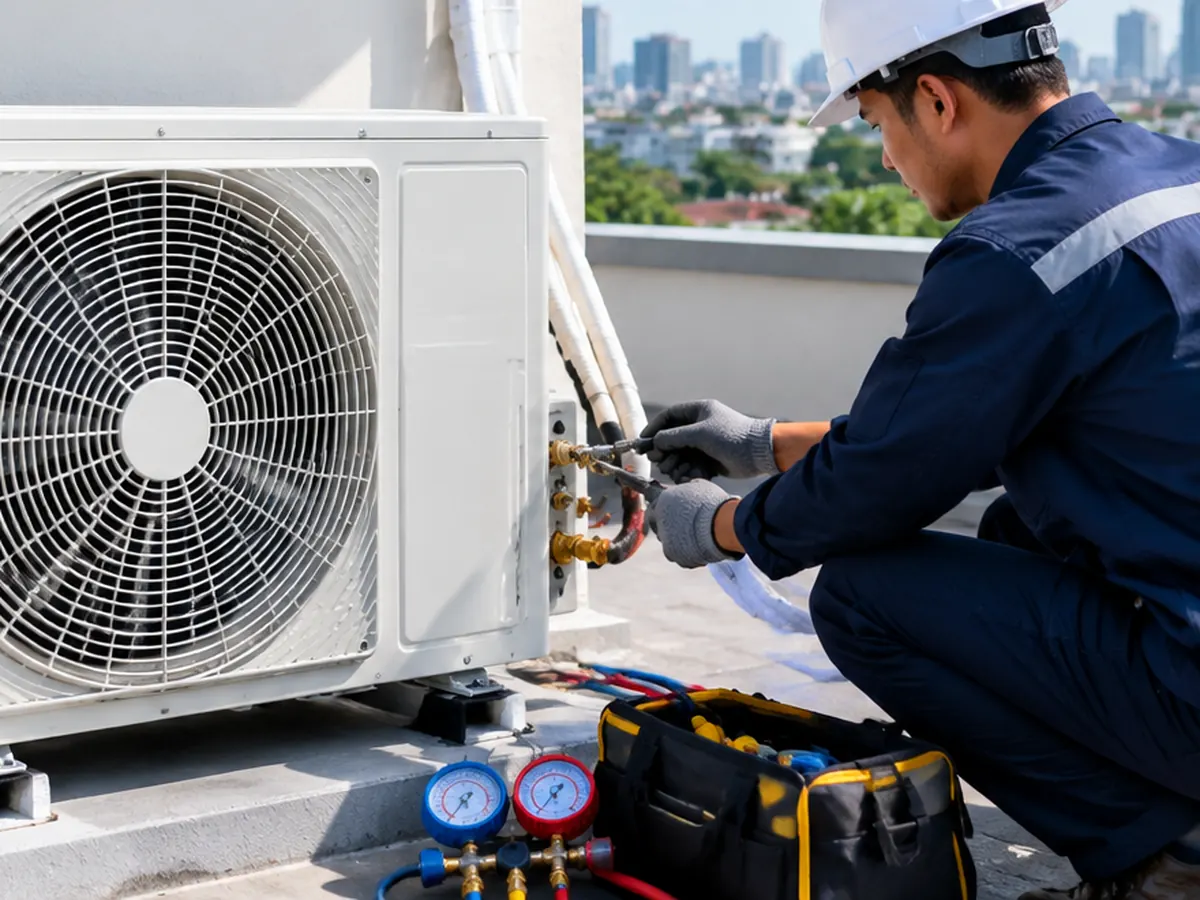
Arrange safe outdoor access, drainage and service clearance before delivery. Install refrigerant lines, insulation, cable protection and drainage to the exact model instructions. A qualified technician should perform the required pressure/leak checks, evacuation, commissioning and electrical checks using equipment and methods appropriate to the refrigerant. Keep the recorded measurements and the accepted indoor/outdoor serial numbers with the handover documents.
Humidity, salt air and dense buildings
A coastal site may need closer coil inspection and corrosion management. A humid room needs good condensate drainage and correct fan operation. A closely packed block of outdoor units needs enough airflow so hot discharge air does not cycle back to the condensers. If the installer changes the mounting position or pipe run, recheck the manufacturer’s length, height and charge allowances before proceeding.
Spare parts and warranty claims
Agree which company takes calls, supplies PCBs, fans, sensors and remotes, and authorizes returns. Alongside the warranty period, confirm who receives claims in Indonesia, who diagnoses the unit on site and where replacement parts come from. Keep the model codes and revision information so a replacement part fits the installed unit.
For initial reports of poor cooling, our AC not cooling troubleshooting guide helps distinguish observable symptoms from checks that require a qualified technician.
Who handles what after delivery?
Put the service handoff in writing before your first shipment. A manufacturer, importer, dealer and installer may be separate businesses. Use the responsibility table below to assign import paperwork, parts supply, customer claims and on-site service to the businesses named in the agreement.
| Party | Responsibility to agree | What the buyer should receive |
|---|---|---|
| Overseas manufacturer / OEM supplier | Exact model records, agreed production documents, available compatible parts and supplier-side claim process | Technical files, parts identifiers and claim contact route |
| Indonesian importer / representative | Import and approval filings applicable to the named product and shipment | Named document holder or applicant and import responsibility |
| Local distributor / service partner | Customer contact, parts stocking if agreed, returns and warranty claims | Service areas, contact method, parts arrangements and claim terms |
| Qualified installation contractor | Site design, safe installation, commissioning and defect investigation | Site test records, serial numbers and handover details |
State who pays for parts, travel, diagnosis, shipping defective components and repeat visits, and identify the service provider who can visit the installation site.
Can Airproz Supply a Split AC Range for Indonesia?
For Indonesian wholesale or private-label projects, we can shortlist our published wall-mounted product families by cooling capacity, refrigerant, power supply and application. Our published air-conditioner range includes inverter and fixed-speed series, R32 and R410A platforms, and nominal capacity classes from 9,000 to 36,000 BTU/h. For each quoted indoor/outdoor model combination, confirm the applicable Indonesian SNI and energy documents before local sale. For the covered household SNI and energy rules, model-level scope matters, especially around the 27,000 BTU/h boundary.
Published Airproz split AC families to compare
Start with published series, then match the exact model to Indonesian requirements. The SA, PAT and UNS families below are published product starting points. Compare their rated specifications and ask for model-specific documents for the selected configuration.
| Published series | Listed examples and power | Where to start comparing | Indonesia checks before ordering |
|---|---|---|---|
| R32 SA inverter split AC | R32-9K AS, R32-12K AS, R32-18K AS, R32-24K AS; listed 9K/12K/18K/24K classes; 1-phase 220–240 V, 50 Hz | Distributor range or hotel-room alternatives after a site load check | Actual indoor/outdoor pair, test conditions, SNI scope, Indonesian CSPF/label and R32 service plan |
| R410A T1 PAT inverter split AC | TCI1-09DNPAT and TCI1-12DNPAT; published 9K/12K classes; 1-phase 220–240 V, 50 Hz | Alternative platform when service and specification needs favor it | Model-specific energy and safety evidence, parts compatibility, refrigerant availability and importer plan |
| R410A T1 UNS split AC series | TCI1-FJ12HDC/UNS, TCI1-FJ18HDC/UNS and TCI1-FJ24HDC/UNS; published 1-phase 220–240 V, 50 Hz | Additional R410A platform for comparing capacity and electrical versions | Confirm the exact compressor-control configuration and current datasheet, matched indoor/outdoor models, Indonesian SNI/CSPF requirements and availability |
The published SA series includes European SEER/SCOP and EU energy-class figures. Those figures are not Indonesian CSPF results or Indonesian SNI certificates. Likewise, a T1 description on the PAT page does not establish its capacity at every Indonesian summer condition. Ask for the exact quoted indoor/outdoor combination and matching market documents.
Use our full air-conditioner product range to compare other configurations and our OEM/private-label service to discuss packaging and branding. Wall-mounted split ACs can suit individual rooms, but a ducted, cassette or larger commercial system needs a different site and product review. If the building requires ducts, multiple zones or larger commercial cooling, compare AC system types for commercial projects before requesting a wall-mounted split quotation.
For an Indonesia order, send us your target capacity mix, voltage, refrigerant preference, annual order volume and Indonesian importing partner. We can compare suitable configurations and identify which model documents to request before you approve packaging and bulk production.
What Should You Send for an Indonesia Split AC Quotation?
Send a compact, model-ready RFQ so we can compare the suitable families before preparing a commercial quotation. The most useful inputs are:

| Information to send | Useful detail |
|---|---|
| Buyer and delivery point | Company, destination city or port, and importer/official representative if known |
| End use | Retail stock, apartment, hotel room, shop, office or project tender |
| Capacity requirement | Room load or estimated class for each size; model of any unit to replace |
| Conditions | Outdoor design temperature, humidity concerns, coastal exposure and installation limits |
| Electrical and refrigerant | Site supply; R32/R410A preference where permitted; local service capability |
| Compliance | Intended SNI/CSPF coverage, label requirements and any TKDN tender conditions |
| Volume and model mix | Planned units by class, samples, repeat-order expectations and target delivery window |
| Branding and support | Airproz or private label, language/packaging, spare parts and warranty/service arrangement |
What happens next? The first review can narrow the candidate product families and identify missing load data, model documents, approvals or commercial conditions. We can then discuss the model mix, delivery basis and items required for a comparable quote. Use our project and quotation contact page to send the RFQ, and see the OEM, testing and purchasing FAQ for general ordering information.
Final Recommendation
For split AC supplier Indonesia projects, start with the installation and distribution route rather than a brand list. Use a local authorized supplier when fast on-site service is the main need. Consider a factory or OEM source when you can manage volume, a named Indonesian importing partner, model-specific approval, inventory and after-sales support. For common wall-mounted units, verify SNI scope, CSPF/label documentation, nominal and hot-weather performance, electrical rating and real installation requirements together. That gives your customers a product range they can install, maintain and reorder with clear responsibilities.
Frequently Asked Questions
Is Airproz an Indonesia-based split AC manufacturer?
No. Airproz is a China-based HVAC manufacturer serving overseas distributors and project buyers. Indonesian orders need an identified importer, model-specific documentation and a local installation and after-sales arrangement.
Does every split AC sold in Indonesia need SNI IEC 60335-2-40?
The 2025 mandatory SNI regulation covers specified split, multi-split, window and portable AC equipment up to 27,000 BTU/h and not above 250 V. It excludes several equipment forms, including cassette, ducted, floor-standing and VRF units from that listed category. Confirm the exact product classification and approval route rather than assuming the same rule applies to every HVAC system.
What is the minimum CSPF for Indonesian wall-mounted split ACs?
The amended energy decision sets 3.40 Wh/Wh as the minimum for the covered new wall-mounted single-split category, with the new regime taking effect 12 months after 23 October 2023. Existing certificates and some previously qualifying stock have transitional treatment. Ask for the current model-specific energy certificate and approved Indonesian label.
Is R32 better than R410A for an Indonesia distribution line?
R32 can be a useful choice where models, local rules and service capability match. Compare the exact model’s efficiency, capacity, availability and installer instructions. R32 requires appropriate handling because it is an A2L lower-flammability refrigerant. Do not decide from refrigerant name alone.
Does a private Indonesian AC order need a TKDN certificate?
TKDN is chiefly relevant to the domestic-product priorities used in public procurement. Ordinary private distribution does not automatically become a TKDN tender. If your end customer uses public funds, have the local procurement partner confirm the applicable TKDN/BMP and tender eligibility rules.
Should I import from a manufacturer or use a local distributor?
Use a local authorized distributor for a small, urgent project that needs installation and service. Consider direct manufacturer or OEM supply for a repeat-volume program when you can arrange the importer, required approvals, stocking and warranty process. Compare complete landed and serviceable cost, not an equipment-only price.
What information is needed to quote a 9,000 or 12,000 BTU/h AC order?
Share the location, application, room load or design conditions, required capacity classes, electrical supply, refrigerant, compliance documents, model mix, total quantity, branding and requested delivery window. Confirm the actual rated capacity at the conditions that matter rather than selecting from BTU/h class alone.
Who arranges Indonesian SNI documents for a private-label split AC?
The manufacturer can provide model and technical documents, but the named Indonesian importer or official representative and the certification process must be agreed for the exact product and brand. Decide who applies, pays for testing and approves the labels before you authorize private-label production.
Who handles warranty claims after imported split ACs are installed?
Agree this before ordering. Identify the business that receives customer reports in Indonesia, the installer who diagnoses on site, the company that supplies replacement parts, and who covers service costs. Put the claim route, parts availability and limits in the supply agreement.