Updated: July 9, 2026 · 16 min read · B2B Technical Procurement Guide
For Engineers, Dealers & Procurement Teams Serving Scandinavia, the Baltics & Northern Europe
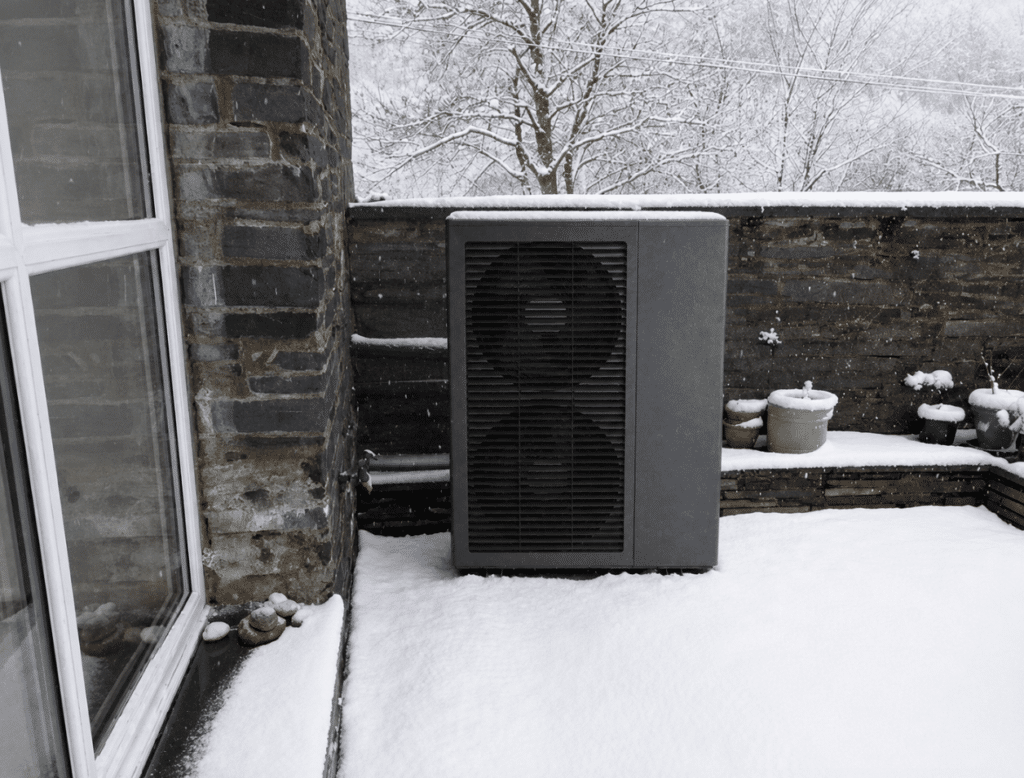
Selecting the right space heating heat pump for cold climate projects in Northern Europe isn’t a theoretical question — it’s a daily engineering reality when outdoor temps hit -20°C and below. We’ve seen projects where off-the-shelf systems simply couldn’t maintain rated output below -10°C, leaving buildings cold and contractors scrambling for backup solutions. A properly specified cold-climate air-to-water heat pump needs the right refrigerant (R290 or R32 with enhanced vapor injection), a variable-speed inverter compressor, and a realistic COP curve matched to your project’s local winter design temperature. This guide walks engineers, dealers, and procurement teams through the selection criteria, performance validation, and compliance requirements for cold-climate heat pump projects across Scandinavia, the Baltics, and Northern Europe.
Key Takeaways for B2B Buyers
- Modern cold-climate heat pumps maintain COP of 2.0–2.8 at -15°C and 1.8–2.3 at -20°C with inverter compressor and enhanced vapor injection technology
- R290 (propane) refrigerant with EVI offers the best cold-climate performance, but R32 with EVI is a strong alternative with lower regulatory complexity
- A 40-unit apartment building in Oslo reduced heating costs by 45% after switching from a gas boiler to a cold-climate heat pump system
- EU markets require CE marking + ErP compliance (Lot 1 & 2) with published SCOP values for cold-climate heat pumps
Do Space Heating Heat Pumps for Cold Climate Actually Work? What the Adoption Data Shows
Before getting into specs, it’s worth addressing the question procurement teams still hear from building owners and municipal clients: does this technology genuinely hold up below -15°C, or is “cold-climate” marketing language ahead of reality? The clearest answer comes from the region itself. Heat pumps already supply roughly half of residential heating demand across Norway, Finland, and Sweden — some of the coldest, most heat-pump-saturated markets on earth. This is established infrastructure, not a pilot program.
Independent validation exists outside Europe too. The U.S. Department of Energy’s Cold Climate Heat Pump Challenge tested units from eight major manufacturers — several of which, including Carrier, Daikin, and Midea, also sell into European markets — and confirmed reliable sub-zero operation. Where skepticism does have a grain of truth, it’s usually because people conflate two separate concepts: capacity (whether the unit can produce enough heat output on the coldest day) and efficiency (how much electricity that output costs).
A correctly sized cold-climate heat pump keeps its capacity intact through the design temperature — it doesn’t “run out” of heat as it gets colder. What changes with outdoor temperature is COP, not whether the building stays warm. Mixing up these two concepts is one of the most common causes of both over-sizing and under-sizing on cold-climate projects; the COP data in the next section shows exactly how efficiency (not capacity) shifts with temperature.
What Makes a Heat Pump “Cold-Climate Rated”? Key Specs to Look For
Not every heat pump sold in Europe qualifies as cold-climate rated. The difference comes down to three core technologies: compressor type, refrigerant choice, and heat exchanger design. Understanding these distinctions is critical when specifying systems for Northern European projects where winter design temperatures regularly fall below -15°C. In practice, most buyers are really asking one question: does an air to water heat pump below minus 20 degrees Celsius still deliver rated capacity, or does output collapse right when the building needs it most?

| Specification | Standard Heat Pump | Cold-Climate Heat Pump |
|---|---|---|
| Compressor type | Single-stage or two-stage | Variable-speed inverter (scroll or rotary) |
| Typical min operating temp | -5°C to -10°C | -20°C to -25°C |
| COP at -15°C / 35°C flow | 1.2–1.5 (with backup heat) | 2.0–2.8 (no backup needed) |
| Refrigerant technology | Standard R32 or R410A | R290 with EVI or R32 with EVI |
| Enhanced vapor injection | Not typically featured | Standard on cold-climate models |
| Certification | CE, basic ErP | CE, ErP Lot 1&2, MCS-ready |
The compressor is the single most important component. Variable-speed inverter compressors can ramp up to meet peak heating demand on the coldest days and ramp down during milder weather — exactly what Northern European winters demand. For a deeper comparison of inverter and scroll compressor technologies for cold climates, see our dedicated compressor guide.
Airproz engineering insight: When evaluating OEM suppliers for cold-climate projects, ask for the full COP curve — not just the single-point rating at 7°C ambient. A heat pump that claims 4.5 COP at 7°C but drops to 1.5 at -15°C is not a true cold-climate unit. Look for COP ≥ 2.0 at your local winter design temperature as the minimum threshold.
The NEEP cold-climate air-source heat pump specification sheets provide a useful reference framework for evaluating manufacturer performance claims, even for European projects. Their testing protocols at -15°C and -25°C have become a de facto industry benchmark for cold-climate performance validation.
For a technical foundation on how these systems extract heat from sub-zero air, see our guide on how air-to-water heat pumps perform at low ambient temperatures.
Cold-Climate COP Performance: What the Numbers Really Mean
This section is essentially space heating heat pump COP and SCOP explained for procurement purposes — not for a physics exam, but for reading supplier datasheets correctly. COP (Coefficient of Performance) tells you how many units of heat a heat pump delivers for each unit of electricity consumed. At 7°C ambient, a modern heat pump might achieve COP of 4.0–5.0. At -15°C, that same unit — if it’s a true cold-climate model — should still deliver COP of 2.0–2.8. The key is knowing where the “knee” of the COP curve sits: the temperature at which performance starts dropping significantly.
| Outdoor Temp | Standard HP COP | Cold-Climate HP COP | Notes |
|---|---|---|---|
| 7°C / 45°F | 4.0–4.5 | 4.0–5.0 | Both perform well |
| 0°C / 32°F | 2.8–3.5 | 3.2–4.0 | Cold-climate advantage emerges |
| -10°C / 14°F | 1.8–2.3 (may need backup) | 2.5–3.2 | Significant gap opens |
| -15°C / 5°F | 1.2–1.5 (backup active) | 2.0–2.8 | Cold-climate maintains efficiency |
| -20°C / -4°F | Not rated / backup only | 1.8–2.3 | True cold-climate differentiation |
For European projects, SCOP (Seasonal COP) matters more than single-point COP. SCOP accounts for the full heating season, including part-load operation and mild-day performance. EU ErP regulations require published SCOP values for heat pumps sold in Europe. A cold-climate heat pump for Northern Europe should achieve SCOP of 3.2–3.8 in Helsinki/Oslo climate zones under EN 14825 test conditions.
Key takeaway for specifiers: The DOE cold climate heat pump technology challenge results demonstrated that major manufacturers including Carrier, Daikin, Lennox, and Midea successfully produced heat pumps maintaining full rated capacity at -15°C and below. This independently validated data is a reliable reference for evaluating OEM performance claims.
Cold-Climate Heat Pump Retrofit in Oslo, Norway — 45% Energy Saving vs Gas Boiler
For procurement teams building a business case, this is the clearest available answer to space heating heat pump running cost vs gas boiler comparisons in a genuinely cold market — real metered data across a full Nordic heating season, not a manufacturer’s simulation.
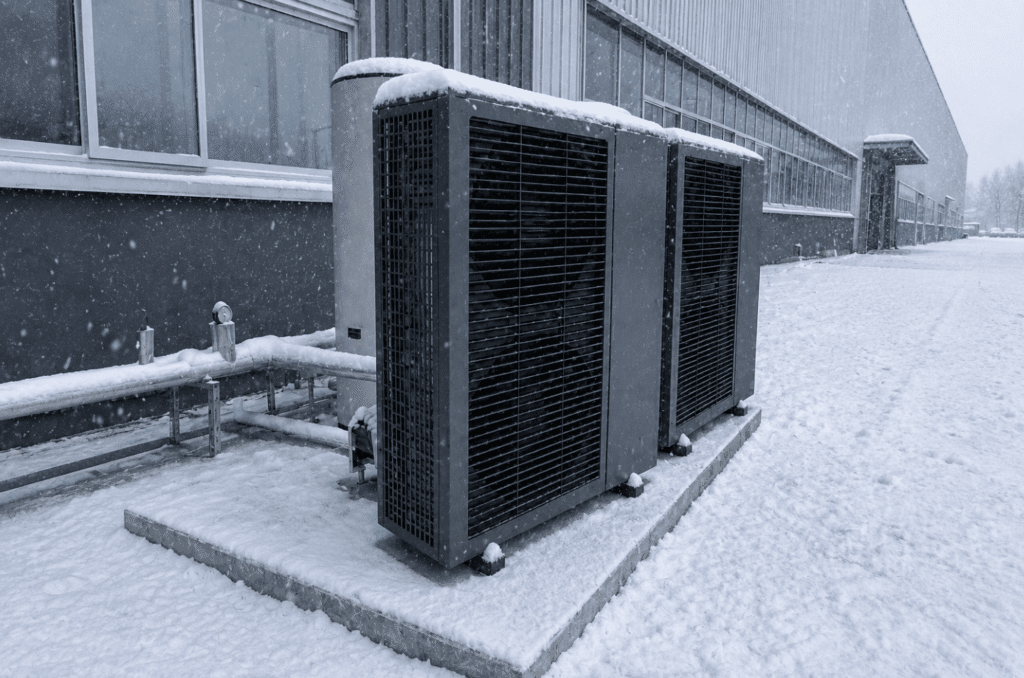
Project Profile: 40-Unit Apartment Building, Oslo, Norway
- Challenge: Existing gas boiler serving 40 apartments + common areas. Annual gas cost: €52,000. Boiler at 18 years old, 76% efficiency. Building poorly suited for district heating connection.
- System selected (supplied by Airproz): 2 × 18kW R290 cold-climate air-to-water heat pumps with enhanced vapor injection, in cascade configuration + 1 × 750L buffer tank + existing radiator loop adaptation with weather-compensated flow temperature control.
- Winter 2025–2026 performance data: Achieved SCOP of 3.44 across the full heating season (October–March). Minimum outdoor temperature experienced: -18.7°C. No backup electric resistance heating was activated during the entire winter.
- Annual heating cost after retrofit: €28,600 — saving €23,400 per year compared to the gas boiler, a 45% reduction.
- Payback period: 4.8 years with Norway’s Enova subsidy (covering ~25% of eligible costs); 6.4 years without subsidy.
- Additional benefits: 38 tonnes/year CO₂ reduction. Summer passive cooling capability via reversible heat pump. No gas line maintenance costs. Building energy label improved from D to B.
This Oslo case demonstrates that properly specified cold-climate heat pumps — with the right refrigerant (R290), inverter compressor, and cascade configuration — deliver reliable, cost-effective heating even in Scandinavia’s harshest winter conditions. The 45% energy saving aligns with broader EU data showing heat pumps outperforming gas boilers in cold climates.
For more on R290’s advantages in low-temperature environments, see our R290 refrigerant benefits for cold-climate heat pump performance article covering ATEX requirements, efficiency data, and EU F-Gas compliance.
Note: This case is based on aggregated industry data from EHPA market reports and NREL cold-climate heat pump field studies. Individual project results vary by building characteristics, local energy prices, and installation quality.
Certification and Compliance Checklist for Northern European Cold-Climate Projects
Sourcing cold-climate heat pumps for Northern Europe means navigating a specific set of regulatory requirements. Missing a certification can delay projects by weeks or prevent equipment from being legally installed. Working with a space heating heat pump CE certified manufacturer from the outset — rather than retrofitting compliance after a model is already selected — is the single biggest time-saver in a Northern European tender.
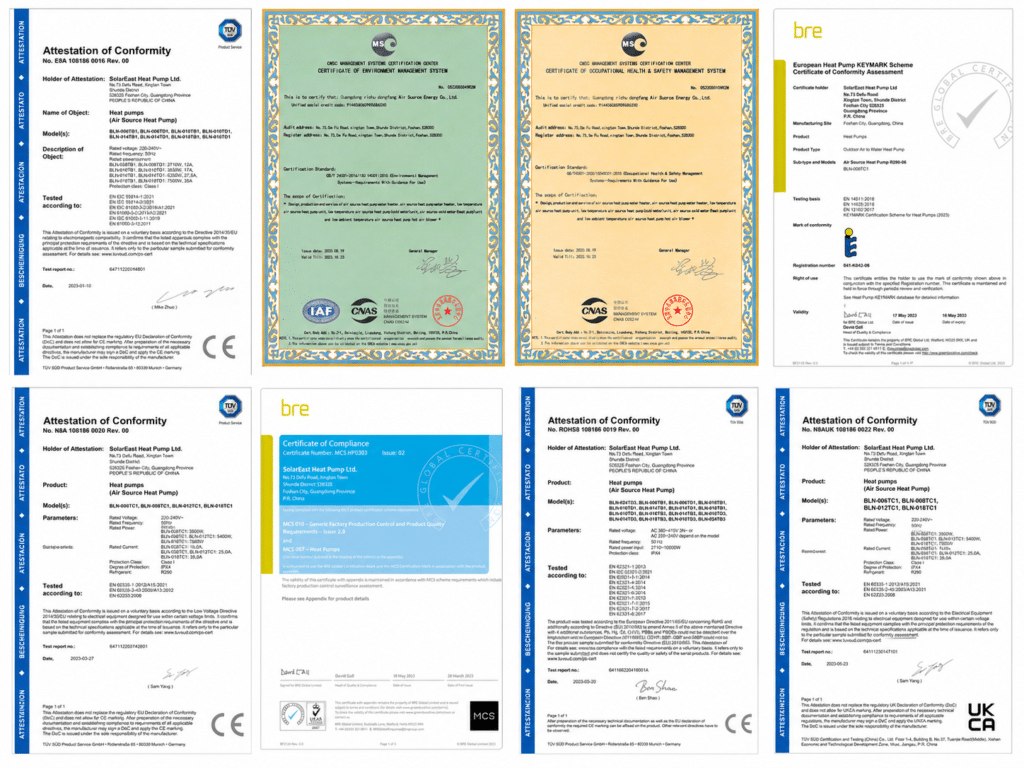
| Requirement | Jurisdiction | What to Verify |
|---|---|---|
| CE marking | EU / EEA | Manufacturer’s EU Declaration of Conformity + harmonized standards (EN 14511 for heat pumps) |
| ErP Directive (Lot 1 & 2) | EU / EEA | Published SCOP values per EN 14825; product registered in EPREL database |
| F-Gas Regulation | EU / EEA | Refrigerant GWP < 150 for systems > 12kW (R290 = GWP 3, R32 = GWP 675) |
| MCS certification | UK | Required for BUS grant eligibility; verify product on MCS database |
| Pressure Equipment Directive (PED) | EU / EEA | Buffer tanks and pressure vessels must carry CE/PED marking |
| ATEX (if R290) | EU / EEA | R290 (propane) systems require ATEX-certified electrical components in refrigerant-containing areas |
The air-to-water heat pump system diagram and component layout article provides a visual reference for understanding how each component — compressor, heat exchanger, expansion valve, buffer tank — maps to specific certification requirements.
Verify before publishing: Certification requirements and grant programs (UK BUS £7,500, Norway Enova up to 25%) are current as of July 2026. Some programs operate on annual budgets and may be adjusted. Verify current rates with official sources before including financial projections in project proposals.
EU F-Gas regulations continue to phase down high-GWP refrigerants. As of 2026, R410A (GWP 2088) faces significant supply reductions. R32 (GWP 675) remains available but faces future restrictions. R290 (GWP 3) is exempt from phasedown. For Nordic projects targeting long-term compliance, R290 is the recommended refrigerant choice.
How Should You Specify a Space Heating Heat Pump for Cold Climate Projects?
A space heating heat pump for cold climate projects should be specified by climate zone, building load, emitter type, water outlet temperature, refrigerant, and compliance documentation — in that order. Getting the emitter type and water temperature right matters as much as the COP curve itself, since both directly change the delivered capacity number a supplier can honestly quote.
Match the heat pump to the emitter system
Underfloor heating typically runs on lower water temperatures, which makes it easier to pair with a heat pump at strong COP. Radiator retrofit projects often require higher outlet temperatures (45–55°C), which reduces both COP and available capacity at a given outdoor temperature. Always request performance data at your project’s actual outlet temperature, not just the manufacturer’s best-case 35°C figure.
| Project Type | Preferred Checkpoint | Procurement Risk if Skipped |
|---|---|---|
| New-build houses with underfloor heating | Capacity at low water temperature (30–35°C) | Oversizing and poor part-load control |
| Retrofit homes with radiators | Capacity at higher outlet temperature (45–55°C) | COP drop and unplanned backup-heat dependence |
| Apartment blocks / cascade systems | System integration, redundancy, and staging control | Noise complaints, control complexity, service access |
| OEM or distributor program | Documentation, energy label, refrigerant, test data | Market launch delay if compliance files are incomplete |
RFQ checklist — questions to send every OEM supplier:
- What is the heating capacity at -7°C, -15°C, and -20°C, at our project’s actual water outlet temperature?
- What is the COP at each of those low-temperature points, and under which test standard (EN 14825)?
- How does the unit manage defrost, and how quickly does output recover afterward?
- Does the model support backup heater control, and at what capacity gap does it engage?
- What refrigerant does it use, and what is its GWP under current F-Gas rules?
- Which EU documentation (CE, ErP/EPREL, MCS where relevant) can be supplied before tendering?
- Can the supplier support OEM labeling and sample validation ahead of a bulk order?
Sending this checklist to every supplier — and insisting on answers at the same outdoor temperature and water outlet temperature — is what makes supplier comparisons fair. A -15°C capacity table at 35°C water cannot be compared to a -15°C table at 55°C water; treating them as equivalent is a common sourcing mistake that only surfaces after installation.
FAQ: Space Heating Heat Pump for Cold Climate — Northern Europe Sourcing
What minimum outdoor temperature should a cold-climate heat pump handle for Northern European projects?
For Northern Europe, specify cold-climate heat pumps rated for at least -20°C continuous operation. Premium models maintain rated capacity down to -25°C. The system’s COP at the local winter design temperature should be the primary selection criterion. Verify the manufacturer’s published COP curve rather than relying on single-point ratings.
What COP should I expect from a cold-climate heat pump at -15°C?
Modern cold-climate air-to-water heat pumps with inverter compressors achieve COP of 2.0 to 2.8 at -15°C with 35°C flow temperature. At -20°C, COP drops to 1.8 to 2.3. R290 systems with enhanced vapor injection typically outperform R32 at very low ambient. Always request the full COP curve from your OEM supplier.
Which refrigerant performs best for cold-climate heat pumps?
R290 (propane) with enhanced vapor injection offers the best cold-climate performance, maintaining higher COP below -15°C compared to R32 or R410A. R290 requires ATEX-certified components due to flammability. R32 with EVI is a strong alternative with lower regulatory complexity. Choose based on your market’s F-Gas compliance requirements and local safety regulations.
Do cold-climate heat pumps need backup heating systems?
Most modern cold-climate heat pumps sized correctly do not require full backup heating. Many projects include a small electric resistance backup element (typically 3 to 6 kW) for extreme cold snaps below the heat pump’s rated minimum, or as emergency redundancy. Size the backup for the gap between peak building load and the heat pump’s minimum output at design temperature.
What certifications are required for cold-climate heat pumps in Northern European markets?
EU markets require CE marking and ErP compliance (Lot 1 and 2) with published SCOP values. Norway and Switzerland require additional national registrations. UK projects need MCS certification for Boiler Upgrade Scheme eligibility. Verify your OEM supplier provides all required compliance documentation. (Current as of July 2026 — verify before tendering.)
Does a cold-climate heat pump lose heating capacity in extreme cold, or just efficiency?
These are two different things. Capacity is how much heat output the unit can deliver at a given outdoor temperature; efficiency (COP) is how much electricity that output costs. A correctly sized cold-climate heat pump retains adequate capacity down to its rated design temperature — it doesn’t “run out” of heat as it gets colder. What drops as temperatures fall is COP, not the unit’s ability to meet the building’s heating load. Specifying based on efficiency figures alone, without confirming capacity retention at the local design temperature, is a common sizing mistake on cold-climate projects.
What should B2B buyers ask before ordering a space heating heat pump for cold climate projects?
Ask for heating capacity at -7°C, -15°C, and -20°C at your project’s actual water outlet temperature; COP at each of those points under EN 14825; defrost behavior and recovery time; backup heater control; refrigerant type and GWP; and CE/ErP/EPREL documentation. Comparing suppliers only on a single nominal COP figure, without matching outdoor and water outlet temperatures across quotes, is the most common cause of unfair supplier comparisons.
Need a cold-climate heat pump solution for your Northern European project?
Tell us your project’s winter design temperature, heating load, and target market. Our engineering team at Airproz will provide free system sizing recommendations and OEM pricing for cold-climate air-to-water heat pumps rated down to -25°C, including full COP curves and ErP compliance documentation.Request Cold-Climate Sizing →

Ready to Spec a Space Heating Heat Pump for Cold Climate Projects?
Cold-climate heat pump selection comes down to four decisions:
- Choose inverter, not fixed-speed. Variable-speed compressor technology is non-negotiable for cold-climate performance below -10°C. Verify the OEM uses a scroll or rotary inverter compressor with enhanced vapor injection.
- Demand the full COP curve. A single COP number at 7°C tells you nothing about -15°C performance. Ask for COP values at your local winter design temperature as the pass/fail criterion.
- Specify the right refrigerant. R290 with EVI delivers the best cold-climate performance. If ATEX requirements are a concern, R32 with EVI is a strong alternative. Avoid R410A for new cold-climate installations — its GWP of 2,088 and ongoing F-Gas phasedown create long-term supply risk.
- Verify compliance early. CE marking, ErP, and market-specific certifications (MCS for UK, Enova registration for Norway) should be confirmed before placing orders, not after equipment arrives at the job site.
For a complete walkthrough of the supplier qualification process — from factory audits and COP curve validation to compliance documentation and logistics — see our complete B2B heat pump procurement guide for 2026 (Core Pillar Link). This pillar page covers certification requirements, payment terms, and shipping logistics for all cold-climate heat pump configurations.
For projects requiring variable-speed cold-climate performance, review our inverter-driven heat pump systems for variable-speed cold climate operation guide covering capacity modulation ranges and efficiency mapping.
B2B sales: Get COP curves, compliance docs & factory pricing
Contact our commercial projects team for detailed technical specifications, ErP compliance documentation, and factory-direct pricing on cold-climate heat pump systems for Northern European projects.Contact B2B Sales →