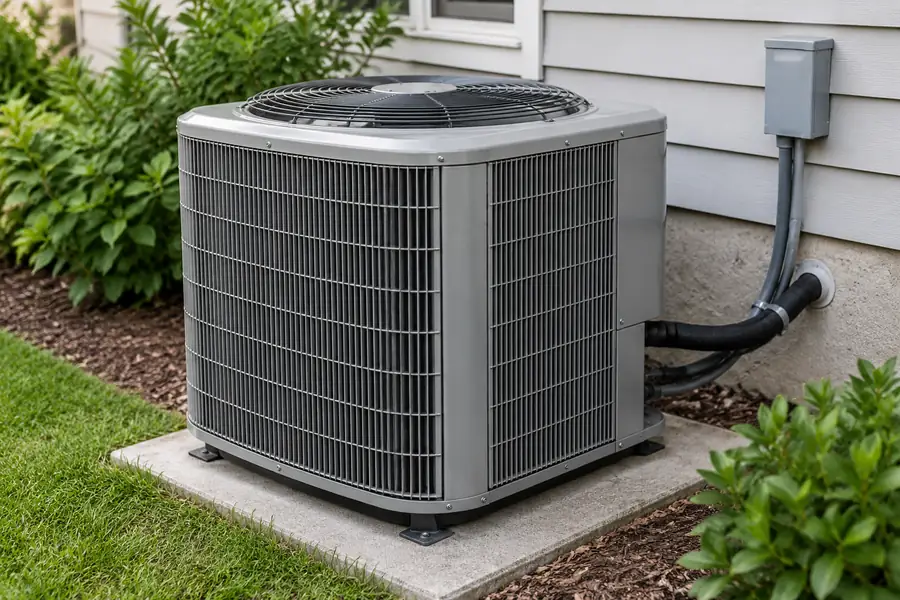
The best inverter heat pump system matches the building’s heating method and the heat it needs in winter. For a home with ducts, start with a matched variable-speed air-to-air system. For rooms without ducts, choose a ductless inverter system. For radiators or underfloor heating, look at an air-to-water heat pump serving a water-based (hydronic) system. Hotels and large commercial buildings can use staged air-to-water units. The final model should deliver the required heat at the local winter design temperature.
Use the comparisons below to select a system type, understand the important performance figures, and identify the Airproz product family worth evaluating for a water-based heating project.
Best Inverter Heat Pump Systems at a Glance
For a home with ducts, start with a variable-speed ducted heat pump. For a home without ducts, choose a ductless inverter system; for radiators or underfloor heating, compare air-to-water heat pumps. Hotels and commercial buildings with water-based heating can use staged commercial heat pump systems. The table also covers cold-climate and domestic-hot-water applications.
| Project or building | First system to evaluate | Why it may fit | Key selection condition |
|---|---|---|---|
| Home with existing ducts | Variable-speed ducted air-to-air heat pump | Uses compatible ductwork for heating and cooling | Duct condition, matched indoor/outdoor equipment, low-temperature output |
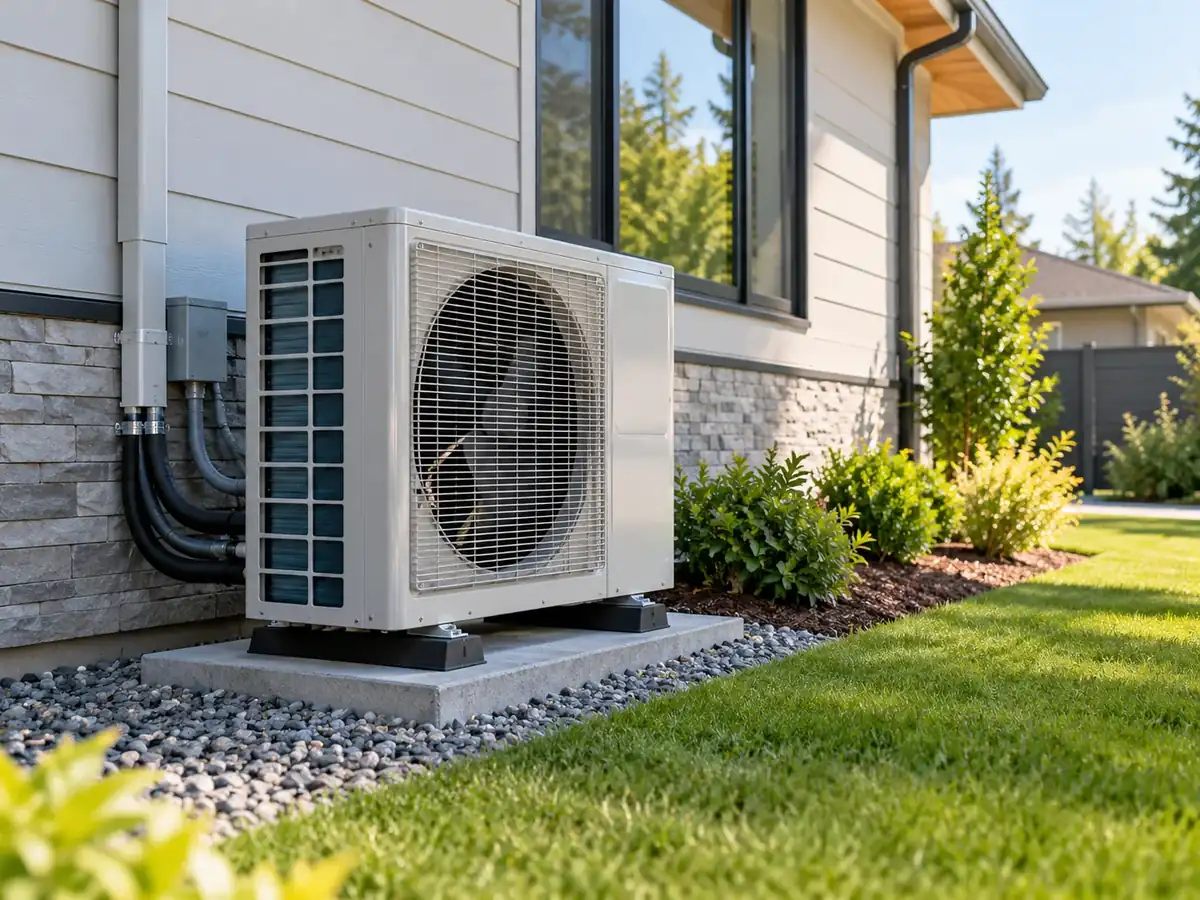
| House or apartment without ducts | Ductless inverter mini-split or multi-split | Zoned heating and cooling without installing full ductwork | Indoor-unit placement, room coverage, defrost and backup strategy |
| New home with underfloor heating | Inverter air-to-water monobloc | Low-temperature hydronic distribution can support good efficiency | Design heat load, required water temperature, hydraulic flow |
| Older home with radiators | Air-to-water inverter system after radiator assessment | Can retain suitable hydronic distribution | Each radiator’s output at proposed lower flow temperature |
| Cold-climate property | Cold-climate variable-speed system with verified capacity table | Capacity and controls designed for low ambient conditions | Actual output at local design temperature, defrost and backup heat |
| Hotel or commercial water-based heating plant | Commercial modular/cascade air-to-water system | Can stage units across varying load and provide redundancy if designed for it | Peak and minimum load, cascade controls, building management system (BMS), pumps and service access |
| Dedicated domestic hot water | Purpose-designed heat-pump water-heater system | Designed around storage and water-heating demand | Tank recovery, delivery temperature, controls, hygiene and peak use |
How Does an Inverter Heat Pump Work, and Is It Better Than Fixed Speed?
For buildings with heating or cooling demand that changes throughout the day, a correctly sized inverter heat pump usually provides steadier temperatures and less compressor cycling than a fixed-speed system. It adjusts compressor speed to meet demand rather than running only at one fixed speed. The benefit is especially useful during the many hours when the building needs less than its peak heating or cooling output.
The modulation range is the lowest-to-highest output available under stated conditions. Compare its minimum output with the building’s mild-weather demand: a system that cannot reduce output enough may still cycle often. Lower compressor speeds can also reduce operating noise on suitable equipment.
Which Heat Pump System Type Should You Choose?
Choose air-to-air when the building needs conditioned air delivered through ducts or indoor units; choose air-to-water when it needs heated or chilled water for a suitable hydronic distribution network. Select a dedicated hot-water system when the primary task is potable water rather than building heating.
Air-to-Air Inverter Systems for Ducted and Ductless Homes
A ducted variable-speed heat pump works with a matched indoor air handler and suitable ductwork. A ductless mini-split serves individual zones through wall, floor or ceiling units; a multi-split can serve several zones within its connected-capacity limits. Both types provide heating and cooling. For rated U.S. air systems, compare the approved indoor/outdoor combination, SEER2 (seasonal cooling efficiency), HSPF2 (seasonal heating efficiency), and the heat delivered at the local winter design temperature. The two seasonal ratings help compare energy performance within the same rating method.
Air-to-Water Inverter Systems for Radiators, Floors and Fan Coils
An air-to-water heat pump heats water for underfloor loops, compatible radiators or fan coils. It is a strong starting choice for a building with usable water-based heating or a new low-temperature distribution system. Lower heating-water temperature usually improves efficiency, provided the radiators or floors can still heat every room. Room-by-room heat loss and radiator output determine the required water temperature.
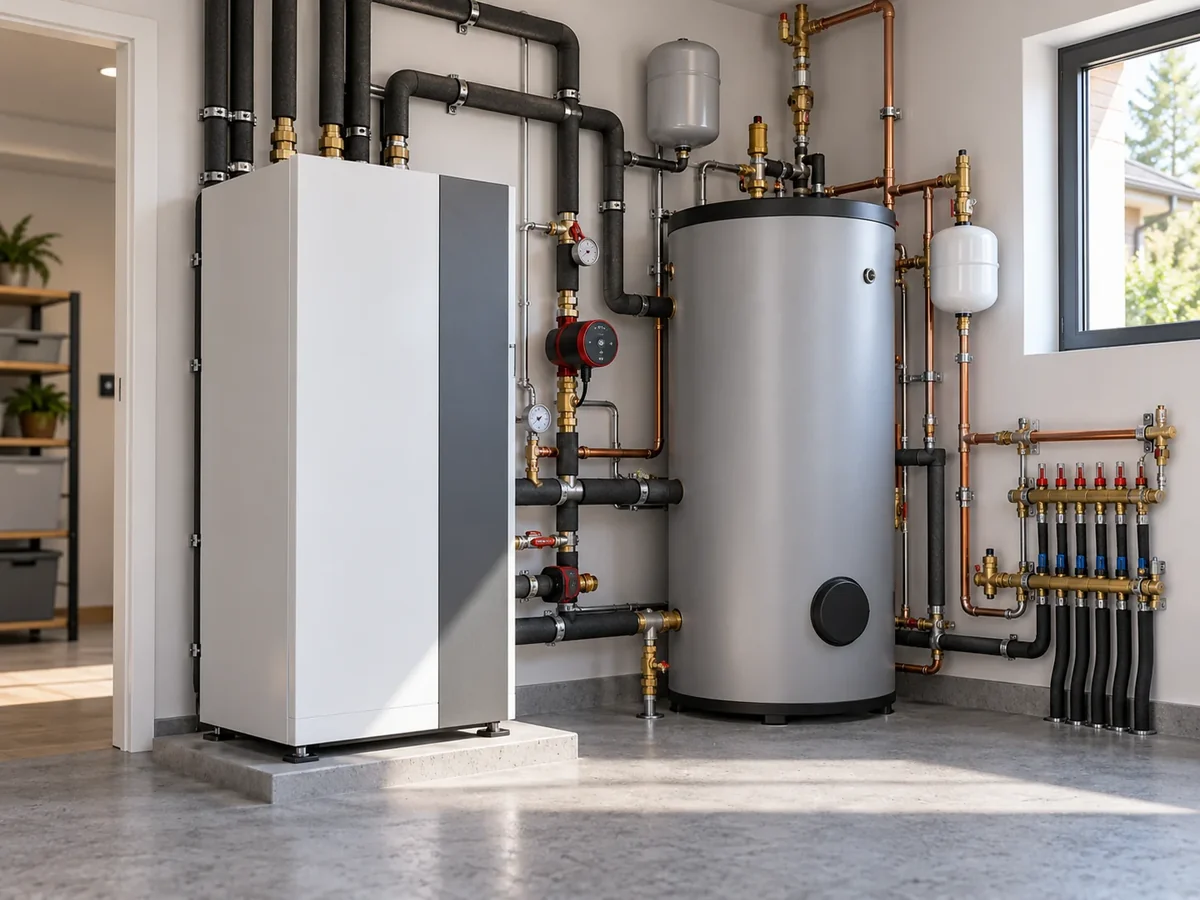
A monobloc keeps its refrigerant circuit in an outdoor packaged unit and connects to the building through water pipes. The design includes insulated pipework, water-flow control and suitable freeze protection. Split hydronic layouts use a different refrigerant/water arrangement and installation approach. For chilled-water cooling, use compatible emitters and controls that manage condensation and humidity; a standard heating radiator is not a ready-made cooling terminal.
For an older home with radiators, use a three-part assessment: (1) calculate each room’s heat loss in cold weather; (2) establish the radiator output at the planned heating-water temperature; and (3) match the heat pump’s capacity and efficiency to that temperature. Where radiators fall short, larger emitters or insulation improvements can reduce the required flow temperature. Leaving-water temperature means the temperature of water supplied from the heat pump to the heating circuit.
Inverter Heat Pump Hot-Water Systems
Size a heat-pump water-heating system around daily hot-water use, peak draw, incoming-water temperature, storage capacity, target delivery temperature and tank recovery time. A combined space-heating and hot-water installation also needs a compatible cylinder and controls that can serve both duties.
Choose a dedicated heat-pump water heater when stored domestic hot water is the main duty. Choose a combined air-to-water system when the heating plant can also recharge a compatible cylinder through suitable controls. In commercial buildings, size tank recovery and peak hot-water demand separately from the room-heating load.
Best Airproz Inverter Heat Pump Options by Application
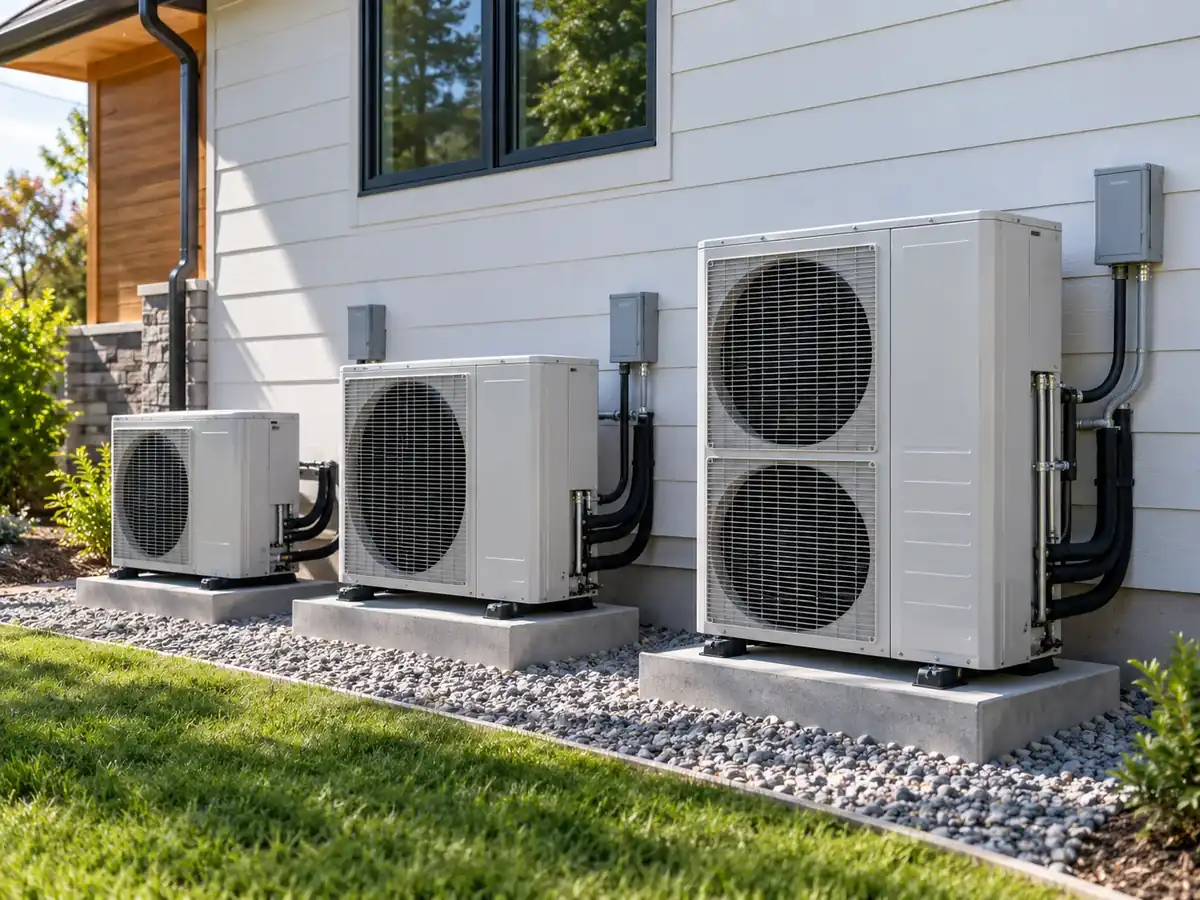
For smaller residential water-based heating projects, start with the Airproz R290 6/8/12kW monobloc family. For larger residential hydronic loads, compare the R290 18kW range. The R32 monobloc family provides an alternative for projects that suit its published specifications, while hotels and commercial buildings can evaluate Airproz commercial heating-and-cooling systems. The exact model follows the required heating capacity and water temperature.
| Airproz product family | First application to evaluate | Decisive model data |
|---|---|---|
| R290 Monobloc 6/8/12kW | Homes and smaller water-based heating projects | Heating capacity at the winter design temperature and required water temperature; modulation range |
| R290 Monobloc 18kW | Larger homes or hydronic loads | Cold-weather capacity, minimum output, electrical supply and water-temperature performance |
| R32 Monobloc | Alternative water-based system configurations | Like-for-like winter capacity and efficiency data; market-specific documents |
| Commercial Heating and Cooling | Hotels, apartment buildings and commercial water systems | Peak/part-load schedule, staging controls, standby strategy and model performance |
R290 Monobloc 6/8/12kW — Residential Hydronic Projects
The Airproz R290 6/8/12kW monobloc family is a starting range for homes with water-based heating and moderate design loads. Its published models include TC-006A1, TC-008A1/A3 and TC-012A1/A3, with single- and three-phase options for some capacities. The product page reports inverter heating-output ranges at an A7/W35-type test condition. Use the extended performance figures at the project’s winter temperature and planned water temperature to choose among these models.
Typical application: houses, villas and smaller hydronic buildings with underfloor heating or radiators sized for the intended water temperature. The design load, system flow and electrical supply determine which capacity and installation configuration fits the project.
See the Airproz R290 monobloc 6/8/12kW product family for the current published model table.
R290 Monobloc 18kW — Larger Homes and Higher Hydronic Loads
The Airproz R290 18kW monobloc family is aimed at larger residential water-based heating loads. The TC-018A1/A3 product page publishes heating-capacity modulation data at A7/W35 and a maximum outlet-water temperature of 75°C. For a high-temperature radiator design, use the capacity and COP at the intended leaving-water temperature: the 75°C figure describes the upper water-temperature limit, not the heating output available at that point.
Typical application: larger homes with water-based emitters whose heating demand suits this capacity range. Compare the minimum output with milder-weather loads to limit cycling, and account for the unit’s supply voltage, design water flow, outdoor noise and winter performance in the final equipment schedule.
See the Airproz R290 monobloc 18kW product page.
R32 Monobloc — Another Hydronic System Route
The Airproz R32 monobloc range gives hydronic projects another inverter system family to compare with R290. Start with suitable capacity, heating-water temperature, electrical configuration and destination-market requirements. Compare R32 and R290 candidates at the same winter condition; the matched data shows their actual efficiency difference more clearly than refrigerant type alone.
Commercial Heating and Cooling — Modular Plant Assessment
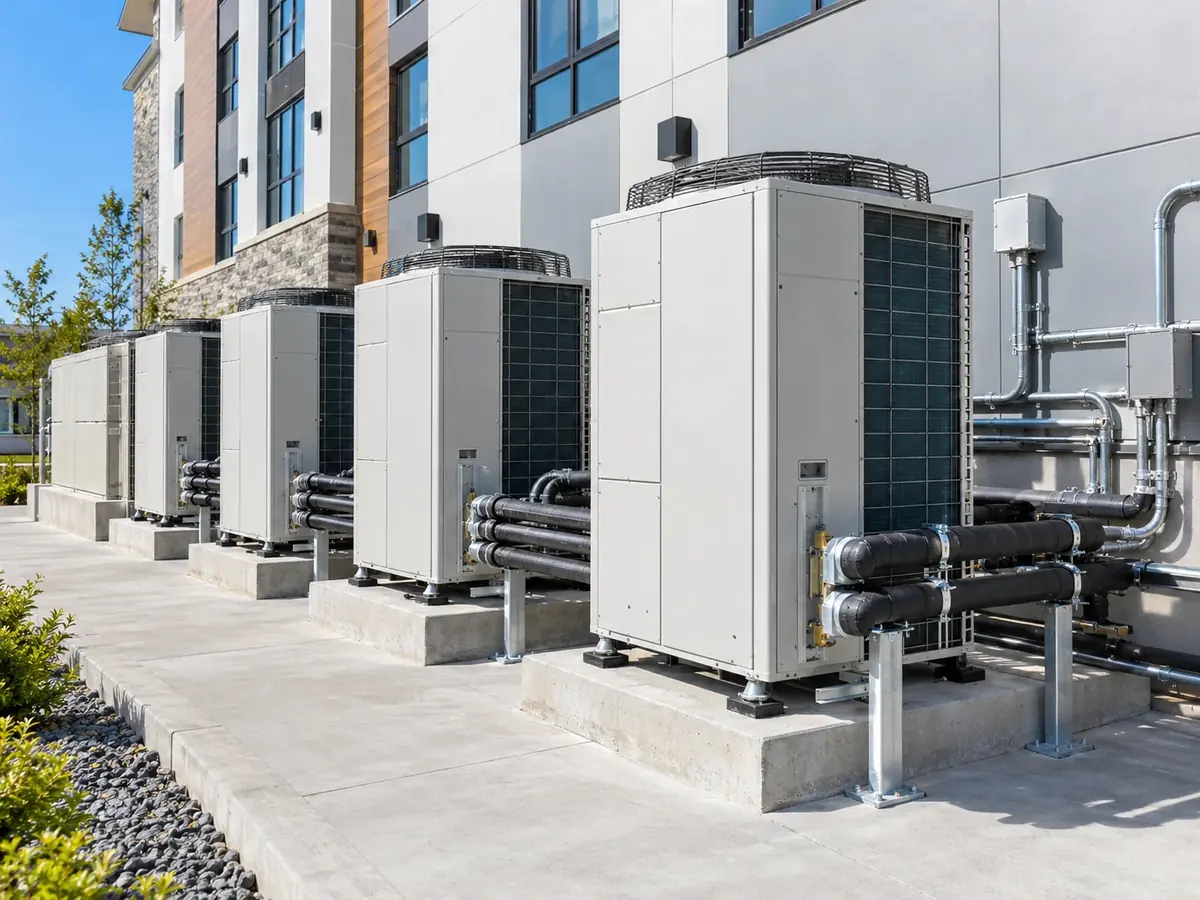
For hotels, apartment buildings and commercial sites, Airproz’s commercial R290 heating-and-cooling family is a starting point for a staged hydronic plant. The wider commercial heat-pump range supports the initial family comparison. Define peak and minimum loads, water flow, standby duty, access and building management system (BMS) controls first; these inputs determine unit count and the staging sequence. A project equipment schedule then ties capacities and controls to the building duty.
How We Built This Shortlist
This shortlist groups Airproz’s published product families by heating application and stated technical information. It is a manufacturer selection guide, not an independent laboratory ranking of brands. Specific models are matched using the project’s design conditions and the corresponding performance tables.
How Do You Size a Variable-Speed Heat Pump Correctly?
Size the heat pump to the building’s calculated winter heating load and the unit’s output at that design condition. Also compare the minimum compressor output with lighter heating demand, so the unit can operate steadily beyond the coldest days.
- Establish the application and heat loss. For a house, use an appropriate room-by-room or whole-building heating calculation; in U.S. residential air systems, the DOE’s Building America guidance points to ACCA Manual J, followed by compatible equipment selection. For commercial projects, use a defensible engineering load schedule.
- Record the local winter design outdoor temperature. A nominal output at 7°C outdoor air is not the amount automatically delivered at -10°C, -15°C or 5°F. Obtain the manufacturer’s extended performance table at the right ambient condition.
- Set the required output temperature. With air-to-water systems, include the flow temperature the radiators, floors or fan coils need at peak load; ask for capacity and COP at that water temperature.
- Compare the full modulation range. Maximum output must serve the intended peak duty or have an explicit backup plan. Minimum output should not be unnecessarily high relative to shoulder-season demand, or cycling can remain a problem.
- Check distribution and auxiliaries. Match indoor coils or emitters, water flow, pump head, defrost arrangement, power supply, controls and any backup heater. Treat the heat pump and distribution system as one engineered system.
A candidate is ready for a detailed design comparison when these three checks align:
| Selection check | Pass when | If the data is missing or fails |
|---|---|---|
| Winter heating capacity | Available output meets the design heat loss at the required water or air temperature | Request the extended performance table; review another model or a documented backup plan |
| Low-load operation | Minimum output suits the building’s lighter heating demand | Review cycling risk, system water volume and controls |
| Installation fit | Power, circulation or air distribution, clearances and controls are compatible | Revise the system layout and price the additional work |
Worked sizing example: a building needs 8kW at its winter design point, while a candidate supplies 7kW at the required water temperature. The design therefore has a 1kW heating shortfall to cover with another model, suitable backup capacity or a lower building load. This is an illustrative calculation rather than a test of an Airproz model.
Which Efficiency and Cold-Climate Numbers Actually Matter?
The four most useful figures for heating selection are delivered heating capacity at the winter design temperature, COP at the required heating-water or supply-air conditions, seasonal heating efficiency, and minimum modulating output. For air-to-water systems, compare COP and SCOP data on matching test conditions. For rated North American air-to-air systems, use HSPF2 for seasonal heating and SEER2 for cooling alongside low-temperature capacity.
| Specification | What it tells you | How to use it in a selection |
|---|---|---|
| COP at A7/W35 (7°C outside; 35°C water leaving the unit) | Heat delivered per unit electricity at that specific air/water condition | Compare with high-water-temperature COP and winter-condition output |
| COP at A7/W55 (if published) | Relative efficiency at a higher heating-water temperature | Use with the radiator design temperature and room heat-loss assessment |
| SCOP / seasonal rating | Seasonal heating performance for a declared climate and test regime | Compare the same declared climate and test method; calculate bills using local tariffs |
| SEER2 / HSPF2 | Standardized U.S. cooling/heating efficiency for applicable air systems | Use for rated U.S. air systems; pair with published cold-weather capacity |
| Low-ambient heating capacity | Useful kW or BTU/h delivered at a specified cold condition | Compare it with the calculated heat loss at the same outdoor temperature |
| Minimum modulating capacity | Lowest stable output the equipment can typically produce at a stated condition | Compare it with lighter-load demand and the installed control strategy |
| Maximum outlet-water temperature | An operating limit of a hydronic unit | Use the capacity and COP at the water temperature the emitters require |
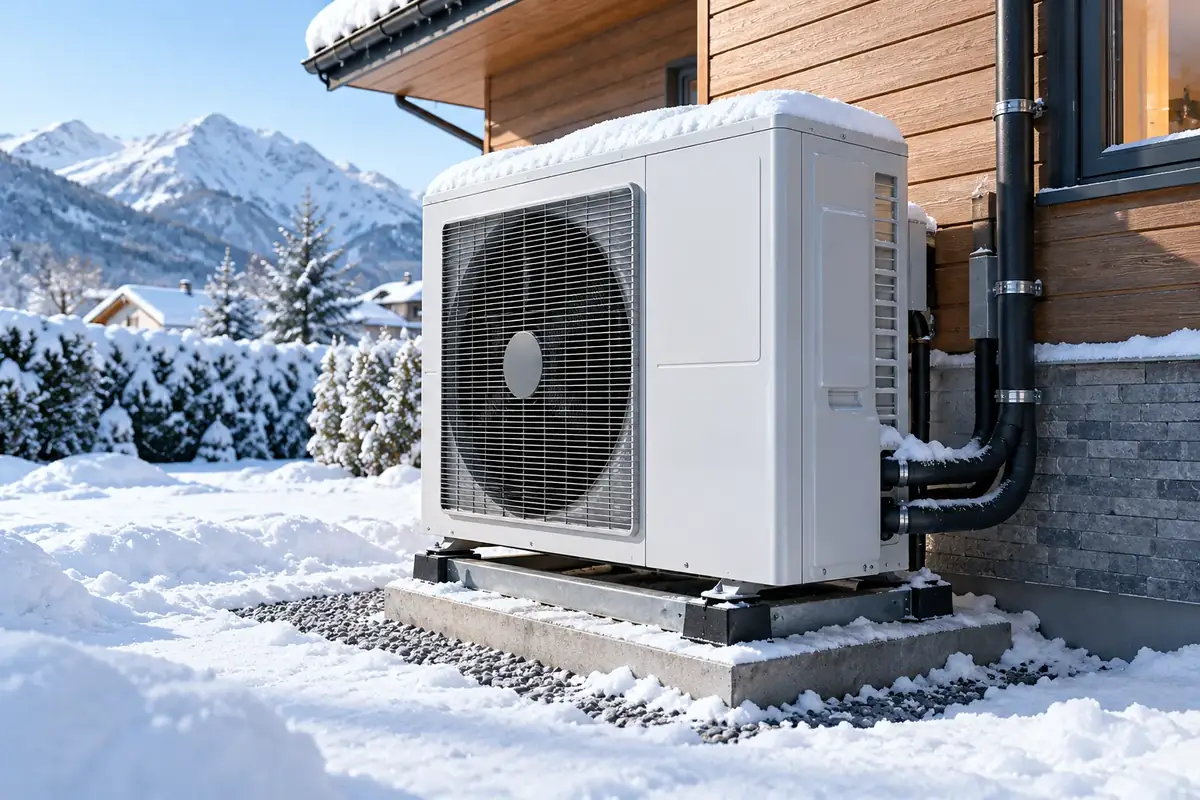
Cold-weather suitability means enough delivered heat at the building’s winter design temperature. A unit may be able to run at -25°C while providing less heat than the building needs. Use these four figures together to assess winter performance:
| Winter evidence | What to check |
|---|---|
| Minimum operating temperature | Identify its permitted operating limit; pair with capacity at the same temperature |
| Delivered heating capacity | kW or BTU/h available at the local winter design temperature and required supply temperature |
| Power input and COP | How much electricity is needed to deliver that heat at the stated condition |
| Defrost and backup plan | How the installed system covers winter operation when usable heat is reduced |
Where design-weather output falls below the building’s heat loss, select more capacity or include designed backup heat. For qualifying U.S. split or packaged air-source systems, the ENERGY STAR Cold Climate criteria include a COP of at least 1.75 at 5°F and at least 70% retention of the 47°F heating capacity at 5°F, along with other thresholds. Apply those criteria to the eligible air-system category; European air-to-water projects use their applicable product ratings and project conditions.
The shorthand A7/W35 means 7°C outdoor air and 35°C water leaving the heat pump. Colder outdoor air and hotter heating water both make the heat pump work harder. Compare the same model at A7/W35, A7/W55 and the actual cold-design point where data is available. Radiators and floors designed to work with lower water temperatures can improve seasonal performance.
Is R290 or R32 the Better Refrigerant for an Inverter System?
For an outdoor air-to-water monobloc where low refrigerant climate impact is a priority, R290 is the first option to evaluate. R32 is a practical alternative when its equipment design, local service support and destination-market requirements better fit the project. For heating efficiency, compare the complete heat pump models at the same outdoor and leaving-water temperatures rather than assigning one refrigerant a fixed COP advantage.
R290 is classified A3 (higher flammability), while R32 is classified A2L (lower flammability). In an outdoor R290 monobloc, the factory-built refrigerant circuit stays within the outdoor unit while water pipes connect to the building. The installation requires suitable freeze protection, safety clearances and ignition-source controls; refrigerant charge, siting and destination-market rules shape the safe design. R32 systems need equipment and servicing appropriate to A2L. European projects should follow the F-gas rules and transition dates applicable to the exact equipment category.
How Should You Compare Quotes and Total Ownership Cost?
Compare three costs for the same heating job: the fully installed price, expected seasonal electricity cost, and servicing or replacement expenses over the planned ownership period. Use the same building heating load and design conditions for each quote, with exact model references, equipment scope and installation work included.
| Item to request | Why it changes the decision |
|---|---|
| Exact outdoor and indoor/hydronic model references | Avoids comparing a complete system with a bare unit or an incompatible pair |
| Heating output and COP at design ambient and water conditions | Confirms usable performance where the building needs it |
| Minimum heating output and defrost data | Helps identify excessive cycling or a missing winter allowance |
| System layout and accessories | Clarifies tanks, pumps, valves, emitters, controls, supports and freeze protection |
| Electrical supply, maximum current and start/backup provisions | Exposes installation and electrical-upgrade costs |
| Documented certifications for the destination market | Avoids assumptions based on a generic logo or product-family claim |
| Installed noise, service clearance and spare-parts plan | Addresses siting, reliability and downtime |
| Warranty scope, installer support and lead time | Clarifies commercial risk and whether support covers the exact model/market |
Seasonal running cost follows the heat required, seasonal efficiency and electricity tariff. The seasonal performance factor (SPF) is useful heat delivered over the season divided by electricity used. The table illustrates a calculation with assumed SPF and tariff values; it is not Airproz measured performance or a quotation.
| Same seasonal heating requirement | Assumed SPF 3 | Assumed SPF 4 |
|---|---|---|
| Useful heat delivered | 12,000 kWh | 12,000 kWh |
| Heating electricity (heat ÷ SPF) | 4,000 kWh | 3,000 kWh |
| Electricity price (illustration only) | $0.20/kWh | $0.20/kWh |
| Illustrated heating electricity cost | $800 | $600 |
At the assumed tariff, SPF 4 uses 1,000kWh less electricity and saves $200 per heating season compared with SPF 3. For a project budget, also include circulation pumps, defrost, auxiliary heat, local tariffs and installation price.
For U.S. residential estimates: the federal Section 25C energy-efficient home improvement credit does not apply to qualifying property placed in service after December 31, 2025, according to the IRS Form 5695 instructions. Check current state and utility programs separately rather than subtracting an assumed federal credit from a 2026 quote.
What Are the Most Common Selection Mistakes?
The most common mistakes are sizing a heat pump from its nominal kW rating, comparing COP figures measured at different temperatures, and choosing a system without checking the building’s heating-water requirements. Other errors include excessive minimum output, overlooked cold-weather capacity, combined hot-water loads and missing installation costs. The seven corrections below show what to do instead.
- Sizing from nominal kW: match the model to heating output at the design outdoor and delivery temperatures.
- Comparing brochure peak COP: compare the same test conditions and a relevant seasonal rating.
- Keeping radiators without a room check: compare each room’s heat loss with its radiator output at the planned flow temperature.
- Oversizing beyond part-load demand: use minimum modulation output and controls to manage mild-weather cycling.
- Selecting by lowest operating temperature: use delivered heating capacity at the design temperature.
- Combining two heating duties without priority controls: size domestic-hot-water recovery and space-heating operation together.
- Leaving installation work out of the comparison: include pipework, freeze protection, electrical supply, outdoor airflow and noise.
Service and Warranty Checks Before Final Selection
A dependable project plan names the commissioning engineer, local service provider, spare-parts route and written warranty scope. Include the handover documents in the proposal. For commercial plants, confirm whether the remaining modules can cover the required duty when one module is out of service.
For detailed site and commissioning considerations, see the Airproz air-source heat pump installation guide.
Frequently Asked Questions
What is the best inverter heat pump system for a house?
For a home with ducts or indoor air units, choose a correctly sized air-to-air inverter system. For a home with radiators or underfloor heating, an air-to-water inverter system is the stronger starting point. The final capacity comes from the home’s heat loss and local winter conditions.
Are inverter heat pump systems suitable for cold climates?
Yes. A cold-climate inverter heat pump can heat a home in freezing weather when its delivered output covers the home’s design heat loss. Use the model’s low-temperature capacity table to size it and choose a defrost and backup-heating arrangement suited to the climate.
Does a higher COP mean a better heat pump system?
Not necessarily. A higher COP means the unit delivers more heat per unit of electricity at the stated test conditions, but it does not by itself make the system a better fit for your building. Compare COP at matching temperatures, then look at cold-weather heating capacity and the appropriate seasonal efficiency rating.
Can a heat pump replace a boiler without changing radiators?
Yes, a heat pump can replace a boiler while keeping the existing radiators if those radiators supply enough heat at the planned water temperature. Compare room heat loss with each radiator’s output. Larger radiators or building insulation improvements can reduce the water temperature needed.
Does an inverter heat pump always need a buffer tank?
No. A buffer tank is needed only where the system design requires extra water volume, hydraulic separation or flow stability. Follow the manufacturer’s minimum water-volume and flow requirements and account for zone valves, defrost and cycling.
Can the same inverter heat pump provide heating, cooling and hot water?
Yes, suitably equipped air-to-water systems can provide space heating, cooling and domestic hot water. They use compatible room emitters and controls, a hot-water cylinder for domestic supply, and condensation management for chilled-water cooling. The available modes vary by model and system design.
Is an inverter heat pump worth paying more for?
An inverter heat pump is often worth the extra cost in buildings with long heating or cooling seasons and changing daily loads. Variable-speed operation can improve temperature control and reduce cycling. Compare the installed price premium with expected seasonal electricity savings and service costs to estimate payback over the planned ownership period.
Does a cold-climate inverter always eliminate backup heating?
No, not in every climate or building. A system that covers the calculated design heat loss may need little or no supplementary heating for capacity reasons. Where the cold-weather output falls short, size backup heat to cover the difference and account for defrost and other design needs.
What information should I send to shortlist a system?
Send the project location, calculated heating load, local winter design temperature, heating-distribution type, target water or air temperature, domestic-hot-water duty, electricity supply and required market approvals. These details let Airproz narrow the equipment family and identify the model performance documents needed for a proposal.
Conclusion: What Is the Best Inverter Heat Pump System?
For homes with ducts or indoor air units, a properly sized variable-speed air-to-air heat pump is the best starting choice. For radiators or underfloor heating, choose an air-to-water inverter system; where domestic hot water is the main duty, choose a dedicated heat-pump water heater. In cold climates, select the exact model by its delivered output at the winter design temperature, then compare seasonal efficiency, service support and installed cost.
For an air-to-water project, share the project location and market, design heating load, coldest design temperature, radiator or underfloor-heating conditions, hot-water duty and electrical supply through the Airproz project contact page. Airproz can identify the product family worth evaluating and the model-specific capacity, compliance and system documents needed for the next proposal step.
Technical Sources and Verification
Definitions and selection criteria can be checked against the sources below. Model-specific performance should be confirmed using the relevant manufacturer’s current data sheet.