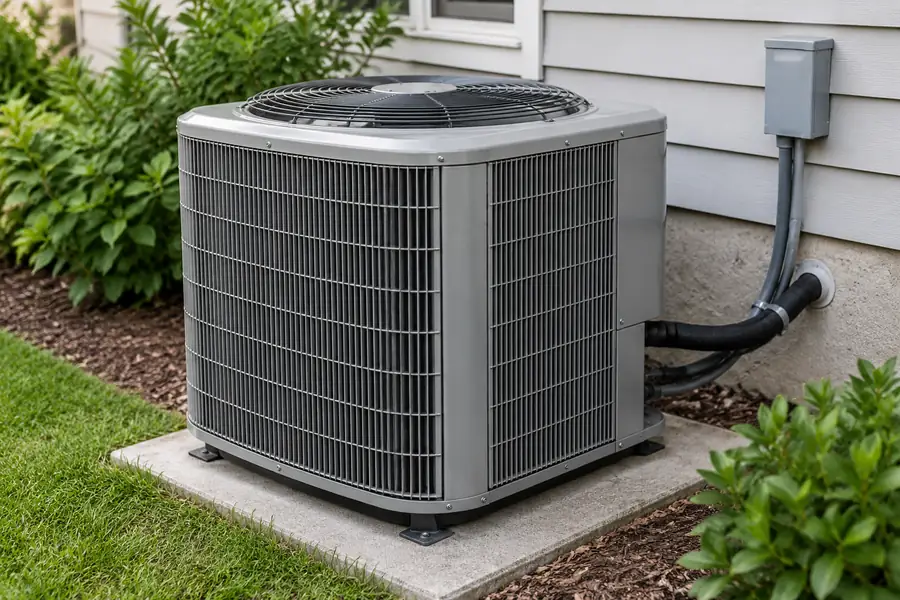
Quick answer: A water-cooled air conditioner removes heat from indoor air and transfers that heat to water rather than releasing it directly to outdoor air through an air-cooled condenser. It still uses a refrigeration cycle in most applications. The water then needs somewhere to release the heat, such as a cooling tower, a central condenser-water loop, or an approved water supply and discharge route.
For a typical single-family home, an air-cooled split AC or heat pump is usually the more practical first choice. Water-cooled equipment makes more sense when a building already has a suitable water loop, outdoor condenser space is restricted, or a large commercial or industrial system can support the extra pumps, piping, controls, and water management.
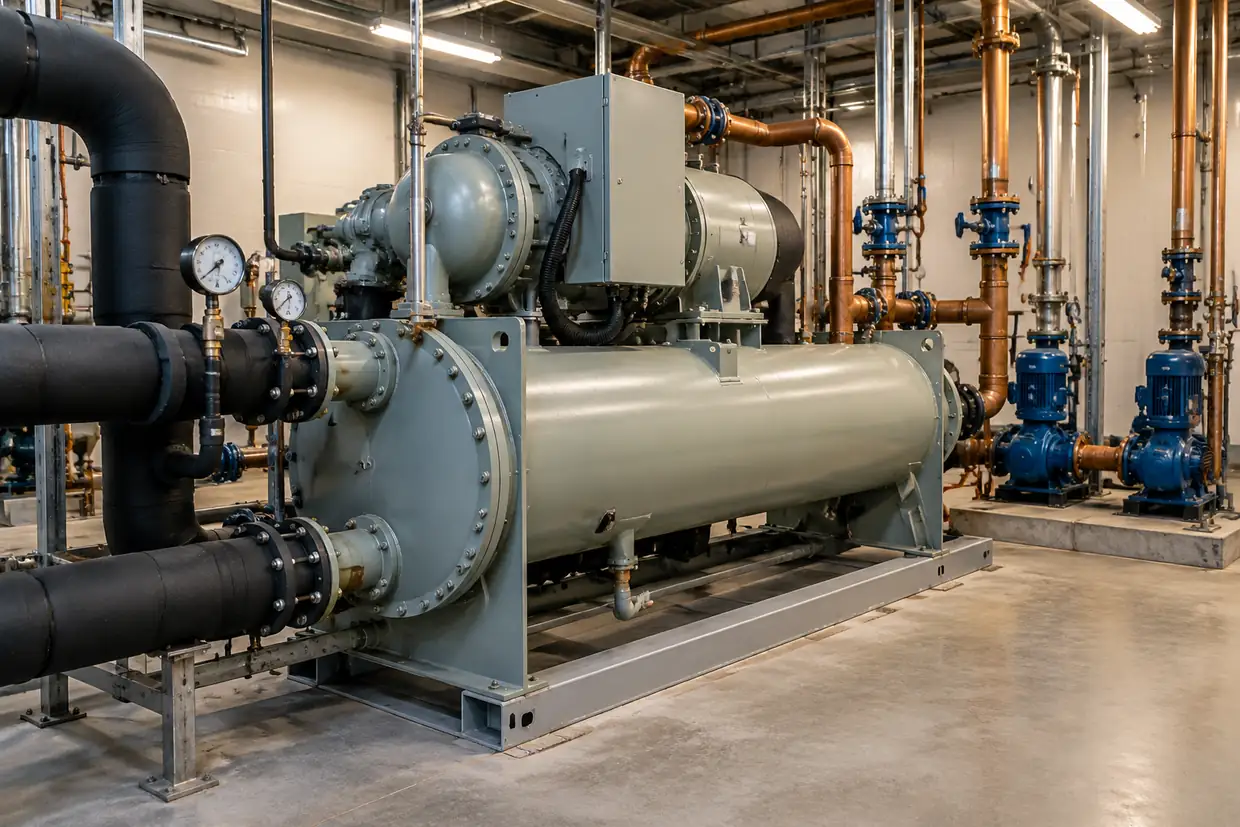
Which setup should you check first?
- Standalone home without a shared water loop: Start with an air-cooled split AC or heat pump.
- Apartment with an approved condenser-water loop: Ask management for the water temperature, flow limits, available capacity and connection approval.
- Large commercial building: Compare complete air- and water-cooled systems at the same load and design conditions.
- Temporary spot cooling: Consider portable water-cooled AC only when the required supply, return or permitted discharge is available.
What Is a Water-Cooled Air Conditioner?
A water-cooled air conditioner is a refrigeration-based cooling system that uses water to remove heat from its condenser. The condenser is the component where hot refrigerant releases heat and turns back into liquid. Using water at this point can help the equipment reject heat under suitable operating conditions. The ASHRAE Handbook on condenser water identifies both once-through and recirculating water systems.
The name describes how heat leaves the cooling equipment, not how the rooms receive cold air. A room may receive cool air directly from a water-cooled packaged unit. In a larger building, a separate chiller may cool a chilled-water loop, and fan-coil units or air handlers use that chilled water to cool rooms.
These designs use water in different ways. The key choice is where the water releases the heat: through a building loop, cooling tower, or another approved discharge path. That route must handle the equipment’s full rejected heat.
How Does a Water-Cooled Air Conditioner Work?
A common water-cooled direct-expansion air conditioner follows five steps:
- Indoor air gives up heat. A fan passes warm room air over the cold evaporator coil. Refrigerant absorbs that heat and usually removes some moisture from the air as well.
- The compressor raises refrigerant pressure. The warm refrigerant vapor is compressed to a temperature high enough to release heat to the available condenser water.
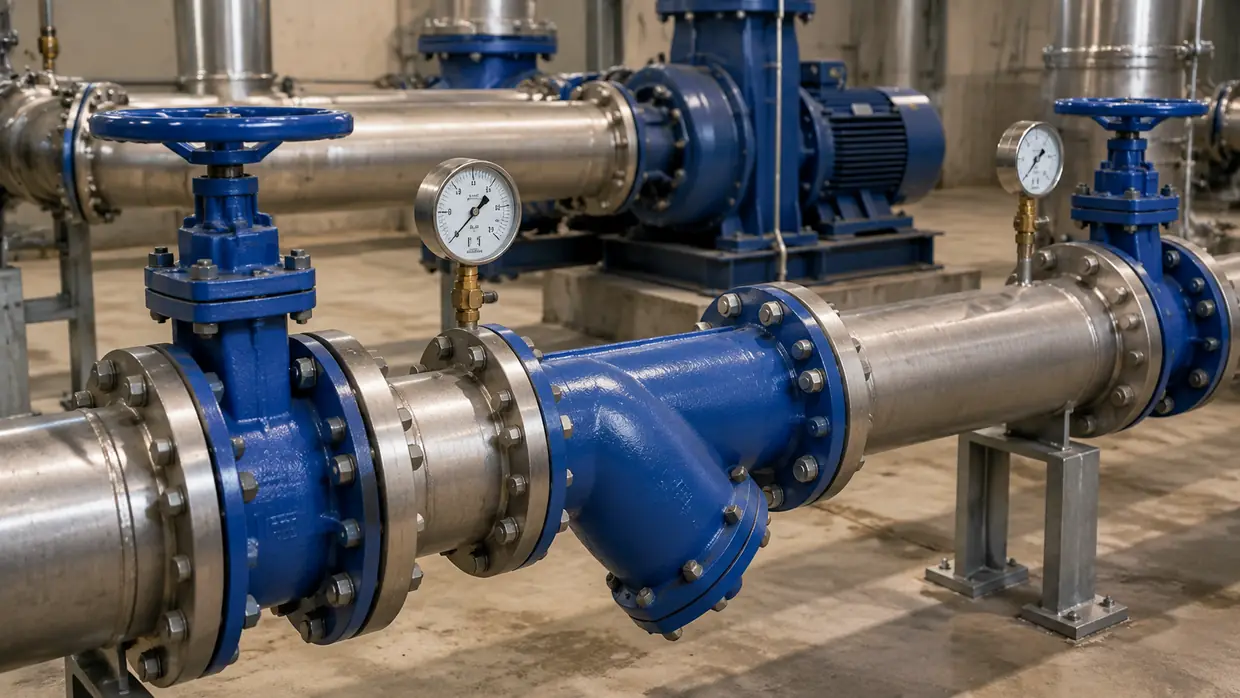
- Condenser water takes away heat. Hot refrigerant travels through a water-cooled condenser. Heat passes across the heat exchanger wall into the water; the water and refrigerant stay in their separate circuits.
- The water carries heat to another location. A pump may send it to a cooling tower or a building water loop. Some small portable units use an approved supply and drain instead.
- The refrigerant cycle repeats. After condensation and expansion, refrigerant returns to the indoor evaporator to take in more room heat.
The water becomes warmer after it absorbs heat. In a recirculating installation, it must be cooled again before returning. A cooling tower commonly releases much of this heat as a small portion of water evaporates into outdoor air. This is why a water-cooled condenser does not remove the need to discharge heat from the property.
Two different water loops in a chilled-water plant
In a central chilled-water system, the chilled-water loop carries cooling from the chiller to indoor air handlers or fan-coil units. A separate condenser-water loop carries heat from the chiller condenser toward a cooling tower or another heat-rejection device. ENERGY STAR explains this separation in its guide to water-side economizers.
For room-side equipment, our fan coil unit guide explains how a chilled-water coil and fan can cool an occupied space.
Which Types of Water-Based Cooling Systems Are Different?
Several products use water, but the word “water” may describe a different job in each one. This comparison helps you avoid specifying the wrong system.
| System | What the water does | Usual application | Main question to check |
|---|---|---|---|
| Water-cooled direct-expansion AC | Takes heat away from the refrigerant condenser | Buildings with condenser-water service; selected commercial units | Where will warm condenser water reject heat? |
| Water-cooled chiller with chilled-water terminals | One loop cools the rooms; another loop rejects condenser heat | Hotels, hospitals, offices, larger buildings | Are both the chilled-water and heat-rejection loops planned? |
| Water-source heat pump | Exchanges heat with a building water loop; can provide heating or cooling | Apartments, hotels, mixed-use buildings with a shared loop | Can the loop support both heating and cooling conditions? |
| Water-cooled portable AC | Uses water through its condenser instead of a hot-air exhaust duct | Temporary indoor spot cooling | Is a permitted water supply, return, or drain available? |
| Evaporative cooler (“swamp cooler”) | Evaporates water directly or indirectly to cool air; usually no compressor refrigeration | Dry-climate ventilation and cooling | Is the climate dry enough, and how will air and humidity be managed? |
Chilled-water pipes deliver cooling to indoor coils; condenser-water pipes carry rejected heat away from the refrigeration machine. Connect a water-cooled condenser only to a system designed and approved for its operating temperature, required flow, pressure drop, and full heat-rejection load.
A water-source heat pump can use a suitable building water loop to heat or cool rooms by changing the direction of its refrigeration cycle. Check the selected model’s rated heating function, controls, and entering-water temperature limits.
Is an evaporative air cooler a water-cooled AC?
No. A direct evaporative cooler passes air through wet media so evaporation lowers the air temperature and adds moisture. A refrigerant-based water-cooled AC uses a compressor and a condenser that transfers heat to water. Evaporative coolers generally work better in dry air; their performance drops as outdoor humidity rises. The U.S. Department of Energy’s guidance on evaporative coolers explains the different cooling process.
Water-Cooled vs. Air-Cooled Air Conditioners
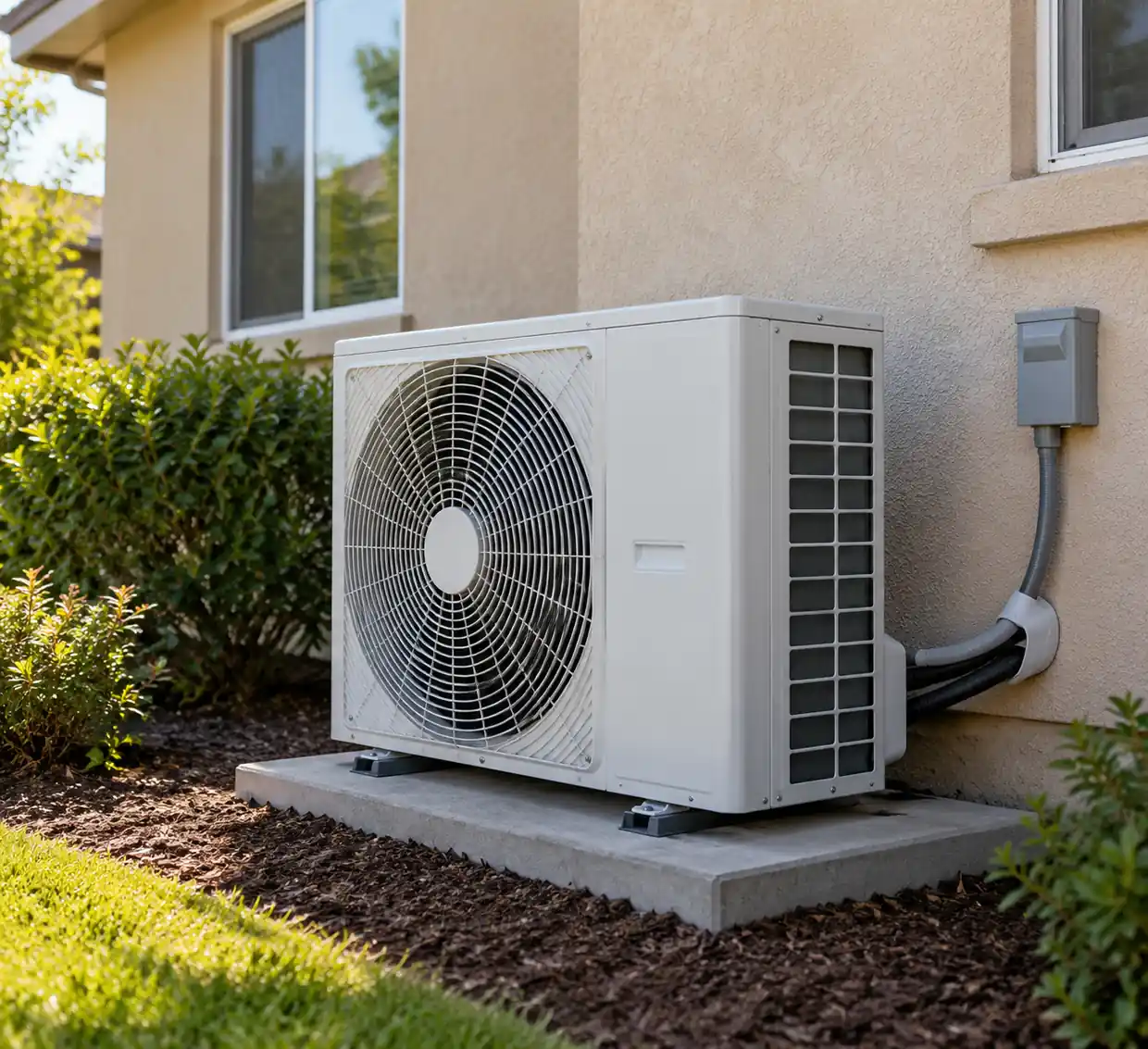
Water-cooled equipment can have an efficiency advantage, but air-cooled equipment is simpler to install and maintain. The fairest comparison matches the same delivered cooling capacity and real operating conditions, then includes every supporting pump and fan.
| Selection factor | Water-cooled condenser system | Air-cooled condenser system |
|---|---|---|
| Heat rejection | To circulating or supplied water | To outdoor air through a condenser coil and fan |
| Supporting equipment | Water pump, piping, controls; often cooling tower or heat exchanger | Outdoor condenser airflow and electrical connections |
| Initial installation | Usually more site work unless a suitable water loop already exists | Usually simpler for a small or typical home |
| Electrical use | Refrigeration plant may use less power at comparable conditions; include pumps and tower fans | No condenser-water pump or cooling tower for a typical split system |
| Water use | Depends on recirculation, evaporation, blowdown, and makeup water | Usually no condenser cooling-water demand |
| Maintenance | Water quality, scale, corrosion, strainers, tower hygiene where applicable | Condenser-coil cleanliness, airflow, refrigerant and electrical care |
| Typical first choice | Large or central plant; building with existing water loop | Most homes and small standalone buildings |
When might water cooling perform better?
When suitable condenser water stays cooler than the outdoor air available to an air-cooled condenser, the refrigeration machine may operate with a smaller temperature lift. This can reduce compressor work. However, refrigeration efficiency is not the same as whole-system efficiency. The cooling-tower fan, circulating pumps, water treatment, and part-load controls affect the final result.
For example, suppose two proposed systems both deliver 30 kW of cooling. For an illustration only, the air-cooled refrigeration system has a cooling coefficient of performance (COP) of 3.0, while a water-cooled machine has a COP of 4.0. Assume the water-cooled option also needs 1.0 kW for pumps and tower fans.
- Air-cooled electrical demand: 30 ÷ 3.0 = 10.0 kW.
- Water-cooled total electrical demand: 30 ÷ 4.0 + 1.0 = 8.5 kW.
- At 2,000 equivalent full-load hours: 20,000 kWh versus 17,000 kWh.
- At an assumed electricity rate of $0.18/kWh, that difference is $540 per year before any water, sewer, treatment, maintenance, or capital costs.
For your project, compare each system’s cooling capacity and total electrical demand at matching operating temperatures. Replace the example COP and auxiliary-power figures with the proposed models’ ratings. Then compare annual costs using actual operating hours, electricity and water charges, and maintenance.
The answer may change by hour or season. A cooling tower’s water temperature depends in part on the outdoor wet-bulb temperature, which reflects air temperature and humidity. An air-cooled condenser mainly rejects heat against outdoor air temperature. When weather changes, or the equipment runs below full capacity, compressor savings and pump or tower-fan power can change too. For large chillers, compare both full-load and part-load data; the U.S. Department of Energy’s chiller purchasing guidance explains why both matter.
Ask for total measured or rated electricity use across matching operating conditions, including the compressor, condenser-water pumps and tower fans. A higher chiller-only COP does not guarantee a lower whole-building energy bill.
Is a Water-Cooled Air Conditioner Good for a Home?
Usually not for a standard single-family home that has no existing water loop. A conventional air-cooled mini-split or central air conditioner normally avoids the need for cooling-tower infrastructure and ongoing condenser-water treatment. Start by checking your home’s cooling load, permitted outdoor unit location, available power, and existing ducts.
When an outdoor unit is allowed, our mini split air conditioner guide explains the indoor and outdoor equipment arrangement. For a specific air-cooled option, the AirProz R32 SA inverter split air conditioner uses an outdoor condenser rather than a condenser-water connection.
Water-cooled options are worth investigating when you live in a high-rise apartment served by a central condenser-water loop, a building where outdoor equipment is restricted, or a development with shared water-source heat-pump infrastructure. Here, the water service may already be part of the building design.
Apartment with no outdoor condenser space
Ask building management for the designated condenser-water supply and return points, along with permitted flow, entering-water temperature, pressure, and connection conditions. Request the equipment and connection limits in writing.
- What loop is provided? Is it an approved condenser-water loop or a chilled-water loop?
- Can it carry the load? What entering-water temperature, flow, pressure and spare heat-rejection capacity are available?
- When does it run? Does the loop operate during the hours and seasons when the apartment needs cooling?
- Who approves and pays? What unit approvals, connections, metering, water-related charges and service access are required?
Before ordering, obtain the equipment manufacturer’s connection requirements and written approval from building management for the proposed unit and water loop.
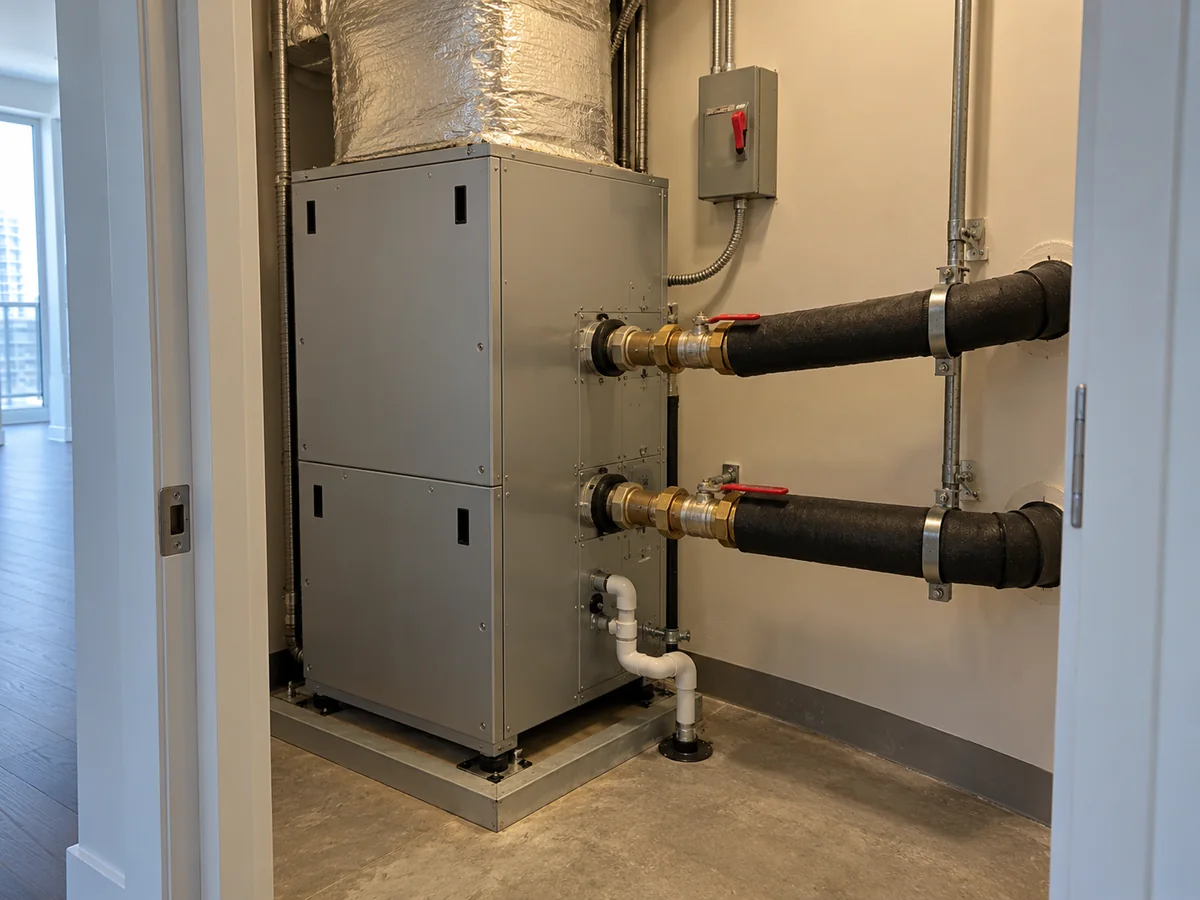
If the building offers no shared loop, check permitted air-cooled options first. The Airproz guide to air conditioner types explains window, portable, through-wall, ductless, and central arrangements. Building rules and installation access may decide which is feasible.
Can water-cooled AC heat the home?
Some water-source heat pumps can heat and cool by moving heat in either direction. For year-round comfort, choose a model explicitly rated as a heat pump, then check its heating capacity, allowed entering-water temperatures, and the building-loop operating rules.
Where Are Industrial and Commercial Water-Cooled Air Conditioners Used?
Water cooling is most useful where the building has the scale, existing infrastructure, and service staff to support it. Common applications include larger offices, hotels, hospitals, process areas, data centers, and temporary industrial spot cooling.
- Larger buildings: A water-cooled chiller can feed several air handlers or fan-coil zones. The system needs an equipment room, distribution pipes, controls, and a planned heat-rejection loop.
- Industrial spaces: A local water-cooled packaged AC may solve a spot-cooling problem when warm-air exhaust ducting is difficult and approved process or condenser water is available.
- Server and technical rooms: Water-cooled portable units may avoid a hot exhaust hose through a window, but the cooling-water route and leak management become important.
- Apartment towers or hotels: Shared condenser-water loops can serve several individual water-source heat pumps, where the original building design supports that arrangement.
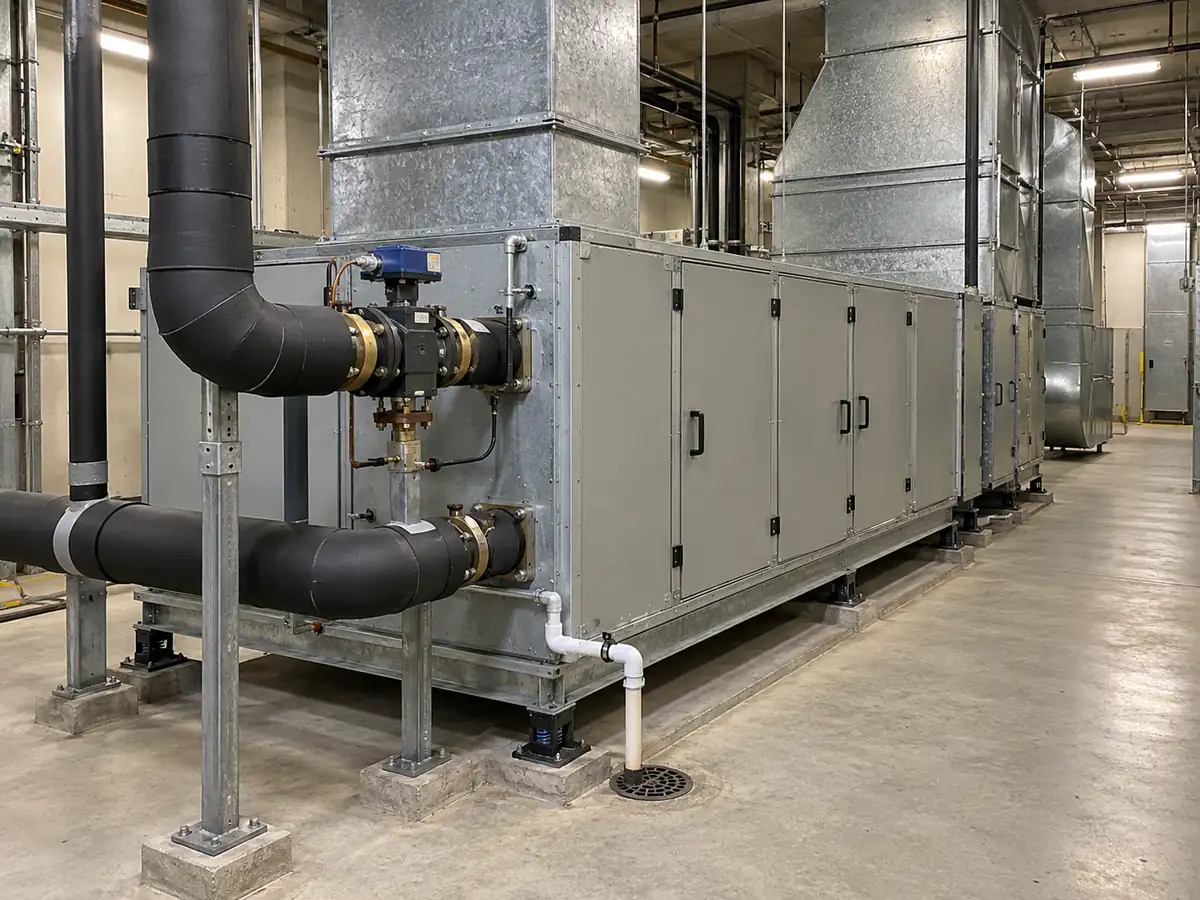
For hotel rooms or offices where outdoor condenser units are permitted and a central water plant is unnecessary, the AirProz R410A UNS inverter split air conditioner is an air-cooled room-level alternative. Compare the model’s rated performance and installation needs with the project load.
For any of these uses, begin with required cooling at design conditions, hours of operation, the water source, available equipment space, and who will operate the water system. A device that fits physically may be unsuitable if the shared loop cannot accept its heat output during peak demand.
How Does a Portable Water-Cooled Air Conditioner Work?
A portable water-cooled air conditioner is a real refrigerant-based AC on wheels or in a movable cabinet. Instead of sending a large stream of hot condenser air through a window hose, it transfers condenser heat into a water stream. Commercial examples are designed for indoor spot cooling and may connect to an existing building water loop or to an approved water supply and drain.
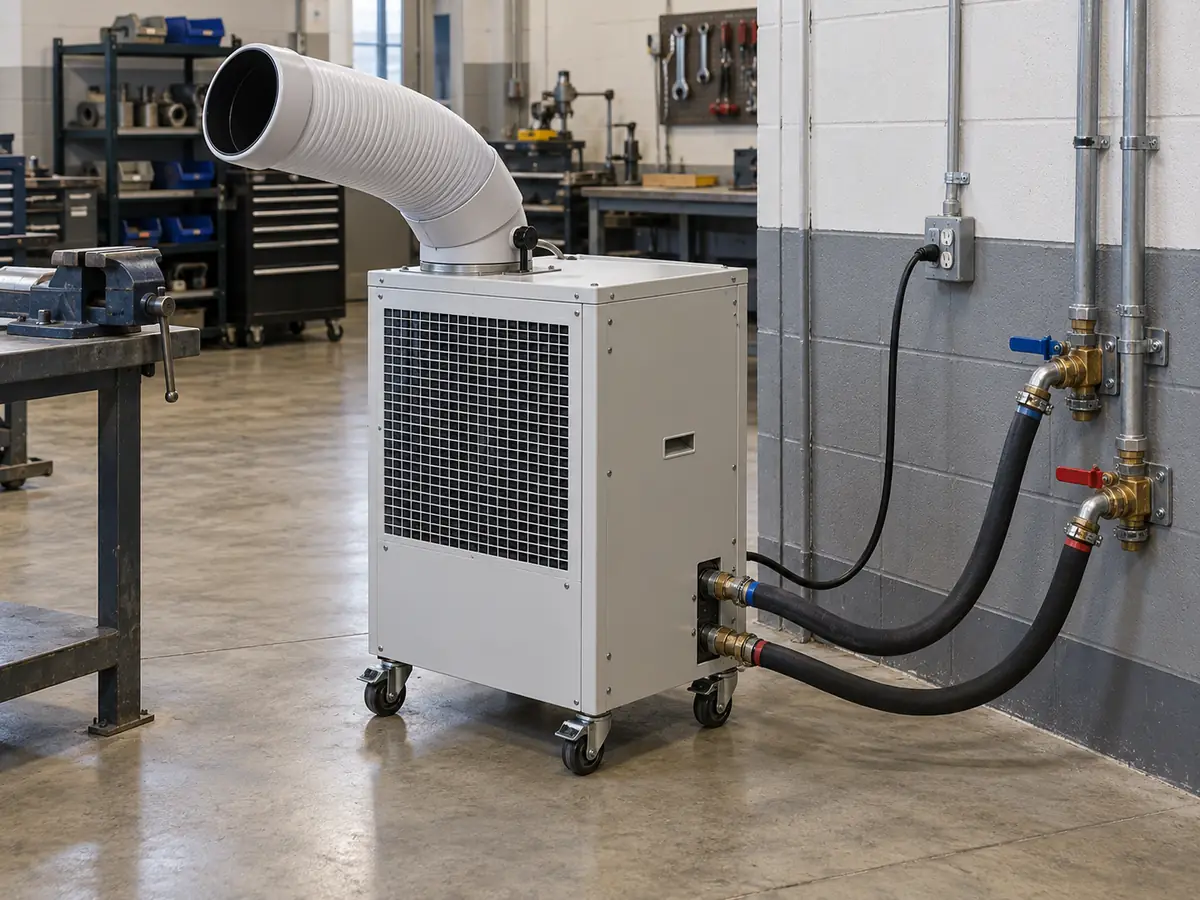
“Portable” describes the wheeled cabinet, not a machine that works without connections. Check the rated conditions and required services before comparing two models.
| Specification to ask for | What you need to confirm |
|---|---|
| Cooling capacity | Rated delivered cooling and the indoor and water temperatures used for that rating |
| Electrical supply | Voltage, phase, rated current and connection or protection requirements |
| Condenser-water conditions | Allowed entering-water temperature, required flow and pressure limits or pressure drop |
| Water and drain connections | Inlet and outlet hose size, approved return or discharge route, water-quality limits |
| Condensate and controls | Condensate drain or tank, high-water alarms, automatic shutoff and servicing access |
To identify a portable water-cooled AC, look for a refrigerant compressor, rated cooling capacity, and condenser-water connections in its specifications. A wet-pad-and-fan cooler relies on evaporation instead and serves a different cooling task.
How Much Water Does a Water-Cooled AC Use?
Water use depends on how the system rejects heat. A once-through system discharges water after one pass, while a recirculating cooling tower mainly needs makeup water for evaporation and other losses. Start by identifying the actual water circuit.
Recirculating cooling-tower system
Most of the circulating water passes through the loop repeatedly. New water, called makeup water, replaces water lost through evaporation, intentional blowdown to control minerals, and small additional losses. This is different from the total water flowing through the condenser every minute.
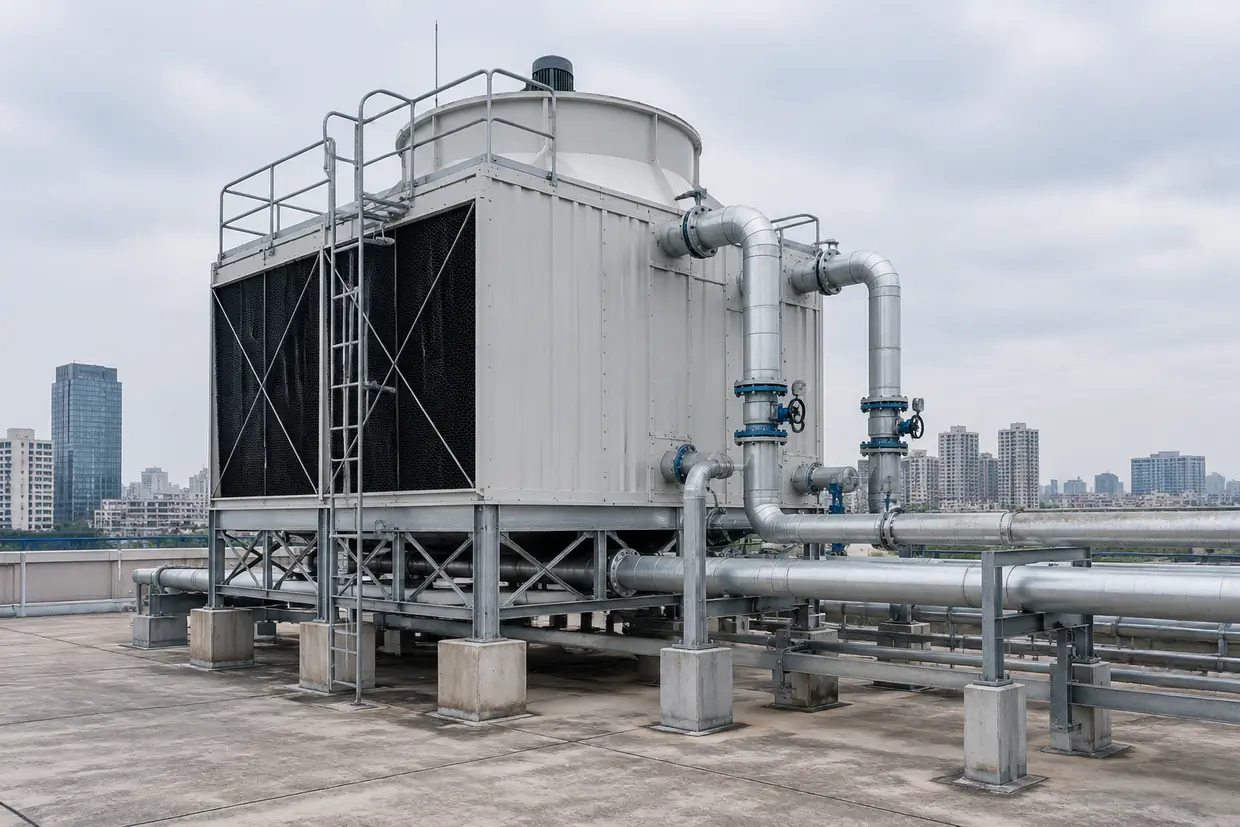
Ask the designer or operator for the heat-rejection load, tower performance at local design wet-bulb conditions, cycles of concentration, planned blowdown rate, water price, sewer charge, and annual hours. These inputs support a realistic water-cost estimate.
Single-pass or once-through cooling
A single-pass system takes new water into the condenser and discharges it after one pass. It may look easy to connect, but the volume and wastewater charges can make it a poor long-term option. The U.S. Department of Energy’s guidance on single-pass cooling recommends eliminating it or converting to recirculation where practical. Local plumbing and water rules can also restrict it.
For a once-through condenser, estimated water discharge (US gallons) = actual water flow (gpm) × 60 × compressor operating hours. Example: At an illustrative flow of 3 gpm for 8 hours, discharge is 3 × 60 × 8 = 1,440 gallons. Use the selected unit’s specified flow and your expected operating hours to estimate water and sewer charges.
In a recirculating cooling-tower loop, the flow moving through the condenser is not the water purchased each hour. Makeup water replaces evaporation, blowdown, drift and any other losses. The U.S. Department of Energy’s cooling-tower water management guidance explains this balance.
Closed-loop condenser-water system
A closed water circuit recirculates its water and can reduce routine water replacement. The heat leaves through a designed dry cooler, heat exchanger, cooling tower, or another approved route. If that route includes an evaporative cooling tower, the overall installation still needs makeup water.
What Determines the Price of a Water-Cooled Air Conditioner?
The purchase price of a water-cooled unit is only part of the installed cost. Two projects with the same nominal cooling capacity can cost very different amounts because one can use existing condenser-water connections while the other needs an entirely new plant.
| Cost item | What affects it | What to request |
|---|---|---|
| Cooling equipment | Capacity, controls, refrigerant, efficiency, voltage | Model-specific price and performance schedule |
| Water side | Pumps, pipework, valves, heat exchanger, metering | Flow, pressure drop, material, and connection plan |
| Heat rejection | Existing approved loop versus new tower or dry cooler | Heat-rejection capacity and site layout |
| Installation | Structural, electrical, pipe and drain work | Itemized installed scope and commissioning |
| Ongoing operation | Electricity, makeup water, sewer, treatment, repairs | Annual operating budget under local utility rates |
How to compare two quotes on the same basis:
- Match the cooling job: use the same delivered capacity, indoor conditions, design weather and annual operating hours.
- Mark what is included: list the cooling equipment, pumps, tower or other heat rejection, controls, piping, electrical work, installation and commissioning for each offer.
- Estimate annual bills: combine equipment and auxiliary electricity with water, sewer, treatment and planned servicing costs using local rates.
- Check shared-system charges: if an option uses an existing building loop, ask whether capacity, metering, extra plant energy and maintenance are included in the fee.
- Compare both totals: first-year cost is installed cost plus estimated first-year operation; compare recurring annual costs separately for later years.
A portable water-cooled AC may require less installation work than a full chiller plant when suitable condenser-water connections are already available. Include its water supply and approved return or discharge route in the installed quote.
How Should You Size and Choose a Water-Cooled AC System?
Start with the space you need to cool, not with the size of the water connection. Then verify whether the water system can remove the full rejected heat under the worst relevant operating conditions.
- Calculate the building or room cooling load. Include outside weather, solar gains, occupants, equipment, ventilation, and humidity. For a residential project, ask an HVAC designer or contractor for a suitable room-by-room load calculation. For room-level load inputs and a suitable design calculation, see our air conditioner sizing guide; check condenser-water requirements separately for a water-cooled system.
- Choose the room delivery method. Decide whether a direct-expansion indoor unit, ducted air handler, fan coil, or chilled-water system actually serves the space.
- Verify condenser-water conditions. Obtain entering-water temperature, flow, pressure, and available heat-rejection capacity at design load. Check the proposed model’s allowable range.
- Add supporting electrical loads. Include condenser-water pumps, tower fans, and controls when comparing energy use or circuits.
- Check operating and maintenance access. Allow for drains, filters, strainers, valves, tube cleaning, and service staff. Confirm the water-management requirements for any cooling tower.
- Compare a complete air-cooled alternative. Match usable cooling capacity and operating conditions, then compare installation, annual energy, water charges, and maintenance.
A useful early calculation is total heat rejected = cooling removed from the space + electricity converted to heat in the refrigeration equipment, adjusted for the actual equipment arrangement. For example, a machine removing 30 kW of space heat and using 7.5 kW of compressor input needs to reject about 37.5 kW of condenser heat, before other heat paths are considered. Use the selected model’s published heat-rejection rating for final sizing.
What should you send when requesting a recommendation?
Send the information you already have; if a value is not known, mark it unknown instead of guessing. These groups help us check the system type and whether an AirProz alternative could be appropriate.
- Building and cooling need: city or climate, building or room use, required room temperature and humidity, cooling load (if calculated), and number of areas to serve.
- Water service: source and return route, approved loop type, entering-water temperature range, available flow, pressure or pressure-drop limits, plant spare capacity and any discharge approval.
- Power and controls: voltage, phase, available electrical capacity, operating schedules and control or alarm requirements.
- Site and running hours: installation space, equipment access, drainage, sound or outdoor-unit restrictions, daily and seasonal cooling hours.
- Documents available: proposed unit datasheet, building water-loop schedule or schematic, drawings, target market and required compliance documents (if known).
With your cooling load, site conditions, and available water-loop details, we can help review the requirements and clarify a practical equipment option for your project.
What Maintenance Does Water-Cooled AC Need?
Water-cooled systems need both normal refrigerant-system service and attention to the water circuit. Scale or dirt in a condenser reduces heat transfer, so the compressor may need to work harder. Strainers, pumps, valves, leaks, water chemistry, and condenser cleanliness should be included in the maintenance plan.
Cooling towers need a documented water-management program. The U.S. Centers for Disease Control and Prevention describes controls for scale, corrosion, sediment, disinfection, cleaning, and Legionella risk in its cooling-tower guidance. Building operators should use a site-specific program supported by qualified water-treatment personnel.
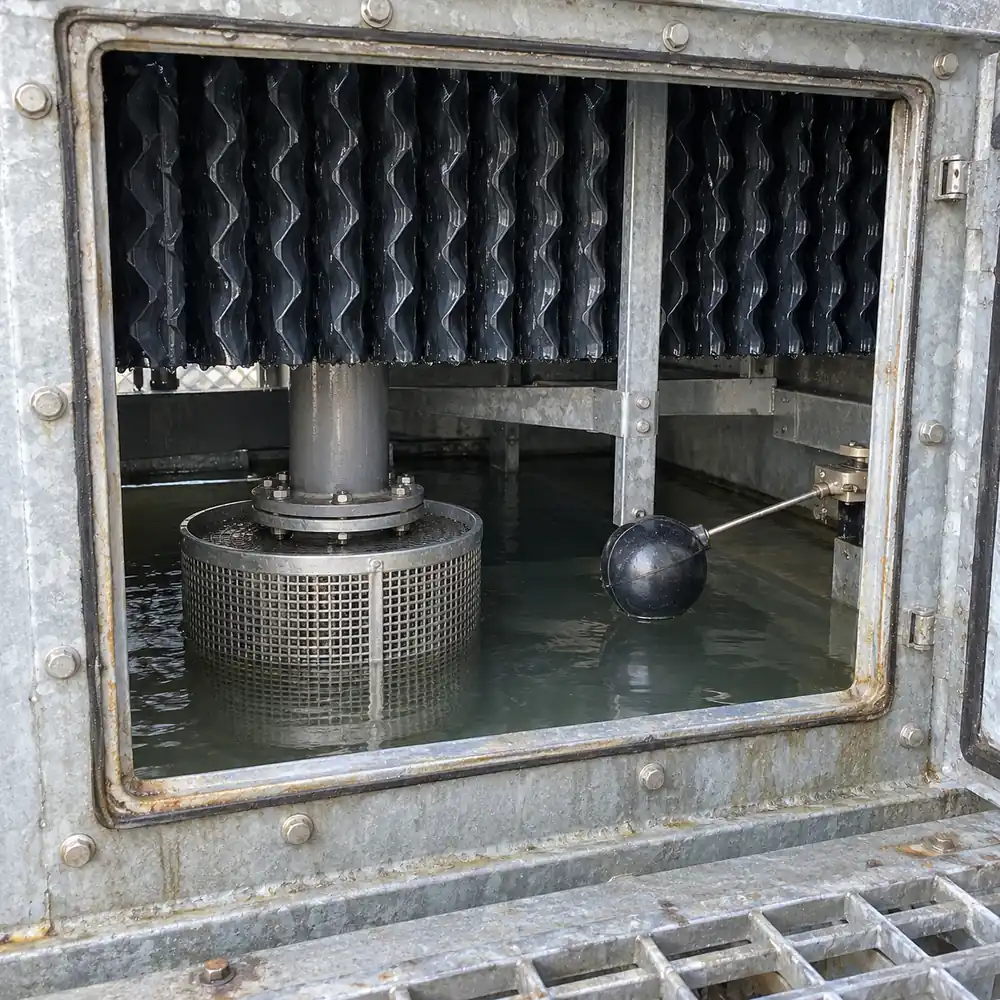
If performance changes, start with the observed symptom rather than assuming the compressor has failed. Have a qualified service technician compare actual conditions with the selected model’s instructions:
- Cooling drops and condenser-water temperature rises: check entering-water temperature, tower or dry-cooler operation, pump status and available water flow.
- Water flow is below the approved range: check strainers, isolation valves, pump operation, alarms and pressure readings before deciding which part needs service.
- The same fault keeps returning: review fouling, scale, water treatment, controls and the maintenance records instead of only resetting an alarm.
After service, record the result: compare inlet and outlet water temperatures, flow if measured, equipment alarms and delivered air cooling under similar operating conditions. Keep records so a repeated problem can be recognized early. Do not open pressurized refrigeration or electrical equipment yourself. Cooling-tower water treatment must follow the building’s qualified water-management program.
So, Should You Choose a Water-Cooled Air Conditioner?
Choose water-cooled air conditioning when it solves a real heat-rejection problem and the site can support the complete water system. It can be a strong solution for buildings with existing condenser-water infrastructure, larger central cooling plants, or specialist indoor spot cooling. For most standalone homes, a correctly sized air-cooled split or central AC will be easier to fit and maintain.
The deciding checks are simple: How much cooling do you need, where will the heat go, what water service exists, and what does the complete system cost to run? If the site lacks a practical condenser-water route, compare an air-cooled alternative first because it usually needs fewer supporting water-system components.
For a typical split-AC project, explore our published AirProz air conditioner range. For a project with condenser-water connections, send us your cooling load and building-loop conditions so we can help identify the next suitable option. Our current published catalog does not confirm a water-cooled AC model.
Frequently Asked Questions
Do water-cooled air conditioners need an outdoor unit?
Not always a conventional outdoor condenser unit. A water-cooled indoor AC may connect to an approved building water loop. But the water loop still needs a place to release heat, often through a remote tower or cooler.
Are water-cooled ACs more efficient than air-cooled ACs?
The refrigeration machine may use less electricity under favorable condenser-water conditions. Compare the same cooling duty and include pumps, tower fans, water, and maintenance before deciding which full system costs less.
Can I run a water-cooled AC from a household tap?
Only if the specific unit is designed for that water supply and local rules permit the connection and discharge. Continuous single-pass water use is often costly and wasteful; an approved recirculating solution may be more practical.
Is a portable water-cooled air conditioner the same as a swamp cooler?
No. A portable water-cooled AC uses compressor refrigeration and sends condenser heat into water. A swamp cooler lowers air temperature through evaporation, usually without a refrigerant compressor, and works best in dry conditions.
Will a water-cooled air conditioner also heat my home?
Only when the exact model is a heat pump rated and configured for heating. A cooling-only water-cooled AC should not be assumed to have a heating mode.
What should I compare in two water-cooled AC quotes?
Compare cooling capacity at the same conditions, entering-water limits, flow and pressure needs, compressor plus pump and tower electricity, installation scope, water and sewer costs, service needs, and the exact approved equipment models.
Does every water-cooled air conditioner need its own cooling tower?
No. Some units can use an approved shared condenser-water loop, while other designs use permitted single-pass water or a different heat-rejection system. But every unit still needs an approved way to release heat, and each route has different water, cost, and building requirements.