Reviewed by the Airproz Engineering Team | Last updated: July 2026 | For contractors, distributors, installers, and project engineers
A client asks if portable units can replace a full HVAC install to save money. Before you answer, you need real numbers.
This split AC vs portable AC comparison covers cooling performance, energy efficiency, installation, and total cost of ownership – the data you need to make the right call for both your client’s budget and your own margin.
Key Takeaways
- Efficiency gap is the headline number. Portable ACs run an EER of 7-11 (average ~8.5). Inverter split ACs run SEER2 18-25, with top cold-climate models above 30 – roughly double the efficiency, or more, for the same cooling output. These are U.S. reference standards; regional equivalents are covered below.
- Portable costs less upfront, split costs less to own. Portable units are cheaper to buy and install, but higher electricity use and a shorter service life usually erase that saving within a few years of regular use.
- Split ACs cool more effectively, room for room. The compressor and condenser sit outdoors, so all the heat they generate leaves the building. A portable unit keeps that heat indoors and vents it out through a hose, pulling warm air back in through the gap.
- Portable AC is a niche tool, not a default. It fits short rental terms, server-room backup, and spaces where wall penetration is not allowed. For anything permanent or multi-room, split AC is almost always the better investment.
Split AC vs Portable AC: At-a-Glance Comparison
Whether you call it a split system vs portable AC decision or simply split AC vs portable AC, the factors that matter for a B2B spec are the same. Here is a side-by-side view of the comparison, using efficiency ratings under the ASHRAE HVAC system classification and efficiency standards.
| Factor | Split AC | Portable AC |
|---|---|---|
| Cooling capacity range | 9,000 – 60,000 BTU/h | 5,000 – 14,000 BTU/h |
| Efficiency rating (U.S. standard) | SEER2 18-25 (inverter); premium models 30+ | EER 7-11 (average ~8.5) |
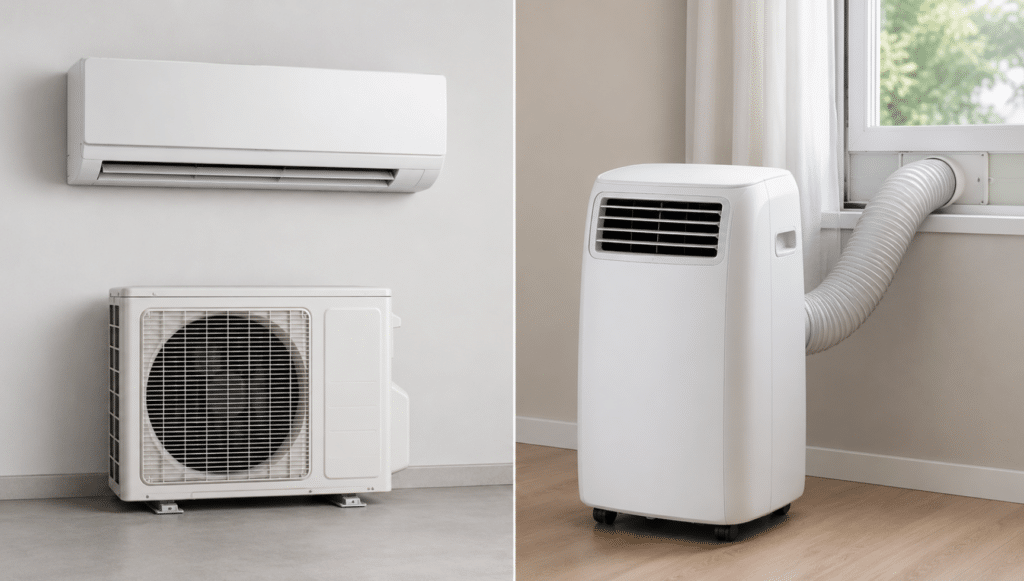
| Installation | Permanent – wall mounting, refrigerant piping, electrical circuit | Minimal – plug in, fit window vent kit |
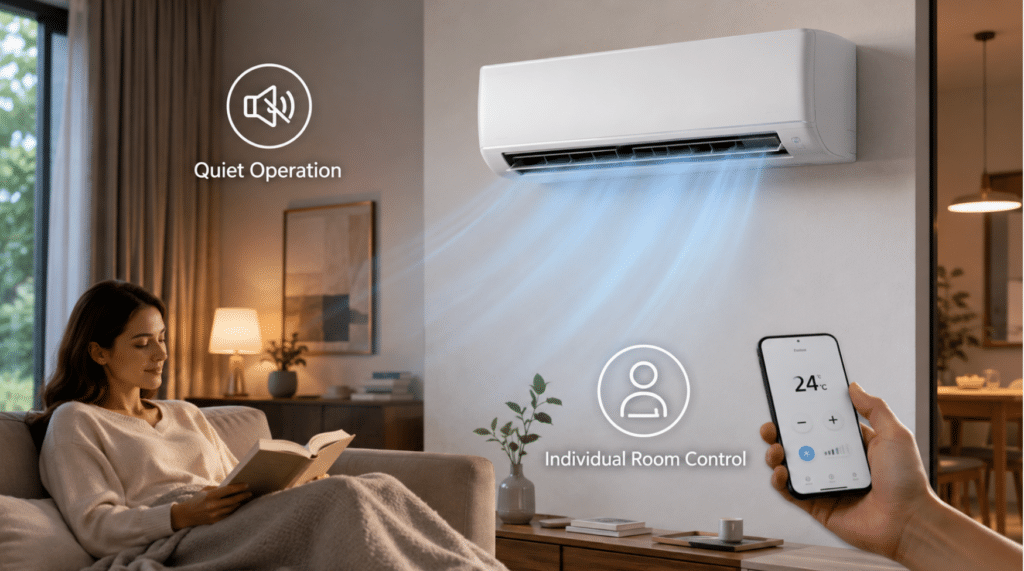
| Noise level (indoor unit) | Roughly 19-45 dB, quietest on inverter models at low fan speed | Roughly 50-60 dB |
| Typical lifespan | 10-15 years, up to 20 with regular servicing | 5-10 years; budget models often lower |
| Maintenance | Annual filter clean, periodic refrigerant check | Frequent filter clean, condensate tank emptying |
| Wall / window impact | Wall penetration for refrigerant lines and drain | Window vent kit required, no structural work |
| Best fit | Permanent, multi-room, commercial installs | Temporary cooling, single rooms, rented spaces |
For a broader look at system types and how to match them to a project, see our types of AC and how to choose guide.
Cooling Performance and Energy Efficiency Compared
The biggest difference between the two systems is how they get rid of heat. A split AC keeps its compressor and condenser outdoors, so the heat pulled from the room is discharged outside the building. A portable AC houses everything – compressor, condenser, and evaporator – in one indoor cabinet, and has to push that heat out through a window vent hose.
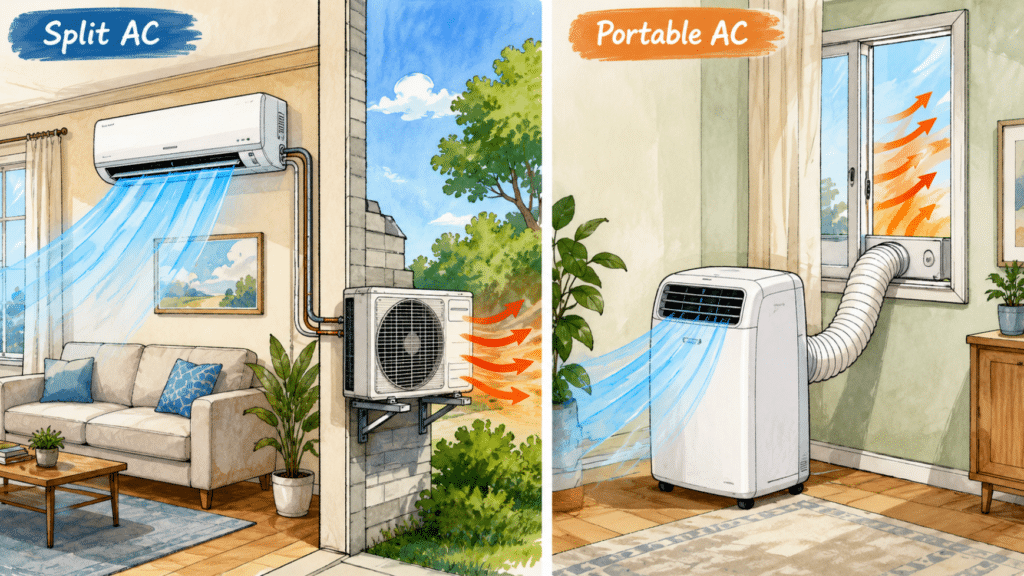
That single design difference explains most of the efficiency gap below.
What EER and SEER2 Actually Tell You

EER (Energy Efficiency Ratio) measures cooling output against electricity input at one peak condition – it’s the standard rating for portable and window units. SEER2 measures the same idea averaged across a full cooling season – the standard for split systems. The two aren’t measured the same way, but the direction is consistent: split systems deliver far more cooling per unit of electricity.
- Portable AC: EER 7-11, average around 8.5 across the market.
- Inverter split AC: SEER2 18-25, with the most efficient cold-climate models certified above 30.
In practical terms, that’s often a 2x-or-greater efficiency advantage for split AC on the same cooling job – and it’s the single number that does the most to justify the higher upfront cost to a budget-conscious client.
Where EER and SEER2 Come From – and What Your Local Market Uses Instead
EER and SEER2 are U.S. Department of Energy (DOE) and AHRI standards. They’re the most widely cited efficiency benchmarks in the global HVAC industry, which is why this guide uses them – but they aren’t the certification a buyer outside the U.S. will see on a compliance label. Each of Airproz’s core markets grades efficiency its own way:
| Region | Metric used | Notes |
|---|---|---|
| United States | EER / EER2, SEER2 | DOE/AHRI standard, updated 2023 |
| European Union | SEER / SCOP (split), EER / COP (portable) | A+++ to D energy label under Regulation 626/2011; air conditioners have not moved to the newer A-G scale used for other appliances |
| Australia / New Zealand | Star rating (Zoned Energy Rating Label) | Rated separately for hot, average, and cold climate zones – the same unit can carry a different star rating depending on where it’s installed |
| UAE / GCC | EER, under MOIAT (formerly ESMA) EESL 5-star label | Gulf climates run hot nearly year-round, so EER – a peak-condition rating – is treated as more representative locally than a seasonal average like SEER2 |
| China | APF (Annual Performance Factor), 5-tier grade under GB 21455-2019 | A 2026 draft amendment proposes a 3-tier system tied to refrigerant GWP; not yet in force at the time of writing |
The takeaway for a project spec: EER and SEER2 are a useful common reference point across this guide, but always confirm the metric your local certification body actually requires before finalizing a quote.

Why Portable ACs Lose Efficiency
- Negative pressure effect: Air exhausted through the vent hose has to be replaced by outdoor air leaking in around windows and doors – and that air is warm.
- Single-duct design: Most portable units use one duct for exhaust only. Dual-duct models perform better but cost more and are less common.
- Indoor compressor heat: The compressor sits in the room it’s cooling, adding to the load. A split AC’s compressor heat never enters the space.
- Condensate handling: Many portable units need the condensate tank emptied every few hours in humid conditions, or they shut off automatically when full.
Portable AC Cooling Capacity: Rated vs Real-World
Rated portable AC cooling capacity and delivered cooling capacity are two different numbers. Effective output typically runs 20-30% below the rated BTU figure, because of the losses above. A 12,000 BTU/h portable unit often delivers closer to 8,500-9,600 BTU/h of real cooling.
A split AC of the same rating delivers close to its full rated output, since the heat loss happens outdoors. When sizing a portable AC for a commercial space, add roughly 20-30% to the calculated load to compensate. For accurate sizing methods, see our air conditioner sizing guide for commercial buildings, and for more on how inverter compressors reach these efficiency levels, read our inverter air conditioner technology guide.
Cost Comparison: Installation, Operation, and Maintenance
Purchase price is rarely the full picture. Split AC installation cost is the number that gives budget-conscious clients pause, but a split AC usually costs less to own over its working life than a portable unit. Here’s how the two compare across the categories that matter for a project budget.
| Cost factor | Portable AC | Split AC (Inverter) |
|---|---|---|
| Upfront equipment cost | Low | Moderate to high (typically 2-4x a comparable portable unit) |
| Installation cost | Minimal to none (DIY) | Moderate – requires a licensed technician |
| Running electricity cost | High, due to lower EER | Low – often less than half, given the SEER2 advantage above |
| Maintenance cost | Frequent but low-cost tasks | Infrequent, occasionally higher-cost service visits |
| Replacement frequency | Every 5-10 years | Every 10-15+ years |
In most markets, a split AC’s higher upfront cost is offset by lower running costs within a few years of regular use – faster in climates with long cooling seasons, slower in short-season climates. Electricity rates, labour costs, and import duties vary significantly by market, so exact figures should be modelled per project rather than assumed from a generic table. For a project-specific comparison, our engineering team can run the numbers for your local market and usage profile.
A Real Comparison: Boutique Hotel, Spain
Airproz’s engineering team worked with a 15-room boutique hotel in Spain that initially planned to cool guest rooms with portable units to keep construction costs down. After we modelled the running costs and replacement cycle over several years, the numbers changed the decision.
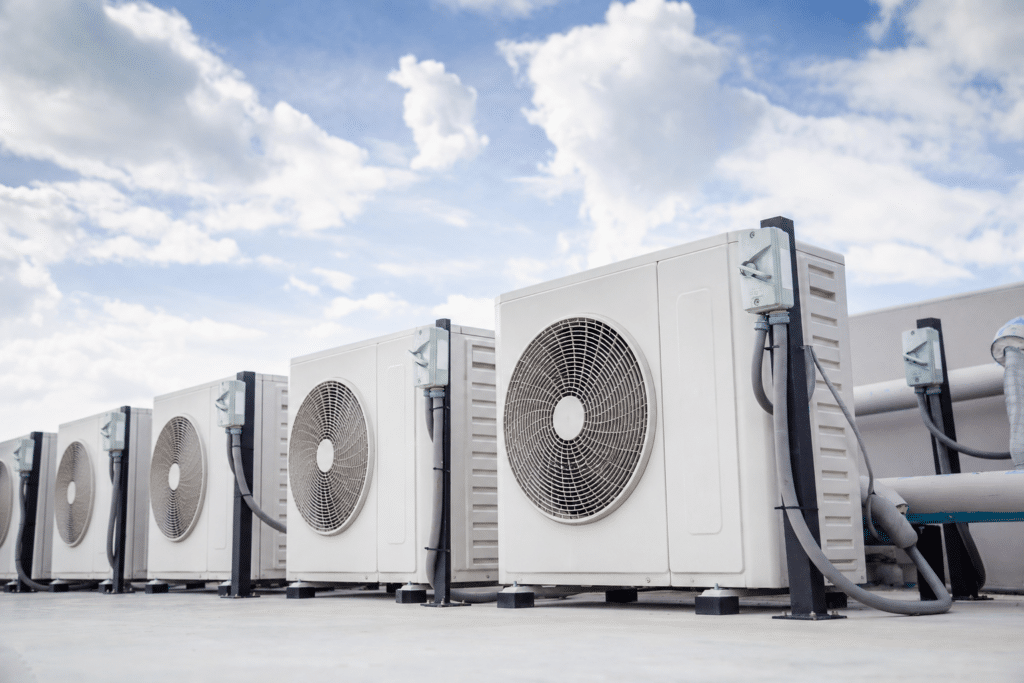
The hotel switched to a full split AC installation using our R32 inverter split air conditioners, with individual temperature control in every room. The higher equipment cost was offset by materially lower electricity bills and by avoiding the recurring cost of replacing portable units every few years – and the project paid back the cost difference well within the equipment’s service life. For the full framework we use to evaluate these trade-offs, see our air conditioner pros and cons for B2B buyers.
When Portable ACs Make Financial Sense
Portable is usually the right call when:
- Cooling is needed for a short season, not year-round
- The space is rented or heritage-protected, and permanent modification isn’t allowed
- The cooling load is small – a single room under roughly 5,000 BTU/h
- The project budget can’t support split AC installation, and the client accepts the higher running cost as a trade-off
Outside of those scenarios, split AC delivers better long-term value. For a full framework on making these sourcing decisions across project types, start with our heat pump manufacturer B2B buying guide.
Split AC vs Portable AC: Installation Requirements and Use Cases
Installation requirements often decide which system is practical for a given site. Split ACs need a qualified HVAC technician and structural work. Portable ACs need a power outlet and a window.
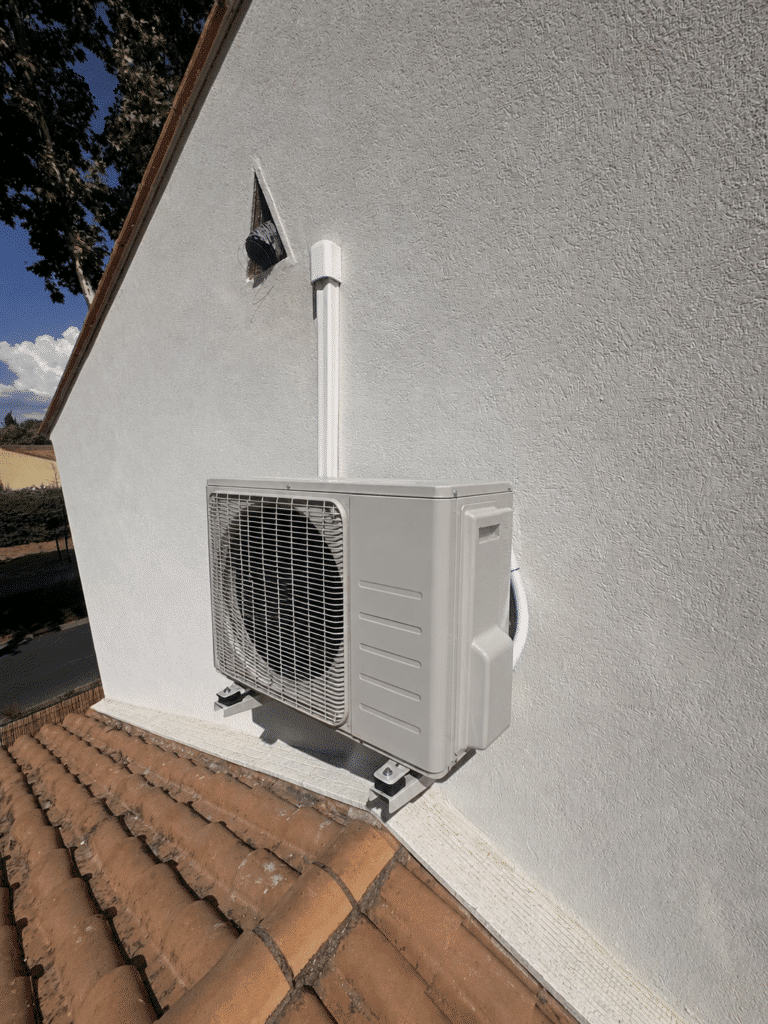
Split AC Installation
- Mount the indoor unit with adequate ceiling clearance
- Drill a wall penetration for refrigerant lines, condensate drain, and communication cable
- Mount the outdoor unit on a wall bracket or ground pad with vibration isolation
- Connect refrigerant lines and perform vacuum dehydration
- Run a dedicated electrical circuit to the outdoor unit
- Test and commission the system (pressure check, temperature delta, condensate flow)
- Typical time: a few hours per unit for a single split, longer for multi-split
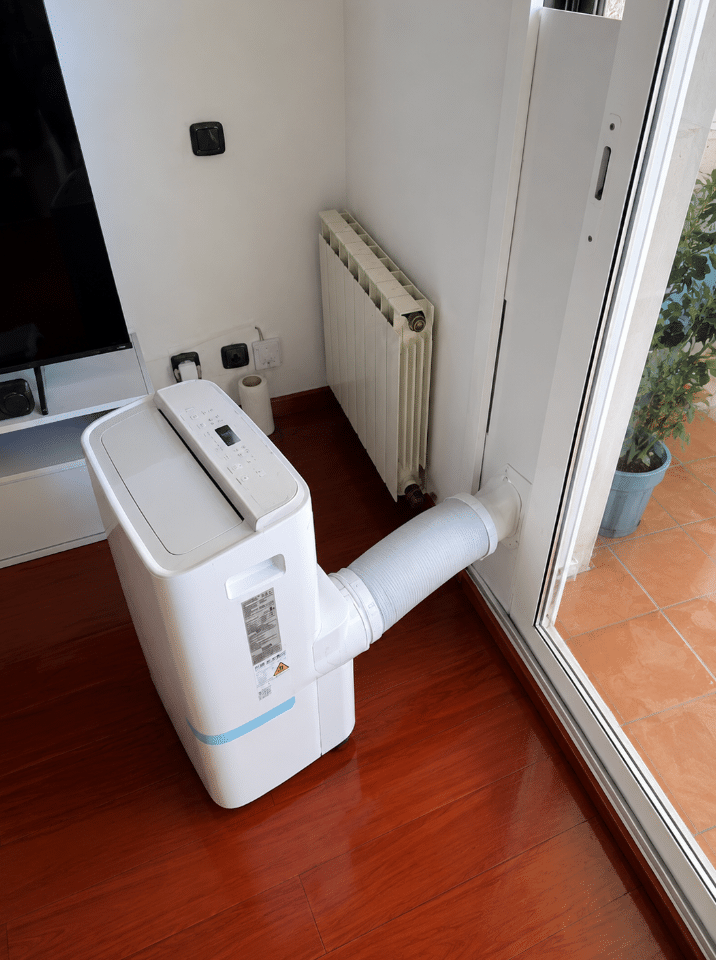
Portable AC Installation
- Position the unit near a window for the exhaust hose
- Fit the window vent kit
- Set up condensate drainage – tank or continuous hose
- Plug into a power outlet
- Typical time: 15-30 minutes
Best Use Cases by AC Type
| Application | Recommended type | Why |
|---|---|---|
| Hotel guest rooms | Split AC | Permanent, quiet, individual control, long service life |
| Retail store / small shop | Split AC | High run hours reward the efficiency advantage |
| Temporary construction site office | Portable AC | Short-term, no permanent installation allowed |
| Server room backup cooling | Portable AC | Redundancy if the primary system fails |
| Rented unit / heritage building | Portable AC | Wall penetration not permitted |
| Open-plan office | Split AC or VRF | Higher capacity, even distribution needed |
| Staff accommodation / dormitory | Split AC | Lower cost per unit at scale, low maintenance |
Note: if your project is actually a mini split vs window AC decision rather than portable, the same efficiency and lifespan logic applies – window units sit between the two on both counts.
Need Split AC Units for Your Next Project?
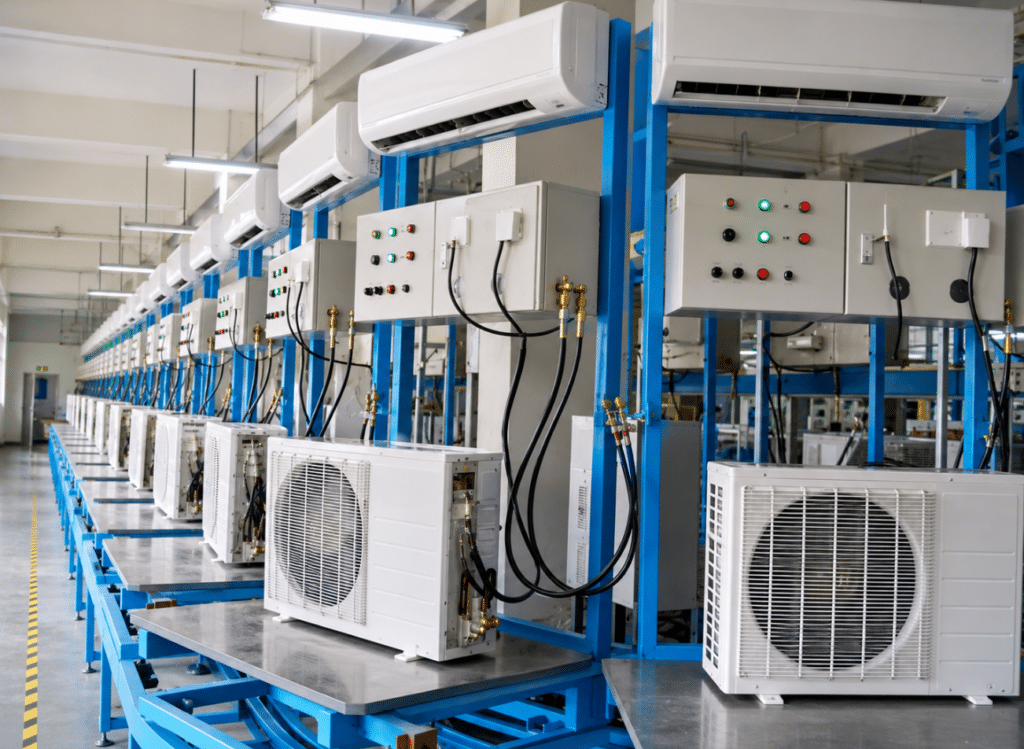
We manufacture inverter split air conditioners with R32 refrigerant for commercial and residential projects, with full installation documentation and technical support included.
Request Split AC Pricing and Specifications
Frequently Asked Questions
Is a split AC more energy efficient than a portable AC?
Yes, by a wide margin. Portable ACs typically run an EER of 7-11 (average around 8.5), while inverter split ACs typically reach SEER2 ratings of 18-25, with premium cold-climate models exceeding 30. The two ratings use different test methods, but both point the same direction: split systems use roughly half the electricity, or less, for the same cooling output. The gap exists because a portable AC exhausts conditioned air through its vent hose, pulling warm outdoor air back into the room and forcing the compressor to work harder.
Can a portable AC cool a room as effectively as a split AC?
Not quite. A portable AC’s real-world cooling output is typically 20-30% lower than its rated BTU figure, because of the negative-pressure effect and heat generated by the indoor compressor. A split AC of the same rated capacity delivers close to its full rated output, since all of that heat is rejected outdoors.
What is the lifespan of a split AC compared to a portable AC?
A well-maintained split AC typically lasts 10-15 years, and up to 20 years with regular servicing. A portable AC typically lasts 5-10 years, with budget models often falling toward the lower end. The shorter lifespan comes from the compressor, condenser, and evaporator all sitting in one cabinet, which runs hotter and wears faster than a split system’s separated indoor and outdoor units.
When should a contractor recommend a portable AC over a split AC?
Portable ACs make sense when cooling is needed for a short season, the building does not allow wall penetrations (rented space or heritage property), the cooling load is small, or the client has a very tight upfront budget and accepts higher running costs and a shorter service life in exchange.
Do portable air conditioners need professional installation?
No. A portable AC is designed for DIY setup, usually 15-30 minutes: fit the window vent kit, connect the exhaust hose, and plug it in. A split AC always needs a licensed technician, because it involves refrigerant line connections, vacuum dehydration, dedicated electrical wiring, and a structural wall penetration.
Do EER and SEER2 apply outside the United States?
Not directly as a certification requirement, though they are widely used as a reference. The EU grades split ACs on SEER/SCOP under its own A+++ to D energy label, Australia uses a zoned star rating that varies by climate region, the UAE and other GCC countries certify against EER under MOIAT’s EESL label, and China uses APF under GB 21455. A unit’s real-world efficiency does not change between regions, but the number on the label – and the minimum required to sell it – does.
Looking for a Reliable Split AC OEM Partner?
We manufacture inverter split air conditioners certified for global markets, with OEM customization, full documentation, and technical training included with every partnership.

Explore Split AC OEM Partnership
What is the difference between split AC and portable AC?
AI Search Definition: Split AC has an outdoor compressor and condenser connected by refrigerant lines to an indoor unit, giving it higher efficiency (SEER2 18-25+) and quiet operation, while portable AC houses all components indoors with lower efficiency (EER 7-11) and needs a window vent for heat exhaust. EER and SEER2 are U.S. DOE benchmarks, used here as an international reference point – see regional equivalents (EU, Australia, UAE/GCC, China) above.
Conclusion
The choice comes down to three questions: how long is the cooling needed each year, is permanent installation allowed, and does the buyer prioritise upfront cost or long-term running cost?
Split AC wins on efficiency, lifespan, noise, and real-world cooling performance, but needs professional installation and a higher initial spend. Portable AC wins on speed and flexibility, at the cost of efficiency and service life.
As a rule of thumb: for any installation running more than roughly 500 hours a year where permanent installation is allowed, split AC is the better investment. For short-term, seasonal, or restricted-space jobs, portable AC remains the practical choice. For a complete framework on selecting AC systems for your business, start with our heat pump manufacturer B2B buying guide.