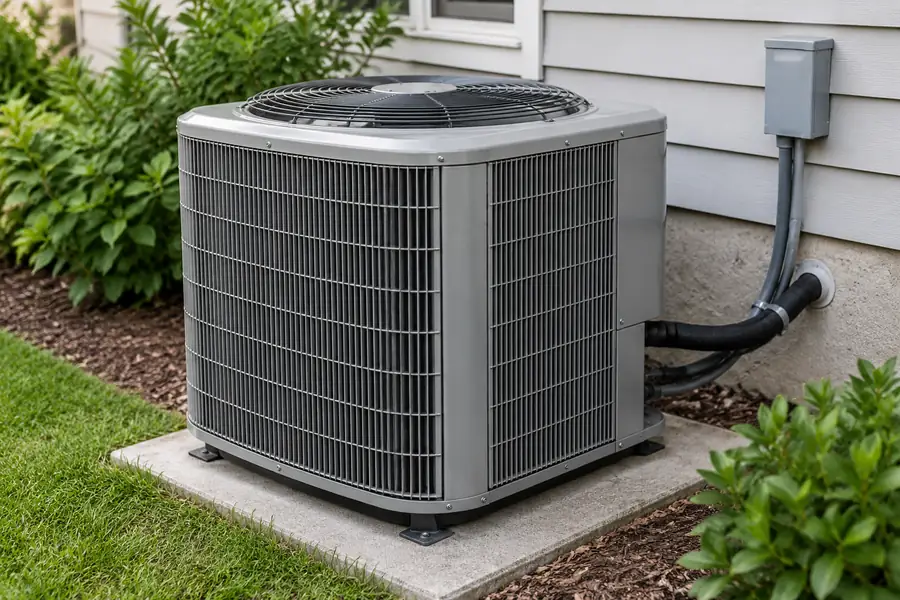
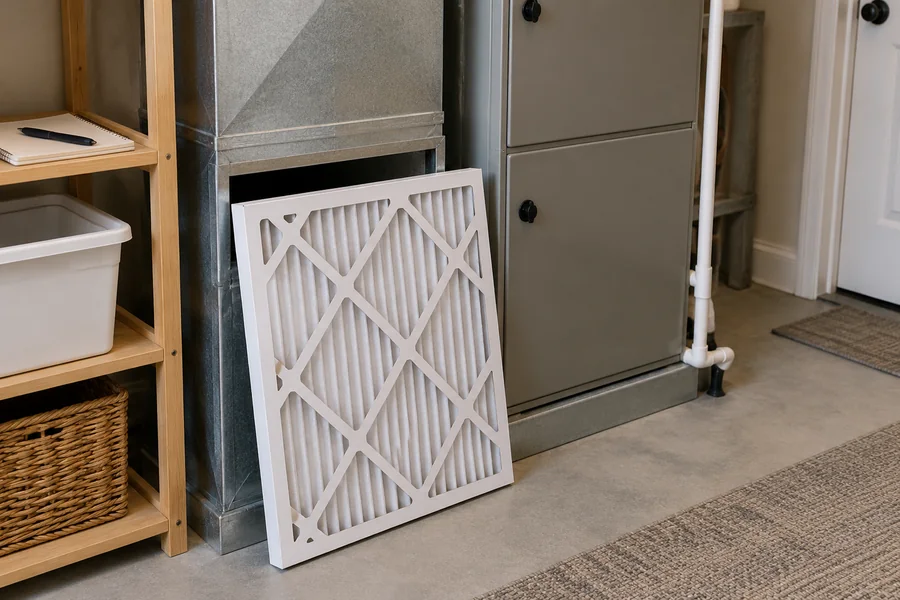
Yes. A heat pump for an old house can work, even if the home still uses radiators. The home’s age is not the deciding factor. First, find out how much heat each room needs on a cold day. Then check whether the heat pump, radiators, pipes or air system can deliver it. Some homes benefit from insulation, radiator changes, a higher-temperature heat pump, ductless units or a hybrid setup. You do not automatically need all of these changes.
At a glance: Check how your home is heated today. Then look at room heat loss, radiators or ducts, and winter heating capacity before choosing a heat pump. Do not choose by floor area, old boiler size or building age alone.
| What your home has | Heat pump option to consider | What to check first |
|---|---|---|
| Radiators and water pipes that are in good condition | An air-to-water heat pump. You may be able to keep the existing radiators if they give enough heat. | How much heat each room needs, radiator output, pipe flow and resistance to water flow. |
| No ducts or water-based radiators | A ductless air-to-air mini-split heat pump. You may need a separate system for hot tap water. | Whether every needed room can be heated, output in cold weather and electrical supply. |
| Ductwork that may still be usable | A ducted air-source heat pump. | Heating and cooling loads, duct air leaks, airflow and duct size. |
| A protected interior or difficult insulation work | Lower-disruption heating options with careful outdoor-unit placement and building conservation in mind. | Permissions, moisture risks, appearance, noise and access restrictions. |
| Very high winter demand, or a boiler being replaced in stages | A heat-pump-only system with designed backup heat, or a hybrid system that keeps a boiler where justified. | Heating output at the local winter design temperature and required supply temperature; the backup control plan; fuel and electricity costs; and grant eligibility. |

Can a heat pump really work in an old house?
Yes. Many Victorian terraces, post-war homes and other older houses can use heat pumps. The installer still needs to check the home’s winter heat loss and how the heat reaches each room before promising comfort or lower bills.
A heat pump takes heat from outside and moves it indoors. An air-to-water heat pump warms water for radiators or underfloor heating. An air-to-air heat pump sends warm air into rooms. What matters is how much heat each room loses in winter and whether the system can replace it at the required temperature.
In one Fraunhofer ISE field study, researchers monitored 77 heat pumps in existing German homes. They did not find a link between building age and measured seasonal efficiency within that group. The monitored air-to-water systems had a mean seasonal performance factor of 3.4. This factor compares useful heat delivered with electricity used over the monitored period. It is a study result, not an Airproz product rating or a prediction for your home. Each house still needs its own design checks.
For a simple explanation of the heating cycle, see our guide to how an air-to-water heat pump works.
Which type of heat pump suits an older house?
If your home already has suitable radiators and water pipes, an air-to-water heat pump may be the simplest option to assess first. If there are no ducts or radiators, a ductless heat pump can heat and cool individual rooms. Compare how each option heats every occupied room, not just the advertised maximum water temperature.
| Heat pump type | A good fit when | Possible drawback | What to check |
|---|---|---|---|
| Air-to-water heat pump | Your home has radiators, water pipes or underfloor heating worth keeping. | Existing radiators and pipes must still deliver enough heat. Hot tap water may need a separate cylinder. | Required water flow and return temperatures, pipe resistance and hot-water demand. |
| Ductless air-to-air mini-split | You have no ducts, want to heat specific rooms or also need cooling. | Several rooms may need separate indoor units. Hot tap water normally needs another system. | Heat reaching rooms behind closed doors, cold-weather capacity, condensation drainage and outdoor-unit location. |
| Ducted air-source heat pump | You have suitable ducts and want air heating and cooling across the home. | Older ducts may leak or be too small to move enough air. | Duct leaks, static pressure (resistance to airflow), airflow, electrical supply and heat loss. |
| Ground-source heat pump | The property has space and permissions for ground loops, with a suitable long-term budget. | Trenching or drilling can add cost, access problems and disruption. | Ground-loop design, permissions, site access and ground conditions. |
| Hybrid or bivalent system | A working boiler may be kept for a clearly defined winter peak load or staged renovation. | You keep two heat sources, a fuel connection and more complex controls. Some grants exclude hybrids. | When the boiler and heat pump operate, the controls, energy cost and grant eligibility. |
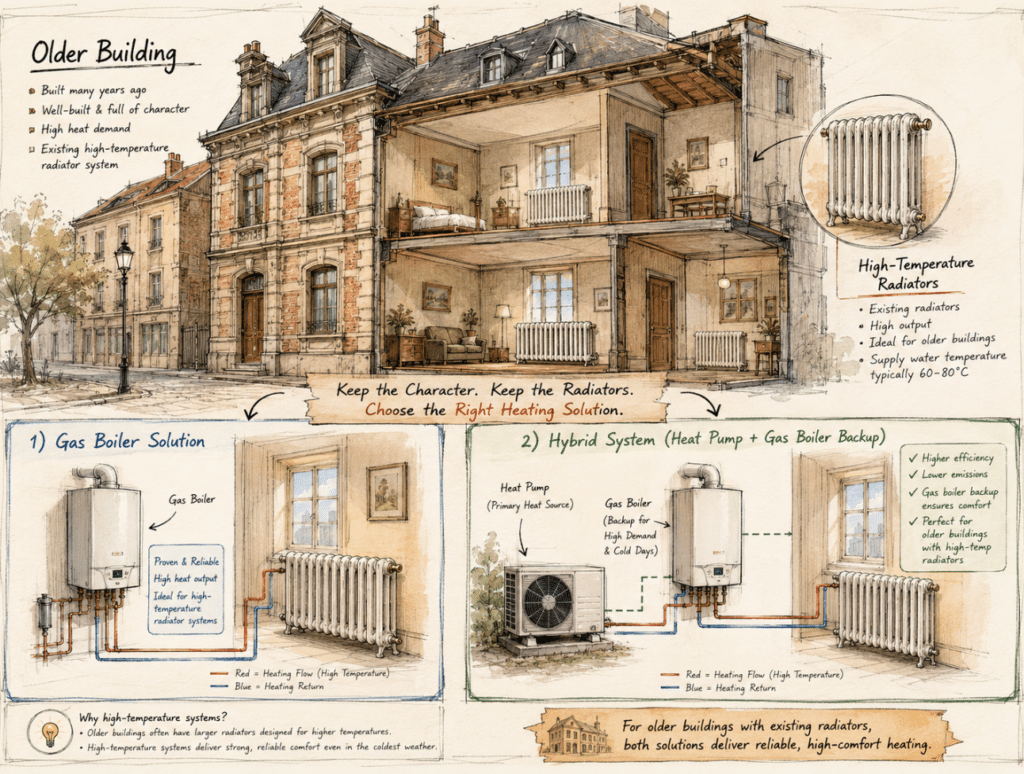
An air-to-water heat pump does not always provide cooling. If it sends cold water through the wrong radiators or pipes, moisture can form on their surfaces. Cooling therefore needs suitable indoor equipment, condensation protection and controls. A ductless heat pump air conditioner usually heats and cools rooms, but does not normally make hot tap water by itself.
A home that used a combination boiler may have no existing hot-water cylinder or suitable cupboard space. Many air-to-water designs need a cylinder for domestic hot water, so check its location, service access, plumbing route and the household’s hot-water demand. If there is no suitable space, compare other permitted layouts or a separate water-heating system before choosing the heating design.
A single ductless indoor unit may not warm bedrooms behind closed doors or distant floors. Map the rooms that need heat and check doors, airflow paths and the equipment’s output in the local winter design weather. Then compare single-zone, multi-zone and suitable short-duct layouts. Assess cooling needs separately from full-home winter heating coverage.
How much insulation is needed before installing a heat pump?
No, you do not always need to insulate the entire house first. Start with heat loss that can be reduced safely and practically. Then check whether the remaining heating demand can be met by the radiators or other indoor equipment. A poorly insulated home may still work with a heat pump, but may cost more to heat.
Roof or loft insulation and careful draught-proofing can be good starting points, but neither is enough for every home. Heat can still escape through walls, windows and unwanted air leaks. Some building details create extra heat loss where insulation is interrupted; these are called thermal bridges. Compare each proposed improvement in a room-by-room heat-loss calculation to see whether it changes radiator needs or heat pump sizing.
Be especially careful with insulation on old solid walls or historic buildings. The wrong internal insulation can hold moisture inside the wall and cause damage or condensation. Check the wall condition, exposure to rain, ventilation and any heritage restrictions before selecting a system. A change that looks simple on paper may not suit the building.
Before choosing a system: Ask for heat-loss figures for every room as the house is today. If insulation work is planned and funded, ask for a second calculation showing the expected result after those changes. Do not size the heat pump for an upgrade that may never happen.
If a funded roof upgrade will be completed before the heat pump is installed, use its documented effect on each room’s heat loss in the final design. If wall insulation is only a possibility, do not assume its savings when choosing the heat pump or radiators. A confirmed reduction in room heat loss may allow an existing radiator to work at a lower water temperature. For solid walls, check moisture, ventilation and heritage restrictions before sealing or insulating. If the work is delayed or unsafe, design for the house as it will actually be heated and compare radiator changes or a verified higher-temperature option instead.
Can existing radiators and underfloor heating be kept?
You may be able to keep many of your existing radiators. There is no reliable rule for how many need replacing. For each room, compare the heat it needs on a cold day with the heat its radiator can give at the proposed water temperature.
A radiator gives out less heat when its water is cooler. A radiator that worked well with a hot gas boiler may not give enough heat at a lower heat-pump water temperature. Use its manufacturer’s output data for the planned flow and return temperatures and the intended room temperature. Do not copy the old boiler-rating figure into the new design.
Example only—not a real project: A bedroom needs 1,200 W on its coldest design day. Its radiator can provide only 800 W at the planned water temperature. That leaves a 400 W shortfall. A larger outdoor heat pump alone will not fix a radiator that cannot pass enough heat into the room. Check a larger or fan-assisted radiator, a useful insulation upgrade, or a verified higher water-temperature design.
If only one room fails the radiator check, changing that radiator may help more than choosing a larger heat pump. If many rooms fail, compare reducing heat loss, changing several radiators and using a higher water temperature. Check any new temperature against the heat pump’s winter output and the water flow the pipes can carry.

You do not need underfloor heating just because you are installing a heat pump. Existing underfloor heating often works at relatively low water temperatures, but adding it to an occupied or protected old home can mean major floor work. Keep working radiators or underfloor heating where the room-by-room calculations show they are sufficient.
Will old pipes or microbore circuits work with a heat pump?
Sometimes. Microbore pipes are narrow heating-water pipes, and some old systems use them. They can stay only if they carry enough water to the radiators without too much flow resistance. Check their condition, water flow and pump requirements before assuming compatibility.
The radiators need a steady flow of warm water. If the system uses a smaller temperature difference between the outgoing and returning water, it needs more water flow to carry the same heat. Engineers calculate this as: heat carried ≈ mass flow × water specific heat capacity × flow/return temperature difference. Narrow pipes, valves, dirt or old manifolds can restrict that flow, leaving some rooms cold.
Check visible pipes for damage, corrosion or sludge, but do not assume hidden branches have the same size or condition. If drawings are missing, measure the available water flow and pressure drop where access allows. If the required flow cannot be confirmed, treat pipework compatibility as unresolved. Plan a site investigation or a different circuit layout before finalizing the system. The design must also meet the heat pump’s pump, water-quality, frost-protection and defrost-flow requirements. Cleaning sludge may help a dirty circuit, but it cannot make undersized pipes carry enough water. Include strainers, balancing valves, filters and any hydraulic separator in the flow check.
During commissioning, a qualified installer should check water flow with the heating zones in representative operating combinations, including the lowest-flow state permitted by the control design. Where measurement points are available, record system flow and pressure readings; compare the results with the exact model’s minimum-flow and water-volume requirements. Also check whether individual radiator circuits receive enough flow to meet their room loads. Flow with every valve open does not prove compatibility when some valves close. If a required condition fails, review balancing, controls or pipework before keeping the existing circuit.
Common mistake: ‘The unit can make 75°C water, so my old narrow pipes will work.’ Not necessarily. Hotter water does not prove that enough water can flow through the pipes or that every radiator can heat its room.
Is a high-temperature heat pump better for an old house?
Not always. A high-temperature heat pump may let you keep more of your existing radiators. But making hotter water usually takes more electricity for the same amount of heat. An advertised maximum of 75°C does not tell you how much heat the unit can deliver in freezing weather or what it will cost to run.
Ask the installer to price and check two complete options: (1) a lower-water-temperature heat pump with any needed radiator or insulation changes, and (2) a higher-temperature heat pump that keeps more existing equipment. Compare heating output on the coldest design day, expected electricity use, hot-water needs, installation disruption and total project cost. Use performance data at the required outdoor and water temperatures.
Choose a higher-temperature system only if the exact model can meet the home’s winter heating load at the required outdoor and water temperatures, and the existing radiators and pipes pass their checks. If it cannot, a higher maximum water-temperature claim does not fix the shortfall. Compare radiator changes, lower heat loss or a separately designed backup system instead.
Keeping the old boiler may help if it can still operate safely and a clear winter backup need exists. This is a hybrid, or bivalent, system. The plan must say when the heat pump works, when the boiler starts and whether they can run together. Compare the controls, fuel bills and current grant rules: a hybrid system is not automatically cheaper or eligible for support.

Our published monobloc heat pump product page is an equipment reference, not proof of winter heating capacity, efficiency, certification or compatibility with this home. Confirm the exact model’s design-condition performance and water-flow requirements before selection.
What size heat pump does an older home need in winter?
Do not size a heat pump only by floor area or the old boiler rating. Calculate how much heat each room needs at the local winter design temperature. This is the outdoor temperature chosen for system sizing, not necessarily the coldest temperature ever recorded. Then check the selected model’s actual heating output at that outdoor temperature and the water or air temperature your home needs.
For a water-based heating system in Europe, use the applicable national room-by-room heat-loss method, often based on EN 12831. In the United States, ACCA Manual J helps calculate heating and cooling loads; Manual S helps select equipment; and Manual D covers duct design. Record the indoor target temperature, local outdoor design temperature, ventilation assumptions and any insulation upgrades already completed.
Use the manufacturer’s heating-capacity table for your actual winter conditions. Check whether defrosting or backup heat changes the output available to the rooms. Also check how low the unit can turn down in mild weather; one that cannot reduce output enough may switch on and off too often. Rated heating capacity is the output published for a stated test point, such as 7°C outdoor air. Design-point capacity is what the exact model can provide at the local winter design temperature and the water or air temperature your rooms need; it may be lower. Real seasonal electricity use is a separate question because part-load operation, defrost, controls and backup heat change the outcome. Compare the exact model’s published heating output at your design conditions rather than choosing by brochure kW or a single COP.
Hot tap water, known as domestic hot water (DHW), needs its own design check. The installer should consider household use, cylinder size, heating-coil capacity, safe water-temperature controls and how fast the cylinder reheats. If the system stops space heating while it reheats the cylinder, check whether the rooms stay comfortable. Do not add an arbitrary hot-water allowance to the building’s peak heating load.
For example, an older home may need the most heat during a cold spell while the outdoor unit is also defrosting and the system gives priority to reheating hot water. Check the model’s available winter heating output and the proposed control sequence together. If backup heat or a pause in space heating is needed, explain when it happens and how the rooms will stay comfortable.
Before choosing a model, collect: each room’s winter heat loss; the outdoor temperature used for sizing; the required heating-water flow and return temperatures (or supply-air conditions); the model’s heating capacity and COP at that point; minimum output and backup plan; electrical supply; and separate hot-water demand where needed. COP is the heat delivered divided by electricity used at a stated test condition.
Have a qualified electrician check the selected model’s voltage, maximum input current, circuit protection and any auxiliary-heater demand against the home’s electrical supply. Do not assume an older consumer unit or panel can support the installation without changes.
Does an old-house heat pump need a buffer tank or special controls?
Not every heat pump needs a buffer tank. The answer depends on how much water is in the system, how water flows when radiator valves close, and what the exact model needs for operation and defrosting. Weather-based controls and proper commissioning also matter.
If most radiator valves close, too little water may flow through the heat pump. Some systems can keep one suitable circuit open; others need a properly designed buffer tank or separate water circuit (hydraulic separation). There is no reliable buffer-tank size that works for every heat pump based only on litres per kW. Check the exact manufacturer’s minimum-flow and minimum-water-volume requirements.
For an outdoor monobloc heat pump, water in outdoor heating components or pipes can freeze during a prolonged power failure or fault. Enough water for defrost and protection against freezing when power is lost are different design checks. Before installation, confirm the manufacturer’s approved frost-protection method, insulation for outdoor water pipes and safe drainage for the local climate.
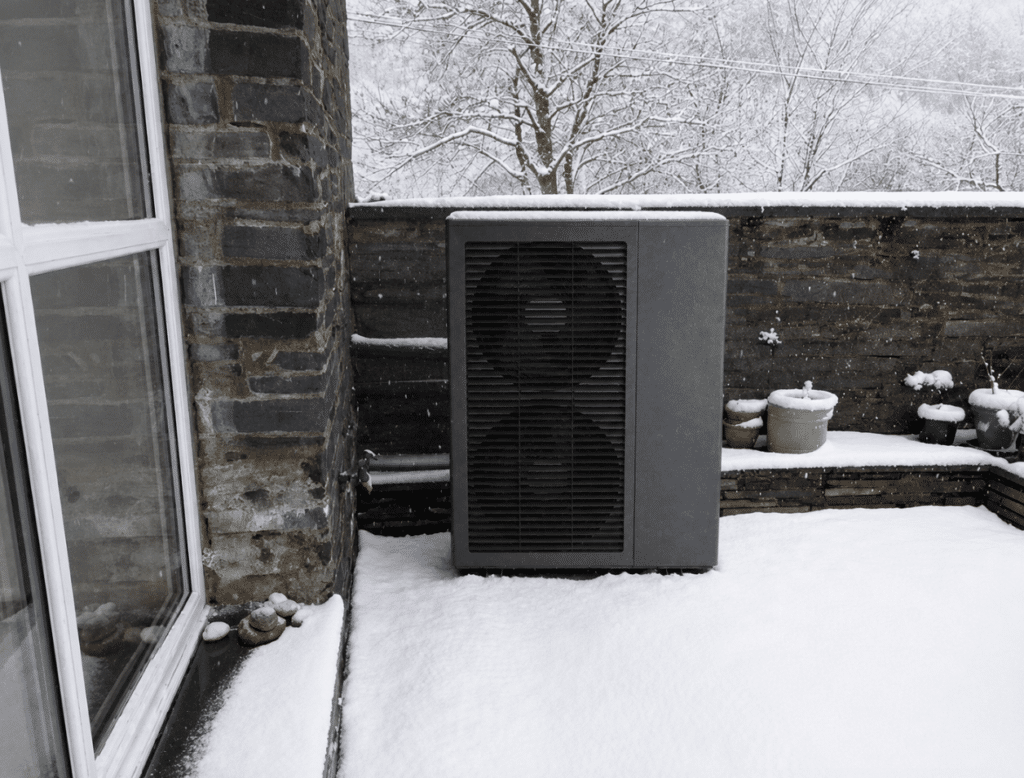
Weather compensation means the heat pump lowers the target water temperature when it is warmer outside. After the radiators are sized correctly, this can reduce electricity use. During setup, the installer should measure water flow and return temperatures, balance the radiators, check the pump and power supply, and confirm defrost drainage, sensors, zone controls and hot-water priority. Keep the settings and measured results, then review the heating curve after the system has operated in real winter weather. Record sensor positions, pump head, defrost drainage, cylinder hot-water priority and any staged backup-heater operation during commissioning.
A test carried out in mild weather can confirm the flows, sensors and controls actually observed that day, but it cannot prove the unit’s heating output at the local winter design point. Record the outdoor temperature, operating modes and measured results. Verify design-point capacity against the exact model’s published performance data, and review room temperatures, defrost, hot-water priority and any backup operation when colder conditions occur. Label any winter condition that was not observed as “not yet verified,” not as a passed site test.
A heat pump often keeps rooms warm by supplying gentler heat for longer periods than a hot boiler. If you used to run the boiler in short bursts, a large overnight thermostat setback may leave the old house slow to recover. Start with the installer’s weather-compensated heating curve, compare steady heating with the household’s actual schedule, and adjust settings using room temperatures and recorded energy use. Do not force the water temperature higher at every call for heat.
Use qualified installers for refrigerant and electrical work. Follow local rules and the manufacturer’s instructions for water treatment, unit placement, condensation and winter drainage. If the home is protected, agree on visible equipment and wall openings before installation.
Will a new heat pump cost less to run than the old boiler?
Not always. A heat pump can cost less to run, but the result depends on local electricity and gas prices and how efficiently each system heats the home over a season. One high COP figure does not predict your household heating bill. A declared seasonal coefficient of performance (SCOP) is a standardized seasonal rating. The seasonal performance factor (SPF) observed in a home depends on the installed system and how it operates. Do not treat them as interchangeable savings promises.
For the heat pump, use a measured or credible seasonal estimate with the same energy boundary as the electricity-cost calculation. Check whether it includes water pumps, defrost, controls and auxiliary heating. Do not use a single catalogue COP as a full-season result. If a boiler remains in a hybrid system, estimate its fuel use separately from heat-pump electricity use before comparing annual costs.
Compare the price of one kilowatt-hour (kWh) of useful heat, not just the price of electricity and gas. For a fair comparison, use the same amount of useful heat delivered to the home. The equations below compare variable energy costs, not your entire annual bill. A simple estimate is: heat pump heat cost per kWh ≈ electricity price per kWh ÷ seasonal performance factor (SPF); gas boiler heat cost per kWh ≈ gas price per kWh ÷ boiler seasonal efficiency. The heat pump has a lower variable heat cost when SPF is greater than electricity price × boiler efficiency ÷ gas price. Then check fixed charges, time-of-use tariffs, backup heat, hot water and maintenance separately.
Illustrative prices only, expressed in the same currency rather than actual tariffs for a particular country: electricity costs 0.30 per kWh and gas costs 0.10 per kWh. If the gas boiler is 90% efficient over the season, the variable-energy break-even seasonal performance factor (SPF) is 0.30 × 0.90 ÷ 0.10 = 2.7. The heat pump would need an SPF above 2.7 to have a lower variable cost per unit of useful heat under these assumptions. This is not an Airproz product rating or household savings forecast; standing charges, backup heat, servicing and other costs still need separate checks.
Compare the total installed cost of two workable designs, not only the outdoor unit price. Include radiator or pipe changes, any hot-water cylinder, electrical work, insulation, controls, commissioning, permissions and planned backup heat. Compare quotes with the same comfort requirements, heating demand and scope of work.
A higher-temperature design may avoid some building work but use more electricity; a lower-temperature design may need extra work upfront but cost less to operate. Neither outcome is guaranteed. Compare credible annual electricity and other fuel use using local tariffs, then consider disruption and maintenance. For a fuller breakdown, see our heat pump installation cost guide.
Can you get a grant for a heat pump in an old house?
You may be eligible for a heat pump grant, but the rules depend on your country, home, installer and heating system. Check the official scheme before allowing for a grant in your budget. An older grant amount or a general ‘EU subsidy’ figure is not a guaranteed discount.
For example, the UK Boiler Upgrade Scheme excludes hybrid heat pumps that keep a fossil-fuel boiler. Ireland’s SEAI grants have their own property and application rules. Germany, France and Australia use different national or regional programs. See our France subsidy guide for that market, but check the official scheme’s latest conditions for your specific home and system before using any amount in a quotation.
A grant does not prove that a system is correctly sized. Retaining a fossil-fuel boiler may make an otherwise workable hybrid system ineligible.
What must you check in a historic or protected home?
Historic homes can use heat pumps, but you may need permission for the outdoor unit, visible pipes, indoor equipment or insulation. Check local conservation rules, noise and moisture risks before finalizing the installation plan.
Start with repairs that respect the building, and check appearance, noise, condensation drainage and changes that can be reversed. Choose an outdoor location with clear airflow, safe service access and a route for defrost water. Consider noise at nearby windows, and avoid drainage that can freeze on paths or damage historic materials. Check wall openings and indoor unit positions before seeking any required consent. Historic England advises assessing existing radiators and pipes rather than assuming they all need replacement. Where radiators, pipes or heating fittings have historic value, check conservation requirements before moving or replacing them. Reuse is worth considering only if they can meet the heating demand safely.
Before agreeing to the installation, ask the local authority whether planning or listed-building consent is needed. Confirm the electrical and refrigerant-work requirements as well.
Example: When might an old house need a hybrid heat pump?
A hybrid heat pump can make sense if keeping a working boiler avoids major upgrades for a clearly defined winter need. It can also support a planned step-by-step renovation. First check the home’s actual heating load and the heat pump’s output in cold weather; do not decide from floor area alone.
Illustrative scenario, not an Airproz customer project: An older detached home has a working boiler, high-temperature radiators and plans for insulation later. First, calculate each room’s winter heating load. Next, check radiator output at different water temperatures and the heat pump’s output in cold weather. If the heat pump cannot cover a defined peak load, the boiler may provide planned backup. If the later insulation work lowers the load enough, a heat-pump-only system may be a better final choice.
This example shows how to compare a heat-pump-only system with a hybrid system. Before choosing either, confirm the home’s heat-loss report, radiator outputs, winter equipment capacity, control settings and complete running costs. Also check grant eligibility. Keeping a fossil-fuel boiler can make a hybrid system ineligible for some schemes. Do not use this scenario to predict the size or savings of another home.
If you are comparing a new heat pump with your current boiler, see our air-to-water heat pump vs boiler guide.
What should a contractor check before specifying a heat pump for an old house?
Before choosing a model or accepting a final price, ask for calculations showing that it can heat every room on a cold day. Also check whether the radiators, pipes or ducts, electrical supply and controls can support the installation. Agree on what the installer will measure before handover.
- Proceed to detailed design: Room heat losses, radiator or airflow capacity, the unit’s winter output and a feasible installation route have evidence.
- Redesign first: Radiators, pipes, controls, electrical supply or hot-water space fail a required check.
- Pause the choice: Essential load data, safe equipment siting, required permission or the model’s winter performance data are missing.
These outcomes guide the next check; they are not permission to install without a complete design and any required approval.
| Step | What to provide or check | What you should get |
|---|---|---|
| 1. The home and its use | Survey the house, wall and roof type, occupancy and any planned insulation improvements. | One clear set of assumptions for the home today and, if relevant, after upgrades. |
| 2. Heating load | Calculate heat loss for every room at the local winter design temperature. | Heating demand in watts (W) for each room and the whole home, not a guess based on floor area. |
| 3. How heat reaches rooms | Check radiator output at the proposed water temperatures, or air-system zones, duct size and airflow. | Which radiators or ducts can stay, and which need changes. |
| 4. Pipes, power and location | Check water flow, pressure loss, water cleanliness, pump requirements, power supply and outdoor-unit location. | A clear list of needed pipe, pump, electrical, space and site changes. |
| 5. Exact heat pump performance | Check the named model’s heating output at the winter design temperature and required water or air temperature, including defrost and minimum output. | A model-specific technical sheet or performance table showing delivered heating output at the agreed winter and supply-temperature conditions, with minimum-output, defrost and backup assumptions. If the required data are missing, mark the model choice as provisional. |
| 6. Hot water and controls | Check cylinder and coil needs, safe hot-water temperatures, room zoning, weather compensation and whether a buffer tank is required. | A complete water-system and controls plan for the actual project. |
| 7. Price and permission | Check all installation work, local electricity and fuel prices, live grant rules and any conservation approval. | Comparable total project costs and confirmation that the installation can be approved. |
| 8. Setup and handover | Measure water flow and return, balancing, cycling, defrost operation, safety and achieved room temperatures. | Recorded commissioning results and clear handover information. |
Outdoor-unit location applies to ordinary terraces as well as protected homes. Check the maker’s required air clearances, solid support, maintenance access, safe wiring and a suitable route for condensate and defrost water. Assess noise at nearby windows or other relevant positions using the applicable local method. A published sound-power rating is not the sound-pressure level at a neighbor’s window. Where local noise limits apply, assess the expected sound pressure at the relevant location using the applicable method and the actual distance, screening, reflecting surfaces and operating conditions. Do not compare the brochure sound-power number directly with a site sound-pressure limit. Do not let winter drainage freeze on a walkway. Confirm these details before fixing the unit location.
Radiator or pipe replacement, a buffer tank, ground works and retained-boiler backup are conditional measures, not automatic requirements. Include them only where the design checks show a need.
A quote that says only ’18 kW inverter heat pump, up to 75°C’ does not show whether the home will stay warm. Ask for the room heat-loss results and the model’s output at the required winter conditions. If the data are missing, treat the selection as a preliminary option, not a confirmed size.
Frequently asked questions about heat pumps in old houses
These answers combine two important retrofit decisions: whether hotter water solves a pipe-flow limit, and whether ductless heating is practical in a protected home.
Can a high-temperature heat pump reuse old microbore pipes?
Only if the existing pipes can carry enough water to every radiator. A higher water temperature does not prove that old microbore pipes have enough flow or are in good condition. Ask the installer to check flow and pressure loss.
Is a ductless heat pump air conditioner suitable for a historic home?
It can be, especially if the home has no ducts and you want both heating and cooling. Check that each required room will be heated in winter. In a protected home, outdoor-unit location, indoor-unit appearance, pipes, noise and permissions can limit the installation.
Sources and important limits
Research results, building-design methods and product ratings answer different questions. Fraunhofer ISE’s monitoring shows how heat pumps performed in the homes it studied; it does not rate an Airproz product or predict results in your home. Where applicable, EN 12831 and ACCA Manual J help determine the heat each room needs in winter. Historic England’s guidance helps identify limits on changes to protected buildings. To judge the proposed system, use the selected model’s published heating output at the site’s outdoor design temperature and required water or air temperature, together with the complete building and installation design.
For further detail, review Fraunhofer ISE’s field research, Historic England’s advice on older buildings, ACCA’s residential sizing methods and the official grant rules for your country. Follow the exact model’s technical documents and local requirements for your installation.
Is a heat pump the right choice for your old house?
A heat pump can suit an old house when room heat losses, radiator or duct output, the exact model’s winter capacity and installation limits form a workable design. If a check fails, review insulation, heat emitters, pipework, controls or planned backup before selecting equipment. Compare total costs and any building restrictions as well as the unit specification.
Need help checking a heat pump for your older home or retrofit project?
You can contact us with the home’s heating load, winter climate and existing radiator or duct details. We can discuss the product information available for your project, but the exact model and installation still need to be checked against verified technical data.
Tell us your country, the type of home and whether it currently uses radiators, ducts or a boiler. If available, you can also include a room-by-room heat-loss report, winter design temperature, water-temperature targets, pipework and electrical details, hot-water needs, installation restrictions or a backup-controls plan. These extra documents are helpful, not requirements for an initial question. Final equipment selection still depends on verified building loads and model-specific performance data.
Explore our space-heating heat pumps or read our heat pump buying guide. Then contact us to ask which published product data could help with your project.