We wrote this guide for distributors, importers, contractors, developers and engineering teams that need a clear view of the global HVAC market. It uses public company information available through September 2026. It is not a local contractor list, a jobs ranking or an investment guide.
Largest HVAC Companies in the World: Quick Answer
There is no single number that proves which HVAC company is the largest. Daikin is one of the clearest examples of a large company centered on HVAC. Carrier and Trane Technologies are also large climate-focused groups. Bosch, Midea and LG are part of broader companies, so their total group sales cannot be treated as HVAC-only sales.
This is why we do not force these companies into a simple 1–10 revenue ranking. Instead, we show the latest public figure we can verify, explain what that figure includes, and then show what still matters for a real project.
HVAC Manufacturer vs HVAC Service Company: They Are Different Rankings
An HVAC manufacturer makes equipment. An HVAC service company installs, maintains or repairs it. These two company types can both appear in search results for “largest HVAC companies,” but they should not be ranked together.
If you mean equipment manufacturers, companies such as Daikin, Carrier, Trane Technologies, Mitsubishi Electric, Midea, Gree and LG belong in the comparison. If you mean U.S. service platforms, the list changes to groups such as Apex Service Partners, Wrench Group and ARS/Rescue Rooter. Orbital’s 2026 U.S. HVAC data tracks these service companies separately from equipment distribution and manufacturing.
What Does “Largest HVAC Company” Really Mean?
When we compare large HVAC companies, we look at seven different signals: total company sales, HVAC or climate-business sales, manufacturing footprint, geographic reach, product range, ability to support large commercial projects, and equipment shipments when the shipment data is truly comparable.
No single signal gives the full answer. Total company sales can make a diversified group look much larger than its HVAC operation. A factory network shows production reach, but not whether a specific model works for your project. Shipment data can show unit volume, but it may cover only one country or product category.
Ownership can also change. Johnson Controls completed the sale of its residential and light-commercial HVAC business to Bosch on August 1, 2025. An older brand list can now point to the wrong parent company or support channel. We check current ownership and regional support before using brand relationships in a live project.
How We Built This Comparison
We use the latest public company information we can verify through September 2026. Where a company reports an HVAC or climate-specific business figure, we prefer that figure. Where only total group sales are available, we label the number as group sales instead of calling it HVAC revenue.
| What we check | How Airproz handles it |
|---|---|
| Latest data | Use current annual reports, investor results or official company releases where available. |
| HVAC-specific figures | Prefer HVAC, climate or related segment data when the company publishes it. |
| Group revenue | Label it clearly when the number covers appliances, industrial products or other non-HVAC businesses. |
| Different currencies and fiscal years | Do not convert mixed figures into a false exact 1–10 ranking. |
| Ownership changes | Check the current parent company and regional product/support structure before using an older brand relationship. |
Why this matters: a ranking can look precise while comparing different things. We would rather show a clear boundary than give you a number that suggests more certainty than the source data supports.

Largest HVAC Companies at a Glance
| Company / group | Company type | Latest scale signal | Main HVAC strength | Good fit when | What to check |
|---|---|---|---|---|---|
| Daikin Industries | HVAC-centered global group | FY2025: ¥5.015T group sales | VRV/VRF, ductless, heat pumps, applied HVAC | You need a broad established HVAC platform across several markets | Regional model, design-condition output, refrigerant, certification and support |
| Carrier Global | Climate-focused group | 2025: US$21.75B sales | Residential/commercial HVAC, chillers, controls | You need a broad climate portfolio and established project channels | Product family, controls, commissioning, parts and local support |
| Trane Technologies | Climate-focused group | 2025: US$21.3B revenue | Applied HVAC, central plants, controls, service | You have a large commercial or institutional project | Design conditions, controls, commissioning, warranty and service scope |
| Johnson Controls | Building-solutions group | FY2025: US$23.6B continuing-operation sales | Building systems, automation, controls, central plants | Building integration and controls matter as much as the equipment | Current product ownership, regional channel and system integration |
| Bosch Group / Home Comfort | Diversified industrial group | 2025 group: €91.0B | Heating, heat pumps, AC, ventilation | You need products within Bosch Home Comfort’s current regional portfolio | Exact brand, product, certification, service and current ownership |
| Company / group | Company type | Latest scale signal | Main HVAC strength | Good fit when | What to check |
|---|---|---|---|---|---|
| Mitsubishi Electric | Diversified group with large HVAC segment | FY2026 Air Conditioning Systems & Home Products: ¥1.6103T | Room AC, heat pumps, VRF, commercial HVAC | You need established ductless, heat-pump or VRF platforms | Regional series, hot/cold-weather output, refrigerant and controls |
| Midea Group | Diversified appliance/industrial group | 2025 group: RMB458.5B | Room AC, VRF, chillers, heat pumps | You need a wide manufacturing and distribution portfolio | Exact platform, certification, controls, documents and sales route |
| Gree Electric | Air-conditioning-focused manufacturer | 2025: RMB170.447B operating revenue | Residential AC, VRF, chillers, commercial HVAC | You need an AC-focused manufacturer with broad product coverage | Efficiency, operating range, refrigerant, certification and service |
| LG Eco Solution | HVAC-focused business inside LG Electronics | 2025: KRW9.32T | Residential/commercial HVAC, heat pumps, chillers | You need HVAC plus controls or thermal-management options | System layout, fluid conditions, controls, redundancy and operating range |
| Lennox | Climate-control-focused company | 2025: US$5.2B revenue | North American residential and light-commercial HVAC | You need a focused North American HVAC route | Regional availability, parts, warranty, dealer/service coverage and lead time |
This table is not a league table. Bosch Group, for example, has much higher total group sales than many companies here. That does not mean Bosch has €91.0 billion in HVAC sales. For a real project, the more useful question is whether the right product, support and commercial route are available where you need them.
Major Global HVAC Company Profiles
Daikin Industries
Scale: Daikin reports FY2025 net sales of ¥5.015 trillion. Air conditioning is central to the group, although this is still total group sales rather than pure HVAC sales.
Main HVAC strength: split systems, variable refrigerant flow (VRF) systems, heat pumps, applied HVAC and refrigeration.
Where it makes sense: projects that need a broad established HVAC platform, several system types and mature regional product support. What may limit the fit: product series, certification and service routes differ by country, so a model available in one market may not be the same option in another.
What we check: the exact regional series, output at the project design temperature, refrigerant, certification, controls, parts and service responsibility. Source: Daikin financial data.
Carrier Global
Scale: Carrier reported US$21.75 billion in 2025 sales. The group is strongly focused on climate solutions, although it also includes transport refrigeration.
Main HVAC strength: residential and commercial HVAC, heat pumps, chillers and controls.
Where it makes sense: projects that need a broad climate portfolio and established regional sales or service channels. What may limit the fit: the exact product, controls package, distributor support and local stock can change by market.
What we check: the product family, application data, controls, commissioning, parts availability, warranty route and local support. Source: Carrier 2025 results.
Trane Technologies
Scale: Trane Technologies reported US$21.3 billion in 2025 revenue. The group is climate-focused and also includes Thermo King transport refrigeration.
Main HVAC strength: applied HVAC, chillers, central plants, controls and service for large commercial systems.
Where it makes sense: large commercial, institutional or complex building projects. What may limit the fit: system design, commissioning and long-term service can be closely tied to the regional project channel.
What we check: chiller and air-side layout, design temperatures, control integration, commissioning responsibility, warranty and long-term service. Source: Trane Technologies 2025 results.

Johnson Controls
Scale: Johnson Controls reported US$23.6 billion in FY2025 sales from continuing operations.
Main HVAC strength: commercial building systems, automation, controls, services, central plants and data-center cooling.
Where it makes sense: projects where building controls and system integration matter as much as the HVAC equipment itself. What may limit the fit: older brand lists can be misleading because its residential and light-commercial HVAC business changed ownership in 2025.
What we check: the current product owner, regional product range, sales channel, control architecture and service responsibility. Sources: Johnson Controls FY2025 results and residential/light-commercial business sale.
Bosch Home Comfort
Scale: Bosch Group reported €91.0 billion in 2025 sales. This is total Bosch Group sales, not Bosch HVAC sales.
Main HVAC strength: heating, heat pumps, air conditioning, ventilation and the residential/light-commercial HVAC portfolio bought from Johnson Controls.
Where it makes sense: markets where the current Bosch Home Comfort or acquired regional portfolio matches the project. What may limit the fit: Bosch is a very large diversified group, so total group revenue says little about one HVAC product family.
What we check: the exact brand, regional product, certification, warranty and service structure. Source: Bosch 2025 group report.
Mitsubishi Electric
Scale: Mitsubishi Electric reported ¥1.6103 trillion in FY2026 revenue for Air Conditioning Systems & Home Products. The segment also includes home products, so it is not a pure HVAC number.
Main HVAC strength: room air conditioners, air-to-air and air-to-water heat pumps, VRF and commercial HVAC.
Where it makes sense: projects that need established ductless, heat-pump or VRF platforms. What may limit the fit: product names, cold-weather performance, refrigerants and control options vary by region.
What we check: the regional product family, hot- and cold-weather output, refrigerant, controls, certification, commissioning and service. Source: Mitsubishi Electric segment results.
Midea Group
Scale: Midea reported RMB458.5 billion in 2025 group revenue. Midea is a diversified company, and HVAC sits across more than one business area.
Main HVAC strength: room air conditioners, VRF, chillers, heat pumps, controls and large manufacturing programs.
Where it makes sense: projects or distribution programs that need a broad product and manufacturing base. What may limit the fit: a group-level number does not tell you which product platform, regional channel or certification applies to your project.
What we check: the exact product platform, destination-market compliance, documentation, controls, warranty route, lead time and sales channel. Source: Midea 2025 results summary.
Gree Electric
Scale: Gree’s 2025 annual report shows operating revenue of RMB170.447 billion, down 9.89% from 2024. We use the latest official number instead of an older 2024 figure.
Main HVAC strength: residential air conditioning, commercial HVAC, VRF, chillers and related components.
Where it makes sense: projects that need an air-conditioning-focused manufacturer with broad product coverage. What may limit the fit: model efficiency, operating range, controls and regional support still need to be checked product by product.
What we check: model-specific efficiency, operating temperature range, controls, refrigerant, certification, parts and local service. Source: Gree 2025 Annual Report.
LG Electronics Eco Solution
Scale: LG Eco Solution reported KRW9.32 trillion in 2025 revenue. This is more useful than total LG Electronics revenue because Eco Solution is focused on HVAC.
Main HVAC strength: residential and commercial HVAC, heat pumps, chillers and thermal-management applications such as data-center cooling.
Where it makes sense: projects that need HVAC plus controls, heat-pump or thermal-management options. What may limit the fit: the system still has to match the actual load, fluid conditions, redundancy plan and regional service structure.
What we check: system layout, entering and leaving fluid conditions, backup capacity, controls, commissioning, parts and the allowed operating range. Source: LG 2025 results.
Lennox
Scale: Lennox reported US$5.2 billion in 2025 revenue. It is smaller than the biggest diversified groups, but its business is much more focused on climate control.
Main HVAC strength: North American residential and light-commercial HVAC.
Where it makes sense: North American projects where the local dealer, parts and service structure is important. What may limit the fit: its strongest route is regional rather than a one-size-fits-all global platform.
What we check: local product availability, parts, warranty responsibility, dealer/service coverage, training needs and lead time. Source: Lennox 2025 results.
Other Major HVAC Groups to Watch in 2026
Paloma Rheem Holdings / Rheem / GENERAL / Groupe Atlantic
Scale: Paloma Rheem Holdings changed the HVAC ownership map in 2025 and 2026. It acquired GENERAL, formerly Fujitsu General, in August 2025 and completed the purchase of a majority stake in Groupe Atlantic in May 2026.
Main HVAC strength: heating, water heating, air conditioning and heat-pump businesses spread across several established regional brands.
Where it makes sense: projects where Rheem, GENERAL or Groupe Atlantic has a suitable regional product and support route. What may limit the fit: the group structure is broad, so the exact brand and regional product owner matter more than the parent-company name alone.
What we check: the exact company, product platform, certification, parts and regional service structure. Paloma Rheem Holdings says the group has about 26,000 people, 43 manufacturing sites and a presence in more than 100 countries. Source: Paloma Rheem Holdings, May 2026.
Panasonic HVAC & CC
Scale: Panasonic created Panasonic HVAC & CC Co., Ltd. on April 1, 2026 by bringing together its heating, ventilation, air-conditioning and cold-chain businesses. Panasonic says the new group has about 30,000 employees worldwide and forecast consolidated sales of about ¥1.3 trillion for the fiscal year ended March 31, 2026.
Main HVAC strength: residential and commercial air conditioning, ventilation, CO₂ heat-pump water heaters, air-to-water heat pumps and cold-chain equipment.
Where it makes sense: projects where Panasonic’s current regional HVAC or cold-chain portfolio matches the application. What may limit the fit: the new corporate structure does not mean every product is offered in every market.
What we check: the exact regional product, certification, controls, parts and service resources. Source: Panasonic, April 2026.
Haier Smart Home
Scale: Haier Smart Home reported RMB302.35 billion in FY2025 revenue. It also reported 14.8% year-over-year growth in global air-conditioning sales volume.
Main HVAC strength: residential air conditioning and a broad home-appliance distribution footprint.
Where it makes sense: markets where Haier’s regional air-conditioning range and channel are established. What may limit the fit: company-wide revenue includes far more than HVAC, so it should not be treated as air-conditioning revenue.
What we check: the exact regional air-conditioning platform, certification, refrigerant, parts, warranty and service route. Source: Haier Smart Home FY2025 results.
What Do May 2026 U.S. HVAC Shipments Tell Us?
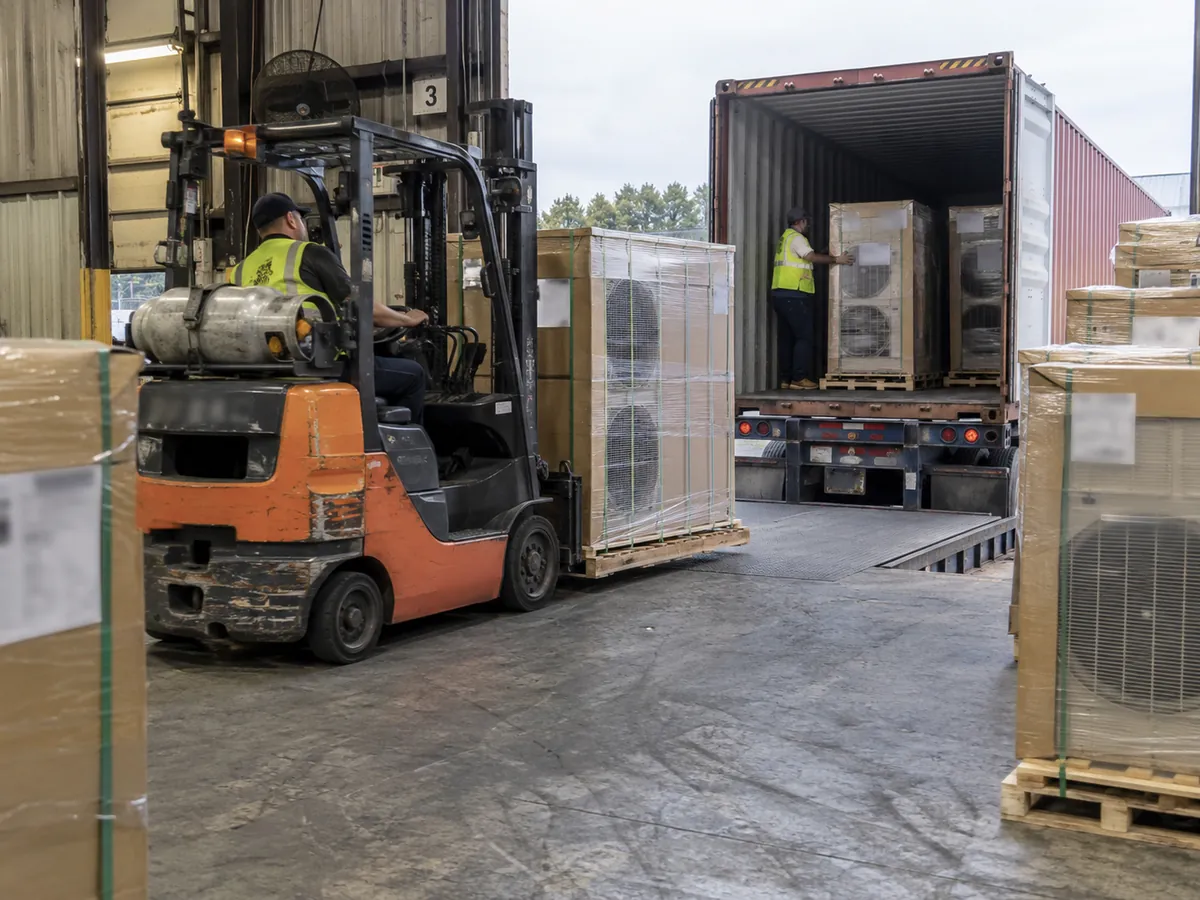
The Air-Conditioning, Heating, and Refrigeration Institute, or AHRI, reported 919,685 combined U.S. shipments of central air conditioners and air-source heat pumps in May 2026. That was 6.7% higher than May 2025. Air-conditioner shipments were 523,132 units. Air-source heat-pump shipments were 396,553 units.
For January through May, combined shipments were down 1.2% from the same period in 2025. Air conditioners were down 3.4%, while heat pumps were up 1.4%.
Source: AHRI Monthly Shipments and May 2026 statistical release.
How We Check an HVAC Manufacturer for a Real Project
1. Will the system still deliver enough output at the real design temperature?
Rated capacity is usually measured at a defined test condition. Your project may be hotter or colder. We check the manufacturer’s performance table at the outdoor temperature used for system sizing and at the indoor air or water temperature your system needs.
This is often called design-point capacity. It matters because a unit can look large enough on a catalog page but still fall short on the hottest or coldest design day. See our air-conditioner sizing guide for the basic sizing logic.
2. Can the exact model legally enter your market?
A brand may sell certified products in one country and different products in another. Check the certificate for the exact model, refrigerant, electrical version and destination market.
Do not treat a company-level statement such as “CE products available” as proof that every model has the same approval. The exact certificate scope matters.
3. Choose the right product type before comparing refrigerants
Start with the job the equipment must do. A split air conditioner, VRF system, chiller and air-to-water heat pump solve different problems. Once the product type is clear, check whether the refrigerant fits the market, safety rules and service plan.
Refrigerant matters, but it should not replace basic product and performance checks. See our R290 vs R32 heat-pump guide for a more detailed comparison.
4. Can the controls connect to the building or system?
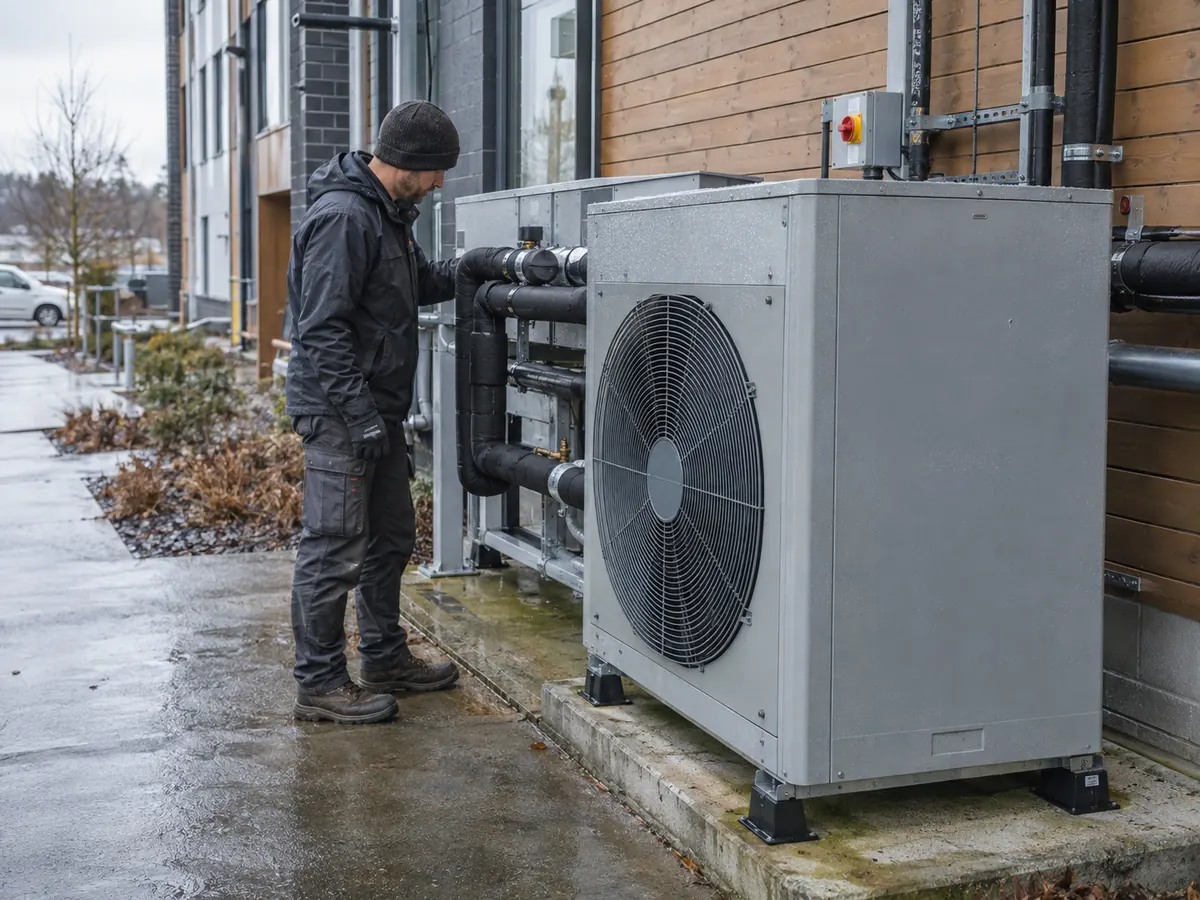
Commercial HVAC often needs to connect to a building management system, or BMS. We check the required gateway, communication method such as Modbus, controller layout, remote monitoring and who will commission the controls.
Do not assume every unit in the same brand supports the same connection. The exact product family matters. Our heat-pump controls and thermostat guide explains why the control interface must be checked for the actual equipment.
5. Are parts available where the equipment will be installed?
A strong product can still create problems if common replacement parts are hard to get. Check local or regional stock for filters, sensors, fan motors, control boards, compressors and other service parts that matter for the product type.
For a distribution program, we also ask who will hold fast-moving spare parts and how replacement stock will be handled.
6. Who is responsible for the warranty?
Warranty terms are not just a number of years. Check what the warranty covers, who receives the claim, who supplies replacement parts and whether labor is included. For international supply, the service responsibility must be clear before ordering.
7. Does the product need special training or commissioning?
Some systems can be installed by a trained local contractor with standard tools. Others need product-specific commissioning, software access or control setup. Large VRF, chiller and building-control projects can need more support than a standard split system.
Ask what training, software, startup checks and technical support are needed before the equipment reaches site.
8. Does the supply route fit the project?
A large manufacturer may sell only through a protected local channel. Another manufacturer may support direct project supply, private label or original equipment manufacturer / original design manufacturer work, often shortened to OEM/ODM.
We check the route early: branded distribution, direct project supply, OEM/private label, replacement stock or a long-term distribution program.
9. Can the lead time and service plan support the schedule?
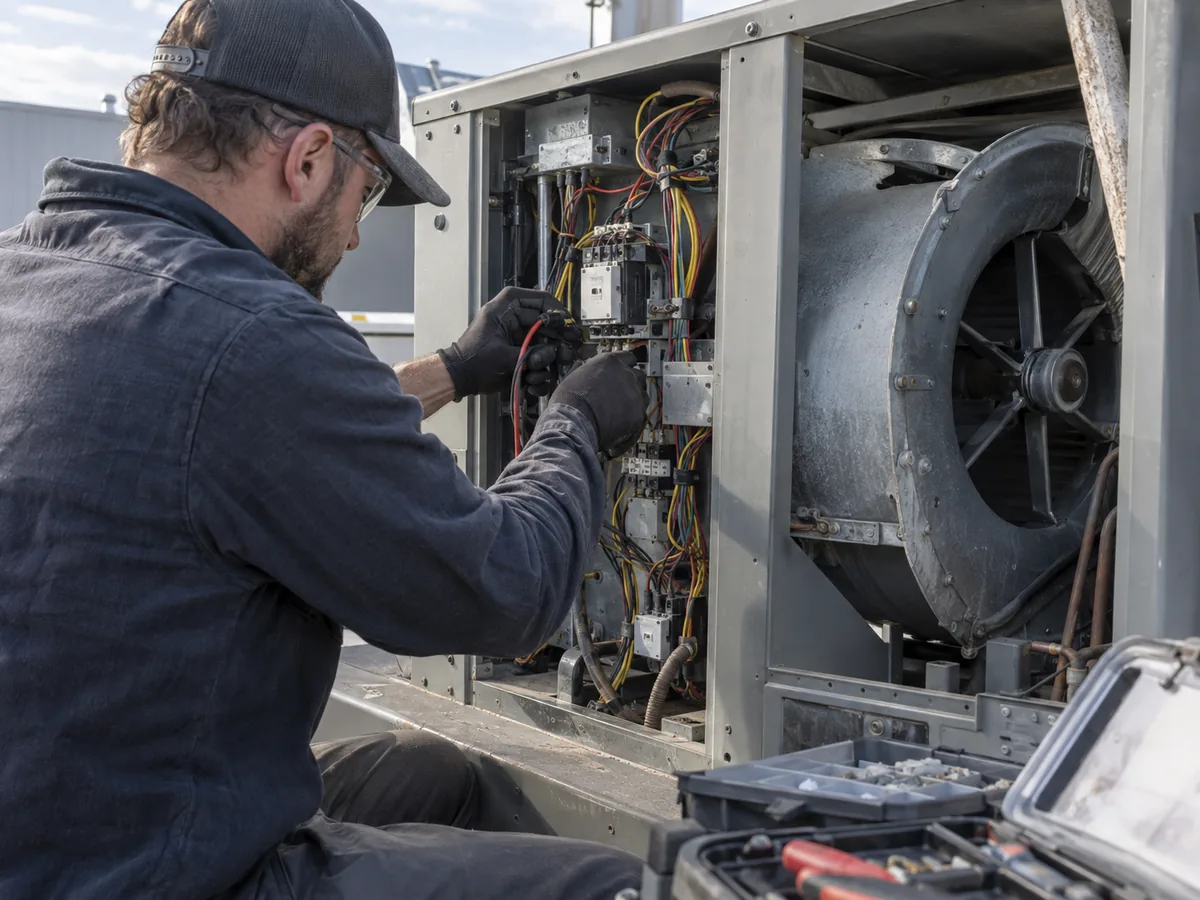
Confirm production time, local inventory, shipping time and any commissioning window before you lock the project schedule. A technically suitable unit can still be the wrong choice if it cannot arrive when the project needs it.
Also confirm who handles technical documents, spare parts and field service. Our HVAC compressor types guide shows why component choice can also affect maintenance and service needs.
Global HVAC Brand or Direct OEM Manufacturer: Which Route Fits?
A large global brand and a direct OEM/project supplier solve different problems. One route is not always better. The right route depends on what your project or distribution program needs most.
| What you need | Established global brand | Airproz direct OEM / project supply | What to confirm |
|---|---|---|---|
| Established local branded channel | Often a major strength | Depends on the Airproz and distributor/project setup | Who sells, installs and supports the equipment locally |
| Standard catalog product | Common route | Available within verified Airproz product families | Exact model and regional specification |
| OEM / private label | Depends on the brand and program | Core Airproz discussion path when product and order scope fit | MOQ, branding scope and engineering feasibility |
| Branding and packaging | Usually controlled by the brand owner | Can be discussed by model and order scope | Artwork, label, packaging and document requirements |
| Direct technical discussion | Often through regional sales or project channels | Direct engineering and commercial review with Airproz | Who approves technical changes and final data |
| Controls and connectivity | Depends on the platform | Selected Wi-Fi, Modbus/BMS and control needs can be reviewed | Exact protocol, gateway, controller and commissioning scope |
| Certification | Usually defined by regional product programs | Must be confirmed by model and market | Exact certificate scope and destination requirements |
| Parts and warranty | Often supported through an established regional channel | Must be defined with the distributor/project service plan | Spare-parts stock, claim process and labor responsibility |
| Lead time | Depends on local inventory and channel stock | Depends on production, customization and shipping | Required delivery date and available buffer |
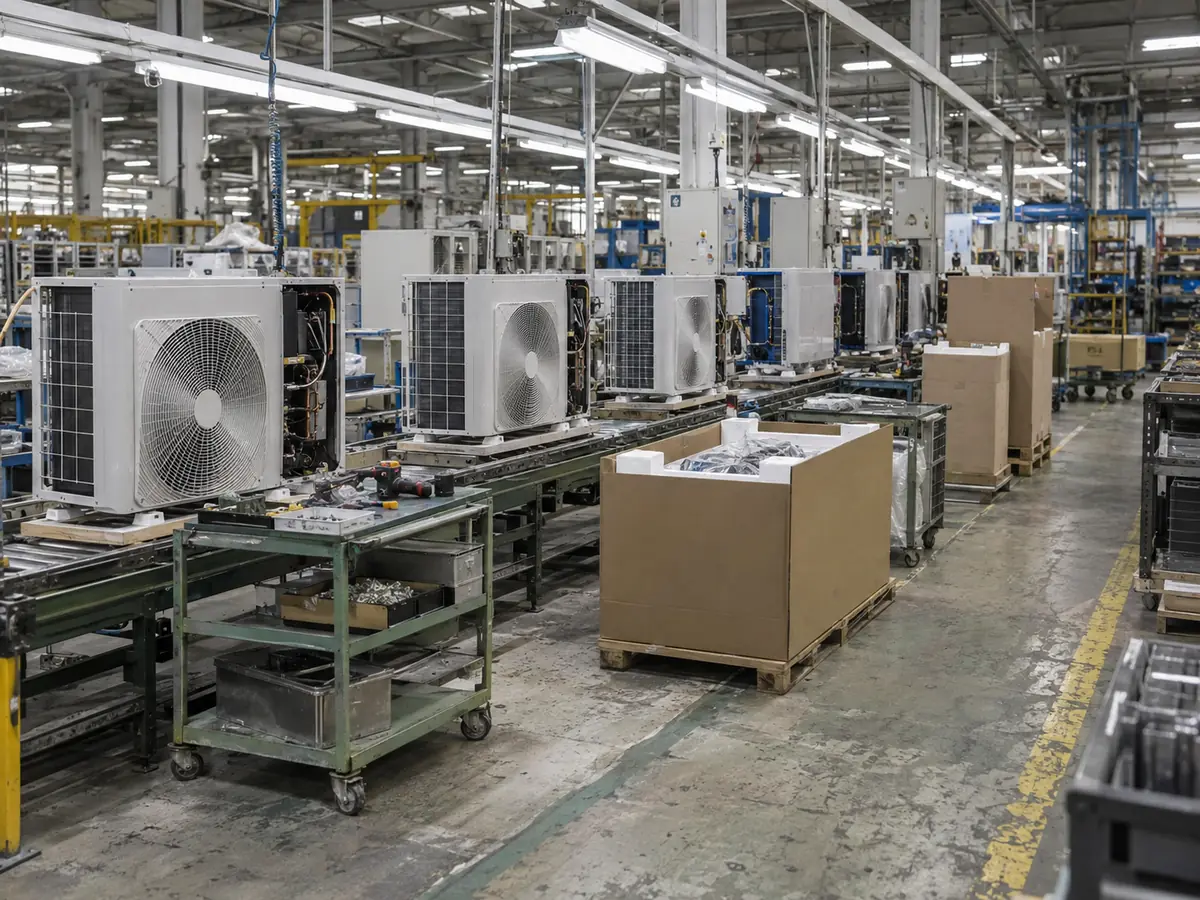
How to choose: use an established global-brand route when a named brand, mature local dealer structure or defined regional service network is required. Talk to Airproz when direct factory communication, OEM/ODM, private label, configurable documents or a B2B project-supply route matters more. Our OEM/ODM heat-pump manufacturing page shows the customization areas we currently publish. The exact options still need to be confirmed by model and project.
When Airproz May Be the Right HVAC Supply Route
At Airproz, we support B2B HVAC and heat-pump supply when the requirement matches our verified product range. We are most useful when you need a direct discussion about product type, target market, branding, documents, controls or an ongoing order program.
For more focused manufacturer research, see our heat-pump manufacturer guide and air-source heat-pump manufacturer guide. For AC efficiency, see our energy-efficient air-conditioner guide.

What We Check Before We Recommend an Airproz Product
We do not start with an exact model. We first check whether the project fits an Airproz product family. Then we move to an exact model only after the operating conditions and verified product data are clear.
- Application: what the system needs to heat, cool or control.
- Required capacity: the heating or cooling output you need.
- Outdoor design temperature: the hot or cold temperature used for system sizing.
- Target air or water temperature: the operating condition the system must deliver.
- Power supply: voltage, phase and frequency.
- Refrigerant and certification market: what the destination market allows and requires.
- Controls: thermostat, gateway, Modbus or BMS requirements.
- Quantity and schedule: what the production and delivery plan must support.
What to send us
| What to send | Why it matters |
|---|---|
| Application / equipment type | Tells us whether you need split AC, VRF, an air-to-water heat pump, commercial heat pump or another system. |
| Required capacity | Gives us the first product-size range. We still need the real design condition for an exact model. |
| Outdoor design temperature | Lets us check output and operating range at the actual hot or cold condition used for sizing. |
| Target indoor air or water temperature | Defines the operating point the system must meet. |
| Power supply | Rules out electrical versions that do not fit the site. |
| Destination market / required certification | Tells us which compliance documents and standards matter. |
| Refrigerant requirement | Helps check regulation, safety and service compatibility. |
| Controls / BMS requirement | Tells us what controller, gateway or system connection must be checked. |
| Installation limits | Covers space, piping or water connections, noise, access and other site limits. |
| Quantity and schedule | Helps us review production, commercial terms and project timing. |
| OEM / branding / document needs | Defines what customization needs a feasibility check. |
| Drawings or equipment schedule | Helps us review the project in more detail when these documents are available. |
How precise can we be? If you only have the application and an approximate capacity, we can usually point you toward a product family. To recommend an exact model or setup, we need verified Airproz product data plus the real design conditions, power supply, certification market and installation limits.
Frequently Asked Questions
What is the difference between an HVAC manufacturer and an HVAC service company?
An HVAC manufacturer makes equipment such as air conditioners, heat pumps, chillers or controls. An HVAC service company installs, repairs or maintains that equipment. A search for “largest HVAC companies” can show both types, so check which type the ranking covers before comparing the names.
Which is the largest HVAC company in the world?
There is no single answer that is fair for every company. Daikin is a large HVAC-centered group. Carrier and Trane Technologies are large climate-focused groups. Bosch and Midea are larger diversified companies, but their total group sales are not HVAC-only sales. You must define the metric before calling one company the largest.
Is Daikin the largest HVAC company?
Daikin is one of the strongest global size references for a company centered on HVAC. But the answer changes depending on whether you compare total group sales, HVAC-segment sales, shipments or global reach. Those figures are not reported in the same way by every company.
Does group revenue equal HVAC revenue?
No. Group revenue can include businesses outside HVAC. Bosch and Midea are good examples. Their total corporate sales should not be presented as HVAC-only sales.
Are the biggest HVAC companies always the best choice for a project?
No. Company size can show manufacturing reach, product breadth and service resources. It does not prove that one model will meet your design temperature, required output, certification, controls, lead time, parts or service needs. Check the exact product and project conditions before choosing.
Do AHRI shipment numbers show which HVAC manufacturer is biggest?
No. AHRI monthly reports combine shipments from participating companies for specific U.S. product categories. They are useful for understanding the category, but they are not a global manufacturer ranking or worldwide market-share table.
When should I use an OEM HVAC manufacturer instead of a global brand?
A direct OEM route can fit when you need direct supplier communication, private label, configurable branding or documents, or a defined B2B project program. A global brand can be the better route when a named brand, local dealer network or mature service structure is required. In both cases, check the actual product, certification, service and project conditions before ordering.