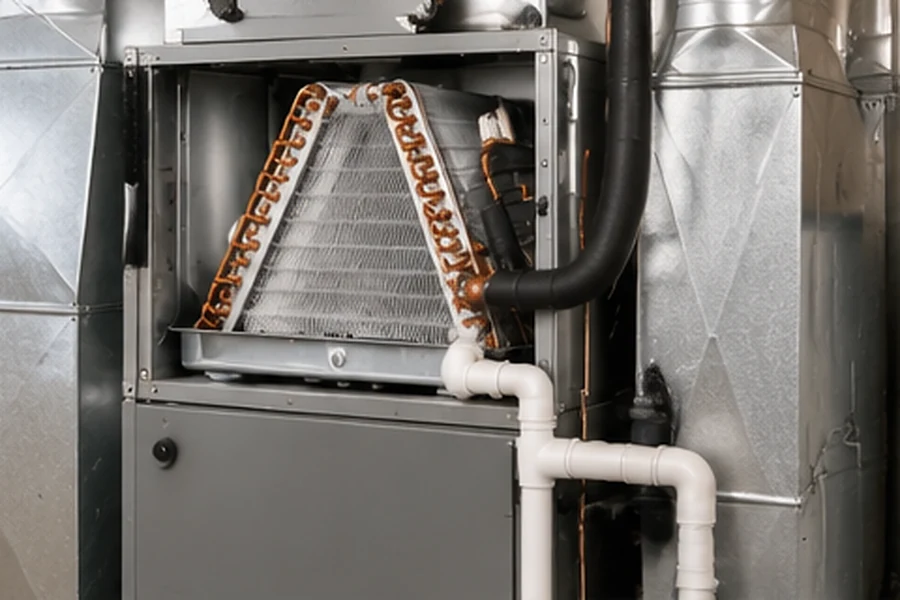
Why is my air conditioner leaking water? Most indoor AC water leaks happen because condensation cannot drain away, a drip pan or condensate pump has failed, or ice on the evaporator coil is melting. Water can also collect on a cold pipe or air vent. Switch off cooling if water is leaking inside, then check the exact drip location before trying a fix. Water at the designed outdoor drain outlet during cooling is usually normal. Water from a separate emergency drain may signal trouble with the main drain.
The right repair depends on whether you have a central air conditioner, wall-mounted mini split, window unit, or portable AC. Start with the safety checks, then follow the cause that matches your symptoms.
Is Water Dripping from Your AC Normal?
Water from a designed outdoor condensate drain is usually normal. Water dripping into your room, onto the floor by the indoor unit, or through the ceiling is not. In cooling mode, the cold indoor cooling coil (evaporator coil) removes moisture from warm air. The resulting water is called condensate. It runs into a drip pan and should leave through the designed drain or collection system.
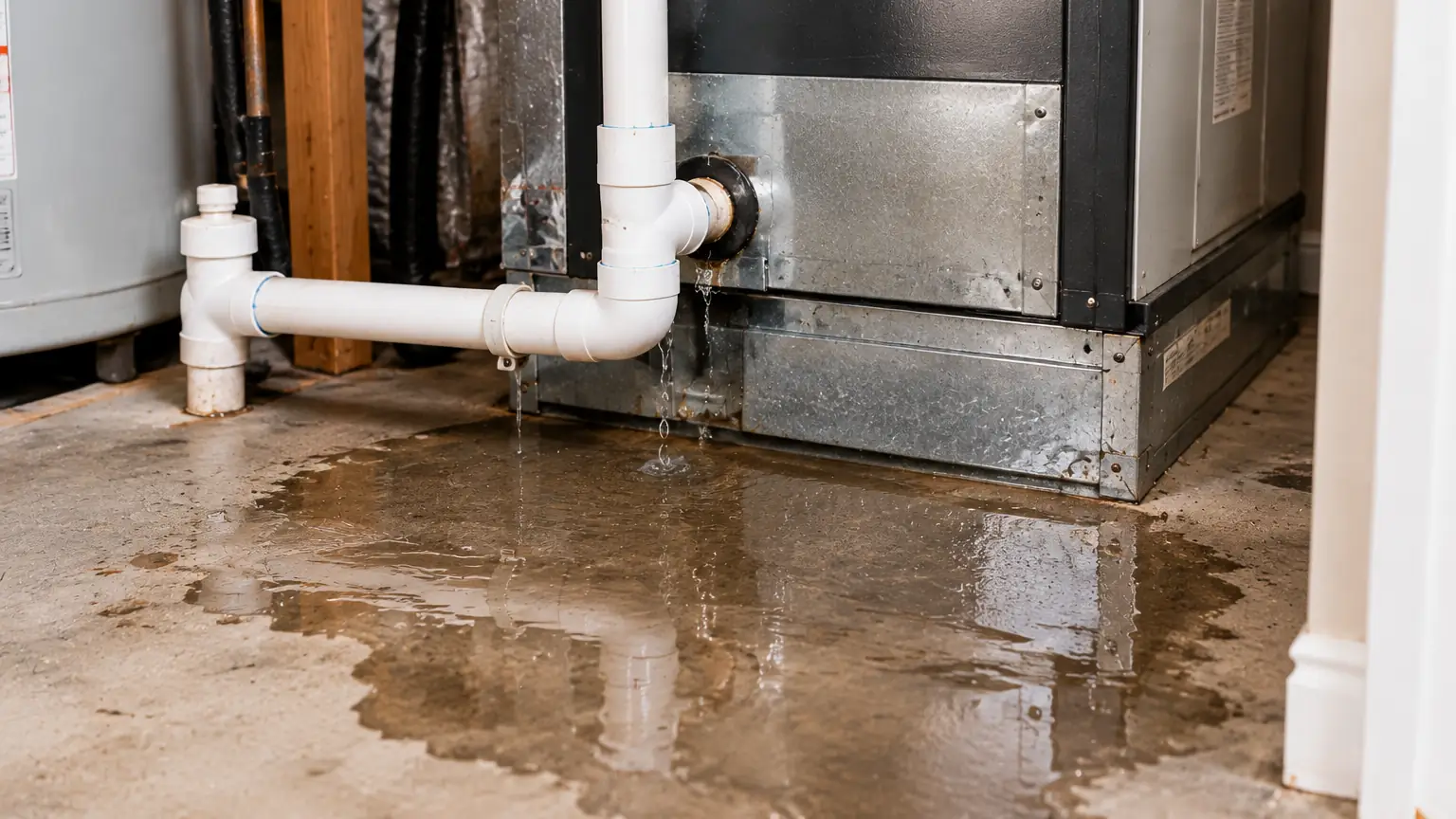
Dripping at the normal primary drain outlet is often harmless, especially on humid days. A separate secondary or emergency drain is different: water from it can mean the main drain is blocked or water is rising in a backup pan. Check the unit manual or ask the installer which outlet is the primary drain and which is the backup. Water collecting near drywall, flooring, insulation, or wiring needs attention.
| Where you see water | What it may mean | Best next action |
|---|---|---|
| At the normal primary drain outlet outside, while cooling | Expected condensate leaving the system | Confirm this is the intended main outlet and no water backs up. |
| From a separate emergency or secondary drain | Main drain may be blocked or a backup pan may be filling | Stop cooling and have the main and backup paths checked. |
| Under or beside the indoor air handler | Drain, pan, pump, or thawing ice problem | Stop cooling; check only safe, visible areas. |
| After shutdown, following weak cooling or visible ice | Ice on the indoor coil may be melting | Leave cooling off and arrange a check if ice or leakage recurs. |
| From the front of a window AC into the room | Water route, mounting, or rain entry issue | Switch it off and consult the exact model instructions. |
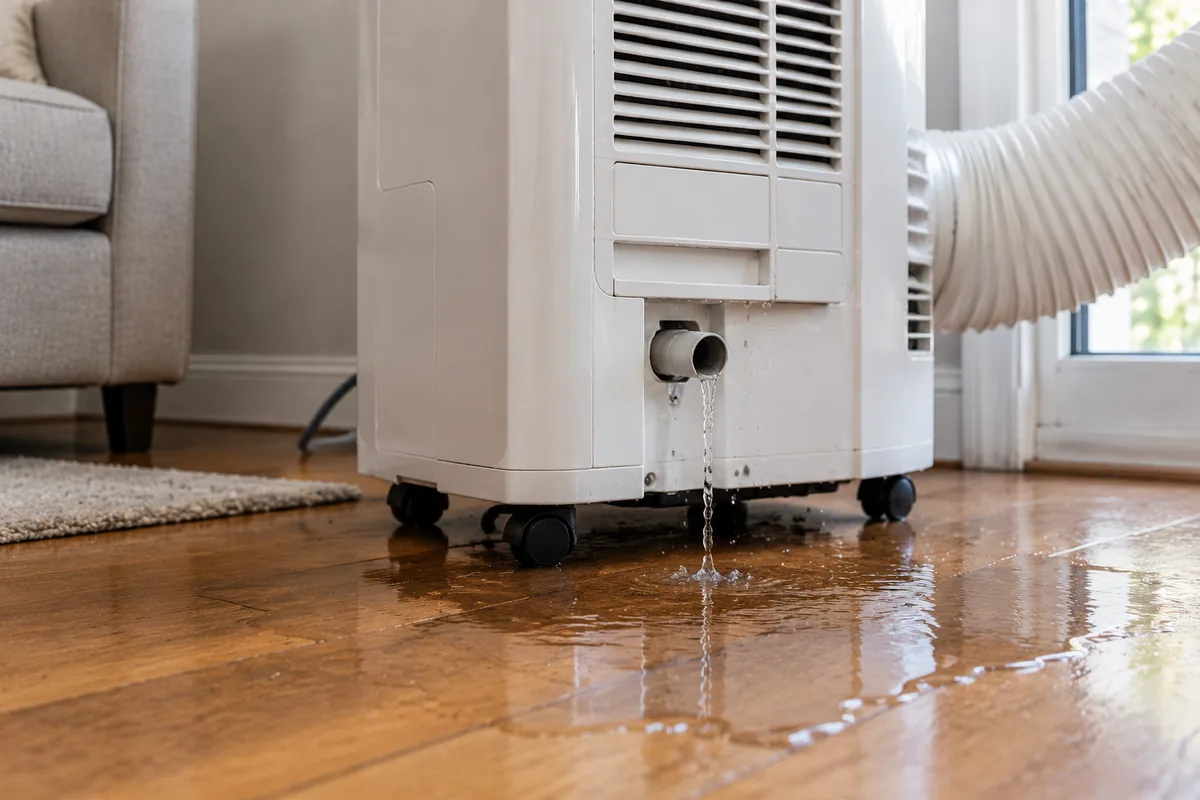
| From the bottom of a portable AC | Tank, drain plug, hose, or drainage mode problem | Check user-accessible drainage parts and the model manual. |
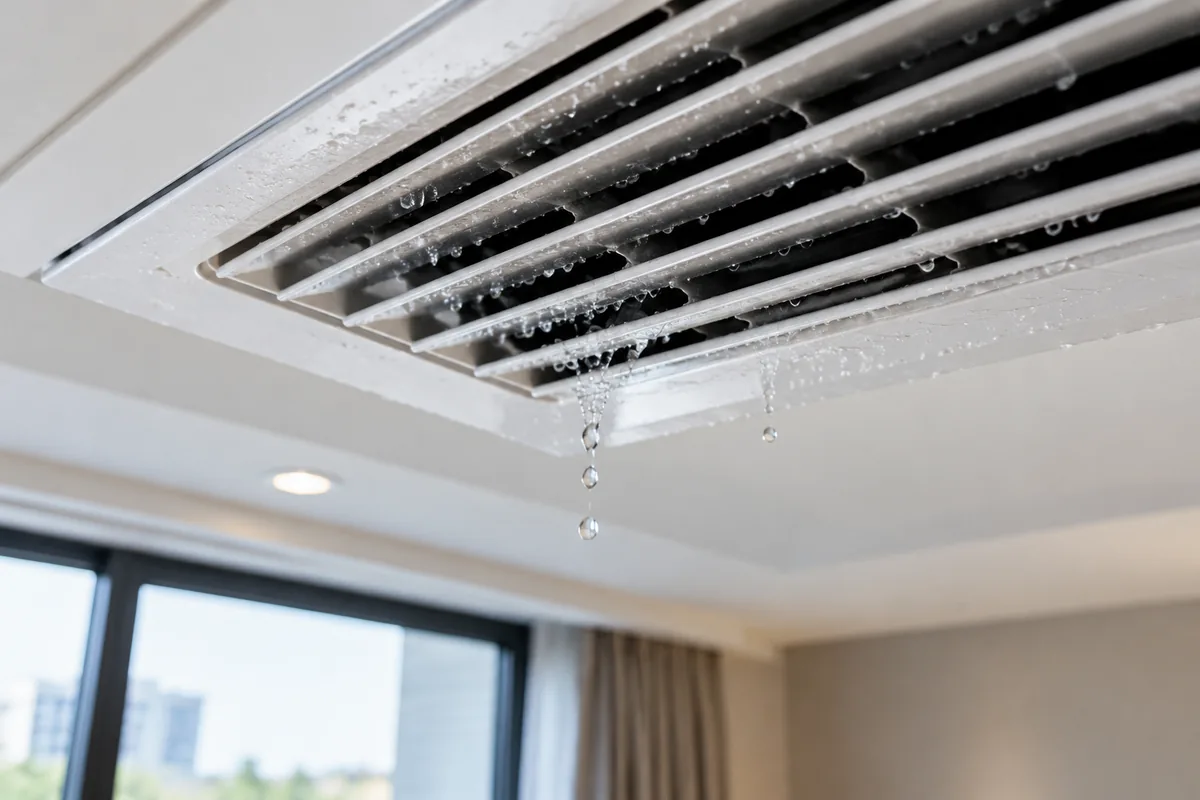
| On or below an AC ceiling vent | Cold grille or duct condensation, or water from above | See whether drops form on the grille or run through the opening. |
One important exception: an outdoor heat pump in heating mode may release water as it defrosts its coil. That differs from a central AC condenser leaking unexpectedly in cooling mode. For water at an unfamiliar outdoor location, confirm the outlet against the installation details before returning the system to normal use.
What Should You Do First If Your AC Is Leaking Inside?
Turn off cooling first, keep water away from electrical parts, and limit damage while you identify the source. A small visible drip can turn into ceiling or floor damage if the system keeps producing condensate.
- Stop the air conditioner. Use the thermostat or the normal unit controls. If water is near outlets, an electrical panel, or live equipment, keep clear. Have a qualified person isolate power rather than reaching through water or opening wet electrical compartments.
- Protect the room. Put a container or towels under a safe, accessible drip. Move belongings away. If the ceiling bulges, water crosses a light fixture, or a large area is wet, stay clear of the area and contact an appropriate building professional immediately.
- Check only user-accessible areas. A dirty filter, visible standing water in a reachable secondary pan, a full portable-AC tank, or a loose external drain hose may give useful clues. Do not pull off panels containing wiring or the refrigerant circuit.
- Record where and when it happens. Note whether the AC was cooling, just shut off, or thawing after icing. Record the drip point, whether cooling became weak, and whether a float switch stopped the unit. A float switch is a safety control that can shut off cooling when water rises too high.
- Arrange the right repair. Contact an HVAC technician for a central or mini-split internal leak, a recurring leak, a ceiling installation, an unexplained shutdown, or any water near electrical equipment. For a window or portable AC, start with its owner’s manual.
Dry wet materials promptly. The US Environmental Protection Agency recommends drying water-damaged materials and areas within about 24–48 hours to help prevent mold growth. Fixing the AC alone does not remove water already trapped in insulation or a ceiling. See the EPA moisture and mold guidance.
What Causes an Air Conditioner to Leak Water Inside?
The most common explanations are a blocked condensate drain, an overflowing or damaged pan, a drain pump problem, or ice melting off the indoor coil. A loose drain connection or condensation on an uninsulated cold surface can also put water in the wrong place. Use the symptoms below to choose which part of the drainage system to inspect first.
| What you notice | Possible cause | What needs checking |
|---|---|---|
| Water stands in the pan and little leaves the main drain | Drain blockage or drainage routing problem | Full drain path, any trap, and normal discharge point |
| Water escapes at the edge of a pan even while its outlet drains | Crack, misalignment, or loose fitting | Pan surface, level, and drain connection |
| Weak cooling or ice comes before a leak after shutdown | Frozen indoor coil thawing | Filter, airflow, and the reason the coil iced |
| Pump reservoir fills or the pump alarms | Pump or discharge-line fault | Pump operation, tubing, and safety control |
| Droplets form directly on cold pipe insulation gaps | Surface condensation | Insulation, nearby humidity, and where water first forms |
Clogged Condensate Drain Line
A clogged drain line stops water from leaving the drip pan. Dust, slime, or debris can collect in the line; the water level then rises until the pan spills or an overflow safety switch shuts off cooling. You may see standing water near the indoor air handler, a wet ceiling below an attic unit, or little discharge from the normal drain outlet while the coil is producing condensate.
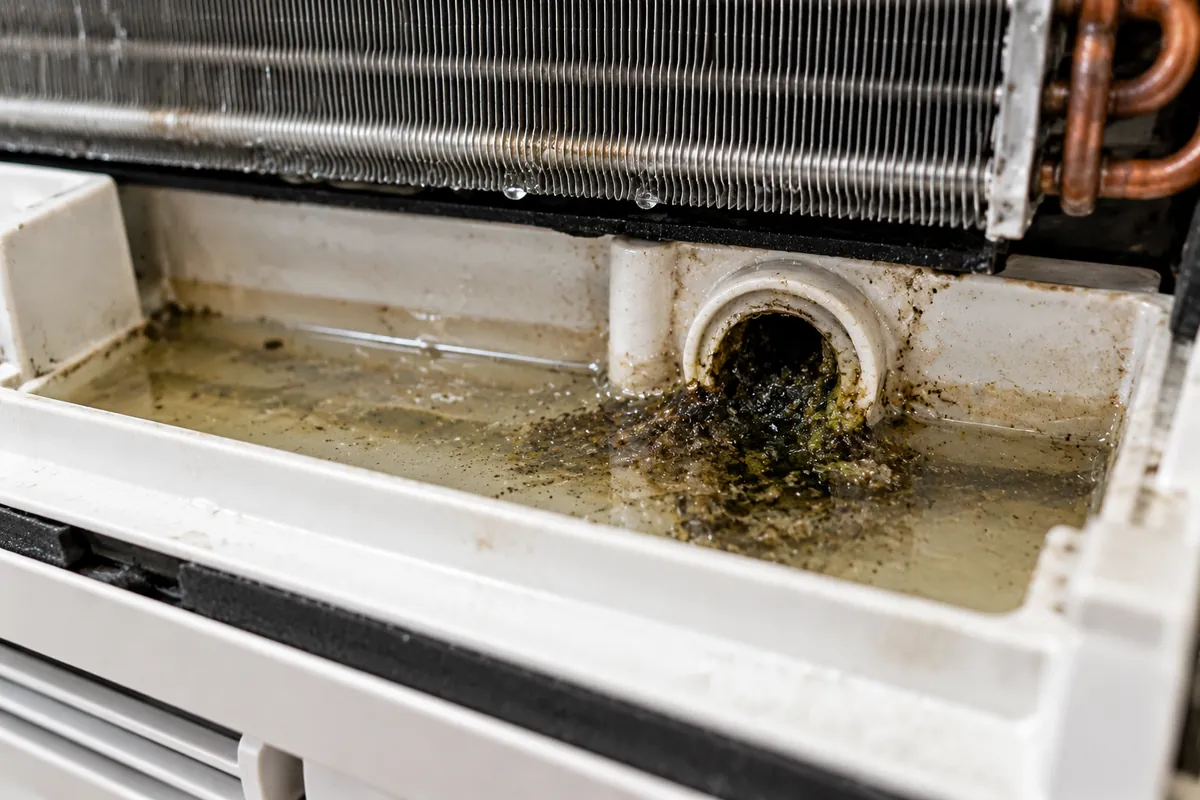
Inspect only a clearly accessible line or service opening and follow the unit’s instructions. A technician can clear the entire path, confirm any required trap, and test how water flows after the blockage is removed. Do not bypass an overflow switch just to make the AC run again.
Cracked, Rusted, or Misaligned Drip Pan
A damaged pan lets condensate escape before it reaches the drain. Older metal pans may corrode; plastic pans can crack; a recently serviced pan or drain fitting may sit incorrectly. A clean, open drain does not rule this out. Water may drip from the pan edge even when the outlet runs freely.
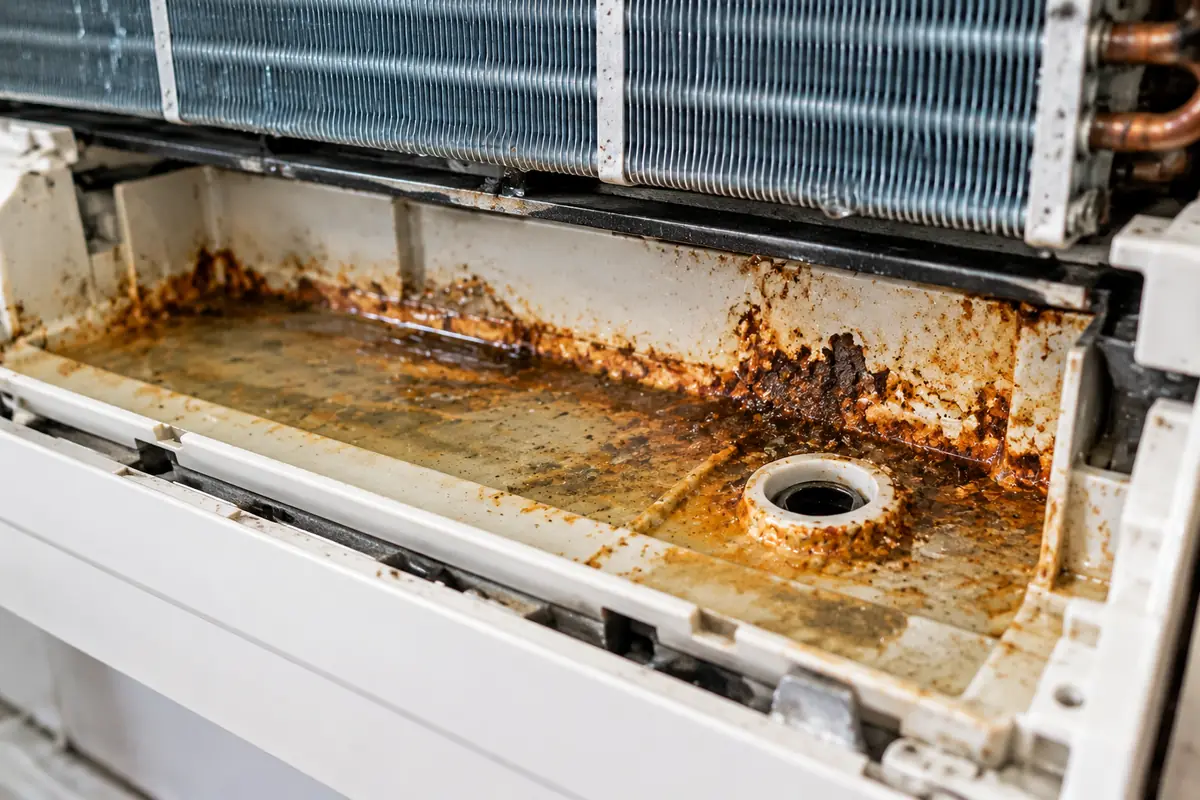
Look for obvious standing water or a wet pan edge only if the pan is safe to view. The repair may require replacing the pan or correcting its position and fittings. For a cracked pan or a leaking fitting, arrange a lasting pan or fitting repair instead of covering the leak with tape or caulk.
Failed Condensate Pump or Float Switch
When gravity cannot carry water away, a condensate pump has to lift it; a failed pump can overflow its reservoir. Some systems use a float switch that stops cooling when water rises. A full reservoir, an alarm, repeated shutdown, or water at the pump can point to a pump, blocked discharge tube, check valve, or switch issue.
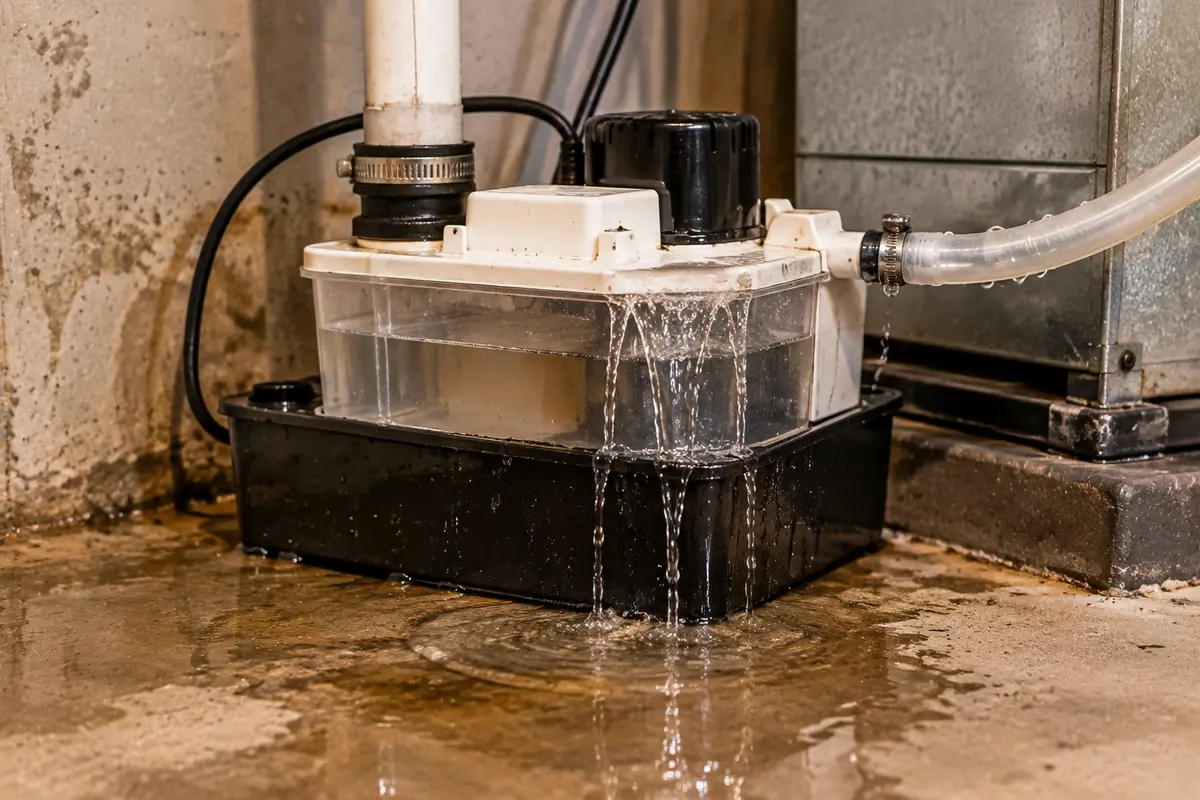
Do not put fingers into a powered pump or defeat its safety wiring. A technician should check power, the tubing route, the switch and whether the pump actually moves water to its intended outlet.
Frozen Evaporator Coil Thawing
A frozen indoor coil can release more water than the pan handles when the ice melts. Low airflow from a blocked filter or obstructed return, a blower problem, or certain refrigerant-system faults can cause ice to build up. Typical clues are poor cooling, weak airflow, ice on the refrigerant line, and a later rush of water.
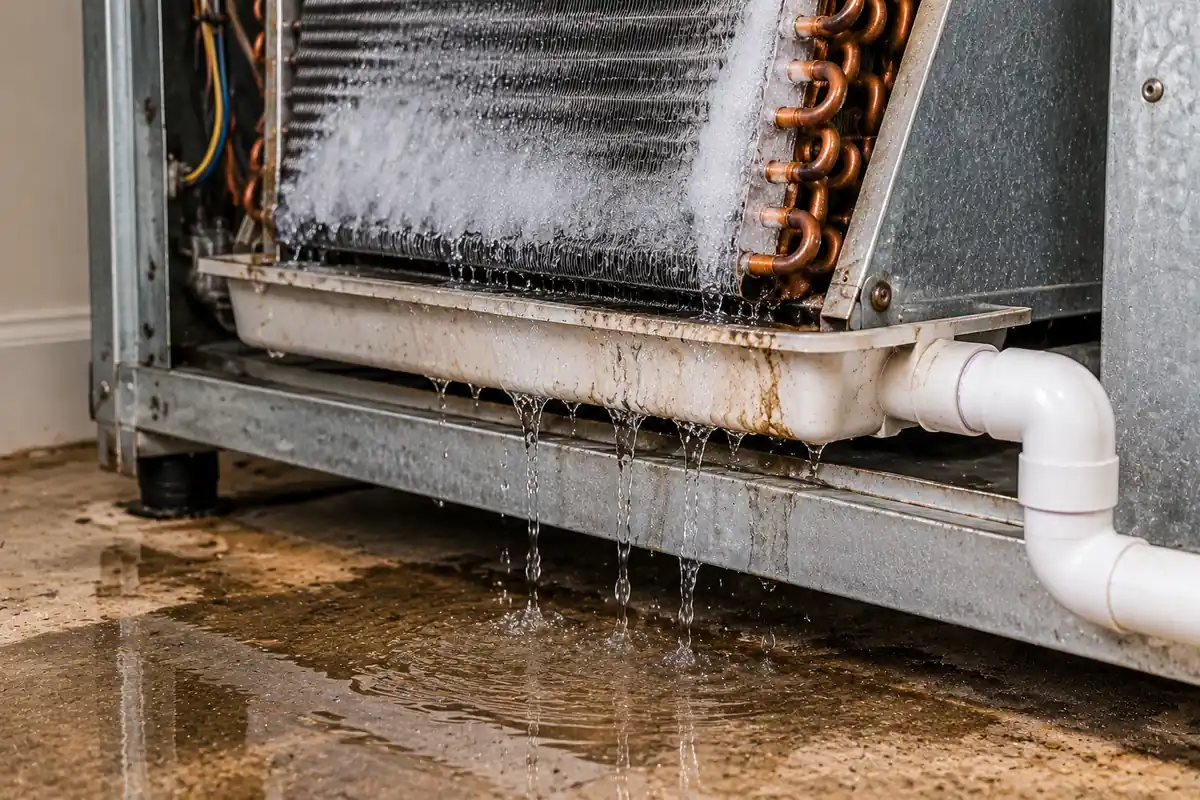
Stop cooling and let the system thaw without forcing ice off the coil. Check the filter only if it is designed to be accessible to you. If ice returns or cooling remains poor, an HVAC technician needs to test airflow and the refrigerant system. Our separate guide explains why an AC system freezes and how to respond.
Loose Drain Fitting or Sweating Pipe
Water can escape from a disconnected or poorly sloped drain, or form directly on cold surfaces. A drain hose with a kink, an unsupported run that holds water, a loose fitting, or a missing insulation section on a cold suction pipe can produce a drip. The fix depends on which surface is wet: reconnect or route a leaking drain, but insulate and seal the actual cold surface if it is sweating.
For new installations, ask the installer to verify the intended drain slope, trap where required by the equipment design, pipe insulation, and the final discharge point.
For a closer look at how indoor drain hoses, pumps, and discharge outlets are connected, see our air conditioning connections and condensate drain guide.
How Can You Check and Clear a Clogged AC Drain Line?
To check a clogged AC drain, turn cooling off, find the condensate line, and look for backed-up water. If the correct outlet is accessible and the manual allows it, some gravity-drain systems can be cleared with a wet/dry vacuum; otherwise, use a technician. Confirm the pipe and service point before cleaning. A drain can still be blocked farther along even when the outlet looks clear.
- Turn cooling off. Keep the system off while inspecting water near equipment. Do not work on any part that involves exposed wiring or an unsafe ladder or attic.
- Find the correct water path. On many central systems, a drain connects to the indoor evaporator’s pan and runs toward an outside termination or a building drain. Do not confuse it with a refrigerant pipe or an emergency secondary drain.
- Check accessible evidence. Look for a wet secondary pan, an overflowing safe-to-view drain opening, a damaged hose, or debris at the known outdoor outlet. Remember that dry weather or short cooling cycles can produce little water even when the line is clear.
- Clear it only when the setup permits. On some gravity-drain systems, a wet/dry vacuum attached securely at a known outdoor condensate outlet can pull out a small clog. Follow the equipment and maintenance instructions, and stop if the line or outlet is unknown. Do not remove sealed equipment covers, bypass a safety switch, force pressure into concealed pipes, or pour cleaning chemicals into an unidentified line.
- Prove that it drains. The useful test is that condensate, or a technician’s controlled drain-flow test, moves to the correct endpoint without backing up into the pan or dripping indoors. If a secondary pan remains wet, a safety switch has tripped, or the leak returns, arrange a full service check before regular operation.
Air handlers in attics and finished spaces often have secondary protection because a small drain problem can damage a ceiling. An overflow switch is a warning system, not a repair. Your local technician should verify the primary drain, any secondary outlet, and the float switch together.
Why Does the Type and Location of the Leak Matter?
Different air conditioners collect and discharge water differently, so a fix that works on one unit may damage another. First identify the equipment: a central air handler, a wall-mounted mini split, a window unit, or a portable room AC.
Central Air Conditioner Leaking Near the Furnace, Air Handler, or Ceiling
Water near a central AC’s indoor air handler, furnace cabinet, or ceiling usually comes from a blocked drain, overflowing pan, failed condensate pump, or a frozen coil thawing. Check the indoor evaporator’s condensate pan, primary drain, secondary pan, and any pump. The outdoor condenser does not normally collect the indoor coil’s cooling condensate. If a ceiling below an attic air handler is stained or wet, stop cooling and have a qualified technician trace both drain routes before the damage spreads.
If you are unsure which indoor part holds the cooling coil and drain pan, our guide to the AC air handler and its parts explains where those components are commonly found.
A system that suddenly stops cooling may have a float switch responding to water, rather than a failed compressor. If the unit also has weak airflow or ice, solve that cause too. For broader cooling symptoms, see why an air conditioner is not cooling.
Wall-Mounted Mini-Split Air Conditioner Leaking Down the Wall
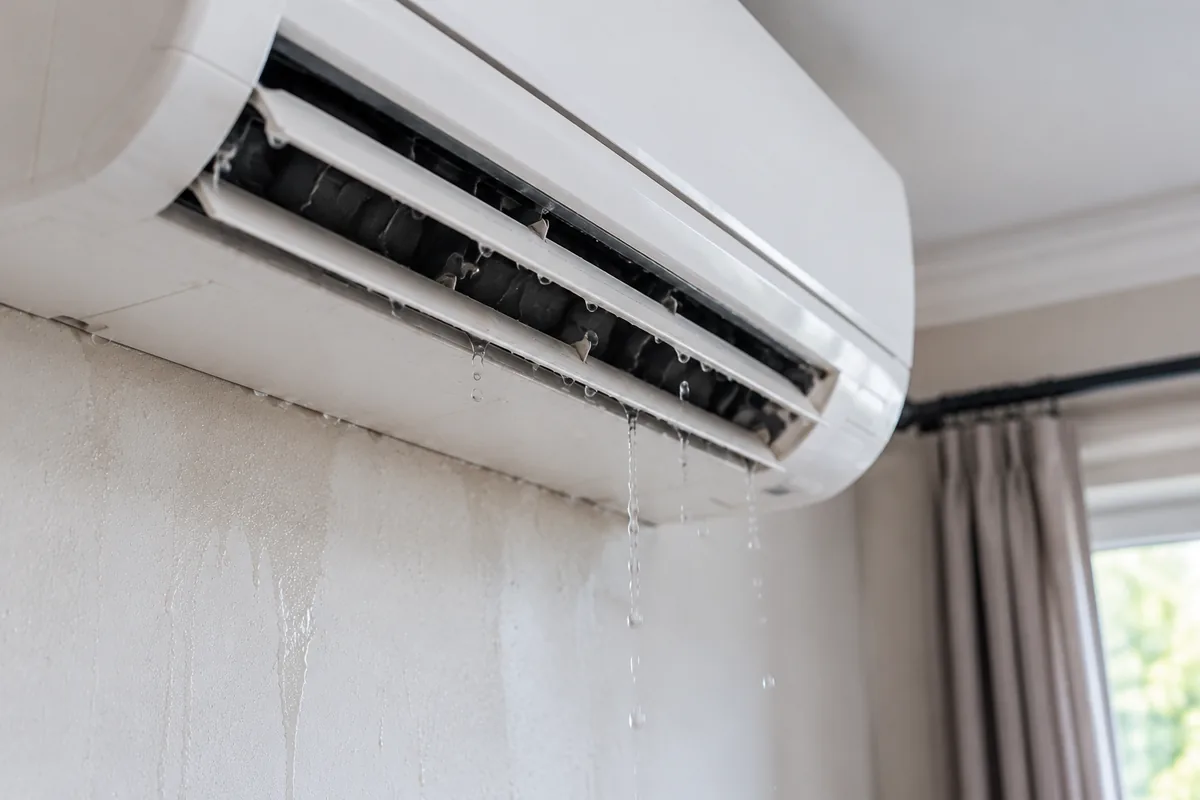
Water running down the indoor wall unit often points to its drain hose, condensate tray, installation level, or frozen coil. Check that the visible external hose is not crushed or lifted above its designed route. If the leak began just after installation, ask the installer to check the unit level, hidden drain hose routing, and its connections before replacing parts. Pipe insulation also matters when the drip comes from a cold surface. Opening the casing or lifting the unit can damage wiring and refrigerant lines.
Window Air Conditioner Dripping Inside the Room
A window air conditioner usually drips into the room when its water path is obstructed, its mounting is incorrect, a window seal is damaged, or rain gets inside. Water leaving the back outdoors can be normal. Many window units hold some water in their base pan during cooling, so a completely dry pan is not always the goal.
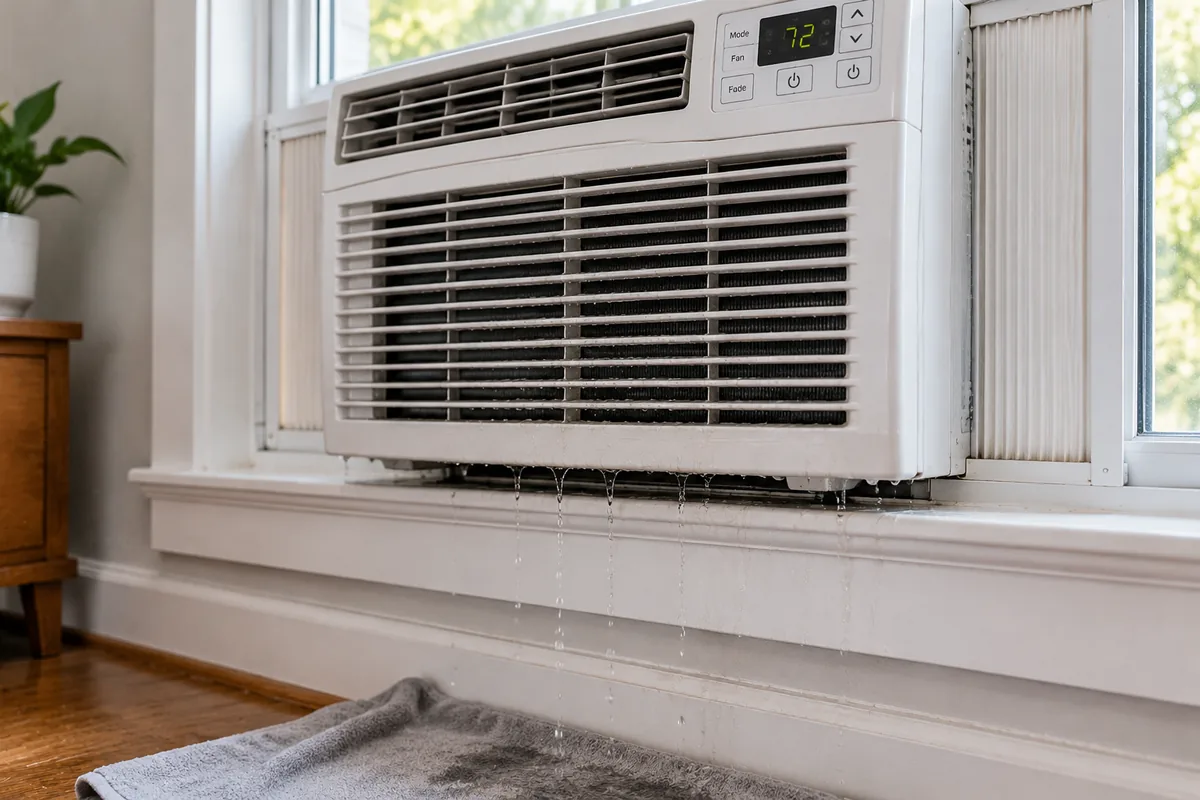
Check the exact unit’s mounting and drainage instructions. Some GE units specify an outward slope, but there is no single tilt angle for every model. Do not drill a new hole in the pan; that can defeat the design. See GE Appliances’ window-unit drainage guidance for a model-family example, then follow your own manual.
Portable Air Conditioner Leaking from the Bottom
For a portable AC, a full internal tank, loose drain plug, kinked drain hose or wrong drainage setting is a useful first check. Check that the unit stands on a firm, level surface. Empty the tank and inspect the cap and hose only as instructed in the user manual, with the unit off and unplugged where required. Cooling and dehumidifying modes may handle water differently. Some models evaporate much of it during normal cooling while others must drain it regularly.
Water Dripping from an Air Conditioner Vent
Water on a ceiling grille can be condensation on the grille or duct, not a leak from the evaporator pan. Cold supply air and humid air around an uninsulated, poorly sealed or leaky duct can make the vent sweat. Look for beads on the grille surface versus water emerging through its opening. A technician may need to repair duct insulation, air leaks or excess indoor humidity. If water is coming through the ceiling around a duct, also rule out a drain or roof leak above it.
Why Is a New AC Leaking Water or Leaking After Rain?
A new AC may leak indoors because its drain connection, pan, pump setup, or installation level needs correcting. Water that appears only during rain may instead enter around a window, wall opening, roof, or exhaust-hose opening. For a new system, ask the installer to check the drain route, required slope or trap, pump, pipe insulation, and unit level. The installer should confirm that condensate reaches the correct outlet while the system runs.
For a newly installed ductless system, our mini split heat pump installation guide explains drain routing, pump protection, and the water-flow check that should be completed before the work is closed up.
If the leak began after moving furniture, servicing the unit, or changing filters, a dislodged hose, shifted pan or trapped line may also be involved. Tell the installer exactly when the water appeared and whether the outdoor drain is discharging at the same time.
If water appears mainly during heavy rain, look for rain entry separately from condensate. A window unit can admit rain through a failed seal or incorrect installation, while an attic air handler may sit near a roof or ceiling leak that is unrelated to cooling. Use timing to narrow the checks: water mainly during cooling suggests a condensate-path issue; water shortly after shutdown following weak cooling or visible ice may be thawing ice; water only during rain while the AC is off points toward a window, roof, wall opening, or hose installation.
Water at an outdoor heat pump during a heating defrost cycle can still be normal. But rainwater inside the building, water at electrical components or a repeated indoor drip should be addressed regardless of unit age.
How Do You Prevent AC Water Leaks?
Keep airflow clear, keep the condensate drain open, and check that collected water reaches the correct outlet. Include the pan, pump, and backup overflow protection in regular maintenance when your system has them.
- Check and replace or clean the filter according to the unit’s instructions and the amount of dust in the space. Reduced airflow can increase the risk of coil icing.
- Have the pan and condensate drain inspected at normal maintenance visits, especially when the indoor unit is in an attic or above finished rooms. The EPA advises keeping AC drip pans clean and drain lines unobstructed and flowing properly. Ask how the backup pan and float switch are tested.
- Inspect an accessible pump reservoir and discharge line by the manufacturer’s schedule. If a pump hums, alarms or repeatedly switches off cooling, arrange professional service.
- Keep outdoor drain endpoints clear where you can reach them safely, and note whether discharge is directed away from foundations, paths and building materials.
- Watch for recurring ice, wet insulation or duct sweat. Cleaning a condensate line will not fix an airflow fault, a refrigerant-system fault or condensation on an uninsulated pipe.
After a repair, the key result is no indoor water and verified discharge along the intended path during normal operation. For an intermittent leak, checking only a dry, switched-off unit is not enough. Have the service technician run an appropriate drain-flow and cooling test.
What Should You Remember Before Restarting the AC?
Restart only after the source of the indoor water has been corrected and the equipment is safe to operate. A dry floor after mopping does not show that a clogged drain, frozen coil or pump fault has gone away. Confirm that the intended condensate path is open and no new water builds up in the pan or around the indoor unit.
Keep the system off and request service if there was water near electrical parts, a swollen ceiling, repeat overflow-switch shutdown, persistent ice, or a leak you cannot reach safely. For water damage, dry the surrounding materials as well as correcting the AC problem.
If your technician confirms that a wall-mounted split AC needs replacement, or you are planning a new split-system installation, compare our AirProz air conditioner range. Check the required cooling capacity, power supply, installation layout, and destination-market requirements before choosing a model.
Need help reviewing an AirProz system? For an AirProz supplied system or installation project, contact AirProz with your model number, installation type, where water appears, when it starts, and any checks already completed. We can help you review the available product instructions and drainage configuration for your AirProz equipment. For active water damage or electrical hazards, contact a qualified local professional immediately.
Frequently Asked Questions
Can I keep running my air conditioner if it leaks a little water inside?
No. Stop cooling until you know where the indoor water is coming from. Even a small drip can saturate insulation or reach wiring. A designed outdoor condensate outlet is a different situation.
Why is my air conditioner dripping water outside but not inside?
That is often the normal way an AC removes humidity. Condensate should leave through its intended discharge point. Confirm it is the normal main outlet, not the separate emergency drain or an unexplained connection. Water from the emergency drain may indicate a backup. A heat pump may also shed defrost water outside while heating.
Why is water coming from my AC’s emergency drain pipe?
Water at a secondary or emergency drain can mean the main condensate drain is blocked or the backup pan is filling. Identify which outlet is flowing, stop cooling, and have both drain paths checked rather than assuming the water is normal.
Can a clogged AC drain line stop the air conditioner from turning on?
Yes, some systems have an overflow float switch that stops cooling when the pan or drain backs up. Do not bridge the switch. Find and correct the water problem, then have the switch and drain checked if the shutdown repeats.
Why does water drip from my AC vent instead of the indoor unit?
The vent or duct may be sweating because cold air meets humid air, or water may be arriving from above. If droplets form on the grille surface, check humidity, air leaks and duct insulation. Water pouring from a ceiling opening needs a prompt check for a drain or building leak overhead.
Can I clean an air conditioner condensate drain myself?
Yes, on some systems you can clean an accessible condensate drain yourself if you identify the correct outlet and follow the unit manual. A wet/dry vacuum may clear some gravity-drain systems. Leave hidden or uncertain lines to a technician, and do not open electrical panels, bypass safety controls, or force chemicals or pressure into the line.
Why is my window air conditioner leaking water inside?
The installation angle, internal water path or window seal may be wrong. Shut it off and follow the exact model’s mounting instructions. Water at the outside rear can be normal; do not drill the base pan to make water escape.
Does an AC leaking water mean it is low on refrigerant?
No. A water leak alone cannot tell you the refrigerant charge. Certain refrigerant-system problems can cause ice, which later melts and overflows, but poor airflow can cause similar ice. A technician should diagnose recurring freezing before any refrigerant work.
Why does my air conditioner leak water after I turn it off?
Ice on the indoor cooling coil can melt and leak after cooling stops. Water already backed up in a pan or drain can also spill after shutdown. If cooling was weak or ice was present, leave cooling off and have the freezing cause and drainage checked.
What if the water leak stops but comes back a few days later?
A recurring AC water leak often points to a partly blocked drain, an intermittent pump fault, or a coil that freezes during longer cooling cycles. Record when the leak returns and arrange an operating and drain-flow test, rather than relying only on a dry pan seen while the system is off.