
A portable air conditioner with heater can cool one room in summer and provide heat in cooler weather—but only if the exact model includes a heating mode. Some units use a reversible heat pump; others may have an electric heating element. To choose one that works in your room, check its heating method, permitted outdoor temperature, cooling capacity under the right test method, exhaust setup, drainage instructions and power supply.
For mild weather or a room that needs extra comfort, a portable AC and heater combo can be practical. For primary heating through freezing weather, choose equipment with verified heating output at your local winter design temperature. A properly sized fixed system may serve that need better when a portable unit cannot cover the load.
How Does a Portable Air Conditioner With Heater Work?
A portable air conditioner cools by moving indoor heat outside; a model with a heating mode warms the room through either a reversible heat pump or an electric heating element. In cooling mode, a fan returns cooled air to the room while the unit sends heat outside through its required hose or duct. The window kit provides the outdoor opening, even though the cabinet itself is movable.
When you select HEAT on a reversible heat-pump model, its refrigeration cycle changes direction and transfers heat into the room. An electric-resistance element warms air directly instead. The two designs may use different air paths and condensate arrangements, so set up each heating mode as specified for that model.
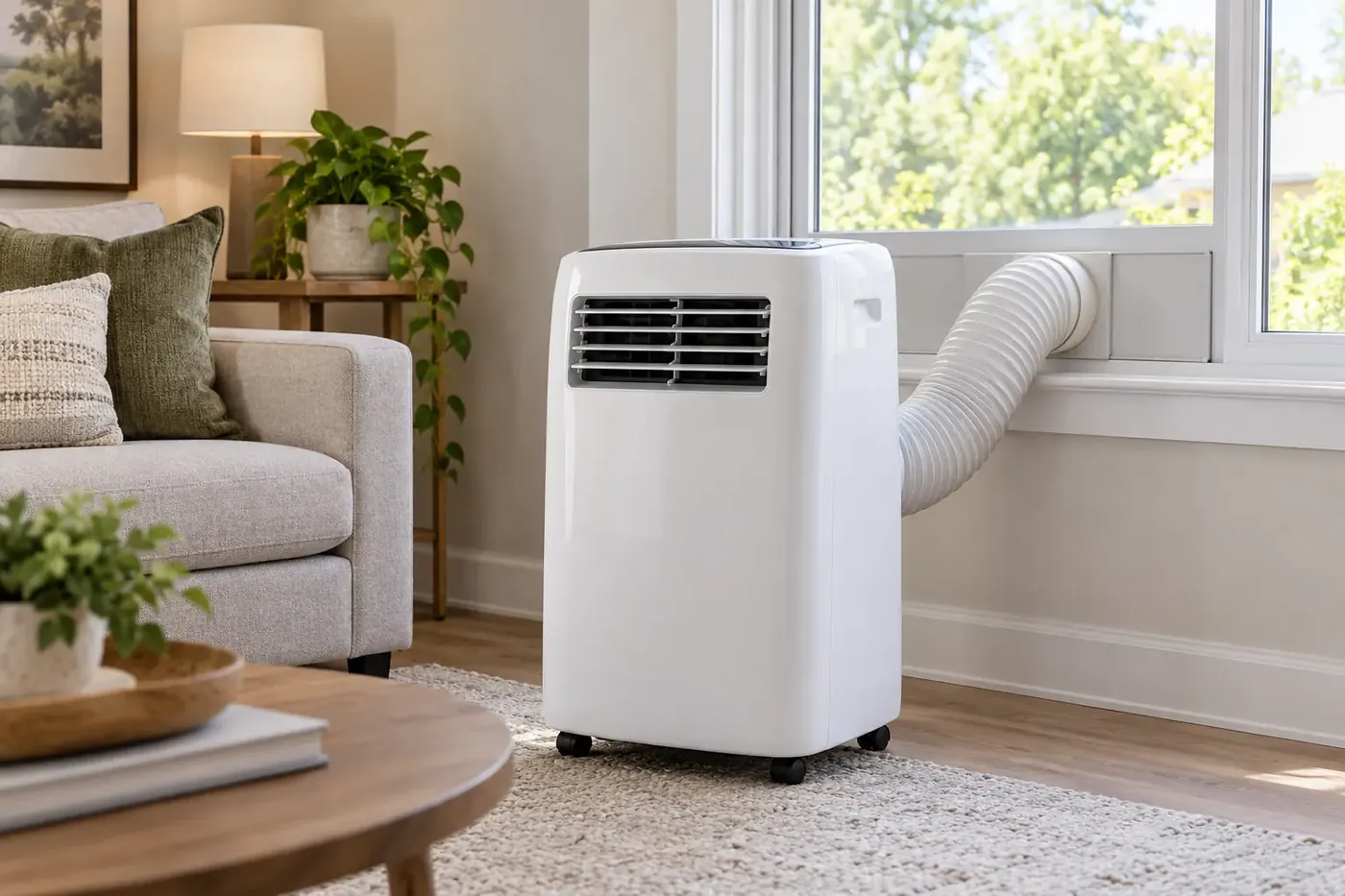
How to tell whether a model can actually heat
- Copy the full model number from the label, not just the product-family name.
- Open that model’s official feature list and manual; look for Heat / Heating mode and instructions for using it.
- Check whether the published heating system is a heat pump or electric-resistance heat. If the heating type is not stated, keep it unconfirmed and request heating specifications before comparing efficiency.
- Read the heating operating range and any heating-mode drain instructions before judging whether it suits your winter.
For example, Midea lists Heat: Yes for the MAP14HS1TBL, but Heat: No for the similar MAP14S1TBL. The extra letter in a model code can change the answer. Also, inverter means that a compressor can vary its speed; it does not, on its own, prove that a portable AC can provide heat.
Portable AC With Heat Pump vs Electric Heater: Which Makes More Sense?
Choose a heat-pump type when the model can operate in your climate and you want to heat the room for many hours. A heat pump moves heat rather than making it all through an electric element, so it can deliver more heat than the electrical energy it consumes under suitable conditions. A resistance heater turns electricity into heat at the appliance and usually has a simpler heating mechanism.
| Question | Portable heat-pump model | Model with electric heating element |
|---|---|---|
| Where does the heat come from? | Moves heat between outdoors and indoors through a refrigerant cycle. | Produces heat in an electric element. |
| Main efficiency point | Heating output per unit of electricity can exceed one under suitable conditions; check model data. | About one unit of heat at the heater for each unit of electrical energy, before any wider system losses. |
| What changes the choice? | Outdoor temperature, available heating capacity, hose arrangement and defrost or drain requirements. | Electrical input, circuit limits and whether the heat output meets the room’s needs. |
| What to confirm? | HEAT mode, temperature range, heating performance and mode-specific installation. | HEAT mode, rated heating watts, electrical safety and installation details. |
Do not treat a portable AC’s cooling efficiency number as its heating efficiency. If two products list different heating capacity test points, ask for capacity and electricity use at the same outdoor condition before comparing their winter performance. For a detailed explanation of the technology in larger systems, see our air conditioner and heat pump pros and cons guide.
What Size Portable Air Conditioner With Heat Do You Need?
Choose enough DOE SACC cooling capacity for your room in the U.S. and enough separately rated heating capacity to cover its winter heat loss. Start with the room’s floor area and ceiling height, then account for insulation, windows, sun exposure and the outdoor temperatures you face. A label such as “14,000 BTU portable air conditioner with heat” may describe a cooling rating rather than available heating output. A poorly insulated or sunny room can need more capacity than a similar-size room with better insulation and shade.
ASHRAE BTU, DOE SACC and heating capacity are not interchangeable
| Rating | What it describes | How to use it |
|---|---|---|
| ASHRAE cooling BTU/h | Cooling capacity under the referenced ASHRAE-type method. | Recognize the number on the box; do not silently substitute it for DOE SACC. |
| DOE SACC (BTU/h) | Seasonally adjusted cooling capacity for portable ACs under the applicable U.S. test method. | Compare portable cooling performance on a like-for-like U.S. basis. |
| Heating capacity (BTU/h or W) | Heat delivered in a specified heating test condition. | Compare with the room’s heat loss at the relevant outdoor temperature. |
As a real example, LG labels model LP1025WHSM 14,000 BTU/h ASHRAE cooling and 10,200 BTU/h SACC cooling. Neither is automatically the unit’s winter heating capacity. The U.S. Department of Energy describes portable air conditioners and their test procedure in its portable air conditioner standards and test information.
For a quick first check, measure the room’s length and width, note ceiling height, sunlight, windows, people and equipment that give off heat. For a heating decision, note the local winter temperature and the room’s heat loss. If the manufacturer lists a room area, treat it as a screening guide, then check the assumptions. If the room is poorly insulated or connected to an open hallway, a one-room portable unit may fall short despite an attractive area figure.
For a closer look at how insulation, windows, ceiling height and climate affect a room’s cooling load, see our air conditioner sizing guide. Its general room-sizing approach helps you identify load factors; for portable units, still compare the applicable DOE SACC cooling ratings and verify heating capacity separately.
When size is uncertain: compare two candidate models at the same cooling metric and find the actual heating capacity for the conditions that matter. Do not simply choose the largest advertised BTU number, because an oversized unit can also bring noise, space and control issues.
Can a Portable AC With Heater Heat a Room in Winter?
Often yes in mild weather; not necessarily in freezing or very cold weather. The heating label is only the beginning. Each model has a permitted operating range, and a heat pump’s available output can change as outdoor air becomes colder. Operating at a low temperature does not necessarily mean delivering full rated heat at that temperature.
For example, Whynter lists heating operation for model ARC-14SH when ambient conditions are above 45°F (about 7°C). That operating limit applies to the ARC-14SH; compare another model using its own published heating range. Before using a unit as your main heat source, compare the manual’s operating range and heating output with the coldest outdoor conditions you need to cover.
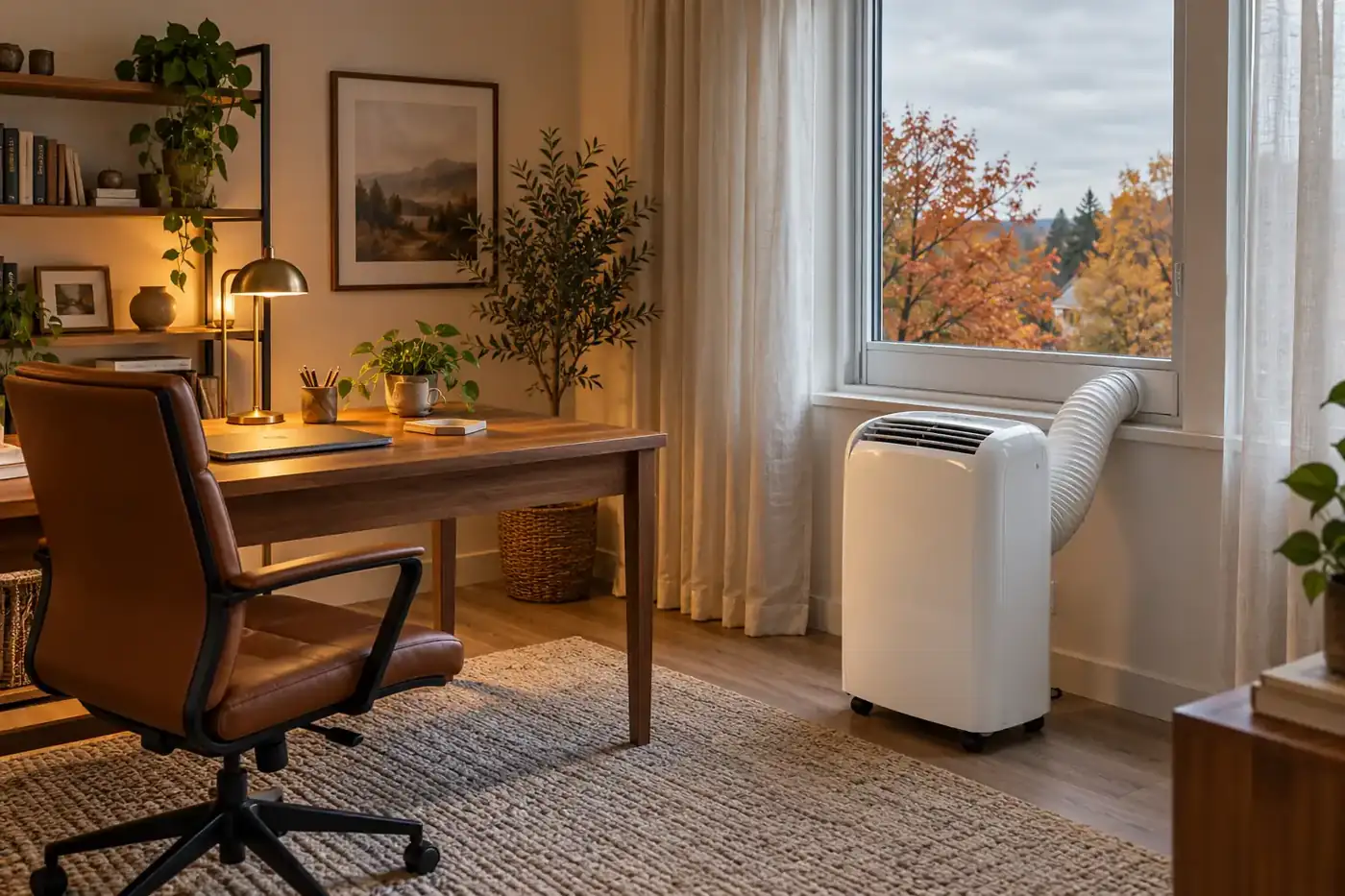
| Your situation | First choice to consider | What might change it? |
|---|---|---|
| Mild spring or autumn nights | A verified cooling-and-heating portable model can be convenient for one room. | Check window fit, room load, noise and the lowest approved heating temperature. |
| A room needs occasional backup heat | A portable combo may supplement an existing heater. | Do not exceed the circuit rating; confirm the combined heating plan. |
| Freezing winters and primary heating | First compare a heating system with verified cold-weather output. | Only use a portable as the main source if its published data and installation support the full load. |
If a heat-pump model stops heating when it is cold outdoors, check its fault indicator, selected mode and allowed temperature range before assuming the compressor has failed. Some models manage frost and condensation differently in heat mode. Always use the specific manual for the expected sequence.
Single-Hose vs Dual-Hose Portable AC With Heat: Which Is Better?
Dual-hose designs often help reduce the indoor air lost through exhaust, but the number of hoses does not determine the winner by itself. The actual rated capacity, power use, installation and noise still matter. A higher-performing single-hose model can beat a poorly matched dual-hose model in a particular room.
| Design | How the airflow works | What to check |
|---|---|---|
| Single hose | Uses room air for part of the heat-rejection process and exhausts it outside; replacement air can enter through leaks. | SACC, room pressure effects, hose length and window seal. |
| Two separate hoses | One outdoor path brings in air for the outdoor heat exchanger, and the other exhausts it. | Space for two ducts, seal quality, SACC and heat-mode routing. |
| Hose-in-hose | Uses two airflow paths inside one outer hose assembly. | Confirm that the model is genuinely dual-path and that its window kit fits. |
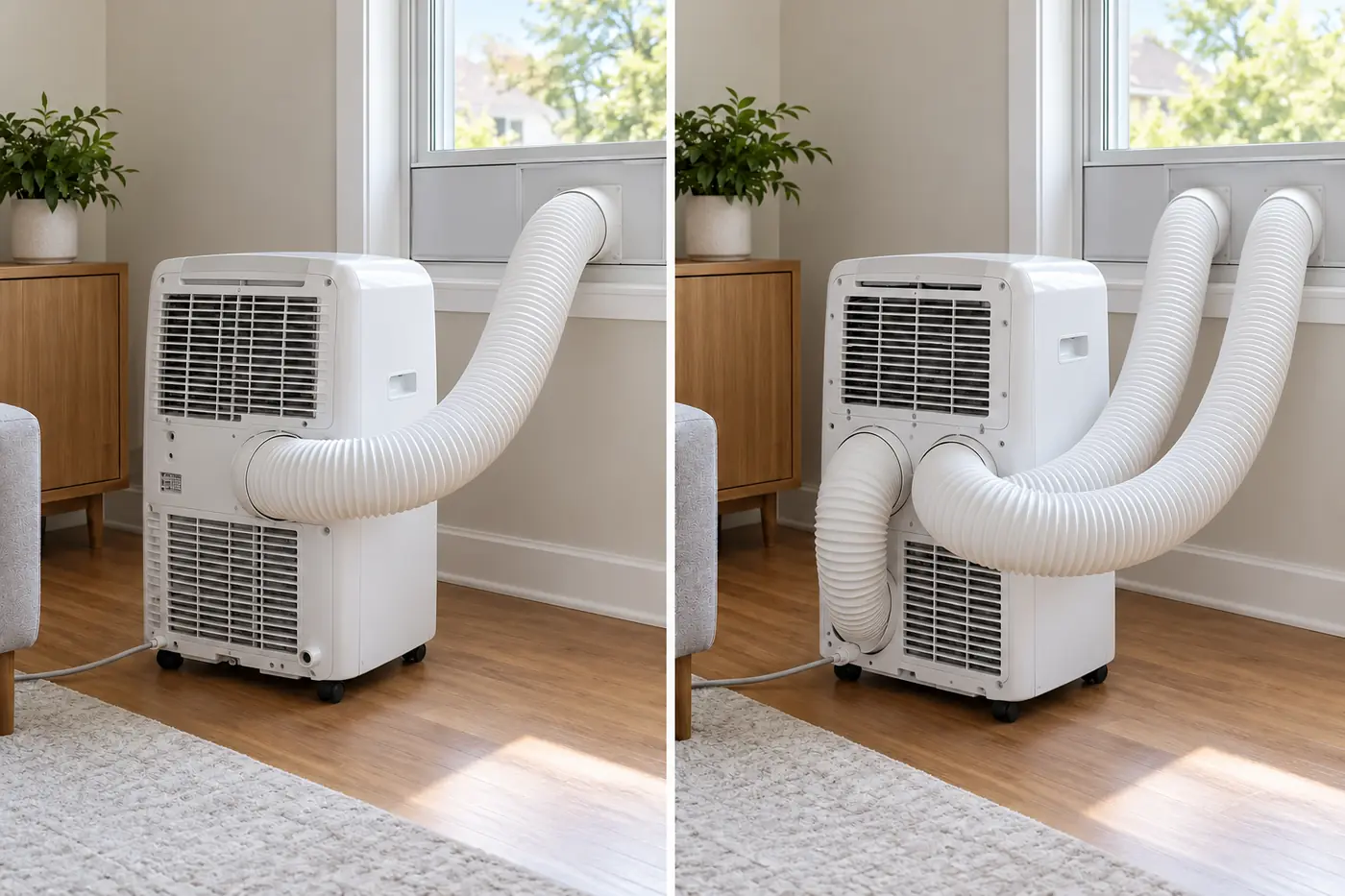
In cooling mode, a single-hose unit may pull warm air into the room as it expels indoor air. A dual-path design can reduce that problem. For a fair choice between two models, compare the same performance rating and operating conditions. Compare DOE SACC, rated electrical input, noise, operating range and practical installation. In heating mode, read the model’s air-path instructions instead of assuming the cooling setup applies unchanged.
Do Portable Air Conditioners With Heaters Need Venting and Draining?
Yes: compressor-based portable air conditioners need an approved outdoor heat-exchange path for cooling, and some models also need a specific hose arrangement for heating. Condensate may collect in heat mode, so the unit may require tank emptying or a drain hose. Check the heating instructions for the exact model before removing a hose or arranging drainage; cooling-mode self-evaporation does not automatically cover heating.
Five checks before installing the unit
- Measure the window opening. Check the window kit’s minimum and maximum fit and whether the window opens vertically or horizontally.
- Plan the hose path. Keep it short and unobstructed within the manual’s limits. Do not add an improvised extension or block an intake or outlet.
- Read the instructions for both modes. Note whether cooling and heating need the same hose direction and whether any parts must be changed.
- Find the drain point. The cooling mode’s self-evaporation claim may not cover heating. Check whether heat mode requires a hose, a container or periodic emptying.
- Check the power supply. Match the plug, voltage, current and outlet requirements. Avoid extension cords or shared high-load outlets when the manual prohibits them.
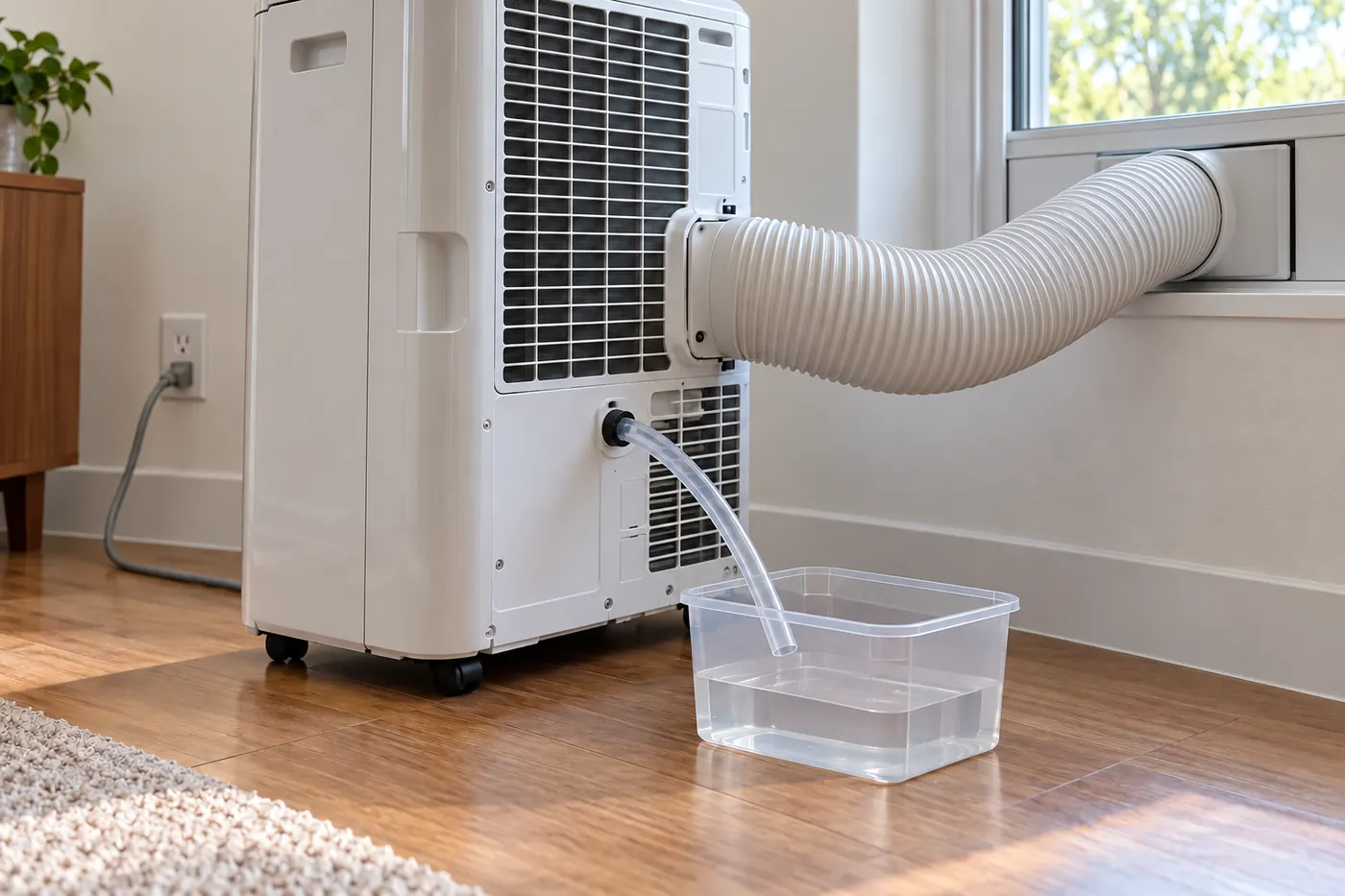
Place the cabinet level, leave the stated intake clearances and keep water away from electrical connections. If the unit shows a full-tank warning, stop and follow its drain procedure. If water leaks after the drain is connected, check the hose position, kinks, seal and whether gravity drainage has a clear downward path.
How Much Does a Portable Air Conditioner and Heater Cost to Run?
Running cost = average power (kW) × hours used × electricity price ($/kWh). For example, a unit averaging 1.0 kW for 6 hours at $0.18/kWh uses 6 kWh and costs $1.08. Use the unit’s heating-mode electricity input for a heating estimate, not its cooling SACC rating.
If average draw falls to 0.6 kW for the same 6 hours at $0.18/kWh, the estimated cost becomes $0.65 after rounding. The figures use assumed power and price inputs; apply the formula to your own unit and utility rate.
To estimate your own bill, read the product’s mode-specific watts and check whether that is a rated, maximum or measured value. A thermostat may cycle or change compressor speed; average consumption can differ from maximum input. A plug-in meter with suitable electrical ratings may help track actual use if the appliance and instructions permit it.
For an equal amount of delivered heat, a suitable heat pump can use less electricity than direct electric resistance heating. But compare heating capacity and input at matching conditions first. At very low outdoor temperatures, a model may provide less output, need defrost or stop heating. The lowest advertised price or a single efficiency label does not settle the full winter cost.
Portable Air Conditioner and Heater Models: What Should You Compare?
Compare the exact model number, its confirmed HEAT mode, cooling SACC, separately rated heating output and hose arrangement. The Midea, Whynter and LG models below illustrate how manufacturer-listed features differ and which heating details still need checking.
| Model | Cooling information | Heating and airflow | Key decision check |
|---|---|---|---|
| Midea Duo MAP14HS1TBL | 12,000 BTU/h DOE cooling listed on U.S. product page | Heat: Yes; hose-in-hose dual-path design | Confirm heating output, allowed temperatures and drain rules in the exact manual. |
| Whynter ARC-14SH | 14,000 BTU/h ASHRAE cooling; 9,200 BTU/h DOE cooling | Heat: Yes; 13,000 BTU/h heating stated under ASHRAE method; dual hose | Heating allowed above 45°F ambient; check heating drain and window-kit fit. |
| LG LP1025WHSM | 14,000 BTU/h ASHRAE cooling; 10,200 BTU/h SACC cooling | Cool/Fan/Dry/Heat modes listed | Do not infer its heating method or low-temperature rating from cooling numbers. |
Before placing an order, confirm the manufacturer’s latest specification sheet for the exact country and model revision. Look for heating output at a stated outdoor temperature, heating technology, supported voltage and current, maximum hose distance, window opening range, heating-mode drainage and warranty or parts arrangements. If the heating capacity is not published, that model cannot yet be compared fairly for winter output; request the figure and its test conditions.
When Is a Portable Air Conditioner With Heater Worth It?
It is worth considering when one room needs both cooling and occasional heat and a suitable window vent is available. Renting, short-term occupancy and a space where permanent work is difficult can make a portable cabinet attractive. It is less attractive when the unit is expected to condition several rooms or provide reliable primary heat through a cold winter.
| Room or project | Practical direction | Why |
|---|---|---|
| Rental room with a usable window | Consider a true heat-enabled portable unit. | Minimal permanent work; check the landlord’s rules, noise, drain and window kit. |
| Home office needing seasonal backup | Compare heat-enabled portable options with the existing heater. | Operating hours, circuit capacity and noise may matter more than the biggest BTU label. |
| Large open floor or several rooms | Compare a properly sized fixed system. | One portable cabinet may not distribute enough conditioned air. |
| Cold-climate primary heating | Start with equipment rated for the design heating load. | A model’s minimum operating temperature and actual cold-weather output can rule it out. |
If you need regular heating and cooling in the same room and permanent installation is possible, a suitable heat-pump mini split is another option to compare. Our mini split air conditioner guide explains how these fixed systems work, including installation and room-control considerations.
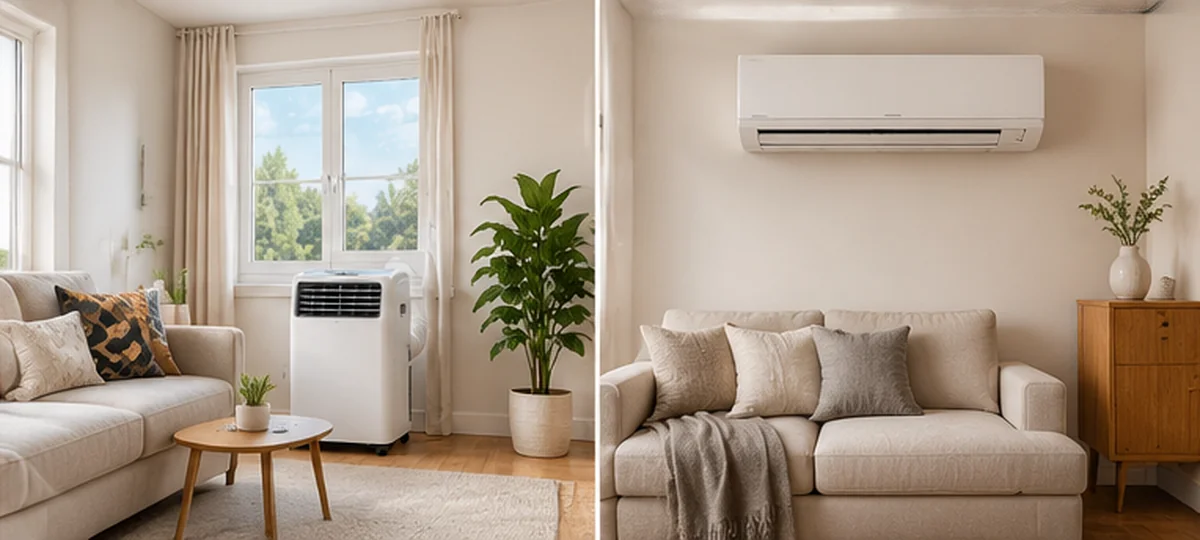
Portable units are also not always easy to move in practice. The cabinet may be heavy; the window board and hose must be removed and set up again; and drainage can make the move less convenient than rolling it across the floor. For a more permanent project, our guide to air-conditioning system types explains when a window unit, split system or another layout may be a better fit.
Common Problems With Portable AC and Heater Combos
Common problems include no warm air in HEAT mode, a room that stays cold, a filling water tank, restricted airflow and unexpected shutdowns. Start by checking the selected mode, set temperature, outdoor operating range, drain path and exhaust setup. Each symptom has a different first check in the table below; repeated shutdowns or hot electrical connections call for service rather than repeated restarts.
| What you notice | Check first | What to do next |
|---|---|---|
| Heat mode makes no warm air | Exact model supports HEAT; selected mode and set temperature; outdoor temperature within allowed range. | Allow the specified start delay; check displayed fault codes. If still not heating, follow the manual or service route. |
| Room stays cold | Windows and doors, hose seal, air intake clearance and room heat loss. | Compare needed heat with the model’s rated output in current conditions; use backup heat or a different system when insufficient. |
| Water tank fills in heat mode | Heating-mode drain requirements and hose slope. | Drain as directed, remove a kink and confirm water flows to the intended outlet. |
| Unit shuts off or trips power | Visible error code, blocked air path, overheating indication and outlet suitability. | Stop using it if the plug or outlet is hot, damaged or repeatedly trips. Have a qualified person check electrical faults. |
| Room seems drafty while cooling | Single-hose makeup air, gaps around window kit and unsealed openings. | Improve the approved window seal; compare a dual-path model if pressure effects persist. |
Clean the accessible filter on the schedule in the manual and keep the hose and grille clear. If the unit needs refrigerant or electrical repair, use qualified service instead of opening the sealed system or bypassing its protective controls.
Conclusion: Is a Portable Air Conditioner With Heater the Right Choice?
A portable air conditioner with heater is a useful one-room option when the exact model supports heating and your climate, room load, window and electrical setup fit its limits. Compare cooling with DOE SACC where applicable, and judge winter use with separate heating capacity and permitted temperature data. A good model on paper can still be the wrong choice if you cannot vent or drain it properly.
If your project needs dependable heating and cooling across many rooms, or if the portable model cannot cover the cold-weather load, compare fixed systems before committing.
For a permanent split-system option, the Airproz PAT Series split air conditioner has separately published cooling and heating capacities. It is a wall-mounted split system, not a portable AC. Its listed single-phase 220–240V, 50Hz supply and R410A refrigerant must suit the destination market and installation.
Airproz works with air-conditioning and heat-pump system selection for projects; our air-conditioning product range is a starting point for that different equipment category. For a project discussion, contact Airproz with your destination market, room or building load, winter design temperature, electrical supply and installation limits. We can review these project inputs to identify the suitable air-conditioning or heat-pump system category and the model information needed for a practical selection.
Frequently Asked Questions About Portable AC and Heater Combos
Can you use a portable air conditioner with heater without a window?
Yes, if the model permits another approved route outdoors, such as a suitable wall vent. In cooling mode, a compressor-based portable AC still needs to exhaust heat outside. Check the heating-mode hose arrangement separately; operating in cooling mode without an outdoor exhaust path will not cool the room as intended.
Can a portable air conditioner with heat work below 45°F?
Only if that model is approved to heat at the lower outdoor temperature. The Whynter ARC-14SH, for example, lists heating operation above 45°F ambient. Other models can have different limits. Find the exact operating range and available heating output in the manual before using it in colder weather.
Why does the tank fill in heat mode when it did not fill in cooling mode?
Heating can make water collect at a different heat exchanger and drain path than cooling does. In some heat-pump designs, the outdoor-side heat exchanger becomes cold enough for moisture to condense during heating. The unit may route this water differently, so a tank that stayed nearly dry during cooling can fill in heat mode. Follow the heating drain instructions to connect a drain hose or empty the tank. If water still leaks, check for a blocked or kinked drain path.
Is a 14,000 BTU portable AC also a 14,000 BTU heater?
No. The advertised 14,000 BTU figure may be an ASHRAE cooling rating. A portable AC can also show a lower DOE SACC cooling rating and a separate heating output. Find the heating capacity at its stated test condition rather than assuming the cooling number applies to heating.
Can I extend a portable AC exhaust hose to reach another room?
Do not extend or reroute the hose beyond the manufacturer’s approved setup. Extra length and bends can restrict airflow and reduce performance. If the window is too far away, find another permitted location or choose equipment that suits the room layout.
Does inverter portable AC mean it has a heat pump heating mode?
No. Inverter describes how the compressor speed is controlled. A cooling-only inverter portable AC may have no HEAT mode at all. Look up the exact model number and its heating feature list or user manual before buying it for winter use.


