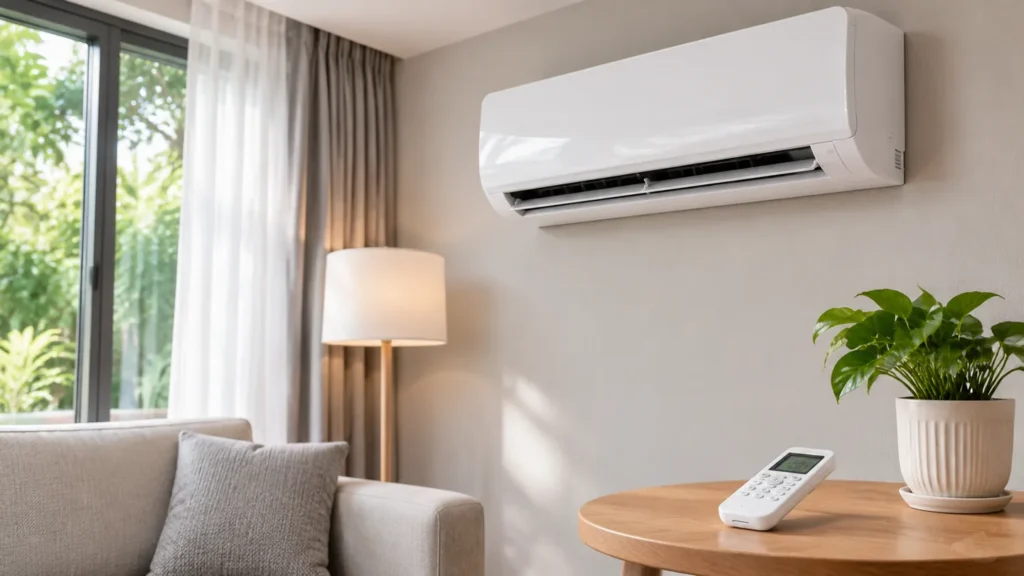
If you are deciding what temperature to set your air conditioner in summer, start at 78°F (26°C) when you are home and awake. Adjust the temperature for the room’s humidity and occupants’ comfort. If the room still feels warm, try a slightly lower setting and check the humidity. At night, choose a temperature that lets you sleep comfortably. When nobody is home, raise the cooling setting instead of holding the house at the same temperature all day.
The best air conditioner temperature in summer depends on comfort, humidity, outdoor heat, who is home, and how your system works. The goal is to stay comfortable while avoiding cooling you do not need.
What Temperature to Set Your Air Conditioner in Summer
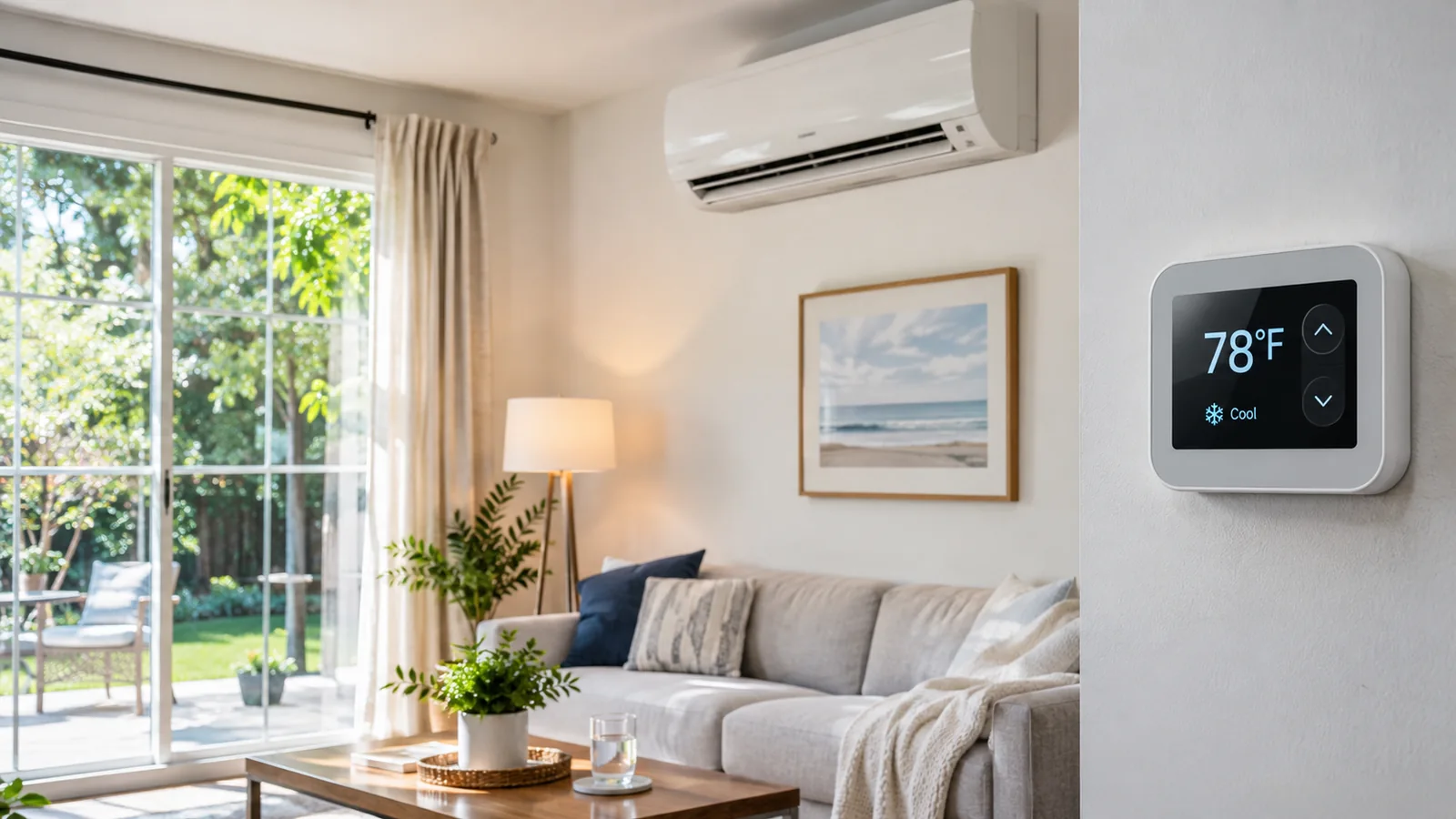
Start at 78°F (26°C) for a home you are using during the day, then move the setting by 1–2°F until the room feels comfortable. ENERGY STAR recommends keeping a room air conditioner at the highest comfortable temperature and gives 78°F as an example. If the room still feels warm, check its actual temperature, humidity, and airflow before lowering the target again.
| Summer situation | Practical starting setting | What should change the setting? |
|---|---|---|
| Home and awake | 78°F (26°C) | Lower it a little if the room feels too warm after checking humidity and airflow. |
| Sleeping | Try 75–78°F (24–26°C) | Use the temperature that helps you sleep; bedding, air movement, and humidity matter. |
| Out for several hours | Try 80–85°F (27–29°C) | Keep it cooler if humidity, pets, plants, or heat-sensitive items require it. |
| Away on vacation | Use an energy-saving setting that still protects the building | Consider moisture, weather, occupants, and remote monitoring before choosing a number or switching off cooling. |
Check the temperature where you actually spend time, not just at the hallway thermostat. A sunny upstairs bedroom can be warmer than the air around the sensor. Measure that room after the AC has been running, then adjust the setpoint or improve shading and airflow according to what you find.
A common mistake is to treat 78°F as the temperature of the air coming out of the vent. It is the target room temperature on the thermostat. Supply air is generally cooler while the system is actively cooling, but that difference is not itself the thermostat setting.
Why 78°F Can Save Energy—and When to Choose a Lower Setting
A higher cooling setpoint usually cuts cooling demand, so 78°F often uses less energy than 72°F in similar conditions. Choose a lower setting when the occupied room remains too warm, sleep is disrupted, or someone has a health-related cooling need. Compare comfort and indoor humidity before deciding how far to lower it.
Your home gains heat through windows, walls, the roof, outdoor air leaks, people, and appliances. The larger the temperature gap between indoors and outdoors, the more heat tends to move into the conditioned space. Raising the indoor target can reduce that heat gain and shorten cooling demand.
You may need a lower setting when you are exercising indoors, sleeping in a warm upper-floor room, or caring for someone who needs a cooler environment. First use a thermometer and a humidity meter to find out whether the room is actually hot or simply humid. Comfort and health needs take priority over following a single energy target.
Check actual energy use rather than assuming a savings percentage. Record your thermostat setting and compare utility or smart-thermostat data from days with similar outdoor temperatures and occupancy. If the warmer setting reduces cooling use without hurting comfort or humidity control, keep it; otherwise, adjust the setting and check again. To calculate the cost of that electricity use, see our AC running costs guide for the kWh and electricity-rate method.
Best Air Conditioner Temperature at Night for Sleeping
Start with a bedtime setting that already feels comfortable; you can test 75–78°F (24–26°C) and adjust by 1–2°F based on how you sleep. If you wake up hot, measure the bedroom temperature and humidity before turning the whole house much colder. Some bedrooms and some people need a lower target, especially in hot, humid weather.
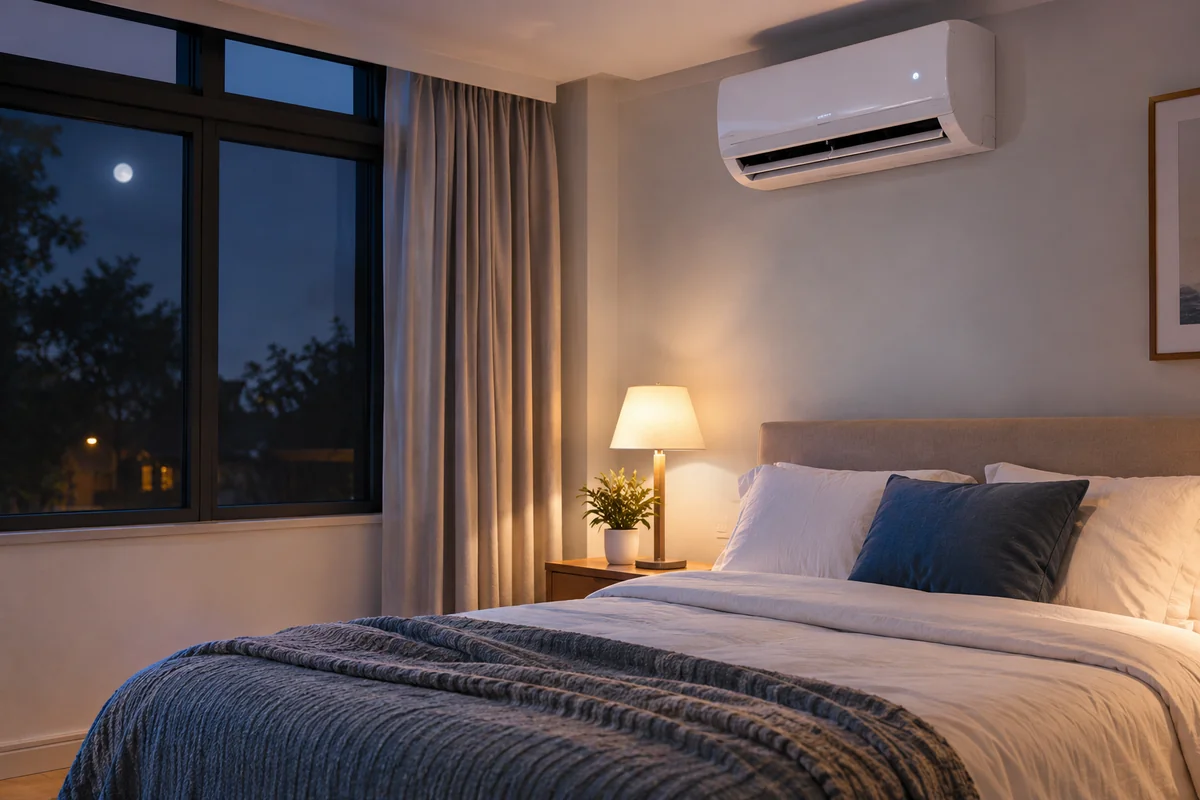
Try the revised setting for a night and note whether you sleep comfortably. If you still wake up warm and the bedroom itself is hot, lower the target another 1–2°F; if you feel chilled, raise it. If the temperature is comfortable but the air feels sticky, check humidity instead of only lowering the thermostat. Lightweight bedding, curtains closed before sunset, and a quiet fan can improve comfort without cooling an empty room.
A fan cools people through air movement, not the empty room. Turn it off when the room is unoccupied. A fan does not replace cooling when indoor heat is unsafe for someone in the home. During extreme heat, protect older adults, infants, and people whose health makes heat dangerous; follow local public-health guidance for safe cooling.
What if the bedroom is warmer than the thermostat shows?
Measure the bedroom temperature at bedtime rather than assuming the hallway thermostat represents it. An upper floor, sun-facing wall, closed door, blocked return air path, or poorly balanced duct may leave the bedroom several degrees warmer. Check supply and return airflow and try a schedule that cools the bedroom before sleep. If the difference persists, ask an HVAC technician to check airflow and system balance rather than lowering the entire house far below what other rooms need. If you plan a ductless upgrade for a bedroom that stays hot behind a closed door, our mini split sizing guide explains room loads and minimum cooling output.
What Temperature to Set the AC When Away or on Vacation
When your home is empty for several hours, raise the cooling target; try about 82°F (28°C) if the house can stay dry and nothing inside needs a cooler temperature. A workday range around 80–85°F (27–29°C) gives room for adjustment. Use a smaller change if humidity rises or the home contains pets, heat-sensitive items, or anyone who still needs cooling.
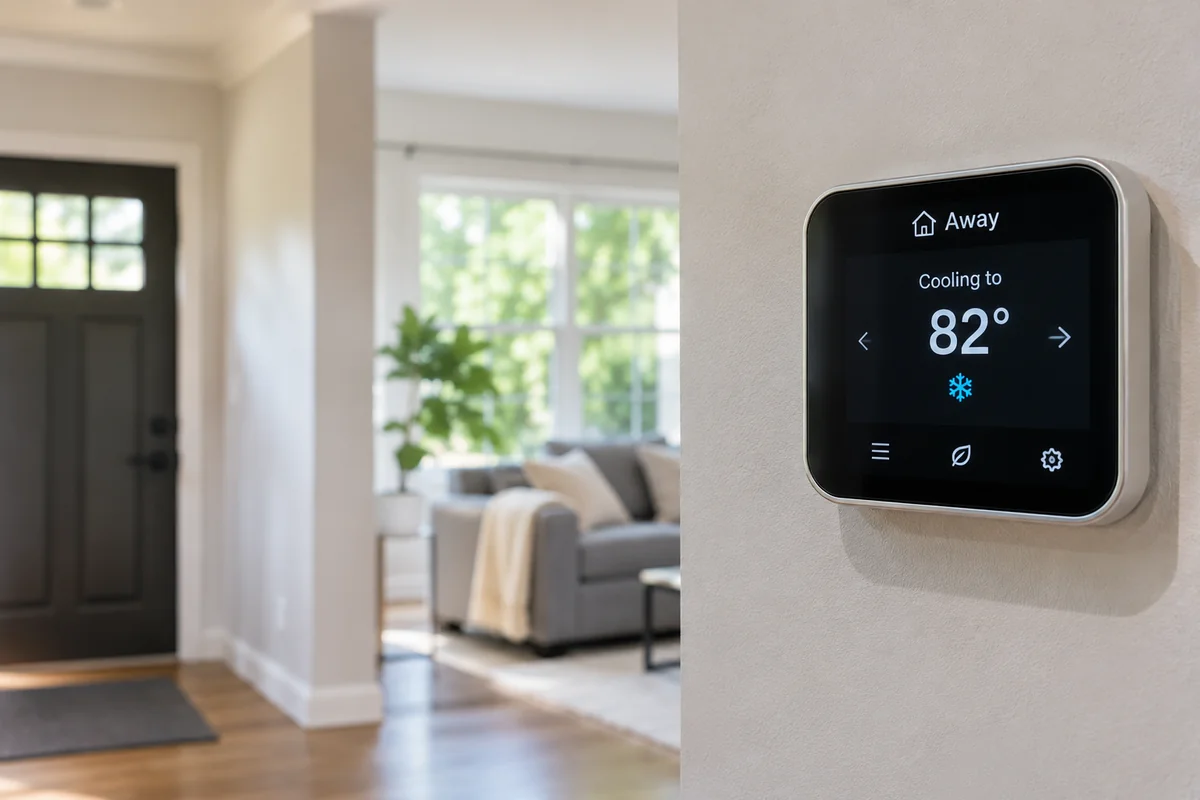
For a home normally kept at 76°F, set 82°F when everyone leaves and schedule a return to 76°F before they arrive. After a few comparable days, check the indoor humidity, how quickly the rooms become comfortable again, and actual electricity use. If the house becomes damp or takes too long to cool, reduce the away-time increase or start cooling earlier.
For a few hours away
Let the home warm moderately while empty and restore comfort before you return. A programmable or smart thermostat can make the change automatically. In very humid weather, watch whether the higher setting leaves the house damp. You may need a smaller temperature change or additional dehumidification.
For a long vacation
Choose a setting that protects the building, not simply the highest number the thermostat allows. Consider moisture, stored materials, plants, pets, and any equipment that needs controlled conditions. In a hot, humid climate, turning off cooling completely can let indoor relative humidity rise. If you have remote humidity readings, use them to check the empty home rather than relying only on temperature.
Do not leave animals or anyone dependent on cooling in an unsafe indoor environment. If outdoor heat is extreme, use local heat-safety advice for the people staying in the building. A technician or building manager can help set a suitable unoccupied range for a commercial property.
Summer AC Modes, Fan Settings, and Humidity
Use COOL mode for steady summer cooling and manage humidity as well as temperature. A room at 76°F can feel sticky when it contains too much moisture. Lowering the thermostat again and again may waste energy without fixing the cause.
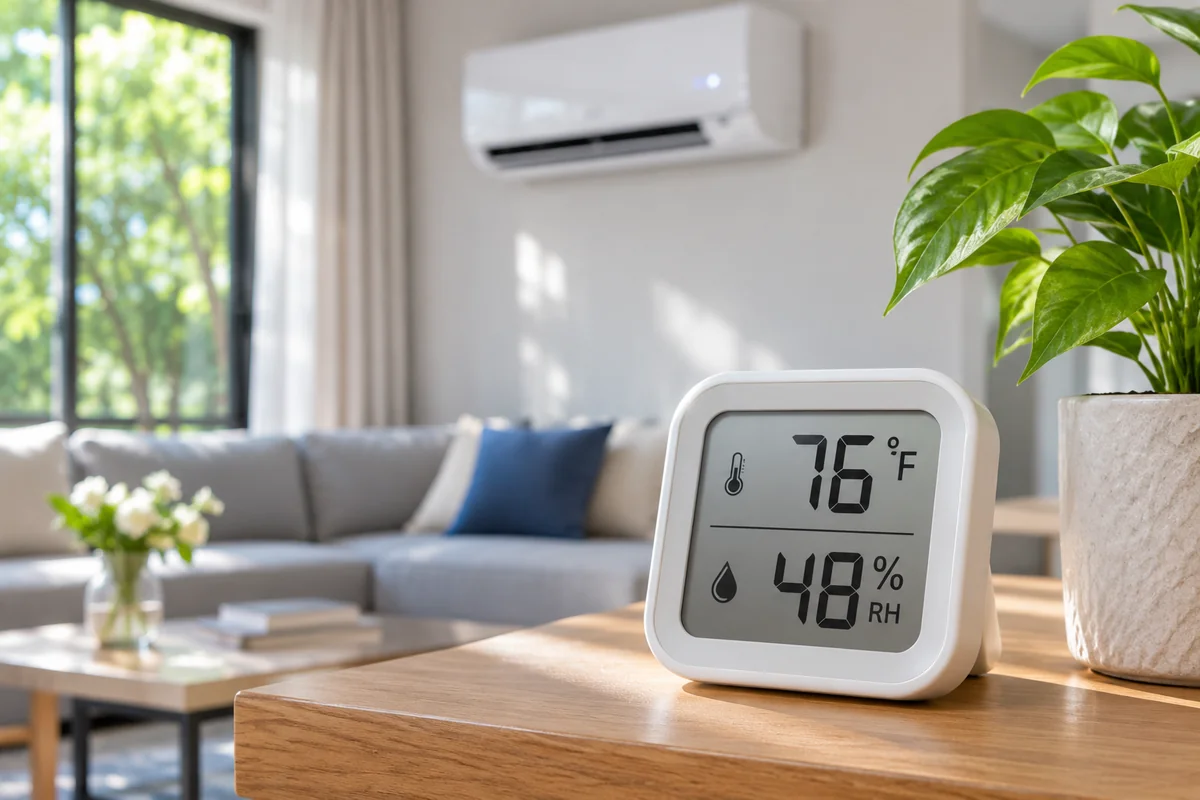
The U.S. Environmental Protection Agency recommends keeping indoor relative humidity below 60%, ideally around 30–50% for moisture and mold control. Relative humidity (RH) is the amount of water vapor in the air compared with what the air can hold at its current temperature. A small hygrometer shows the room’s RH level.
| Control | Summer setting to try | Why it matters |
|---|---|---|
| Mode | COOL | The system cools when the room rises above the target; HEAT is not for summer cooling. |
| Central-system fan | Start with AUTO for normal ducted cooling | The fan normally runs with cooling instead of circulating air continuously; continuous ON can put moisture from a wet coil back into the air in some systems. |
| Room AC fan in humid weather | Try LOW while cooling | ENERGY STAR notes that low fan speed on humid days can help a room AC remove more moisture. |
| DRY or dehumidify mode | Try DRY when the room is humid but does not need much cooling | Check the room temperature and RH afterward. Return to COOL if the room stays too warm; the available controls differ by model. |
| Temperature | The highest level that remains comfortable | Higher settings generally reduce cooling demand; comfort and humidity still matter. |
Choose COOL when the room needs cooling; try DRY when it is mainly damp, then read the hygrometer to see whether RH falls without making the room too warm. If indoor RH stays above 60%, check for outdoor air leaks, wet materials, poor drainage, and other moisture sources. A separate dehumidifier can help when cooling alone leaves rooms damp or makes them too cold. Repair plumbing leaks and water intrusion rather than treating them only with AC. For equipment selection, our R410A T1 inverter PAT series specifications list model-specific moisture-removal ratings. Compare those figures with the room’s needs and the power supply available in your market.
How to Save Energy on Air Conditioning in Summer
Raise the setpoint as much as comfort allows, then reduce the heat entering the home and make the cooling system work properly. This often gives a better result than simply choosing an unusually warm setting.
- Choose one occupied target. Start near 78°F, then adjust for actual comfort rather than chasing a new number every hour.
- Schedule unoccupied hours. Use a moderate setback while away and bring cooling back before the rooms are used. Check humidity during the trial.
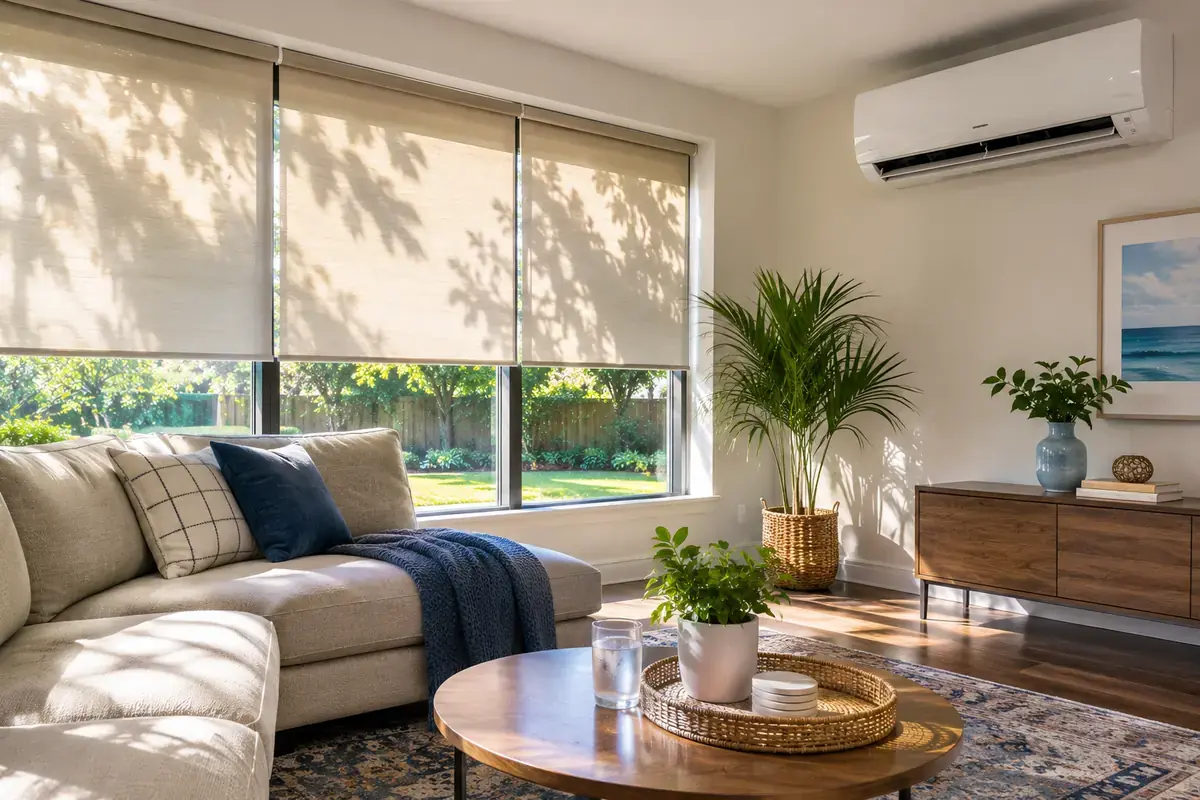
- Block direct sun. Close blinds or curtains on sun-facing windows during the hottest part of the day, especially in bedrooms that overheat.
- Use fans only where people are present. Air movement can improve comfort, allowing a warmer thermostat setting without cooling an empty room.
- Keep airflow clear. Clean or replace the filter according to the equipment instructions. Do not block supply and return openings.
- Reduce new heat and moisture. Run heat-producing appliances at cooler hours where practical, use kitchen and bathroom exhaust as needed, and repair air leaks.
- Compare results. Record the indoor temperature, RH, setting, and utility usage for several comparable days. A cooler week or different occupancy schedule can change the bill independently of the thermostat setting.
Setting the thermostat to 60°F does not make a typical on/off air conditioner cool faster than setting it to 74°F. It only tells the system to keep cooling longer until a much lower target is reached. Variable-speed systems can adjust output, but an extreme target still is not a substitute for good sizing and airflow.
If your AC runs almost continuously but cannot reach the set temperature, inspect the filter and check for blocked vents. Persistent weak cooling, ice, leaks, or electrical problems call for professional service. Lowering the thermostat further will not repair an equipment fault. If you are replacing equipment rather than adjusting settings, our guide to AC system types and efficiency ratings explains how to compare capacity and efficiency for your intended conditions.
Best Heat Pump Settings for Summer Cooling
For a reversible air-source heat pump, use its cooling function and choose the summer room temperature just as you would with an air conditioner. Start near 78°F when occupied and adjust for comfort and humidity; the important difference is how your heat-pump controls manage the system.
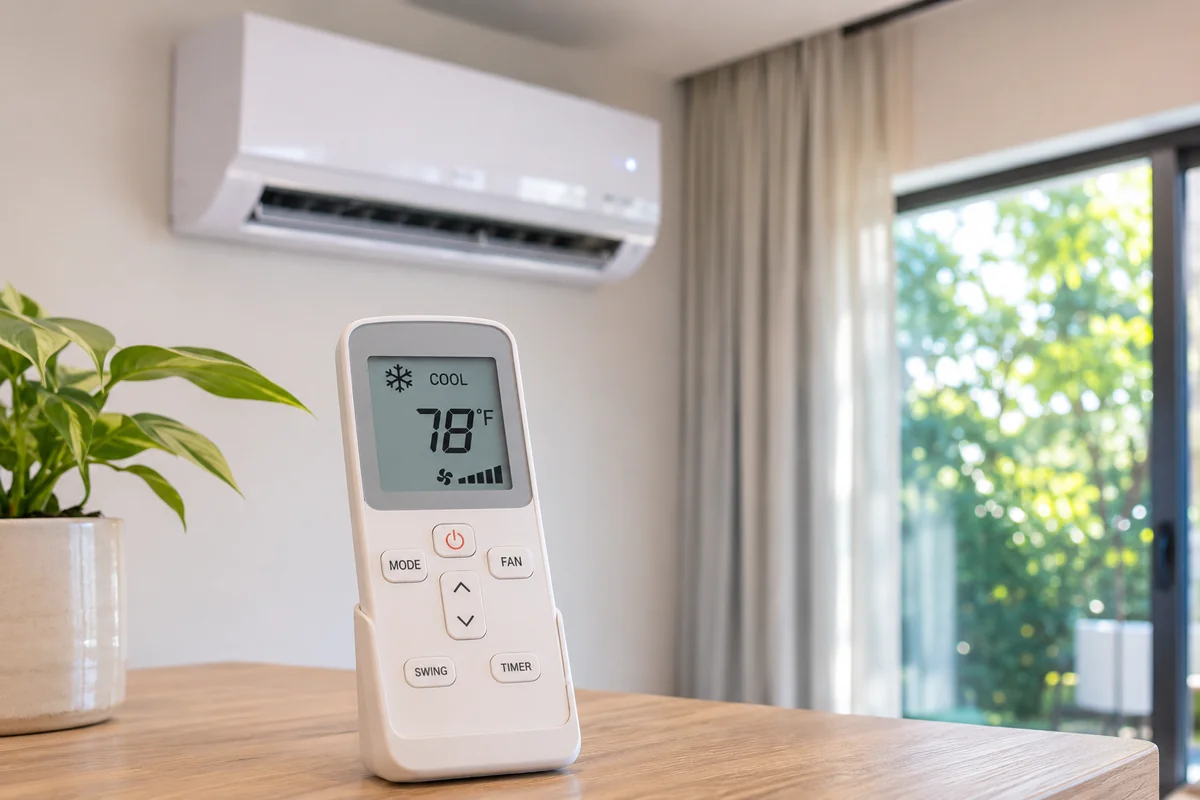
Set the operating mode to COOL when you want cooling. An AUTO changeover mode can switch between heating and cooling when the controller permits; this is helpful in some climates but can cause unwanted heating or frequent switching if its changeover settings are unsuitable. Read the control instructions before enabling it.
For a ductless inverter heat pump, start with one comfortable occupied setting and avoid large, repeated temperature swings. Its compressor can reduce output as the room approaches the target. If the home is empty for predictable hours, try a modest higher cooling setting and schedule a return before occupancy. Keep the schedule only if comparable-day electricity use, indoor humidity, and recovery time are acceptable. Keep filters and airflow paths clear. To understand compressor modulation, read how an inverter air conditioner works. Our R32 T1 inverter SA series is one reversible split-system example with several cooling-capacity options; check its published 220–240V/50Hz power requirement and the selected model’s suitability for your market.
An air-to-water heat pump with floor or chilled-water cooling is a different case. The water temperature, indoor humidity, terminal equipment, and condensation protection must be designed together. Do not copy the 78°F room target into a chilled-water supply-temperature field. If your control displays water temperatures in °C, confirm which number represents the room and which represents the system water.
For a new project, the right cooling capacity and controls matter more than any marketing claim about a single thermostat number. Our air conditioner versus heat pump comparison explains which system type is suited to the intended application.
When a Comfortable Thermostat Setting Still Does Not Work
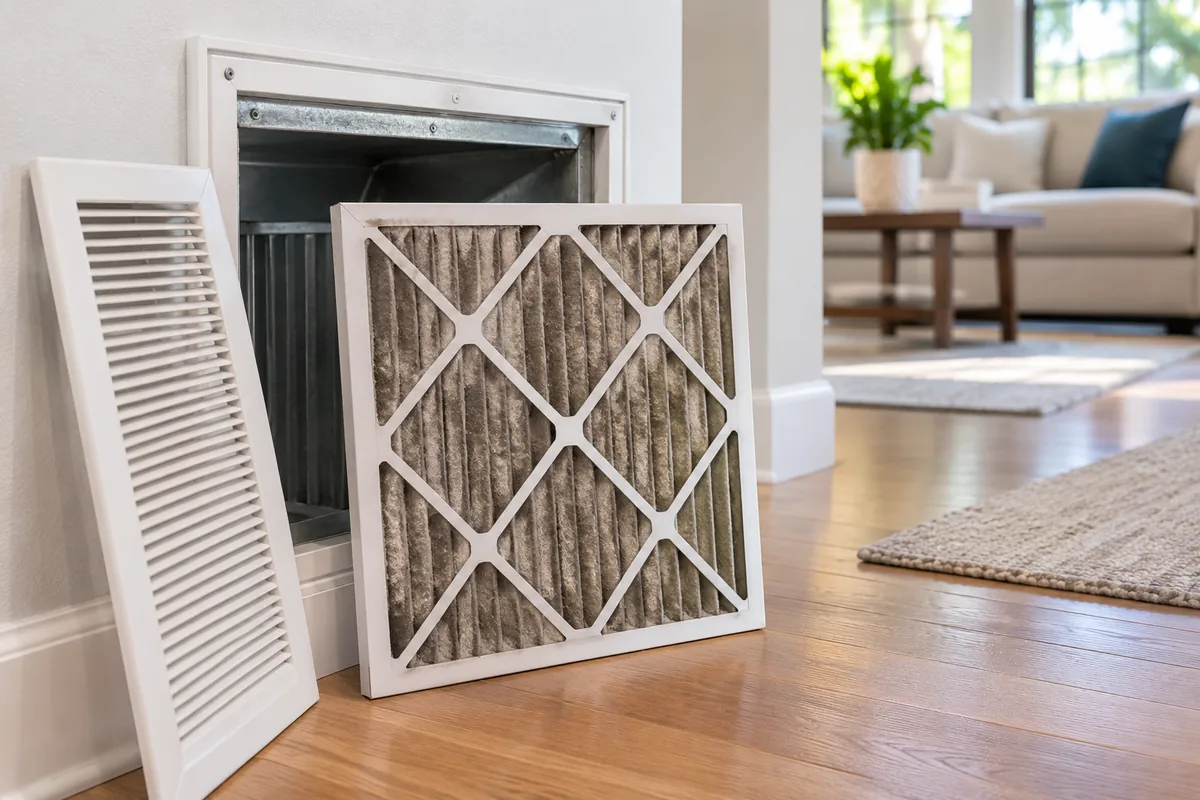
If the thermostat setting looks right but the home still feels hot or damp, first measure the temperature and RH in the problem room, then check the filter and clear supply and return vents. The symptom table identifies when to improve shading, address moisture or arrange an HVAC airflow or equipment check. Lowering the setpoint alone will not fix blocked airflow or a faulty system.
| What you notice | Check first | What to do next |
|---|---|---|
| Thermostat says 76°F, but one bedroom is hot | Measure that room; check sunlight and blocked vents | Improve shading and airflow; request a balance check if the problem continues. |
| AC never reaches 78°F on hot days | Dirty filter, blocked outdoor unit, unusual operating noise | Clear safe access and follow filter instructions; arrange service if capacity is still poor. |
| Room feels sticky at 75–78°F | Indoor RH with a hygrometer | Fix moisture sources, check cooling operation, and consider dehumidification. |
| Big temperature swings or short cycles | Control placement, sizing, and operating behavior | Ask an HVAC technician to check the system rather than making wider thermostat swings. |
If cooling remains poor after the safe checks, follow our air conditioner not cooling troubleshooting guide for symptom-based checks and the next service steps.
If you are selecting new equipment, match the system to the building’s cooling load, design outdoor conditions, required indoor temperature, humidity, and electrical supply. An oversized unit can cool quickly without running long enough to remove enough moisture; an undersized or poorly installed unit may struggle during peak heat. ENERGY STAR also advises selecting a correctly sized room AC instead of assuming bigger is better. Compare the available equipment families in our air conditioner product range, then check the exact model specifications against the building conditions.
For a residential, commercial, or OEM air-conditioning project, send Airproz your building use, local climate, room sizes or cooling-load estimate, electrical supply, and destination market. We can help you compare suitable air-conditioning equipment families and the configurations available for those conditions.
The Best Summer AC Temperature: What to Do First
Use 78°F (26°C) as a starting point for what temperature to set your air conditioner in summer while at home, then adjust for actual comfort and indoor humidity. At night, use the temperature that supports sleep; while away, raise the cooling setting only as far as the building can safely tolerate. A consistent schedule, shade, clear airflow, and humidity control matter more than chasing one perfect number.
Frequently Asked Questions About Summer AC Temperature
Is 72°F too cold for air conditioning in summer?
No, 72°F (22°C) is not automatically too cold, but cooling to 72°F usually takes more energy than cooling to 78°F under otherwise similar conditions. Try a warmer setting if you can remain comfortable, and keep health and sleep needs in mind.
Does setting the AC to 65°F make it cool faster?
No, on a typical single-stage AC it does not make the room cool faster. It makes the unit run toward a much lower target. If cooling is slow, check sunlight, airflow, and equipment condition rather than turning the target down to 65°F.
Should I turn off the air conditioner during a summer vacation?
In a hot or humid climate, keep enough cooling or dehumidification to protect the home; switch the AC off only if the building and everything inside can safely tolerate it. Check indoor humidity and any temperature-sensitive belongings before leaving, then use remote readings if available. Never turn off cooling needed by people or animals who remain there.
What if the house feels sticky even at 76°F?
Measure relative humidity first. EPA advises keeping it below 60%, ideally 30–50%. Check for leaks, wet materials, and poor moisture removal; use proper dehumidification if needed instead of only lowering the thermostat.
Should a heat pump be in AUTO or COOL in summer?
COOL is the clear choice when you only need cooling. AUTO changeover can work when the controller is configured correctly, but it may also switch to heating. Follow the heat-pump controller’s instructions and check the actual mode shown.
Can I leave a ceiling fan running to save AC energy while away?
No: a ceiling fan does not cool an empty room. It makes people feel cooler through air movement. Turn it off in empty rooms; use an appropriate thermostat schedule to avoid unneeded air conditioning.