Quick answer: For new heat-pump projects, R290 offers the lowest refrigerant GWP of the three and is a strong candidate for purpose-designed air-to-water systems, including some higher-temperature models. R32 is an established A2L option where its equipment type remains permitted. R410A has the highest GWP and is primarily a consideration for existing equipment and legally permitted legacy uses. Choose the actual heat-pump model by required output, water temperature, seasonal efficiency, installation design, local regulations and lifetime cost. The comparison below explains why those factors change the answer.
R32 vs R290 vs R410A: Complete Comparison
R290 has the lowest direct refrigerant climate impact; R32 provides a lower-GWP HFC platform with A2L safety requirements; and R410A has an extensive installed base but much higher GWP. None of these descriptions is a blanket ranking of whole-system efficiency. Here is the practical comparison for heat pumps.
| Factor | R32 | R290 (propane) | R410A |
|---|---|---|---|
| Type and composition | Pure difluoromethane, CH₂F₂; HFC | Pure propane, C₃H₈; hydrocarbon | Near-azeotropic HFC blend, 50% R32 + 50% R125 by mass |
| ASHRAE 34 / ISO 817 class | A2L, lower flammability | A3, higher flammability | A1, no flame propagation under the standard test |
| Common 100-year GWP comparison* | 675 | ~3 | 2,088 |
| Refrigeration-circuit architecture | Designed split or monobloc systems | Frequently used in factory-sealed outdoor monoblocs | Common in older split systems |
| Strength for a new project | Established equipment and servicing in permitted categories | Very low GWP; suitable for well-engineered higher-temperature applications | Familiar maintenance base, principally for existing plant |
| Key design constraint | A2L safety measures and market deadlines | A3 charge, protection zones and suitable product design | Higher-GWP restrictions on new equipment |
| What predicts actual energy cost | Model COP/SCOP, output at design conditions, controls | Model COP/SCOP, output at design conditions, controls | Model COP/SCOP, output at design conditions, controls |
| Practical decision | Consider where approved A2L products suit the application | Consider first for many new low-GWP hydronic projects | Check support and permitted service or replacement for installed systems |
GWP reference: The frequently quoted comparison figures above use common historical references. They are not a universal regulatory reporting table. EU Regulation 2024/573 calculates GWP for non-fluorinated substances under its own Annex VI method, which lists propane at 0.02; other schemes use about 3 or 3.3. Use the definition specified by the relevant compliance program. GWP describes direct climate impact from refrigerant emissions, not the heat pump’s electricity consumption. See the EU legal text and U.S. EPA SNAP guidance.
What Are R32, R290, and R410A Refrigerants?
R32 is a single-component HFC; R290 is propane, a non-fluorinated hydrocarbon; and R410A is a 50/50 blend of two HFCs. Their thermophysical properties and flammability classifications affect compressor selection, pressure-rated components, refrigerant charge, safety design and market eligibility. Those differences explain why refrigerant selection involves the whole heat pump—not just the cylinder label.
R32: Properties, Advantages and Limitations
R32 (difluoromethane) is a pure, A2L-classified HFC refrigerant used in purpose-designed air-source and air-to-water heat pumps. As a single component, it avoids the composition-shift concerns that can arise with some blends. Its saturation pressure and volumetric heating capacity influence the compressor, piping and heat exchangers chosen by the manufacturer. The appliance is engineered and tested around those operating characteristics; swapping refrigerants is not an ordinary service adjustment.
A well-designed R32 heat pump can deliver strong heating efficiency at low or moderate leaving-water temperatures. Available configurations include refrigerant-piped split systems and outdoor monoblocs, depending on the brand and market. R32 is also supported by a substantial equipment and service ecosystem in markets where these systems are permitted. It is therefore a practical comparison candidate for underfloor heating, fan-coil systems and suitable radiator retrofits.
The two main limitations are its A2L installation requirements and its GWP of 675, which exceeds the sub-150 limits becoming relevant to multiple EU equipment categories. An R32 product can be efficient without being eligible for every future application. The correct question for a project is whether the exact R32 system fits the required output, safety conditions and placement-on-the-market date.
R290: Properties, Advantages and Limitations
R290 is refrigeration-grade propane, classified A3, with very low GWP. Its pressure–temperature behavior and heat-transfer properties make it suitable for purpose-designed vapor-compression heat pumps. Some R290 air-to-water models deliver comparatively high leaving-water temperatures; that capability comes from the compressor, heat exchangers, controls and working envelope of the complete appliance, rather than a guarantee attached to propane itself.
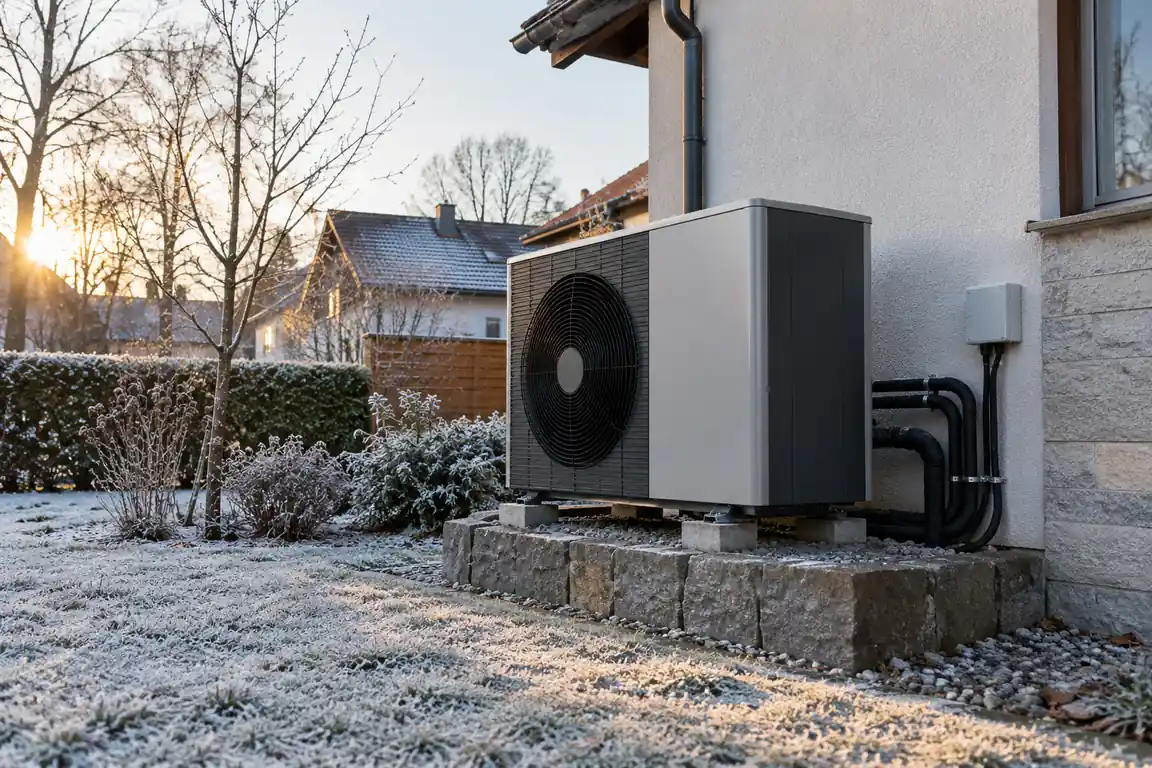
Many manufacturers favor outdoor monobloc R290 designs, where the sealed refrigerant circuit remains in the outdoor assembly and water or an approved secondary fluid connects to the building. This arrangement can reduce the need for field-installed refrigerant piping inside occupied spaces. It does not eliminate installation obligations: outdoor placement, openings and drains, potential ignition sources, servicing access and freezing of the outdoor water circuit still matter.
R290’s principal strength is reducing direct refrigerant emissions in appropriately engineered systems. Its principal constraint is A3 flammability, affecting allowable charge and the location and safeguards specified for the product. R290 should be compared early for many new hydronic-heating projects, particularly where regulatory pressure favors very low-GWP platforms and a compliant outdoor location is available.
R410A: Properties, Advantages and Limitations
R410A is an HFC blend of 50% R32 and 50% R125 by mass, classified A1. It has been widely used in residential and commercial air-conditioning and heat-pump products. Its pressure regime and component requirements are familiar to trained service providers, and many installed systems remain in operation. The blend has very small temperature glide under normal service conditions, so it is typically described as near-azeotropic rather than a high-glide refrigerant.
R410A remains relevant when a building owner wants to maintain a working existing system, assess compatible repair parts or plan a replacement. Its A1 classification means it does not propagate flame in the prescribed classification test; electrical, pressure and other installation hazards still apply.
Its major long-term weakness is its high GWP of 2,088. New-equipment routes have narrowed in the EU and in specified U.S. sectors, making R410A a weaker default for many new low-GWP product lines. An existing R410A heat pump can still be efficient and serviceable; phase-down regulations for new products do not automatically require immediate replacement of every working unit.
How Does Refrigerant Choice Affect Heat Pump Design?
The refrigerant determines the pressure–temperature and heat-transfer operating envelope that the compressor, heat exchangers, valves, oil and safety system must handle. Two heat pumps using different refrigerants can accomplish the same heating task, but they may need different component sizes, refrigerant charges, circuit layouts and control maps.
Pressure, Temperature and Compressor Matching
Every heat pump evaporates refrigerant at a lower pressure/temperature and condenses it at a higher pressure/temperature. Increasing the required water temperature generally raises the condensing temperature and the compressor’s pressure ratio. That increases compressor work and can reduce COP. Designers therefore choose a refrigerant and compressor that can deliver the required temperature lift within discharge-temperature, lubrication, pressure and motor limits.
Working pressure is not a score of heating efficiency. R32 and R410A operate at relatively high pressure levels compared with R290 in many comparable temperature conditions, but pressure alone does not identify the best product. Pressure-rated components, safety controls, heat-exchanger geometry and compressor displacement must match the selected refrigerant.
Heat Exchangers, Charge and Circuit Layout
Refrigerant density, flow characteristics and heat transfer affect how much compressor displacement, exchanger surface and internal volume a design needs. Manufacturers optimize refrigerant distribution, electronic expansion valves and defrost control for a specific fluid. Charge reduction can be especially important with A3 R290: compact refrigerant circuits, suitable component placement and factory sealing help keep the charge within the approved appliance’s safety design.
| Engineering variable | What changes in the heat pump | What a buyer should examine |
|---|---|---|
| Saturation pressure / temperature | Compressor and component pressure ratings, operating envelope | Rated pressure, compressor documentation, required water-temperature range |
| Volumetric heating capacity | Compressor displacement and circulation requirements | Delivered kW at relevant test conditions |
| Heat transfer and exchanger volume | Exchanger design and refrigerant quantity | COP, capacity and actual nameplate charge |
| Discharge temperature and oil | Compressor reliability and controls | Approved operating envelope, service manual |
| System architecture | Location of refrigerant piping and possible leak points | Monobloc vs split layout, piping lengths, safety conditions |
A complete efficiency comparison must include control logic, fan and pump electricity, defrost operation and part-load behavior. The technical chain is therefore refrigerant properties → appliance design → tested system performance, not simply refrigerant name → efficiency ranking. For the overall cycle, see the Airproz air-to-water heat pump operating diagram.
Which Refrigerant Is More Efficient in a Heat Pump?
Both R32 and R290 are used in efficient heat pumps and can outperform particular R410A systems, but neither refrigerant wins across all models. The useful answer comes from heating capacity and COP at matched air and water temperatures, followed by SCOP evaluated on the same climate and temperature basis. Published manufacturer data makes that distinction concrete.
COP and SCOP: What Do the Numbers Tell You?
COP is delivered useful heat divided by electrical input at a specified operating point. A COP of 4.0, for example, means 4 kW of useful heat per 1 kW of electrical input at that test condition. It does not mean that the system runs at COP 4.0 every hour of the year. SCOP estimates seasonal efficiency under a defined climate, load profile and supply-temperature basis, including the standard’s treatment of part-load operation and other consumption.
The labels A7/W35 and A−7/W55 denote outdoor air of 7°C or −7°C and leaving water of 35°C or 55°C. These conditions are materially different: a unit heating water to 55°C in freezing weather typically faces a larger temperature lift than at 7°C/35°C. This is why COP comparisons must name the test point.
Published Model Comparison at Matching Test Points
The following is real, manufacturer-published product data, not an Airproz test and not a controlled experiment with identical hardware. It compares three actual air-to-water products at A7/W35 and A−7/W35. The rows use the same nominal test points; the units still differ in capacity, construction and test documentation, so the numbers illustrate model performance rather than proving an inherent refrigerant ranking.
| Manufacturer / model | Refrigerant | Output at A7/W35 | COP at A7/W35 | Output at A−7/W35 | COP at A−7/W35 |
|---|---|---|---|---|---|
| Vaillant aroTHERM plus VWL 75/6 A 230V S2 | R290 | 4.60 kW (nominal) | 4.80 | 7.00 kW | 2.80 |
| LG THERMA V HM071MR.U44 (LG Hungary specification) | R32 | 7.00 kW | 4.50 | 7.00 kW | 2.96 |
| Vaillant aroTHERM Split 7 kW (7 kW column) | R410A | 5.80 kW | 4.70 | 6.70 kW | 2.70 |
What the data shows: at A7/W35, the listed R290 unit reports COP 4.80, the R410A unit 4.70 and the R32 unit 4.50; at A−7/W35, the listed R32 model is higher at 2.96, followed by R290 at 2.80 and R410A at 2.70. The order changes with the operating point. Even here, differing delivered kW means this is not a controlled refrigerant-only efficiency test. A buyer should first verify enough heating output at the building’s design load, then compare COP at a comparable capacity and control setting.
Traceable sources (model-level): Vaillant aroTHERM plus VWL 35–75 A S2 installation and maintenance instructions, technical-data tables, 2023 edition; LG Hungary THERMA V Monobloc HM071MR.U44, published technical specifications; Vaillant aroTHERM Split product specifications, 7 kW column. These examples are educational market benchmarks, not Airproz model claims or approval statements.
Why Real-World Performance Can Differ
Field electricity use also changes with radiator or floor-loop water temperature, outdoor humidity and defrost frequency, thermostat settings, hydraulic layout, circulation pumps and backup-heater operation. A heat pump with high COP at A7/W35 might deliver insufficient heat at a freezing design point; an alternative with a slightly lower headline COP but adequate cold-weather capacity may be the better complete system.
For a shortlist, request at least A7/W35, A−7/W35 and the project-specific high-water-temperature point where relevant, plus consistent seasonal performance figures. If those conditions are unavailable for a particular model, mark the data as unavailable rather than substituting a different test point.
How Do R290, R32, and R410A Perform in Real Heating Applications?
For underfloor heating, suitably sized R32 and R290 models can both be efficient; for older radiators and high-temperature hot water, investigate models specifically rated for higher leaving-water temperatures; and for cold climates, select by verified capacity at the design temperature. R410A remains important when maintaining existing systems or evaluating a scheduled replacement.
| Application | Practical starting point | What actually decides |
|---|---|---|
| New low-temperature underfloor heating | Compare permitted R290 and R32 water-heating models | Heat loss, required 30–40°C supply range, COP and controls |
| Existing radiator retrofit | Shortlist models proven at the necessary higher water temperature | Radiator output at design flow temperature, required kW and COP |
| Domestic hot water | Compare approved system + cylinder packages | Temperature, draw-off volume, recovery time and anti-legionella method |
| Cold-climate home | Compare cold-weather-rated models regardless of refrigerant | Output at design air temperature, defrost, backup power |
| Commercial hydronic system | Compare system architecture, staging and serviceability | Load diversity, controls, siting, spare capacity and local service |
Underfloor Heating
A low-temperature underfloor system generally allows a heat pump to operate at a lower condensing temperature, which can improve efficiency. Both R32 and R290 may be suitable when the corresponding models are approved for the application. For example, at a 35°C water-rating point a buyer can compare COP while also checking the delivered capacity, modulation range and whether the floor-heating controls avoid unnecessary cycling.
An oversized heat pump serving many small zones may short-cycle at mild outdoor temperatures, eroding seasonal performance. Appropriate buffer strategy or control zoning matters regardless of the refrigerant. R290’s low GWP can be a deciding advantage for a new EU installation, but the heating system itself should be sized by room-by-room heat loss and the floor’s required output.
Radiator Heating in Older Homes
For an older radiator system that requires elevated water temperatures, compare heat pumps rated to deliver the home’s design load at that temperature. Certain R290 products can supply higher water temperatures—for example, purpose-designed models marketed with a maximum of 75°C—but an R32 product can also be suitable where its performance envelope covers the need. A maximum-water-temperature claim alone does not confirm economical operation at that point.
Before choosing, calculate the building heat loss and estimate each radiator’s output at lower water temperatures. If existing radiators can meet the load at 45–50°C after upgrades or insulation improvements, both operating cost and equipment choices may improve. If 55–65°C is genuinely required on cold days, examine capacity and COP at those conditions, not only the mild-weather A7/W35 headline.
Domestic Hot Water
DHW suitability depends on delivered water temperature, cylinder design and recovery capacity—not refrigerant alone. An R290 system engineered for higher flow temperatures may provide useful flexibility for hot-water preparation. Check the tank’s heat-exchanger area, usable storage volume, hot-water priority, recovery time and the applicable hygiene cycle, including whether a backup heater is part of the documented configuration.
A specification that lists 75°C maximum outlet temperature is not evidence that the system continuously heats all domestic hot water at that temperature and at the catalogue’s maximum COP. Ask for the complete heat-pump-plus-cylinder performance at the intended hot-water settings. A larger family draw-off or a commercial washroom load may justify a different storage and recovery design.
Cold-Climate and Commercial Heating
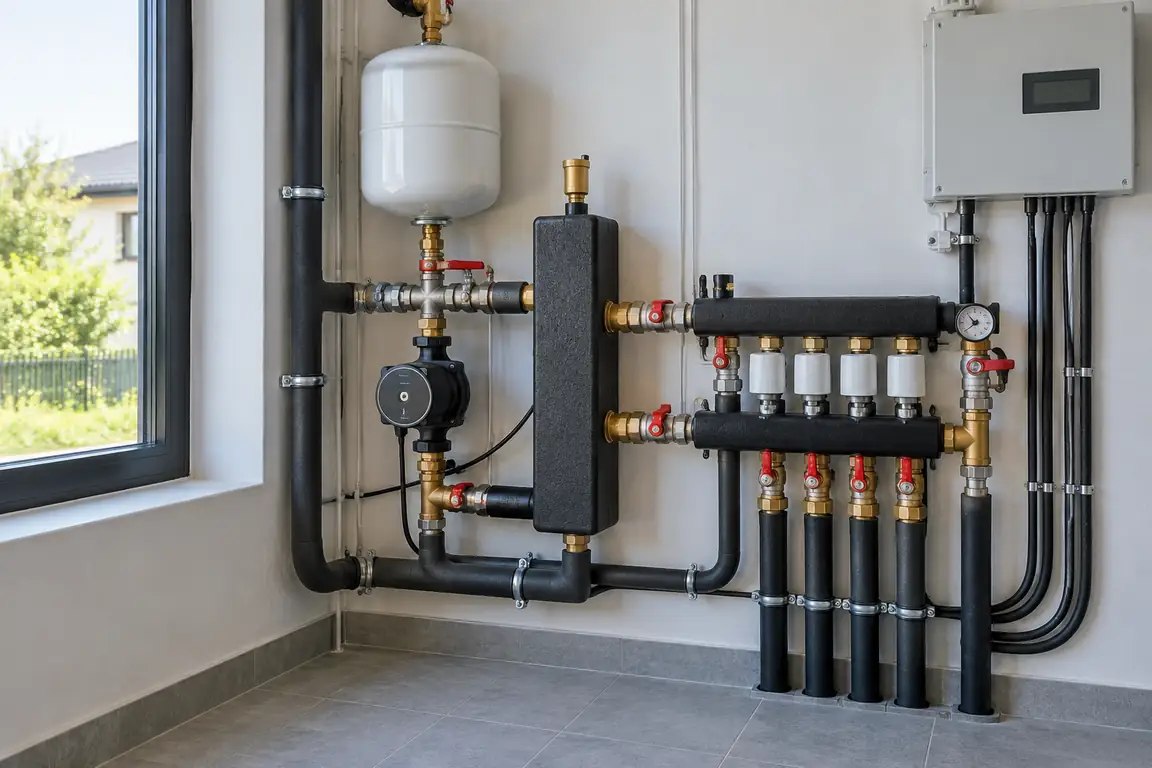
In a cold climate, the winning model is the one that covers the building’s design load after accounting for defrost and any planned backup heat. Outdoor air at −7°C, −15°C or below can materially change both capacity and COP. Check certified capacity at the actual design condition, backup heating power, frost management and noise during high-output operation.
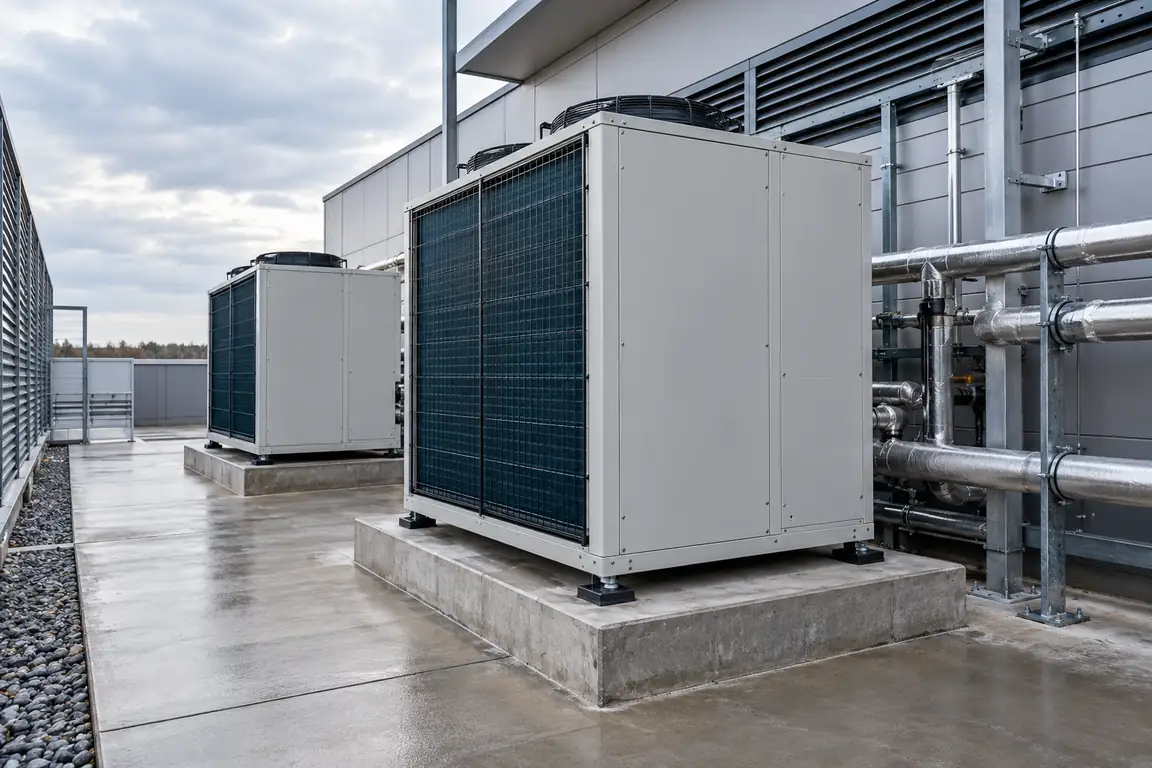
For a commercial building, also review part-load modulation, multiple-unit staging, downtime strategy, service clearance and whether winter demand includes simultaneous DHW. A commercial R290 outdoor monobloc may be attractive where the installation zone and water-circuit protection can be engineered appropriately; a permitted R32 platform may offer another route. Neither should be selected from nominal capacity alone.
How Do Refrigerant Safety and Charge Limits Affect Installation?
R290’s A3 classification calls for stronger flammability-related siting and protection measures than R32’s A2L class; R410A’s A1 class does not require the same flammability controls. The model’s approved refrigerant charge and where a leak could accumulate determine whether a given monobloc or split layout is suitable. All three also require standard electrical, pressure and mechanical safety measures.
What Do A1, A2L and A3 Mean?
The first letter A indicates a lower toxicity classification within the specified standard; the numeral and suffix describe the flammability category tested under ASHRAE 34/ISO 817. A1 shows no flame propagation under the classification conditions; A2L is lower flammability with low burning velocity; A3 is higher flammability. A1 does not mean zero hazard, and A2L does not mean ordinary installer procedures automatically meet every local code.
The category changes ventilation, charge, ignition-source and servicing precautions. Authorized installers follow the actual appliance documentation and applicable safety standards, rather than adopting a universal distance or charge number from another heat-pump model.
How Does Refrigerant Charge Affect Installation?
The refrigerant charge is the mass of refrigerant inside the circuit; allowable charge is linked to the safety standard, construction, occupancy/room assumptions and potential leak location. A factory-sealed appliance containing a smaller R290 charge may have a different siting and acceptance path from a field-assembled design carrying refrigerant lines through occupied rooms. More charge can increase the consequences of a release and can trigger additional design safeguards or disallow a proposed placement.
The relevant engineering steps are to identify the actual nameplate charge, determine the prescribed installation class and appliance category, assess indoor/outdoor leak paths and apply the correct manual and local rules. It is misleading to assign one universal kilogram limit to every R290, R32 or R410A heat pump.
R290 Monobloc vs R32 Split: How the Circuit Changes the Site
With many R290 monoblocs, the entire sealed refrigerant circuit stays outdoors and water flows to the indoor heating system. With a typical R32 split heat pump, refrigerant piping connects indoor and outdoor units; this adds line length, joints and possible leak locations to the installation design. There are also R32 monoblocs and other product layouts, so refrigerant name does not automatically determine architecture.
A monobloc can reduce on-site refrigerant pipe work while introducing outdoor water-circuit freeze protection as a critical design issue. A split design may avoid an outdoor hydronic freeze exposure but requires qualified refrigerant pipework, tightness verification, permitted charge and appropriate indoor safeguards. The choice is about the complete approved system and building interfaces.
Outdoor Zones, Openings and Failure Scenarios
Check the intended spot against the manufacturer’s defined A3 protective zone: doors and windows, fresh-air intakes, drains, basement wells, pits, ignition sources, adjacent property and maintenance access. Propane is heavier than air under ambient leak conditions and may settle into low points; the design must prevent dangerous accumulation. If a prescribed zone overlaps a basement opening or active ignition source, move the unit or choose a compliant alternative arrangement rather than treating the clearance as optional.
For outdoor hydronic monoblocs, document the response to a winter power outage. Protected circulation, approved glycol/heat-exchanger separation or other manufacturer-approved measures may be appropriate depending on the system; a brief outage can leave exposed water components vulnerable in freezing weather. The safety decision is actionable: select an approved unit, a suitable location and a documented installation/freeze-protection design.
EU F-Gas Rules for R32, R290, and R410A Heat Pumps
EU Regulation 2024/573 restricts specified F-gas heat-pump categories according to equipment design, rated capacity, GWP and date—not by one universal “R32 ban” date. The important distinction is whether a product is self-contained/monobloc or split, and whether it is air-to-water or air-to-air. Relevant safety exceptions are written into specific Annex IV categories.
| EU Annex IV equipment category | Main F-gas limit or restriction | Placing-on-market date |
|---|---|---|
| Single-split, <3 kg Annex I F-gas | GWP ≥750 | 1 Jan 2025 |
| Self-contained AC and heat pumps ≤12 kW (specified category) | GWP ≥150, with specified safety exception | 1 Jan 2027 |
| Self-contained / monobloc >12 to 50 kW | GWP ≥150, with specified safety exception | 1 Jan 2027 |
| Split air-to-water ≤12 kW | GWP ≥150, with specified safety exception | 1 Jan 2027 |
| Split air-to-air ≤12 kW | GWP ≥150, with specified safety exception | 1 Jan 2029 |
| Split >12 kW | GWP ≥750, with specified safety exception | 1 Jan 2029 |
| Other self-contained AC / heat pumps | GWP ≥150, with specified safety exception | 1 Jan 2030 |
| Self-contained ≤12 kW (later stage) | F-gas restrictions expanded, with specified safety exception | 1 Jan 2032 |
| Split >12 kW (later stage) | GWP ≥150, with specified safety exception | 1 Jan 2033 |
| Split ≤12 kW (later stage) | F-gas restrictions expanded, with specified safety exception | 1 Jan 2035 |
The table summarizes categories rather than reproducing the full legal exceptions or definitions. For example, an 8 kW split air-to-water heat pump and an 8 kW split air-to-air heat pump can fall under different 150-GWP dates; an 8 kW self-contained unit is evaluated under another row. A compliant product choice requires matching the exact appliance category and any applicable safety exception. These are placing-on-the-market restrictions; they do not mean every already installed heat pump stops operating on the stated date.
For the legally controlling wording and exceptions, consult Regulation (EU) 2024/573, Annex IV and the European Commission’s equipment guidance. Great Britain follows its own applicable rules and should not be treated as automatically identical to the EU timetable.
U.S. EPA Rules for R32, R290, and R410A Heat Pumps
In many U.S. residential and light-commercial AC/heat-pump categories, the EPA Technology Transitions threshold is 700 GWP: R32 at 675 is below it, while R410A at 2,088 is above it. R290’s very low GWP does not by itself authorize its use in every U.S. appliance: the EPA SNAP end-use acceptability and applicable use conditions must also cover the specific product and application.
| U.S. decision | Practical meaning for a heat-pump project |
|---|---|
| New covered residential/light-commercial system | Identify the applicable 700-GWP rule, equipment category and manufacture/import provisions. An eligible refrigerant is only one part of compliance. |
| Qualifying legacy R410A inventory | EPA’s 2026 revision changed the installation deadline for certain systems whose specified components were manufactured in or imported into the U.S. before 1 Jan 2025. Document eligibility. |
| Existing R410A systems | Continuing service and repair are not equivalent to authorizing unrestricted new production of high-GWP equipment. Use approved refrigerants and parts. |
| New R290 appliance | Match the precise EPA SNAP end-use listing, conditions, applicable safety standard, product certification and local code. |
2026 rule change: EPA finalized the relevant revision in May 2026, effective 27 July 2026, removing the installation compliance deadline for certain qualifying pre-2025 residential/light-commercial equipment. It did not eliminate the underlying high-GWP restrictions on manufacture or import of newly covered systems. A system assembled from the wrong inventory combination may not qualify for that allowance.
A useful procurement example is a 2026 replacement quote for an R410A split system. One seller may be offering permitted older inventory; another may be proposing newly manufactured equipment. These quotations have different compliance paths and should be evaluated accordingly. Sources: EPA HFC sector restrictions, EPA Technology Transitions rulemaking, and EPA SNAP acceptability.
Which Refrigerant Should You Choose for Your Project?
For a new EU low-GWP hydronic project, an approved R290 heat pump is often a logical first shortlist; for permitted A2L installations, R32 offers another established route; and for an existing R410A system, the first decision is repair versus whole-system replacement. Actual water-temperature demand, local approval and performance at the design point determine the winning product.
| Project situation | First models to shortlist | Why / change-of-choice condition |
|---|---|---|
| New EU air-to-water heating | Appropriate R290 monobloc or another eligible low-GWP model | Often aligns with restrictive GWP categories; outdoor A3 siting must work |
| U.S. residential split application | Properly listed and permitted R32 or other compliant systems | U.S. end-use acceptance, local code and service arrangements determine fit |
| Underfloor heating | Eligible R32 and R290 models | Compare low-temperature COP, part-load and output, not high maximum water temperature |
| Old radiators / higher water temperatures | R290 or R32 models rated at the necessary flow temperature | Select by delivered kW at design outdoor temperature and efficiency there |
| Cold-climate home | Cold-climate-rated models with published low-temperature output | Choose capacity and defrost performance before refrigerant preference |
| Existing R410A heat pump | Approved maintenance route versus new complete system | Component condition, repair economics and legal stock/installation rules |
Five-Step Project Selection Path
- Define the market. EU, U.S., UK or other destination determines which product category and refrigerant options are legally available; list the relevant dates and conditions.
- Define the equipment architecture. Confirm air-to-water versus air-to-air, monobloc versus split and the building’s available outdoor position or piping route.
- Define the heat load. Record design heating kW, minimum outdoor temperature, expected water supply temperature and DHW requirements.
- Compare eligible complete models. At the same temperature conditions, review delivered output, COP/SCOP, charge, installed sound level, defrost, safety zone and service documentation.
- Choose the approved platform with the best project economics. Include installation complexity, seasonal electricity use, available servicing and replacement risks—not only the appliance price.
For further detail on the two lower-GWP options, Airproz covers R290 vs R32 project suitability and why R290 GWP values differ. Our space-heating heat pump category includes R290 and R32 product families; any actual model shortlist should use its own approved specification and target-market documents.
R290 vs R32 vs R410A: Installation and Running Costs
Heat-pump lifetime cost consists of equipment, installation, electricity, maintenance, repairs and eventual replacement or disposal. A lower-GWP refrigerant can be beneficial for long-term equipment strategy, but it does not by itself guarantee the lowest electricity bill or the lowest total installed cost.
| Cost component | Why R32/R290/R410A projects may differ | Compare using |
|---|---|---|
| Equipment and accessories | Compressor, cylinder, controls, electric backup, hydraulics | Same usable delivered heating output and supplied package |
| Installation and safety | A2L/A3 routing, outdoor zone, plumbing, electrical and freeze protection | Site-specific installed-price scope |
| Heating electricity | SCOP, heat loss, flow temperature, controls and backup | Same annual useful heat, tariff and SCOP basis |
| Maintenance and refrigerant service | Technician availability, parts, charging and permitted service | Local service quotations and warranty conditions |
| Future replacement | Regulatory changes, product life and spare-parts supply | Comparable evaluation period and replacement assumptions |
Worked Example: Annual Electricity Cost
Assume 12,000 kWh/year of useful space heat, $0.20/kWh electricity and two otherwise comparable systems with SCOP 3.5 and SCOP 4.0, calculated on equivalent seasonal assumptions. These numbers are hypothetical calculation inputs—not measured R290 or R32 product performance and not Airproz project data.
| Calculation | Option A: SCOP 3.5 | Option B: SCOP 4.0 |
|---|---|---|
| Useful annual heat | 12,000 kWh | 12,000 kWh |
| Heat-pump electricity = useful heat / SCOP | 3,429 kWh | 3,000 kWh |
| Annual electricity cost × $0.20 | $686 | $600 |
| Annual savings of B versus A | — | about $86 |
What this means for procurement: Option B saves around $86 per year in this simplified space-heating calculation. If its installed price is $1,000 higher, the simple extra-cost payback is about 11.7 years, before servicing, financing, energy-price changes or equipment degradation. Over a ten-year comparison period the heating-electricity savings total about $860 under the same assumptions, which would not by itself offset that $1,000 difference. It may still win on other project criteria.
The formula is annual heating electricity (kWh) = annual useful delivered heat (kWh) ÷ comparable SCOP. Where backup heaters, pumps, DHW, time-of-use tariffs or off-design operating conditions matter, include those separately. This is a decision method—not a forecast of any particular property’s bill.
Can R290 or R32 Replace an Existing R410A System?
R290 and R32 are not drop-in replacements for R410A in a heat pump designed for R410A. A safe refrigerant change generally requires a different, manufacturer-approved refrigeration design; for many owners the real choice is to maintain the R410A appliance or replace the complete heat-pump system with a new approved R32 or R290 product.
Recharging, Repairing and Whole-System Replacement
If an existing R410A unit is serviceable, a trained technician can evaluate the leak, pressure integrity, components, compliant refrigerant supply and repair economics under the applicable rules. Replacing a compressor or control board should follow the original equipment design and approved service procedure. Adding R290 or R32 to an R410A circuit changes flammability, pressure and other design requirements and is not an authorized field shortcut.
For complete replacement, check heating load and water temperature again rather than assuming the old nameplate kW was the ideal size. A new outdoor monobloc may change the indoor refrigerant-pipe requirement but add outdoor hydronic piping and freeze precautions. A new split system may require new refrigerant lines, electrical protection and safety assessments. Existing line sets can be reused only where the new equipment manufacturer and installer approve their material, diameter, pressure rating, cleanliness and condition.
| Existing situation | Better first action |
|---|---|
| R410A system works and parts/service remain available | Compare planned servicing cost with replacement timing |
| Failed major component with high repair cost | Compare complete R32/R290 replacement packages and installation work |
| New R32 split proposal using old pipes | Obtain written line-set compatibility assessment for that exact model |
| New R290 monobloc proposal | Design external safety placement plus water piping and frost strategy |
Replacing a full system can change emitter temperatures, cylinder capacity, controls and distribution, not just refrigerant. This is also why a modern lower-GWP system may offer better overall project results even when its nominal kW differs from the legacy unit.
What Should B2B Buyers Verify Before Ordering?
Before issuing a heat-pump purchase order, obtain the exact model and nameplate data, heating output and COP at the project temperatures, seasonal efficiency evidence, charge and installation instructions, destination-market documentation, plus service, spare-parts and warranty terms. These items convert a promising product family into an auditable proposal.
| Document or answer | Why it matters | Common error | Decision if absent |
|---|---|---|---|
| Final model code, nameplate, refrigerant and charge | Confirms the product actually quoted | Quoting a series without a variant | Hold technical approval of the model |
| Capacity + COP at specified air/water points | Verifies load coverage and operating cost | Comparing A7/W35 to A−7/W55 | Request matching-point data |
| SCOP and stated climate/temperature | Supports seasonal electricity comparison | Comparing different climate bases | Recalculate only when boundaries match |
| Installation manual and safety-zone layout | Determines siting and installer scope | Using another model’s A3 distances | Resolve site design before ordering |
| Market-specific conformity and product listing | Identifies the relevant approved product | Assuming CE equals U.S. approval | Confirm destination-market acceptance |
| Refrigeration/hydronic system diagram | Shows split vs monobloc piping and auxiliaries | Ignoring outdoor freeze exposure | Finalize installation bill of materials |
| Service, spare-parts, warranty terms | Supports lifecycle and distributor planning | Treating generic marketing claims as warranty | Record enforceable terms and local support |
| Logistics, electrical and packaging details | Prevents site/delivery mismatch | Missing phase, breaker or handling dimensions | Complete procurement specification |
A Useful RFQ Input Set
Give the supplier the destination country, application (space heating/DHW/cooling), heat loss in kW, outdoor design temperature, expected supply/return-water temperature, electrical supply and any restriction on outdoor siting. Add the quantity, commissioning expectations and after-sales location for distributor orders. These inputs let the supplier narrow the relevant equipment families rather than responding with a generic catalogue.
An Airproz enquiry can start with the space-heating heat-pump product families. Select the final model only once its applicable technical and market documents have been compared to the project; do not assume that a category page validates every version or country.
Discuss Your Heat Pump Requirements
Share your destination market, heating capacity, design outdoor temperature and target water temperature. Airproz can help identify which current R290 or R32 product family is relevant and which model specifications should be reviewed for your project.
Discuss Your Heat Pump RequirementsFrequently Asked Questions
Is R32 a Pure Refrigerant or a Blend?
R32 is pure difluoromethane (CH₂F₂), a single-component HFC. R410A is a separate blend consisting of R32 and R125 at 50/50 mass proportions.
Is R32 Flammable? What About R290 and R410A?
R32 is A2L, R290 is A3 and R410A is A1. These classes are assigned under standardized flammability and toxicity testing; installation must follow the specific appliance and site conditions.
What Is the GWP of R32, R290 and R410A?
Common comparison values are 675 for R32, about 3 for R290 and 2,088 for R410A. Legal accounting may use a different reference basis; the EU Annex VI value for propane is 0.02.
Is R32 Being Phased Out in Europe?
R32 faces restrictions in defined EU equipment categories at specified dates, but there is no single EU date banning every R32 heat pump. The distinction among self-contained, split air-to-water and split air-to-air categories matters.
Is R290 More Efficient Than R32 at Higher Water Temperatures?
Some purpose-designed R290 heat pumps support higher leaving-water temperatures, but they are not automatically more efficient than all R32 models at those temperatures. Compare the actual kW and COP at the water temperature your system needs.
Can R290 Heat Pumps Work in Very Cold Weather?
Yes, purpose-designed R290 models can serve cold-climate heating projects. Choose by certified cold-weather output, defrost and backup arrangements rather than refrigerant name alone.
Can I Replace R410A with R32 or R290 in the Same Refrigerant Circuit?
No, not as an ordinary direct refrigerant swap. Keep the refrigerant specified by the equipment manufacturer for service, or install a complete system approved for the new refrigerant.
Is R290 Always More Expensive to Install?
No. The price difference depends on equipment architecture, A3 siting, hydronic piping, safety work and local service costs. Compare complete installed scope, not the refrigerant price.
What Should a Heat Pump Distributor Compare Between Refrigerants?
Start with the approved model and destination-market documents, then compare capacity/COP test points, charge and safety instructions, service availability and warranty terms. These reveal whether competing offers are actually comparable.
Final Recommendation: R290, R32, or R410A?
For a new low-GWP hydronic project with a suitable approved outdoor installation, R290 is a strong first option. For permitted A2L system types, R32 remains a practical alternative. R410A is chiefly a legacy-equipment and service consideration in markets restricting new high-GWP systems. The best purchase is the complete heat pump that meets the site’s required heat output and water temperature with acceptable efficiency, compliance, installation cost and after-sales support.
For product-family information after that technical comparison, visit the Airproz space-heating heat pump range. Buyers comparing suppliers can also read our heat-pump manufacturer evaluation guide.