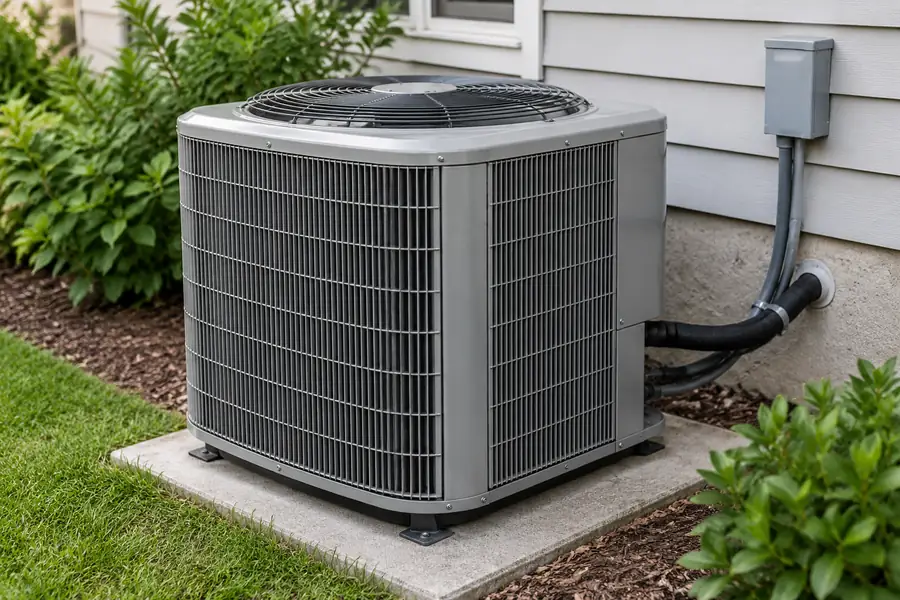
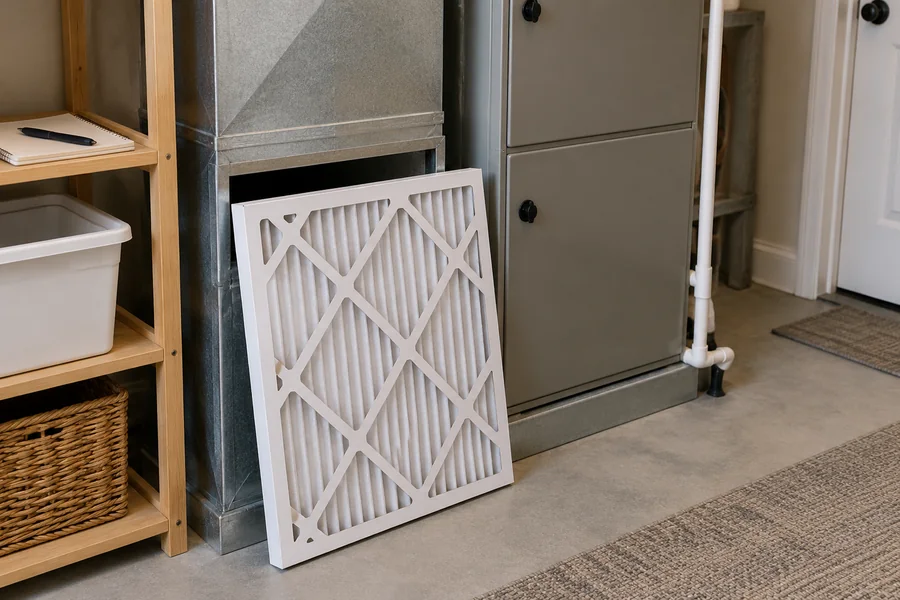
An air conditioner for Poland's climate is a 230V/50Hz inverter split AC with heating mode rated to -15°C, ErP A++ energy label, CE certification, and EU F-Gas Regulation compliance for the European Single Market.
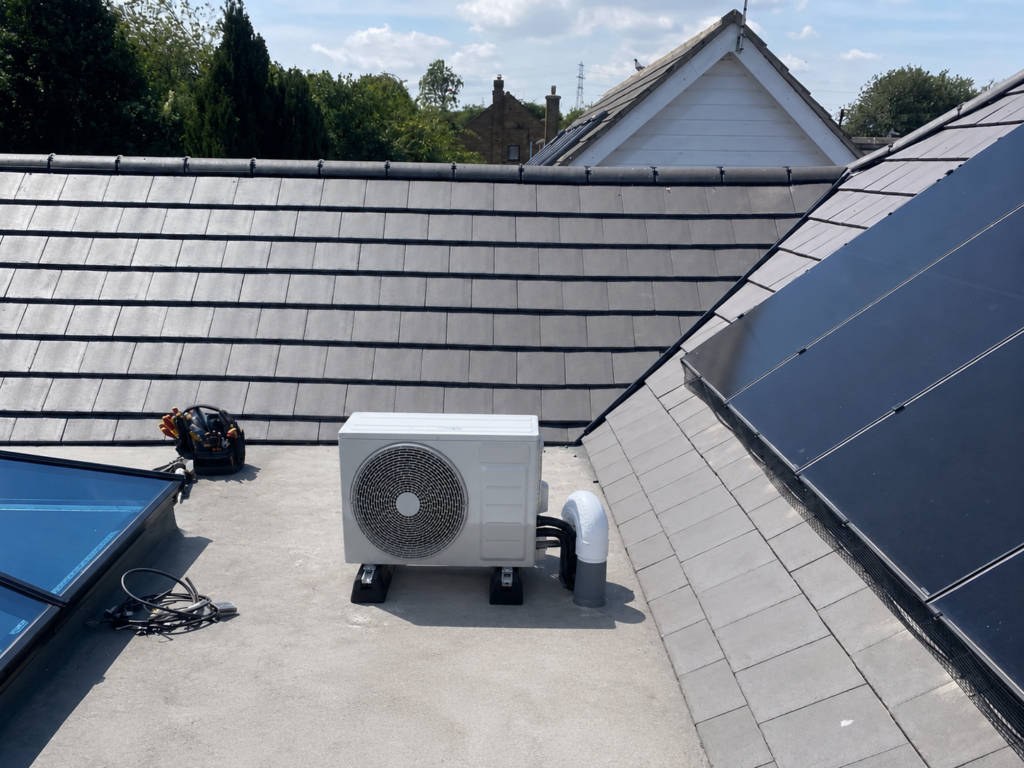
Ask a Polish installer what the best air conditioner in Poland actually looks like, and brand name isn’t the first answer.
An air conditioner for Poland’s climate — what installers there call a klimatyzator z pompą ciepła (heat pump air conditioner) — is not a summer-only appliance. It is a year-round heat pump. It must deliver rated cooling at 35°C outdoor temperature and rated heating at -15°C — without tripping on coil frost.
Every Polish distributor learns this the hard way in their first winter. A fixed-speed, cooling-only split AC imported from a warmer market sells well in June. By November, it generates callbacks.
Add EU F-Gas compliance, ErP energy labeling, and Poland’s 230V/50Hz grid to the specification, and the stakes rise further. Get it right, and you earn repeat orders. Get it wrong, and the second container never clears.
This guide covers the three specification layers every B2B buyer serving Poland must lock down.
Key Takeaways
- Poland is a dual-season market. An air conditioner sold here must heat reliably at -15°C, not just cool at 32°C. A cooling-only unit generates warranty claims by the first winter frost.
- Inverter compressor technology is the baseline in Poland, not a premium option — the combined heating-plus-cooling season runs roughly seven months.
- ErP energy labels (A++ minimum), CE marking, and EU F-Gas Regulation 2024/573 refrigerant compliance are mandatory for import — customs requirements, not marketing labels.
- A representative Warsaw distributor’s first winter with Airproz inverter split ACs recorded zero low-temperature callbacks and 30% lower annual electricity costs vs. fixed-speed predecessors.
Poland’s Climate Reality — What It Means for Air Conditioner Specification
Poland sits in the humid continental climate zone (Köppen Dfb). The north has a Baltic coastal influence; the east and south are more continental.
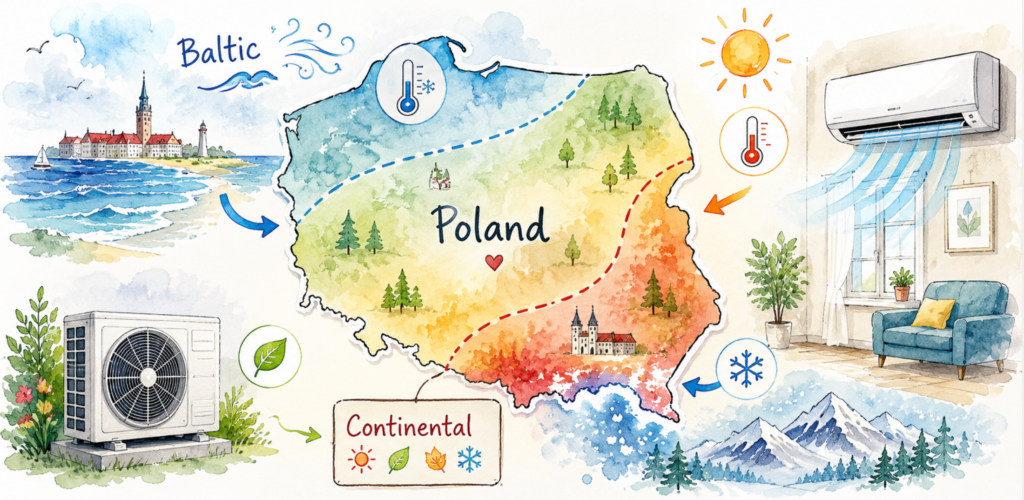
For an air conditioner for Poland’s climate, the annual average temperature doesn’t matter much. What matters is the two design extremes the unit must handle within the same calendar year — sometimes within the same month.
For an air conditioner for Poland’s climate, the annual average temperature doesn’t matter much. What matters is the two design extremes the unit must handle within the same calendar year — sometimes within the same month.
Poland’s Dual-Season Climate at a Glance
According to Poland’s official meteorological institute (IMGW) climate data, Poland runs a true dual-season HVAC load. Summer cooling demand peaks June through August. Winter heating demand runs October through March. April–May and September are shoulder months, where the same building can need cooling in the afternoon and heating at night.
| City | Summer design temp (peak) | Winter design temp (minimum) | Avg summer RH% | Heating degree-days (base 18°C) | Spec implication |
|---|---|---|---|---|---|
| Warsaw | 30–33°C | -15 to -18°C | 60–70% | ~3,500–3,800 | Largest single market; compact outdoor units for space-limited apartments |
| Kraków | 29–32°C | -16 to -20°C | 60–70% | ~3,600–4,000 | Colder winter (inland/southern); tests heating mode at the limit |
| Gdańsk | 27–30°C | -10 to -14°C | 65–75% | ~3,200–3,500 | Baltic coastal climate — milder winter, higher humidity, salt-air corrosion risk near coast |
| Wrocław | 29–32°C | -14 to -17°C | 55–65% | ~3,400–3,700 | One of Poland’s warmest cities in summer; cooling load dominates |
Data note: design temperatures are indicative ranges from public IMGW climatological summaries and Köppen Dfb classifications. For a specific project, pull current IMGW station data and run a PN-EN 12831 heating load / PN-EN 15251 cooling load calculation. Regional averages guide inventory planning; they should not approve a final production spec.
Heating Mode Is Not Optional — It Is the Differentiator
In a Mediterranean or Middle Eastern market, heating mode is a convenience feature. In Poland, heating mode is the product.
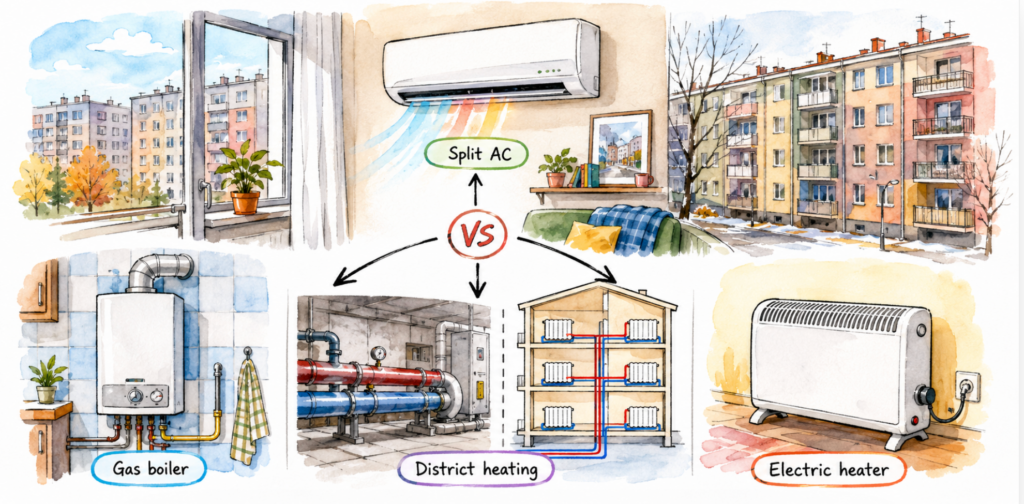
A split AC sold here competes against the building’s primary heating system — a gas boiler, district heating (common in Polish apartment blocks), or electric resistance heaters. That flips the specification logic.
The real question isn’t “does the unit include heating mode.” It’s: at what outdoor temperature does heating output start to degrade? Does the defrost cycle survive a Polish November night at 90% relative humidity?
An air conditioner heating mode cold climate spec that works at +5°C with a COP of 3.5 is irrelevant if the unit shuts down at -10°C. In Poland, heating is needed most exactly when the outdoor temperature is lowest. This performance gate separates units built for Poland from units built for milder European climates.
What a Cooling-Only Unit Costs a Distributor
Polish summers are getting warmer. Heatwave days above 30°C in Warsaw rose from 5–8 per year in the 1990s to 12–18 per year in the 2020s. Residential AC adoption is growing fast — including among homeowners who wouldn’t have considered cooling a decade ago.
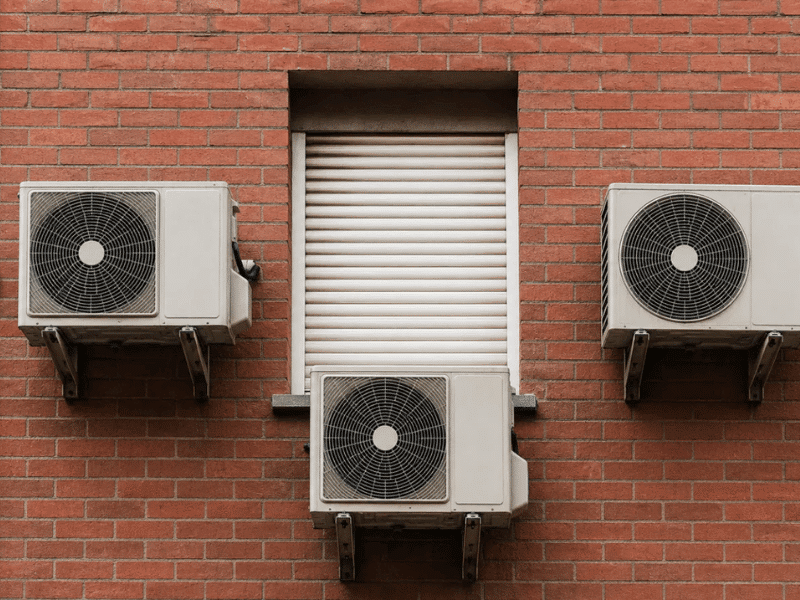
But a cooling-only unit imported to chase this summer demand follows a predictable pattern: strong sales June–August, silence by October, service calls by December when the homeowner discovers it can’t heat.
The arithmetic is harsh for distributors. One negative review — “doesn’t heat in winter” — costs more in lost referrals than the margin on five correctly specified units. Polish consumers research appliances extensively before buying, and heating capability is among the first things they check.
Choosing the Right Air Conditioner for Poland — Inverter, Heating Mode, and a Distributor Case
The best air conditioner in Poland isn’t defined by brand. It’s defined by three decisions that cascade once the dual-season constraint is clear: compressor technology, heating-mode spec, and energy efficiency tier. Get any one wrong, and you have a unit that looks competitive on a June price list — and fails a January performance test.
Why Inverter Wins Poland’s Dual-Season Demand
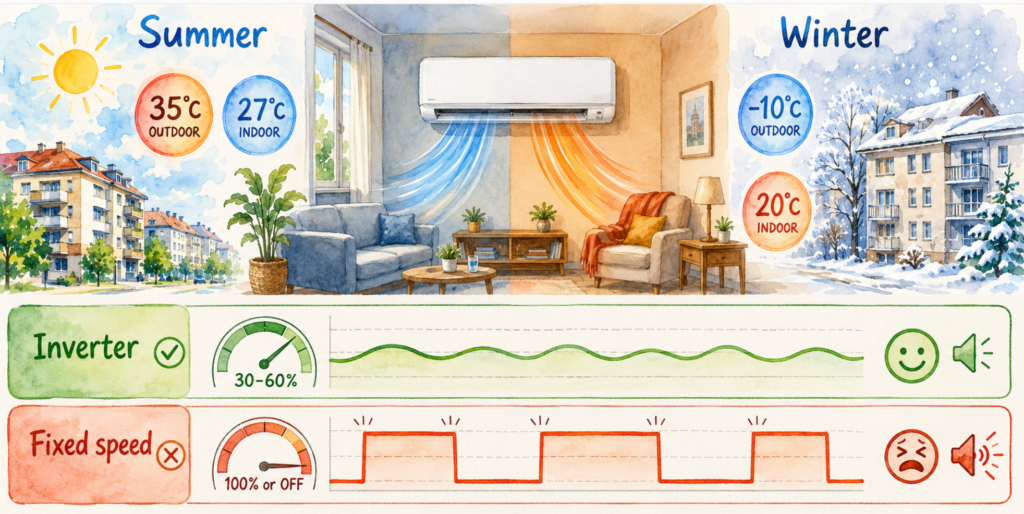
In a single-season cooling market, the inverter air conditioner vs fixed speed AC comparison is about summer electricity savings. In Poland, the argument runs deeper.
In July, the compressor pulls heat out of a 27°C room and pushes it into 35°C outdoor air — the standard condition used to rate cooling performance. In January, it works in reverse: pulling heat from -10°C outdoor air and delivering it into a 20°C room.
A fixed-speed compressor cycles on and off at full capacity in both scenarios. At part-load — most operating hours in Poland’s long shoulder seasons — that cycling causes temperature swings, more noise, and lower efficiency.
An inverter compressor modulates speed to match actual load. It runs at 30–60% of maximum for most of the year, reaching full speed only during the 50–100 peak-demand hours per season.
| Parameter | Fixed-speed AC (cooling + heating) | Inverter AC (cooling + heating) |
|---|---|---|
| Annual electricity use (12,000 BTU, Polish dual-season profile: ~1,200 cooling hrs + 1,800 heating hrs) | ~2,700–3,100 kWh | ~1,800–2,100 kWh |
| Annual electricity cost (PLN 0.80/kWh, indicative 2026 rate — verify current URE tariff) | PLN 2,160–2,480 | PLN 1,440–1,680 |
| Annual saving with inverter | PLN 720–800 per unit (approx. €155–170) | |
| Inverter price-premium payback | Under 18 months in Polish dual-season conditions | |
Tariff note: residential electricity prices are regulated by Poland’s energy regulatory office (URE) electricity standards. The PLN 0.80/kWh estimate reflects mid-2026 approved tariffs including distribution and capacity charges. URE approves tariffs annually — verify the current G11/G12 rate for the project’s region before using it in a customer-facing savings calculation.
Compare System Types Before You Specify
Inverter vs. fixed-speed is only one axis. Mini split, central split, and packaged configurations carry different installation and maintenance profiles for a Polish residential retrofit.
See our guide to compare split AC system configurations before finalising a container spec. Most Polish residential projects in this guide are mini-split retrofits — larger developments may call for central split systems instead.
Heating Mode Specs That Actually Work Below -10°C
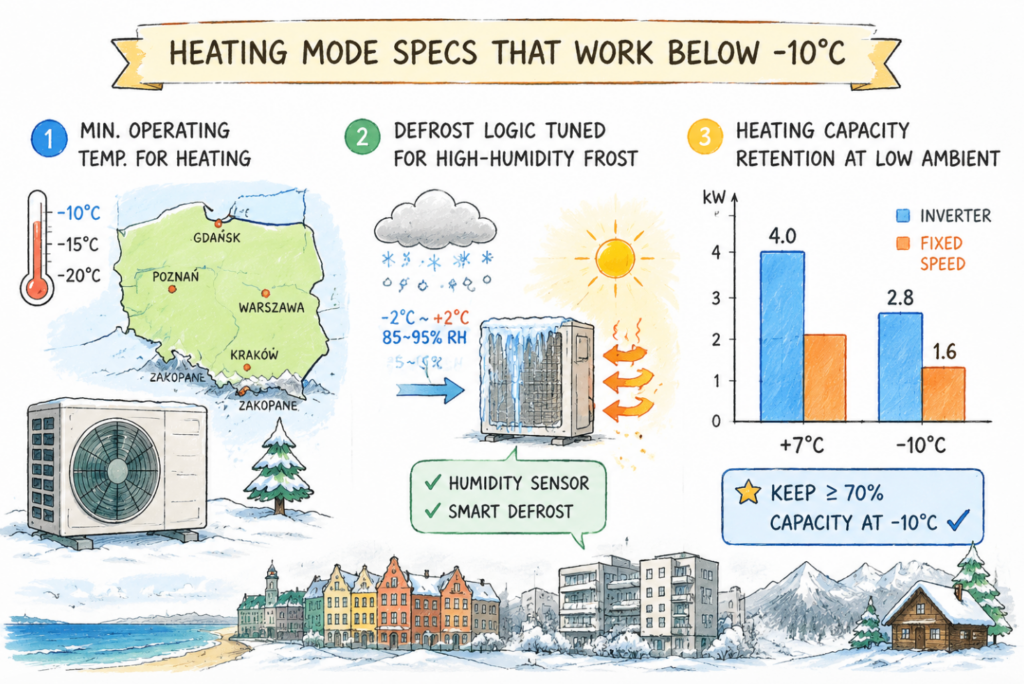
A split AC heating-mode spec has several parameters. Three are non-negotiable in Poland:
- Minimum operating temperature for heating. -15°C is the target. A -10°C rating works in Gdańsk and western Poland most of the time, but fails during cold snaps in Kraków, Katowice, Rzeszów, and Białystok. -15°C covers all of Poland’s populated zones except mountain regions like Zakopane and Karpacz, where -20°C may be needed for a small niche market.
- Defrost logic tuned for high-humidity frost. Polish winter frost is wet and dense. It forms when outdoor air at -2°C to +2°C carries 85–95% relative humidity — common in November and February–March. The defrost cycle must clear this frost before it blocks the outdoor coil, without wasting heating energy on unnecessary cycles. Extended defrost algorithms with humidity-sensor input outperform timer-based defrost here.
- Heating capacity retention at low ambient. A unit delivering 4.0 kW at +7°C but only 2.2 kW at -10°C will leave a Polish living room cold on the nights it matters most. Look for units retaining at least 70% of nominal heating capacity at -10°C — not the 50–60% typical of budget fixed-speed designs.
ErP Energy Labels — What They Mean for Polish Consumers
Poland has some of the EU’s highest residential electricity costs relative to household income. A PLN 2,000 annual AC electricity bill is a real budget line item. That makes the ErP energy label — the EU-mandated A+++ to D scale, known locally as the świadectwo efektywności energetycznej — a decisive purchase factor, not background detail.
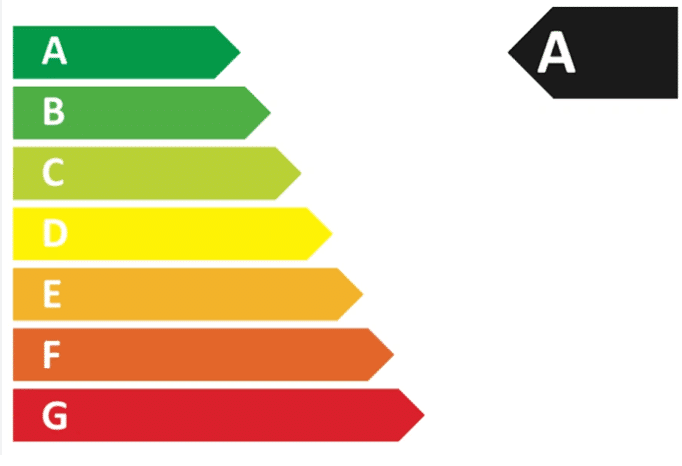
For an energy efficient air conditioner targeting Polish homes, specify ErP A++ or A+++ for both cooling and heating. An A+ unit may still be legal to sell, but it loses in a side-by-side comparison on a Polish e-commerce platform or showroom.
The ErP label shows SEER (cooling) and SCOP (heating). In Poland, SCOP matters more, since heating hours dominate the annual energy total in dual-season operation.
Rule of thumb as of mid-2026: SEER ≥ 8.5 and SCOP ≥ 4.6 (Average climate zone) positions a unit competitively. Below SEER 7.0 / SCOP 4.0, units face increasing price pressure and regulatory risk as EU Ecodesign minimums tighten.
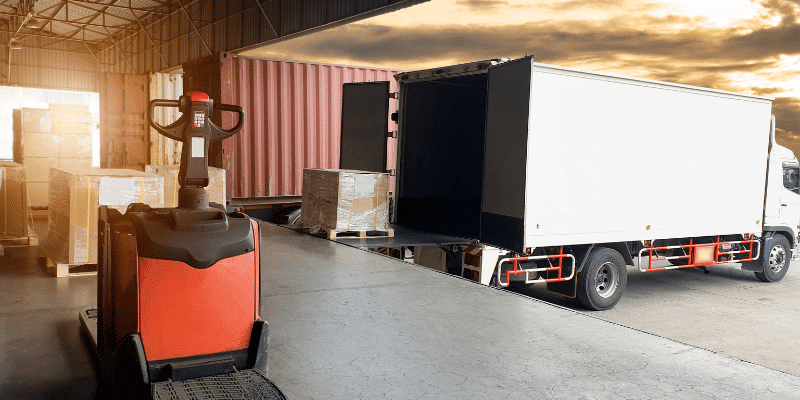
Representative Case: A Warsaw Distributor’s First Winter with Airproz Inverter Split ACs
What does it look like for an air conditioner distributor Poland homeowners actually trust through a full winter?
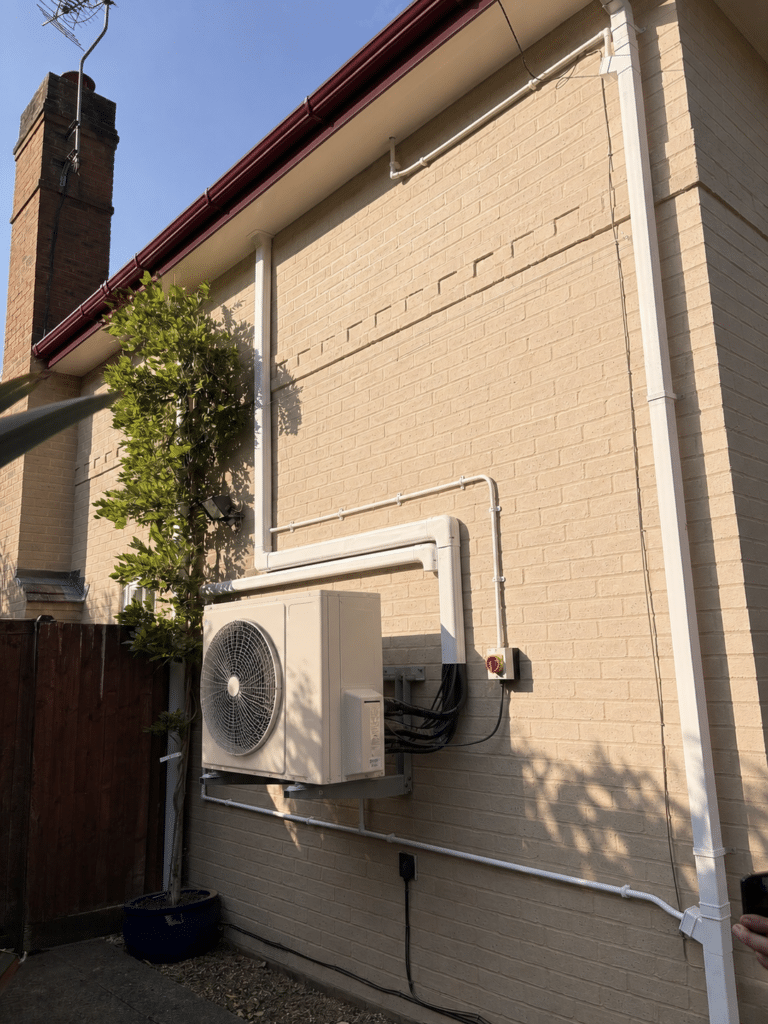
A residential HVAC distributor serving the Warsaw metropolitan area placed an initial order of 150 Airproz R32 inverter split AC series units in early 2025.
The target: single-family homeowners in Warsaw’s suburban districts — Ursynów, Wilanów, Białołęka — replacing aging fixed-speed cooling-only units, or installing split AC for the first time in homes that previously relied on district heating plus open windows in summer.
| Application | BTU specified | Units in order | Target room type | Key spec requirement |
|---|---|---|---|---|
| Bedroom / home office | 9,000 | 70 | 12–18 m², single occupant | Low noise in night-time heating mode |
| Living room | 12,000 | 60 | 25–35 m², 3–4 occupants | SCOP ≥ 4.6 for heating |
| Open-plan ground floor | 18,000 | 20 | 40–55 m² open-plan | Heating capacity retention ≥ 70% at -10°C |
Every unit was specified for 230V/50Hz, rated for heating down to -15°C. The Airproz units shipped with a low-ambient heating compressor profile — a raised speed floor at low outdoor temperatures, to keep oil circulating and heating capacity stable — plus extended defrost logic using coil-temperature and humidity-sensor input.
After the first full winter (October 2025 – March 2026), the distributor reported:
- Zero low-temperature-related service callbacks across all 150 units. The defrost logic handled high-humidity frost without a single “blowing cold air” complaint — the most common cold-climate heating-mode complaint.
- Annual electricity consumption about 30% lower than the fixed-speed units they replaced, mainly from inverter part-load efficiency during Poland’s long shoulder seasons.
- The ErP A++ label closed sales. When installers showed homeowners the projected running cost next to a competitor’s A+ fixed-speed unit, decisions came faster and there was less pushback on install pricing.
The distributor placed a follow-up container order in June 2026, expanding into Kraków and Wrocław with the same three-BTU structure, and added an anti-corrosion outdoor coil coating for units destined for Gdańsk and the Baltic coast.
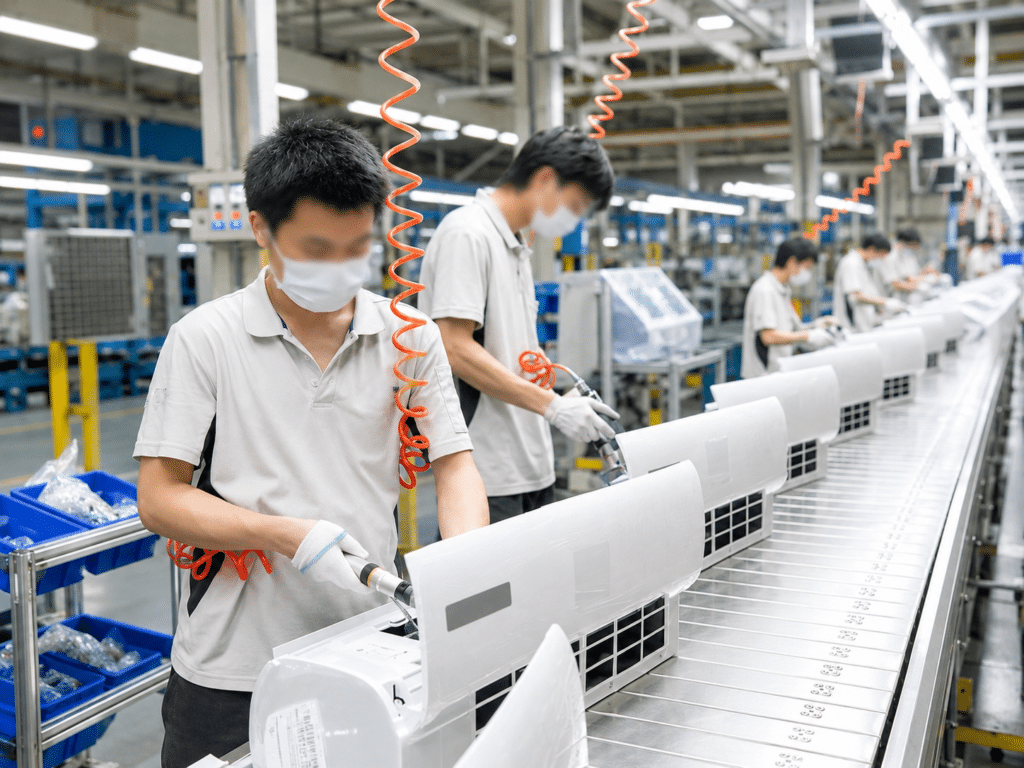
Shipping Air Conditioners into Poland?
Our R32 inverter units ship with CE and ErP documentation, heating-mode ratings tested to -15°C, low-ambient compressor profiles, and configuration matched to the 230V/50Hz grid. No cooling-only surprises in January.
Request a Poland-spec container quote →
Poland Compliance, EU Regulations, and B2B Procurement Checklist
Poland is an EU member state. Every air conditioner imported into Poland must comply with the full suite of EU Single Market regulations, plus Poland-specific electrical standards and consumer protection requirements.
This section covers what determines whether a container clears customs — and whether the units inside can be legally sold, installed, and warranted in Poland.
Poland’s 230V/50Hz Grid — A Simple Spec, a Costly Assumption
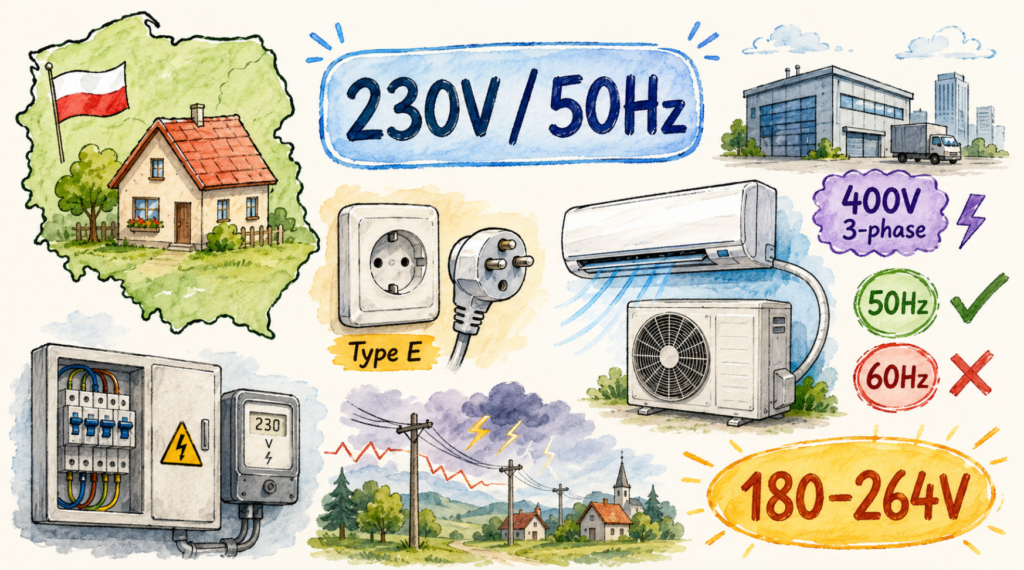
Poland runs a standardised 230V (±10%) / 50Hz single-phase residential grid nationwide.
400V three-phase is available for larger commercial installs. Three details still trip up first-time importers:
- Frequency is 50Hz, not 60Hz. A compressor or fan motor rated for 60Hz runs about 17% slower on a 50Hz supply, cutting both capacity and efficiency. Every rotating component — compressor, indoor fan, outdoor fan — must be rated for 50Hz.
- Plug and socket standard. Poland uses Type E (French-style, CEE 7/5). For hardwired installations, common on larger split systems, supply clear terminal-block instructions in Polish.
- Distribution network stability. Rural areas and smaller towns can see voltage fluctuations beyond ±10% during peak winter demand. Specify wide-voltage-range power supplies (e.g. 180–264V input tolerance) to protect compressor electronics during cold-snap brownouts.
ErP Energy Label and CE Marking — Mandatory for Every Unit
CE marking — the deklaracja zgodności WE, as Polish customs officers and installers call it — is the manufacturer’s declaration of compliance with applicable EU directives — for split ACs, this includes the Low Voltage Directive (2014/35/EU), EMC Directive (2014/30/EU), Ecodesign Directive (2009/125/EC), and the Machinery Directive where applicable. It’s a customs-clearance requirement. A unit without valid documentation won’t enter the EU Single Market through any member state’s border.
ErP energy label (EU 626/2011 and updates): the colour-coded A+++ to D label must be physically affixed to each unit, with efficiency data registered in the EPREL database showing SEER and SCOP for the Average climate zone. For Poland, SCOP is the number consumers and installers check first.
Regulatory status: CE and ErP requirements are revised periodically. As of July 2026, the ErP framework for air conditioners follows Regulation (EU) No 206/2012 with subsequent amendments. Label rescaling (removing A+++ in favour of a simplified A–G scale) was under discussion as of mid-2026 — confirm the current format with a Polish conformity assessment body before production.
EU F-Gas Regulation 2024/573 — The Refrigerant Trajectory Every Importer Must Track
| Refrigerant | GWP | Status in EU as of mid-2026 | Implication for Polish importers |
|---|---|---|---|
| R410A | 2,088 | Subject to HFC phase-down quota; service ban for certain GWP thresholds begins 2032 | Avoid for new imports |
| R32 | 675 | Below thresholds triggering immediate bans; widely used in current-generation split ACs | Recommended baseline refrigerant for Poland-bound units in 2026 |
| R290 (propane) | 3 | Growing adoption in monobloc heat pumps; charge-limit rules restrict indoor split AC use | Future-proof; currently limited in split AC form factors |
Regulatory status: F-Gas phase-down quotas decrease annually under Regulation (EU) 2024/573. Verify the current quota year’s HFC allocation, equipment-category bans, and updated EN/IEC safety standards for A2L (R32) and A3 (R290) refrigerants before locking production specs.
B2B Procurement Checklist for the Polish Market
Confirm each item with your supplier before placing a container order:
- Frequency confirmed at 50Hz for all motors and the compressor
- Voltage: 230V (±10%, i.e. 207–253V) single-phase, confirmed for all electrical components including the PCB controller
- CE marking documentation — Declaration of Conformity and technical file
- ErP energy label (A++ or A+++ recommended), registered in EPREL, with SEER and SCOP for the Average climate zone
- Refrigerant: R32 minimum — R410A pre-charged units risk EU market access restrictions
- Heating mode rated to -15°C minimum, with capacity-retention curve and defrost logic documented
- Type E plug compatibility, or hardwired terminal-block instructions in Polish
- Wide-voltage-range power supply (180–264V)
- Polish-language documentation: installation manual, user manual, warranty terms, ErP label info card (karta produktu)
- EU-based authorised representative for regulatory correspondence, if the manufacturer has no EU legal entity
For the full sourcing framework these criteria sit under, see our B2B guide to choosing an energy efficient air conditioner, covering efficiency ratings, system-type selection, sizing, and supplier vetting for any target market.
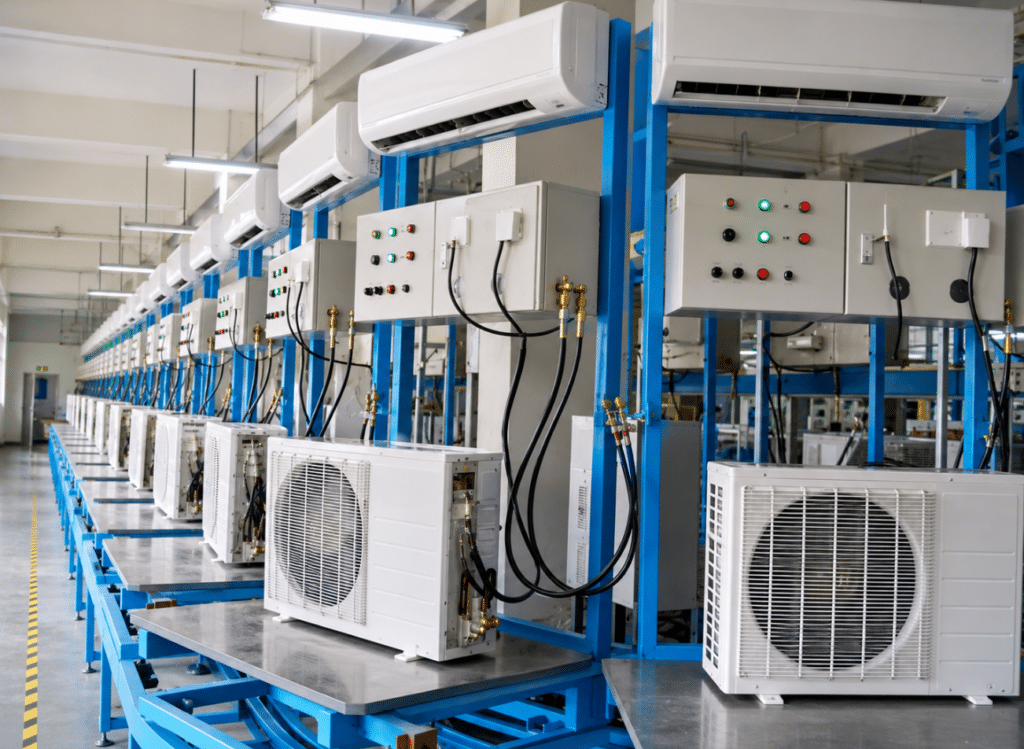
Cross-check your supplier against this checklist before the first production sample ships. In the EU market, the most expensive mistake is a container that arrives without valid CE and ErP documentation.
Frequently Asked Questions
Does an air conditioner need a heating mode to sell in Poland?
For the residential replacement market — homeowners upgrading from no cooling or from window units — yes, heating mode is effectively mandatory.
A cooling-only split AC competes only for June–August. It earns nothing (and risks negative word-of-mouth) October through March. It also loses head-to-head against any inverter heat-pump model, because Polish consumers facing high electricity costs check the SCOP number on the ErP label.
Commercial spaces with a dedicated heating system already in place remain a viable exception. As a practical rule for distributors: if you don’t know the building’s existing heating system, specify heating mode.
What ErP energy label class should I specify for air conditioners in the Polish residential market?
Specify ErP A++ or A+++ for both cooling and heating modes. An A+ unit is technically legal to sell in Poland, but uncompetitive at retail — Polish consumers actively filter by energy label online.
For the Polish dual-season profile, SCOP ≥ 4.6 (Average climate zone) is the recommended minimum. Units below SCOP 4.0 face growing regulatory risk as the EU Ecodesign framework tightens. Verify the current ErP regulation version and EPREL registration requirements before production.
Is R32 or R410A the right refrigerant for air conditioners imported into Poland in 2026?
R32. Don’t import new R410A pre-charged split AC equipment into the EU market.
R410A sits under the HFC phase-down in EU Regulation 2024/573, with quota-driven supply restrictions already in effect and service bans for certain GWP-threshold equipment scheduled from 2032 — within the expected 10–15 year service life of a unit sold in 2026.
R32 (GWP 675) meets all current EU requirements, outperforms R410A at both cooling and heating design conditions relevant to Poland, and has an established service network across major Polish cities. For a 3–5 year product-line view, plan an eventual R290 transition for outdoor-unit or monobloc configurations, while keeping R32 as the default for standard split systems through at least 2028–2030.
Get a Poland-Market Matched Quote
Tell us your target regions in Poland and order volume. We configure each batch with low-ambient heating compressor profiles, ErP A++ labelling, CE and F-Gas compliance documentation, Polish-language manuals, and voltage-matched 230V/50Hz components.
Request a Poland container quote →