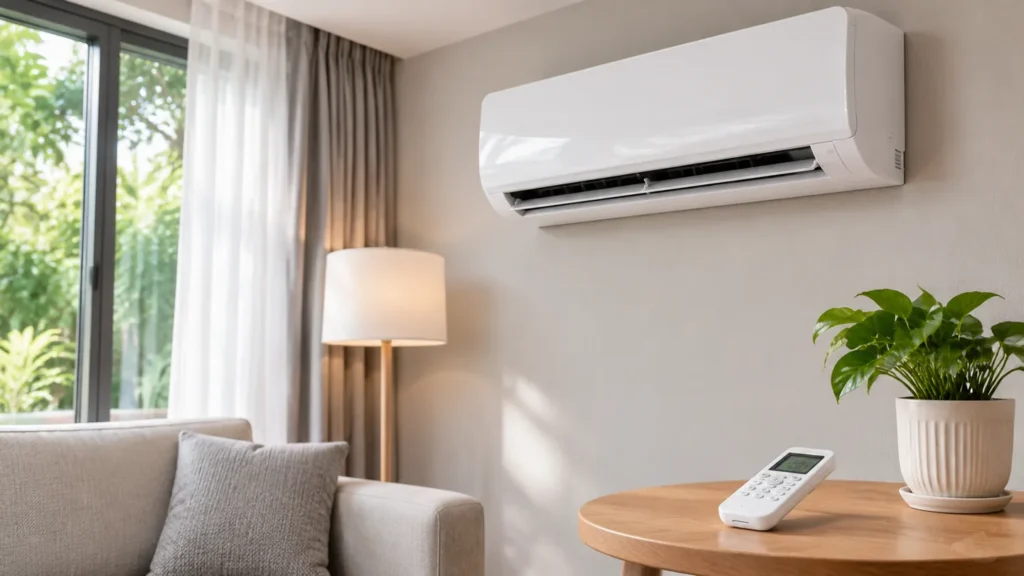
A U-shaped window air conditioner is a room AC with a channel that lets the window sash sit between its indoor and outdoor sections. This puts much of the compressor sound outside and often allows the window to move after installation. Compared with a similarly sized traditional window unit, a correctly fitted U-shaped design can reduce compressor noise heard indoors while keeping more of the window usable. Its energy efficiency depends on the actual inverter system and CEER rating, not on the U-shape alone. The opening, support bracket, seals, and sash restraints must all be compatible.
Before buying, check three things: the window opening and frame, the room’s required BTU capacity, and the exact model’s installation and recall status. We explain how the design works, whether it is better than a standard window AC, what dimensions to measure, how to install it, and what changes if the window is a slider or casement.
How Does a U-Shaped Window Air Conditioner Work?
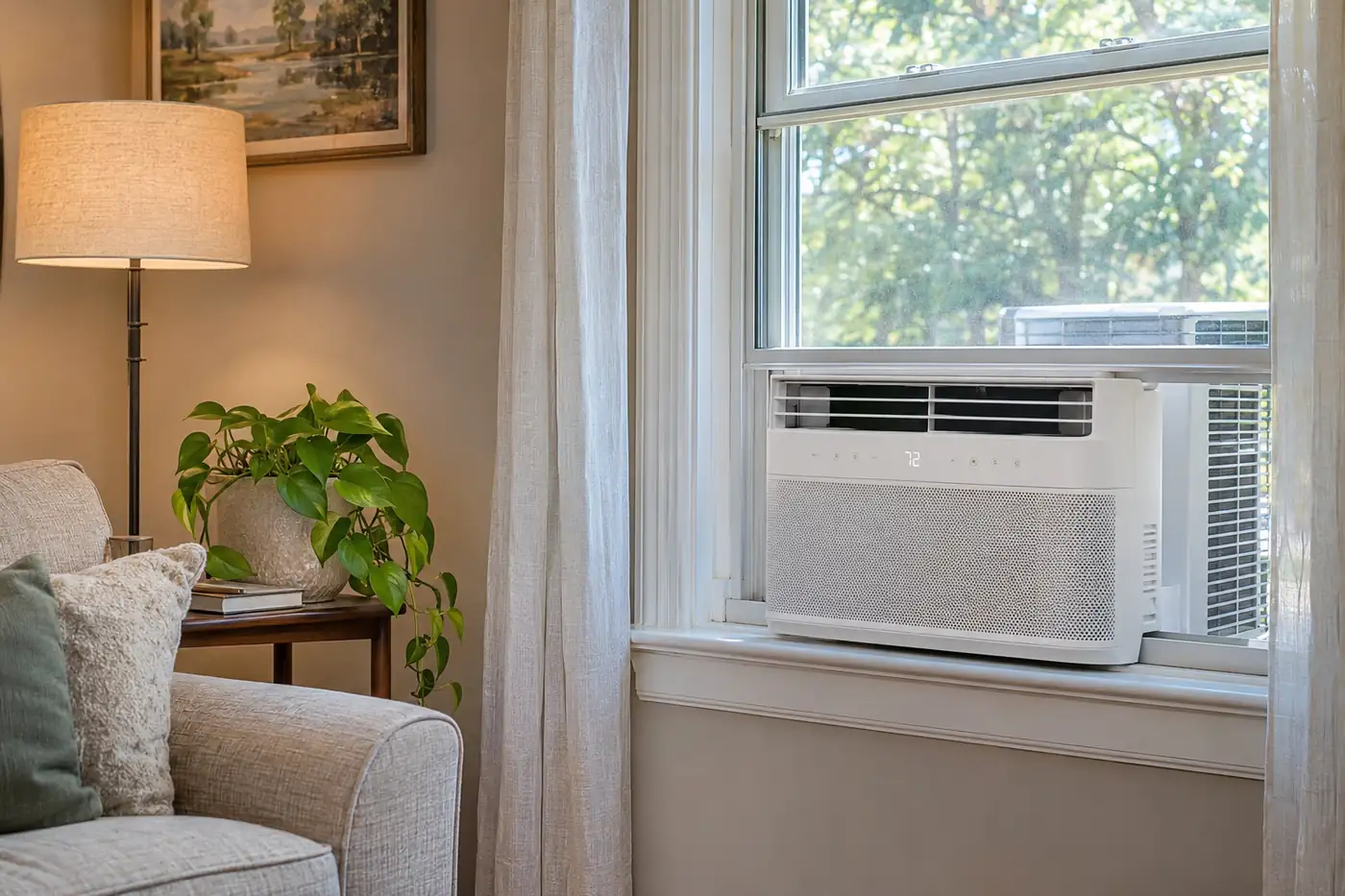
A U-shaped air conditioner works like a regular window AC, but its cabinet has a narrow channel for the window sash. The room-side section blows cooled air indoors. The outdoor section rejects heat, and the lowered window separates much of the outdoor compressor sound from the room.
It is still one sealed refrigeration system, not a mini-split with separate indoor and outdoor units connected by field-installed refrigerant pipes. Refrigerant moves heat from the indoor coil to the outdoor coil. Fans move room air over the cold coil and outdoor air over the hot coil.
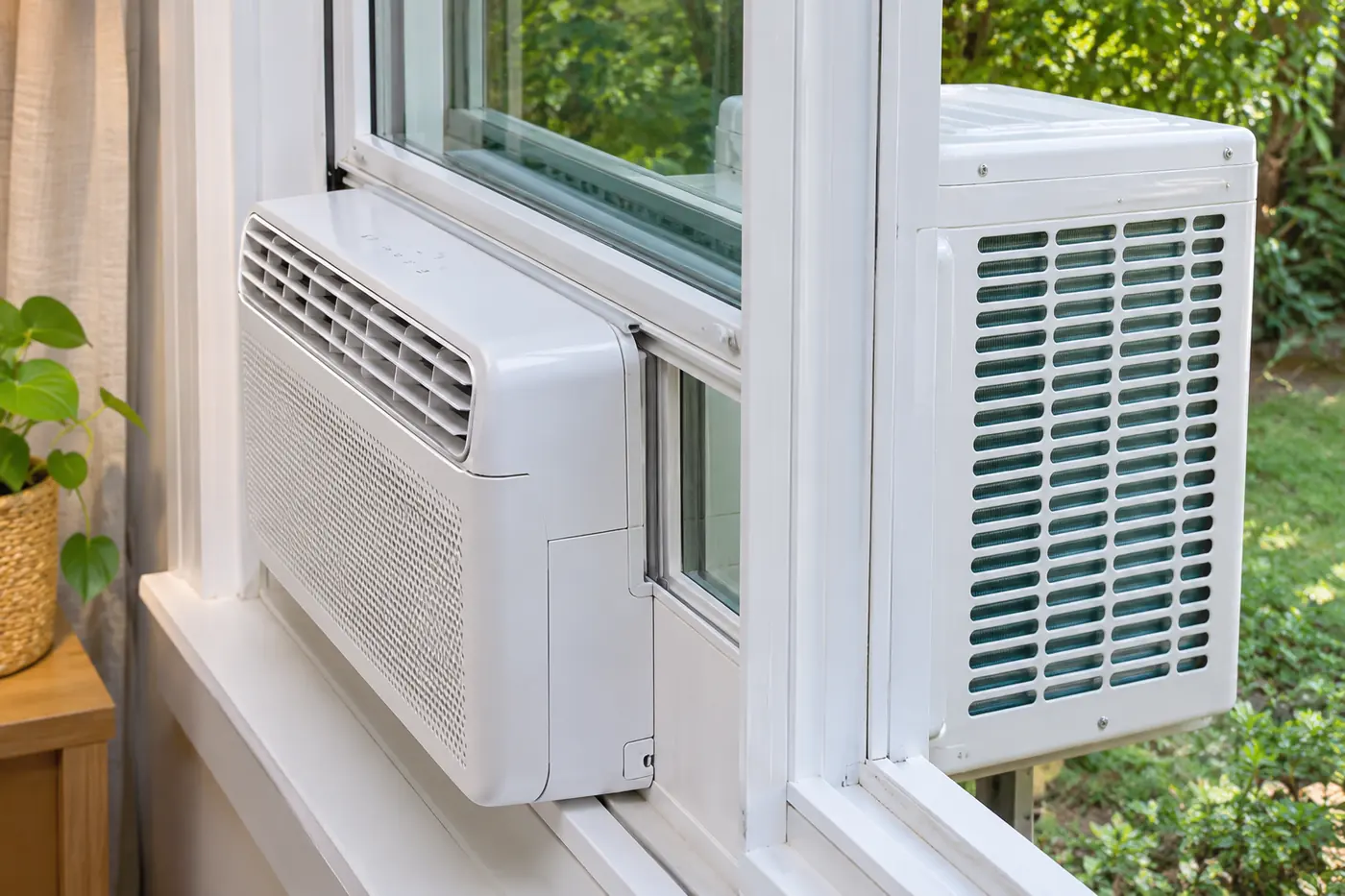
The window goes into the center channel
In a typical U-shaped design, you lift the lower sash, set the cabinet on its approved support system, and lower the sash into the U-shaped gap. The glass acts as an extra barrier between indoor airflow and the outdoor compressor. Weather seals close the gaps around the frame and sash. The outdoor section must have clear access to outdoor air; a screened porch or enclosed wall cavity can cause heat to build up.
The sash may be opened or closed after the model’s open-window brackets and restraints are installed as instructed. That does not mean every installation preserves a usable emergency exit, insect screen, or secure window lock. Check those separately.
Is U-shaped the same as an inverted-U or saddle AC?
No. These labels describe related, but different, cabinet layouts. A classic U-shaped unit has a channel through its upper middle where the sash comes down. Saddle or inverted-U models often sit across the sill with a lower center section. Both aim to put more outdoor machinery beyond the glass. For actual fit, compare the manufacturer’s cross-section and bracket requirements, not the marketing name. ENERGY STAR describes both window configurations.
Are U-Shaped Air Conditioners Quieter Than Regular Window Units?
Yes. A properly installed U-shaped window AC can be quieter indoors than a conventional window unit of similar capacity. The lowered sash places a glass barrier between the room and much of the outdoor compressor noise. A variable-speed inverter, when included, also limits loud full-speed starts and stops; our guide explains how inverter air conditioners work. You will still hear the indoor fan, and the actual sound level depends on speed and mounting.
Midea lists a minimum operating noise of 32 dBA for model MAW08U1QWT. This is a manufacturer’s minimum operating claim, not a guarantee for all sizes, fan settings, or rooms. That model also appears in the 2025 CPSC recall; verify the affected models and remedy instructions in the recall notice.

What makes a window air conditioner sound loud?
- Fan sound: Indoor air still moves through a grille, and high fan speed makes a clear rushing sound.
- Compressor sound: The compressor runs outdoors; glass and the housing reduce, but do not erase, its sound indoors.
- Vibration: A loose sash, poorly fitted bracket, or touching trim can turn a quiet unit into a rattling one.
- Water sounds: Some splashing or trickling can be part of normal condenser operation; persistent pooling or a musty odor needs different action.
When comparing two products, use measurements recorded at the same distance and operating mode, ideally low and high cooling. A 32 dBA minimum from a product page is not directly comparable to a third-party maximum reading from another room or model.
How do you make an installed U-shaped unit quieter?
First check that the bracket, sash restraints, side seals, and cabinet clearances match the manual. Add only approved foam at specified gaps; do not block intake or exhaust openings. If the sound is a new rattle, switch off the unit and inspect the sash contact and fasteners without loosening a loaded bracket. If the sound is normal fan airflow, try the lowest fan speed that still cools the room. Never solve an abnormal vibration by wedging objects under the cabinet or changing its required pitch.
ENERGY STAR identifies both variable-speed technology and the U-shaped separation as reasons a room AC can be quieter.
U-Shaped vs. Regular Window Air Conditioner: Which Is Better?
Choose a U-shaped unit when quieter indoor operation and the ability to move the window sash matter, and the exact model fits your opening. Choose a standard window unit when installation simplicity, a smaller budget, or a window that does not accept the U-shaped bracket is more important.
| Decision | U-shaped window AC | Standard window AC |
|---|---|---|
| Indoor noise | Glass separates much of the outdoor compressor sound; low noise still depends on fan, inverter, and mounting. | More cabinet and compressor sound reaches the room; some inverter models are quiet too. |
| Window operation | Many designs allow sash movement once special brackets and locks are installed. | Usually blocks normal sash movement while fitted. |
| Fit and support | Needs a compatible sash, depth, sill, and model-specific support hardware. | Typically uses a more familiar window kit, but still needs secure support. |
| Energy use | Can be efficient, especially with an inverter; compare certified CEER for the same capacity. | An efficient inverter model may match or outperform a less efficient U-shaped design. |
| Maintenance | Clean filter and outdoor coils; extra attention to channel seals, support, and drainage instructions. | Clean filter and coils; check ordinary window seals and drain instructions. |
| Typical tradeoff | More installation steps and specialized parts; model and recall checks matter. | Less complicated to fit in many ordinary windows; less open-window flexibility. |
Shape and inverter are not the same thing. An inverter changes compressor speed to match the cooling demand. A U-shape changes the cabinet’s position relative to the glass. For energy costs, compare CEER, rated cooling capacity, and estimated yearly energy use on the actual product labels, not just the cabinet shape. Energy Saver is a separate operating setting, and how Energy Saver mode works depends on the unit’s fan and compressor controls. Also check whether opening the sash lets outdoor air in: running with the window open wastes cooling energy.
Will a U-Shaped Window Air Conditioner Fit Your Window?
A U-shaped window AC fits a compatible vertical-sliding (double-hung) window when the opening, sash, sill, wall depth, and mounting bracket all meet that model’s dimensions. A horizontal sliding or crank-out window is not a direct fit for a kit approved only for double-hung windows. Measure the clear opening and bracket contact points—not only the cabinet width—before choosing a unit.
As a concrete U.S. Midea manual example, the installation instructions for models MAW08AV1QWT-C and MAW12AV1QWT-C call for a standard double-hung window 22–36 inches (55.8–91.4 cm) wide, with at least 13.75 inches (34.9 cm) of opening height. The documented bracket is designed for a wall depth of 3–10.5 inches (7.6–26.7 cm) in the measuring position shown in that manual. These figures apply only to the cited manual and are not universal dimensions. Both model numbers appear in the 2025 CPSC recall list. Follow the official remedy for an affected unit. Compare your chosen model’s installation drawing with the actual window measurements before ordering.

Five measurements and checks that decide the fit
- Clear inside width: Measure between the frame edges where the mounting arms sit, not the glass pane width. Confirm the manual’s minimum and maximum.
- Clear height: Open the sash and measure the free vertical opening. The U-channel also needs the correct sash thickness and contact surfaces.
- Wall and sill depth: Check how far the inner sill is from the outer face. A deep wall, projecting trim, or thick storm-window lip may stop the bracket legs from touching the intended surface.
- Outside space: Confirm the exterior section and support legs will not hit a railing, screen, awning, grille, or a neighbor’s space. Leave the ventilation clearances required by the manual.
- Sash and structure: Confirm the opening is double-hung if the model requires it. Check the sill is solid, the sash moves safely, and fasteners are permitted in the frame.
Can you put a U-shaped AC in a sliding or casement window?
Not with a double-hung-only installation kit. A horizontal slider moves side to side instead of lowering into the U channel. A crank-out casement also lacks the moving sash the cabinet uses. A custom wood panel does not replace tested support hardware or make the installation safe. Use a manufacturer-approved slider/casement solution or a unit designed for that opening.
Apartment and safety check: Get permission before drilling or attaching hardware if required by your building. A window AC can also affect egress, security, and access to a fire escape. If the installation blocks a required exit or cannot be anchored into sound material, choose another location or system.
How to Install a U-Shaped Window Air Conditioner
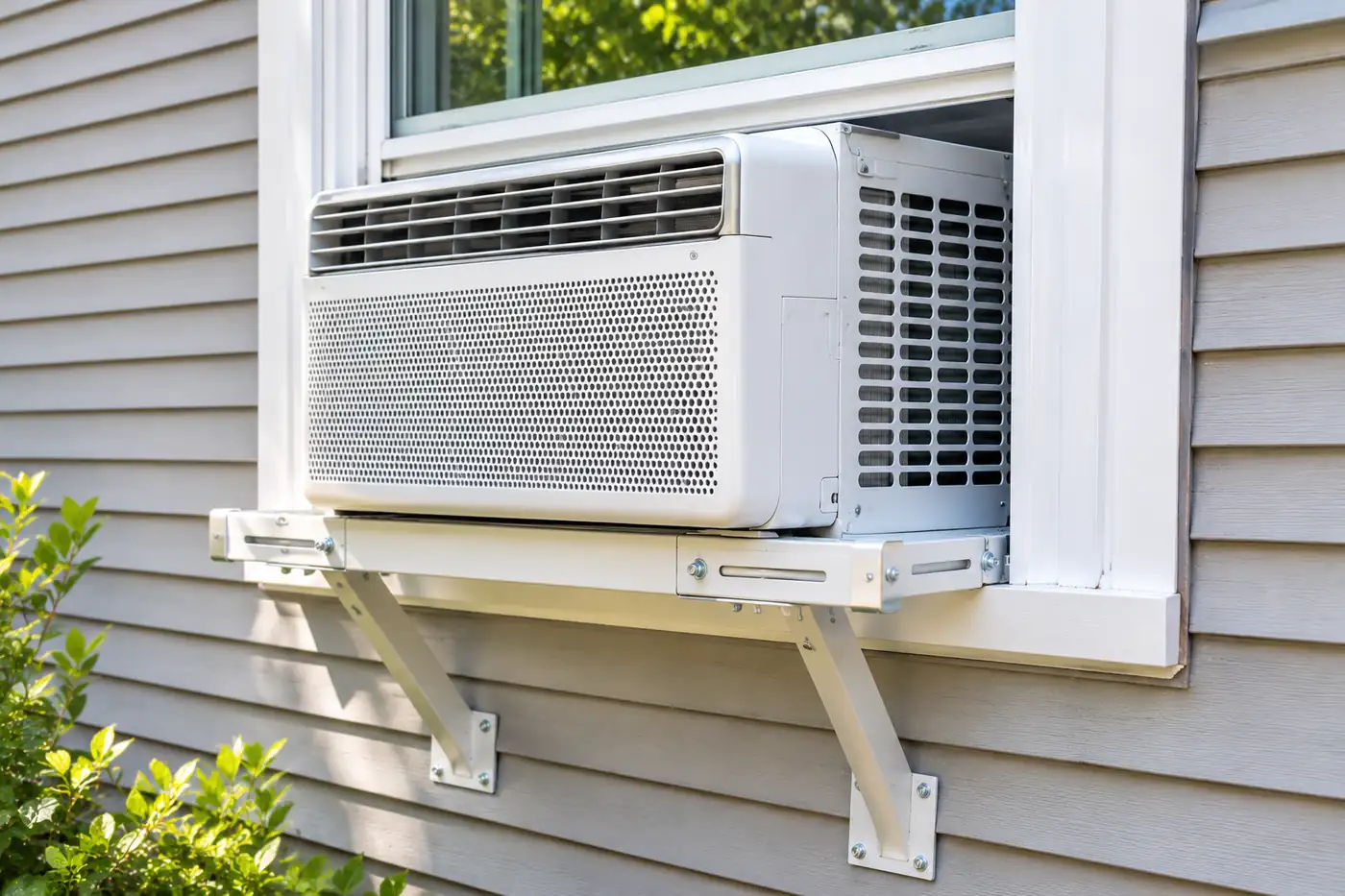
For a bracket-mounted U-shaped AC, secure the specified support bracket, set the cabinet onto it with help, lower and restrain the sash in the U channel, seal the opening, and test the installation. The seven steps below explain what each operation achieves. Use the hardware locations and level position shown for the actual model; the cited Midea instructions call for two people and the supplied parts.
- Confirm the model and recall status before mounting. Find the model label, manual revision, bracket list, and current safety notices. Do not install an affected unit using an outdated drainage remedy.
- Clear and inspect the window. Clean the sill; check for rot, loose trim, storm-window interference, and restrictions outside. Measure the width, opening height, and bracket reach again.
- Lay out the supplied hardware. Match extension arms and support legs to your window dimensions. If a required screw, pin, bracket, restraint, or sealing strip is missing, stop and obtain the correct part.
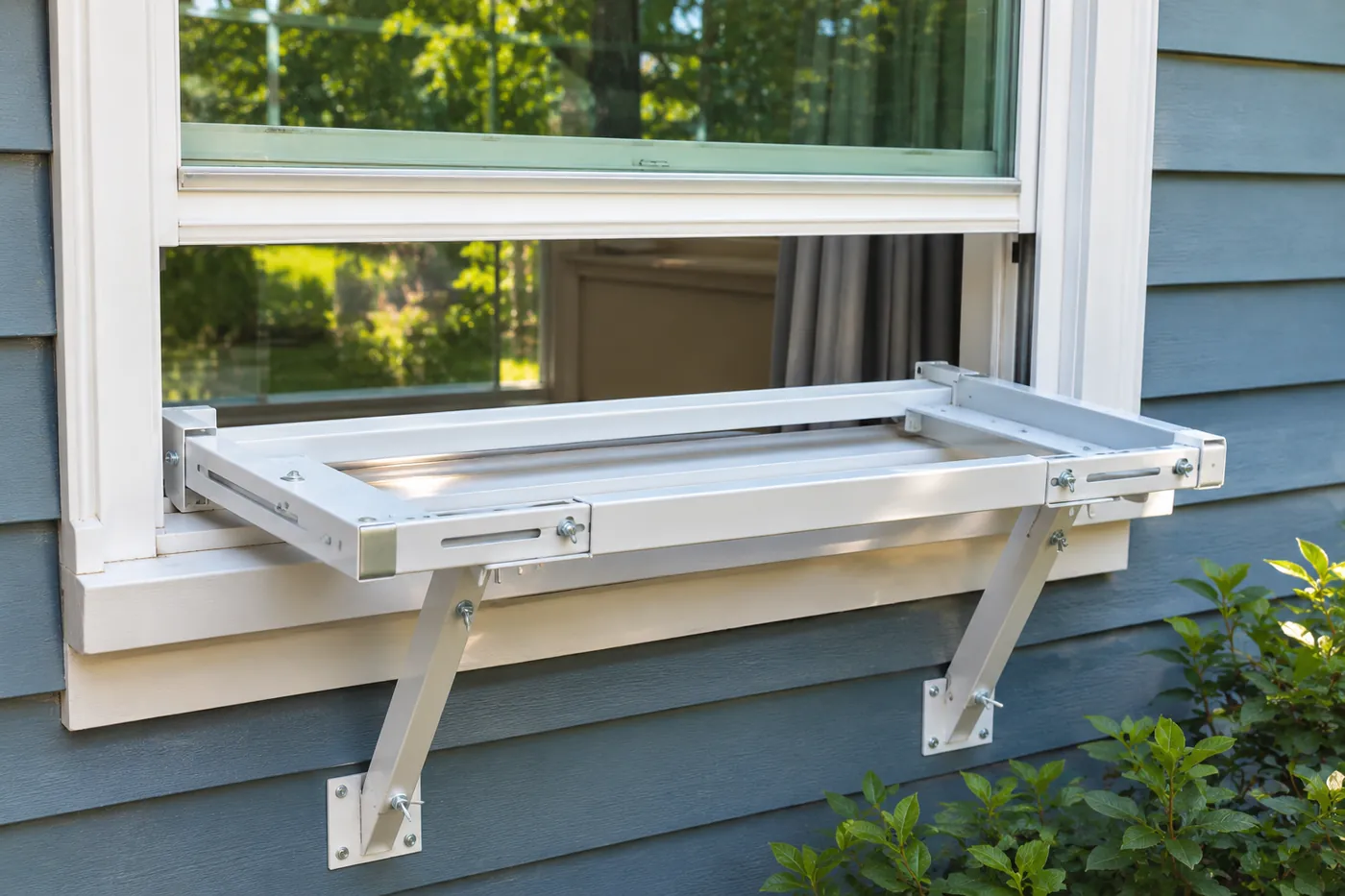
- Secure the support bracket. Assemble the window-width extension and exterior legs according to the manufacturer diagrams. Use the specified attachment points and fasteners; do not rely on the sash or foam to support the weight. Verify the specified level or slight outward pitch with a bubble level.
- Lift the unit into position with help. Put the cabinet on its approved supports, center the U channel under the sash, and lower the sash carefully into the channel. Do not leave the cabinet unattended during installation.
- Install all open-window brackets and sash restraints. Use the provided parts and correct screws, so moving the sash cannot dislodge the unit. Add manufacturer-specified seals and weather stripping; do not block outdoor vents or drainage paths.
- Connect power and run a controlled test. Plug into a suitable grounded outlet with the correct voltage and circuit rating. Do not use a power strip or extension cord. Run cooling, check stable mounting, measure indoor temperature change, listen for rattles, and check for unwanted water entry.
Does a U-shaped air conditioner require drilling or a support bracket?
For the Midea manual example, yes: the supplied bracket, screws, open-window brackets, and other specified hardware are part of the approved installation. The manual’s tool list even includes a drill. Claims that any U-shaped AC installs with no drilling or with no bracket are not safe general instructions. Other designs have different mounting systems, so use the hardware specified for that model instead of swapping generic parts.
How much should a U-shaped AC tilt outside?
There is no safe universal backward-tilt measurement for every U-shaped model. Put a bubble level on the bracket or cabinet alignment surface identified in that model’s installation diagram. Adjust the approved supports until the indicated level or outward pitch matches the diagram, then verify that both support feet are seated and the sash restraints hold securely. If the unit is out of position, correct the supports rather than forcing the sash downward. For any unit covered by the 2025 Midea recall, use the official remedy and leveling directions in place of older drain-plug advice.
Which U-Shaped AC Size Is Right: 8,000, 10,000, or 12,000 BTU?
For a typical room with an 8-foot ceiling, start with 8,000 BTU/h for 300–350 sq ft, 10,000 BTU/h for 400–450 sq ft, or 12,000 BTU/h for 450–550 sq ft. These ENERGY STAR room-size starting points answer the capacity question; then adjust for direct sun, insulation, ceiling height, occupants, and the window’s physical fit. A higher BTU rating is not automatically better for a small bedroom.
The ENERGY STAR room-size chart also lists 9,000 BTU/h for 350–400 sq ft; do not automatically jump to a much larger available model. The chart matches floor area to a preliminary capacity range. Confirm the actual room load and whether the U-shaped cabinet and bracket fit.
| Room floor area | Guide cooling capacity | Practical choice |
|---|---|---|
| 150–250 sq ft (14–23 m²) | 6,000 BTU/h | A 6,000-BTU model if one is available and approved for the window; do not force an 8,000-BTU unit into a small room. |
| 300–350 sq ft (28–33 m²) | 8,000 BTU/h | Use an 8,000-BTU model with suitable window hardware; verify its recall status and any completed remedy before purchase or use. |
| 400–450 sq ft (37–42 m²) | 10,000 BTU/h | Check a 10,000-BTU model with the correct window kit and rating. |
| 450–550 sq ft (42–51 m²) | 12,000 BTU/h | Consider a 12,000-BTU model if the heat load and installation conditions agree. |
What changes the capacity you need?
Measure floor area as length × width in feet, then check direct sun, insulation, ceiling height, people, cooking heat, and whether doors connect to another room. For example, a 15 × 20 ft room is 300 sq ft, so 8,000 BTU/h is a reasonable chart starting point. If west-facing glass brings strong afternoon sun, that starting point may need adjustment. If it is a cool shaded room, the same unit may be oversized.
The heat you need to remove must match the capacity at your conditions. A 12,000-BTU model is not automatically better for a 200-sq-ft bedroom: it may cool quickly without controlling moisture well. ENERGY STAR specifically warns against oversizing room units. Our air conditioner sizing guide explains how to assess room load when floor area alone is not enough.
Should you choose an inverter and smart controls?
Choose an inverter when steady room temperature, low-load noise, and reduced on/off cycling matter. Compare the model’s labeled CEER and electrical requirements before comparing price. Smart schedules, app control, and voice assistants are convenience features—not substitutes for correct capacity, a secure installation, or maintenance. Check that the chosen model actually has each feature; they are not universal to all U-shaped units.
What Should You Know About Drainage, Mold, and Recalls?
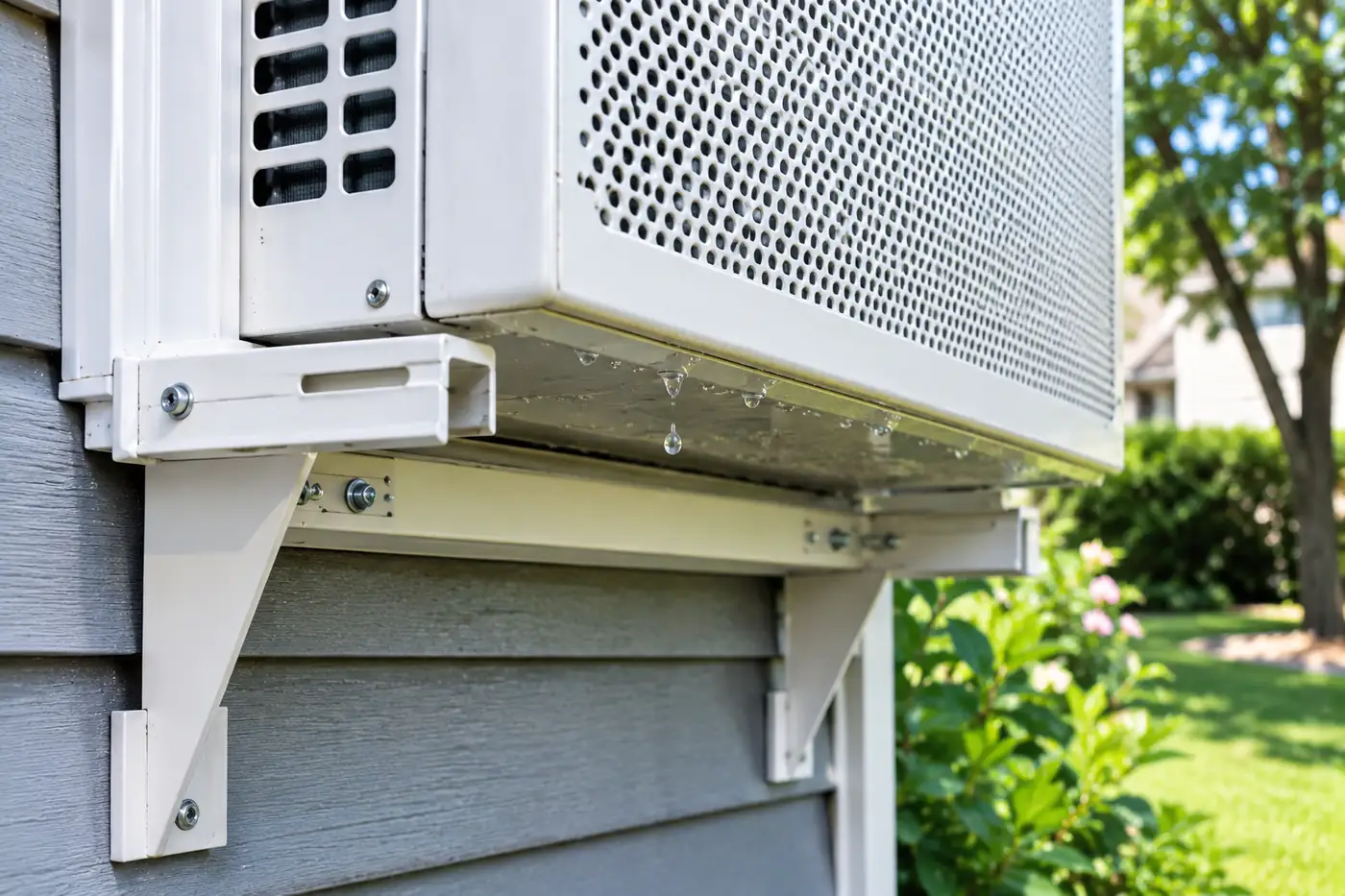
Condensation inside a working window AC is normal; indoor leaks, persistent pooling, and a musty odor need attention. Moisture collects on the cold evaporator coil and follows the unit’s designed water path. Stop using a unit with indoor water near electrical parts or suspected mold, and check whether it is included in an official recall. For affected Midea U/U+ models, arrange the official repair or eligible refund rather than drilling a drain hole or removing the original plug as a shortcut.
What should owners of a recalled Midea U-shaped AC do?
Contact Midea through the CPSC-listed recall channel for a free repair or an eligible refund. The announced repairs may involve a new drain plug and level, depending on model. Follow the official instructions about use while waiting for a repair. The recall can apply to units sold under other brand names, and newer listings or model revisions should be checked rather than assumed covered or excluded.
There is a real instruction conflict to watch for. An older Midea U manual says its original drain plug should remain in place during normal operation and be removed for storage drainage. That sentence is not a replacement for the official recall repair instructions for affected products. Follow the latest official safety notice for your model.
What if the unit rattles, drips indoors, or smells musty?
| What you notice | Check first | Next action |
|---|---|---|
| Rattle when cooling starts | Window contact, loose trim, bracket position, and sash locks | Turn off; inspect without loosening load-bearing parts; correct only as the manual specifies. |
| Water on indoor sill or wall | Seals, correct cabinet pitch, condensation route, blocked outlet, or rain entry | Stop use if water is near wiring; fix installation and follow model-specific drain directions. |
| Persistent musty smell or visible mold | Filter, accessible water areas, and recall status | Stop use and follow recall/manufacturer instructions; arrange appropriate service rather than covering the smell. |
| Weak cooling on a hot day | Dirty filter, blocked outdoor air path, door/window opening, sun load, and capacity | Clean the accessible filter, restore outside clearance, and check room conditions before assuming refrigerant failure. |
| Insects or outdoor air leaking in | Foam at the sash, side channels, screen arrangement | Fit approved sealing parts without covering vents or defeating window restraints. |
As routine care, wash or replace the air filter on the interval specified by the manual, keep outdoor openings clear, and inspect the sash seals after strong weather or seasonal removal. Never open a sealed refrigerant circuit as a DIY cleaning task.
When Is a U-Shaped Window AC the Wrong Choice?
Skip a U-shaped window AC if its approved mounting system cannot fit, if the window is needed as a required escape route, or if the indoor and outdoor clearances cannot be maintained. A quiet model with the wrong window is not a good purchase.
- Horizontal sliding or casement window: Use a purpose-built casement/slider room AC or another manufacturer-approved arrangement rather than adapting a double-hung bracket by guesswork.
- Very narrow or shallow window: Look at the actual installation opening requirements first. A narrow cabinet does not automatically have a narrow bracket span.
- Renter with a no-drill restriction: Ask for approval or select a method and product explicitly approved without those fasteners. Do not omit screws from a kit that requires them.
- Outdoor vent faces an enclosed area: Move the unit or use another cooling approach; exhausting heat into a closed porch or cavity reduces performance.
- Window security, screen, or egress cannot be solved: Choose a different location or system instead of relying on sash movement alone.
Other options have their own tradeoffs. A dual-hose portable AC can work without a heavy window-mounted cabinet but still needs a sealed exhaust kit and floor space. A mini split air conditioner leaves the window free, but it requires separate indoor and outdoor units, a suitable mounting location, and professional refrigerant and electrical work. For projects where a wall-mounted system is feasible, the Airproz R32 inverter split AC series is one example of that alternative—not a U-shaped window unit. Its published specifications list 220–240 V / 50 Hz; check room load, local electrical compatibility, and installation conditions before shortlisting it. Our AC types guide covers these choices in more detail.
Frequently Asked Questions
These answers cover installation and ownership details that often change the right choice.
Can you still open the window with a U-shaped air conditioner installed?
With many U-shaped models, yes—after all required open-window brackets, sash restraints, and stops are installed exactly as directed. Check security, the window screen, and emergency exit requirements. Opening the sash while cooling lets outdoor heat and humidity into the room.
Can a U-shaped air conditioner fit a horizontal sliding window?
Not when its installation manual approves double-hung windows only. A side-sliding panel cannot simply replace the sash that fits into the U channel. Choose a model with a tested slider kit or a different AC type.
Does a Midea U-shaped air conditioner need a support bracket?
Yes for the Midea U manual models discussed here. The supplied support bracket, extension arm, open-window hardware, and specified screws are required. Match the exact kit to your model and window width; do not substitute generic parts.
Does a U-shaped AC need to lean backward to drain?
Use the level or outward pitch shown in the current instructions for that exact model. Do not impose a universal angle. If your unit is part of the 2025 Midea recall, follow the official recall remedy and leveling guidance rather than older general drain-plug advice.
How can I check if my Midea U-shaped air conditioner was recalled?
Read the complete model number from the unit label and compare it with the CPSC June 5, 2025 recall list. Then contact Midea through the official recall channel to confirm eligibility and the correct repair or refund process. The model name alone may not answer every identification question.
Are all U-shaped air conditioners inverter models?
No. U-shaped describes the cabinet and window channel; inverter describes variable compressor speed. Check the exact model’s specifications and CEER rating. A shape alone does not prove energy savings or guarantee any noise level.
Bottom line: A U-shaped window air conditioner makes the most sense when a compatible window, secure mounting system, and a need for lower indoor noise all come together. Match cooling capacity to the room, use the exact installation manual, and verify the model’s recall status and follow the official remedy and current drain instructions.
If your window or building cannot accept a secure U-shaped bracket, select a suitable slider/casement AC or a different system instead. For projects better suited to a split system, see Airproz air conditioner options or contact our team with the room load and installation conditions.