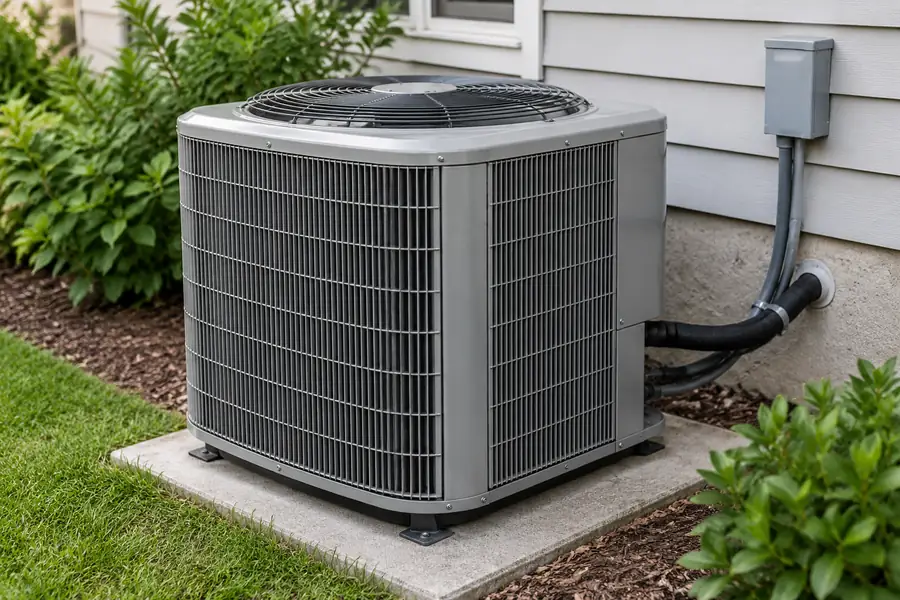
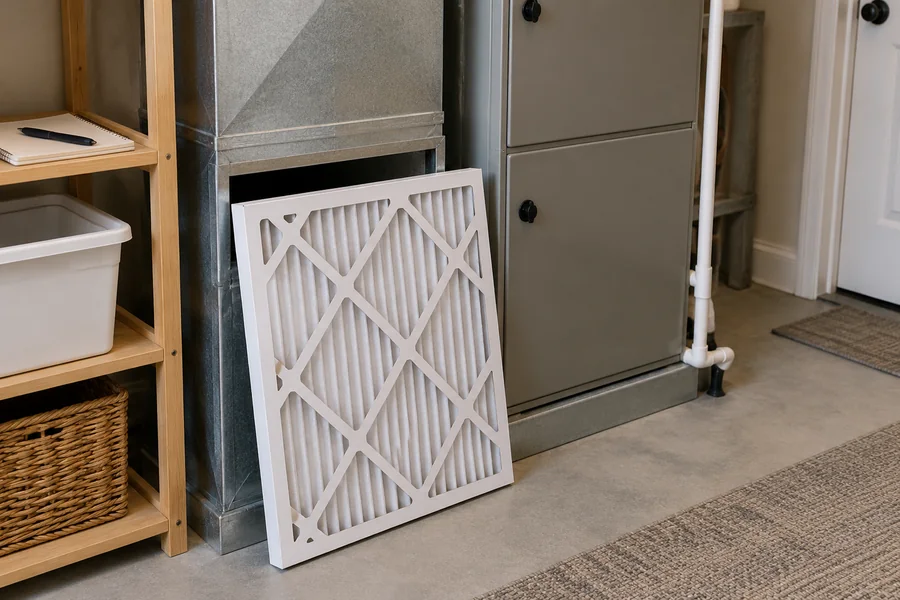
Based on Bryant’s published U.S. estimates, replacing an indoor evaporator coil costs about $900–$2,500 installed, while an outdoor condenser coil costs about $900–$2,800 installed, including typical parts and labor. The exact bill changes with the failed part, approved replacement fit, accessibility, refrigerant work, and warranty coverage. Trane reports some more complex evaporator-coil repairs reaching $5,000+. Bryant and Trane describe different repair scopes. Use these figures as a starting budget and confirm the job-specific price in a local written quote.
How Much Does Air Conditioner Coil Replacement Cost in 2026?
Based on Bryant’s published U.S. estimates, replacing an air conditioner evaporator coil costs about $900–$2,500, while replacing an outdoor condenser coil costs about $900–$2,800, including typical parts and labor. More complex evaporator coil repairs can reach $2,000–$5,000 or more in Trane’s 2026 examples. Your final cost depends on the coil type, system compatibility, labor, refrigerant work, and warranty coverage. These are different service scopes; the outdoor coil is not the complete outdoor condensing unit.
| What is being fixed | Published U.S. cost | What the figure represents | Source and limits |
|---|---|---|---|
| Indoor evaporator coil | $900–$2,500 | Typical parts and labor | Bryant AC parts guide; publication date not shown |
| Outdoor condenser coil | $900–$2,800 | Typical parts and labor; coil only, not entire outdoor unit | Bryant AC parts guide; publication date not shown |
| Evaporator jobs with broader or complex scope | $2,000–$5,000+ | Varies by equipment and labor; warranty status changes customer payment | Trane; April 16, 2026 |
| Higher-cost condenser coil repair | $1,000–$4,000+ | Repair-price guide; scope must be checked against the written estimate | Trane AC repair guide; May 4, 2026 |
| Refrigerant leak repair and recharge | $300–$1,500 | General leak service, not necessarily replacing a coil | Bryant AC parts guide; typical parts and labor |
| Coil cleaning, not replacement | $100–$400 | Cleaning a dirty intact coil, not fixing a refrigerant leak | HomeGuide service reference; local scope varies |
Use the range for the repair you are considering. Build your budget around the included coil, labor, refrigerant work, testing and local fees. Warranty credits, access and region can change the installed total. For work outside the United States, compare local installed quotes for the same defined job.
When comparing a published figure with a local estimate, check which part is included, whether labor and refrigerant work are included, and the source’s job scope. The Bryant, Trane, and HomeGuide references are linked in the table above.
| Price shown on a quote | What it means | What to ask |
|---|---|---|
| Part-only price | Replacement coil or assembly, without the full repair visit | Is the case, drain pan or metering device included? |
| Labor or service-only price | Time and services without the full part cost | Does it include refrigerant work, testing and travel? |
| Installed total | A defined combination of parts and services | What is excluded, and is any warranty credit already deducted? |
What Does Evaporator Coil Replacement Cost?
An evaporator coil replacement costs about $900–$2,500 installed in Bryant’s U.S. price reference, including typical parts and labor. Trane’s April 2026 guide gives $2,000–$5,000+ for broader and more complex repair examples. The final bill changes with access to the indoor coil, the approved replacement assembly, labor, refrigerant work, and warranty coverage.
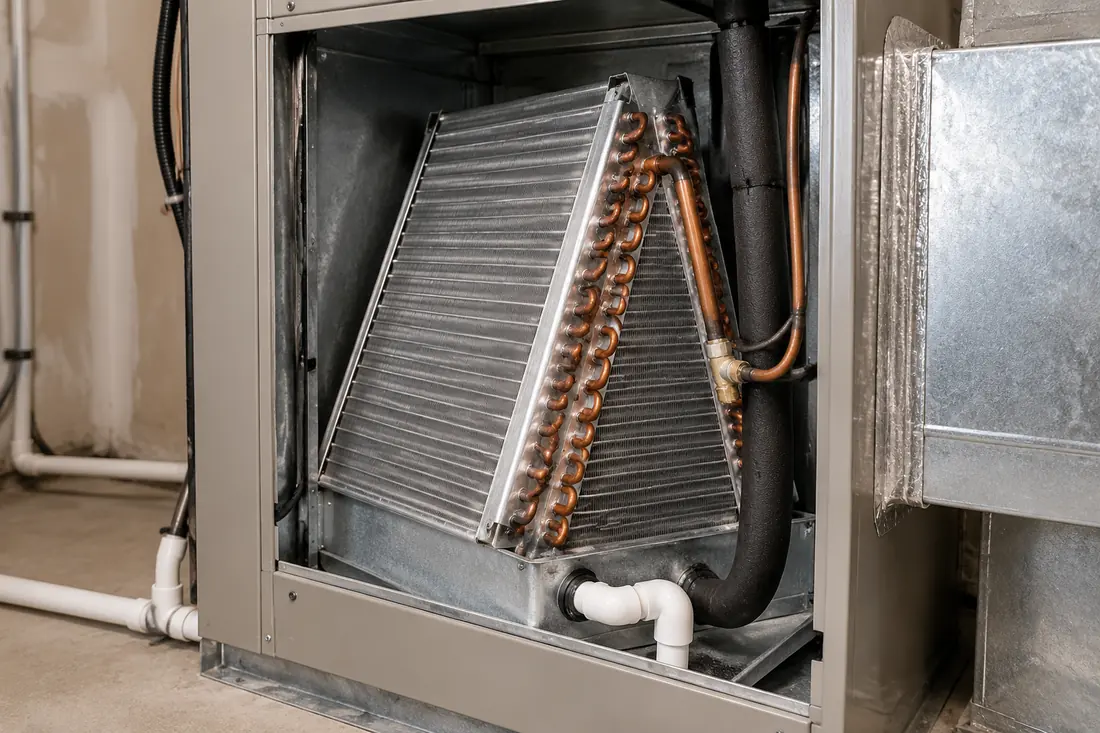
The evaporator coil is normally in the indoor air handler or above a furnace. It takes heat from indoor air during cooling. A technician may need to open the cabinet, recover refrigerant, disconnect and reconnect lines, replace a matched coil, test the sealed circuit, evacuate it as required, restore the correct charge, and check cooling and drainage. Each of these tasks adds labor and materials.
Why indoor location changes labor
A coil in a clear utility room is easier to reach than one in a hot attic, cramped closet, or congested ceiling. If the replacement does not fit the existing case or drain pan, cabinet work can increase the bill. Some coils are sold with a case; others use the existing cabinet. A cheaper uncased part is not automatically the cheaper installed option.
| Installation condition | Why cost can change | Ask before approving |
|---|---|---|
| Cased coil in a matching cabinet | Existing casing and connections may make the work more straightforward | Is the exact cased assembly approved for my air handler? |
| Uncased coil fitted into an existing cabinet | Lower part price may require extra fitting or sheet-metal work | Are the pan, mounting, metering device and fitting work included? |
| Attic, tight closet or congested indoor space | Safe access and disassembly can add labor | Is access work included in the fixed price? |
Does a parts warranty make it inexpensive?
Not necessarily. A parts warranty may cover the coil while labor, refrigerant service, testing and other charges still make the repair expensive. Shipping and taxes may also apply under the warranty and written quote. Trane’s April 2026 guide reports that some covered evaporator-coil repairs still cost $2,000 or more. Check the manufacturer’s confirmed credit against the remaining charges.
- Check coverage: give the service contractor the indoor and outdoor model and serial numbers and any warranty registration details.
- Check the part: ask which replacement coil is approved and what amount the manufacturer will credit.
- Check your payment: require separate written charges for labor, refrigerant service, testing, shipping and any warranty-processing fee that applies.
Illustrative warranty calculation: with other charges unchanged, a $750 parts-warranty credit reduces a $2,100 installed repair total to $1,350. Check the confirmed credit and remaining balance on your written quote.
What Does Condenser Coil Replacement Cost?
Replacing only an outdoor condenser coil costs about $900–$2,800 installed in Bryant’s U.S. reference, including typical parts and labor. Trane’s broader repair guide includes some jobs reaching $4,000+. These figures are for coil-related work, not a complete outdoor condensing unit or matched indoor/outdoor system. Check exactly which equipment the contractor will replace before comparing quotes.
| Quoted scope | What is replaced | Why it matters |
|---|---|---|
| Condenser coil only | The outdoor heat-exchange coil assembly | Keeps the remaining outdoor equipment if sound and approved for repair |
| Complete outdoor condensing unit | Outdoor machine including its compressor, fan, controls and coil | A larger equipment change with different installation and matching requirements |
| Matched indoor/outdoor system | The relevant indoor and outdoor equipment as a compatible combination | A different project cost and performance basis; verify sizing and equipment match |
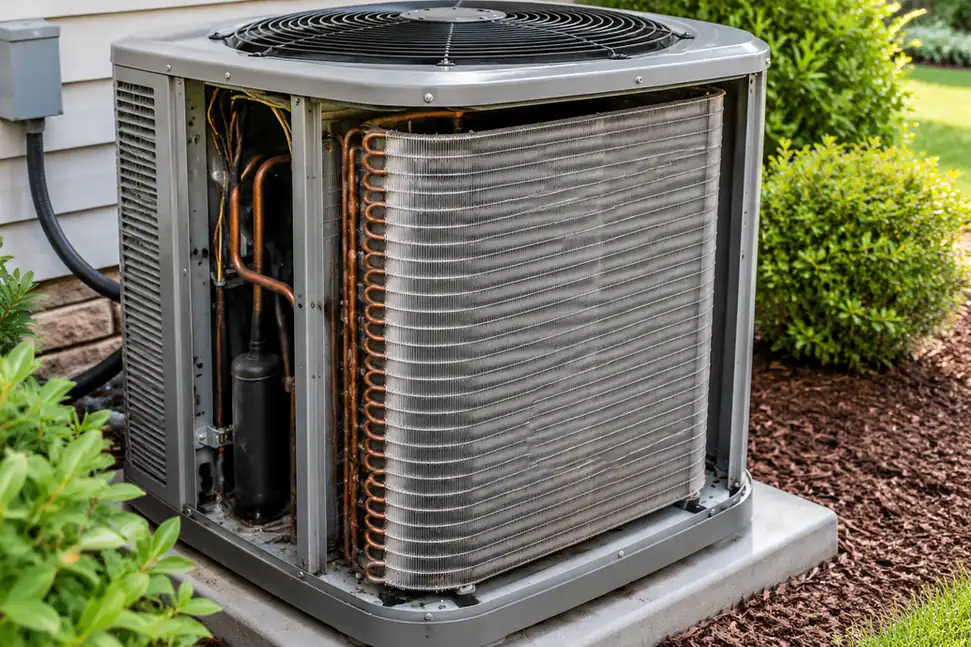
The outdoor coil rejects heat into outdoor air when an air conditioner is cooling. It sits around or within the outdoor cabinet and is exposed to leaves, dust, salt air, and weather. A crushed fin or dirty surface does not prove the coil must be replaced. But a confirmed refrigerant leak or extensive corrosion may make replacement sensible when the right assembly is available.
Why the outdoor job can be harder than it looks
Outdoor coil replacement can take extra labor when a coil is fitted tightly inside its cabinet or requires specialized disassembly. Some systems have a microchannel design that needs a specific replacement assembly and service approach. Before approving the job, confirm whether the quote covers the coil alone, the complete outdoor condensing unit, or a matched indoor-and-outdoor system.
Can you change the outdoor coil without changing the indoor coil?
Sometimes, yes—when the manufacturer supports the exact replacement coil and the rest of the outdoor unit is sound. For a coil-only repair, ask for the manufacturer’s approved replacement part for your outdoor model and refrigerant. If the indoor-and-outdoor equipment pairing changes, request the manufacturer’s matching documents and, where applicable, the AHRI Certified Reference Number. AHRI explains indoor/outdoor system matching for certified performance. Matching tonnage alone is insufficient: the equipment combination and approved refrigerant also matter.
Why Do Air Conditioner Coil Quotes Vary So Much?
Air conditioner coil replacement quotes vary mainly because the replacement part, labor and access, refrigerant service, testing, and warranty coverage differ from job to job. For example, a coil that fits an accessible cabinet can cost less to install than one that needs extra disassembly or piping work. Compare these items separately when two quotes look far apart.
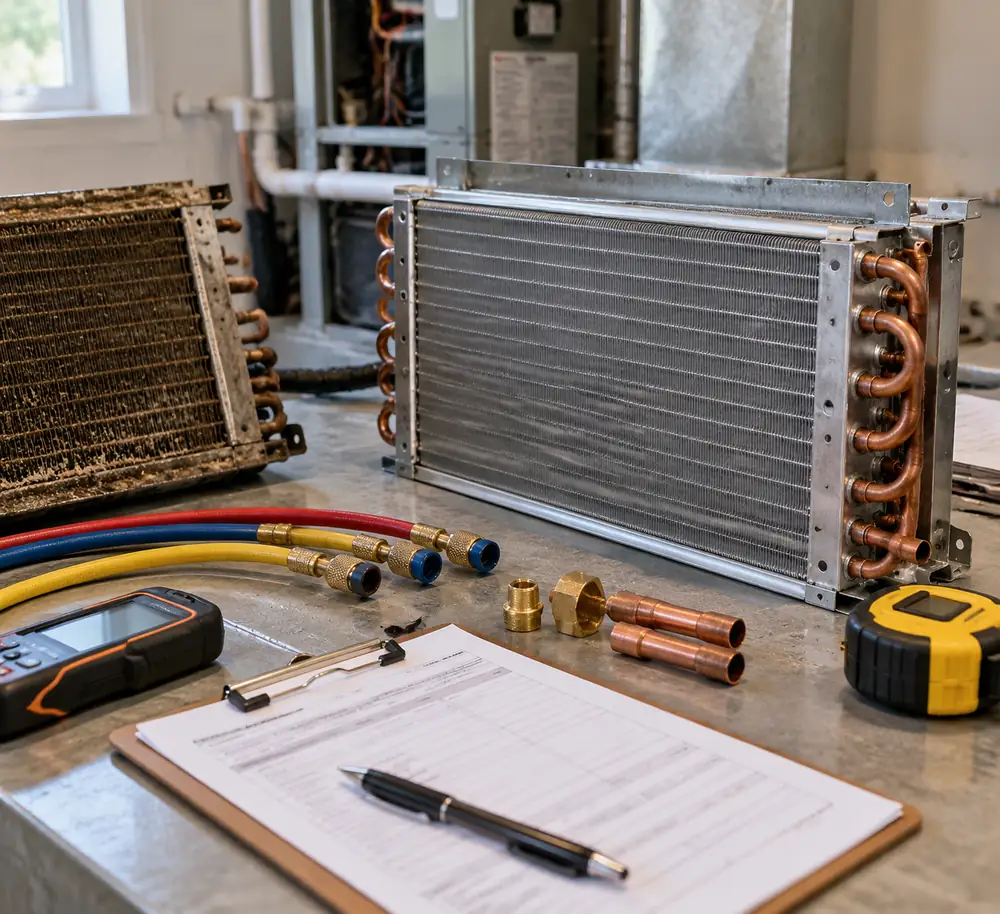
| Quote item | What to check | How it affects the decision |
|---|---|---|
| Replacement coil | Exact model or approved equivalent; case included? | A low parts price is irrelevant if the coil does not fit |
| Labor | Access, removal, piping work, commissioning | Attics, tight cabinets and extensive disassembly add time |
| Refrigerant work | Recovery, quantity needed, refrigerant type | A leak and low charge can create extra service costs |
| Materials and testing | Fittings, filter-drier as required, pressure test, evacuation | A quote omitting these may not be comparable |
| Warranty | Parts allowance, labor coverage, exclusions | Cuts part cost only if eligibility and scope are confirmed |
| Site and timing | Region, emergency call, disposal, taxes | Two jobs can differ even with the same coil |
Cooling capacity, often expressed in tons, helps identify the coil size but does not set the installed price. A 3-ton coil in a cramped attic may cost more to replace than a larger coil with clear access. Check the equipment label and the manufacturer’s approved replacement part. An R-454B or R-32 component cannot simply be substituted into an older R-410A system. The U.S. EPA explains refrigerant compatibility restrictions for equipment not designed for mildly flammable refrigerants. Older R-410A systems may still be serviced with manufacturer-approved parts made for that equipment.
A complete-cost example you can audit
Illustrative example: a $2,100 out-of-warranty evaporator coil replacement, itemized below.
| Example charge | Assumed amount |
|---|---|
| Approved replacement coil | $750 |
| Technician labor | $850 |
| Refrigerant service | $300 |
| Leak test and other materials | $125 |
| Disposal / other job fees | $75 |
| Illustrative installed total | $2,100 |
The method is installed total = part + labor + refrigerant work + testing/materials + local fees − confirmed warranty credit. Here, $750 + $850 + $300 + $125 + $75 = $2,100. With a full $750 parts-warranty credit and all other charges unchanged, the example payment becomes $1,350. Subtract only discounts or warranty credits confirmed on your written quote.
Compare the full installed total, not just the starting price. Example: both quotes cover the same repair, with identical taxes, access requirements and warranty terms. Their itemized totals differ:
| Illustrative quote | Advertised amount | Missing items | Comparable total |
|---|---|---|---|
| Quote A | $2,000 | None: coil, labor, refrigerant work and testing are included | $2,000 |
| Quote B | $1,750 | $450 refrigerant work + $250 testing | $2,450 |
Quote B starts $250 lower but ends $450 higher for the same work. Ask for the full scope, exclusions and any confirmed warranty credit before choosing.
How Much Does an Air Conditioner Coil Leak Repair Cost?
A confirmed coil leak can sometimes be repaired at an accessible joint, but extensive corrosion or multiple pinhole leaks may require coil replacement. Bryant’s $300–$1,500 U.S. estimate covers general refrigerant leak repair and recharge, not a fixed price for repairing a leaking coil tube. If the coil must be replaced, use the evaporator or condenser installed-cost ranges above to plan the budget for the exact approved part. Warm air, icing or water around an AC can have several causes, so ask a qualified technician to confirm the leak location before approving the work.
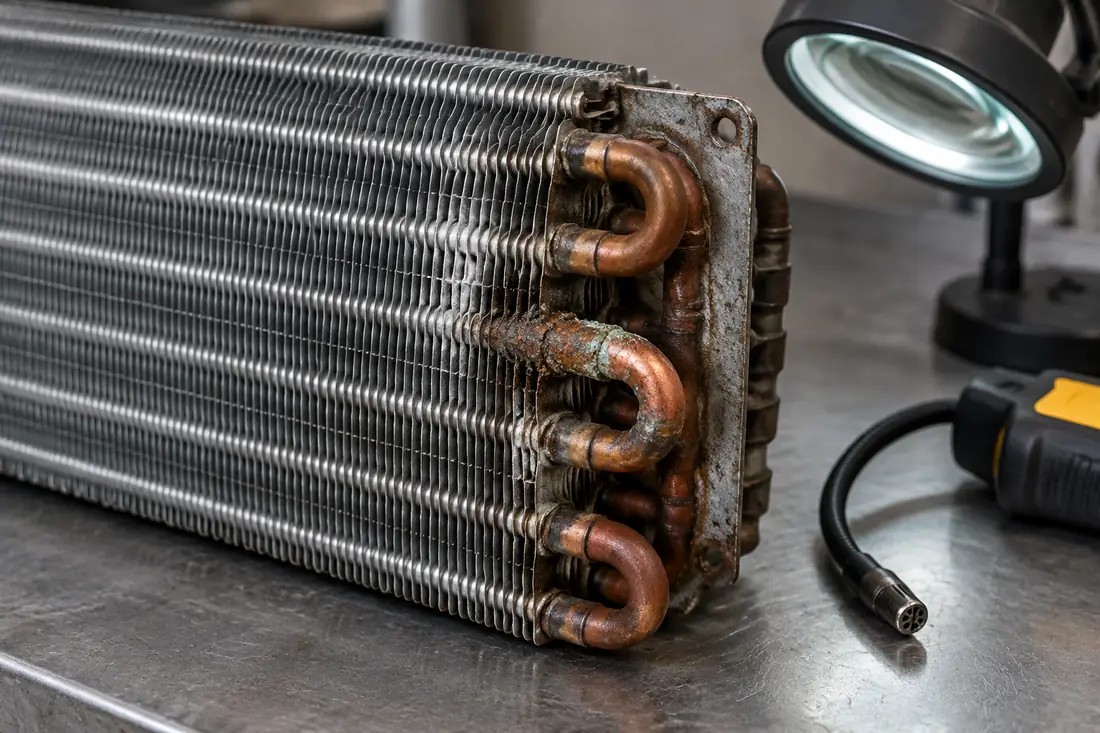
Long runtime, high energy use, ice or water near the indoor unit can also result from a dirty filter, blower fault, blocked drain or refrigerant-feed problem. A qualified technician can separate these causes from a confirmed coil leak. See our AC system freezing guide to understand why ice alone does not prove the coil is leaking.
Repair, clean, or replace?
Clean the coil when dirt is the confirmed problem and its tubing is intact. Consider a manufacturer-approved repair for a localized, accessible leak. Replace the coil when extensive damage or multiple leaks make a lasting repair impractical. Confirm the cause before choosing the work.
- Record the symptom: note when cooling fails, where ice or water appears, and whether airflow is weak. Do not assume these signs identify a leaking coil.
- Locate the cause: ask the qualified technician what inspection or test found a tube leak, connection leak, airflow fault, or drain issue.
- Choose and verify the work: compare cleaning, an approved repair, and replacement only after the cause is known; request appropriate post-repair checks.
| Confirmed finding | Reasonable next step | What should be verified afterward |
|---|---|---|
| Fins and coil surface are dirty, tubing is intact | Clean by an appropriate method | Normal airflow and heat transfer |
| A localized accessible joint leaks | Ask whether a durable manufacturer-approved repair is feasible | Leak check and normal operation |
| Pinhole leaks or broad corrosion in tubing | Compare coil replacement against full-system replacement | Correct matched part and leak-free system |
| Coil is frozen but no leak confirmed | Diagnose airflow, refrigerant flow, and controls before choosing a part | Cause corrected; no repeat icing |
| Water at indoor unit | Check drain pan, drain line, and condensate route | Drainage works and water stops |
Repeatedly adding refrigerant without repairing a confirmed leak leaves the problem unresolved. Coil repair and replacement involve regulated refrigerant handling. In the United States, the EPA’s Section 608 technician rules apply to service activities that may release refrigerant, and intentional venting is generally prohibited. Have a qualified HVAC technician handle refrigerant recovery, leak repair, testing and system commissioning.
Is It Worth Replacing the Coil or the Whole AC?
Replace the coil when the fault is confirmed, an approved part is available, and the compressor and other equipment have useful remaining life. Compare a complete new system when major faults recur, suitable parts are difficult to obtain, or several costly repairs are needed. Use equipment condition, total installed quotes, warranty coverage and parts availability to make the choice.
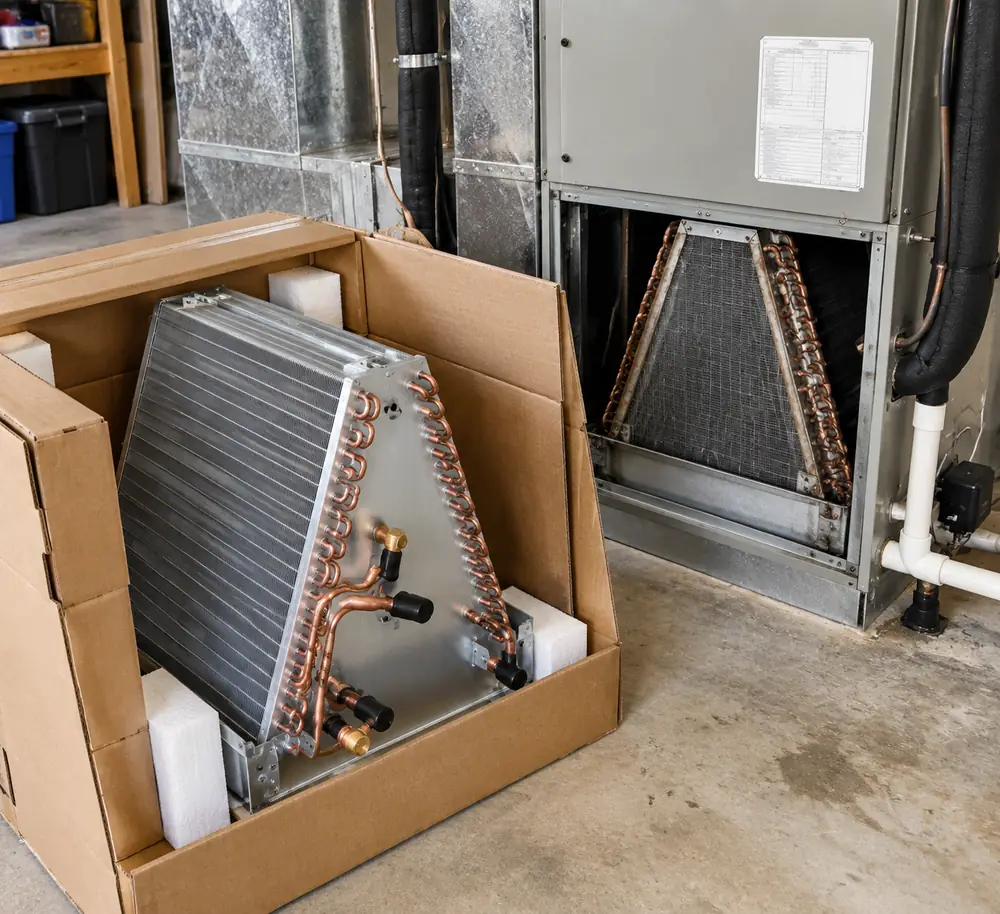
Start with the total installed price of both options. For example, suppose a sound 7-year-old system needs a $2,100 coil replacement, while a complete, correctly sized new system costs $7,000 installed. The coil job is 30% of the alternative, so repair may be sensible if the contractor confirms that the rest of the equipment is healthy. In another example, an aging system needs a $4,500 coil repair and has a suitable full replacement quote of $6,800. The repair is about 66% of replacement, making the additional investment in a matched new system worth considering. Apply the same comparison to your own quotes, equipment condition and remaining useful life.
Request two complete written options when the repair is expensive: (1) an approved coil replacement that returns the existing AC to normal operation and (2) a correctly sized complete-system replacement with installation and commissioning included. Compare remaining warranty, other known faults, future parts support, expected downtime and any documented running-cost difference. A younger, otherwise healthy system often favors repairing one failed coil; repeated major faults and poor parts availability can favor replacement.
| Your situation | Usually worth considering first | Important exception |
|---|---|---|
| Younger system, one confirmed coil failure, part in stock | Matched coil replacement | Multiple other faults or an unusually high quote |
| Coil covered by parts warranty | Compare warranty replacement first | High labor/refrigerant charges may still change the result |
| Old unit with several breakdowns | Quote full matched system as well | A small affordable repair can still be appropriate |
| Replacement coil no longer available | Check manufacturer-approved alternatives or full equipment change | Never fit an unapproved coil just because the dimensions seem close |
| Both indoor and outdoor equipment need work | Compare complete matched-system replacement | Different system designs have different service choices |
Do not choose a new AC size from the old coil’s dimensions alone. The replacement system must match the building’s cooling load, airflow, electrical supply, refrigerant and equipment design. AHRI says the indoor and outdoor combination must be properly matched to support the certified efficiency and performance. Our air conditioner lifespan guide explains when equipment age should enter this comparison.
What Should Be Included in a Coil Replacement Quote?
A coil replacement quote should include the diagnosed fault, the exact approved replacement coil, labor and access, refrigerant work, leak and operating tests, and the total installed price. It should also show any taxes, disposal charges, warranty credits, and work that would cost extra. This lets you compare two bids for the same repair rather than two different service scopes.
| Contractor should specify in writing | What you should confirm before approving |
|---|---|
| Fault and test — location and result of the diagnosis | Is the coil itself proven to have failed, rather than a fan, drain or airflow part? |
| Equipment and part — indoor/outdoor model numbers, refrigerant, approved coil | Does the exact part fit, and is new equipment matching documentation required? |
| Price and scope — part, labor, access, recovery, charge, materials, testing, taxes and disposal | Are these included or excluded? Is the headline price part-only or installed? |
| Warranty — eligibility, covered part, separate parts credit, exclusions | What is the actual amount you will pay after the credit? |
| Extra work — the approval and pricing process for newly discovered problems | Will the contractor request your written authorization before adding charges? |
| Closeout record — leak test, evacuation/charge checks, cooling/airflow and drainage checks as applicable | Will you receive results and the repaired part/new part warranty terms? |
| Alternative — itemized full-system replacement option when relevant | Are both choices based on comparable scope and a suitable system size? |
For U.S. work, ask how the contractor meets local licensing rules and EPA Section 608 technician certification requirements. If opening the unit reveals a different problem, agree on the added scope and cost before extra work begins. Keep the service record and warranty terms with the equipment model and serial numbers.
How Can You Avoid Paying for the Wrong Coil Repair?
Pay for a diagnosis that identifies the failed part before paying for a replacement. A dirty filter, blocked coil, fan fault, icing, or condensate issue can resemble coil failure. The inexpensive checks are not always the complete answer, but they help make a better service call.
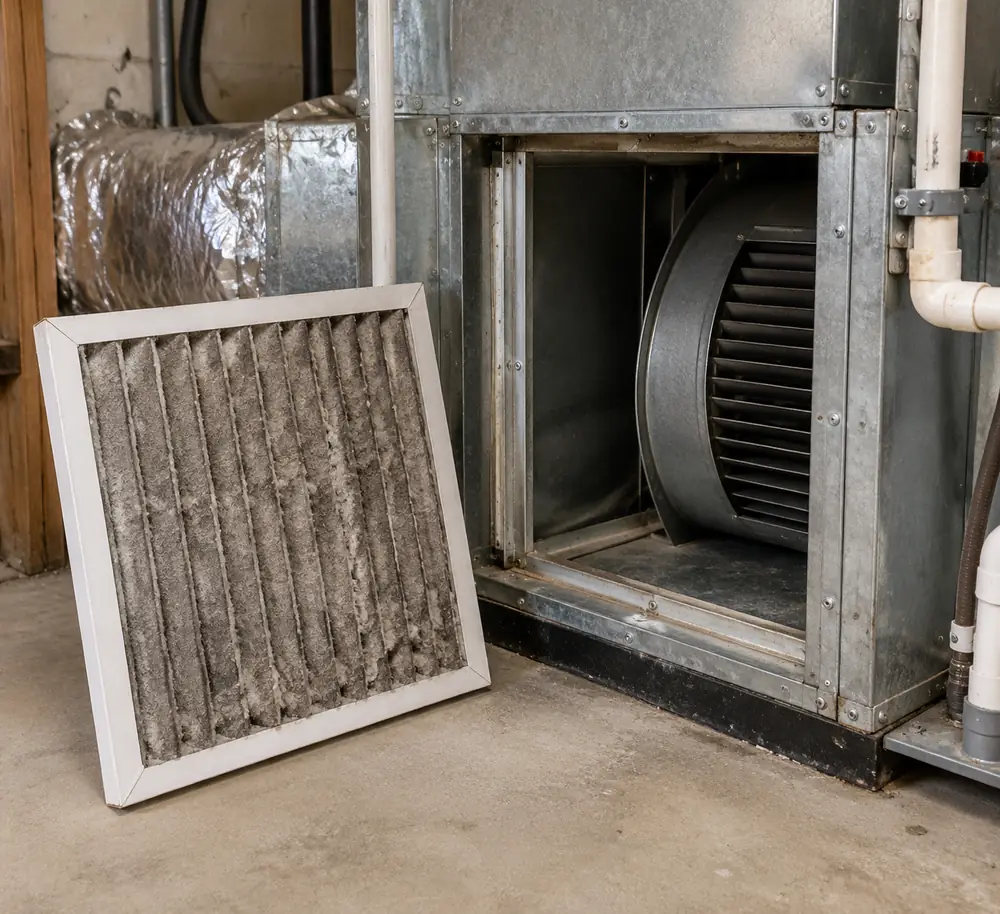
Keep filters and visible air paths clear, and have a contractor clean dirty indoor and outdoor coils when needed. ENERGY STAR’s maintenance checklist explains how dirt on coils can reduce cooling and increase runtime and energy use. Cleaning improves heat transfer when dirt is the cause. A confirmed refrigerant leak needs an appropriate, verified repair, while the system’s overall condition determines whether a larger investment makes sense.
For several homes, hotel rooms, or a larger property, compare identical scope across equipment. Record exact model numbers, access details, refrigerant, warranty status and acceptance checks. Also ask when the replacement part will arrive, how long each unit may be out of service, and which rooms cannot be shut down during occupied hours. Similar coil sizes do not guarantee matching parts or identical repair time. Group identical units where useful, but check the condition and access of each location.
The Bottom Line on Air Conditioner Coil Replacement Cost
For a U.S. residential system, Bryant’s published installed-price references are $900–$2,500 for an indoor evaporator coil and $900–$2,800 for an outdoor condenser coil, including typical parts and labor. More complex coil work can cost more, as Trane’s repair examples show. The best next step is to confirm the failed part, approved replacement fit, warranty credit, and complete refrigerant and testing charges. Compare a correctly sized new system if major faults recur or a suitable service part is unavailable. For other countries, use local installed quotes for the same work scope.
Frequently Asked Questions
Does an AC coil replacement quote include refrigerant?
Not always. Some contractors include recovery, evacuation, and charge in a fixed price; others show refrigerant and related work separately. Ask which refrigerant is involved, whether the existing charge can be reused where permitted, and what testing is included before comparing quotes.
Should I replace the evaporator coil on a 10-year-old AC?
Replacing the evaporator coil on a 10-year-old AC can still make sense if the compressor and other components are sound and a compatible coil is available. Compare full-system replacement when faults keep returning or the coil repair is expensive relative to a complete installed system. Check the warranty and repair history; age alone does not decide the cheaper option.
Can a condenser coil be replaced without buying a whole outdoor AC unit?
Sometimes, when the manufacturer supports a compatible replacement coil and the rest of the outdoor unit remains sound. Ask whether the estimate is for the coil assembly or the entire condenser cabinet and equipment. Do not compare those as the same product.
How much does AC coil replacement cost under warranty?
Your remaining payment is the installed repair bill minus the confirmed warranty credit. For example, in an illustrative $2,100 repair, a verified $750 coil-parts credit leaves $1,350 if other charges do not change. Labor, refrigerant work, testing and taxes may still be payable. Give the contractor your model and serial numbers and ask for the written warranty credit and final balance.
Can a leaking AC coil be repaired instead of replaced?
Yes, if the leak is in an accessible, repairable location and the repair can be verified. Extensive corrosion or multiple pinhole leaks often make a new coil or full system more sensible. A refrigerant refill alone does not establish a durable repair.
Can I replace the air conditioner coil myself?
Do not attempt refrigerant-circuit coil replacement without the required training and authorization. In the U.S., EPA Section 608 certification is required for covered service work that may release refrigerant. Electrical isolation, pressure work, leak testing, and commissioning also present safety risks.
Will a same-size replacement coil always fit my air conditioner?
No. Capacity, refrigerant, cabinet, metering device, fittings, approved manufacturer match, and full-system rating may all matter. Ask the contractor for the exact approved part and supporting model information rather than buying by tonnage alone.
Are mini-split coil replacement costs the same as central AC costs?
No single replacement price applies to both mini-split and central AC coils. A wall-mounted mini-split, ducted air handler, and central outdoor condenser use different coil assemblies, installation access and replacement parts. Check the exact model’s parts list and compare a local installed quote for that system.
How long does an AC coil replacement take?
A straightforward AC coil replacement may be finished in one service visit, while difficult access, unavailable parts or extra refrigerant testing can extend the outage. Ask the contractor to estimate both the hands-on work and when cooling can resume. The time varies by model and confirmed repair scope.