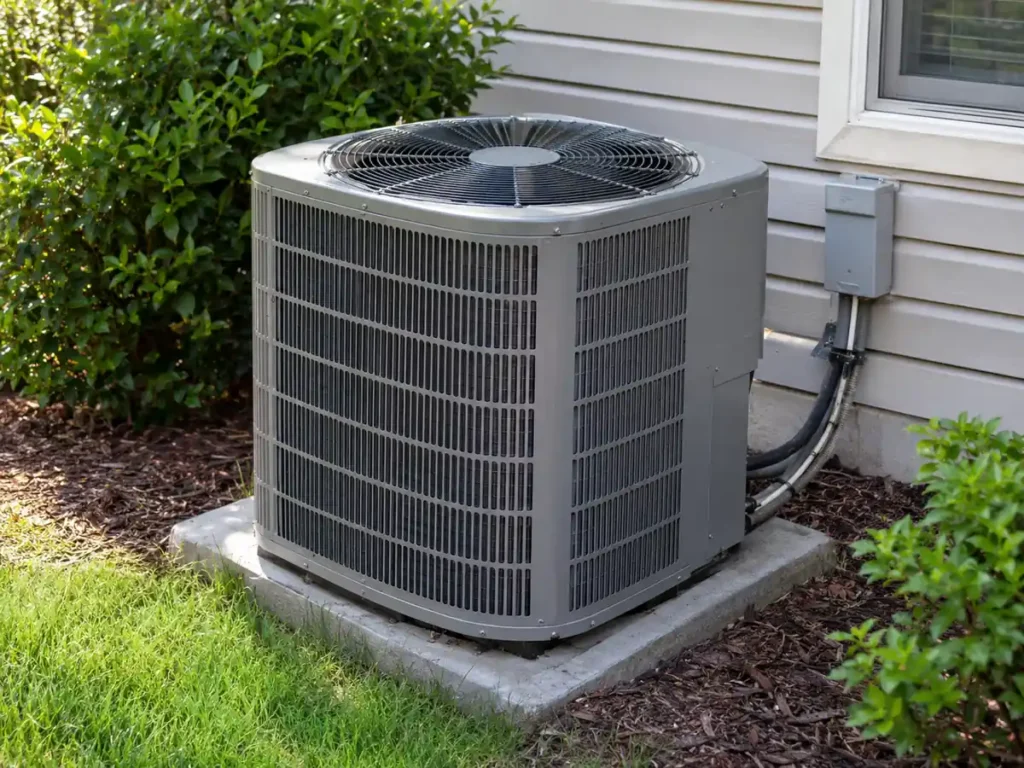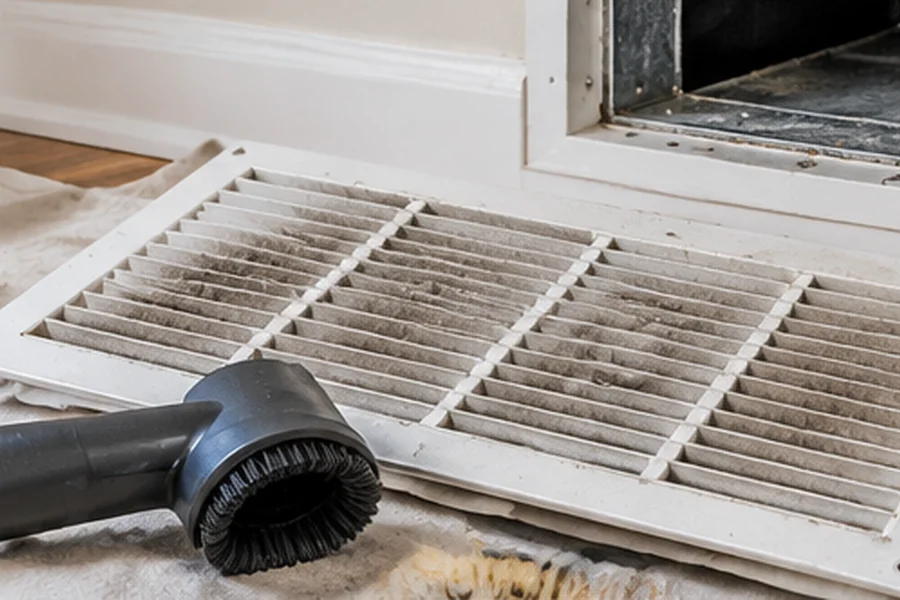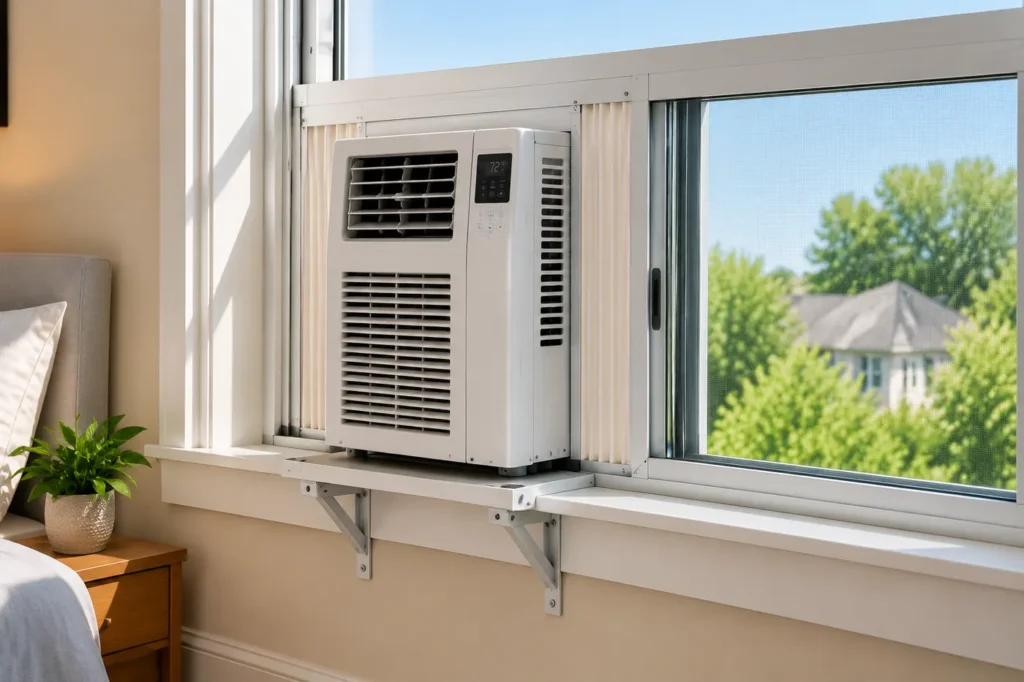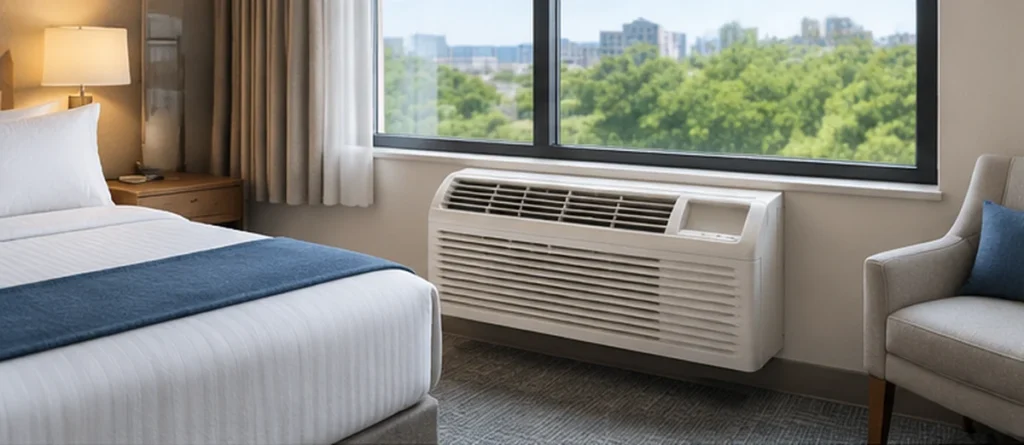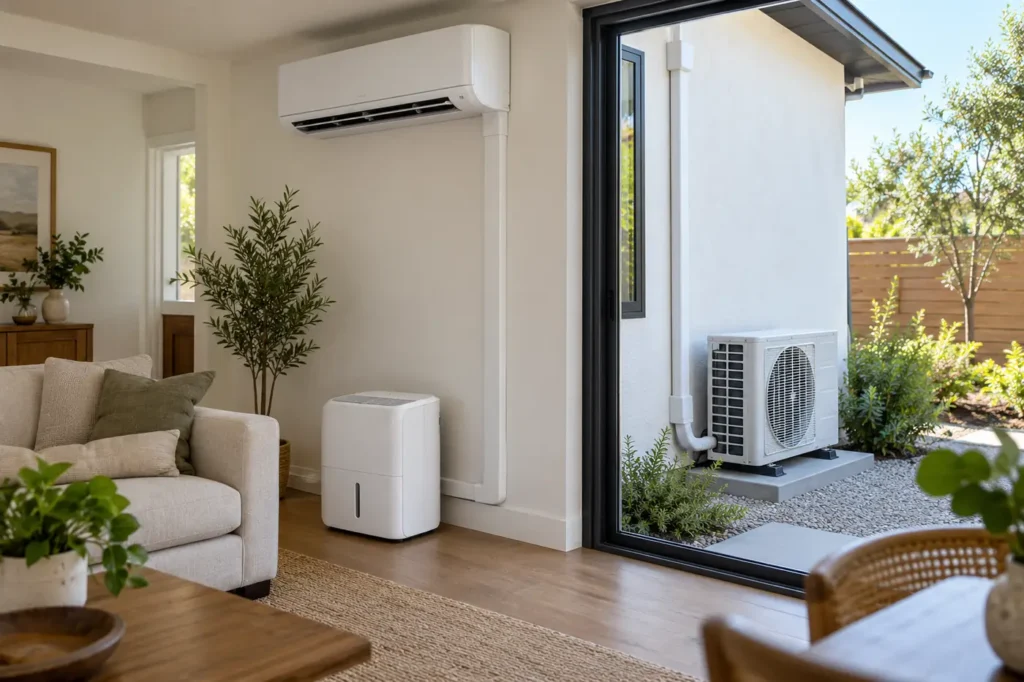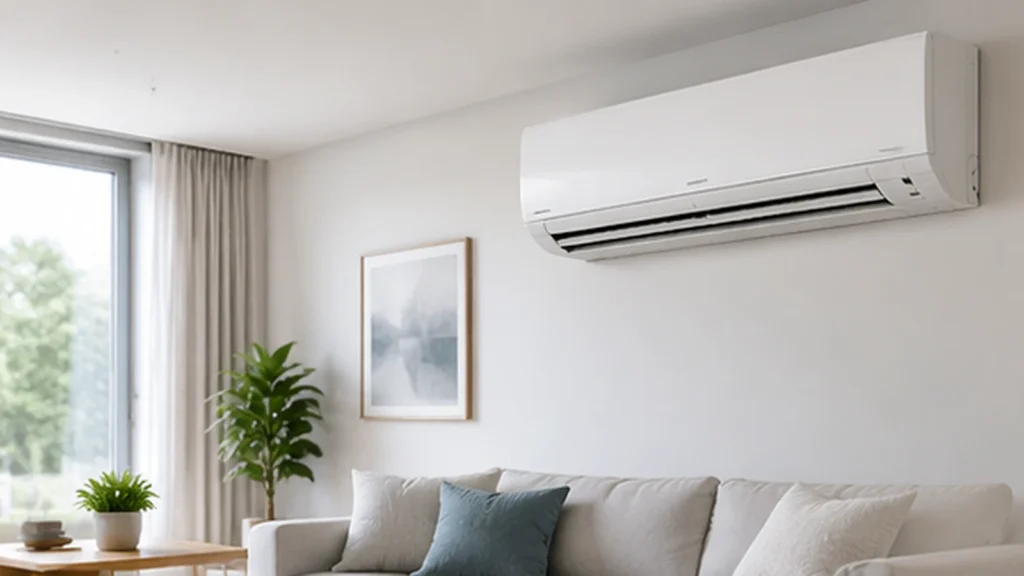
An air conditioner fan does one of two jobs in a typical split AC system: the indoor blower moves room air across the indoor cooling coil and back into the building, while the outdoor condenser fan moves outdoor air across the outdoor coil to release heat. Both help the system cool, but they move air in separate places and are not interchangeable. When a fan stops, first identify which one it is, whether the system is calling for cooling, and what the air at the vents is doing.
What Does an Air Conditioner Fan Do?
An air conditioner uses fans to keep air moving over its heat-exchange coils. The indoor blower delivers conditioned air; the outdoor fan carries heat away in cooling mode. The refrigerant travels between the indoor and outdoor units, but the indoor and outdoor air streams normally stay separate in a conventional split system.
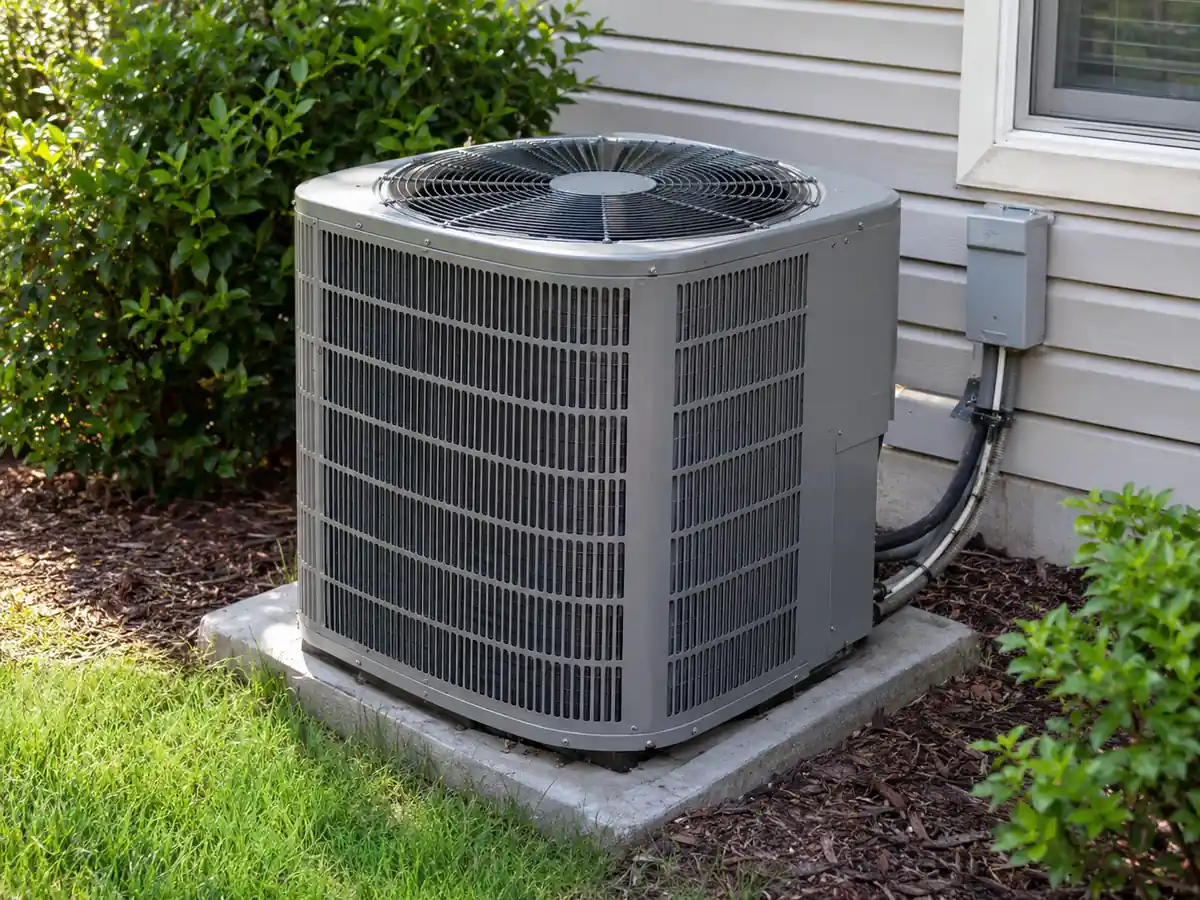
During cooling, warm room air passes through the return grille and filter, then over the cold indoor evaporator coil. The blower sends the cooled air through the supply vents. At the same time, the outdoor fan moves outdoor air over the hot condenser coil. That lets the refrigerant release the heat it collected indoors.
A fan is not the compressor. The compressor moves and compresses refrigerant in the sealed system. An AC can have a running fan with a stopped compressor, so hearing or seeing a fan is not proof that the machine is cooling.
Indoor Blower vs Outdoor Condenser Fan: Key Differences
The indoor AC fan moves air through your rooms and ducts; the outdoor AC fan moves air across the outside coil. They differ in the air they handle, the fan shape, and the symptoms they cause when they fail.
| Feature | Indoor blower fan | Outdoor condenser fan |
|---|---|---|
| Main job in cooling | Push or pull room air through the indoor coil and deliver it indoors | Move outdoor air across the outdoor coil to reject heat |
| Usual location | Air handler, furnace cabinet, or indoor mini-split head | Outdoor condensing unit or outdoor heat-pump unit |
| Common rotating part | Blower wheel, often a centrifugal wheel in ducted systems | Propeller-style or axial fan blade in many outdoor units |
| Motor | Indoor blower motor, often with speed control | Outdoor fan motor, often controlled by unit electronics |
| Common failure symptom | Weak or no airflow at supply vents | Outdoor heat cannot be released properly; cooling may stop or trip on protection |
| Air moved | Recirculated indoor air | Outdoor ambient air |
In a ducted central system, the indoor fan is commonly a centrifugal blower wheel; in a wall-mounted ductless unit, it is often a long cross-flow fan. Both move indoor air over the indoor coil. The outdoor unit commonly uses an axial propeller fan, but larger or variable-speed systems may have more than one fan or change fan speed with demand. Identify the fan by where it moves air, not by assuming every AC has the same blade or motor. For the room-side head and outdoor-unit arrangement of a ductless system, see our mini-split air conditioner guide.
If the bedroom vent has no airflow, check the indoor side first. If the indoor vents still blow air but the outside unit is unusually quiet or the condenser fan stays still during a confirmed cooling demand, look at the outdoor side. The two symptoms point to different parts of the system.
How Does the Indoor AC Blower and Blower Motor Work?
The indoor blower motor spins a wheel or other indoor fan to move air through the indoor cooling coil and into the occupied space. In a ducted system, it also has to push air against resistance from the filter, ducts, registers, and coil.
In a ducted system, room air enters through the return grille and filter, passes the indoor coil and blower assembly, then reaches the supply ducts and vents. In a draw-through arrangement, the blower pulls air through the coil; in a blow-through arrangement, it pushes air through the coil. Either way, the complete air path must deliver enough air through the heat-exchange surface and into the rooms.
Blower wheel, blower motor, and air handler are different parts
- Blower wheel: The rotating part that moves indoor air. Many ducted systems use a centrifugal wheel inside a housing.
- Blower motor: The electric drive that turns that wheel. Some systems use a permanent split capacitor (PSC) motor; others use an electronically commutated motor (ECM) with electronic speed control.
- Air handler: The larger indoor assembly that may contain the blower, coil, drain pan, filter arrangement, and control parts.
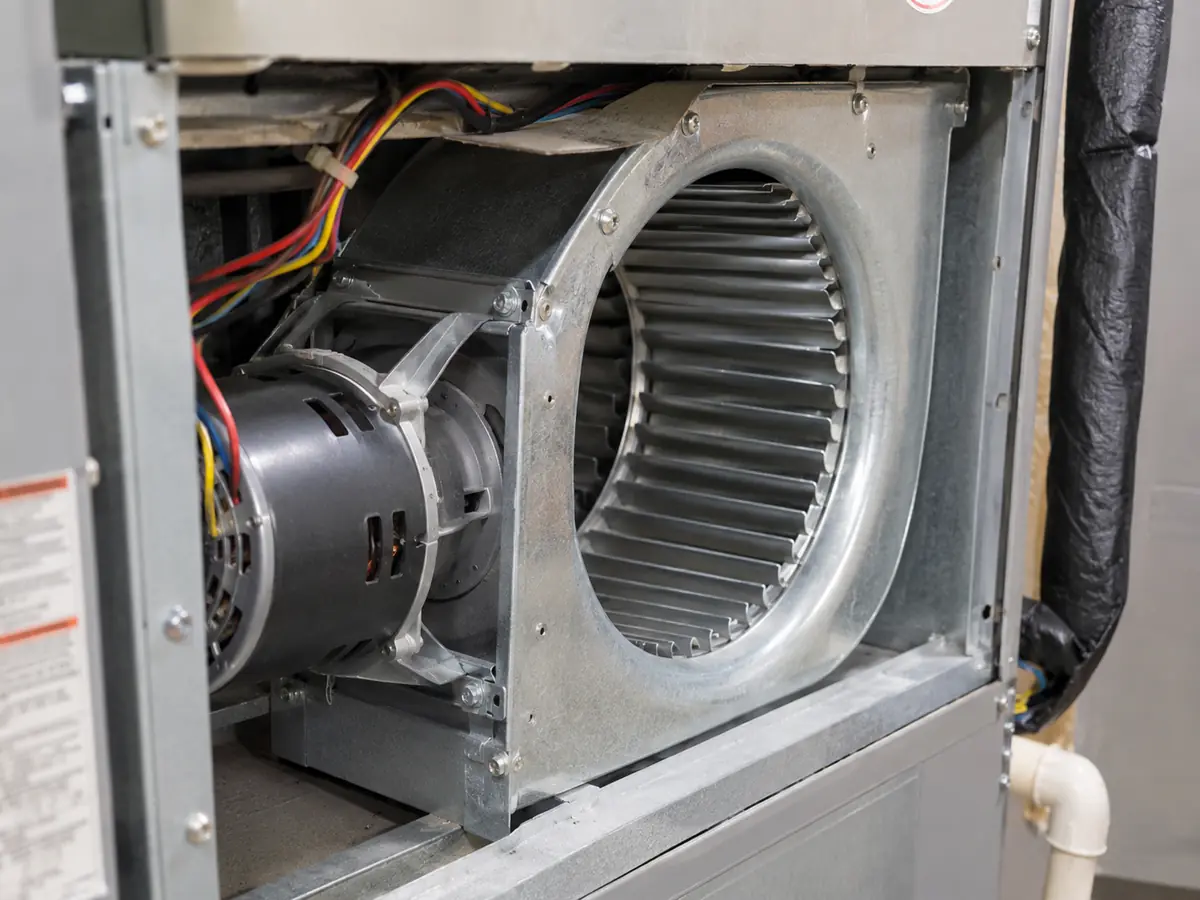
In a ducted split system, the air handler contains the room-side air-moving equipment, while the outdoor unit handles the outdoor coil and compressor. These are separate assemblies connected by the refrigerant circuit and controls.
Why blower speed and airflow matter
An indoor blower needs to provide enough airflow for the specific coil and cooling demand. If an air filter is clogged, a duct is crushed, or a return opening is blocked, the blower has to work against added resistance. That can reduce delivered airflow, cause noisy operation, and allow the indoor coil to get too cold. If the indoor coil freezes, stop cooling and follow the safe checks in our AC system freezing guide before restoring normal operation.
A motor with a higher nameplate power is not an automatic upgrade. The wheel, motor, control, and duct resistance must work together. A technician can measure airflow-related conditions, including external static pressure when applicable, and compare them with the unit documentation before changing speed settings.
In a wall-mounted mini-split, the fan is built into the indoor head and can have its own speed and swing settings. That is different from the blower used in a central duct system, although both still move indoor air.
How Does the Outdoor Condenser Fan and Motor Work?
In cooling mode, the outdoor fan draws or pushes outside air through the outdoor coil so the refrigerant can give up heat. In many residential units, a propeller-shaped axial fan moves a large amount of air through a relatively open coil and grille.
The outdoor fan motor turns the blade; it does not drive the compressor. On a top-discharge condenser, air enters through the side coil and leaves upward through the fan grille. On a side-discharge unit, air commonly enters at the rear or side coil and exits horizontally through a front grille. Keep the actual inlet and outlet paths clear using the installation clearances for that cabinet.
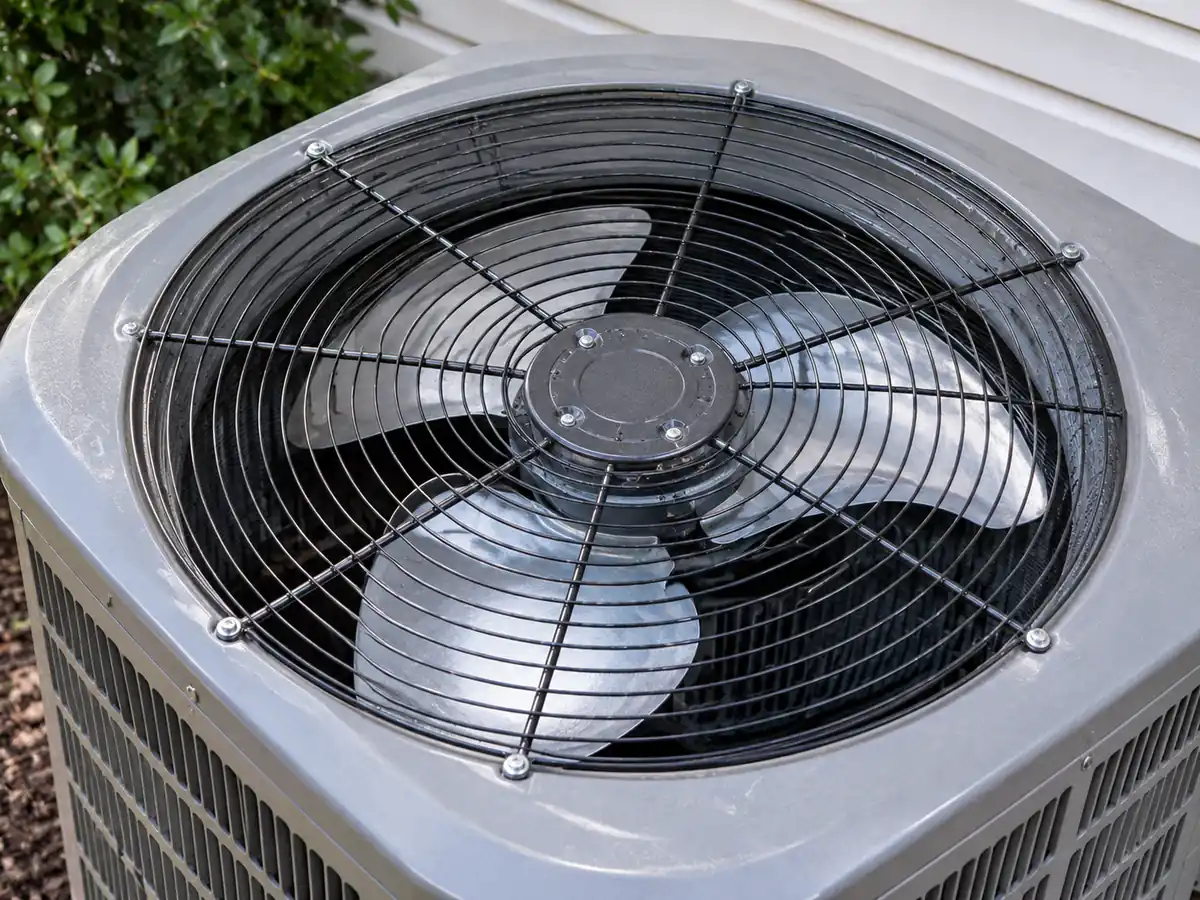
If the fan stops during a period when it should be running, heat can build up inside the outdoor coil. The system may cool poorly, stop on a protective control, or shut the compressor down. Repeated operation with a failed condenser fan risks equipment damage. Turn cooling off and arrange service rather than running it to see whether it recovers.
What changes on a heat pump?
A heat pump uses a reversing valve to change which coil absorbs heat and which coil releases it. In heating mode, the outdoor coil absorbs heat from outdoor air; the outdoor fan still moves outside air across that coil. During some defrost sequences, outdoor fan operation can pause as part of normal control logic.
An outdoor heat-pump fan may stop during defrost or while there is no heating or cooling demand. It should return to the model’s normal sequence when the demand or defrost state changes. If the fan remains stopped during a confirmed call and the controller reports a fault, turn the system off and request service instead of assuming it is still defrosting. For the equipment layout, see the heat-pump components guide.
When Should the Indoor and Outdoor Fans Run?
During a cooling call, the indoor blower moves air through the rooms while the outdoor fan removes heat at the condenser. With thermostat FAN ON, the indoor blower can run even when the outdoor fan and compressor are off; with FAN AUTO, the indoor blower usually follows heating or cooling demand. A start delay, staged fans, or variable-speed control can change the timing, so a brief pause is different from a fan that stays stopped during active cooling.
| What you observe | A likely normal explanation | What to confirm |
|---|---|---|
| Indoor air blows with thermostat FAN set to ON, but outdoor unit is off | FAN ON can run the indoor blower without a cooling call | Check thermostat mode and whether the room is warmer than the cooling setpoint |
| Indoor blower cycles while FAN is set to AUTO | Indoor airflow follows system demand, with possible built-in delays | Compare with the actual cooling call, not a fixed timer |
| Outdoor fan speed rises or falls | Inverter or variable-speed control may adjust airflow | Check the operating mode and the model’s normal fan behavior |
| One of two outdoor fans stops | Some multi-fan systems stage their condenser fans | Check the exact unit control sequence before calling it a failure |
| Outdoor heat-pump fan pauses in heating | The unit may be defrosting or between heating demands | Check the displayed mode and whether normal heating resumes |
Does FAN ON make the outdoor AC fan spin?
No. On common thermostats, FAN ON or FAN AUTO controls indoor air circulation, not a demand for the outdoor condenser fan. With FAN ON, you may feel air at the vents even when the compressor and outside fan are idle. If cooling is needed, select COOL and a setpoint below the room temperature, then allow the system’s normal start delay.
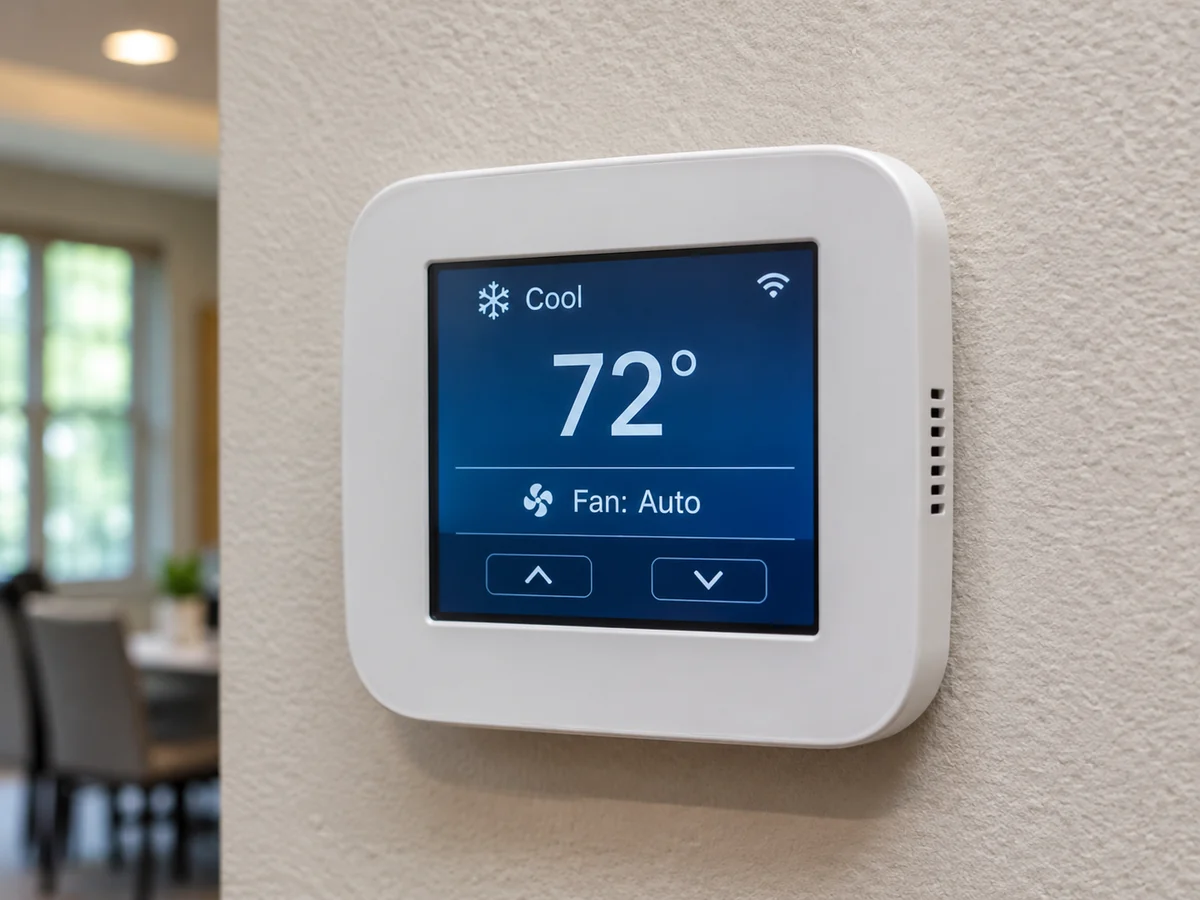
An outdoor unit that never starts during a real cooling call needs a different check from one that is simply off because no cooling is requested. Where the controller shows fault codes, record the code instead of resetting it repeatedly. Some window and portable AC units also have Energy Saver settings that change room-side fan cycling between cooling calls. Our Energy Saver mode guide explains those controls separately from a central thermostat’s FAN ON/AUTO setting.
Air Conditioner Fan Not Spinning: What Should You Check First?
First confirm which fan has stopped and whether the equipment should be running. Then check safe, visible causes before assuming that an air conditioner fan motor has failed. A stopped outdoor fan and a stopped indoor blower create different symptoms.
| Symptom | What it points toward | First safe action |
|---|---|---|
| No air from indoor supply vents, even though cooling is requested | Indoor blower, airflow blockage, thermostat/control, or power problem | Check thermostat settings, return filter, and any obvious blocked vents |
| Indoor air blows, but the outside fan is still during active cooling | Outdoor fan control, motor, capacitor (on applicable motors), or protective shutdown | Switch cooling off; check only for visible outdoor airflow blockage from a safe distance |
| Fan hums but does not turn | Possible motor, capacitor, bearing, or mechanical trouble | Switch the system off; do not touch or push the blade |
| Fan starts and stops with a fault code or breaker trip | Electrical, motor, control, or protection issue | Leave the unit off; record the code or trip and request qualified service |
| Outdoor fan is idle with no cooling call | It may be normal | Confirm COOL mode and the cooling setpoint before treating it as a failure |
A safe order for checking a stopped fan
- Identify the fan. Is there little or no airflow at the indoor vents, or is the outside fan visibly still? Note any unusual sound or smell.
- Check the thermostat or controller. Select the intended operating mode and an appropriate cooling setpoint. Remember that FAN ON alone does not request outdoor cooling.
- Check easy airflow items. Inspect the accessible air filter and indoor return grilles. From outside the unit, look for leaves or objects blocking the outdoor coil or discharge. Do not remove panels or reach through a grille.
- Check the user-accessible power indication. If the display is blank or a breaker is tripped, follow the unit’s manual. A repeated trip is a stop-and-service condition; do not keep resetting it.
- Stop when there is a risk sign. Burning smell, smoke, grinding, a stalled humming motor, ice on lines, repeated shutdown, or an unusually hot outdoor unit calls for the system to be turned off and assessed by a qualified HVAC technician.
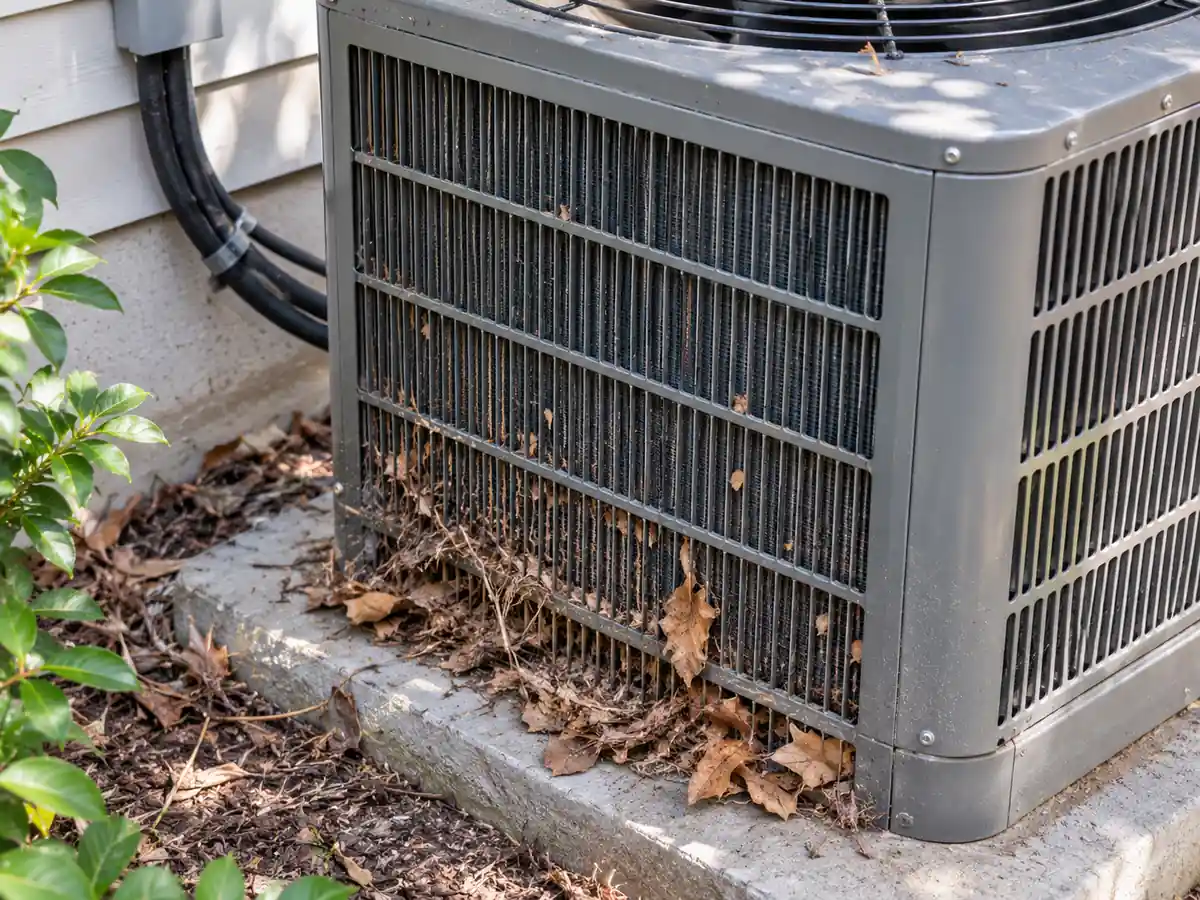
Do not spin a fan blade by hand or with a stick, bypass an electrical safety switch, open a capacitor compartment, or probe live wires. A fan can start unexpectedly, and capacitors can hold an electrical charge after power is removed. The technician can use the model’s service procedure to test supply voltage, control commands, motor operation, fan capacitor where fitted, and mechanical condition.
No active cooling call: the outdoor fan can stay off normally. Just after a call begins: allow the unit’s specified start delay. Heat-pump heating or defrost: check the displayed mode and whether normal operation resumes. Confirmed cooling call with a fan still stopped, a fault code, or repeated shutdown: stop cooling and arrange a model-specific diagnosis. The technician should check control output, capacitor where fitted, motor and mechanical condition before choosing a replacement.
What if the Air Conditioner Fan Runs but the AC Does Not Cool?
If an AC fan runs but the rooms do not cool, first confirm COOL mode and a setpoint below room temperature. Then compare airflow at the indoor vents with the outdoor unit’s operation. Weak vent airflow points first to the filter, return path, indoor blower, or coil. Normal vent airflow with no cooling points to the outdoor cooling cycle, controls, coil condition, or refrigerant system. A spinning fan alone does not confirm that the compressor is cooling.
Indoor blower runs, but the air feels warm
Start with the thermostat. If FAN is ON but the cooling setpoint has been reached, the indoor blower can keep circulating room air while the outdoor system is off. Set the thermostat to COOL and an appropriate setpoint before assuming a fault.
If COOL is selected, the room is above the setpoint, and vent air stays warm after the normal start period, observe the outdoor unit without opening it. If the outdoor fan is stopped during a confirmed cooling call, turn cooling off and arrange service. If the outdoor fan runs but vent air stays warm, record any displayed fault code and have a technician check whether the compressor is operating, whether the outdoor coil can release heat, and whether the refrigerant circuit is performing correctly. Do not order a blower motor simply because the air feels warm.
Both fans run, but cooling is weak
Start with the airflow you can feel at the indoor vents. If it is weak, inspect the accessible filter and return grilles, and clear obstructions you can safely reach; a dirty indoor coil or duct restriction needs service. If vent airflow is normal but cooling is still weak, look for leaves or other visible blockage around the outdoor coil and discharge without reaching into the unit. If those airflow paths are clear and the room remains warm during a cooling call, have a technician check compressor operation, coil condition, and refrigerant performance against the unit’s specifications.
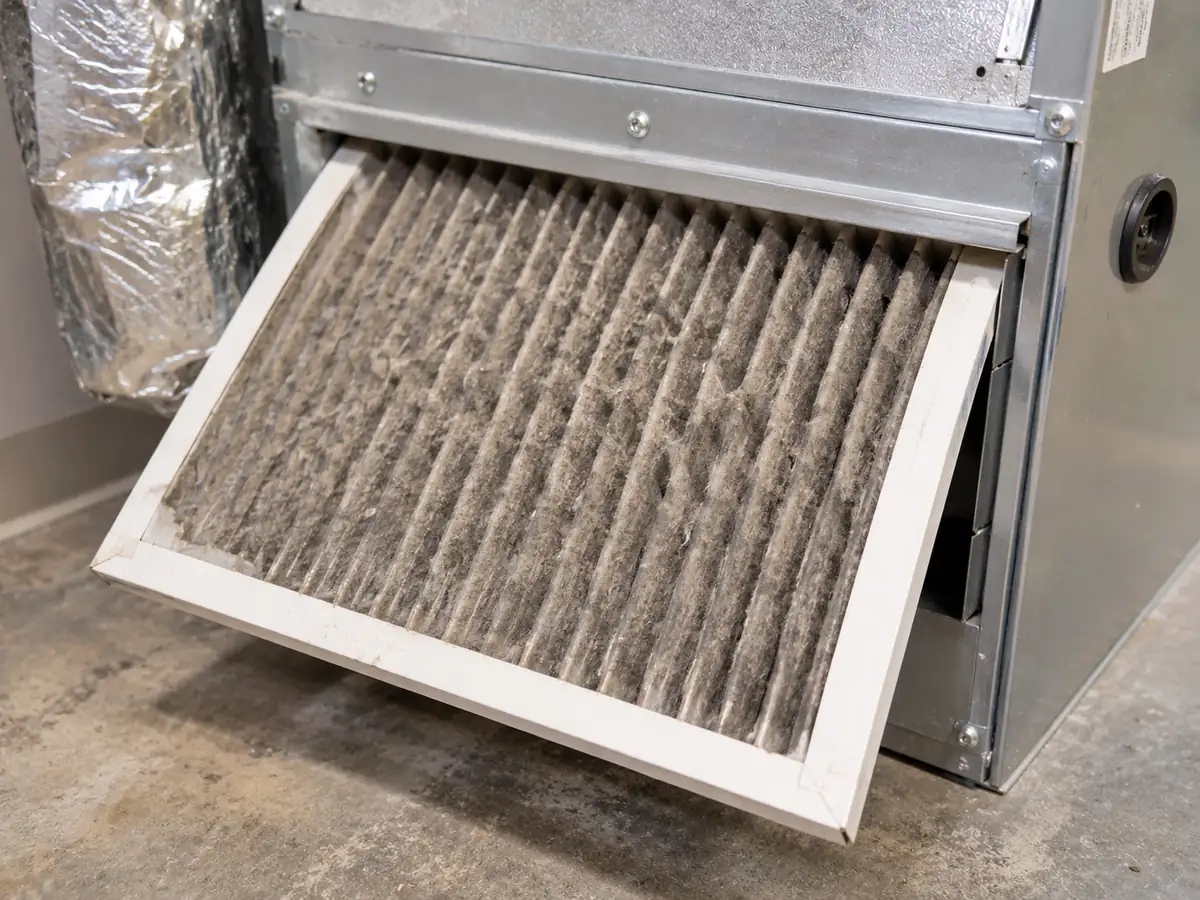
A running outdoor condenser fan does not prove the compressor is running or that the refrigerant charge is correct. Ask a technician to confirm actual cooling operation and the unit’s measurements before recommending refrigerant work. Do not add refrigerant simply because the room feels warm. If cooling remains weak after the accessible airflow checks, our AC not cooling troubleshooting guide covers the wider compressor, control, coil, and refrigerant-side checks.
Outdoor fan runs, but the indoor blower does not
Switch cooling off. Without the intended indoor airflow, the indoor coil can freeze, which makes cooling worse and may lead to water when the ice melts. Check the filter and visible airflow paths, then have the blower or its controls checked before restarting normal cooling.
Useful result: after a repair, confirm both appropriate fan operation and the air delivered to the rooms while cooling is requested. A fan that spins is only one part of a successful test.
Fan Motor, Fan Blade, or Blower Wheel: What Part Needs Replacement?
Replace a fan blade or blower wheel when damage, rubbing, or imbalance is confirmed; replace a motor when proper testing confirms its failure. If the fan will not start, the capacitor (on models that use one), wiring, or control board may be at fault instead. The indoor blower motor, indoor wheel, outdoor fan motor, and outdoor blade are different components, and the approved replacement must match the exact AC model.
| Part | Its job | What must match before replacement |
|---|---|---|
| Indoor blower motor | Drives the indoor wheel and may control airflow speed | Equipment model, approved motor assembly, voltage, motor/control type, rotation, mounting, wiring and programming where required |
| Indoor blower wheel | Moves air in the indoor housing | Wheel size, width, hub, shaft and rotation, and compatible housing |
| Outdoor condenser fan motor | Drives the outdoor fan blade | Approved part number, rated voltage, motor type, speed/control, rotation, mounting and connection details |
| Outdoor fan blade | Moves outside air over the coil | Diameter, pitch, hub/shaft attachment, rotation and cabinet clearance |
| Fan capacitor, if fitted | Helps certain AC motors start and run | Exact type and electrical rating given for the motor and circuit; must be checked by a qualified technician |
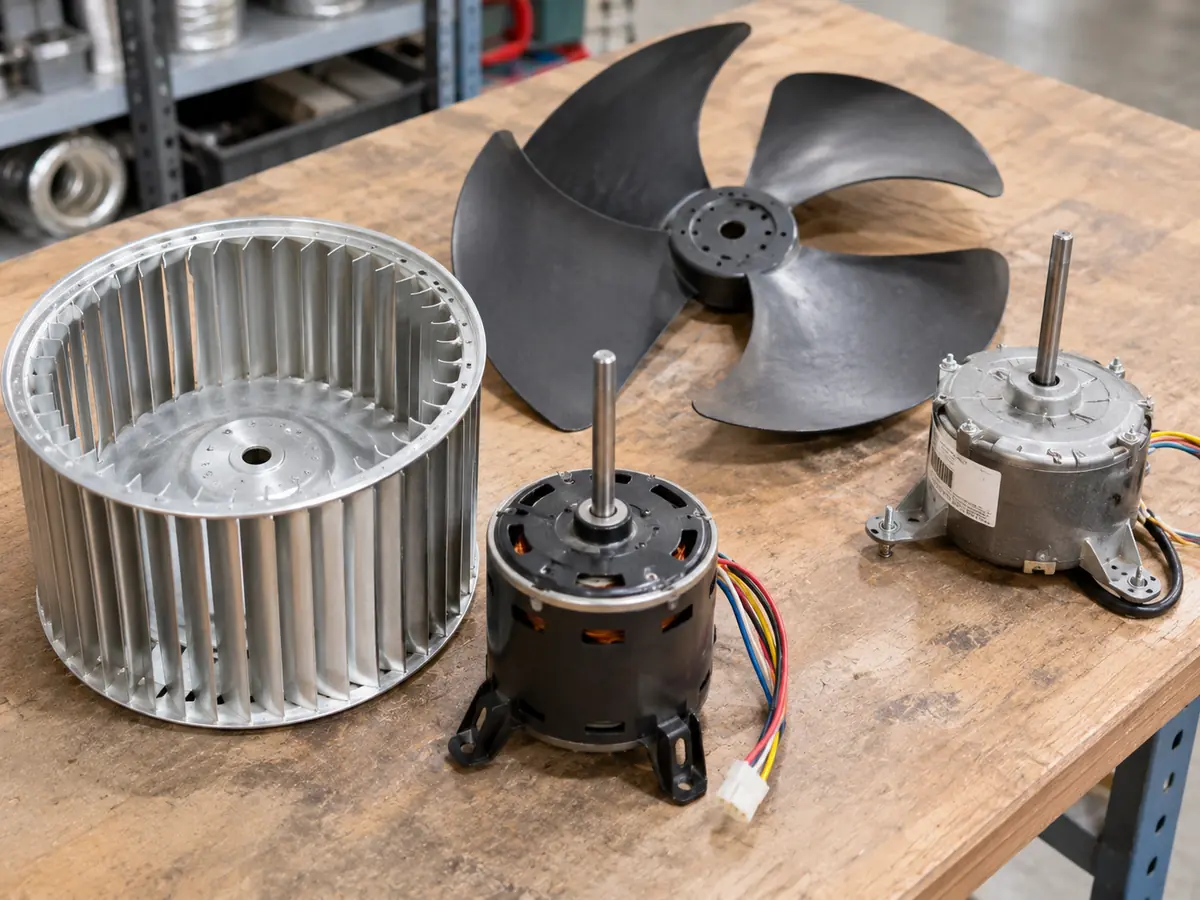
Visible cracks, bent blades, or an out-of-round wheel point toward a blade or wheel replacement. Scraping or vibration calls for checking clearance, mounting, wheel balance, and bearings. A fan that does not start calls for a technician to check the control signal, supply, capacitor where fitted, and motor before replacing parts. These checks separate mechanical damage from an electrical fault and help avoid replacing a working motor.
For a replacement quote, collect the full indoor and outdoor unit model numbers, serial numbers, part number if available, photos of the non-energized nameplate, and what happened before the fault. A technician can then check motor data and the proper assembly. Never substitute a generic capacitor value or bypass a control board to make a different motor run.
What maintenance helps these fans last?
Keep accessible return filters clean on the schedule suitable for your home and equipment. Do not block the return and supply registers. Keep the outdoor unit’s air inlet and discharge clear of plants, leaves, and stored items while following its required clearances. Have damaged blades, abnormal vibration, dirty coils, and electrical faults handled during professional service.
For a single fan repair, order from the existing unit’s approved parts list and match the motor or wheel specifications in the table above. For a complete-system replacement, compare the indoor/outdoor matched configuration, cooling capacity at the required conditions, airflow, duct static pressure where applicable, noise, voltage, and installation space. The AHRI guide to air conditioners and heat pumps explains whole-system equipment pairing and performance; it is not a substitute for the original unit’s fan-part identification.
For a complete wall-mounted ductless split-system project, our R32 inverter air conditioner SA series is one example of an indoor/outdoor configuration with multi-speed indoor airflow control. This is a complete AC system option, not a generic fan motor or replacement blade.
For project equipment, you can review our air conditioner range or send us the system requirements. Include the indoor/outdoor configuration, site conditions, cooling capacity, power supply, and installation limits so we can discuss a suitable complete-unit option. For an existing unit’s individual motor repair, use its approved part identification and qualified service channel.
Indoor vs Outdoor AC Fan: What Matters Most?
The indoor blower delivers air to the rooms; the outdoor condenser fan moves air across the outside coil. When one stops, the first useful question is not “Which motor should I buy?” It is “Which airflow path has stopped, and should this fan be running in the current mode?”
With no air at the vents, focus first on the indoor blower and airflow path. With indoor airflow but a stopped outdoor fan during active cooling, turn cooling off and have the outside unit assessed. If both fans spin but the room stays warm, the compressor, refrigerant circuit, controls, and coil airflow still need checking. Match any replacement part to the exact unit, and judge the repair by restored cooling and airflow, not spinning alone. If the project moves from a fan repair to replacing the whole system, compare ducted, ductless, and packaged layouts in our guide to types of air conditioners.
Frequently Asked Questions About Air Conditioner Fans
Can the indoor blower run when the outdoor AC fan is off?
Yes. Setting a common thermostat’s FAN control to ON can circulate indoor air without a call for cooling, so the outdoor fan and compressor may remain off. If the thermostat is calling for cooling and the outdoor unit does not start, check the unit’s status rather than treating FAN ON as a cooling command.
Should the outdoor air conditioner fan spin all the time?
No. The outdoor fan normally operates when the outdoor unit needs airflow, not all day. It can be off with no cooling demand, during a start delay, or in certain heat-pump defrost and staged-fan modes. If it stays stopped during a confirmed cooling call and the unit reports a fault or stops cooling, turn cooling off and arrange service.
Is an air conditioner fan motor the same as the compressor?
No. A fan motor turns a blade or blower wheel to move air. The compressor moves refrigerant through the sealed cooling circuit, so a spinning fan does not tell you whether the compressor is working.
Can I keep using the AC if the condenser fan is not working?
Do not keep running cooling if the outdoor condenser fan should be operating but is stalled. The system may lose the airflow needed to release heat and could shut down or damage components. Turn cooling off and have the fan, controls, and compressor protections checked before normal operation resumes.
Why is the outdoor AC fan running but no cold air comes out?
First set the thermostat to COOL below room temperature. If vent airflow is weak, check the accessible filter and returns. If airflow is normal but still warm, look for outdoor coil blockage and record any fault code without opening the unit. A technician should then check compressor operation and refrigerant-system performance; the outdoor fan can spin even when those parts are not cooling.
How do I know whether to replace an AC fan motor or blade?
Cracks, bent blades, rubbing, or wheel imbalance point toward the fan blade or blower wheel. If rotation stops without visible damage, a technician should test motor supply, control output, and a capacitor where fitted before calling the motor bad. Use the unit’s approved part number and match mounting, rotation, wiring, and motor/control ratings.