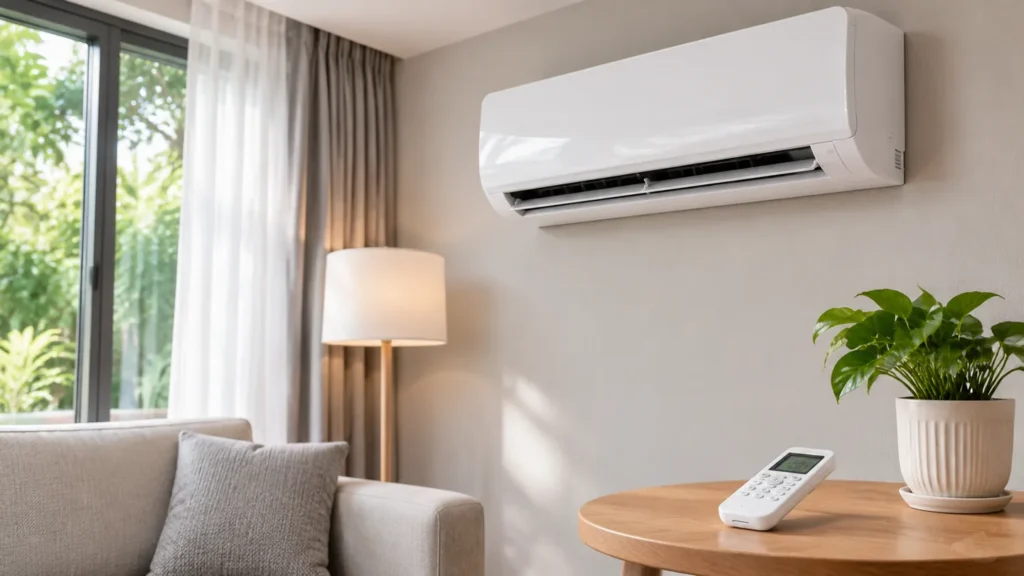
An air conditioning condenser releases heat from the refrigerant, usually through a coil in the outdoor unit. In cooling mode it turns hot refrigerant vapor into liquid. The whole outdoor cabinet is often called the condenser unit, but it also holds the compressor, fan and controls.
For most homes, the essential checks are clear outdoor airflow, compatible indoor and outdoor equipment, and coil cleaning that follows the manufacturer’s instructions. Heat pumps use the same outdoor coil to absorb heat when heating.
What Is an Air Conditioning Condenser?
An air conditioning condenser is the heat exchanger that releases heat carried by the refrigerant to the surrounding air or another cooling medium. In most home split air conditioners, this coil sits inside the outdoor cabinet. People also call the entire outdoor cabinet the “AC condenser” or “condensing unit,” although it contains several parts.
- Condenser coil: The heat exchanger that transfers heat from the refrigerant to outdoor air (or another cooling medium).
- Condensing unit: The complete outdoor assembly, which typically includes the coil, compressor, fan and controls. A quote to replace the coil is not the same as a quote to replace the whole unit.
The indoor evaporator coil has a different job: it absorbs heat from the rooms during cooling. When a technician says the “condenser” needs repair, ask which coil or outdoor component has failed.
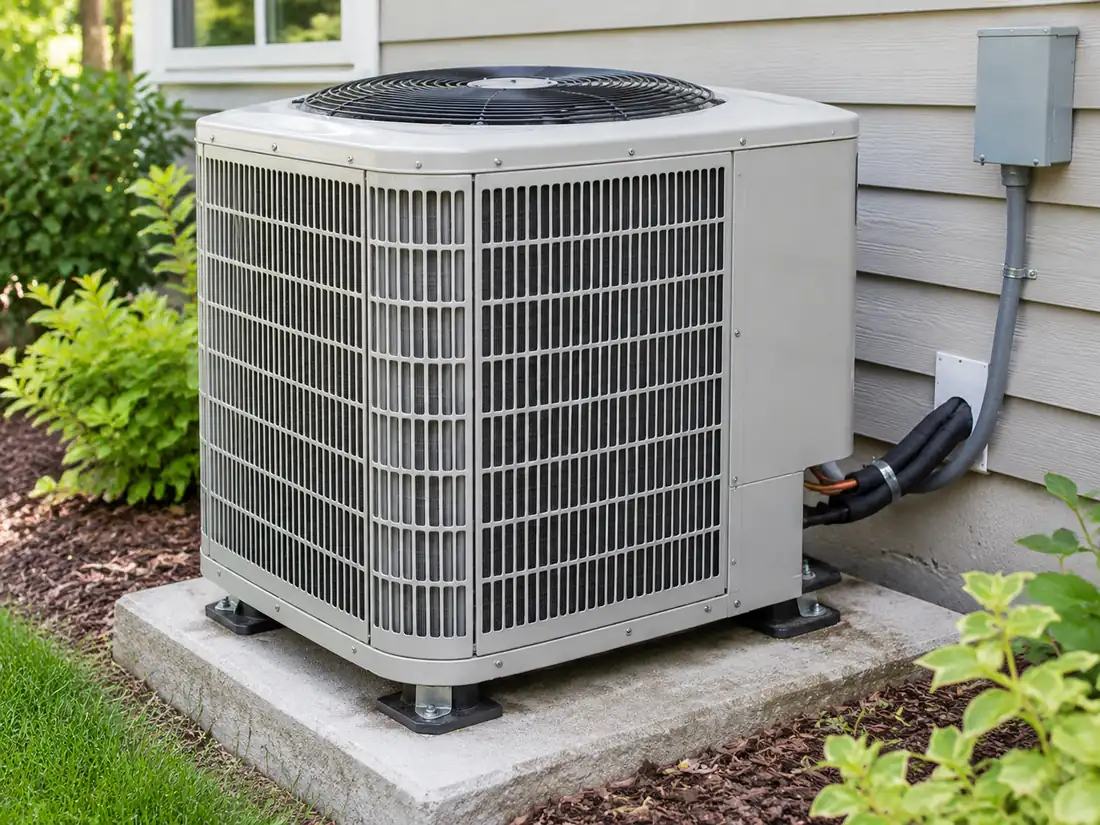
The word condensing refers to refrigerant changing from hot vapor toward liquid as it gives up heat. It does not mean the outdoor unit’s main job is making the water that drains from an indoor cooling coil.
How Does an AC Condenser Work?
In cooling mode, the condenser receives hot, high-pressure refrigerant from the compressor and rejects heat until the refrigerant becomes a high-pressure liquid. The indoor coil can then absorb more room heat during the next pass.
- Indoor evaporator: Low-pressure refrigerant absorbs heat from indoor air and leaves as vapor.
- Compressor: The compressor raises the vapor’s pressure and temperature. That makes it hot enough to release heat outdoors.
- Outdoor condenser: Air moving across the coil takes away heat. The refrigerant cools and condenses.
- Expansion device: A metering device lowers refrigerant pressure and temperature before it returns to the indoor coil.
The outdoor coil must reject both the heat collected indoors and the energy added by the compressor. In a simple energy balance, heat rejected outdoors = heat absorbed indoors + compressor input. For example, if a system absorbs 3 kW indoors and its compressor adds 1 kW, the outdoor coil releases about 4 kW of heat to the surroundings.
A blocked coil or weak outdoor airflow makes heat rejection harder. High condensing pressure can follow, increasing strain and power demand. This is why cleaning the coil and keeping the fan discharge clear matter. The thermodynamic description follows the ASHRAE condenser chapter.
What Is Inside an Outdoor Condensing Unit?
A typical split-system outdoor unit contains a condenser coil, compressor, fan, and electrical controls. The coil transfers heat; the other parts help move refrigerant or air and operate the system.
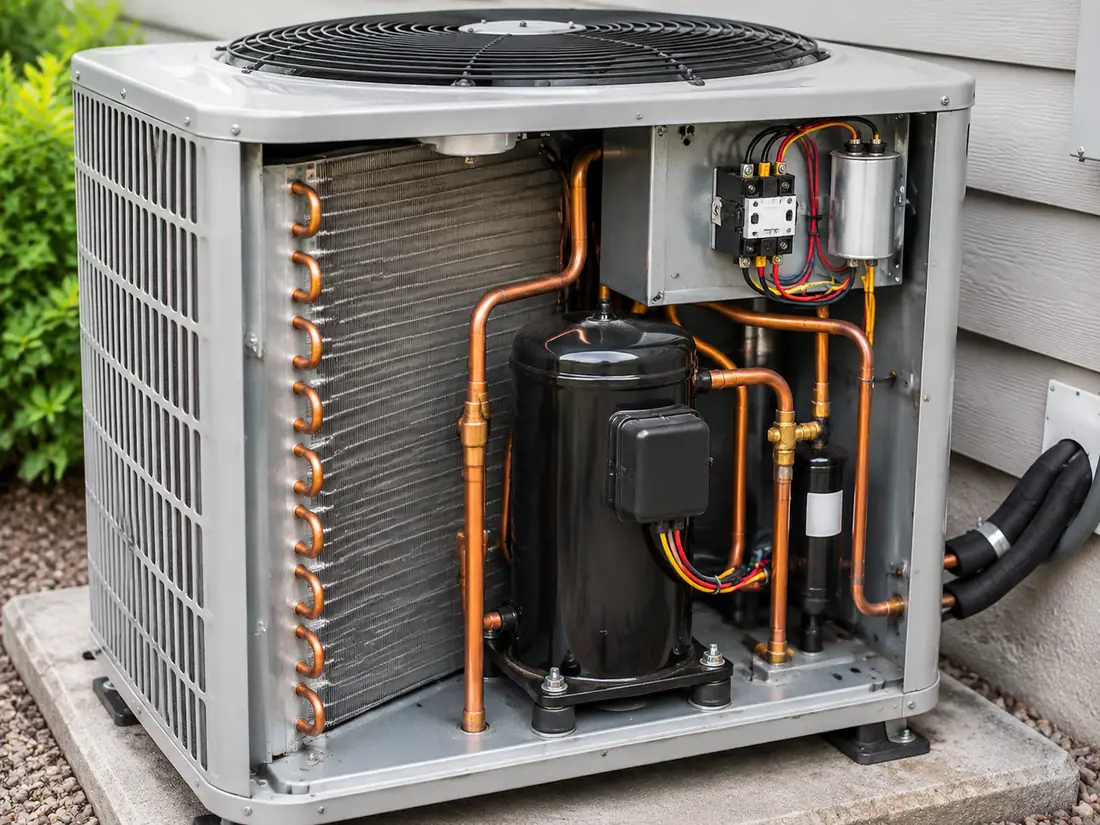
| Part | What it does | What a problem looks like |
|---|---|---|
| Condenser coil | Releases refrigerant heat into outdoor air during cooling | Blocked fins, dirt, or reduced cooling |
| Compressor | Moves refrigerant and raises its pressure | Outdoor unit runs but cooling is weak, or protective shutdown occurs |
| Condenser fan | Pulls or pushes outdoor air through the coil | Fan not spinning, abnormal noise, or hot-air recirculation |
| Electrical components | Start, protect, and control the motor and compressor | No start, intermittent operation, or a tripped protection device |
| Reversing valve (heat pumps) | Changes refrigerant flow direction for heating and cooling | Heating and cooling mode does not change correctly |
In many conventional central AC systems, a contactor switches power to the outdoor compressor or fan circuit. A no-start symptom can therefore come from a control fault rather than the condenser coil. Our air conditioner contactor guide explains the symptoms and checks; inverter models may use different control arrangements.
The compressor is not the condenser. The compressor changes refrigerant pressure; the condenser coil is where refrigerant releases heat. Replacing one does not automatically fix a fault in the other. See our guide to heat pump components for the full heating and cooling circuit.
Which Types of Air Conditioning Condensers Are Used?
HVAC systems use three common heat-rejection methods: air-cooled, water-cooled and evaporative condensers. Air-cooled condensers are common in homes, while water-cooled and evaporative systems are more often used in commercial or industrial installations. The heat-exchanger construction and installation location are separate choices.
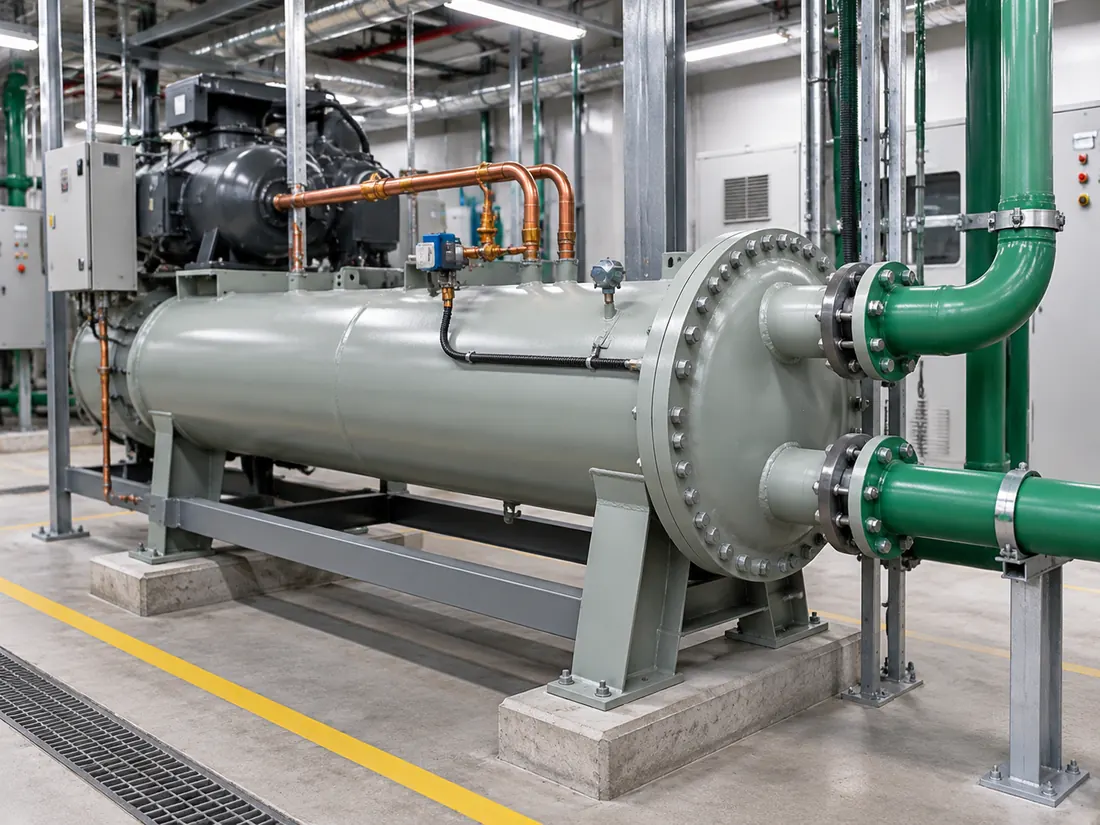
| Condenser type | How heat leaves | Typical application and main check |
|---|---|---|
| Air-cooled | Outdoor air passes over metal fins and tubing | Residential split AC, mini-splits, many packaged units; allow airflow and service access |
| Water-cooled | Water carries heat away through a heat exchanger | Some central plant and commercial systems; check water quality, piping and heat-rejection equipment |
| Evaporative | Airflow and water evaporation reject heat | Selected larger systems; check water treatment, water use and maintenance access |
Which Type Fits Your Installation Conditions?
Choose an air-cooled condenser when the site has suitable outdoor airflow and installation clearance. Consider water-cooled equipment when the project has a suitable cooling-water circuit, or evaporative equipment when water supply, treatment and drainage can be maintained. Compare the complete system under the same design conditions rather than comparing nominal capacity alone.
| Type | Choose when | Check before selecting |
|---|---|---|
| Air-cooled | The site has outdoor air space and no dedicated cooling-water circuit. | Design dry-bulb temperature, inlet/discharge clearance, hot-air recirculation, noise and service access. |
| Water-cooled | An appropriate cooling-water system is available or planned. | Water temperatures and flow, water quality, pumps, heat rejection elsewhere in the plant, treatment and service. |
| Evaporative | Water supply, water treatment and regular maintenance are available for evaporative heat rejection. | Local climate, makeup water, drainage, treatment and accessible cleaning points. |
Why Can a Rooftop Condenser Underperform?
Hot discharge air returning to the inlet can reduce an air-cooled condenser’s capacity, even when the nameplate looks suitable. For example, imagine a rooftop unit placed under a low overhang. The warm discharge may circle back through the inlet. Check the manufacturer’s discharge clearance and the actual entering-air temperature before changing equipment size.
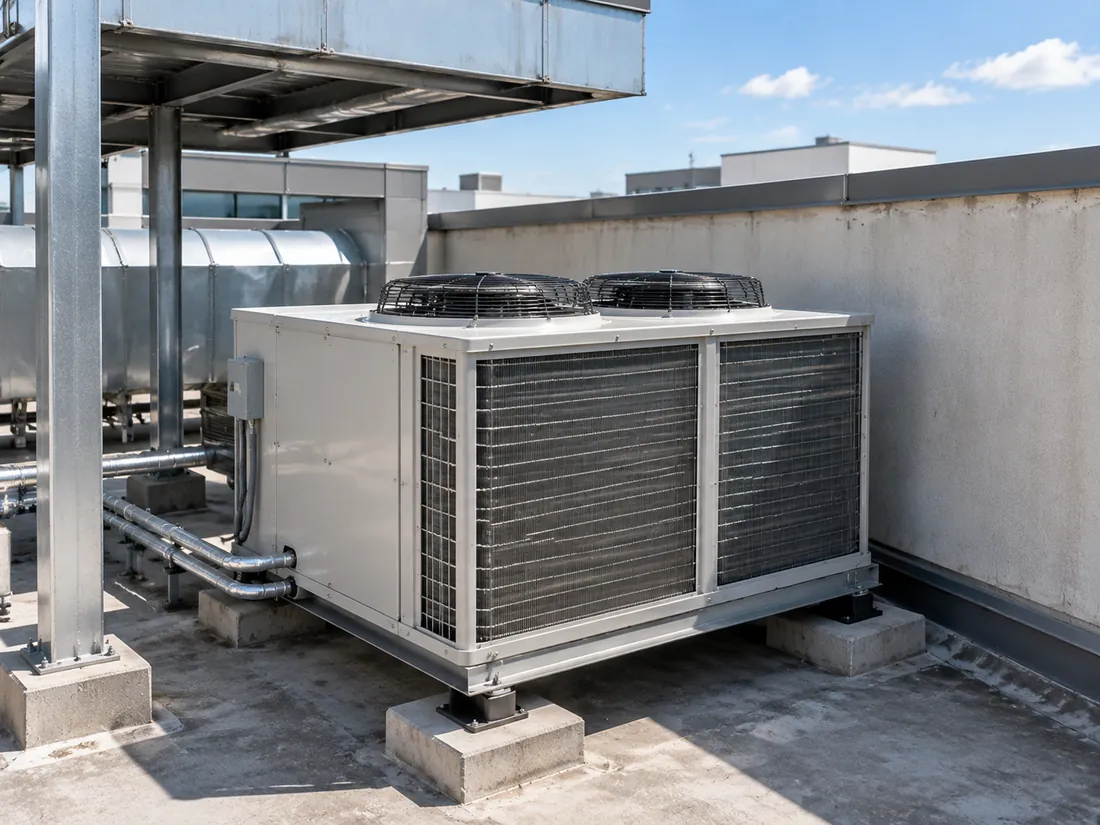
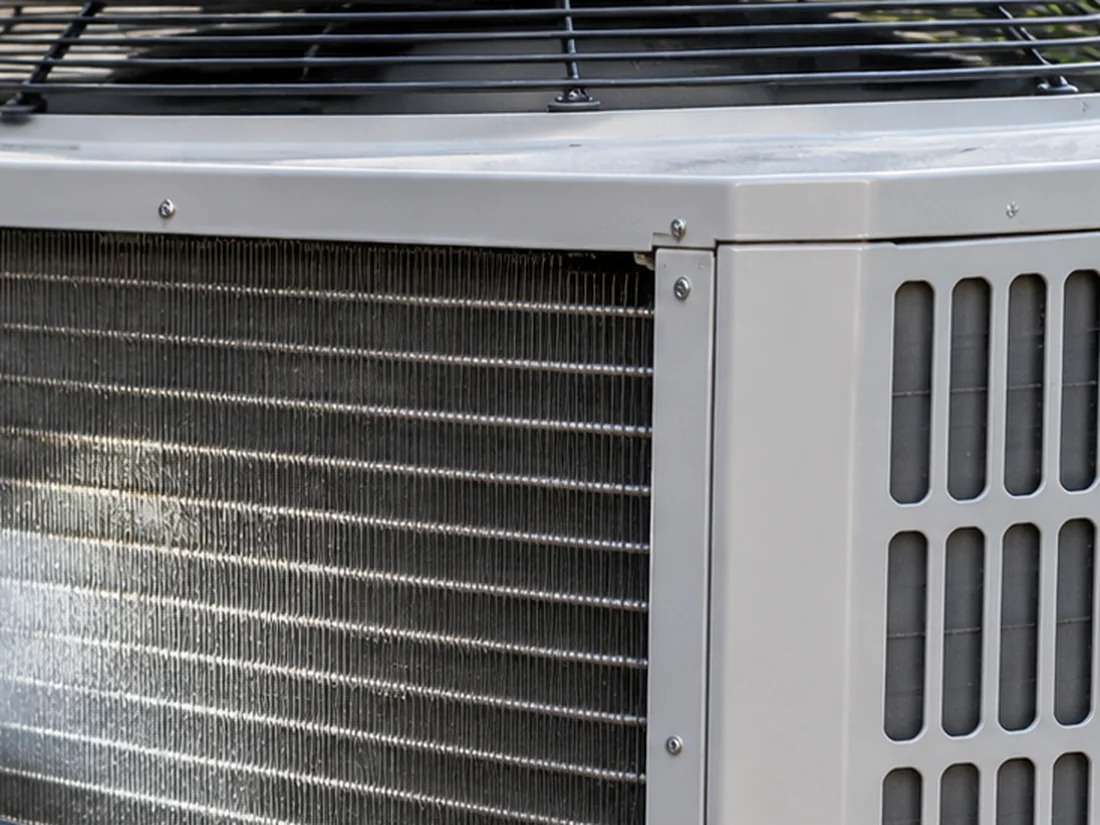
Fin-and-tube coils use refrigerant tubes and thin fins that spread heat to air. Microchannel coils use many small refrigerant passages. Coil style affects cleaning methods, repair options, and compatibility, so use the equipment manufacturer’s instructions rather than treating all coils the same.
A split-system condensing unit sits outside and connects to an indoor coil through refrigerant lines. A packaged AC keeps the cooling components within one cabinet. These describe system layout, not a separate way of transferring heat. Commercial split and industrial air conditioning systems can use different sizes and arrangements, but the best arrangement still depends on heat rejection, outdoor conditions and available service space. ASHRAE describes the heat-rejection categories in its condenser guidance.
AC Condenser vs Heat Pump Outdoor Unit: What Changes?
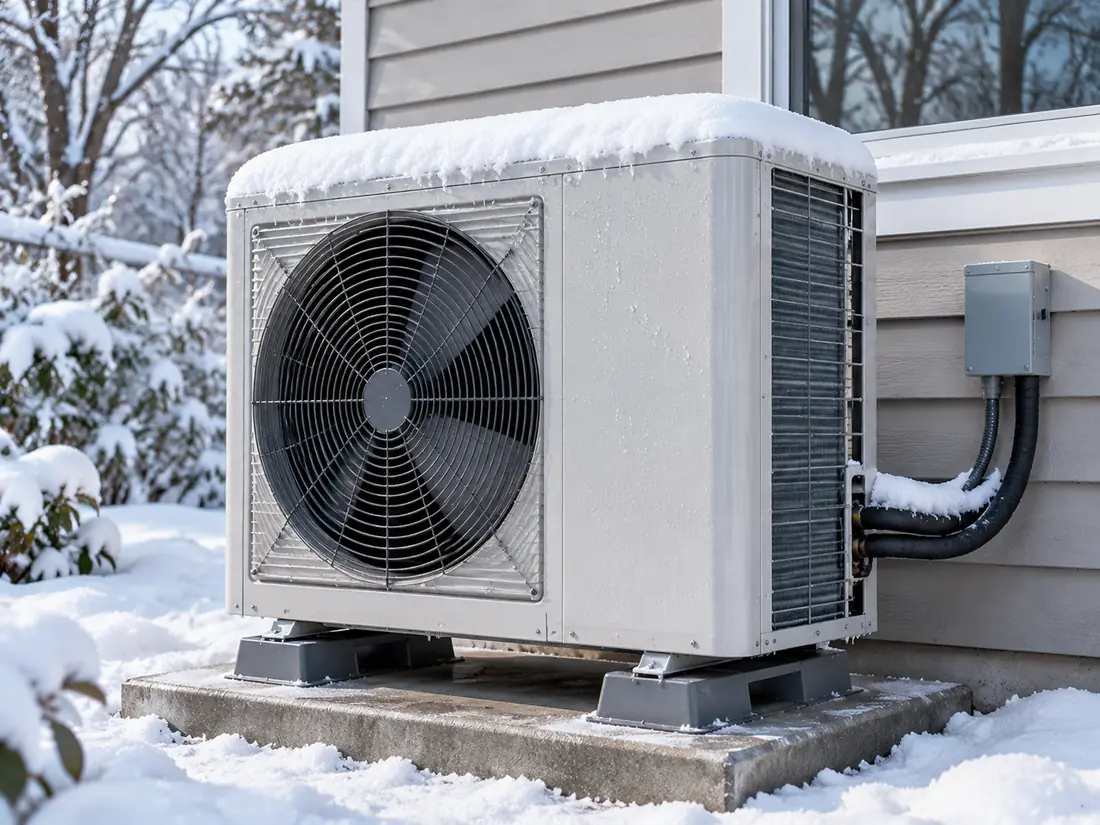
The key difference is what happens during heating: a heat pump reverses refrigerant flow, so its outdoor coil absorbs heat as an evaporator. During cooling, both an AC and a heat pump use their outdoor coil as a condenser to release heat. In heating mode, the indoor coil releases heat and acts as the condenser.
| System / mode | Outdoor coil | Indoor coil |
|---|---|---|
| Cooling-only AC | Condenser: rejects heat | Evaporator: absorbs room heat |
| Heat pump — cooling | Condenser: rejects heat | Evaporator: absorbs room heat |
| Heat pump — heating | Evaporator: absorbs outdoor heat | Condenser: delivers heat indoors |
The heat pump’s reversing valve switches which coil handles each job. In cold, damp weather, frost can build on the outdoor coil during heating. The system may run a defrost cycle to clear it. A short defrost cycle is not the same problem as a blocked, dirty coil. If ice persists or airflow is restricted, inspect accessible surroundings and arrange service rather than trying to chip ice from the coil.
For a heat pump, the everyday phrase “heat pump condenser” often means the whole outdoor unit, not proof that its outdoor coil always condenses refrigerant. This difference is explained in the Carrier reversing-valve guide.
For buildings that deliver heat through a water circuit, our air-to-water space heating heat pumps use a different system layout from the split air-to-air AC units discussed above. Choose according to the building load and water-side distribution system.
How Do You Clean and Maintain Condenser Coils?
Keep the outdoor unit clear of leaves, grass and blocked airflow, and clean the coil only by the method approved for your model. Start with visible debris and airflow; avoid electrical compartments, refrigerant connections and high-pressure spray.
What Can You Check Without Opening the Unit?
Turn off the system and look for loose leaves, lawn debris, plants or stored items blocking the outdoor airflow. Keep your hands outside the grille. Clear accessible loose material and keep the inlet, discharge and service space required by the model manual.
When Can You Clean the Coil Yourself?
Clean only accessible surfaces using a method expressly allowed in your model’s instructions, after the required electrical shutdown and isolation. Some units permit a gentle soft brush or low-pressure rinse. Never use a pressure washer, bleach, household acid or an unapproved coil chemical; strong spray can flatten fins or wet electrical parts. Do not remove panels or reach into the unit to wash hidden surfaces.
When Should an HVAC Technician Take Over?
Stop cleaning and arrange service if the coil is heavily impacted inside, fins are damaged, wiring is exposed, the fan is abnormal or cooling remains weak after airflow is cleared. After permitted maintenance, restore operation as instructed and check for normal fan operation, noise and cooling. Repeated rinsing will not repair electrical or refrigerant faults.
For heat pump condenser cleaning, keep outdoor airflow clear in both heating and cooling seasons and use the model-specific instructions. The ENERGY STAR maintenance checklist recommends professional HVAC service at least once a year, while Trane’s coil-cleaning guidance explains why pressure washing can damage the coil.
Check the unit after leaf fall, lawn work and storms, rather than relying only on a fixed cleaning date. The broader tasks—filter changes, indoor coils, drains and controls—are covered in our air conditioner maintenance checklist.
What Problems Can an AC Condenser Cause?
Condenser-side problems can cause weak cooling, high-pressure shutdowns or an outdoor fan that will not run. Start by checking visible airflow blockage and whether the outdoor fan is operating. Unusual noise and repeated shutdowns also need attention; a technician should identify the failed component before parts are replaced.
| What you notice | First safe check | Next action |
|---|---|---|
| Weak cooling during hot weather | Look for blocked outdoor airflow, dirty visible fins and an indoor filter that needs changing | If airflow is clear but cooling stays weak, request temperature, pressure and electrical checks by a technician |
| Outdoor fan is still while cooling is requested | Confirm the thermostat setting and whether the system has shut down | Turn off the system and have fan power, motor and controls checked; do not reach through the grille |
| Repeated trips or short cycling | Observe when it happens without resetting a breaker repeatedly | Arrange electrical and refrigerant-circuit diagnosis |
| Rattling, grinding or scraping outside | Check from a distance for loose external debris | Switch off if contact or grinding is suspected; arrange fan or mounting inspection |
| Heat pump coil frosts in heating mode | See whether normal defrost clears it | Persistent solid ice or failed heating needs airflow, sensor and defrost checks |
If the outdoor unit starts and stops repeatedly while cooling is still needed, our air conditioner short cycling guide helps separate airflow, control and compressor-protection causes before you select a replacement part.
Is Water or Oily Residue Near the Outdoor Unit a Leak?
Clear meltwater after a heat pump defrost cycle can be normal; oily residue near a refrigerant connection calls for inspection. Keep the meltwater from pooling and refreezing on a walkway. An oily patch, damaged refrigerant line or persistent poor heating needs diagnosis by a qualified HVAC technician. See Trane’s explanation of heat pump defrost drainage.
Dirty fins and failed refrigerant components require different fixes. Cleaning improves airflow, but it cannot repair a refrigerant leak, seized compressor, failed motor or damaged coil. In the United States, work that opens or handles the refrigerant circuit is subject to EPA Section 608 technician certification requirements. A service visit should identify the failed component before replacement is approved.
If outdoor airflow is clear but the rooms still do not cool, the fault may be elsewhere in the system. Our guide to why an air conditioner is not cooling covers indoor airflow, icing, controls and refrigerant-circuit checks.
How Do You Choose or Replace an AC Condenser Unit?
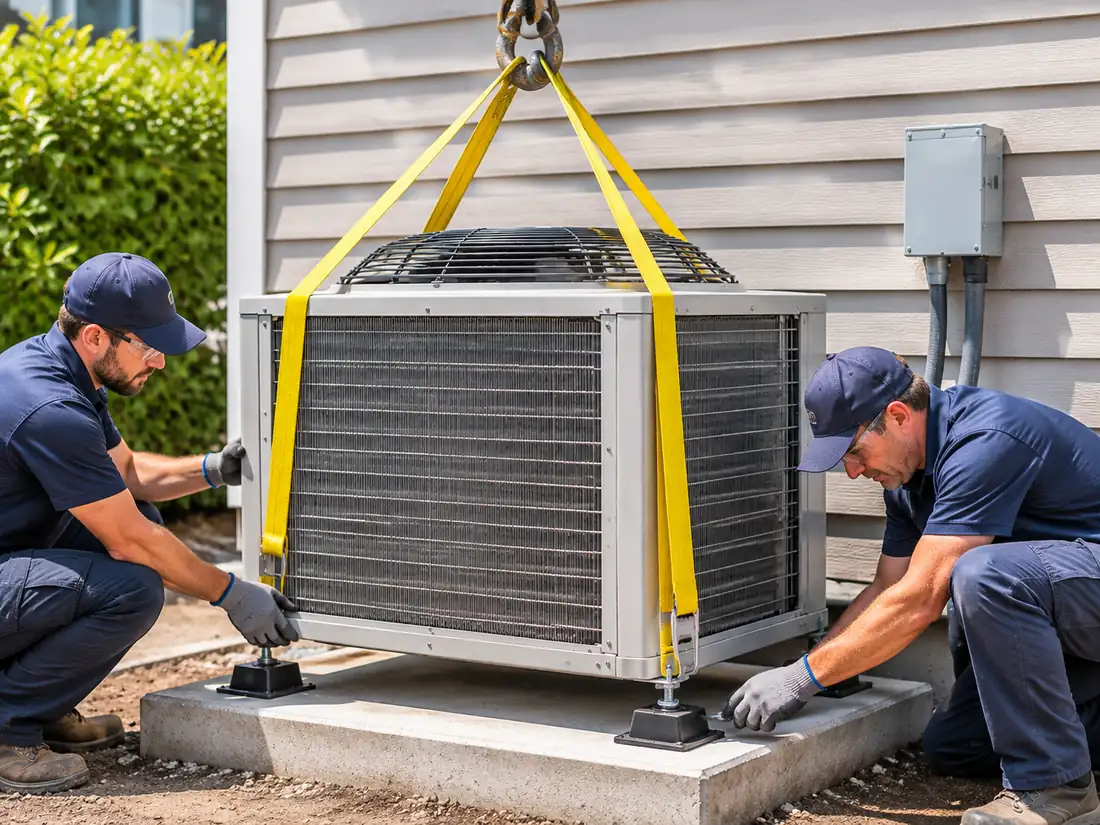
Choose a replacement outdoor unit by its match with your indoor equipment and the building’s cooling needs—not by cabinet size or the old unit’s “ton” label alone. The condenser coil, compressor, metering device and indoor coil work as one refrigerant system.
- Confirm the required cooling capacity. Use the building’s load and actual operating conditions; a larger outdoor unit does not automatically provide better comfort.
- Match the indoor coil and air handler. Check the manufacturer’s approved combinations, metering device, controls and refrigerant. Do not assume any two outdoor units with the same nominal capacity are interchangeable.
- Check electrical and installation details. Confirm voltage, phase, circuit protection, refrigerant piping, mounting and the airflow/service clearance stated in the model instructions.
- Compare documented efficiency at the same test conditions. For a cooling-only system, use appropriate seasonal efficiency data and the approved indoor/outdoor combination; for a heat pump, compare both cooling and heating performance.
- Decide whether repair or a matched replacement makes sense. Consider the failed part, age, leak history, warranty terms, service access and cost of updating other mismatched components.
For a split-system replacement, the refrigerant piping, electrical supply and control connections must suit the approved indoor and outdoor models. Our guide to split-system refrigerant and electrical connections explains what to check before installation.
Cooling capacity and condenser heat rejection are not the same rating. In the earlier simplified example, the indoor coil removes 3 kW while the outdoor side rejects about 4 kW after adding 1 kW of compressor input. For a separately selected condenser, use the manufacturer’s total-heat-rejection rating at the specified refrigerant and design outdoor conditions. For a complete split-system replacement, select an approved indoor–outdoor combination.
For example, a house with a failed fan motor and a sound coil may need a fan repair rather than a complete condensing unit. If an older compressor has failed and the existing indoor coil cannot be matched to the new refrigerant or controls, replacing the matched system may be the more practical path.
For commercial split air conditioning condensers or industrial equipment, also confirm design outdoor temperature, rejected heat, noise limits, electrical supply and access for service. An air-cooled commercial outdoor unit does not serve the same utilities and maintenance needs as a water-cooled plant.
What Information Helps Us Check a Replacement or New Project?
For a replacement, send the indoor and outdoor model numbers, refrigerant, power supply and diagnosed fault. For a new project, send the building use, cooling load, outdoor design temperature, installation location and electrical supply. Include airflow and service clearances, noise limits and the indoor coil or air-handler model when reusing equipment.
Airproz offers split air conditioner product families for relevant projects. We can compare the product series against your requirements; model-specific capacity, refrigerant and indoor–outdoor compatibility must still match the chosen equipment. Water-cooled and evaporative condensers above describe other heat-rejection arrangements used in HVAC systems.
How Much Does an Air Conditioning Condenser Cost?
Published U.S. residential estimates put outdoor condenser-coil replacement at about US$900–$2,300 and complete outdoor condenser-unit replacement at about US$1,200–$4,200 (HomeGuide, August 2025). These are different repair scopes. The final installed cost also depends on equipment compatibility, warranty coverage, labor and any indoor-system changes.
Compare the included equipment and work before comparing prices. Coil replacement, complete outdoor-unit replacement and matched-system updates involve different equipment and labor. The table lists published U.S. residential estimates for defined job scopes, with each source shown separately.
| Quoted scope | Published U.S. estimate | Source and boundary |
|---|---|---|
| Outdoor condenser coil replacement | US$900–$2,300 | HomeGuide, Aug. 18, 2025; coil replacement rather than full outdoor unit. |
| Complete outdoor condenser unit replacement | US$1,200–$4,200 | HomeGuide, Aug. 18, 2025; out of warranty, installed residential scope. |
| Typical AC condenser replacement reported in 2026 | US$2,500–$5,000 | Angi, Oct. 14, 2026; published U.S. homeowner estimate for condenser replacement. |
Check whether the offer covers the compressor, refrigerant handling, electrical modifications, compatible indoor components, removal, commissioning and any permit. An inexpensive part-only quote is not directly comparable with a fully installed system quote.
| Quote item | What to ask |
|---|---|
| Component or whole outdoor unit | Is the quote for a coil, compressor, fan, or complete condensing unit? |
| Equipment match | Does the price include any required indoor coil, refrigerant or control changes? |
| Installation | Are electrical work, piping, commissioning and removal included? |
| Service terms | What are the warranty conditions and future service requirements? |
If diagnosis confirms a failed compressor rather than a condenser coil, compare that repair separately. Our guide to air conditioner compressor repair and replacement costs explains parts, labor and warranty items for that job.
For a house, send the indoor and outdoor model numbers, site location and fault findings when requesting a comparison. For a commercial or industrial project, provide design temperatures, required capacity, system arrangement and site utilities. Those details let the quoted scope match the actual job instead of a generic online price.
What Matters Most for Condenser Performance?
The three priorities are clear condenser airflow, a properly matched indoor–outdoor system and maintenance that follows the equipment instructions. For a typical home AC, start by checking the outdoor coil and fan. On a heat pump, the outdoor coil also changes roles in heating mode.
If cooling drops, clear visible airflow obstructions and check basic settings. If the fan stops, the unit trips, ice persists or a refrigerant leak is suspected, arrange diagnosis before buying a new outdoor unit. When replacement is necessary, match the indoor equipment, operating conditions and complete installed scope—not just the advertised condenser price.
Frequently Asked Questions About AC Condensers
Is an air conditioning condenser the same as a compressor?
No. The compressor raises refrigerant pressure and moves it through the circuit. The condenser coil transfers heat from the hot refrigerant into outdoor air or another cooling medium. Both can sit inside the same outdoor unit.
Is the outdoor unit always the condenser on a heat pump?
No. During cooling, the outdoor coil rejects heat and acts as the condenser. During heating, the reversing valve changes the flow so the outdoor coil absorbs heat and acts as the evaporator.
Can cleaning a condenser fix an air conditioner that is not cooling?
Cleaning can restore airflow when dirt or debris is blocking the coil. It will not repair a failed fan, compressor, electrical part or refrigerant leak. If cooling stays weak after safe airflow checks, arrange a diagnostic visit.
How often should an outdoor condenser coil be cleaned?
Inspect the surroundings after storms, leaf fall and lawn work. Clean the coil when it is visibly dirty, following the exact model instructions. Have the HVAC system professionally serviced at least once a year.
Should I cover my AC condenser or heat pump in winter?
Do not block the airflow of a heat pump that runs in heating mode. For cooling-only equipment, follow the manufacturer’s storage and cover instructions; a tight or poorly fitted cover can trap moisture or restrict ventilation.
Can I replace only the outdoor AC condenser unit?
Yes, when the new outdoor unit is approved to work with the existing indoor coil, controls, refrigerant and electrical supply. If those parts cannot be matched, the quote should include the other components that must change.
Why does the indoor AC make water if the outdoor condenser releases heat?
The indoor evaporator coil is cold enough to collect moisture from room air while cooling. That water leaves through the condensate drain. The refrigerant condenser outside releases heat and performs a different job.
Can I replace an outdoor condenser with a unit that uses a different refrigerant?
Not unless the manufacturer approves the full equipment combination and any required changes. The indoor coil, metering device, pipework, controls and applicable refrigerant safety requirements must fit the replacement. Have a qualified technician confirm the compatible parts and installation plan before purchase. The U.S. EPA explains why changing refrigerants can require system modifications.
Need an Outdoor Unit for Your Project?
We can help compare Airproz split air conditioner options against your building load, installation conditions and existing equipment details. Send us your building use, destination market, design cooling load, outdoor temperature, electrical supply and any existing indoor/outdoor model numbers. We can then review relevant split air conditioner options and the matching requirements for your project.
Contact Airproz about your project