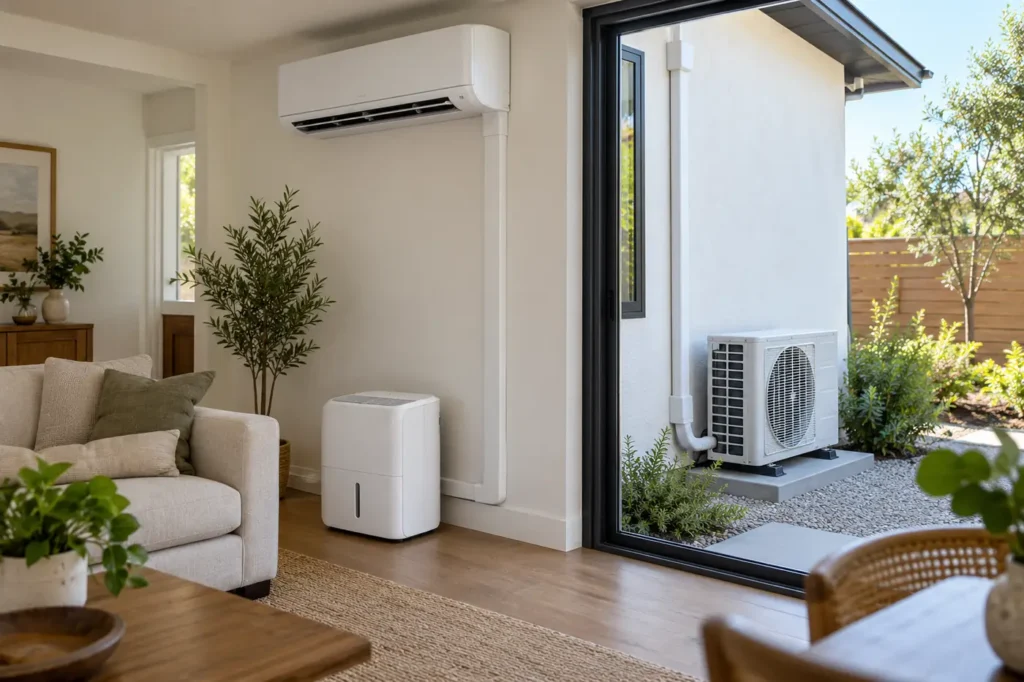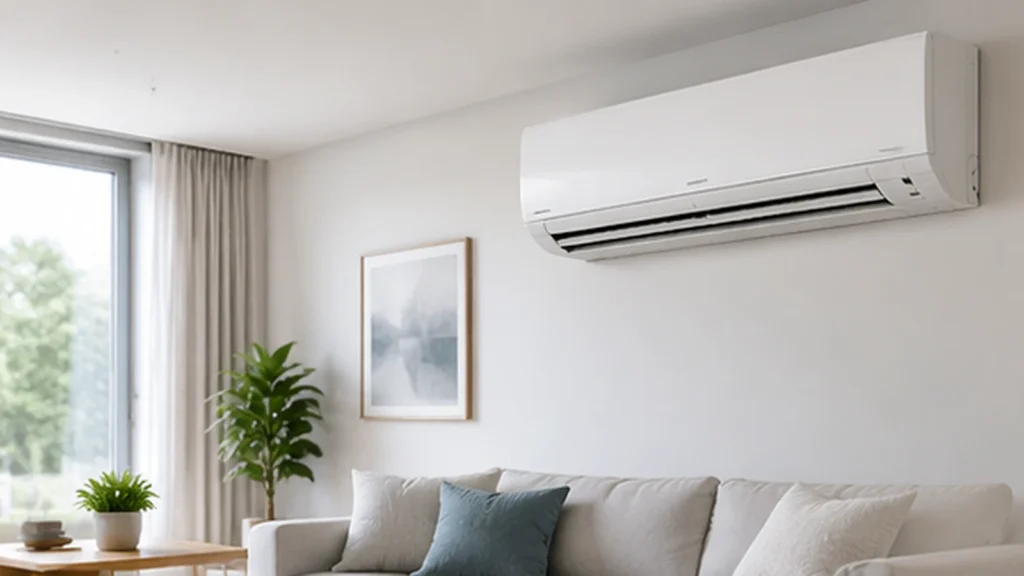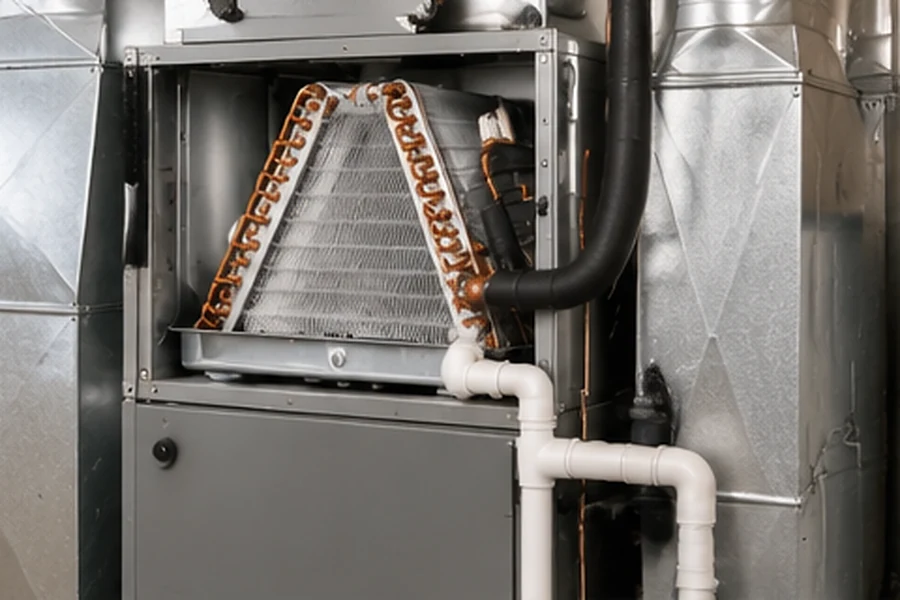
An air conditioner outdoor unit is the part of a split air-conditioning system that moves heat from your home or building into the outdoor air. It is often called the outside AC unit, condenser unit, or condensing unit. In cooling mode, it normally contains the compressor, outdoor coil, fan, motor, and electrical controls. The indoor unit absorbs room heat; the outdoor unit releases it. A heat-pump outdoor unit uses many of the same parts but can reverse the heat flow to provide heating.
If the outside unit is dirty, noisy, not starting, or due for replacement, first identify your type of system. A cooling-only central AC, a ductless mini split, and a reversible heat pump may look similar outside, but they do not always operate or connect the same way. You can check the thermostat setting, visible airflow openings, and obvious debris without opening the cabinet. Electrical, refrigerant, and internal fan repairs belong to qualified service personnel.
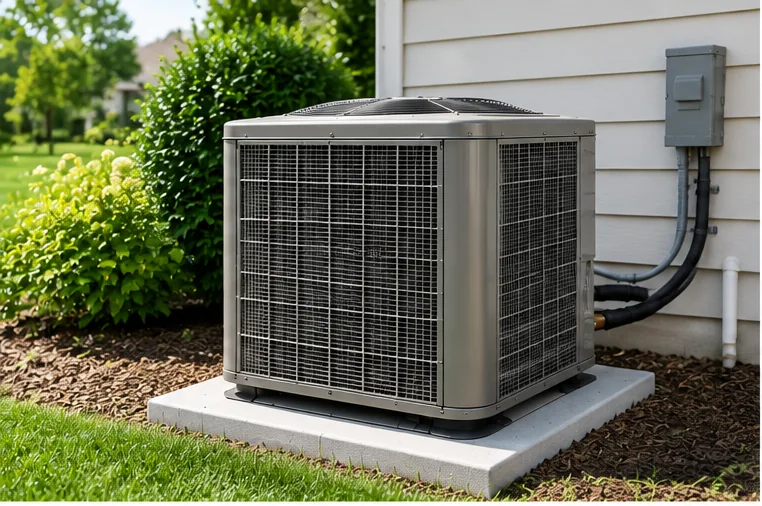
What Is an Air Conditioner Outdoor Unit Called?
In a split central air conditioner, the outdoor cabinet is commonly called the condenser unit or condensing unit. It holds the compressor and outdoor heat-rejection coil. “Outside AC unit” and “outdoor AC unit” are everyday names for the same equipment. Technically, condenser coil names one component inside the cabinet, not the complete assembly.
A ductless mini split also has an outdoor unit, but the manufacturer often calls it an outdoor unit instead of a condenser. A heat pump outdoor unit works as a condenser during cooling and as an evaporator during heating. Calling every outdoor heat pump a “condenser” can therefore hide an important difference.
| Equipment | What you usually see outdoors | What it does |
|---|---|---|
| Central split AC | Condensing unit with a top or side discharge fan | Rejects indoor heat during cooling |
| Ductless mini split | Compact side-discharge outdoor unit | Rejects heat during cooling; may heat if designed as a heat pump |
| Air-source heat pump | Outdoor unit with fan, coil, compressor and controls | Rejects heat in cooling and absorbs outdoor heat in heating |
| Packaged air conditioner | One larger cabinet, often outdoors or on a roof | Houses more of the cooling system in one enclosure; it is not the same as a split condenser |
The model plate and installation manual tell you which type you actually have. Use the exact model number and installation manual to select parts or replacement equipment.
If you are comparing a split condenser with a packaged unit or a ductless setup, our guide to the types of AC systems explains how equipment layout and room control differ.
What Does the Outside Air Conditioner Unit Do?
The outdoor unit releases the heat that the indoor unit has collected. It does not normally pull fresh outdoor air into the rooms. The fan moves outdoor air across the coil so heat can leave the refrigerant. The compressor keeps the refrigerant circulating at the pressures the system needs.
In a standard cooling cycle, these steps work together:
- Indoor heat pickup: Warm indoor air passes over the indoor evaporator coil. Refrigerant absorbs heat and the air supplied back to the room becomes cooler.
- Compression: Refrigerant vapor returns to the outdoor compressor through the line set—the pipes connecting the indoor and outdoor units. Compression raises its pressure and temperature.
- Outdoor heat release: The hot refrigerant passes through the outdoor condenser coil. The fan moves outdoor air across the fins, carrying heat away. Refrigerant condenses into liquid as it releases heat.
- Pressure reduction: The refrigerant passes through an expansion device before returning to the indoor coil. Its pressure falls, allowing it to absorb indoor heat again.
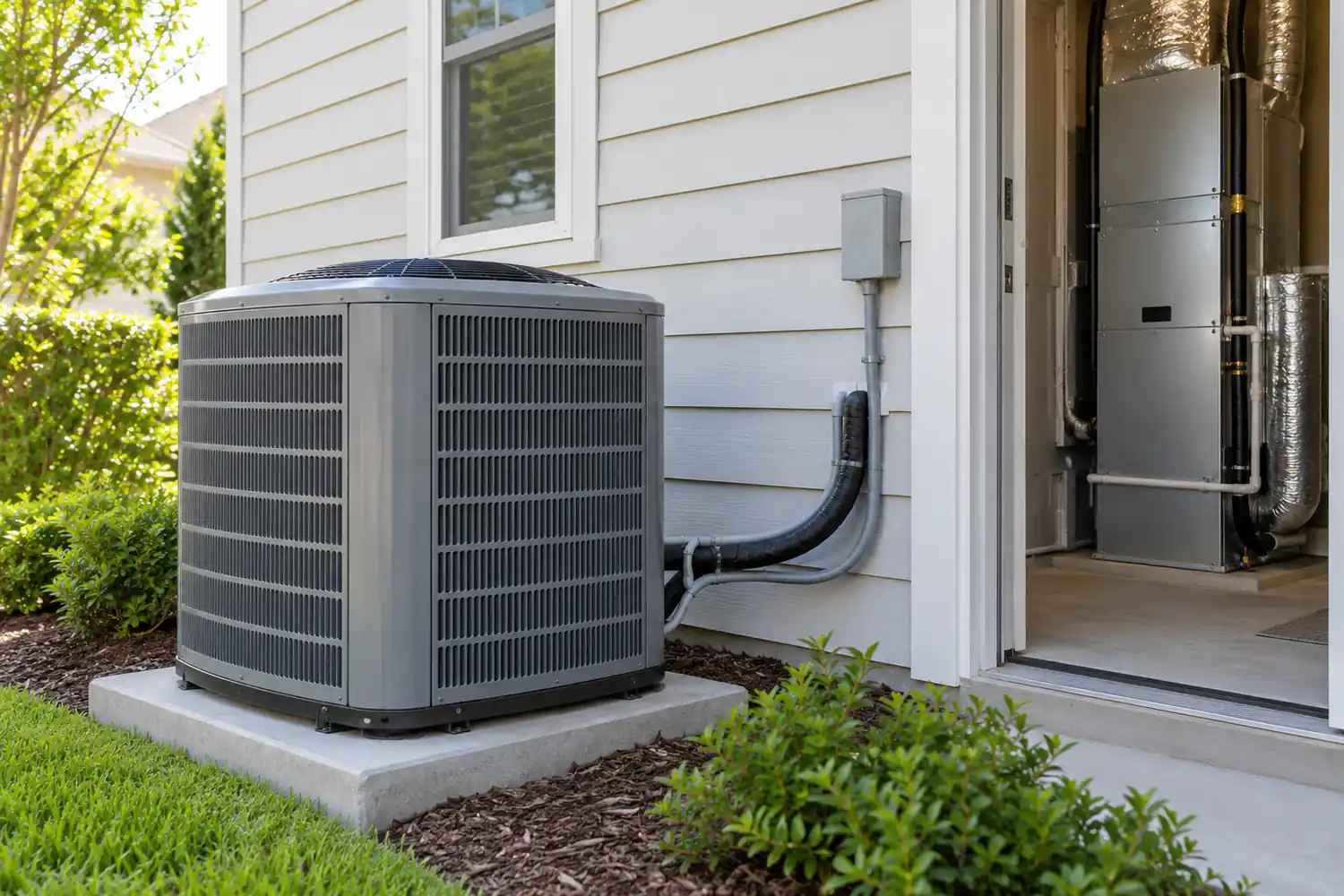
The exact order and position of the expansion device vary by design; it may be near the indoor unit or integrated elsewhere. The key relationship stays the same: the indoor coil absorbs heat and the outdoor coil rejects it during cooling. This is why an outdoor fan or dirty coil can affect indoor cooling even if the indoor blower still works.
A reversible heat pump uses the outdoor coil to absorb heat during heating instead of rejecting it as a cooling-only condenser does. Our air conditioner vs heat pump guide explains when that difference changes the system choice.
Should the outside AC unit blow hot air?
Yes. During active cooling, the air leaving a working outdoor condenser is normally warmer than the air entering it. That warmth is heat from indoors plus heat associated with compressor power. The temperature difference changes with load, weather, fan speed, and equipment design. Warm discharge air shows heat is being released, but does not by itself confirm correct capacity or refrigerant charge. If the system is off or in a startup delay, the fan may not be moving air at all.
Does the outside unit run whenever the indoor fan runs?
No. In many central systems the indoor blower can run with the thermostat set to FAN ON even when cooling is not requested. Variable-speed systems can slow down or stop their compressors, and some controls delay outdoor startup. Compare the outdoor behavior with an actual call for cooling and the startup delay stated in the model manual, rather than judging it from the indoor fan alone.
What Parts Are Inside an Outdoor AC Condenser Unit?
The main outdoor AC unit parts are the compressor, condenser coil, condenser fan and motor, electrical controls, and refrigerant connections. Their positions differ by manufacturer. The following parts list also works as a plain-language guide when reading an air conditioner condenser parts diagram.
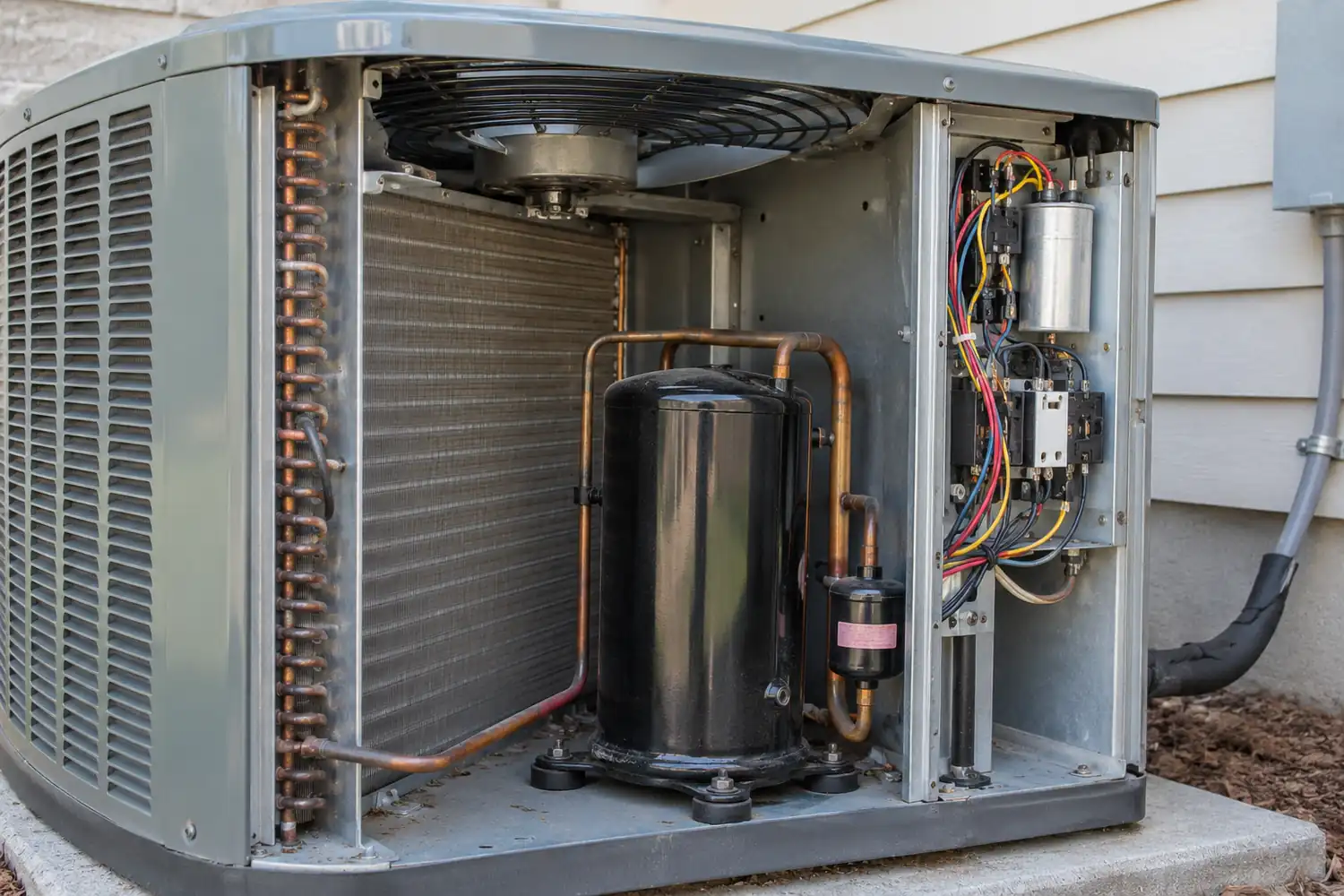
| Part | Job | Why it matters when something goes wrong |
|---|---|---|
| Compressor | Compresses and circulates refrigerant vapor | A failed start or mechanical fault can stop cooling; a hum is not proof of compressor failure |
| Outdoor coil and fins | Transfer refrigerant heat into outdoor air during cooling | Dirt, bent fins or blocked air paths reduce heat transfer |
| Condenser fan and motor | Move outdoor air through or over the coil | A stopped fan can prevent normal heat rejection even when another part is running |
| Contactor or power switching parts | An electrically operated power switch on equipment that uses a contactor | Failed contacts or control signals can keep the unit off |
| Capacitor, if fitted | Helps certain single-phase motors start or run | Failure can affect fan or compressor starting; it can retain a dangerous charge |
| Control board, sensors and protection devices | Manage operation, fan speed, temperature and safety | A protection shutdown or communication fault may resemble a failed motor |
| Refrigerant service valves and line connections | Join the outdoor unit to the indoor refrigerant circuit | Leaks, incorrect piping or incompatible fittings require qualified diagnosis |
| Cabinet, grille and mounting base | Protect and support the equipment while allowing airflow | Damage, vibration or settlement can cause noise and service problems |
On a typical top-discharge central condenser, the outdoor coil runs around the cabinet sides, the fan sits near the top, and the compressor is inside the lower cabinet. Many mini splits use a side-discharge fan and a different internal layout. Use the exact manufacturer’s parts drawing for that model to identify components. Leave cabinet opening and internal inspection to a qualified technician.
Some inverter outdoor units use electronic drives and motors that do not have the same conventional start/run capacitor layout as a basic single-speed system. A heat pump normally also has a reversing valve and defrost controls. A parts diagram must match the exact model and serial range before anyone orders a fan, capacitor, coil, control board or compressor.
Is the AC condenser the same as the compressor?
No. The compressor is one sealed mechanical component. The condenser coil is the heat exchanger outside. The condensing unit is the whole outdoor assembly. This distinction matters when a quote says “replace condenser”: ask whether it means cleaning or changing the coil, replacing a specific part, or changing the full outdoor unit.
What Should You Check Before Choosing an Outdoor Unit?
Choose an outdoor AC unit using the building’s calculated load and a manufacturer-approved indoor/outdoor system match. Check cooling capacity at the site’s design temperature, the compatible indoor coil or air handler, controls, refrigerant, electrical supply, and installation conditions. For a heat pump, also check heating output at the winter design temperature.
Before choosing a new system or asking for a replacement quote, check these six conditions:
| Check | Why it changes the choice | What to confirm |
|---|---|---|
| Cooling load | A unit that is too small may not hold temperature on design days; one that is too large can cycle poorly. | Ask for a room or building load calculation and the required cooling output in Btu/h or kW. One ton of cooling equals 12,000 Btu/h; tonnage is capacity, not equipment weight. |
| Indoor/outdoor match | Outdoor capacity and rated efficiency depend on the matching indoor coil, fan and controls. | Record the exact indoor and proposed outdoor model numbers; obtain manufacturer matching documents and an AHRI reference number when applicable. |
| Refrigerant and pipes | Different refrigerants and pipe requirements can rule out a simple cabinet swap. | Check the existing refrigerant label, approved system combination, pipe sizes, length and height limits. Do not assume different refrigerants can be mixed. |
| Electric supply and controls | Voltage, circuit requirements and control communication may differ by model. | Confirm the electrical nameplate, circuit design, disconnect and compatibility with the thermostat or indoor controller. |
| Climate and measured performance | Cooling output can change on extremely hot days. A heat pump’s winter heating output can fall as outdoor temperature drops. | Compare manufacturer capacity at the local design conditions. Compare SEER2 on a matched rated system rather than treating it as a rating for an isolated outdoor cabinet. |
| Space, noise and service | Blocked air paths, poor support and difficult access can impair operation and add installation cost. | Verify model-specific clearances, mounting load, noise location, winter drainage and future service access. |
If any condition changes, revisit the equipment choice. For example, a larger calculated load may call for more capacity; a different indoor coil or refrigerant may require a different outdoor model or a complete matched system. A heat-pump project also needs heating capacity at the winter design temperature, not merely its cooling tonnage.
Where Should the Outdoor Air Conditioner Unit Be Installed?
An outdoor unit should sit on a stable, level support with clear airflow paths, room to service it, safe electrical access, and a workable refrigerant-line route. Noise exposure, water runoff, snow, flooding, and local placement rules can change the best location. A condenser pad supports a ground-mounted cabinet; suitable wall brackets or roof supports may be used when the exact model and structure allow them.
Check these points before fixing the location:
- Air intake and discharge: Leave the clearances required by the exact model manual. A fence, hedge, tight corner or cover can make the fan pull its own hot discharge air back into the coil, reducing cooling performance.
- Service space: The electrical access panel, coil and fan must remain reachable. Clearance for a service panel may be larger than clearance for airflow on another side.
- Support and vibration: Use a suitable level pad, stand or bracket sized for the operating weight and local wind or seismic conditions. An unstable pad can strain connected lines and increase noise.
- Lines and power: Confirm the approved pipe length, height difference, electrical supply, disconnect placement and control-wiring route for the matched system.
- Weather and drainage: Keep roof runoff away from the cabinet. Raise and drain heat-pump equipment as required where snow or defrost water could freeze around the base.
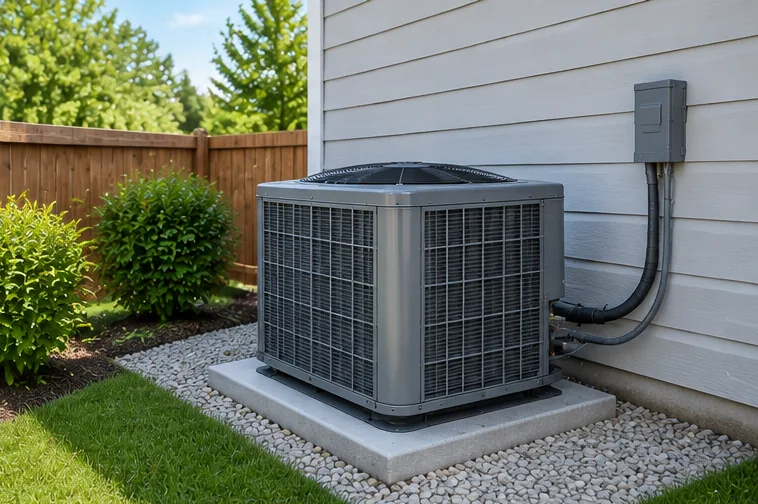
Use the exact model’s installation drawing for air inlet, discharge and service clearances. Trane’s residential maintenance guidance gives an example of keeping plants around two feet away, while the required distance may differ at each side of a particular unit.
Can I hide my outdoor AC unit behind a fence or a cover?
Only if the screen or cover leaves the manufacturer-required airflow and service space clear. A close, solid fence can trap discharge air. A full cover should not remain over an operating unit. In particular, a heat pump needs open air and drainage during winter heating and defrost. If you want a decorative screen, choose its position after checking the unit’s airflow direction and service clearance.
How Do You Clean and Maintain an Outside AC Unit?
Keep leaves, grass and plants away from the unit, and clean a dirty outdoor coil using the method approved in its manual. Regular checks are easier than waiting until heavy debris reduces airflow. ENERGY STAR recommends annual professional maintenance, including inspection and cleaning of indoor and outdoor coils when needed.
For a routine outside check:
- Turn cooling off at the thermostat. Before any permitted coil cleaning, follow the manufacturer’s instructions for isolating power; if you cannot confirm safe isolation, leave the cleaning to a technician.
- Pick up loose leaves and grass clippings from the ground and clear plants from the airflow openings. Do not reach through the grille or open an electrical panel.
- Look at the visible coil surfaces. Heavy dirt, greasy buildup, damaged fins or debris trapped deep inside call for model-specific servicing.
- If the manual permits it and power is safely isolated, a gentle garden-hose rinse on the coil’s exterior may remove light dust. Never use a pressure washer, force water into electrical parts, or bend the fins.
- After the unit is restored to normal operation, check that cooling resumes and no unusual noise or vibration appears. If it does not, stop and book service instead of repeating resets.
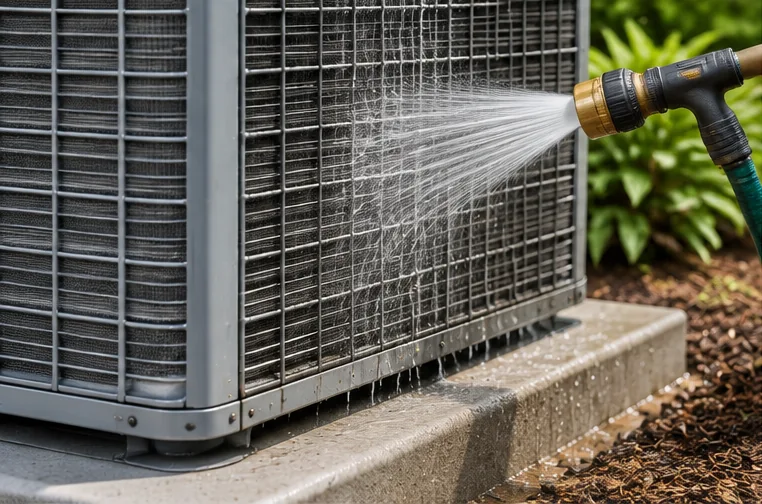
Stop at accessible exterior debris. If dirt is packed deep inside the coil, fins are damaged, or cooling stays weak after the visible blockage is removed, book a model-appropriate professional inspection and cleaning. If cooling remains weak, have a technician check airflow, coils and system operation instead of repeating cleaning or electrical resets.
The indoor filter is usually not inside the outdoor condenser. Keep maintaining the indoor filter too: poor indoor airflow can make the system cool badly even if the condenser coil is clean. A service visit should also check electrical connections, fan condition, refrigerant performance and controls when relevant. ENERGY STAR’s HVAC maintenance checklist outlines typical professional checks.
Do outdoor air conditioners need winter covers?
Most outdoor AC units do not need a full winter cover. A cooling-only unit may use a manufacturer-approved off-season top guard or cover, if the manual permits it and the system is off. A heat pump that runs for winter heating needs open airflow and drainage during operation and defrost; keep any cover off while it operates. Follow the exact model manual, and clear snow around air paths without striking coil fins.
Why Is My Outside Air Conditioner Unit Not Running or Making Noise?
An outdoor AC unit may stay off because cooling is not being requested, a startup delay is active, power is interrupted, or a control, fan, or compressor has a fault. Loud rattling or scraping may come from loose debris, cabinet mounts, or fan interference; buzzing or repeated clicking may signal an electrical or motor problem. Check thermostat settings and displayed fault codes first, then use the symptom table below to decide what service is needed. Do not open panels, touch a capacitor, spin the fan by hand, or repeatedly reset a tripping breaker.
| What you notice | Useful first check | What to do next |
|---|---|---|
| No outdoor operation, indoor fan still moving air | Confirm cooling mode, setpoint and any model startup delay | If it stays off during a real call, have controls, power and safety lockouts tested |
| Outdoor fan stopped but a hum or compressor sound continues | Observe from a safe distance; do not insert anything through the grille | Stop cooling and call a technician; missing airflow can overheat equipment |
| Loud rattling or scraping | Look for loose debris outside the grille and note when the sound begins | Stop operation if severe; request fan, mount and cabinet inspection |
| Buzzing or repeated clicking, no cooling | Note error codes, cycling pattern and recent power events | Have contactor, capacitor, motor, compressor and controls checked |
| Weak cooling, coil visibly packed with dirt | Look for blocked airflow around the cabinet | Clear loose external debris; request proper coil cleaning and system checks if cooling stays poor |
| Heat pump steams and fan pauses in cold-weather heating | Check whether it follows a short defrost event and heating resumes | Normal defrost can cause steam; persistent solid ice or no heat needs service |
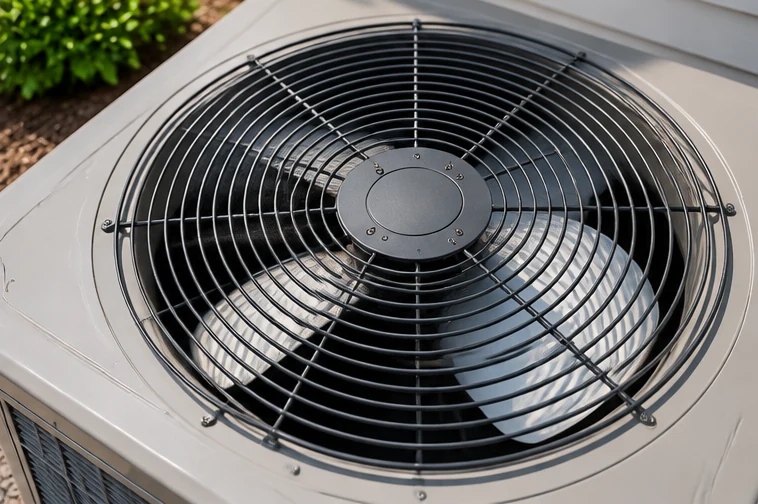
Before arranging service, record the thermostat mode and set temperature, how long cooling or heating has been requested, any visible error code, whether the fan moves, and when a hum, click or vibration occurs. Note any repeated breaker trip, but do not keep resetting it. If the model label is safely visible, take down the model number without opening a panel. A completely silent unit may be waiting through a normal startup delay, may not have received a control call, or may have lost power. This record helps a technician test the correct branch instead of assuming the compressor has failed.
A few normal behaviors can look like faults. A cycling or inverter compressor may not run all the time, and a heat pump can briefly stop its outdoor fan during defrost. By contrast, a condenser fan that stays stopped while the compressor runs in cooling mode needs prompt attention. Repeated breaker trips, a burning smell, smoke, or damaged wiring mean stop using the system and seek professional assistance.
What if the outdoor unit is running but the house is not cooling?
An outdoor unit can run while rooms stay warm because the thermostat is set incorrectly, indoor airflow is restricted, the indoor coil is iced, the outdoor coil is dirty, or the refrigerant or controls are not working correctly. Check the thermostat settings and an accessible indoor filter first. If cooling stays weak, have a technician evaluate airflow, coils, controls and refrigerant operation before authorizing a repair. For a step-by-step symptom guide, see Airproz’s AC not cooling troubleshooting guide.
How Much Does an Outside Air Conditioner Unit Cost?
Published U.S. residential ranges are $1,500–$5,500 for outdoor equipment only and $3,500–$8,500 for a standard installed outdoor-unit replacement, according to PICKHVAC’s October 7, 2026 guide. These estimates assume common residential equipment and access conditions. Carrier’s October 27, 2026 central air conditioner pricing guide gives a broader $3,000–$15,000 or more installed range and notes that an indoor evaporator coil, furnace or duct modifications may cost extra. These published U.S. ranges cover different scopes and are not Airproz quotations.
| Quote item | What may be included | What you should verify |
|---|---|---|
| Outdoor equipment only | One condenser or heat-pump outdoor unit | Capacity, efficiency, refrigerant, voltage, compatible indoor unit, warranty and taxes |
| Installed outdoor-unit replacement | Equipment, removal, connections and startup work, depending on quote | Labor, permits, old-unit disposal, refrigerant recovery, new piping, electrical work and commissioning |
| Matched system replacement | Outdoor unit plus a compatible indoor coil or air handler, sometimes controls | Both equipment identities, system efficiency rating, installation scope and warranty |
| Repair instead of replacement | A diagnosed fan motor, capacitor, contactor, control or coil repair | Failure cause, labor, parts, refrigerant handling and expected system condition after repair |
Example (hypothetical quotes): Quote A is $4,800 installed, including startup testing and old-unit disposal. Quote B starts at $3,900 but excludes $450 for refrigerant work, $300 for electrical work and $200 for disposal. Its comparable total is $3,900 + $450 + $300 + $200 = $4,850—and you still need to confirm whether startup testing is included. Compare the same approved equipment pairing, warranty, permits and completion checks before judging which quote costs less.
The quoted scope can move the total more than the outdoor unit’s label price. A basic same-position replacement is different from changing refrigerant type, replacing the indoor coil, moving the pad, upgrading the electrical circuit or repairing damaged lines.
Can you replace only the outdoor AC unit?
Sometimes—but only when the new outdoor unit is a documented match for the existing indoor equipment. Check both model numbers, refrigerant, coil and air handler, controls, capacity, line sizes, electrical supply, permitted piping length, efficiency claims and warranty. An outdoor cabinet cannot be selected by tonnage alone. If there is no approved match, ask for a compatible indoor-and-outdoor system option instead.
R-410A repairs and new installations are different questions in the United States. EPA allows eligible R-410A components marked for servicing existing equipment to repair legacy R-410A systems. Its May 2026 rule also removed the installation deadline for qualifying pre-2025 inventory: new residential or light-commercial systems using specified components manufactured in or imported into the United States before January 1, 2025 can still be installed under that exception. That does not authorize using a later-made service-only component to build a new system. For exact conditions, check the EPA Technology Transitions restrictions and the EPA equipment FAQs.
An R-454B or R-32 outdoor unit is not a drop-in replacement for an R-410A indoor circuit. EPA explains that mildly flammable refrigerants such as R-454B and R-32 cannot be used in existing equipment that was not designed for them. Ask what refrigerant the existing model label shows and what replacement pairing the manufacturer explicitly permits. If an AHRI-certified U.S. split-system match applies, ask the installer for the AHRI Certified Reference Number or Certificate of Certified Product Performance. AHRI rates the indoor-and-outdoor combination, not an arbitrary outdoor cabinet on its own. For equipment outside that program, request the manufacturer’s matching and performance documents.
Repair or replace: which decision makes sense?
Repair a confirmed fault if the rest of the system is sound and the complete repair cost makes sense; compare replacement when several major parts are failing, the fault recurs, or a compatible repair cannot be supplied. Ask for the diagnosis, repair scope, warranty credit and a comparable installed replacement quote. Age alone is not a replacement rule, and a loud fan is not proof that a compressor needs changing.
| Confirmed condition | Next quote to request | What changes the decision |
|---|---|---|
| One failed fan motor, control or switching component | Targeted part and labor repair, with the fault test and warranty shown | Repair is more attractive when the rest of the system is in good condition and the correct part is available. |
| Failed compressor or leaking outdoor coil | Written diagnosis and complete repair estimate alongside installed outdoor-unit or matched-system options | Refrigerant work, labor, remaining warranty, reliability and downtime can outweigh a low parts price. |
| No manufacturer-approved indoor/outdoor match for the proposed swap | Properly sized matched-system option, including indoor equipment, controls and startup | Ask for a written price for the complete supported system, including startup. |
Check warranty credits before approving work. Give the service provider the exact model and serial numbers and ask which part is covered. A parts warranty does not automatically cover travel, labor, refrigerant, testing or disposal. Ask for the covered part credit as a separate line on the final written price, and agree how any newly discovered work must be approved.
How Is an Air Conditioner Outdoor Unit Installed or Replaced?
A qualified installer verifies the matched equipment and site, mounts the outdoor unit, connects the refrigerant and electrical systems, and tests the complete system. The handover should include documented startup and operating checks, not just the installed cabinet.
The typical sequence is to:
- Verify cooling load and the compatible indoor/outdoor pairing, including controls, refrigerant, line sizes and allowed pipe length.
- Check the pad, brackets, airflow clearance, support and safe service access; position the unit away from flood and drainage hazards.
- Isolate the existing equipment and, for a replacement, recover refrigerant and disconnect it using the required qualified service process.
- Mount the new equipment, complete the specified piping and wiring, and carry out the manufacturer’s leak, evacuation and charging procedure.
- Start the complete system and carry out commissioning—the tests that confirm it operates as designed; verify electrical operation, fan and compressor behavior, airflow, temperatures, controls, drainage and model-specific performance checks.
- Record the paired model numbers, refrigerant and charge information, startup measurements, warranty terms and maintenance instructions for handover.
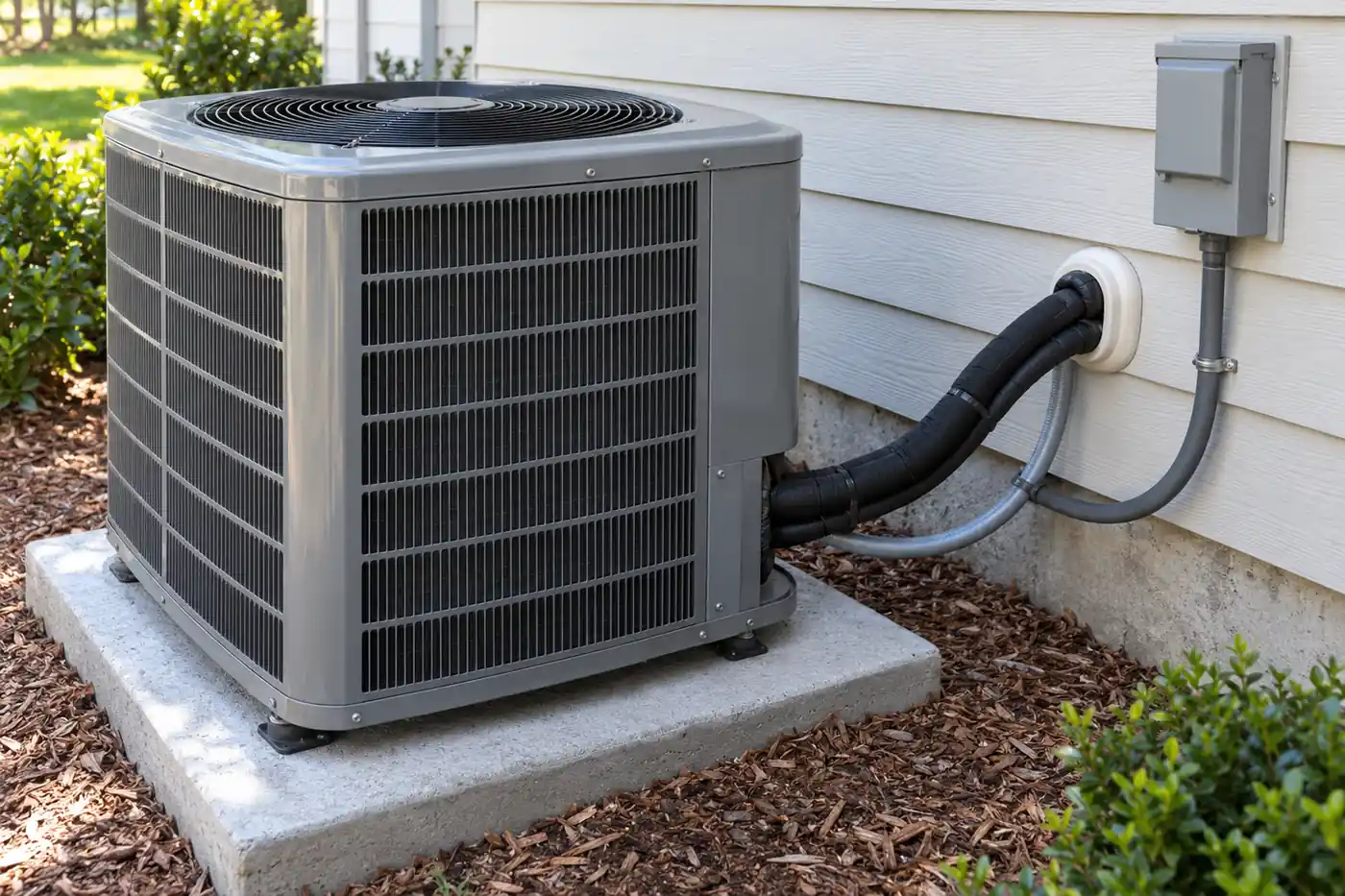
In the United States, technicians who service equipment in ways that can release refrigerant must meet applicable EPA Section 608 certification requirements. See the EPA technician certification requirements. Other markets have their own rules. Refrigerant recovery, electrical wiring and internal component testing are not homeowner cleaning tasks.
A mini split may add manufacturer-specific communication wiring, piping and multi-zone rules. A heating heat pump also needs defrost-water management and verification of heating capacity at the intended winter conditions. For more on the differences between indoor and outdoor sections in a ductless system, see our mini split AC guide.
Air Conditioner Outdoor Unit: Key Takeaways
The outside air conditioner unit moves heat, not outdoor air, between the building and the outside environment. In cooling mode, its compressor, coil and fan work together to release heat. Keep airflow open and the cabinet stable, maintain the unit according to its manual, and use the symptom—not a guess about the compressor—to guide service. When replacing the condenser, confirm the entire matched system and the full installation scope before comparing prices. A reversible heat pump needs a different operating and winter-drainage check than a cooling-only condenser.
Planning a new air-conditioning project or a matched-system replacement? Share the destination market, building use, calculated cooling load, design outdoor temperatures, power supply, indoor/outdoor configuration and equipment quantity. We can use those details to discuss suitable Airproz air-conditioning equipment and system options. For a fault in an existing residential unit, arrange a local qualified technician’s diagnosis before requesting replacement equipment.
Frequently Asked Questions About Outdoor AC Units
Does the outside air conditioner unit bring fresh air into the house?
No. A normal split AC outdoor unit uses outdoor air to release heat from the refrigerant; it does not blow that outdoor air through your indoor vents. Fresh-air ventilation needs its own designed path.
Can I run my AC if the outdoor condenser fan is not spinning?
No, not if the compressor is running in cooling mode while the outdoor fan stays stopped. Turn cooling off and arrange service. A normal startup delay or a heat-pump defrost cycle can also pause the fan, so check the operating mode and expected timing without reaching into the unit.
Why is water dripping under my heat pump outdoor unit in winter?
It is often meltwater from a normal defrost cycle. During heating, frost on the outdoor coil may melt and cause dripping or brief steam; heating should resume after defrost. Persistent thick ice, blocked drainage, or no heat needs professional attention.
Can an outside AC unit get wet in the rain?
Yes. Properly installed outdoor-rated AC equipment is designed to withstand ordinary rain. Keep drainage clear, and do not pressure-wash the coil, spray electrical parts, submerge the cabinet, or run equipment affected by flooding. Follow the model manual for cleaning.
Can I replace a condenser outside without replacing the indoor unit?
Sometimes. The manufacturer must approve the exact indoor/outdoor pairing, refrigerant, controls, capacity, piping and electrical requirements. For an eligible U.S. AHRI-certified system, ask for its reference number or certificate. An R-454B or R-32 unit is not a drop-in swap for an older R-410A indoor circuit. EPA allows eligible legacy R-410A servicing parts, but the system still needs a documented match.
How often should I clean the outdoor air conditioner unit?
Inspect for blocked airflow during the cooling season and after yard work or storms. Remove accessible leaves and grass as needed, clean the outdoor coil when its condition and the model manual call for it, and arrange professional maintenance about once a year.
Does the outside AC unit need to be level on its condenser pad?
Yes. It should be supported and level within the limits given in its installation manual. If the pad settles or the unit tilts, ask an installer to inspect the support and connected refrigerant lines before moving it.
Does every air conditioner have a separate outside unit?
No. A split central AC or ductless mini split has a separate outdoor section. A window air conditioner or a typical portable air conditioner puts its cooling parts in one cabinet and sends heat outdoors through an outside-facing section or exhaust hose. A packaged central system also puts more components together in one outdoor cabinet. Check the equipment type before searching for an outdoor-only replacement.