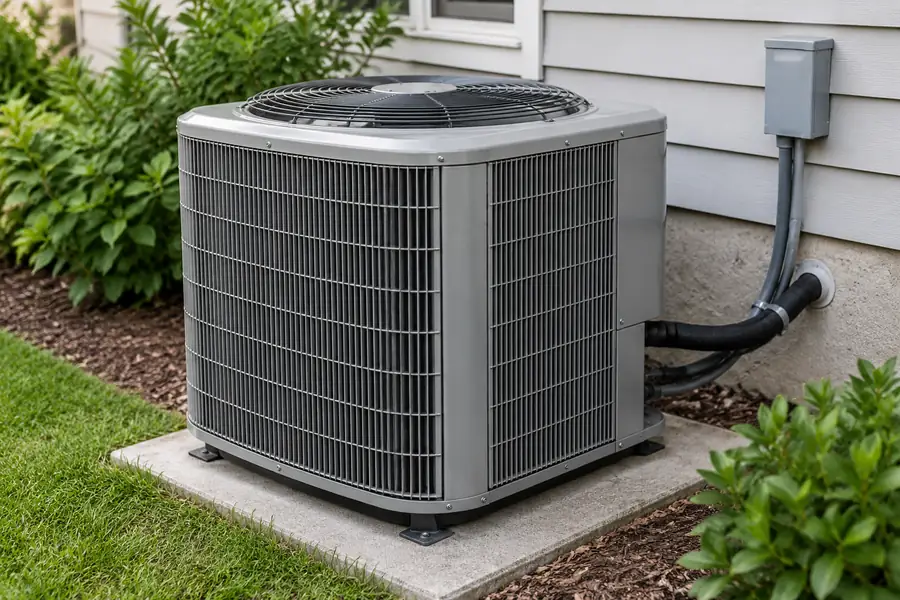
A wall-mounted air conditioner without an outdoor unit can cool a room without a separate condenser box on the building’s exterior. A fixed monoblock (also spelled monobloc) air conditioner contains its compressor, indoor cooling coil and heat-rejection coil in one indoor cabinet. Most air-cooled models still need two openings through an external wall: one brings outdoor air to the condenser, and the other returns heated air outside.
Quick answer: Choose a fixed monoblock when you need permanent cooling for one room, cannot place a normal outdoor condenser, and are allowed to make the required wall openings. Choose a split air conditioner instead when an outdoor unit is permitted and you want greater flexibility for capacity, room placement and indoor noise. If you cannot drill an exterior wall or provide another approved heat-rejection path, an ordinary air-cooled wall monoblock will not solve the problem.
What Is a Wall-Mounted Air Conditioner Without an Outdoor Unit?
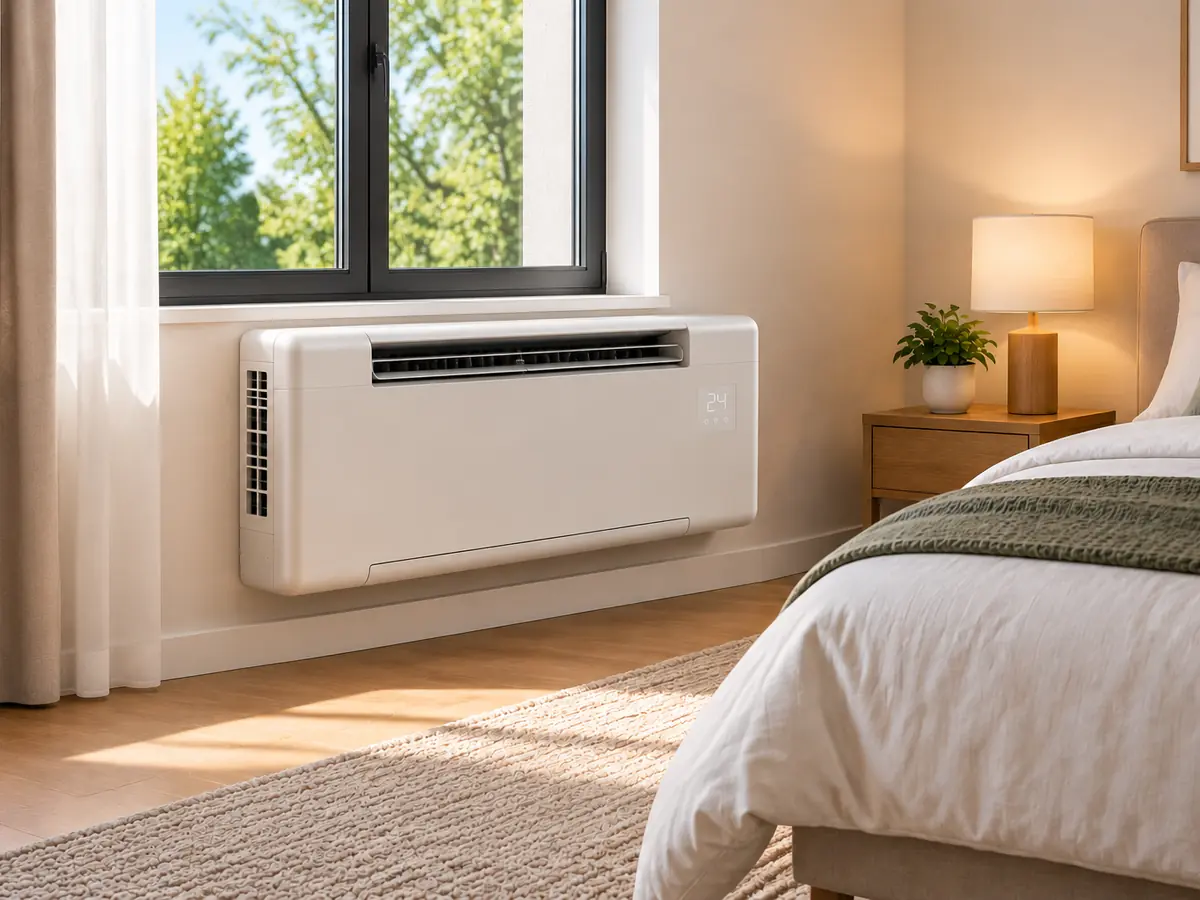
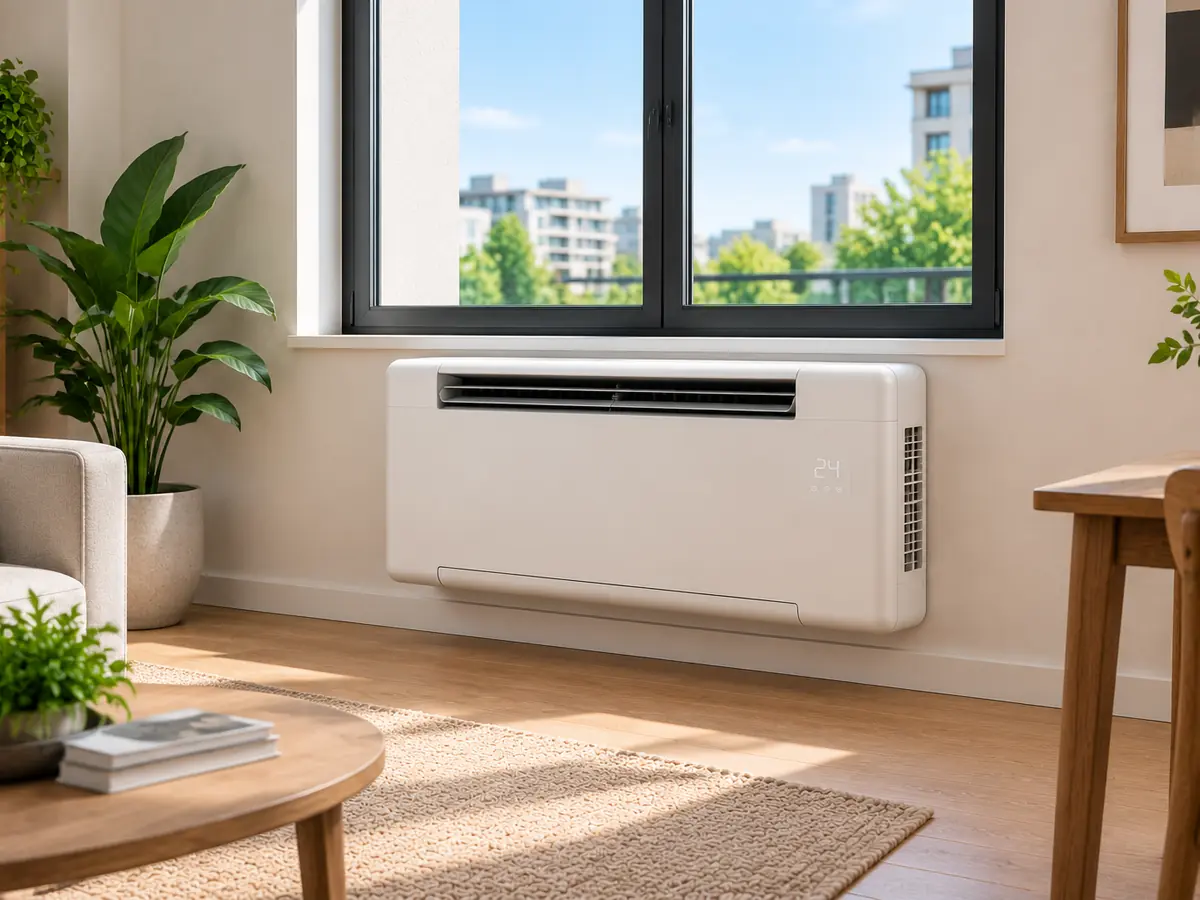
A wall-mounted monoblock air conditioner is a complete refrigeration system in one indoor housing, attached to the room side of an external wall. You may also see it described as a through-wall monobloc, all-in-one wall AC, or air conditioner without an external unit.
Its appearance can be misleading. A normal high-wall split AC has a relatively slim indoor head and a separate condenser outdoors. A no-outdoor-unit monoblock is usually a deeper or heavier cabinet because the compressor and heat-rejection parts are also inside. Some models sit high on the wall, while others are horizontal consoles installed below a window. The correct mounting position is model-specific.
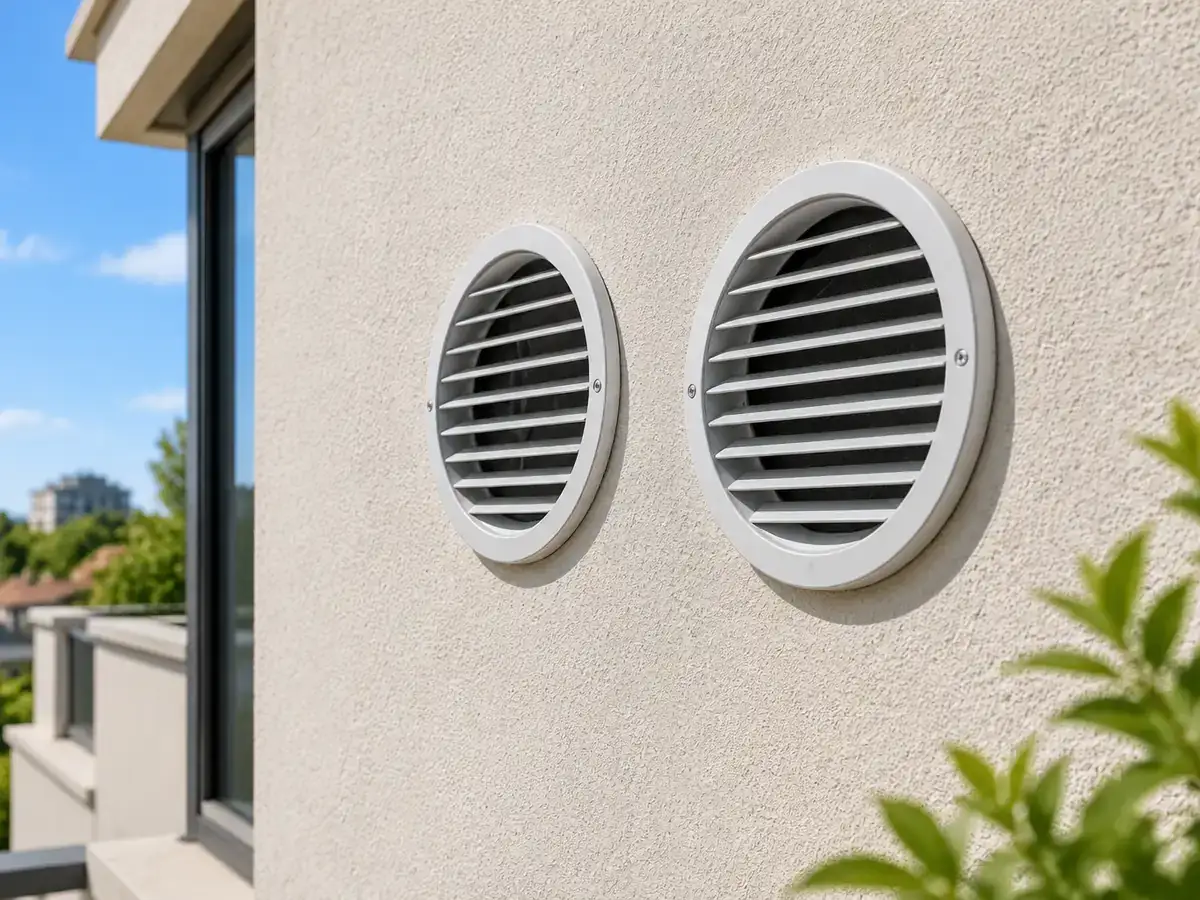
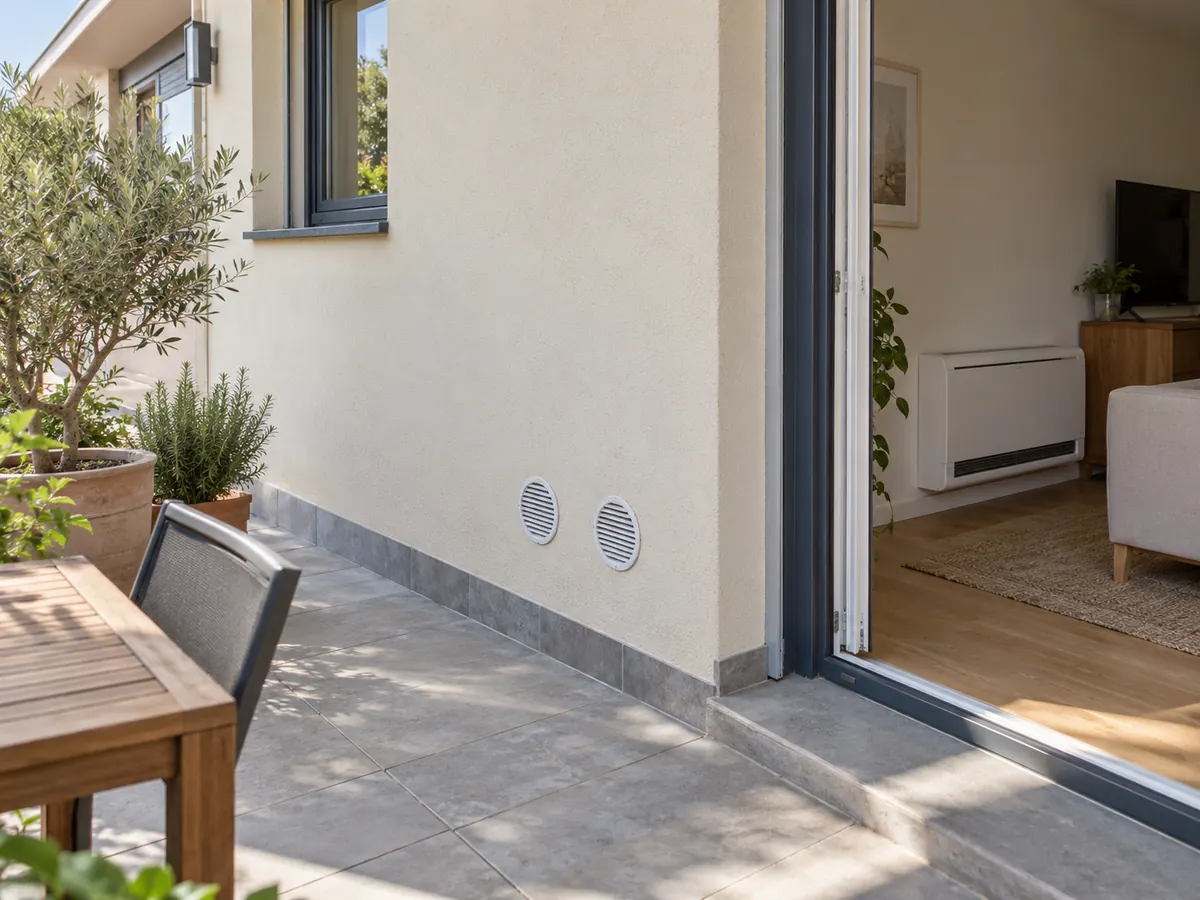
No outdoor unit does not mean no outdoor connection. The exterior of the building usually shows two small grilles, not a bulky compressor box. The grilles and any required condensate outlet are still changes to the façade. A building that forbids all external alterations may prohibit these openings too.
Here, monoblock means a self-contained room air conditioner mounted indoors. An air-to-water monobloc heat pump commonly houses its refrigerant circuit outdoors and supplies heated or chilled water to an indoor heating or cooling system.
How Does an Air Conditioner Without an Outdoor Unit Work?
It removes heat from room air and sends that heat outdoors using a short air path through the wall. The evaporator cools the room air, while a separate condenser-air circuit rejects the absorbed heat outdoors.
- Room air returns to the unit. An indoor fan draws warm, humid air over a cold evaporator coil. The air cools and, when conditions allow, moisture collects as condensate.
- Refrigerant carries the heat. A compressor and the sealed refrigerant circuit move energy from the evaporator to the hot condenser coil inside the same cabinet.
- Separate outdoor air removes the heat. A second airflow passes across the condenser using external inlet and outlet ducts. Warmed condenser air leaves through an outdoor grille.
- Cooler room air comes back inside. The two air circuits are designed to remain separate. Cooling performance depends on clear outdoor airflow and correct duct and grille installation.
The two large wall openings are not simply ventilation holes for fresh air into the occupied room. In many fixed monoblock designs they serve the condenser’s heat-rejection air circuit. Unless the exact model has a documented fresh-air function, do not assume it satisfies the building’s ventilation requirement.
Why two holes, and how large are they?
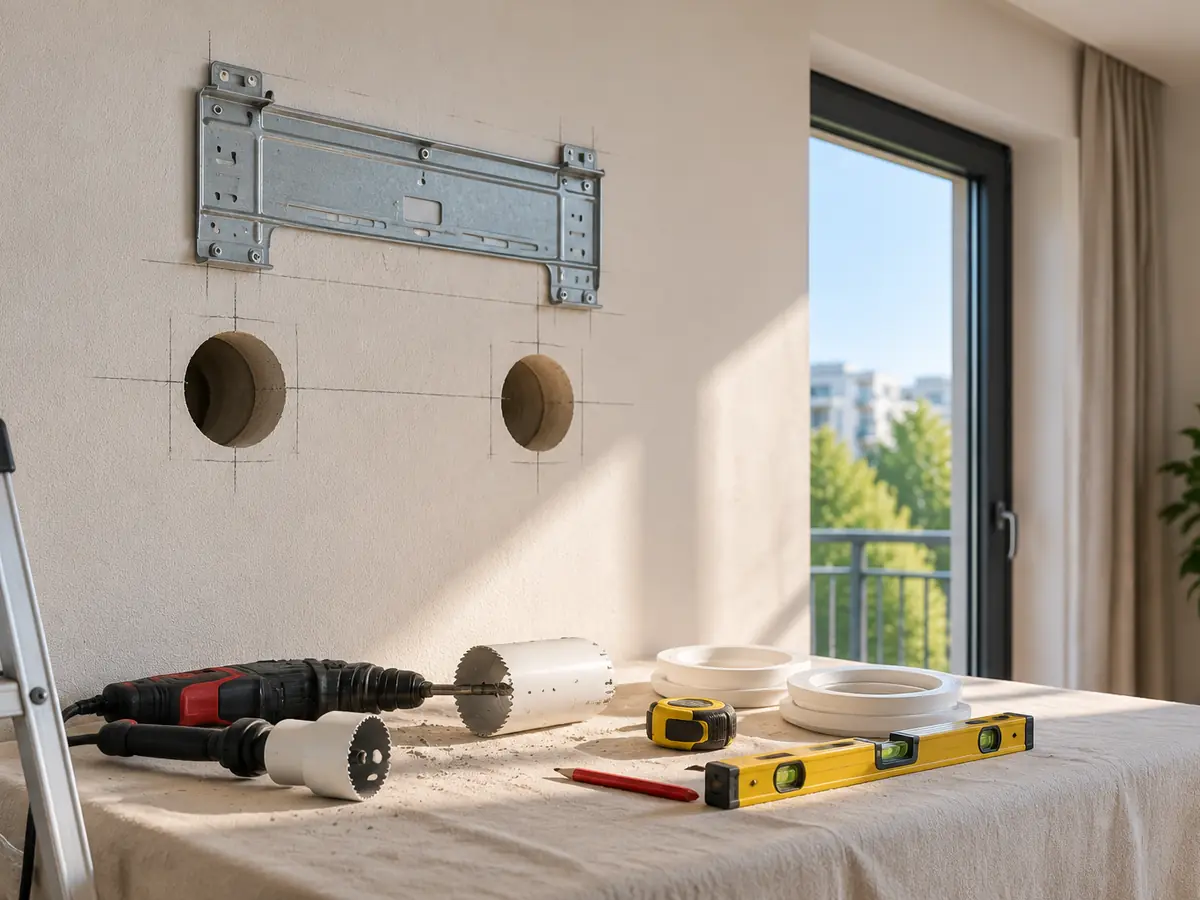
The correct openings depend on the exact model. Many wall monoblocks need one outside-air intake and one warm-air outlet, but their diameter, spacing, sleeve details and drain layout are not interchangeable. For example, INNOVA describes 162 mm façade holes for its ..2.0 range. In contrast, the MRCOOL MDM10115D installation diagram shows two 8-inch air openings and a separate 1-inch drain opening. Use the drilling template for the model you will install; verify each hole’s diameter, center position, spacing and drain route.
Before cutting any wall, match the selected model revision and template to the site. Check wall thickness and construction, permitted clearance outside, any specified downward slope and safe weather sealing. Arrange a structural or waterproofing survey where the building conditions require one.
Which Air Conditioner Type Works When You Cannot Install an Outdoor Unit?
A fixed monoblock is usually the closest replacement for a permanent single-room split AC when a separate outdoor condenser is forbidden but wall grilles are allowed. If the building does not permit any exterior holes, compare a suitable portable exhaust route or a professionally designed water-cooled arrangement instead. Each option still has to reject heat somewhere.
| Cooling option | Where the heat goes | Exterior work | Best use | Main trade-off |
|---|---|---|---|---|
| Fixed wall-mounted monoblock | Outside through short intake and exhaust ducts | Commonly two wall grilles, plus possible drain | One room needing permanent cooling and no exterior condenser box | Compressor stays indoors; external wall needed |
| Portable compressor AC | Outside through one or two exhaust hoses | Approved window/vent outlet | Temporary cooling or no permanent wall work | Hose sealing, noise and floor space |
| Wall-mounted mini-split | Refrigerant lines to a separate outdoor condenser | Outdoor unit, piping and drain route | Regular use, flexible indoor placement or several rooms | Outdoor unit must be allowed |
| Specialist internal water-cooled AC | Water supply or building water loop transfers the heat away | Depends on water and drain services | Projects where air ducts through the façade cannot be used | Plumbing, water use or shared-plant requirements; specialist design |
A window or conventional through-wall AC is another option where a suitable approved opening exists; its cabinet generally straddles the building envelope or uses a sleeve. It is not the same as a slim indoor-mounted wall monoblock with separate rear ducts. A fan or an evaporative air cooler is not a like-for-like replacement for a refrigerant air conditioner, especially when humidity is high.
Monoblock vs mini-split: which should you choose?
Choose the monoblock when the outdoor box is the main barrier, the room touches a suitable external wall, and the cooling load fits the available model. Choose the mini-split when you have a permitted outdoor mounting location, want the compressor outside the occupied space, need more placement freedom or want multiple rooms served by a planned system. For efficiency, compare the exact monoblock and mini-split models using equivalent rated cooling loads, temperature conditions and applicable test metrics.
For a closer look at indoor and outdoor unit layouts, see our mini split air conditioner guide. It explains single-zone and multi-zone split systems, which still need a permitted outdoor unit.
Is a No-Outdoor-Unit Air Conditioner Right for Your Room?
It is most useful for one enclosed room in a building where an outdoor condenser would be difficult to position, unsightly or prohibited. Bedrooms, small offices, studios, single hotel rooms and some apartment rooms can be suitable if the physical installation and measured load work.
Before choosing, answer these questions:
- Can you use an external wall? The unit normally needs a direct, short route for both air ducts. An internal partition facing a corridor will not normally work.
- Are façade changes permitted? Check the building owner, HOA, condo board, landlord or local approval process before making holes. No condenser box does not automatically mean unrestricted installation.
- Is the wall safe to core-drill? Check structural material, reinforcement, buried services, waterproofing, historic fabric and fire separation with the appropriate building professional.
- Where will water drain? Cooling removes moisture. Confirm the approved collection or drain route and whether heating/defrost adds other water-disposal needs.
- Will the noise be acceptable? The compressor is in the room. A low fan-mode noise number does not represent every cooling condition; compare operating sound levels and mounting vibration.
- Can the room be cooled by one unit? High solar gain, open doorways, tall ceilings or heavy equipment loads can require more than a compact unit provides.
For example, an apartment bedroom with an external brick wall and approval for two grilles may be a good candidate. A windowless interior bedroom surrounded by other rooms is usually not, even if there is enough indoor wall space to hang the cabinet. The missing item is a compliant way to reject heat outside, not a different mounting bracket.
What to choose when the building has a restriction
| Site condition | Recommended next step |
|---|---|
| No outdoor condenser cabinet allowed; two external air grilles approved | Check a fixed twin-duct wall monoblock and its exact installation template. |
| No façade holes or outdoor heat-rejection route approved | Do not order an ordinary air-cooled twin-duct monoblock. First investigate a legally approved alternative. |
| Outdoor condenser position approved; quiet operation is important | Compare a correctly sized split system with noise data taken under like conditions. |
| Several separate closed rooms | Calculate each room’s load and compare a multi-room design instead of expecting one unit to serve every room. |
Where a separate outdoor condenser is allowed, you can review the AirProz R32 T1 inverter split air conditioner series as an alternative for suitable markets. It uses an indoor and an outdoor unit, so select it only when that arrangement is permitted and the model’s electrical and market requirements fit the project.
How Do You Size and Compare Wall-Mounted Monoblock Air Conditioners?
Start with the room’s cooling load, then check a model’s rated cooling capacity and the conditions behind that rating. Floor area is a useful first screen but not a final design calculation.
Start with the room, not the advertised BTU number
Measure the length and width of each conditioned area and calculate floor area. Note ceiling height, insulation, sun exposure, glazing, occupancy, cooking appliances and equipment that produces heat. A shaded bedroom and a top-floor room with large west-facing windows can need different cooling capacities even if both have the same floor area.
As a rough starting point, ENERGY STAR’s room-AC sizing guidance uses room area and standard assumptions. It lists 8,000 BTU/h for 300–350 sq ft and 10,000 BTU/h for 400–450 sq ft. Use those floor-area figures for initial screening, then adjust for strong sun, shade, extra occupants and kitchens, as ENERGY STAR advises. For unusual rooms or high loads, obtain a room-by-room cooling-load calculation before choosing a specific model.
For a deeper explanation of BTU estimates and room heat-gain inputs, use our air conditioner sizing guide. Apply the resulting cooling load to the actual monoblock model and its rated test conditions.
Compare these model specifications
| Specification | What to look for | Why it changes your choice |
|---|---|---|
| Rated cooling capacity | BTU/h or kW with test conditions | Determines whether the selected unit can meet heat gain |
| Efficiency rating and electricity input | Applicable regional efficiency metric; electrical input in W or kW | Lets you compare models on a consistent basis and estimate use |
| Indoor sound | Cooling-mode sound levels at stated fan speeds, not just fan-only figures | Affects bedrooms and quiet offices |
| Air openings and mounting template | Hole number, diameter, spacing, wall thickness and grille clearance | Determines whether the unit can physically be installed |
| Drainage and heating function | Condensate route; whether the exact model is reversible | A cooling-only model cannot be assumed to heat; drainage differs |
| Supply and service | Voltage, frequency, plug/circuit requirements, filters and repair access | Prevents buying a model that cannot be installed or maintained locally |
How to compare noise and efficiency fairly
Check the test conditions before comparing two numbers. For indoor noise, ask whether the figure is sound pressure or sound power, the microphone distance, operating mode, fan speed, and whether the compressor was running. A quiet or silent-mode result is not a maximum cooling-noise result. Compare cooling output and electrical input at equivalent indoor and outdoor conditions; EER, CEER and SEER are different rating measures, so do not rank unlike figures as if they were the same test.
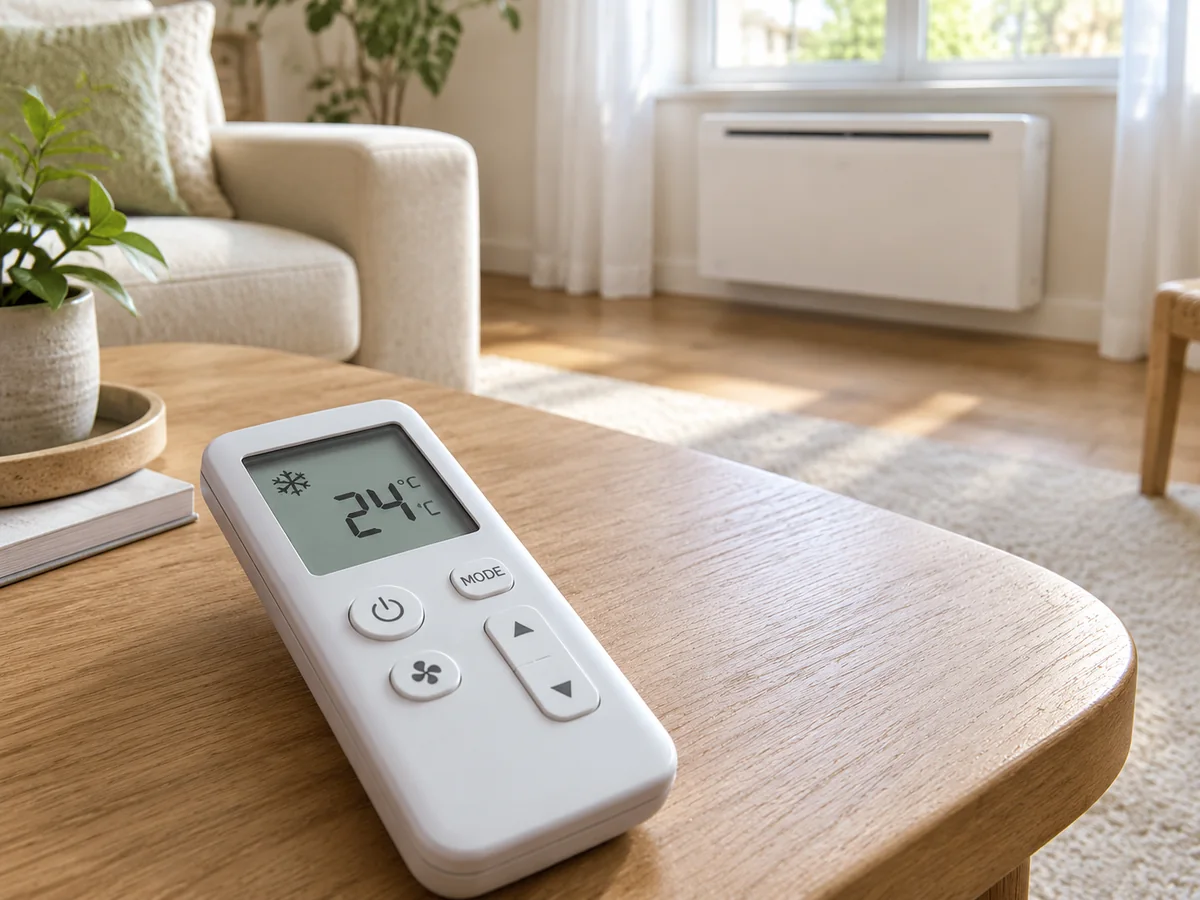
For an example of why this matters, Olimpia Splendid publishes model-specific operating modes for Unico Next; a sound number tied to a particular mode cannot be transferred to every monoblock. If one seller does not state the test method, request the data sheet rather than guessing which unit is quieter.
To compare a 2.5 kW and a 3.0 kW product, first confirm these are cooling outputs, not electrical power draws. For reference, 1 kW of cooling capacity is about 3,412 BTU/h. Then check the load and the published rating method. A model with more capacity is not automatically better: oversizing can increase cycling and reduce humidity comfort, especially without adequate part-load control.
Documents to request before you compare quotes
Send the supplier the project conditions, then request the exact documents behind the offered model. Use the documented wall, electrical and drainage conditions to screen feasible models before requesting final prices.
- Supply: project country, room-by-room cooling load (or dimensions and heat-gain conditions), wall construction, façade permissions, available power supply, expected quantity and the required delivery market.
- Request: exact model and revision, dimensioned wall-drilling template and clearance drawing, cooling capacity and input power with rating conditions, indoor acoustic test conditions, condensate and heating/defrost arrangement, wiring requirements, maintenance access and service/parts support in that market.
- Compare: only technically feasible models, and ask the supplier to mark which installation inputs remain unconfirmed before accepting a quote.
What Does Installation Involve?
A fixed monoblock avoids field-installed refrigerant lines to an outdoor condenser, but it still needs careful wall, drainage and electrical work. Plan the wall survey, drilling, weather sealing, drainage and electrical connection around the selected model’s installation manual. Use qualified installers for structural and regulated work.
- Confirm permission and select the exact model. Obtain the installation manual and full-size template. Check that the exterior grilles are permitted and their locations will remain unobstructed.
- Survey the wall and outdoor side. Confirm the wall can support the cabinet. Locate wiring, water lines, framing or reinforcement and verify fire/weather barriers and access before drilling.
- Mark and form the approved openings. Follow the model’s stated diameter, spacing, downward slope if specified, sleeves and weather sealing. Do not substitute a long flexible hose if the manual specifies short straight ducts.
- Secure the mounting system. Use approved fixings for the actual wall and equipment weight. Keep the manufacturer’s top, side, bottom and service clearances.
- Provide a safe condensate path and electrical supply. Follow the selected model’s condensate drain requirements. Match its nameplate voltage, current, circuit and connection type to the site electrical supply.
- Commission and check the result. Confirm the condenser inlet and outlet are not restricted, the air stream cools the room, water drains without leaks, vibration is controlled and all operating modes behave as specified.
If commissioning reveals a problem
Weak cooling: first check whether the outdoor intake or exhaust is obstructed or hot exhaust is being drawn back in; then verify the operating mode and load before assuming the cabinet is undersized. Water marks indoors: stop operation and have the model-approved drain route, fall and weather seal checked. Wall vibration: check the approved fixings and isolation details before retesting. After any correction, confirm stable cooling, free outside airflow, no indoor water leakage and acceptable vibration under actual operation.
Avoid two common mistakes: routing hot condenser exhaust into an enclosed balcony or shaft with inadequate airflow, and treating the façade penetrations as harmless decoration. Either can cause poor cooling or create water and building-envelope problems. Correct the outside-air route or choose another system instead of forcing an unsuitable mounting position.
How Much Does a Wall-Mounted Air Conditioner Without an Outdoor Unit Cost?
Total price is the equipment plus the wall work, electrical and drainage work, and any permit or access costs. For a realistic quote, specify the model capacity, installation location and local labor and permit requirements.
U.S. equipment-only listing snapshot, checked October 27, 2026: Prices and stock statuses below reflect the named models and sellers on that date. Verify current availability and budget installation work separately.
| Model and capacity | Seller | Listed equipment price | Availability shown |
|---|---|---|---|
| MRCOOL MDM10115D, 10,000 BTU/h | Home Outlet Direct | $1,368 | Backorder |
| MRCOOL MDM10115D, 10,000 BTU/h | MRCOOL Direct | $1,459 | Out of stock |
| Pioneer PYM012GZUI16RD, 12,000 BTU/h | Home Outlet Direct | $1,848 | In stock as shown |
The first two listings refer to the same MRCOOL model at different sellers. Add applicable tax, freight, import charges, labor, structural work and permit costs to each equipment quote; confirm current delivery availability with the seller.
For any quote, ask for separate lines covering the unit, mounting kit, core drilling and grilles, structural or weather sealing, condensate disposal, electrical work, labor, permits and commissioning. Also ask whether the unit is serviceable in your country and what the warranty actually covers. A low equipment price is not useful if the building cannot accept the required holes.
Example: estimate electricity use without guessing the product’s efficiency
For a worked example, assume an average electrical input of 0.9 kW, 6 operating hours, and an electricity rate of $0.20/kWh. These are example inputs for the calculation:
0.9 kW × 6 h × $0.20/kWh = $1.08 for that day.
The actual average power can change with outdoor conditions, set temperature, inverter behavior and load. Use the real model’s electrical input and your local tariff for a better estimate. Compare monoblock and split running costs only after checking the same cooling duty and the ratings applicable to each type.
What Are the Main Disadvantages and Maintenance Needs?
The biggest compromises are indoor compressor noise, a fixed outside-wall location and the airflow/drainage requirements. The benefit is avoiding a separate outdoor condenser cabinet, not eliminating installation constraints.
- Noise and vibration: The compressor is near occupants. Read the operating sound test information; check vibration isolators and the mounting wall if noise travels between rooms.
- Airflow restrictions: Leaves, debris, shutters or nearby barriers can block the exterior grilles. Inspect them periodically and follow the unit manual for cleaning.
- Water management: A blocked condensate outlet can leak indoors. Keep the drain accessible and check it during humid periods.
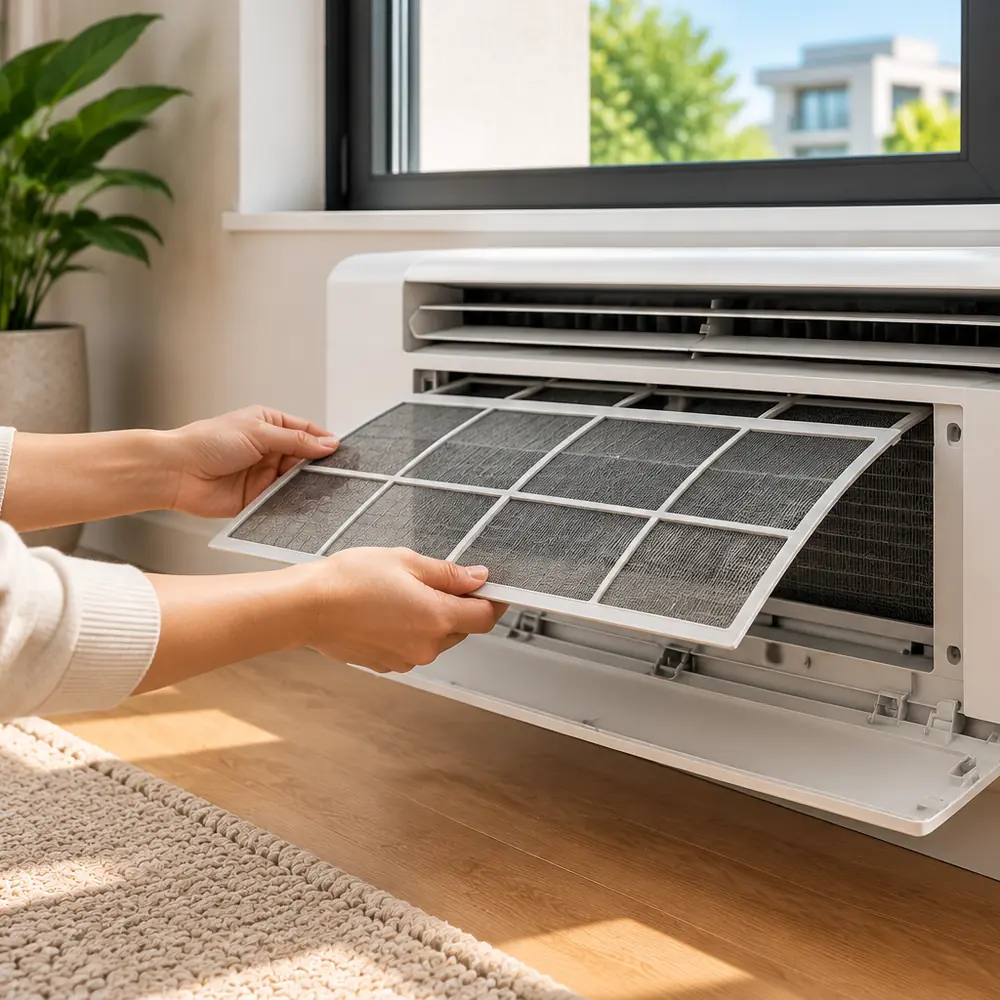
- Filter care: Wash or replace the accessible room-air filter at the interval recommended for the model. Dirty filters reduce indoor airflow and can affect cooling.
- Smaller coverage: One wall unit is generally meant for one room. It may not cool several closed bedrooms even if a sales listing uses a large floor-area number.
- Servicing: A sealed refrigeration circuit still contains refrigerant and electrical components. Repair work on those systems must follow the model’s requirements and local rules.
Heating depends on the exact drain configuration. For example, Olimpia Splendid says some Unico Next installations without condensate drainage can be set to “COLD ONLY,” disabling heating. Its Unico Next-F variant requires a condensate drain. For heating projects, confirm the offered model’s condensate drain arrangement and whether heating remains enabled under the planned installation conditions.
If your highest priority is quiet, continuous cooling for several rooms and an outdoor condenser is legally possible, start by comparing a correctly sized mini-split or another appropriate multi-room system. If your main constraint is exterior appearance and one external-wall room needs cooling, a fixed monoblock may be the more practical compromise.
Conclusion: Should You Choose a Wall-Mounted AC Without an Outdoor Unit?
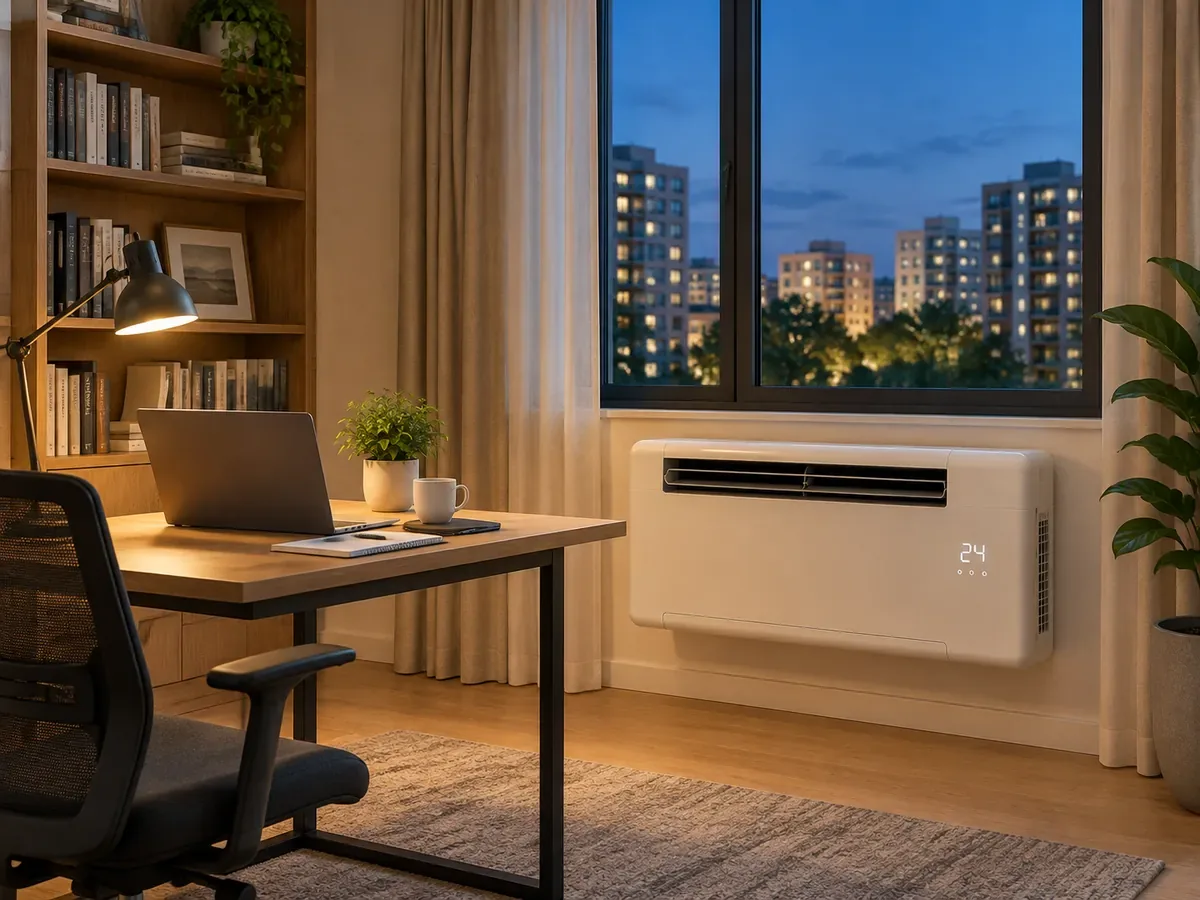
Yes, for a suitable single room where no separate outdoor condenser is allowed but the required external-wall air openings are allowed. A wall-mounted monoblock can provide real compressor-based cooling without the outdoor box. It still needs a safe way to release heat, adequate capacity, controlled condensate and compatible building and electrical conditions.
If a separate outdoor condenser is not permitted but exterior grilles are allowed, ask a qualified supplier in your market for a specific wall-monoblock model, wall-drilling template, noise data and local service details. Approve the wall openings only after the installer matches the selected model’s full-size drilling template to the actual wall.
If your project can use an outdoor condenser, compare a correctly sized split air conditioner. AirProz’s publicly listed air-conditioner range consists of split systems with separate outdoor equipment, not no-outdoor-unit monoblocks. For hotel, residential or commercial split-system sourcing, share the project location, room-by-room cooling load, permitted outdoor-unit position, supply voltage, required quantity and destination market using our project contact form. We can then review a suitable split-system configuration for your project.
Frequently Asked Questions
Can a wall-mounted AC work without an outdoor unit or any holes in the wall?
Most fixed air-cooled monoblocks need outdoor intake and exhaust openings, even without an outdoor condenser box. If your building bans all openings, you need a different approved heat-rejection route, such as a suitable window exhaust or a specialist water-cooled design.
Can I mount a monoblock air conditioner on an internal partition wall?
Usually not. Standard fixed air-cooled wall monoblocks need short condenser-air ducts through an external wall. An internal wall is suitable only if the exact manufacturer’s system provides and permits a designed route to the outdoors.
Are monoblock air conditioners as quiet as mini-splits?
Not necessarily. A monoblock has its compressor in the room, whereas a split normally places it outdoors. Compare indoor sound levels in cooling mode at similar output and operating conditions, especially for a bedroom.
Can a no-outdoor-unit wall air conditioner heat the room in winter?
Some models are reversible heat pumps and others cool only. For winter use, confirm the exact heating mode, published heating capacity at your outdoor design temperature, defrost needs and whether backup heating is required.
Can renters or apartment owners install one without permission?
In many rented or shared buildings, you need permission for the exterior grilles and condensate route because they affect the building exterior. Check the owner’s, building association’s and local approval requirements before drilling.
Can one wall-mounted monoblock cool an entire house?
Usually it serves one room. Open doorways do not guarantee enough airflow into other bedrooms or floors. For several closed rooms, calculate their loads and compare a planned multi-room system rather than sizing one monoblock by total floor area.
What if the exterior wall has no safe place for two vents?
Do not route the hot exhaust into a sealed cavity, enclosed balcony or another occupied room. Ask an installer to check whether a manufacturer-approved alternative location exists; otherwise choose a different cooling method with a compliant path to reject heat.
Do the two outside wall vents supply fresh air to the room?
Not by themselves. On many twin-duct monoblock air conditioners, those openings carry outdoor air through a separate condenser circuit to take away heat. They do not automatically provide ventilation air for occupants. If fresh-air supply is required, check the specific model’s stated ventilation function and the building ventilation design.