Airproz Technical Guide · HVAC Professionals · Updated July 2026

A low-refrigerant heat pump has a leak. Refrigerant doesn’t wear out or get used up over time.
If the level is low, something let it escape. Adding more without finding that leak isn’t a fix — it’s a callback waiting to happen.
This guide covers how to fill heat pump with refrigerant the right way: confirm the leak is repaired, pull a proper vacuum, and charge to the exact weight on the data plate — not by pressure guesswork. It’s written for HVAC technicians and the distributors who support them.
Certification note: Refrigerant work is regulated. In the EU, technicians must hold F-Gas certification under Regulation (EU) 2024/573. In the US, EPA Section 608 certification is required. R290 (propane) may need extra flammable-refrigerant training. Check your local rules before starting — this guide covers technique, not legal authorization.
Key Takeaways
- Low refrigerant = a leak. Find and fix it before adding anything.
- Safe sequence: confirm leak repair → pressure test → vacuum → charge by weight → verify performance.
- Charge by scale weight, never by pressure guesswork.
- Overcharging is more dangerous than undercharging — it can damage the compressor.
Understanding Refrigerant in Heat Pumps
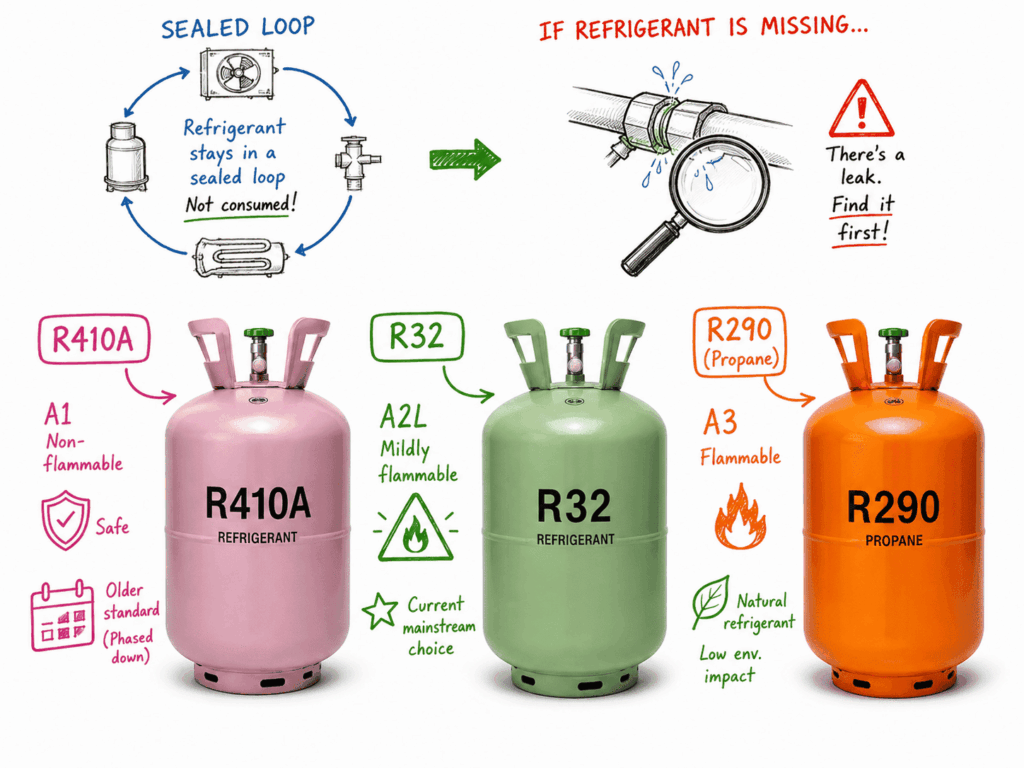
Refrigerant circulates in a sealed loop for the life of the unit — typically 10-15 years. It doesn’t get consumed.
So if a system needs refrigerant, the seal has failed somewhere. Find that first, before charging anything.
Most air source heat pumps today run on one of three refrigerants. Each has different pressures, safety rules, and tools. Always check the data plate before connecting a gauge — never guess.
| Refrigerant | Safety Class | Notes |
|---|---|---|
| R410A | A1 (non-flammable) | Older standard, being phased down under EU rules |
| R32 | A2L (mildly flammable) | Current mainstream choice for new installs |
| R290 (Propane) | A3 (flammable) | Natural refrigerant, low environmental impact, extra safety steps required |
Under the EU’s revised F-Gas rules (Regulation (EU) 2024/573), small self-contained heat pumps with a GWP above 150 — R410A included — face a new-equipment ban starting January 1, 2027. That date hasn’t arrived yet, so confirm current status with your regional authority before specifying equipment.
This is part of the broader heat pump refrigerant phase-out 2026 guide conversation the industry is having. R32 is the safe mainstream pick today. R290 is the long-term natural-refrigerant path.
Curious how R32 vs R410A air conditioner and R290 vs R32 air conditioner choices play out for your product line? See our full comparison of R290 and R32 refrigerant platforms for 2026 installations.
For a visual of how charge levels affect each stage of the cycle, see our heat pump refrigerant cycle diagram. Safety classifications for all three refrigerants come from ASHRAE Standard 34.
Confirm the Diagnosis Before You Touch the Refrigerant
Before opening the system, make sure low refrigerant is actually the problem — not a dirty filter or a failed fan.
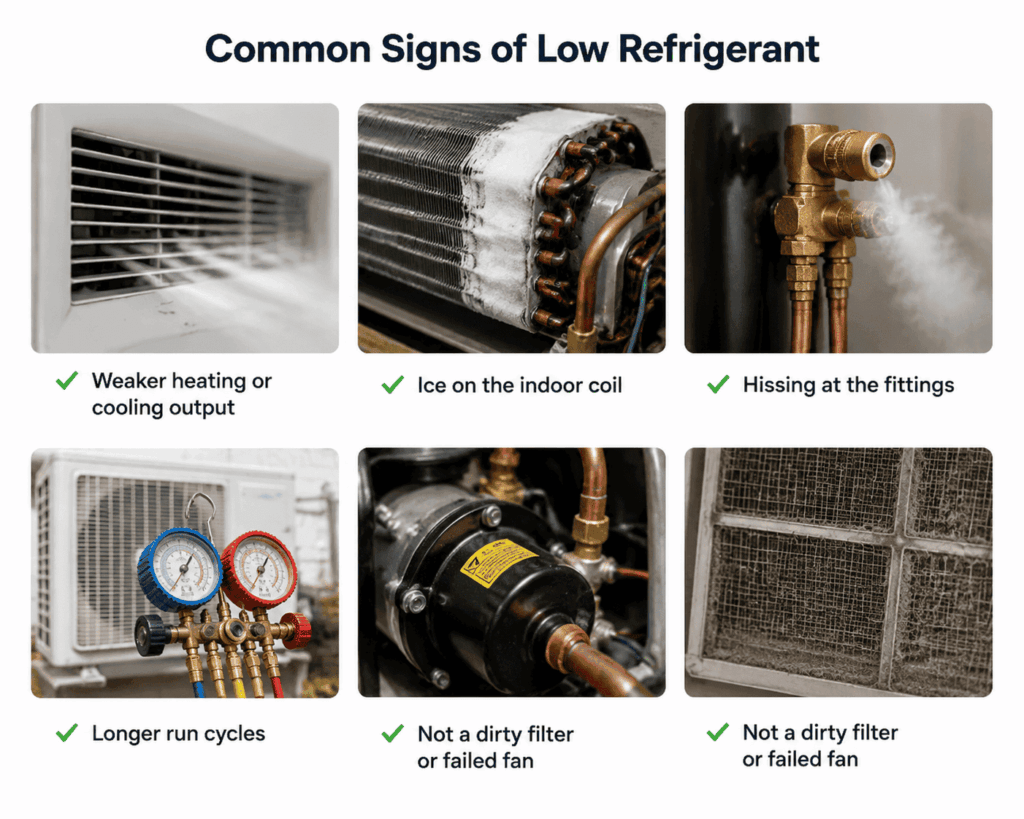
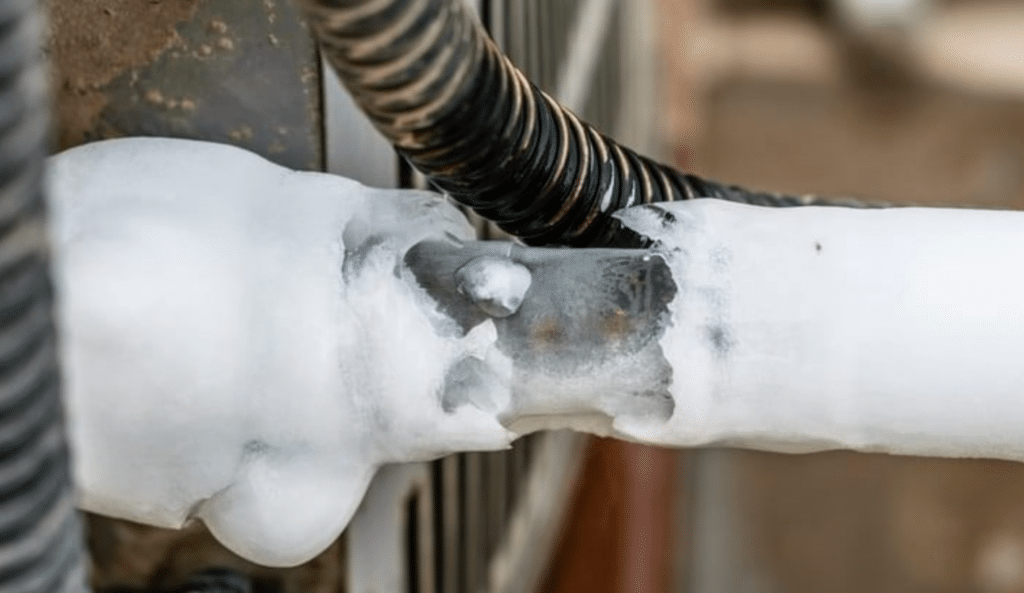
Common signs include weaker heating or cooling output, ice on the indoor coil, hissing at the fittings, and longer run cycles. We cover these signals in detail in our guide to recognizing the signs of low refrigerant. This article picks up from there — once low refrigerant is confirmed, here’s what to do next.
Rule one: always find the leak first. Pressure-test the system with dry nitrogen and hold it for at least 15 minutes. Any pressure drop means there’s a leak. Find it, repair it, and pressure-test again before moving on.
If you’re specifying equipment for your technical team, our B2B buying guide covers what to look for in serviceability and documentation — it makes this whole process faster in the field.
How to Fill Heat Pump with Refrigerant Safely — Step-by-Step
The steps below assume the leak has already been found and repaired. If not, go back to the diagnosis step first — charging a leaking system wastes refrigerant, money, and in many places breaks the law.
Tools You’ll Need
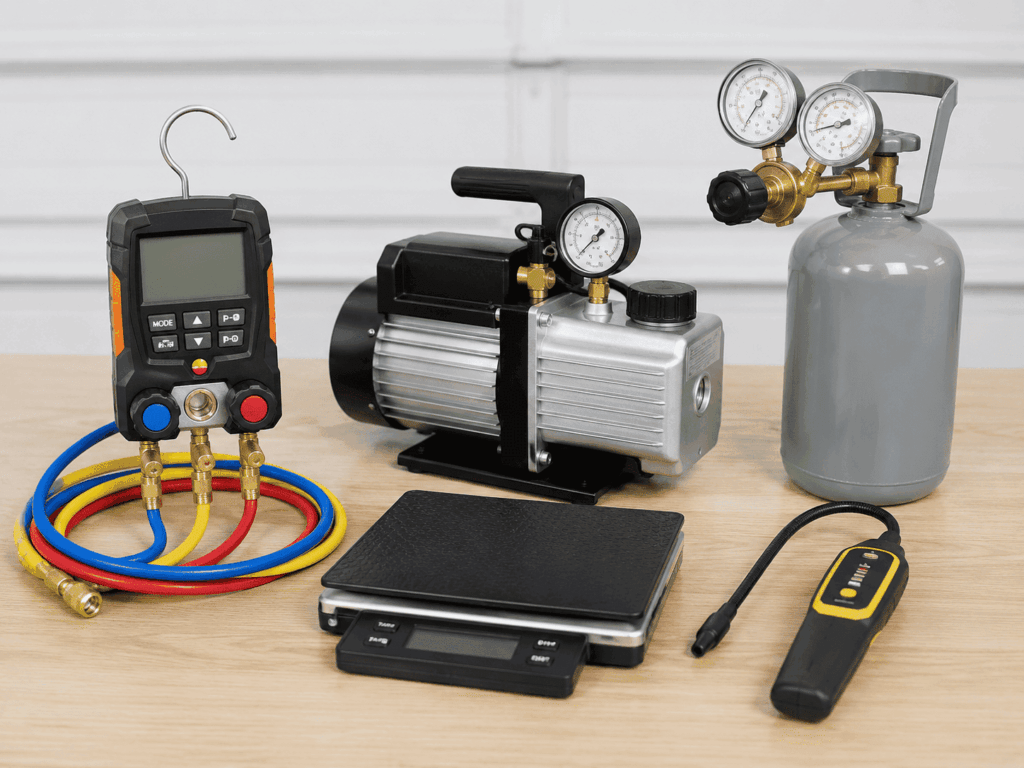
- Digital gauge manifold set (rated for the refrigerant in use)
- Two-stage vacuum pump with micron gauge
- Digital refrigerant scale
- Nitrogen tank with regulator, for pressure testing
- Electronic leak detector
The 8-Step Procedure
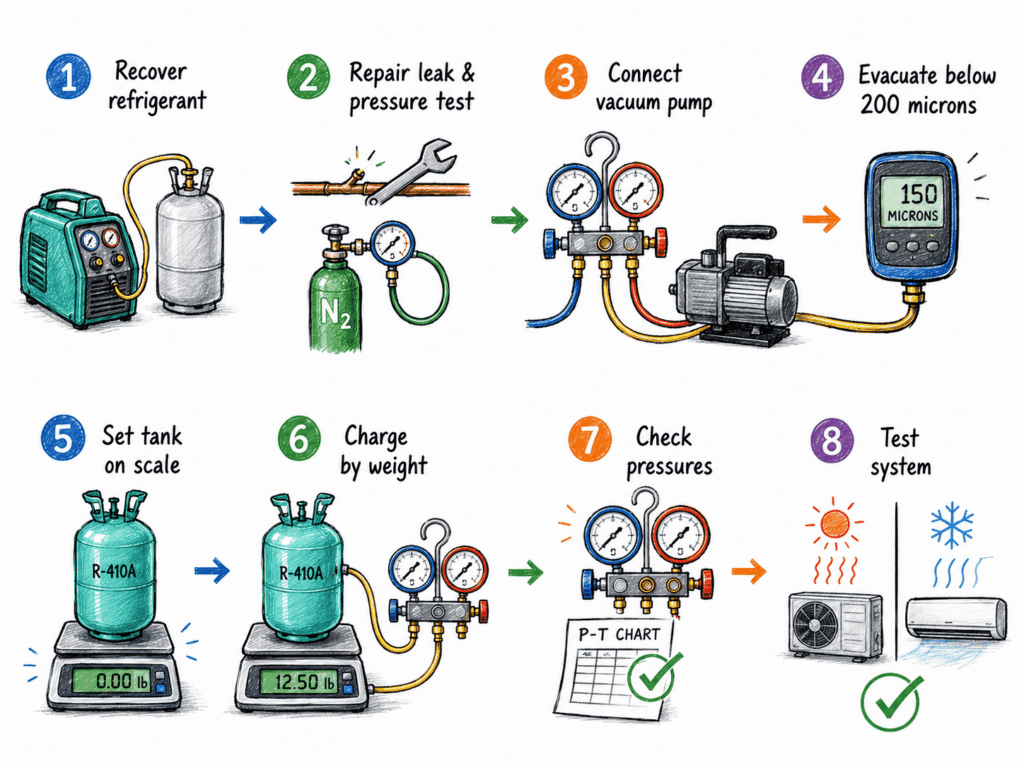
- Recover any remaining refrigerant into a recovery cylinder — never vent it to atmosphere.
- Repair the leak, then pressure-test with nitrogen and hold for 15 minutes to confirm the fix.
- Connect your vacuum pump to both the high and low service ports.
- Evacuate the system to below 200 microns, then isolate the pump and watch the gauge for 10 minutes.
- Set up your refrigerant tank on the digital scale and zero it out before connecting.
- Charge by weight to the exact figure on the unit’s data plate. Use the scale, not gauge pressure, as your reference.
- Check pressures against the manufacturer’s pressure-temperature chart as a sanity check — not as the charging target itself.
- Test the system. Run it in heating and cooling mode, confirm normal compressor amp draw, and check for unusual noise.
Extra Precautions for R290 (Propane) Systems

R290 is flammable, so a few extra rules apply on top of the steps above:
- Charge outdoors or in a well-ventilated space — never in a confined room.
- No open flames, smoking, or spark-producing tools nearby.
- Use recovery equipment rated for flammable refrigerants — standard machines aren’t spark-safe.
- Never exceed the charge weight on the data plate. R290 charges are intentionally small for safety.
The R290 vs R32 air conditioner shift is picking up industry-wide as manufacturers move toward natural refrigerants. See our take on why R290 adoption is accelerating in the EU.
Before starting any of this work, confirm your certification is current. The EU F-Gas Regulation framework governs who can legally handle fluorinated refrigerants and what R290 work requires. Rules vary by member state, so verify locally.
Common Mistakes to Avoid When Charging Refrigerant
In our own quality review of warranty-return compressors, incorrect charging and skipped vacuum steps are consistently among the top causes of early failure. All of it is avoidable with the right sequence.
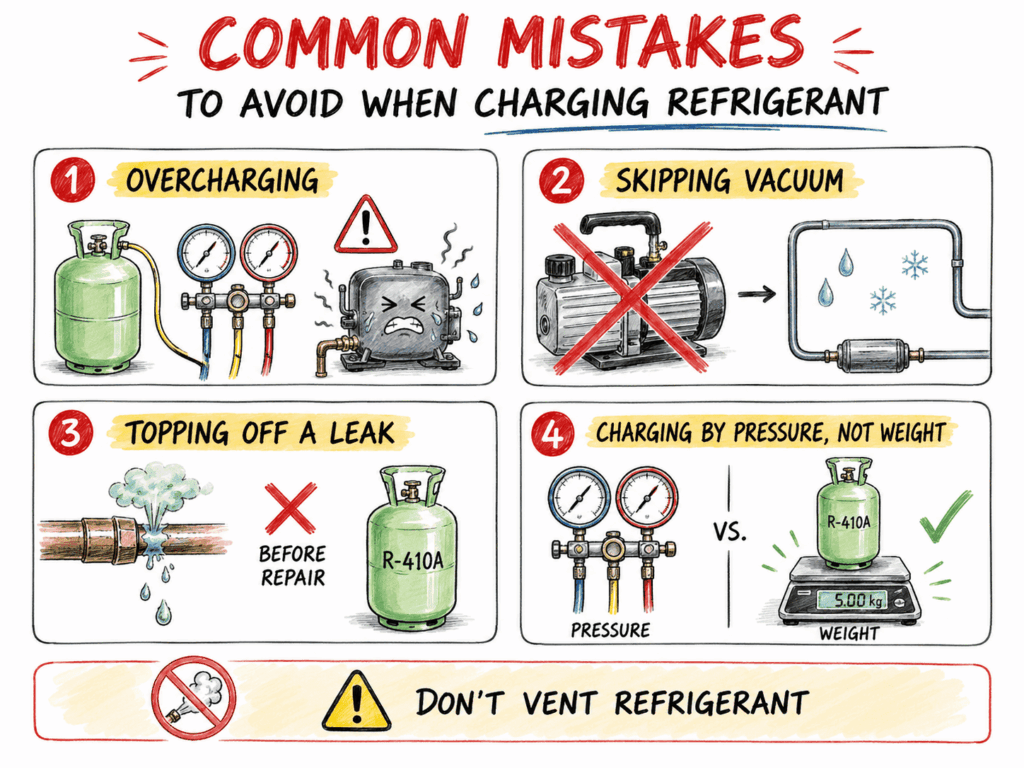
- Overcharging. Too much refrigerant raises discharge temperatures and can send liquid refrigerant back to the compressor — which scroll and rotary compressors can’t handle. See how this damages scroll and rotary compressor internals differently.
- Skipping the vacuum. Leftover moisture and air form acids and ice inside the system over time — a slow, expensive failure that shows up months later.
- “Topping off” a leak. Adding refrigerant without fixing the leak first guarantees a repeat visit, and in many regions it’s not legal.
- Charging by pressure, not weight. A partially charged system doesn’t show pressure in a straight line with charge level. Always use the scale.
Cutting corners here has real legal weight too. Knowingly venting refrigerant is a violation under the EU’s F-Gas rules and EPA Section 608 in the US, with penalties that can be significant.
Equipping your installation teams? Airproz heat pumps ship with the factory charge weight documented on the data plate — no guesswork required. Our technical package includes model-specific charging procedures and installer training. Explore Airproz OEM heat pump programs →
Frequently Asked Questions
How do I know whether my heat pump uses R410A, R32, or R290?
Check the data plate on the outdoor unit — it lists the refrigerant type and factory charge weight. Never guess based on unit size or age.
Can I top off refrigerant without fixing the leak first?
The unit will run, but it’s not the right move. It’s often against local environmental rules, and the refrigerant will simply leak out again — costing more in repeat visits than fixing it once.
How long should I run the vacuum pump before charging?
Pull to a target, not a timer: below 200 microns, holding steady for 10 minutes with the pump isolated. On a typical residential system that’s usually 30-60 minutes.
What happens if R410A and R32 get mixed in the same system?
You get an unpredictable blend that neither the compressor nor expansion valve was designed for. The fix is a full recovery of the contaminated charge, a filter-drier replacement, and a fresh charge of the correct pure refrigerant.
Do I need special certification to handle R290 (propane)?
Yes, in most regions. Beyond standard F-Gas or EPA certification, flammable-refrigerant handling training is typically required separately. Check with your national certifying body, since requirements vary by country.

Refrigerant charging done right protects your compressor, your warranty costs, and your reputation. Airproz supports distribution partners with technical documentation, installer training, and direct engineering support. Learn about Airproz OEM and private-label heat pump programs →