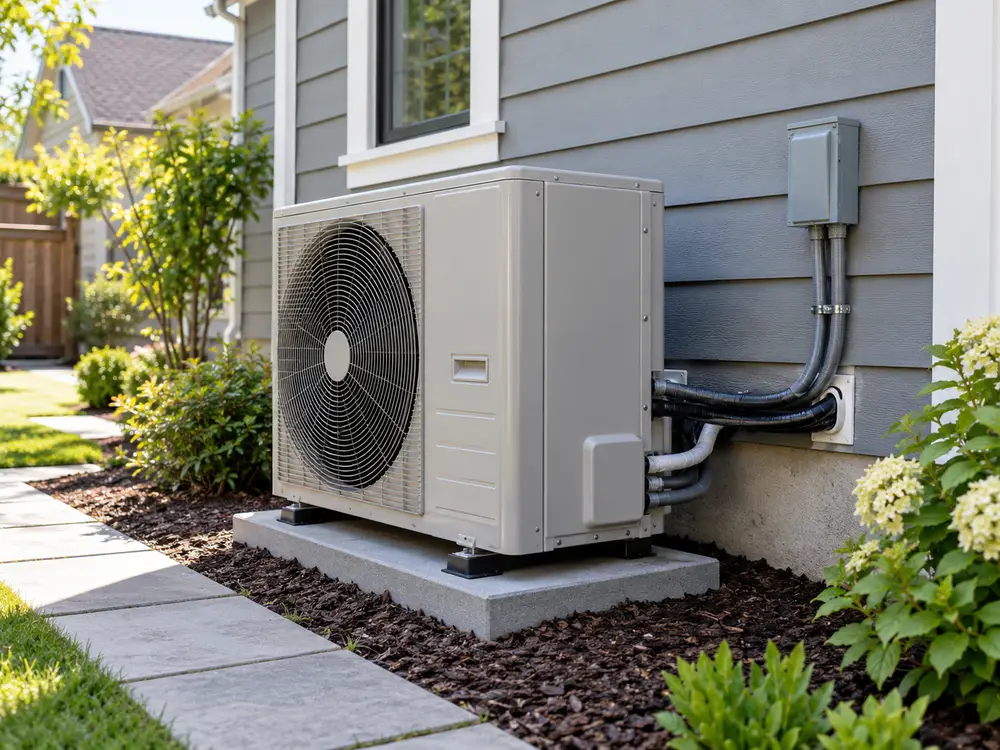
Choose a heat pump water heater if you have suitable space and want to cut electricity use. Choose gas storage when existing gas service, recovery needs or low local gas prices make it a better fit. Choose a standard electric tank when simple, lower-upfront-cost replacement matters most.
Compare annual energy costs, installed costs, first-hour hot-water capacity and room requirements before choosing. Use the calculator below with your own electricity and gas rates. This guide compares storage-tank water heaters; gas tankless systems are covered as a separate product type.
Heat Pump Water Heater vs Gas vs Electric: Quick Comparison
Choose a heat pump for low electricity use, gas storage when local fuel prices or existing connections favor it, and resistance electric for a simpler, lower-upfront-cost replacement. The table shows the main differences in cost, hot-water delivery and installation.
| Decision factor | Heat pump water heater | Gas storage water heater | Resistance-electric tank |
|---|---|---|---|
| How it heats | Moves heat from nearby air into water; many hybrid models have electric backup. | Burns natural gas to heat stored water. | Uses electric elements inside the tank. |
| Energy use | Usually uses far less electricity than a resistance tank. | Gas use changes with the model’s UEF and hot-water demand. | Usually uses the most electricity of the two electric options. |
| Running cost | Often low; gas can cost less where electricity is costly. | Can compete when gas rates are low and equipment is efficient. | Often expensive when electricity prices are high. |
| Upfront work | May need more space, a suitable circuit and a condensate drain. | Can be simpler to replace if gas and venting already comply. | Often the simplest electric replacement with an adequate circuit. |
| Space / safety | Needs airflow or approved ducting, service access and drainage. | Needs safe gas supply, combustion air and approved venting. | Needs an adequate electrical circuit and safe tank installation. |
| Best starting fit | Efficiency-focused homes with suitable space and enough hot-water capacity. | Homes with existing gas service, competitive gas rates or strong recovery needs. | Projects prioritizing simple replacement and lower initial cost. |
| Before you choose | Check first-hour rating, air, noise, drain and voltage. | Check first-hour rating, gas bill, venting and gas customer fee. | Check first-hour rating, circuit capacity and electricity price. |
What to do next: Compare the annual energy cost, check the installation and peak-hour demand, then use the selection table to narrow your choice.
How Do These Three Water Heaters Work?
A heat pump moves heat from the air, a gas heater burns fuel, and a standard electric tank makes heat with an electric element. This difference affects energy use, room requirements and recovery speed.
Heat pump and hybrid heat pump water heaters
A fan draws air across the heat-pump section. A compressor and refrigerant move heat from that air into the tank. The process also sends cooler, drier air back into the room. Many hybrid heat pump water heaters can turn on electric backup elements when you need hot water quickly. Backup helps recovery but uses more electricity than heat-pump-only operation.
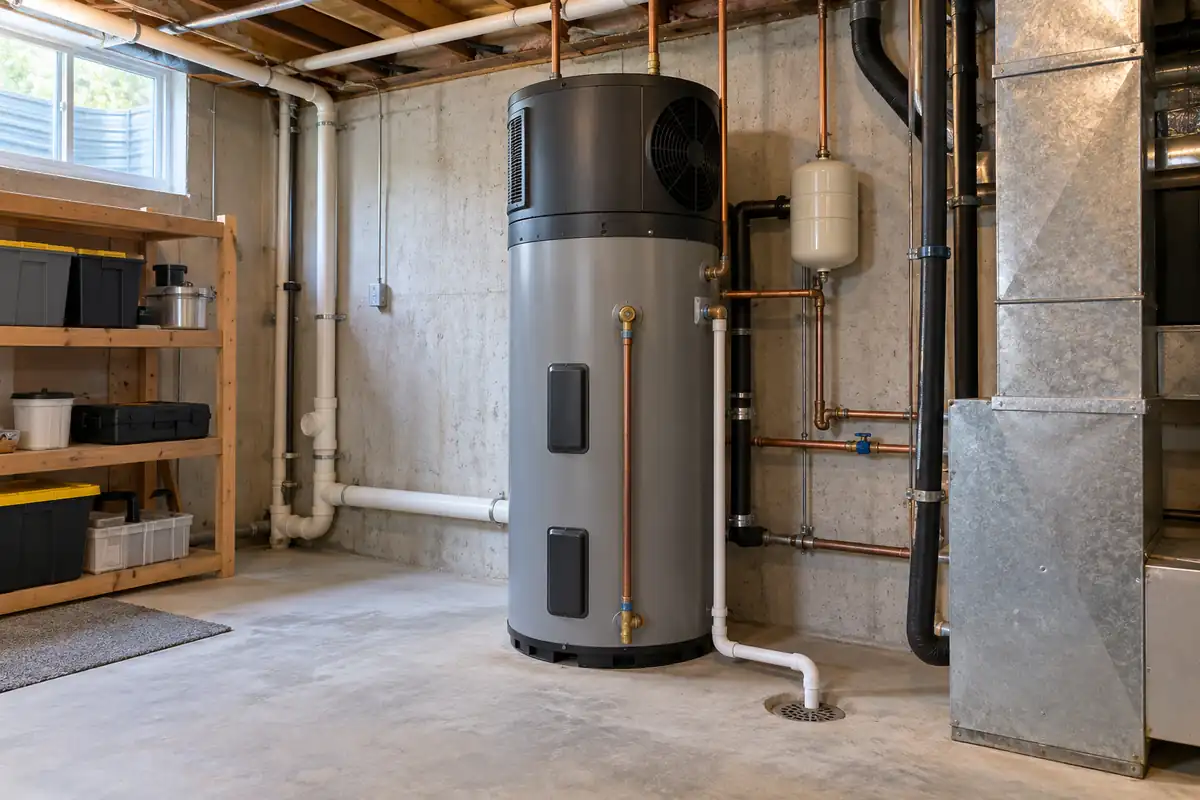
UEF (Uniform Energy Factor) is a standardized water-heater efficiency score. A higher score generally means less energy is needed for the test hot-water output. Compare models in the appropriate draw category. COP (coefficient of performance) describes how many units of heat a heat pump supplies per unit of electricity at a specific test condition. For example, COP 3 means three units of heat per unit of power at that condition. COP and UEF are not the same rating. See ENERGY STAR’s UEF and first-hour rating definitions.
Gas storage water heaters
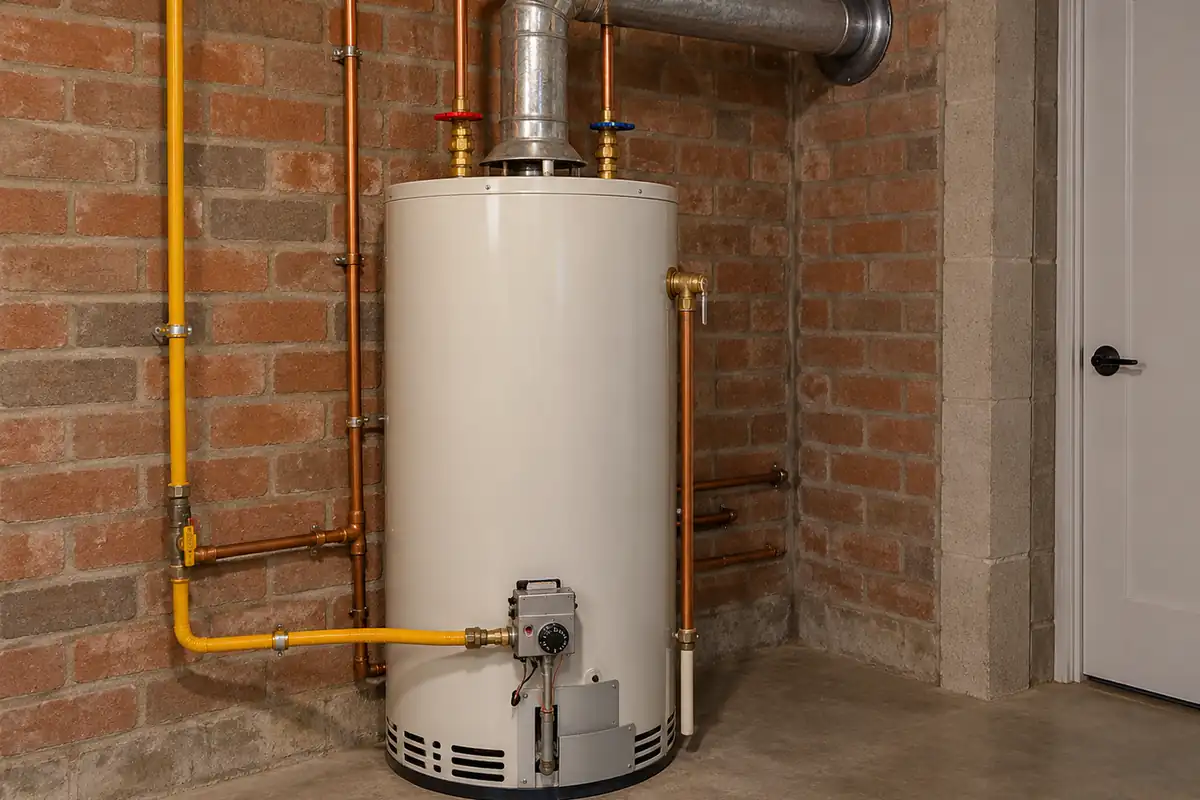
A gas burner heats water stored in an insulated tank. Some efficient gas models capture extra heat from the exhaust. Gas storage tanks need a safe fuel connection, combustion air and approved venting. The speed of reheating depends on the model’s burner power and storage volume.
Electric-resistance storage water heaters
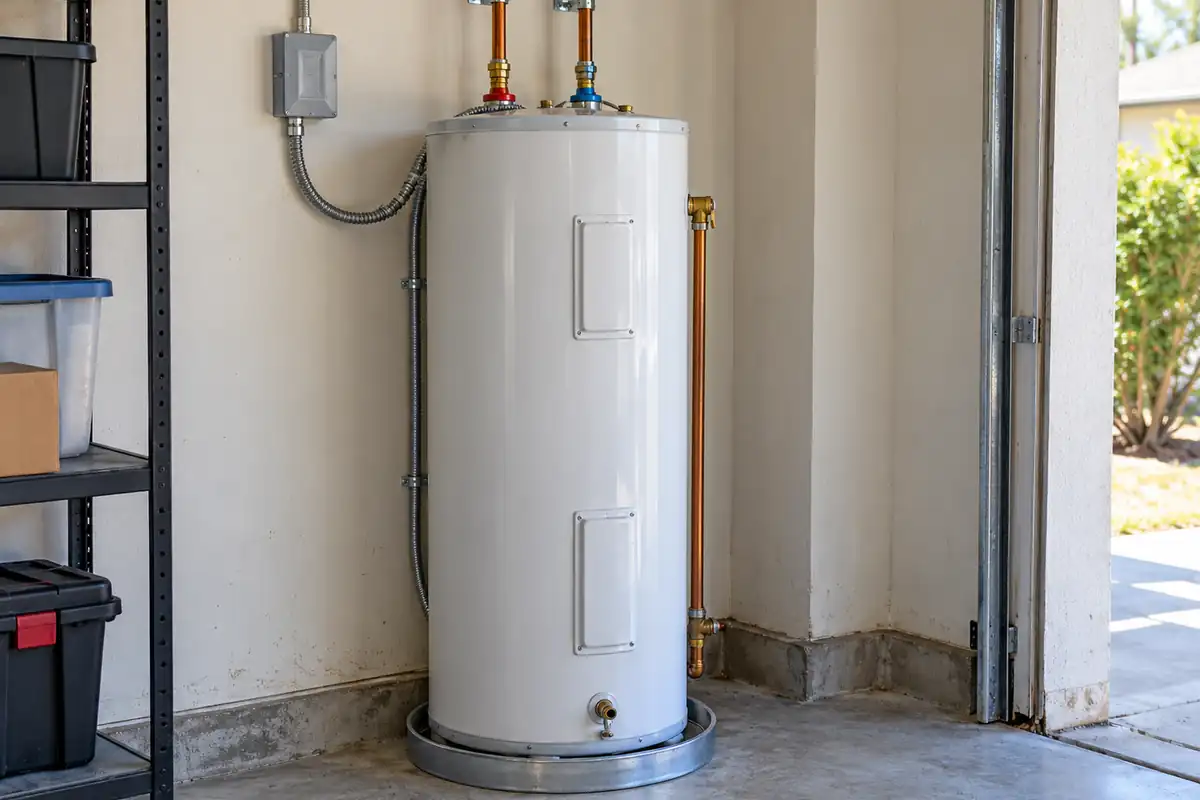
Electric elements inside the tank turn electricity into heat. The equipment is usually quiet and needs no gas vent or heat-pump airflow. Its energy use is generally much higher than a heat pump supplying the same amount of hot water. Insulation and standby heat loss also affect the final energy bill.
Heat Pump vs Gas vs Electric Water Heater Cost Per Year
In this example, a heat pump water heater costs about $171 per year, compared with $181 for a higher-efficiency gas storage tank, $236 for an older, lower-efficiency gas tank, and $645 for a standard resistance-electric tank. The calculation uses 3,000 kWh of useful hot-water heat per year, electricity at $0.20/kWh, natural gas at $1.50/therm, and the assumed efficiency ratings shown below.
A side-by-side annual cost example
| System / example | Assumed UEF | Energy bought / year | Energy cost / year | Compared with heat pump |
|---|---|---|---|---|
| Heat pump water heater | 3.50 | 857 kWh | $171 | Baseline |
| Older, lower-efficiency gas storage example | 0.65 | 158 therms | $236 | $65 more |
| Higher-efficiency gas storage example | 0.85 | 120 therms | $181 | About $10 more |
| Resistance-electric storage | 0.93 | 3,226 kWh | $645 | $474 more |
Example inputs: The annual hot-water heat load is 3,000 kWh, electricity costs $0.20/kWh, gas costs $1.50/therm, and one therm provides about 29.3 kWh of fuel energy. The UEF figures in this table are illustrative inputs, not Airproz model test results.
What these figures mean: The heat pump saves about $65/year compared with the older, lower-efficiency gas example (UEF 0.65), but only about $10/year compared with the higher-efficiency gas example (UEF 0.85). The UEF 0.65 case represents a lower-efficiency storage tank. Check the specific model and draw category against the ENERGY STAR efficiency criteria when comparing certified equipment.
How the estimate is calculated: Electric energy bought (kWh) = useful heat (kWh) ÷ assumed UEF. Gas bought (therms) = useful heat (kWh) ÷ (29.3 × assumed gas UEF). Multiply each result by its energy price. This is an illustrative UEF-based energy-cost model; compare the chosen product’s ratings for a purchase decision.
Cost scope: The table compares variable energy charges. Add utility fixed charges, taxes and delivery fees, maintenance, and any extra winter space-heating demand caused by drawing heat from an indoor room when calculating total ownership cost. For published savings context, see ENERGY STAR’s heat pump water heater guidance.
What about off-peak electricity, rooftop solar or winter heating?
Cheap off-peak power and usable rooftop solar can lower heat-pump water-heating costs; drawing heat from an already heated room can add space-heating costs in winter. The three effects depend on when the heater runs and where it is installed.
- Off-peak electricity: Running eligible modes at cheaper hours may cut energy charges. Keep required safe water-temperature practices and enough hot water for peak demand.
- Rooftop solar: Use the available solar electricity for hot water when it is worth more than exporting the same energy.
- Heated indoor spaces: A heat pump water heater cools the nearby air when it runs. The effect can help in summer and add heating work in winter. Use the actual room and climate in your decision.
Calculate Your Water Heater Running Cost
Enter your daily hot-water use or annual heat demand and your local energy prices to compare running costs. Use the simple gallons-per-day mode or advanced annual-kWh mode. Results show estimated variable energy charges for the same amount of hot-water heat.
Start with gallons per day. Enter the amount of hot water leaving your water heater each day, plus the incoming cold-water temperature and the heater’s hot-water temperature. The calculator converts this to an estimated annual heat demand.
Example without the calculator: For 3,000 kWh useful heat, $0.20/kWh electricity and $1.50/therm gas, the modeled yearly costs are heat pump $171, gas at UEF 0.85 $181, and resistance electric $645.
Fuel units: Natural gas is entered in dollars per therm (1 therm ≈ 29.3 kWh). Convert propane prices into equivalent energy units before comparing; propane is sold and billed differently.
When does gas beat a heat pump on running cost?
Gas is cheaper to run when your electricity price rises above the break-even rate for the selected gas and heat-pump efficiencies. With natural gas at $1.50/therm and heat-pump UEF 3.5, the break-even electricity price is about $0.21/kWh with gas UEF 0.85, or $0.28/kWh with gas UEF 0.65. Below those rates the heat pump costs less in this energy model; above them gas costs less. The calculator updates the threshold using your rates and efficiencies.
Break-even formula: Gas price ($/therm) × heat-pump UEF ÷ (29.3 × gas UEF) = break-even electricity price ($/kWh). Compare fixed utility charges and actual seasonal performance separately when judging total ownership cost.
Installed Cost, Maintenance and Payback
If the heat pump costs $1,500 more to install, the energy-price example above gives simple payback of about 3.2 years against resistance electric, about 23 years against an older gas tank, and roughly 150 years against a higher-efficiency gas tank. For a final decision, compare the total installed price, maintenance, energy costs and any fixed utility charges over the years you expect to use the heater.
What belongs in each installed quote?
Each installed quote should cover equipment, plumbing, required electrical or gas and venting work, safety items, removal, permits and commissioning. Ask for systems with comparable first-hour hot-water capacity so the prices reflect a similar job.
- Heat pump: model and storage size, required electrical circuit, air space or approved ducting, condensate drain, plumbing, removal, permits and start-up checks.
- Gas: storage size, gas service and safety checks, flue or venting, combustion air, removal, permits and start-up checks.
- Resistance electric: tank, compliant circuit, plumbing, drain pan, safety devices, removal and permits.
Compare the written warranty, itemized labor and the final price after any verified local incentive. Ask the installer to identify any work excluded from the quote.
Simple payback versus total ownership cost
Simple payback measures how long energy savings take to recover the extra installation cost. Total ownership cost measures what you spend on installation, energy, maintenance and continuing utility charges over your chosen period. Use payback for a quick comparison and total ownership cost for the final decision.
Simple payback formula: Extra heat-pump installed cost ÷ yearly energy-cost savings. In the $1,500 extra-installation example above, savings are about $474/year against resistance electric, $65/year against lower-efficiency gas and $10/year against higher-efficiency gas. These savings explain the very different payback times shown at the start of this section.
| Cost to compare | What to record | Why it changes the decision |
|---|---|---|
| Installed price | Quoted equipment + installation − verified incentives | Determines the extra upfront amount. |
| Energy per year | Model rating × real rates and use pattern | Determines annual running-cost gap. |
| Fixed gas or electric charges | Charges that really appear or disappear after switching | Keeping a gas stove may mean the gas customer fee remains. |
| Maintenance and repair | Quoted service, filters, anode, drain, expected repairs | Costs differ across system types and sites. |
| Time and replacement | Your decision horizon, replacement risk and discount rate | Simple payback alone does not capture ownership cost. |
For a ten-year budget, add the installed price to ten years of expected energy and maintenance costs, allowing for price changes and equipment replacement. Include the monthly gas customer fee as a saving only when switching lets you close the gas account entirely. Compare the ten-year totals beside the payback result.
U.S. incentive date: The ENERGY STAR federal heat-pump-water-heater 25C tax-credit page covers eligible purchases and installations from January 1, 2023 through December 31, 2025. Do not count this expired federal credit in a 2026 quote. Check current state, utility and local programs separately. See the official credit information.
Installation Space, Electrical Supply and Hot-Water Capacity
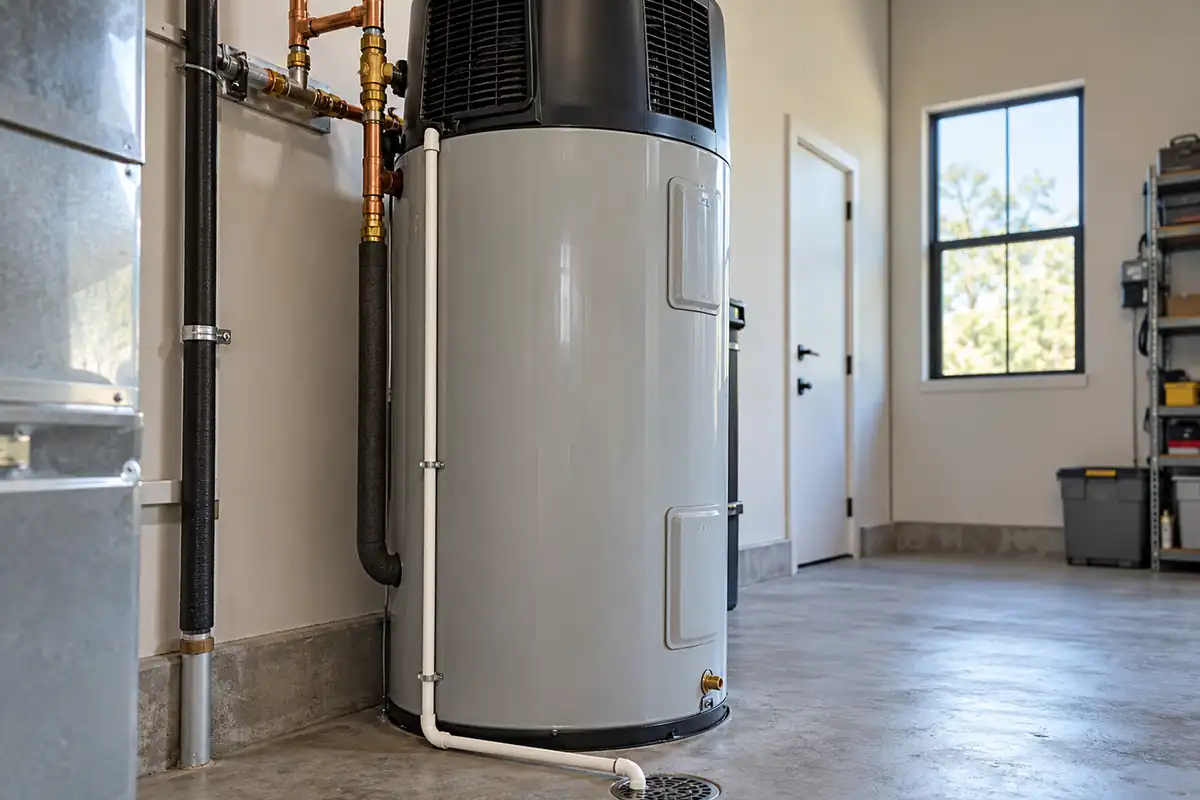
A heat pump water heater needs approved airflow, condensate drainage and the electrical supply specified for its model. A gas storage tank needs a safe gas connection, combustion air and approved venting. A resistance-electric tank needs an adequate electrical circuit but no gas flue or heat-pump airflow. For all three, select enough first-hour hot-water capacity for your busiest period and check the actual installation manual.
Air, room temperature, noise and condensate
- Airflow: A heat pump needs enough surrounding air or approved ducts. Check room volume, clearances and filter access rather than guessing from tank size.
- Temperature: Check the manufacturer’s allowed air-temperature range. A cold room can reduce heat-pump output or call on backup electric heat.
- Drain and comfort: Condensate is water collected as the air cools. Route it to an approved drain, and consider fan noise and the cooler air released around the unit.
Basements, garages and ventilated utility rooms are common installation locations. Follow the selected model’s air-volume, ambient-temperature and service-clearance requirements; see ENERGY STAR’s heat pump water heater placement guidance.
Do heat pump water heaters need 120 V or 240 V?
Heat pump water heaters are available in both 120-volt and 240-volt designs. Their breaker requirements, electric backup modes and hot-water recovery rates differ. Install each heater on the circuit specified in its installation manual. Have a qualified installer confirm the circuit and local electrical requirements before finalizing the installed quote.
Hot-water recovery and first-hour rating (FHR)
First-hour rating (FHR) is the amount of hot water a heater can deliver during the first busy hour, starting with a heated tank. U.S. listings express it in gallons. Recovery describes how quickly the heater warms replacement water after a large draw. Choose enough FHR and recovery for your busiest period, then compare UEF for efficiency. Compare the published FHR and UEF for the selected model and its draw category.
| Use pattern | Check before choosing | What happens if undersized |
|---|---|---|
| One or two people, showers spread out | First-hour gallons, recovery and scheduled use | Usually modest, but long draws can empty a small tank. |
| Family using hot water together each morning | Peak one-hour shower and laundry draw, backup mode | Water may cool before the last user finishes. |
| Multiple bathrooms used at once | Combined peak gallons, tank volume, recovery capacity | Shortfalls can occur even with a high efficiency score. |
Size the system for peak-hour demand. Total the hot water needed when showers, laundry and sinks overlap, then compare the available first-hour gallons and recovery. A larger tank, faster-recovering model or hybrid backup mode can address different usage patterns.
Can a hybrid heat pump replace gas in a cold climate?
Yes—a cold-climate heat pump water heater can replace a gas tank when its rated low-temperature output meets the home’s hot-water demand. Confirm the unit’s ambient-temperature range, airflow, condensate drainage and electrical connection. Backup electric elements can speed recovery while using more power. Split systems also require appropriate outdoor protection, insulated piping, freeze protection and controls.
Which Water Heater Should You Choose?
Choose a heat pump water heater when replacing a resistance-electric tank and you have suitable installation space. Compare efficient gas storage when gas is already connected and local gas prices make it economical. Choose a conventional resistance-electric tank when lower upfront cost and simpler installation take priority. The table below shows the main conditions that could change your choice.
| Your situation | Start by evaluating | What could change the choice |
|---|---|---|
| Replacing an electric tank in an airy garage or basement | Heat pump water heater | Drain, noise, electrical fit, FHR and net installed price. |
| Existing gas infrastructure and low gas rates | Efficient gas storage vs heat pump | Real crossover price, venting work and gas customer charges. |
| All-electric home with a sealed small closet | Resistance electric, or approved ducted/split heat pump | Whether an approved air path, relocation and correct circuit are possible. |
| Several showers close together | Compare FHR and recovery across models | Peak-hour gallons and backup-heating mode. |
| Hotel or apartment building | Engineered commercial hot-water system | Peak demand, tank storage, return-loop heat loss and backup capacity. |
What are the disadvantages of a heat pump water heater?
The main heat-pump trade-offs are installed price, airflow, noise, condensate drainage and sometimes slower recovery in heat-pump-only mode. A suitable location and the right tank capacity address many of these concerns. Frequent use of resistance backup increases electricity consumption.
Commercial Hot-Water System Selection
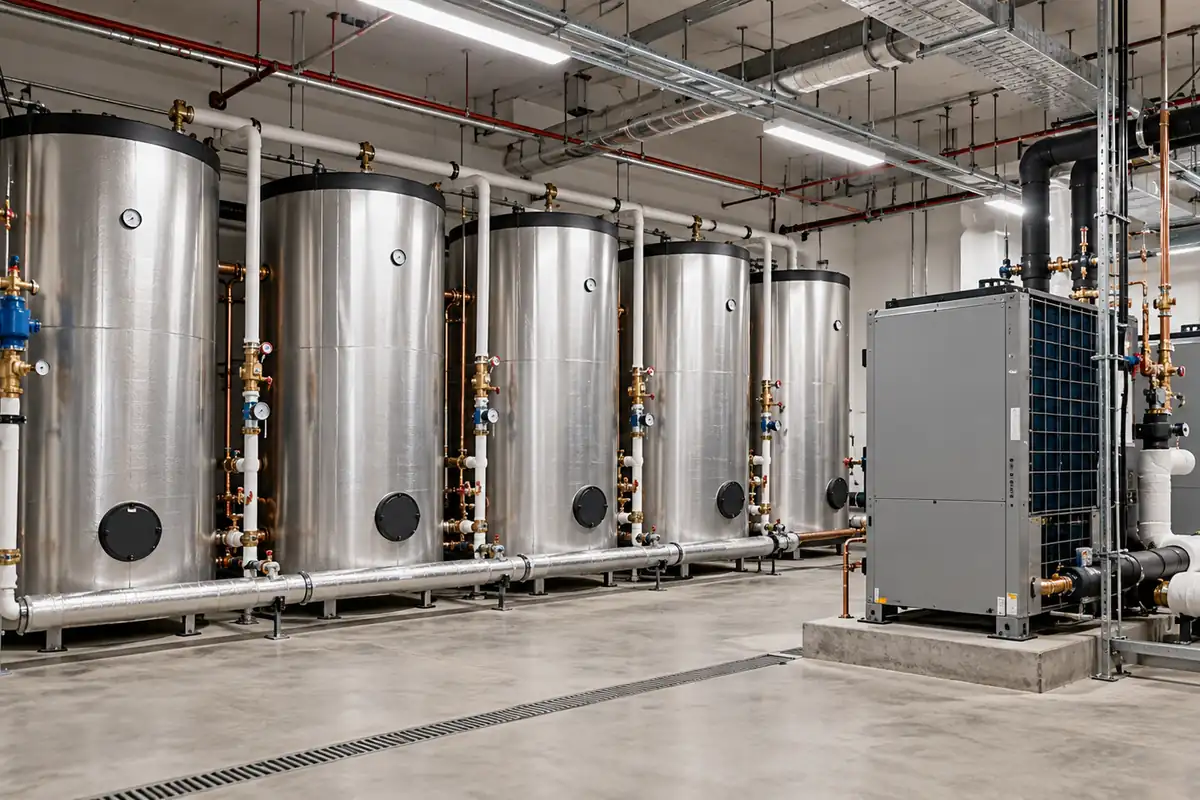
For hotels and apartment buildings with large or repeated hot-water peaks, evaluate a heat-pump-and-storage system sized for the building’s hourly demand. Integrated units can serve smaller loads with enough air space; split or modular layouts offer more placement and capacity options for larger centralized loads. Size storage, heat-pump output, backup capacity and recirculation losses together.
Storage supplies hot water during demand peaks while the heat pump reheats the tank between peaks. Both peak-hour demand and total daily use determine the required configuration.
Include recirculation losses—heat lost through pipes that keep hot water available across the building—in the energy and capacity estimate. The engineer must also design safe storage and mixing temperatures, water-hygiene and Legionella controls, backup capacity and service access to meet local requirements.
| Project input | Why it matters |
|---|---|
| Market and building type | Sets local rules, climate and use patterns. |
| Occupants, fixtures, daily hot-water volume | Helps estimate total energy and storage needs. |
| Busiest-hour hot-water draw | Sets peak delivery and recovery demand. |
| Cold inlet, storage and delivered-water temperatures | Sets heat lift, required output and safe mixing approach. |
| Recirculation pipe length / return layout | Shows ongoing heat loss and pump needs. |
| Outdoor design temperature and power supply | Limits unit output, electrical connection and location. |
| Redundancy, access and project standards | Helps keep hot water available during service and meet local requirements. |
Integrated, split and larger heat-pump systems
Integrated units combine the heat pump and tank in one package, often fitting smaller jobs with enough air space. Split units separate the heat-producing unit from storage, allowing more flexible locations and capacities while requiring additional piping and controls. For commercial systems, size both heating output and storage from measured or estimated hourly demand, including circulation heat loss.
How Airproz product families fit
For smaller loads with sufficient indoor airflow, start with an integrated heat pump water heater. For layouts that separate the heat pump from storage, evaluate split-system options. For hotels and multi-unit buildings, evaluate commercial heat pumps paired with correctly sized storage and backup. Review Airproz heat pump water heater options and commercial heat pump ranges, then match the selected model’s water-temperature output, ambient operating range, electrical requirements, certificates and installation layout to the project.
| Configuration | First application to examine | Verify for the actual model |
|---|---|---|
| Integrated heat pump water heater | Smaller storage replacement with suitable air space | Tank and first-hour capacity, ventilation, voltage, drain, local approval. |
| Split hot-water heat pump | Separate tank and heat-producing unit for space or layout needs | Outdoor range, pipes, freezing protection, controls and water temperature. |
| Commercial heat-pump and storage system | Hotels, apartments and multi-unit hot-water loads | Peak kW, hot-water storage, circulation loss, redundancy and certificates. |
For a broader equipment-sourcing comparison, read the Airproz B2B heat pump manufacturer guide. For a hotel project in a hot climate, use the commercial hot-water planning guide for hotels in Dubai.
Planning an OEM or commercial hot-water project? Send your destination market, daily and peak-hour hot-water use, inlet and required water temperatures, ambient design range, power supply and any mandatory certification requirements. Contact Airproz with these project details to narrow the appropriate published product family and model documentation.
Heat Pump Water Heater vs Gas vs Electric: FAQ
Is a heat pump water heater worth it if I already have gas?
In this article’s example, replacing a higher-efficiency gas tank with a heat pump saves only about $10 per year in energy costs, so a higher installed price is unlikely to pay back quickly. Switching becomes more attractive with higher gas prices, a smaller installation-price gap or savings from closing the gas account entirely. If you still use gas for cooking or heating, the monthly gas account fee remains.
Does a hybrid heat pump water heater use electric resistance?
Yes—many hybrid heat pump water heaters include electric-resistance backup elements. They can help meet large hot-water draws or cold-air conditions. Frequent backup operation increases electricity use; check the model’s available operating modes.
How much electricity does a heat pump water heater use?
In the article’s 3,000-kWh useful-heat example, a heat pump with UEF 3.5 uses about 857 kWh of electricity per year. For your home, enter daily hot-water use and local temperatures into the calculator, or use a known annual heat load and your model’s rated UEF.
Is gas or a heat pump better for long showers?
For several long showers back-to-back, a gas storage heater often reheats water faster than a similar-size heat-pump-only tank. A hybrid heat pump water heater can also handle heavy demand with sufficient storage or backup electric heat. Compare each model’s first-hour rating (FHR) and recovery rate against your shower schedule.
Are heat pump water heaters better for the environment?
In many locations, yes. Heat pump water heaters use much less electricity than standard resistance-electric tanks and produce no on-site combustion emissions. Compared with gas water heating, the climate benefit depends on the local electricity supply, refrigerant choice and leakage, and emissions from fuel production. These factors determine the size of the benefit.
Can a heat pump water heater fit in a small closet?
A heat pump water heater can work in a small closet when the model permits an approved ducted or ventilated installation. Provide the required airflow, service clearance, temperature range and condensate drain. A sealed closet with insufficient air needs a different layout or water-heater type.
Will a gas water heater still work during a power outage?
A gas water heater with a standing pilot and no electrically powered controls may keep supplying hot water during an outage. Models with powered vents, electronic ignition or electronic controls generally need electricity. Check your specific model’s power requirements.
Does a heat pump water heater make my basement colder?
Yes. A heat pump water heater removes heat from nearby air while heating the tank, making the room cooler and often drier. That can reduce cooling demand in warm months and increase space-heating demand in winter. The effect is strongest where the room’s air is closely connected to the home’s conditioned space.
Final Verdict: Heat Pump Water Heater, Gas or Electric?
Choose a heat pump when you have suitable installation space and want much lower electricity use than a standard electric tank. Compare efficient gas when your gas rate or existing connection makes its total cost attractive. Choose a resistance-electric tank when simpler installation and a lower upfront price take priority.
Make your final decision using the installed quote, rated UEF, first-hour hot water, local electricity and gas rates, electrical supply, airflow and drain. For hotels and apartment buildings, add hourly hot-water load, storage volume and recirculation losses. These inputs turn the comparison into a practical equipment choice.
Sources and how to use the estimates
Sources and checks: Use the selected heater’s EnergyGuide label or verified product listing for UEF and first-hour rating; confirm the rating’s draw category. Use your utility bill for current energy prices and the installation manual for clearance, temperature and electrical requirements. The ENERGY STAR criteria explain efficiency ratings, and the federal tax-credit page provides the applicable dates. The worked cost table uses illustrative assumptions.