The ten names below are not a 1-to-10 performance ranking. They are established UK-market brands worth comparing. Current product-family examples were checked against UK manufacturer pages on 11 September 2026; model availability, certification status, warranties and specifications can change, so confirm the exact model before ordering.
UK heat pump brands at a glance
If you want the fast answer first, start here. These are starting points for comparison, not universal winners. Keep a brand under consideration only if the exact product can meet your winter heating needs, required water temperature, site noise limits, electrical supply, compliance needs and support requirements.
| Brand | Current UK family example | When it may be worth considering | What the manufacturer publishes | What to check |
|---|---|---|---|---|
| Daikin | Altherma 4 H | Retrofits that need higher water temperatures or must work in colder winter conditions | The cited Altherma 4 H family publishes 70–75°C leaving water at -15°C using heat-pump operation | Heating output on the coldest design day, seasonal efficiency, noise and installer/service support |
| Grant | Aerona 290 | UK new builds or retrofits where you want to compare performance at 35°C and 55°C water | Aerona 290 publishes seasonal efficiency (SCOP) at both 35°C and 55°C, plus a current R290 range | Output at your required outdoor and water temperatures, water-side system design, noise and guarantee conditions |
| LG | THERMA V R290 Monobloc | Worth comparing when you need R290, higher water temperature or operation in colder weather | THERMA V R290 publishes up to 75°C water flow and low-ambient operation for the family | Exact-model heating output, required electrical phase/current, seasonal performance and support |
| Mitsubishi Electric | Ecodan R290 | Residential retrofits where UK support and UK production are important | Current R290 Ecodan page states UK manufacture and water temperatures up to 75°C | Winter heating output, system setup, noise and installer coverage |

| Brand | Current UK family example | When it may be worth considering | What the manufacturer publishes | What to check |
|---|---|---|---|---|
| NIBE | S2125 | Projects where connected controls and cold-weather operation matter | S2125 publishes operation in low outdoor temperatures and S-Series control integration; selected variants carry Quiet Mark | Exact variant output, water temperature, electrical demand and local service |
| Panasonic | Aquarea L Generation | Low-temperature new builds and selected retrofits | Aquarea L publishes A+++ at 35°C and high-water-temperature capability under stated outdoor conditions | Water-side system layout, exact heating output and efficiency at higher water temperatures |
| Samsung | EHS Mono R290 | Residential projects that want R290, higher water temperature and connected controls | EHS Mono R290 publishes water temperature up to 75°C and connected-control options | Heating output at your required temperatures, sound power, electrical requirements and service coverage |
| Vaillant | aroTHERM plus | Residential retrofit, especially where noise may limit outdoor-unit placement | aroTHERM plus publishes up to 75°C flow temperature and Quiet Mark positioning on the UK page | Winter heating output, seasonal performance, site noise result and controls |
| Viessmann | Vitocal 150-A | Retrofit or new-build projects where a broad current product family is useful | Vitocal 150-A publishes a broad family range and up to 70°C flow at -10°C | Exact-unit output, radiator water temperature, noise and service support |
| Worcester Bosch | Compress 5800i AW | Smaller residential projects where UK-facing support is a priority | Compress 5800i AW publishes 4, 5 and 7 kW variants plus sound-power data | Whether the range can cover your winter heat load, plus outdoor-unit location and system fit |
Send design heat load, design ambient, required water temperature and site constraints before comparing exact models.
What “best” means for a UK heat pump project
A well-known brand can still be the wrong choice for your building. For a low-temperature new build, the priority may be seasonal efficiency at 35°C water, modulation and controls. For a radiator retrofit, check how much heating output and efficiency remain when the weather is cold and the water temperature is higher. Engineers call the water leaving the heat pump the leaving-water temperature (LWT). For a tight urban site, noise can rule out a product that looks good on paper. The outdoor-unit position, nearby walls and distance to neighbours all matter.
So do not ask only, “Which brand has the biggest headline number?” Ask whether the product can meet your winter heating load, water temperature, site limits and support needs. That is a much more useful way to narrow your options.
Brand profiles: what each manufacturer is worth checking
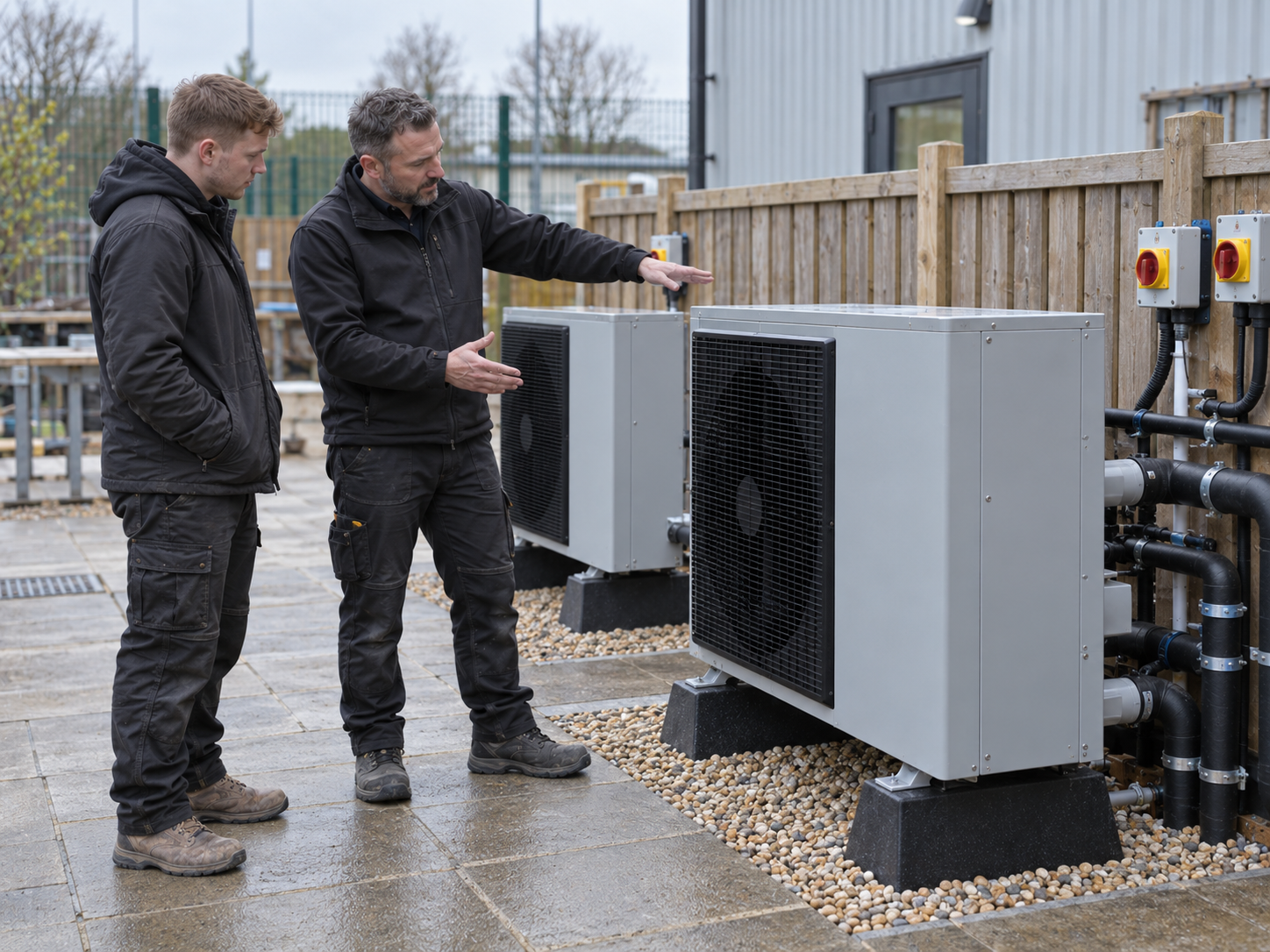
The quick table above shows where each brand may be worth a closer look. The profiles below explain what makes each option interesting and what you still need to check. Use them to decide which product families deserve exact-model data. Do not treat these profiles as exact model recommendations.
Daikin Altherma
May be worth considering when: Your retrofit needs higher water temperature or you design for colder winter conditions.
What the manufacturer publishes: 70–75°C family claim with stated low-ambient conditions.
What to check first: Exact A/W output and seasonal efficiency.
Important limit: A high maximum LWT does not guarantee enough heating output on the coldest day.
Daikin is worth checking when your project needs higher water temperatures or must work in colder winter conditions. The current Altherma 4 H page for the cited unit family states 70–75°C leaving water at -15°C from heat-pump operation and an operating range down to -28°C. Those numbers make the family worth checking for cold-weather or retrofit work. But they do not replace the capacity table for your exact outdoor-air and water-temperature condition.
Grant Aerona 290
May be worth considering when: You are comparing UK new-build or radiator-retrofit options.
What the manufacturer publishes: Seasonal efficiency figures are published at both 35°C and 55°C water.
What to check first: Heating output at your winter design condition, water-side system design and noise.
Important limit: Check the MCS status of the exact product you plan to use.
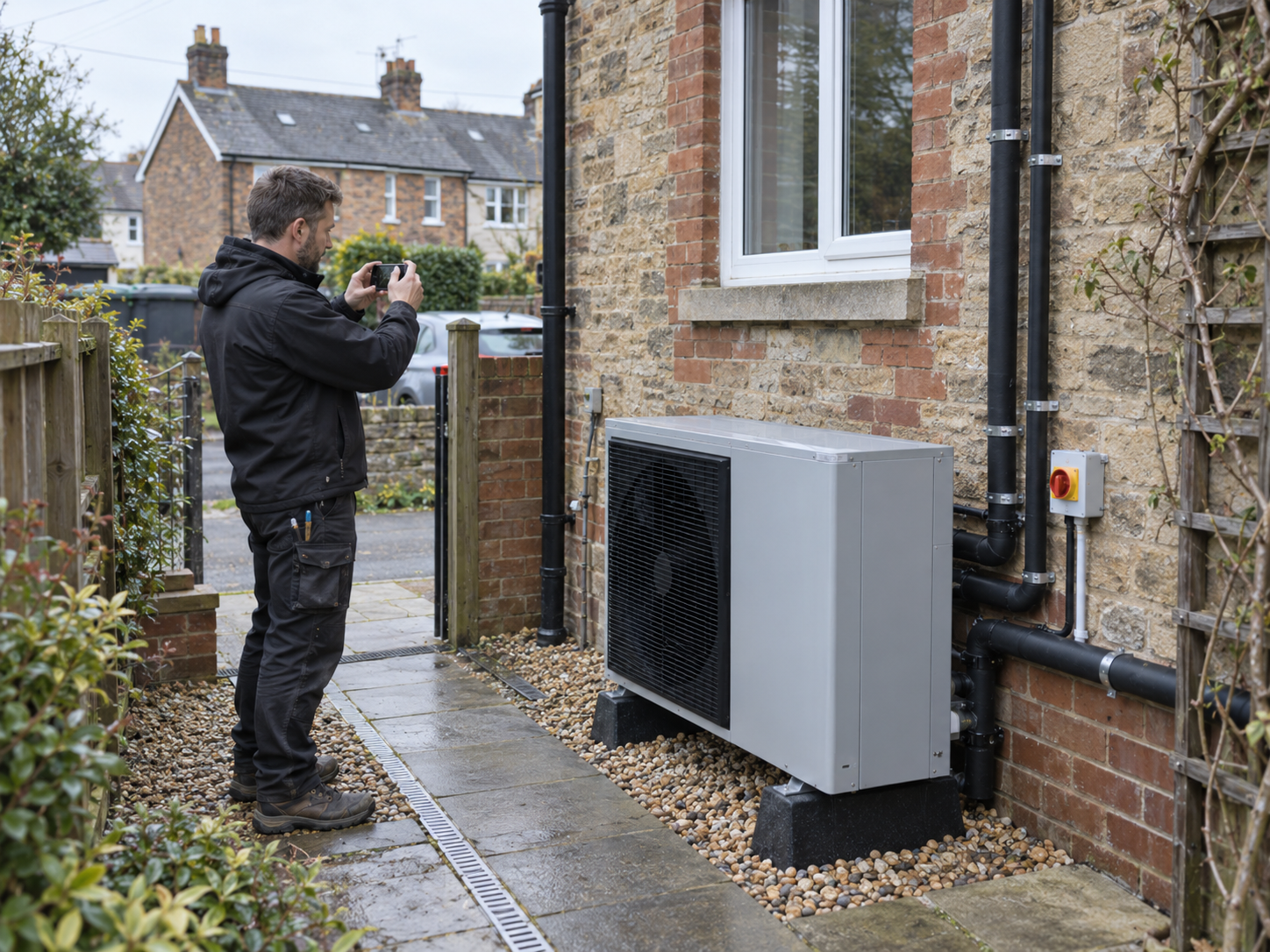
Grant’s Aerona 290 is easier to compare than many ranges because the UK page publishes seasonal efficiency at both 35°C and 55°C water. This seasonal measure is called the seasonal coefficient of performance (SCOP). The two temperature columns help you see how higher radiator water temperature can change seasonal efficiency. Grant also states that the range is MCS approved, but you should still check the exact product and installer for your project.
LG THERMA V R290 Monobloc
May be worth considering when: You are comparing R290 units for higher water temperatures or colder weather.
What the manufacturer publishes: Up to 75°C family capability is published.
What to check first: Output, electrical demand and support route.
Important limit: A 75°C maximum water temperature does not tell you the heating output on the coldest design day.
LG’s current UK business page states up to 75°C water flow for the THERMA V R290 Monobloc family and operation down to -28°C. Do not read “75°C” as “best for every retrofit.” Check the exact model’s heating output and efficiency at your winter outdoor temperature and required water temperature. Then check the electrical supply and control requirements.
Mitsubishi Electric Ecodan
May be worth considering when: You want a retrofit option with UK support and UK production.
What the manufacturer publishes: Current R290 family states UK manufacture.
What to check first: Winter heating output, noise and system setup.
Important limit: UK manufacture does not prove that the unit fits your building.
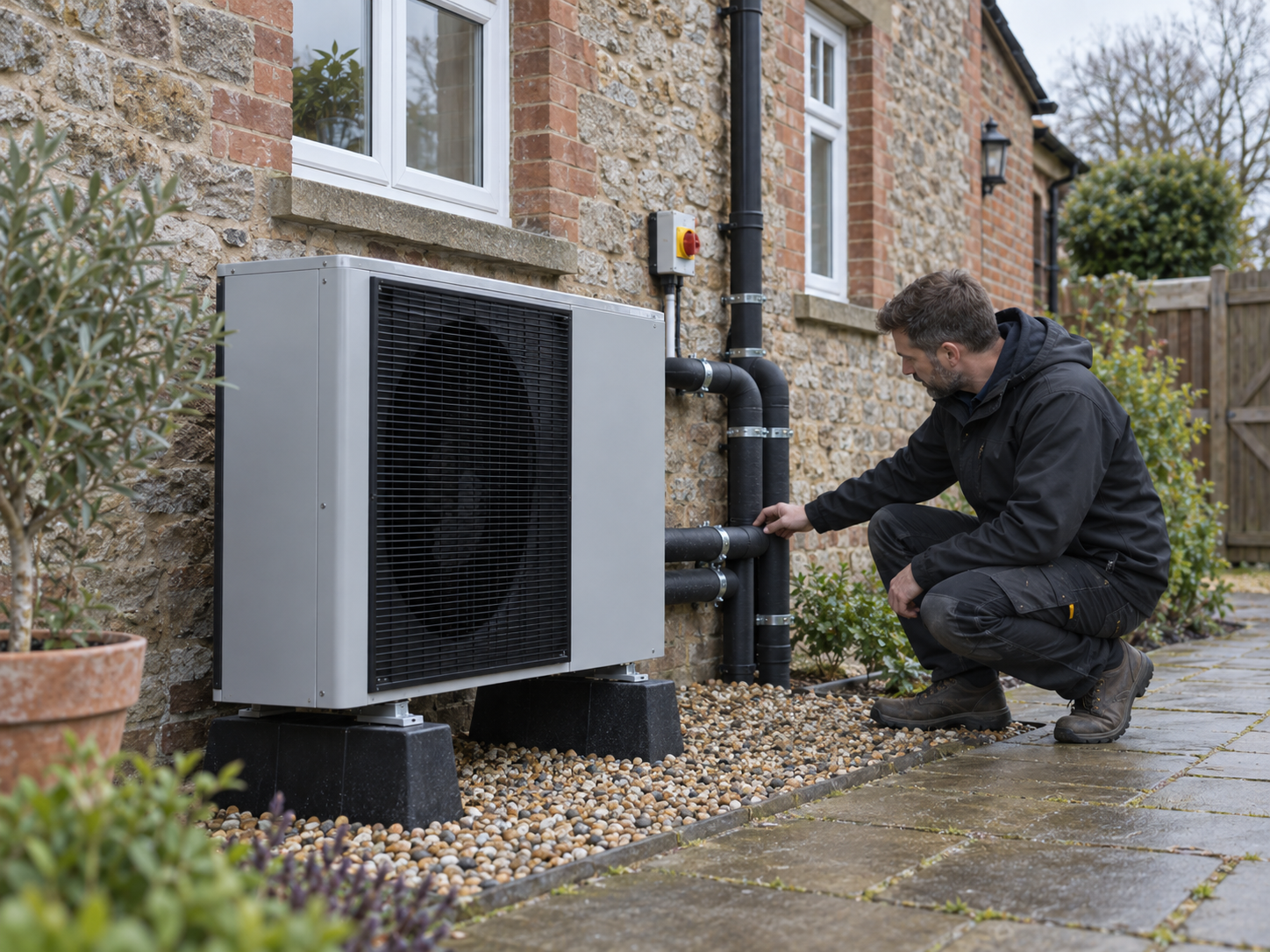
Mitsubishi Electric is distinctive in this list because its current R290 Ecodan page states that the product is manufactured at the company’s Livingston, Scotland factory. The page lists 5, 6, 8.5, 10 and 12 kW variants, operation down to -25°C and water temperatures up to 75°C. UK manufacture may matter to you for supply-chain reasons. But it still does not tell you whether a specific unit can cover the building heat loss in your actual winter conditions.
NIBE S2125
May be worth considering when: You value integrated controls or need to compare cold-climate operation.
What the manufacturer publishes: Low-ambient operation and S-Series controls.
What to check first: Exact-variant heating output, required water temperature, electrical demand and service support.
Important limit: Good controls do not replace basic heating-output and system checks.
NIBE’s S2125 is worth examining for projects that value low-ambient operation, connected controls and a Nordic heat-pump ecosystem. The current UK range page says the S2125 operates down to -25°C, and selected variants are Quiet Mark certified. NIBE’s product information also describes S-Series controls and myUplink connectivity. Those family-level features are only a starting point. Check the exact variant’s heating output, required water temperature, phase and current demand, and local support before choosing.
Panasonic Aquarea
May be worth considering when: You have a low-temperature new build or a retrofit that can run at lower water temperature.
What the manufacturer publishes: Published data shows strong low-temperature seasonal performance plus high-water-temperature capability.
What to check first: Hydraulics and output at required condition.
Important limit: One maximum water-temperature figure does not apply at every outdoor temperature.
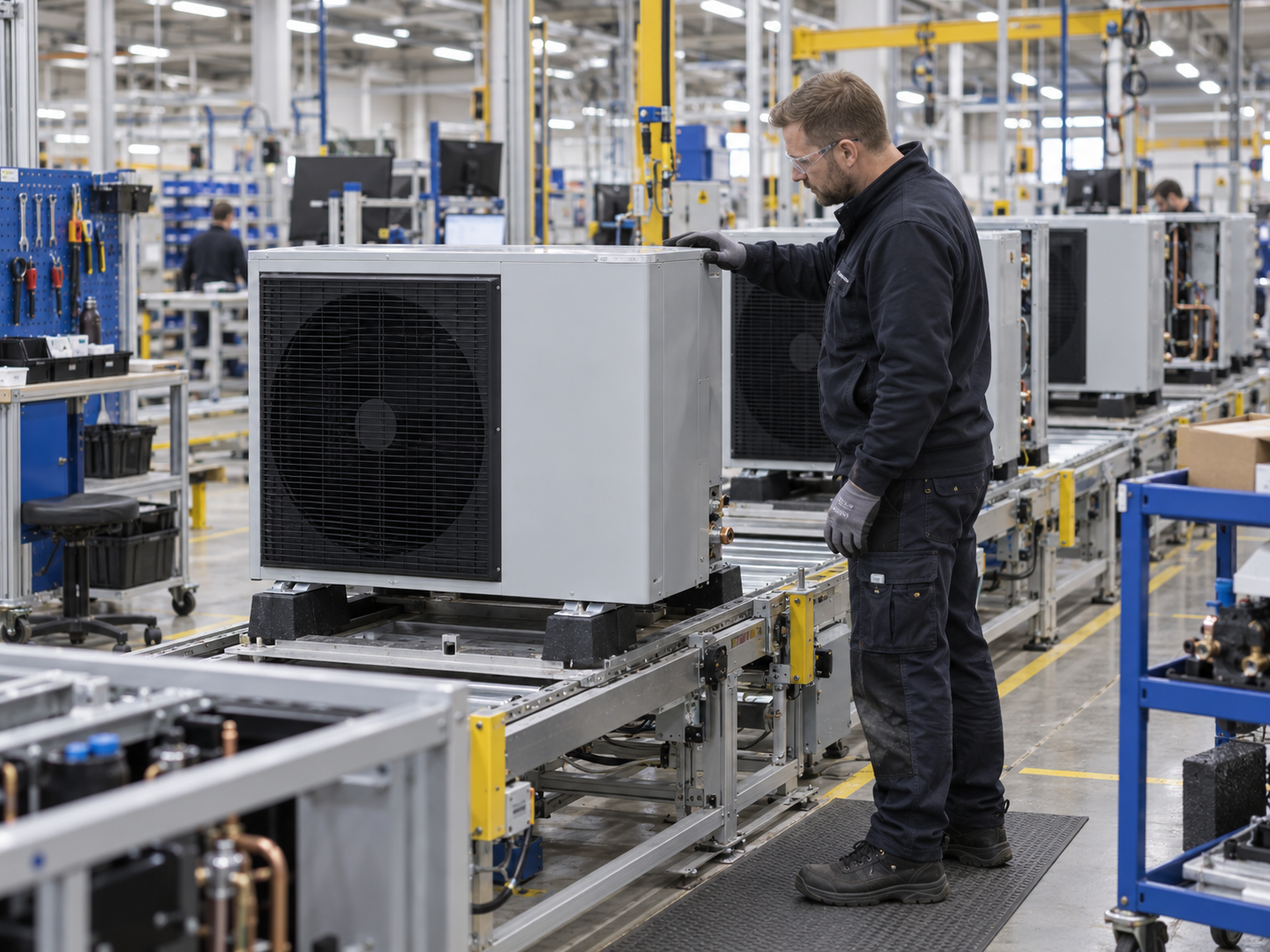
Panasonic’s Aquarea L Generation is a useful example of why operating conditions matter. The cited UK page publishes 75°C maximum outlet water at -10°C, 55°C water at -25°C and operation without backup heating at -25°C. The headline “75°C” therefore has a temperature condition attached to it. Compare the product at your project’s real outdoor and water temperatures. Do not assume one maximum value applies in every weather condition.
Samsung EHS Mono R290
May be worth considering when: You want an R290 residential system with connected controls and higher water-temperature capability.
What the manufacturer publishes: Up to 75°C and connected controls are published.
What to check first: Operating-point output, sound and electrical fit.
Important limit: Smart controls cannot fix a unit that does not meet the basic heating, noise or electrical requirements.
Samsung’s EHS Mono R290 is another current UK option with R290 and higher water-temperature capability. Samsung publishes water temperatures up to 75°C and connected-home control options. Check whether the exact model still provides enough heat and acceptable efficiency at your winter outdoor temperature and required water temperature. Also check that the installer can set up and support the controls correctly.
Vaillant aroTHERM plus
May be worth considering when: You have a residential retrofit where outdoor-unit noise may matter.
What the manufacturer publishes: High water-temperature capability and Quiet Mark positioning.
What to check first: Winter heating output, seasonal performance and site noise.
Important limit: Quiet Mark does not by itself prove that a specific installation will meet site noise rules.
Vaillant’s aroTHERM plus is a common UK option to compare, especially for residential retrofit. The current UK page states up to 75°C flow temperature and Quiet Mark certification and provides a visible service and installer route. That can make the product easier to assess. But do not treat maximum water temperature as proof of winter heating output or low running cost.
Viessmann Vitocal 150-A
May be worth considering when: You are comparing options for a retrofit or new build.
What the manufacturer publishes: A broad family range and high-water-temperature capability under stated conditions.
What to check first: Exact unit, radiator temperature and winter output.
Important limit: One COP test point does not tell you the COP for the whole winter.
Viessmann positions the Vitocal 150-A for modernisation, with a current UK page listing 2.1–14.9 kW rated heating output across the family and up to 70°C flow temperature at -10°C. It also publishes a coefficient of performance (COP) example at A7/W35. COP shows efficiency at one specific test condition. That number should not be treated as the expected efficiency for the whole winter, especially at colder outdoor temperatures or higher radiator water temperatures.
Worcester Bosch Compress 5800i AW
May be worth considering when: You have a smaller residential project and value UK-facing support.
What the manufacturer publishes: 4, 5 and 7 kW variants plus sound-power data.
What to check first: Capacity-range fit, siting and system design.
Important limit: A familiar brand does not help if the unit cannot cover the building heat load.
Worcester Bosch’s Compress 5800i AW is relevant where a familiar UK heating brand, compact residential system and installer-facing support are priorities. Its professional page lists 4, 5 and 7 kW variants and publishes both sound pressure and sound power for the units. The capacity range is fairly focused. First check whether one of the units can cover the building heat loss on the winter design day. Only then compare secondary features.
How to compare heat pump manufacturers without being misled by one headline number
1. The rated kW is not always the heating output you get on the coldest day
A model name that contains “8 kW” does not prove that the unit will deliver 8 kW at your coldest design temperature and chosen leaving-water temperature. Compressor speed limits, heat-exchanger conditions, defrost behaviour and water temperature can all change available output. Ask for performance at the actual operating point used in the building design.
For domestic work, the MCS Heat Load Calculator describes room-by-room inputs including the building fabric (walls, roof, windows and insulation), dimensions, ventilation, indoor temperatures and the lowest winter outdoor temperature. It also states that the resulting heat load supports heat-pump sizing. Floor area alone is therefore not enough for an exact kW recommendation.

2. COP and SCOP are different, and water temperature changes the result
Coefficient of performance (COP) shows efficiency at one test condition. Seasonal coefficient of performance (SCOP) estimates efficiency across a heating season. They answer different questions. A product can look very efficient at A7/W35, which means 7°C outdoor air and 35°C water. The result can be very different in colder weather or at 55°C water. If your radiators need hotter water, compare the seasonal data at the relevant temperature and then check the cold-weather performance tables.
Grant’s current range page demonstrates the value of this: it publishes separate SCOP columns for 35°C and 55°C water, and the figures are not the same. The important point is simple: higher water temperature changes system efficiency. Do not use one product family’s figures as a prediction for every building.
3. Maximum leaving-water temperature is not an output guarantee
A 70°C or 75°C maximum can be helpful when existing radiators or domestic-hot-water strategy require higher temperatures. But a maximum temperature is not a statement of heating capacity, COP or electrical input at the project’s winter design condition. Some manufacturers explicitly attach an outdoor-temperature condition to their high-water-temperature figures, which is how you should read these figures.

4. Compare sound power for siting, not unrelated sound-pressure marketing numbers
The current MCS 020(a) method for permitted-development air-source heat pumps in England starts with the manufacturer’s A-weighted sound power level. It then accounts for distance, sound direction and barriers to estimate the sound pressure at the assessment point. Sound power describes the noise produced by the unit itself. Sound pressure describes the noise level at a specific location. The standard uses a 37.0 dB(A) permitted-development limit at the assessment position, subject to its other conditions.
This means a “quietest brand” answer based on mixed brochure numbers can be misleading. Two pages may quote different metrics or distances. For a noise-constrained site, use the exact unit’s sound power and the real geometry: distance to neighbouring openings, reflective surfaces, barriers and line of sight.
5. Compare controls and service after the basic technical requirements are met
Weather compensation, app control, energy monitoring, building management system (BMS) integration, installer tools and remote diagnostics can all affect setup and day-to-day use. Service access, spare-parts channels and installer competence can matter just as much over the product life. These are good reasons to prefer one manufacturer, but only after the unit meets your heating, water-temperature, noise, electrical and compliance needs.
Price, warranty and support: what you should compare
A low unit price does not automatically produce a low installed project cost. Hot-water cylinders, radiators or underfloor heating, water-side pipework, electrical work, controls, groundworks, commissioning and labour can change the total. Compare equipment price and whole-system scope separately.
Compare warranty terms, not just the headline number
Before choosing based on warranty length, check registration rules, approved-installer and setup requirements, servicing rules, labour versus parts coverage, exclusions, transferability and the UK support route.
Support becomes more important for repeat or portfolio projects
For developers, distributors and repeat project customers, also compare documentation quality, training, parts policy, control standardisation, product-change management and response route. These factors can separate two technically acceptable brands at portfolio scale.

UK rules that can change your options
MCS product and installer requirements: why they matter
For many UK home projects, MCS status matters because it can affect scheme eligibility and how the installation is handled. MCS design guidance requires the correct equipment to be listed and the system size to be based on heat loss. Check the exact product entry and installer route for your project. Do not assume every model under the same brand has the same status.
Boiler Upgrade Scheme scope is not “all of the UK”
The Boiler Upgrade Scheme (BUS) applies to England and Wales, not to the whole United Kingdom. A government notice updated on 21 July 2026 lists £7,500 for a standard air-to-water heat pump and £9,000 for eligible off-gas-grid properties replacing LPG or oil under the current categories. Funding and eligibility can change. Check the current GOV.UK or Ofgem rules when you get a quotation instead of relying on an older grant figure.

Planning and noise rules differ by nation and site
England changed permitted-development rules for air-source heat pumps in May 2025. The changes included removing the 1 m boundary restriction and allowing a larger outdoor-unit volume for houses, along with other updates. Current government guidance summarises those changes. MCS 020(a) is part of the England permitted-development noise-assessment route. Scotland, Wales and Northern Ireland have their own planning frameworks, so a UK-wide project specification should not copy an England-only planning assumption into every location.

Which brand direction fits different UK project conditions?
The same brand can become more or less suitable when your project conditions change. Use the table below to narrow your options, then check the exact model at the outdoor and water temperatures your project requires.
| Project condition | Main risk | What to look for | Verify before selection |
|---|---|---|---|
| Low-temperature new build | Oversizing or paying for high-temperature capability the system does not need | Prioritise modulation, 30–35°C seasonal performance, controls and DHW integration | Room-by-room heat loss, emitter design and minimum or part-load behaviour |
| Existing radiator retrofit | Assuming maximum water temperature means enough winter heating output | Prioritise transparent high-temperature and low-ambient performance data | Heating output and efficiency at the design outdoor temperature and required water temperature |
| Noise-constrained urban site | Looking quiet in the brochure but failing the real site noise check | Compare units with clear sound-power data and flexible siting options | Real distances, reflective walls, barriers and the required noise calculation method |
Low-temperature new build or major fabric upgrade
Start with the building heat loss and the radiators or underfloor heating, then compare products around 30–35°C water where possible. At this point, how far the unit can reduce its output (modulation range), seasonal efficiency, controls and domestic-hot-water integration may create more separation than maximum flow temperature. Many brands can work here. The system design usually matters more than the logo.
Existing radiator retrofit with higher flow temperature
If your retrofit needs hotter water, focus on product families that publish clear high-temperature and cold-weather performance data. Daikin Altherma 4 H, Mitsubishi Electric Ecodan R290, NIBE S2125, Panasonic Aquarea L, Samsung EHS Mono R290, Vaillant aroTHERM plus, Viessmann Vitocal 150-A and LG THERMA V R290 all publish high-water-temperature capability in their current materials. That makes them worth comparing, but it does not mean they have the same heating output or running cost.
Noise-constrained urban site
Do not choose from a generic “dB” comparison table. Start with units that publish clear sound-power data, then run the site calculation. A slightly higher or lower product sound value may be less important than unit location, reflections, a barrier and distance to neighbouring windows or doors. Moving the outdoor unit can change the result without changing the brand.

Project that prioritises UK manufacturing
Mitsubishi Electric states that its R290 Ecodan is manufactured in Livingston, Scotland. Vaillant has also publicised heat-pump manufacturing at its Belper, Derbyshire site. If country of manufacture matters to you, confirm the origin of the exact model and revision, because a multinational brand can source different product families from different factories.
Portfolio, developer or distributor buying
For repeat projects, you are choosing more than a heat pump. You are also choosing the supplier, controls, documentation and support process you may use again and again. Add documentation quality, installer training, spare-parts policy, control standardisation, warranty process, change notification and capacity to support repeated orders. A technically acceptable unit can still be a poor portfolio choice if each site needs a different control stack or service route.
Send the heat load, outdoor design temperature, required water temperature, electrical and site limits, and quantity. We can then rule out unsuitable options and focus on products that fit.

For B2B projects: established brand or OEM/private-label route?
An established UK-facing brand can be the lower-friction choice when the job depends on a recognised installer network, consumer-facing warranty, local training and a mature service route. A private-label or OEM route solves a different problem: distributors and project customers may want their own brand, specified documentation, selected control options or a controlled product family across markets.
Airproz’s existing global air-source heat-pump manufacturer guide covers how to compare manufacturers, while the B2B buying guide explains how to compare suppliers. If you are considering private label, you can also review the Airproz heat-pump OEM/ODM route and the current space-heating heat-pump family.
For UK projects, do not transfer a certificate, performance table or refrigerant configuration from one model to another. Airproz certification and configuration suitability are model- and market-specific. Ask for the exact model documents for the intended UK application. Then compare those documents with your project specification.
What a manufacturer needs before recommending an exact model
For distributor, developer and OEM enquiries, building area or a nominal “kW required” figure is not sufficient for a responsible exact-model recommendation. Before we can recommend an exact model, we need the design heat load, outdoor temperature used for sizing, required leaving-water temperature, electrical supply, water-side system layout, outdoor-unit limits, certification market, quantity and any documentation or private-label requirements.
What to send before asking for an exact heat-pump recommendation
You can narrow the brand options with limited information, but you cannot choose an exact model responsibly that way. To move from a project-level product direction (C3) to an exact model and setup (C4), send the inputs that actually change the engineering result:
- application and property/building type;
- room-by-room or project design heat loss, not floor area alone;
- postcode or design outdoor temperature;
- required leaving-water temperature and emitter type;
- domestic-hot-water requirement, if included;
- electrical supply (single/three phase, available current and constraints);
- outdoor-unit location, distances to boundaries and neighbours, and any noise limits;
- hydraulic arrangement and installation constraints;
- target market and required product/installer certification route;
- quantity, project schedule and any OEM/private-label/documentation requirements for B2B orders.
Send the minimum project inputs above so exact models can be checked at the correct operating point.

FAQ: UK heat pump manufacturers and brands
Who are the best heat pump manufacturers in the UK?
There is no universal best brand. Daikin, Grant, LG, Mitsubishi Electric, NIBE, Panasonic, Samsung, Vaillant, Viessmann and Worcester Bosch are established UK-market names to compare. Keep only exact products that meet your winter heating, noise, electrical, compliance and support requirements.
Which heat pump is best for an older UK house?
Start with design heat loss, existing radiator output and required leaving-water temperature. Then compare exact models at that operating point. A high-temperature unit can reduce the need to replace or enlarge radiators in some retrofits. You still need to check winter heating output, radiator performance and the building’s insulation, windows and air sealing.
Which heat pump is best for existing radiators?
Compare exact models that can meet the design heat load at the water temperature your radiators need. Compare capacity and efficiency at the real outdoor design condition; do not choose from maximum flow temperature alone.
Is a 75°C heat pump automatically better for a UK retrofit?
No. Maximum water temperature does not prove useful winter output or good efficiency. Compare capacity and efficiency at the actual outdoor and leaving-water temperatures, then decide whether emitter or fabric upgrades are worthwhile.
Do I need an MCS-certified heat pump?
It depends on the project and funding or planning route. For many UK domestic installations, exact product and installer MCS status matters, particularly where the Boiler Upgrade Scheme or an MCS planning route is involved.
Which heat pump brand is the quietest?
There is no safe universal answer from mixed brochure figures. Compare the exact unit’s A-weighted sound power and run the applicable site calculation using real distances, reflective surfaces, barriers and neighbouring assessment positions.
How should I compare heat pump warranties?
Compare conditions, not only years. Check registration, approved-installer and servicing requirements, labour versus parts coverage, exclusions, transferability, parts availability and the practical UK support route.
What information is needed before selecting an exact heat-pump model?
Provide the design heat loss, design outdoor temperature, required leaving-water temperature (LWT), radiator or underfloor-heating type, electrical supply, outdoor-unit and noise limits, water-side system layout, certification route and, where relevant, quantity and OEM/documentation requirements.
Send us your project conditions and ordering requirements. We can then identify the suitable product family and the documents needed before quotation.