Turkey’s heating demand changes sharply by region. Coastal cities like Istanbul and Izmir need moderate winter heating, while central Anatolia and eastern highlands such as Ankara and Erzurum require stronger low-temperature performance and more careful system sizing. For Turkish distributors, hotel developers, and project engineers, the challenge is not simply finding a heat pump that works.
The real issue is selecting a system that can cover winter heating, stable domestic hot water, and import documentation requirements — without forcing buyers to source separate equipment for each function. An air to water heat pump in Turkey can offer one platform for all of these needs, provided the system is correctly matched to climate zone, building load, DHW demand, and local compliance documentation. This guide covers how the technology works, what sizing parameters matter across Turkey’s distinct climate zones, and what CE-related documentation your procurement team should verify before placing an order.
Air to Water Heat Pump in TurkeyKey Takeaways
- Turkey’s TS 825 building insulation framework divides the country into degree-day regions, with a significant gap in heating demand between coastal cities and colder inland or eastern regions. System sizing should always be based on local design temperature.
- The Turkish heat pump market was valued at approximately USD 780 million in 2025 and is projected to reach approximately USD 991 million by 2031 (Mordor Intelligence, 2026).
- An air to water heat pump can support space heating, cooling, and domestic hot water from one system — provided the hydraulic layout, buffer tank, controls, and indoor terminals are correctly designed for that configuration.
- CE documentation is a key procurement requirement for Turkish importers of covered product categories; Turkey has adopted CE-related technical regulations through domestic legislation since 2021 (Turkey Product Rules Database).
Why Turkey’s Climate Requires Flexible Heat Pump Design
Turkey spans multiple climate zones, and a single national approach to heat pump sizing does not work. The country’s building energy standard, TS 825, divides Turkey into degree-day regions based on heating degree days (HDD), and the design ambient temperature varies significantly from the Aegean coast to the eastern highlands.
The Turkish heat pump market was valued at approximately USD 780 million in 2025 (Mordor Intelligence, 2026). Turkey’s evolving building energy standards are driving demand for higher-efficiency HVAC systems, particularly in new commercial and multi-residential developments.
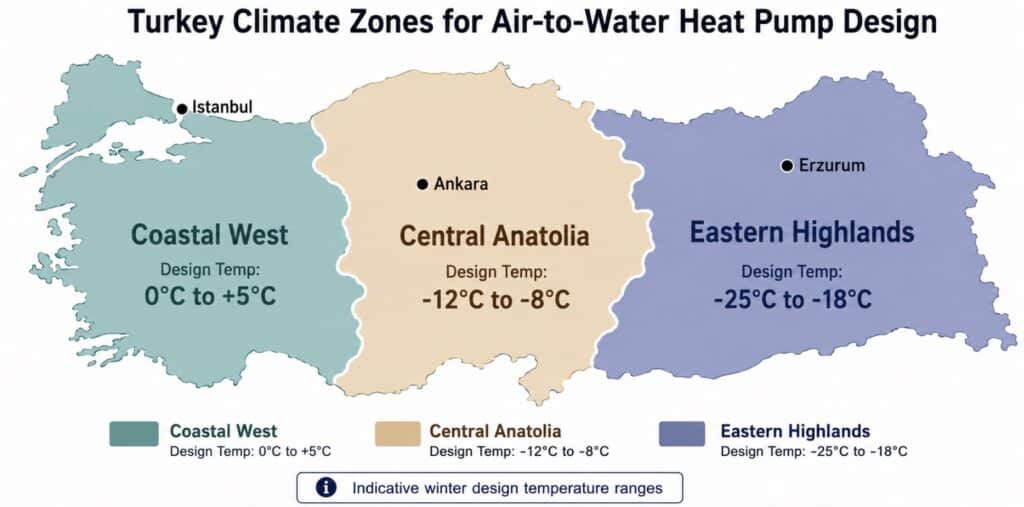
Coastal West, Central Anatolia, and Eastern Highlands: Three Different Demands
Turkey’s climate can be broadly grouped into three heating demand profiles:
Coastal west (Istanbul, Izmir, Antalya): Mild winters with design ambient temperatures of −3°C to −5°C. Heating demand typically runs from late autumn through early spring in most coastal areas. Cooling demand is also significant in summer months, making reversible heat pump configurations valuable.
Central Anatolia (Ankara, Eskişehir): Cold winters with design ambient temperatures of −8°C to −12°C. Heating loads dominate a longer portion of the annual energy budget. Low-ambient heat pump performance is a key specification criterion.
Eastern highlands (Erzurum, Kars): Severe winters with design ambient temperatures of −18°C to −22°C. Systems must maintain useful heating capacity and COP across an extended heating period. For these colder regions, buyers should consider low-ambient models. Depending on the supply water temperature, design load, and whether auxiliary heating is available, EVI compressor technology may be required to maintain adequate heating output at the project’s design temperature.
Heating Degree Days by City: Istanbul vs. Ankara vs. Erzurum
Under the TS 825 standard, Turkey’s degree-day regions reflect the wide variation in heating demand:
| City | TS 825 Zone | Approximate HDD (Base 15°C) | Heating Season Duration |
|---|---|---|---|
| Izmir / Antalya | Zone 1 | ~512 | ~6 months |
| Istanbul | Zone 2 | ~1,285 | ~7 months |
| Ankara | Zone 3 | ~2,677 | ~8 months |
| Erzurum / Kars | Zone 4–5 | ~3,857+ | ~10 months |
HDD values are indicative figures based on published climate data for each zone and are provided for comparative reference only. Consult local design temperature data and TS 825 zone classifications for project-specific sizing.
For B2B buyers, these figures translate directly into system sizing decisions. A heat pump sized for an Istanbul villa will be undersized for an equivalent building in Ankara, and a system designed for Ankara may not meet heating demand in Erzurum without low-ambient optimisation. EVI technology or auxiliary heating should be evaluated based on the project’s specific design temperature.
How an Air to Water Heat Pump Covers Space Heating and Domestic Hot Water
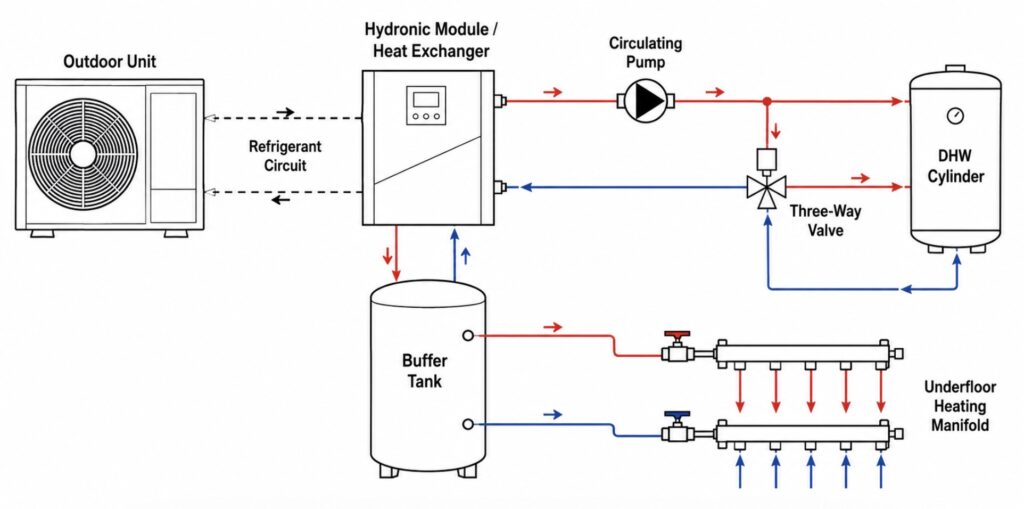
An air to water heat pump heating cooling and hot water system operates on a single refrigeration cycle to deliver multiple functions from one outdoor unit. The system extracts heat from outdoor air, compresses it to a higher temperature, and transfers it to a water circuit that distributes heating or hot water throughout the building.
When correctly designed with the appropriate hydraulic components, controls, and storage tanks, a single air-to-water heat pump can replace separate systems for heating, cooling, and domestic hot water production.
For a full overview of air to water heat pump system types and B2B sourcing criteria, see our Heat Pump Manufacturer B2B Buying Guide.
Space Heating Mode: How the Refrigerant Cycle Delivers Heat to Your Building
In heating mode, the heat pump’s refrigerant absorbs thermal energy from outdoor air through the evaporator coil, even at low ambient temperatures. The compressor raises the refrigerant pressure and temperature, and the condenser transfers that heat to the water circuit. The heated water is then circulated to underfloor heating loops, radiators, or fan coil units.
The efficiency of this process is expressed as the coefficient of performance (COP). Modern inverter-driven air-to-water heat pumps can achieve COP values of 3.0–5.0 at moderate ambient temperatures, depending on the supply water temperature and system design. At lower outdoor temperatures, COP decreases — but selected low-ambient models with EVI can maintain useful output at temperatures as low as −25°C.
Domestic Hot Water: Storage Cylinder, Coil Design, and Temperature Requirements
Domestic hot water is produced by diverting a portion of the heat pump’s output to a DHW storage cylinder via a three-way valve or dedicated heat exchanger. The cylinder contains a coil through which the heat pump’s hot water passes, transferring heat to the stored water.
- Minimum output temperature: A DHW storage temperature of 55°C is widely adopted as an industry design standard for Legionella risk management, consistent with European EN 806 guidelines referenced in many Turkish commercial projects. Specific requirements may vary by project type and local authority. Some systems require an electric backup heater to achieve this temperature reliably during cold periods.
- Tank sizing: DHW tank volume is determined by occupancy count and peak demand patterns. A standard guideline is 50–80 litres per person for residential applications, with larger ratios for hotels and commercial buildings where simultaneous demand is higher.
- Coil surface area: The internal heat exchanger coil must be sized to transfer sufficient heat within the heat pump’s operating cycle. An undersized coil results in long recovery times and poor hot water availability during peak demand.
Can the Same System Support Cooling in Summer?
Cooling function depends on indoor terminal (fan coil), hydraulic layout, buffer tank design, three-way valve, and control logic. Not all configurations support cooling without additional components.
A reversible air-to-water heat pump can reverse the refrigerant cycle to provide chilled water for fan coil units or chilled ceiling systems. However, this requires:
- Fan coil units or chilled beams — Underfloor heating alone is not sufficient for cooling in most climates; dedicated cooling terminals are required.
- Correct hydraulic layout — The pipework must support both heating and cooling flow temperatures, typically with a buffer tank to manage system volume and prevent short cycling.
- Control logic — The system controller must manage the changeover between heating, cooling, and DHW modes, including priority switching and anti-legionella cycles.
Buyers who require cooling in addition to heating and hot water should confirm these configuration requirements with the supplier before specifying the system.
Heat Pump Sizing Guide for Turkey’s Climate Zones
Selecting the correct capacity for an air to water heat pump in Turkey requires a project-specific heat load calculation. A space heating heat pump sizing guide should account for the building’s construction type, insulation level, window area, and orientation, combined with the local design ambient temperature.
The table below is for reference only. Final system sizing should be based on room-by-room heat load calculation, local design temperature, and supply water temperature requirements.
Key Parameters: Ambient Design Temperature, Building Load, and Supply Water Temperature
Three parameters drive the sizing decision:
- Design ambient temperature — The lowest expected outdoor temperature for the project location, used to calculate peak heating demand. This varies from −3°C in coastal west to −22°C in eastern highlands.
- Building heat load — Calculated in kilowatts based on the building’s envelope characteristics. A 150 m² well-insulated villa in Ankara typically requires 10–14 kW of heating capacity.
- Supply water temperature — Low-temperature distribution (35–45°C for underfloor heating) allows the heat pump to operate at higher COP. High-temperature systems (55–65°C for radiators) reduce efficiency and may require a larger or higher-specification heat pump.
Indicative Capacity Reference Table
| Climate Zone | Design Ambient (°C) | Indicative Capacity Range | Typical Application |
|---|---|---|---|
| Coastal West (Istanbul / Izmir) | −3 to −5 | 8–16 kW | 120–200 m² villa or apartment |
| Central Anatolia (Ankara) | −8 to −12 | 12–24 kW | 150–300 m² residence or small commercial |
| Eastern Highlands (Erzurum) | −18 to −22 | 20–40 kW | Hotel block, larger residential |
Capacities are indicative. Final selection must be based on a professional heat load calculation, not on floor area alone.
DHW Sizing: Matching Tank Capacity to Occupancy and Peak Load
Domestic hot water tank sizing follows different rules from space heating sizing because DHW demand is defined by occupancy patterns rather than building envelope heat loss.
| Building Type | Recommended DHW Tank Volume | Peak Demand Profile |
|---|---|---|
| Single villa (4–6 persons) | 200–300 litres | Morning and evening peaks |
| Small hotel (15–25 rooms) | 500–1,000 litres | Continuous demand with morning and evening peaks |
| Apartment block (30–40 units) | 1,500–3,000 litres (centralised) or per-unit tanks | Distributed demand |
Tank sizing must also account for recovery time — the time required to reheat the full tank volume after a peak demand period. A heat pump with a smaller heating output will require a longer recovery time, which may necessitate a larger tank or a buffer volume to maintain hot water availability.
CE Documentation and Compliance Checks for Turkish Importers
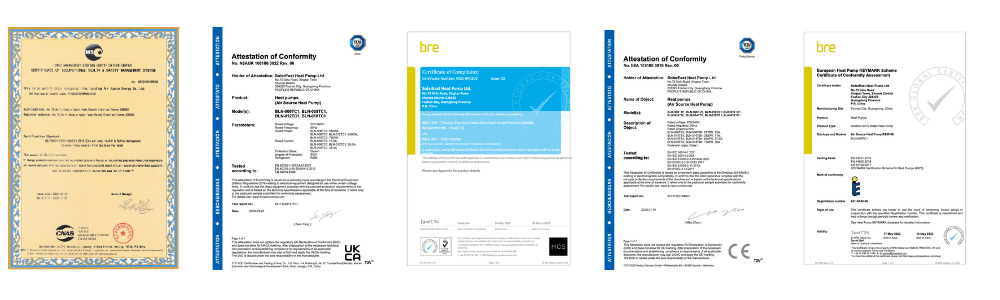
For Turkish importers evaluating a space heating heat pump CE certified manufacturer, documentation verification is a critical procurement step. CE marking indicates that the product meets applicable EU health, safety, and environmental requirements, which are referenced in Turkey’s domestic technical regulations.
Turkey’s Adoption of CE-Related Technical Regulations
Turkey has adopted CE-related technical regulations through domestic legislation. The CE Marking Regulation was published and entered into force in 2021 and applies to covered product categories. CE marking requirements for heat pumps fall under relevant EU directives that Turkey has transposed into national law, including the Ecodesign Directive (ErP) and the Energy Labelling Regulation where applicable.
It is important to note that not all heat pump categories require CE marking — scope depends on the specific applicable directives. Buyers should verify the exact compliance requirements for their product category and destination market.
What Documents to Request from Your Supplier
For B2B heat pump procurement in Turkey, the following documentation package should be requested:
- Declaration of Conformity (DoC) — The manufacturer’s formal declaration that the product meets applicable EU directives and standards.
- Applicable test reports — Performance test reports per EN 14511 (heating and cooling capacity, COP, EER) and EN 14825 (part-load seasonal efficiency, SCOP).
- CE mark on product nameplate and/or required accompanying documentation — Physical marking confirming compliance.
- ErP / Energy Label documentation — Energy labelling information as required by applicable EU regulations.
- Product manual and installation guide — Documentation in Turkish or English, depending on the importer’s requirements and end-user needs.
Airproz CE Readiness: What We Can Provide
Airproz manufactures air-to-water heat pump systems with supporting CE documentation for B2B buyers, including Declaration of Conformity and applicable test reports. Documentation scope and availability depend on the specific model and destination market. Buyers should confirm documentation requirements with the Airproz sales team at the quotation stage.
Application Scenarios: Villas, Boutique Hotels, and Apartment Projects in Turkey
The following scenarios illustrate how a space heating heat pump for villas and small hotels is specified across different project types and climate zones in Turkey. These are illustrative planning examples for system design reference, not completed project case studies.
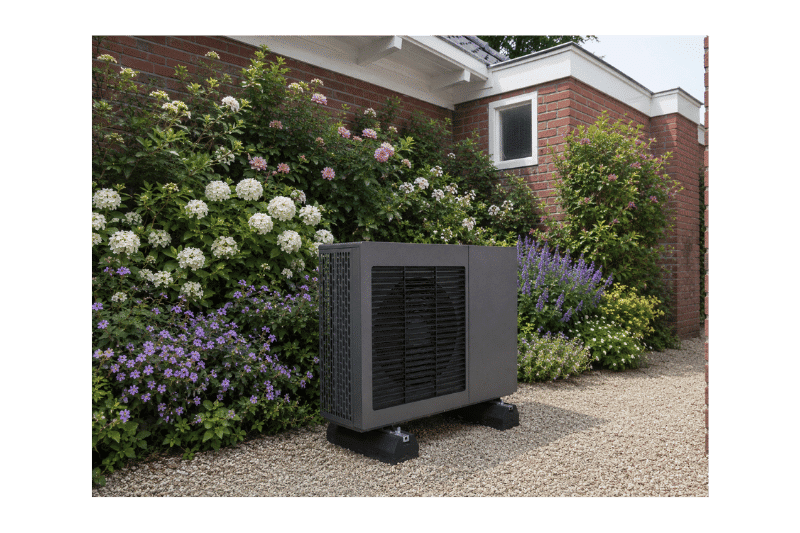
Application Scenario A — Aegean Coast Villa Development
- Building type: 8-unit townhouse development, approx. 140 m² per unit
- Climate zone: Coastal West, design ambient −3°C
- System configuration: Monobloc air to water heat pump + DHW storage cylinder + underfloor heating
- Key considerations: Low supply water temperature compatibility (35–45°C), noise limits, installation timeline. Underfloor heating at low flow temperature allows the heat pump to operate at high COP for most of the heating season. Each unit requires an individual DHW tank sized for 4–6 occupants.
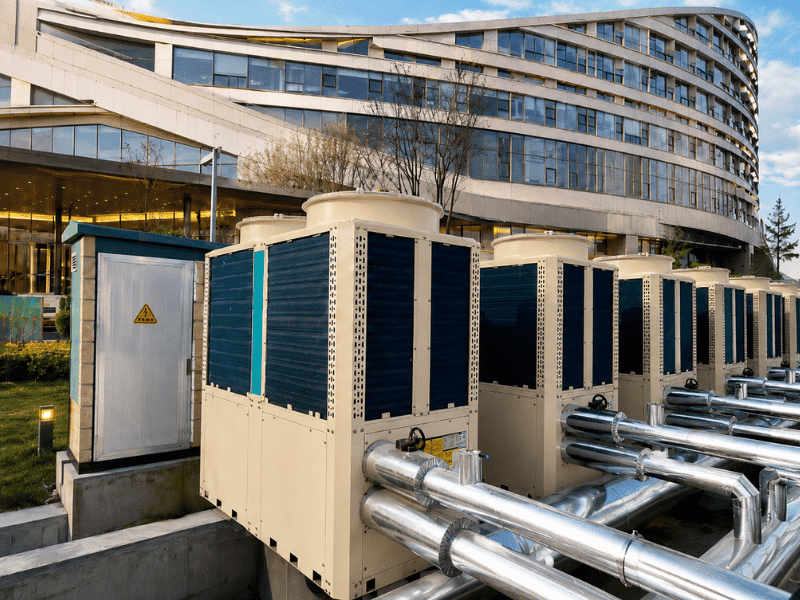
Application Scenario B — Cappadocia Boutique Hotel (Approx. 20 Rooms)
- Building type: Boutique hotel requiring heating + continuous hot water supply
- Climate zone: Central Anatolia, design ambient −10°C
- System configuration: Split air to water heat pump + cascade DHW tank + fan coil for cooling
- Key considerations: DHW peak demand (morning and evening peaks), heating/hot water priority switching, BMS integration. A cascade tank configuration allows multiple heat pump modules to supply a shared DHW volume, ensuring hot water availability during peak occupancy periods. Fan coil units provide both heating and cooling for guest rooms.
Application Scenario C — Ankara Mid-Rise Residential Block (Approx. 36 Units)
- Building type: Mid-rise residential building, centralised heating + per-unit hot water
- Climate zone: Central Anatolia, design ambient −12°C
- System configuration: Commercial-scale air to water heat pump + buffer tank + DHW tank array
- Key considerations: Centralised vs. distributed system comparison, Modbus/BMS integration, ErP documentation requirements. A centralised heat pump plant room with a buffer tank and DHW tank array can serve all 36 units from a single outdoor unit location. Modbus or BMS integration is typically required for monitoring and control in this building type.
B2B Procurement Checklist for Turkey Distributors and Engineers
Use this checklist when evaluating an air to water heat pump in Turkey for a B2B project:
- CE documentation confirmed: DoC, applicable test reports, and energy label availability
- Operating range verified: capacity and COP checked at project’s actual design ambient temperature — not nominal rating
- DHW output temperature: ≥ 55°C confirmed for Legionella risk management (perEN 806 guidelinesor local project specification)
- Refrigerant type: R32 or R290 — confirm compatibility with Turkey’s currentF-gas and HFC regulations
- Cooling function: indoor terminal, hydraulic design, and control logic confirmed if cooling is required
- BMS / Modbus integration: required for hotel and commercial projects
- MOQ, lead time, and OEM / private label terms confirmed in writing
- Import documentation package: CE DoC, packing list, HS code, product manual in required language
Frequently Asked Questions
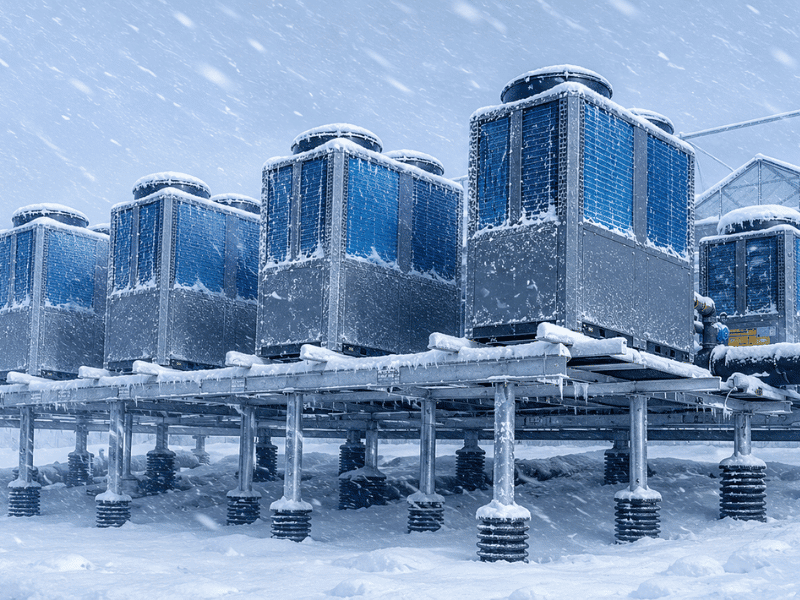
Q1: Does an air to water heat pump work efficiently in Turkey’s colder regions?
Modern inverter-driven units can operate at low ambient temperatures — including eastern highlands where design temperatures can reach −20°C or below. However, heating capacity and COP both decrease at lower ambient conditions. Always check the manufacturer’s performance data at your project’s actual design temperature, not the nominal rating.
Q2: Can one air to water heat pump handle both space heating and domestic hot water in a Turkish villa?
Yes, with proper system design. A monobloc or split unit connected to a DHW storage cylinder and a correctly sized buffer tank can cover both loads from a single refrigerant circuit. Key variables are DHW tank volume, coil surface area, and control logic for priority switching between heating and hot water modes.
Q3: What refrigerant is more suitable for the Turkish market — R32 or R290?
R32 remains a practical choice for many Turkey-bound projects due to mature supply chains, cost control, and familiar servicing. R290 is increasingly attractive for buyers targeting lower-GWP, future-oriented product lines — particularly relevant as Turkey has ratified the Kigali Amendment and aligns with global HFC phasedown timelines. R290 requires stricter safety design, installation awareness, and appropriate documentation.
Q4: What CE documents should I request from a heat pump supplier for Turkish import?
At minimum: Declaration of Conformity (DoC), applicable test reports (EN 14511 / EN 14825), CE marking on the nameplate, ErP energy label documentation where applicable, and product manuals. Turkey has adopted CE-related technical regulations for covered product categories — verifying the documentation package before purchase protects both importer and end customer.
Q5: Does Airproz offer OEM or private label air to water heat pumps for the Turkish market?
Yes. Airproz supports OEM branding, CE documentation preparation, and custom packaging for distributors and brand owners entering the Turkish market. Contact our sales team for MOQ, lead time, and documentation support details.
Source Air to Water Heat Pumps for Turkey from Airproz
Airproz manufactures air to water heat pumps for B2B buyers including distributors, project engineers, and OEM brand owners across Europe, the Middle East, and Southeast Asia. Our product range covers residential and light commercial applications, with CE documentation support and flexible OEM configurations.
Ready to spec a system for a Turkey project? Send us your project details and our team will help you match the right capacity range, documentation package, and OEM configuration for the Turkish market:
- Project city or climate zone
- Building type and heated floor area
- Daily domestic hot water demand or occupancy count
- Whether cooling function is required
- Refrigerant preference (R32 or R290)
- OEM or private label requirements
Related: Heat Pump Manufacturer B2B Buying Guide →
Contact us:https://airproz.com/contact-us/