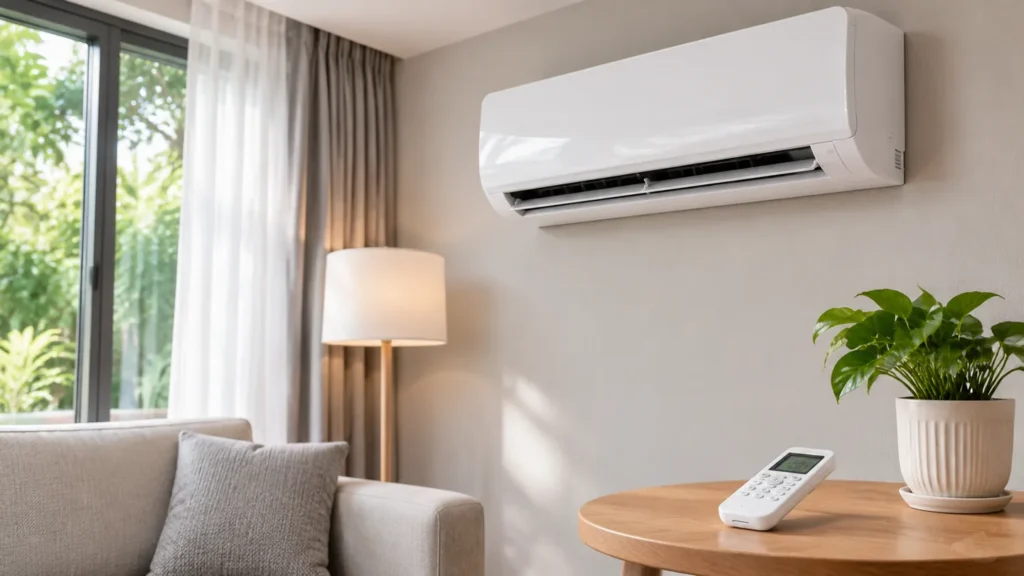
The main refrigerants used in air conditioning are R22, R410A, R32, R454B and, in selected purpose-built systems, R290. Refrigerant works by absorbing heat indoors and releasing it outdoors as it circulates between liquid and vapor states.
R22 is a legacy option, R410A remains common in installed equipment, and newer designs increasingly use lower-GWP choices such as R32 and R454B. R290 is mainly considered where equipment design and local rules permit its higher-flammability category.
For a new AC or heat pump, the best refrigerant is the one specified for a compliant system that meets the real cooling or heating load—not simply the gas with the lowest GWP. This guide compares the types, explains the cycle, and shows what changes for existing units, heat pumps and new installations.
What Does Refrigerant Do in an Air Conditioner?
Refrigerant carries heat from the indoor space to the outdoors. It absorbs heat while evaporating at low pressure and releases heat while condensing at higher pressure.
A working air conditioner circulates it through a closed refrigeration circuit; it does not burn or use up refrigerant during normal cooling.
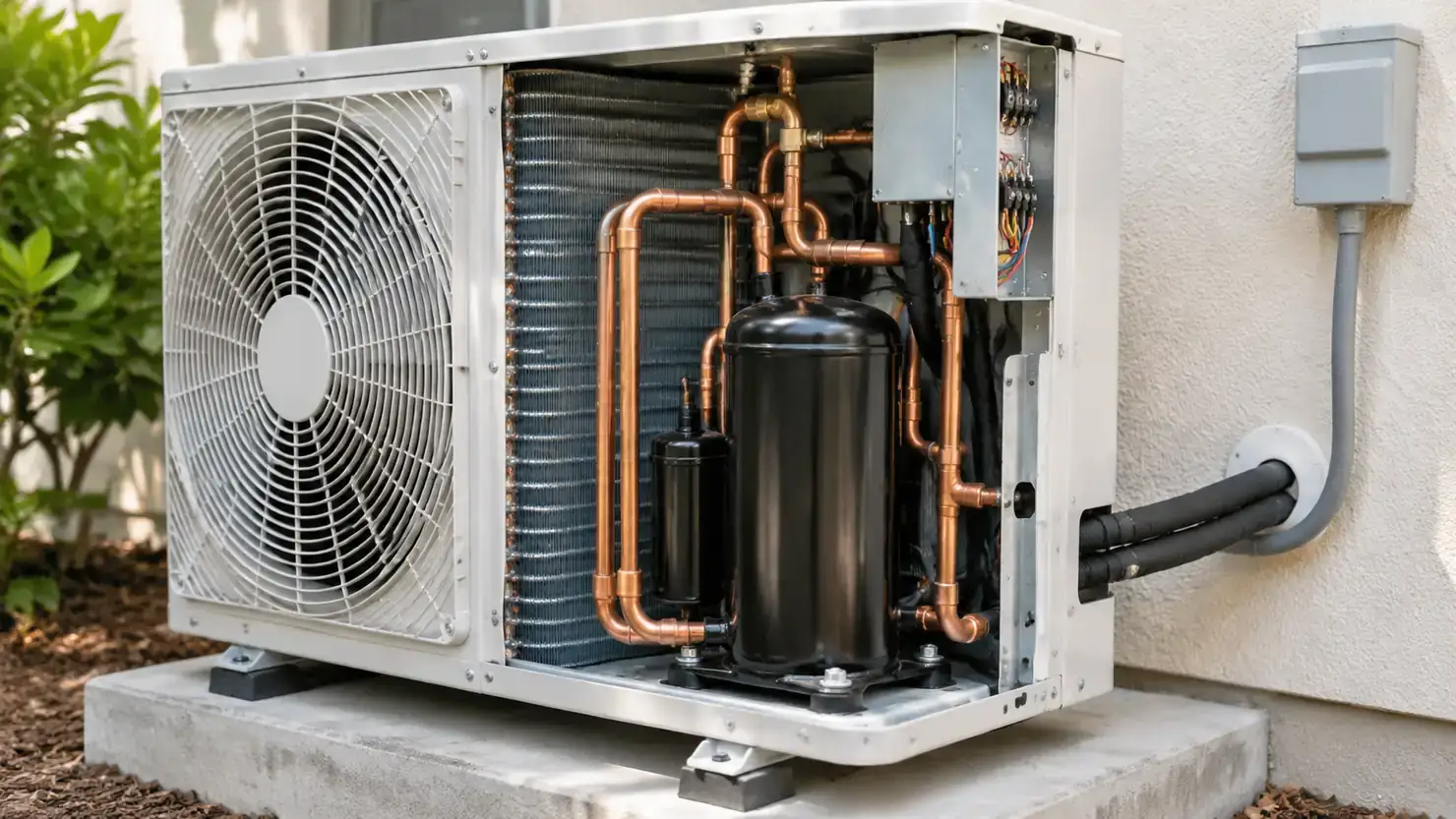
The purpose of refrigerant in an air conditioning system becomes clear when you follow one cooling cycle:
- Indoor evaporator: Low-pressure refrigerant absorbs heat from indoor air and boils into a vapor. A fan moves room air across the coil.
- Compressor: The compressor raises the vapor’s pressure and temperature so that it can reject heat outdoors.
- Outdoor condenser: Hot refrigerant releases heat to outdoor air and becomes liquid.
- Expansion device: A valve or metering device reduces pressure before the refrigerant returns to the indoor coil. The cycle repeats.
The coil does not make cold air by adding a special cooling gas to the room. The refrigerant stays inside its circuit and moves existing heat. A heat pump uses the same basic principle, with the heat-transfer direction changed when heating is required.
A leaking system is different: loss of charge changes the circuit’s operating conditions and can lower performance. Recharging without locating the leak does not fix the underlying fault.
Which Refrigerants Are Used in Air Conditioning?
Common refrigerants used in air conditioning include R22 and R410A in older equipment, and R32 or R454B in many newer designs. R290 is also used in equipment specifically engineered for propane refrigerant.
Each code identifies a different working fluid or blend, not a grade that you can freely swap.
| Refrigerant | Type | 100-year GWP (AR4) | Safety class | Typical equipment | Key check before use |
|---|---|---|---|---|---|
| R22 | HCFC | 1,810 | A1 | Legacy AC systems | Existing-unit servicing and local refrigerant supply; phased out of new U.S. production. |
| R410A | HFC blend | 2,088 | A1 | Many installed split ACs and heat pumps | Existing-system compatibility; restrictions for covered newly made equipment. |
| R32 | Single-component HFC | 675 | A2L | Selected new split ACs and heat pumps | Model specifically designed for R32 and applicable A2L requirements. |
| R454B | HFC/HFO blend | 466 | A2L | Selected newer residential AC and heat-pump systems | Complete compatible model; blend-specific service instructions. |
| R290 (propane) | Hydrocarbon | 3.3 | A3 | Selected self-contained ACs and purpose-built heat pumps | Higher-flammability system design, charge and installation requirements. |
These 100-year GWP values use the IPCC Fourth Assessment Report (AR4) basis: R410A, R32, R454B and R290 follow ASHRAE’s 2026 Handbook refrigerant table; R22 (HCFC-22) follows the EPA’s ozone-depleting substances table. Values from other assessment reports can differ. For a regulated GWP threshold, use the GWP value and equipment category specified by the destination market’s rules.
Not every refrigerant belongs in every product category. For example, the U.S. EPA lists R290 for specified self-contained room AC uses under conditions; that listing does not make it a universal substitute for split systems. Larger chillers and other specialized equipment can use additional refrigerants, including R134a and R407C.
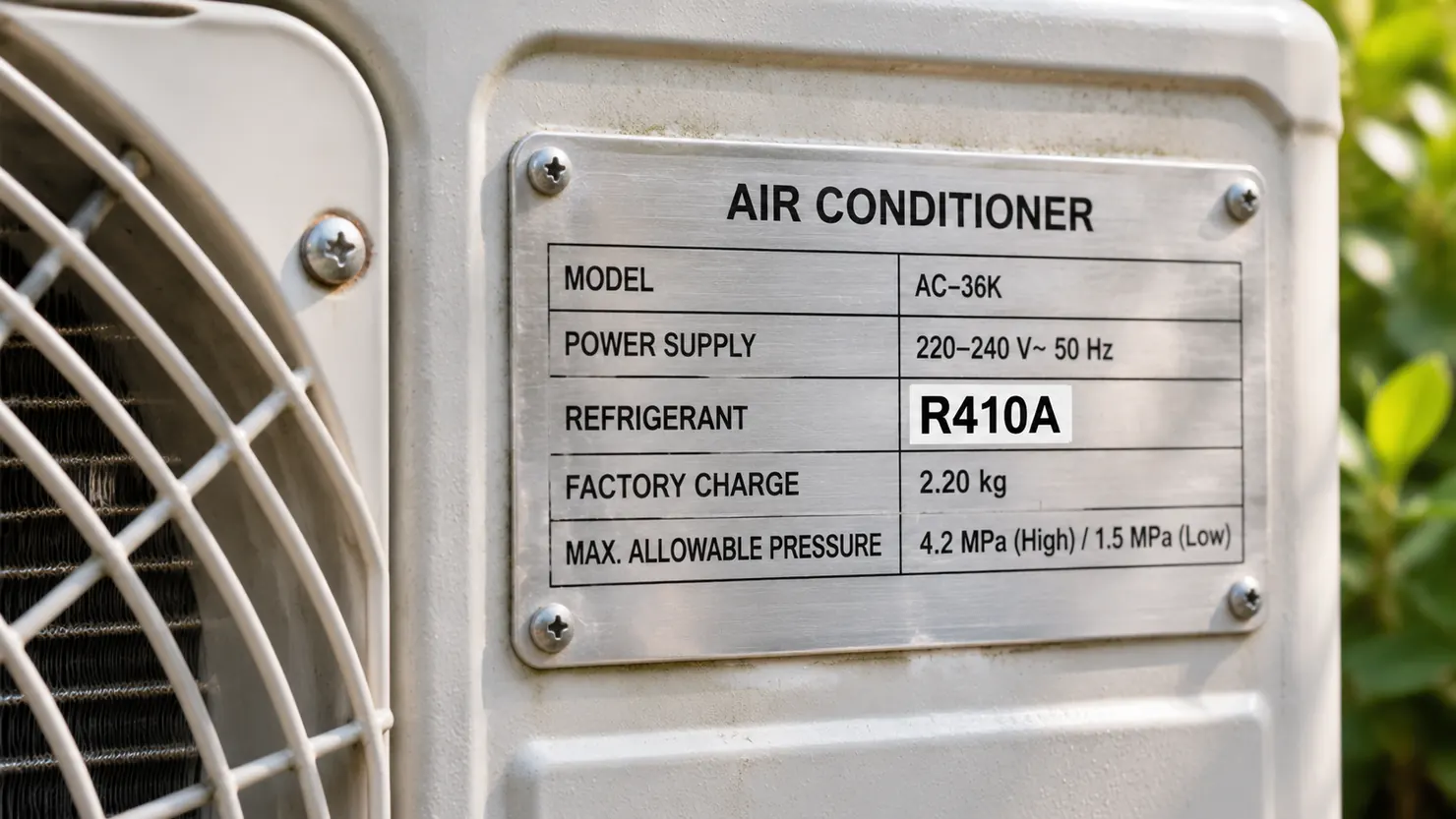
If you are checking an existing air conditioner, the service nameplate and technical manual are the right starting points. The most popular refrigerant in a market is not necessarily the correct refrigerant for your specific unit.
How Do the Main Refrigerants Differ?
R410A has a much higher 100-year GWP than R32 or R454B. R32 and R454B are A2L refrigerants, while R290 has very low GWP but belongs to the higher-flammability A3 class.
Refrigerants also differ in operating properties and equipment compatibility. Compare complete, correctly designed systems for capacity, efficiency, service life and cost.
GWP and ozone depletion: two different measures
Global warming potential (GWP) compares the warming effect of a released gas with the same mass of carbon dioxide over a stated period; ozone depletion potential (ODP) measures damage to the ozone layer.
R22 is an ozone-depleting HCFC. R410A, R32 and R454B have zero ODP, but their GWPs are different. R290 has very low GWP.
Here is an illustrative one-kilogram release comparison using the same AR4 values as the table above. For each gas, the calculated direct warming amount is refrigerant released (kg) × 100-year GWP:
| Refrigerant | AR4 GWP (100 years) | CO₂ equivalent if 1 kg is released |
|---|---|---|
| R22 | 1,810 | 1,810 kg CO₂e |
| R410A | 2,088 | 2,088 kg CO₂e |
| R32 | 675 | 675 kg CO₂e |
| R454B | 466 | 466 kg CO₂e |
| R290 | 3.3 | 3.3 kg CO₂e |
The example uses a 1 kg release for each refrigerant. For an actual leak, multiply the mass released in kilograms by the applicable 100-year GWP to estimate the direct CO₂-equivalent emissions. Assess electricity-related emissions separately using the equipment’s energy consumption and electricity source. When testing a regulated GWP threshold, apply the accounting method required for that equipment category and market.
What do A1, A2L and A3 mean?
A1 means no flame propagation under the standard classification test; A2L means lower flammability with low burning velocity; and A3 means higher flammability. The “A” in each class indicates the lower-toxicity group.
These classifications describe specific test criteria. Check the designed system and its installation requirements rather than selecting a refrigerant by the class label alone.
R410A and R22 are A1, R32 and R454B are A2L, and R290 is A3. A2L and A3 equipment must follow the charge limits, ventilation, leak protection and installation instructions for the particular system and location. ASHRAE’s refrigerant classifications describe these groups.
The practical check is the full system, not the letter code alone. For A2L models, confirm the listed equipment design, refrigerant charge, installation space and any required leak-mitigation measures. For A3 R290 models, use equipment engineered for propane and verify its permitted application, charge and location.
Pure fluid versus blend
R32 and R290 are single-component fluids; R410A and R454B are blends.
R410A contains R32 and R125, while R454B contains R32 and R1234yf. Blends can have temperature glide, meaning their boiling and condensing temperatures change somewhat through the phase change at a given pressure. Service procedures and refrigerant charts therefore use the exact designated blend, not a pressure chart from a different gas.
For a closer two-refrigerant comparison, see our R32 vs R454B technical guide.
Does lower GWP always mean higher efficiency?
No. Lower GWP describes the refrigerant’s direct warming impact if it escapes; it does not guarantee lower electricity use.
Compressor design, heat exchanger size, operating temperature, controls, and the conditions used in an efficiency rating influence real system performance. Compare verified system capacity and efficiency at the same test conditions rather than ranking units from their refrigerant codes.
For two air conditioners, compare cooling capacity and the published seasonal or part-load efficiency under the same rating method. For heat pumps, also check heating output at your winter design temperature and the required supply-air or supply-water temperature. Lower refrigerant GWP is not a shortcut for lower electricity bills.
What Is the New Air Conditioning Refrigerant in 2026?
There is no single new air-conditioning refrigerant used worldwide in 2026. R32 and R454B are lower-GWP options in newer air conditioners, while R290 is used in selected purpose-built systems.
The suitable choice depends on the country, installation date, equipment category and applicable safety requirements.
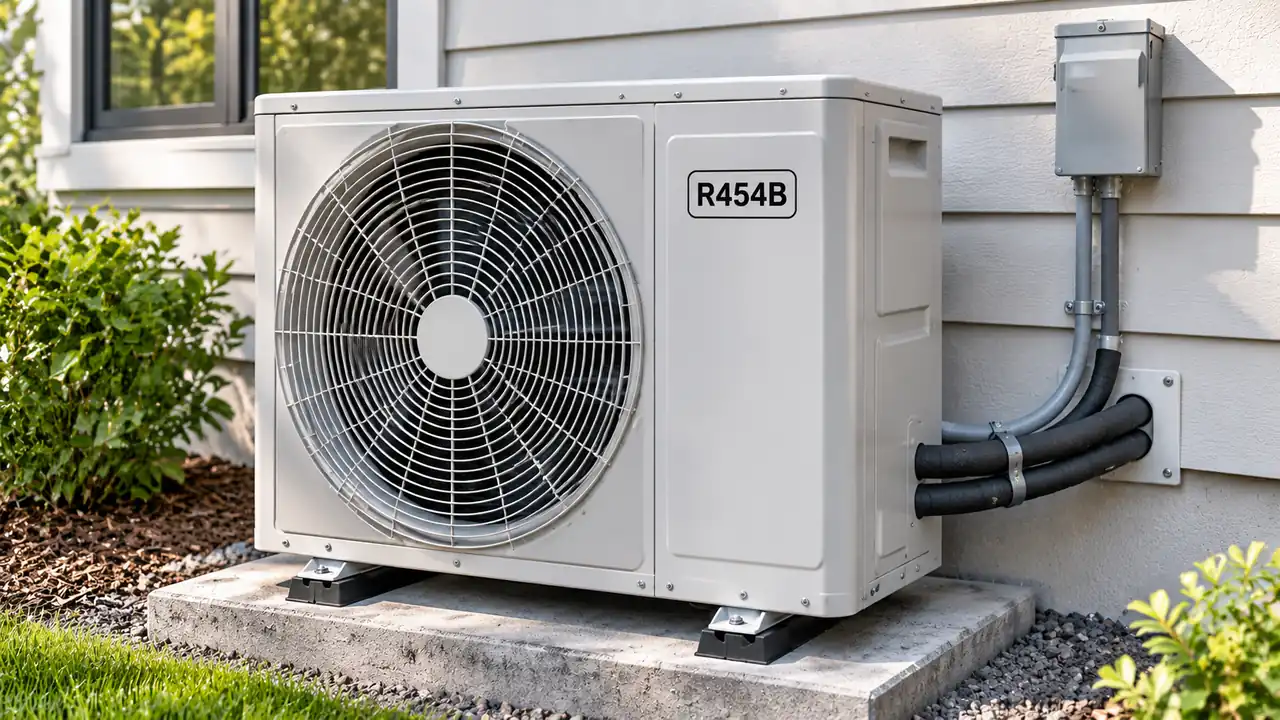
United States: the 700-GWP transition for covered new equipment
The U.S. EPA sets a 700-GWP limit for specified new residential and light-commercial air conditioners and heat pumps. Compliance dates depend on the product or system category, and qualifying pre-2025 components have a separate installation provision under the May 2026 final rule.
For covered factory-completed products, the manufacture/import compliance date was January 1, 2025. R32 (AR4 GWP 675) and R454B (466) are below 700; R410A (2,088) is above it.
EPA’s May 2026 final rule removed the federal installation deadline for certain pre-2025 inventory. A qualifying new residential or light-commercial system assembled entirely from the specified components manufactured or imported before January 1, 2025 has no installation compliance date under that exception. This does not authorize new manufacture of noncompliant equipment. Components used to repair an existing system are addressed separately from installation of a new system. See the EPA’s current sector-by-sector table and notes and its May 2026 final-rule record for the category and component conditions. For a U.S. installation, match the equipment category and the components’ manufacturing or import dates to EPA’s transition rule, then check mechanical and fire-code requirements at the installation location.
European Union: limits depend more tightly on system type
EU F-gas rules restrict specified single-split air conditioners containing less than 3 kg of fluorinated gas with GWP of 750 or more from January 1, 2025. Further category-specific limits apply to certain self-contained and split air-to-water and air-to-air systems from 2027 and 2029, with stated safety exceptions.
For instance, the Commission lists a 150-GWP threshold from January 1, 2027 for specified split air-to-water systems up to 12 kW, and from January 1, 2029 for specified split air-to-air systems up to 12 kW, subject to stated safety exceptions. That is why choosing a new unit for a European project requires checking its exact category and placement date, not just a refrigerant’s general reputation. Review the European Commission’s category tables.
Do Heat Pumps Use the Same Refrigerants?
Yes. Vapor-compression heat pumps use refrigerant to move heat, just as air conditioners do. Common heat-pump refrigerants include R410A, R32, R454B and R290 in systems built for each fluid.
A reversible air-source heat pump can move heat out of a building for cooling or into the building for heating.
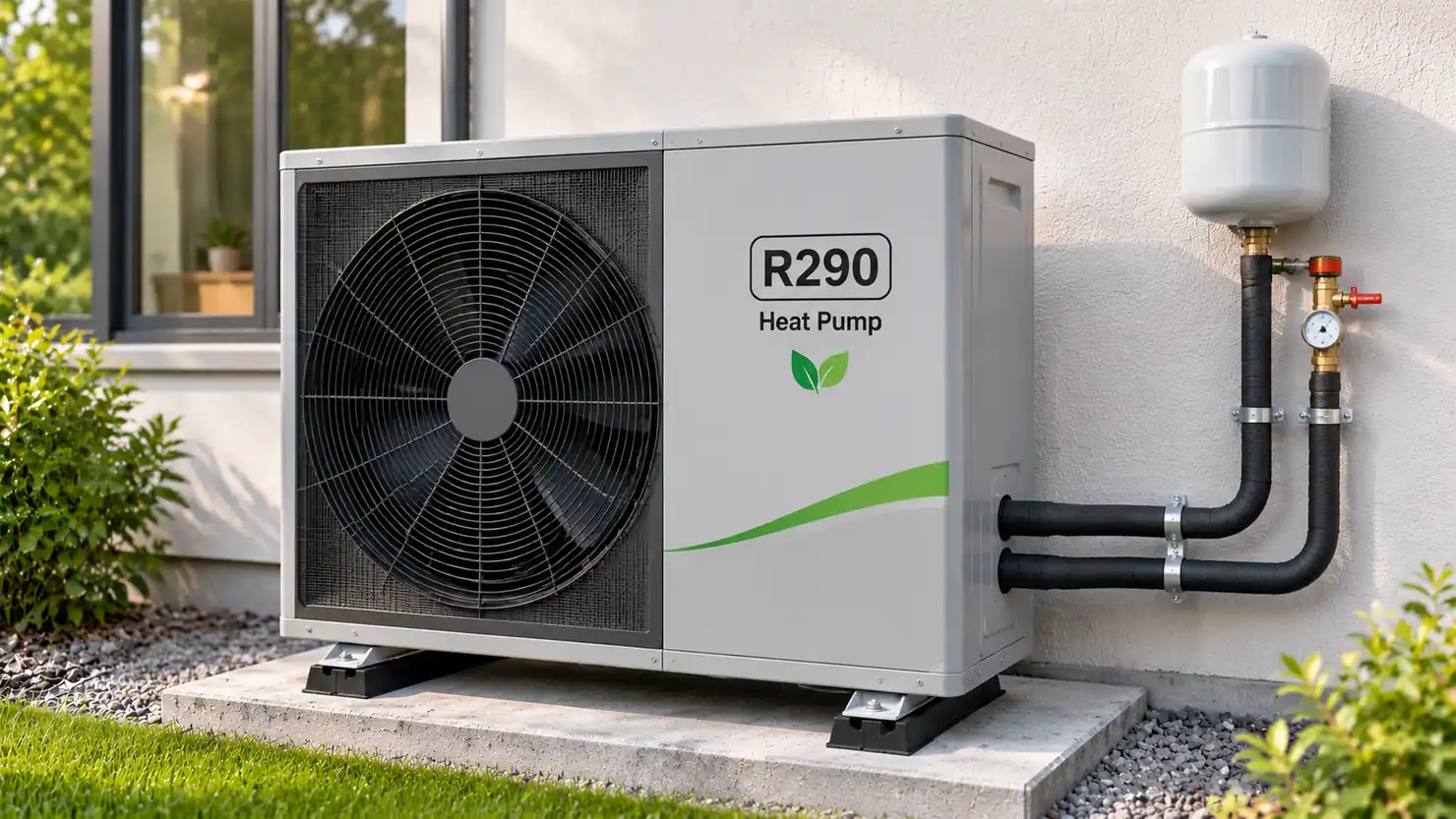
How does refrigerant work in a heat pump’s heating mode?
In heating mode, the outdoor coil absorbs heat and the indoor or water-side heat exchanger releases it.
The compressor raises the refrigerant temperature so it can deliver useful heat to indoor air or circulating water. A reversing valve changes the flow direction in reversible designs; the refrigerant remains within the sealed circuit.
Because outdoor air can still contain usable heat on cold days, a heat pump can operate below room temperature outdoors. Its heating capacity and efficiency still change with outdoor temperature and required supply-water or air temperature. Check model performance at the actual design condition rather than treating a refrigerant name as a cold-weather rating.
Why do air-to-air and air-to-water heat pumps use different designs?
Air-to-air heat pumps warm indoor air, while air-to-water heat pumps warm a circulating water loop. That changes the heat exchangers, required outlet temperatures and connected piping.
In purpose-built R290 monobloc air-to-water units, the factory-designed refrigerant circuit remains inside the outdoor unit, while a water loop transfers heat to the building. The equipment design and installation requirements determine which refrigerant is suitable.
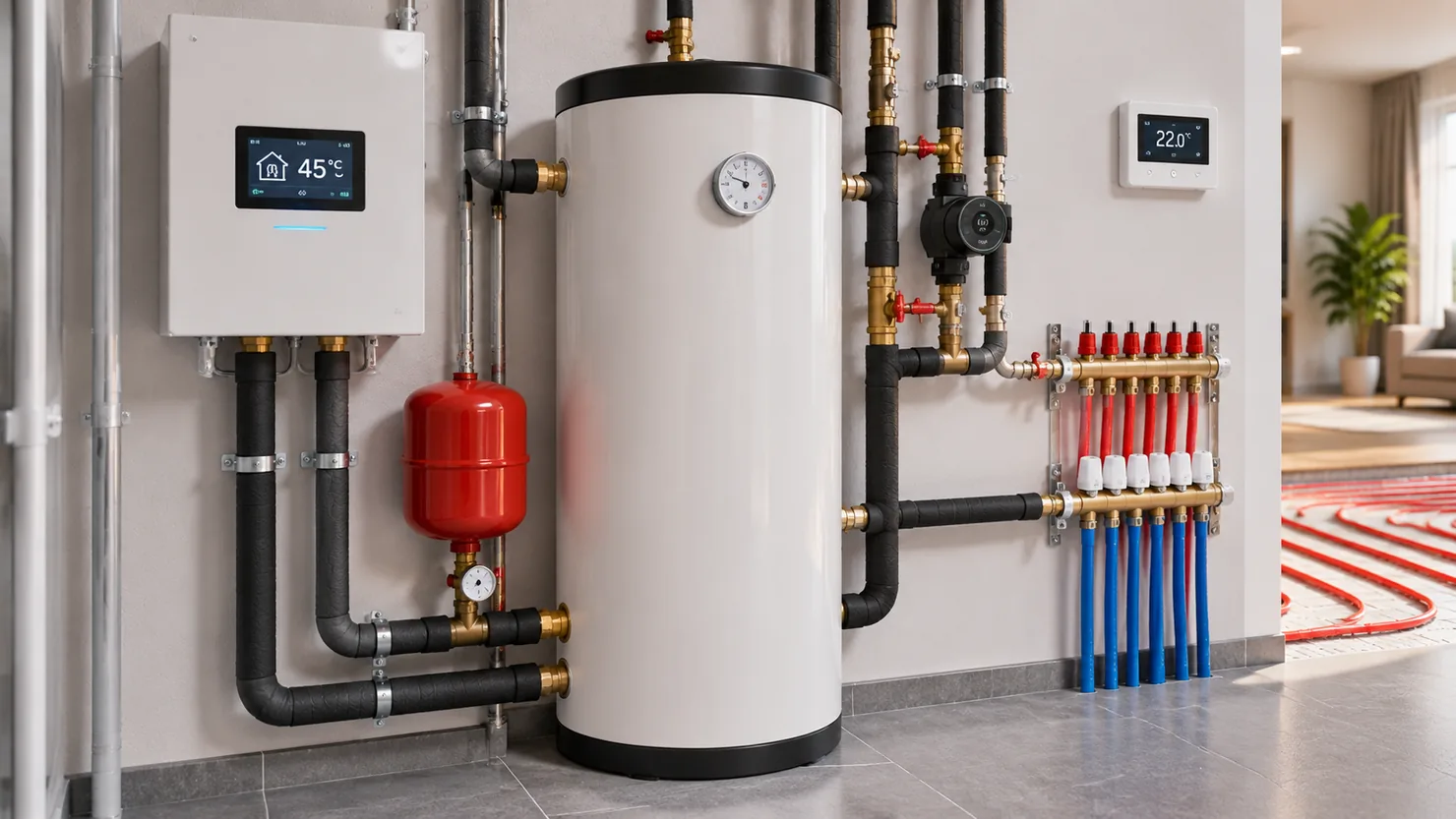
For more detail on how the refrigerant circuit transfers heat to a separate water loop, see how an air-to-water heat pump works.
Compare heat-pump models at the same real operating point. A heating-capacity figure at mild weather does not show what the unit will deliver on the coldest design day. For air-to-water units, compare heating output and efficiency at the same outdoor temperature and required leaving-water temperature; for air-to-air units, use matching outdoor and indoor rating conditions. A low GWP value alone cannot tell you which whole heat pump will use less power.
For a more specific comparison, our R290 vs R32 heat-pump guide explains how the two options differ.
Can You Replace or Mix Refrigerants in Existing AC Equipment?
Do not mix R22, R410A, R32, R454B or R290 in one air-conditioning circuit, and do not treat the newer gases as drop-in replacements.
Refrigerants have different pressure-temperature behavior, lubricant requirements, flammability classifications and component approvals. Changing the gas without an approved engineered procedure can create poor operation and serious safety problems.
How Do You Identify the Refrigerant and Decide Whether to Repair or Replace?
Read the refrigerant code on the unit nameplate or in its model-specific manual. Repair a serviceable unit when the diagnosed fault and total repair cost make that worthwhile; compare a complete replacement when major repairs are uneconomical or essential parts are unavailable.
The installation year or brand name alone cannot identify the refrigerant. Confirm the exact unit before assessing service options.
- Identify the exact unit: Check the refrigerant designation, model number and factory charge on the accessible service nameplate or in the manufacturer’s records. Do not open electrical panels just to find a label.
- Get the actual fault diagnosed: A refrigerant leak, failed compressor and airflow problem require different repairs. Low cooling output does not prove a low refrigerant charge. For a practical fault checklist, see why an air conditioner is not cooling.
- Compare the real options: Consider the repair estimate, component condition, refrigerant availability, expected remaining service life and a replacement system’s verified capacity and efficiency.
- Use the specified refrigerant: If the system is serviceable, follow its approved service instructions. If a new complete system makes more sense, select a locally compliant replacement designed for its own refrigerant.
When comparing service quotes with replacement, include leak diagnosis, repair labor and air conditioner refrigerant refill costs in the total—not just the price of the gas.
A working R410A or R22 system does not need to be replaced simply because a lower-GWP refrigerant is sold in new equipment. Replace it when condition, cost, performance or the applicable site requirements justify a different complete system.
Can you put R32 or R454B into an R410A air conditioner?
No. A conventional R410A unit is not designed or certified for either of those A2L refrigerants.
For service, read the nameplate and use the refrigerant and procedures specified for that model. If major components cannot be repaired economically or essential parts are unavailable, compare a complete replacement system designed for its own refrigerant.
An installed R410A system can remain in use and be repaired using its specified refrigerant when the fault is repairable and the required parts and service supply are available. U.S. restrictions on covered new equipment do not require owners to remove working R410A systems. R22 has a different history: the U.S. ended new R22 production and import, while existing R22 systems can continue running and be serviced using legally available supplies. Compare the diagnosis and repair estimate with the condition, service life and verified performance of a suitable replacement.
What if an air conditioner has low refrigerant?
If a technician confirms low refrigerant charge, find and repair the leak, then recharge according to the model’s specified procedure and amount. A correctly sealed air conditioner does not need routine annual refrigerant top-ups.
Low cooling output or an icy coil is a symptom to diagnose, not proof of a refrigerant leak; airflow problems can also cause these symptoms.
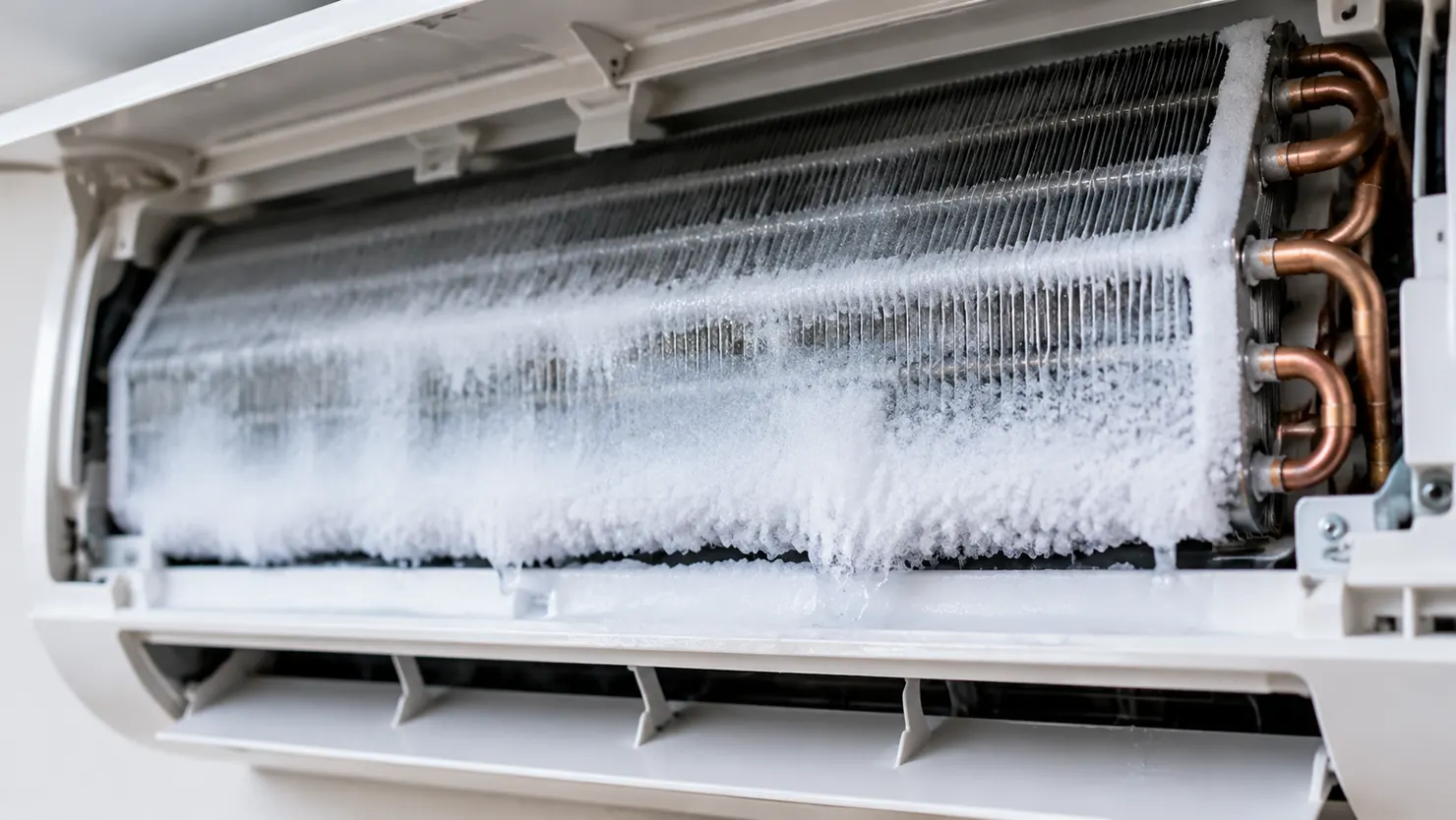
If the indoor coil is covered in ice, restricted airflow and refrigerant-circuit faults need different repairs. The AC freeze-up causes and checks guide helps identify the next diagnostic step.
For A2L or A3 systems, the correct service equipment and the manufacturer’s safety instructions are especially important. Keep ignition sources away from a suspected leak and arrange qualified service; do not attempt home cylinder transfers or refrigerant mixing.
How Should You Choose a Refrigerant for a New AC or Heat Pump?
Choose a complete AC or heat pump that meets your required cooling or heating load at the project’s design temperatures, follows the destination market’s rules, and has suitable local service support. Then confirm the refrigerant specified for that exact model.
A refrigerant with a lower GWP is useful only when the whole system also meets the building’s heating or cooling task.
- Fix the application: Split air conditioner, packaged room AC, air-to-air heat pump, or air-to-water heat pump? The same refrigerant may face different installation and charge limits in each.
- Identify the destination market and installation date: Check the current product category rules and required approvals for that country or region. Do not use a U.S. allowance as proof of EU compliance.
- Set design conditions: Estimate building cooling and heating loads; note outdoor summer and winter design temperatures, indoor setpoints, and required supply-water temperature for hydronic systems.
- Compare complete-model data: Rated and part-load efficiency, capacity at design conditions, allowable piping length, electrical supply, acoustic limits, and actual refrigerant charge. Compare models at matching test points.
- Check installation and lifetime service: Confirm equipment approvals, site space, required ventilation or leak safeguards, qualified installer availability, and the approved refrigerant and service tools.
Match the decision to the actual job before choosing a refrigerant code.
| Your task | Check first | Best decision route |
|---|---|---|
| Repair an existing R22 or R410A AC | Nameplate, confirmed fault, cost and parts | Repair using approved service methods when practical; compare a complete replacement if needed. |
| Install new split air conditioning | Destination rules, cooling load, rated efficiency and power | Compare locally acceptable R32, R454B or other complete models at the same test conditions. |
| Select an air-source heat pump | Winter design temperature, heating load and outlet temperature | Compare verified heating capacity and efficiency of complete models; consider refrigerant after application fit. |
| Choose a self-contained unit or a purpose-built R290 system | Equipment type, approved refrigerant, charge and installation space | Check model-specific A3 requirements and the rules for that product category. |
| Source equipment for another country | Destination country, model documents and local installation rules | Confirm local suitability of the exact equipment, not only the refrigerant’s GWP. |
Check two separate environmental effects. Direct impact depends on refrigerant emissions and GWP; indirect impact depends on electricity consumption over the system’s life. Correct sizing, tight piping, good commissioning and reliable maintenance address the second issue and help prevent avoidable refrigerant loss.
Which Airproz Refrigerant Options Fit These Applications?
For room cooling, Airproz lists R32 SA-series and R410A PAT-series inverter air conditioners. For hydronic space heating, it lists R32 monobloc and purpose-built R290 monobloc heat pumps.
Check the exact model’s heating or cooling capacity, electrical supply and destination-market requirements before selecting equipment.
Before comparing product families, confirm the exact model’s refrigerant, the destination market’s requirements and the unit’s rated output under your design conditions. For each shortlisted Airproz model, compare the stated refrigerant, capacity at the project’s design conditions, voltage and frequency, and technical documents required for the destination market.
| Project task | Verified Airproz category | What to check next |
|---|---|---|
| Wall-mounted room cooling | Air conditioner product range (R32 and R410A series shown) | Required cooling capacity, market compliance, power supply, room conditions and service network. |
| Air-to-water space heating | Space-heating heat pumps (R32 and R290 monobloc models shown) | Winter load, outdoor design temperature, water outlet temperature, model performance and safety/site requirements. |
For room cooling, the R32 SA-series inverter air conditioner is a split-system example designed for R32. The R410A PAT-series inverter air conditioner represents a separate R410A platform. Compare the stated cooling capacities, electrical data and destination-market requirements for the exact models.
Hydronic heating product lines include the R32 monobloc space-heating heat pump and the R290 6–12 kW monobloc heat-pump series. Compare heating output at the required outdoor and water temperatures, electrical supply, installation requirements and local product documentation.
For a useful project review, prepare these details:
- Destination country and building or application.
- System type: room AC, air-to-air heat pump or air-to-water heat pump.
- Required cooling and/or heating load and the expected operating schedule.
- Summer and winter design outdoor temperatures; required supply-water or supply-air temperature when applicable.
- Available voltage and frequency, and any equipment-space constraints.
- Preferred refrigerant or exact existing model (if known), plus any required local product documents.
Match an Airproz product to your project conditions. Send your project location, required cooling or heating load, design temperatures and electrical supply through Airproz’s project contact page. We can compare those inputs with the specifications of relevant available Airproz models.
In summary, the main refrigerants used in air conditioning are not interchangeable choices: R22 belongs mainly to legacy equipment, R410A remains common in installed systems, and newer models use refrigerants such as R32 and R454B. R290 serves selected purpose-built equipment, including some heat pumps. Refrigerant moves heat through the refrigeration cycle; the best choice depends on the complete system, operating conditions and local rules—not just the lowest GWP number.
Frequently Asked Questions
How can I tell which refrigerant my air conditioner uses?
Read the refrigerant designation on the outdoor unit nameplate or in the model-specific manual. It may say R22, R410A, R32 or another code. Do not identify a refrigerant by the color of a service cylinder or the age of the unit alone.
Is Freon the name of every air-conditioning refrigerant?
No. Freon is a trade name that people often use loosely for refrigerant. Equipment must be serviced by its actual refrigerant designation, such as R410A or R32, rather than the informal word “Freon.”
Are R32 and R454B equally suitable for any new AC?
No. Both are A2L refrigerants, but they have different compositions and operating properties. Choose a model designed and approved for its stated refrigerant, and check the product category and destination market.
Can I use R290 in an old R410A split air conditioner?
No. R290 is an A3 propane refrigerant and must be used only in purpose-built, approved equipment. Retrofitting an ordinary R410A split system by changing the charge is not an acceptable substitute for equipment design.
Does a new air conditioner need refrigerant added every year?
No. A sound, correctly charged air conditioner operates in a sealed circuit. A confirmed loss of charge calls for leak diagnosis and repair, followed by model-specific charging—not routine annual top-ups.
Which refrigerant should I use for a cold-climate heat pump?
Start with the heat pump’s verified heating capacity and efficiency at the local winter design temperature, plus the required air or water outlet temperature. Then compare compatible, locally allowed R32, R290 or other models; the refrigerant code alone does not show cold-weather performance.
Does a low-GWP refrigerant make the whole air conditioner low-carbon?
Not on its own. Lower GWP reduces the direct warming effect of a given refrigerant leak. Total impact also depends on charge size, leakage, servicing and the electricity used by the complete system over its life.
Can pre-2025 R410A equipment still be installed in the U.S. in 2026?
Under EPA’s May 2026 final rule, a qualifying new residential or light-commercial system using only the specified components manufactured or imported before January 1, 2025 has no federal installation deadline under that exception. Check the system type, component dates and state or local requirements before installation. This does not allow new noncompliant equipment to be manufactured.
Technical sources: ASHRAE 2026 refrigerant and GWP comparison; EPA R22 GWP and ODP table; EPA May 2026 final-rule record; U.S. EPA refrigerant substitute listings; U.S. EPA HFC sector restrictions; European Commission air-conditioning F-gas guidance; ASHRAE refrigerant safety classification.