Heat pump vs gas boiler: For a hot-water heating system, an air-to-water heat pump usually needs less purchased energy to supply the same useful heat, but it is not automatically cheaper to run than a condensing gas boiler. A gas boiler may involve less replacement work where the existing gas system is safe and suitable. Compare local energy prices, winter heating demand, radiator-water temperatures and the full installation work before choosing.
This comparison looks at an air-to-water heat pump and a condensing gas boiler. Both heat water for radiators or underfloor heating; some homes also use fan coils, which blow room air across a warm-water coil. Air-to-air heat pumps and gas furnaces heat air instead, so their costs are not compared here. If your home has a ducted furnace rather than a water-based heating system, do not use the installation assumptions below as a like-for-like replacement estimate. Compare the actual equipment and distribution system in your home.
First check whether your existing boiler feeds hot-water radiators or steam radiators. This article focuses on hot-water heating systems. A steam-heating system cannot normally be treated as a direct air-to-water heat-pump replacement without assessing the radiators, piping and conversion work.
Heat Pump vs Gas Boiler: Quick Comparison
An air-to-water heat pump uses electricity to take heat from outdoor air and warm your heating water. A condensing gas boiler burns gas to heat that same water. Either system can serve suitable radiators, but running costs, performance in cold weather and installation work can differ. Start with the table below.
| Question | Air-to-water heat pump | Condensing gas boiler |
|---|---|---|
| How it makes heat | Takes heat from outdoor air and moves it into water for radiators or floor heating | Burns gas to heat water for radiators or floor heating |
| Efficiency | COP shows how much heat a heat pump delivers for each unit of electricity at one stated operating condition. SCOP is a test-based estimate for a defined heating season; your complete system may use more electricity. | AFUE is a standard seasonal estimate of how much gas energy becomes useful heat in a U.S. residential boiler. It does not include the electricity used by circulation pumps or other electrical auxiliaries. For a fair whole-system cost comparison, count those costs separately and use the appropriate efficiency metric for larger boilers. |
| Installation work | Needs an outdoor unit, suitable electrical supply and water pipes. Existing radiators, hot-water storage or controls may also need changes. | Needs a safe gas connection, a flue for exhaust gases, combustion air, condensate drainage and controls. Existing water pipes may be reusable if suitable. |
| Will it heat the home on very cold days? | Check the selected model’s heating output at your winter design outdoor temperature and required supply-water temperature, then compare it with the building’s heat loss. A low operating-temperature limit alone does not prove enough heat is available. Check defrost and any required backup heat. | Check output against the winter heating load and confirm that the gas and venting arrangement is safe |
| Existing radiators | Can work when each radiator still produces enough room heat at an achievable water temperature | Can supply higher-temperature water if needed; best condensing efficiency depends on cooler return water |
| Cooling | Cooling is possible only with a model designed for it. The home also needs suitable chilled-water equipment, such as fan coils, and controls that prevent water forming on cold surfaces. | Cannot provide cooling; a separate cooling system is needed |
| Running cost | Electricity price ÷ heat actually delivered per unit of electricity (seasonal system COP) | Gas price ÷ useful heat delivered per unit of gas energy (seasonal boiler efficiency); use matching energy units |
| Often a good fit for | New buildings and retrofits where the load, electrical supply and water temperatures suit a heat pump | A compatible existing gas-heating system where a safe replacement needs fewer changes |
- Compare running costs — Use your electricity and gas rates, then estimate how efficiently each complete heating system will work through the season.
- Check winter heating — Calculate how much heat the house will need after planned insulation work. Check whether the existing radiators and chosen heat pump can provide it on a very cold day, and whether backup is needed.
- Compare complete installations — Include hot water as well as space heating when needed. Check wiring, pipes, controls, backup heat, any required cooling equipment, safety checks and maintenance.
How Does a Heat Pump Differ From a Gas Boiler?
A heat pump takes heat from outdoor air and moves it into your heating water. A gas boiler burns fuel to make that heat. Because a heat pump moves heat rather than creating it all from electricity, it can supply several units of heat for one unit of electrical energy.
What Is an Air-to-Water Heat Pump?
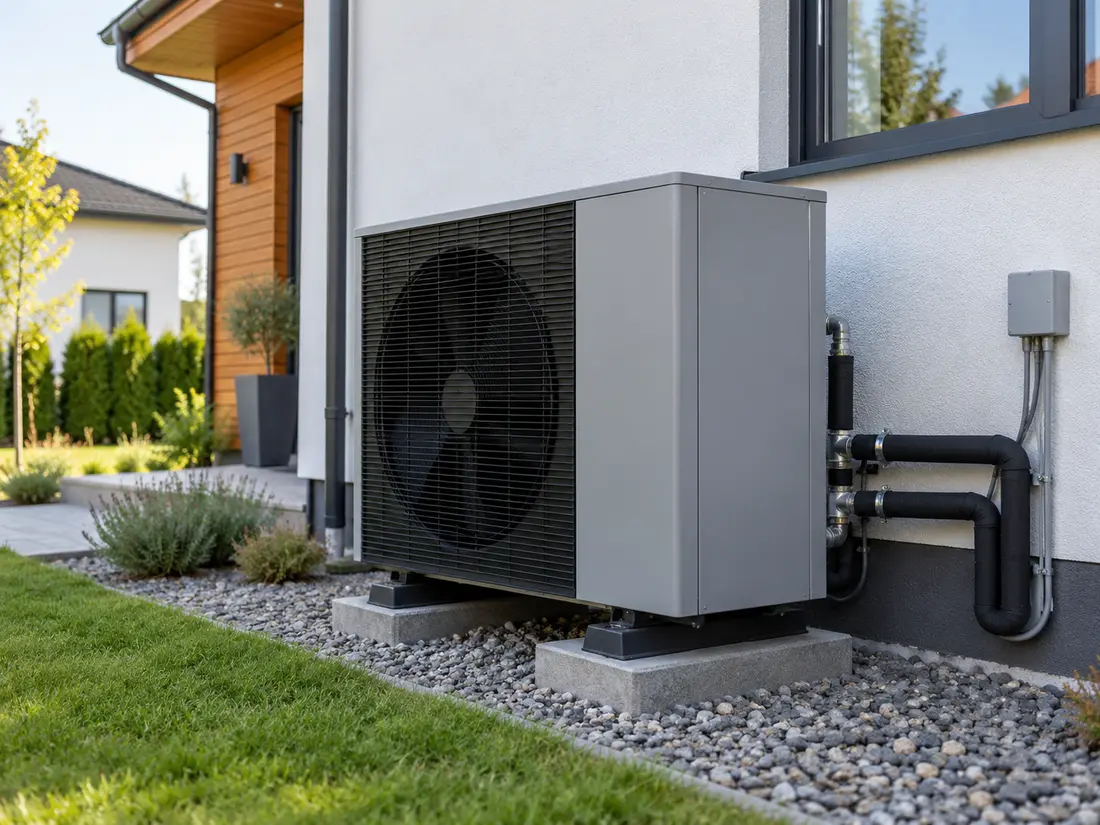
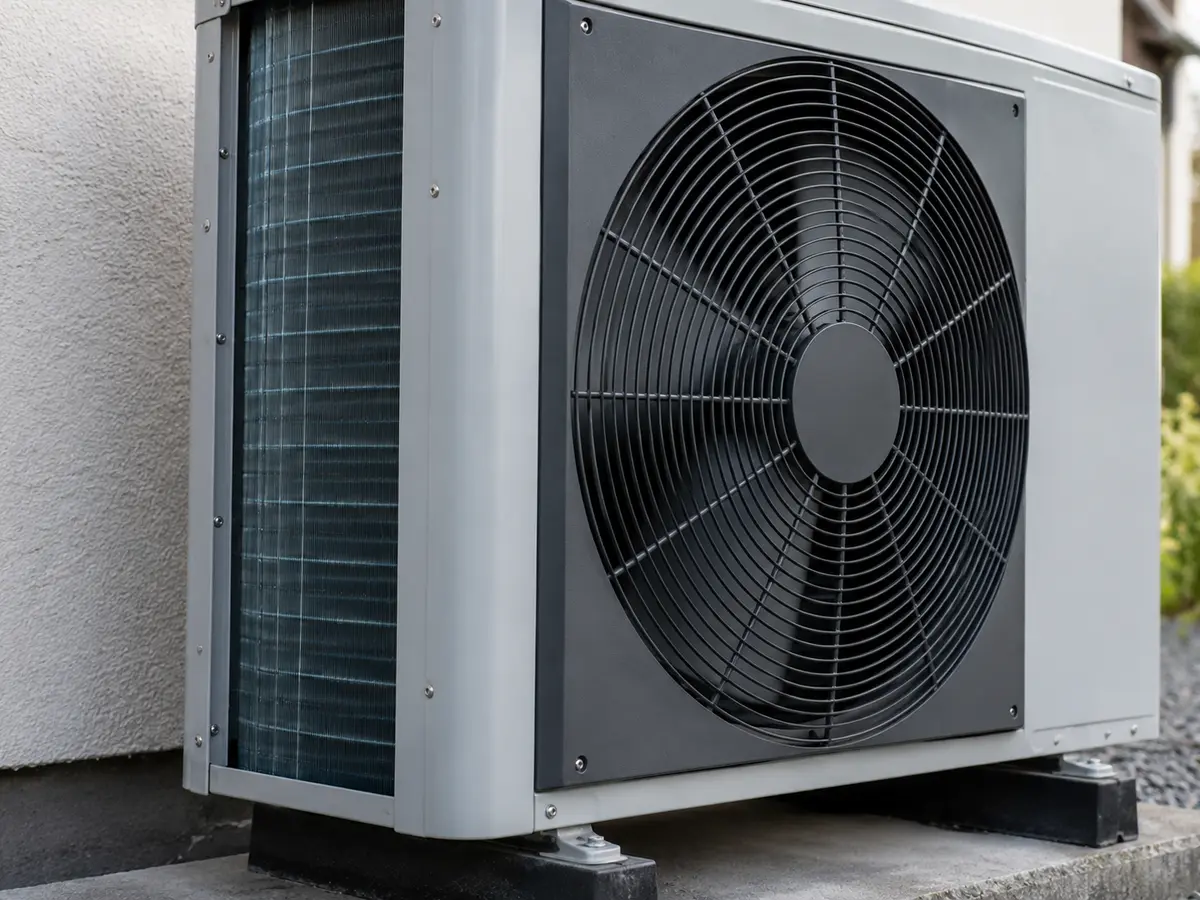
An air-to-water heat pump collects heat from outdoor air and transfers it to the water in your radiators or floor heating. Refrigerant, a fluid that can absorb and release heat as it changes state, carries the heat inside the unit. The compressor raises its pressure and temperature so that the heat can warm the water. Heat exchangers move heat between the outdoor air, refrigerant and water. The compressor, fans and controls all use electricity.
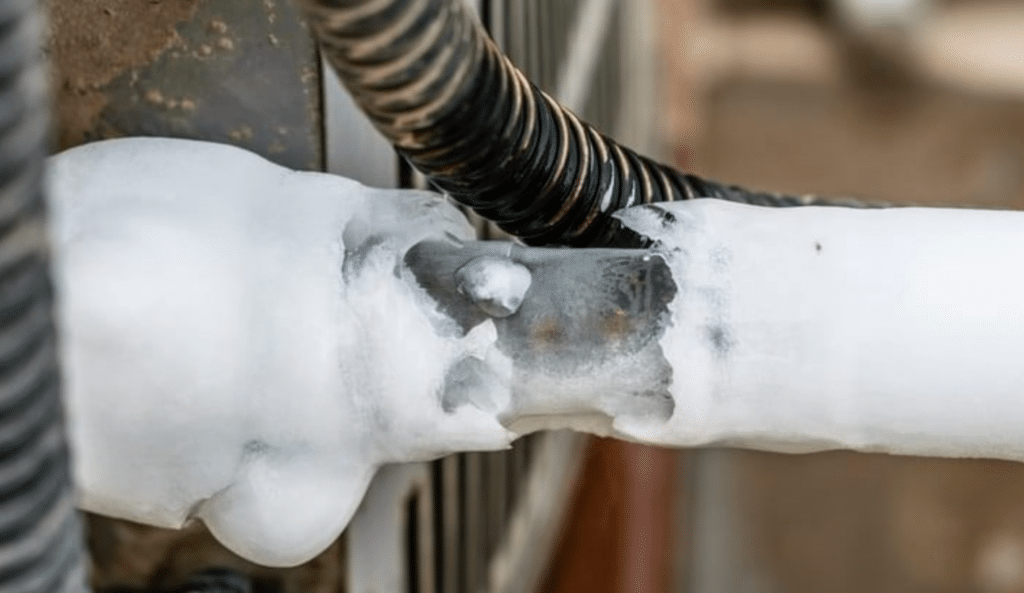
A heat pump can work when outdoor air is below freezing, but its output and efficiency depend on the model and conditions. Colder air and hotter radiator water usually make it work harder. In damp, cold weather, ice may build up on the outdoor coil. The unit then uses a defrost cycle to clear it. Water pumps and any backup heater also consume electricity. Some designs use a buffer tank to help manage water volume or cycling, but it is not needed in every system. Check the proposed model at your local winter design temperature and required radiator-water temperature, rather than relying on a mild-weather rating.
What Is a Condensing Gas Boiler?
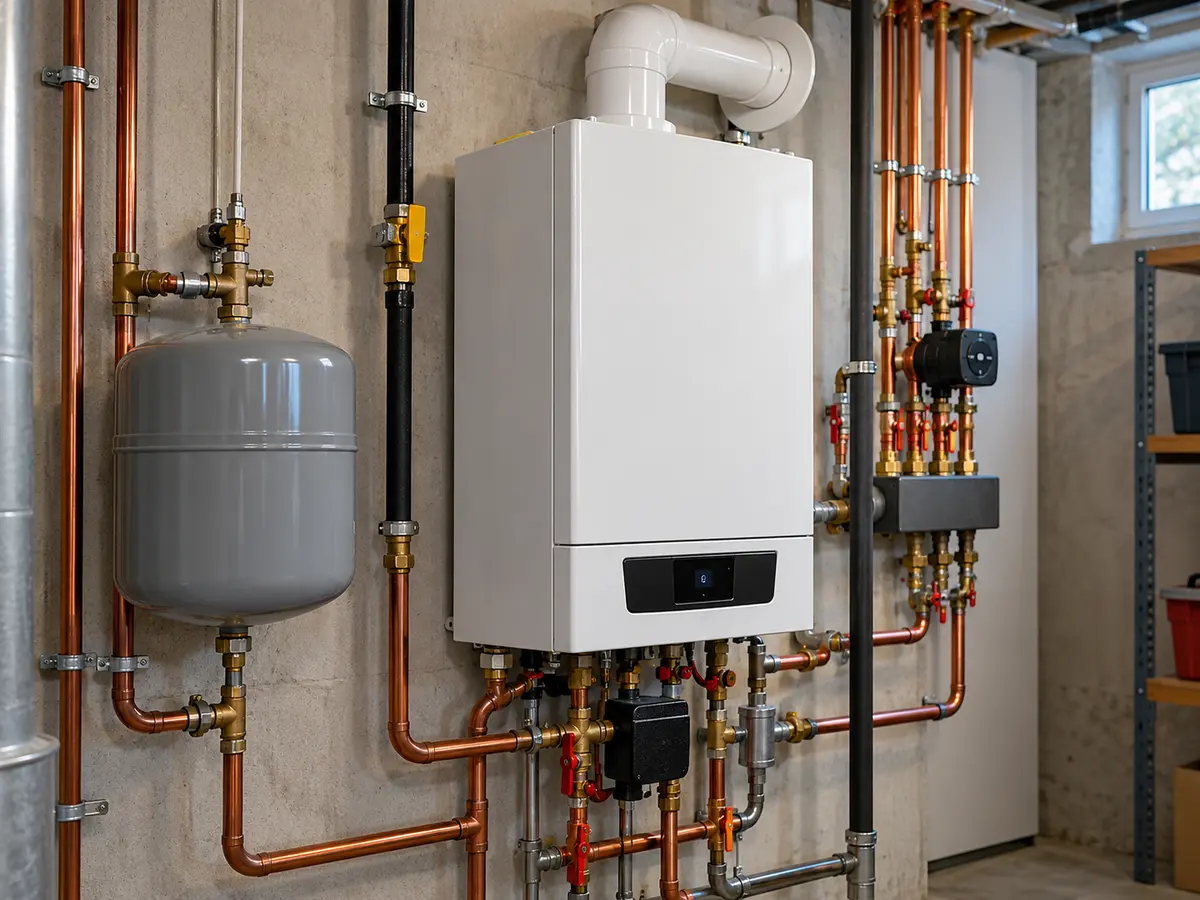
A gas boiler burns natural gas or liquefied petroleum gas (LPG) to heat water. A condensing boiler can also capture extra heat from the hot exhaust leaving the burner. It works best when the water returning from the radiators is cool enough for that recovery to happen.
In the U.S., annual fuel utilization efficiency (AFUE) estimates how much of the gas used by a residential boiler becomes useful heat over a standard heating season. Your home may get a different result. Frequent start-stop operation, hot return water that reduces condensing, and heat lost from pipes can all affect the total. AFUE and heat-pump COP are not measured on the same basis, so compare the cost of the heat delivered to the rooms instead. A replacement boiler still needs safe venting, combustion air, condensate drainage and protection from carbon monoxide.
Heat Pump vs Gas Boiler Efficiency: What the Numbers Mean
A heat pump can deliver more heat than the electrical energy it uses because it moves heat from outdoors. For example, COP 3 means about 3 kWh of heat from 1 kWh of electricity at the stated test point. A gas boiler assumed to be 92% efficient provides about 0.92 kWh of useful heat from 1 kWh of gas energy. The heat pump may still cost more to run where electricity is expensive.
COP describes heat-pump performance at one outdoor temperature and one heating-water temperature. SCOP is calculated using defined seasonal test conditions, so it is not automatically the same as the electricity use of the installed heating system. Check which circulation pumps, defrost operation and backup heaters the published figure includes. If any relevant electricity is outside the estimate, add it once when calculating system running cost; do not add it again if it is already counted. For a boiler, check the seasonal gas-efficiency rating separately from the electricity used by its pumps and controls.
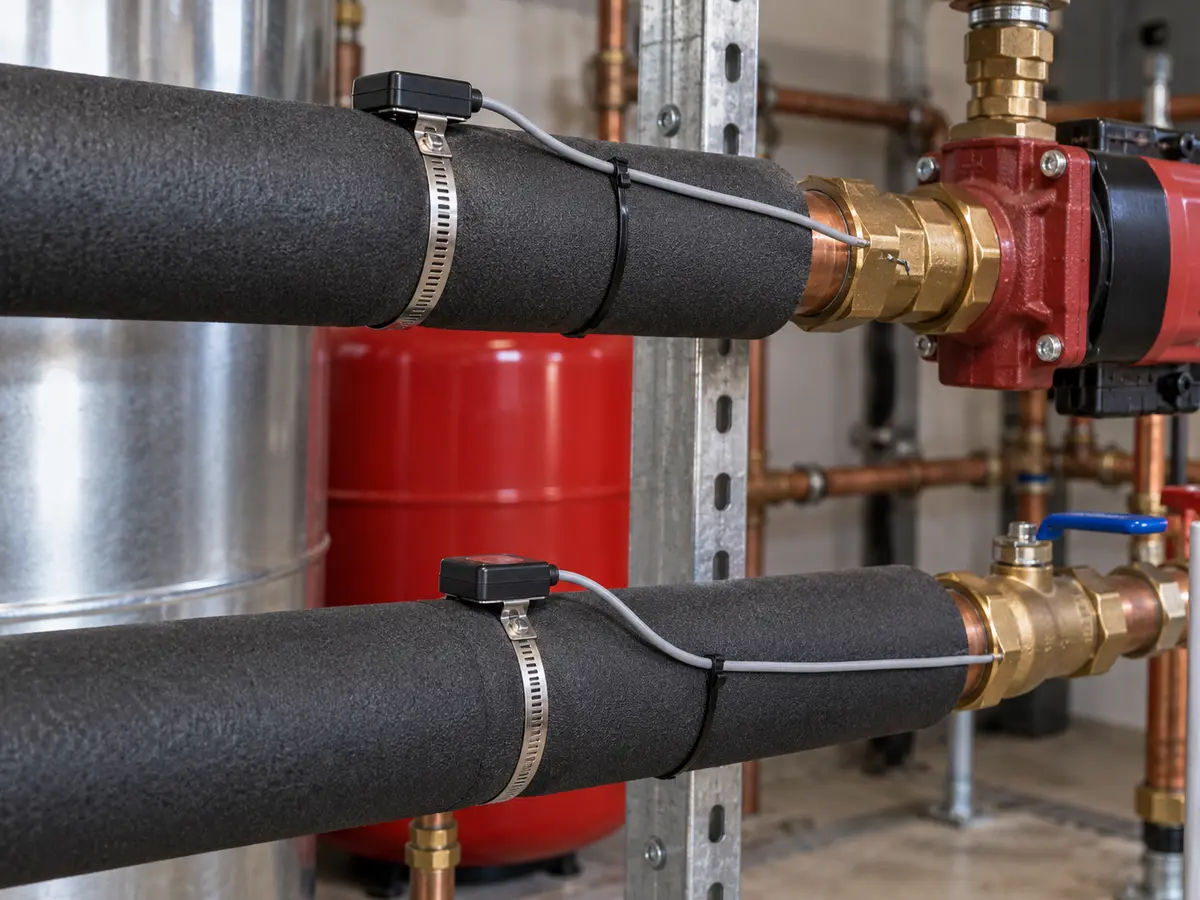
To check whether the house stays warm on a very cold day, look up the model’s heating output at your area’s winter design outdoor temperature and the water temperature your radiators need. Compare that output with the calculated heat loss of your home. To estimate annual bills, look at performance over the whole heating season, including pumps, defrost and any backup heat within the stated calculation boundary. A winter capacity check and a yearly cost estimate are different tests.
The 92% boiler figure here is only an example, not a claim about a particular model. A condensing boiler may be less efficient when hot water returns from the radiators because it recovers less heat from the exhaust. Compare both options for the same amount of heat needed in the home. Count relevant pump electricity, backup heat and pipe losses on a consistent basis. Use supported seasonal figures for the proposed systems, not a heat-pump COP measured on one mild day against an all-in boiler estimate.
Before deciding, check how hot the water needs to be for your existing radiators. A heat pump usually uses more electricity when it must supply hotter water. A condensing boiler also benefits when cooler water returns to it, because it can recover more heat from its exhaust.
The way the heating-water temperature is controlled matters too. Weather compensation means the system adjusts its supply-water temperature as outdoor conditions change instead of always using one high setting. Lower water temperatures may improve heat-pump efficiency and help a condensing boiler receive cooler return water, provided every room still stays warm. Check the proposed temperature settings, room-zone controls and cold-weather comfort before treating these savings as achievable.
Room comfort also depends on how the system is controlled. A radiator system using lower water temperatures may warm a cold room more slowly, so a deep overnight thermostat setback can require more recovery time. That does not mean a heat pump must run continuously in every home. Check room comfort and recovery time against the building heat loss, radiator output and the proposed control schedule for either system.
Which Is Cheaper to Run: a Heat Pump or a Gas Boiler?
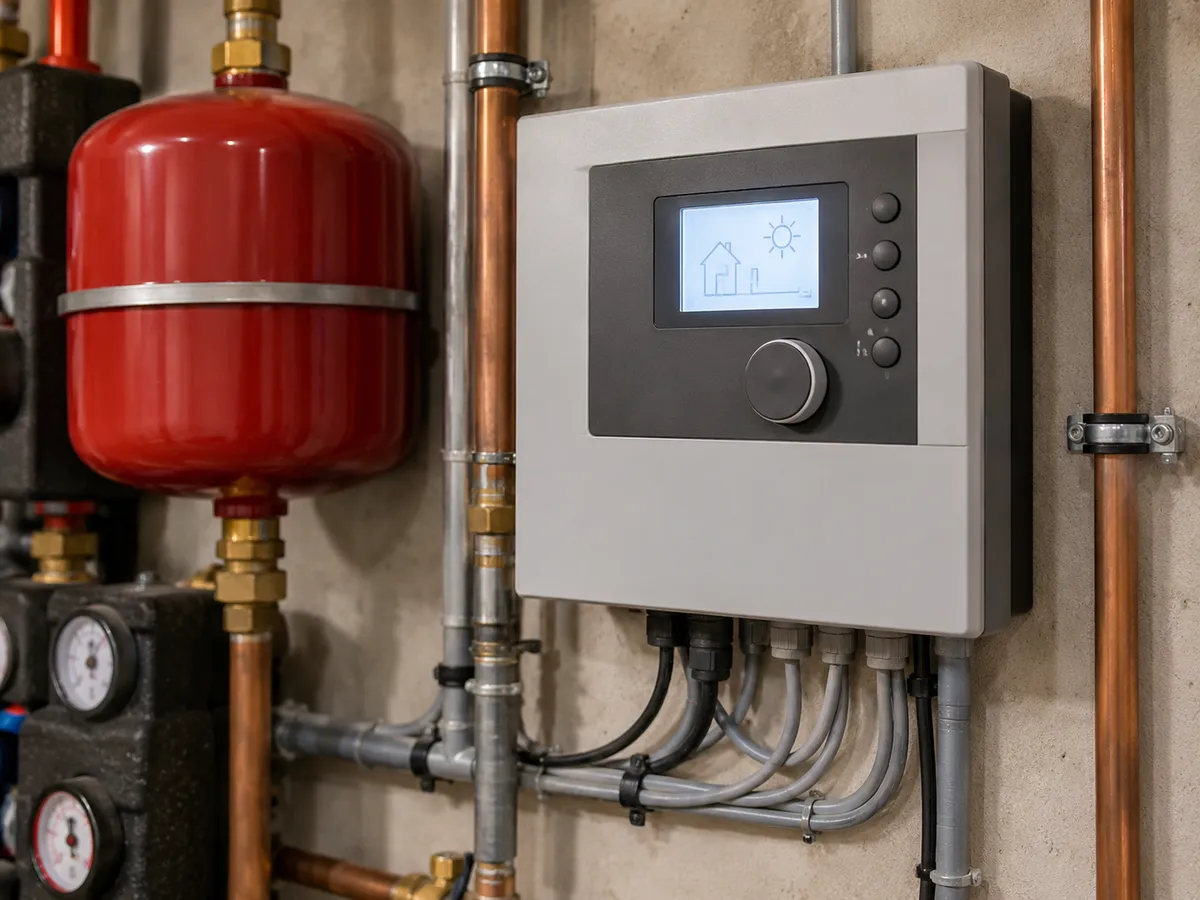
Neither system is always cheaper to run. Compare the cost of the heat delivered into your home, not just the price of electricity or gas. Divide the electricity rate by the heat pump’s realistic seasonal system COP, and the gas rate by the boiler’s seasonal efficiency. The lower result means lower variable energy cost for the same useful heat.
| What you want to calculate | Heat pump | Gas boiler |
|---|---|---|
| How much energy is bought for yearly space heating | Annual heat needed by the rooms ÷ seasonal system COP = electricity bought | Annual heat needed by the rooms ÷ seasonal boiler efficiency = gas energy bought |
| Variable energy cost for one year | Electricity input × electricity price per kWh | Gas fuel energy input × gas price per kWh of fuel energy |
| Which one costs less for the same heating? | The heat pump has a lower variable energy cost when electricity price ÷ seasonal system COP is less than gas price ÷ seasonal boiler efficiency. | The boiler has a lower variable energy cost when the result is reversed. Convert electricity and gas prices into matching energy units first. |
| Costs to check outside the chosen seasonal estimate | Add pump or backup electricity only if it is not already included in the chosen seasonal system COP. Check time-of-use or demand charges and cooling-cost changes separately. | Add pump and control electricity not counted in AFUE, plus applicable fixed gas connection charges and servicing. Do not mix these ownership costs with variable fuel cost. |
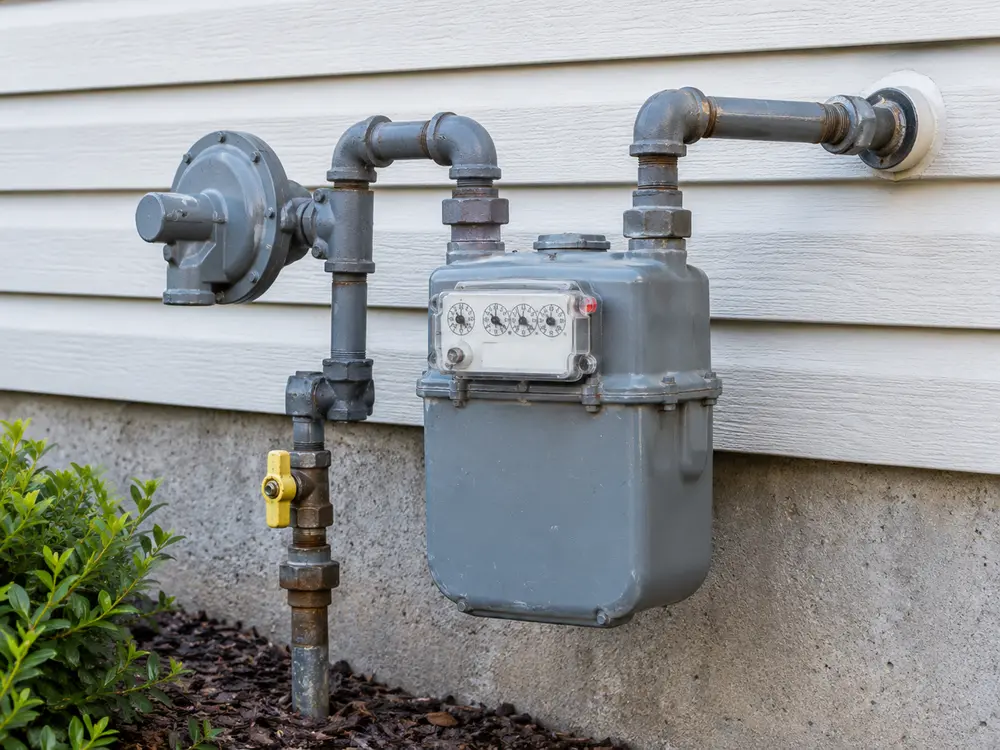
Use your own bills: Record the electricity tariff for the hours the heat pump is expected to run and the variable gas price in a comparable energy unit. If your gas bill also covers showers, cooking or other uses, do not treat the entire bill as space-heating fuel. Estimate the same annual useful space-heating demand for both systems using appropriate building and consumption data. Apply a supported whole-system seasonal COP and a suitable boiler seasonal efficiency. Count pumps and backup energy once, within or outside those figures as appropriate. Show fixed utility charges separately; a gas connection charge is saved only if the gas account can actually be closed.
Example: A home needs 15,000 kWh of useful space heating per year. Assume electricity costs $0.22/kWh and gas costs $0.08/kWh of fuel energy. With a seasonal system COP of 3.2, the heat pump uses about 4,688 kWh of electricity and costs about $1,031 per year. At 92% seasonal efficiency, the boiler uses about 16,304 kWh of gas fuel energy and costs about $1,304 per year.
Now change only the electricity price to $0.32/kWh. The heat-pump cost rises to about $1,500 per year, while the gas estimate stays at about $1,304. These are calculation examples, not local quotes or promised savings.
These numbers cover only the energy used for space heating. They do not include domestic hot water or the entire household utility bill. If both systems must also provide hot water, compare the same amount of usable hot water and include storage losses, reheating energy and any backup heat separately. Do not use this space-heating example as a promise of whole-home savings or payback.
In this example only, both systems have the same variable space-heating energy cost at about $0.278/kWh of electricity: $0.08 ÷ 0.92 × 3.2. Below this example threshold the heat pump costs less in variable heating energy; above it the boiler costs less. Installation and fixed charges are not included. Your real break-even price changes with local tariffs and the seasonal performance of the actual equipment, especially during cold, high-water-temperature or backup-heating hours. Use your own inputs rather than treating $0.278/kWh as a universal target. Any off-peak savings require heating to shift without reducing comfort.
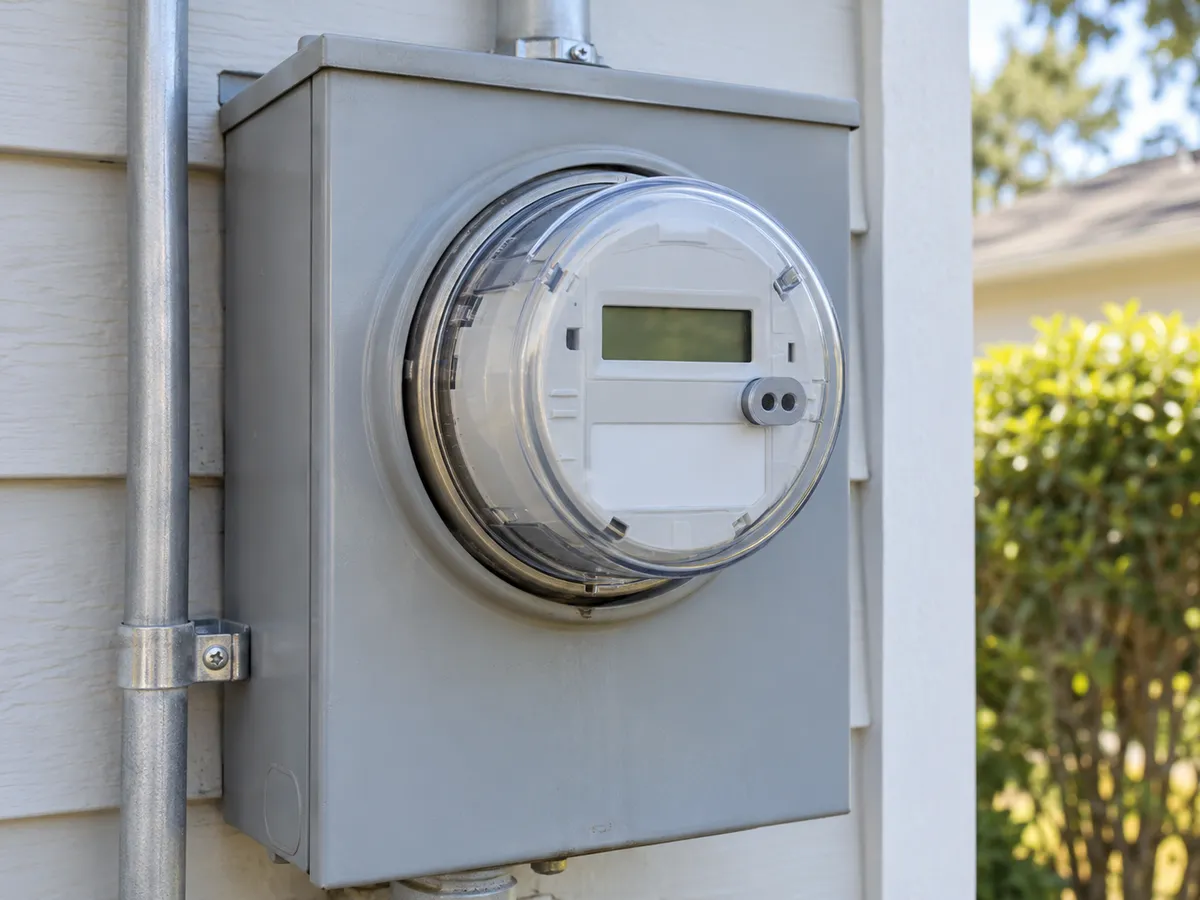
If very cold weather, high radiator-water temperatures and electric backup heat occur during expensive tariff hours, a mild-weather COP may overstate the heat pump’s cost advantage. The gas boiler may then have a lower variable heating cost for those hours, although the whole-season result still depends on how often they occur. Compare the estimated heating hours by outdoor temperature, water temperature, backup use and electricity tariff. Count pumps and backup energy only once in the seasonal total.
In the U.S., gas is often billed in therms rather than kWh. One therm is about 29.3 kWh of fuel energy. To compare gas and electricity prices, divide the variable gas price per therm by about 29.3. Keep fixed account charges, taxes and fees separate so you do not count them twice. The example above compares only variable space-heating energy. A full ownership comparison must also include pumps, backup heat, servicing, any separate cooling equipment, financing and changes to the building’s heating demand.
In a June 2026 European analysis, the International Energy Agency found that heat pumps had lower operating costs than gas boilers in almost all EU countries under its assumptions. The modeled yearly saving reached €800 in some cases. Over the equipment lifetime, heat pumps were economically competitive in 16 of 27 EU countries. The analysis reflects each country’s energy prices and common heat-pump technology and may include cooling benefits. It does not tell you what an air-to-water heat pump will cost or save in your U.S. home.
Heat Pump vs Gas Boiler Installation Cost: What Affects the Price?
If you already have a safe, working gas connection and usable water pipes, replacing a gas boiler can involve less work. A heat pump may need electrical upgrades, radiator changes, new pipes or different controls. Compare the cost of all the work, not just the two pieces of equipment.
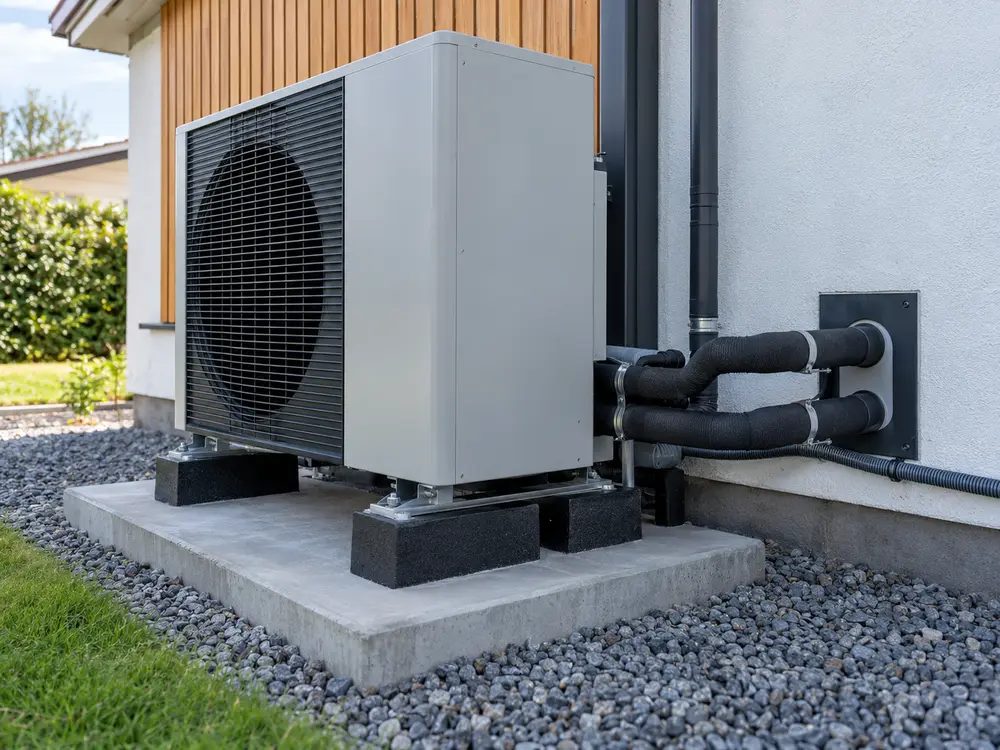
- Heat pump installation — Check outdoor space, noise, defrost-water drainage, available power and freeze protection. Ask whether a tank, radiator balancing or extra controls are needed. Include start-up tests.
- Gas-boiler replacement — Check gas supply, safe exhaust venting, enough air for combustion and a drain for condensate water. Include pipe cleaning, controls and required inspections.
- Both systems — Check how much heat each room needs, whether the system also supplies hot water, the condition of the pipes, heating zones and permits.
- Long-term cost — Add energy use, pump and backup power, servicing, future repairs or replacement, financing and the cost of separate cooling equipment where relevant.
Not every listed upgrade is automatically required. Work needed to meet the chosen model’s instructions, heating load and local safety rules is required. Radiator changes, electrical upgrades, a buffer tank or backup heating should be justified by a specific capacity, flow, water-volume, control or site limitation. Some upgrades may be useful but optional; extra equipment without a documented need is usually unnecessary. Ask which measured or calculated problem each item solves before comparing installed costs.
Check the actual position proposed for the outdoor unit, especially near bedrooms or neighbours. Noise depends on the selected model, mounting, distance and operating mode. Sound power is the sound emitted by a unit; sound pressure is the level at a defined location, so the two values are not interchangeable. Ask the installer to check the selected model and proposed position against applicable local noise requirements, without assuming one published rating applies at every distance. Keep the manufacturer’s airflow and service clearances and route defrost water away from paths where it could freeze.
Where an air-to-water system has water-side pipes exposed to freezing, check the selected model’s approved protection method. If the design uses a permitted glycol mixture, its viscosity and heat-carrying properties can change circuit resistance, pump requirements and heat transfer. An added isolation heat exchanger can also change the water temperatures needed to move the same heat. Verify fluid compatibility, pump sizing and protection during a power outage before comparing installed options.
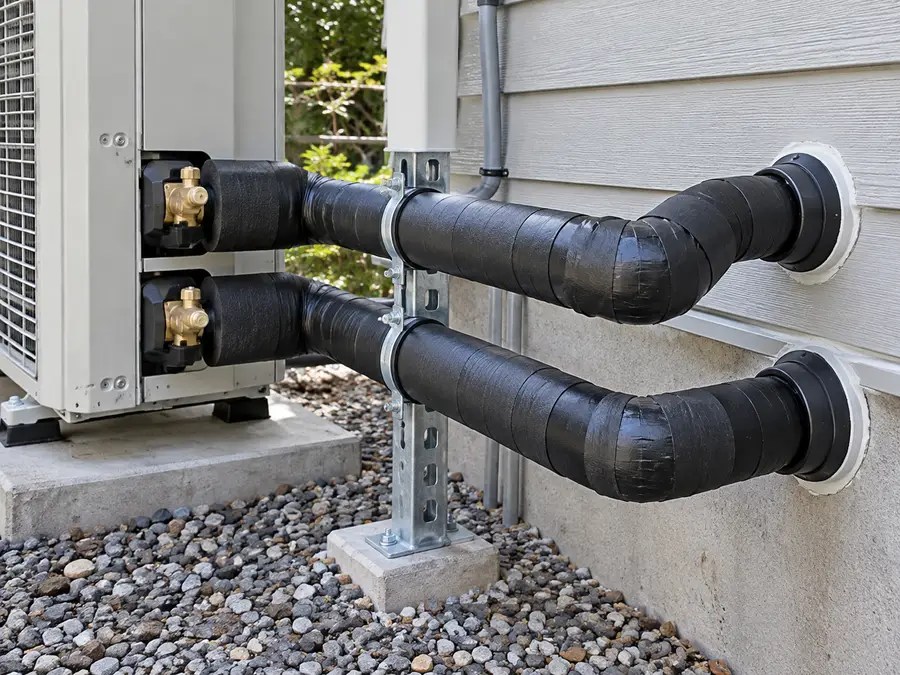
Installation costs differ because homes need different amounts of work. Replacing a boiler on suitable existing pipes is not the same job as fitting a heat pump with new radiators or upgraded electrics. Compare itemized local quotes for the same calculated winter heating load, required radiator-water temperature and domestic hot-water service. Each proposal should state the selected equipment, its output under those conditions, required backup heating, controls, electrical and pipe work, start-up tests and items excluded from the price. Include cooling equipment only when it is actually part of the project. Check incentives you really qualify for. Our heat pump installation cost guide explains the main cost factors. A lower equipment price does not necessarily mean a lower total installed cost.
Installed price is only part of the cost. Compare the two systems over the same number of years. Add installation, expected energy bills, servicing, possible major repairs or replacements and financing. Count only incentives you can claim. If the heat pump will replace a separate cooling system, include that avoided equipment cost; otherwise leave it out. Lower yearly heating bills alone do not prove that a higher installation cost will pay back while you own the property.
Hot water may work differently. A gas combi boiler can heat water as you use it, if it can supply the flow needed at the taps. An air-to-water heat pump may instead heat a storage cylinder. Check how much usable hot water it holds, how long reheating takes, whether it can serve several showers, and where the cylinder will fit. The design must also meet any required storage-water temperature and hygiene controls.
If one heat pump provides both room heating and domestic hot water, check whether it heats the hot-water cylinder first and temporarily pauses room heating. Compare usable hot-water storage, reheating time and the likely duration of that pause with the home’s winter heating demand and hot-water peaks. Verify the proposed control sequence and equipment capacity for those conditions rather than assuming the space-heating rating also covers simultaneous hot-water production. If hot water uses a separate appliance, include its installed cost, electricity or fuel use and maintenance. Do not compare a gas combi boiler’s on-demand hot-water service with a heat-pump quote that excludes hot water.
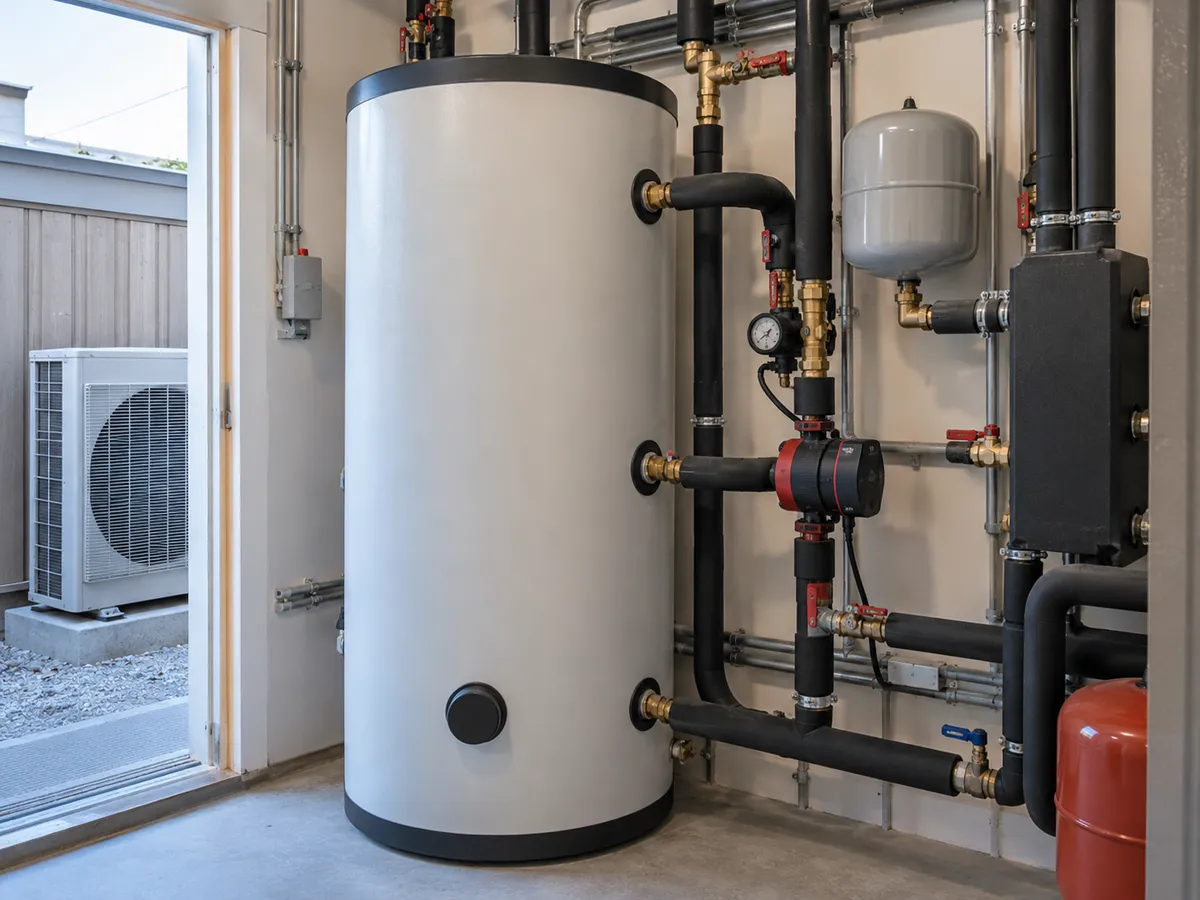
Both systems need maintenance. A gas boiler needs checks of the burner and combustion safety, exhaust flue and condensate drain. A heat pump needs model-specific checks of outdoor airflow, water filters, pumps, pressure, freeze protection and controls. Compare local servicing costs; neither system is automatically cheaper to maintain.
Before choosing a system, check who can install, commission and service the exact equipment locally. Ask whether the installer works with air-to-water hydronic systems, can obtain the current technical documentation and has a plan for future fault diagnosis.
Can You Replace a Gas Boiler With a Heat Pump in an Older Home?
Yes, a heat pump can replace a gas boiler in some older homes. First check how much heat every room needs on the coldest expected day. Then check whether the existing radiators can supply that heat with water the heat pump can produce efficiently. A radiator upgrade is not always necessary.
Start by identifying the system in the house: circulating hot water and steam use different piping and radiator arrangements. If the current heating is steam-based, have the conversion work assessed before comparing air-to-water heat-pump sizes or assuming the old distribution can stay.
Will Your Existing Radiators Work With a Heat Pump?
Start by checking how much heat each room needs on a cold day. Then find out how much heat the existing radiator can give off when the water is cooler. Compare those two figures before deciding whether to keep or replace it.
Radiators give out less heat when cooler water flows through them. If your existing radiators are large enough, you may be able to keep them. Otherwise, you may need larger radiators, fan coils or better insulation. Check the output of each radiator at the planned supply temperature (water going in) and return temperature (water coming back). Do not choose heat-pump size from the rating on the old boiler; it may be oversized or rated to supply hot water quickly.
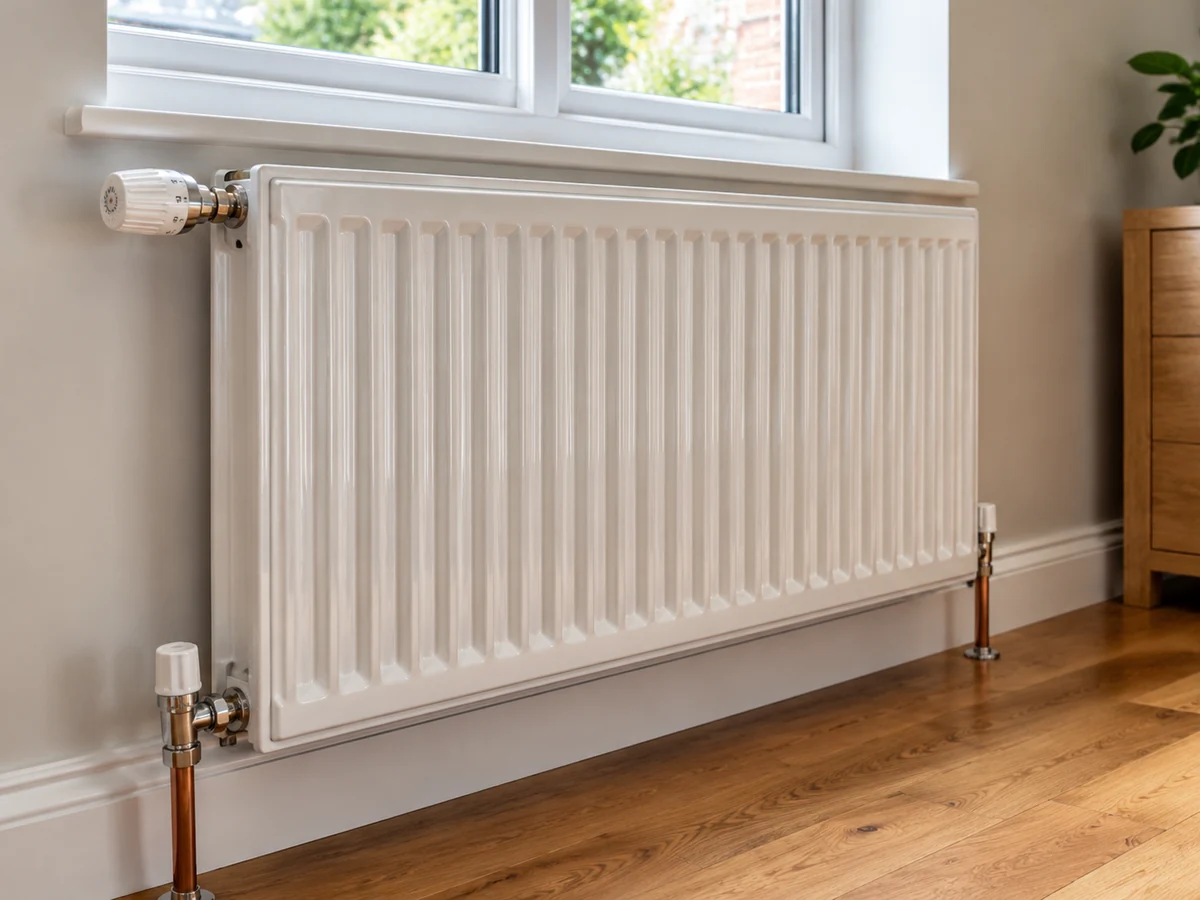
First record the supply-water temperature, return-water temperature and room temperature while the existing heating runs. Then calculate each room’s heating need at the local winter design condition. Use reliable radiator output data adjusted to the proposed supply and return temperatures and room conditions; do not judge output from radiator size alone. Compare the two values room by room and record any radiator or insulation upgrades needed. Mild-weather measurements are useful background, but they do not replace a design-day load calculation.
If you want to see how radiator and underfloor-heating water temperatures affect the choice, read our air-to-water heat pump vs boiler guide for radiant and hydronic systems.
Will It Keep Your Home Warm on the Coldest Days?
Yes, if the chosen model can deliver enough heat when your area reaches its winter design temperature—the cold outdoor temperature used for sizing heating equipment. Its output also depends on how hot the radiator water must be. If that output falls short of your home’s calculated heating need, a correctly sized electric heater or existing boiler may cover the shortfall.
A buffer or thermal-storage tank may help the system run smoothly or handle short changes in demand, but it cannot produce extra heat through a long cold spell. Using a heat pump and a boiler together is called a hybrid, or bivalent, system. Include the backup energy in running-cost estimates.
Do not simply choose a bigger heat pump to handle a few extremely cold hours. During mild weather, a large unit may struggle to turn its output down far enough. This can cause frequent on-off cycling, especially when only one or two heating zones are open. Compare the model’s minimum controllable output at the planned water temperature with the load when the smallest permitted heating zone is active, and check how the flow and zoning controls will prevent short cycling. Properly sized backup heating can sometimes cover a short peak without making the main heat pump too large.
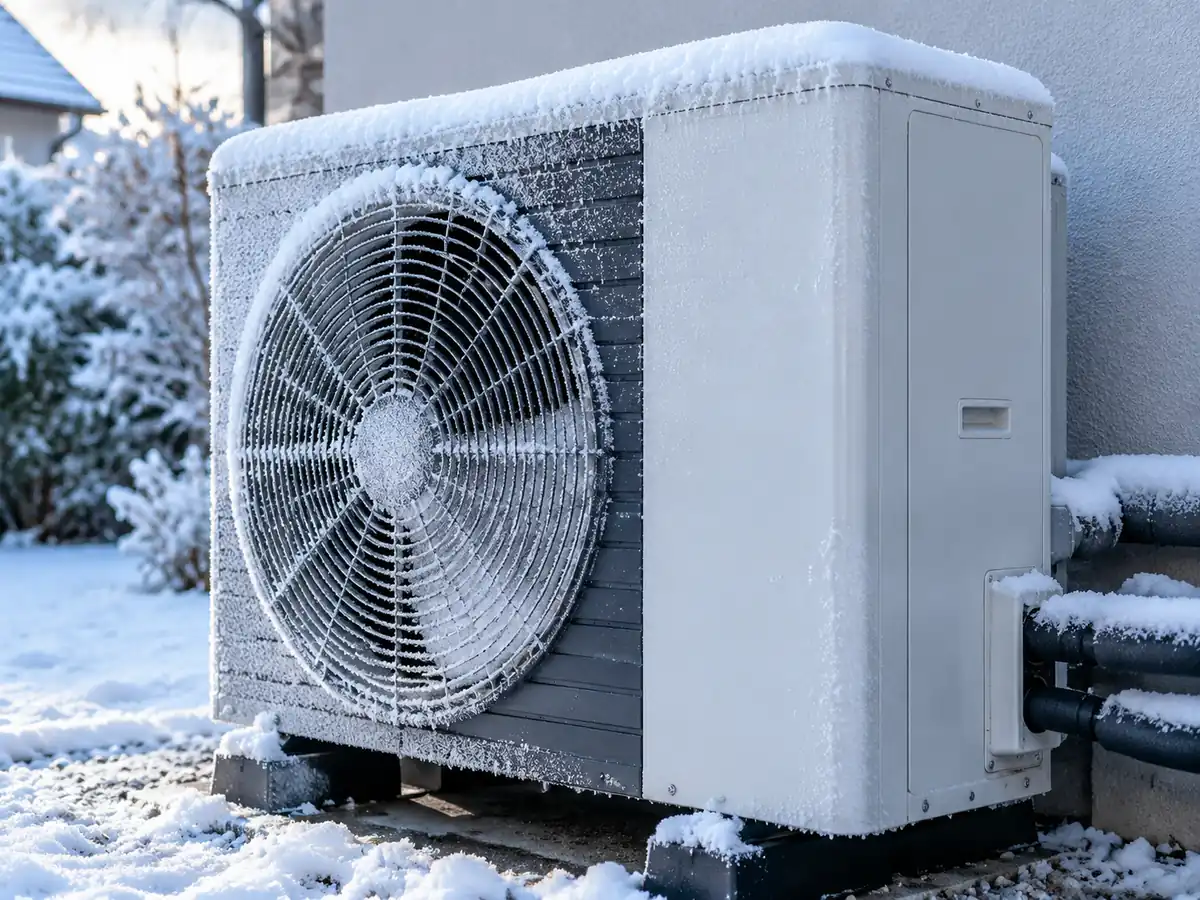
Ask for the selected model’s published heating capacity and electrical input at two conditions together: your local winter design outdoor temperature and the supply-water temperature the radiators actually need. Compare that capacity with the calculated building heat loss. The lowest permitted operating temperature does not show how much heat the unit can deliver there. If output falls short, identify the backup heating needed, when it must run and how defrost may affect room comfort. Verify that the electrical supply can support the compressor, pumps and any backup heater that may operate together, and include the extra energy only once in the running-cost estimate.
Ice can also form on the outdoor coil during damp, near-freezing weather. The heat pump may need to stop normal heating briefly to melt it; this is a defrost cycle. Those hours are not always the coldest hours of the winter. Ask how the controls, water volume and backup heater keep the rooms warm during both defrost and the coldest design conditions.
The U.S. Department of Energy explains how heat pumps operate in cold weather. Some models can heat homes in cold regions, but their performance is different. Do not assume your model delivers a COP above 2 at −15°C or works at −25°C just because another unit does. Check its published output and power use at the outdoor temperature for your project and the water temperature your radiators need. Better insulation can also reduce how much heating the home needs.
Which System Fits a New Build, Renovation or Boiler Replacement?
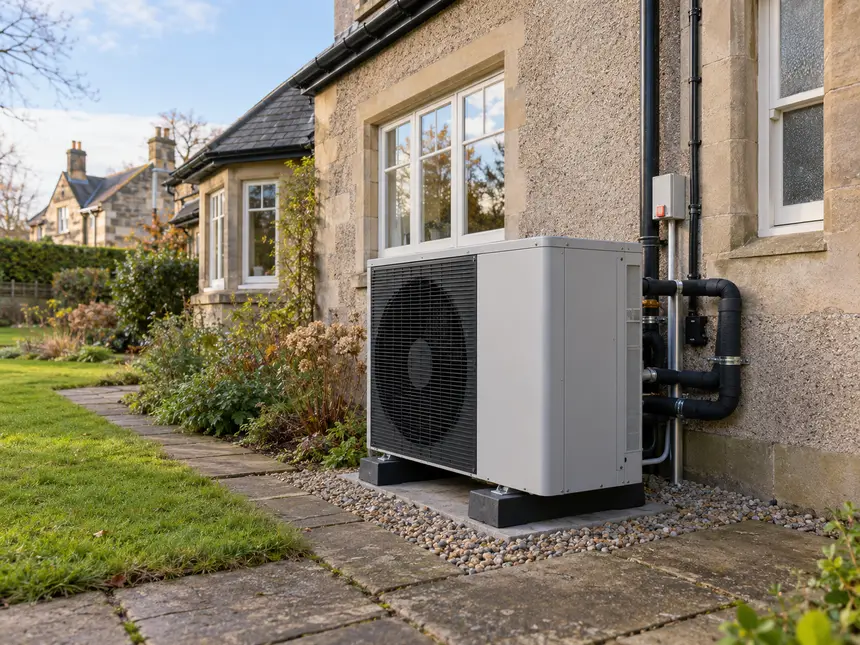
A heat pump is often a good starting point for a new building with suitable lower-temperature heating and enough electrical supply. A gas boiler may be simpler to replace when the existing gas system is safe, compatible and permitted under local rules. For renovations, compare insulation, radiator output, local energy prices and full installed cost before choosing.
| Your situation | Possible choice | What to confirm |
|---|---|---|
| Building a well-insulated new home | A heat pump can work well with underfloor heating or radiators designed for lower-temperature water | Winter heat loss, seasonal system COP, electrical supply and any plans for summer cooling |
| Older home with large radiators | A heat pump may work without replacing every radiator | Room-by-room heat loss and radiator output at the proposed lower supply and return water temperatures |
| Older home that needs very hot radiator water | First check insulation or larger radiators; also compare gas or hybrid heating if changes are impractical | First check whether insulation or radiator changes could reduce the required water temperature. Then compare the heat pump’s heating output and electricity use at the winter design point with boiler operation at the expected return-water temperature. A high maximum heat-pump water-temperature rating alone does not prove efficient or sufficient winter heating. Include any upgrades, backup heat and full installed costs before choosing. |
| Older home heated by steam radiators | An air-to-water heat pump is not a like-for-like replacement for a steam-heating system. A conversion needs its own design. | Identify the existing steam boiler, piping and radiators. Have a qualified heating professional check which components, if any, can safely be reused or converted, the required heating-water temperatures, local requirements and the full conversion cost. |
| Need a quick replacement for a failed boiler | A gas boiler may involve fewer changes where a replacement is permitted and the existing system is suitable | Safe flue and gas supply, local rules, total installed cost, expected service life and future upgrade plans |
| Renovating insulation and windows | Recalculate the smaller heat load before choosing heat-pump capacity or radiator changes | Each room’s heat loss after renovation; do not size equipment from the old load alone |
| Want both heating and cooling | A reversible heat pump may be useful with cooling-suitable terminals | Check the proposed chilled-water pipes and room units, dew-point controls that stop condensation, humidity control, condensate drainage and the cooling capacity at the required conditions. |
Why Does a New Home Often Suit a Heat Pump?
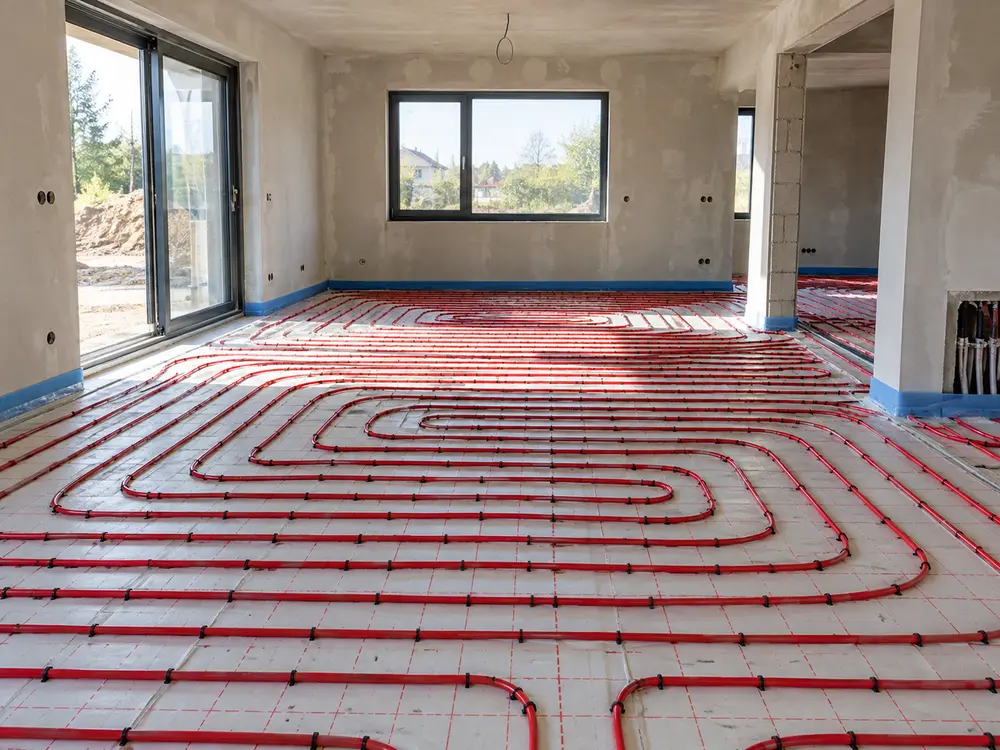
New construction makes it easier to design underfloor heating or radiators that can warm the rooms with lower-temperature water. That gives an air-to-water heat pump a better chance of running efficiently, provided its capacity matches the building’s winter heating load.
Before installing a heat pump in a new home, calculate the winter heating need and how much hot water the household will use. Plan the pipes, controls and electrical supply around that demand. A reversible air-to-water heat pump may make chilled water for cooling, but ordinary radiators or floor-heating pipes are not automatically suitable. Cooling needs room equipment designed for chilled water and controls that keep moisture from forming on cold surfaces. Without those protections, condensation can damage finishes and cause discomfort.
How Does Renovation Change the Heat Pump You Need?
If you add insulation or replace windows, your home may need less heat. Recalculate the heating need of each room before choosing a heat pump. In the U.S., ACCA Manual J is a recognized method for residential load calculations; follow applicable rules elsewhere. Check whether each existing radiator can meet the new room load at the proposed supply and return water temperatures. Do not size the new unit from the old boiler rating. Also check how low the proposed heat pump can turn down when only a small heating zone is operating, to avoid frequent start-stop cycling.
A hybrid system uses a heat pump and a gas boiler together and may be worth comparing when a full electric retrofit needs extensive work. First confirm the combined system can meet the winter design load. If the heat pump cannot supply enough heat, the backup source must cover the shortfall even when that fuel is more expensive. Only when either source can meet the load should a suitable controller select by delivered-heat cost. Ask for the proposed switch-over conditions, fault and backup sequence, permitted simultaneous operation, safe piping arrangement and interlocks in writing. Keep gas connection costs and servicing for both units in the ownership estimate; there is no universal yearly heat-pump share.
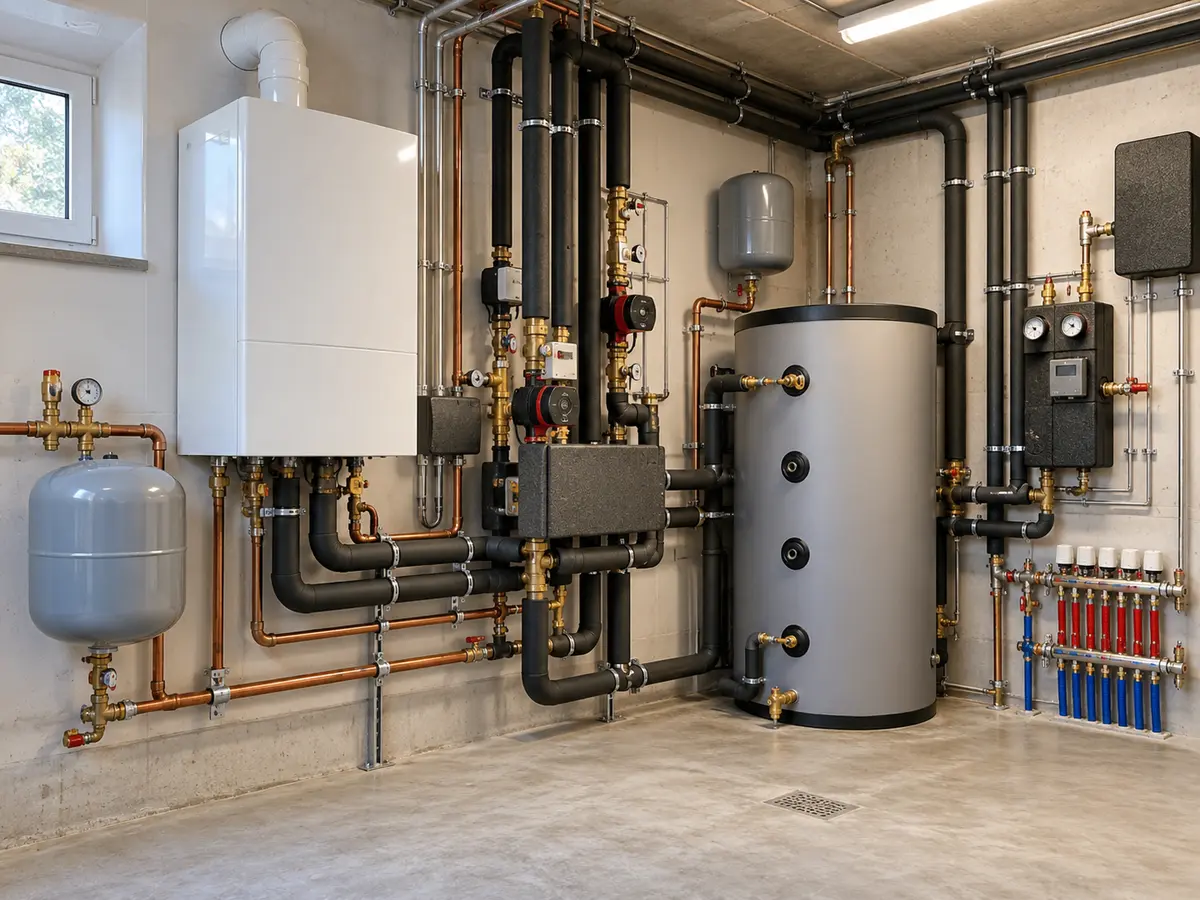
How Is a Hotel Heat Pump Retrofit Different From a Home Replacement?
A hotel may be able to change from gas boilers to heat pumps, but the heating and hot-water demands are more complex than in a home. Check how much heat the rooms need in cold weather, how hot the radiators must run and when guests need hot water for showers or kitchens. This is an example of what to check, not a completed Airproz hotel project.
A hotel can have a short hot-water peak while guest rooms still need space heating. Check the likely timing of both demands rather than estimating equipment size from the room count alone. If one heat source supplies both, confirm whether it can run both services together or must give the hot-water tank priority. Compare the usable storage and reheating capacity with the peak hot-water demand, and confirm how long room heating could be interrupted without losing required comfort. Depending on those checks, the design may need different storage, controls or a separate hot-water source.
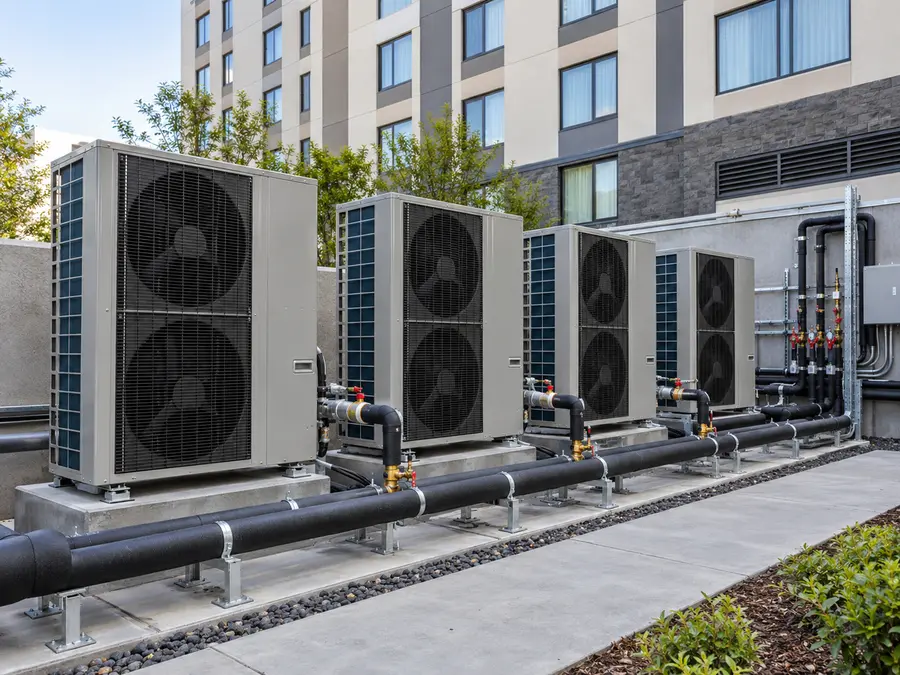
Do not compare two hotel utility bills as though they measured only heating. Weather, guest numbers, kitchen operation and hot-water demand can all change total use. Separate space heating and domestic hot water where metering or a defensible estimate allows, then compare similar operating periods with the necessary weather and occupancy adjustments. Record supply and return water temperatures, measured heat output, hot-water use, operating hours, local tariffs and servicing costs. Calculate payback only from complete installed costs, eligible incentives and savings supported by evidence.
What Should You Check Before Choosing a Heat Pump or Gas Boiler?
Before you choose, check how much heat each room needs on a very cold day and how hot your radiators must run. Then compare the complete installation work, the energy prices you will actually pay and the hot-water service you need. A high efficiency number or low unit price alone does not tell you which system is right.
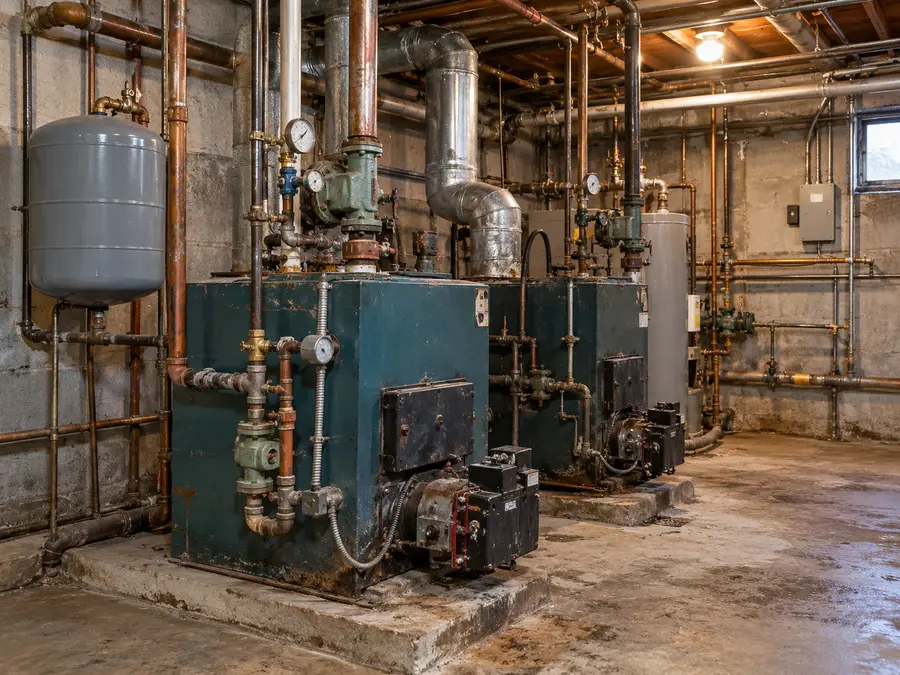
Have these details ready:
- Building — Record your location, the local winter design outdoor temperature and the heat needed by the whole home and each room.
- Existing heating — Note radiator and floor-heating sizes, the water temperature entering and leaving them, the condition of the pipes and which rooms have separate heating controls (zones).
- Hot water and bills — Record how much space heating and tap water you use, your electricity and gas prices, and any higher peak-hour rates or demand charges.
- Equipment and site — Ask for the chosen heat pump’s heating output and COP at your winter design temperature and required radiator-water temperature. Check available electrical power, outdoor noise, where defrost water drains, freeze protection and backup heat. For a boiler, check the gas supply and exhaust vent.
- Design-stage water flow — Ask the installer to show that the selected pump can maintain the exact heat pump model’s required water flow through the proposed pipes, filters and valves, including the most restrictive permitted heating-zone arrangement. Check available pump head, pipe resistance and any minimum system-water volume. A buffer tank can help with a verified water-volume or control problem, but a bigger tank does not fix a pump that cannot overcome pipe resistance. Blocked strainers or closed zone valves can cause low heat delivery or a flow-protection shutdown even if the heat pump has enough rated capacity. Some models also specify minimum flow or active water-volume requirements for defrost or backup-heater operation, not just ordinary heating. Check the selected model’s requirements before fixing the hydraulic design.
- Commissioning-stage water flow — Record actual flow, supply and return water temperatures and the zone-valve operating state. Use the manufacturer-approved procedure to verify the most restrictive permitted zone setting and any applicable defrost or backup-flow requirement; do not force unsafe operating modes. If the flow is too low, inspect the pump selection, strainers and restrictions rather than assuming a buffer tank will solve it. For a layout overview, see our heat pump schematic guide; for installation, use the exact manufacturer’s current hydraulic drawing for the chosen model.
- Controls and ownership — Ask how heating-water temperature changes with outdoor conditions, what happens when room zones close, whether hot water takes priority over room heating, and when any backup source starts. Confirm which controls are included, what the warranty covers, what servicing is required and which settings and safety functions will be checked at start-up (commissioning).
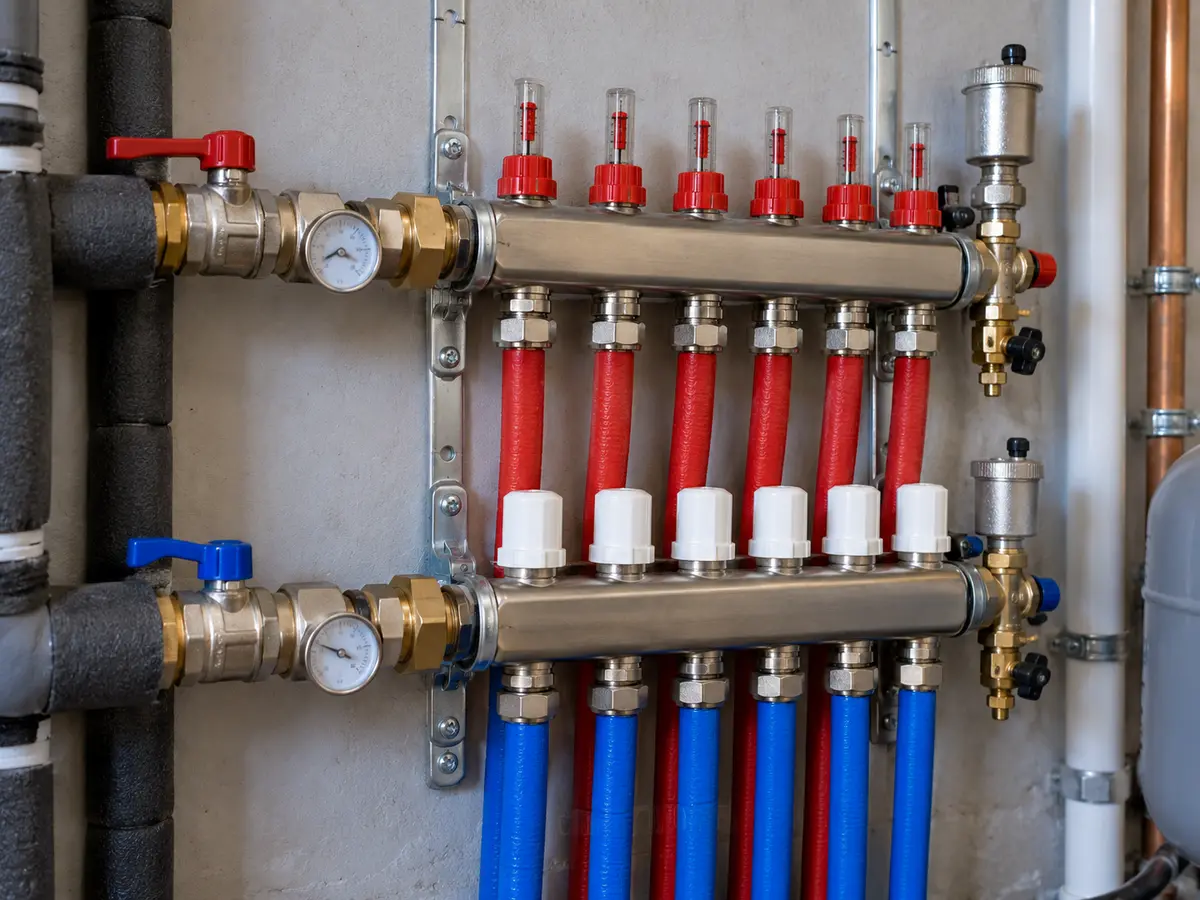
At commissioning, keep the room-by-room heat-loss calculation, the selected model’s heating output at the design outdoor and supply-water temperatures, measured water flow, supply and return temperatures, control settings and backup-heating sequence. Record checks of the required safety and freeze-protection controls according to the equipment and local rules. During a suitable cold period, record outdoor and room temperatures, supply and return water temperatures, comfort and relevant energy use; investigate any comfort shortfall with the installer. Compare those observations with the design assumptions.
To verify an installed-system COP, measure useful heat on a defined hydronic circuit and electricity over the same time period. An appropriate heat meter uses fluid flow and the supply-to-return temperature difference, with the fluid properties and installation accounted for. State which circulation pumps and any backup-heater electricity are included; if these inputs are excluded, label the narrower performance boundary rather than calling it whole-system COP. Household energy bills alone cannot establish the heat pump’s COP, and one day of data is not an annual seasonal performance result. Without suitable heat and electricity metering, do not claim measured COP or verified annual savings.
Ask both installers to price the same winter heating need and radiator-water temperature. Check whether each quote includes controls, pumps, electrical work, tanks, water connections, backup heating and start-up testing. If you also want to compare the product makers, our heat pump manufacturer buying guide explains which technical documents to compare. Choose the equipment only after its stated performance meets your building’s heating needs. Keep one side-by-side record of the design load, required radiator-water temperature, model and performance-data revision, included hot-water service, backup equipment and exclusions for both proposals. If any item is missing, mark it as not confirmed rather than assuming the two quotes are equivalent.
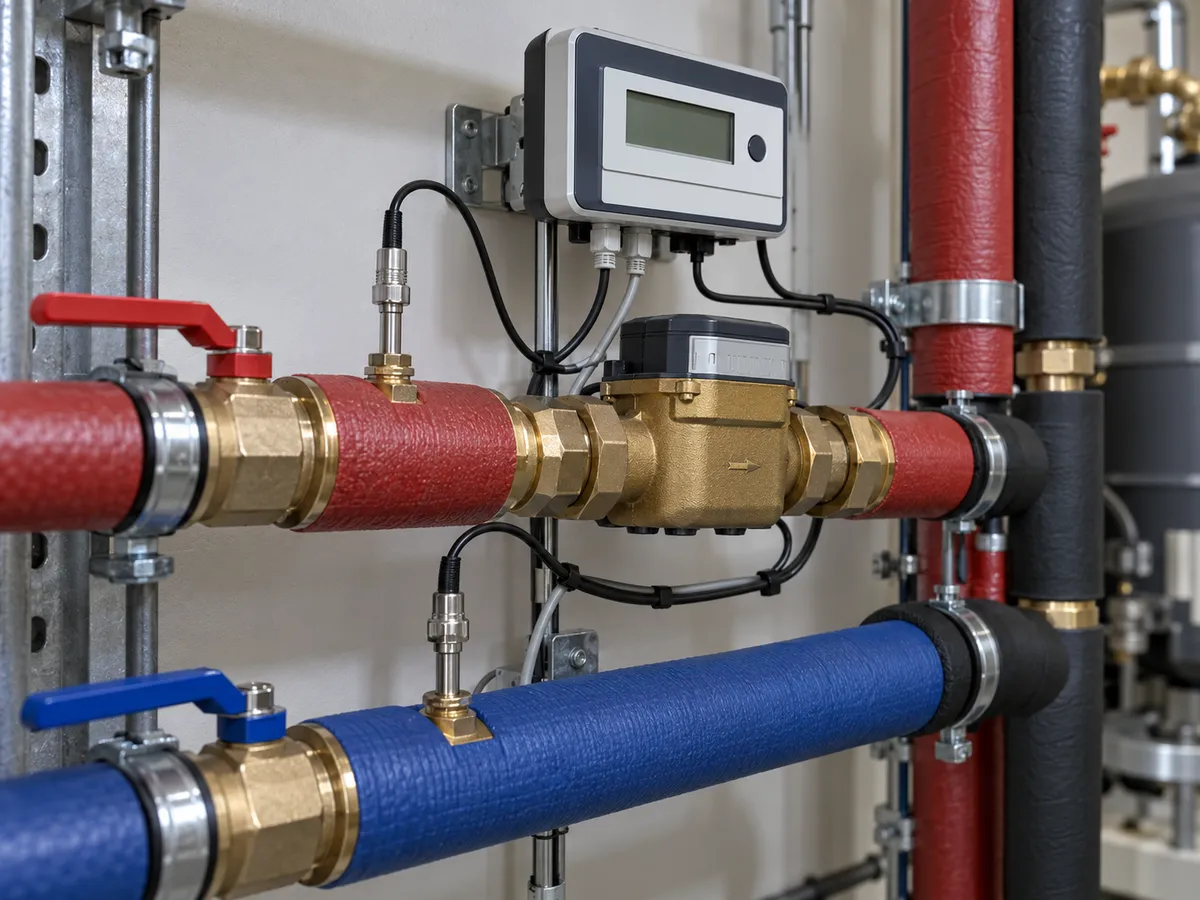
Installation and safety: Do not work on refrigerant pipes, fixed electrical wiring, gas pipes or boiler flues yourself. Poor freeze protection can damage water equipment, and unsuitable cooling controls can let water form on cold surfaces. If outdoor water pipes could freeze, ask how they are protected when the power fails or the equipment stops—not only while the system is running. The right method depends on the model, pipe layout and climate. Follow the manufacturer’s instructions and local code, use qualified installers and never bypass safety devices.
Electrical supply — Ask the electrician to check how much power the heat pump, water pumps and any electric backup heater may draw at the same time. The electrical panel, circuits and protective devices must meet the exact model requirements and local rules. The outdoor unit’s nominal rating alone may not describe the whole system’s peak demand.
Do not assume a gas boiler will keep central heating running during a power outage. Many gas boilers also need electricity for their controls and circulating pumps, while heat pumps need power for their compressor and pumps. Check the exact equipment and the site’s permitted backup-power and freeze-protection arrangements with a qualified installer.
Frequently Asked Questions
How much does it cost to replace a gas boiler with a heat pump?
There is no single reliable installed price for replacing a gas boiler with a heat pump. The cost changes with the heat pump, electrical supply, piping, controls, hot-water tank and any radiator upgrades. Ask for a complete local quote and compare it with a safe boiler replacement covering the same heating need. Check the incentives you actually qualify for before calculating the difference.
Is a heat pump an air conditioner?
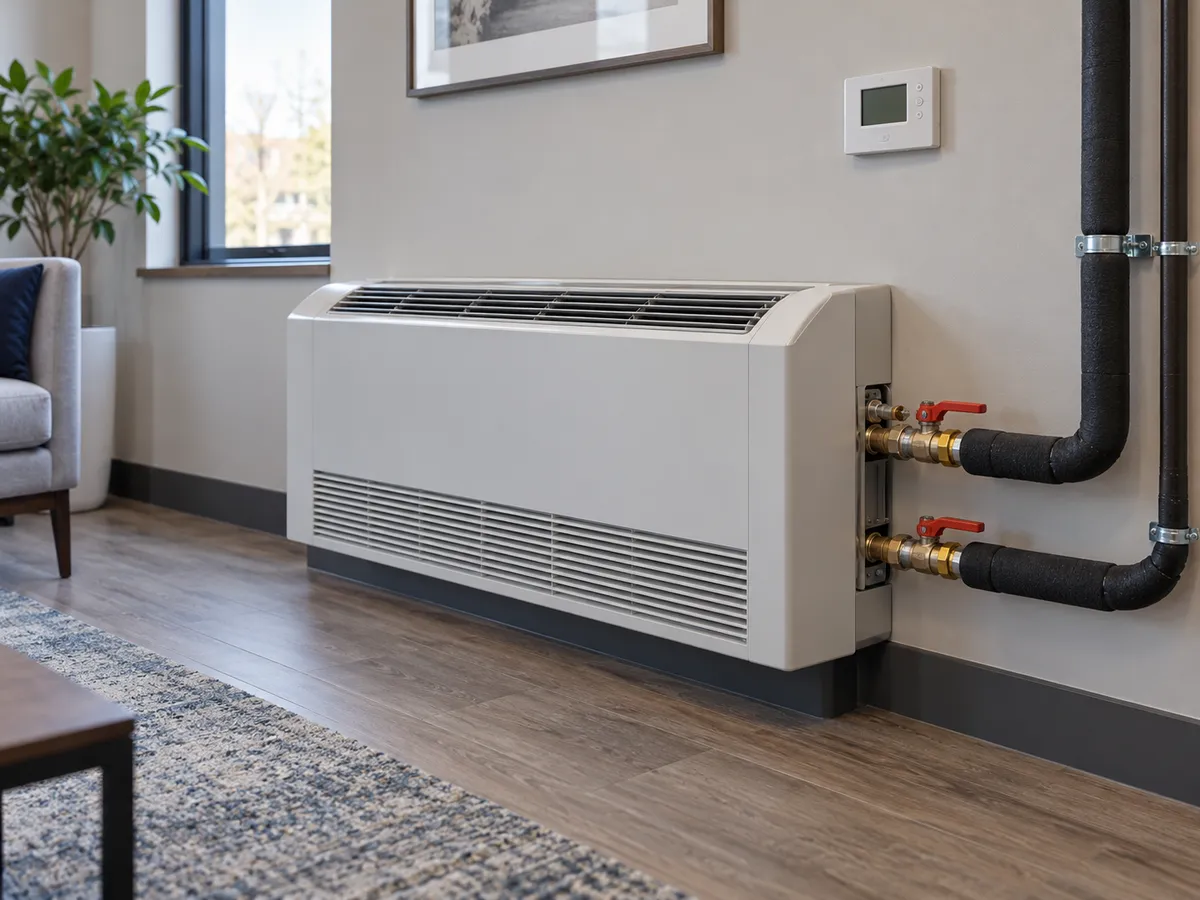
Some heat pumps can also work as air conditioners if the model is designed for cooling. A heating-only heat pump cannot cool. An air-to-water model also needs suitable room equipment, such as fan coils that blow air across chilled-water coils, and controls that prevent condensation on cold surfaces.
Does a heat pump always pay back the extra installation cost?
No. Lower annual heating bills do not guarantee that the extra installation cost will be recovered within your ownership period. Compare the net installed-cost difference with realistic operating and maintenance savings for the same heating and hot-water services. Allow for changing tariffs, major repairs or replacements, financing and incentives you actually qualify for. Simple payback is only a screening estimate, not a promised project return.
Which Is Better: a Heat Pump or a Gas Boiler?
A heat pump often makes more sense when your radiators can heat the home with moderately warm water, the selected unit can meet the cold-day heating need and local electricity prices are favourable. Replacing a gas boiler may involve less work if your present gas system is safe and local rules allow it. A hybrid heat pump and boiler can be worth comparing if a fully electric change would be difficult or expensive. There is no single winner for every home.
Make your decision with the same room-by-room heating load and hot-water needs for both options. Check total installation work, expected electricity and gas costs, the heat pump’s actual model data at the winter design temperature and radiator-water temperature, and any backup heat. Confirm electrical capacity, permits, warranty terms and commissioning checks. Ask for current technical documents before relying on any efficiency or performance claim. Neither option is always cheapest or suitable for every building.
What about carbon emissions? A heat pump does not burn gas in your home, but the electricity it uses may cause emissions at the power plant. A gas boiler releases emissions when it burns fuel, with possible extra emissions before the gas reaches your home. Compare both systems for the same yearly heating need, using realistic seasonal efficiencies and emissions factors for your local electricity supply and gas. The EPA GHG Emission Factors Hub provides U.S. reference factors and sources of regional grid data, not measurements for your house. Do not apply a national emissions-saving percentage to a specific home without doing that comparison.
- Calculate each room’s heating need after any planned insulation work.
- Confirm the heating-water temperature and output of the existing radiators.
- Compare the proposed heat pump’s winter design-day capacity, part-load operation and needed backup with a safe boiler option.
- Compare complete quotes and expected energy bills for the same space-heating and hot-water service. Before accepting the installation, agree which heating output, water temperatures and safety controls will be checked and recorded at start-up.
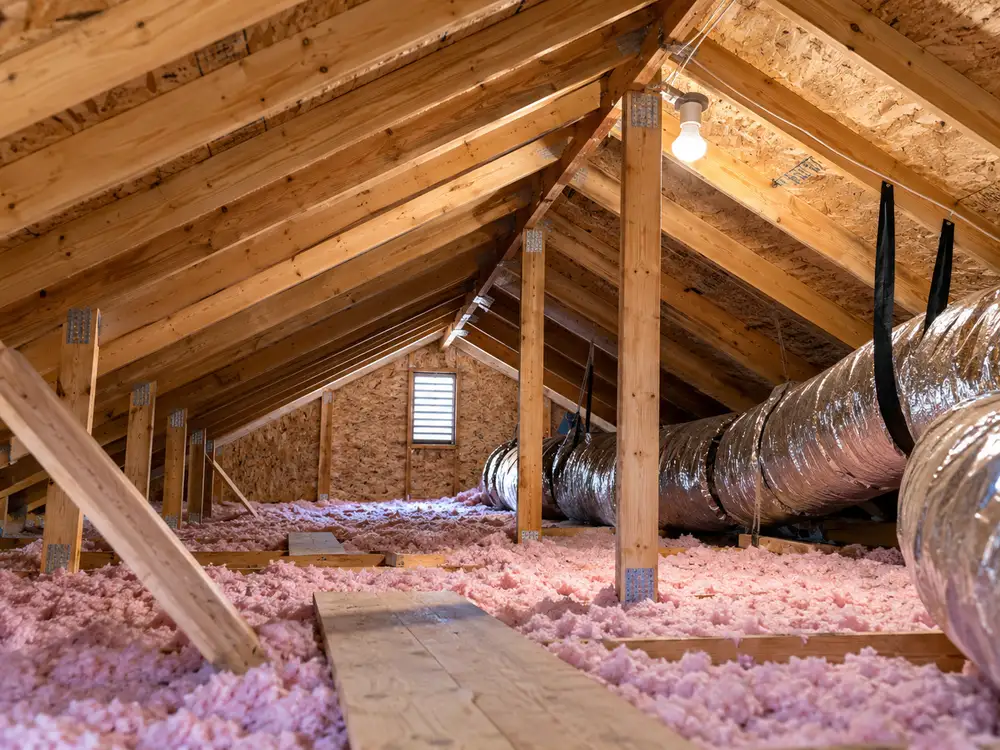
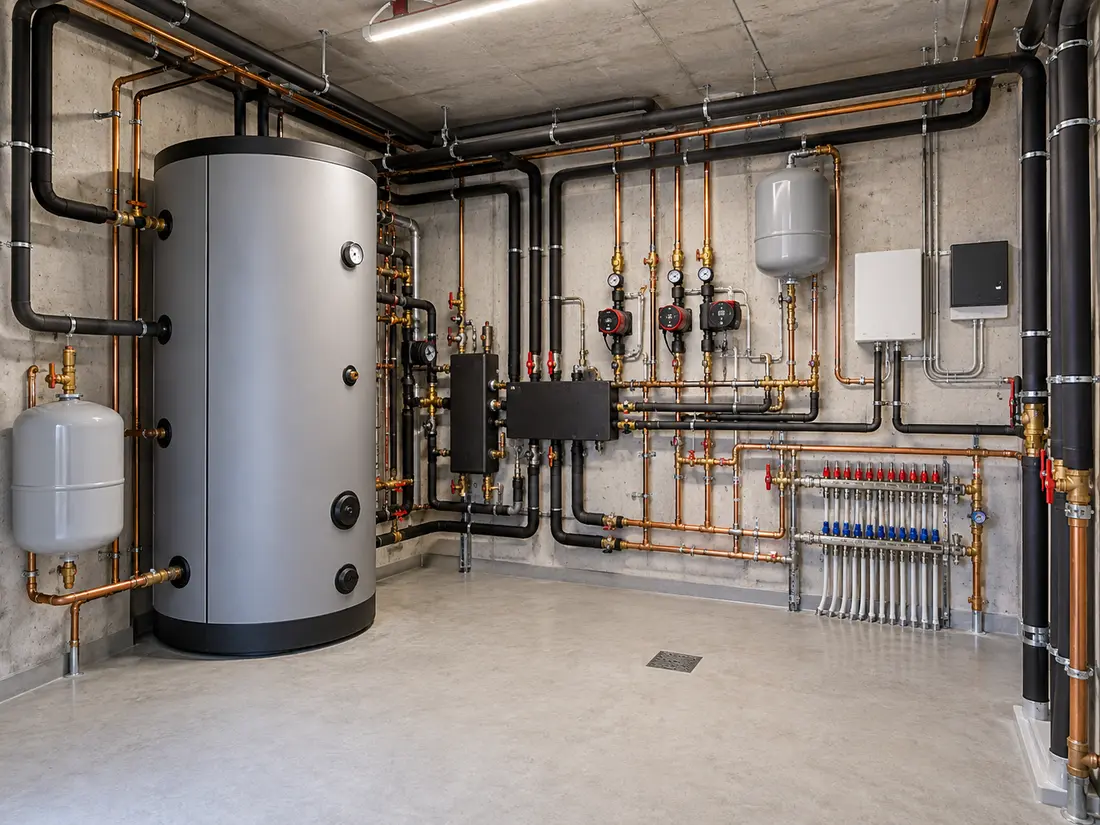
The images in this article are AI-generated illustrative scenes, not photographs of Airproz or customer installations. They do not verify equipment specifications or completed projects.
Sources and Calculation Assumptions
The European comparison comes from the cited June 2026 IEA analysis. Our dollar calculations use the assumptions shown in this article. They illustrate how the result changes with energy prices and efficiency; they are not quotations or performance promises for any home or equipment model.
- International Energy Agency (June 2026) — EU residential heat-pump and gas-boiler operating and lifetime costs. Results depend on national energy prices, prevalent heat-pump technology and the services included in the comparison; see the original analysis and its lifetime-cost chart.
- U.S. Department of Energy — Heat Pump Systems — Explains heat transfer, equipment types and cold-climate considerations. It is not a performance guarantee for the air-to-water system described here.
- For your building — Use a room-by-room heating-load calculation, model performance tables, utility rates and itemized local installation quotes.
Looking at a Heat Pump to Replace Your Boiler?
Start with your location, current heating system and how warm your radiators need the water to be. If you know your cold-day heating load, keep it handy. Explore our heating products and cold-climate guide below to understand the options. The right equipment must still be checked against current model data and local installation rules.
Space Heating Heat Pumps · R32 Monobloc Heat Pump · Cold-Climate Heat Pump Guide