In the Middle East and Iran projects, air conditioners often operate under extremely high ambient temperatures for long periods. Standard cooling systems may struggle with unstable performance, high power consumption, or reduced efficiency during peak summer conditions.
This is why more contractors and developers are choosing T3 air conditioner systems designed specifically for hot climate regions. Compared with conventional air conditioners, T3 AC units provide more stable cooling performance, better energy efficiency, and improved reliability in harsh operating environments.
Whether for villas, apartments, commercial buildings, or large-scale projects, selecting the right T3 air conditioner for Middle East conditions has become increasingly important in 2026.
For a complete overview of heat pump and air conditioner sourcing options, see our heat pump manufacturer B2B guide.
Why T3 Air Conditioners Are Important for Middle East Projects
In many Middle East and Iran projects, air conditioning systems are expected to operate continuously under extremely high outdoor temperatures, especially during peak summer seasons when ambient temperatures can exceed 50°C. These demanding conditions place significant pressure on cooling systems, particularly in buildings that require long operating hours and stable indoor comfort.
Under such environments, conventional air conditioners designed for mild climates may struggle to maintain reliable cooling performance. Higher electricity consumption, reduced operating efficiency, and unstable operation are common challenges for cooling systems running in high-temperature regions.
For this reason, more developers and contractors are choosing T3 Air Conditioner for Middle East applications designed specifically for high ambient conditions. Compared with standard AC units, T3 air conditioning systems provide more stable cooling performance, improved energy efficiency, and stronger long-term reliability for residential developments, hotels, apartments, and commercial projects across Iran and other hot climate regions.
What Makes a T3 Air Conditioner Different?
T3 air conditioners are specifically designed for regions with extremely high outdoor temperatures, where standard cooling systems may struggle to operate efficiently. Compared with conventional air conditioners developed for mild climates, T3 systems are engineered to maintain stable operation under demanding high ambient conditions.
For many Middle East and Iran projects, long operating hours and extreme summer heat require air conditioning systems with stronger durability, better heat resistance, and more reliable long-term performance. This is why T3 Air Conditioner for Middle East projects are becoming increasingly important for residential and commercial developments across hot climate regions.
T1 vs T3 Air Conditioner
The main difference between T1 and T3 air conditioners lies in their operating temperature range and overall system design.
| Type | Climate Condition | Recommended Region |
|---|---|---|
| T1 | Mild climate conditions | Europe and temperate regions |
| T3 | High ambient temperatures | Middle East and Iran |
T1 systems are generally designed for moderate climates and may experience reduced efficiency during prolonged exposure to extreme heat. In contrast, T3 cooling systems are specifically developed for high-temperature environments, making them more suitable for Middle East cooling projects and long-hour commercial operations.
Designed for High Ambient Temperatures
One of the key advantages of T3 systems is their ability to operate reliably in outdoor temperatures exceeding 50°C. These high ambient AC systems are typically equipped with enhanced compressors, optimized condensers, and more durable refrigeration components to ensure stable operation under harsh environmental conditions.
Compared with standard air conditioning systems, T3 air conditioners offer more reliable cooling, improved energy efficiency, and better operational stability during peak summer seasons. This makes them a preferred solution for hotels, apartments, villas, and commercial buildings across the Middle East and Iran.
Key Features of an Energy Saving T3 AC System
In Middle East and Iran projects, the market increasingly demands air conditioning systems that can maintain stable operation under extreme heat while helping reduce long-term operating costs. As a result, “energy-saving T3 AC” systems are becoming an important solution for residential buildings, hotels, commercial developments, and other projects located in high-temperature regions.
Beyond basic cooling performance, these systems are expected to support long operating hours, high ambient temperatures, and lower electricity consumption, all of which are critical for maintaining stable system operation and reducing long-term energy costs.
Energy Saving Inverter Technology
As electricity costs continue to rise, more developers and buyers are paying attention to inverter air conditioner technology that can automatically adjust system output based on actual cooling demand. Compared with conventional fixed-speed systems, inverter technology helps reduce unnecessary power consumption, improve operating efficiency, and lower long-term electricity costs.
For high-temperature regions, “energy-saving T3 AC” systems equipped with inverter technology are especially valuable because they help maintain stable cooling while reducing unnecessary energy consumption during continuous operation.
Stable Cooling in 50°C Conditions
One of the biggest challenges in hot climate regions is maintaining stable indoor cooling when outdoor temperatures exceed 50°C. Under these conditions, standard air conditioning systems may experience reduced efficiency, unstable operation, and noticeable temperature fluctuations during peak summer periods.
For hotels, apartment buildings, and commercial cooling projects, unstable system operation can directly affect indoor comfort, operating efficiency, and overall project reliability. This is why T3 cooling systems are increasingly used in high ambient environments where stable long-term operation is essential.
Reliable Operation for Long-Term Projects
Large-scale developments such as hotels, commercial buildings, and apartment projects require air conditioning systems capable of operating reliably for many years under demanding conditions. Frequent maintenance, unstable system operation, and unexpected downtime can significantly increase long-term operating costs.
For this reason, many developers prefer T3 air conditioning systems designed for durability, continuous operation, and long service life in extreme climate conditions. This is particularly important for Middle East and Iran projects where air conditioning systems often operate continuously during long summer seasons.
Best Applications for T3 Air Conditioner Systems
These high-ambient cooling systems are widely used across regions where equipment must run continuously under extreme heat. Throughout Iran and the wider Gulf, where summers regularly push past 45°C, they’re increasingly the default choice for residential, commercial, and large-scale cooling projects thanks to more stable performance and better long-term reliability.
Villas and Residential Buildings
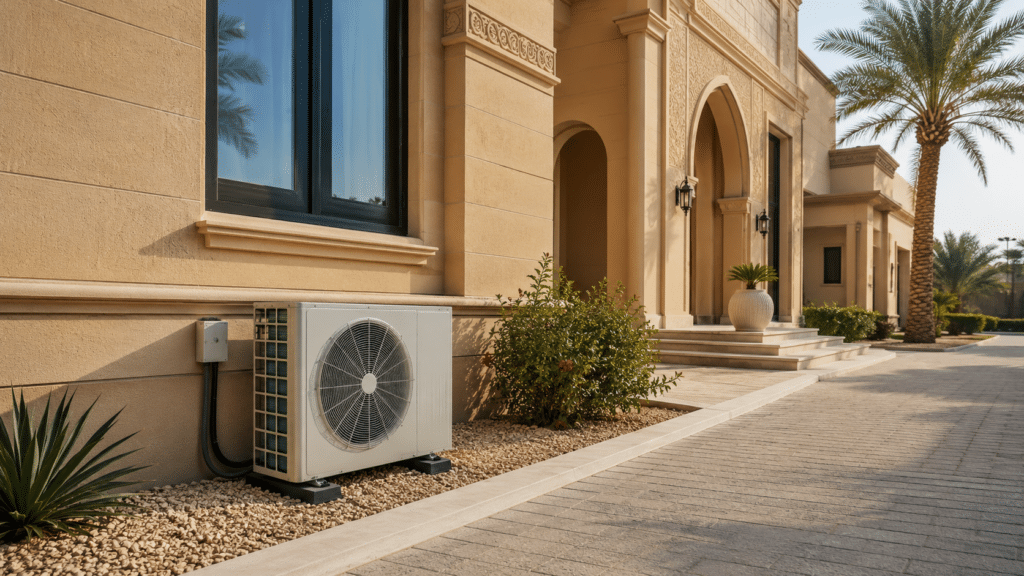
In villas and residential buildings located in hot climate regions, maintaining indoor comfort throughout the summer is a major priority. Standard air conditioning systems often lose efficiency or become unstable when exposed to very high outdoor temperatures for long periods.
This is why high-ambient systems are becoming a more reliable choice for homeowners and developers in the region. Compared with conventional units, they’re better suited to sustained high temperatures.and can help reduce electricity consumption over time. They are especially valuable in “hot climate” applications where consistent cooling performance is required throughout long summer seasons.
Apartments and High-Rise Projects
Apartments and high-rise developments often require air conditioning systems that can handle long operating hours and varying cooling demands across multiple units. In many Iran apartment projects, the challenge is not only high temperatures but also continuous use during peak summer periods.
For these conditions, T3 systems provide a more practical and energy-efficient residential cooling solution. Their ability to maintain stable operation under high ambient temperatures makes them well-suited for large residential buildings across the Middle East, where reliability and efficiency are both essential.
Commercial Buildings and Hotels
Commercial buildings, hotels, office towers, and shopping centers place even greater pressure on air conditioning systems, especially during the hottest months of the year. These projects often require equipment that can run for long hours while maintaining consistent indoor comfort for guests, employees, and customers.
T3 air conditioners are better suited for these demanding environments because they are designed for commercial HVAC projects in hot climate regions. Compared with standard systems, they offer stronger durability, more stable cooling, and better support for continuous operation. This makes them a preferred choice for hotels, commercial buildings, and other large-scale commercial cooling projects across the Middle East.
For hotel developers in Dubai also evaluating commercial hot water systems alongside air conditioning, see our guide on commercial heat pump water heater for hotel in Dubai.
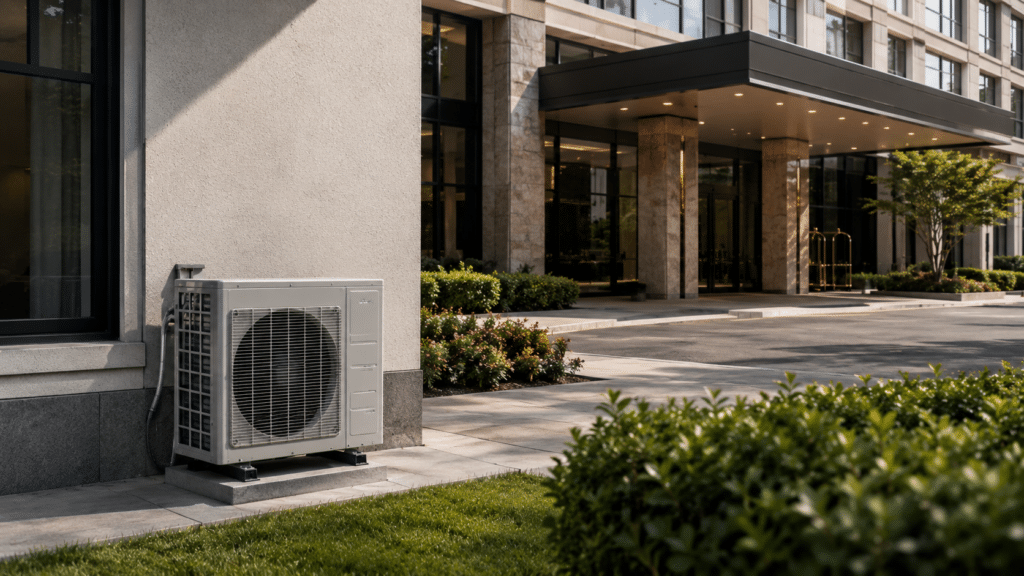
How to Choose the Right T3 Air Conditioner for Iran Projects
Cooling Capacity
In many T3 air conditioner Iran projects, selecting cooling capacity goes beyond simple room-size calculations because extremely high outdoor temperatures can substantially reduce actual cooling output during peak summer periods, especially when ambient temperatures exceed 45°C.
For example, air conditioning systems installed in villas, apartments, and hotels may operate continuously for more than 10–15 hours per day during summer. In top-floor apartments and buildings exposed to direct sunlight, cooling loads can become even higher during the afternoon.
Under these conditions, systems not specifically designed as an “air conditioner for hot climate” applications may experience noticeable capacity reduction, unstable operation, and inconsistent indoor comfort. For this reason, developers and MEP engineers increasingly size systems with higher safety margins and prefer T3 cooling systems capable of maintaining stable operation in high ambient conditions up to 50°C.
Power Consumption
Power consumption is one of the biggest concerns for residential and commercial cooling projects across the Middle East and Iran, where air conditioning systems frequently account for more than 50% of a building’s summer electricity usage due to prolonged operation during extremely hot weather.
For this reason, many buyers now prefer “energy-saving T3 AC” systems equipped with inverter air conditioner technology. Unlike fixed-speed units that repeatedly start and stop at full power, inverter systems can automatically adjust compressor output based on actual cooling demand, helping reduce unnecessary energy consumption during long operating hours.
For hotels, apartments, and office buildings operating under high ambient temperatures, stable seasonal energy efficiency and lower electricity consumption are often more valuable than peak cooling capacity alone.
Local Climate Conditions
Local climate conditions should always be carefully considered when selecting a T3 air conditioning system. In many desert climate areas and other hot regions across the Middle East and Iran, summer outdoor temperatures commonly range from 45°C to 50°C.
Under these conditions, standard air conditioning systems designed for temperate climates may experience reduced efficiency, unstable operation, or increased power consumption during continuous use.
As a result, many developers specify T3 air conditioners as a reliable “Middle East air conditioning solution” because these systems are designed for continuous operation in demanding desert climate environments. Compared with conventional systems, they provide more stable cooling and stronger long-term reliability under extreme summer conditions.
After-Sales and System Reliability
For long-term residential and commercial projects, after-sales support and system reliability are often just as important as cooling performance itself. In many Middle East and Iran projects, air conditioning systems may operate continuously for several months during summer, making long-term operational stability extremely important.
Unexpected downtime, delayed spare-parts supply, or repeated performance issues can significantly increase maintenance pressure and operating costs for property owners and facility managers.
As a result, procurement teams now pay closer attention to spare-parts availability, technical support response times, and proven long-term durability when selecting air conditioning systems for demanding commercial HVAC projects. These factors can directly affect lifetime operating cost, occupant comfort, and overall project reliability.
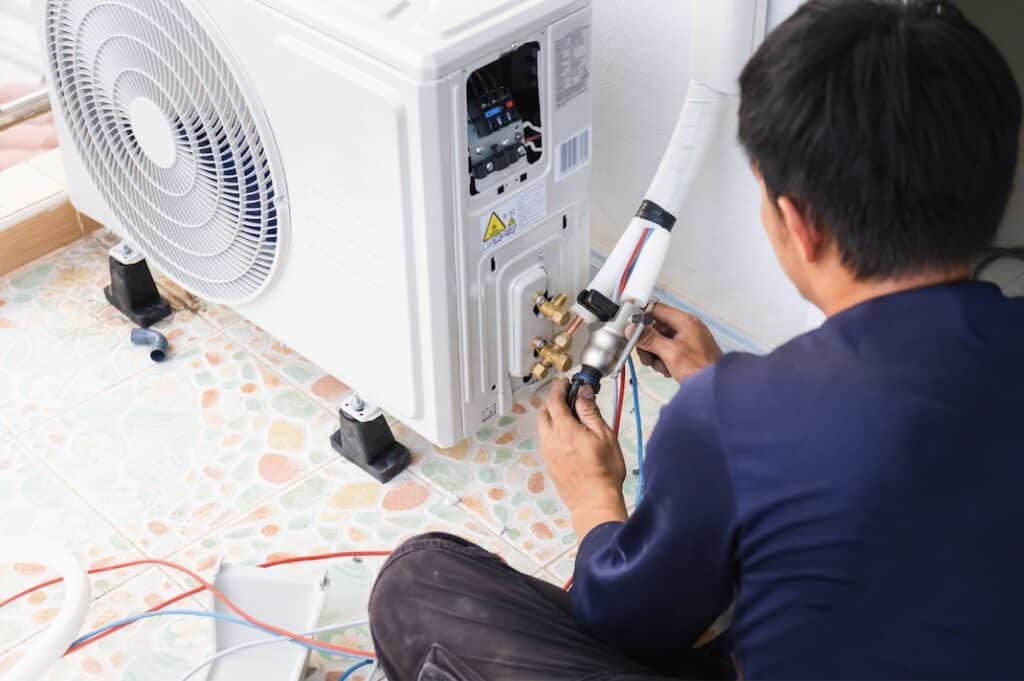
Why Energy Efficiency Matters in Middle East Cooling Projects
In many Middle East cooling projects, energy efficiency is no longer just a technical specification — it directly affects electricity costs, long-term operating pressure, and overall indoor comfort during extreme summer conditions.
In the Middle East and Iran, air conditioning systems often operate for 10–15 hours per day, and in some hotels, shopping centers, and office buildings, cooling systems may run almost continuously throughout the summer season. Under these conditions, electricity consumption becomes one of the largest operational expenses for property owners and facility managers.
In many commercial buildings located in hot climate regions, air conditioning systems may account for approximately 50–70% of total summer electricity consumption, especially in projects with high occupancy rates or buildings exposed to direct sunlight.
For example, in a medium-sized hotel with more than 100 guest rooms, even a moderate improvement in system efficiency can create a significant difference in long-term electricity expenses. If a traditional fixed-speed system consumes only 1–2 kWh more electricity per room each day during summer, the additional power consumption across the entire building can become substantial after several months of continuous operation.
This is why more developers are turning to “energy saving T3 AC” systems equipped with inverter air conditioner technology.
| Item | Traditional Fixed-Speed AC | Energy Saving T3 AC |
|---|---|---|
| Daily Operating Hours | 10–15+ hours | 10–15+ hours |
| Compressor Operation | Frequent full-speed restart | Variable-speed adjustment |
| Electricity Consumption | Higher during peak load | Lower under partial load conditions |
| High Ambient Performance | Capacity reduction above 45°C | More stable operation up to 50°C |
| Long-Term Operating Cost | Higher electricity and maintenance pressure | Lower lifecycle operating pressure |
Unlike conventional fixed-speed systems, inverter-based T3 air conditioners can automatically adjust compressor speed according to actual cooling demand, helping reduce unnecessary energy consumption during long operating hours.
Industry estimates commonly cited by HVAC engineers suggest inverter-based systems can reduce electricity consumption by roughly 20–30% compared with fixed-speed units, though actual savings vary significantly based on building insulation, occupancy patterns, and local climate conditions, depending on building usage patterns, outdoor climate conditions, and operating hours.
For hotels, shopping centers, office buildings, and serviced apartments operating under high ambient temperatures, this difference can directly affect annual electricity expenses, maintenance pressure, and overall lifecycle cost over time.
Some users of AirProz T3 air conditioning systems have also mentioned that stable temperature control, quieter inverter operation, and lower electricity bills during long summer periods are among the most noticeable differences compared with conventional fixed-speed systems.
As one project user described:
“The cooling feels more stable throughout the day, especially during afternoon peak temperatures, and the electricity bill became much easier to manage during summer.”
For many developers and property owners, this practical balance between stable cooling, lower energy consumption, and reduced long-term operating cost is becoming more important than peak cooling capacity alone.
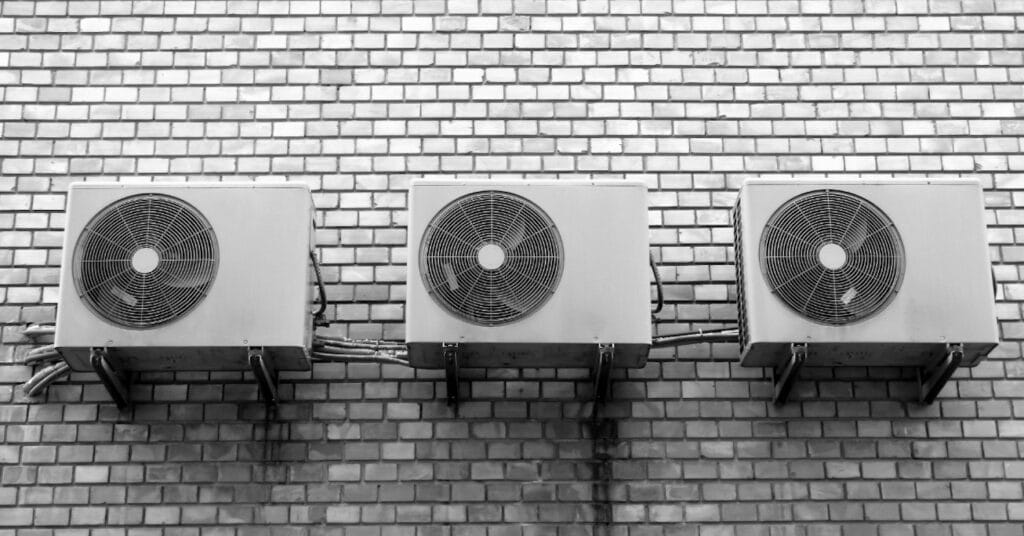
Future Trends of T3 Air Conditioning in the Middle East
As energy costs continue to rise and sustainability requirements become stricter, the future of T3 Air Conditioner for Middle East projects is no longer focused only on basic cooling performance. Developers, property owners, and facility managers are now looking for systems that can support long-term energy management, smarter operation, lower lifecycle cost, and more stable long-term operation.
In many T3 air conditioner Iran projects, this means the next generation of cooling systems must combine stable high ambient cooling performance with better efficiency, intelligent control, and stronger operational reliability under extreme summer conditions.
Solar Powered AC Systems
One of the fastest-growing trends in hot climate regions is the integration of solar powered AC systems into residential and commercial buildings.
In areas with strong solar radiation and long summer seasons, solar-supported cooling systems can help reduce daytime electricity consumption during peak summer operation while lowering pressure on local power grids.
When combined with inverter-based T3 air conditioning systems, this approach becomes increasingly attractive for villas, hotels, office buildings, and large commercial projects seeking lower operating costs and more stable long-term energy performance.
For many developers, this is becoming a more practical “Middle East air conditioning solution” because it supports lower electricity expenses while improving overall system efficiency during long operating hours.
Compared with conventional systems, solar-assisted cooling solutions are increasingly viewed as a smarter choice for projects requiring both reliability and long-term cost control.
For UAE buyers comparing heat pump and solar water heating options for residential or commercial projects, see our detailed comparison: heat pump vs solar water heater in UAE.
Smart Control and IoT Monitoring
Another important trend is the growing use of smart control systems and IoT monitoring technology in modern T3 air conditioners.
Through mobile applications, centralized control platforms, and cloud-based monitoring tools, property owners and facility managers can remotely monitor system performance, adjust temperature settings, and identify operational issues more efficiently.
This is especially valuable for large buildings and commercial HVAC projects, where long operating hours make maintenance efficiency increasingly important.
Instead of waiting for a failure to happen, facility managers can use real-time operating data to improve fault diagnosis, reduce downtime, and support preventive maintenance strategies — especially in large buildings operating continuously during summer.
Over time, this helps create a more stable, energy-efficient, and reliable cooling environment for both operators and building occupants.
Energy Management and Inverter Systems
As electricity consumption becomes a larger operational concern, more developers are shifting from individual equipment selection to broader energy management strategies.
Modern inverter systems can automatically adjust compressor output according to actual cooling demand, helping reduce unnecessary energy consumption under partial-load conditions.
For long-hour applications across hot climate regions, inverter-based “energy-saving T3 AC” systems offer a clear operational advantage over traditional fixed-speed systems.
Under real operating conditions, these systems may help reduce electricity consumption by approximately 20–30%, depending on building type, occupancy level, operating hours, and outdoor climate conditions.
For many Middle East projects, energy efficiency is now viewed not simply as a product feature, but as a long-term operational investment directly connected to electricity cost, maintenance pressure, and overall lifecycle cost.
Eco-Friendly Refrigerants
Environmental regulations and sustainability goals are also accelerating the adoption of eco-friendly refrigerants in the Middle East air conditioning market.
Compared with older refrigerants, newer low-GWP refrigerants are increasingly being used in modern T3 systems to support lower environmental impact and better long-term regulatory compliance.
This trend is becoming even more important as governments and developers place greater emphasis on carbon reduction, energy efficiency, and sustainable building standards.
For many projects, choosing environmentally friendly cooling technologies is no longer only about environmental responsibility — it is also about staying aligned with future market expectations and regulatory requirements.
This is especially true as low-GWP refrigerants such as R32 continue gaining popularity in modern cooling systems across the Middle East and Iran projects.
For more information on global refrigerant phase-down schedules, see the UN Environment Programme’s Kigali Amendment overview.
FAQ – T3 Air Conditioner for Middle East Projects
1. What is a T3 Air Conditioner for Middle East projects?
This type of system is specifically designed for high-ambient-temperature environments where outdoor temperatures can reach 45°C–50°C during summer for high ambient temperature environments where outdoor temperatures can reach 45°C–50°C during summer.
Compared with standard air conditioners designed for mild climates, T3 systems are built to maintain more stable cooling performance, better operational reliability, and improved long-term efficiency during continuous operation in extreme heat.
2. Why are T3 air conditioners important in Iran projects?
In many T3 air conditioner Iran projects, cooling systems are required to operate continuously for long hours during extremely hot summer conditions.
Under these environments, conventional systems may experience cooling capacity reduction, unstable operation, and higher electricity consumption. T3 air conditioners are designed to handle these demanding conditions more effectively, making them increasingly preferred for residential and commercial applications across Iran.
3. How much electricity can an energy-saving T3 AC system save?
Under real operating conditions, inverter-based “energy-saving T3 AC” systems may help reduce electricity consumption by approximately 20–30% compared with conventional fixed-speed systems.
Actual savings depend on building type, operating hours, insulation conditions, occupancy level, and outdoor climate conditions. In long-hour applications such as hotels, apartments, and office buildings, the difference in electricity consumption can become especially noticeable over time.
4. Is a T3 system suitable as an air conditioner for hot climate regions?
Yes. These systems are purpose-built for sustained high-temperature operation where cooling systems must operate under prolonged high-temperature conditions.
In many Middle East and Iran projects, outdoor temperatures during summer regularly exceed 45°C, making high ambient performance and stable long-term operation extremely important.
5. What is the difference between T1 and T3 air conditioners?
The main difference lies in operating conditions and high-temperature performance.
| Type | Typical Climate | Performance Under Extreme Heat |
|---|---|---|
| T1 Air Conditioner | Mild and temperate climates | Cooling performance may decrease above 40°C |
| T3 Air Conditioner | High ambient and desert climates | Designed for stable operation up to 50°C |
Because of this, T3 systems are becoming a more reliable Middle East air conditioning solution for long summer operation in hot climate regions.
6. Are inverter T3 air conditioners better for commercial HVAC projects?
For many commercial HVAC projects, inverter-based T3 air conditioners offer better long-term operating efficiency compared with traditional fixed-speed systems.
Since commercial buildings often require cooling systems to operate continuously for extended periods, inverter technology helps reduce unnecessary power consumption while maintaining more stable indoor comfort during varying load conditions.
7. What refrigerants are commonly used in modern T3 air conditioners?
Many modern T3 air conditioning systems now use lower-GWP refrigerants such as R32 to support improved energy efficiency and lower environmental impact.
As environmental regulations continue becoming stricter, eco-friendly refrigerants are expected to play a larger role in future Middle East and Iran cooling projects.
Looking for a Reliable T3 Air Conditioner for Middle East Projects?
At AirProz, we provide high-performance T3 air conditioning systems designed for high ambient temperature environments across the Middle East and Iran. Whether your project involves villas, apartments, hotels, office buildings, or large commercial HVAC projects, AirProz can help deliver more stable cooling performance, lower operating costs, and long-term reliability in extreme summer conditions.
Our T3 Air Conditioning Solutions Include:
- Designed for operation up to 50°C.
- Inverter-based energy-saving T3 AC systems.
- Suitable for residential and commercial applications.
- Smart control and IoT monitoring support.
- Eco-friendly refrigerant options available.
- OEM & ODM support for overseas partners.
If you are planning a new cooling project or looking for a more reliable Middle East air conditioning solution, contact the AirProz team today for product recommendations and project support.
Contact AirProz Today
Get Customized T3 Cooling Solutions for Your Project