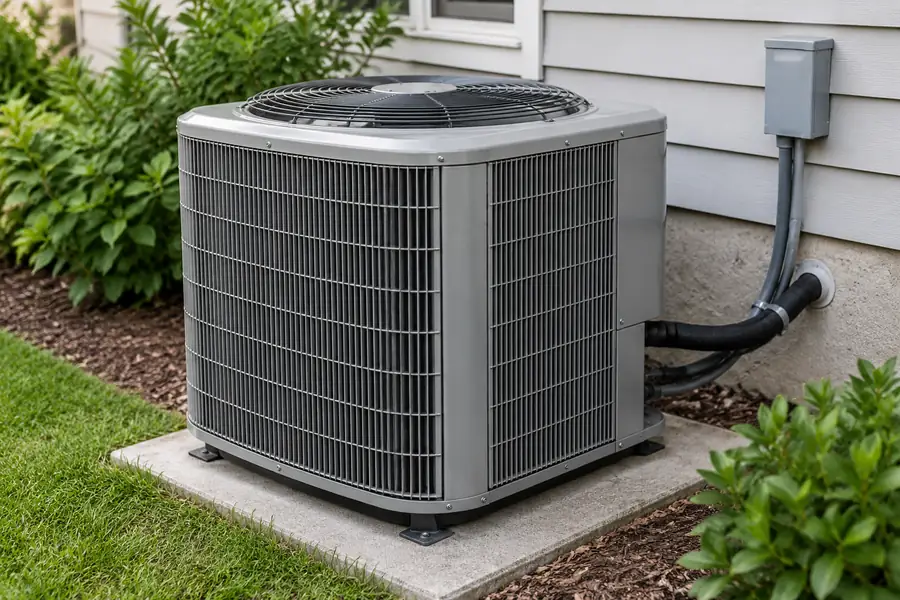
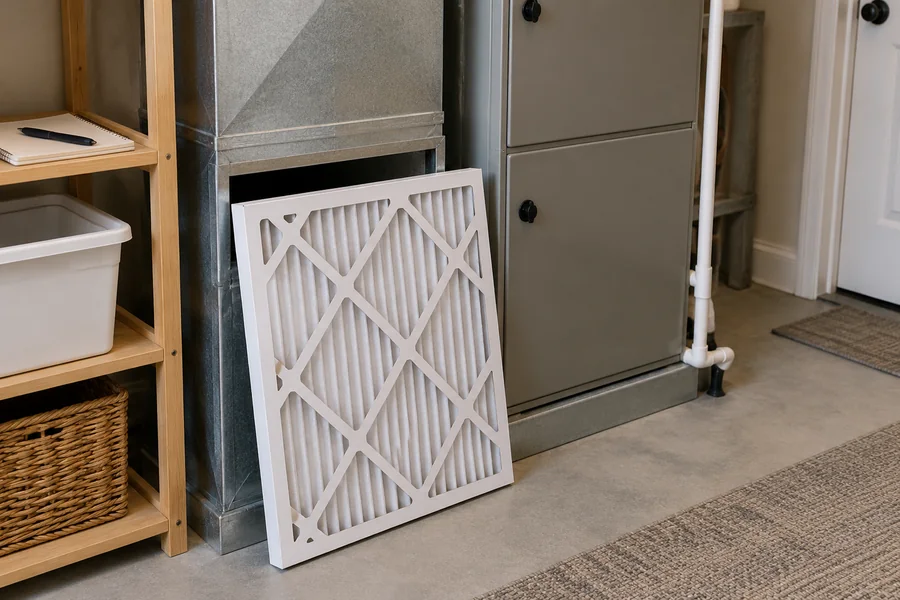
In Vietnam, air conditioners — called máy lạnh in the south and điều hòa in Hanoi — are essential year-round. But the market is changing: electricity costs climb, buyers are more spec-conscious, and distributors who understand the full picture — not just retail price — build lasting supply relationships. This guide covers what an air conditioner Vietnam buyer needs to know: realistic price bands across types and capacities, the real monthly electricity cost of running a unit, energy labelling requirements, and the sourcing decisions that matter when bringing units into the country.
Key Takeaways
- Retail AC prices in Vietnam range from 5–45 million VND depending on type and capacity, with inverter units costing 15–25% more
- Running a 9,000 BTU AC for 8 hours daily costs approximately 170,000–215,000 VND per month at 2025–2026 EVN tiered rates
- Inverter AC reduces monthly electricity consumption by 30–50% vs non-inverter — with a typical payback period of 18–30 months for residential users
- Importers must confirm TCVN 7830 energy label compliance and Vietnamese-language documentation before commercialising units
How Much Does an Air Conditioner Cost in Vietnam? (Máy lạnh giá bao nhiêu tại Việt Nam?)
Vietnam’s air conditioner price in Vietnam range varies significantly depending on whether you’re comparing retail consumer pricing or wholesale/OEM import pricing. The tables below break down retail market ranges by type and capacity.
Split AC vs Window AC — Price by Type (Máy lạnh treo tường vs máy lạnh cửa sổ)
Wall-mounted split units dominate the residential market. Window units remain common in older buildings and budget installations. Ceiling cassettes are standard for commercial spaces.
| Type | Tiếng Việt | Capacity | Retail Price Range |
|---|---|---|---|
| Wall-mounted split AC | Máy lạnh treo tường | 9,000–24,000 BTU | 7–25 triệu VND (~$270–$970 USD) |
| Ceiling cassette AC | Máy lạnh âm trần | 18,000–36,000 BTU | 15–45 triệu VND (~$580–$1,740 USD) |
| Window AC | Máy lạnh cửa sổ | 9,000–18,000 BTU | 5–12 triệu VND (~$190–$465 USD) |
| Inverter split AC | Máy lạnh inverter | 9,000–24,000 BTU | +15–25% vs non-inverter |
Price by Capacity: 9,000 BTU to 24,000 BTU (Công suất máy lạnh)
The 12,000 BTU (1 HP) unit is the most common in Vietnamese apartments, typically cooling a 15–25 m² bedroom. For larger spaces, 18,000–24,000 BTU units become necessary, especially in open-plan layouts common in newer HCMC developments.
BTU sizing rule of thumb: Approximately 600 BTU per m² at standard ceiling height — commercial spaces with higher ceilings or extensive glazing may require 20–30% more.
Retail Pricing vs OEM / Wholesale Pricing
Retail prices above are what end consumers see at stores like Điện Máy Xanh. For importers and dealers, FOB pricing from manufacturers tells a different story. Brands such as Daikin, Panasonic, and LG dominate retail shelves, but buyers sourcing directly from manufacturers can access significantly different price points — particularly through OEM partners offering private labelling, custom packaging, and Vietnamese-language documentation.
In 2026, the Vietnamese AC market offers retail prices ranging from 5 million VND for basic window units to 45 million VND for commercial ceiling cassettes. Importers sourcing directly from OEM manufacturers can access FOB pricing that is structurally lower than retail — with the additional advantage of custom branding and Vietnamese-language compliance documentation. The gap between what the consumer pays and what the importer pays is the dealer’s margin to manage.
How Much Does Air Conditioner Installation Cost in Vietnam? (Chi phí lắp đặt máy lạnh)
Installation costs add a meaningful layer to the total cost of an AC unit in Vietnam, and they vary by city and complexity.
Standard Installation Fee by City
Typical installation fees range from 500,000 to 1,500,000 VND per unit. HCMC and Hanoi command the higher end due to denser urban conditions. Da Nang and provincial areas tend to be lower.
Hidden Costs: Copper Pipe, Drainage & Electrical Work
Most quoted fees cover a standard scope. Extra charges apply when copper pipe exceeds the default 3–5 metres, drainage requires pumping, or the building’s electrical system needs an upgrade. For project buyers (hotels, apartment blocks, serviced residences), bulk installation negotiation is common — contractors often discount per-unit pricing when installing 20+ units.
How Much Does It Cost to Run an AC in Vietnam? (Chi phí vận hành máy lạnh tại Việt Nam)
For Vietnamese households, the electricity cost Vietnam air conditioner question matters most after purchase price. Running an AC is the single largest contributor to monthly tiền điện during hot season — April through September.
Vietnam Electricity Rates 2025–2026 (Biểu giá điện EVN)
Vietnam Electricity (EVN) applies a progressive tiered pricing structure under Decision No. 1279/QD-BCT (May 2025). The more electricity a household uses, the higher the per-kWh rate on each additional block.
| Tier | Monthly Consumption | Rate (VND/kWh) |
|---|---|---|
| Tier 1 | 0–50 kWh | 1,984 |
| Tier 2 | 51–100 kWh | 2,052 |
| Tier 3 | 101–200 kWh | 2,378 |
| Tier 4 | 201–300 kWh | 2,976 |
| Tier 5 | 301–400 kWh | 3,275 |
| Tier 6 | 401+ kWh | 3,460 |
Official Source
Source: EVN Retail Electricity Tariff — Decision No. 1279/QD-BCT (May 2025). Vietnam’s official progressive electricity pricing, issued by the Ministry of Industry and Trade.
Most households running an air conditioner Vietnam unit daily during the hot season will fall into the 201–400 kWh bracket, where rates climb significantly. This is where the efficiency of the unit directly impacts the monthly bill.
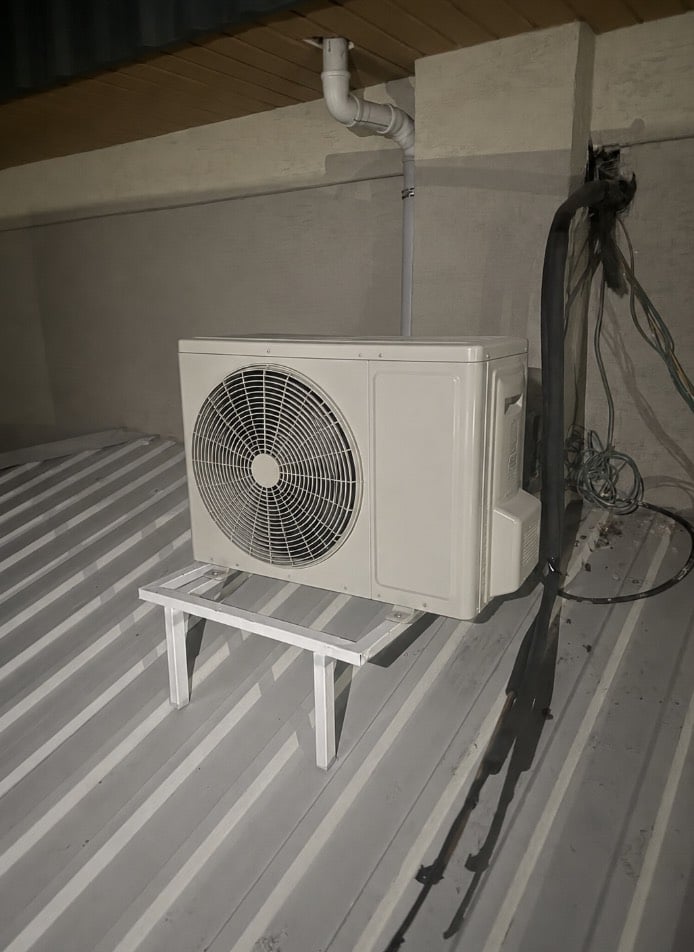
Monthly Electricity Bill Estimate by Room Size
The table below models realistic monthly consumption based on room size, AC capacity, and daily usage hours.
| Room Size | AC Capacity | Daily Use | Est. Monthly kWh | Est. Monthly Cost (VND) |
|---|---|---|---|---|
| 15 m² bedroom | 9,000 BTU (1HP) | 8 hrs | ~72 kWh | ~170,000–215,000 VND |
| 25 m² living room | 12,000 BTU (1.5HP) | 10 hrs | ~120 kWh | ~285,000–360,000 VND |
| 40 m² open plan | 18,000 BTU (2HP) | 12 hrs | ~180 kWh | ~430,000–535,000 VND |
These estimates assume a standard inverter unit at moderate thermostat settings (~25–26°C). A non-inverter unit at the same usage would consume 30–50% more electricity — pushing a bedroom unit’s cost well above 300,000 VND per month.
Inverter vs Non-Inverter: Real Savings Breakdown in Vietnam (Máy lạnh inverter vs thường)
Inverter technology adjusts the compressor speed to match cooling load rather than cycling on and off. The result is stable temperatures, quieter operation, and lower power consumption.
Payback period: The premium for an inverter split AC in Vietnam is typically 15–25% over a comparable non-inverter unit. For a household running the unit 8–10 hours daily, that premium pays back in 18–30 months through lower electricity bills. After the payback point, every month is pure saving.
For project buyers — hotels, serviced apartments, office buildings — the case for inverter is even stronger. Near-continuous operation shortens the payback period significantly. For a deeper breakdown of trade-offs across buyer types, see our air conditioner pros and cons for B2B buyers.

Choosing the Right Air Conditioner for Vietnam’s Climate (Chọn máy lạnh phù hợp với khí hậu Việt Nam)
Vietnam’s tropical monsoon climate means high temperatures and humidity year-round in the south, with a distinct hot season in the north. Choosing the right unit involves matching BTU capacity to space, verifying energy label compliance, and understanding temperature rating standards.
BTU Sizing Guide for Vietnamese Apartments & Commercial Spaces
| Room Size (m²) | Recommended BTU | Typical Application |
|---|---|---|
| 10–15 m² | 9,000 BTU | Bedroom |
| 15–25 m² | 12,000 BTU | Master bedroom / small living room |
| 25–35 m² | 18,000 BTU | Living room / small office |
| 35–50 m² | 24,000 BTU | Open-plan living / large office |
| 50+ m² | 28,000+ BTU | Commercial / multi-room |
For commercial spaces — restaurants, retail shops, hotel lobbies — a general guideline is 600–800 BTU per m², accounting for higher occupancy and heat from equipment.
Energy Labels & Efficiency Ratings in Vietnam (Nhãn năng lượng)
Vietnam operates a mandatory energy labelling system under TCVN 7830:2021 for residential air conditioners. Every unit sold must display a 1–5 star energy rating on the product and packaging. Importers must submit the unit for energy performance testing at a VNEEP-recognised lab, register the label with the Ministry of Industry and Trade (MOIT), and ensure the nameplate and manual are in Vietnamese.
Compliance Reference
For full declaration requirements, see: Vietnam AC Energy Labeling & TCVN 7830 Requirements. Covers lab testing, MOIT registration, and nameplate obligations for importers.
Importers who skip this step face customs delays. A manufacturer that provides energy label documentation as part of the standard package saves significant time and cost at import.
When to Choose Standard T1 Inverter AC vs High-Ambient Models
Standard T1-rated ACs are designed for ambient temperatures up to 43°C. This covers the vast majority of Vietnam’s conditions — the hottest days in Hanoi or HCMC rarely exceed 40°C.
High-ambient T3 models, rated up to 52°C, are engineered for Middle Eastern climates. However, they offer additional stability for specific applications in Vietnam: poorly ventilated industrial workshops, warehouse spaces with metal roofing, and rooftop installations where direct sun pushes temperatures higher. For a detailed comparison, read our guide on T3 air conditioner for high-ambient climates.
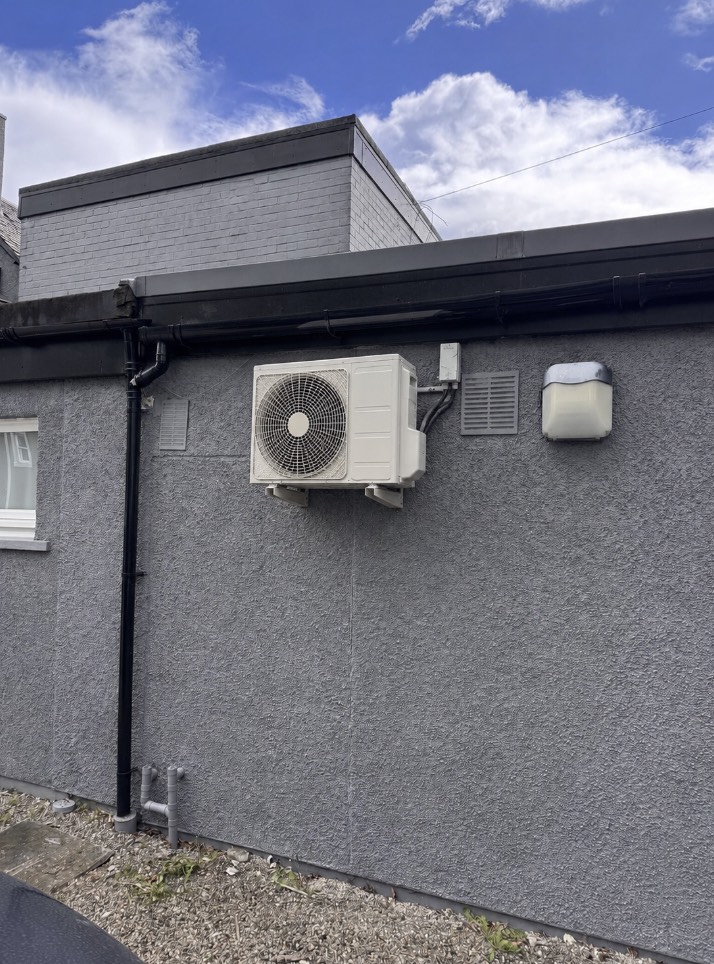
For 95% of Vietnamese applications, a standard T1 inverter AC is the correct choice — energy savings from inverter technology add more value than a higher ambient rating alone.
What the Air Conditioner Vietnam Market Means for Importers, Dealers & Project Buyers
This section is written for the sourcing professional — the dealer deciding which product range to carry, the importer evaluating a new manufacturer, and the project buyer specifying units for a multi-building development.
Why Running Cost & Energy Rating Matter for Your Customers
End-users in Vietnam are increasingly cost-conscious about tiền điện (electricity bills). A customer who sees their neighbour paying 170,000 VND per month while they pay 300,000 VND for the same cooling will switch brands — and tell their friends.
Dealers who stock energy-efficient, inverter-rated units retain customers better and generate fewer complaints. For project buyers, energy label compliance is increasingly referenced in building permit requirements across multiple provinces.
The inverter air conditioner Vietnam market is growing because the lifetime economics favour it. Dealers who educate customers on total cost of ownership rather than just purchase price earn more trust and repeat business.
Key Specs to Confirm Before Importing AC Units into Vietnam (Thông số kỹ thuật cần kiểm tra)
Before placing a bulk order, verify the following with your manufacturer:
- Refrigerant type:R410A is the current market standard. R32 is gaining share — check import regulations before switching
- Voltage:220V/50Hz for residential. Confirm before ordering
- Energy label compliance:TCVN 7830 declaration. Confirm the manufacturer provides test data recognised by MOIT
- Nameplate & manual:Must be in Vietnamese for retail distribution
- MOQ and lead time:Bulk order minimums and production timelines
- Warranty terms:Who services the unit in-market?
- Spare parts:Confirm common components are stocked for your model
For detailed specs, see the Airproz R410A T1 inverter air conditioner. For a broader framework, read our air conditioner pros and cons for B2B buyers.
Apartment, Hotel & Rental Project Buyers: What to Prioritise
- Model consistency:Same model across all units simplifies maintenance, spare parts, and installer training
- After-sales:Confirm how warranty claims are handled in-market. Does the manufacturer provide replacement units, or must you service them?
- Installation docs:A manufacturer providing technical drawings and on-site training adds real value for project-scale deployments
- Noise:For serviced apartments targeting expat tenants, low noise (indoor ≤ 22 dB) commands higher rent
How Airproz Supports OEM, Wholesale & Project-Based AC Supply
For importers and dealers looking for a reliable air conditioner supplier Vietnam buyers trust, Airproz manufactures R410A T1 inverter AC units built for markets like Vietnam — where consistent quality, R32/R410A compliance, and documentation that satisfies local regulations are non-negotiable. We offer OEM/ODM support including custom branding, packaging in Vietnamese-language print, and nameplate configuration. Wholesale and project pricing is available for qualified importers and dealerships. Our team can support energy label registration and compliance documentation to streamline your import process.
Ready to Source AC Units for Vietnam?
Browse Airproz’s full range of R410A T1 inverter air conditioners — or contact us for wholesale & OEM pricing.Browse AC Units Request a Quotation

Frequently Asked Questions (Câu hỏi thường gặp)
How much does an air conditioner cost in Vietnam in 2026?
Máy lạnh bao nhiêu tiền? / Giá máy lạnh tại Việt Nam 2026
A wall-mounted split AC in Vietnam ranges from 7 to 25 million VND depending on capacity. Window units start at 5–12 million VND. Inverter units cost 15–25% more than non-inverter but offer significant electricity savings. For importers, FOB pricing from OEM manufacturers is structurally lower than retail — the difference represents the dealer’s gross margin opportunity.
How much electricity does an AC use per month in Vietnam?
Máy lạnh tốn bao nhiêu điện một tháng?
A 9,000 BTU inverter AC used 8 hours daily consumes roughly 72 kWh per month, costing approximately 170,000–215,000 VND at current EVN rates. A 12,000 BTU unit used 10 hours daily costs 285,000–360,000 VND. Non-inverter units consume 30–50% more — a difference that compounds to millions of VND over the unit’s lifespan.
Is inverter AC worth the extra cost in Vietnam?
Máy lạnh inverter có đáng mua không?
Yes, for most buyers. The 15–25% premium for an inverter AC pays back in 18–30 months through lower electricity bills for a household running the unit 8–10 hours daily. For project buyers, the payback period is shorter due to near-continuous operation, and lifetime energy savings are substantial.
What refrigerant is standard for AC units sold in Vietnam?
R410A is the current market standard for AC units sold in Vietnam. R32 (lower GWP at 675) is gaining share globally and entering the Vietnamese market, but importers should verify the current regulatory classification with MOIT before placing orders.
Is a heat pump better than AC for Vietnam’s climate?
For cooling-only needs in Vietnam’s tropical climate, a standard AC remains the primary and most cost-effective choice. Heat pumps offer advantages where both heating and hot water are needed — a narrower Vietnamese market segment. For a detailed comparison, see our guide on air conditioners vs. heat pumps.
What is the MOQ for Airproz air conditioners?
Số lượng đặt hàng tối thiểu là bao nhiêu?
The minimum order quantity (MOQ) for Airproz air conditioners is 20 units per model. This applies to both standard wholesale orders and OEM/custom orders. For buyers evaluating a new air conditioner supplier, we recommend arranging a sample unit before committing to a bulk order — contact us to confirm sample availability and pricing.
Can I order a sample before placing a bulk order?
Tôi có thể đặt hàng mẫu trước khi đặt số lượng lớn không?
Yes. Airproz accepts sample orders for qualified buyers prior to wholesale or bulk order commitment. Sample lead time is shorter than standard production lead time. Contact our team for a sample quotation and to confirm availability of your target model.
What is the production lead time?
Thời gian sản xuất là bao lâu?
Standard production lead time is 30 days from order confirmation and deposit receipt. This applies to both standard wholesale orders and OEM/custom configurations. Lead time may extend during peak season — we recommend confirming your timeline early when planning project-based procurement.
Does Airproz offer custom / OEM air conditioners?
Airproz có sản xuất máy lạnh theo yêu cầu không?
Yes. Airproz offers full OEM and ODM support for air conditioner orders. Customisation options include:
- Brand & logo: Custom nameplate, indoor/outdoor unit branding
- Packaging: Box design, Vietnamese-language print, retail or project packaging
- Documentation: User manual in Vietnamese or any required language
- Colour & appearance: Panel colour and finish options available on request
OEM orders are subject to MOQ of 20 units per configuration. Contact us for a custom quotation.
Can I get a wholesale or factory-direct price quotation?
Tôi có thể nhận báo giá sỉ / nhà máy không?
Yes. As a manufacturer, Airproz provides factory-direct pricing for wholesale buyers, importers, and project-based procurement. Pricing is based on model, quantity, and configuration. To receive a quotation, contact our sales team with your target model, estimated order volume, and destination market.
Is Airproz a manufacturer or a trading company?
Airproz là nhà máy sản xuất hay công ty thương mại?
Airproz is a manufacturer with its own production facility. Buyers sourcing factory-direct — rather than through a trading company — benefit from lower base pricing, direct quality control access, faster issue resolution, and the ability to request OEM/custom configurations. For importers and dealers evaluating suppliers, this distinction matters for both margin and supply reliability.
Further Reading / B2B Sourcing (Tài liệu tham khảo)
📘 Heat Pump Manufacturer B2B Buying Guide — A comprehensive framework for evaluating HVAC manufacturers for long-term supply partnerships.🛒 Browse Airproz Air Conditioner Product Range
Contact Airproz for Wholesale & OEM Pricing →
For OEM, wholesale, and project-based AC supply for the Vietnam market, visit Airproz.com.