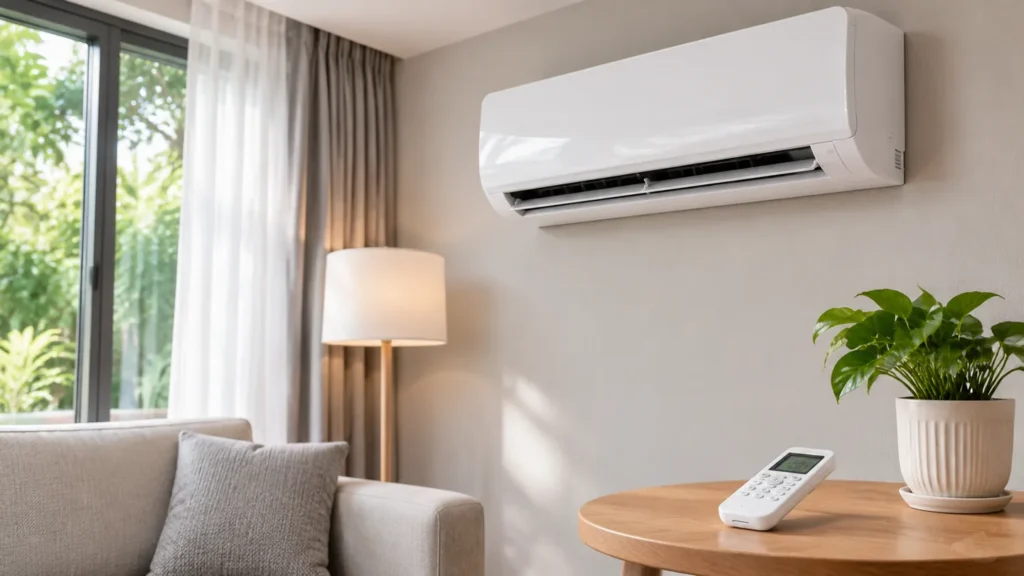
If your heat pump is not heating, first check that it is set to HEAT, the requested temperature is above the room temperature, the fan is on AUTO, and the indoor filter and accessible airflow paths are clear. A short pause while the outdoor unit defrosts can be normal. A system that keeps blowing cold air, cannot raise the room temperature, repeatedly trips a breaker, or stays covered in thick ice needs a different response.
This guide separates safe checks you can make without opening equipment from tests for a qualified HVAC technician. It mainly covers air-source heat pumps used for space heating, including ducted and mini-split systems. A later section explains what changes for air-to-water heat pumps.
Safety first: If you notice smoke, a burning electrical smell, sparking, a repeated breaker trip, exposed wires, or water near electrical parts, stop using the affected system when you can do so safely and arrange prompt qualified service. Do not open electrical covers, handle refrigerant lines, or bypass protection devices.
What Should You Check First When a Heat Pump Is Not Heating?
Start with the thermostat, the room temperature, accessible filters, and visible airflow—not the compressor or refrigerant pipes. These checks can uncover a simple setting or blockage without exposing you to electrical or refrigerant hazards.
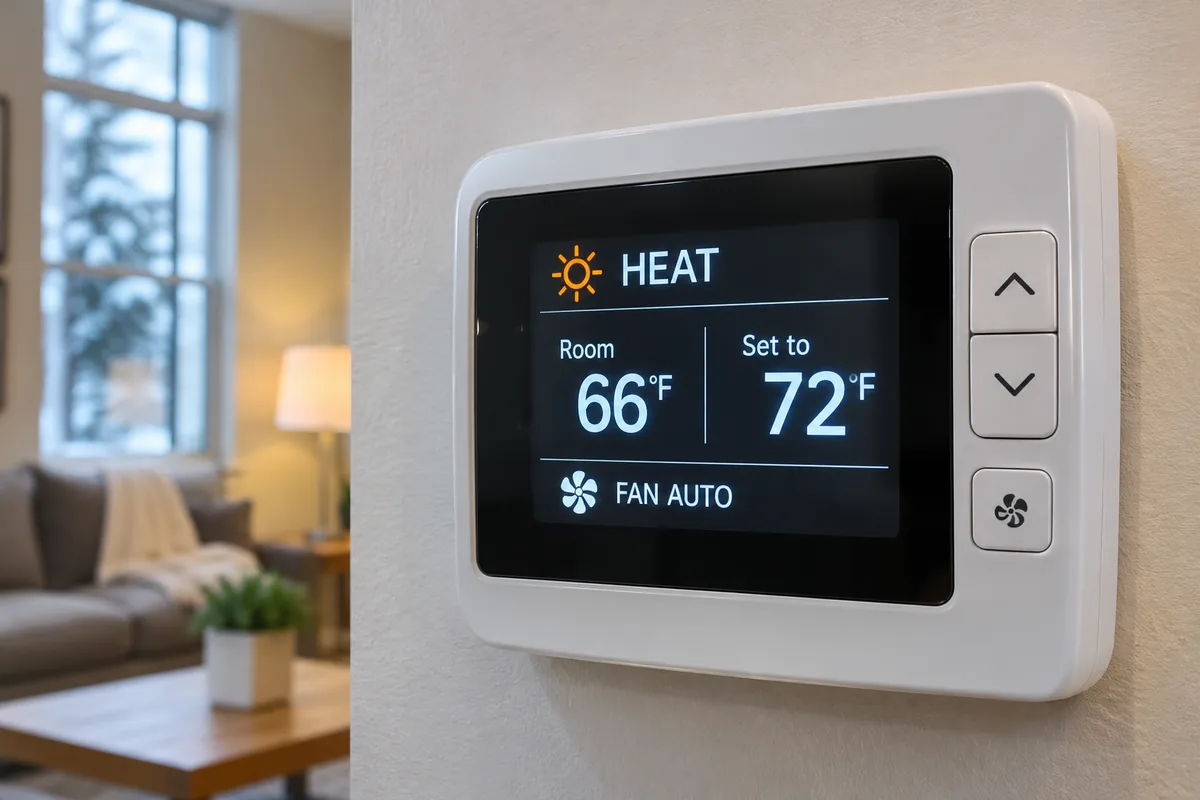
- Set HEAT and confirm the request. Check the displayed room temperature and choose a comfortable heating setpoint above it. On a heat-pump mini-split, use HEAT rather than DRY or FAN; do not assume an AUTO mode will choose heating correctly during changing weather.
- Set the indoor fan to AUTO if the control allows it. A fan set permanently to ON may move unheated air between heating calls, making the vents feel cold even when the heating system operates normally at other times.
- Review the schedule and error display. A nighttime setback, holiday program, wireless remote or zone controller may override your change. Write down any displayed fault code before making an allowed user setting change.
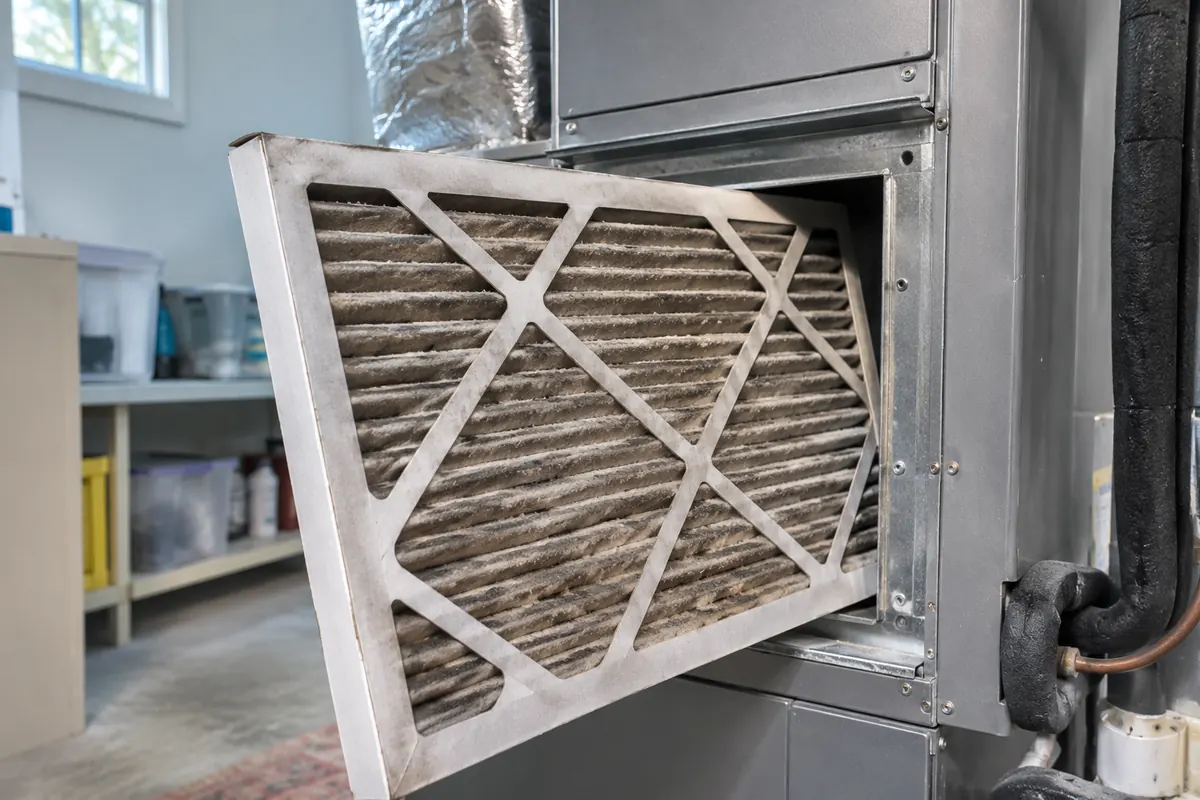
- Check only user-serviceable filters and unobstructed vents. Follow your model’s instructions for replacing a disposable filter or washing a reusable one. Make sure returns and supply grilles are not blocked by furniture. Do not open a sealed or electrical access panel.
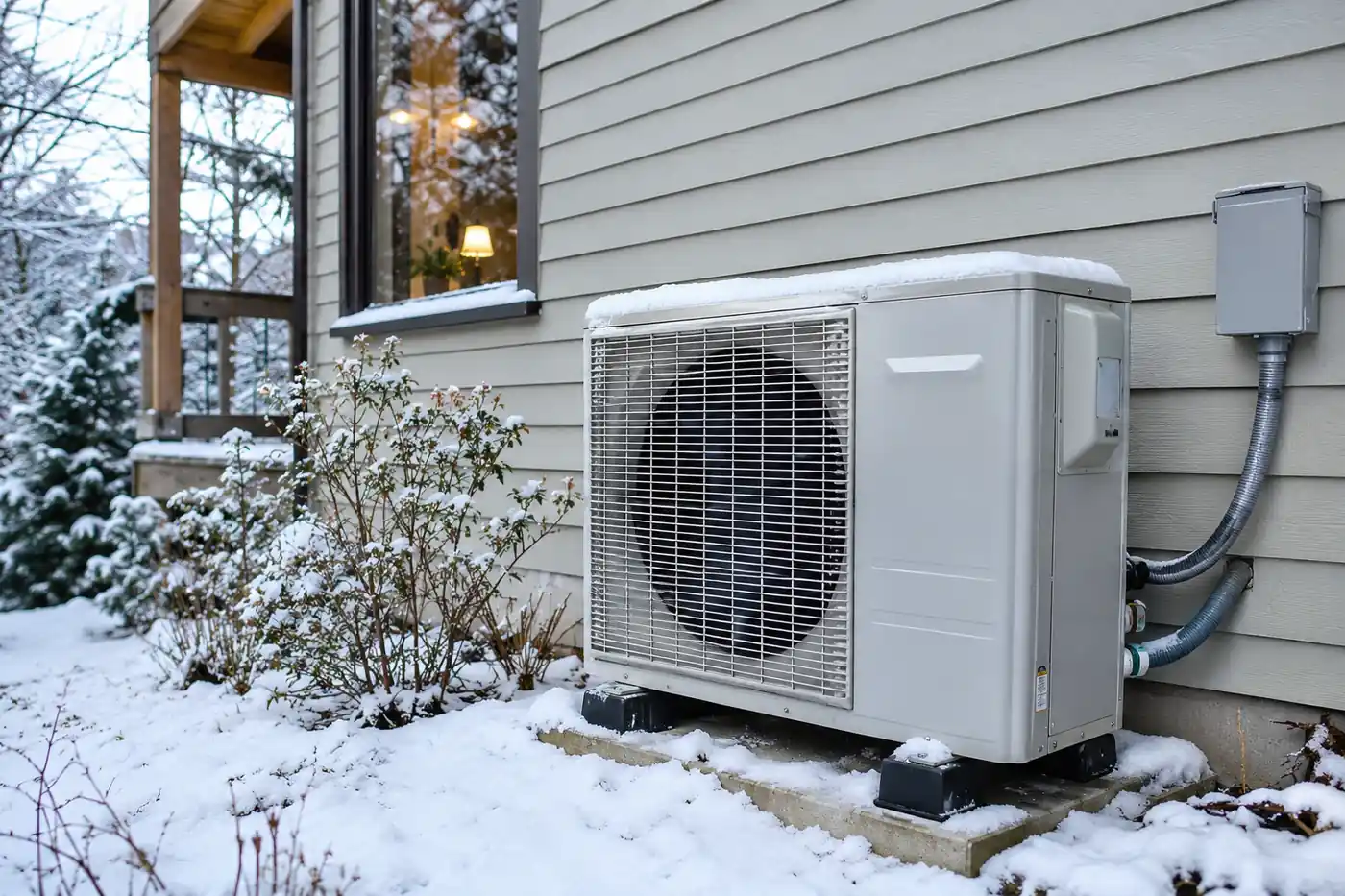
- Look at the outdoor unit from a safe place. Remove loose leaves or light snow only where the manual permits and you can reach without touching moving parts, electrical components or ice. Keep the specified intake and discharge clear. Do not chip ice from the coil.
- Observe whether heating resumes. Give the controller time to complete any normal startup delay or defrost event specified in its manual. Compare the room temperature over an appropriate period rather than deciding from one cool burst at a vent.
If the thermostat is blank or the unit has no power, check only the normal user controls. You may observe a breaker or disconnect position without removing covers. Never keep resetting a breaker that has tripped, and do not try to force a restart after a long outage without checking your exact equipment instructions. Some models require a specific warm-up or restart sequence.
For a heat pump with a conventional thermostat, our heat pump thermostat wiring and settings guide explains what the controls are meant to do. It is not an invitation to move conductors during homeowner troubleshooting.
Which Symptoms Point to the Most Likely Cause?
The useful first clue is what still works: nothing starts, the fan runs without heat, cooling works but heating fails, or the trouble appears mainly in freezing weather. One symptom can have several causes, so use the table to choose the next check—not to diagnose a failed part.
| What you notice | Possible explanation | Safe next action | When service is needed |
|---|---|---|---|
| Thermostat calls for HEAT, but nothing runs | Power, schedule, startup delay, safety lockout or controls | Confirm display, selected mode, any error code and model restart guidance | Repeated trips, active fault, or no response after approved checks |
| Indoor fan runs but air feels cool | Fan ON between calls, defrost, blocked airflow or no compressor heating | Set fan AUTO, check filter, record whether room temperature rises | Continuous cold delivery or falling indoor temperature |
| Cooling works, but heating does not | Mode programming, reversing-valve command or heating-specific control fault | Confirm HEAT on the correct controller and note any recent thermostat change | Heating still fails with settings correct |
| Light frost appears outside and later clears | Normal cold-weather defrost | Observe from a safe distance and allow the automatic cycle to finish | Frost never clears, thick ice grows, or heat does not recover |
| AUX appears during a cold spell | Backup heat is supplementing the heat pump | Check indoor temperature, large setpoint changes and outdoor weather | AUX stays on unusually long, with high costs or poor comfort |
| Unit starts and stops repeatedly only in HEAT | Controls, airflow, load/size mismatch, sensor or fault shutdown | Record actual start/stop times, settings, weather and error codes | Repeated short compressor runs or new protective faults |
Record three facts before calling for service: what the thermostat requests, what the equipment actually does, and whether the room gets warmer. For example, “HEAT at 70°F, room at 65°F, fan runs for several minutes, outdoor unit remains off, fault code X” is much more useful than “no hot air.” The manual for the exact model defines its fault codes.
Why Is a Heat Pump Running but Not Blowing Warm Air?
A running heat pump can feel less hot than a furnace without being broken, but it should still deliver enough heat to warm the space under the conditions it was designed for. Check the room-temperature trend and what stage of operation you are observing.
Warm air can feel cool at the vent
Heat pumps usually send a larger flow of moderately warm air into rooms. Air that is above the room temperature can still feel cool on your skin, especially near a vent. Do not use hand-feel alone as proof that a compressor or reversing valve has failed.
Check the thermostat’s actual room reading after normal operation. If the room is holding or gradually reaching the setpoint, the system may be heating as intended. If the room remains cold or gets colder, continue the checks below.
Fan-only airflow and defrost can interrupt the warmth
With FAN set to ON, the blower may run when there is no active heating demand. Change to AUTO if that matches your comfort needs and equipment instructions. During automatic defrost, the outdoor coil is warmed to remove frost; indoor heating may pause, and some systems use backup heat to reduce the interruption. Brief outdoor vapor or a change in fan behavior can be normal.
If cold airflow continues after the equipment should have returned to heating, do not call it defrost without evidence. Note the fault display, duration, outdoor condition and whether the thermostat still calls for heat.
Airflow problems can imitate a capacity failure
A blocked filter, shut supply grille or restricted return can reduce delivered warmth even when refrigeration components are operating. Fix only accessible problems described in the owner manual. If airflow remains weak, a technician can measure airflow, check duct restrictions and inspect the blower. A refrigerant leak or faulty coil cannot be confirmed by a chilly vent alone.
Why Does a Heat Pump Stop Heating in Cold Weather?
Cold weather can lower the available heating output while the building needs more heat, but freezing outdoor air does not mean every heat pump must stop. A correctly selected cold-climate model may continue to heat below freezing. Whether it keeps the home comfortable depends on its actual performance at that outdoor temperature, the building’s heat loss, its controls, and any backup heat.
Understand the difference between defrost and a fault
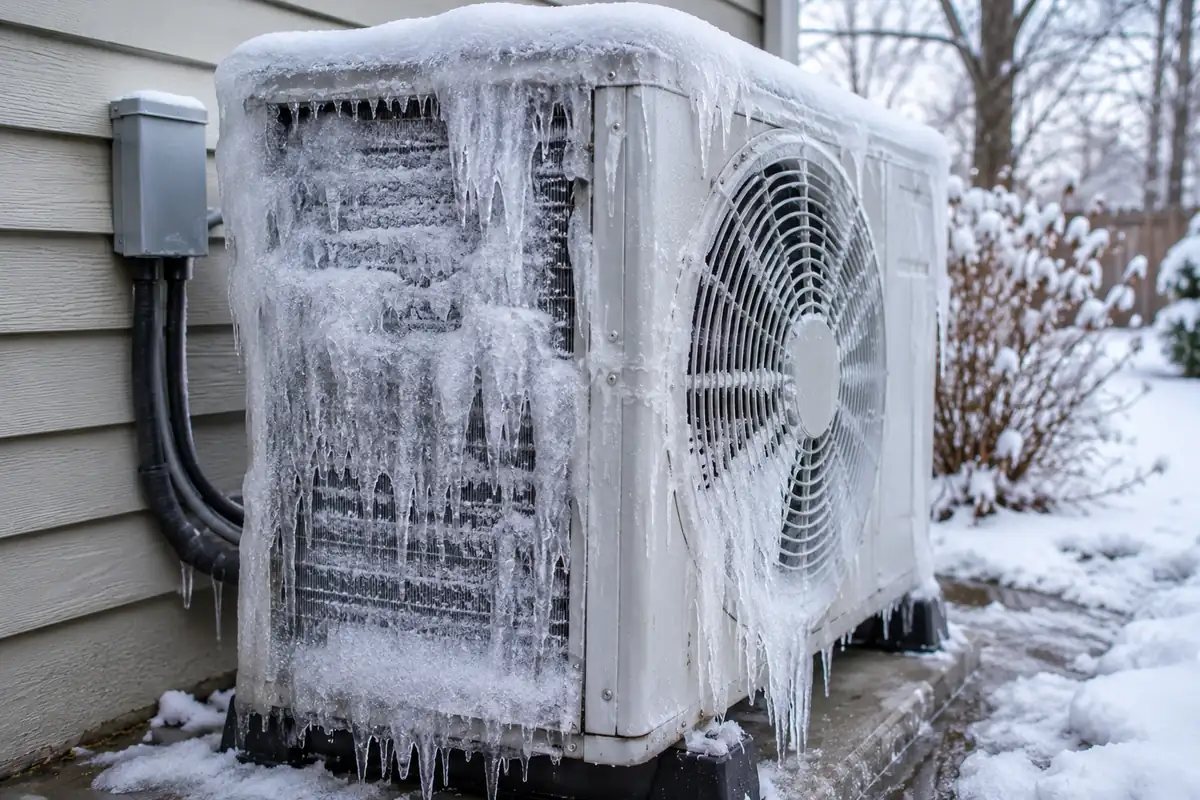
In cold, damp weather, moisture can freeze onto the outdoor heat-exchanger coil. The unit may enter an automatic defrost cycle that temporarily changes operation to melt the frost. Light frost that clears and a brief heat pause are often expected. A coil buried in ice, ice blocking the fan, or repeated defrost with poor indoor heating is not normal service to ignore.
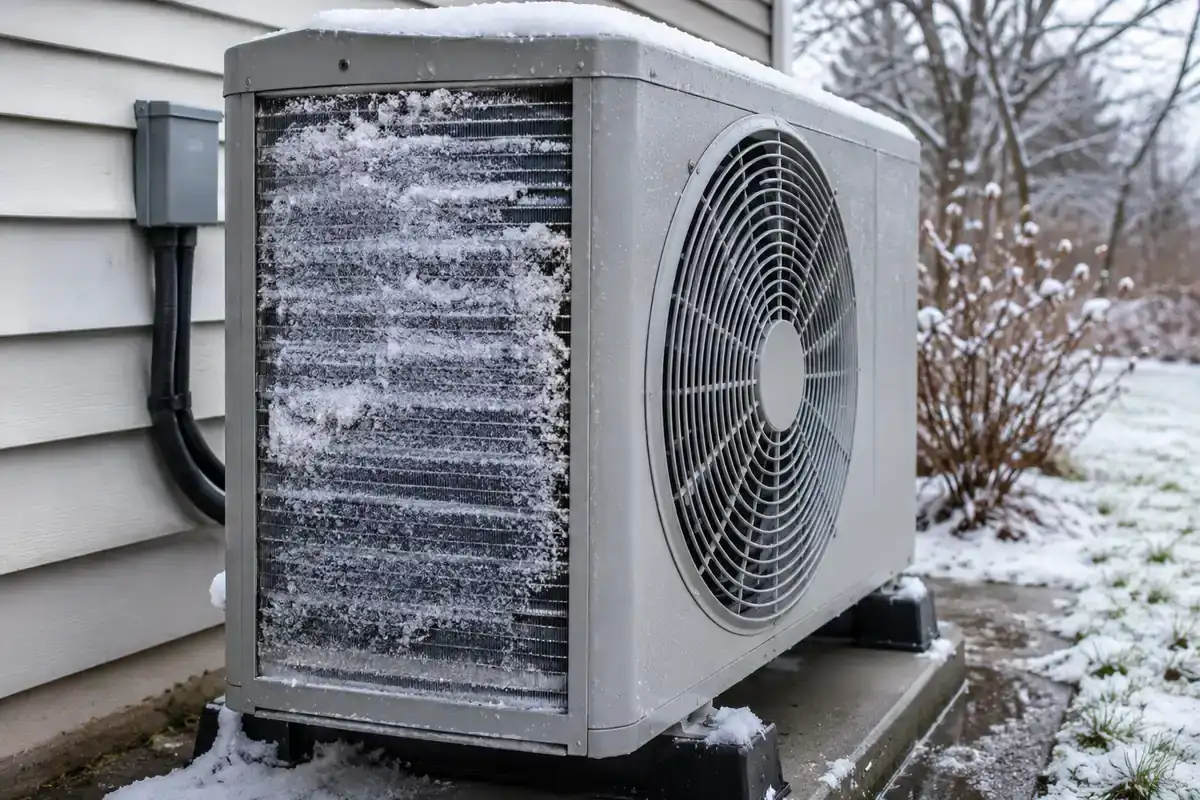
For those conditions, let the system follow its approved controls and call a qualified technician. Do not scrape, strike, use a pressure washer, pour boiling water on the coil, or force a defrost circuit. Also check that defrost meltwater is not forming a dangerous ice patch near walkways. Keep away from frozen electrical components.
Compare cold-weather output with the building’s heat loss
When outdoor temperature falls, the home loses heat faster. At the same time, a particular heat pump may deliver less heat and need more defrost time. The important question is not “Will this heat pump run below 32°F?” It is “How much usable heat can this exact system deliver at my winter design temperature, and how much does my building need?”
The U.S. Department of Energy’s cold-climate sizing material explains why load calculations and cold-condition capacity matter. An equipment operating limit is not the same as enough heat output to meet the load. If the capacity falls short, a properly designed system may use auxiliary or another approved backup source. If it has enough documented capacity but still cannot heat, the installer should investigate airflow, controls, defrost and the refrigerant system.
The ENERGY STAR air-source heat pump guidance also advises using suitable cold-climate equipment and steady heating settings. There is no single outdoor temperature at which all heat pumps stop heating or all auxiliary heaters must turn on.
What Do AUX Heat and Emergency Heat Tell You?
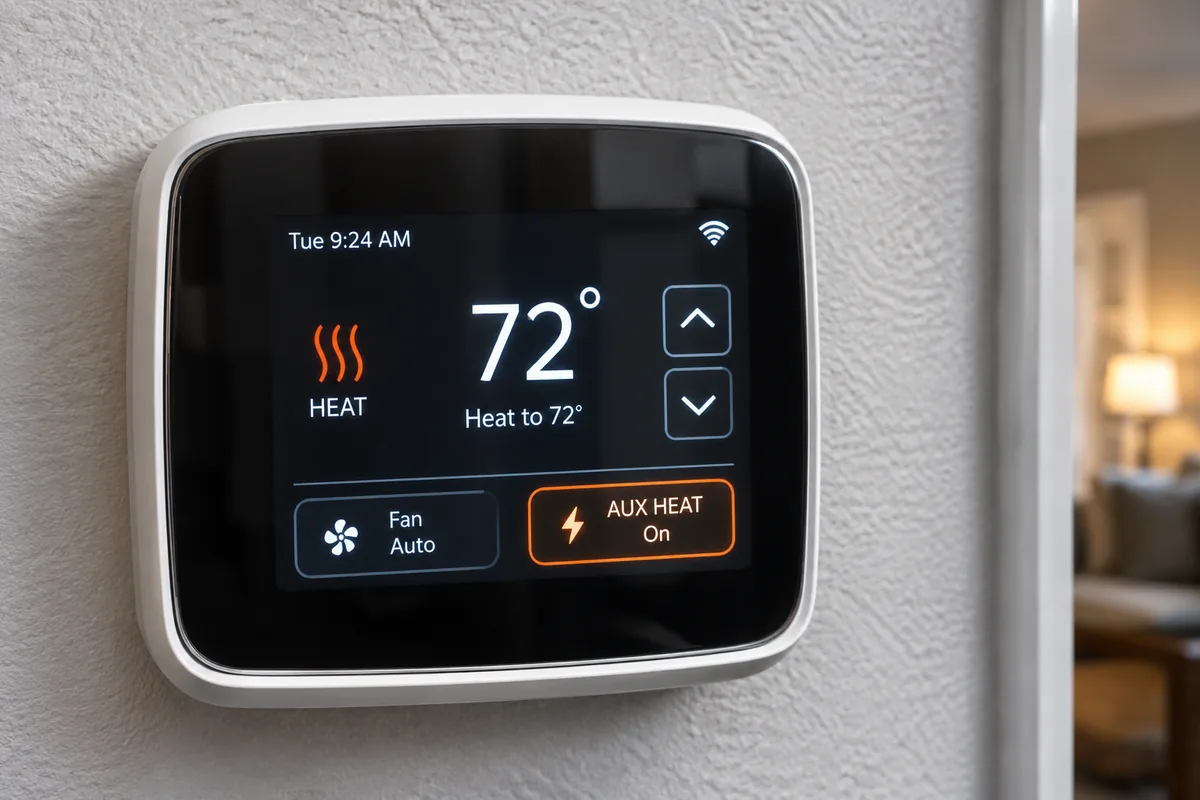
AUX heat usually means the system has called for extra heat automatically; Emergency Heat means an equipped thermostat uses the backup heat source without normal heat-pump operation. The labels can look similar, but they describe different control choices.
| Control | What it does | What to do |
|---|---|---|
| HEAT | Normal heating control; the heat pump operates and the system may add backup heat automatically | Use for ordinary winter operation |
| AUX / Auxiliary Heat | Automatic supplemental stage when the system needs it, such as during high load or defrost | Observe frequency and room comfort; do not disable it just to hide a problem |
| EM HEAT / Emergency Heat | Uses a supported backup heating path while locking out normal compressor heat-pump heating | Use only for the equipment’s intended temporary failure procedure, then arrange repair |
In many electric-air-handler systems, auxiliary electric heat can run with the heat pump. In dual-fuel systems, a gas or oil furnace may instead take over while the compressor is switched off. The Lennox manufacturer explanation of auxiliary and emergency heat describes this difference. Not every heat pump has either feature; ductless systems often use a different control sequence.
Why does AUX heat keep coming on?
AUX may come on during very cold weather, after a large thermostat increase, or during defrost. Frequent or nearly continuous AUX while the building remains cold calls for a check of load versus capacity, airflow, thermostat staging, defrost behavior and backup-heater operation. It is not proof that the auxiliary heater itself has failed.
If the thermostat says AUX but the home still does not warm, note whether indoor airflow is present and whether a normal heating call brings on the expected backup stage. Leave heater strips, breakers, sequencers and control wiring to a qualified technician. If the system was changed or a thermostat replaced recently, the original installer should verify equipment-type setup and heat staging.
What if Emergency Heat does not work?
First verify that the installed system actually includes a backup heater and that the manufacturer supports an EM HEAT mode. If it does, the display may show EM HEAT while an electrical, control or heater fault prevents actual heating. Do not turn on an unsupported mode, bridge wires, or repeatedly operate a tripping heater. Have the installer check the backup source and the approved control sequence.
Why Does a Heat Pump Cool Normally but Fail to Heat?
If cooling works but heating fails, check the heating mode and control setup first; then ask a technician to investigate the reversing-valve command, heating-specific sensors and refrigeration operation. Cooling success makes a complete power outage less likely, but it does not prove every part is healthy.
A reversible heat pump changes which coil delivers heat by using a reversing valve or another model-specific arrangement. A thermostat configured for the wrong system type—or with the wrong heat/cool valve setting—may ask the outdoor unit to operate in the wrong mode. This is especially important after a thermostat replacement or new installation.
For a conventional 24V system, our thermostat control guide explains why Y/Y1 and O/B work together. A communicating mini-split or proprietary controller may use completely different terminals. Do not change O/B settings at random or test live wiring yourself. The technician should verify the exact outdoor and indoor model pairing, the approved control sequence, valve command and actual temperatures before recommending a valve or refrigerant repair.
Low charge, restrictions, sensor faults and failed defrost controls can also impair heating; no single symptom proves which one is responsible. Our heat pump component guide explains where the compressor, coils and reversing valve fit in the cycle. Only appropriately qualified personnel should work on the refrigerant circuit. In the U.S., EPA Section 608 rules apply to work that can release refrigerant.
Why Does a Heat Pump Short Cycle Only in Heat Mode?
Repeatedly starting and stopping after short heating runs can point to a thermostat or sensor problem, restricted airflow, an equipment safety shutdown, or a mismatch between the building load and the heat pump’s minimum heating output. It is not enough to say “the compressor is oversized” without checking the controls and conditions.
First determine what is actually cycling. A fan changing speed, a thermostat ending a satisfied call, or a short automatic defrost event is not the same as a compressor repeatedly starting, stopping and failing to warm the room. Write down the start and stop times, room and outdoor temperature, requested setpoint, error code and whether cooling behaves differently.
What to check before blaming the size
- Thermostat or remote: check schedule, sensor location, setpoint swings and recent controller changes. A thermostat warmed by sunlight can stop the heat call early.
- Airflow: inspect user-serviceable filters and accessible registers. Poor airflow can trigger operating limits; a technician verifies actual airflow and safety-device history.
- Equipment response: note whether a warning appears at each stop or the outdoor unit fails to restart normally. The technician checks control logic, sensors and safety events.
- Size and minimum output: when outdoor conditions are mild or only one small zone is active, a heat pump’s lowest output may still exceed the heat needed. A designer should compare minimum capacity at the relevant conditions with the real load and active-zone configuration.
If the system cycles only in HEAT immediately after installation, have the installer check the thermostat configuration, commissioning records, capacity and active zones before replacing parts. Do not bypass a pressure switch or high-temperature cutout to keep the compressor running.
What Changes for Mini-Splits and Air-to-Water Heat Pumps?
For a mini-split, look first at its indoor head, wireless controller and zone settings. For an air-to-water heat pump, check the water-heating schedule and user-visible flow or pressure alerts instead of looking for warm air at a vent. The refrigeration principles are related, but the heat delivery paths differ.
Ductless mini-split or air conditioner with heat mode
Confirm the remote is in HEAT, not COOL, DRY or FAN. Some indoor units briefly wait before sending air into a room to avoid a cold draft. If only one room is cold, compare the affected zone with the others, its filter, open airflow path and controller request. A multi-zone outdoor unit must still have enough available heating capacity for the active indoor heads under those conditions.
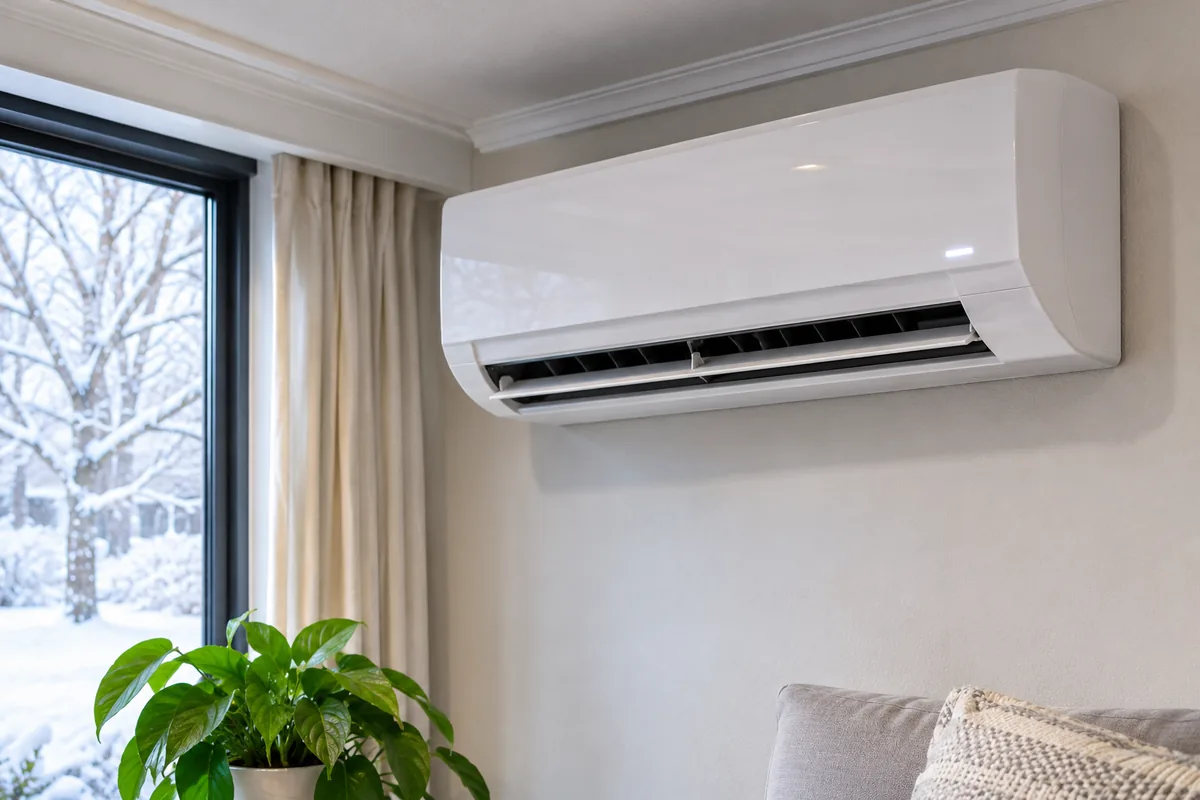
An air conditioner not heating may simply be a cooling-only AC that has no reverse-cycle heating feature. Check the exact product label and manual before treating it as a failed heat pump. Likewise, a portable room AC with no heat function cannot provide heating merely by selecting a different fan setting.
Air-to-water heat pump serving radiators or floor heating
If the controller shows that the compressor is running but rooms remain cool, examine the user display for selected space-heating mode, room schedule, hot-water priority, target heating-water temperature and any flow or pressure alarm. Check that room thermostats and accessible radiator valves are requesting heat. Do not open a sealed pressurized circuit or adjust protected installer parameters.
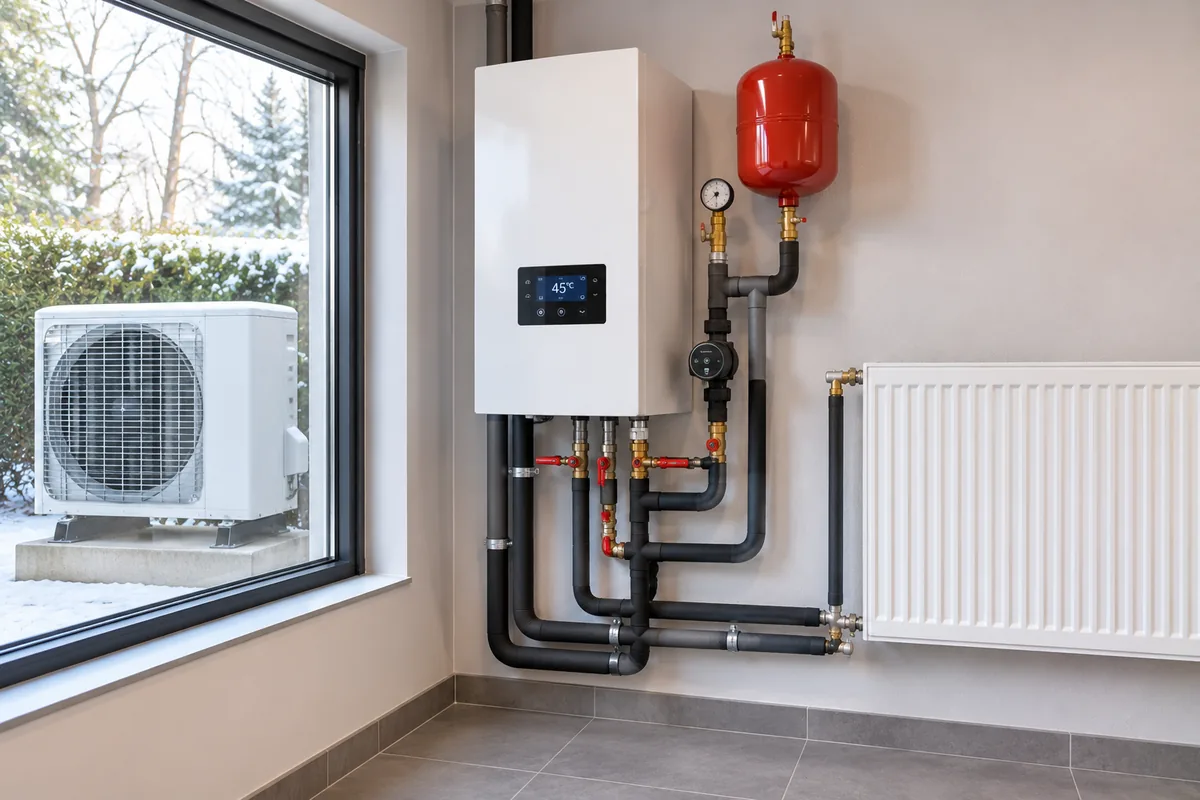
Water-based systems may heat slowly because floor slabs and some radiators respond differently from forced air. The installer should check measured water flow and supply/return temperatures, circulation pumps, mixing controls and whether the emitters can heat each room at the chosen water temperature. A domestic-hot-water demand may temporarily take priority if the design permits it.
For building or replacement projects, our space-heating heat pump range is relevant to water-based heating applications. It is not a drop-in repair for an air-to-air system or a substitute for investigating an existing fault.
What Should a Technician Verify Before Calling It Fixed?
A proper repair ends when the original heating complaint no longer occurs under a meaningful test—not when a component has merely been replaced or the error code cleared. The exact measurements depend on the system type and current outdoor conditions.
- Reproduce the symptom safely. Record indoor/outdoor temperatures, heat request, any staging, code history, defrost state and which rooms or zones are affected.
- Confirm delivered heat and flow. On air-to-air systems, check room-temperature trend, supply and return conditions, blower airflow and duct restrictions. On air-to-water systems, check water temperatures, circulation and the emitter response.
- Test the controls before replacing major parts. Verify HEAT call, compressor operation, reversing-valve command where applicable, sensors, defrost behavior and auxiliary-heat sequence against the exact model manual.
- Check the refrigeration circuit when the evidence points there. A qualified technician can measure the model-relevant operating conditions, inspect for leaks and correct an actual refrigerant fault. Low heating is not a reason to add refrigerant by guesswork.
- Check cold-weather capacity if the failure happens only in winter. Compare published net heating output at the relevant outdoor/indoor or water temperatures with the building’s measured or calculated heat loss. Review supplemental-heat capacity and controls if needed.
- Repeat the heating test after the repair. Confirm stable operation, reasonable indoor temperature response, no repeated faults and the intended backup sequence. If the day is too warm to test a cold-weather failure, agree on a later condition-specific follow-up rather than claim it was proven.
Share the model number, weather, filter condition, exact fault code, recent power outages or thermostat changes, when the issue began and which checks you completed. That short record speeds diagnosis and helps avoid replacing the wrong part.
How Can You Prevent the Same Heating Problem?
Keep the air path clear, use the right heating controls, and have faults checked before they become repeat winter shutdowns. Maintenance cannot prevent every failure, but it removes common causes of weak output and protects normal defrost operation.
- Check the filter regularly, clean or replace it as instructed by your model and keep indoor returns and supply vents open.
- Keep the outdoor intake, discharge and safe condensate/defrost drainage paths clear. Follow the exact model clearance rule rather than a generic distance.
- Prefer steady winter setpoints unless your thermostat supports an efficient recovery schedule; very large manual increases can call for unnecessary auxiliary heat.
- Arrange seasonal service for electrical connections, airflow, controls, defrost operation and refrigerant checks when indicated. ENERGY STAR’s maintenance checklist separates simple filter care from contractor tests.
- Keep the commissioning record, model manual and any repair results. If cold-weather heating has always been weak, ask for the heat-loss and capacity comparison before approving a larger system.
Frequently Asked Questions
How long should I wait after switching my heat pump to HEAT?
Allow the startup delay or anti-short-cycle timer specified by your model before deciding it has failed. If there is still no heating after the manual’s normal wait and the room is getting colder, record the display and arrange service.
Can I manually defrost a frozen heat pump coil?
Do not chip ice, pour boiling water onto the unit or bypass the defrost controls. Clear only accessible loose snow or debris as the manual permits. Persistent heavy ice or failure to resume heating requires qualified service.
Should I turn on Emergency Heat when my heat pump is not heating?
Only if your system has a supported backup heater and its manual allows temporary Emergency Heat operation for the fault you have. Emergency Heat normally stops compressor heating and relies on backup heat. Arrange repair rather than leave it as an unexplained permanent setting.
Why is AUX heat on but my house still cold?
The heat pump and building may need more heat than the backup is delivering, or a heater, airflow or control fault may be present. Check the thermostat request and user-visible faults; have a technician test the actual backup stage and heating capacity.
Does a heat pump stop working below freezing?
No. Many heat pumps operate below freezing, but usable heating output depends on the model and conditions. Compare model heating capacity at your winter design temperature with the building heat loss; backup heat may be needed if capacity is insufficient.
Why does my air conditioner cool but not heat?
First confirm that the unit is actually a heat-pump model with a heating mode. If it is, check the controller HEAT setting. A technician may then need to investigate reversing-valve control, sensor faults or refrigerant performance.
Can a dirty filter make a heat pump blow cold air?
Yes. Restricted airflow can reduce heating output or trigger protection. Check and service only the filter intended for owner maintenance; if the problem continues, a technician should measure airflow and investigate other causes.
The Bottom Line
When a heat pump is not heating, begin with the heat request and safe airflow checks, then decide whether the problem is a brief normal defrost event, a control or backup-heat issue, or a true loss of heating capacity. Persistent cold rooms, repeated protective trips, thick outdoor ice or unexplained AUX/EM operation deserve a model-specific professional check.
If you are planning a new heating system rather than repairing one, we can review your building’s winter conditions, required heating output, water temperature where relevant and destination market to help identify a suitable space-heating heat pump configuration. You can send AirProz your project requirements. For an existing unit that has failed, contact your installer or qualified local service provider first.