
An air conditioner evaporator coil is the indoor cooling coil that absorbs heat from room air and helps remove humidity. In a central AC it is usually inside the air handler or next to the furnace. Dirt, restricted airflow, ice, drainage trouble or a refrigerant leak can reduce its performance, but these problems need different fixes. This guide shows where the coil is, how it works, what you can check safely and when repair or replacement makes sense.
What Is an Air Conditioner Evaporator Coil?
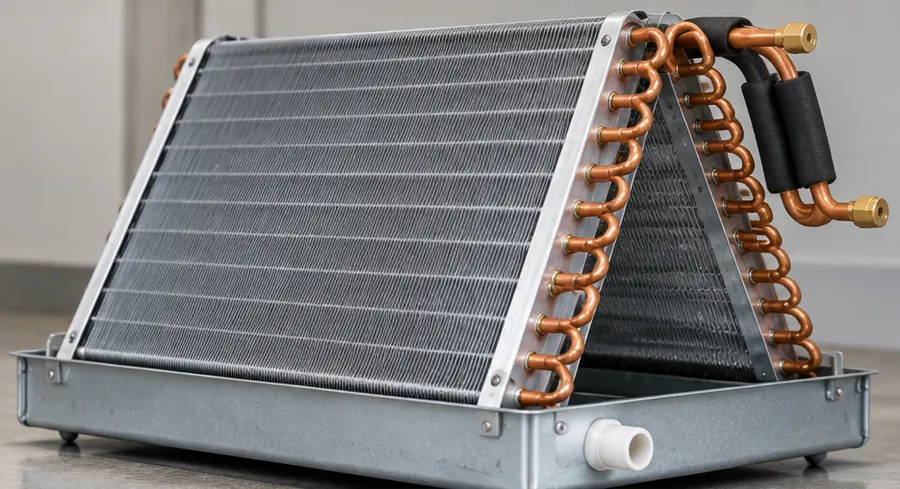
An air conditioner evaporator coil is the indoor heat exchanger that absorbs heat from room air while the AC runs in cooling mode. Refrigerant moves through tubes in the coil, and the indoor fan moves air across its fins. This cools the air delivered to the room. Moisture may also condense on the cold surface and flow into a drain pan.
People also call it an indoor coil, cooling coil, evaporator, evap coil, or A-coil. An A-coil is one common shape, not a different cooling principle. Some coils are flat, slanted or made from several sections. Common constructions include copper tubes with aluminum fins and all-aluminum designs.
It works with the compressor, outdoor coil, refrigerant metering device, blower and controls. Restricted airflow or incorrect refrigerant flow can reduce cooling even when the coil surface looks clean.
Where Is the Evaporator Coil on an Air Conditioner?
On a central split air conditioner, the evaporator coil is usually inside the air handler or in a cased section next to the indoor furnace. It sits in the indoor airstream, often after the blower or furnace in the direction of airflow, although layouts vary. It is generally not inside the outdoor condenser cabinet.
| AC system | Where the cooling coil is usually found | What to check |
|---|---|---|
| Central ducted split AC | Inside an air handler or a coil case connected to a furnace and supply duct | Equipment model and indoor cabinet location; access may require service panels |
| Ductless mini-split | Behind the cover and filters of the wall, ceiling or floor indoor unit | The indoor unit’s service instructions; do not reach past guards |
| Window AC | On the room-facing side of the unit, behind the front intake and filter | Which parts the manual allows a user to remove |
| Portable AC | Within the portable cabinet on the room-air cooling path | Filter and drain access described in the manual, not hidden coil access |
| Air-source heat pump | Indoor coil in cooling mode; outdoor coil performs the evaporating role in heating mode | Operating mode before identifying which coil is the evaporator |
In many upflow furnace systems, the coil sits above the furnace. Horizontal and downflow layouts place it differently. Check the indoor unit label and installation manual to find the coil in your actual system.
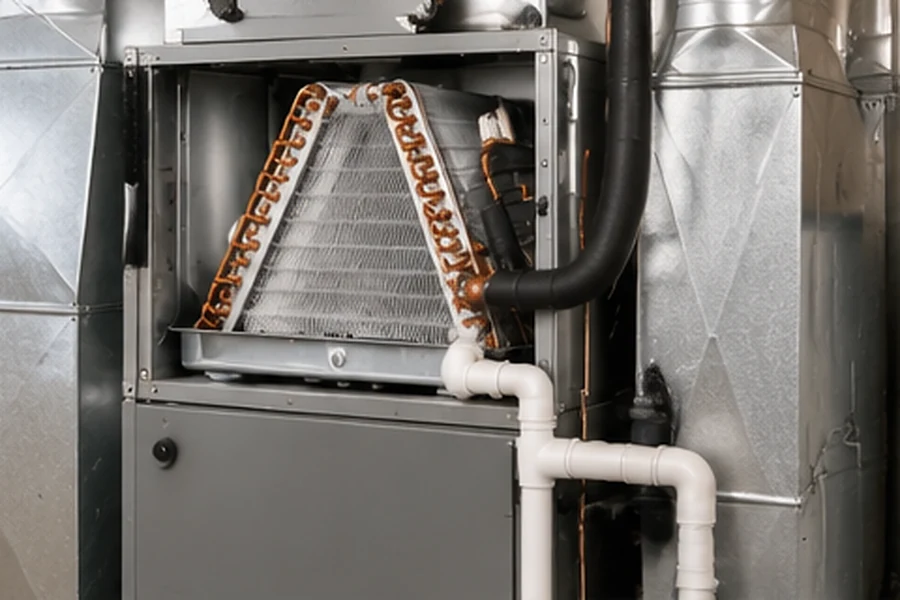
Do not open sealed electrical or refrigerant compartments just to find the coil. A technician can identify the indoor coil from the equipment model and the connected refrigerant lines.
How Does an AC Evaporator Coil Work?
The evaporator absorbs indoor heat as low-pressure refrigerant boils inside the coil. The blower carries warm room air over the fins. Heat crosses the metal and enters the refrigerant, which leaves the evaporator mainly as vapor. The compressor and outdoor condenser then move and release that heat outside.
- Refrigerant enters at reduced pressure. A metering device controls refrigerant entering the evaporator. Depending on the system, the refrigerant can be a cold liquid-vapor mixture at the coil inlet.
- Air gives up heat. Warm return air passes across the coil fins. The refrigerant absorbs this heat and evaporates.
- Some moisture leaves the air. When the coil surface is below the air’s dew point, water vapor condenses onto the fins. A drain pan and pipe carry the water away.
- Refrigerant returns to the compressor. The vapor leaves through the suction line. System controls and the metering device help maintain suitable operation.
The coil cools air in two ways. First, it lowers the air temperature. This is called sensible cooling. When the coil surface is below the air’s dew point, water vapor can collect as liquid and drain away. That moisture removal is called latent cooling.
On a humid day, more water may form on the coil and flow through the drain. In drier air, much less water may form. The balance depends on humidity, airflow, coil and refrigerant conditions, and run time. Reducing airflow too far does not guarantee better moisture removal: it can cause ice and reduce cooling.
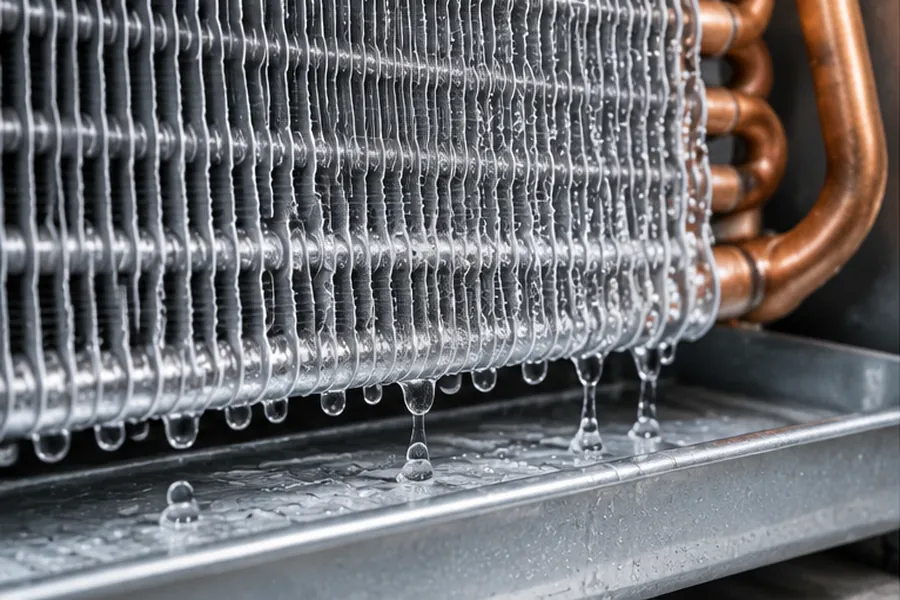
Why airflow matters: too little air moves less room heat into the coil and can allow ice; too much or poorly controlled airflow can change moisture removal and delivered air temperature. Check airflow against the indoor unit’s specified settings and measured operating conditions.
Evaporator Coil vs. Condenser Coil: What Is the Difference?
During normal AC cooling, the indoor evaporator absorbs heat and the outdoor condenser releases it. The two coils use the same sealed refrigerant loop but have opposite heat-transfer jobs.
| Question | Evaporator coil in cooling mode | Condenser coil in cooling mode |
|---|---|---|
| Where is it? | In the indoor air handler or room-side unit | In the outdoor unit, except for other packaged designs |
| What does it do? | Absorbs room heat; may remove humidity | Rejects that heat plus compressor work to the outside |
| What happens to refrigerant? | It evaporates as it absorbs heat | It condenses as it releases heat |
| Typical problems | Fouling, weak airflow, icing, drain trouble or circuit leaks | Debris, blocked outdoor airflow, damaged fins or circuit leaks |
| How is it serviced? | Usually accessed by qualified indoor equipment service | Outdoor debris may be visible; internal service still needs care |
On a reversing heat pump, these roles switch in heating mode. The heat pump operation section explains why the outdoor coil then absorbs heat and the indoor coil releases it.
What Problems Can an Evaporator Coil Cause?
A dirty coil can reduce heat transfer and airflow; an iced coil can block air; a refrigerant leak can reduce cooling; and a blocked drain can send water where it does not belong. These are different faults. Warm air, higher bills or a wet cabinet do not prove the coil itself must be replaced.
| What you notice | Possible reasons | Best next check |
|---|---|---|
| Weak airflow and poor cooling | Filter, blower, ducts or dirty/iced evaporator coil | Check approved filter and visible vents; technician checks full airflow path |
| Ice or frost on indoor coil or suction line | Restricted airflow, low refrigerant, metering or control fault | Stop cooling; let equipment thaw safely; inspect after thaw |
| Water dripping or pooling indoors | Clogged drain, damaged pan, condensate overflow or melting ice | Identify safe visible source and stop use if water reaches electrical parts |
| Reduced cooling with suspected refrigerant loss | Leak anywhere on refrigerant circuit, not necessarily in coil | Qualified leak localization and system diagnosis |
| Musty smell with wet indoor equipment | Moisture or debris in coil, pan, drain or other air path | Inspect drainage and cleaning needs; identify source, not just mask odor |
Choose the next step from the check result. If filter care allowed by the manual restores normal airflow and cooling, keep monitoring the system instead of replacing the coil. If ice returns after the coil fully thaws, stop cooling again and have airflow, the refrigerant circuit and controls checked. If water escapes the indoor cabinet, check whether it comes from a blocked condensate drain or thawing ice; water alone does not prove a refrigerant leak.
If the AC runs but the room is still warm and there is no visible ice, use our guide to why an air conditioner is not cooling to check the wider system before focusing on the evaporator coil.
Why Is the Air Conditioner Evaporator Coil Freezing?
An AC evaporator coil freezes when its surface stays below freezing and condensed moisture turns to ice. Restricted airflow is a common cause because too little warm room air reaches the coil. Refrigerant feed or charge problems and sensor or control faults can also contribute. More than one condition can occur at once, so the repair depends on the measured cause.
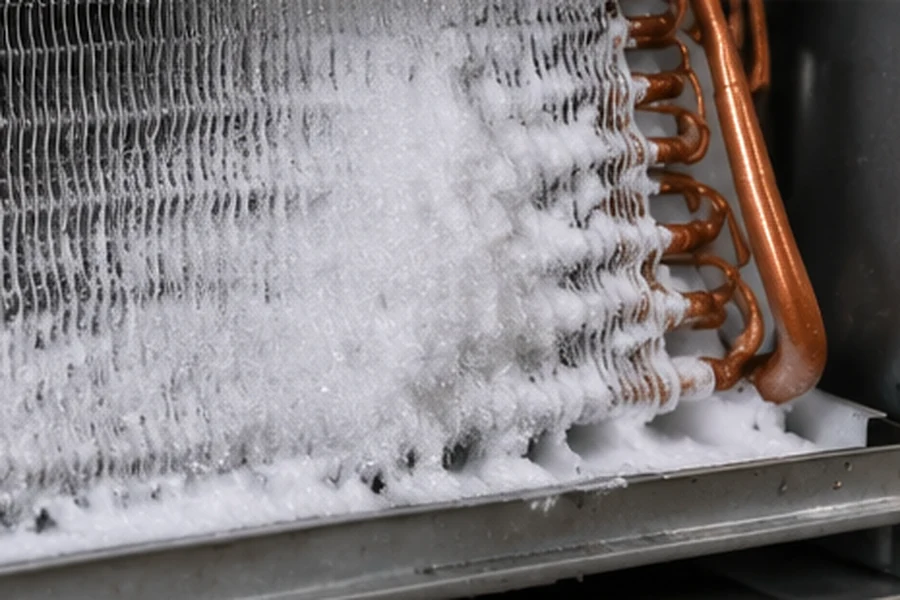
Stop cooling when you see ice; do not chip, scrape or heat it. Use fan-only thawing only if the manufacturer’s instructions allow it, the blower is normal and no water or electrical hazard is present. After full thawing, start with safe filter and vent checks. If icing returns, have a technician measure airflow and evaluate the circuit rather than adding refrigerant based on ice alone. Our AC freeze-up guide explains the detailed sequence.
Does a Wet Coil Mean the Evaporator Is Leaking?
No. Water on a cold coil may be normal condensation, while a refrigerant leak is an escape from the sealed tubing or a connection. A steady condensate flow into the drain during humid cooling can be normal. Water on the floor may instead point to a blocked drain or melting ice. Hissing, reduced cooling or oily residue may raise concern about a refrigerant leak, but none identifies the leak location by itself.
If a refrigerant leak is suspected, a qualified technician should locate it using appropriate instruments and service procedures. Do not pierce tubing, add a can of refrigerant or apply sealant to an unknown leak. In the United States, work expected to open or release refrigerant from the system requires the relevant EPA Section 608 technician certification.
How Do You Clean Air Conditioner Evaporator Coils?
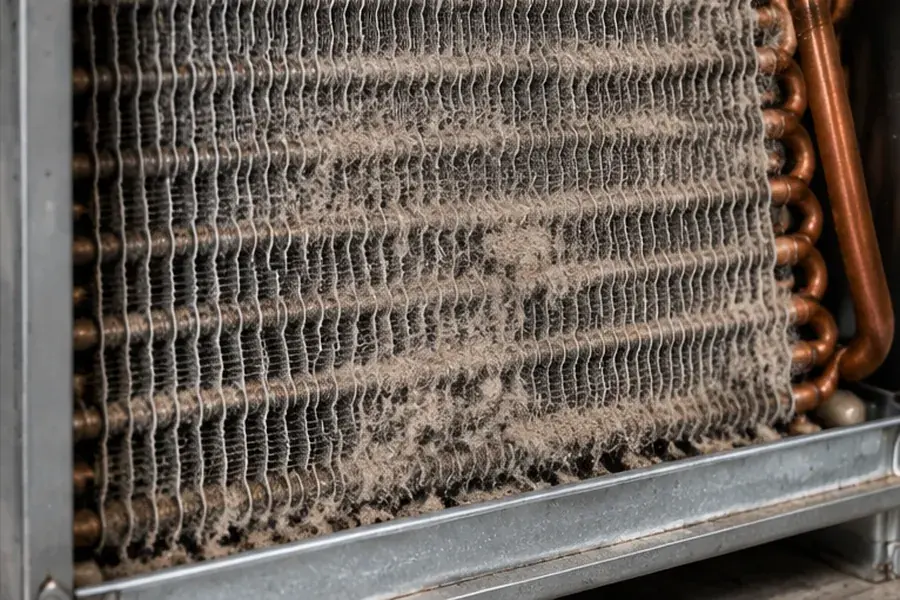
To clean an AC evaporator coil, a qualified technician shuts down the equipment, accesses the indoor coil safely, removes buildup with a manufacturer-approved method, and checks airflow and drainage afterward. For home care, start with the user-serviceable filter and accessible vents as the model manual allows. Internal coil fins are delicate, and electrical parts may be nearby; use cleaning products and drainage methods approved for the specific unit.
What Can You Safely Do Yourself?
You can care for the accessible filter, clear visible air openings and record recurring ice, water or weak airflow as the model manual allows. Internal coil washing and refrigerant-circuit work require qualified service.
- Turn the unit off using its normal controls before approved filter care. If there is smoke, unsafe water or a recurring breaker trip, stop and seek qualified help rather than continuing.
- Check the accessible filter and clean or replace it exactly as the manual directs. If weak cooling or icing continues after filter care, have the internal coil checked.
- Clear visible return and supply openings without reaching inside cabinets or moving fans. For a mini-split or portable unit, check only the accessible items described in that model’s manual.
- Look for recurring symptoms after normal operation resumes: weak airflow, ice, water overflow or cooling failure. Record the observation and arrange internal service if it persists.
What Does a Professional Coil Cleaning Include?
A technician first makes the equipment safe according to service instructions, opens approved access, inspects the entering-air side of the coil and checks the pan and drain. They remove debris with tools and a cleaner compatible with the coil material and the manufacturer’s instructions, protecting nearby electrical parts and insulation. They rinse or remove residue if the chosen product requires it, then confirm drainage and restore the unit correctly.
Cleaning is complete only after the technician checks airflow, drainage and normal cooling. Ask what buildup was found, whether the air-facing side of the coil is now clear, and what the drain, airflow and cooling checks showed after restart. If the original problem remains, the blower, ducts, refrigerant circuit or controls may need diagnosis rather than another cleaning without evidence. ENERGY STAR’s maintenance checklist also calls for inspecting and cleaning AC coils as needed.
Do not spray an unknown chemical into a sealed cabinet, bend fins with a stiff brush or wash live equipment. If the coil needs removal, refrigerant recovery or cutting lines, that is not routine home cleaning.
When Should You Repair or Replace an Evaporator Coil?
Clean or service the system when dirt, restricted airflow or blocked drainage is causing the problem; repair a confirmed coil fault when an approved, reliable repair is available; replace the coil when damage or a verified refrigerant leak cannot be repaired reliably and a compatible part is available. If no approved coil-only option fits the existing equipment, compare a matched system replacement. Check the actual cause before choosing among these options.
| Finding | Usually the first action | When coil replacement enters the decision |
|---|---|---|
| Dust on fins, coil intact | Professional cleaning and airflow checks | Only if damage remains or cleaning cannot restore function |
| Ice but no confirmed coil damage | Thaw, confirm airflow and diagnose refrigerant/controls | Only if tests later identify a nonrepairable coil fault |
| Condensate pan or drain blocked | Correct drainage and test overflow protection | Coil replacement generally does not fix a standalone drain issue |
| Leak positively located in coil | Evaluate permitted repair and actual coil condition | Repair not durable, unavailable or impractical for this unit |
| Old system, unavailable matched coil | Compare verified compatible options and total system condition | Full matched system may be more practical than a partial swap |
Can You Replace Only the Indoor Evaporator Coil?
Yes—an indoor evaporator coil can be replaced by itself if the manufacturer approves the replacement for the existing outdoor unit and installation. Confirm refrigerant, operating pressures, nominal and actual capacity, metering device, airflow, cabinet fit, orientation, drainage and available certified-system ratings where applicable. Matching tonnage alone does not establish compatibility.
For example, if an older central AC has a confirmed coil leak, a replacement part may fit the cabinet but use a different metering device or refrigerant design. The technician must check the exact indoor and outdoor model numbers before recommending a coil-only swap. If no acceptable combination is available, assess a properly matched replacement system instead of forcing the fit.
What Information Should Be on a Replacement Quote?
Ask for the indoor and outdoor model numbers, refrigerant and proposed coil part number; the reason replacement is needed; the confirmed leak or damage location; compatibility evidence; and the repair scope. The scope should cover safe refrigerant recovery, installation, leak and pressure testing, evacuation, correct charge setup, airflow, drainage and final performance checks as needed.
Compare quotes for the same work, not just the total price. Ask each contractor to show coil part and warranty coverage, removal and access labor, refrigerant handling and charging, any metering-device, refrigerant-line or drain changes, and final start-up checks. Confirm whether taxes and additional work are included. A cheaper quote that leaves out refrigerant or required tests is not directly comparable with one that includes them.
Work that opens the refrigerant circuit is for properly qualified personnel. Keep photos, fault records and the proposed parts list. If a compatible coil-only repair is unavailable or other major components are failing, ask for a separate matched-system option.
How Does a Heat Pump Evaporator Coil Work?
In heat pump cooling mode, the indoor coil works as the evaporator; in heating mode, the outdoor coil becomes the evaporator. A reversing valve changes refrigerant flow so the system can move heat in either direction. The metal coils remain in place while their heat-transfer roles change.
During heating, the outdoor coil absorbs heat from outside air. Under suitable cold and humid conditions, frost can form there and a normal defrost cycle may clear it. That is different from an indoor evaporator icing during cooling, which generally points to a problem needing diagnosis. A technician must identify the operating mode before deciding whether visible frost is normal.
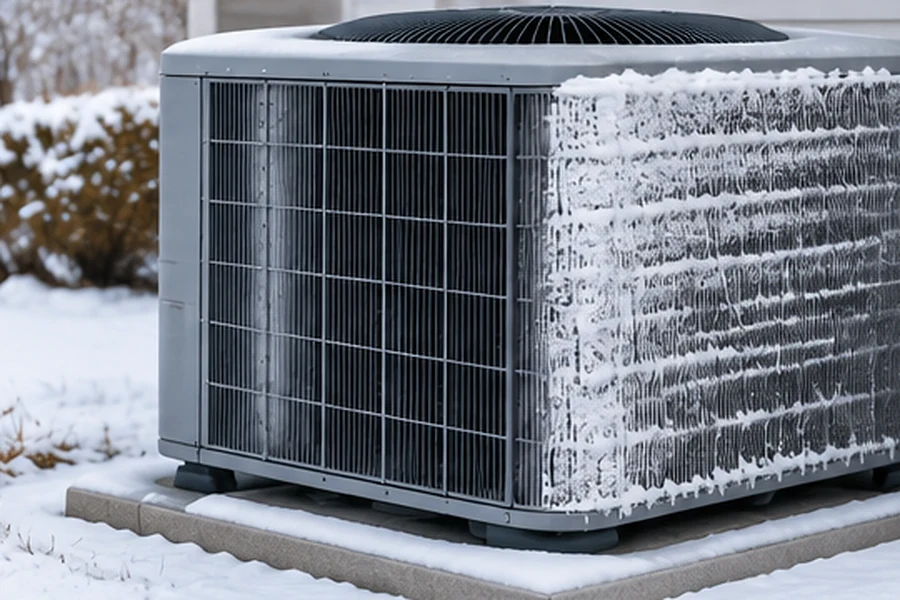
A heat pump indoor coil that delivers heat during winter is acting as a condenser, even if a product catalog calls it the “indoor coil” or “evaporator coil”. This distinction also matters when ordering a replacement: the entire reversible system must be compatible.
For a fuller view of refrigerant flow and the indoor/outdoor coil roles in each mode, see our heat pump heating and cooling schematic.
How Do You Choose the Right Indoor Cooling Coil?
Choose the indoor coil as part of a matched air-conditioning system, not only by its physical size or advertised tonnage. The correct choice depends on the existing indoor unit, outdoor unit, refrigerant, airflow, installation space and approved equipment combination.
- Identify the system. Record outdoor and indoor model numbers, whether it is cooling-only or a heat pump, refrigerant type and any current control or metering device.
- Check the required duty. Use the building cooling load and the equipment’s published performance at matching conditions, including moisture removal where important. More coil area or a larger tonnage label does not by itself promise more usable cooling.
- Confirm the physical installation. Measure approved cabinet space, airflow direction, service access, line connections, drain-pan orientation and condensate piping arrangement.
- Confirm the matched combination. Check the manufacturer’s compatibility documents, proper metering device and any applicable certified system rating. Confirm how it will be installed, commissioned and serviced.
For a new wall-mounted split AC, the indoor cooling coil is normally selected as part of the complete model family rather than as a separate field-chosen component. As one complete matched-system example, see our R32 SA inverter split air conditioner series for new installations. The exact model still needs to match the project load, power supply, refrigerant requirements and destination market. Check coil materials, refrigerant and service-part compatibility in the exact model-series documents.
How Often Should an Evaporator Coil Be Checked?
Have the coil inspected during routine air-conditioning service, commonly before the cooling season, and clean it when inspection shows buildup. Set the cleaning interval from observed buildup, filter condition, operating hours, moisture and site conditions.
Good maintenance starts with correctly fitted filters and unobstructed airflow. The ENERGY STAR maintenance checklist recommends checking filters regularly and cleaning coils during service. A professional should also check drainage, blower operation and the system’s cooling performance instead of treating coil cleaning as the only maintenance task.
If a hotel, office or residential building has several indoor units, record each unit’s symptoms, filter condition, service date and drain findings. Focus follow-up service on the units showing recurring issues.
Frequently Asked Questions About AC Evaporator Coils
Is an A-coil the same as an evaporator coil?
An A-coil is a common A-shaped design of an indoor evaporator coil. Not every evaporator coil has that shape; flat and other layouts can do the same cooling job.
Can a dirty evaporator coil make my AC stop cooling?
Yes. Dirt can restrict airflow and heat transfer, and severe restriction may contribute to icing. But weak cooling can also come from blower, refrigerant, controls or outdoor-side faults, so check the full system.
Should an air conditioner evaporator coil be wet?
It can be normal for water to condense on a cooling coil in humid weather if the water drains into the pan and out through the drain line. Indoor dripping, overflow or unsafe standing water needs investigation.
Can an evaporator coil refrigerant leak be repaired?
Some confirmed leaks can be repaired under an approved service method, while other coil damage calls for replacement. A qualified technician must locate the actual leak and assess the coil and equipment compatibility.
Can I replace an evaporator coil myself?
For most homeowners, no. Replacing an evaporator coil normally involves sealed refrigerant piping and may involve electrical work. Have a properly qualified technician do the work and confirm the new coil matches the exact indoor and outdoor models.
Does the outdoor coil become the evaporator on a heat pump?
Yes, during heating mode. A heat pump reverses its refrigeration cycle, so the outdoor coil absorbs heat and the indoor coil releases it. In cooling mode the usual indoor-evaporator and outdoor-condenser roles return.
What should I check when the coil freezes again after cleaning?
Stop cooling and have the system checked after it fully thaws. The technician should verify airflow across the coil, the blower and ducts, refrigerant charge and flow, and controls. Repeated icing does not by itself prove low refrigerant.
What Should You Remember About the Evaporator Coil?
The air conditioner evaporator coil is the heat-absorbing indoor coil during cooling. You can usually find it in the indoor air handler or near the furnace, while mini-split and window units place it inside the room-side cabinet. Its cooling and humidity-removal performance depends on clean surfaces, suitable airflow, proper refrigerant conditions and working drainage.
If the coil looks dirty, start with approved filter care and professional coil inspection. If it freezes, stop cooling and find the cause after thawing. If you suspect a leak, confirm its location before replacing parts. Replace the coil only when a real fault and an approved, compatible replacement have been established.
Planning an air-conditioning system for a building or a distribution project? Our air conditioner range offers complete split-system options. Send our team the application, market, required cooling load, available power and installation details through Airproz contact so we can discuss a suitable model family. Existing-system repair and standalone coil compatibility must be checked against the original equipment documents.


