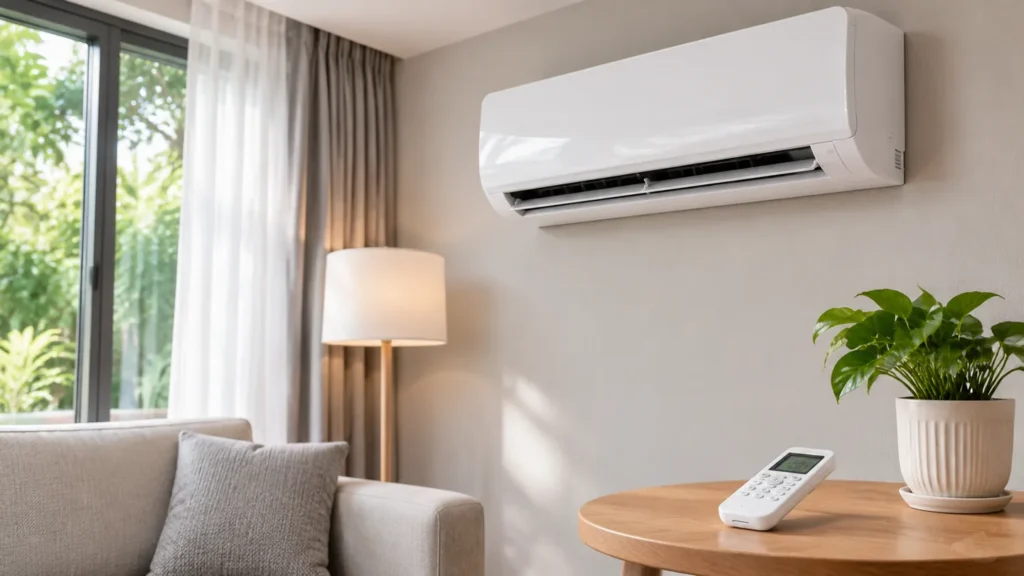
Choose a heat pump when you need heating and cooling together and its verified winter output meets your home’s heating load. Choose a gas furnace when keeping a working AC and low gas prices make a furnace-only replacement better value; consider compatible dual fuel when extra winter heat is needed. Compare the complete installed system, local cost per unit of useful heat, and equipment capacity at your winter design temperature. Efficiency ratings alone do not settle the cost comparison.
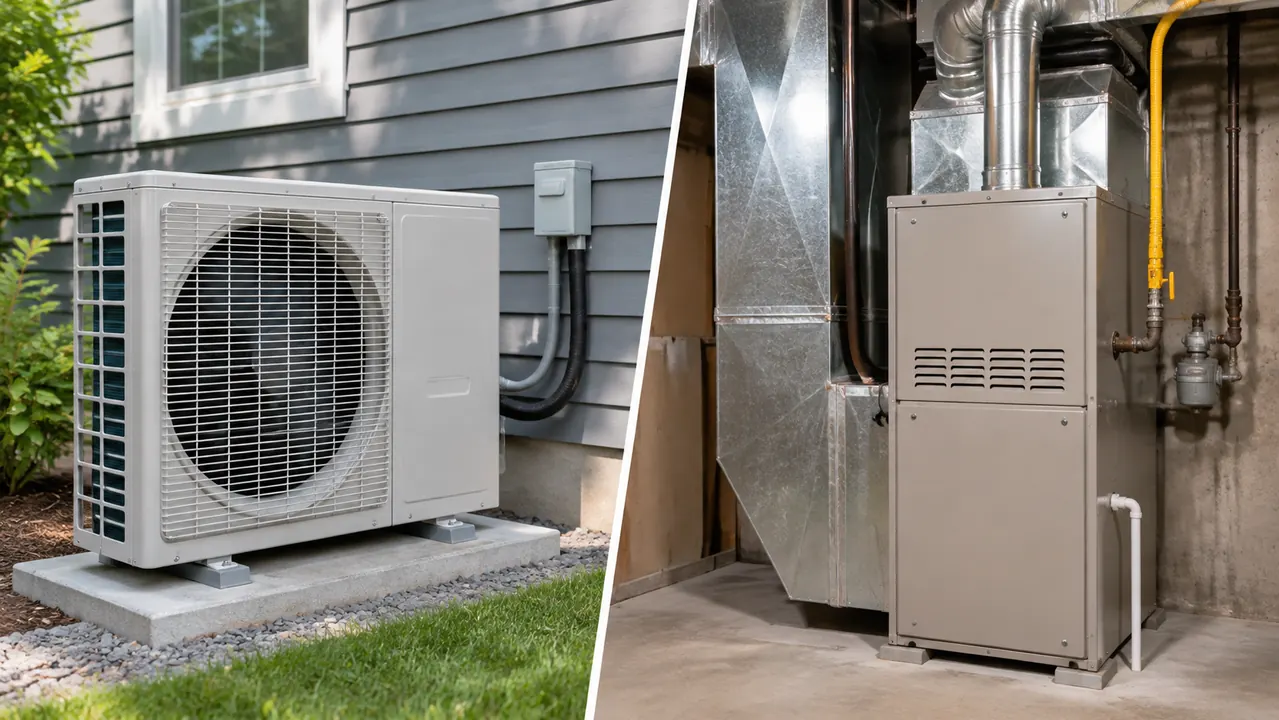
Heat Pump vs Furnace at a Glance
A heat pump moves heat and can also cool; a gas furnace burns fuel to make heat and needs a separate cooling system. The better choice depends on your weather, utility rates, current equipment, and whether you are replacing just the heater or the whole heating-and-cooling system.
| What matters | Air-source heat pump | Gas furnace | Electric resistance furnace |
|---|---|---|---|
| Heating method | Moves outdoor heat indoors using electricity | Burns natural gas and transfers heat to air | Turns electricity directly into heat |
| Cooling | Yes, if reversible and installed for cooling | No; separate AC is needed | No; separate AC is needed |
| Efficiency measure | COP at a stated temperature; HSPF2 over a test season | AFUE, useful heat divided by annual fuel input | About 1 kWh of heat per kWh of electricity at the point of use |
| Best fit | Heating plus cooling, suitable electric rates, verified winter output | Existing gas service, low gas prices, high winter heating demand | Simple backup or special situations with low first-cost priority |
| Main check | Cold-weather capacity and seasonal electricity cost | Installed cost, gas cost, venting and existing AC | Electricity bill, available circuit capacity and heating load |
The main heat pump advantage is one system for heating and cooling, with less purchased energy at a suitable seasonal COP. The tradeoffs are winter output, electrical capacity and installation work. A gas furnace can be cheaper to replace with existing ducts and gas service, but it needs safe combustion venting and a separate air conditioner for cooling. Heat pumps do not burn fuel at the home; emissions from producing their electricity still depend on the power supply.
For an existing home, treat the comparison as a whole-system replacement decision. A furnace-only quote and a heat-pump quote that includes air conditioning do not deliver the same services.
How Do Heat Pumps and Furnaces Heat a Home?
A heat pump transfers heat from outside to inside; a furnace creates heat by burning gas or using electric resistance. That difference explains why a heat pump can deliver more useful heat than the electrical energy it consumes, while an electric resistance furnace delivers roughly one unit of heat per unit of electricity.
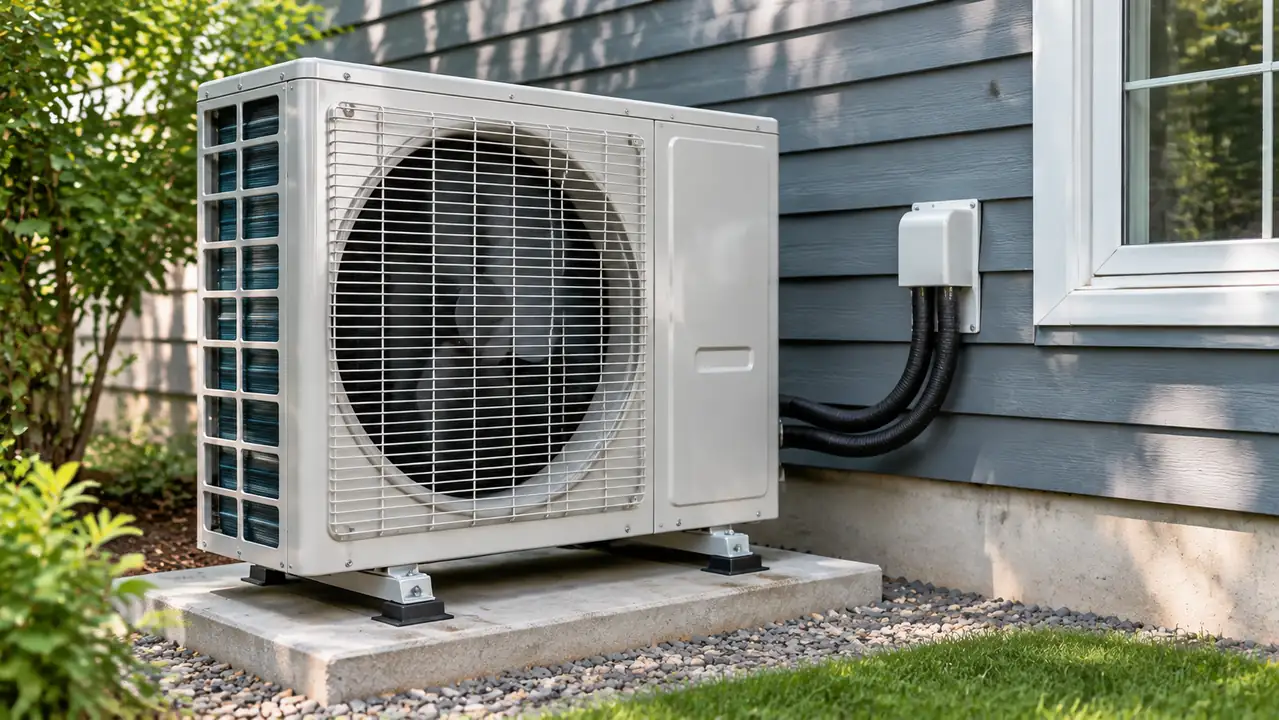
How an air-source heat pump works
An air-source heat pump absorbs heat outdoors and sends it indoors through a refrigerant cycle. A fan draws outdoor air across a coil. Refrigerant absorbs heat, a compressor raises its temperature, and an indoor coil releases that heat into your air or water system. The reversing valve allows many systems to switch to cooling in summer. A ducted heat pump can connect to suitable ducts; a ductless mini-split serves rooms through indoor heads.
If you want to see how the cycle works, our guide to the main components of a heat pump explains the compressor, coils, expansion device and reversing valve in heating and cooling modes.
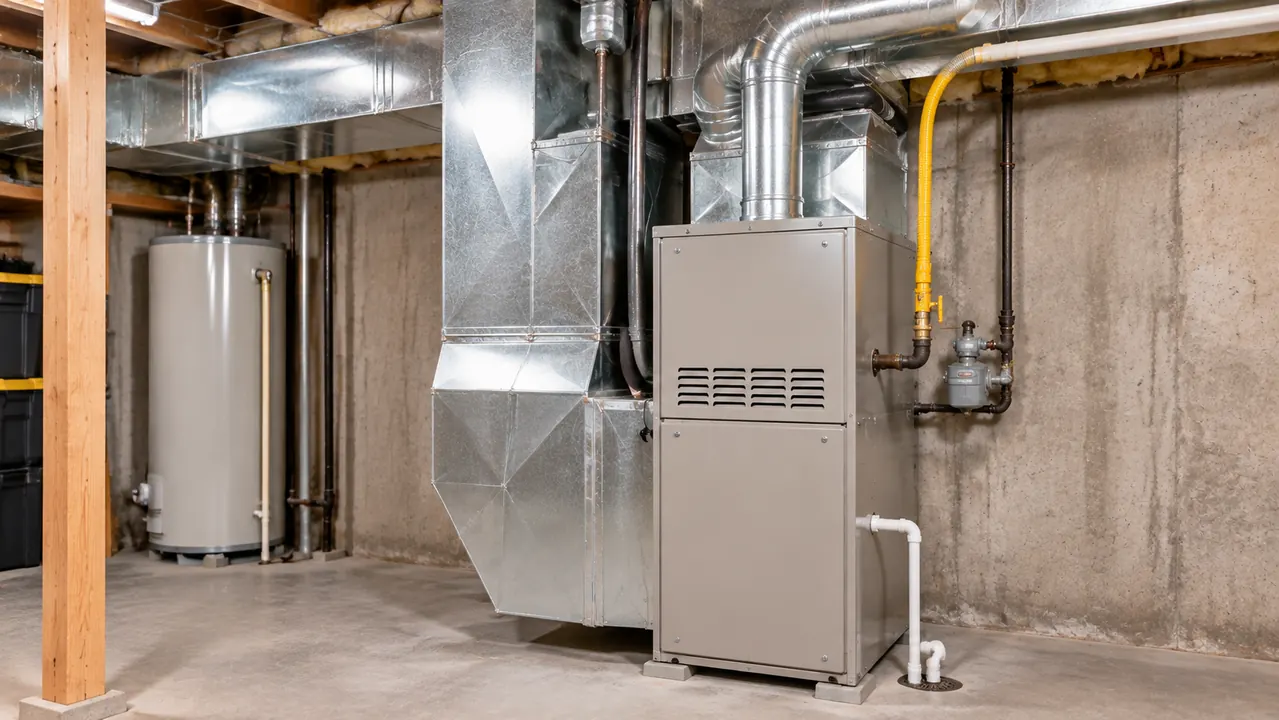
How a gas or electric furnace works
A gas furnace burns fuel in a heat exchanger and sends heated air through ducts, while an electric resistance furnace uses heating elements instead of gas. A fan moves indoor air past the heat exchanger and through the ducts. A gas furnace needs suitable venting, combustion air, and gas service. Both furnace types need separate equipment for mechanical cooling.
Check the heat distribution type before comparing products. Air-to-air heat pumps heat indoor air; air-to-water heat pumps supply water to radiators or underfloor circuits. An air-to-water unit is not a direct replacement for a ducted furnace.
Which Costs More to Install: a Heat Pump or a Furnace?
Replacing only a gas furnace often costs less up front than installing a heat pump. If both the furnace and air conditioner need replacement, compare a complete heat-pump system with a new furnace-plus-AC package on the same installed scope. Include the equipment, ductwork, electrical work, and other installation tasks needed to deliver the same heating and cooling.
HomeGuide published estimated U.S. installed air-source heat pump prices around $10,000–$25,000 or more and gas furnace replacement estimates around $3,500–$7,500 for some existing-duct projects in its 2025 material. These are different scopes, not matched quotes. Local labor, house size, permits, wiring, gas work, and new ducts can change both totals substantially.
| Project | Include in the installed quote | What changes the decision |
|---|---|---|
| Replace gas furnace and keep working AC | Furnace, venting, gas connections, controls, required duct fixes | Lower immediate cost may matter if cooling equipment has years left |
| Replace furnace and failing AC | Furnace plus new air conditioner and shared installation work | Compare this combined price with a reversible heat pump |
| Replace both with heat pump | Outdoor and indoor units, duct/airflow work, electrical work, controls, backup if needed | One system supplies both seasons; winter capacity must be checked |
| Add ductless heat pump | Indoor heads, refrigerant lines, outdoor unit, electrical work and condensate route | Useful for rooms without ducts; count every room that needs conditioning |
US rebate dates matter when you compare net installed prices. Under federal Section 25C, the energy efficient home improvement credit is not allowed for equipment placed in service after December 31, 2025, according to the IRS termination guidance. The DOE Home Energy Rebates program has active programs in select states; check your state, utility, household and project eligibility before deducting any rebate.
How do you compare the total cost over ten years?
Compare ten-year costs by adding each complete installed price to ten years of expected heating, cooling, maintenance, and fixed utility charges that actually differ between the options. Include repairs or replacement when supported by the equipment age and service information. Count a gas-service fixed charge as a saving only if that service will be disconnected; keeping gas for cooking or hot water keeps the charge.
Ten-year cost estimate = verified net installed price + ten years of projected heating, cooling, maintenance and relevant fixed utility costs + documented repair or replacement allowances. For example, paying $5,000 more up front to save just $100 per year in heating energy would recover only $1,000 during ten years, before other differences. At $100 per year in heating-energy savings, recovering the $5,000 upfront difference would take 50 years from those savings alone. Compare actual quotes and your cooling needs before choosing.
Compare quotes that cover the same heating and cooling job. Ask installers to state what stays, what gets removed and the cost of ducts, permits, panel work, gas and venting, controls and backup heat. For a closer breakdown, see our heat pump air conditioner cost guide.
Which Has Lower Heating Bills: a Heat Pump or a Gas Furnace?
In the worked example, a 95% AFUE gas furnace costs about $862 per year versus about $964 for a COP 2.8 heat pump, with 15,000 kWh of delivered heat, electricity at $0.18/kWh, and gas at $1.60/therm. At $0.12/kWh electricity, the heat pump costs about $643 and becomes cheaper. Your rates and effective winter efficiency determine the winner: higher AFUE lowers gas use, while higher seasonal COP lowers heat-pump electricity use.
Use the same heating demand for both systems
Use the same annual useful heating demand for both cost calculations. In the following formulas, useful heating demand means the heat actually delivered to the home over a season. A US therm contains about 100,000 Btu, or 29.3 kWh, of fuel energy; see the US Energy Information Administration’s energy unit conversions.
Heat pump heating cost = useful heat needed (kWh) ÷ seasonal system COP × electricity price ($/kWh).
Gas furnace heating cost = useful heat needed (kWh) ÷ [29.3 × AFUE as a decimal] × gas price ($/therm).
Break-even electricity price = gas price ($/therm) × seasonal COP ÷ [29.3 × AFUE].
The formulas calculate annual variable heating-energy cost. Use an effective seasonal heat-pump COP that reflects your winter temperatures and any backup energy. Compare the full project using installed quotes, cooling, maintenance, relevant fixed utility charges and energy costs outside these formulas.
Example: the cheaper system changes with electricity rates
For 15,000 kWh of useful heat, a 95% AFUE gas furnace costs about $862 and a COP 2.8 heat pump costs about $964 at $0.18/kWh electricity and $1.60/therm gas. Lowering electricity to $0.12/kWh cuts the heat-pump cost to about $643, making it cheaper than gas in this example. The heating load, gas rate, COP, and AFUE remain the same in both cases.
| Heating option | Calculation | Annual variable cost |
|---|---|---|
| Heat pump | 15,000 ÷ 2.8 × $0.18 | $964 |
| 95% AFUE gas furnace | 15,000 ÷ (29.3 × 0.95) × $1.60 | $862 |
| Electric resistance furnace | 15,000 × $0.18 | $2,700 |
| Heat pump with electricity at $0.12/kWh | 15,000 ÷ 2.8 × $0.12 | $643 |
At the original gas price and efficiencies, the break-even electricity price is about $0.161/kWh. Below it, the heat pump uses less money for variable heating energy; above it, the gas furnace does. The output flips as rates or effective winter COP change.
At $0.18/kWh, $1.60 per therm and 95% furnace AFUE, the heat pump needs an effective seasonal COP above about 3.13 to have a lower variable heating-energy cost. Calculate the break-even COP as electricity price × 29.3 × furnace AFUE (decimal) ÷ gas price per therm. The example uses COP 2.8, so the gas furnace wins on heating energy at $0.18/kWh; at $0.12/kWh, the heat pump wins. Use seasonal performance that reflects cold weather and backup heat, not a single 47°F test point.
Estimate your heating-only energy costs
This calculator compares annual variable heating-energy costs for the same delivered heat. Enter your heating demand, local energy prices, and effective winter efficiencies to see which heating fuel costs less under those inputs.
Not sure what to enter for annual useful heating demand? If you have last winter’s space-heating-only gas use, estimate delivered heat as gas therms × 29.3 × the old furnace’s AFUE as a decimal. For example, 600 heating-only therms × 29.3 × 0.90 = 15,822 kWh of useful heat. This gives the furnace’s useful heating output from the space-heating gas entered. If ducts lose heat outside conditioned rooms, reduce the estimate to match the heat delivered to those rooms.
First remove gas used for cooking or hot water. The estimate also assumes the stated AFUE represents your furnace’s seasonal operation. If fuel uses cannot be separated, obtain an annual space-heating energy estimate from an energy assessment or weather-normalized bills. A design heat-loss figure in Btu/h is a peak capacity estimate, not an annual kWh value.
Replace all five sample inputs with your local values. The written formulas above also work without JavaScript.
These annual results cover the heating energy represented by your inputs. To compare complete projects, add installed price, cooling, maintenance, relevant fixed utility charges, furnace blower power and any backup energy not already reflected in your effective COP.
How Do Heat Pump and Furnace Efficiency Ratings Compare?
At a COP of 3, a heat pump delivers about three units of heat per unit of electricity; a 95% AFUE gas furnace delivers about 0.95 units of heat per unit of gas energy. COP, HSPF2, and AFUE measure performance in different ways, so compare energy costs for the same delivered heat rather than treating their numbers as interchangeable. COP 3 is an example operating value, not a fixed rating for every heat pump or outdoor temperature.
| Rating | What it describes | How to use it |
|---|---|---|
| COP (coefficient of performance) | Heat out divided by electrical energy in at specified test conditions | A COP of 3 means 3 kWh of heat for 1 kWh of electricity at those conditions |
| HSPF2 | Seasonal heating output divided by electric input in a defined rating procedure, Btu/Wh | Compare rated heat pumps under the same procedure; climate and backup can shift actual use |
| AFUE (annual fuel utilization efficiency) | Useful heating divided by annual fuel energy consumed | A 95% AFUE furnace supplies about 95 units of useful heat per 100 units of gas input under the rating method |
| SEER2 | Seasonal cooling efficiency | Compare cooling performance, not winter heating bills |
Compared with an electric resistance furnace, a heat pump can use much less electricity for the same delivered heat. Electric resistance supplies about 1 kWh of heat for 1 kWh of electricity. At an effective seasonal COP of 2.5, a heat pump would use 40% as much electricity for the same useful heat. If a system uses electric resistance backup, include its electricity use when estimating the effective seasonal COP. Compare installed price and cooling costs separately.
To compare a heat pump’s COP with a furnace’s AFUE in dollars, calculate the cost of the same useful heat from each system. Use local electricity and gas prices in the cost formulas above. The ENERGY STAR heat-pump criteria explain COP, HSPF2 and cold-weather ratings; US DOE furnace efficiency guidance describes AFUE.
Use the model’s seasonal heating data and cold-temperature performance to estimate winter energy use.
Which Works Better in Cold Climates?
A cold-climate heat pump can be the main heater when its verified output at the local winter design temperature covers the building’s heat loss. If it falls short, provide backup sized for the shortfall or select equipment with enough capacity; a compatible gas furnace can supply backup heat. A gas furnace’s heat output is less directly affected by outdoor air temperature, although its venting, gas supply, and electrical service still need to work reliably.
Check capacity, not just the lowest stated operating temperature
Match the heat pump’s low-temperature heating output to your building’s design heating load. Start with the home’s design heating load: the amount of heat lost per hour at the local design outdoor temperature. In US residential design, this is commonly calculated with ACCA Manual J. Ask for the selected heat pump’s actual heating capacity at that same outdoor temperature, with the matching indoor-air or supply-water conditions.
For example, if a house loses 27,000 Btu/h at 5°F (−15°C) and the selected heat pump supplies 24,000 Btu/h at 5°F, backup must cover at least the 3,000 Btu/h shortfall at that point, subject to system design and distribution losses. If insulation improvements reduce the calculated load to 20,000 Btu/h under the same conditions, that unit’s 24,000 Btu/h capacity would cover the heating load at that test point.
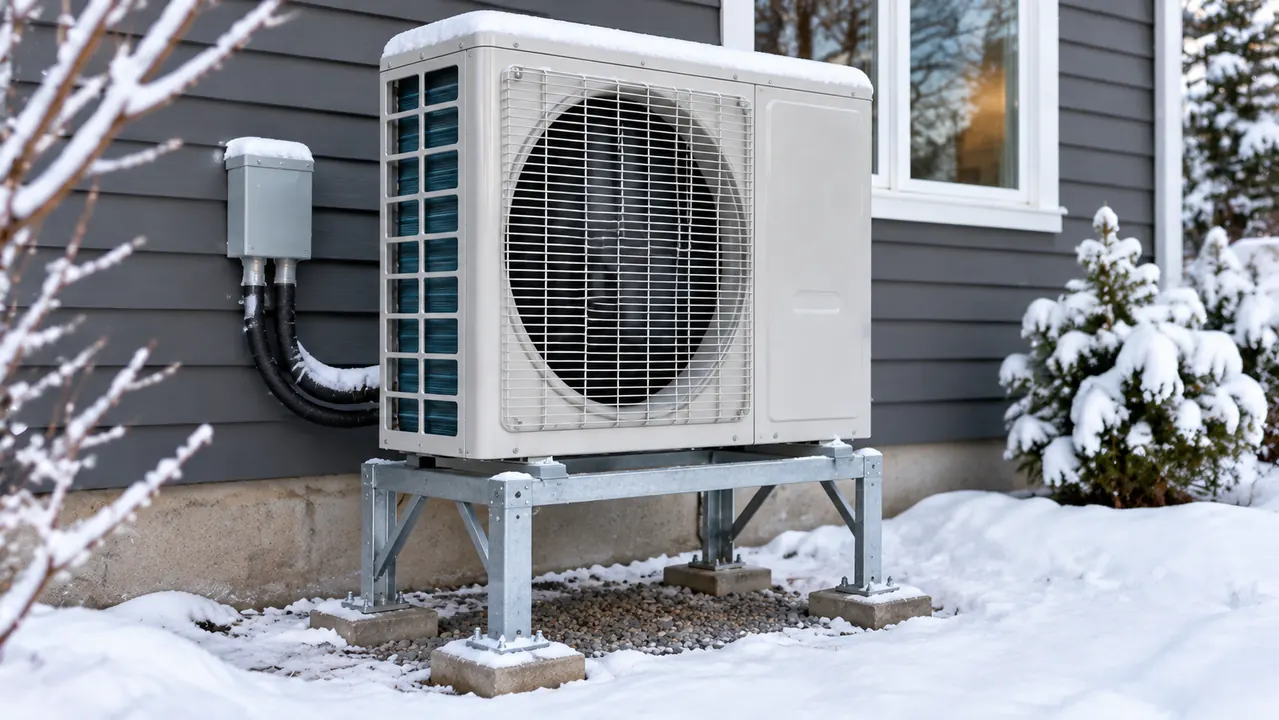
The decision follows three different results at the same outdoor temperature:
- Heat-pump capacity covers calculated heat loss: It can provide the required design-point heat at the stated indoor conditions; still check defrost, controls and the full winter operating range.
- Heat-pump capacity is below heat loss: Size and control backup heat for the shortfall, or select different equipment. In the example above, the basic design-point shortfall is 3,000 Btu/h.
- Matched low-temperature performance is missing: Obtain the selected model’s capacity table at the required temperature and indoor conditions. A claimed minimum operating temperature alone does not show whether it can heat the building.
After checking winter capacity, use our air-source heat pump installation guide to review outdoor placement, defrost drainage, electrical supply, backup controls and commissioning.
Read cold-climate labels correctly
A cold-climate label shows tested low-temperature performance, but it does not tell you whether the unit can heat your particular home. Compare the selected model’s output at your winter design temperature with the building’s calculated heat loss. Under published US ENERGY STAR cold-climate requirements, eligible heat pumps must show a COP of at least 1.75 at 5°F and retain at least 70% of their rated capacity at 47°F at 5°F, alongside other rating and controls requirements. Review the model’s extended performance table, defrost behavior, and backup strategy.
Where winters are long and cold, also check how many heating hours fall near or below the balance point—the temperature at which the heat pump’s output equals the home’s heat loss. Below that point, controls must bring on available backup heat. The better economic choice depends on the cost and efficiency of each heat source during those hours.
What Changes if Your Home Already Has Ducts and an Air Conditioner?
If your air conditioner still works and the existing ducts are suitable, replacing only a failed gas furnace often has the lower upfront cost. If the AC also needs replacement, compare a ducted heat pump with the full installed price of a new furnace plus AC, including duct and electrical work.
What should each installer include in the quote?
Each quote should include the specified heating and cooling equipment, design-load and low-temperature capacity checks, duct or airflow work, electrical and gas/venting work, controls, backup heat, permits, commissioning, and written warranty terms where applicable. Use the same heating and cooling requirements in every quote before comparing prices.
| Check in every proposal | What you need in writing |
|---|---|
| Design loads | Heating loss at the winter design temperature and the cooling load |
| Equipment output | Model numbers, matched indoor/outdoor equipment and rated heat output at design temperature |
| Backup heat | Required capacity, energy source and changeover controls |
| Existing ducts and air | Airflow check, returns, duct repairs, air handler and indoor coil work |
| Electrical, gas and venting | Circuit or panel work, fuel connections and any vent changes |
| Installation and handover | Permits, equipment removal, commissioning and system controls |
| Price and support | Complete installed price, separately verified rebates, service scope and written warranty |
When an air-to-air heat pump fits
A ducted air-to-air heat pump fits when the ducts and airflow can serve the home’s heating and cooling loads. Measure the building’s heating and cooling loads, then check the ducts for design airflow, leakage, return paths and the location of the air handler. Heat pumps can deliver supply air at a different temperature from gas furnaces; airflow and distribution must still keep occupied rooms comfortable. Match the indoor coil, outdoor unit and controls as one rated system.
How do comfort, maintenance and equipment life affect the choice?
A heat pump often supplies gentler warm air for longer periods, while a gas furnace may deliver hotter air in shorter cycles; either can keep rooms comfortable when correctly designed. Maintenance needs, the condition of existing equipment, and written warranty terms also affect the better long-term choice. If air from a heat-pump register feels cooler, check room temperature and delivered capacity rather than judging by supply-air temperature alone.
Include real maintenance and equipment condition in the decision. Both systems need filter and airflow care and service under the manufacturer’s schedule. Heat pumps also need outdoor-coil and defrost checks; gas furnaces need combustion, heat-exchanger and venting checks, with working carbon-monoxide protection. Compare service history, written warranty and the remaining condition of existing equipment.
If comfort, outdoor noise or summer cooling is a key concern, our air-source heat pump pros and cons guide explains how those factors affect daily use.
When a ductless or air-to-water system fits
Choose ductless equipment for rooms that need direct air heating, and air-to-water equipment for buildings with hydronic distribution. A ductless mini-split can serve an addition, rooms without ducts, or a building that needs zoning. Count each room and verify pipe runs, condensate drainage and outdoor placement. An air-to-water heat pump serves hydronic radiators, fan coils or floors; its water temperatures and emitters affect capacity and efficiency. Our heat pump versus gas boiler guide covers that different water-based comparison.
For a building with radiators, underfloor loops or hydronic fan coils, see how an air-to-water heat pump works to understand the water circuit and supply-temperature requirements. Our R32 monobloc air-to-water heat pump specifications list the equipment data for hydronic installations. Match the listed 50 Hz electrical options, heating output at your winter and water-temperature conditions, and local approval requirements to the project. This water-based unit is not a direct replacement for a ducted gas furnace.
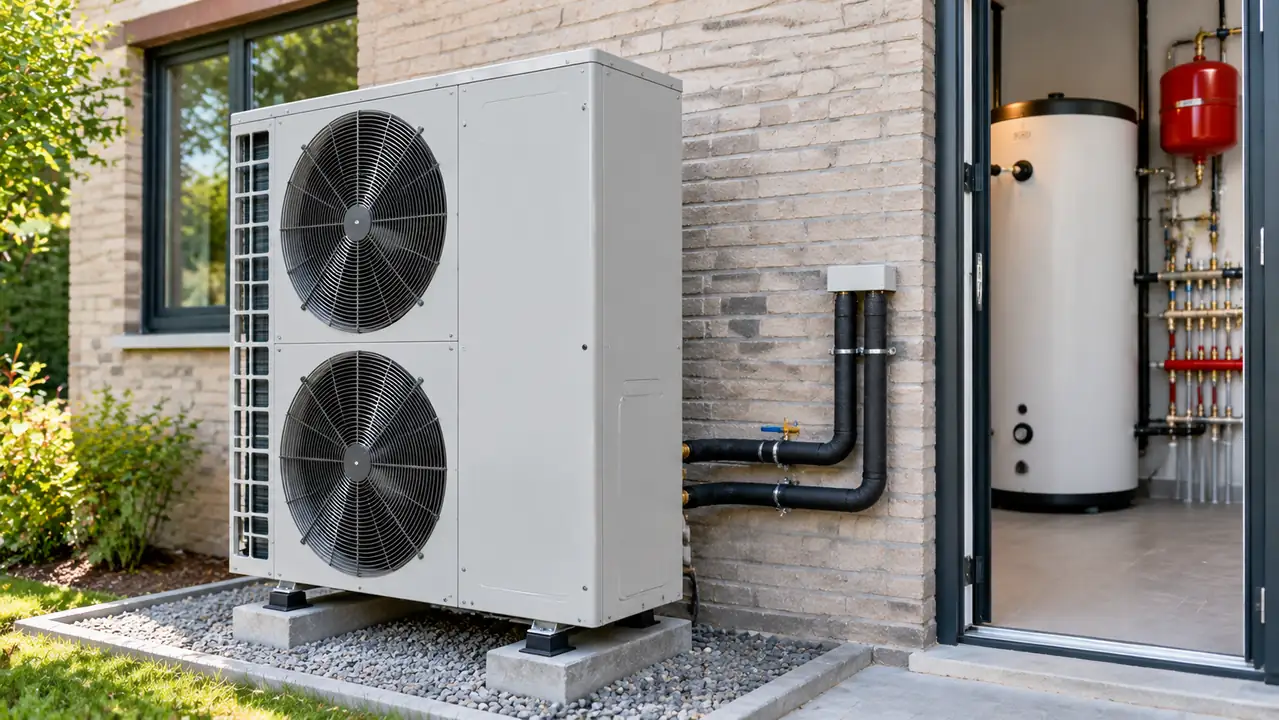
If the building needs no summer cooling and has low gas prices, furnace replacement deserves its own quote. Include the cost of cooling in both complete proposals: the heat pump package and any air conditioning needed with the furnace.
Can a Heat Pump Work With a Gas Furnace as Backup?
Yes. A compatible dual-fuel system uses a heat pump during suitable conditions and switches to a gas furnace when heating capacity or the approved controls call for it. This allows the system to provide backup in colder weather and use electricity when heat-pump operation is more economical.
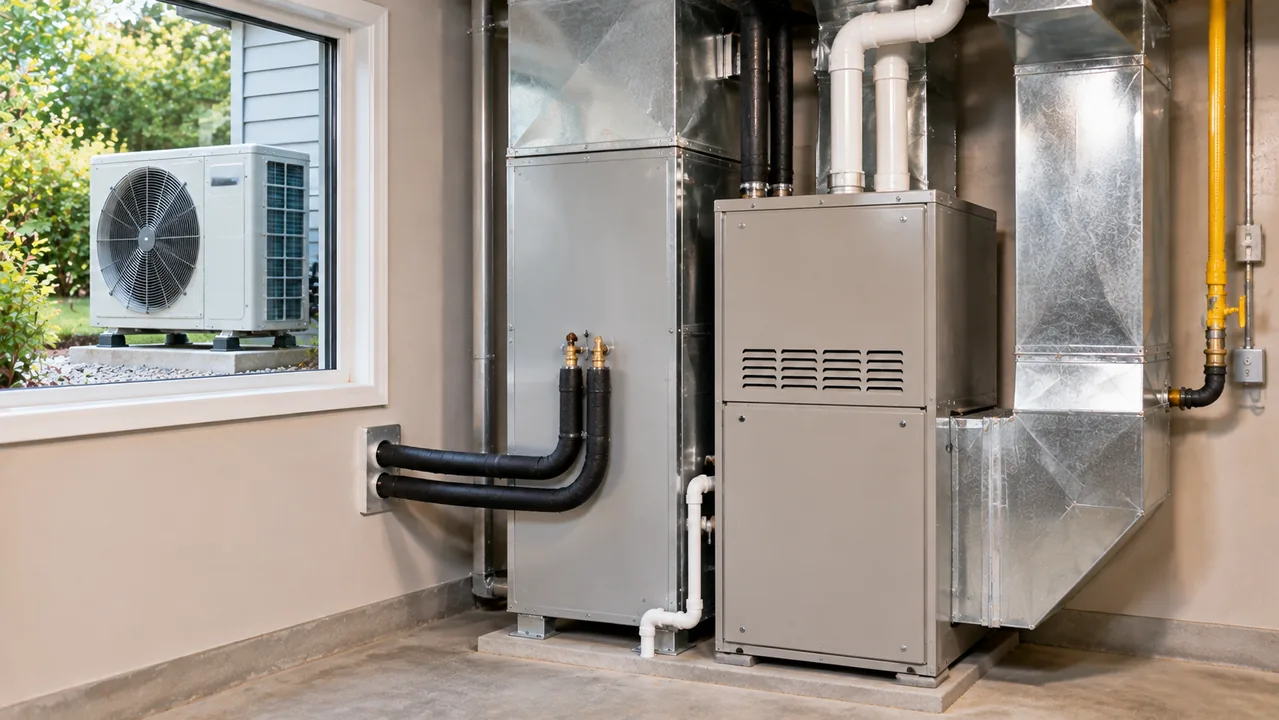
There are two separate thresholds. The capacity balance point is where the heat pump no longer covers the load by itself. The economic balance point is where the cost per unit of heat from the heat pump equals the furnace’s cost, based on local rates and actual COP at that temperature. They do not necessarily happen at the same outdoor temperature. Controls should protect capacity first and make economical choices within the approved operating range.
A dual-fuel conversion needs compatible indoor equipment, airflow paths, wiring, and controls that switch between the heat pump and furnace. Our heat pump thermostat wiring guide explains the role of reversing-valve and auxiliary-heat controls in more detail.
Ask for a written sequence: which equipment runs during normal heating, when the furnace takes over, whether simultaneous operation is allowed by the particular design, and how cooling operates. Test both changeover directions during commissioning.
How Should You Choose Between a Heat Pump and a Furnace?
Choose a heat pump when it covers the winter design load and the full heating-and-cooling system has a good installed and running-cost fit. Choose a gas furnace when gas offers cheaper delivered heat and a furnace-only replacement makes good use of the existing system; consider compatible dual fuel when winter backup or controlled fuel switching improves the design. Recheck these choices if you improve insulation, repair ducts, replace the AC, or change utility rates.
- Measure heating and cooling needs. Obtain a room-by-room or whole-building load calculation at local design conditions. Do not size from floor area alone.
- Decide what must be replaced. Is it a furnace only, a furnace and AC, a room system, or a water-based heating plant? Compare equivalent functions.
- Check low-temperature performance. For every candidate heat pump, match its published output at the design temperature to the building load and specify backup for any shortfall.
- Calculate variable energy costs. Enter delivered heat, seasonal COP, AFUE, and utility prices. For dual fuel, split heating hours by the switching strategy.
- Compare full installed proposals. Include ducts, electrical work, gas/venting, controls, permits, cooling, backup and maintenance access. Apply only incentives for which the actual project qualifies.
- Check real installation constraints. Confirm indoor airflow, outdoor placement and noise, supply voltage, local fuel availability, serviceability and the installer’s commissioning plan.
| Your situation | Strong starting option | Verify before choosing |
|---|---|---|
| Both furnace and AC need replacement | Compare a ducted heat pump with furnace plus new AC | Like-for-like installed price and design-temperature heat output |
| No ducts, several rooms need heating/cooling | Compare a correctly zoned ductless heat pump | Room coverage, linesets, wiring and winter backup |
| Very low gas cost, working AC, sound ducts | Price a furnace-only replacement alongside other options | Gas rates, new furnace installation and remaining AC life |
| Cold winters with existing gas furnace | Compare a dual-fuel heat pump plus furnace | Capacity/economic balance points and compatible controls |
| Water-based radiators or floor heating | Evaluate an air-to-water heat pump against a boiler | Water temperature, emitter sizes and winter capacity |
If your home uses ducts and a gas furnace, first compare full ducted heating-and-cooling replacement quotes. Use the quote checklist above to check cold-weather output, installation work and backup heating. The water-based product category below is not a ducted furnace replacement.
For a water-based heating or OEM equipment project, send us the details needed to match a heat-pump category. Tell us your destination country, building use, winter design temperature, heating load, required supply-water temperature, radiator/underfloor/fan-coil system, power supply and estimated project quantity. Where cooling is required, include the cooling load and delivery-water conditions. Our space-heating heat pump range is for suitable hydronic applications. Share the project details via Airproz contact so we can discuss the relevant equipment category.
So, Is a Heat Pump Better Than a Furnace?
A properly sized heat pump is the better fit when you need heating and cooling together and its winter output covers your home’s load. A gas furnace can be better value when gas is inexpensive, the current AC can stay, or a furnace/dual-fuel design better covers winter demand.
Before deciding, compare the whole installed heating-and-cooling package, the cost of one unit of delivered heat, and the actual output at winter design temperature. These three checks explain why the answer changes from one home to another.
Frequently Asked Questions
These answers cover the questions that most often change a heat pump versus furnace choice. Use the same heating load, local rates, and installed scope for every option.
Can a heat pump fully replace a gas furnace?
Yes, if its documented heating output at your local winter design temperature covers the home’s calculated heat loss, with any required backup included in the design. Compare the full system, including cooling and electrical work, before removing the furnace.
Can I compare heat pump and furnace costs using last winter’s gas bill?
Yes, if you can isolate the gas used for space heating. Multiply those therms by 29.3 and the old furnace AFUE (as a decimal) to estimate furnace heating output in kWh; adjust for major duct losses when comparing heat delivered to rooms. Enter the resulting heat demand and current energy prices in the calculator. If your bill also includes water heating or cooking, separate that gas use or obtain a space-heating-only estimate first.
What temperature is too cold for a heat pump?
There is no single outdoor cutoff temperature for every heat pump. A home needs additional heating capacity or backup when the selected model’s output falls below its heat loss at the local winter design temperature. Compare the model’s low-temperature output with the calculated building load before selecting backup or different equipment.
Is an electric furnace the same as a heat pump?
No. An electric resistance furnace turns electricity directly into heat, while a heat pump moves heat from outdoors and uses less electricity for the same useful heat when its effective COP is above 1.
Can a heat pump and a gas furnace run in one system?
Yes. A compatible dual-fuel system can use a heat pump alongside a gas furnace, with controls switching between them under the approved heating-capacity and operating conditions. The installer must configure and test the switch for the actual equipment and building load.
Should I include air conditioning when comparing installed prices?
Yes. Compare a heat pump that provides heating and cooling with a furnace plus any AC equipment and installation work needed to provide the same services.